India’s U18 hockey teams signed off their exposure series against Australia with plenty of promise, as the U18 women produced a commanding 4-1 win while the U18 men battled to a spirited 3-3 draw in Bhopal.
At the Udhav Das Mehta Central SAI Centre, both teams displayed resilience, attacking flair, and the kind of temperament that selectors and coaches would be pleased to see ahead of future international assignments.
The standout performance came from the Indian U18 women’s side, who bounced back strongly in the final game of the series to defeat Australia decisively. Despite conceding early through Australia’s Aurora Kovacevich in the eighth minute, India responded almost immediately with captain Sweety Kujur leading from the front. Her equaliser in the 13th minute shifted the momentum firmly in India’s favour.
India continued to dominate proceedings in the second quarter as Diya added another goal before halftime, giving the hosts a deserved lead. The third quarter saw India tighten control of the midfield and frustrate the Australian attack with disciplined defending and swift counterattacks.
Priyanka Minz then extended India’s lead in the final quarter before Nausheen Naz added the finishing touch to cap off an impressive outing. The 15-year-old has emerged as one of the stories of the tournament, with reports highlighting her rise from practising with broken hockey sticks in Madhya Pradesh to scoring against Australia on the international youth stage.
While Australia still claimed the women’s series overall, India’s final-match statement offered a glimpse into the depth developing within the junior setup.
(Source: Hockey India)
Men secure thrilling draw
The Indian U18 men’s side, meanwhile, wrapped up their series with a thrilling 3-3 draw that ensured the four-match contest ended evenly poised at 1-1.
India came out firing early, with Karan Gautam converting a penalty corner in the 10th minute before Ben Siddharth doubled the advantage shortly after. Australia, however, clawed their way back into the contest through Jet Johnstone, who struck twice before halftime to level scores.
The hosts regained the lead in the third quarter courtesy of Ketan Kushwaha, but Australia responded yet again through Andrew Faulds to ensure honours were shared.
The draw capped a strong finish for the Indian men after their impressive 6-3 victory earlier in the week helped level the series. Across the four games, India’s U18 hockey teams showed attacking intent and composure against a traditionally strong Australian outfit.
In 1774, English explorer Captain James Cook, while mapping the Pacific region, encountered a cluster of islands that reminded him of the Hebrides archipelago in Scotland.
He named them the New Hebrides, a designation later replaced by Vanuatu after the islands gained independence from joint British and French colonial rule. The two powers had administered the archipelago under a Condominium established in 1906.
“It was more of a pandemonium than a condominium,” an elderly local commented to me during my recent visit to Port Vila, the capital of Vanuatu.
He spent a considerable portion of his life under that intricate regime, and it is quite understandable how difficult his daily existence must have been when subjected to the governance of two administrative systems, requiring navigation through two separate legal, administrative, and educational frameworks, along with various cultural influences. Additionally, there were two distinct police forces tasked with maintaining law and order in an area six times smaller than Tasmania.
This historical context renders Vanuatu unique, as only two other nations in the world – Sudan and St Martin – have the experience of such a similar situation.
However, after independence, that pandemonium has gradually vanished and present-day Vanuatu unfolds to visitors an unspoiled and pristine territory, ideal for a tranquil holiday with soothing nature and smiling locals as companions.
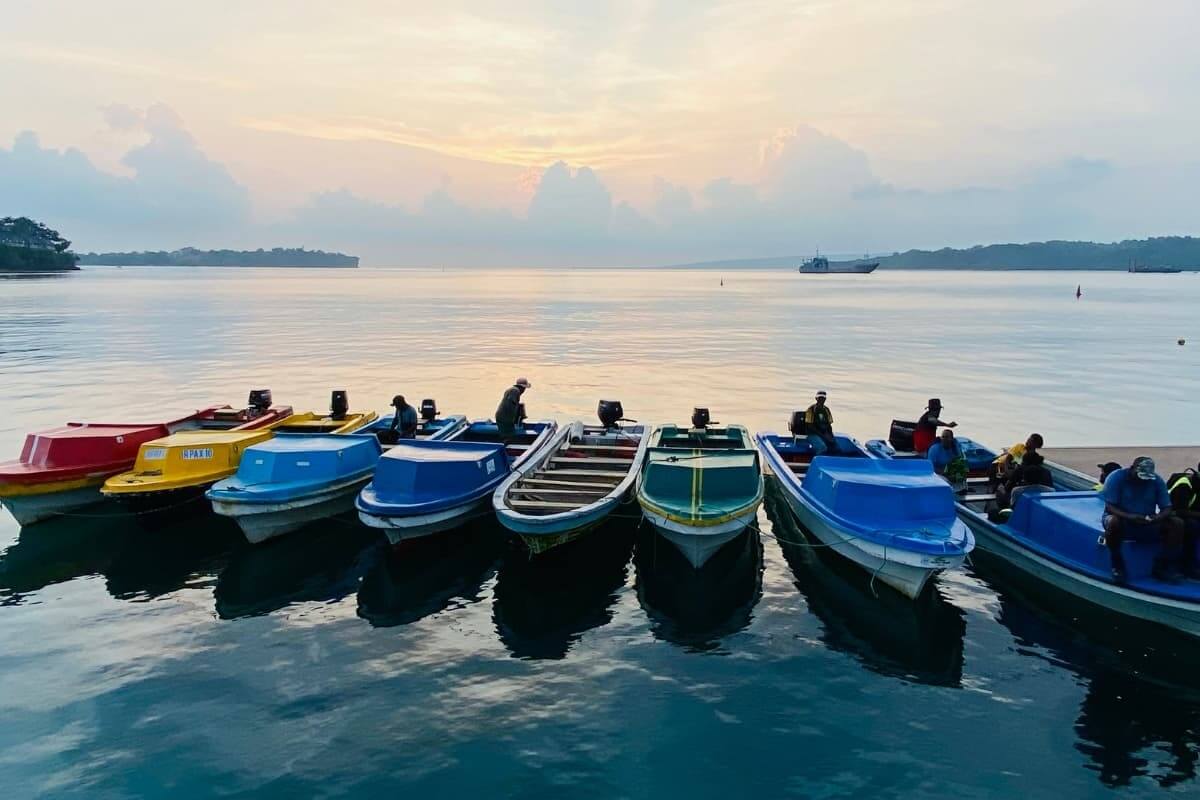
Everyday lifelines (Source: Supplied)
Vanuatu consists of 83 islands located in the South Pacific Ocean and is just three and a half hours by air from the east coast of Australia. The island of Efate, which is home to the capital city Port Vila and the international airport, is the most significant island in the nation. It functions as the political, commercial, and economic centre of the country. Additionally, Port Vila is a prominent stop on the itineraries of cruise ships traveling through the Pacific Ocean islands.
Other islands of importance in Vanuatu are Espiritu Santo known for its mountains, rivers, and World War II history, Malakula notable for its cultural diversity with many distinct indigenous languages and traditions, and Tanna which houses Mount Yasur, one of the world’s most accessible active volcanoes.Most of the nation’s population of 365,000 lives on these four islands.
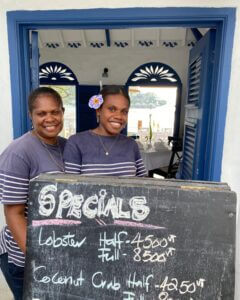
Warm local hospitality (Source: Supplied)
Because of its position along the Pacific ‘Ring of Fire’, Vanuatu’s climate is tropical, with warm temperatures all year-round. This geographic feature paired with proximity to Australia, makes the destination a popular hideout for Aussies keen on getting a relaxing break from a hectic urban routine.
After touching down in Port Vila, I felt like stepping into another world where the atmosphere appealed as laid back, slow-paced and grounded. Shaped by ocean breezes, lush greenery, and close-knit communities, its modest infrastructure reflected a simple rhythm of life, with few visible markers of 21st-century urbanization. In Vanuatu, there are no towering high-rises dominating the skyline, no global fast-food chains like McDonald’s, and traffic flows without the aid of traffic lights. Roads are modest, and development is low-density, blending into the natural environment rather than reshaping it. This absence of heavy commercialisation gives the domain a distinct charm, where tradition and nature remain central, and daily life unfolds at a pace that prioritises people, culture, and rituals.
However, the hotel I stayed in while at Port Vila, known as the Grand Hotel and Casino, featured ultra-modern amenities beautifully enveloped in the traditional warmth of the island.
Grand hotel and casino (Source: Supplied)
This establishment has recently reopened following an extensive renovation after the catastrophic earthquake that struck in 2024. Situated less than thirty minutes from the airport, this eight-story building stands as a sleek oceanfront landmark, inviting vacationers to relax with sweeping views of the harbour and soothing Pacific breezes.
Most conveniently, the hotel is within walking distance of major city attractions, including the Vanuatu Parliament House, National Museum, Sacré-Coeur Cathedral, and the lively Mama’s Market, and numerous restaurants and cafes offering a variety of culinary delights.
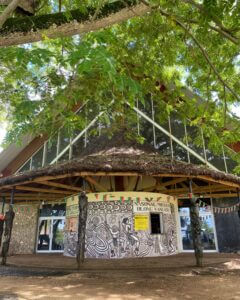
National Museum (Source: Supplied)
Similar to its neighbouring island nations – Fiji, Solomon Islands, and New Caledonia – Vanuatu is part of the region referred to as Melanesia, which is a cultural and geographical collection of Pacific Islands. Consequently, the history of this nation is profoundly intertwined with ancient Melanesian culture, with human habitation tracing back over 3000 years. The National Museum serves as an excellent venue to learn more about the intricate history of the archipelago and to view various examples of Melanesian art and crafts. However, an exhilarating experience awaits at the bustling Mama’s Market, where women dressed in vibrant island attire arrange pyramids of pawpaw, bananas, island cabbage, and shiny eggplant, while fishermen bring in yellowfin tuna, still shimmering with silver.
While mingling with the locals at the market, I found them to be straightforward, amiable, and easy to engage in conversation, often punctuated with laughter, which helped me comprehend why Vanuatu is considered one of the happiest places on Earth. They seemed content with their simple way of life and appeared somewhat detached from global events. Many individuals I conversed with were unaware of the ongoing conflict in the Middle East and had not heard about the recent terrorist attack in Sydney.
Where the rainforest pauses to breathe (Source: Supplied)
Not far from the heart of Port Vila, several natural attractions can be found, including Eton Beach and Etmat Bay, which are among the top sandy beaches on Efate Island, perfect for swimming, snorkeling, and diving. Additionally, the Mele Cascades, Rarru Rentapao Waterfall, and the Blue Lagoon offer ideal spots for refreshing freshwater swims, alongside a lush green rainforest that features multiple ziplines and a 120-metre sky bridge suspension walk. Island hopping near Port Vila is also a favoured activity, especially to Hideaway Island, which claims to host the world’s only underwater post office.
I arrived in Vanuatu with the intention of relaxing and doing nothing, aside from sitting on the private balcony of my room and gazing at the azure waters of the Pacific Ocean. However, the sightseeing and activities on offer turned out to be unexpectedly enjoyable. The highlight for me was riding a horse at the Club Hippique Adventure Park.
What made Vanuatu unique for me was its harmonious combination of tranquility and liveliness. Within just a few days, I was able to enjoy a sandy beach, trek through the verdant rainforest, ride a horse along the beach, swim under the waterfalls, learn about the island’s history and culture, converse with market vendors about their daily catch, and still have time to relax on my hotel balcony, aimlessly watching life on the turquoise blue water while sipping on some locally brewed Tusker beer.
As I departed from Port Vila, I took with me more than just photographs. I carried the true essence of the island – steady, generous, and quietly vibrant.
TRAVEL NOTEBOOK
Getting There: Jetstar (www.jetstar.com) flies three days a week from Sydney direct to Port Vila
Stay: Grand Hotel and Casino (www.grandvanuatu.com)
Tour Guide: Onak Tours Vanuatu (What’sApp +678 5138807)
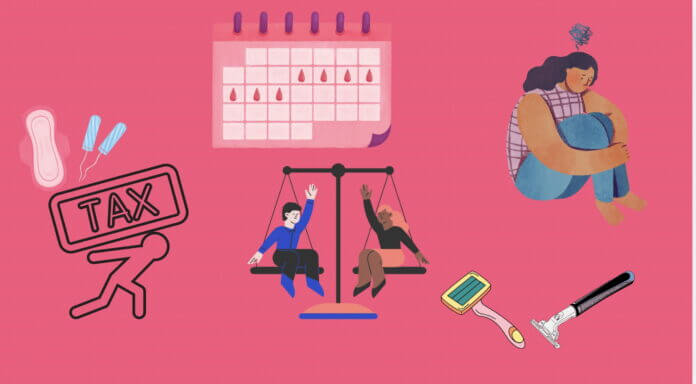
Walking out of the store after buying a razor as you usually do, you notice that the man in front of you is also buying a razor, but somehow, it is two dollars cheaper. The only difference? His is black and yours is pink. pink tax
This is an example of the pink tax. No, the pink tax is not an actual tax, but a practice that puts women at a financial disadvantage.
According to a study conducted by Moneyzine in 2023, women pay an average of 7% more for products similar to those for men, and 42% of women-marketed products cost more. In the kids’ sections of stores, “girls” products are priced at an average of 7% higher than “boys” products, highlighting the gender disparity that is embedded into society from a young age.
This signifies that gender inequality cuts across age, merit and circumstance, revealing how deeply entrenched such disparities remain. The pink tax starts with pricing products higher that are targeted towards “girls” and eventually develops into broader economic disadvantages for women.
WAHL PowerDry 2000w in two colours are priced differently. (Source: Amazon.au)
Attempts to reverse this narrative have been made, as seen by key legislative changes. For example, pricing “substantially similar goods” differently for men and women, under New York and California jurisdictions, would be recognised as breaking the law. Similarly, 2019 saw the Australian Government officially removing the mandatory 10% GST from sanitary products. Various locations around Sydney also have free sanitary products including some public bathrooms, libraries and university campuses like the University of Sydney and University of New South Wales. Legally-binding changes via legislation are crucial when it comes to broader societal issues as they pose an actual risk for wrongdoers. The Women’s Budget statement released on May 12, 2026 notably highlighted continued funding, particularly for maternal health, including National Breastfeeding Helpline and National Preterm Birth Prevention Program.
Acknowledging efforts regarding the seemingly never-ending abyss of gender inequality is important. But, it is even more important to note that this is not enough. Pink tax and period poverty are closely related, arguably the former significantly leads to the latter. The “Bloody Big Survey” 2024 showed that 64% of menstruators in Australia could not afford period products or had difficulty doing so due to costs. Without wider implementation and recognition of these issues, true reform is dawdling.
Ultimately, this raises questions about how truly intertwined systemic oppression is for women. We can continue to live in blissful ignorance that things are completely amended. An investigation on Indian consumers published in the Journal of Management Research and Analysis in 2025 showed that 72% of respondents were not aware about the pink tax.
Women are expected to meet a range of social and hygiene standards – from hair removal and cosmetics to managing menstruation, which itself often requires multiple products, depending on individual health and hormonal needs. Yet many of these products, whether socially imposed or biologically necessary, are priced higher for women. Combined with a persistent gender pay gap, the result is a frustrating imbalance: women are often paying more while earning less. (Australian Bureau of Statistics figures released in February this year show the national gender pay gap is currently at 11.5%.)
Same product but two prices. (Source: Canva)
Appalling statistics and the repetition of deeply ingrained misogynistic patterns may spark outrage, but outrage alone rarely creates change. So what can actually be done? To better understand the work happening on the ground, I spoke to people actively trying to make a difference.
Safe N Happy Periods is an India-based non-profit organisation working towards period literacy for women as well as donating products to those in need. “Donations do not have to be very high,” a representative said. “Even sponsoring period products for one girl for a month can make a difference.”
Yet, they stressed, donating is about more than just money. “Just the act of donating pads helps people realise that there are underprivileged women and girls who simply cannot afford them.” In many cases, volunteers step in to provide products themselves when donations fall short – a quiet but powerful reminder that real change is often driven by persistence and empathy rather than grand gestures.
This is not to say that if you do not donate to a cause you cannot make a change. Not everyone can donate, and that is reasonable. Aid, however, extends beyond monetary goodness. Acknowledgement of unfair patterns that catalyse crucial social movements result in necessary changes as seen historically. We can make a change by an act as rudimentary as challenging something we see on a day-to-day basis, like the pink tax. As a matter of fact, some of the greatest social change has come by questioning society, like Rosa Parks challenging racial segregation, triggering the US Civil Rights Movement. So, I would like to ask, Why is the pink razor more expensive than the black one?
The current decline of the Liberal Party of Australia may one day be traced back to a single political calculation: 5 April 2023, the day Peter Dutton formally announced the party would oppose the Indigenous Voice referendum.
At the time, it looked politically smart. The Referendum was divisive, emotions were high, and polling suggested scepticism in suburban and regional Australia. Dutton saw an opportunity to unite conservatives, frustrate the government, and position himself as the voice of “ordinary Australians” against what many saw as elite identity politics.
In narrow political terms, he succeeded. The Referendum failed.
But that victory may also mark the moment the Liberal Party began losing something much bigger: its ideological centre, its moral confidence, and perhaps ultimately, its electoral identity.
For decades, the Liberal Party survived because it was ‘a broad church’ as John Howard described it. It appealed to migrants building businesses, suburban families chasing stability, professionals in the cities, and conservatives in regional Australia.
It balanced economic liberalism with social moderation, and understood modern multicultural Australia.
That balance began to collapse after the referendum.
By campaigning so aggressively against the Voice, the party moved into territory long occupied by One Nation: grievance politics, culture wars, anti-establishment rhetoric, and growing suspicion around migration and identity.
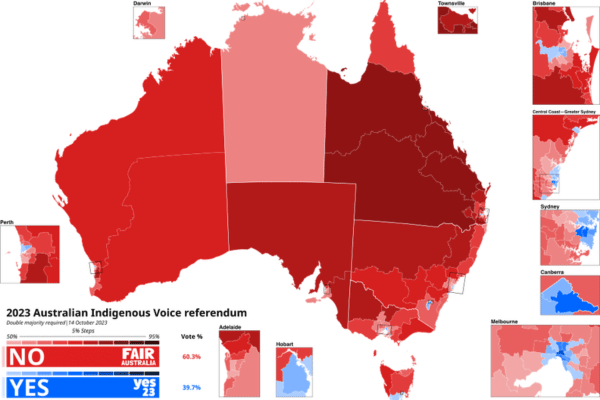
The Voice Referendum results (Source: Wikimedia Commons)
But One Nation already owned that political lane authentically.
The Liberal Party’s problem was not simply that it moved right. Parties shift positions all the time. The deeper problem was that it never looked comfortable there. Historically, the Liberals were a party of business, institutions, and economic management, but not populist nationalism. The harder they tried to compete with One Nation, the more they looked like an imitation rather than a conviction-driven movement.
And voters usually prefer the original over the copy.
Regional voters increasingly drifted toward One Nation, while moderate metropolitan voters continued moving toward the Teal independents. The Liberals now find themselves squeezed from both directions, losing country Australia to populism and urban Australia to centrism.
The result is, a party trapped between two identities and trusted by neither.
This shift has also contributed to a broader hardening of public debate. Australia remains one of the world’s most successful multicultural societies, but the national conversation has become more divisive, suspicious, and tribal in recent years.
No one is suggesting the Liberal Party deliberately empowered extremist or neo-nationalist voices. But political ecosystems matter. Once mainstream parties begin framing politics through fear, resentment, and cultural division, more radical elements inevitably feel emboldened.
That carries consequences for social cohesion.
Australia’s success was built not on ethnic nationalism but on a shared civic culture where migrants integrated, contributed, and prospered.
Thanks to Dutton, regional voters increasingly drifted towards Pauline Hanson’s One Nation
The Liberal Party once benefited enormously from that aspiration. Many migrant families saw the party as representing opportunity, enterprise, and stability.
Today, many of those same communities feel politically disconnected.
Younger Australians, meanwhile, increasingly associate conservative politics not with economic competence, but with anger and division. That is a dangerous long-term problem for any party hoping to govern a modern multicultural democracy.
Dutton may argue, and with some justification, that he simply reflected public sentiment during the referendum campaign. Politics is about reading voters.
But leadership is also about choosing the kind of country – and the kind of party – you want to build.
The Referendum became more than a constitutional debate. It became a turning point for the Liberal Party itself. One path led toward rebuilding a modern centre-right movement capable of winning both cities and regions. The other led deeper into culture-war politics.
The party chose the second.
And now the consequences are visible everywhere: Teals dominating affluent city seats, One Nation growing in regional Australia, moderates disappearing from the Liberal ranks, and voters increasingly unsure what the party actually stands for anymore.
Dutton won the Referendum battle.
But in doing so, he may have lost the larger political war – and perhaps accelerated the slow decline of a political empire that once defined modern Australian conservatism. Liberal party’s electoral decline
On May 16, just days ago, a satirical political outfit called the Cockroach Janta Party was born in India. Its name was lifted straight from an insult. Its membership hit 2 million in four days. Its Instagram following crossed 9 million, overtaking the Insta following of one of the world’s largest political parties, the BJP. It is spreading, as its founders declared with cheerful self-awareness, “like cockroaches.”
The trigger was a remark made by Chief Justice of India Surya Kant during a Supreme Court hearing on May 15. He reportedly said there were youngsters “like cockroaches” who, failing to find employment or a foothold in law, turned to social media and RTI activism to “attack the system.” The CJI later clarified that he had been misrepresented, that his comments were aimed specifically at fake degree holders infiltrating noble professions, not at unemployed youth broadly—a reasonable enough clarification. But the clarification arrived too late to stop what had already been set in motion.
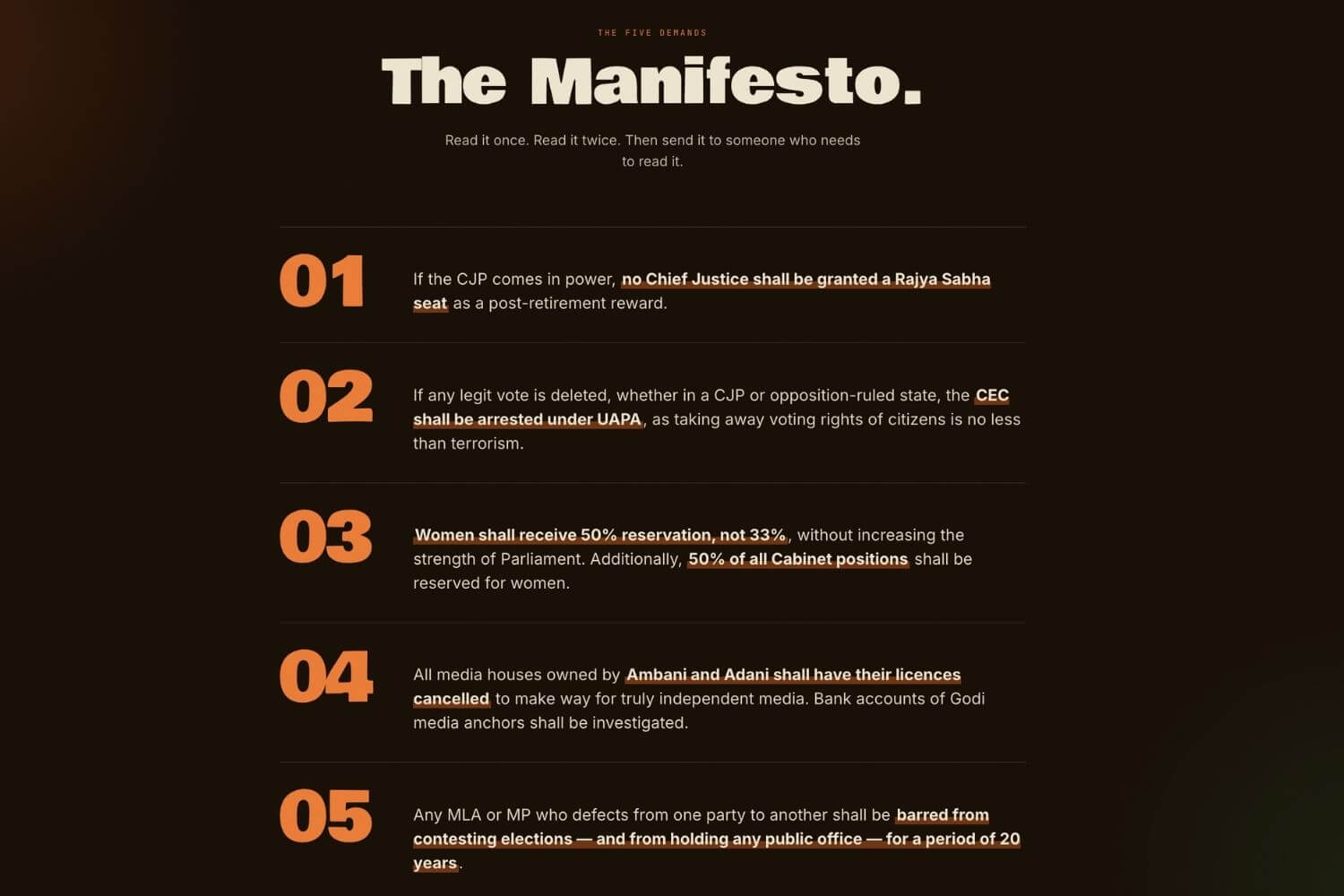
(Source: coackroachjantaparty.org)
Because the young people of India did not wait for context. They recognised something in that word, cockroach, that landed with a specific and familiar sting. They had heard it before, not from this CJI specifically, but from the ambient noise of a system that consistently frames their unemployment as a character flaw rather than a structural failure. And so they did what this generation does: they turned the insult into an identity. They built a party around it.
Watching this unfold from afar as an Indian, I felt the peculiar doubled vision. One part of me laughed out loud. The name, the manifesto, the satirical admission of politicians like Mahua Moitra and Kirti Azad as members, and the sheer chaotic energy of it all were genuinely funny in the way that only the most desperate political creativity can be. Abhijeet Dipke, the 30-year-old PR student at Boston University and former Aam Aadmi Party social media producer, who founded The Cockroach Janta Party, is doing something that deserves to be taken seriously, even if the form it takes is a joke.
But the other part of me felt the weight of what this moment reveals.
India’s youth unemployment is not a punchline. It is one of the most urgent crises facing the country’s future, and it has been treated, for too long, as background noise. The young people joining the Cockroach Janta Party in millions are not idiots playing on their phones. Many are educated, credentialed, capable, and locked out. They scroll job boards the way a previous generation scanned newspaper classifieds, with the same mixture of hope and dread. When a figure of the CJI’s stature, in a courtroom of that authority, reaches for the word “cockroach,” even if the intent was narrower, it tells you something about how the system perceives the surplus youth it has failed to absorb.
For Indians living overseas
This story carries a particular resonance. Most did not leave out of indifference to home but out of a quiet frustration with a system that kept promising and underdelivering. They studied hard, earned their degrees, did what was expected, and still found opportunity just out of reach. So they left, building lives in Australia, the UK, Canada, and the US while carrying India with them in their food, their festivals, and their homesickness.
Watching this generation face versions of the same wall, and now being labelled cockroaches for their trouble, is not easy to sit with. Because the country has grown. The GDP numbers are strong. The infrastructure is transforming. And yet here are millions of young Indians, rallying in six days behind an insect because it is the only symbol that feels honest.
The diaspora did not leave because they stopped believing in India. Many left because India could not find room for them at the time. That is the uncomfortable conversation the Cockroach Janata Party is quietly forcing, whether anyone in power is ready to have it or not.
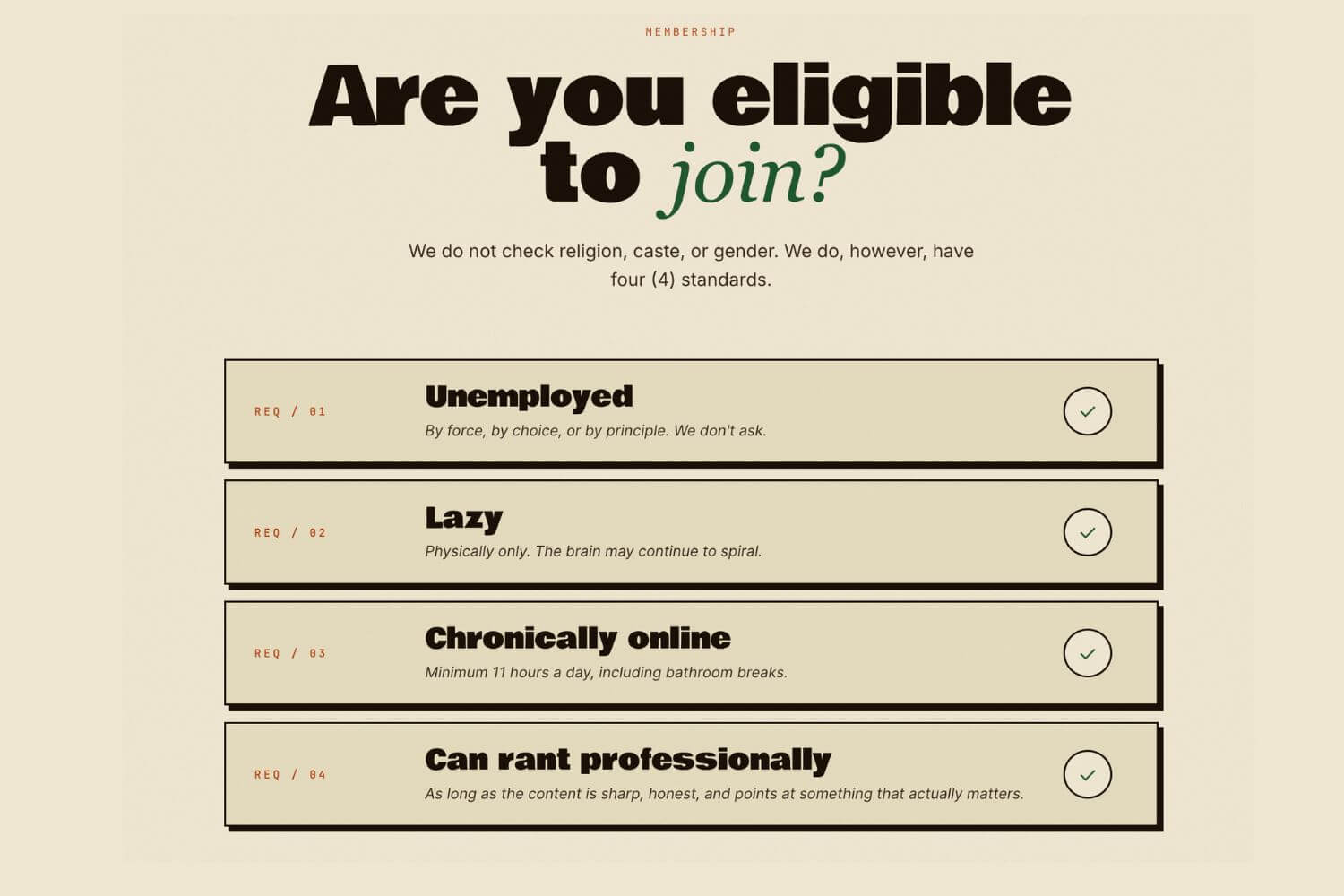
The CJP’s membership criteria (Source: coackroachjantaparty.org)
What makes the Cockroach Janata Party interesting, beyond the memes, is that it is not nihilistic. Its manifesto reportedly includes constitutional values alongside the satire. Its mission statement talks about building a party for young people who keep getting called lazy, chronically online, and now, most recently, cockroaches. That is not a movement that has given up on India. That is a movement that is furious enough to fight for it, even if the only tools currently available are irony and Instagram.
Satire has always been the weapon of those who have no other. From theatrical provocations to the long tradition of political cartoons that said what newspapers would not, India has a proud lineage of using absurdity to speak truth. The CJP fits squarely within that tradition.
Whether it remains a joke or becomes something more, I genuinely do not know. Political satire movements have a habit of burning bright and fading fast. The millions of members may not translate into ballot boxes. The Instagram followers may drift towards the next trending moment. But the anger that created the CJP will not evaporate. It will look for another form.
Anyone tempted to dismiss the cockroaches: underestimating them is exactly what created them.
Cutting Chai with Lakshmi Ganapathy is a monthly series of bite-sized interviews with prominent South Asians showcasing their career and personality and celebrating their South Asian Australian identity.
This month’s guest is NAKUL LEGHA, the Head of Scripted content at SBS. He has commissioned new and diverse voices through their flagship Originals and Digital Originals slate, and overseen award winning productions including Four Years Later, Reckless and The People vs Robodebt. Previously at Netflix, he was a Creative Executive on Boy Swallows Universe, Wellmania and ONEFOUR: Against All Odds.
Lakshmi Ganapathy: Do you think growing up without television in Bhutan gave you a clearer sense of what genuine attention feels like?
Nakul Legha: I was an only child; you learned to appreciate the power of your own imagination and your own company, and you also learned to make friends with your neighbours. There was a language barrier with the people that we lived around, but you found other ways to connect with people. You also spent a lot of time outdoors just making up things.
That joy of connection, of knowing that you can find play and imagination in whatever you have, that resourcefulness, I think that’s true of every migrant experience as well; you make do with what you can.
It was the most magical upbringing in the foothills of the Himalayas, looking every morning at tranquil, untouched forests and wildlife. It felt like something out of The Jungle Book.
Lakshmi Ganapathy: You wrote for SBS Voices about being obsessed with talkback radio kings like Alan Jones as a child; what responsibility does our media have in helping people understand Australia?
Nakul Legha: I think powerful media and storytelling help create connection, through both friction and celebration. Media can and should challenge assumptions, and in doing so, build empathy.
The world that I’m in – scripted drama and series – the great joy is we can use the make-believe. We can use larger-than-life characters and genres that audiences love, like romance, crime, thrillers to expand the imagination of what Australia can be.
I think about one of our recent dramas, Four Years Later, which is a romantic drama across India and Australia, it’s in Hindi and in English; an Irish-Australian colleague was brought to tears watching this because it brought to life his own journey of migrating and romance from Ireland to Australia. It’s that kind of connection and the bridges that we can build, especially through drama, that I think is special.
Lakshmi Ganapathy: You’ve said previously that ‘SBS are not in the volume game’ – do you think we’ve become too focused on quantity rather than quality with the advent of streaming?
Nakul Legha: At SBS, we’re the smaller public broadcaster, but we have a very timely and urgent charter responsibility around social cohesion. For us, it’s about commissioning distinctive, creatively ambitious series that have that something to say – that cut through the noise and stay with people, that move hearts and minds. That’s the north star in everything that we commission here.
Lakshmi Ganapathy: In these turbulent times, what is an ‘Australian’ story?
Nakul Legha: We spend a lot of time thinking about this. I think the best way I could frame it is in the same way there’s no one answer for ‘what is Australian cuisine’ when someone asks you what’s an Australian dish. An Australian story is one that looks and sounds as diverse as contemporary Australian audiences; the joy of that is that it can mean different things to different people.
Lakshmi Ganapathy: What’s something you’re currently listening to/reading/playing/watching?
Nakul Legha: Satinder Sartaaj. He’s playing a concert; my parents are going tonight to see him. I’ve been down in Canberra for Mother’s Day, and all weekend we’ve been listening to Satinder Sartaaj.
Lakshmi Ganapathy: What’s a word that you like in a South Asian language, and what does it mean?
Nakul Legha: Khatta meetha. I’m always thinking about food. Khatta meetha is great because it’s like the best of both worlds. I think that applies to so much of life – if you can have the best of all worlds, why not reach for it? It also speaks to great stories; they both challenge you and bring you great joy.
Lakshmi Ganapathy: And finally: Soan Papdi or Papdi Chaat?
Nakul Legha: Well, there are no rules to Papdi Chaat, and I love khatta meetha, so I’m going to sprinkle Soan Papdi on my Papdi Chaat and have the best of all worlds!
For years, many women heard the word PCOS and thought of cysts, infertility, weight gain or irregular periods. Now, PCOS has officially been renamed PMOS (Polyendocrine Metabolic Ovarian Syndrome).
The name sounds technical, but the reason is simple. The old name made people believe the condition was mainly about cysts on the ovaries. It is not. PMOS can affect periods, skin, hair growth, weight, fertility, mood, blood sugar, heart health and wellbeing across life.
A better name can lead to better understanding, earlier diagnosis and more respectful care.
Not just a “cyst problem”
The old term, polycystic ovary syndrome, caused confusion. Some women feared they had dangerous cysts. Others were told they could not have the condition because their scan did not show cysts.
Experts now stress that cysts are not the main story. A woman can have PMOS without ovarian cysts. It is a hormone and whole-body health condition.
PMOS is very common. The World Health Organization estimates that PCOS, now PMOS, affects about 10 to 13 per cent of women of reproductive age, and many remain undiagnosed. Other global estimates suggest it affects around one in eight women.
For Indian women, the concern is significant. Research in India has found that the condition may affect roughly 7 to 20 per cent of women, depending on how it is diagnosed. Many women with PMOS also have related problems such as weight gain, high cholesterol, fatty liver, blood sugar issues or higher diabetes risk.
In simple words: this is not rare. It is one of the most common women’s health conditions, yet it is still often missed.
Why Indian families need to talk about it
For women from collectivist, community-oriented cultures like South Asia, PMOS is not only a medical issue. It can become a family, social and emotional issue.
Periods are still not openly discussed in many homes. Facial hair, acne and weight gain can cause shame. Fertility is often linked to marriage expectations and a woman’s identity. A teenage girl with irregular periods may be told to ignore it. A married woman struggling to conceive may face pressure, pity or blame.
This silence delays care. Many women seek help only when pregnancy becomes difficult, even though symptoms may have started years earlier.
Migrant women can face extra barriers: language, stigma, and lifestyle advice that does not fit their cultural food habits, vegetarian diets, fasting practices, family routines or work stress. PMOS must be explained in a way families can understand – without shame and without blame.
One harmful myth is that women with PMOS are careless, lazy or undisciplined. This is wrong.
PMOS can affect how the body handles insulin, the hormone that helps control blood sugar. This can influence weight, cravings, tiredness, skin, periods and long-term health. Some women gain weight easily. Some struggle to lose weight despite serious effort. Some have PMOS even when they are not overweight.
Healthy food and movement are important, but “eat less and exercise more” is not enough. Women need proper checks, emotional support and long-term care.
The emotional cost is real
PMOS can affect confidence, relationships and mental health. A girl with acne may avoid social events. A woman with facial hair may feel embarrassed. A bride facing fertility questions may feel anxious. A woman struggling with weight may feel judged at home, at work and in the community.
Families can help by listening, avoiding hurtful comments and encouraging support.
PMOS is common. It is manageable. It is not a woman’s fault. (Source: Canva)
What will change in medical care?
The name change will not transform treatment overnight, but it should change how doctors and health systems approach the condition.
Future care is likely to look at the whole person, not only periods, fertility or ultrasound scans. Doctors may check earlier for diabetes risk, cholesterol, heart health, mental wellbeing, sleep problems and family history. Care may involve GPs, gynaecologists, hormone specialists, dietitians, fertility experts and mental health professionals working together.
What should women look out for?
Women and girls should seek advice if they have irregular or missed periods, acne, excess facial or body hair, scalp hair thinning, unexplained weight gain, dark skin patches around the neck or underarms, trouble becoming pregnant, mood changes or a family history of diabetes.
These signs do not always mean PMOS, but they should not be ignored.
From shame to understanding
The change from PCOS to PMOS is a chance to change how we talk about women’s health.
PMOS is common. It is manageable. It is not a woman’s fault.
It also reminds us that women’s health should not matter only when a woman wants to become pregnant. It matters in adolescence. It matters in young adulthood. It matters after childbirth. It matters through midlife and beyond.
PMOS is lifelong. It can affect physical, emotional, family and social life. But with earlier diagnosis, better awareness and more compassionate care, women can live healthier and more confident lives.
The name has changed. Now our understanding must change too.
Saif Ali Khan has spent the better part of the last decade trying to outrun the ghosts of his own charm. The floppy-haired romcom prince of the early 2000s has slowly traded cocktail banter for moral exhaustion, and in Netflix’s Kartavya, he once again walks into the darkness with remarkable ease.
Directed by Pulkit and backed by Netflix and Red Chillies Entertainment, Kartavya is the kind of gritty hinterland thriller Indian OTT platforms have become increasingly obsessed with. Dusty towns. Missing children. Corrupt babas. Broken systems. Men with tired eyes and heavier consciences.
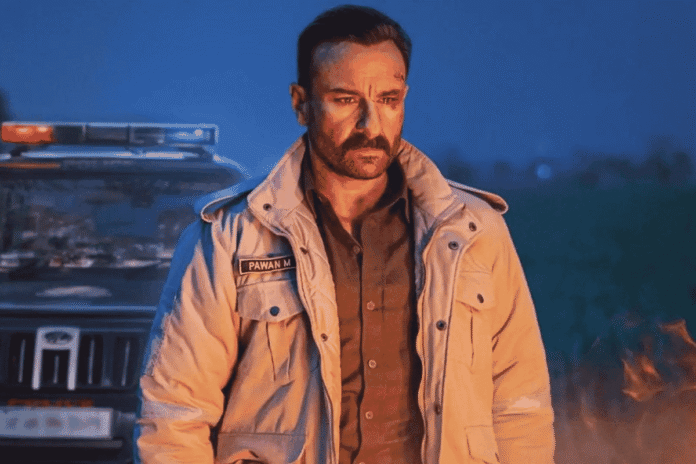
The setup is instantly familiar. SHO Pawan Malik (Saif Ali Khan) is a small-town Haryana cop investigating the disappearance of teenage boys, a case that slowly opens up a festering nexus of caste violence, political rot and exploitation hiding behind religious respectability. The film wants to talk about duty not as heroism, but as burden. And to its credit, it largely avoids turning Pawan into a massy saviour figure.
AT A GLANCE:
Film: Kartavya (NETFLIX)
Director: Pulkit
Producers: Gauri Khan, Shah Rukh Khan
Cast: Saif Ali Khan, Sanjay Mishra, Rasika Duggal, and Manish Chaudhry
Rating: ★★★☆☆
Saif Ali Khan does the heavy lifting
But what keeps Kartavya from becoming yet another algorithm-designed “serious OTT thriller” is Saif Ali Khan himself.
There is a weariness to his performance that feels lived-in. He plays Pawan like a man constantly negotiating with his own helplessness. Not angry enough to become rebellious, not compromised enough to look away. It is perhaps Saif’s most restrained performance since Sacred Games, carrying echoes of the vulnerability and unpredictability he once brought to Omkara.
And honestly, Saif carries this film on his back.
Because around him, Kartavya often struggles to decide what exactly it wants to be. Is it a social commentary? A crime procedural? A family drama? A caste critique? A psychological breakdown of a policeman? The film keeps dipping its toes into all these territories without fully immersing itself in any. The result is a thriller that remains engaging but rarely devastating.
Atmosphere over adrenaline
Pulkit creates atmosphere exceptionally well though. The film looks perpetually suffocated, narrow lanes, dim police stations, faded homes and dusty religious gatherings. Haryana here does feel exhausted.
Anil Mehta’s cinematography gives the film texture, while Anurag Saikia’s background score smartly avoids melodrama for most parts. Silence does a lot of heavy lifting here.
Rasika Dugal, despite limited screen time, once again proves how effortlessly she elevates scenes with minimal dialogue. Sanjay Mishra has presence, but the writing underuses him. This film also marks journalist Saurabh Dwivedi’s flat and underwhelming debut. The bigger problem lies with the antagonist track, which slowly slips into caricature territory. After a point, the film starts spelling out its politics instead of trusting viewers to absorb them.
A thriller that pulls its punches
And that is where Kartavya loses some of its sting.
For a film dealing with caste, abuse of power, and institutional complicity, it often feels strangely cautious. It wants to provoke without fully offending anyone. The anger never truly explodes. The rage remains sanitised. Even structurally, the film begins stronger than it ends. The first half builds tension patiently, but the climax arrives too hurriedly, almost as if the film suddenly remembers it has to wrap things up within runtime constraints. Some character arcs feel abandoned midway, and certain emotional payoffs simply don’t land with the impact they should have.
Yet despite its flaws, Kartavya remains watchable throughout because it understands one crucial thing many thrillers forget: mood matters. And Saif Ali Khan understands mood better than most mainstream Hindi film actors today.
There’s something deeply compelling about watching a star grow older on screen without desperately trying to appear younger, louder or cooler. Saif has quietly become one of Hindi cinema’s most interesting late-career actors, someone more interested in internal collapse than external swagger.
Kartavya may not reinvent the crime thriller wheel. In fact, at several points, it feels assembled from pieces of better shows and films we’ve already seen before. But even within its familiarity, it manages to hold your attention.
Mostly because Saif Ali Khan never lets the film completely slip away.
What drew you to corrections work, and what has kept you in it?
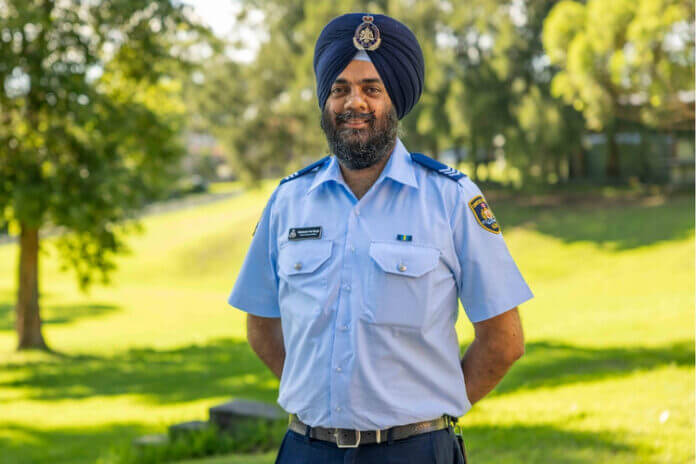
I wanted a career where I could make a real difference in people’s lives while serving the community. Since commencing my training at Brush Farm Corrective Services Academy in 2015, I’ve realised that this work is not just about security, it’s about people, resilience, and supporting change. What has kept me in the role is the opportunity to help staff and inmates through difficult situations, particularly through trauma-informed care, staff wellbeing initiatives, and mentoring younger officers.
What does a typical shift look like for you?
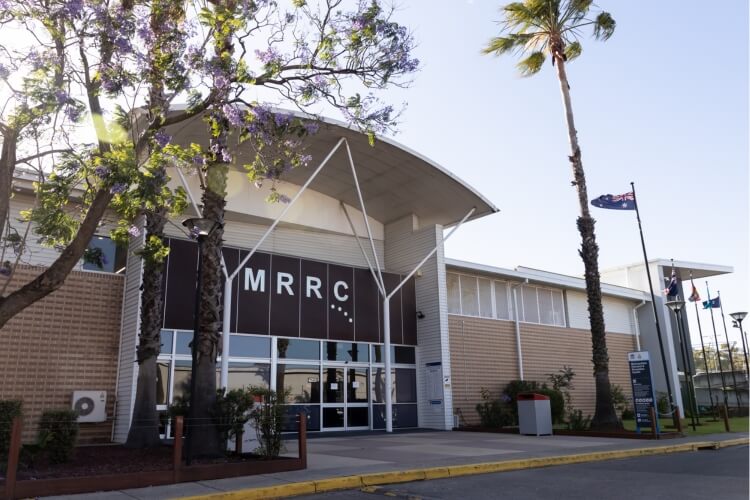
No two shifts are ever the same. A typical day involves supervising operations, ensuring safety and security, supporting staff, managing inmate welfare concerns, and responding to incidents when required. In my current role as Supervisor of the Mental Health Screening Unit at MRRC, I work closely with psychologists, psychiatrists, mental health nurses, and SAPOs to ensure vulnerable inmates receive appropriate support and safe management.
How do you build authority while maintaining respect with inmates?
Respect is built through consistency, fairness, and communication. I treat every inmate professionally and with dignity, while also maintaining clear boundaries and expectations. Authority comes from being calm, confident, and fair rather than aggressive.
What have you learnt about human behaviour through this job?
I’ve learnt that every person has a story, and many people entering custody are carrying trauma, addiction, mental health challenges, or difficult life experiences in their past. This role has taught me patience, empathy, and the importance of understanding behaviour rather than simply reacting to it. It has also reinforced how important structure, support, and positive role models can be in someone’s life.
Is there a moment that has stayed with you long after your shift ended?
Working in the Mental Health Screening Unit, there have been moments where vulnerable inmates were experiencing severe mental health crises. Supporting individuals during those critical moments and seeing collaborative intervention from staff and health professionals make a difference has stayed with me. It reminds me that our work can genuinely save lives.
What’s the toughest call you’ve had to make on the job?
Balancing security concerns with the wellbeing of vulnerable inmates or staff. In high-pressure environments, decisions often need to be made quickly while considering safety, mental health, and operational risks at the same time. Those moments require calm judgment, adaptability, and teamwork.
Correctional Officer Mohinder Singh works at the Metropolitan Remand and Reception Centre (MRRC), a maximum-security correctional facility for male offenders (Source: Service NSW)
How do you manage conflict or tension when situations escalate?
I rely heavily on communication, de-escalation, and remaining calm under pressure. My experience in negotiation, mental health training, “5-Minute Intervention”, trauma-informed practice, and conflict management training programs provided by the Department has taught me that listening, remaining professional, and responding calmly can often prevent situations from escalating further.
Working in corrective services, particularly within the Mental Health Screening Unit at MRRC, has reinforced the importance of understanding behaviour, identifying early warning signs, and adapting communication approaches based on the individual and the situation. Safety always comes first, but respectful communication, empathy, and professionalism are equally important in achieving positive outcomes and maintaining stability within the correctional environment.
What misconceptions do people have about correctional facilities?
A common misconception is that corrections work is only about locking people up. In reality, correctional facilities are complex environments focused on security, rehabilitation, mental health support, education, and reintegration. Officers are not just security personnel – they are mentors, communicators, first responders, and support systems.
Do you see your role as part of rehabilitation, security, or both?
Definitely both. Security is essential because without safety and order, rehabilitation cannot occur. At the same time, every professional interaction with an inmate can influence behaviour, accountability, and rehabilitation outcomes. The two go hand in hand.
What does success look like in your job?
Success means ensuring everyone goes home safely at the end of the day. Sometimes success is preventing a crisis before it happens.
Have you witnessed a genuine turnaround in someone?
Yes, I’ve seen inmates who arrived with significant behavioural or mental health challenges gradually begin engaging with support services, education, and structured wellbeing activities, leading to genuine positive change.
In the Mental Health Screening Unit, I often encourage inmates to do constructive and therapeutic activities such as colouring sheets, sketching, drawing, jigsaw puzzles, and other structured programs that help individuals occupy their minds in a positive and calming way. These activities can reduce stress, improve focus, and provide a healthy outlet for emotions, particularly for inmates experiencing anxiety, trauma, or mental health challenges.
Over time, I’ve witnessed individuals become more cooperative, emotionally stable, and willing to engage with our staff and support services.
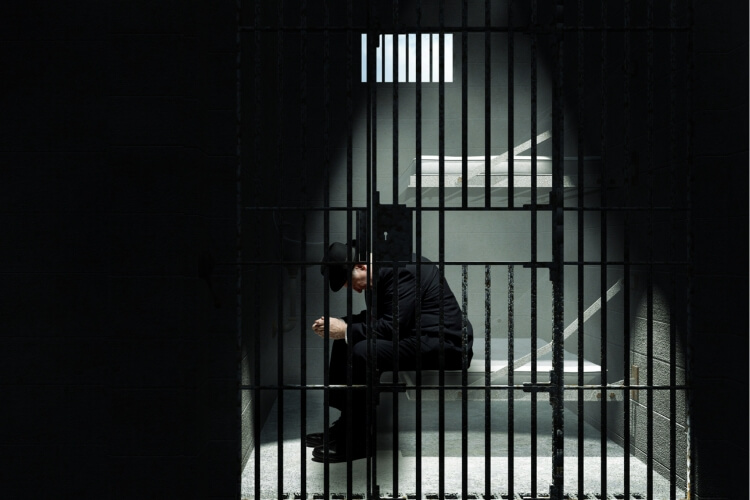
Many people entering custody are carrying trauma, addiction, mental health challenges, or difficult life experiences in their past (Source: Canva). Correctional Officer Mohinder Singh
How do you switch off after a difficult day?
I focus on family, community involvement, fitness, and cultural activities to maintain a healthy balance outside of work. Running Bhangra programs, playing badminton, and cycling help me stay physically active, mentally refreshed, and connected to the community in a positive way.
As a Peer Support Officer at MRRC, I also strongly believe in the importance of peer support, wellbeing programs, and maintaining healthy conversations with colleagues. In corrective services, looking after your own mental wellbeing is extremely important, and having strong support networks both inside and outside the workplace plays a key role in maintaining resilience and long-term wellbeing.
Has the job changed how you see people – or the world?
Yes, it has made me more understanding and less judgmental. It has reinforced that people are capable of both poor decisions and positive change. It has also strengthened my appreciation for resilience, teamwork, and community support.
What’s the most unusual part of your job?
The unpredictability and the wide range of situations you may face within a single shift. In one day, you might manage operational issues, support someone experiencing a mental health crisis, mentor junior staff, and coordinate wellbeing initiatives for employees all while responding to rapidly changing situations within the correctional environment.
What would people be surprised to know about correctional officers?
People are often surprised by how much emphasis there is on communication, empathy, mental health awareness, rehabilitation, and staff wellbeing within corrective services. Many people assume the role is only focused on security, but correctional officers are regularly dealing with complex human situations that require patience, professionalism, emotional intelligence, and strong communication skills.
Correctional officers support people during some of the most difficult moments of their lives, including mental health crises, personal trauma, addiction, and emotional distress. At the same time, we also support one another through teamwork, peer support, and wellbeing initiatives, because the job can be mentally and emotionally demanding.
The role requires balancing safety and security with compassion, fairness, and rehabilitation, which is something many people outside the profession may not fully realise.
If you had to describe your work in three words, what would they be?
Every year, tonnes of eucalyptus bark are stripped off trees, dumped, burned or left to rot as forestry waste. But researchers at RMIT University have happened to turn this discarded environmental material into gold…well, not literally! According to researchers, the eucalyptus bark can be used in the fight against climate change by simply trapping carbon dioxide from the air.
In a breakthrough study, a team led by Professor Suresh Bhargava AM has converted eucalyptus bark into a highly porous carbon material capable of capturing significant amounts of CO₂, one of the main greenhouse gases driving global warming.
The material, developed from what is typically treated as low-value forestry waste, demonstrated “very strong” carbon capture performance, absorbing nearly 7 mmol of CO₂ per gram.
“We started this research with a simple question: Can we turn low-value forestry waste into something useful for climate and environmental applications?” Bhargava said.
“A lot of current carbon capture materials are either expensive, energy-intensive, or made from non-renewable sources like coal,” he added.
The research taps into a growing global push to find sustainable and affordable technologies for carbon capture as governments struggle to curb emissions.
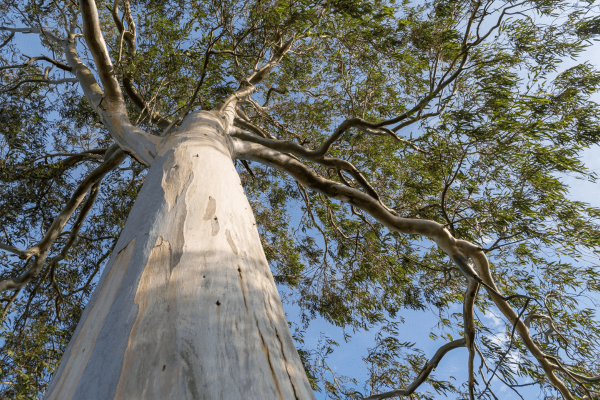
Eucalyptus bark proves more useful in absorbing CO2 than leaves, sustainable and cost effective (Source: Canva)
Trash to treasure
What surprised the researchers was just how useful the eucalyptus bark could be.
“We compared bark with eucalyptus leaves during the study,” Bhargava reveals. “What became very clear from the experiments was that the bark consistently outperformed the leaves.”
According to the team, eucalyptus bark produced higher surface area, stronger structural stability and significantly better CO₂ adsorption capacity than leaves.
“Scientifically, this is mainly because eucalyptus bark contains higher lignin and cellulose content, lower ash content, and a denser carbon framework compared with the leaves.”
These properties help create stable porous carbon structures during activation.
“That was the point where we realized eucalyptus bark was not simply forestry waste — it was actually an excellent precursor for advanced filtration and carbon capture materials,” he said.
The science behind the material is surprisingly simple in concept.
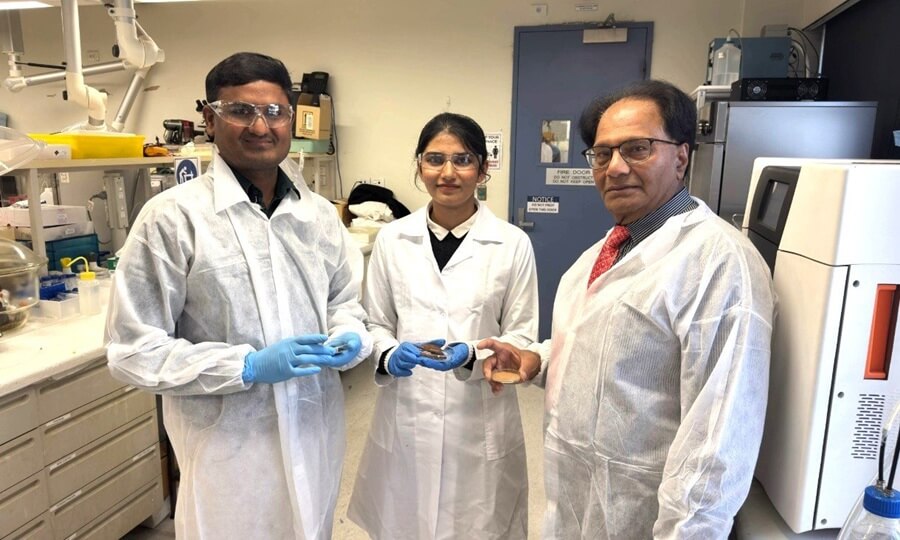
Prof. Suresh Bhargava AM with his research team (Source: Supplied)
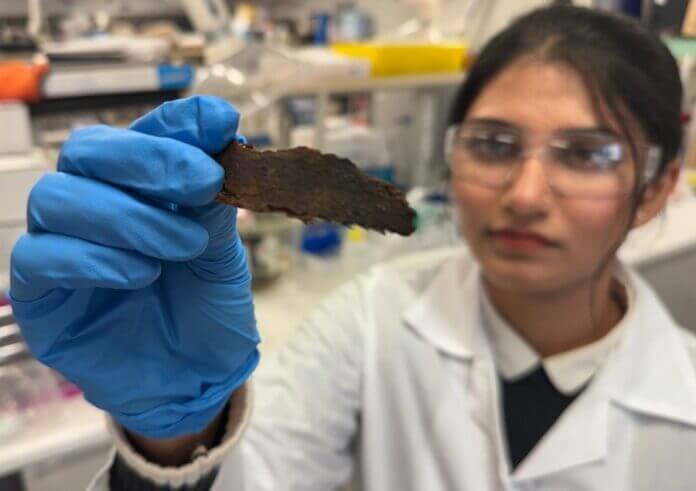
Researchers first subjected the bark to hydrothermal treatment, converting it into a carbon-rich substance known as hydrochar. The material was then heated at high temperatures under nitrogen with an activating agent, creating countless microscopic pores throughout the carbon structure.
“These microscopic pores are what make the material effective,” Bhargava continued. “Gas molecules like CO₂ get trapped inside the pore network, almost like a sponge soaking up water.”
The potential impact
Beyond the lab, the implications could be significant.
Because eucalyptus bark is abundant, renewable and inexpensive, the team believes the technology could eventually support industrial carbon capture systems, indoor air purification and even future urban filtration technologies.
“It will not solve air pollution alone,” Bhargava cautioned, “but scalable low-cost adsorbents like this could become an important part of broader climate mitigation strategies.”
The work may hold particular relevance for countries such as India, where both biomass waste and dangerous air pollution levels remain major challenges.
Still, the technology is not yet ready for widespread commercial rollout.
“The proof of concept has already been demonstrated successfully, but there are still challenges before full industrial deployment,” he explains.
The biggest challenge is scaling up production while maintaining the same pore structure, adsorption performance, and economic feasibility. “Future work needs to focus on: reactor design, energy efficiency, long-term durability, and integration into existing carbon capture systems,” he advises.
Towards a sustainable future
The project marks an important milestone for early-career researcher Pallavi Saini, who worked extensively on the experimental side of the study.
“I was involved in the experimental work, material synthesis, characterization, data analysis, and manuscript preparation,” she said.
For Saini, the project has reinforced her commitment to sustainable materials research.
“I am especially interested in research that combines advanced materials science with real environmental impact. That includes areas like carbon capture, waste valorisation, and sustainable energy materials,” she told Indian Link. eucalyptus bark reduces pollution
For her, the most meaningful research is work that can move beyond the laboratory and contribute to practical solutions for global challenges.