


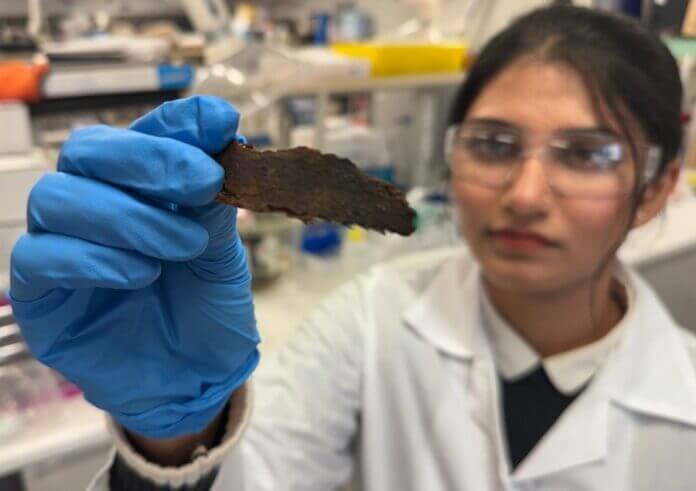

eucalyptus bark reduces pollution
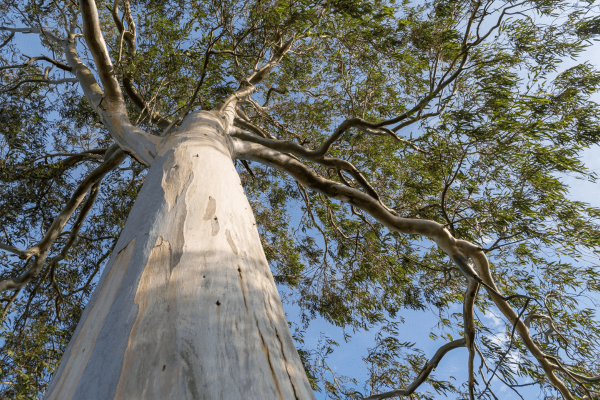
Every year, tonnes of eucalyptus bark are stripped off trees, dumped, burned or left to rot as forestry waste. But researchers at RMIT University have happened to turn this discarded environmental material into gold…well, not literally! According to researchers, the eucalyptus bark can be used in the fight against climate change by simply trapping carbon dioxide from the air.
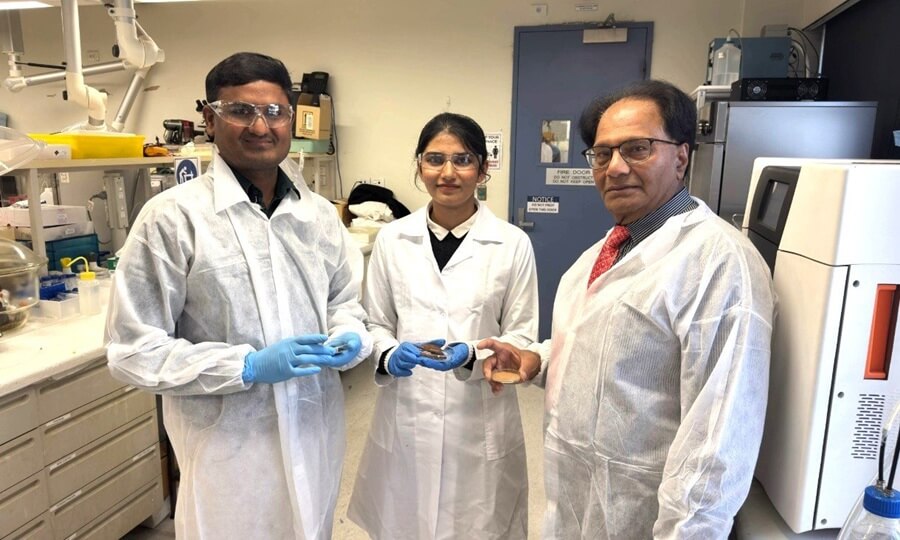
In a breakthrough study, a team led by Professor Suresh Bhargava AM has converted eucalyptus bark into a highly porous carbon material capable of capturing significant amounts of CO₂, one of the main greenhouse gases driving global warming.
The material, developed from what is typically treated as low-value forestry waste, demonstrated “very strong” carbon capture performance, absorbing nearly 7 mmol of CO₂ per gram.
“We started this research with a simple question: Can we turn low-value forestry waste into something useful for climate and environmental applications?” Bhargava said.
“A lot of current carbon capture materials are either expensive, energy-intensive, or made from non-renewable sources like coal,” he added.
The research taps into a growing global push to find sustainable and affordable technologies for carbon capture as governments struggle to curb emissions.
Trash to treasure
What surprised the researchers was just how useful the eucalyptus bark could be.
“We compared bark with eucalyptus leaves during the study,” Bhargava reveals. “What became very clear from the experiments was that the bark consistently outperformed the leaves.”
According to the team, eucalyptus bark produced higher surface area, stronger structural stability and significantly better CO₂ adsorption capacity than leaves.
“Scientifically, this is mainly because eucalyptus bark contains higher lignin and cellulose content, lower ash content, and a denser carbon framework compared with the leaves.”
These properties help create stable porous carbon structures during activation.
“That was the point where we realized eucalyptus bark was not simply forestry waste — it was actually an excellent precursor for advanced filtration and carbon capture materials,” he said.
The science behind the material is surprisingly simple in concept.
Researchers first subjected the bark to hydrothermal treatment, converting it into a carbon-rich substance known as hydrochar. The material was then heated at high temperatures under nitrogen with an activating agent, creating countless microscopic pores throughout the carbon structure.
“These microscopic pores are what make the material effective,” Bhargava continued. “Gas molecules like CO₂ get trapped inside the pore network, almost like a sponge soaking up water.”
The potential impact
Beyond the lab, the implications could be significant.
Because eucalyptus bark is abundant, renewable and inexpensive, the team believes the technology could eventually support industrial carbon capture systems, indoor air purification and even future urban filtration technologies.
“It will not solve air pollution alone,” Bhargava cautioned, “but scalable low-cost adsorbents like this could become an important part of broader climate mitigation strategies.”
The work may hold particular relevance for countries such as India, where both biomass waste and dangerous air pollution levels remain major challenges.
View this post on Instagram
Still, the technology is not yet ready for widespread commercial rollout.
“The proof of concept has already been demonstrated successfully, but there are still challenges before full industrial deployment,” he explains.
The biggest challenge is scaling up production while maintaining the same pore structure, adsorption performance, and economic feasibility. “Future work needs to focus on: reactor design, energy efficiency, long-term durability, and integration into existing carbon capture systems,” he advises.
Towards a sustainable future
The project marks an important milestone for early-career researcher Pallavi Saini, who worked extensively on the experimental side of the study.
“I was involved in the experimental work, material synthesis, characterization, data analysis, and manuscript preparation,” she said.
For Saini, the project has reinforced her commitment to sustainable materials research.
“I am especially interested in research that combines advanced materials science with real environmental impact. That includes areas like carbon capture, waste valorisation, and sustainable energy materials,” she told Indian Link. eucalyptus bark reduces pollution
For her, the most meaningful research is work that can move beyond the laboratory and contribute to practical solutions for global challenges.
READ ALSO: The shelf life scientist: Prof Zora Singh wins world honour in horticulture