



Small particles, massive problem. Micropollutants are polluting our waterways, our air, our soil and even our organs.
But an Australian invention quickly removing these hazardous substances from water has shown promise, taking us one step closer to undoing environmental harm. RMIT PFAS
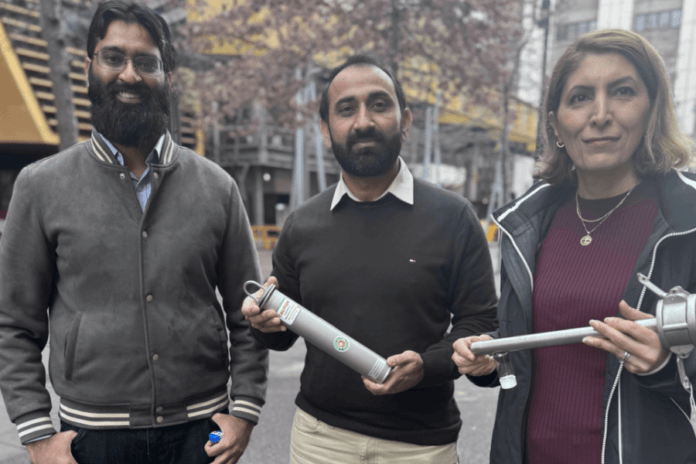
Alongside colleague Professor Nicky Eshtiaghi from the RMIT University School of Engineering, Associate Professor Nasir Mahmood and Dr Muhammad Haris have created a magnetic, adsorbent compound which can be added to wastewater to gather and remove micropollutants.
“We imparted magnetic properties to our adsorbent…then we apply an external magnet and it collects all the pollutant particles loaded on top of the compound out of the water,” says Dr Haris.
“It’s like if you put food in a pond and all the fishes come to eat that food – as the food moves, the fishes move behind the food – the particle does the same thing,” Associate Professor Mahmood explains.
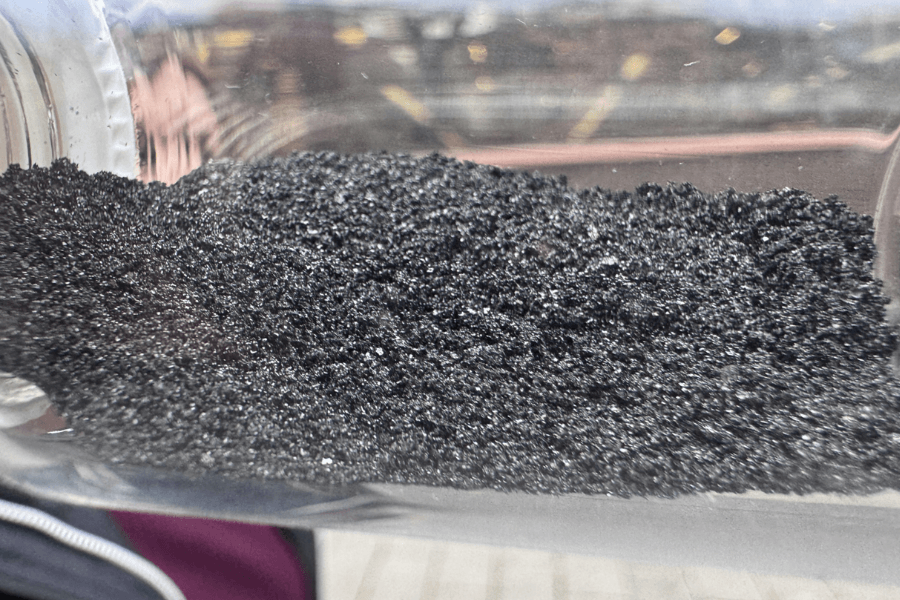
Crucially, this compound is one of the first to also remove PFAS and dissolved contaminants like heavy metals, dyes and ibuprofen. After successfully cracking microplastic removal in 2022, the team adjusted their compound for multiple micropollutants, formulating a cost-effective and scalable solution for a major environmental issue. RMIT PFAS
When tested, the compound removed 90 per cent of these mixed contaminants, and 95 per cent of micro‑plastics within an hour.
“If we are standing on a floor that has an oil spill, dust, other solids…it becomes a nightmare to clean with one small cloth piece. So you think how you can modify this cloth so we can get rid of everything in a single wipe – like putting it on a stick, putting detergent on it,” says Associate Professor Mahmood.
“That was the same concept behind our invention – what can we do that is affordable, can be produced at scale, and can clean everything from the water.”
What is micropollution?
Plastic takes around 20-500 years to break down, and as it degrades, it becomes microplastic – dangerous fragments invisible to the naked eye, releasing harmful chemicals.
Similarly, PFAS are a group of synthetic substances resistant to heat, oil, stains, grease, and water making them hard to destroy, hence the name ‘forever chemicals’. Often used to coat non-stick cookware and waterproof textiles, PFAS can cause cancers and hormonal disruptions in humans and animals, as well as stunting plant growth. RMIT PFAS
Dr Haris and Associate Professor Mahmood have spent the past 15 years developing a scalable solution to these micropollutants and have now reached the stage of collaborating with local and international companies to treat their industrial water.
“We’ve been working for the last 15 years to clean the water, this precious blessing of this planet that lets us survive,” says Associate Professor Mahmood.
“Dr Haris spent four to five years designing this material from scratch. We’re now close to commercial trials on this adsorbent in industrial and municipal wastewaters.”
With limited research into the true severity of PFAS, microplastics and other micropollutants in our water, Dr Haris initially found designing a solution to water contamination challenging.
“It was very frustrating because there was not enough data at that time available and we were trying to solve a problem which was quite new,” he remembers.
RMIT PFAS
“It was a hectic first few years, but ultimately once we had some success, it was quite exciting – not only is it working, but it is removing multiple pollutants.” RMIT PFAS
They are particularly excited about the compound’s potential to address water scarcity in developing countries, caused by their sizeable agricultural and manufacturing industries.
“This invention will definitely be a game changer back home,” Associate Professor Mahmood notes. “Specifically with the growing industry, this kind of invention becomes more critical – the more manufacturing and agriculture the more polluted water we get.”
Seeking investment to make the invention commercially available, they hope to one day implement the compound in both businesses and homes.
“It’s attracting the attention of the policymakers; we’ve even talked to EPA about this. We are very happy to see different spokes bodies are appreciating it. But we are waiting for that time when it will be first implemented in a commercial aspect and we can see that it is really benefitting society,” Associate Professor Mahmood says. RMIT PFAS
READ ALSO: The AI device turning mosquito hums into life-saving insights