


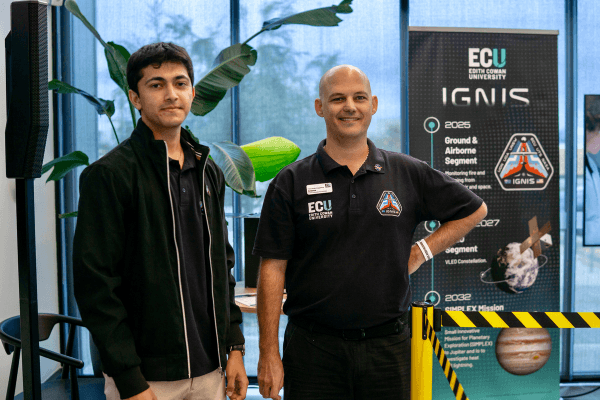

Yash Fatania
In October or November last year, Yash Fatania’s supervisor gave him a hint: he might get the opportunity to work on a satellite the following year.
Then, nothing.
The idea went quiet until February 2026, when the team finally came together and the possibility suddenly became real. Fatania, an Edith Cowan University engineering graduate, was going to work on hardware that would eventually travel into space.
“I felt a mix of things at once, but mostly disbelief,” he tells Indian Link in a candid chat. “I couldn’t believe I would be putting my hands on hardware that was actually going to space.”
A few months later, in June, the experience became even more tangible. During Assembly, Integration and Testing (AIT), Fatania signed the satellite himself.
“That was the moment it stopped feeling abstract.”
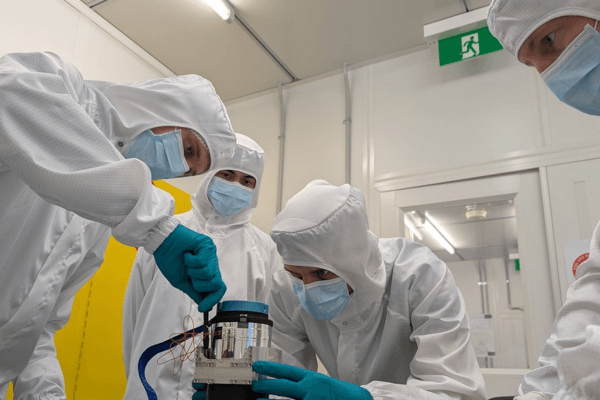
The satellite Fatania helped integrate alongside fellow ECU student Andrew Burton is scheduled to launch aboard a SpaceX Falcon 9 rocket in 2027.
NO ROOM FOR ERROR
Born and raised in Kenya, Fatania is of Indian heritage and has built his engineering career in Australia.
Getting his hands on space-bound hardware was the culmination of months of work; this included preparing ECU’s newly opened ISO 6 (Class 1000) cleanroom to meet the standards required for space-related work.
The facility would eventually become the setting for Fatania’s experience with the satellite, where he worked alongside professionals from LC60 AI – LatConnect 60 and engineers from Lithuanian small satellite integrator Kongsberg NanoAvionics.
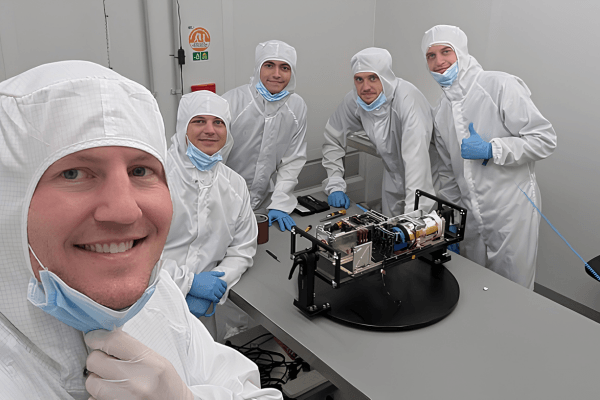
For Fatania, preparing the facility itself offered an early lesson in just how much work happens before a satellite can even be touched.
There was extensive documentation to work through, environmental controls to establish, alarms to configure, and strict guidelines to meet. Coordinating between different parties to keep everything moving was another challenge.
“At the time, I questioned how much paperwork we had to work through,” Fatania shares.
Looking back, however, he sees the documentation as an essential part of the process. Every requirement, from cleanliness and environmental conditions to compliance and certification, mattered.
“Space is not easy,” he confesses. “There is no room for error.”
THE SKY IS THE LIMIT SPACEX FALCON 9
The months of preparation finally paid off when the first satellite entered the facility.
Then came the part Fatania had been waiting for: working directly with the hardware that would eventually travel into orbit.
The payload integration was “very intense”. Early in the process, the team encountered a hardware issue that required them to rethink how a component would fit and sit inside the satellite housing. It took several days of analysis and discussion before they found a safe way to package it.
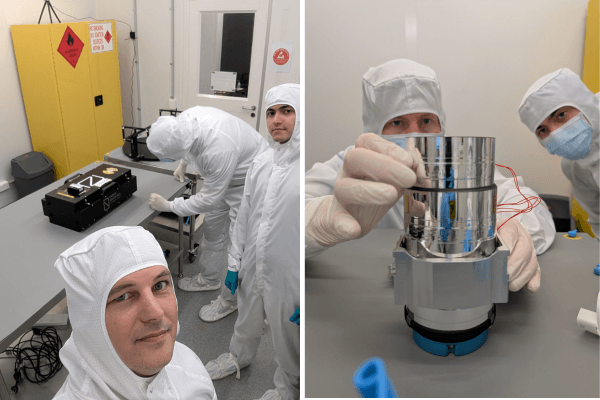
Later, they encountered a technical issue involving communication between different systems on board. The team spent about three days testing possibilities one at a time before identifying the cause.
For Fatania, both incidents reinforced the same lesson: engineering is often about resisting the urge to rush.
“Slow down, go back to first principles, and work the problem methodically until it broke.”
As the intern in the room, Fatania says the pressure of working on hardware destined for space manifested mainly in the questions he found himself asking.
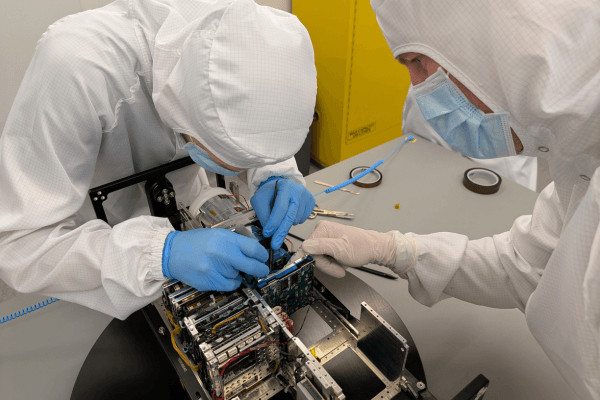
There was little tolerance for shortcuts. From gowning up and entering the cleanroom correctly to handling tools and hardware, every step had to be carried out with precision. Yash Fatania
“There was no room for compromise anywhere,” he says.
Every action was checked, then checked again, then checked a third time before anyone touched the hardware.
“You don’t see this level of precision at a mechanic’s garage or a construction site. It is a different standard altogether.”
AIMING FOR THE STARS
One of the most rewarding moments came when the team encountered an issue involving a connector cable. Rather than immediately testing possible solutions on the physical hardware, Fatania suggested working through the problem in CAD first.
The approach meant the team could test a solution virtually before taking any risk with the real hardware.
The eventual testing was a collective effort, with the team brainstorming ideas and working through the options together. But for Fatania, being able to contribute to the process and see an idea led to a practical solution was significant.
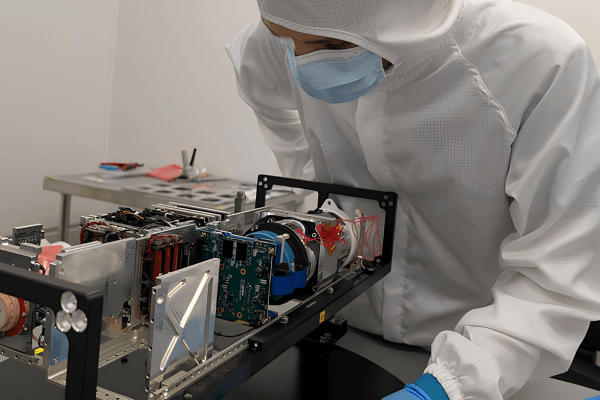
Fatania says, “What stood out most was watching basic principles from the classroom get applied practically. Recalling the theory and then seeing it play out in real hardware and real decisions is what made everything click into place. That’s something a lecture or a textbook can only take you halfway toward.”
The satellite is part of LC60’s SWIRSAT1 mission, designed to capture high-resolution data on carbon emissions and environmental changes.
Before working on SWIRSAT1, Fatania had already been considering whether he might move towards the space industry. But there was another field competing for his attention: aircraft.
Now, he finds himself genuinely caught between the two. Yash Fatania
“Right now, I’m genuinely torn between the world of spacecraft and the world of aircraft, and I’m still figuring out where I land.”
For other young students, his advice is simple: “Be bold. Take risks.”
“Don’t let your dream stay a dream. Push boundaries, chase growth and change, and you’ll see it turn into reality right in front of you.”
READ ALSO: Astronauts Suni Williams and Butch Wilmore splash back home