


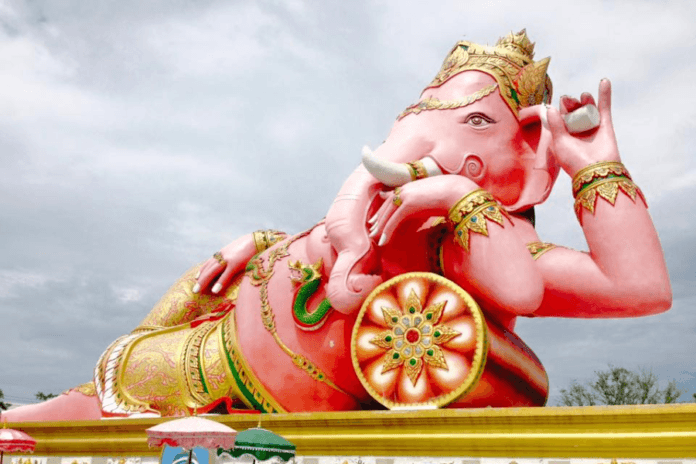

As lamps are lit and modaks are readied for Ganesh Chaturthi this week, it’s worth remembering that Ganpati Bappa’s fan base was never confined to Indian shores. Long before Instagram carousels of pandal-hopping and pravasi visarjan processions, the elephant-headed god had already made himself at home in the temples, art and everyday rituals of Southeast and East Asia, and inside two of India’s own other great faiths, Buddhism and Jainism.
The god who travelled with traders and monks
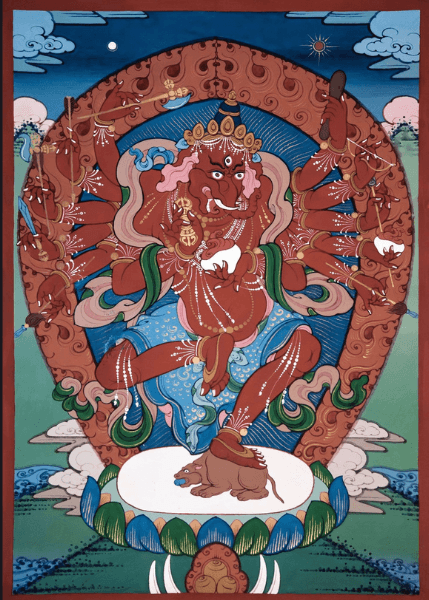
Ganesha’s journey outward began not with conquest but with commerce and pilgrimage. Historians trace it to centuries of cultural osmosis that carried Indian religion, philosophy, language, art and social custom from Afghanistan in the west all the way to Japan in the east, and from Tibet in the north down to Indonesia in the south. As Hindu and Buddhist merchants, sailors and monks moved along old trade routes, they carried their gods with them, and Ganesha, invoked before any new undertaking, was a natural travelling companion. His imagery has turned up not only across South-east Asia, Indonesia, Cambodia, Thailand, Malaysia, Laos and Vietnam, but also in China, Japan, Afghanistan, Nepal, Mongolia, Sri Lanka, Myanmar, Borneo and even Mexico, taking on distinctly local flavours wherever he landed.
Thailand’s beloved Phra Phikanet
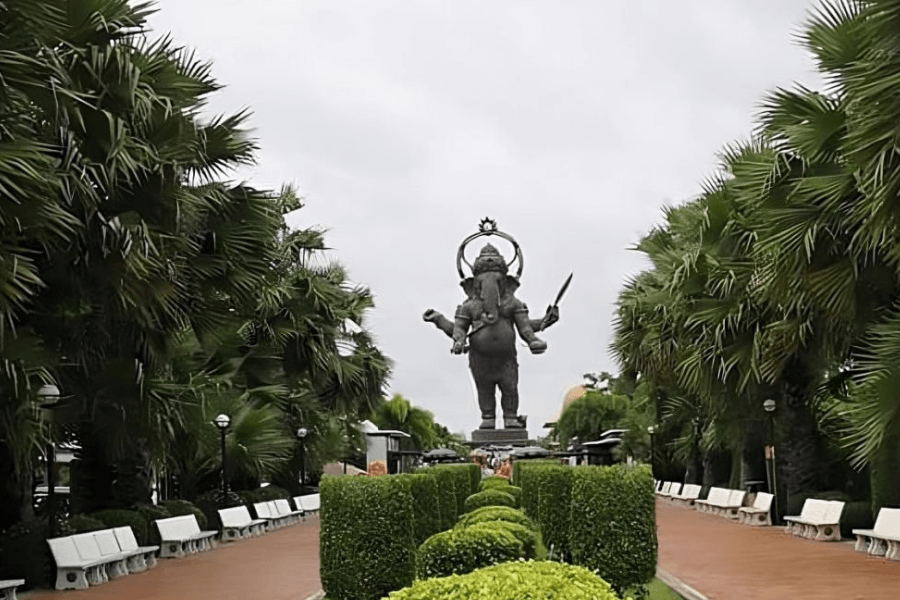
In Thailand, a predominantly Buddhist country, Ganesha has become something close to a national mascot for success. Known there as Phra Phikanet, he is worshipped as a deity of fortune who helps devotees overcome life’s obstacles, often depicted in royal Thai regalia and closely associated with the arts and academic pursuits; Thai students still pray to him before exams, much as they do in India. Scholars who have studied the phenomenon in Chiang Mai note that it arrives wrapped in visible “Indian-ness”: ceremonies there often feature Indian clothing, Indian food and processions accompanied by Indian music and dance, blending genuine devotion with a kind of cultural tourism of India itself. Thai businesspeople, meanwhile, routinely pray to him before launching a new venture, just as devotees do back home.
Java, Bali and the old Hindu kingdoms of Indonesia
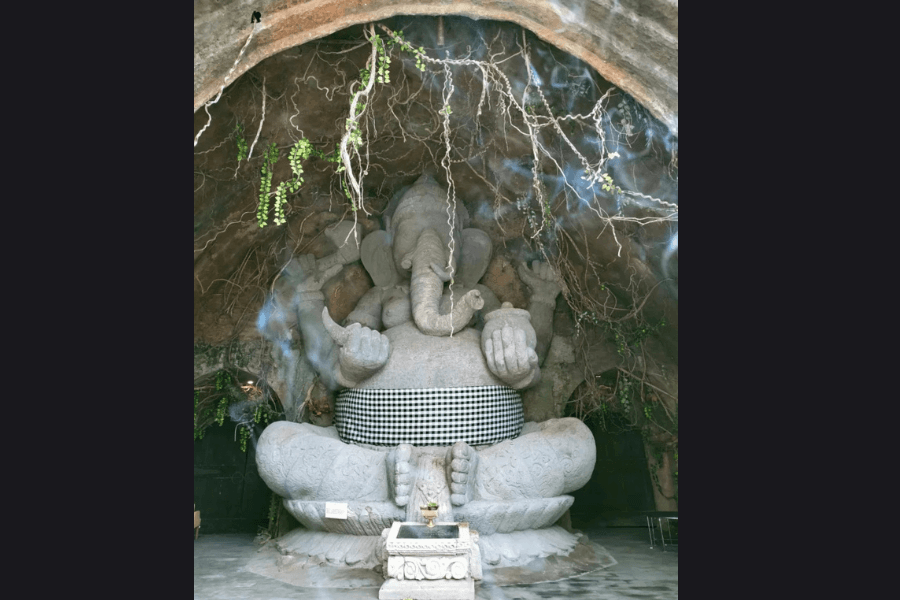
Indonesia offers some of the oldest and most spectacular evidence of Ganesha worship outside India. He is revered there, especially in Bali, as the god of luck, wisdom and new beginnings, and historical records suggest he was already a major deity by the 7th and 8th centuries, worshipped there alongside Vishnu, Shiva and Saraswati. Java in particular is home to ancient Ganesha temples, including the Candi Ganesha within the Prambanan complex, a UNESCO World Heritage site in Central Java. He was a significant deity under the old Majapahit empire, rendered with distinctly local features, and his statues remain a common sight in Bali today, where Hinduism is still the predominant religion.
Kangiten: Ganesha’s esoteric Japanese incarnation
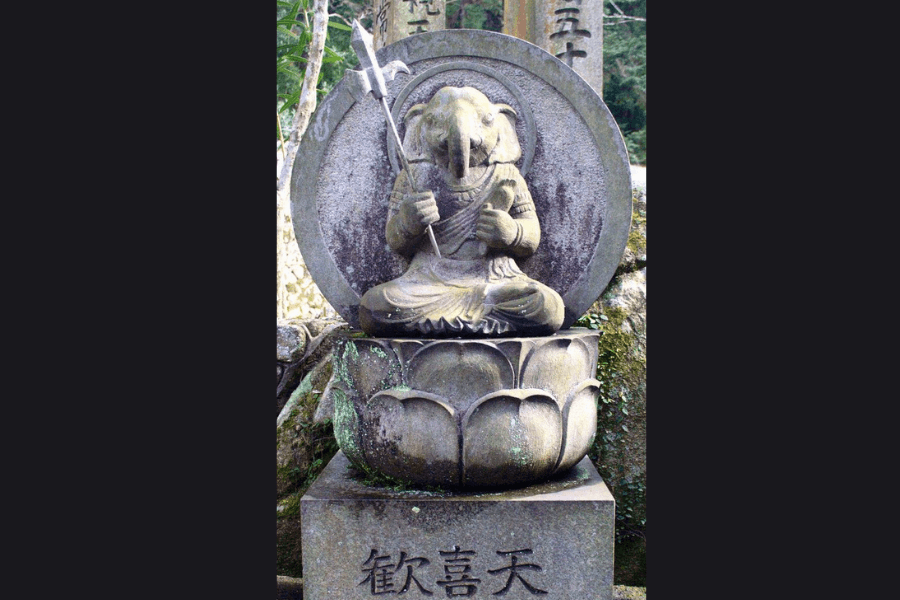
Perhaps the most fascinating transformation happened in Japan, where Ganesha entered through the side door of Buddhism. Known there as Kangiten or Binayaka-ten the deity of bliss, joy and good fortune, he is honoured at temples across the country, most prominently the 17th-century Hōzan-ji Temple on Mount Ikoma near Osaka and the far older Matsuchiyama Shoden Temple in Tokyo, which dates back to the 6th century. The Japanese form looks strikingly unlike the Indian original: Kangiten is often shown as a dual, embracing male-female deity symbolising the union of opposites, an adaptation that blends Shinto, Buddhist and Hindu sensibilities and leans into harmony and prosperity rather than the mischief and appetite Ganesha is known for at home. Even the offerings differ rather than the modaks he receives in India, devotees in Japan offer him daikon radish. This particular form travelled to Japan by way of China, where an esoteric, Tantric-inflected image of two embracing elephant-headed figures appears as early as the sixth century.
Ganesha in Buddhism more broadly
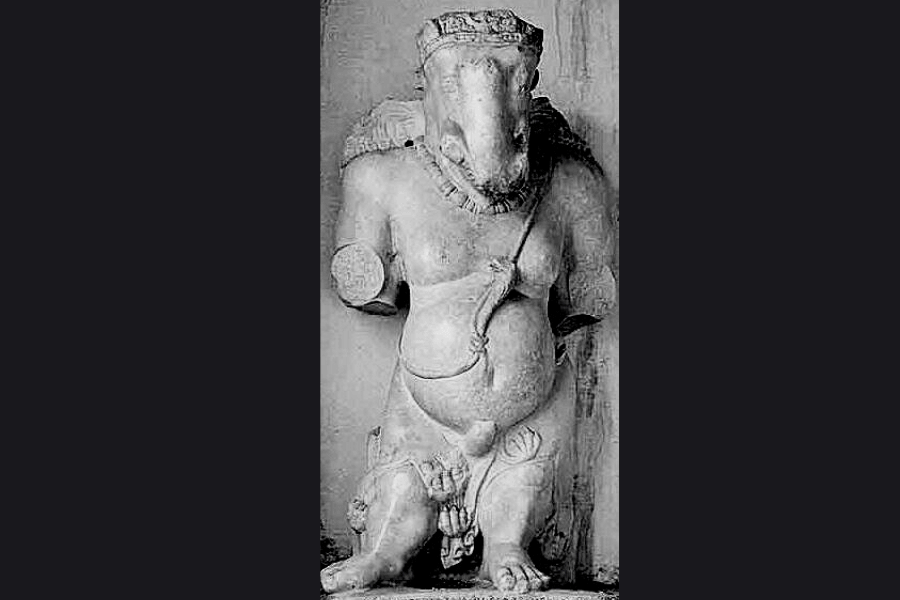
Japan is only the most visible example of a much wider pattern. Devotion to Ganesha is widely diffused well beyond Hinduism itself, extending to Buddhists and Jains, right across Asia and beyond. Buddhist communities in China, Tibet, Japan and Southeast Asia absorbed him into their own traditions over the centuries, venerating him for his generosity, his problem-solving powers, and his gifts of prosperity and success. Even in Afghanistan, he was once known as Maha Vinayaka, carried there alongside other Hindu and Buddhist deities; an early sixth-century image of him still sits today in the Dargah Pir Rattan Nath in Kabul. He remains a familiar figure in Japan and Mongolia, even though his presence has faded considerably in China and Korea, where his imagery first appeared as far back as the sixth century.
The quieter, more contested worship among the Jains
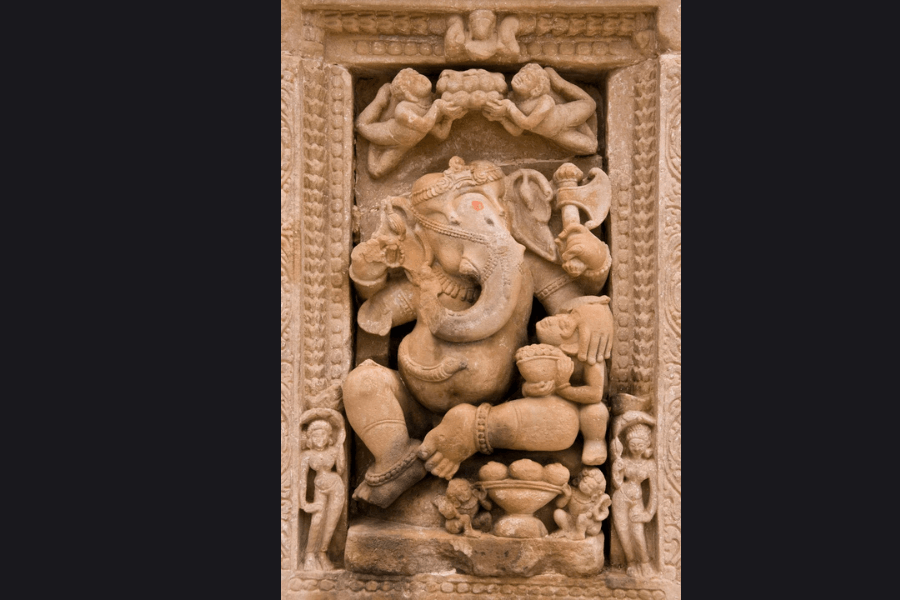
Most Jains do venerate Ganesha in some form, and he appears to have taken over certain functions once associated with Kubera, the god of wealth, a connection often traced back to Jainism’s historic ties with trading communities. Jain canonical literature itself is silent on any cult of Ganesha; the earliest literary reference turns up only in the twelfth-century Abhidhānacintāmani of the scholar-monk Hemachandra, which names him Heramba, Ganavigneṣa and Vinayaka, and describes him much as Hindu texts do, elephant-headed, pot-bellied, axe-bearing, riding a mouse. A fifteenth-century Śvetāmbara text, the Ācāradinakara, goes further still, claiming Ganapati is propitiated even by the gods and worshipped at the start of every auspicious ceremony and new project. The sculptural record backs this up: Ganesha images survive in the tenth-century Mahavir temple at Ghanerav and an eleventh-century temple at Osian, both in Rajasthan, and idols of the deity appear in Jain temples across Gujarat as well.
In Jain art, Ganesha is often depicted without his traditional mouse vehicle, a deliberate choice that emphasises his role as a universal protector rather than a specifically Hindu god, guarding the sanctity of Jain temples. The practice isn’t universal, though: it is mainly Śvetāmbara communities that retain rituals propitiating Ganapati at auspicious occasions, while Digambara Jain worship stays focused squarely on the Tirthankaras, with Ganesha rarely making an appearance in temple rites at all.
An obstacle-remover for everyone
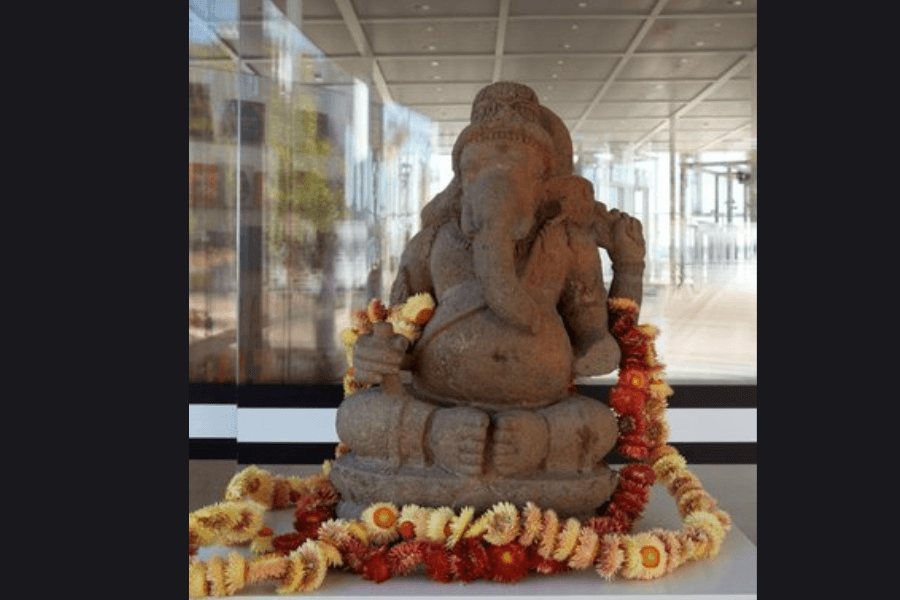
What emerges from Bangkok’s shrines, Bali’s ancient stone carvings, Osaka’s esoteric Kangiten temples and Rajasthan’s mediaeval Jain sculptures isn’t one Ganesha but many, reshaped again and again to fit the spiritual grammar of whoever needed him. The through-line is remarkably consistent: a god invoked before something new begins, trusted to clear the way. As diaspora communities from Sydney to Perth set up their own modest Ganpati murtis this week, it’s worth remembering that Bappa has always been rather good at making himself at home wherever devotion, trade, or curiosity has carried him.
Read more: 108 Ganesha names and their meanings