


Coconut Laddus
3 cups fresh grated coconut
2 cups sugar
1 cup milk
Heat the milk in a heavy-bottomed pan. When it comes to a boil, add two cups of coconut. Mix well. Continue to cook on low heat until the milk is nearly absorbed by the coconut. Slowly add the sugar. Keep stirring the mixture continuously. Increase the heat to medium and continue to cook until the mixture leaves the sides of the pan.
Empty the mixture onto a plate. When it is cool enough to handle, roll small portions of it between your palms to make the laddus.
Scatter the remaining coconut on another dish and roll the laddus in it.
Rawa Laddus
2 cups semolina (rawa)
1/2 cup powdered sugar
1 cup ghee
1 tbsp cashew nuts, coarsely chopped
1 tbsp raisins, gently fried
1 tsp cardamom powder.
Heat 1 tsp. ghee in a pan and dry roast the rawa till pink. Grind the fried rawa and powdered sugar in a mixer to a fine powder. Heat the remaining ghee and add the powdered rawa, cashew nuts, raisins and cardamom powder. Mix thoroughly.
While still warm, mould into small with your palms.
Cool and store in an airtight container.
Diwali recipes: Coconut and Rawa Laddus

Diwali recipes: Meethe Chawal and Burfi
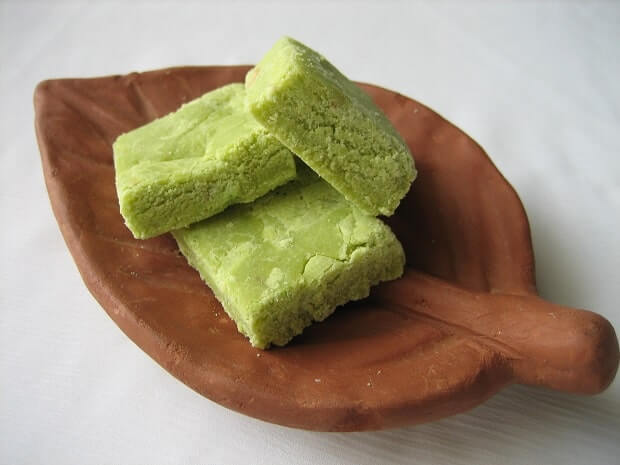

Meethe Chawal
1 cup rice
½ cup sugar
1/4 tsp saffron (kesar)
50 gms raisins
50 gms cashew nuts
1/2 cup ghee
5 cardamom pods
Wash and cook rice in four cups water. When done, add ghee and sugar and continue cooking on low flame. Stir continuously. Powder the cardamom and add to the rice. Keep cooking till the rice mixture leaves the sides of the vessel. Before finishing off, add saffron dissolve in a tbsp of hot milk. Decorate with raisins and chopped cashew nuts.
Burfi
400 gm tin condensed milk
300 gms grated paneer
1/2 tsp cardamom powder
2 tbsp chopped almonds and pistachios,
2 sheets silver varak (optional)
Mix condensed milk and paneer in a heavy-bottomed pan and cook on medium heat, stirring constantly. When the mixture starts thickening, reduce heat. When it leaves the sides of the pan and comes together as one mass, remove from the heat and spread on a greased tray. Sprinkle the cardamom powder and dry fruits on the mixture. Decorate with varak if using and cut into desired shapes.
More Diwali recipes for:
Gujiya
Coconut Laddus
Rawa Laddus
The sweet things in life: Diwali recipe for Gujiya
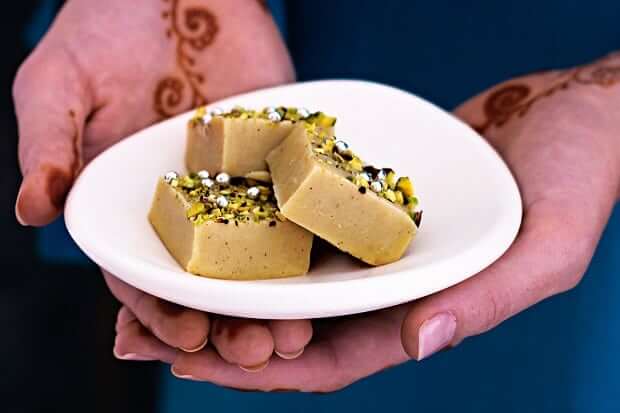

The old recipe file is rummaged through as Diwali, the Festival of ‘Eats’, approaches, writes RAJNI ANAND LUTHRA
A fond Diwali memory from my childhood is cooking gujiyas with my mum. She would cook the mouth-watering coconut and sugar mixture, and I would help stuff them in the pastry and wrap them into semi circles. We would then fry them together gently, as she would recount tales of how she cooked with her own mother and her sisters.
We re-enacted this private mum-and-daughter ritual when my mum visited me here in Australia one Diwali. My own daughter had just been born, and as I stood frying the gujiyas, I knew there would be many Diwali rituals I would be creating with her over the years.
Here are some of my mum’s recipes still in their original format. I’ve helped her cook from these on many an occasion, and still hope to cook them on my own (or with my daughter!) some day. The honest truth is, though, that I’m more likely to wimp out and try Indian Link’s microwave mithais…
But here’s to my mum, who I am missing so much as I prepare for this year’s Diwali.
Click for recipes:
Gujiya
1 cup plain flour
3 tbsp ghee
Pinch salt
1 cup fresh grated coconut
3 1/4 cups sugar
1 1/2 cups milk
8 numbers almonds, coarsely chopped
1 tbsp raisins
1/2 tsp cardamom powder
1 tbsp poppy seeds (optional)
Oil for deep frying
Combine the salt, flour and ghee in a large mixing bowl. Rub the ghee in well. Gradually add water and knead to form a pliable dough. Cover with wet cloth and set aside.
In a heavy-bottomed pan, put in the coconut, sugar, milk, chopped almonds and raisins, cardamom powder and poppy seeds (if using), and cook on medium heat. When the milk evaporates and the mixture comes together in one mass, turn off the heat. Set aside to cool.
Take small portions of dough and roll out into little pancakes. Place a spoon of stuffing at one end and roll the side over. Gently press down the outer edge with your fingers to seal (make a pattern if you want), using some milk for moisture.
Deep fry gujiyas in hot oil till golden brown.
More recipes below:
Meethe Chawal
Percy gets spooky

Inexplicable happenings are common around Halloween, as well as any other time of the year, discovers Percy,

Percy is my wife Rose’s elder brother. He is an authority on sports played in both India and in Australia, writes short stories as a hobby, and has written many books on sports and various other subjects. One evening, Percy regaled us with a strange story.
You may know little about my personal life, he said, so sit back and follow this tale.
I have some peculiar likes and dislikes. My lifestyle certainly is not just the usual. I collect items no one would dream of collecting. My dietary formulae puzzle most of my friends. My sleeping habits are at best, atrociously inhuman. And I consume an inordinate amount of hot tea, yes, plain hot tea! About 25 mugs of it, and my mug holds about three normal cups. Each morning as I go through my daily ritual of reading the newspapers, I devour three or four mugs of hot tea before standing and stretching my body, before walking to the inbox of my computer.
The reason for this high intake of tea, as per my research, is that those who drink excessive amounts of tea will never have a fear of cancer. But I drink tea because, cancer or no cancer, I love it! You may give me a barrel of wine, or a carton of beer, but I would still prefer my cuppa tea!
Now some years ago, my wife Maya and I woke up to a freezing Melbourne Saturday, and we decided on the spur of the moment to drive to Mildura, an inland town of Victoria, 350 miles north-west of Melbourne. It was a long weekend and we thought it was worth the trip. While there is little of noteworthiness in Mildura, the weather was wonderful and we were keen to escape the temperamental Melbourne weather. Quickly we packed, never forgetting my huge picnic flask that holds about ten mugs of tea, and got on the road at around 8am.
The only mistake we made as we had already realised, was that we had made no hotel or motel reservation. This being the pre-mobile phone era, we could not contact accommodation providers from our car. After a few tea-drinking stops on the way, we hit Mildura around midday. We enquired at this hotel/motel and that for accommodation, but the travel-loving Melbournians had evidently beaten us to the punch. In desperation I returned to the car, enjoyed a mug of tea and gave our predicament some thought. Having failed to find accommodation anywhere, we drove to nearby Robinvale in the hope of better luck.
Needless to say, there was no accommodation in Robinvale either. So we decided to try smaller towns on the way, and drove along the River Murray that runs its jagged course from the Snowy Mountains in the north-east, towards South Australia in the west. While the route was certainly scenic, we were in no mood to enjoy the scenery without the promise of accommodation at which we could rest our weary bodies, and night was fast approaching. Even in the tourist town of Swan Hill, we found no accommodation. My positive frame of mind coaxed me to drive to Koondurook, but again, no luck! The tragedy was that the level of tea in my flask was scraping the bottom, and I needed my cuppa every half hour to stay awake.
Defeated, we now decided to drive back home via Echuca, a larger town than Mildura. But the flask was now bone-dry, which worried me. Without my ‘fix’ like a junkie, I was not sure if I could drive beyond Echuca. We were out of luck there too. Being the long weekend, eateries like KFC and McDonalds had also closed early, and I could not replenish my supply of tea.
Disappointed, the lack of tea nearly disabling me, I pulled up as we reached a thick wooded area just outside of Echuca, and told Maya that without tea, I could drive no further. Maya was weary too, for we had driven over 600 miles and were still some 130 miles away from home. Exploring the options available to us, I stepped out of the car and had a smoke. Carefully stepping on the spent butt, I returned to the driver’s seat and gathered courage to drive the final stretch back home; the night now truly upon us.
Suddenly in this uninhabited, thickly wooded part of the bush in the middle of nowhere, I heard a knock on my car window just as I was about to drive off.
Now I must tell you even if you may already know it, but when in the bush, the knock of that kind is not a sign about which to be jubilant. Under the circumstance we were in, I could imagine a gun smashing the side window, the driver promptly shot dead, the female passenger abducted and the car robbed. In a flash, an entire range of other dreadful eventualities swept through my mind. Having no other options at my disposal, I lowered the glass and saw two hefty guys standing by the car.
“Would you like to come in our little chapel and join us for a cup of tea, perhaps?” asked one of the giants, rather politely.
Churchgoers ourselves, we let the two giants escort us into their truly little chapel, a few meters from the road. If I remember correctly, there was just one dim light outside the chapel. It seemed that their vestry meeting had just ended, and we noticed a dozen or so clergy and members standing just outside. They pleasantly asked us to join them for the cuppa. Very thoughtfully, they let me fill my elephantine flask with tea. They even packed sandwiches for our journey back home.
After a week, Maya and I decided to drive to that little chapel and leave a donation for those who came to our rescue that night, when we had found ourselves despondent and stranded without my cuppa. We reached the exact spot where we had parked that night the week before, but were monumentally astounded to see that there was no chapel where we had met with such polite hospitality. It was a heavily treed area for many square miles, with no building in sight anywhere!
I can promise on a stack of tea flasks that, that particular night, there was a chapel building and also a chapel hall, where we were welcomed and served tea and sandwiches. Nonplussed, and wondering if we had made a mistake and were at the wrong spot, I stood by my car and lit a cigarette. Lo and behold, I looked down and at my feet just a few paces from where I stood, lay the butt of the cigarette I smoked that night a week earlier!
Diwali celebrations across Sydney and Melbourne
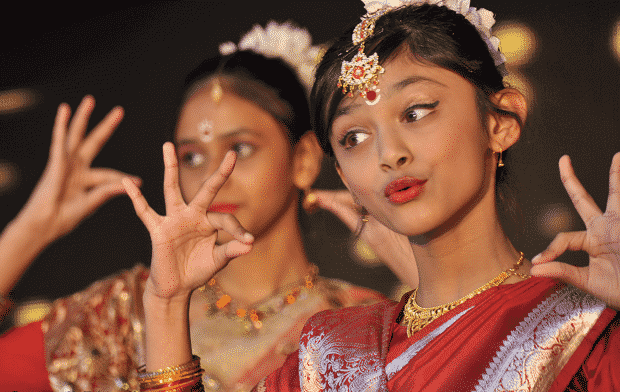

Have you seen our Facebook photos yet of Diwali celebrations across OZ?
There’s the Hindu Council Diwali Mela, Sydney, 2013
And the Victorian Festival of Lights 2013
And don’t forget to tag yourself in the Pattu AIII Diwali Fair 2013 photos too!
Ashfield Council’s 2013/2014 Community & Environmental Grant Scheme


Does Your Organisation Need more Money?
Ashfield Council’s 2013/2014 Community & Environmental Grant Scheme opens on Monday 4th November 2013
Funding Available
There are two funding streams available under the 2013/2014 grant scheme:
Grant 1: Community Initiatives: Local non-profit organisations and groups can apply for grant funding of up to $2,000 for services or programs that address major community needs. The total pool for 2013/2014 is approximately $40,000.
Grant 2: Environmental Initiatives: Local non-profit organisations and groups can apply for the funding of Environmental initiatives. There is a pool of $5,000 under this category.
Eligibility
Council welcomes applications from legally incorporated, not for profit and community based organisations and groups. Unincorporated groups must seek to become auspiced by an incorporated organisation.
Information Sessions
The Council’s Community and Environmental grant scheme has recently been reviewed and some changes have been made to the application form and guidelines. These will be discussed at the information sessions and groups interested applying to this year’s grant round are strongly encouraged to attend one of the two information sessions. The sessions will be held on:
Tuesday 12 November, 10am-11am and 6pm-7pm at the Ashfield Civic Centre.
How to apply
Application forms will be available on Council’s website at Grants & Funding | Ashfield Council
To book your place at the information session or for enquiries, contact Council at christinao@ashfield.nsw.gov.au or phone (02) 9716 1842.
The closing date for all applications: 5pm, Friday 6th December 2013
Simran wins award
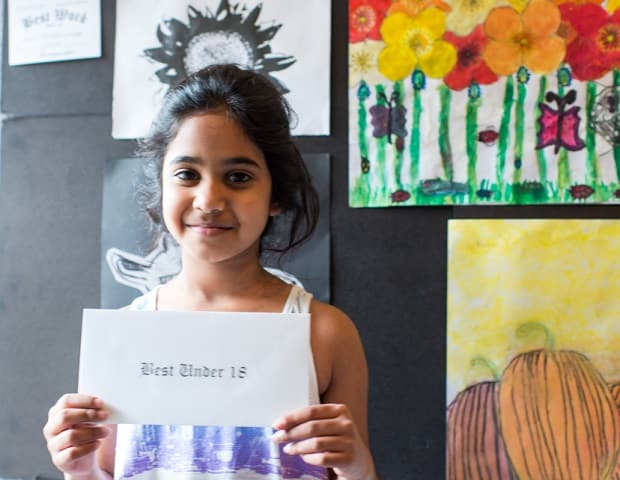
A talented young artist is felicitated for her simple, yet stunning artwork

With her artistic submission Bird on Wire, young Simran Singh from Glen Waverley won the under-18 category in the recently held Waverley Art’s Society’s Annual Exhibition. Children were asked to submit two artworks, and Simran’s submission of Bird on Wire was the winner. Simran started art classes this year, tutored by her teacher Anita Van Grootvelde. The classes are held at Mount Street Neighbourhood house with the support of the Waverley Arts Society.
The Waverley Arts Society held their 43rd Annual exhibition at the Highway Gallery in Mount Waverly from 6-31 October. The exhibition was well attended. Simran received a membership from WAS for being selected as a winner. Her parents Dr. Ina Takkar and Dr. Harpreet Singh are proud of their daughter’s talent and delighted with her achievement.
Formed in 1970, the Waverley Arts Society (WAS) is a community for artists that encourages and promotes art within the city of Monash and surrounds. A major exhibition is held each year by WAS where artists from all ages and skill levels get to display their artistic work. The exhibition also provides opportunities to view and purchase reasonably priced quality artwork by established and emerging artists.
Indian entrepreneurs honoured by MIBC
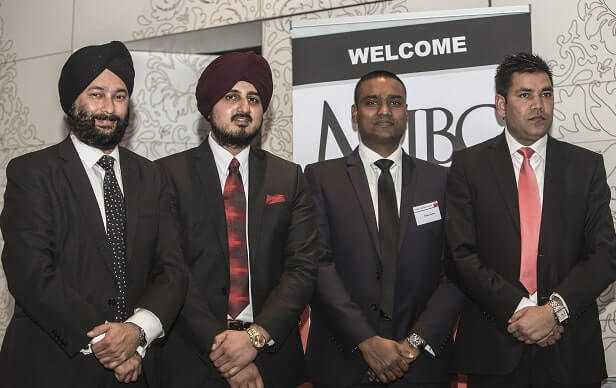
Speeches, dance performances, autographs and even a pitch by Labor made the MIBC event a success, writes PREETI JABBAL

Australia’s growing love for all things Indian was evident at Melbourne Indian Business Club’s (MIBC) gala event held at Hilton On The Park recently. Over 250 guests enjoyed cricket, Bollywood and warm Indian hospitality, as more than 30 local Indian businesses were recognized for their excellence and contribution to the Victorian economy. In what makes for an encouraging sign of the Indian migrant’s increasing interest in Australian politics, MIBC also pledged $20,000 to the State Labour Party in support of their campaign for the upcoming state elections in 2014.
Leader of the Opposition in Victoria and MP for Mulgrave Hon. Daniel Andrews was the keynote speaker for the evening. He touched upon several issues that are currently affecting Victorians and criticized the State Liberal Government for their incapability in delivering proper plans and policies for the health, transport, education and manufacturing industries. Mr Andrews then went on to articulate the strength of Labor party and sought support from those present, for Labor to achieve its vision in the 2014 State Elections. Other dignitaries included Liz Beattie MP member for Yuroke; Allan Griffin, MP Federal Member for Bruce; Jude Perera, State Member for Cranbourne; Maria Vamvakinou MP, Federal Member for Calwell; Cr. Peter Maynard, Wyndham City Council; Lee Tarlamis, State Member for South-Eastern Metropolitan region; and John Pandazopoulos representing the Electorate of Dandenong, who also officiated as the MC for the formal part of the evening.
The $20,000 that was pledged by MIBC was raised through auctions of memorabilia as well as personal contributions from supporters of Labour Party who attended the event. Councillor Intaj Khan who, along with MIBC team, was instrumental in organizing this event, encouraged people to join the Labor Party if they wished to have their voice heard and have more of a say in politics. He urged people to subscribe to the aims, objectives and policies of the Labour Party if they want a Government that has a plan for problems and a vision for the future.
Four enterprising Indian businessmen, Luckee Kohli, Councillor Intaj Khan, Rizwan Ahmed and Alex Singh – created the MIBC to act as a lobbying group for the burgeoning Indian business community in Melbourne and surrounds. Sharing the objectives of MIBC with the audience Mr Kohli said, “The MIBC came into existence with the primary objective of providing a platform to entrepreneurs from India in Australia, where they can network, build relationships, share experiences and promote their business. We intend to create opportunities for these interactions as well as recognize commendable efforts through awards.” This was the cue for the awards ceremony to begin and one by one, each business owner was invited on stage and acknowledged for their efforts in creating investment opportunities and employment in Victoria. The recipients hailed from a wide variety of industries including hospitality, education, energy, leisure and manufacturing.
Indian actress and model Rajlaxmi Roy added the glamour factor to the networking event, along with Melbourne Renegades cricketer Fawad Ahmed and former Hawthorn AFL player Paul Salmon. Their fans eagerly approached them for photos and autographs during the breaks that were provided between the multiple speeches and awards. The Bollydazzler Dance Troupe enlivened the evening with their dance performances on a medley of Bollywood songs. Towards the end, Alex Singh offered the customary vote of thanks to the parliamentarians and all those who attended the event.
Exhibition Dust: The magnificence of India’s vast deserts
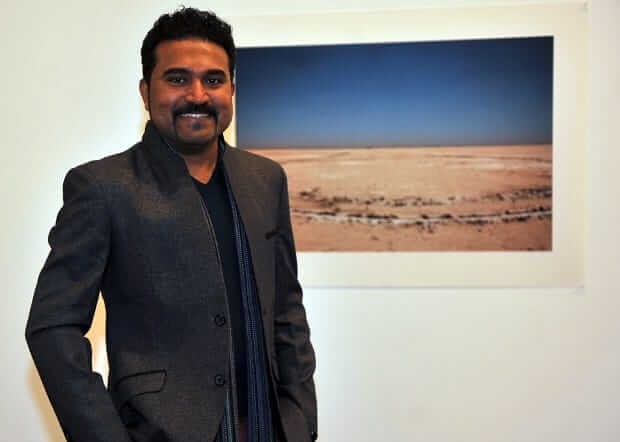
Delhi-based artist Gigi Scaria’s new exhibition Dust, at the Ian Potter Museum of Art, takes viewers on a captivating journey through the beauty of India’s desolated salt deserts

In a country that characteristically brims with over crowdedness, congestion and poverty, there are still landscapes that exude immobility, tranquillity and seclusion. In his first major solo exhibition in Australia, Dust, Gigi Scaria explores this co-existence in India, contrasting the built environment with vast, degenerate spaces and remnants of decay. He examines the relationship between the “social spaces” that millions of people occupy, and the distant landscapes many seek for spiritual fulfilment.
Scaria is usually associated with complex images of megacities that are the result of economic and construction booms, where vehicles, buildings and telecommunication lines are emphasised, which reflect his concern with the rapid excavation of the land.
“When I came to Delhi I began thinking about its impossible systems, size and mechanisms,” says Scaria. “That was when I discovered that these are huge issues… it’s troubling that we can’t treat our environment properly”.
However, Dust takes a different approach; it pictures the geography of the Indian landscape in its raw and glorified form, where nature seemingly overpowers population.
“It can feel as if I have depopulated the spaces, although I haven’t actually ‘done’ anything to them. If there are no people in a photograph, I haven’t ‘deleted’ them, they were never there’, says Scaria.
The exhibition features a large-scale painting, a video-sculpture installation and large-format immersive photographs of sandy plains, white salt lakes, and the cracked mud of droughts past. What unifies the collection of works are the crisp horizon lines, unnamed locations, the man-made elements, imagery of sedimentary textures; dune, dust, salt, sand, silt, sludge, and the enormity of the landscapes. These elements suggest landscapes that could be anywhere, such as Russia, or a part of the United States, South America or even the arid heartland of Australia.
While Scaria has never ventured into the Australian outback, he has gained familiarity and interest with Australian cities while residing in Melbourne in 2012 as a Macgeorge Fellow during the Australia-India Year of Friendship. During this time, he exhibited Prisms of Perception at the Ian Potter Museum of Art and travelled around Victoria, and by road to Canberra. He took inspiration from the vast geography of the regions, culture, human interventions in the land as a result of the gold rush in Victoria, and from histories of migration.
Scaria naturally compares the Australian landscape with the landscapes of his past, or childhood memory in his home state, Kerala which is densely settled, but also lush and tropical. “When you explore places that are distinctly different, which have no connection with your past, you compare ‘your’ landscape with the new landscape in front of you,” says Scaria. “We make this comparison when we move from one city to another, one territory or nation to another”.
His photographs of “India’s outback” are a response to the enormous Australian landscape.
Dust illuminates the artist’s travels to inhospitable locations, including the Rann of Kutch, a salt desert situated on India’s south-western border with Pakistan; and the sands that meander around Jaislamer, a city in the Thar Desert in Rajasthan, also on India’s border with Pakistan. Scaria visited these remote places upon his return home from Australia, where he captured approximately 700 photographs, in which 17 appear in the exhibition. Scaria has ‘beautified’ the sites of dispute, focusing attention on his solitary retreat and sensory experience as an adventurer, rather than imbuing the photographs with any political tenor. They reflect an introspective search, the passing of time and the power of nature and isolation.
Put simply, in Scaria’s understanding of the world, “you travel best when you put away the map, and embrace the land most completely and find the way only by losing it. This is where the mystery happens”.
Indian curator Ranjit Hoskote poetically describes the visual experience in his essay on the exhibit, as “The crunch of boots on salt-encrusted ground; the cloud mirrored in brackish water; the onrush of wind barely stopped in its track by rock outcrops; the expanse of drought-fissured fields”. Standing amidst Scaria’s images, that is precisely what you feel, captivated in their spatial and aural expanse, lost wandering in their ambiguity, yet connected to their hint of familiar spaces.
Many of Scaria’s photographs are devoid of people, yet they convey evidence of massive industry, depicted in the cultivation of salt, imagery of power lines and heavy machinery. Growing up in his village in Kerala, Scaria was unaware of the scale of India’s cities until he moved to New Delhi to study a Master of Arts at Jamia Millia Islamia in 1995. Unsurprisingly, the sprawling city of New Delhi became the impetus for much of his art that examines pressing issues in contemporary India; extensive development and human dislocation, amid the voracious force of the nation’s rapid urbanisation.
Dust is also a testament to Scaria’s ongoing relationships with the Ian Potter Museum of Art and with the Australian art industry. In January 2013 Scaria was a participant in the Australia India Institute artists’ retreat in Jaipur, India. A celebrated contemporary Indian artist, Scaria represented India at the 54th Venice Biennale in 2011 and has participated in an admirable number of international solo and group exhibitions, and prestigious residency opportunities in India, Germany, America, Hungary, the Republic of Korea and the Republic of Trinidad and Tobago. Projects such as Dust provide critical opportunities for sharing cultural knowledge among a new generation of Indian artists with Australian communities.
Dust is at the Ian Potter Museum of Art, University of Melbourne, from September 18 to February 2, 2014.
Dazzling Diwali in Melbourne
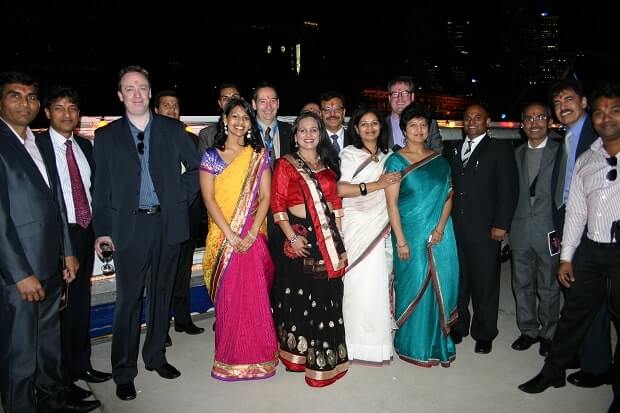
The festival of light kicks off in Melbourne in Fed Square

It is going to be Har Din Diwali* in Melbourne for the next few weeks, with multiple celebrations of the festival of light being held in various parts of the most livable city in the world. With each year the Diwali festivities around our city are getting bigger, better and more creative as many organisations are jumping on the bandwagon to host the celebrations. Most prominent amongst the Melbourne Diwali events is the cultural extravaganza held at Federation Square by Celebrate India Inc. Again this year thousands of people are expected to attend this popular festival that is scheduled to run from 21-26th October.
An innovative launch, held on 18th October, kicked off Celebrate India’s mega celebration for 2013. A select group of guests comprised mainly of festival sponsors, partners and dignitaries were invited to enjoy a leisurely cruise on the Yarra followed by a sumptuous dinner. While the guests could watch the city lights as they cruised down the Yarra, many people in the city would not have missed the beautifully illuminated boat announcing the forthcoming celebrations.
Celebrate India Inc. is a not for profit Victorian Organisation that was created in 2006 with the idea of sharing the vibrant culture of India with the wider community of Victoria. The dedicated team of volunteers from Celebrate India, led by Arun and Jaya Sharma, has been celebrating Diwali in the heart of Melbourne since its inception. The event created history by getting permission to illuminate major landmarks and iconic buildings in Melbourne for the first time ever for an Indian festival.
Arun Sharma one of the founding members and chairman of Celebrate India Inc. shared the joy and meaning of Diwali in his welcome speech during the recent launch. “Diwali is celebrated with illumination that is symbolic of victory of light over darkness or good over evil,” said Arun. “Our team has worked collectively to organise this inspirational and entertaining Diwali and it is our privilege to be able to spread the message of friendship, harmony and goodwill to the wider community in Victoria”.
With the support of the Victorian and Indian Government, as well as sponsors, the festival promises to offer enjoyment for the whole family and will be jam packed with activities. Leading up to the main event on October 26, free Bollywood movies will be screened for five days at Fed Square and a horse drawn carriage will immerse the city in the spirit of Diwali. The main event will be a day long celebration where the Federation Square will be transformed with light displays, food stalls, dance, music, arts and craft followed by a fireworks display. Celebrate India has also partnered with the White Ribbon organisation and they will be spreading the message of ‘No Violence Against Women’ by conducting oath taking ceremonies and raising funds during the main event.
During the launch of the festival the audience also heard from Chin Tan, Chairperson of The Victorian Multicultural Commission and Jude Perera, State Member for Cranbourne. Both speakers commended Celebrate India for their efforts in organising this major festival and for putting Diwali celebrations on Melbourne’s cultural calendar. They invited the community to participate in the festival and wished everyone a joyous Diwali.
Nirmal Choudhary, Acting Consul general of India in Melbourne and Rakesh Kawra Consul (SCWO) launched a souvenir during the boat cruise launch that provided details of all the activities and acknowledged the sponsors of the festival. Sponsors include Melbourne Airport, SBS radio, Air India, Fed Square, Telstra, Mind Blowing Films, White Ribbon, Metro, Fiji Hindu Foundation, Maharajah’s Choice, RACV, Richmond Football Club, Gaura Travel, Cricket Victoria, City West Water, Sweetmix Roadshow and Minuteman Press Narre Warren. Indian Sun is the Victorian Media Sponsor and Indian Link is the National Media Sponsor of the event.