

Two youngsters show their talent, ease and grace in Carnatic music renditions, reports CHITRA SUDARSHAN

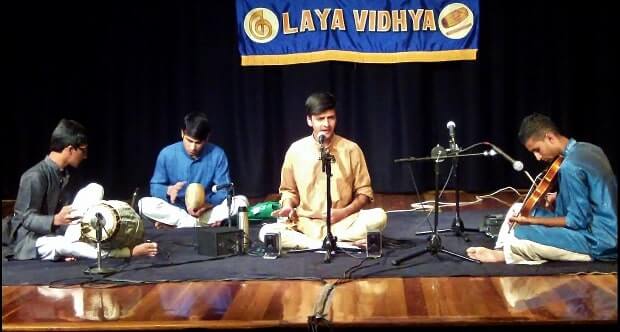
The highlight of the classical scene in October was watching two extraordinarily talented Melbourne-grown teenagers perform. It is hard enough for children to get their heads around Indian classical music in an alien environment; most children (mine included) go through the motion of attending music lessons to please their parents, perform in a few school concerts, and if talented, do them well. But by the time they are in universities or at work, Indian classical music is but a distant memory. There are a few – a handful – of very gifted young musicians who have not only done their parents and teachers proud, but truly carved a niche for themselves in Carnatic music. One of them is Keshav Ramachandran, who played the violin in the ‘young artiste’ segment of a concert organised by InConcert Music on November 16. Those of us who have watched Keshav’s rise and rise, of course, are not surprised. Readers may remember that not all that long ago, when Keshav was barely 10, this reviewer reported on a full-length vocal concert that he performed with his sister. At the concert on November 16, this extraordinarily gifted youngster gave an hour long mandolin concert at the Wellington Secondary College, leaving everyone spellbound. From the Kamboji varnam to the Devarnama in darbari kanada, he performed with consummate ease, teasing melodious ragas from his mandolin. The alapana in raga Kalyani, and the Tyagaraja kriti that followed it were flawlessly rendered. The Brindavani Saranga and shanmukhapriya too, kept the audience entertained.
Ramakrishna Nagasundaram on the mrudangam gave excellent support, effortlessly keeping rhythm and complementing the mandolin music with the right pace.
The senior musician who performed that evening was Shobha Shekhar, well known to Melbourne classical music cognoscenti. She thrilled audiences with a glittering navaraga varnam, then treating them to melodious kritis in Ataana and Bilahari. Shakti Ravitharan, a senior disciple, provided vocal support.
The other extraordinary talent was Narayanan Rangan, who performed a vocal concert on October 19 at the same venue under the same banner, that of InConcert Music. Narayanan, still in high school, regaled the audience with some scintillating music. He has been performing with his equally talented brother Raghuveer Rangan, but this was perhaps his debut solo concert. Narayanan sang with confidence and feeling, suffusing his music with ‘bhava’, so pivotal in rendering Carnatic compositions. The Vasantha varnam he began with, set the pace and the mood for the rest of the concert, and he didn’t put a foot wrong. The difficult Dikshitar kriti Vallabha Nayaka was well delivered, and Narayanan prefaced it with a competent alapana. This was followed by a Tyagaraja kriti ‘Teliyaledu Rama’, and both this and the popular composition ‘Pirava varam’ were sung with feeling, and he truly brought out the emotion – the bhakti – so central to the lyrics.
Narayanan Ramakrishnan on the violin gave able support; Pawan Gopinath on the mrudangam and Surya on the kanjira completed the music with excellent percussion support.
The senior artiste to perform that evening was Sundari Saripalle, who is one of the most respected vocalists in Melbourne. She has a voice that is so crystal clear and sharp that her delivery is all the more powerful and effective when she sings the same raga or kriti as anyone else. We were told that she hails from Vishakapatnam, and belongs to the Vijayanagar school. Sundari Saripalle’s Ranjani varnam, and the kritis in Gowlai, hamsavinodini, kedara gowla, were a treat for the ears; her shanmukhapriya was a masterly rendition, and she outdid herself in the mohanam alapana and kalpana swaras.
Venkat Ramakrishnan and Raghavan Sharma on the mrudangam and kanjira respectively, provided lively percussion support.
Gifted young musicians shine
How not to make a rom-com: Gori Tere Pyaar Mein
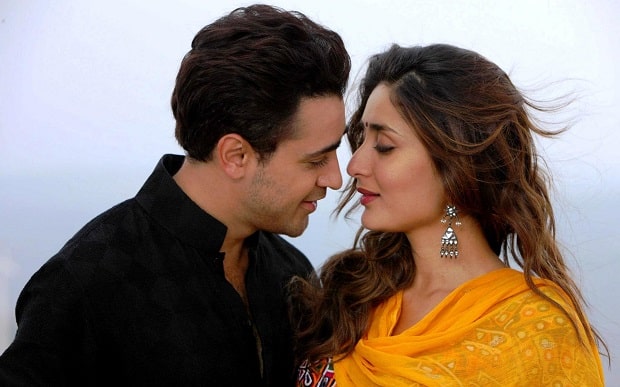
Film: Gori Tere Pyaar Mein
Cast: Kareena Kapoor, Shradha Kapoor, Imran Khan
Director: Puneet Malhotra
Rating: **1/2 (2 and a half stars)

“You remind me of Shabana Azmi,” guffaws our don’t-give-a-damn hero to the social activist heroine.
In the first-half they clash over idlis, ideologies and idle chatter. Mismatched as they are, and we are reminded twice that she is older, Kareena Kapoor-Khan and Imran Khan trudge along cutely till mid-point after which the narrative shuffles noisily into a village in Gujarat where it all falls apart.
You know a film is going wrong when the lead pair just don’t seem made for each other, not because that’s the way their roles are written, but because the actors playing the characters seem to belong to two different planets.
Someday producer Karan Johar can tell us why he decided to cast the incandescent Kareena Kapoor with Imran Khan. Not just in one but two of his productions within one year, both about a chirpy gregarious chick and a moneyed inhibited guy.
While researchers and theorists await results on what this Khan and Kapoor are doing together there is this film going by the archaic and utterly uninspiring title of Gori Tere Pyaar Mein.
He is commitment-phobic. She is a social activist. Rather, a loud caricature of a social activist. What Shabana Azmi would have been if her speeches were written by Karan Johar.
Kareena is dressed for the part and seems to make all the right moves. But why do we get the feeling she cares as much for the upkeep of the village and its gobar population as she did for the political degeneration of apna bharat mahaan in Satyagraha?
Kareena carries the face of woman who would rather be anywhere than where this vapid script puts her. A pity, since her eyes and beauty can launch a thousand ships. In this film they can’t even launch a leaky paper boat.
This is the film where everything in sight sinks. The viewer’s heart, to begin with.
What strikes you repeatedly is the sheer nullity of the story. She loves to be passionate about everything to do with the downtrodden. He couldn’t care less about female foeticide, child molestation, elevator rape, or whatever her next anti-exploitation jehad may be.
Come to think of it, Kareena’s missionary zeal could have been the stuff rib-tickling satires are made of.
Tragically director Punit Malhotra seems dead serious about his heroine’s activism. Rather than becoming the bemused bystander alongside the hero (who looks like the goofy Sunil Dutt in Khandaan and Padosan), the script elects to go with the heroine’s solemn self-righteousness. So we are supposed to watch Kareena’s righteous indignation with a straight face.
We end up laughing at all the wrong cues. The timing goes horribly awry as the film progresses. The sanctimonious heroine’s attempts to be funny and committed at the same time reminds you of a restaurant that serves kebabs and pastas at the cost of one meal.
This is a film that had the potential for being genuinely funny and warm. It also has the very lovely Shradha Kapoor trying hard to keep her inherent grace intact in a script that manoeuvres through a string of antics based on cultural and economic disparity. It squanders the satirical potential in trying to be cleverer than the audience.
There is a prominently pickled pre-interval moment where Imran Khan’s under-committed character is mock-urged by his kith and kin to run away from his marriage mandap.
Our hero Sree Ram (a.k.a Sridevi, for some secretly funny reason) takes the mock-ritual seriously and flees out of the marriage. That, you see the problem. That moment becomes symptomatic of all the wrong turns that the script takes in trying to be funny, savvy, sassy and smart. Moments that are meant to be bitingly urbane and tongue-in-cheek end up being as flat as pancakes cooked for breakfast served in the evening. A bridge built in an impoverished village meant to be symbolic of the lead pair’s differing priorities, becomes a feeble attempt at profundity in a film that cannot avoid shallowness.
But all is well at the end. The film’s love-birds live happily ever after.
Wish the same were true of the fate of rom-com in Bollywood.
Subhash K. Jha
Melbourne’s Diwali masala
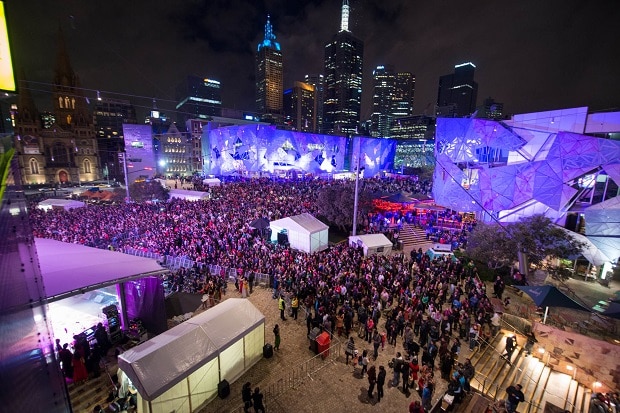
The city rocked with various celebrations that brought awareness and enjoyment of the Festival of Lights, reports PREETI JABBAL

This Diwali I was completely ‘partied out’ thanks to being present at multiple celebrations, and I am still attending more nearly a month later. Not that I am complaining, because thanks to the festivities, I have had no time to miss Diwali ‘back home’. We seem to celebrate the event far more in Australia than we ever did before, thanks to the various organisations that are jumping on the bandwagon to celebrate Indian festivals. Between Celebrate India’s Diwali Festival, AIII’s Diwali Mela, Wyndham Diwali, PCV Diwali, private Diwali events and the Diwali celebrations in regional areas of Victoria like Ballarat, November has been hectic to say the least and our community has certainly been spoilt for choice. Here is a round-up the main Diwali events in Victoria in 2013.
India recreated in Fed Square
Venue: Federation Square, Melbourne
Organisers: Celebrate India Inc.
Overcast skies and the chance of rain did not deter the crowd from attending the Diwali Festival of Lights event held in the heart of the world’s most liveable city. Federation Square is generally abuzz with activities; however never before would it have witnessed such a vibrant array of colours, music and dances as it did with Celebrate India’s Diwali festival. Visitors to Melbourne’s iconic Federation Square enjoyed a range of activities from sporting henna tattoos, to learning Bollywood and bhangra dance steps, to tying colourful turbans, sampling delicious Indian food, hobnobbing with footy players, joining cricket clubs and in general, soaking up the colourful festive atmosphere.
Celebrate India is a not for profit, Victorian community organisation that was established to foster relationships between India and the wider Australian community. It has celebrated Diwali since late 2006, and the festivities seem to get bigger and better with each year. According to an official release from Federation Square, the 2013 Festival was attended by 58,000 people, making it one of the biggest celebrations of an Indian festival in Australia. The six-day event packed in a variety of activities as diverse as the culture it was designed to depict. Showcasing the best of Indian culture, the innovative agenda included free Bollywood movies, outdoor dance performances, food and a plethora of cultural entertainment.
A wonderful launch event was held by Celebrate India prior to the festival, where a beautifully lit up boat cruised down the Yarra and entertained guests. Leading up to the event, a carriage decorated with the Diwali theme was seen cruising around the city of Melbourne. Diwali was also celebrated at the airport in Melbourne with great fanfare, amidst Diwali decorations, announcements, banners, dances and sweet distribution. The event culminated with a spectacular fireworks display on the Yarra River, followed by a vivacious after-party.
The formal proceedings at the main event were attended by several dignitaries including Federal Labour Party Leader Bill Shorten and his wife Chloe; State Opposition Leader Daniel Andrews; City of Melbourne Councillor Beverley Pinder- Mortimer; Minister for Multicultural Affairs and Citizenship and Minister for Energy and Resources Nicholas Kotsiras; and newly arrived Consul of India Manika Jain. Former Victorian Premier Ted Baillieu attended the event briefly. The Festival also supported White Ribbon to raise awareness of their campaign against domestic violence. Over 200 written oaths and innumerable silent oaths were collected supporting their cause.
Besides the eclectic cultural exposure, participants at the festival also gained commercial mileage through stalls and promotions. Said Arun Sharma, organizer of the festival and chairman of Celebrate India Inc., “Our festival is family friendly, caters to all ages, celebrates diversity and offers goodwill-building promotional value. This mega event takes months of preparation by the Celebrate India Team that includes over 45 hardworking volunteers. With the support of the Victorian Government, sponsors, media and the community we have pulled off another fantastic event this year and we hope to go from strength to strength in the years to come.”
Lots of bhangra at massive mela
Venue: Sandown Racecourse, Mulgrave
Organisers: Australian Indian Innovations Inc.
This year again, thousands flocked to the Sandown Racecourse in Mulgrave to celebrate the Indian festival of Lights with AIII. 13 years of celebrating Diwali in Melbourne has garnered the Australian Indian Innovations Inc. (AIII) considerable respect and admiration within the Indian community. AIII was created with the objective of celebrating and showcasing Indian festivals to the greater Australian community. Since 2002 it has been organizing Diwali fairs (melas) where everyone can attend and be part of the multicultural festivities. The mela is designed to offer a kaleidoscopic view of Indian culture and its diversity.
In direct proportion to the burgeoning population of migrants from India, this event is known to attract a massive crowd every year. The list of dignitaries that are invited and willing to attend the official part of this event has also seen a trajectory. The impressive list of guests this year included State Opposition Leader Daniel Andrews; Senator Scott Ryan representing Prime Minister Tony Abbott; Inga Peulich, Parliamentary Secretary for Education; Jude Perera, State Member for Cranbourne; Rakesh Kawra, Consul (SWCO); newly arrived Indian Consul General in Melbourne Manika Jain; and Victorian Multicultural Commission Chairperson Chin Tan and his wife, who made a splendid couple in their traditional Indian outfits.
As one entered the massive racecourse grounds the first colourful sight was a strategically placed SBS Broadcasting van inviting people to enjoy Karaoke-style singing and peppy bhangra. The SBS team encouraged audience participation and soon discovered that there was no dearth of talent in Melbourne. The food stalls were busy with an overwhelming demand for Indian delicacies, while the art and craft stalls stood out with their vibrant colours and wares.
Even the Labor and Liberal parties had taken stalls to promote themselves, in a bid to woo Indian community voters. This is the first time both parties have made such an overt attempt to interact with the Indian-origin community through the Diwali mela, and is certainly indicative of the growing influence of the community.
The stage was alive with non-stop performances during the day that included a popular fashion parade. Children kept busy with some fun rides. With henna, Ayurveda, Bollywood music, and Indian businesses and media all vying for attention, there was plenty to see and do.
The AIII team deserves kudos for their efforts in hosting another successful event.
Debut Wyndham Diwali mela attracts over 10,000
NEC Grounds, Werribbee South
Organisers: Wyndham Diwali
The first Wyndham Diwali Mela was held at the Werribee Park Grounds and was a tremendous success with over 10,000 people attending the event. Filled with colourful performances, scintillating music, fun rides for children and an array of delicious food, the Mela’s air of festivity was a cheerful and pleasant affair. Through the day, people could be seen enjoying the various events, meeting old friends and making new ones, and basking in an atmosphere that was reminiscent of the festival of lights back home in India.
Officials from the local and federal governments, and renowned members of the community were also present, including a large number of non-Indian origin attendees. Member for Lalor, Ms Joanne Ryan, said it was an honour to be a part of Wyndham’s first Diwali festival. “Wyndham’s first multicultural festival of lights has been a great success, and it was a privilege to be able to speak as part of the celebration,” Ms Ryan said. “Diwali is an important event to many local residents, and it’s only fitting we have an occasion like this to celebrate it together, as a community.”
“This is a great achievement and reflects the dedication of the local community, Wyndham City Council and important sponsorship from the Victorian Multicultural Commission. The organisers have done a fantastic job of creating a vibrant, fun and inclusive event for the entire community,” she added.
Among the events on the day were performances by groups and individuals from diverse cultural backgrounds, making it a true multicultural festival. The cultural display and the main theme of the event was showcased in a unique way. It was heartening to see the crowd enjoying each performance and enthusiastically applauding the artistes. The event really took off at around 11:30am and continued well into the afternoon.
Of special mention is the Wyndham Diwali concept that came to life on the stage by the Artistic Director, Archana Koorthy and her team from Rachana Natyalaya. It was a wonderful display of dance forms, greatly enjoyed by the audience. Lakshmi Nookala and Sirisha Pathi from Archana’s team were instrumental in the smooth execution of program items on stage and they handled the challenges very well. Songs and musicians were coordinated by Latha Shesham to deliver an entertaining musical adventure for the crowd.
The event was managed by Shavik’s Managing Director, Srikanth Muthyala. His execution was unique, efficient and thoroughly professional .The core organising committee of Raghunandan Kuncha Koorthy, Srinivas Shesham and Archana Koorthy (Rachana Natyalaya), with the support of many volunteers such as Kartheek Munigoti, Shalini Muthyala and Ajay PK among others who contributed their personal time to make the event a success.
The Wyndham Diwali Inc. was strongly supported by Office of Multicultural Affairs and Citizenship (OMAC), State Government of Victoria with initial funding, and the team was highly appreciative of the trust placed in them to execute the event. Wyndham City Council Mayor Cr. Heather Marcus and all the councilors, council staff provided support and guidance over the 8 months prior to the event.
The event was sponsored by Benlor Real Estate, Indya Foods, City West Water, Australian Management Institute, Brook on Sneydes, Fingertip Learning and Panda Family Day Care.
The event having received such an overwhelmingly positive response, the organisers have agreed to run the same event once again in 2014.
Wah, wah, balle, balle PCV Diwali party
Venue: Princess Court Reception Centre, Mulgrave
Punjabi Club Of Victoria Inc.
It was a big fat Punjabi Diwali as members and guests of the Punjabi Club Of Victoria (PCV) got together recently, to celebrate the Festival of Lights at Princess Court Reception in Clayton. Diwali is the Indian equivalent of Christmas and Indians across the world celebrate this festival with fervour, especially the party loving Punjabis. The PCV Diwali is a much-anticipated event in Melbourne and features prominently on every PCV member’s social calendar.
Trust the Punjabis to put up a lively event and more often than not, they deliver. This year’s PCV Diwali was no exception as the guests enjoyed a wholesome combination of dinner followed by good entertainment and dancing.
The night began with diners indulging in a choice of starters followed by hearty main course portions that tempted everyone to overindulge. As everyone feasted, DJ Sweetmix Roadshow kept the party spirit alive with popular Bollywood and bhangra tunes. Next, a group of amateurs put on a fabulous show of authentic Punjabi bhangra dancing.
PCV prides itself in promoting and encouraging young talent, as a result there were several entertaining performances by young children and teenagers. The piece de resistance was a fire dance executed with great precision by the Bollywood Dazzlers. This professional dancing group comprised of dancers from various parts of the world unified on stage by their common love for Bollywood. Preet Panesar and Lauren Hewitt, as the gracious hostesses and MCs, kept the evening alive with their interactive style. An impromptu catwalk, nominal speeches, a fun raffle draw and seemingly endless sparklers for children got the organisers the desired tick of approval.
“Celebrating Diwali has become a PCV tradition,” claimed Tej Panesar, President of the PCV. “We take this responsibility very seriously and each year the PCV committee attempts to combine popular items with fresh innovative ideas to ensure that everyone enjoys this event. It is impossible to please everyone, but at the end of the night if people hesitate to leave the dance floor because they are having a good time, we know our job is done,” he added. This year the feedback for PCV Diwali event was mainly, “Wah! Wah!” and “Balle! Balle!”
Promoting Indian culture though Diwali party
Venue: Azuba Indian Restaurant, Tullamarine
Organisers: Indo Australian Association in Craigieburn and Surrounding suburbs (IAACS)
Around 150 members and 40 children attended a Diwali and Bollywood Night at the Azuba Indian Restaurant in Tullamarine to celebrate the Festival of Lights. Organised by the IAACS (Indo Australian Association in Craigieburn and Surrounding suburbs), the event was proudly sponsored by Waves Consultancy, local migration Agents and Consultants as the Official Migration Agent of the Group IAACS.
The Diwali party was the brainchild of Ritu Sood and Vikas Sood, local Craigieburn residents, who successfully recreated the atmosphere of the festival back home in Melbourne’s northern suburbs. The event attempted to promote the celebration of Indian festivals which showcase the country’s culture and traditions, and can be enjoyed by all regardless of nationality.
The initiative was very well supported by Mr Deepak Vinayak JP, and the community judging by the numbers who turned out in colourful traditional attire to celebrate Diwali. Among other items, the Bollywood Dazzlers dance performance was well received and local children were given the opportunity to anchor for the event. Children also participated by performing solo Bollywood dance numbers as well.
Among the attendees were Deputy Mayor Casey Nunn, MP Liz Beattie, Mr Ali Khan and Mr Farrukh Hussain from Yum Properties.
The IAACS also celebrated Holi this year with just 10 families, but the encouragement, initiative and support from the community resulted in celebrating their first official Diwali and Bollywood night, which was a grand success.
Poetry, song and dance to celebrate Deepavali
Venue: Clayton Hall, Clayton
Organisers Hindi Niketan
One of the oldest Indian organization in Melbourne celebrated Diwali recently by promoting and encouraging young talent. Several young performers and guests participated enthusiastically at the Hindi Niketan Diwali celebration held at Clayton Hall recently. According to Hindi Niketan President Dr Sharad Gupta the event was held a few weeks after the actual festival mainly to ensure that VCE students had completed their exams and their families would be able to attend the Diwali festivities.
Hindi Niketan was established in 1992 to promote Hindi language in Victoria. Hindi Niketan celebrates India’s Independence Day and Republic Day on an annual basis and this year they reintroduced the Diwali festival as part of their events calendar after a gap of a few years.
Keeping with tradition, guests were welcomed with laddoos and the stage was decorated with colourful Diwali lights with a small area proudly displayed an image of the goddess Laxmi in all her splendour. The entertainment was an eclectic mix of classical Indian dances and some contemporary numbers. Members could dance, sing, joke or recite poetry on stage, and everyone who wished to participate was encouraged to do so irrespective of age, gender or in some cases, talent.
Anindya Gaur as the MC showed promise not only with her eloquence, but also with her dancing prowess as she manoeuvred some intricate Bollywood dance steps with ease. Ashwin Gaur and Warij Singh Bedi accompanied her in a Bollywood medley that proved quite popular with the audience. Nandini Pragash’s classical dance performance in praise of Lord Nataraja was executed with grace and precision.
Pondering over the large divide between the rich and poor was Rajendra Chopra’s poignant poem on Diwali. Chandra Jha, Asha Chopra, Chandar Sahu and Nawal Moudgil did most of the singing on stage, while Shravya Khatokar presented another classical performance on the joyous rhythm of dance. Poetry was the order of the day as Harihar Jha and Ramesh Dave launched into more poems on relevant topics.
A brief address from Manika Jain Consul General of India in Melbourne, Hong Lim MP for Clayton, Vasan Srinivasan President of FIAV, Chidambaram Srinivasan VMC Commissioner and Dr Sharad Gupta took up the formal proceedings, followed by community awards presented to Raj Dudeja from Indian Voice and Prof Santosh Kumar from Northern Region Indian Seniors Association. An award for service to the community was also presented to Dr Ram Mahajan, one of the oldest members and supporter of Hindi Niketan.
The highlight of the evening was Minister Hong Lim’s passionate speech on Cambodia’s link with Hinduism and his personal connection with the Indian community. As an ardent supporter of the community, he urged Indians to stop ‘pulling each other down’ and make efforts to have an Indian Member of Parliament to represent the community. Citing the example of other migrant communities in Australia he said Indians have a stronger presence in terms of sheer numbers, and it is imperative that Indians should unify and ensure better participation in this country’s politics and decision-making.
Fore photos of events check out our Facebook page
Perfect presents

Christmas is a time to be generous, so here is a leisurely list of gifts fit for pollies, princes and PMs, writes LP AYER

I don’t know about other State capital cities, but in Adelaide we are reminded of Christmas approaching as early as the first week of November when one of the city’s biggest pageant rolls down its main thoroughfares. It is either to help the locals plan their shopping strategy in advance, or for retailers to raid our credit cards sooner than others.
With our two children having grown out of the ‘can-we-have-a peek’ stage, we now need to ponder over presents for only our two grandchildren. Lucky, in a sort of way. So with some shopping time spared, I indulged in a whimsical exercise of what would be on the wish-list of those who appear, at the flick of a button, on the slim screen in our lounge rooms around dinnertime.
Who else can you think of first, other than the captain of our ship for the next three years? Initially it seemed so easy to choose something for this action man who can sprint, swim and surf. It may be tokenistic to buy a bike or boogie board since he will have a stack of them. Having proven his skill in putting out bushfires, a fire truck may be a fitting present. In his current position he will be called upon to put out scrub fires within his party ranks or on the national and international arenas. However, a red truck, apart from being a colour mismatch with his philosophy, is not a toy befitting the Lodge.
On second thoughts, he may be happy to get a couple of leaky (ab)boats built at some Jakarta backyard. His plans to buy every rickety raft from Indonesia having been torpedoed by his Bambang buddy, a couple of rusty boats will be a welcome present to be proudly berthed at the Kirribilli waterfront. The Opposition leader may even dip into his Parliamentary allowance to gift one U boat to taunt him on some policy u-turns.
No bloke in his wildest dream will be eager to receive a letter from his mother-in-law. But not this guy, whose mother-in-law is the Queen’s rep in Oz. Short in name but not in stature, he would dearly love to get one inviting him to form the government. But such an invite may take another three years or more in the coming. He may not receive one at all if he gets the same treatment he meted out to his previous leaders. Until the sun shines on his patch, the best gift for him will be a bank of solar panels so that he may not receive or be called electricity bill.
Zip. A metre-long zip is the ideal present for the one who delivered a 22-minute speech, sounding like a victor after badly losing the electoral race, to shut his trap. It will best complement the ‘will this guy ever stop’ badge earned in a TV debate. Fittingly he ended his last Parliamentary speech with, ‘gotta zip!’ Rudderless, once again…
For our own Adelaide girl, who once held court in Canberra, a seat on the State’s High Court may be a long-term dream. The grey wig that goes with that job will help to cover her ‘ranga’ hair. In the meantime, a set of sharp knives for the kitchen bench at J’s $2million seaside mansion will do, since the one she used earlier did not finish the job and the victim came back, only briefly though!
More than anyone above, the person who deserves a good gift from Santa is a pensioner- prince who lives not far from the Old Man’s North Pole. Having recently reached the pension age of 65 without doing a day’s work for which he was destined at birth, this (bonny prince) charlie has now gained the dubious honour of being the longest waiting heir to the throne. A replica throne dropped through the chimney at his palace Clarence House will be Santa’s gift of the year for this new grandfather, before his grandson stakes his claim. A crown, even an imitation one, will be a bonus.
Adorning his crown with nothing but a blue turban, the soft-spoken Sardar who presides over a billion people could do with some other colour for a change. But what colour? With the election battle soon to begin, white may be seen as a sign of surrender and black a sure sign of mourning, anticipating a loss of the race. So sticking with blue will be the Man’s preferred choice, banking on his reserved temperament.
Mo(d)ivated strongly to become the next prime minister, this Gujarati generalissimo will settle for nothing but the Delhi ‘durbar’, while a certain mother will be wishing that her son gets it as sort of family’s birthright.
Oops, I have indulged in this fanciful exercise for too long. It is time to think of Chrissie pressies for my grandkids. Gotta zip!
Season’s greetings to all readers. A loving family is the best present anyone can wish for.
Melbourne welcomes Manika

The new Consul General of India for Melbourne is impressed with the city’s enthusiasm for Diwali, reports PREETI JABBAL

The community extended a warm welcome to Ms Manika Jain, the newly appointed Consul General of India in Melbourne, at a well-attended reception hosted by the Indian Consulate recently.
Ms Jain’s arrived in Melbourne in October to take up office, a year after the untimely death of her predecessor Dr Subhakanta Behera. Her arrival was much anticipated, as was evident during her first formal interaction with the community where representatives from various Indian organisations, business and media addressed the audience and introduced Ms Jain to their work.
A post-graduate in law from the University of Delhi, Ms Jain joined the Indian Foreign Services (IFS) in 1993. Her prior assignments were in Portugal, Myanmar and Indonesia. She was also on deputation to the Ministry of Commerce in the Trade & Policy division. She has served as Head of Division at the Foreign Service Institute and was the Director at the Indian Council of World Affairs. Ms Jain chose to speak in Hindi at her first public address in Melbourne at Federation Square, delighting the audience who had gathered there to celebrate Diwali, the festival of lights.
Ms Jain’s arrival in Melbourne coincided with Diwali, offering her several opportunities to interact with the community and vice versa. “It is heartening to know that not only the Indian community is so culturally active, but also the Australian community in Victoria recognizes and enjoys Indian cultural diversity,” said Ms Jain as she commented on the various Diwali events she had already attended in the short span of time since her arrival in Melbourne.
During the community interaction at the Consulate, Ms Jain heard from several speakers including Vasan Srinivasan (Federation Of Indian Association of Victoria), Ravi Bhatia (Australia India Business Council), Manpreet Singh (SBS), Neeraj Nanda (South Asia Times), Vijaya Vaidyanath (City Of Yarra), Monica Raizada (Australian Indian Society of Victoria), Arun Sharma (Celebrate India), Prof Suresh Bhargava (RMIT), Sharad Gupta (Hindi Niketan) and Gurdeep Singh Matharu from Craigieburn Gurudwara.
The speakers were unanimous in their request for the Consulate to continue to provide support to the community, especially Indian students and those affected by untoward circumstances. A special mention was made of Vice Consul (SWCO) Rakesh Kawra and his contribution to the community during his tenure in Melbourne. Each speaker acknowledged Mr Kawra’s outstanding efforts in forging, maintaining and fostering a good relationship with the community and wished him well for his next assignment in Cairo, Egypt.
Thanking all the speakers for their kind words and suggestions Ms Jain said that she hoped she would be able to live up to their expectations. She urged everyone who represents India to respect and adopt the culture, rules and regulations of their host country and to intermingle with them, but also be connected to Indian roots and take pride in them. She said that the Consulate would readily partner in any fruitful project that will create better understanding between the people of Australia and India for betterment of both countries. “The consulate attaches high importance to the community, consular services and enhancements of business interests, and any constructive feedback and deliverable suggestions from people will always be welcome, ” she said.
Ms Jain ended her speech by saying that she saw great potential for partnership between the two countries in various industries, and it will be her endeavour to nurture and strengthen the relationship between India and Australia. She sought the support of the Indian community in Victoria to help in building stronger bridges between the two nations.
For the rest of the evening Ms Jain continued to meet and greet people in an attempt to get acquainted with the community, whilst assembled guests took the opportunity to fill her in on happenings and issues that are currently affecting the community.
Adelaide taxi drivers protest against violence
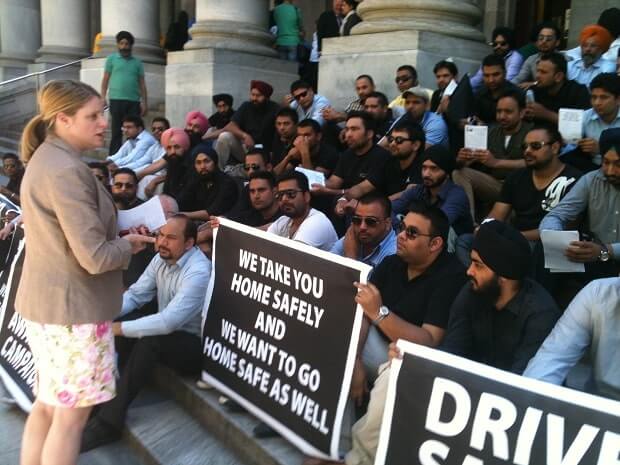
TARUN KAPOOR reports on the November 16 attack upon Indian taxi drivers

History repeated itself in the fateful early hours of November 16, 2013, when mulitple Indian origin taxi drivers were assaulted by intoxicated men in separate incidents in Adelaide. The previous taxi driver attacks occured in 2008 and 2009. This month, Manbir Singh, a 24-year-old taxi driver who hails from Punjab, India and currently residing at Torrence Ville in Adelaide, suffered a blow to his left eye while trying to protect his fellow taxi drivers stationed at Henley Beach square, who refused to take the fare of five intoxicated passengers, in a taxi which could not seat more than four people and one driver. As a result of the blow, Manbir has lost the vision in his left eye and has been left unable to work as a taxi driver. Doctors who attended to Manbir have said that the chances of recovering his vision are extremely low and he may now have to the injury for the rest of his life.

According to Manbir, there were around 10-15 taxi drivers stationed at Henley Beach Square and a group of intoxicated men approached the first taxi driver in the queue, but were refused as they were heavily intoxicated and because the number of passengers were more than that taxi could carry. On being refused multiple times in the queue, the group reached Sunit’s taxi, and then they started to punch and kick his taxi. Concerned about the group’s violent actions to his taxi, Sunit who had so far remained inside his taxi, got out to try to pacify the group and stop the damage being inflicted upon his vehicle. However, this did not have the intented result, as instead he was pushed to the ground and attacked. Seeing this incident, fellow taxi drivers including Manbir rushed to stop the violent attack upon Sunit. It was during this time that Manbir was punched so violently that he was blinded in the left eye.
According to Jujhar Singh, an Indian origin taxi driver who was present during the attack, the intoxicated group of five men were further joined by another five-six men, which futher fuelled the intensity of the altercation. Several emergency messages were sent from taxi drivers to ask for help from operators of other taxis during this, as well as calling the police. Police arrived 20-25 minutes later. By this time, Kunal, another Indian taxi driver sustained injuries to his throat. Kunal has now recovered his voice after the attack and returned to India. According to Jujhar Singh, Kunal had experienced a similar incident around a year ago.
“No” was victim Manbir Singh’s response to being asked if he thought the attacks were racially motivated. He also pointed out that since the group were heavily intoxicated, it wouldn’t have mattered who was at the receiving end of their wrath.
There are questions over the treatment of this crime by Adeliade police, who reportedly allowed some of the attackers to flee on the night of the incident. When the Indian taxi drivers requested to lodge a formal complaint they were refused by the officer on duty, who stated that he couldn’t take so many complaints at that time, and they should report the incident in the morning to their local police station. As per a witness account, the only person whom the police arrested was one of the accused who was so heavily intoxicated that he could not move on.
However, the comments that fuelled frustration amongst the taxi drivers was from the police officer on duty, that the only arrest made was due to their display of public disorderly behaviour, rather than because of the incident which occured. This was despite the fact that the incident left one person blind and another without speech in hospital.
In a separate incident, another Indian origin taxi driver, Inderjit Jassal was attacked at Port Adelaide. He was repeatedly punched in the face and is now recovering. “I’m not going to drive taxis any more. Driving a taxi at night is very dangerous,” Inderjit said. Maninder Jassal, the victim’s wife, is reluctant for him to keep driving. “I would say don’t touch the taxi again, for [the] family’s sake”. In another incident, police have charged a man for allegedly robbing a taxi driver at knifepoint at suburban The Barton last Thursday 21 November, 2013.
In the absence of a formal association to represent them, victimised local Indian taxi drivers called for a ‘Driver Safety Awareness Campaign’ to be hosted on November 26, 2013. They walked from Elders Park to Parliament in order to draw the attention of the SA government to the safety of taxi drivers in general. The protest had the participation from around 100 taxi drivers from the Indian community who marched peacefully and presented their concerns to the Minister of Transport Services, Ms Cloe Fox. Ms Fox promised to enforce reforms to support the safety of taxi drivers and subsidise driver safety shields. However, on being questioned about the police behaviour in the recent attacks, as well as the lack of Taxi Council support, she said she was not yet aware of the facts and would investigate.
 Will the law makers really take action this time to support taxi drivers? If taxi drivers take us home safely, do they not have the right to go home safely too?

Serene and striking Switzerland
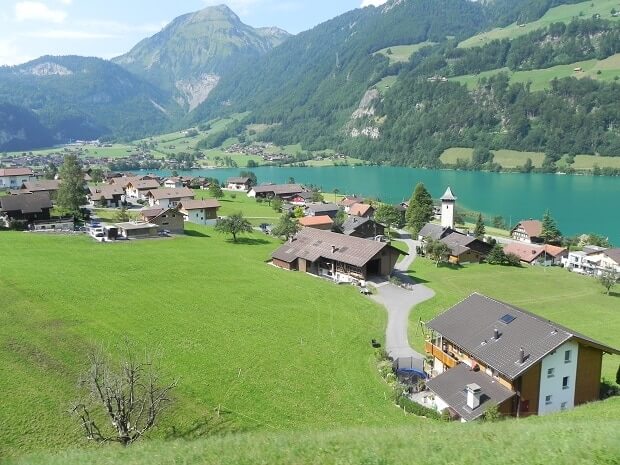
While chocolate, cheese and cuckoo clocks are epicure delights, natural and architectural wonders blow the mind

The Red Cross nation of Switzerland is imbibed with lots of history, and so does the Storchen Hotel in Zurich. Located on the banks of the River Limmat, this hotel has been renowned for its hospitality for more than 650 years. Following the famous novelist John Irving’s mention about this hotel in his novel A Son of the Circus, I opted to stay here during my recent visit to the world’s money-vaulting epicenter, and not only immersed myself in history, but was also captivated by its picturesque setting and nearby sights that claim to be the landmarks of the city.
Dotted on the romantic Weinplatz quarter in the heart of Zürich’s old city, the Storchen Hotel is encircled by cobblestoned alleyways, and stands next to St Peters Church whose 9m round clock-face that I could see from my room, is the largest in Europe. Not far is the Fraumunster, a 1000-year old cathedral famous for its stained glass windows. Its soaring spiky spire dominates the skyline of Zurich along with the Gothic twin towers of Grossmunster, another Romanesque styled basilica located opposite the hotel on other side of the river.
When sitting at the hotel’s terrace overlooking the river, the vista of ornamented bridges sharing the blue waters of Zurich Lake in a distance, and the Alpine mountains forming the background were a feast for my eyes, particularly in the early mornings when the serenity of the swathe was an added special effect.
Switzerland is famous for chocolates, cheese and clocks, and in Zurich there are several places to source them; but the classiest is Bahnhofstrasse, located only few steps away from the hotel. The 2km shopping stretch has elegant shops selling not only the three ‘C’s, but also the latest in fashion. While wandering there it is almost mandatory to have a chocolate drink at the world famous Sprungli chocolate shop, the taste of which still lingers in my mouth.
Zurich has several museums in its menu for the art lovers and history buffs, the two significant ones that I managed to visit were the Swiss National Museum called Landemuseum, and Kunsthaus, the country’s greatest art gallery. They surely added fuel to my cultural appetite!
Located in Central Europe, the history of Switzerland began in 1291 when three small cantons or regions joined together to fight against their foreign occupier, the Germanic Habsburgs. Over time other neighbouring cantons joined the confederation, but political stability was not achieved until 1848 when a central government was established, Bern was made the capital and the journey was triggered off towards social and economic progress. Today with a population of 7.5 million, Switzerland stands as one of the most progressive and rich nations in the world.
Switzerland is a relatively small country, you can travel from one end to the other in hours. Sharing geographical borders with Germany, Austria, Liechtenstein, Italy and France has inspired this peace-loving state to thrive with a mix of culture and traditions; one example of that is having four official languages, French, German, Italian and Romansh. Also as a result of that, there is no such thing as a typical Swiss city, all of the nation’s major cities and towns, Zurich, Berne, Basel, St Gallen, Lucerne and Geneva display their own character, to some extent influenced by elements from the bordering nation. However, what is common in all of them is their proximity to nature.
Switzerland is indisputably a natural paradise. Every cliché that I had heard before about the region’s natural splendors came out true to me. I stayed in Zurich and used the Swiss Travel Card to enjoy unlimited travel on national transport such as train, bus and boat to criss-cross this scenic land as much as was practically possible.
After completing my exploration of Zurich. I visited Lucerne, the picture perfect lakeside settlement where Chapels Bridge, a 14th century covered pedestrian walkway and the Lion’s Monument, a massive figure of a dying lion sculpted on sandstone, boast as iconic attractions. Then, I continued my journey to Interlaken to get closer to the gorgeous Alps, via the legendary Golden Pass train. It not only presented the best of the scenery comprising of mountains, lakes and waterfalls, but also showcased the typical Swiss countryside with small villages and grazing cattle powdering rolling green valleys intermittently sprinkled with conifer forests. The setting and even the colour of every view came out exactly as I have seen on picture postcards and many Hollywood and Bollywood movies.
I knew that Albert Einstein developed his famous theory of relativity while living in Berne, and that notion inspired me to visit the nation’s capital, particularly to see this great scientist’s dwelling. Berne is a beautiful city with grand medieval arcades; the buildings, monuments and fountains lining its cobblestoned streets are striking as architectural gems. Einstein lived in a modest apartment which has now been converted to a museum, a café downstairs called Einstein Kaffee, serves refreshing doses of caffeine.
Switzerland boasts of several architectural marvels that represent an array of styles from the Romanesque, Gothic, Renaissance and Baroque periods, a fine example of the last being the St Gallen Cathedral which was originally established in 747 AD. I was there on a Sunday morning to join locals and tourists from various parts of the world for the celebrated Mass.
A side-trip one day to the pocket-sized principality of Liechtenstein, the sixth smallest country in the world, was highly rewarding. Its capital Vaduz is only a short journey by train and bus from Zurich. Measuring 25 km in length and 6 km in length, it’s remembered mostly for its stunning natural beauty that aptly competes with neighbours Switzerland and Austria. The nation is governed by a friendly Prince whose home, a magnificent castle, is the main sight in the capital while a visit to his winery is grandly stimulating after tasting some fabulous reds and whites.
Though small in size, one visit is not enough to savour everything the region offers. So I left Switzerland with a taste of cheese and chocolates in my mouth, a cuckoo clock in my bag, several photos in my camera, the extraordinary scenery of mountains and lakes frozen in my brain, and a strong desire to return locked in my mind.
TRAVEL NOTEBOOK
Getting there: Singapore Airlines (www.singaporeair.com) has daily flights from Australia to Zurich via Singapore.
Getting around: A Swiss Travel Card is most convenient
Accommodation: Storchen Hotel (www.storchen.ch) for style, comfort and convenience
More information: Check www.myswitzerland.com for details on Switzerland and a Swiss Travel Card, and www.tourismus.li for details on Liechtenstein.
Tulsi Gabbard: The first elected Hindu in the US Congress
A young American Hindu’s philosophy of life blends the teachings of the Bhagwad Geeta with the aloha spirit, reports ASTHA SINGH

She came with the spirit of ‘Aloha’ (the traditional Hawaiian greeting), and inspired all of us with the essence of Karma Yoga and spiritual Hinduism.
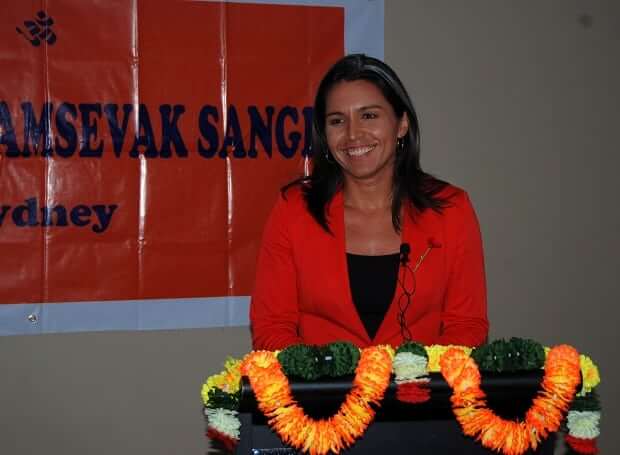
The charming Tulsi Gabbard, an American politician who represents Hawaii’s second congressional district in the United States Congress, visited Sydney early this month. She was invited to meet with interested members of Hindu, Indian, American and Australian origins at the Radisson Hotel during her visit. Organised by the Hindu Council of Australia, Friends of India Australia Inc. and the Hindu SwayamSevak Sangh, the event saw over 100 like-minded people attend.
As Ms Gabbard lit the traditional lamp, she was greeted with a Hindu welcome song in Sanskrit, Sarwa Mangal Maangalya, Shive Sarvardha Sadhikey.
32-year-old Tulsi Gabbard introduced herself as someone who understands the challenges that Hindus face throughout the globe, and clarified that she is not of Indian ancestry though she is often mistakenly perceived as a person of Indian descent.
“However, I do want to learn Hindi to help me understand Hindu religious scriptures well, and to enable me to communicate with the Hindi-speaking community,” said Ms Gabbard.
Born in Leloaloa, American Samoa, the fourth of five children of her parents, Tulsi grew up in a multicultural, multi-religious household in Hawaii. She fully embraced Hinduism as a teenager with encouragement from her parents who practised karma yoga, especially with her mother being a practising Hindu.
Being an extremely shy person in her early age, Tulsi was more interested in books rather than leadership, growing up. Leadership came as an initiative she took in her teenage years by forming an environmental coalition when she understood the meaning of ‘sewa’ and how she could be of service to others. Thus began Tulsi’s journey of service to society. Today she is the youngest woman in Congress.
But before she entered public life, Tulsi joined the National Guard and spent a year in Iran and Baghdad. Serving in a medical unit, she claims she ‘understood the meaning of life’ and that it is a blessing to all of us. She also began to understand the real essence of the Bhagwad Geeta, while acquiring perspective and figuring out the difference between what is petty and what is important.
“The Bhagwad Geeta teaches us to look at diverse cultures and respect each other for the spirit soul we really are,” explained Ms Gabbard.
The Hawaiian way to say hello, ‘Aloha’, means sharing the eternal breath of the soul, she said. It removes all existing barriers to communication like socio-economic class, educational pedigree, race, religion, ethnicity, anything that separates people.
The parallels with the ‘Namaste’ of the Hindu culture are obvious.
“Greeting others with a sense of respect and sincerity filters a lot of barriers, is a great and useful way to overcome the political divide, and can open up conversations,” stated Ms Gabbard. “Diversities within different communities in the US is what makes its society unique, and tolerance, respect and sincerity amongst one another is the key to a great society”.
Ms Gabbard is proudly pushing for a Diwali stamp in the US Congress, which will help people from other parts of the country understand the deeper meaning of the festival: it will initiate conversations about the spiritual foundation of what symbolises the festival, truth over untruth, which is most beneficial in politics and everything we do.
At the Q&A session towards the end of the event, Gabbard impressed all present with her ideal answers and inspiring clarifications to every question. When asked, “What was the biggest milestone in your political career?” by yours truly, Ms Gabbard proudly stated that during a session in Congress, all her colleagues recited ‘Rama Krishna’ with her, and that was a very important personal milestone.
Ms Gabbard spoke beautifully of her mixing of military service with her deep-rooted spiritualism. A lifelong vegetarian, she has also been a long-time practitioner of martial arts and uses yoga to create a sense of balance between her various endeavours.
She also talked about her plans to travel to India soon, and stated that she seriously advocates Hindu human rights in Pakistan and Bangladesh.
Ms Gabbard comes across as a personification of the Obama period, with its crushing of political typecasts and upsurge of cultural diversity.
Gabbard consistently seems to specialise in ‘firsts’ – she is the first person born in American Samoa to be elected to Congress; one of its first two female combat veterans, and the Congress’ first elected Hindu.
Education – a business proposition

Opportunities in education business in Australia and India

Indian Link has already covered the useful and much needed business conferences on education and training organised by Pradeep Khanna of Global Mindset earlier in the year.
His initiative of ‘Integrating Australia with Asia’ and building a community of like-minded people comprising of Australian and Asian entrepreneurs and business executives to do business in the Asian century is gaining momentum.
These conferences are helping Australians and Asians to engage with each other, understand the problems and attempt to solve them by customising the products, processes, resources, knowledge and skills that they already have.
For example, Australian companies have the opportunity to build large scale and size in their business by deploying strategies for serving large numbers in a market like India. The growth prospects of a company that can successfully achieve this innovation can go ballistic with India’s population being more than 50 times that of Australia. Tim Tams in India, anyone? Desi Vegemite? In fact, consumer businesses such as the coffee chain Gloria Jean’s and cookie chain Cookieman can be found in Indian shopping centres.
Pradeep Khanna’s initiative is helping to encourage Australian and Asian businesses to come closer.
The latest conference on October 29 specifically tackled the topic of using data analytics in higher education. Moderated by Tim Dodd, the education editor of the Australian Financial Review, IT and learning managers of University of Technology Sydney (UTS), Australian Catholic University (ACU), Queensland University of Technology (QUT), Government agencies such as Office of Learning & Teaching, Education Services Australia and consultants such as Deloitte Analytics presented their thoughts on how education is now managed with the help of data and analysis as large number of data points are collected and then used to improve learning outcomes.
Devin Fidler of US-based The Institute of the Future connected on Skype to talk about how education is changing. He mentioned how the best lectures are now on the web because of Massive Online Open Courses (MOOCs). He stated how University of the People has aimed to bring a degree to anyone who needs it by offering bachelor’s degree courses for as little as $5,000 in America. Other examples of innovations in education include:
- Duolingo: Free language lessons.
- Codecademy: Learning programming.
- General Assembly: Entrepreneurship training.
- Coursera, uDacity and edX: Free online courses offered by leading universities.
- Lynda: Subscription based fee for hundreds of technology courses.
- uDemy: Courses that can be hosted or taken by anyone.
Organisations such as Global Mindset, initiatives such as ‘Integrating Australia with Asia’ and communities such as TIE Sydney (the local chapter of the global entrepreneur community originally started by Indian professionals in America), have done much to help Indian professional and business community to benefit from opportunities in their adopted countries.
Bhrathanatyam Arangetram: Delightful energy
A new trend is afoot in the classical dance scene, reports DEEPA GOPINATH

In many cases, a Bhrathanatyam Arangetram is the solo dance debut of a student of the classical dance discipline. However more and more, audiences are seeing group Arangetrams that allow two or more girls to debut together, thereby spreading between families the financial and organisational stresses that accompany a project of this magnitude.
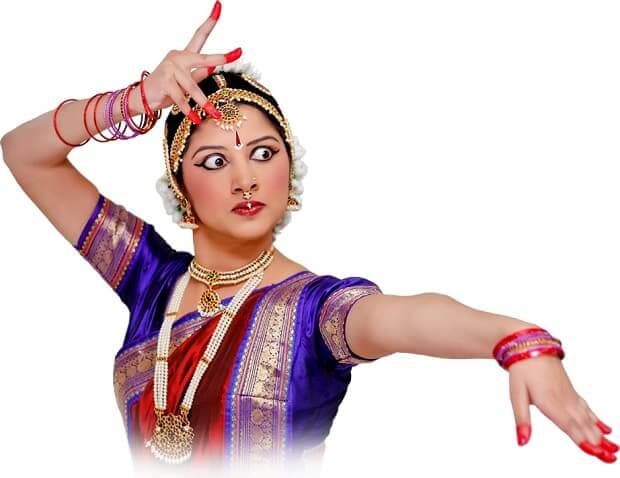
Late October, Guru Neeta Sura of Nrityaniketan dance school in Sydney, presented five of her students in one such debut performance. Shilpa and Puja Kunte, Akshada Dhumal, Aditi Chaudhari and Shruti Jagadale were the students who completed this important milestone by presenting a full Bharathanatyam repertoire at the Science Theatre, UNSW.
The first half of the recital consisted of a fairly traditional set of items, with classic pieces that have been performed by generations of dancers. Ganesh Dheemahi (Raga: Keervani, Tala: Adi) was a vibrant invocation piece which paid homage to Lord Ganesha and allowed the dancers to give the audience a taste of their ability to show abhinaya, or expressive dance. In the Shabdam, Akshada Dhumal was a standout as the coy Radha who is being teased by the mischevious Lord Krishna (Aditi Chaudhari). In contrast, the Alaripu and Jathiswaram as always were abstract dance compositions that are designed to allow a dancer to display technical finesse. Puja Kunte was especially impressive in the Alaripu, although all of the dancers displayed a delightful energy.
The Padams, or expressive pieces that followed the intermission were a further opportunity for the dancers to demonstrate this aspect of their talent. The enchanting Bho Shambho in Revathi raga and Adi Thala was a vibrant piece on Lord Shiva with intricate dance compositions. The release of the river Ganga from Shiva’s topknot involved some innovative and memorable choreography. Then followed two Goddess-centric pieces, Laxmi Stuti and Durga Padam, the feminine contrasts to the previous piece which were delicately presented. The Thillana, or finale was another classic musical composition in raga Parasu and thala Adi.
An aspect of the recital that stood out was the dance choreography by Guru Neeta Sura. Each piece was intricately composed, using the five dancers to create interesting formations that ensured that the attention of the audience was captured. To their credit, all five dancers executed the choreography flawlessly, weaving amongst each other in the complex arrangements.
The MC’s Shilpa Madiwale and Purnita Mane did an exceptional job, and their performance should set a precedence for future Arangetrams. Evidently dancers themselves, they spoke clearly as well as enacted the story of each piece so that the audience could grasp the concepts well.
The orchestra consisted of Laxmi Narendra, Bharath Mohan, Sivakumar Sethupathy and Nagraj Iyer, and they were fine accompaniments to the dancers and Neeta Sura.
Group Arangetrams have their own challenges, such as having to co-ordinate a number of dancers and their families, while ensuring each dancer has a chance to shine and demonstrate his/her talents. These challenges were overcome with finesse in this recital, and the dancers their families and the Guru should be proud of this achievement.