

A talented Indian origin actor brings his craft to the stage in a challenging role played and directed by himself

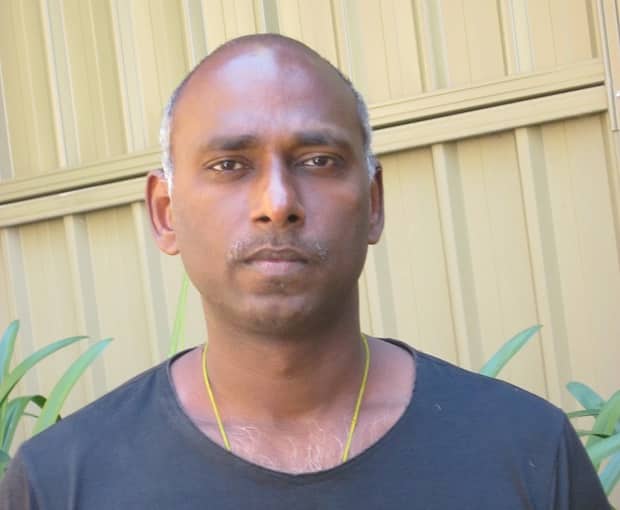
Vel Subra is the first non-Caucasian to perform the role of Truman Capote, the novelist and literary giant of the 1960s and 1970s, who created classics such as Breakfast at Tiffany’s and In Cold Blood. Subra, under his stage name of Ezekiel Day, is the sole actor and director of the one-man play TRU, which captures the life of troubled, but brilliant Capote. The novelist’s personal life was characterised by a mixture of chaos, literary genius and irony. Born into a chaotic family life, Capote’s early life was marked by the early divorce of his parents, loneliness and change.
Despite his turbulent past, Truman Capote was an extremely focused writer and published Breakfast at Tiffany’s in 1958, followed by the highly successful In Cold Blood – which shot him to national and international fame. Following great success with his writing, Capote found himself a celebrity, mixing with those in the highest social circles, and appearing on television. However Capote never felt comfortable with what he observed and in a novel titled Answered Prayers, he sought to expose his observations of the personal lives of those with whom he found favour. The book was never published. However, Capote did allow excerpts of the book to be published in Esquire magazine in 1975. This was an act of social suicide and led to Capote being excluded from the social scene that had embraced him and given him both recognition and fame. From this point, Capote slid into a life of drug abuse and dependence on alcohol, dying of liver cancer in 1984.
A quintessential American character, whose life was played out in the changing American post-war culture, Capote’s life in play has only ever been taken on by Caucasian actors. The problem facing Subra as an Indian actor, has been to bring to the stage a sense of reality in a way that who he is, is not a factor in his portrayal of the character of Capote.
For Subra, the role of Capote has been a journey of self-discovery. Born in Tanjore in south India, Subra lived in Singapore for a number of years prior to travelling to Australia and living in both Melbourne and Sydney. “I found that through my acting and in moving between nations, life is a search for belonging and place,” says Subra. In Australia, Subra acts under the stage name ‘Ezekiel Day’, choosing it as he found that his actual name ‘Subramaniam’ would close doors, as Australian theatre has been notoriously colour-blind. “In taking on this role, I have directly imposed myself against the cultural bias I have faced. The motivation for the performance is however, much deeper than simply making a statement about how an actor can find a place, when no place is on offer,” reveals Subra.
As a theatre practitioner, Subra has been inspired by Cate Blanchett in her performance as Bob Dylan. In this case Cate was so convincing in her male role that she won a Golden Globe. Cate has observed the approach to work taken by brilliant Indian director Shekhar Kapur who begins his work with prasadum – the making of an offering to the divine, prior to undertaking a task. So too does Subra, who takes a spiritual approach to his craft, while seeking to transcend boundaries.
“The role of Capote is extraordinarily demanding and risk-laden. A less than convincing performance would not do me any favours, and it is thus, a considerable gamble,” admits Subra. “However, I have embraced the challenge and in doing so, I seek to inspire others,” he states determinedly. Subra originally played the role of Capote in Singapore in 2012, where it was a success. However, Singapore is a less risky performance space as the audience are more exposed to cultural diversity, than they are in Australia.
Risk has been mitigated somewhat through extensive research. “Over a period of seven months, I have studied the works and the mannerisms of Capote, practising his voice, gestures, use of words and accent. The aim, of course, is to bring authenticity to the performance,” claims Subra.
Subra is placing himself into an unmediated space – the only actor and director in a play that lasts 100 minutes. Here we have Subramaniam Velayutham, with stage name Ezekiel Day, playing Truman Capote, who himself was born as Truman Streckfus Persons. The only question that remains is whether Subra can find himself and in that sense, truly ‘arrive’ in Australian theatre.
He who seeks to transcend cultural boundaries with a performance premised on an offering to the Gods may have his prayers answered.
TRU will be staged on December 9 and 10, at 7:30pm at the Parade Playhouse, (NIDA) National Institute of Dramatic Arts, 215 Anzac Parade, Kensington. Call 1300 795 to book or visit ticketek.com.au
From Vel to Ezekiel to Capote
Adieu, Zarina, RIP
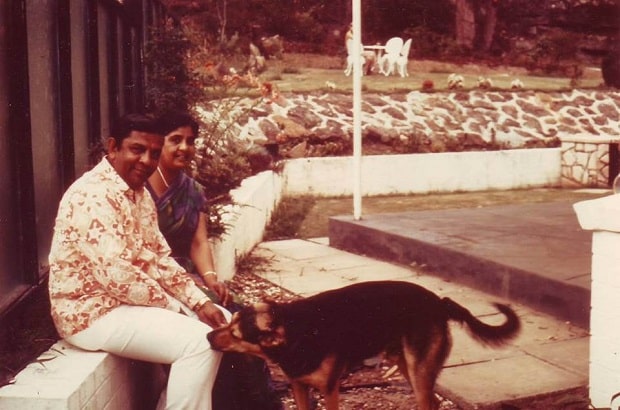
Always a smile and a helping hand sums up the life of the late Dr Annie Zerina Austin

On November 26, family and friends gathered to farewell Dr Annie Zerina Austin, fondly known as ‘Zarina’ or ‘Zerrine’ (B: 31 Mar 1925 – D: 15 Nov 2013). On November 15, 2013, she bid adieu to her earthly journey exactly fifty years after arriving in Australia.
With her husband Dr Samuel (Sam) Austin, Zarina had set up her home in Sydney. Their St. Ives residence in Kelvin Road was famed for their parties and get-togethers. The meals were always super and seeing Zarina in the kitchen with her trademark ‘tandoori drumsticks’ became the expected sight. Even as a child, I remember looking forward to going to their place because of her warmth and hospitality. Laughter and games were the hallmarks of every get-together. Just three days before she passed away, Zarina was fondly remembering that home and those times saying, “Us ghar mein hum ne bahut enjoy kiya, khoob entertaining ki!” (In that home we enjoyed ourselves and entertained a lot!”
As we sat inside the Hornsby Baptist Church and joined the Thanksgiving Service for the life of Dr Annie Zerina Austin, I could see her family and friends remembering their own relationship with her. Her niece Becky’s tribute was read out by Shiva, but even he choked up at certain points especially as he read, “Aunty loved life and lived each day to its fullest. She always danced on her own step. Even in her sickness she fought harder and more courageously than anyone I have ever known. That fight sadly ended. Aunty is irreplaceable. I cannot think of anyone who did not adore her. I bet you, the last time you met Aunty, she was smiling”.
And Becky was right, that is how Zarina met everyone, always with a smile or with a helping hand. She was always witty and ever eager to watch cricket. Shiva revealed her secret as he read, “Yes! She loved Sachin Tendulkar!” She also loved watching movies, reading books and listening to music. She was also quite an artist.
Reverend Ricky Su also paid tribute to Zarina’s dedication to the church and her steadfast faith. He fondly remembered his conversations with her, as they discussed many topics including the one that she had made into her career, “the human mind”.
Her friend of twenty years, Shalini Ponnaiya gave a loving tribute with her words, “She has been a mentor, a positive thinker and the life of many a party. She has been a role model for many of us who came here to Australia later in life, she was very independent, had many talents and was well respected in different groups in the community. She loved life and she loved people. She was always a part of the church family including a Bible study group”.
As Zarina’s favourite hymn Amazing Grace filled the church, I looked around to see the friends that had gathered; many still not believing that her earthly sojourn had ended.
Zarina’s physical form has left this earth but her smile remains, her humour is being recalled, her love is being missed and her incredible courage is being admired. She lost three beloved beings during her life in Australia, the ‘daddy’ she so loved much, her Alsatian dog ‘Prince’ and her partner in life, Sam. I asked her once if she ever dreamt of her husband and she said, “Bahut baar. Pahele zyada aate the, par ab bhi aate hai”. (Many times, more in the beginning but even now he comes in my dreams).
If there is one consolation as we all face this loss, it is in this, that Zarina is united with the three people she loved so much and she will be missed by those she has left behind.
To borrow Shalini’s words, “Zerrine, we will always remember your lovely and generous spirit – you leave behind some wonderful memories. May you sleep peacefully in the arms of Jesus.”
The cortege took Zarina to Castlebrook Memorial Park in Rouse Hill, where she was laid to rest. Go Aunty Zarina, knowing that you leave behind a world richer for having known you.
Back to the mountains
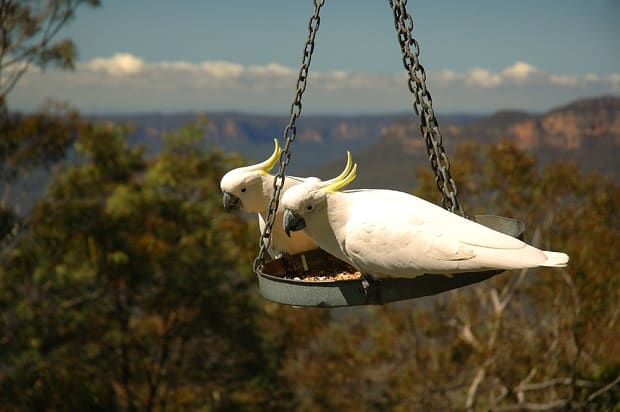
Breathtaking vistas, funky stops, pottery classes and drool-worthy dishes make a memorable few days

Snaking up the Great Western Highway to the Blue Mountains, I expected to see scenes of devastation with charred trees and the blackened remains of houses. Instead, not a single singed tree was in sight, just clear skies and roadworks aiming to expand the main artery into the mountains.
My partner and I looked at each other with surprise. Not that we wanted to see any of those sights, but it still is a misconception us Sydney-siders currently have of the mountains, after breathing in the smoke from the October fires. We put the roof down (even managing to get sunburnt on the drive up there) and breathed in the fresh air. We were off to a good start.
Running slightly behind schedule because of the roadworks, we arrived at Scenic World. And we were treated to some breathtaking views over the Jamison Valley, and different angles of The Three Sisters (Aboriginal names: Meehni, Wimlah and Gunnedoo). There’s the view from the Scenic Railway, the world’s steepest passenger train at 52 degrees; the skyway, the highest one in Australia at 270 metres; and the boardwalk, the longest elevated one in the southern hemisphere, at 2.4kms. Oh, and the views weren’t too bad either from their cable car, incidentally the steepest aerial cable car in the southern hemisphere. All of this is most likely why us Sydney-siders drag any friends visiting from another country here.
They’re a friendly bunch at Scenic World, and Andy, our guide for the day sure knows his languages. He manages to find out where each tourist we pass is from, and chats to them in their native tongue, making me feel somewhat inadequate. The staff all seemed like one big happy family, although maybe it was because some of the staff were indeed family members. No really, they are.
The special menu in the café at Scenic World rotates, but the one on offer from Dec 25 – Jan 5 just so happens to be Indian. Another interesting point is the occasional entertainment they have in the forest, as well as riding up and down in the cable car. Andy mentioned a violin player, bands and even a unicycle. Sadly, there aren’t any the day we’re there. I would have liked to see a unicycle in a forest.
There’s also a forest version of Sculpture by the Sea down on the forest floor organised for next year during April 24 –May 18, with artworks being transported down via the Scenic Railway. Quite a challenge for any of the artists involved.
After a change of time in the massage agenda, and my boyfriend missing out on his (yes, I am still being reminded about it), it was time to leave (numerous happy snaps later, of course).
I could still feel the tingling in my feet from standing on the glass section of the floor in the skyway (which the boyfriend thought I was mad for standing on), as I headed into the spa at Lilianfels. He sulked a little, then headed to the pool and spa tub.
I robed up and was treated to a truly relaxing massage that ironed out the kinks in my neck. Even the ‘changing rooms’ have sunken spas in them and there’s also an area to have a fragrant tea and unwind. Highly recommended.
Actually, I would say that Lilianfels hotel in general, is highly recommended. It sits on beautiful grounds which are extremely close to the Three Sisters, also directly opposite Scenic World. Its English countryside charm works its magic on you within minutes of entering, being both cute and elegant.
The degustation dinner with matching wines we stuffed ourselves with at Darley’s was likewise memorable. I recommend starting off with a cocktail on the bar’s balcony as we did, so you can watch the fog roll up the mountains. Quite a magic moment, especially with good company. The meals were perfectly matched to each course and it would be easy to go on and on about it. The Heirloom Spring Vegetable Garden does deserve a special mention however, as does the venison.
The next day we awoke early to get our shopping started. I was surprised by the offerings in Leura village, like the funky vintage shop Mrs Peel, which wouldn’t be out of place in Sydney; contemporary Japanese goods at Touki; With Max & Me’s bits and pieces; kitchenware at Leura Whisk; Leura Gifts & Homewares; iKou for amazing tea and moisturisers; Leura Fine Woodwork Gallery; candles at Moontree Gallery; Birches of Leura; and Josophan’s Fine Chocolates. We could have spent all day in the chocolate making headquarters in Josophan’s alone. It seems that the migrant of Sydney-siders to the mountains is certainly rubbing off on it.
Before we knew it we had worked up a massive appetite from running between all of the shops in the rain, so we headed to Leura Garage. Again, not the sort of place I expected to see in the Blue Mountains. It’s a converted garage, which knows how to work its industrial meets café look, with bits and pieces from cars and herb pots everywhere.
A massive downpour soon followed, so we headed back to the hotel for a relaxing swim, before heading to a pottery class with Lyn Hart at Hart Ceramics.
My partner wasn’t so keen on the idea of making pottery, trying to use the rain as an excuse to get out of it. But once we were there he warmed up to it pretty fast and loved getting his hands dirty on the wheel, making candle holders and pressing shells into clay to make a serving tray. He looked pretty pleased with his creations and I felt like I was back at primary school (in a good way) as I got stuck into it. Lyn talked us through what to do and rescued our clay messes on the wheel when necessary, reminding herself to not take over and end up making them herself! We could barely wait till they’re fired in the kiln and posted to us. After a thorough wash later, as I made the mistake of wearing black to a pottery course (a big no no), before we knew it the two-hour class was up. We choose the glaze colours for our creations and then headed off to the French-inspired Bon Ton Leura. Another satisfying meal with extremely friendly service later and sadly, our last day in the mountains was over.
After being the first to the breakfast buffet the next morning at 7am, (quite literally waiting until they opened the doors), we collected the car, packed all of our goodies into it and headed back to Sydney for one of my close friend’s wedding. The sun was shining and it looked like it was going to be a beautiful sunny day up in the mountains, despite being cloudy down in Sydney.
We ended up leaving the mountains with full stomachs, relaxed minds and shoulders (well, at least I did), lungs full of fresh air and a pot of two (soon to be posted). If only we had a bit more time!
ACCOMMODATION:
Lilianfels www.lilianfels.com.au 02 4780 1200. They also have a Summer escape package, stay two nights or more and receive 20% off (includes buffet breakfast) until January 4, 2014. There are also plenty of other great options.
DINING:
Darley’s Restaurant www.darleysrestaurant.com.au
Leura Garage www.leuragarage.com.au 02 4784 3391
Bon Ton Leura www.bonton.com.au 02 4782 4377
SHOPPING:
Go to Leura Mall for shopping, or antique stores in other areas of the Blue Mountains.
ATTRACTIONS:
Scenic World www.scenicworld.com.au 02 4780 0200
Hart Ceramics www.hartceramics.com.au 02 4784 1990

Friendly Fiji


In celebration of my twin daughters’ 4th birthday I took them on their first overseas holiday to Fiji. As we disembarked from the plane and began the walk towards the taxi stand, Nicky turned and ran back to the craft on hearing a deafening welcome cry of ‘Bula’ (Hello!) from large men in grass skirts, wielding clubs for dramatic effect. Several trips later we return to explore the Coral Coast on the main island of Viti Levu.
The drive from the airport passes Nadi, predominantly an Indian town with the Sri Siva Subramaniya Temple, the largest in the southern hemisphere, and spice shops and Indian restaurants lining the main street. With villages, coconut trees, sugarcane and pineapple plantations, Fiji’s coastal road is a picturesque drive circling the island as beautiful beaches, coral reefs and scenic bays come into view. We arrive at our hotel, Outrigger on the Lagoon, and for the next week, my teenage daughters spend their days by the pool while I venture off exploring the island.
More than just an idyllic holiday destination in the South Pacific, Fiji is friendly. It took me several days to realise, as I walked along the roadside, that a toot from a passing car was a way of asking whether I was in need of a lift. After walking for several kilometres on the first day and many toots later, a mini bus with young backpackers onboard stopped and the guide from Fee Jee Experience offered me a ride. Over the next few days, I was offered lifts by an academic returning to Fiji University with her students in tow; Inoke, an attorney going home with his daughter after a conference; and taxi drivers offering a lift while on their way to collect passengers. I also caught local buses piled high with fresh fruit and vegetables, with frequent stops for children making their way to school.
I caught a bus to Suva, the capital and home to half of Fiji’s population, and a city that seems to be subjected to a constant drizzle. I visited the lively market, had an excellent Indian lunch with local ingredients replacing those that are not locally available, and visited the Fiji Museum, which tells the country’s story through musical instruments, cooking tools and war clubs. I also visited Pacific Harbour, with several resorts and a marina.
Fiji’s most beautiful beach is Natadola, a long crescent shaped beach of white sand. With a golf course and several expensive resort hotels, while lovely, those staying here had little inclination to venture beyond.
I caught the local bus several times to Sigatoka, the largest town on the Coral Coast and the commercial centre for the farming communities upriver in the Sigatoka Valley. The fresh produce market sold the sweetest pineapples, and roots for making kava were piled high in bunches. A few supermarkets, restaurants, a Mosque and souvenir stores make up the compact town.
Locals advised that I should do two things while in Fiji – take a cruise to the islands and travel into the interior.
After crossing the Sigatoka River by boat, we hopped into an open 4WD jeep with considerable horsepower and for the next hour we went up and down hills along the valley road, skirting by the river manoeuvred with considerable skill by Josephine, our tour guide. Stopping at a village we met villagers climbing onboard a truck to attend a church service. An elderly man hopped out, came towards us and presented me with a flower garland.
At Naihehe Cave more than 170 metres long, we waded knee deep in clear water to the dark interior before being offered kava by the village chief. Inevitably, visitors will be invited to drink kava, a relaxing traditional drink made from the kava root that numbs your tongue and tastes like bitter liquid mud. Made by placing ground kava root in a cloth infused with water in a wooden bowl, it is offered as a gesture of welcome.
Our final day was spent on Ra Marama, a beautifully restored tall ship as we cruised to Tivua Island for snorkelling, kayaking and a tropical buffet lunch. With the most perfect of sunny skies, a sudden storm had us running for cover, with offers of kava. We returned back to the hotel with the crew singing merrily.
Fiji is a country with a strong cultural heritage of Fijians and descendants of Indian labourers who were brought to work in the sugar industry between 1879 and 1916. On our last night we watched another sunset, the aromatic blend of coconut oil and tropical blooms filling the air. I went for my final walk along the beach and began talking to a family preparing a picnic. “Would you like to come join us?” It was Rajen, a chef at the Outrigger Hotel, enjoying his day off. “Come again!” they called, and as the horses were brought down to the water’s edge for a swim in the lagoon, I thought I surely can and will!
Travel Notebook
Getting there
Virgin Australia, Jetstar and Fijian Airways fly from Australia to Nadi. Watch for specials. Taxis are plentiful at the airport or pre-book a coach transfer with Coral Coaches or private transfer through your hotel. Express and local buses provide convenient and inexpensive transportation around the island, but as they stick to the main roads, hire a taxi for sightseeing the beaches, since many are away from the main road.
Accommodation
Fiji has a favourable exchange rate which translates into a great and affordable holiday destination, and resorts are generally of a high standard. We thoroughly enjoyed our stay at the Outrigger on the Lagoon – Fiji +679-650-0044 / reservations@outriggerfiji.com.fj /www.outriggerfiji.com The daily activities planner will occupy your time without needing to leave the resort. The kid’s club is excellent. My daughters spent their time by the poolside, although guided tours to sand dunes, kayaking etc., are on offer. Fire walking, the Fijian Lovo and traditional dance nights are a highlight. The resort fronts a beautiful lagoon with an expansive lush tropical garden and large lagoon swimming pool. Some resorts are more suited to couples or honeymooners, while others cater for families. Solo travellers might better enjoy touring with a tour company such as FeeJee Experience.
Dining
Opt for a meal package if you plan to spend your time at a resort, since meal costs do add up. We found several restaurants only a stone’s throw from the resort, with Le Cafe recommended.
Further information
Avoid the cyclone season. Captain Cook Cruises offer a great day sailing out to Tivua Island. + 679-6701-823/ reservations@captaincook.com.fj / www.captaincook.com.fj Sigatoka River Safari offer two excursions, both recommended. +679-6501-721 /safari@sigatokariver.com /www.sigatokariver.com
Hybrid education

Teaching and studying systems are undergoing an uncertain change due to technology. By MOHAN DHALL

There is widespread belief that children these days are growing up in what is termed ‘the digital generation’. That is, they are more adept at, and prefer, reading from iPads and laptops than reading from books and magazines. They start research with Google and Wikipedia rather than encyclopaedias and libraries, and entertainment comes from YouTube, Tumblr and Instagram, rather than television or radio. Connection between friends is centred on ‘Face Time’, SMS, Snap chat, email and Facebook, rather than telephones and even letters. Teachers too, particularly new graduates, are very familiar with using these technologies. Schools however, are not able to keep up or offer a consistent experience of technology to students.
A glance back through the history of teaching indicates that the current pace of change is unprecedented. Integration of technology into the teaching and learning process has led to a change in both what is done inside and outside of the classroom. Teachers are increasingly using technology in the classroom, and formal government teaching standards are explicit in an expectation that technology be effectively utilised within teaching and learning contexts. Technology is also being used by students both at home and within schools. Class notes are often taken on a school-issued laptop and homework is done in a word document, a spreadsheet or other software applications.
However, technology and the pace of change has caused a strange ‘in between’ phenomenon, classrooms are now neither wholly technology-based or wholly text-based, meaning students and teachers are caught in a hybrid state of having to make decisions that re-cast teaching and learning.
Consider the teacher’s perspective. They use technology to research and present information. Technology is also being used by teachers to email students about worksheets and lesson outlines. Publishers that create teaching resources such as Jacaranda and Pearson, are creating eBooks that are compatible with a range of devices, and schools are purchasing iPads rather than texts. This means that teachers cannot rely on photocopies and textbooks any more, and school printing budgets are falling. However, teachers know that some students like to read from printed material rather than small laptop screens. They also know that many students like to take ownership of their work through underlining text, highlighting, and annotating text with notes. Of course, all of these things can be done in a word document, but somehow hard copy suits many students despite their other uses of technology. In terms of preparation, teachers have the tricky task of adjusting how to present information, ideas and understanding. What proportion of notes should be soft copy and/or emailed and what proportion printed? How much, if at all, YouTube videos should be referenced and whether a PowerPoint presentation can enable easier access to the material?
In designing worksheets that are sent electronically to their students, teachers have found they need to reassess how they ask questions. The traditional method of having students recount text in ‘full sentence responses’ or list factors can simply allow students to ‘cut and paste’ from the given notes. Real engagement requires that teachers re-cast the way they create activities to circumvent the ‘cut and paste’ approach. This means finding clever ways to construct tasks and pose problems. This requires reflection, and more time for lesson preparation, rather than less. Technology properly used encourages thinking skills.
From a student’s perspective, technology provides access to media with which they are familiar. However, technology also provides more opportunities for distraction. Moreover, the ease with which information can be accessed has led to a loss of research skills, as the maxim has become ‘near enough is good enough’. Teachers are finding that even senior students need to be taught how to refine searches so that relevant information can be found. General searches typed into a search engine gives far too many responses and the fractured nature of Google searches can limit and skew research. Thus, thinking skills also need to be taught in regards to searching and finding information of relevance to a given task.
Of course, in this ‘in between’ space, students and teachers find that the physical task of writing is becoming increasingly difficult. More and more students are losing confidence in their ability to write, but examinations are still presented in written forms. This offers an added difficulty to students and also their teachers. The question is, how do teachers vest in students the skills they need to perform when the demands are pulling in another direction?
It is a strange in-between, hybrid space that teachers and their students occupy at present. There is a feeling of being somewhat betwixt and between. This feeling is exacerbated by two other factors. Some schools are embracing the newest technologies and others are lagging behind. Thus the experience of students is disparate between schools. The ‘haves’ are getting a different experience to the ‘have-nots’.
Also, the issue of how to teach in the best way to adapt to change, is tricky. Teachers may not be comfortable with the pace of change and can find themselves having to reinvent how they teach for fear of their skills becoming quickly redundant. Digital changes have thrown settled teaching and learning systems into a state of divide.
First ever bilingual CD launched in Dharawal/Sanskrit
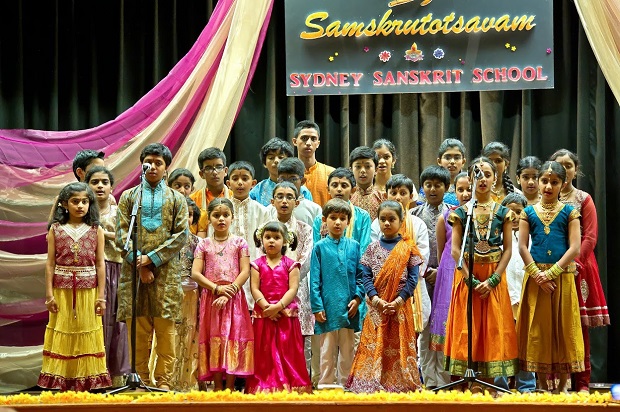
Embracing Dharawal Aboriginal culture through Sanskrit was the theme of the SSS annual day, reports KARTHIKEYAN SUBRAMANIAN

Inclement weather on November 17did not deter participants and guests who flocked to Redgum Community Centre to celebrate Samaskrutotsavam 2013, the annual day of the Sydney Sanskrit School (SSS). It was an event at which history was truly in the making. The SSS is the world’s first school to produce and launch a bilingual CD titled, Yabun Matra (‘In rhythm’ in Dharawal/Sanskrit), a carry along CD in the Dharawal language and in Sanskrit, also containing a songbook. The CD was created to embrace the Australian Indigenous culture with respect and reverence as SSS believes that we have a responsibility to our children and families to maintain a sense of belonging and connection to this land. Sharing Aboriginal history and culture and actively embracing reconciliation are key to achieving this.
While launching the CD, the Hon Victor Dominello, Minister for Citizenship and Communities and Minister for Aboriginal Affairs, lauded the community for its ability to blend seamlessly into the local culture, and yet retain its unique identity. The CD is a collection of Dharawal songs and sayings, translated into Sanskrit. On hearing the tri-lingual national anthem in Dharawal, Sanskrit and English sung by students of Sydney Sanskrit School the Minister was moved to say, “What a joy it was to watch those young angels sing the national anthem in Dharawal, Sanskrit and English, our national anthem. If that doesn’t give you goosebumps, I don’t think anything else would!”
The project, sponsored by the NSW Government through the Community Relations Commission, set a precedent by a migrant community in promoting multiculturalism and the indigenous language and culture. This combination of two languages into a harmonious blend of music and songs is a world first and a true product of Australia. The songs, written by Mr Les Bursill, OAM, Dharawal elder were translated into Sanskrit by Dr Meenakshi Srinivasan, Founder Principal of SSS, and were sung by Sydney musician Peter Morgan and students of the SSS under the leadership of Dr Lakshmi Satyanarayana, President, SSS. The CD also contains a song booklet with aboriginal artwork done by the students of the School under the guidance of teacher Meera Jagadeesh.
MCs Prerana Chuttar in English and Ranjani Rao in Sanskrit, commenced the program by acknowledging the traditional owners of the land, followed by a welcome to the country by Uncle Ivan Wellington, a Dharawal elder. Glenfield batch students sought the blessings of Lord Ganesha by reciting the Ganadhipa Stuti, while His Excellency Mr Biren Nanda, High Commissioner of the Republic of India and Ms Kesanee Palanuwongse, Deputy Consul General of the Royal Thai Embassy, lit the lamp amidst chants of ‘Asatoma Sadgamaya’, a Sanskrit verse seeking direction from illusion to enlightenment.
In his welcome speech in Sanskrit, Sumukha Jagadeesh stated that the bilingual CD was conceptualised as a mark of respect and reverence to the Adivasis (traditional owners) of Australia at the seventh annual Samskrutotsavam program.
Next followed the entertainment section of the evening with the Deepa Jwalanam (Lighting the Lamp), a classical dance performance by Aruna Gandhi and her students from Silambam Sydney. Not to be outdone, the tiny tots of SSS, some as young as 4, waddled on stage performing to the popular Five Little Ducks song composed in Sanskrit.
Being the International Year of Water, the theme was water, sustainability and spiritually. In line with this, Ganga Stotram written by Jagadguru Adi Shankaracharya on the importance and value of River Ganges was delivered by the Glenfield Vishnu Sahasranaman group and SSS parents. Aqua, a music ensemble conceptualised by Dr Lakshmi, portrayed the nature and sound of rain and water, leaving the audience mesmerised with the sounds of nature and eager for more.
The next two items were based on Dharawal songs translated into Sanskrit, as featured on the CD. The enactments of Marloo the Kangaroo and Yan-ma Garrigarana (Travel to the Sea) were enthusiastically performed and received resounding applause.
The event also showcased performances from an intergenerational perspective as seniors from the Resourceful Australian Indian Network (RAIN) group were in stiff, yet friendly competition with youngsters as they presented a classic performance of Kritva Nava Drada Sankalpam, accompanied by Pawan Narayan on the mrudangam. All the participants took a pledge to spread the message of unity and urging all present to work for the development of the nation, to always remain enthusiastic, progressive, protect and propagate values and ethics from the sages.
‘Vasudhaiva Kudambakam’ is an ancient Sanskrit phrase denoting ‘The whole world is one family’. Latcho Drom, a puppet show by Lenka Muchova, scripted by Romono Solo, a Gypsy Elder, voiced by Peter Morgan, portrayed the journey of gypsies from India and their contribution to different cultures as they traversed various lands.
A play in Sanskrit followed, based on the textbook, Varna-Rahasya Anveshanam, a project sponsored by NSW Government through the Department of Education and Communities, that was well-enacted by the young actors. In celebration of the 150th birth anniversary of Swami Vivekananda, the Glenfield batch students presented a group song titled Bhuvana Mandale, eulogizing the saint’s qualities and exploits. Two spirited Vivekanandas held the audience spellbound through recitation of his speech in English and Sanskrit about the need for mutual respect. Mr Nanda releasing a CD titled Samskruta Gita Ranjani, a collection of Sanskrit songs composed over the years by the SS school teachers, also used as teaching aids. Mr Nanda commended the school on its commitment to teach Sanskrit in an innovative and fun way, and the significance of learning the language with its rich literature on many subjects. Dr Geoff Lee, MP, Parramatta, released Medha 2013, the school’s annual magazine. Dr Nihal Agar, President of the Hindu Council of Australia and the Hon. David Clarke, MLC distributed prizes to the winners of the annual Bhagavad Gita Competition. Mr Paul Lynch, MP, State Member for Liverpool and Mr Raj Datta, Councillor for Strathfield also spoke on the occasion.
Anurag Dhar delivered the vote of thanks in Sanskrit, while Karthik Subramanian also thanked the students, participants, dignitaries, teachers, committee members and the NSW Government for being a part of this vision and dream to celebrate unity in diversity, to views cultural differences with respect and strengthen the foundations of a rich and diverse Australia. The program concluded with the Indian National Anthem sung by all the students.
The photographer exposed
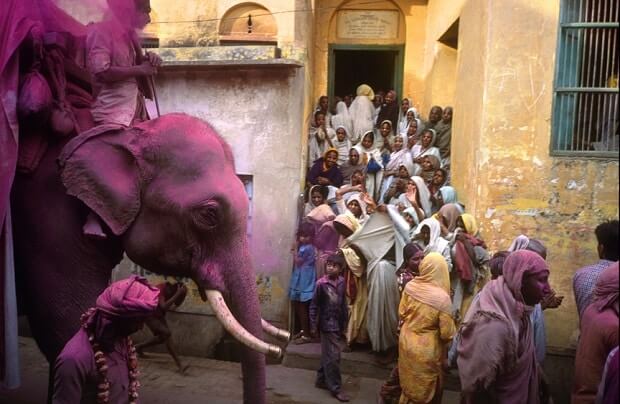
From fashion in London to the vivacity of India, an Australian photographer’s journey is documented on film. By LENA PEACOCK

Documentary film A Life Exposed explores Australian photographer Robyn Beeche’s dramatic transformation from London high-fashion photographer to documenter of Indian culture. Directed by Lesley Branagan, the film explores the vibrant rituals and colours of India, which contrast greatly to the life of a commercial photographer which Beeche left behind. The film was recently screened at Parramatta’s Riverside Theatre on December 2, as well as in New Delhi, as part of the Australian embassy’s Oz Fest initiative, and has received much praise in both the Indian and Australian media.
Robyn Beeche became renowned in London for her iconic images in the 1980s. Her pre-digital and pre-Photoshop images of painted bodies and celebrities, including Vivienne Westwood, were ground-breaking, and are said to have changed the rules of fashion photography forever. She used the human body as a blank canvas and used make-up, lighting and composition tricks to present trompe l’oeil techniques to great effect.
Despite this, at the height of her career, Beeche became ‘drawn like a magnet’ to India, and left the world of commercial photography behind. And 25 years later, she continues to passionately document India’s vibrant traditions as a spiritual service.
“When there is no creative director’s agenda to adhere to, the freedom of expression creates a different style and I am most interested in trying to capture the emotion and essence of the subject,” Beech told Indian Link. Beech says that she simply transferred her existing “style and brought it to bear in my Indian” photographs.
A finalist in the Australian Arts in Asia Award 2013, A Life Exposed takes the viewer on Beeche’s journey, weaving between Australia, England and India, as she discovers that success and fame are no longer enough. Archival footage of her 1980s London studio, interviews, observational footage and stills are presented, and the themes of transformation, spectacle, ritual and tradition are explored.
“The depth of Indian culture is the inspiration for my work on so many levels, be it religious practice, arts and crafts or the landscape,” said Beeche. “To capture those artisans and craftsmen who may remain anonymous particularly interested me, whether they were embroidering an intricate background for clothes to be offered in the temple, or creating a beautiful Sanjhi rangoli”.
Beeche’s love affair with Indian culture began with her first encounter of it at The Aditi (Creative Power) exhibition which opened the London Barbican Centre in 1982. “It was the vibrancy, the creativity which made me think to myself that on my next trip to Australia, I must experience this,” she recounted. “After the first journey I was hooked; and although it is true that there are challenges in trying to adjust to a very different culture, it also became very clear to me that I was more interested in Indian culture with a spiritual basis than the work I was doing in London,” she added.
“I saw a profile on Robyn in Dumbo Feather magazine, and I was instantly captured by her inspiring life story and her images,” said Lesley Branagan, the film’s director, to Indian Link. “We met up, and she agreed to make the documentary film. [But] if I’d known it was going to take 6-7 years, I might have reconsidered!” This is because of the numerous ‘ups and downs’ and problems with getting funding, but despite everything, it was a rewarding process. “It was some years before we could shoot the main footage of Holi, which was a highlight of both our process and the final film,” said Branagan. Luckily the film had many supporters both in Australia and India, which helped the filming to go ahead.
Branagan was careful to “retain the integrity and authenticity of Robyn’s life story and its spiritual focus, whilst making the story accessible to audiences,” she told Indian Link. With collaborative editing and post-production, she worked closely with both Indian and Australian editors. Branagan was also interested in making the film, as she is just as “deeply fascinated by all things Indian and immersed in the culture and place”. She also lived in India and spent some time working with organisations to help empower Indian women.
And what was it like working with Beeche? “It was really inspiring to work with Robyn, as she’s so deeply immersed in her region, her town, her ashram and her life path,” noted Branagan. “It was great to see her dedication to seva in action. She has a tremendous conviction about the value of documenting the regions”. Branagan also noted that Beeche’s “archive is going to have huge long-term value for the future”.
Beeche recounted to Indian Link how a photographer, after seeing her exhibition in Mumbai of UK portraits, told her that he “gave up commercial photography and travelled India photographing the people”. This is the kind of inspiration that she loves to hear about. Although her early work provides inspiration to photographers across the globe, her Indian photographs are “revered more in India, as ‘darshan’ in the temples is more understood,” she explained.
And Beeche’s favourite photograph? “I would say that the pink elephant with widows is one of my favourite images as there is a lot going on in the photograph which only became known to me afterwards, such as the small boy holding his head underneath the elephant,” she said. And Holi is one of her favourite festivals to shoot.
“The enduring friendships I made, filming Holi and A Life Exposed will forever be favourite memories of my time in India,” said Lesley Branagan.
Details: www.facebook.com/ale.documentary
Oh so berry nice!

LENA PEACOCK grabs a handful of Australian raspberries and blackberries, which make a delicious, naturally sweet addition to recipes

Yes, summer is here and that means those red and black hand-picked small juicy mouthfuls of deliciousness are back. And back with a bang. And even better news? The fresh Australian ones are here to hang out with us and our recipes until Easter time.
Not only do they add a colourful touch to your meal, but they’re also low in calories, high in dietary fibre and jam packed full of vitamin C. And because they’re so sweet, you don’t even have to bribe kids to eat them.
“The long process of growing Australian raspberries and blackberries starts in late autumn or early winter depending on the region,” says Phil Rowe, an Australian berry grower. “And due to their delicacy, we don’t use machines to pick the fruit. It’s an intensive process”. But so long as they make their way into our hands, we don’t really mind. Thanks for doing the hard work Phil!
You can use berries as a snack, in a fruit salad, on top of your cereal, or turn them into a healthy ice-cream by adding them to yoghurt and then chuck them into the freezer. Other suggestions are:
Berry yoghurt swirl popsicles
Serves 8
Prep time: 15 minutes
Chill time: 2 hours
Ingredients
Raspberry puree
125g raspberries
2 tablespoons
caster sugar
Blackberry puree
125g blackberries
2 tablespoons
caster sugar
Vanilla yogurt mixture
2 cups(500ml) Greek style natural yogurt
¼ cup (55g) caster sugar
½ teaspoon vanilla extract
Method
To make each puree: separately blend berries and sugar in a food processor, strain through a sieve, set aside.
To make yogurt mixture: place all ingredients in a bowl, whisk until combined.
To assemble: pour a few teaspoons of raspberry puree into each 200ml popsicle mould, do the same with the yogurt mix and then the blackberry puree to give 3 layers. Repeat sequence to create more layers.
Gently swirl the layers with a wooden skewer. Cover moulds, insert sticks and
freeze for 2 hours or until frozen.
Raspberry, blackberry and yoghurt jelly cups
Serves 8
Prep time: 20 minutes
Setting time: 2 hours
Ingredients
Yoghurt jelly
1 cup (250ml) thickened cream
¼ cup caster sugar
1 teaspoon vanilla extract
2½ teaspoons powdered gelatin
1 cup (250g) Greek style natural yogurt
Raspberry jelly
3 cups (750ml) white grape juice
2 tablespoons caster sugar
3 teaspoons powdered gelatin
125g raspberries
125g blackberries
Method
To make the yogurt jelly: place cream, sugar and vanilla extract into a small pan over a medium heat. Stir until sugar has dissolved and gently bring to boil, remove from heat. Sprinkle over gelatin and whisk until dissolved. Add yogurt, whisk until smooth. Strain mixture through a sieve, set aside to cool.
To make jelly layer: pour one cup of the grape juice and the sugar into a small pan over a medium heat. Stir until sugar has dissolved and gently bring to boil, remove from heat. Sprinkle over gelatin and whisk until dissolved. Add remaining juice, strain through a sieve and set aside to cool.
To assemble: divide half the berries between eight 200ml cups or glasses. Pour over halfthe grape juice mixture, refrigerate for 30 minutes or until set. Pour all the yoghurt mixture over the first layer of jelly, refrigerate until set. Place remaining berries on top of set yoghurt mixture and pour over remaining grape juice mixture. Refrigerate until set. Serve chilled.
Raspberry, spinach and Persian feta salad with salted candied walnuts
Serves 4
Prep time: 10 minutes
Cooking time: 5 minutes
Ingredients
Salad
60ml (¼ cup) olive oil
2 tablespoons ver juice
1 teaspoon Dijon mustard
½ teaspoon caster sugar
100g baby spinach leaves
2 tablespoons chives, roughly chopped
1 lemon, coarsely zested
125g raspberries
100g Persian feta, drained, crumbled
Salted candied walnuts
2 tablespoons caster sugar
½ cup walnuts, lightly toasted
½ teaspoon salt flakes
¼ teaspoon dried chilli flakes
Method
To make the candied walnuts: heat sugar in a medium, non-stick frying pan over medium heat. Cook, tilting and swirling the pan occasionally for 2–3 minutes or until sugar melts and a light caramel forms. Working quickly, remove pan and add walnuts, salt and chilli flakes. Carefully toss to cover nuts in caramel, and pour mixture onto a tray lined with baking paper and spread out using a wooden spoon. Allow to cool. Then using your hands to snap the caramel, separate the
clusters.
To prepare salad: for the dressing, place the oil, verjuice, mustard and sugar in a small screw-top jar. Season with salt and pepper. Shake well to combine. Place the spinach in a large bowl. Sprinkle over the chives, lemon zest, raspberries, candied walnuts and feta. Drizzle over half the dressing, serve immediately.
Note: For a simpler and quicker salad serve with plain walnuts rather than candied.
Recipes courtesy of: Australian Berries
Fashion: Queen of the party scene

Here are a few dress styles to rock your Christmas parties and get you in the groove for festive fun, by KALYANI WAKHARE

‘Tis the time of the year we all enjoy – warm weather, holidays, parties, barbeque invitations, festivities and of course, Christmas sales! I always take this opportunity to stock up my wardrobe with quality pieces for which you don’t have to pay full price, especially dresses. Also, they are the pieces from your wardrobe that work overtime in December!
If you are investing in dresses, take a look at these five styles that are sure to make a striking impression at the party.
- Sequin and metallic
A sure-shot partywear option, is this one! Of course, when it’s a bling dress it is bound to take centrestage, so go easy on the accessories. Either choose neutral sandals and clutch bags or if you are game to grab all the attention, pair up bold red sandals with a red pout! If you thought this dress trend’s only for the evenings you are almost right, although a light metallic knit could be worn during the day with flat sandals and a tan handbag for a chic, dressed-down look. For those who prefer to keep it simple, go for sequin embellishments on a sheer dress, or just wear metallic heels on a plain dress.
- 2. Printed dress
Move over, florals! It’s time to think polka dots, watercolour washes and even ethnic prints. I sometimes feel overdosed on floral prints by the time Spring comes to an end! Polka dots can be a refreshing change. Classic black and white, or white dots on a pastel background are equally trendy. Play up the dress with contrasting accessories such as red with black and white, and turquoise with pastel pinks and corals! Watercolour prints are nice and subtle for a daytime office Christmas party. Pair this with minimal accessories like neutral sandals and a pearl necklace for elegant, sophisticated glamour. Opt for bolder and more vibrant hues in paisley or ikat print if you think that works better for you. Personally I love a bright blue or fiery orange with these prints, and would recommend wearing black or grey sandals with a matching clutch bag. Remember when in doubt black accessories always work!
- 3. LBD
Now, if you like the more tried and tested formula for party dressing, think no further than the LBD (Little Black Dress). I am a strong believer in this one and think it can suit absolutely anyone, irrespective of age, body type and personality. After all, black is well known to hide your flaws and flatter your body shape. The key lies in finding the best shape, cut and material. A knee length shift dress with a smart cut is an absolutely stylish option, worn best with animal prints or metallic accessories to add that glamorous touch! About metal, if you weren’t impressed with the metallic dress, try a gold belt with an LBD, its trendy and adds just the right amount of bling to your partywear.
- 4. Sheer and lace
Another elegant party dress option is lace. Black and lace, can there even be anything more attractive than this combination? Red or emerald can be exciting too, especially if you want to be the highlight of the party! Combine this with black patent leather sandals and a satin clutch to look like a movie star. Sporting an outfit in sheer material will make you look like a demure princess, especially if you choose powder blue or pastel pink. Sheer material like chiffons have a soft, beautiful fall that is in contrast to a stiffer fabric with sharp cuts. It is therefore, essential to choose a more relaxed fit for a graceful look. Pointy toe heels and snakeskin bags can be a good choice with sheer for an edgy look.
- Block colour
This one’s perhaps the easiest to shop for and is stylish too. There is absolutely no dearth of smart dresses in solid colours like cobalt blue, tangerine, bottle green, deep red…..I could go on and on! The fun lies in picking a lovely summer colour (one that best flatters your skin tone) and playing with fun accessories. Statement necklaces work perfectly with solid colours. You could also experiment with some unique separates like a printed clutch bag and embellished peep-toe heels. Alternately you could add a belt in a contrast colour to the dress, and co-ordinate your heels with the belt.
So hope you enjoy this party season to the fullest and have fun with these suggestions to create your dream party outfit.
Pallavi set for Tamil debut and more


Pallavi set for Tamil debut
Besharam girl and our very own Pallavi Sharda has been roped in by filmmaker Gautham Vasudev Menon for his yet untitled Tamil romantic drama. The film also features Silambarasan aka Simbu. “I wanted a heroine who could give us bulk dates and I know for a fact that all the established actresses are extremely busy, and therefore, I roped in Pallavi. Moreover, when I met her, I liked her confidence and eventually signed her on,” Menon said recently.
Pallavi, who had earlier starred in films such as My Name is Khan and Dus Tola, has already shot for nearly two weeks for the film, which was launched recently and is expected to be completed by February 2014.
Looks like Melbourne girl Pallavi is ready to take on not just Bollywood, but the Indian film industry! Way to go, girl!
Karisma and her cause
Actress Karisma Kapoor, who is choosy about her performances, actually bent the rules for Our Girl Our Pride, an initiative to empower the girl child. She said it’s also a ‘tribute to all the ladies’ from her family.
“It was a fabulous day and I strongly believe in the cause. I generally don’t perform. I am quite choosy about it, but today I performed and paid tribute to all the Kapoor ladies, including (late grandmother) Geeta Bali, (aunt) Neetu Singh, and my mom Babita and sister Kareena supporting the cause,” said Karisma, known for her powerpacked performances in Fiza and Zubeidaa. The actress performed as part of a unique programming initiative of NDTV, which in association with Vedanta and campaign ambassador and actress Priyanka Chopra, dedicated Dec 1 to honour the country’s girls on its network channels with a live telecast from 10am. The campaign’s aim is to create awareness about issues related to the girl child and fight for her rights.
Karisma who is also a mother, says her life completely changed after the birth of her daughter Samaira. “My life has become more beautiful after giving birth to a daughter. It’s great to have a daughter,” she said and added, “I am blessed to have a daughter and a son”.
Other participants in the initiative included actress Kajol, and tennis Grand Slam champion Sania Mirza, among others.
Isn’t it great to see Bollywood’s belles getting into the groove to support India’s girl children? Good on you, Karisma!
Love is lost on Deepika
Deepika Padukone is riding high on a string of successful movies, is certainly not keen on wasting time on a romantic relationship.
“I don’t think I am ready for a relationship at the moment. I don’t think my career has anything to do with my relationship. It’s just that I am in a happy space right now and not ready to be in a relationship,” said the 27-year-old actress.
Deepika, who had a roaring relationship with actor Ranbir Kapoor in the past, said, “I think igniting the spark means keeping the romance alive in your relationship by doing the unexpected. Surprise your partner in pleasant ways, something that he or she wouldn’t anticipate”.
“Nowadays, couples tend to take each other for granted because they feel they know each other inside out which results in loss of spark and enthusiasm in the relation. The second most important thing is to not lose yourself. Take care of yourself, your space and only then will you be able to take care of your relationship”.
Meanwhile Deepika is basking in the success of her latest release Goliyon Ki Raasleela Ram-leela. Her fluid and energy-packed dance in the Nagada sang dhol song from the movie has been widely appreciated, but she doubts if she can recreate the grandeur of the number in other performance forums sans the film’s director Sanjay Leela Bhansali. She says the song’s popularity was the “least expected of the lot”.
On the Bollywood front, she has completed Homi Adajania’s English language film Finding Fanny, which should release soon. “I am also doing Happy New Year with Abhishek Bachchan and Shah Rukh, all fun boys to work with. I am also looking forward to start Imtiaz’s film with Ranbir,” said Deepika, whose flight of fame seems to be reaching new heights.
So is there any chance of a holiday sometime soon? “I am sure I can squeeze in some family time, it’s always welcome,” said the 27-year-old.
Well, we hope 2014 is a hit for this young, talented actress.
Kareena goes crazy!
In what will be a completely different avatar, Kareena Kapoor-Khan will be reinvented in Dev Benegal’s film Bombay Samurai. Post-marriage, she seemed to flounder in her choices with a half-hearted crusader’s role in Prakash Jha’s Satyagraha and the totally inane social activist’s role in Gori Tere Pyaar Mein. With Bombay Samurai, Kareena finally seems to have got her post-marriage formula right.
According to sources, the film is “a crazy zany rollicking rollercoaster ride with amazing twists and turns. There are seven to eight pivotal characters. But Kareena and Farhan (Akhtar) preside over the show. They play a couple like no other seen before in our films. They are wacky and unpredictable. The two actors will have a ball playing their outgoing zestful characters,” the source added. Both Kareena and Farhan were keen to work with one another. “I’ve seen Kareena’s work. She is consistently excellent. I was keen to work with her. Dev’s film gives us a chance to try something different,” said Farhan.
And of course, Kareena expressed the highest admiration for Farhan, “I admire Farhan for being multi-talented. Which other director has done so well as an actor?
The Farhan-Kareena film starts after Kareena’s annual holiday in Switzerland in December to where she sneaks off without fail every year, to enjoy her annual Christmas-New Year holiday in Switzerland with husband Saif Ali Khan.
So get ready to see Kareena in crazy, zany mode!
Priyanka on her perfect partner
“My partner should be a male version of me,” said actress Priyanka Chopra when asked recently on what she was looking for in a prospective life partner.
The actress admits that she has a long list of benchmarks, so watch out boys, this lady isn’t going to be easy to please. “I have a very long list and very high standards. He has to be a gentleman, he has to be intelligent, someone I respect and funny, not stupid funny but witty funny, charming,” the 31-year-old said recently.
Priyanka added that it does not matter whether he is an actor or not, but she “would never respect a guy who is not an achiever”.
Let’s wish Priyanka luck in finding her Mr Me!
Bachchan at his best
Megastar Amitabh Bachchan delivered the Penguin Annual Lecture 2013 podium, much to the joy of an eclectic audience of almost a thousand, and left them more star-struck as he spoke about empowering the country’s women, Indian cinema, poetry and more.
The 71-year-old, looking handsome in a black formal suit presented the lecture at the Thyagaraj Stadium in New Delhi.
He touched upon his memories of his father, the late legendary poet Harivansh Rai Bachchan, whose birth anniversary was on Nov 27. “A decade without him,” sighed Amitabh as he shared some of his conversations with his father during the lecture.
Big B tried to convey a connect for his presence at the event by saying the invitation for him to address the gathering has to do with the growth that the Indian cinema has witnessed over the years.
He ended his lecture by reciting lines of his father’s poem Khoon ki chhaap (Imprints of blood), to tremendous applause. The Big B also sat down for a tete-a-tete with TV host Rajdeep Sardesai and spoke about a range of things, and patiently answered some questions from the audience. In answer to a question by an enthusiastic fan, Amitabh claimed that the character he would love to bring alive on screen would be his father’s role from his autobiography, In the Afternoon of Time: An Autobiography. You mean you want to play Harivansh Rai Bachchan, asked the startled host. To that, Big B smiled and said, “It’s a tough call, but I want to try”.
Amitabh said his father once told him he was his “greatest poetry”. But “I do not know whether I am a free verse or a couplet, a chaupai or a shloka. I wish I had asked. Now it is too late,” he lamented even as he proudly recited some verses from his father’s Madhushala in his distinct baritone at the behest of the audience.
No matter what, Amitabh Bachchan will remain one of India’s most erudite, humble and memorable individuals.
Shahid stands in a ‘different’ space
Actor Shahid Kapoor, who is teaming up with Kaminey director Vishal Bhardwaj yet again, says his new movie titled Haider, has given him a chance to explore a new space. Talking about Haider, Shahid said: “It’s awesome. I love working with Vishal sir as he has given me the best character of my life”.
Haider is the director’s adaptation of William Shakespeare’s tragic play Hamlet. “Vishal sir is doing the third adaptation of Hamlet. Earlier he has done Omkara and Maqbool, so Haider is very different from R… Rajkumar, and it has taken me to a different space. I am enjoying that,” he added.
Shahid refrained from revealing much about his role in Haider, and only admitted that he was having a great time working on the film which also stars Shraddha Kapoor and Tabu.
But he has admitted to going bald for the film, and says the decision was driven by the fact that the look is justified for his role in the movie. “I thought it is justified. When I read the script, I found it very interesting and I have tried to do something shocking whenever I have worked with Vishal. With him I have always tried to do something different,” the actor said recently
Let’s hope his bald look in Haider works for Shahid, its been a while since he delivered a hit!
Releases roundup
The Bollywood filmmaking scene is buzzing currently, with anticipation for some and disappointment for others.
Filmmaker Tigmanshu Dhulia’s much anticipated Bullett Raja didn’t quite shatter the box office as many expected, but it did reasonably well by earning about Rs13 crore in just two days after its release. Wonder if that made Dhulia happy or sad?
The film starring Saif Ali Khan and Sonakshi Sinha is based in a small town in Uttar Pradesh, and has been described as a fest of guns, grime, and glory.
R…Rajkumar starring Shahid Kapoor and again, Sonakshi Sinha will release soon, and sources say that it’s a very impressive crime thriller. Being a Prabhudheva film, there is a lot of hope from the film, as he has a reputation for solid box office hits.
The Aamir Khan-starrer action thriller Dhoom 3 will hit screens on December 20, and will see Aamir in a negative role. This is another sure-hit film, say pundits, what with Aamir’s renowned Midas touch.
Director-producer Anubhav Sinha is gearing up for the release of his Madhuri Dixit-starrer production Gulaab Gang, about the women vigilante group. Sinha has directed Shah Rukh Khan-starrer superhero film Ra.One and multi-starrer Dus, so this may be his next hit. Gulaab Gang is directed by Soumik Sen and will see Madhuri as the protagonist, while Juhi Chawla will be seen as the antagonist.
So that’s what Bollywood has in store for its fans, watch this space for more movie masala…