2013’s year of the year: selfie, coined by a somewhat tipsy Australian has inspired our latest competition.
Indian Link is on the lookout for the best selfie of the year. The only rule – it was taken in 2013, features yourself (and isn’t too rude).
Enter your photos to win@indianlink.com.au and post it on Facebook or Twitter with the #IndianLinkselfie2013
Winner to be announced and printed in Indian Link’s January (1) 2014 newspaper, online and on air!
Kevin Rudd was infamous for his numerous selfies, then there’s the inappropriate Obama one at Nelson Mandela’s Memorial Service, and the Beyonce concert one in a fan’s photo, and now there will be your one!
The prize: As well as having your photo in print and online – you’ll also win a double pass to Sydney Festival’s Band of Magicians (7.30pm Thursday 16th January, 2014)
Indian Link has the hottest tickets in Sydney for summer and you could win the chance to be part of the excitement. Win one of our double passes to Band of Magicians by liking our Facebook Page! Enter your email and hit enter below to double your chance of winning! You can enter as many emails as you like!
Indian Link’s Sydney Festival 2014 Top 10
Indian Link is very excited to be a Star Partner of Sydney Festival 2014. Here are our picks of what not to miss!
1. Band of Magicians
10-19 January
Riverside Theatre Sydneyfestival.org.au/magicians
If magic is your thing then this is one not to be missed… Illusion, deception and magic! Listen to Indian Link Radio 10am December 19 to listen live to our interview with James Galea! Win tickets here by liking our Facebook page! 2. Am I
Drama Theatre, Sydney Opera House
9-11 January Sydneyfestival.org.au/ami
Dance and music meet to explore then concpet of “I”. Featuring Shantala Shivalingappa.
4. The Calling
11-12, 18-19 January
Information and Cultural Exchange, Western Sydney tour Sydneyfestival.org.au/calling
This involves jumping onto a bus and going on what they’re calling an inter-faith tour exploring religious architecture, sacred music and worship in Western Sydney. Selected mosques, temples and churches in Auburn, Granville and Parramatta will all be visited.
5. Dido & Aeneas
16-17, 19-21 January
Sydney Lyric at The Star sydneyfestival.org.au/dido
It would be hard to have not heard about this one already. Underwater. Opera. Need we say more?
6. Festival Village
8-26 January, closed Mondays Sydneyfestival.org.au/village Sydneyfestival.org.au/sacrilege
FREE
This is one for the families. The middle of Hyde Park will be transformed with food stalls, tunes, free events. And Sacrilege, a life size bouncy inflatable version of Stonehenge will be there too. Created by Turner Prize-winning artist Jeremy Deller, this is a kids friendly meeting of art and history. And the best part? It’s not just for the kids. We’ll see you there. 7. The Serpent’s Table
24-27 January
Carriageworks Bay 20 Sydneyfestival.org.au/table
This is for all of the foodies out there. Combining storytelling, installation, and of course- great food, five Asian-Australians share their recipes and more.
8. Parra Opening Party
10 January
Parramatta city, streets and parks
FREE
It’ll be a family friendly summer night full of food, street theatre, music and fun. There will be a street parade, Boxwars, Californian jazz, blues and more at the Festival Club, with Prince Alfred Park transforming into music central as the sun sets. And make sure you see the Rubber Duck – because it’s back and heading down Parramatta River this time. Leaving the car at home is recommended for this one.
9. Limbo
9-26 January
The Spiegeltent, Hyde Park Sydneyfestival.org.au/limbo
This is a naughty one – so leave the kids at home. It’s like a circus meets cabaret that’s on steroids. It’s jam-packed full of dirty, dangerous, jaw-dropping contortion, acrobatics, stunts and illusions, with live tunes. Sounds impossible to be bored during this one!
10. Paradiso at Town Hall
16-25 January Sydneyfestival.org.au/paradiso
And now one for the party animals! Sydney Town Hall will be transformed into a live music venue, named after the legendary Amsterdam rock venue. There’s a terrace bar (doors open at 5.30pm), and snacks to go with the beats.
Keep your eyes peeled for Sydney Festival interviews and more in the Sydney December (2) newspaper!
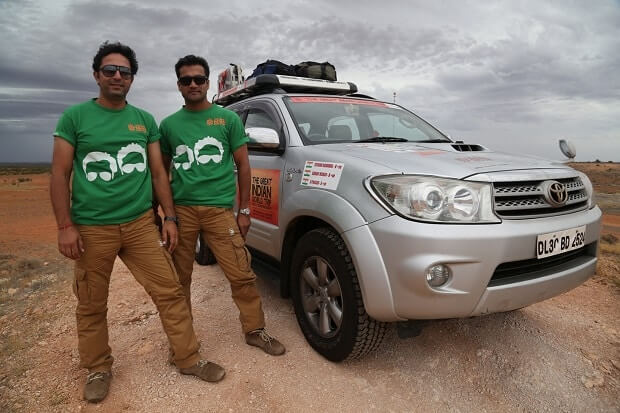
A trio of enthusiastic young men undertake a staggering journey across the globe in a 4×4. By AVI CHANDIOK
Ever since Galileo’s discovery that the world was indeed round, people have dreamt of circumnavigating the globe. Over the centuries many such journeys have been made by land, sea and air, and each has its unique features. Currently in Australia are three young men from India who have embarked on an epic journey to travel round the world by road. It might seem an insane fantasy, but the Great Indian World Trip is well and truly on its way. The drive will cover a staggering 70,000kms on roads across the globe that range from being smooth as silk to unpaved ones that will truly test the driving skills of these young men, and the 4×4 itself. The days and nights will unfold across the skies of 50 countries and 6 continents, with our intrepid young men meeting and associating with different peoples, races, languages and foods. Surely it takes a steely toughness to undertake such a project.
Tushar Agarwal, Sanjay Madan, Prasad and their trusted 4WD form the team of this world trip. The stated motivation for the journey is an attempt to challenge the common man’s definition of the NRI. It’s an endeavour to see beyond the glitz associated with the concept of the NRI. The team intend ‘…to interact with such Indians settled the world over and find out how life is treating them’. Ultimately they wish to get an idea of how NRIs are faring in their chosen lands. So why do I get the sneaking feeling that it is the lure of an exciting adventure with all the risks involved in doing something breathtakingly huge, that is the true motivation for this enormous journey. With such a venture full of challenges, it is easy to envisage the rush of adrenalin one might feel as one starts to wonder whether the project will succeed. There can also be the desire to test oneself. Will the body and mind be able to endure the strenuous schedule? Has the forward planning accounted for all the contingencies that might arise? To answer these questions can itself become a reason for undertaking such a journey.
The obvious question is – will the Great Indian World Trip succeed? Of course, one can never predict the future but it’s very unlikely that our team will be the proverbial bunnies caught in the headlights of a 4×4. The team’s track record speaks for itself. Previously they had driven 12,000km from London to Delhi in 51 days. They have been part of the Indian team at the ASEAN India Car Rally 2012, from Indonesia to India. One endearing achievement was the record-setting drive in the tiny Tata Nano (heated?) to Khardung La Pass at 5600m on the highest motorable road. There have been many other record-breaking drives high up in the Himalayan ranges including to Mt Kailash and Mansarovar Lake, and down on the plains. The team has also officiated in the most popular car rallies in India including Desert Storm and the Formula 1 race. Who would bet against Tushar, Madan and Prasad completing their current world trip?
Often it is wise not to get too carried away by one’s own lifestyle and the high-5s associated with it. The glamour and adulation that comes with undertaking a drive round the world can easily go to one’s head. Those less fortunate and not in one’s elevated circle can often be forgotten and left behind. So it is very much to its credit that The Great Indian World Trip has taken up the cause of the Guru Vishram Vridh Ashram in Badarpur, Delhi. This Ashram takes in the sick, the destitute, those with mental and physical ailments, and provides a place of safety and shelter for the elderly. These young men are spreading awareness of the ashram, and providing a platform for the public to make donations to it via the Ashram’s website.
The drive has already passed through Myanmar, Thailand, Malaysia and Singapore, covring nearly 7,000kms. “The 17,700km drive across Australia is an attempt to create a Guinness World Record,” confirmed Tushar. At the time of going to press, the trio was heading to Sydney. Later they head to other countries such as Tanzania and South Africa, which are home to wonderful wild life. Some countries being visited include those with political tensions such as Kenya, Columbia and some in Central America. The route goes from Alaska in the very north, to the southern-most tips of South America and South Africa. From Alaska and California in the west to Sydney, far away in the east. So many hours to sit in the driving seat as the world goes by. So many chance events that may take place with the joy of the accomplishment as it unfolds.
In the near future I expect to meet the trio to learn more about their stories; but in the meantime, I wish our adventurers well. To quote from their website www.greatindianworldtrip.com: ‘Roads. No Roads. The expedition must go on. This can happen only when it’s steered by men who believe in it, powered by a machine that never lets them down and backed by a mechanism that keeps the engine roaring and wheels rolling. The Great Indian World Trip is no exception’.
How do you win Dhoom: 3 tickets you ask? It’s easy!
Like our Facebook page and share this piccy of the movie on your Facebook wall and you’ll go into a draw to win a ticket to the blockbuster!
Share with your friends to spread the joy!
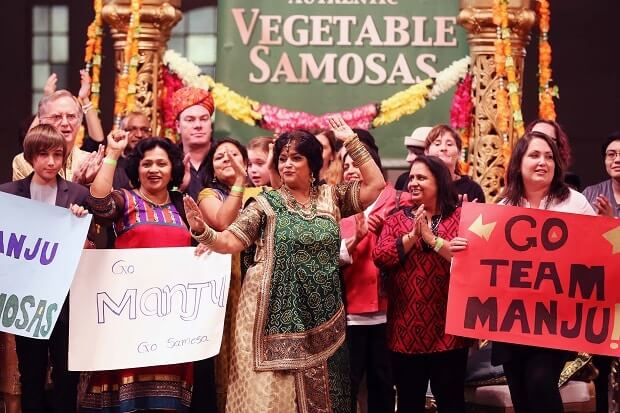
Manju orchestrates her ingredientsinto the finale of Recipes to Riches
“Think Manju, think samosas!” shouted an enthusiastic Manju Jehu as she reached out to us through our television screens from the sets of the recently concluded Recipe to Riches series aired on channel Ten.
The show was a twelve part series where Australians brought to the table their homemade recipes, and the winner of each episode saw their products on the shelves of Woolworths across Australia the day after the episode was aired.
Brisbane-based Manju who has been a radio convenor for over 26 years and who currently is the Honorary Ambassador of City of Ipswich for India, made it to the finale of the show for her product, Manju’s Vegetable Samosas. Indian Link caught up with Indian-born Manju to find out more about her experiences on Recipe to Riches and her love for cooking a particular samosa which impressed not only the judges, but also the rest of Australia.
“Anything I do is out of sheer love and passion, and the same holds true for cooking,” says Manju passionately, but with a smile. “Cooking is like music to me, I am the director and I have to orchestrate ingredients accordingly to create a dish. I can create food out of anything”.
However, this did not hold true when Manju first moved to Australia in the late 70s. “I did not know how to cook when I first got to Australia,” she says with a laugh. “The only dish I knew was spiced potato curry and this was because of a photographic memory of sitting long hours in my kitchen in India waiting for the food to be cooked and served to me by my mother,” she adds. “Spiced potatoes between toasted bread was like a samosa to me then”.
It was not until 1982, when a health shop Manju was browsing through made her an offer to deliver a dozen samosa for $6. “I remembered talking to God and asking Him how this would be possible. And the answer I got was ‘Do unto me and I’ll bless you’,” she reveals. This was the beginning of her learning process of making a samosa. Manju remembers that her first batch was with flaky pastry. “I got better at making the dough for the samosa, and my samosas were sold in few shops within my area,” reminisces Manju. “I was unaware that I had started a catering business of sorts, which went on for ten years”.
She continued to make samosas for her friends, get-togethers and family friend Greg Chappel, former Australian cricketer who is a big fan of Manju’s homemade samosas.
“I came across the application for Recipe to Riches and filling in the form was the most difficult part. I told myself I would give it a go and see what happens next,” states Manju who shared her homemade samosa recipe along with a photograph of the finished product.
Manju eventually got a nod from the judges for her samosas and received the Golden Ticket, an entry to the competition.
Up against other homemade recipes, Manju was asked to produce a large number of samosas in a commercial kitchen. Having never worked in a kitchen of this magnitude, the task ahead seemed daunting. But “with a focussed, confident and positive attitude I went ahead and prepared the samosas,” she says.
After getting a go-ahead from the judges, Manju was then asked to market her product to Australians. “During this section I felt very disheartened and thought this journey was finished, but it was my daughter Tabitha who offered me words of encouragement and this kept me going,” she reveals.
Manju’s samosas were a hit among the locals and she was announced the winner of that particular episode, with her samosas made available on the shelves of Woolworths. “It was a dream come true to see my samosas in the frozen section,” says Manju. She qualified to participate in the finale with ten other contestants, each vying for a life-changing partnership with Woolworths.
“Being in the grand finale of Recipe to Riches I was a little shaken up, I had to pinch myself to tell me that this is not a dream anymore, but a reality,” says Manju with a smile. Manju’s vegetable samosas did not win in the finale, but this has left her stronger and more optimistic about her personal culinary goals.
Her own cooking show someday which will showcase both Indian and multicultural cuisine, and the production of a range of frozen food products, are what Manju aspires to and hopes to achieve in the future.
For many of us, having a family is a lifelong dream. But for some the dream stays exactly that, and for some the journey to parenthood is long and challenging.
From what we are taught in our science lessons to what we see and hear around, us it is easy to assume that intercourse equals pregnancy; but is it really as simple as that?
Fertility is not always as straightforward as it would seem; 1 in 6 people encounter infertility.
Infertility is defined as unsuccessful conception after 12 months of unprotected intercourse for women under 35, and for women over 35, this decreases to 6 months. However, in society, there is a common misconception about fertility -that all factors associated with conceiving a child are solely related to women. When in actual fact, the reality is very different.
Dr Ashish Das from City Fertility Centre in Brisbane stated that “a third of the problems are female, a third of the problems are male and a third of the problems are combined.”
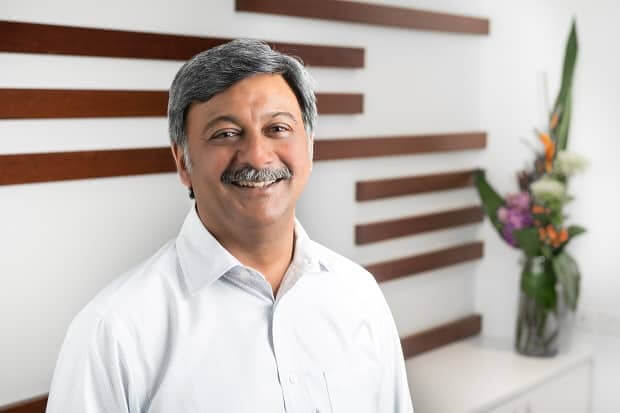
Dr Das is a fertility specialist and co-founder of the City Fertility Centre, which celebrated its 10th birthday this year, and specialises in Gynaecology, IVF and fertility care. He has over two decades of experience under his belt and is known for his excellent rapport with patients, as well as his friendly and caring nature. He also provides a comprehensive male fertility service.
Another common misconception within the Asian community is that women are solely responsible for bearing a child, an heir that will carry forward the family name. Due to this close-mindedness, when a woman is unable to bear a child, many suffer taunts and curses, and many are also ostracised for being baanj (infertile). For many couples, the heartache and years of yearning for a child could have been and can be avoided by understanding and accepting that a man’s sexual health also plays a major role in the start and development of a new life, and by carrying the ‘x’ or ‘y’ chromosome, the sperm determines the gender of the child.
“I always recommend to my patients that both partners get tested; after all it is a team effort and also it is easy to test male fertility. That way, if the man’s sexual health is in perfect condition, we can eliminate any male factor in the infertility,” said Dr Das.
The main causes of male infertility include the following, to name a few:
Azoospermia – The lack of sperm in semen. This rare condition is sometimes symptomatic of testicular disease or blockage. Often, the cause of testicular disease is unknown, but it may be related to mumps or to genetic disorders.
Bilateral absence of the Vas Deferens – This greatly affects a man’s fertility since the sperm are essentially stuck in the testicles, with no way of reaching the urethra and out of the body. One of the major symptoms of this is Azoospermia.
Cryptochidism – Is a likely diagnosis when a man’s testes have not descended into the scrotum.
Epididymitis – This is where the sperm undergo the final maturation process. If infected, the epididymitis can malfunction or become a hostile environment for sperm. Obvious signs of epididymitis include swollen, painful testicles.
Hyperprolactenemia – This is the excessive production of the hormone Prolactin (which produces milk in pregnancy and that suppresses ovulation). In men, abnormal Prolactin levels can lead to sexual dysfunction. It can be symptomatic of Hypothyroidism (a condition in which the body lacks Thyroid hormone). Symptoms in men may be associated with: impotence, visual disturbances, sudden weight loss or gain, fatigue or depression.
Immunological infertility – This is when the immune system reacts to its own sperm as if they were invading cells which can be caused by an infection or a vasectomy. In such circumstances, the immune system attacks the sperm.
Klinefelters syndrome – Is a chromosomal disorder in men, characterized by no sperm in the ejaculate or a low sperm count. This is a genetic disorder and several physical characteristics can determine that Klinefelters is present, such as small testes or a small penis.
Sperm problems – The odds of conception are lowered when sperm concentrations are lower than normal, a condition known as Oligospermia. If sperm have poor swimming ability (Asthenozoospermia) (motility) or are misshapen (Teratozoospermia) (morphology), the sperm’s ability to fertilise the egg is compromised. Sperm problems can be caused by hormonal imbalance and genetic abnormalities. Environmental factors such as exposure to high temperatures, smoking and alcohol can also cause these abnormalities.
Dr Das. Images supplied.
We are aware that age significantly impacts the fertility of a woman, and begins to decline after the age of 35 years, but many of us do not know why. The reason for this is because, unlike men, women are born with a set number of eggs (approx 300,000), therefore as the woman ages, so do her eggs.
Infertility in women can be caused by several factors, such as:
Amenorrhea – A medical term used for the absence of menstruation. Symptoms usually include: abnormal hair growth, breast milk production in the absence of a pregnancy and trouble with balance, vision or coordination.
Anovulation – A medical term used for a when a woman does not ovulate, and occurs without symptom.
Endometriosis – Results when blood flows backwards through the fallopian tubes and grows outside the uterus. Endometriosis can block the fallopian tubes and prevent sperm from reaching the fallopian tube and fertilising the egg. Common symptoms of Endometriosis include painful and heavy menstrual bleeding and painful intercourse.
Polycystic Ovarian Syndrome (PCOS) – This is when the ovaries secrete high amounts of androgens (male hormones), which can often cause problems with ovulation. Symptoms associated with PCOS include: weight gain, abnormal hair growth, irregular periods, acne, enlarged ovaries or oily skin.
Many of us are unaware but our lifestyle choices and timing of intercourse play a major role in chances of conception. Factors such as stress, smoking, alcohol, weight, diet and exercise affect fertility in both men and women and reduce the chances of conception.
The fertility window in a woman also plays a major role in the chances of conception. By having timed intercourse you increase your chance of conception. The days leading up to ovulation in a woman are known to be the most fertile; this corresponds to second and the beginning of the third week in a normal 28 day cycle – at around the 14th day.
A woman’s body provides signals when the egg has been released and during fertile periods. This is done by monitoring the cervical mucus. A trusted method of understanding the ovulation signals is the Billings ovulation method. However, these days with the latest technologies and apps on phones which can accurately calculate fertile days, it has become much easier.
If you feel your fertility may not quite be what it could be it is essential to find out as soon as possible, and the best way to do so is together as a team.
Volunteering and travelling to make a difference to the less fortunate is a great way to enjoy a giving experience. By TASNEEM ZAVERY
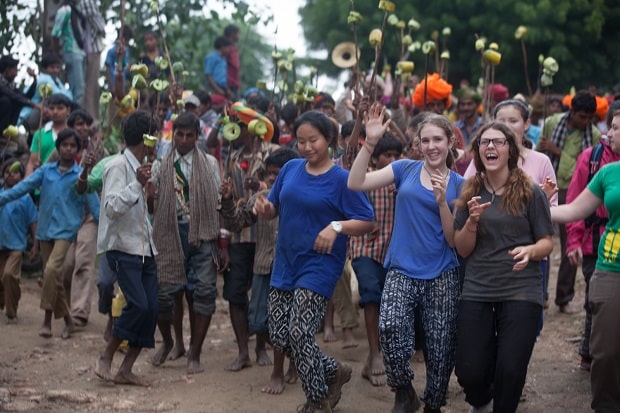
Think about a paid travel experience to volunteer and be the change in rural parts of India and Kenya. From helping communities to building toilets in schools, planting trees, learning arts and crafts to understanding their basic needs, and living in their shoes for a period of two weeks. It is bound to be a life changing experience.
“I believe travel and volunteering are the most amazing ways to open people’s eyes to new perspectives and to see what really matters in their life,” says Kristy Moore of Hand Up Australia, a social enterprise that provides a unique opportunity for Australians to connect and experience life in rural India.
Hand Up Australia was founded in December 2012, with over 4,000 people participating in their international programs from UK, Canada and USA over the past 10 years, through Hand Up Australia’s international partner Me to We. For the first time, these volunteer travel adventures have been made available to Australians, with two trips already been made to India.
“Hand Up Australia believes in providing a hand up, rather than a hand out,” says Kristy. “We believe lasting positive change is best achieved through self-actualisation”. The organisation connects Australian volunteers with Free the Children, an international charity which works in North West India around the villages of Udaipur with the communities of Lai, Berna, Barind, to name a few.
The most recent trip to India in September 2013 saw a group of six Melbourne teenagers visiting the community of Barind. “This trip confirmed my belief that people who have a better understanding of gratitude and empathy are the happiest people in the world,” says Hugh Van Cuylenburg, who connects Hand Up Australia in secondary schools”. He further says that while building a toilet in the school for the girls in particular, they realised that fifty percent of the girls had stopped coming to school once they hit puberty, as there were no proper hygiene facilities available to them. The volunteers often joined the boys at the school during their games sessions, or helped them in their herb garden. “With this project we hoped that more girls would attend school,” says Hugh.
So who can apply? “Our programs are open to Australian families, business teams, adults and teenagers who are looking for a meaningful and sustainable way to make a difference in the world, and also in their own work or family life,” says Kristy. “Our team of passionate travellers, volunteers and business professionals are happy to make it easier for Australians to volunteer overseas”. You can either apply online, attend an information session, or invite the Hand Up Australia team to speak at your company, group or school. Their onetime fee covers all ground costs, including transport, accommodation, meals, facilitation and safety for 5-20 days. Itineraries are handed out before each trip, with activities ranging from being welcomed into the homes of local community members, learning their local language, customs and traditions, exercising at the break of dawn, learning and gaining an insight about microfinances, or helping them in getting clean drinking water.
“Purpose built living areas are provided for guests of these programs, surrounded by stunning scenery and near the communities with which they meet and work,” says Kristy. “Working alongside community members enables volunteers to be part of solutions that break the cycles of poverty, without feeling like they are imposing in any way”.
Kristy further states that parents of teenagers from the last India trip said they feel that their children appreciate their education much more than before.
The next Hand Up Australia trip has been organised for January 2014, and interested adventurers will be advised about which community they will be working with from the eight villages on the list.
The protagonist’s journey towards seeking spiritual awakening explores the basic tenets of Hinduism. By PRIYADARSHINI CHIDAMBARANATHAN
There has been a proliferation of books on spirituality and religion recently, catering to those of us confused and weary with what life throws at us. One book that joins this growing list is The Search that Seeks You by Sangamithra Amudha.
The story revolves around the experiences of the central character Karma, his spiritual awakening and journey through life. Karma is an engineering student who is disconsolate after his mother dies quite suddenly. A previous encounter at the Podhigai hills leads him to journey there again in search of something to calm his troubled heart. He meets a few ascetics who lead him towards a path of spirituality. He starts to practise meditation, learns about controlling his thoughts and to keep calm, and focus on his goals. He also learns about ‘karma’ which is a central concept in the book. After a few days, he has to go back home to fulfil his ‘material responsibilities’. However Karma is a changed man, able to face any situation with a calm strength that astounds his friends and relatives. The rest of the book talks about his life after this experience. The book finally comes full circle with him going back to the hills to join the ascetics.
The narrative is simple and the story flows easily. The language does tend to get heavy and laboured in a few places, especially when concepts are being explained. This maybe a fault of the translation, as the original was written in Tamil.
The author, Sangamithra Amudha, is founder and trustee of the Sanmarga Foundation, a Chennai based organisation which teaches meditative techniques. She herself has been practising Kriya meditation for some years now and has been a counsellor for over 15 years, according to the organization’s website. A finalist at the International Book Awards 2012, in the Spirituality category, the book has a foreword by Dr Abdul Kalam, and even a chapter about him.
She introduces certain basic concepts from Hinduism such as karma, and this book would certainly serve as a good introduction to people not familiar with them. The book questions some of the ritualistic religious practices that are a part of Hinduism, and emphasises the use of meditation and other introspective practices instead. The author talks about using meditation and yoga as a tool to overcome problems that people face everyday. In her foreword she advises the reader to not just read the story, but to place themselves in the position of the main protagonist and by comparing his reaction to their own, learning something about themselves in the process.
Most of the characters introduced teach the protagonist, Karma, something. The transformation that Karma undergoes is total and is sometimes a little hard to believe. The ending was rather rushed, and not very clearly thought out. If the book was meant to guide people though their life, then getting the main protagonist to abandon his wife and child in the process, was not something I appreciated. Also the reactions and behaviour of the women in the book are rather one-sided and caricatured, disappointing in a book written by a woman herself.
If you are looking for an easy introduction to the concept of karma, this could be the book for you. In describing a young boy’s search for the truth, the book attempts to give people a way to look beyond their problems and find strength within themselves. All in all, this is a book that could start you on a spiritual quest and help you look for the answers within yourself.
The exhibition showcases a rare glimpse into Indian art dating from the 8th century to present day. By LP AYER
To savour the artistic riches of India, one had to go no farther than the Art Gallery of South Australia. In mid-October, the Gallery launched an exhibition titled, Realms of Wonder – Jain, Hindu and Islamic art of India, at a gala function held on its rear courtyard. The invited guests, numbering around 200, included Adelaide’s art aficionados and several Indians from various community groups.
Showcasing more than 200 paintings, sculptures and decorative art pieces dating from the 8th century to the present day, the organisers proudly proclaimed, “It is the Gallery’s first major exhibition dedicated exclusively to the art of India. Many of the works are on display for the first time. Jain art has never before been comprehensively displayed in Australia”.
Welcoming the guests at the launch, Gallery Director Nick Mitzevich said the first piece of Indian art was obtained in 1904, but serious collecting of Asian art started only a few decades ago.
Gallery’s curator James Bennett told Indian Link that, “All but one of the exhibits have come from local sources, many from our own collection that have been sitting around for over 30 years, but have never been exhibited. Quite a number are from local collectors and one is from a European collector who has volunteered it to be displayed on hearing about the exhibition”.
How much contribution came from local collectors was evident in the introductory speech of Mr Michael Abbott, a leading QC and Gallery’s Board Chairman, when he thanked a long list of persons who have loaned or gifted their prized possessions to this exhibition. It was heartening to know that so many Adelaidians are interested in Indian art. However, modesty prevented him from mentioning that a good number of them are from his private collection.
Mr Abbott, a legal luminary, is well known for his huge collection of Indian artworks including antique textiles. It is interesting to note that this top silk who delves in forensic details in court, is equally dedicated to the fine arts. Visitors to his grand old house are reported to have a sense of entering an Indian art gallery. He does not hold the pleasure of his collection just to himself, but has shared it with the wider public by donating or permanently loaning a large number of them, valued around $5 million, to galleries around Australia with the SA Gallery getting the lion’s share.
When asked what sparked his interest in Indian textiles, not very common for collectors, Mr Abbott said, “I once went to a trade textiles fair in Indonesia and saw fine Indian textiles there that sparked my interest in them. My first acquisition of Indian art was in the early 70s. My special interest is in the Coramandel coast and Gujarat”. He has visited India countless times in pursuit of his passion, besides snapping up rare pieces at famous auctions overseas.
Among other benefactors to this current exhibition are Mr Barrie Heaven, who once owned the renowned Lord Kitchener restaurant, the only Indian eatery in Adelaide until the 70s, and Mrs Judy Heaven, former curator of the Gallery.
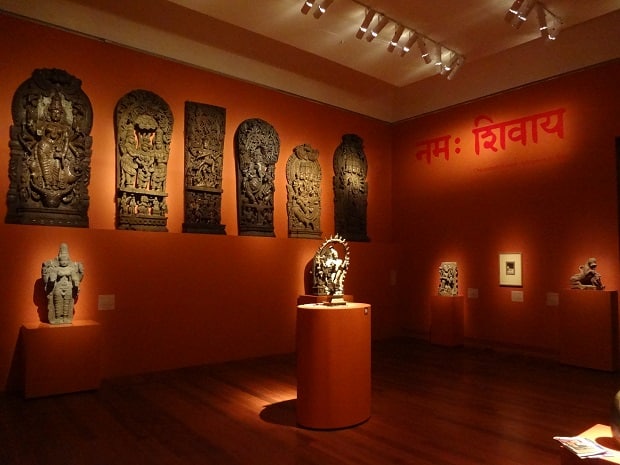
How meticulously the current exhibition was organised can be evidenced the moment you climb down the stairs where a larger than life wooden temple guard, a common sight in South Indian temples, catches the attention. The entire basement has been segmented into six sections with each entrance decked with large, intricately carved wooden panels giving a feeling of entering a temple or royal court. One section is devoted to Jain art. Sculptures of Shiva hold court in one room while paintings of Krishna and statues of Vishnu pervade the other, representing the two major sects of Hinduism.
Antique textiles take up one section, while silverware and jewellery occupy another. Islamic art has good coverage where every wall was covered with Koranic scriptures as can be seen on the Taj Mahal or famous mosques. Attention to detail is admirable.
Curator Bennet said he sought the help of Prof Richard Cohen from Virginia University in the US, and two Iranian experts to get the correct translation of notes accompanying some Islamic art pieces. Offering an idea of the work behind the show, he said it took 18 months of planning and full four weeks of installation by ten workers. The entire set-up was not just a showpiece of workmanship, but a work of art in itself!
As it could take an hour or two to see the treasures on display, children can make their own artful creations with play dough in an activity room where many Ganesha idols crafted by young and old adorn the shelves.
The Realms of Wonder exhibition is not limited to masterpieces of art. It comprises a series of lectures on all aspects of Indian art, workshops on draping a sari, henna decoration, tabla playing, music and dance performances, yoga and meditation classes, Hare Krishna chanting, Deepa Mehta’s three movies and even a tour of the adjoining Botanic Garden to explore Indian flora. Deserving of a bouquet, this elaborate show goes on until January 27, so interstate visitors during the Christmas holidays can enjoy a rich, artistic feast. Details are available on the Gallery’s website at www.artgallery.sa.gov.au
Adelaide’s North Terrace that houses the gallery, museum, State Library and two universities is aptly called the cultural golden mile, and it is now further enriched with priceless treasures from India.
A clean up and a curry picnic were the two events that were enjoyed by members of Club India
The Youth Club of Club India International SA Inc. (CIISA) undertook a beach cleaning drive at the Grange Jetty along Adelaide West coastline recently. This was the second major event of the youth wing since its the inception.
On a bright and sunny day aided by a cool, gentle breeze, 11 enthusiastic youngsters under the leadership of Allwyn D’Souza, Youth Coordinator of CIISA) covered a long stretch of area across the coastline of Grange beach in a drive to pick up litter consisting of plastic and tin cans, and other debris.
Wearing protective gloves the group scoured the appointed region of the beach in their drive to pick up litter, an initiative that was well received and acknowledged by some patrons going about their day on Grange beach.
The event began with ‘get to know you’ games, following which the youngsters were divided into two teams. As the event progressed, to make for a light and humorous afternoon, each individual was addressed as their favourite item of food, and with names like ‘sushi’, ‘butter chicken’ and ‘pizza’ to name a few, the afternoon gained momentum very quickly. A series of games like cricket, dodge ball, and short sprints had also been organized to for the enthusiastic youngsters.
Lunch was hot ‘Fish ‘n’ Chips from the local deli, organised by Nick Fernandes, Social Coordinator. The games then continued, and refreshments and lollies saw an end to the day. Each of the youngsters then participatd in a short survey, expressing their views on whether they would like to be involved in similar activities in the future.
It was an enjoyable event for the youngsters – Alyse, Nathan and Shireen De Souza, Nicole Fernandes, Jenny Morais, Chris Fernandes, Shane Paul, Karrell Vaz, Samson Fernandes and Allen Anthony John, who were all thanked for their involvement in this Youth Club event.
Club India International SA Inc. also organised their annual curry picnic cum sports day at the Hazelwood Park recently, which was attended by State dignities including South Australia’s Lieutenant Governor, Hieu Van Le; Mayor of the City of Charles Sturt, Mayor Kirsten Alexander; and senior officials from the Department of Immigration.
The event was well attended by senior members of the Club, as well as recent migrants who have now made Australia their home. Maxwell Taylor, President of CIISA welcomed the gathering.
Mr Van Le, Chairman of the South Australian Multicultural and Ethnic Affairs Commission (SAMEAC), took an interest in understanding the intricacies of various dishes cooked that had their origins in India, as well as the annual cook-off show event.
While the children were entertained with sporting activities, the adults joined in playing other games followed by a round of tug of war and a treasure hunt.
The curry picnic is an annual affair organised by CIISA at which families attempt to cook the best Indian food which is later shared with guests attending.