

PAWAN LUTHRA’s Editorial on Kevin Rudd

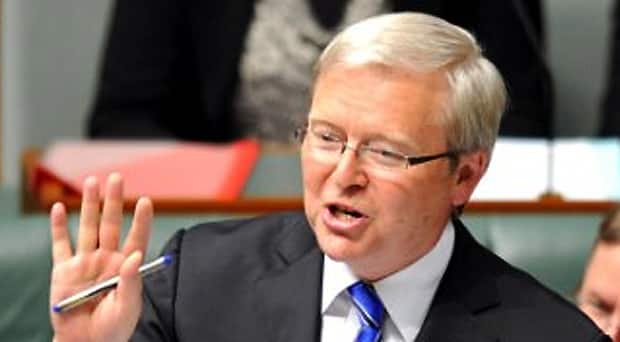
A high-ranking Indian diplomat often expressed his exasperation with Prime Minister Kevin Rudd in his first term of office, as to his leanings towards China. The sentiment in South Hall was that under Rudd, the Australia-China relationship was a bit more warm and cosy than it needed to be. India was frustrated at the way the Labor Party under Kevin Rudd rebuffed India’s diplomats, especially in the area of uranium sales. In the dying days of the Howard government, it was announced that should the Coalition return to power, they will initiate steps to sell uranium to India. However, with Labor taking control in 2007, in his first stint at prime ministership Kevin Rudd made no moves to progress any discussion on this topic; in fact, it was put on the back burner.
It was under the next prime minister Julia Gillard, that the Labor caucus endorsed the sale of the precious yellow cake to India. Interestingly enough, this decision seemingly was undertaken without consulting her then Foreign Minister Rudd, who was only informed of this after it was publicly announced. This decision was made in December 2011 and to date little progress has been made in practical terms. One expects that under the reincarnation of Kevin Rudd as Prime Minister, not much will happen in this regard. Interestingly, Rudd supporters, such as current Deputy Prime Minister Anthony Albanese and Labor stalwart Doug Cameron, both disagreed with the then PM Gillard’s decision. 2008-2009 was the period when the students’ crisis had rocked the relations between India and Australia. An enduring image from the time is that of Rudd’s effigy being burnt by demonstrators outside the Australian High Commission in India. While this was certainly not pleasant, it further distanced Kevin Rudd from all things Indian.
As to how the Indian community in Australia reacts to change of leadership at the Labor Party will be interesting to observe. Over the past few months, there has been a concerted effort by the subcontinent friends of Labor to reach out to the Indians in Australia. Former PM Gillard’s visit to the Parklea gurudwara, a meet-and-greet with selected media at Kirribilli House, weekend fundraisers for the Labor Party within the Indian community and the constant parade of Labor’s marginal seat politicians at Indian functions, have showed the importance given to the Indian vote at the next elections. Whether the new (or old?) Prime Minister Rudd will embark on similar gimmicks will be interesting to observe.
However, if history is any indication, PM Rudd will prefer to practice his Mandarin at local Chinese functions, rather than covet the Indian vote. Australian Indians will also remember promises and grandiose statements such as the 20/20 forums, grocery watch, fuel watch, the lack of coherent policy on ‘the greatest moral challenge of our times’ and carbon tax, the dismantling of the Pacific solution of the Howard government, the near breakdown in the working of the government after disagreements in the kitchen cabinet etc. While all these can be forgiven, what the Australian Indian community will be watching, is how the relationship between India and Australia progresses under a reincarnated Kevin Rudd.
Rudd and the India-Oz relationship
He ain't heavy, he's my brother
Two brothers aim to achieve their dreams, through personal sacrifice and unshakeable determination

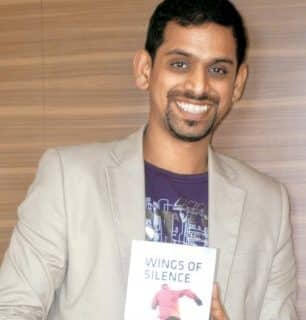
Wings of Silence (Silverfish, Bangalore, 2012) is a debut novel by Shriram Iyer, a Melbourne-based management professional. Bangalore born Shriram Iyer is somewhat of a high-achiever; besides his busy career, he has authored several short stories, theatre scripts and screenplays for short films. Silver medallist under the Shankar’s International Award given by the President of India, Shriram is also a professional singer who has to his credit an Indian pop album, Is Dhundh Mein, (released in 2007 by singer Shankar Mahadevan), as well as over 400 concerts in India, Australia, New Zealand and the USA.
Wings of Silence is about two brothers in an Indian-American family and their epic journey en route to winning an Olympic medal for Raj Sethi, who is the elder of the two, but born deaf. Saurav Sethi, the younger brother, is a tennis prodigy and a Grand Slam champion in the making, but he watches his elder brother Raj fight a losing battle in life and plunge into the depths of depression. All this time, their father Akshay Sethi pours scorn on his elder son’s attempts to make something of his life, and heaps attention only on Saurav. Unable to countenance this injustice, Saurav gives up tennis and his own chances and ambitions to resurrect his brother Raj’s life. Unable to make their father understand, they run away from home together and embark on a rollercoaster ride that will push their courage and determination to the limit. As the story unfolds, the brothers bond emotionally, and there are a few twists and turns. Fortuitously, they receive considerable help from Sourav’s ‘soulmate’ Shalini, and their rather rich aunt who had been banished from their family circles some years earlier, for an indiscretion.
As Saurav prepares to give Raj a life he deserves, the reader is drawn into the world of the two brothers, and becomes engrossed in their travails and their setbacks, the strength they draw from the enormous trust placed in them by people within their close circle place, and ultimately, their joy and triumphs. The protagonists’ heartaches and their elation at realizing the impossible dream of running the marathon in the 1980 Olympics engage the reader, and compels a feeling of anticipation – will this completely tear the family apart or bring them together again? The saga is set against the cold war tensions of the time, and Iyer brings the political landscape of that period into clear relief. The training regimen of a marathon runner is meticulously woven into the narrative – Iyer seems to have had help from the Australian marathon legend Robert D Costella – and this brings a great deal of authenticity to the storytelling.
Faces of India
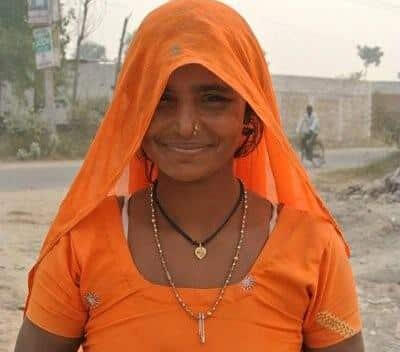
Katy Fitzgerald’s A Tender Heart is both a fundraiser and heartwarming exhibition, writes LENA PEACOCK

Sydney based artist Katy Fitzgerald’s exhibition A Tender Heart was a moving collection of photographs that expressed her love of India, as well as her passion for photography. Fitzgerald recently spent five months in India including volunteering at the Tender Heart School, and the photographs she took during this time form the exhibition, which showed at ArtHere Gallery in Redfern until July 4.
The exhibition aimed to raise the funds needed to bring several children with disabilities from the school to Australia, to participate in the Special Olympic Games to be held in Newcastle in November.
“I spent two months at Tender Heart in the village of Bhatola, working within the women’s program, helping to teach the local slum (I hate that word!) children basic English and Maths, and I spent many hours playing softball with the children with special needs,” Fitzgerald told Indian Link. “As a lover of photography, I also spent much time photographing the many aspects of Tender Heart, and the children and staff”. In addition, she took photographs in “Dharamsala, Mumbai – especially the Dharavi slum, as well as in and around Rajasthan”.
Renu Bali is the founder of Tender Heart School, which is linked to Opportunity Education. The school is situated in the village of Bhatola, on the outskirts of Delhi and was created due to Bali’s vision to bring opportunities and education to those less fortunate. The school runs classes for local children including those with disabilities, and courses for local women to learn handicrafts in order to earn a living.
Sandy Edwards, Director of ArtHere, was the curator of this exhibition of 32 images. “I had always known my exhibition would be somewhat of a fundraiser for India; however this gave me a very specific aim on which to focus – hence my exhibition was called A Tender Heart,” says Fitzgerald after she had discovered the need to raise funds for airfares. She also pointed out that donations can still be made.
“As a photographer, I am strongly drawn to photographing people,” Fitzgerald states. “I like to engage with the people I photograph, even a short conversation like ‘hello’ or ‘namaste’, or just a look to gain their permission to photograph them. I found most people I spoke to and approached were happy to pose for the camera, especially children who jostled with each other to get in front, and would then go into peals of laughter when I showed them the image,” she adds with a smile. Fitzgerald also speaks of her love of India, describing how it has “crept under my skin and into my heart, and refuses to budge! I’m addicted – happily!” Of her desire to go back to India on this most recent trip she says, “I really wanted to ‘be’ in India – not just travel through, but to work and live with Indians”.
Fitzgerald has a varied background, having worked in social research, counselling, psychotherapy and art galleries. What links all of these together is what Fitzgerald describes as her “high level of working with people,” which is what she values the most. “I am fascinated by people and how they live their lives, especially from other countries. My command of the Hindi language is very poor so I couldn’t speak very much with many of the people I photographed, however I believe that we can communicate with a look, expression and a smile. I like to communicate and connect with the people I photograph,” she reveals. Her photographic inspiration comes from the documentary photographers Dorothea Lange, Sebastio Salgado and the Magnum photographers.
Fitzgerald hopes that visitors walked out of A Tender Heart feeling uplifted! “I hope they saw the beauty, strength and dignity of the Indian people”. And because this is fundraiser she adds, “I would also like them to have felt a little more connected with India, and perhaps felt inspired to support Tender Heart, maybe even travel to India to discover their own love of the country”. On her desire to keep visiting the country, Fitzgerald explains, “I find Indian people creative, ingenious, entrepreneurial, with a great ability to really live and celebrate life, regardless of what life has handed out to them”. She adds, “I also recognise the many ills in India and don’t wish to gloss over them… India is a land so full of contradictions, incredibly rich people and incredibly poor people, and I would dearly love to redistribute the money a little more evenly. That may be a challenge, however I can do something here, by raising money for a good cause”.
It’s an exhibition full of the many faces of India, which is unlikely to have left viewers unmoved. And even if you missed out on seeing the exhibition before it closed, you can still contribute to its worthy cause.
A Tender Heart: 22 June– 4 July
ArtHere Gallery: www.arthere.com.au
Tender Heart: www.tenderheartngo.org
Lamb, Aussie style

Mulwarra lamb is making inroads into the Indian palate through a host of traditional and non-traditional dishes, writes MINNAL KHONA

There’s no doubt that most Australians love their local lamb, but a taste of this viand cooked to suit the Indian palate in the Indian subcontinent is unusual. But recently, the Hyatt Group of Hotels in India has collaborated with Mulwarra Export, a Victorian company, to supply lamb to its properties at the Hyatt hotels in Chennai, Hyderabad, New Delhi and Mumbai.
From Australian wines to coffee and now lamb, products from down under are gaining popularity and acceptance in India. To promote their product in partnership with Hyatt Hotels, Mulwarra Export Pty Ltd, Meat and Livestock Australia, and Treasury Wine Estates organised an ‘Australian lamb experience’ recently. The participating Hyatt Hotels include the Hyatt Regency in Chennai and Delhi, the Park Hyatt Hyderabad and Grand Hyatt Mumbai.
I attended a media lunch at the Park Hyatt in Hyderabad for a taste of Aussie lamb, Indian-style. I was curious to see how Australian lamb would fit into Hyderabadi biryani and other meat dishes for which the city is renowned. The lunch was hosted by Mike Tafe, Corporate Chef, Mulwarra Export, at The Dining Room, Park Hyatt’s Indian fine dining restaurant. Accompanying the food was the Koonunga Hill Chardonnay and Koonunga Hill Shiraz from Penfolds.
Greg Darwell, Managing Director of Mulwarra Export, told me his company’s lamb is being exported to over 30 countries. Greg revealed, “Early this year, we decided to introduce our product in India. The Hyatt group is one of our largest end users. It has been very well received in other parts of the world, and we hope to repeat that success in India”. Incidentally, the partnership means that any lamb dish served at any of the Hyatt properties mentioned will be the Mulwarra lamb, and not the local variety. The Mulwarra lamb is all-natural prime lamb sourced from the pristine lamb regions of Victoria, which has specialised growers and some of the finest lamb producing areas in the world. The lamb is halal certified and USFDA approved.
Chef Tafe, who also has his own spice marketing company, has been using the Mulwarra lamb for over 12 years at all the hotels in which he has worked.
“I am not afraid to use spices to appeal to the Indian palate, but at the same time I don’t like to overshadow the lamb,” he said, commenting on the menu for the day. Minimal marinades, slowly braised cuts of shoulder or leg of lamb were served in different avatars.
We started with a lamb and lentil soup flavoured with cumin and lemon-scented yoghurt. The soup tasted a lot like our dal makhni, except for the bits of lamb added and the hint of lemon. It was delicately flavoured and the lamb and lentils were easily distinguishable, even though both had absorbed the flavours of the spices. This was followed by a Japanese salad, a tataki of lamb loin with ginger, sesame and soy.
Chef Tafe, it seems, really knows his lamb. The several options that were served in the main course, all lamb-based of course, were full of flavour and each one was different from the other.
“I have created different recipes, some are traditional ones. Essentially, the dishes are appropriate for the international traveller who is exposed to global cuisine. I try and incorporate flavours from the Middle East, South East Asia and the Mediterranean as well as India,” he said, adding that the lamb lends itself very well to rogan josh and Chettinad style curries.
True to his word, each serving had a different flavour. The barbecue Mulwarra lamb, butterflied with Greek spices and served with a basil tzatziki is refreshing and very soft. The breaded lamb rack cutlets with Italian herbs eventually emerged as my favourite from all the dishes I tried, and was replete with the aroma and taste of Italian herbs. Mixed with the bread, it was really tasty. This was followed by the lightly smoked lamb cutlets with chipotle butter, also quite different. The roast lamb rump with ras-el-hanout had a distinctly Middle Eastern flavour.
The one aspect that repeatedly stood out in all the lamb dishes served was that there was no prominent odour that lamb can sometimes have. In fact, even though all the dishes were delicately flavoured with a minimum of spices used, none of the dishes had any odour. Chef Tafe definitely accomplished his goal of not overshadowing the lamb.
We ended with a mango pavlova and though none of the dishes were traditional to the Indian palate, I could see satisfied faces all around me.
2012 VCE top achievers honoured
Indian origin students won awards at the recently held Premier’s VCE awards

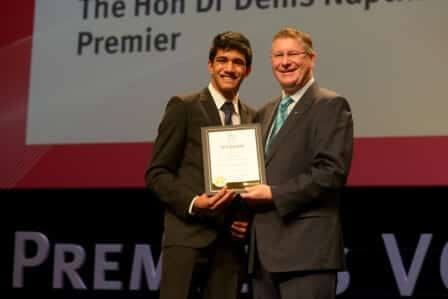
Every year, top performing students are felicitated for their outstanding academic achievements in the Victorian Certificate of Education (VCE). In a ceremony held on June 5 at the Melbourne Convention and Exhibition Centre at South Wharf, 286 students were honoured at the 2013 Premier’s VCE Awards. Premier Denis Napthine congratulated the students for performing at the very highest levels in VCE in 2012.
“Completing VCE is no small feat, but doing so with a top score is a tremendous achievement,” Dr Napthine said.
“Today is a wonderful occasion to celebrate these students, who are an inspiration to their peers, schools and communities. I wish them all the very best on the next exciting stage of their life journey,” he added.
There was an air of anticipation and excitement at the event, as Melbourne’s best and brightest waited for their turn up on stage. Dr Napthine said the breadth of talent on display at the Awards was good news for the state’s future. “If these students are Victoria’s best and brightest, then we are in very safe hands indeed,” he added.
Among the winners was Varun Peri, a student from Melbourne High School, who received a perfect ATAR score of 99.95, for which he received the Top All Round High Achiever Award. “I was thrilled with the Award, its great to be recognized for the achievement, it made the effort worth it,” said Varun. “The support from my family and teachers was a big contributor to my success,” he added.
For Varun, Year 12 was tough, with much of his time spent in studying and preparing for the exams. His subjects were Physics, Chemistry, Mathematical Methods, Specialist Maths and English, along with Biology, which he completed in Year 11.
“When I received my ATAR scores and realized I had scored a higher than expected, I was thrilled and relieved. It was an unexpected surprise, but a fantastic one,” he revealed. Varun admits that he paced himself with studying, working consistently on each subject and then speeding up prior to the exam. He also took time out for sporting leisure activities, and fortunately for this young man, his parents put no pressure on him to study or to achieve beyond his potential. Varun has accepted a scholarship to study a Bachelor of Science degree from Melbourne University, and he intends following a career path in either Medicine or Engineering.
Varun makes use of his academic talents with VCE and IB tutoring, and is now looking forward to two weeks of training before becoming a volunteer teacher at the Adult Migrant English Service (AMES), where he will teach English to newly arrived migrants.
Among the other winners was Amarjit Batra from Camberwell Grammar School, who scored an ATAR of 98.75 and won the award for IT Applications; and Srishti Dhir from The Mac.Robertson Girls High School with a study score of 50 who won the award for Environmental Sciences.
An old head on young shoulders
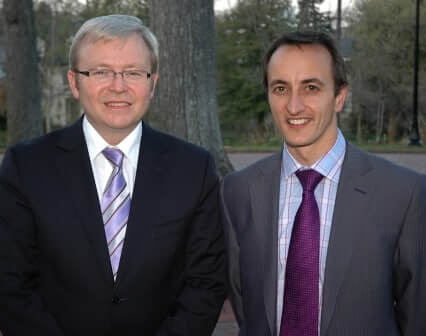
Devanand Sharma is the new Ambassador to Israel, writes Darshak Mehta

Devanand Sharma is his country’s youngest Ambassador.
And, no, he is not representing India.
He is unique in more ways than that.
He has recently been designated Australia’s next Ambassador to Israel. Yes, he is a true-blue, dinky-di, ridgy-didge Aussie. And if that means he is half Indian, well, welcome to the new, really, really multicultural Australia.
Devanand, or Dave as he is known, is just 37. When I first heard that, I said “Wow”. And I thought: you @%*^#*! overachiever.
The world is at his feet and barring a disaster, he should certainly be heading The Australian Department of Foreign Affairs & Trade (DFAT) before he turns 50, surely!?
An extremely rare fact: Dave is probably only the second Australian of Indian descent to represent Australia as an Ambassador.
In case you are curious as to who was the first, I believe it must be Peter Varghese who was Australia’s Ambassador to India between 2009 and 2012, before he was promoted and made the head honcho of Australia’s diplomatic service – the DFAT. He still heads it. Varghese was born in Kenya to Malayali parents and has been one of Australia’s most distinguished and senior civil servants.
Dave Sharma holds a Master of Arts and a Bachelor of Arts from the University of Cambridge and a Master of Arts in International Relations from Deakin University. He is a senior career officer with the DFAT and was most recently Assistant Secretary in the Africa Branch, and previously, Acting First Assistant Secretary, International Division in the Department of Prime Minister and Cabinet.
Sharma’s prior international service includes postings as Counsellor at the Australian Embassy in Washington, Third Secretary at the Australian High Commission in Port Moresby and as Senior Civilian Adviser with the Peace Monitoring Group in Bougainville. Sharma was also an Adviser to Foreign Minister Alexander Downer from 2004 – 2006. His father originally hails from Uttar Pradesh, though they subsequently settled in Trinidad and Tobago, and his mother’s family is from Sydney and Dave grew up in Sydney but remains in close touch with the Indian side of his family.
Sharma will be accompanied to Israel by his wife Rachel and their three young daughters.
Clearly his young age is the first thing that strikes one about Dave. (By comparison, the average age of an Ambassador or High Commissioner that India appoints, is generally in the 50s). But he himself is nonchalant about it.
He says without hesitation, “My appointment proves that Australia is a meritocracy and even the highest positions are available to all comers”.
“The younger generation should certainly look at opportunities in public life and in the public service,” he adds. “Though there are only a handful or so of Australians of Indian origin in the ranks of DFAT, their numbers are certainly growing in the junior ranks”.
Australia has been a strong supporter of the State of Israel since its establishment, and was one of the first countries to grant official recognition and to establish diplomatic relations. The Australian Embassy in Israel opened in 1949.
Australia and Israel enjoy a significant trade relationship worth more than $900 million a year. Australian exports to Israel include coal, meat and aluminium, with imports including gems, manufactured items and telecommunications equipment.
So, it is an important posting, and the Australian Government would have made it after due consideration about the merits of various candidates.
Questions have forever been raised about the influence of the strong Israel lobby within Canberra (and Washington/London), so the new Australian Ambassador may have to walk a tightrope and be prepared to tell his hosts things they do not want to hear on the Palestine problem which has defied a solution for over 60 years.
Australia recognises that Israel’s long-term security requires a comprehensive, durable Middle East peace settlement. Australia supports a negotiated two-state solution, with an independent, viable Palestinian state alongside a secure Israel.
But in fact, the superior lobbying skills of Israel and the Australian Jewish community has ensured that Israel has had a robust input in the decisions this country has made.
This is something that eludes the Indian community – even though it is four times bigger!
Get your Winter Funk on!
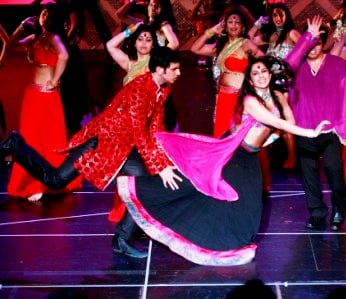
Bling, beats and Bollywood warm up the audience at Shiamak’s annual winter funk, writes Simmi Bakshi

Shiamak’s dancing stars gave a new definition to the word ‘winter-warmers’, with their spectacular performance at the Winter Funk 2013. Held at the National Theatre in St Kilda recently, the Shiamak Winter Funk set the stage alight with a Shiamak-style Bollywood dance extravaganza. This annual event is a culmination of the efforts of students enrolled in the Shiamak Dance Group in Melbourne. Students from all ages and all stages performed on stage to a sell out audience comprising of friends and family. The entertainment temperature was raised with a heady mix of latest Bollywood dance numbers, well-choreographed sequences, glittering costumes and some unmistakable talent.
Says renowned choreographer Shiamak, “Shiamak’s Winter Funk show is a chance for my students to express their passion and truly shine in a professional dance set-up. Melbourne has great potential, students here have a certain energy that makes them great performers on stage!”
Not everyone who is seen on stage at this annual event is born to dance, but they are free to dance and that’s definitely more important. ‘Have feet, will dance!’ is one of Shiamak’s oft-quoted statements and Vihang Nikalje, Manager – Shiamak Group Australia endorses this. “In the process of learning, our students acquire various skills that hold them in good stead in all phases of life. Discipline, coordination, confidence, teamwork, exercise and professionalism are all part of this experience. The enormous amount of fun that these students end up having during their classes is the proverbial cherry on the cake,” he said. Vihang Is currently managing the Shiamak Dance School in Sydney, while instructor Darshan Pawar is responsible for the classes in Melbourne.
The excitement on the evening of the Winter Funk was palpable as students finalised their costume trials, rehearsed their steps and dealt with the butterflies in their stomach. Vihang Nikalje and Mishti Shirke took the audience through a quick succession of performances. The items presented were split according to suburbs and level of advancement. The Special Potential Batch and Shiamak Show Kids executed the best performances of the evening. These groups are made of students picked by Shiamak for their talent and capabilities. Dances choreographed on Ganpati, Fevicol Se, Ghagra were undoubtedly good; however this year again, there were many praiseworthy performances from other students.
A deviation from previous events was in the form of a formal recognition of people who have supported the group since its inception in 2006. “These people have made us feel welcome and cared for since we arrived, and over the years they have become part of our extended family. They have contributed to the Shiamak Group in various ways from assisting us, supporting our events, cooking for us, promoting us and for always being there for us. We wish to take this opportunity to thank these special individuals,” said an emotional Nikalje. He requested Vasan Srinivasan, President of the Federation of Indian Associations of Victoria (FIAV) to present the tokens of appreciation. Among the recipients were Mr Vasan and Mrs Lata Srinivasan, Krishna Arora, Subra Ramchandran, Sonali Padwal, Radhika Sarve, Ankush Gupta, Karishma Singh, Mishti Shirke, Sunil and Bina Shirke, Arun and Rajshree Sarve, Abhishek and Seema Gupta, Amarjit and Neerja Singh, Manisha Chaubal Menon, Ambarish Deshmukh, Manisha Isaacs, Chandana Unnithan, Ramya Matthew, Preeti Rao Ghag, Vimani Peiris, Nareeta Singh, Nisha Choksi Mavani, Parag Waghmare and Preeti Jabbal.
Photo: Ravinder Jabbal
Head over hashtag
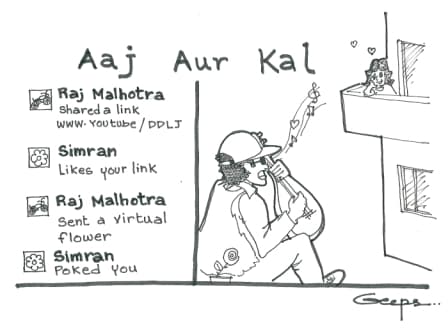
Hallmark cards and the thrill of the chase vs Facebook relationship statuses and online stalking, writes Sanam Sharma

Social media has been a game changer at a lot of levels. Reading the tweets and Facebook updates of youngsters these days, it seems that cupid has gone digital as well. Falling in love these days, and expressing it to the other person, is convenient, discreet, and “online,” thanks to smartphones and a galaxy of social media platforms.
If your heart skips a beat for someone then all you have to do is find (or shall I say “search”) his or her online avatar. A click of a button and you are “friends” with that person. A few online chats and a bunch of “pointed” comments on status updates of the other person, and you are officially in love – or as Facebook would prefer to call it “in a committed relationship”.
Not much extra effort is needed to call off this “committed relationship” or more casually known as a “break-up”. Just “unfriend” (or “block” for serious hurts or infidelities) and reset your social media status to “single” and you are ready to “mingle”, yet again. Love via the social media thrives on “pings,” “pokes,” “emoticons,” “tags,” and “hashtags”. Like everything else that has gone online, love, falling in love, and expressing love these days must therefore seem quite effortless, risk-free, discreet, and from my perspective “extremely boring”.
So youngsters, romans, countrymen, allow me to re-introduce you to the thrill and adventure of being in love, as we did it in the 1990s. No smartphones, no social media, and no internet (for most part of that decade). Just good old emotions fuelled with a healthy dose of Dilwale Dulhaniya Le Jayenge (aka DDLJ).
I say thrill because in the last decade of the previous millennium it used to take people a good two to three months (on average) to fall for someone. I reserve the definition of “people” for the purposes of this write-up specifically to the nation of India (and perhaps our neighboring nation towards the west). This time frame had nothing to do with any sort of “cupid complacency” on the part of the people involved. You see, in the absence of online profiles, you had to cross paths on city streets, college corridors, adjacent terraces, and even places of worship, and prayer to get a decent glimpse of each other.
Once you got past the initial pleasantries between two interested people through random glances, disguised smiles, and high-speed chases on scooters (you would be booked for stalking these days), the next challenge was to express the “love” in some tangible way. Archies gallery came in quite handy at this juncture.
Dish out a Hallmark card dripped in over the top romantic poetry and you could not have gone wrong (well, most of the time). However, it was not as easy as attaching the card to an email and sending it through ether. This is the precise moment when (in the case of guys) the best friend of the ladylove came in ultra handy. Pamper her, get her on side and you had a “mediator” acting as a pigeon delivering your love notes (usually tucked inside school books), for the rest of the romance.
As the “in a committed relationship” equivalent phase of those pre-social media times commenced, catch-ups between the love stuck souls were few and far between. Landline phones were the most sophisticated medium for communication, however, not the most discreet.
The entire household had one phone at their disposal and often sat in the bedroom of the parents. If by any luck there was another extension of the phone line stretched out to a relatively remote and private location within the house, you always ran the risk of someone else dropping in on your “love talk” from the other room. So when you young lot of today take for granted the luxury of calling each other in exquisite privacy of your very own smartphones, spare a thought for us who struggled our way through getting busted every so often.
A lot was said with ink on paper. The moon and the stars featured a lot in love notes hidden amongst notebooks. Accurately timed and frequent drive-bys by a guy through the girl’s street on his scooter helped fetch glimpses of each other through the day (something that has been made ridiculously easy by “face time”).
Love and romance in my days may have been slow, tedious, and “Bollywoodish,” but it was the way it ought to be, intense, over-powering, enduring, and at times dramatic. Lovebirds longed to be with each other (in person and not online with a green dot next to their names), wrote to each other, and stole secret moments out of their days to be with each other.
So my young friends, next time you are in love, do not lock yourself in a room and make it a social media experience. Get on a rooftop and let the world know about it. Stand next to the person who makes you go weak in the knees, look into their eyes and tell them how you feel. Write a letter to them, a hand written one and not an email. Charm the girl’s mother. Tell the girl that “bade bade deshon mein aisi choti choti baatein hoti rehti hain, Senorita,” (watch DDLJ if you do not know what I am saying). Go watch a rom-com together (Yeh Jawani Hai Deewani will do perfectly fine). Hold hands. Go for a long drive.
Take love and romance “offline” for a while and leave Facebook for the oldies to hook-up with their old flames so that they get through their mid-life crises.
Uttarakhand rescue efforts
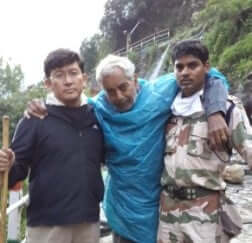
When the going gets tough, the tough get going

Dehradun, June 23 (IANS) Ignoring their personal safety, braving fuel supply constraints and tackling the elements, personnel of India’s uniformed forces – some of whom have summited Mount Everest – have been racing against time to save lives in devastation-hit Uttarakhand, driven by a sense of purpose and motivated by the hope in the eyes of the hapless survivors.
All this has seen some 70,000 people being rescued till Sat Jun 23 evening but 20,000 are still missing. Personnel of the Indian Army, the Indian Air Force (IAF), ITBP, Border Roads Organisation (BRO) and NDRF have been toiling in the Badrinath and Kedarnath regions and some other upper reaches of the mountainous state to rescue thousands of pilgrims stranded due to flash floods that have hit the area.
The IAF has put in place an ingenious air fuel bridge, the Indo-Tibetan Border Police (ITBP) has deployed Everest summiteers and the National Disaster Response Force (NDRF) is planning to use unmanned aerial vehicles to look for survivors and victims.
Officials from various agencies said they were facing a multitude of challenges in the rescue work in the hilly state but finding a way to deal with it.
An IAF officer said pilots were carrying out rescue missions in conditions made difficult by treacherous hilly terrain and inclement weather.
“There are strict rules about flying hours of pilots but we are not going very strictly by the rule book. We want to maximize the relief effort,” an IAF officer said.
Till Saturday afternoon, the IAF had flown 768 sorties under its “Operation Rahat.”
The officer said that ray of hope among survivors was a factor motivating them in their sustained effort.
Another officer the IAF had resorted to “a unique but daring innovation” to meet the requirement of aviation fuel for the uninterrupted flight of helicopters.
Despite inclement weather, a recently-inducted C-130J Super Hercules aircraft landed at Dharasu, 155 km from state capital Dehradun, which has a 1,300-meter landing ground, Saturday. “It de-fueled 8000 litres of fuel into an empty bowser which had earlier been airlifted by a Mi 26 helicopter. With the availability of additional fuel at Dharasu, rescue operations have picked up pace,” IAF spokesman Squardon Leader Priya Joshi said.
She said air operations were restricted due to non-avialability of aviation fuel. Another C-130J aircraft later carried more fuel to Dharasu.
The Indo-Tibetan Border Police has pressed members of its team, which had conquered Mount Everest, into the relief effort.
“We have a special team that has scaled Mt Everest. They also have special equipment. They are engaged in the rescue efforts,” ITBP chief Ajay Chadha told IANS.
Another ITBP officer said that personnel who were on “rest period” after their duty on the border with Chinavhave also been pressed into service for providing succour to the people.
“Personnel who have been posted in Uttarakhand are more familiar with the terrain,” he said.
The officer said ITBP men had carried out rescue work at heights between 8,000 and 10,000 feet where people sometimes find it difficult to breathe.
“There were pilgrims who had gone sick apparently due to lack of food. Our troopers have carried them on their backs risking their own health,” the officer said.
An officer of the Border Roads Organisation told IANS that their work was hampered because of innumerable landslides as some of their machines got trapped.
He also said there were problems in carrying fuel for these machines.
“We gave emphasis on opening main roads such as those between Rishikesh and Joshimath and between Rishikesh and Uttarkashi. The main roads are crucial for logistics, including supply of medicines and taking rescued people to their destinations,” the officer said.
He said BRO was using porters to carry fuel in cans in areas where it was still not possible to reach by road.
The army has pressed troops skilled in mountain rescue operations in the relief effort. It has prepared a helipad at Jungle Chatti to facilitate evacuation from one of the most dangerous and inaccessible areas of the Kedar valley. The army has also constructed two helipads at Gaurikunj.
NDRF inspector general Sandeep Rai Rathore said they had rescued people from inhospitable terrain where there was no footpath.
“We winched people into helicopters,” he said.
Rathore said they would use an UAV to look for survivors and victims in areas that were difficult to reach.
Food packets and medicines have also been dropped in the affected areas.
The state government has also stepped up its relief effort. Help is also being rendered by other government and non-government agencies.
IANS
India wins Champions Trophy in style
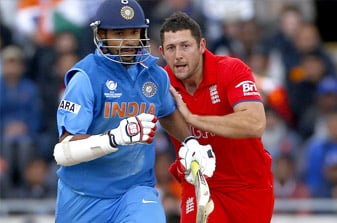
It was a thrilling but rain-marred final

India beat England by five runs in a thrilling but rain marred final that was reduced to a 20-over-affair to win the Champions Trophy outrightly at Edgbaston on Jun 23.
Chasing a modest total of 129, India held their nerve as England lost four wickets and managed 124 for eight in 20 overs.
It was pacer Ishant Sharma (2/36), who turned the match on its head, by getting rid of Eoin Morgan (33) and Ravi Bopara (30) in consecutive deliveries after the duo threatened to take away the match from India with their crucial 64-run stand.
The double strikes from Ishant in the 18th over, left England at 110 for six. The hosts needed another 20 runs to win from 14 balls. It proved too much for England, who lost their nerve and again lost a chance to lift a major 50-over title.
India, who shared the title in 2002 with Sri Lanka, finally bagged Champions Trophy title in their third final appearance. The win was also a perfect way to commemorate India’s 30 years of 1983 World Cup winning triumph (June 25).
The agonising six hours of wait for the start of the match was worth it as India captain Mahendra Singh Dhoni, who also led the team to triumph on 2007 World Twenty20 and the 2011 World Cup win, lifted the last edition of the Champions Trophy.
On a day when rain played havoc, the Indian batting was tested for the first time in the tournament but in the end the bowlers did their bit.
Virat Kohli top scored with 43 and Ravindra Jadeja, came up with a cameo of unbeaten 35 off 25 balls as India made 129 for seven in 20 overs. They came up with a valuable of 47 off 33 after India were left struggling at 66/5. Opener Shikhar Dhawan also struck a crucial 31.
While defending, the spinners Ravichandran Ashwin (2/15) and Jadeja (2/24) purchased good turn from the track to remove the English top-order that left them struggling at 46 for four in the ninth over.
Jadeja was adjudged as Man of the Match for his all-round performance and also got the golden ball for being the highest wicket-taker.
Umesh Yadav gave India the first breakthrough after he forced Alastair Cook (2) to guide to Ashwin to slip. Ashwin then struck in his consecutive overs to get rid of Jonathan Trott (20) and Joe Root (2).
Ian Bell (13) got a raw deal by third umpire Bruce Oxenford after he was adjudged stumped off Jadeja despite TV replays being inconclusive.
But it was the 18th over from Ishant Sharma that swung back the momentum for India. While Morgan and Bopara departed in Ishant’s two consecutive balls playing loose shots, Jos Butler and new dad Tim Bresnan (2) couldn’t take the pressure.
Earlier, England found an unlikely hero in Bopara who rattled the Indian top-order with three for 20. Dhawan became Bopara’s first victim caught by James Tredwell at extra cover.
The wicket triggered a batting collapse and Bopara was suddenly on fire as he also picked up Suresh Raina and Mahendra Singh Dhoni that left India struggling at 66 for five.
But it was the solid partnership of 47 off 33 between Kohli andA Jadeja that rescued India from 66/5 and helped them reach a fighting chance.
Kohli’s 43 came off 34 with four fours and a six while Jadeja hit two fours and a six in his 25-ball cameo.
They batted cleverly and took the batting Powerplay in the 16th over, and scored 20 runs off those two overs that took them to 106 in 17 overs.
In the next over, Kolhi got a lifeline as he was dropped by Jonathan Trott, but James Anderson had him caught at long-off. Jadeja kept up the fight with the powerful hitting.
India came into the tournament with the game’s image having taken a serious beating back home with the IPL spot fixing and betting scandal. Now they leave England with head held high and having done enough to win back the faith of the fans.
IANS