

Children can test their creative skills through websites that help them developing simple games and interactive stories, writes HASNAIN ZAHEER

As parents and teachers, we have not adequately realized the need for programming skills as part of children’s education. In fact, some say that it is as important as their literacy and numeracy skills.
Programming helps kids express their creativity, learn logic, build objects that are not just ‘be’ but also ‘do’ in nature, test and improvise. By learning to programme, children learn to solve problems, get over obstacles and collaborate with others. These are essential life skills needed to excel in any profession. As MIT Professor Mitchell Resnick wrote, when kids ‘learn to code’, they also ‘code to learn’.
Many of us are intimidated by programming, viewing it as endless lines of computer code. However, I look at programming as creative expression that blends logic, technique and art. The details of syntax and programming languages are just incidental, not the core of programming. It should be taught at an early stage when children’s minds are not consumed by specific streams of knowledge.
These are the skills of the 21st century. As I would explain in the next part of this series, in a few years, everyone would be programming, not just programmers. Let’s make sure our kids learn these essential skills while they are still in primary school.
So how do we teach programming to kids (and adults)?
One of your first destinations is Scratch (http://scratch.mit.edu/). Designed for kids aged 8 to 16, it helps kids develop animations, interactive stories and games by dragging-and-dropping blocks. They can select or draw their own characters called Sprites, code in behaviour by selecting blocks of script that can help them move, make sound and execute activities. Their creations are saved, can be described and shared with others. Scratch is my eight year old’s favourite tool and on a recent Sunday morning, he built a game in which ‘evil alien astronauts’ who try to enter the solar system (complete with a Saturn with its rings in the background) are fired upon by the player who scores points for direct hits, loses points for missed hits and the game is timed to complete it in a minute. He was thrilled to receive a dozen views a few minutes after he shared the game with the Scratch community.
Similar to Scratch is Hopscotch, except that it is an iPad app. The app provides just the right number of controls for kids starting out, which means they can find out and learn how each method works without the involvement of adults.
If you are really interested in only games, are older or an adult, and want to design once but play everywhere, cross-platform in other words, then Stencyl (http://www.stencyl.com) is your choice. Bring your ideas to life with this extensive development platform and then publish your games on Windows, Mac, iOS (iPhone and iPad), Android (Samsung, HTC and other smartphones) and other platforms, so almost anyone can access and play your games. It is a paid software but if you become an expert, you also have the opportunity to monetise your creations by selling your work.
For the really young, even pre-kindergarten, there are a few interesting iPad applications. iPad is great for this purpose as its touch interface is intuitive to kids. Daisy the Dinosaur lets the players manipulate the character and solve challenges that involve loops, events and other basic programming. Move the Turtle is a similar app for very young kids.
Making animated greeting cards and basic games can be a great introduction to programming. But here is a review of resources that teach kids how to programme:
Free courses on how to programme and specifically on Scratch and App Inventor (another game creation software) are available at PluralSight (http://pluralsight.com/training/Kids)
For older kids, say 14 years and older, Codecademy (http://www.codecademy.com) is a great resource to learn programming interactively.
Khan Academy (http://www.khanacademy.org), the celebrated provider of free Maths education on the web has a module on computer programming that Salman Khan teaches as intuitively as he teaches Maths.
So, it’s time for children to not just play games, but also learn how to design and build them. It’s a skill that they would find to be as essential as reading, writing and counting as they grow up and build their careers in the information age, in which software is ‘eating the world’. We would talk about why this learning is so important to adults in the next part of this series.
Coding for kids

Top winter trends

5 ways to get through winter, stylishly!

I often get asked about ideas for looking stylish in winter. As the weather cools down and adding layers becomes essential, it can be a bit tricky to avoid looking daggy and repetitive with the same outerwear, unless it is a trench coat (which is a clear winner anytime!) But I guess there are plenty of occasions when you’d like to try something besides the classic trench…
Here are some of the big, hot trends that give you extraordinary styling options with a range of really simple pieces.
Chunky or sparkly knits
The pull over is by far the most reliable and practical piece during winter!
The question is how to work the pullover to make it interesting, trendy and packed with style
Chunky knits: a versatile neutral pullover will go a long way for unlimited styling options. Think about combining it with printed pants, coloured jeans and even over pastel dresses for a polished ladylike look.
Sparkly sweater: sparkle, shine and still stay warm on a cold winter night, plus you’ll never have to worry about how to dress for a winter party with this one. Add that sparkly statement neckpiece for instant glam.
Winter Florals
The floral trend continues into winter and I’m loving the possibilities! I find the idea of working my spring pieces overtime really appealing. So how exactly do you make it work in this harsh weather? Simply layer your floral pants with chunky knits, cardigans, blazers and coats in complimentary colours to the print. Wear the floral dress with a dark coloured coat and bright beret.
If you think the floral look is far too casual, wear everything else all black. Also, think beyond the floral pants and dresses, even scarves, sweaters, bags and shoes are all part of the floral trend.
Coloured coats
A warm coat is a must have but a coloured one is just perfect for adding drama! A burst of colour peps up wintry black, navy and grey outfits. Keep your handbag and boots really plain and neutral, and contrast your scarf with the coat to make a statement. Stripes and polka dots are perfect too when you have a strong solid coloured outerwear. Try a leopard print scarf or ankle boots with a crimson red coat for that daring look!
Jewel tones
Fiery ruby, rich emerald, royal amethyst or sapphire! Don’t just think jewellery. This trend includes scarves, shoes, belts, clutch bags and even jeans.
Perfect to light up a dreary day and make you stand out and look radiant. The trick to make it work is to combine opposite colours. For example, work your jeans n’ black tee look with plum ballet flats and a mustard yellow structured bag, or a bright red cardigan over the crisp white shirt, teamed with a dark green pencil skirt. If you’re not much of a risk taker, just start off with a jewel toned scarf worn over a beige top or dress and matching ballet flats.
Big bags
Totes, hobos, slouch bags… yes! Tis the time of the year to flaunt these big bags that are roomy and can fit all your prized possessions, including your laptop. Plus it’s handy to have an oversized bag in winter to put away the scarves and sweaters once you’re indoors too.
So what are some of the popular colours? Tan and black are certainly the more predictable choices but this year go all out and experiment with colour. Try a red tote or a teal one! Mustard, coral, animal prints or textures are right on trend too. Ensure that one piece of your outfit matches or compliments the colour of the bag for best results.


India’s population conundrum
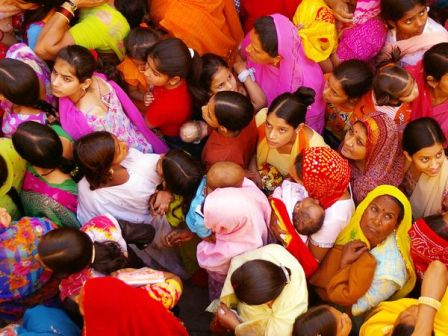
Despite its billion plus citizens, India has forged ahead to improve the quality of life of its denizens

When I left India for Australia some thirty-five years ago, the country’s population was just over 600 million. That figure was enough to raise eyebrows in Australia. Since then, India’s population has more than doubled. Where population increase is concerned, India is not out of kilter with the world as a whole, which has dramatically increased its population within the last two centuries. China, despite its strict one child policy, continues to grow.
Today, both India and China have over a billion people each. In Malthusian terms, this is catastrophic. Malthus, a nineteenth century scholar, became famous for his theory that whilst food production can be increased by better methods arithmetically, population increase can greatly outpace it exponentially.
But the story does not just end with numbers. People in India, China and elsewhere are demanding, and often getting, a better standard of living than what their parents and grandparents have had. This increases the demand for resources.
In contrast to India, Pakistan has had a much bigger population (180 million) increase. Between the years of 1990 to 2009, its population increased by the staggering figure of 57.2%. Its fertility rate is 3.07, which is much higher than India’s at 2.57 and Bangladesh’s reported 2.55. In contrast, Iran’s is much lower at 1.73. This explodes the myth that population increase is religion based.
Bangladesh’s population is believed to lie between 150 and 170 million. It is one of the most densely populated countries. The situation is similar in Pakistan, which has very limited inhabitable land. Because of rapid population increases, both Pakistan and Bangladesh have young populations.
Population numbers are meaningless unless the ‘quality-of-life’ indicators are also taken into account. For this the quality of health is the most basic factor. Well-known billionaire-philanthropist Bill Gates, founder of Microsoft, has launched a worldwide drive to have children vaccinated against widespread diseases like polio. India has had a major campaign against polio, and it has only recently reported its last polio case.
In contrast to India, Pakistan is struggling to have people vaccinated, because the infamous Taliban are against all types of vaccinations, and have physically attacked health workers who carry out such procedures.
One may well ask what is the ‘quality-of-life’. The Western method of assessing the quality-of-life of a people has long been to calculate the average consumption of items, such as electricity, water and proteins. This method might be of some use if populations are in a similar developmental stage, such as Britain, Denmark and Sweden. But are such indicators useful, if say, Denmark and Sri Lanka are compared where climate, societal structure, developmental stage and cultural factors are dramatically different?
One major factor which can be compared across nations is longevity, which has increased worldwide, principally because of the availability of medicines and new medical diagnostic techniques. China has, within the last fifty years, been a remarkable example of increasing the health of its people and their longevity; between 1990 and 2009, from 68 to 74 years. India during the same period, increased from 58 to 65 years. This becomes even more remarkable when China’s vast population of over 1.3 billion people is considered. To achieve population control, China has had a one-child policy which it continues to pursue, according to its family planning minister, at least into the near future.
Both China and India are considered as ‘middle-income’ countries in Western-based ratings, but both these countries have pulled hundreds of millions of people out of poverty within the last fifty years, and continue to do so. Western-based ratings are heavily biased towards the Scandinavian countries and the application of their values to the world’s emerging nations is very dubious and misleading.
As countries develop, their people long for freedom, first of all to learn, and then to express themselves creatively. India has adequate freedom compared to China, but much more so when it comes to Pakistan. India’s film industry, its vast newspaper network and its universities bear testimony to this.
On the creative side, both India and China have given the world two of its greatest civilisations. On a practical basis, China offered ceramics, gunpowder and tea, while India offered sugar, steel and curries. The two civilisations interacted over a long length of time, Chinese Confucianism merging with Indian Buddhism.
Today both India and China have been recipients of foreign technologies. India received much more than China from the European colonialists. In recent decades, China welcomed investment and technology from Japan, Taiwan, South Korea and the United States, amongst others. Simultaneously, Indian and China have forged ahead on their own in fields such as space science and information technology.
To sum up: the quality-of-life of individuals is reflective of the environment that their country provides. Nurturing a country’s environment helps to nurture an individual’s personal milieu.
Morning Masala
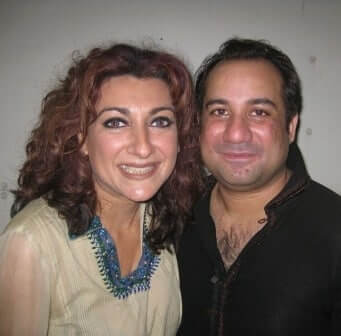
If you’re looking for a show with a twist, tune in to Morning Masala!
On Mondays we go from jokes to poetry to discussions about children and what on earth to do with them once you’ve had them!
Every Tuesday on Morning Masala I tell you what to do with your kids so you’re not tearing your eyes out when they’re tearing your house down! Relax, I am not telling you what my grandma told me; I back my advice up with a lot of research.Wednesday is a very special day on Morning Masala not because the weekend is two days away but because our show brings hope to a lot of people. I encourage people to share their troubles so all the listeners can come together as a family and lend a helping hand. Those who want to remain anonymous most certainly do. Together we’ve helped so many unfortunate men and women find their vocation in life!
What’s a show without celebrities and gossip? That would amount to Mornings Without Masala! Hear the most candid interviews of celebrities and their juiciest gossip right here on Morning Masala! Well, they have it all, so I am sure they won’t mind!
For instance my dear friend Rahat Fateh Ali Khan came on air with no notice at all and I can never thank him enough for that. People loved hearing “Rahat the Friend” on air as opposed to Rahat the celebrity who thinks before he speaks to the press. People were blown away by the humble man behind all that talent. His amazing self deprecating sense of humour shines through when you know him as closely as I do: people loved the interview! He told us the uncut version of how he lost his manager Chitresh Shivastav in a road accident while touring the US and how he escaped injury – or worse, death – by a last minute decision to sit with his musicians in their van.
Johnny Lever may be a comedian to the world but my listeners got to know him as a healer! The way he prayed for me day after day when I lost one of my twins was at the time unbelievable to me. The fact that he called me everyday of my pregnancy from Mumbai right from the time he met me to pray for me and the safe delivery of my baby, just blew me away! He may be a comedian to his fans but to me he’s the most amazing healer who helps people through the power of prayer!
Wasim Akram agreed to give me a very rare interview where he was at his candid best and had me in stitches with his amazing sense of humour. My listeners got to know him for the direct, frank, candid and humorous person he is. He narrated the whole horror of being accused of match-fixing in the Cricket World Cup of 1999 when Pakistan reached the final and lost to Australia. He couldn’t believe that his people were so ready to blame him for the team’s loss instead of congratulating him for leading the team to the finals.
Cricketer Shahid Afridi gave only one personal interview when he was in Sydney last and that was to me. His spirit of charity and his compassion for the underprivileged really struck a nerve in me. When I got to know him better I realised what a lovely, obliging, fun loving and patriotic person he is.
I was thrilled to bits when multiple award winning director of award winning TV series East West 101 Peter Andrikidis came to my show along with lead actor Don Hany. We talked from Bollywood to Hollywood to all aspects of acting and directing including the episode of East West 101 I had acted in. It was a pleasure to act for Peter Andrikidis a treat to see him in action and learn so much from him. An even bigger treat was to have him on my show and get to know him as a person. Most definitely one of the most humble, down to earth and unassuming people I’ve ever met.
Some memorable moments:
* When the listeners all got together as a family and helped a grieving sister find her missing brother.
* When we helped a young man through wedding jitters and convinced him to go ahead with his marriage. Soon we heard all about his happily-ever-after from India!
* When we convinced a suicidal lady that the man she was giving it all up for was nothing but a fraud and life had much better in store for her!
….and many many more… each show done for people on Wednesdays is a memorable one because it changes someone’s life.
So if you’re looking for a show that gives you fun, laughter, seriousness, gossip and a chance to lose your inhibitions and be crazy, tune in to Morning Masala. We do it all here, from Antakshari to composing poetry together to making a movie script from just a couple of lines! Bored of your mundane daily routine? Well, no more… pick up the phone and participate your heart out. I am just a phone call away!
Morning Masala with Uzma Mon-Tue-Wed 9am-12 noon
Srajan Singh's space odyssey
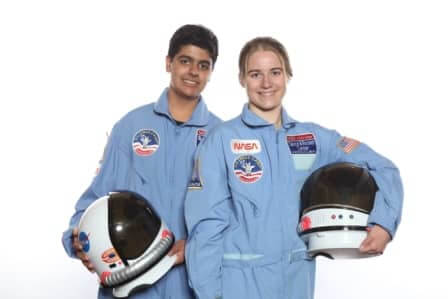
The sky is no longer the limit for NASA International Space Camp winner

Space is one of the few things that makes us wonder and dream as both children and adults. The moon and the sun are so intangible; yet so tangible. The mystery of the night sky, the wondrous event of a shooting star, and the desire to experience weightlessness – every one of us is fascinated by these thoughts, and yet such an incredibly small number of people have dared to dream of taking them any further. Srajan Singh is one of those few. Recently, the Year 11 student from Scone Grammar School was one of just two students in Australia selected for a prestigious space camp conducted by NASA at the U.S. Space and Rocket Centre in Huntsville, Alabama this month, and he hopes it is just the start of a bigger dream.
The NASA International Space Camp was established in 1990, and invites two students and one educator from 35 countries around the world to represent their country and participate in a comprehensive education program exposing the students to various demonstrations, simulations, activities and projects at the Space Centre in Huntsville. The camp is said to be both academically and physically challenging, with students given a taste of the intense training astronauts go through.
Srajan has grown up in towns such as Parkes and Narrabri, and it’s clear his outback NSW lifestyle has had a big part to play in his interest in space. “Both of [Parkes and Narrabri] have large radio telescopes. And especially when I was in Narrabri, we had friends who worked as astrophysicists for CSIRO. So there were times when they would take us to have a look around the main control for the array and deep in the belly of the telescope itself. As a 7 year old at the time – its definitely a motivator!”
More recently, Srajan has taken a particular interest in his science and maths subjects at school – a must-have for any budding NASA astronaut. He not only achieved a result in the top band of HSC Extension 1 Maths in year 10, but will be taking on the HSC Extension 2 Exam this year – in year 11. But that’s just the tip of the iceberg. “I really love music as well and it’s a huge passion of mine. I enjoy reading up on and watching documentaries about space; but more generally science and new discoveries. Recently I’ve gotten into a new series of books and documentaries called the Fabric of the Cosmos – it’s worth looking up!” Given astronauts are required to be incredibly fit, it’s a good thing Srajan loves his sport, too – including tennis, cricket, swimming, archery and hockey. He credits his school for providing the support he needed to manage his busy schedule.
Srajan applied for the exciting camp through the Australian Scholarships Group, which held a competition for its students aged 16-18 years old. After considering their academic results, achievements, career aspirations, social and community participants, the ASG decided on two students – Srajan and Aimee Parsons from Nowra Christian School, NSW – to travel with the winner of its National Excellence in Teaching Awards (NEiTA) 2013 International Space Camp Award, Sophie Fenton of Ballarat Grammar in Victoria. ASG CEO John Velegrinis said of the pair: “Srajan and Aimee both have a passion and great interest in space. They have achieved exceptional academic results and are both involved in a number of extra-curricular activities. I know they will be great ambassadors for Australia and ASG at the Space Camp, and we wish them all the best.”
At the camp, Srajan will spend a week going through all kinds of experiences that only a lucky few have been able to enjoy – including the same training undergone by the NASA astronauts who Srajan wants to join some day. Srajan looks forward to flying the space shuttle simulator, having a go at the gravity machine, and the scuba tank which replicates working in micro-gravitational situations. “All of that is going to be just fantastic and I’m really looking forward to it.”
This is just the first step in what Srajan hopes will be the start of a journey towards realising a childhood dream, but he knows it’s a tough road ahead. Although NASA is associated with space exploration more than anything else, there are of course only very few astronauts in the organisation – and Srajan is determined to be part of the latter group.
He hopes that his time at the Space Camp will not only be enjoyable, but lead to important connections and experience in reaching his goal. “My dream really has been to see the Earth from space and to know that I’m actually playing a part in our progress to a new future. The International Space Station is just a way for me to achieve that goal. To reach there, I’ll have to achieve some sort of science degree and then apply to NASA. Having been to the International Space Camp will certainly increase my chances of being accepted. Once in NASA, who knows, maybe my calling will be as a ground scientist; but nothing beats the ISS – it’s a whole different ball game.”
His parents, Anuradha Singh and Dr Sanjay Verma, are naturally very proud and supportive of Srajan’s achievements. Anuradha took the phone call that carried the great news, and Srajan labels it as “One of the happiest moments in my life! My parents would have loved to come, but the centre has strict rules that no one other than the delegates of the 35 invited countries can come in – so unfortunately they can’t.”
Srajan’s favourite moment in space exploration history is the launch of the space probe Pioneer 10, which was the first man-made object to reach escape velocity from the solar system, taking it past the asteroid belt, and becoming, as Srajan puts it, “Our beacon to the rest of the universe, to let everyone know we’re here too!”
To any students unsure about what their future holds, Srajan’s advice is simple. “Trying to balance hobbies and studies is hard, but it’s doable. My advice is do what you’ll enjoy and put your heart into it. Then the sky is the limit!”
An outback adventure

How SHAFEEN MUSTAQ found serenity and tranquillity in the middle of Australia with a group of friends

You know those moments in your life when you step outside of the moment, look at yourself and think, this is perfect. This, I can now tick off my bucket list. Well, I had a moment like that recently when I went on a trip to Uluru. The aura of spirituality and peace out there in the middle of the Australian desert is an amazing feeling which everyone should experience at least once in their lifetime.
We city folk are a closed off lot. We get into our black office attire, hop on a train and shuffle off to work in an endless cycle of striving to achieve financial security. But sometimes it helps to take a break from the rat race and appreciate the enormity of the country we live in. While it is tempting to hop on a plane and fly off to Bali to enjoy the sand and surf, experiencing the real Australia is a much more rewarding experience. Besides my trip to Hajj, this has got to be the most fun I have ever had on a trip.
We flew out to Alice Springs from Sydney on at the unholy hour of 6:40am. After a three hour journey we landed at Alice Springs airport which is so cute and quaint, and if you blink you will miss it. We hired a car and drove into Alice Springs (all of which is still smaller than Sydney’s CBD) and stocked up on supplies for the next five days. This saved us from trying to find halal, or substantial food on location (considering petrol was $2.12/L, you can imagine how expensive food was).
From Alice we drove the 446km that is the Stuart highway and reached Yulara (where Uluru is), making cabin number 7 our home for the next few days. Over these days we experienced Uluru up close and personal.
The actual climb was closed due to forecasted rain (and then actual fog and rain) but the base walk was equally awe inspiring, and 9.8km doesn’t feel so long when you frequently stop for pictures and rest. If you can’t do the whole walk, you can always drive along the looped road around the rock and take the shorter walking trails which lead to some amazing watering holes and art on the rock itself. Walking around the base means you also do not injure any sensibilities, as there is a sign which states the Aboriginals request that the rock not be climbed as it is of spiritual significance to them.
Once we completed our time at Uluru we drove 25km to Kata Tjuta (previously known as the Olgas). Kata Tjuta is a group of rock formations that can be clearly seen from Uluru, and when paired with Uluru, they form the two major landmarks within the Uluru-Kata Tjuta National Park. The park entry fee is $25pp for a ticket that is valid for three days. At Kata Tjuta, there is a walk called the “Valley of the Winds,” which is a challenging trail around the rock formations and takes approximately 3 hours. If you are able bodied then this is a great experience.
The one downside to all great experiences in the Northern Territory are the horrible flies. If you are planning to go, make sure you invest in a fly hat ($6-7 from the local IGA at Yulara), which will save you much needed energy used to swat away the hordes of determined, and unrelenting flies which follow you from the moment you step out of the car.
Both Uluru and Kata Tjuta have sunrise and sunset viewing areas which are located a minimum of 10km from the actual rocks, so make sure you finish your walk with enough time to get to the viewing areas for sunset (or sunrise as the case may be).
Our final challenge was Kings Canyon. Kings Canyon is part of the Watarrka National Park in Northern Territory, Australia. Sitting at the western end of the George Gill Range, it is 323 km southwest of Alice Springs and 1,316 km south of Darwin.
We headed out early in the morning on a clear skied day and after three hours of driving, arrived at King’s Canyon, which was drenched in rain and fog. Having invested a good part of our day to get here, we were determined to do the walk and set out anyway with our fly hats and rain coats. What we saw was no small sight. The walls of Kings Canyon are over 100 metres high and formidable to look at. We found a very helpful map of the walking trails at the base of the canyon which showed us that several walks exist at Kings Canyon. The 2 km (return) and approximately 1 hour Kings Creek Walk traces the bottom of the gorge. At the end of the walk is a platform, with views of the canyon walls above. We decided to do the 6 km (loop) Kings Canyon Rim Walk which took us 3-4 hours and traces the top of the canyon. The first part is definitely the hardest and is very deceiving considering the rest of the walk was a piece of cake in comparison.
The walk begins with a steep climb which locals call “Heart Attack Hill” and it takes you 100m up to the top, with spectacular views of the gorge below and of the surrounding landscape (you can JUST make out the carpark). About half way around the loop, a detour descends to Garden of Eden, which is a small piece of heaven on earth. It’s all beautiful waterfalls and lush plants (if you ignore the steep stairs).
The last half of the walk makes you feel like you are in a maze of jungle and rock, with weathered sandstone domes all around. Unfortunately it reminded me of stacked pancakes, but that might have just been because of how hungry I was.
A steep slow descent of rock stairs closes the loop and bring you back to the starting point. I’m glad it rained as I don’t think I could have done the walk in high temperatures. There is little to no shade and on a hot day the sun would be merciless on top of a canyon with nowhere to hide. I should also mention that part of the gorge is a sacred Aboriginal site and visitors are discouraged from walking off the walking tracks.
The remainder of our trip including a camel ride and a night’s stay in Alice Springs. Going with three close friends meant that our road trip was a lot of fun. Travelling with people always brings you closer, or at least gives you a better understanding of what kind of person they are. This trip was immensely beneficial for all of us as we all needed a break from our lives both professionally and personally. We all agreed that the sense of spirituality and peace at Uluru was no trick of the mind and it was an aura that seeped into the skin and set the heart at ease. The trip eased the aches and tensions of life. Out in the middle of nowhere we all found a serenity and tranquillity that we were hard pressed for in our city life.
The Australian dessert is immense in its beauty as it is in its size. At every turn we saw something beautiful, magnificent or fantastic. These memories will last me a life time and what I have learnt from these experiences will educate my future writings and opinions.
[geo_mashup_map]
Supporting young couples in need
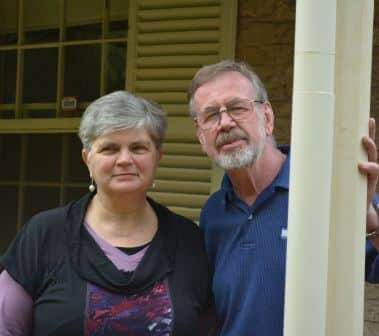
An Adelaide doctor helps young women without Medicare see their pregnancies through

Nitin and Rekha (names changed) are a young couple who came to Australia to make a better life. A few months after arriving Rekha realised that she was expecting their first child. Her joy however was short lived when after her initial visit to the Women’s and Children’s Hospital, the couple was told because they were on the Skilled Migrant Visa and did not have the medical insurance to cover the cost of the pregnancy, they ought to abort the child or face a hefty medical bill.
The couple was shocked and confused. $17000 was beyond their capacity, as well as the costs of setting up for a child. With heavy hearts and under great pressure they went to the abortion clinic in Woodville. As luck would have it, they were approached by a Good Samaritan who asked if there was anything she could do to help them save the baby.
“Mothers without Medicare” is this service, and their lives were changed.
Today Nitin and Rekha have a lovely healthy child and are thankful to the Good Samaritan who came to their rescue. They have since paid back this loan to enable another couple to benefit.
This is the situation facing many recent migrants to Australia, especially many families from India and those on Skilled Migration Visa. Often Health Insurance will not cover pregnancy. The average cost of delivery can be from $7500 or if complicated up to $20,000 and higher. Couples, confused and under pressure, are often directed to the abortion clinic. It will cost $2800, still a large sum, but much less than the cost of delivery and associated ongoing cost of child rearing.
“This is a scandal,” says Adelaide GP Dr. Antonia Turnbull. “To say to someone in Australia that we cannot help you have your baby, is a scandal”.
After receiving many new migrants in such a situation, Dr Turnbull decided to spearhead a campaign in South Australia to help women without Medicare have their child.
“Pregnancy is not a disease as the insurance companies call it, and it may seem like a disaster but people simply need support.”
For many young couples in a new country without the support networks of home, an unplanned pregnancy can be a confusing and very daunting thing.
Dr. Turnbull has seen 20 couples in Adelaide and assisted them through the group Mothers Without Medicare. It is neither a formal organisation nor does she have the time to publicise it, but she sees it as an extremely important service.
“I just respond to situations. Couples are sent to me as they know I try to help and so we do”.
The original idea was to set up a fund as a loan system.
“The money is not for us to keep,” she says. “It is for us to move around where it is needed. These couples can’t pay now but they will be able to in the future. When they can, they can return the money and help fund another life and another couple’s future. It’s a wonderful thing”
Her first case was very touching.
“A young Chinese couple came to me. they were both on Student Visas. Their health insurance did not cover pregnancy. They could not go back to China. They were advised to abort but didn’t want to, and had very little money. Eventually we found a wealthy donor who funded the birth. That child is now 20, a beautiful young woman, all because of that donor”.
It is a powerful story, one that Dr. Turnbull relates with a tear in her eye, obviously inspired by the gift of a life which continues to touch people on and on.
“It makes me angry that in this lucky country, we are saying they cannot have a child. This gave me the energy to do something about it”.
Dr. Turnbull approached Birthline Pregnancy Support Inc. who agreed to the plan and accordingly opened an appeal account with ANZ Bank.
Many people have been happy to help Mothers Without Medicare. Dr. Turnbull’s hope is that more people will donate the cost of a coffee per week to help people give birth.
The loans would cover the normal costs for these couples:
* private medibank insurance for the baby for a year about $1,700.
* a midwife to care for the mother and child through the ante-natal period, for the delivery and for care up to six weeks postpartum $3,000.
* the hospital cost of the delivery which if simple costs $7,500 and if complicated could be as much as $20,000.
“The basic idea is be part of the solution: don’t allow our country to say to anyone you can’t afford to have a child,” says Dr. Turnbull.
Word is spread by emails to friends and groups explaining to them the idea of raising funds for a good cause. Other than some of her doctor friends, Dr. Turnbull is also assisted by her husband Bob Turnbull who actively shares the responsibility to help Mothers Without Medicare.
One of the major issues Dr Turnbull sees in treating migrant communities is that they often hide their biggest struggles from their closest networks. There is a perception of shame and embarrassment especially in financial hardship. This makes it all doubly worse for people who are in this state of confusion.
“They don’t feel like they can get help or support from their community in fact they just cut themselves off in pain to save face and the social stigma attached to the issue,” Dr. Turnbull said.
“At the moment the challenge is to have more and more doctors come on board to say we shall help mothers without Medicare and give them the best treatment and charge them smaller amounts. We also need to get more donors on board”.
She adds, “We also want to open up the issue and talk to community networks like religious organisations the gurudwaras, churches, temples and mosques. We need to respond as a whole community: it is not just the responsibility of that community, it is all society that needs to help out, and we can”.
Dr Turnbull is very keen to talk to these communities and groups about the issue and tell them how to set up a fund and what services are available to them.
This is not just about abortion but about supporting people. It is another symptomatic issue stemming from the separation of communities. The issues we face are the same across the board, for established Australians and new migrants. Cross-cultural friendships and networks need to be encouraged and actually are essential.
To support MOTHERS WITHOUT MEDICARE contact:
Dr Toni Turnbull, Marden Medical Clinic, Marden SA 5070.
Or
Birth line Pregnancy Support Inc.
412 Magill Rd Kensington Gardens SA 5068
(08) 8331 1223
(ABN 58 798 576 758)
Cheques can be made payable to the Birthline Appeal fund or directly to ANZ Bank (BSB 015-310, Account no. 6360-23558. Any amount above $2.00 is tax deductible).
Horror in the Himalayas
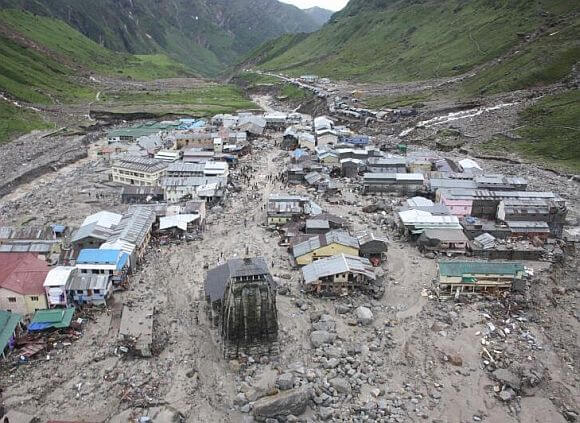
The state of Uttarakhand reels beneath nature’s flood fury

Mayhem! That’s the only way to describe the current situation in Uttarakhand, over a fortnight since the devastating floods that overwhelmed this picturesque state, leaving behind unimaginable wreckage and destruction.
Jewel in the mountains
Uttarakhand, formerly known as Uttaranchal, is situated in the northern part of India, and is a renowned place of pilgrimage for Hindus with an abundance of temples and holy sites. It is also a popular tourist destination, thanks to its breathtaking natural beauty and its location at the foot of the Bhabhar and the Terai in the mighty Himalayas. It was created in November 2000 as the 27th state of the Republic of India, from the Himalayan and adjoining northwestern districts of Uttar Pradesh. Sharing borders with Tibet, Nepal, Uttar Pradesh and Himachal Pradesh, Uttarakhand consists of the Garhwal and Kumaon divisions with 13 districts. Dehradun is its provisional capital.
According to the 2011 census of India, Uttarakhand has a population of 10,116,752, with more than 88% following Hinduism, and Muslims making up the largest minority. Sikhs, Christians, Buddhists, and Jains are the other major religions.
Two of the most important rivers in Hinduism originate in the region, the Ganga at Gangotri and the Yamuna at Yamunotri. These two, along with Badrinath and Kedarnath form the Chota Char Dham, a holy pilgrimage for the Hindus. The state hosts the Bengal tiger in Jim Corbett National Park, the oldest national park of the Indian subcontinent. The Valley of Flowers, a UNESCO World Heritage Site located here, is known for the variety and rarity of the flowers and plants found there. Besides this, Govindghat in Uttarakhand is the commencement point of the trek to Hemkund Sahib, the holy shrine of the Sikhs. Kedarnath is a revered pilgrimage site for millions of Hindus, situated at an altitude of 3,586 metres in the lap of the majestic mountain peaks and near the head of the Mandakini river. It can be reached after a steep 14-km-long trek.
Natural disaster
Incessant and intense rains hit the hill state over three days from June 14, triggering flash floods and landslides, leading to hundreds of deaths and resulting in thousands more missing. Though over 100,000 people have been evacuated so far, at the time of going to press, hundreds were still stranded at various points across the state. At last count, approximately 800 people were dead and over 3,000 missing, but these were just estimated based on what evacuated people recounted to the rescue teams and to government officials.
Major pilgrimage centres have also suffered terrible damage. Pilgrimages to places like Kedarnath and Badrinath, home to among the most revered Hindu shrines, have been all but washed away. Entire villages and small towns have simply disappeared in the flood waters, with bridges and the roads swept away, cutting off large areas, as well as homes, hotels and businesses. Power lines have been damaged and the loss of life is tragically high. To make things worse, continuous rain and foggy conditions seriously hampered rescue operations in the first week of the tragedy.
Many people had fallen ill because of starvation and staying out in the open in the freezing cold for long hours, so doctors were air-dropped in strategic locations. It is reported that in one day, 700 people were given medicines for various ailments. Personnel of the Armed Forces Medical Services are working in the state with 29 teams deployed around Kedarnath while an emergency centre has been set up at Joshimath, an official release said.
The National Disaster Management Authority (NDMA) declared the Uttarakhand devastation a “severe natural disaster” and requested leaders not to politicise the issue. Inspector Gopal Singh Meena from the NDMA has worked in some tough environments whenever natural calamity has struck, but he said he has never seen such utter devastation. The NDMA team that was air-dropped at Guptkashi, which is located between Kedarnath and Rudraprayag, saw a ghost town with structures smashed to the ground like match boxes by the fury of the flood waters, and twisted bodies of the old and young, men and women simply strewn around, revealed Meena.
Meena also said many people took shelter in the jungles when the flood water inundated the areas. “There were wailing women and children in hysterical condition. They were there without food and water. They were totally in panic. They were crying for help. We faced a lot of problems, as we had no way to reach them. We then made ropeways and then many of our men carried them on their backs. Our first priority was to reach the women, children and the old,” Meena added.
“Here (Gaurikund), people had taken shelter in jungles. Many just couldn’t walk. Their feet were swollen. They were totally famished and in urgent need of food and water,” said Meena, whose team members were the ones who rescued and evacuated hundreds of people stuck in the entire stretch of Kedarnath valley.
One of the casualties of the rescue operations that shocked the nation was the crashing of an Indian Air Force rescue plane on June 25. The crash claimed the lives of nine personnel of NDRF, six of the Indo-Tibetan Border Police and five of the Indian Air Force. Among the dead was Wing Commander Darryl Castelino, who was piloting the ill-fated helicopter when it crashed. He was laid to rest on June 30 in Mumbai, with full military honours.
Stories have also been filtering out of looting and rape. Says Anupam Sharma who grew up in most of the areas in which the floods unleashed their fury, “My broken heart skips a beat every time one hears about the victims being looted, helpless female pilgrims awaiting rescue being raped, swami con men conning at the worst time, kids who are orphaned being saved for the child labour market – the list goes on. All in the most holiest of areas where even the worst evil goes for penance!” He adds, “Then there is the plight of the survivors having to take clothes off dead bodies to save themselves, the chopper crash, the noble and honest defense personnel, and some of the local administration. For me, it is a big churning of emotions as each time I hear the name of a place in Uttarakhand, I am taken back to the wonderful memories of childhood.” A poignant and tragic feeling indeed!
Forewarned and ignored
What has come to light in recent days is that an alert was sent to the Uttarakhand government about the rainfall activity for 48 hours before the disastrous rains started around June 14, India Meteorological Department official N Doraiswamy said recently. An IMD official based at Dehradun reiterated that warnings of heavy rains and landslide were sent to the state government.
However, the Congress gave a clean chit to Uttarakhand Chief Minister Vijay Bahuguna, who has been facing flak for “ignoring” the advance warnings of very heavy rains by the meteorological department, saying it was satisfied with the state government’s rescue and relief work. The Met Office claimed that the Char Dham Yatra could have been halted in time, saving hundreds of lives. “The reasons (behind the tragedy) will be examined. The focus right now should be on evacuating stranded people, ensuring relief and rehabilitation and checking the spread of epidemic,” said Maken, spokesman from the Congress. Maken said thousands of people have been left homeless and their houses uprooted. “We should rise above partisan politics and serve the people,” he added.
The hand of God?
But for the locals, the damage and devastation is the only thing they are talking about. The Haridwar ghats, as well as the temples are empty. The rains and landslides are God’s way of teaching mankind a lesson, they say. “Rampant illegal construction on the banks of the river, corruption and looting the pilgrims have led to this. God was angry. It is his way. Otherwise, why would thousands of people who had come to pray at these shrines perish like this?” said Man Singh Upreti of Dehradun. “This is god’s way to teach people a lesson,” added the 70-year-old.
Others cite different reasons for the disaster. Neighbouring Madhya Pradesh Chief Minister Shivraj Singh Chauhan said the central government should declare a national environment policy to stop illegal construction and prevent a disaster like the one that wrecked Uttarakhand. Chauhan also asked for the Uttarakhand flash floods to be declared a national calamity. “When you tamper with nature, then nature will unleash its fury on you,” Chauhan said. Talking of the mushrooming of several buildings near rivers in Uttarakhand, he said, “Illegal construction and corruption go hand in hand”. Over 5,000 people from Madhya Pradesh were rescued and have returned home by helicopters, buses and trains. Chauhan declared a compensation package of Rs.2 lakh for the next of kin of those who died in the floods, and Rs.5 lakh for those who have lost their entire family.
Saviours of survivors
On hearing of the disaster, help poured into Uttarakhand from all over the country. Many religious and social organisation rose to the occasion, with one of them distributing thousands of food packets and even offering to conduct the last rites of those who died at Kedarnath. As the news of the devastation and deluge started pouring in, many religious and social organisations came out to extend a helping hand to those anguished people looking for their loved ones. From Yoga Guru Ramdev to All World Gayatri Pariwar (AWGP) to Nirmal Ashram – all extended help of their volunteers and their resources.
The All World Gayatri Pariwar (AWGP), whose sprawling complex, Shantikunj, is housing many of the rescued people, is being used as a relief camp by many states. At Rishikesh, many of these institutions are offering free food, water, medicines. And some are not charging money for those getting photostat copies of photographs of their dear ones.
The Gayatri Pariwar also distributed food packets. “Of the total 10,000 food packets that were air-dropped, most were sent by Shanti Kunj,” an official of Shantikunj said. And international aid agencies have also come to the aid of the flood-devastated state. Among these are the ‘Waste Warriors,’ headed by Briton Jodie Underhill and a band of volunteers. Known as the ‘garbage girl’ of the mountains, she has embarked on the mammoth task of cleaning up after the disaster. “When I learnt about the disaster, I decided to adopt these hills as part of our next clean-up campaign,” Underhill said. “I was saddened to see how dirty it was everywhere. There is huge human waste. For the local civic authorities, rescuing the people is the first priority. But we will take care of it (removing garbage),” she added. Underhill has also come to the rescue of mules and horses that have been trapped by the flood waters in Uttarakhand’s Kedarnath-Badrinath axis.
But it’s time to wake up India, said Underhill. She has also come to the rescue of mules and horses that have been trapped by the flood waters in Uttarakhand’s Kedarnath-Badrinath axis.
Search continues
For hundreds, the search for missing family members continues unabated. Photographs of loved ones taken on happier, merrier occasions, showing a family get-together or celebrations now adorn the walls at relief camps, railway stations and bus stands. For the many hundreds of kin, photographs are the one way to trace their kin still missing even after a fortnight-long rescue and evacuation work carried out in flood-ravaged Uttarakhand.
At the Haridwar railway station, relief camps have been set up by many state governments whose people had come to Uttarakhand for the Char Dham yatra when the rain-flood tragedy struck. At the Shanti Kunj complex, headquarters of the spiritual and social organisation of All World Gayatri Pariwar (AWGP), three states – Madhya Pradesh, Gujarat and Odisha – have set up relief camps and many of their rescued people are staying in its sprawling complex.
The photo of an elderly woman, sitting with a shy smile alongside her husband, or a family of four, who were photographed at a family function, or a mug size photo of a 40-year-old man – they all tell the story of families torn apart by a force greater than mankind. All of them are missing. For the anguished families, it has been a hellish 15 days.
Fatigued and looking fragile was Rajkumar Singh from Rajasthan, searching for his 50-year-old brother, sister-in-law and their three children. Sneha Sharma, 21, desperately searched in hospitals, police stations and relief camps for her parents, two brothers and two sisters who had gone to Kedarnath shrine. Carrying photographs of her family, Sharma met an army official, who after seeing her 17-year old sister Jyoti’s photograph, told her that they have cremated her. “He told me that they found her body and cremated her. I don’t know about the rest of the family members. No one is able to help me out. Where should I go, what should I do,” she wailed. She said if she had been the only survivor in her family she would have killed herself. But she has to think of a younger sister who is in college.
Similarly, Subhash Chandra Sharma from Ghaziabad was desperately searching for his nephew, his wife and their three children. When he failed to get any news, he registered a missing persons’ report.
Laxmikant Sharma, a minister in Madhya Pradesh Chief Minister Shivraj Singh Chauhan’s cabinet, said they have heard many a horror story of people being trapped and being swept away in the waters. “A family saw two of its members swept away by the water. They watched in horror. They were mute spectators,” Sharma said.
But there were some stories of hope too. “We met three boys, who were part of a large group of 18 people, coming back alive. They told us that when the first floor of the lodge where they were staying was filled up with water, they went to the second floor. But when the second floor too filled up, they held on to the window grills and saved their lives. “They were inconsolable. It was difficult for us to make them understand. Their entire families have died,” said Sharma, who leads the team of over 50 state officials tracking and rescuing people. He said they had also come across people who walked for 2-3 days, reaching a relief camp in Rishikesh or were picked up on their way from the main road. “Many people have lost their clothes, their footwear and their vehicles. Apart from offering them food, water and medicines, we offer them chappals, soap, toothpaste and tooth brush,” Sharma stated.
The scene is the same at the Rishikesh too. Large posters of loved ones can be seen from far off. The Rishikesh bus stop does not look like a normal interstate bus stand; as one side of the bus stop wall has been taken over by photographs and posters, the other side has been taken over by the police and by voluntary and religious groups offering people free food, water and medicines.
Station Officer of Rishikesh Pankaj Pokhiriyal said so far they have registered 794 missing cases. “We are giving people a simple form and asking them to attach photos too,” Pokhriyal said. Ten years in service, the police officer from Tehri Garhwal said he has never ever seen such devastation. “I have been born here and spent my entire life. But have never seen such a massive destruction where hundreds have died and hundreds are missing. I think it’s God’s way of punishing us humans. What else can we call it,’ he said.
Blow to tourism
The devastating floods have strangled the booming tourist industry too, and experts say recovery will take a long time. Mass cancellations by tourists and pilgrim groups have taken place in Uttarakhand, affecting even places that did not experience what has turned out to be one of the worst ever natural disasters in the state.The cancellations extend to the months of July, August and September.
“The impact of the floods is being felt by hill stations like Mussoorie, Nainital, Jim Corbett, Dehradun, Lansdowne and Kasauni,” said Richa Goyal Sikri, director of STIC Travel Group. “Travellers are reconsidering their plans due to exaggerated reports of the bad weather and road conditions,” she said.
The cancellation rates are touching an alarming 50 percent, a huge blow to a region where large numbers live on tourism.
According to one business study, the loss to the tourism industry on account of the floods is estimated at Rs.12,000 crores. Uttarakhand ranks eighth among all states on the tourism map.
Major pilgrimage centres have also suffered terrible damage and pilgrimages to places like Kedarnath and Badrinath, home to among the most revered Hindu shrines, are unlikely for months, if not a few years.
Industry insiders say the state will be able to bounce back by the next tourism season only if all government departments and bodies in the state work in coordination.
“The government says it will take three years for the state to get back to normalcy but the duration will be longer seeing the loss of infrastructure,” warned George Kutty of the Travel Agents Association of India.
Financial aid
Chief Minister Vijay Bahuguna has announced the first round of measures, mostly financial, to deal with the post-disaster situation in the state. He has spelled out enhanced rates of compensation, which make sense in the case of lives lost, those injured, and property damaged, but are merely symbolic in the case of circumstances such as farm land being washed away. Rs 10 lakh, each, will be paid to the families of those killed in the IAF chopper crash, and special pensions and other benefits to the deceased members of the Uttarakhand police.
Help has been offered by other states as well, with the Andhra Pradesh government announcing Rs.50 crore for relief works and for construction of four pilgrim amenities centres. Chief Minister N. Kiran Kumar Reddy announced that Rs.10 crore would be given to Uttarakhand government for rescue and relief works. Another Rs.40 crore will be spent through Tirumala Tirupati Devasthanam (TTD) for construction of pilgrim amenities complexes, said a statement from the chief minister’s office.
Chief Minister Bahuguna said that children in areas hit by the floods would be given Rs.500 and college students Rs.1,000 each as intermediate relief.
Rescue and rehabilitation
The Uttarakhand government has now set up a reconstruction and rehabilitation authority to oversee relief work in the state, while Chief Minister Bahuguna announced setting up of the Uttarakhand Rehabilitation and Reconstruction Authority. In a far-reaching decision, the chief minister said no permission would be given henceforth for construction along riverbanks. Thousands of dwellings and buildings along riverbanks have been washed away or destroyed in the floods. The chief minister announced that water and power bills for flood-affected people would be waived. He also said that kin of all missing people should report to the authorities, so that compensation can be given to them on the basis of an affidavit.
As the rescue operations continue, the authorities are now confronted with the mammoth task of clearing up the debris, searching for bodies and disposing them of properly. The chief minister announced that a team of 200 people, including officials from the police, health, animal husbandry experts and sanitation, are being rushed to Kedarnath to collect DNA samples of bodies. Various state governments have been asked to verify the list of missing people and if they are not traced in a month, they will be declared dead.
The National Disaster Response Force (NDRF) has sent a team to the state for locating bodies under the debris and to deal with decomposing corpses of humans and animals, which could pose a severe health hazard and could possibly cause an epidemic. To hasten the process, the state government has sought earth-excavating machines from the central government. It has also sought 100 tonnes of bleaching powder to help dispose of the carcasses of animals killed.
Progress planning
Secretary (Water Resources) S.K. Sarkar said recently that States should adopt and implement a model Flood Plain Zoning Bill that was first circulated to them 38 years ago, as this would minimise losses like those caused in Uttarakhand. “Mitigation of devastation caused by floods, as we have seen in Uttarakhand, is possible if the bill is adopted and implemented by the states,” he said, adding that the bill will regulate land use in flood plains and contain flood damage.
The bill provides for flood-plain zoning authorities, delineation of flood-plain areas, prohibiting the use of the flood plains and removing obstructions to ensure the free flow of water. Sarkar said the states have reservations on the bill because of population density pressure and difficulties in relocating people living in flood plain areas. Ministry officials said the bill calls for zoning rivers in a way that loss of life and destruction to buildings are prevented or minimised in case of floods. They said that the bill was aimed at preventing construction of residential areas in vulnerable zones and allowing parks, playgrounds or fields to come up in the low lying areas. The bill has been drafted by the Central Water Commission (CWC). Ministry officials said that the bill prioritises different types of buildings and utility services in view of the likely damage they may suffer in case of floods. They said that defence installations, industries and public utilities, including airports and railway stations, should be located in areas that were above the highest flood level in the past several decades. The officials said that they have been pursuing the model bill with the states and there was a need to not only adopt the bill but implement it, as there were increasing intrusions into the flood plains. They also said any buildings constructed in low lying areas needed “special type of construction.”
Commentary
Gurinder Kaur is on the board of Voluntary Action Network India and, having worked for Oxfam, she has first hand experience in disaster preparedness and relief and rehabilitation. Ms Kaur comments, “The Uttarakhand tragedy needs to be understood in its entirety. Natural river courses and other drains seldom respect human-made concrete, stone or tar structures. On the contrary, it must be the other way about. We must keep habitation out of the expected and known ways of the occurrence of natural phenomena. In the case of the Uttarakhand disaster, we now have all the analysis and narratives about what happened, what really could have been done before, during and after the mélange of rain, flood and mud overtook the collective lives of thousands of people.
We know that scores of hotels and other buildings had been built in violation right on the flood courses of rivers rapidly flowing across steep gradients. We know that the timber mafia, the stone mafia and the construction mafia made the region far more vulnerable by taking away humungous quantities of wood, stone, sand and other materials. We also know now that greedy tour operators colluded with equally greedy hotel owners to disregard the actual carrying capacity of the state’s roads, transportation and dwelling units.
Most astonishingly, we know that advance weather forecasts and flood and landslide warnings were issued by the meteorology department. Officials, leaders and other responsible people were informed about the prediction of widespread heavy rain. Alerts were issued for halting the yatras to the Chaar Dhams for four days and for moving the pilgrims already in the Chaar Dhams to safer locations. Did these warnings fall on deaf ears?
Although it would seem that such was the case, we know now that the warnings were received and read. What then was the matter? The officials and the others responsible for responding to disasters and in charge of protecting and saving lives knew there was a drill to be followed. But it is evident they did not know when or how to kick it in.
Inadequate training or the lack of it may turn out to be the big gaping hole that let slip a preventive response. It was widely believed that such warnings of heavy rain were routine and nothing really happened most of the time to cause panic.
Oddly and simply enough it is all about training. Each and every resident of Uttarakhand, permanent or transient, official or ordinary citizen, must be exposed to appropriate and adequate disaster preparedness and response training. Training must be so good that even if woken from sleep, a response should begin at once.
In a disaster prone and ecologically fragile habitat, expect the unexpected to happen. Community level preparedness and response training need to become the backbone of a statewide disaster management strategy. For the governing apparatus, repeated trainings – at least three a year – must be mandatory. Disaster preparedness and response must permeate our very consciousness.”
Also commenting on the situation, a powerful editorial by Satish Sharma published in the Garhwal Post on June 18 states “the problem lies with the lack of a comprehensive development policy that focuses on what is sustainable as against mere tokenism… It is time to ask whether it is better to develop well planned urban settlements than to try and support scattered habitations in the fragile mountains of Uttarakhand. The people are already voting with their feet, taking the first opportunity to get out of the harsh and increasingly difficult life in the hills. It is for the government to meet this challenge in either a positive manner, or waste funds and energy in the futile effort to shore up a collapsing way of life.
The hills can nurture only a limited number of people in the context of modern day lifestyle demands. Funds would be better utilised in developing the urban infrastructure for the people coming in anyway, rather than spending it on building that which will be destroyed in the next landslide, flood, cloudburst, etc.”
Satish Sharma in the Garhwal Post editorial of June 27 comments on the state’s post-disaster policy by saying, “the shape that Uttarakhand’s development has taken is the cumulative result of historical forces, political and economic aspirations, central and state policies, and the raw energy of the people trying to make a living. All of this needs to be reviewed to establish what the state wants to change and what it will stand by.” He further comments, “the tragedy was certainly ‘man-made’ in that the forces of nature were ignored in the rush for development. However, there is an extent to which the people of Uttarakhand need to be apologetic for the speedy and unplanned growth. After all, what is better? Youth involved in chaotic entrepreneurship; or jobless and Maoist fodder?”
The lucky streak

What happens when the lure of easy money becomes an insatiable and unstoppable desire for wealth, writes RANI JHALA

She stood beside the window and gazed out at the landscaped garden and colourful blooms. Serene and beautiful, it was the ideal location in which to sit and contemplate her life, meandering through the pathways that she had chosen, and to that all-crucial moment. Sanita was an addict and like all addicts she had remained in denial for over a decade. During that time she saw her marriage fall apart, her children lose faith and her friends disperse from her life. Of course, she regretted her every act and her every lie. She would always regret those, but despite the many losses she had brought about in her life, she had been unable to take control.
Then one day, feeling lost and desperate, she had stood at the edge of her fifth storey balcony and looked at the concreted ground below. It welcomed her, and it offered her a conclusion. Then just as she prepared herself for the jump, two questions arose within her: What were the odds that she might survive? And if she did, what were the odds that she would recover completely? Busy working out the odds, that decisive moment to jump passed, and Sanita realised that she really did not want to leave this earth, at least, not as a failure.
And for the first time in her entire life, she also admitted that she truly had a problem because even at the moment when she was ending her life, she was betting on the odds.
Carefully she had climbed back onto the balcony and, sitting down in an outdoor chair, she spent the next three hours contemplating on all that had happened. Like the pages of a book, she flipped through each and every moment of her life.
Her birth had been welcomed, her childhood had been happy, and her youth was joyous. Everything about that phase of her life was normal and beautiful.
At 21, Sanita married the man of her dreams. He was everything that she had wanted in a partner – handsome, funny and generous. Everyone loved him, even the kids in her family. They had a wonderful six months which she treasured even today. If one thing lacked in their lives, it was the freedom to spend what they wanted and the liberty to stay where they liked. Financially they were comfortable, but not rich. With both of them working full-time they had managed to buy a lovely home, small but quaint and close to her family.
Sanita had always seen her mother dependant on her father for everything. He made all the decisions, and whenever there was budgeting to be done, it was always her mother who made the sacrifices. While Sanita and her husband combined their income, she maintained the liberty of having her own account and she retained the freedom to shop as she wanted. One by one, she had decorated each room in their new home and there had been just two more rooms to go. One of them was a nursery.
In the seventh month of their marriage, Sanita found out that she was pregnant. The initial joy was soon overridden by their financial worry. She would have to give up work and the moment she did that, they would have to sell their home. She was not prepared to make that sacrifice.
She kept the pregnancy a secret from her husband for a week, while she debated on her action. At the end of that week she had come to a decision. The baby must go. Nothing was ready for it. She and her husband had planned a world trip which would have to have been put on hold. She had also just bought her first car. It would have to be resold. They would not be able to educate the child in a private school, nor offer it all the luxuries they had planned for it.
On the morning of the seventh day, she gave her husband the news. He was ecstatic, but that euphoria lasted just a few moments before his countenance turned to one of worry. His look gave her the courage to give him her second piece of news. This she relayed as a decision. They would not be keeping this baby as they were both young, and could have another baby in a few years as planned. While her husband did not verbally agree, he did not disagree either. And the relief on his face convinced Sanita that she had taken the right decision.
A week later, their life had returned to normal. There was no baby and there was no conversation about it. They worked each week and saved each month. A year later they had cleared the car loan. The second year they had saved enough to go on their trip. By the third year, they had sold their home and bought a larger one. This increased mortgage meant that they had to postpose having a child for another couple of years.
As she turned 31, they were in a position to think about starting a family, but it still meant that Sanita would have to return to work, leaving their baby in childcare. It was this plan that unnerved her. It was also at this time that she befriended a woman at her new job. Nita was a genius at making money. She called it a lucky streak, and promised that she could solve Sanita’s problems too.
And she was right. On their first outing together, Sanita had made $50,000. Money that would make her year-long maternity leave, worry-free. On their seconding outing just three weeks later, she made another $25,000. The outings became a regular ‘all girls’ event. A year later she fell pregnant again. Two years later she had her second child. Through it all she successfully maintained her two lives.
Her husband never once questioned the ‘bonuses’ that she was frequently receiving, but still she set up another secret bank account and began depositing the funds in there. Not once did her husband delve in the details, and not once did he pick up that she had become a gambler.
The lucky streak lasted nearly ten years, during which she moved from the racing circuit to casinos, and was now well and truly hooked onto internet gambling. They were getting so far ahead in their payments that her husband even spoke of early retirement.
Then just as if the skies had moved and the stars had shifted, that lucky streak ended. In the hope of a recovery she began to draw money from her secret stash. When that was exhausted, she began drawing on their joint account. That too was emptied. Still hopeful, Sanita began using the mortgage payments. It was hard work juggling money around, but she managed for another nine months. She increased the home loan by forging her husband’s signature. She would have been able to get away with it again, had the kids not overheard a call to the bank and repeated it to ‘Daddy’ that evening. By the time Sanita’s husband returned from work the next day, he had found out everything. Every desperate act and every fraudulent deed!
When he did not express either anger or horror, and instead blamed himself for not being actively involved in the financial aspects of their life, Sanita knew the meaning of shame. When the bank foreclosed on their loan, she experienced the meaning of pain. And when her children told her that they hated her for making them lose their home, she knew the meaning of degradation.
They moved into a small apartment and the children even had to move schools. Sanita too had to change her job, to a non-financial institution. Through it all her husband blamed only himself. Had he blamed her, life would have been bearable. Had he yelled, her days would have been tolerable and had he told her that he hated her, her marriage would have been workable.
He did none of these; instead he found a second job and she had sought an outlet on the balcony. It was at the balcony that she had that life-changing moment.
She admitted herself into the clinic in which she now resided. She declared herself as a gambler and she promised her kids that she would never let them down again.
The recovery would be long, the journey hard and the experience unpleasant, but she would succeed because the one person who should have walked away, who was justified to leave her, never did.