


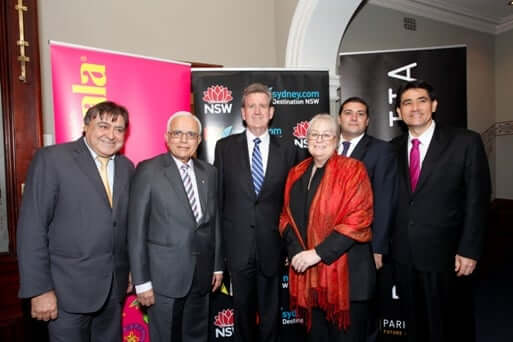
So the rumours are true! Shahrukh Khan, Bollywood’s most loved personality, is due to come to our shores for Parramasala.
There was much buzz about this, with the Indian Link office taking a few calls by fans who wanted to find out if this was true. The authorities when asked until last week were tight-lipped, giving us the feel that something was abuzz.
Apparently, SRK was asked, and the Sydney authorities were waiting for him to get back to them.
So, get set for SRK, Sydney!
The mighty King Khan will be here for Parramasala 4-7 October, the Premier of NSW Barry O’Farrell announced today.
He will headline a two-hour Indian variety show of music, dance and comedy – Temptation Reloaded as part of the Festival.
Parramasala is NSW’s arts and culture festival centred around Sydney’s South Asian population which was launched two years ago. It includes free concerts and performances, exhibitions; food and handicrafts markets, and a communities stage.
While it started off with much promise, last year’s event was decidedly lacklustre, and no doubt the message was brought home loud and clear that a ‘celebrity’ was needed to infuse more enthusiasm.
Well, who better than SRK to bring in the bums on seats!
Mr O’Farrell observed at the announcement on July 31, “Shahrukh Khan’s show will attract an audience not only of Indian origin, but will also appeal to his fans overseas including Fiji, Singapore, Indonesia and Malaysia. In addition to international visitors, we are also expecting SRK and the Temptation Reloaded show to attract more than 5,000 people from Sydney and interstate”.
“Temptation Reloaded offers a unique cultural experience and it is a great event for Western Sydney with many hotels and restaurants expected to reap the tourism rewards,” Mr O’Farrell added.
SRK’s popularity is not lost on the Premier, a twitter fan himself, who could not help noting that “Shahrukh Khan has more than four million Twitter followers and is one of the most popular and influential Bollywood actors”.
SRK will no doubt be a coup for Dr Hari Harinath, Parramasala Chairman, who has been looking at ways to make the event more profitable since taking over last year.
Temptations Reloaded will be held at Allphones Arena Homebush on Monday 7 October.
For details visit website http://temptationreloaded.stealthtraffic.com/
SRK for Sydney!
MIQ focuses on brains, beauty, not body

The quest for Miss/Mrs India and Mr Melbourne ends with deserving winners chosen from tough competition, writes SIMMI BAKSHI

Fuelled by ethnic pride in their Indian roots and fired up by Western sensibilities, the contestants at the recently held Miss/Mrs India quest had everything going for them, and they knew it! Confidence was at a high as the participants sashayed and swirled on stage in gowns and sarees, with no sight or need of revealing swimsuits. The emphasis was on beauty, brains and talent, not on body measurements. Curvaceous was the buzzword with no stringent requirements of height or weight. It was a beauty pageant held to celebrate Indian women, not to conform to global standards. Complementing the women were a handful of men who went on to contest for the title of Mr Melbourne.

Chips were already stacked in the favour of Rashi Kapoor and Puneet Gulati, who won the coveted title of Miss India Global and Mr Melbourne respectively. Both stood out for their talent, confidence and ability to interact with the audience and judges without saying a word. When provided with an opportunity to voice their thoughts, they did not disappoint there either. Other notable performances were from young Dhananjay Kapoor who escorted the ladies on stage in style, and then went on to compete with aplomb against men much older than him. Noticeable among the men was Vikram Jeet Dhunna, while among the ladies, slim and stately Bindy Rayat was definitely model material, and talented Aditi Sachdeva was strikingly unconventional.
What the audience saw at Thornbury Theatre on the final evening was the culmination of weeks of rehearsals – photo shoots, grooming sessions and the inevitable angst. Many titles like Congeniality, Photogenic, Catwalk, Glamour, Resort Wear Queen, among others were presented in-between the rounds. A panel of judges was invited to score the finalists in a quest for the best. Among the judges were writer and filmmaker Sandeep Raj, Mrs Savita Sonia from SBS Hindi, Mrs Manpreet Singh from SBS Punjabi, Priyanka Dewan – Mrs Intelligent Universe and Mrs India Universe 2012, Deepti Sharma – Ms India Earth and Ms Earth International 2012, Mrs Krishna Arora OAM and Mrs Preeti Jabbal from Indian Link. The final word was from the Director of Ms India Quest Anamika Srivastava, and her husband who also doubled up as the Master of Ceremony for the evening.
In a deviation from the norm, the questions asked at the contest were not provided by all the judges, however, they were a decent mix of the trite, tested, humorous and thought-provoking. Some did pose a challenge to the contestants, while others added entertainment value. The rounds that followed the personality segment showcased traditional wear, western wear and some very glamorous gowns. After much deliberations and some delay, the winners were finally announced. Among the main winners was Miss Sonia Cheema, 1st runner up of the Miss India Category who will be representing India at the Miss International pageant at Minnesota. Mrs Sharu Suvarna who won the Mrs Category will be representing India in the Mrs Universe pageant in Aruba, South America. The 1st runner up in the Mrs Category was Divya Bakshi, and in the Mr Melbourne category was Param Grewal.
Towards the end of a very long drawn out evening, an emotional Anamika Srivastava revisited her own days as finalist of the Mrs India Quest in 2011, while addressing and encouraging the participants. She also scripted a rather lengthy play that was part of the entertainment for the night. Her list of people to thank included the Australasian Centre for Human Rights and Health (ACHRH) as a gold sponsor, Dr Manjula O’Connor, SWC Security, E-Aussie, Smaya Ready to Wear, Karismatik Beauty, Leiela, George, Gautam Garg, Intimo, Pankaj Roy, Mowgli Restaurant, Jamee Lighting and RTR Productions, all of whom according to her, had supported MIQ tremendously. The evening ended amidst congratulatory handshakes, back-slapping and hugs from friends and family who had waited patiently through the whole event. As is the case with pageants there were plenty of surprises and some disappointments, but lots to cheer.
First ever Indian-origin candidate for federal seat
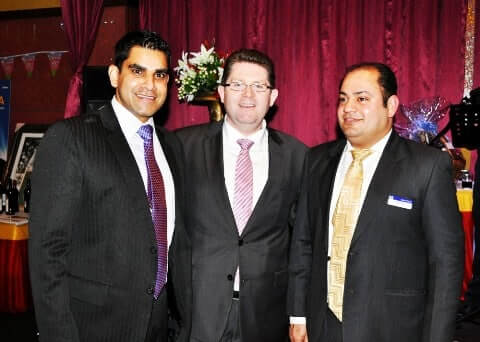
Jag Chugha from the Liberal party is dedicated to giving back to the community

A campaign launch dinner was held recently at Café Saffron Restaurant in South Morang, for the Liberal Party campaign in Scullin. The Liberal Party candidate for Scullin is Jag Chugha, the first Australian of Indian heritage to stand for a federal seat. Jag is a practising lawyer in the corporate sector. He has lived in Thomastown most of his life and attended Thomastown Meadows Primary School and Merrilands Secondary College. Jag completed his Master of Laws (LLM) from University of Melbourne and a LLB / BCom (Accounting) from Bond University. He is married to Kiran, and has two young sons.
Jag wants to give back to the community by helping reduce cost of living pressures, supporting small business and improving local infrastructure, transport and education.
Scullin covers 169 sq kms generally north of the Metropolitan Ring Road on the northern fringe of the Melbourne metropolitan area. It includes the suburbs of Thomastown, Lalor, Epping, Mill Park, Plenty, Diamond Creek, Hurstbridge and parts of Greensborough. Scullin has been a Labor seat since it was created in 1969.The retiring Labor MP is Harry Jenkins Jnr, who has represented this seat since succeeding his father in1986. Harry Jenkins Jnr is now retiring, and the Labor candidate for Scullin will be Andrew Giles, also a lawyer. Single mother and small business owner Rose Ljubicic will contest against them as a Green’s candidate.
During the campaign launch event, Jag received encouragement from various Liberal party leaders, individuals, businesses and community organisations. Liberal’s Michael Kroger was the main speaker for the event. Other speakers on the night were Senator Scott Ryan; Vasan Srinivasan, President – FIAV; Chairperson for Scullin Vincent Rizza; Chairperson for Jaga Jaga, Jacky Douglass; and Anthony Fernandez for Ivanhoe. Liberal candidate for Calwell, Dr Ali Khan; former Liberal candidates for Peter Chugha (Mill Park); and Goldy Brar (Bundoora); Scott Pearce and Shamla Ozturk, Liberal Party Administrative Committee were amongst those present to offer the campaign and Jag their support.
Award winners! 2013
NSW Premier’s Multicultural Media Awards 2013
Indian Link wins Best News Report | Best Online Publication of the Year | Best Image of the Year
[imagebrowser id=19]
For the love of lamb!
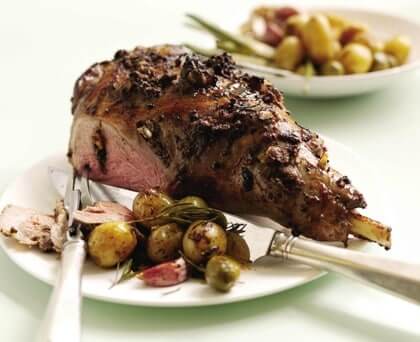
A variation of this much loved viand will chase away winter chills, writes DEBBIE FERNS

Winter is the time for hearty, wholesome, warming meals, especially when the sky is overcast and there’s an Arctic chill in the air. Now lamb is a meat for all seasons, but during winter, the traditional Aussie lamb roast, slow-cooked rack of lamb or lamb shanks in gravy are sure to chase away the cold. To get warmer, maybe you could try a lamb curry or lamb rogan josh. But for a change, how about moving further east and bringing a touch of Middle Eastern or Mediterranean warmth into your palate. You’ll find these recipes redolent of sunny skies and swaying palms. So enjoy getting warm this winter with these exotic lamb recipes.
Lamb Passanda
2kg boneless lamb, cubed
4 inch ginger piece
6-8 garlic cloves
4 large onions
4 tbsp cumin
4 tbsp coriander
1 tsp turmeric powder
4 cloves, crushed
2 tbsp oil
8 cardamoms, crushed
125gms blanched almonds
125 gms cashew nuts
800 mls coconut milk
2 cups water
Juice of 1 lemon
Salt and pepper to taste
In a large heavy bottomed casserole, fry the nuts in half the oil until they are brown. Blend in a food processor until finely chopped. Set aside. Roughly chop the ginger, garlic and onions, and puree in a blender. Next, brown the meat in batches in the same oil, adding more, if needed. Keep aside. Add the onion mix to the oil, frying on medium flame until it turns dark brown. Add all the spices and cook for two minutes. Add the lamb to the mix again, then add the coconut milk and water. Bring to the boil, then lower the heat and simmer for 90 minutes or until the meat is tender. Add the lemon and season to taste with salt and pepper. Serve with rice or naan.
Mediterranean Lamb
700gms lamb, cubed
3 tbsp oil
1 onion sliced
2 cloves garlic, crushed
1tsp tomato puree
700 mils meat stock
1 red pepper sliced
¼ finely chopped parsley
2 tbsp cake flour
1 lemon, juice and rind
100gms soft butter
3 tbsp mixed herbs – parsley, oregano, rosemary (dried or fresh)
1 medium sliced French loaf
Salt and ground black pepper to taste
Preheat the oven to 180 degrees and lightly grease an ovenproof casserole with a little butter. In a separate bowl, mix the butter with herbs, and spread it on one side of the bread slices. Set aside. Mix the cake flour with salt and pepper according to your taste. Next, heat oil in a saucepan and brown the meat cubes. Set aside. Saute onions and garlic in the same saucepan. Add meat, add cake flour, and stir. Add stock and tomato puree, and bring gently to a boil. Transfer the mix to the casserole, cover and bake for 15 minutes. Remove from the oven, add the juice of lemon, chopped red pepper and fresh parsley, mixing together lightly. Arrange the slices of bread on top of the mixture, herb side up and bake for 35-40 minutes until the meat is tender and bread topping is golden brown. Serve hot.
Easy Arni Souvlaki
1 leg of lamb cubed
½ cup olive oil
¼ cup vinegar
Juice of 1 lemon
2 tsp dried oregano
2 cloves garlic, crushed
3-4 bay leaves, cut into smaller pieces
Salt and pepper to taste
Place lamb in an earthenwear or glass dish. Add all the ingredients, mix well and cover. Leave to marinate for 12-24 hours, stirring meat occasionally. When ready to cook, thread lamb onto metal skewers and cook under a hot grill or over a glowing charcoal barbeque, turning and basting frequently with marinade juices. Grill for 15 minutes or until cooked to your taste.
Arabian rice with lamb
For the rice
250 gms basmati rice
6 cardamoms
1 medium stick cinnamon
10mls vinegar
1 tbsp rose water
1 tbsp saffron water
2 tsp fried onion
4 tsp roasted nuts
4 tsp fried raisins
For Arabic masala
1/2 tsp turmeric
3 tsp paprika powder
2 tsp peppercorn powder
4 tsp cumin powder
1 tsp grated nutmeg
1 tsp coriander powder
1 tsp cardamom powder
½ tsp clove powder
1 tbsp cinnamon powder
1 tsp chilli powder (optional)
For the lamb
4 lamb shanks
50 gms ghee or oil
2 tbsp Arabic masala
120 gms yellow lentils
2 tomatoes, cubed
1 red chilli
1 small onion
2 cloves garlic
Lamb stock
Boil the rice in water with the cardamom, cinnamon, salt and a little vinegar. When cooked, toss the rice with the saffron and rose waters, and add the fried onions, raisins and nuts, mixing gently and thoroughly.
Mix all the ingredients of the Arabic masala thoroughly, and keep aside. Any extra can be bottled for future use. Rub the lamb shanks with a mixture of the ghee, masala, salt and pepper. Coat the bottom of a deep bottomed oven proof casserole with the lentils, tomatoes, and chopped chilli, onion and garlic. Place the lamb shanks over the mix and add stock until the shanks are just covered. Bring the mixture to a boil. Cover and put the casserole in the oven to cook for about 11/2 – 2 hours at 180degrees. Cook until the meat is tender. When serving, place the lamb in a bed of warm rice and serve hot. This recipe can be prepared in a slow cooker too.
I-Day, style-day
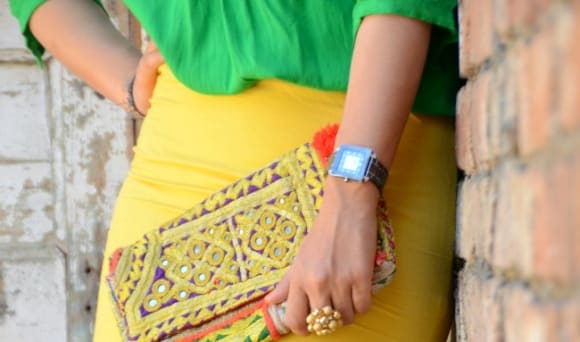
Celebrate Independence Day with your very own Indo Australian fusion creation

It is remarkable how we are influenced by the fashion and style of the country we live in, and how easily we adapt this into our own personal style over time. However, our cultural heritage is timeless and so very special to us that we look forward to celebrating festivals and occasions, and love sporting traditional outfits to these.
Typically, weekdays probably see you in pencil skirts and pantsuits busy at work, or tunics and leggings paired with boots rushing to finish numerous errands, before you pick up the kids from school.
Sometimes I’m sure that like me, you wait eagerly for that weekend soiree to dress up in a gorgeous suit or swish around in an exquisite sari! Don’t we all love an occasion to flaunt our splendid Indian wardrobe and jewellery to match!
Ever wondered how you’d successfully sport an Indo-Aussie fusion look that is effortlessly chic? So come a day like Independence Day, it’s your perfect chance to try a new look!
Contemporary Australian fashion is all about looking and feeling stylish in a relaxed and smart-casual manner. Traditionally inspired by the Far East more so than Europe, Australian fashion has always included prints and flowing forms in their outfits. And that’s what makes the fusion challenge much easier!
The key to a great fusion outfit is to blend the Indian piece seamlessly; trying too hard or adding too many pieces will only ruin the look. So how do you do it? Here are four easy pointers to get the look right.
1. Indian prints
Indian prints are so distinct and charming that you would create an instant winner with delicate paisley printed pants or a bandhani (tie and dye) skirt. The rest of your outfit can then be fairly plain with a neutral coloured flowing top and paired with a smart tote bag. One could safely say that printed ‘kurtis’ paired with jeans is almost the uniform for contemporary urban Indian women; this one’s a no-brainer fusion look for sure! Quirk it up by pairing the kurti top with coordinated coloured denim.
2. Colour
When we think of Independence Day, the colours that come to mind straight away are saffron, white and green. Can you actually team these up to create that look dedicated to patriotism? Ok, it’s not as outrageous as it sounds. One way to do it elegantly is to just wear a white or beige shirt with jeans, and throw in a subdued green scarf and a lovely ‘banjara’ mirror-work orange bag. Wear your fancy wedges or sandals and finish this look in style with a pretty set of silver and oxidised metal bangles.
3. Jewellery
That brings us to the next and perhaps one of the most important elements of an Indian look, jewellery. Statement necklaces are such a rage right now and you’ll be surprised how easy these are to work into a shirt ‘n’ jeans look, or even with a pretty evening dress. Indian jewellery is so versatile be it kundan, delicate gold and silver, or pearls. You can instantly glam up an outfit with pretty stone earrings, intricate bracelets or tantalising anklets.
4. Accessories
If you are not able to identify your style in any of the above, I’m sure this one will have you nodding your head and smiling, because it can’t get simpler than this. Yet I promise these accessories can’t be underestimated at all! I’m talking about scarves with Indian prints and colours; just adding this one piece to an outfit will instantly make your fusion look complete, irrespective of whether it’s silk, wool or chiffon. The other easy accessory is an exclusive Indian clutch with embellishments, perfect arm candy, you will agree! And last but not the least is footwear – attractive Indian sandals, mojris or kolhapuri chappals all work magic in an Indian fusion look.
So go out there with confidence, sporting a fusion outfit to your Independence Day gathering and leave your friends spellbound by your super-stylish look!
Freedom boley to …?
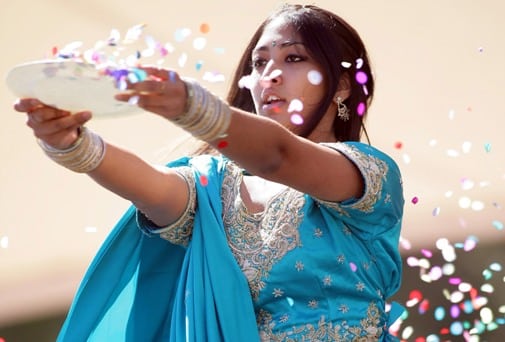
August 15 is a date Indians across the world associate with nationhood, and freedom from British rule. SHERYL DIXIT and RAJNI ANAND LUTHRA find out what the term ‘freedom’ means to Indians today

The textbook definition of ‘independence’ is ‘freedom from control or influence of another or others’. Freedom means being responsible enough to enjoy the feeling of doing what one wants without restraint.
But what does the term ‘freedom’ mean to Indians living in Australia? Is it an association that is still kept alive through links with the motherland, or has it taken on a completely new and liberating meaning? And does India’s Independence Day in particular still mean something to us desi Australians? Or is it a past memory of flag hoisting at dawn, followed by bhajjias and garam chai? Indian Link asked people of Indian origin what independence really means to them, with surprising results.
Say it loud, say it clear
I think India has been experiencing more freedom than ever before, and there is still more to come. In the past year we have seen many issues that were hidden brought to light, like corruption and rape, which people never wanted to confront in public in the past. The freedom of expression has become more pronounced, and I feel this is a good thing. This is what India needs, people to collectively voice their opinion and feelings about injustice, and make a demand for righting wrongs. It is a good feeling to know that there are so many people who support the cause of right and who are willing to take a stance, as we have seen in the case of the New Delhi rape victim and the public frenzy that followed, to ensure justice for the young girl who tragically died from her injuries. In saying that I have to admit that sometimes the press in India makes too much of an issue, they give social issues as much importance and coverage as Bollywood celebrities! But overall, it is great to see that India is going through a change where the freedom to speak openly and without fear is gathering strength. I only hope it lasts!
Ashish Chawla, St. Albans
My list
Can I have freedom to go to bed whatever time I want? And have McDonalds for dinner on more nights. Not have pumpkin soup for dinner or yellow dal. Watch TV whenever I want. Skip my shower when I am too tired? Please?
Vihaan Chawla
Doing what I like
Freedom means not being dependent on anyone. So why single out Independence Day for this, I enjoy this freedom every day! I love the freedom to do what I want in my daily life, raise my family as I see fit, make merry with friends, go out and enjoy beautiful Melbourne! And yet I manage to do my duty to our extended family back home, and the community that I interact with at different levels here.
Deepti Chawla
Here and there!
For me, living here in Australia, ‘freedom’ in an Indian context means independence from pollution, corruption and poverty back there. And for my family back home, ‘freedom’ would mean the same thing – to have running water and electricity throughout the day, and to breathe in clean air instead of the dust and pollution from a million rickshaws, buses and cars! But they also have another kind of freedom, they have the love and support of their entire family, which is what I miss. They keep traditions alive meeting at weddings and parties, they help each other in times of need. When I go back they treat me like royalty! After 66 years of Independence, corruption and pollution have got worse, but family ties have gotten stronger, they have become more multicultural and they last longer. Their freedom is special and they will all celebrate Independence Day together with march pasts and masti, while I will buy a flag from a local Indian shop and stick it in a muffin while singing Jana gana mana!
Nitika Sondhi
Sydney
Young and free
India may be celebrating 66 years of Independence, but it is still a young country and in opinion, it is getting younger. There is a new breed of professionals, politicians, industrialists that are the new youthful face of India in the international arena, which indicates a change in the way the world sees us – modern and trendy, instead of conservative and obsolete. The old are making way for the young, who are not that much interested in money–making and are keen to stamp out corruption. Maybe because they themselves were born rich, so it doesn’t matter as much to them. They may not have much experience like the older generation, but they are smart and quick learners. India today makes me wish that I was getting younger too!
Sheryl Dixit
Kellyville Ridge, Sydney
Choices
Freedom to me is being independent to make my own choices, to be able to express myself freely without restrictions, to be a part of this wonderful life where I can respect others and have the same respect returned to me. To be true to myself without the fear of anyone or anything… a reminder how lucky I am to wake up each morning and feel these words ring true every day and every minute!
Neelam Vasudevan
Oakleigh East
Live and let live
As an Indian woman, freedom to me means being able to exercise the same rights and liberties enjoyed by men in the society with no questions asked. Freedom from hypocritical values, freedom from double standards, freedom to disagree and not conform to superstition and blind faith. Freedom from fear, prejudice and hate.
Around the world in varying degrees, women are treated unequally. In some places they are not allowed to be seen or heard. Right to education and work opportunity for everyone irrespective of his or her sex, race, wealth or religion equates to true freedom in my opinion.
Peter Parker’s (Spiderman’s alter ego) quote, “With great power there must also come great responsibility,” can be reworded to suit the context: “With freedom there must also come responsibility”. I believe freedom given/ available to a few, causes more harm than good. A society is truly free only when it’s free from inequality and ignorance. True freedom is to be able to live and let live.
Shraddha Arjun
Sydney
Freedom to create
Freedom to me, personally, is all about having the option to be creative in life. I believe that if God is watching us, the least we can do is be entertaining and to be entertaining one needs to be creative. During my wonderful childhood my parents gave me the freedom to explore, learn and in turn create. My dad was in a role that required a lot of travel and we lived in many parts of India. In all the travelling we did there was always so much to learn from the diversity and utilise the learning in my own life be it in cooking something from a region, dancing a local folk dance, learning a new language, adopting a new fashion or being inspired by a new book. All of it influenced and enriched the way I lived and enjoyed my life. The experience fortunately continued even after I grew up and finished my education, got married and migrated to Australia. Despite the challenges of settling in a new country, adjusting to new relationships and working in a new environment, there was always freedom to create, freedom to learn and be inspired and freedom to do my own thing. I rate that as one of the highest factors in my ability to enjoy my life and be happy.
Preeti Jabbal
Glen Waverley
Fun freedom
I’m called the ‘chanya choli queen’ and I love it! Freedom for me means the chance to wear gorgeous Indian clothes and jewellery and dance to bhangra and Bollywood beats even in the middle of winter in Melbourne! My cousins in Mumbai don’t do this, they dress in western clothes to go to rave parties and dance to Timomatic! I love the freedom to be more Indian than Indian’s back in India. It’s great!
Surabhi Shah
Carlton North
It’s, like, cool!
Freedom, like, it’s a really cool thing! My idea of freedom is to go clubbing with my friends, but my parents won’t let me until I’m 21. They’re like, really, really OTT with stuff like that, checking FB and my Mac. But like, I’m not a kid! I’m 16, and y’know, I’d like to play on the PS3 all day, or sleep in late every day, or not go to school, or hang out at the mall all weekend with my friends. I want an iPhone 5, a WiiU, designer skinny jeans and a cool haircut. My parents don’t let me do anything! I guess someone needs to explain what freedom is to them! LOL!
Name withheld on request, or his parents may give him the freedom to leave home!
I depend on me!
I enjoy my freedom. I am a mother and a homemaker, but even with all this, I am free. To have a cup of tea at 11am, to tend to my tulsi and karve pak trees in my garden, to chat with my friends, to enjoy the occasional mums’ night out, to not have to feel the pressure of answering too many questions about my life from inquisitive neighbourhood aunties and not being drawn too deeply into family politics back home. I work, cook, tend to my family and enjoy life – without the aid of cooks, maids or ayahs. And I survived, learning to depend on myself. Living away from India has made me more independent, so I guess I have every reason to celebrate its 66th.
Asha Pujari
Hawthorn East
TV time for me
Freedom is to be able to watch the TV I want, peacefully. No saas-bahu dramas for me, or even your Voice, Masterchef, Big Brother or whatever the latest reality series is. I’ve made arrangements to be able to watch the cricket wherever it is being played in the world, and am on top of the footy here. My wife and I now have our own separate TV sets, and I am enjoying my TV freedom.
Padmanabhan T
Rowville
To be free is not merely to cast off one’s chains, but to live in a way that respects and enhances the freedom of others.
Nelson Mandela
Freedom is nothing but a chance to be better.
Albert Camus
Our freedom can be measured by the number of things we can walk away from.
Vernon Howard
Those who deny freedom to others deserve it not for themselves.
Abraham Lincoln
Freedom is not worth having if it does not connote freedom to err.
Mahatma Gandhi
Flying high
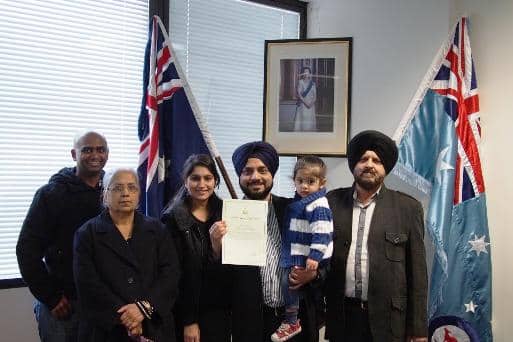
Turbaned Sikh Inderjeet Singh Sodhi is be inducted into the RAAF

Most of us are aware of acts of bravery and valour by Sikhs. They figure prominently in the list of Victoria Cross and St. George Cross winners and the Sikh Regiment in the British Army has always had a sterling reputation. It is in keeping with this tradition that the first turbaned Sikh (wearing a turban as opposed to a bearskin) was appointed as a Guardsman in Buckingham Palace as recently as December 2012.
Not surprisingly, Royal Australian Air Force (RAAF) has scored a first by recruiting a turbaned Sikh from Melbourne. It is a matter of great pride for the 72,000 strong Sikh community in Australia. Sikh workers and migrants have earned their stripes as “Cameleers” and “Banana Plantation” workers since the early 19th century, but the profile of a typical Sikh migrant has changed since 1973. Australia has received a large number of Students and Professionals in all walks of life. As per the 2011 census, Melbourne has the distinction of having the biggest Sikh population.
It is appropriate then that 32-year-old, Inderjeet Singh Sodhi from Melbourne has the distinction of being the first turbaned Sikh to be inducted into Royal Australian Air Force. After having successfully completed his interview and Psychometric testing he has signed up to his new career and will commence his general training shortly. His interviewers recommended his appointment even though it took three months for his approval.
Inderjeet Sodhi has finally received approval from the Authorities to retain and continue his religious belief as a traditional Sikh and a special badge will be created to be worn with his turban. He will receive comprehensive training for the next 5-6 months before commencing his assignment, which could involve general administration, human resources or operational work.
Inderjeet Sodhi moved to Australia in 2004 after completing his Bachelor of Pharmacy degree from Dehradun to pursue his post-graduate studies in Commerce. He obtained a Master of Commerce Degree from Deakin University before applying for the RAAF.
He is married to Gurleen and has a 2-year-old son. Gurleen has received specialist training as a nursery teacher and works casual /part time as a child carer.
Inderjeet’s parents arrived in Australia to attend his initiation in RAAF. They have blessed his career choice and are proud that he has chosen to serve his country of residence. His only sibling is his younger sister who continues to live in India. He and his immediate family have become naturalised Australians in 2007 as it would be a pre-requisite to serve in RAAF.
Inderjeet is very proud of his success, and looks forward to wearing the RAAF Uniform with pride. He hopes to become a shining example to his peers by working hard to achieve an excellent service record. His goal in life is to be a leader of men and go as far as he can in the annals of RAAF. His favourite sport is Cricket, but since settling in Melbourne he has followed AFL and his favourite team are the Geelong Cats.
Amendment: The first turbaned Sikh to enlist in the Royal Australian Air Force was Jagmeet Singh who is a Leading Aircraftman (LAC) currently serving at 37 Squadron (37SQN) at RAAF Base Richmond. The member enlisted in Melbourne on 2 June 2009.
King Khan on the Chennai Express
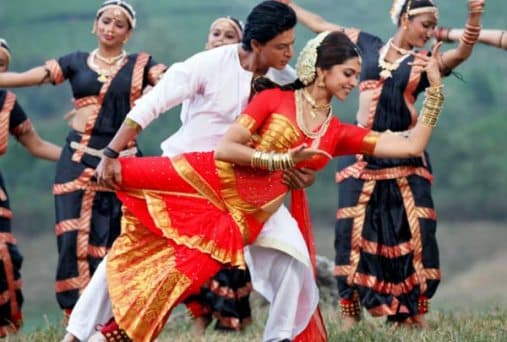
Shahrukh Khan in an exclusive interview with Indian Link

On August 8, a fun train journey will traverse the length and breadth of Australia with the release of Rohit Shetty’s latest rom-com Chennai Express. Fast-tracking us to the movie’s fun and entertainment was none other than superstar Shahrukh Khan, SRK or King Khan or the Badshah of Bollywood, as he is popularly called, who worked his charismatic charm on me in an exclusive phone interview with Indian Link. We talked about his life, his beautiful co-star Deepika Padukone and the Chennai Express journey.
Appealing both to the classes and the masses, SRK is renowned for his Midas touch, turning every venture into a blockbuster. Will the King retain his magic with his latest release, Chennai Express? Will the racy songs, dollops of comedy and Rohit Shetty ishtyle action, generate enough speed to reach the platform of success? It won’t be long before we find out. As the title song in this movie goes, ‘Ticket khareed ke, baith ja seat pe, nikal na jaaye kahin Chennai Express!’
Here are excerpts from my journey with the charming SRK.
Preeti Jabbal (PJ): As a star, you have been interviewed multiple times over; to what kind of journalist do you enjoy speaking – the gushing type who swoon on looking at you or the calm, collected variety that ask boring or repetitive questions, or those unaffected by your stardom who command candid responses?
Shahrukh Khan (SRK): People come to me with a lot of preparation or with preconceived notions, some come with love while others come just to do a job. Being an actor I can gauge in a moment or two what kind of person I am speaking to, and I try to respond in the same manner. If they are aggressive or demand candid responses, I try to give them candid responses; if they are the boring variety, I try to add a bit of interest; if they are gushing, I love them back. There are days when I get a good interview and it feels nice, however mostly I do not have a choice. Given a choice I would like to talk to people who are pleasant and have pertinent questions to ask, and who are ready to have a few laughs in between.
PJ: Well then we hope to cover all the above with this interview. It’s breaking news that you have patched up with Salman Khan after 5 years, how does that feel?
SRK: My personal relationships whether they are with Salman or anyone else are a topic that I like to give an equal amount of dignity to. I have never made a comment on my love, fights, friendships or relationships, as I prefer to keep my personal feelings to myself most of the time. They still end up being a topic for tabloid analysis and then there are pictures and speculations, and people have different opinions and takes on them. I have never made any comment about my feelings on any sequence of events related to Salman up until now and I would like to keep it like that.
PJ: Let’s talk about your upcoming film Chennai Express, slated to release in Australia on August 8, and all your fans are looking forward to this movie. The current trend in Indian cinema is to include at least one element or a bit of masala that will appeal to the overseas audience. Is there this element in Chennai Express?
SRK: I don’t think that the thought process while making a film or telling a story is about combining elements to make a certain segment of audience happy. It is an over-simplification of how we make films. In reality, everyone is there mainly to tell a story. Some films could be geared towards certain people but emotions are universal and the idea is to appeal to everyone. I don’t know of anyone that makes a film to cater specifically to a national or international market.
Similarly Chennai Express is a holiday entertainer that the entire family can enjoy. It does not have any dirty dancing or cheap humour or embarrassing scenes; instead it is naughty, a bit over the top, funny, action-oriented and romantic. Chennai Express is one of the first few Hindi films that will take the audience to all parts of South India. The film was shot in many locations around South and I am sure our South Indian audience all over the world will be a little bit attached to the film. Those who have not visited South India will also enjoy its beauty through this film.
PJ: Speaking of ‘over the top’, we have heard that Deepika Padukone has tried an OTT role and accent in the film. With all due respects, according to critics OTT is your forte, how did it feel to share that space with Deepika?
SRK: (Laughing) First of all I would like to know who says that she was OTT in this film? On a serious note, I think moviemakers create a special world of their own through their films. Directors like Karan Johar, Anurag Kashyap, for example, have their own creative world; similarly Rohit Shetty also has a distinct branded style of his own. If actors who act in Rohit’s films try to impose their personal choices and styles it would be most boring and unprofessional. There will always be people who will like or dislike a film and critical appraisal is mostly a person’s own perspective, not necessarily that of the director. It has to be taken with a grain of salt.
As for sharing space with Deepika, it was a great experience as she is a lovely lady, a fantastic actor and a friend. She even made pulling faces and comedy into something beautiful and sensuous. She is a very attractive and talented co-actor.
PJ: You have requested that Deepika’s name should appear in the credits of Chennai Express before your own. Will this gesture be a step towards improving the status of women in Indian cinema, or the country in general?
SRK: I would be a fool to think that this gesture will change the status of women in India. It’s a long overdue gesture to acknowledge the equality of genders within Indian films. Previously there have been trends where names were credited according to alphabetical order or based on seniority; however this is probably the first time that the female lead’s name will appear before the male. My production and I think it is very cool to do this as it has not been done before and it also creates certain awareness among people to change existing systems.
As for changing the world, I have worked in many films over the years and I don’t think any film has changed the world. On the contrary, the two hours are aimed for people to forget the world they live in. I believe films are a reflection of what society is, and you can’t really be changing that around. I think my request to have Deepika’s name first is just a nice gesture, and nothing more or less than that.
PJ: Congratulations, you overtook Amitabh Bachchan and Sachin Tendulkar in being voted as the most popular Father of the Year 2013, in India. In Australia, Father’s Day will be celebrated on September 1 and Indian Link is holding a competition, seeking contributions from our readers. Now that you are officially an authority on fatherhood, would you like to make a comment?
Thanks for the complement, it’s nice to think that one is an authority on fatherhood. I believe fathers and mothers are beautiful people, so keep on loving them and listening to them. No matter what age or stage you are at, make sure that you somehow share the love with them that they shared with you while you were growing up.
I request all Indian Link readers to send in their contributions and nominations for this special Father’s Day competition. Have a good life!
Best Dancer: Hrithik Roshan or Ranbir Kapoor?
Hard to compare but I think Hrithik is a fantastic dancer
Best dressed man in Bollywood?
I will be a fool to be looking at men’s clothes, darling!
One thing you wished you had, but do not:
Nothing. I have everything I want, in fact I have two to three or four of them!
One thing that makes you happy:
Spending two hours cuddled between my children and watching TV.
What does the future hold for you – directing films, politics or retirement?
Neither! I will never retire from making films and I will never try politics.
Indian HRD minister’s visit
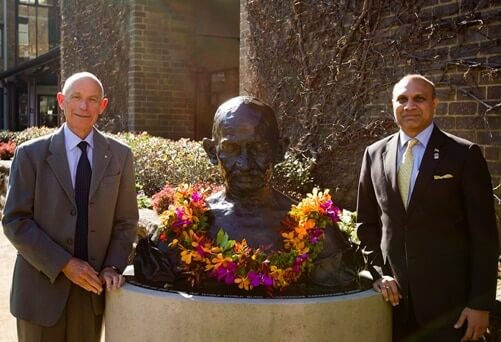
Collaborative research ties between Australia and India are set to increase in the fields of health and energy

It was an opportunity to change the presumption about Indian politicians. Burdened by the reputation of Indian politicians as “old school,” the charismatic, Indian HRD Minister Dr M M Pallam Raju seemed to strike all the right chords with his Australian counterpart, Higher Education Minister Kim Carr.
Dr Raju was in Australia on a crucial three-day visit from July 10-12 to attend the annual Australia-India Ministerial Dialogue on Education Cooperation and the second Australia-India Education Council (AIEC) meeting. The bilateral meetings were planned to boost the collaboration and expansion plans for educational and research ties between India and Australia.
Higher Education Minister Kim Carr announced that a $10 million grant will be made by the Federal Government to support four new collaborative projects between India and Australia towards research and fellowships for Australians working in India.
“I was very pleased to discuss with Minister Raju the range of collaborations between our two nations,” Mr Carr said. “The money will come from the Australia-India Ministerial Research Fund (AISRF), which covers joint research in science, technology, biotechnology and climate change”.
“Australia and India’s economies and peoples are among the best placed in our shared region to benefit from opportunities in the Asian century. If we are to maximise the gains from our position it is essential that we recognise and support each other’s strengths in order to lift economic performance, at both a national and individual level, and boost both countries’ economic prosperity,” Senator Carr said.
The $64 million AISRF has supported more than 100 projects and workshops, involving more than 80 leading Australian and Indian universities and research institutions, since it began. It is Australia’s largest fund dedicated to bilateral research with any country, and is one of India’s largest sources of support for international research.
Dr Raju was quick to post about the success of the bilateral meetings on Twitter. “The conclusion of the second Australia-India Education Council meeting was on a positive and a very optimistic note about the potential of the future,” Mr Raju tweeted.
The Indian delegation along with Dr Raju visited the University of New South Wales (UNSW) to build bridges with education providers and key stakeholders at UNSW. The role India plays as a strategic partner in the area of research with the UNSW was broadly discussed.
“We are looking to expand and also try making higher education more enabling for our young Indian students,” Dr Raju said. “The progress we would like to make on this front is a greater exchange of faculty and students mobility between the two countries”.
It presented an opportunity for Dr Raju to explain the Indian Government’s recent formalisation of rules for establishment of campuses of foreign universities and educational institutions in India. The focus of the interaction was to invite foreign education providers to India.
“There was discussion about jointly supervised PhD programs, which would enable students to split their time between Australia and India and receive qualifications from both countries,” Dr Raju said. “We have an agreement called ‘Twining arrangement’ whereby Australian universities can partner with one of the Indian universities and offer a programme in an area of mutual interest and the student can be awarded a joint degree by Indian and Australian universities. Students studying in India can do a couple of semesters abroad in chosen universities”.
Dr Raju announced the opportunity for Australian students to visit India for short-term visits through the ‘Connect to India’ program.
The Federal Government will also support 29 higher education institutions, sending 300 students to India for a study experience under the new ‘AsiaBound’ program.
Dr Raju, with a portfolio covering all aspects of India’s schools and higher education policy, is an electronics and communications engineer from Andhra University and also an MBA from Temple University in Philadelphia. Prior to his life in the political sphere, he worked in the informational technology sector in the US, displaying an understanding of science and technology that was obvious during the meetings at UNSW.
Dr Raju was thrilled to see the Mahatma Gandhi sculpture that was donated to UNSW by the Government of India. Carrying his personal camera, he insisted in taking photos clicked with delegates and media surrounding the sculpture. “This has been a very positive trip and I was most pleased to see the wonderful sculpture of the father of our nation in the UNSW,” Dr Raju said.
Educating 500 million Indians under the age of 25 is an onerous responsibility on the 51-year-old’s shoulders. “Our education system should equip students with knowledge-based employable skills,” Dr Raju said. “The biggest challenge of the Indian education system is to produce quality students who can be employed by any part of the world. Also, the focus is capacity building for secondary education in India and industry linkages”.
Dr Raju has set the target high. “India’s gross enrolment ratio in higher education is currently 18 per cent and the target must be taken to 30 per cent by 2020,” he said.
The minister views Australia as a popular destination for higher education, despite the furore of negative media since the well-publicised reports of crimes and robberies against Indians in Australia in 2008-‘09 that were described as racially motivated crimes. Dr Raju is pleased with the measures implemented by the Australian Government and universities in aiding the welfare and safety of Indian students since the attacks five years ago.
The Minister does not attribute the dwindling number of Indian students coming to Australia on that account. “There are two reasons why there is a drop in the number Indian students coming to Australia in recent years,” Dr Raju said. “One is the Visa regulation that doesn’t allow them to stay on in Australia after finishing their degree, and the other is the rising Australian dollar, which makes international education very expensive”.
There are frameworks being formulated acknowledging Indian work experience and education, revealed Dr Raju. “We are working on mutual recognitions,” he said. “We have come out with a frame that recognises prior work experience and learning which will be incorporated into the vocational educational framework what we will call is National Vocational Educational Policy Frame work”.
Despite working his way through a busy schedule amid endless meetings, Dr Raju’s last words in Australia, perhaps prophetic, were on Twitter: “Sunrise over Sydney harbour as I prepare to head back home today morning. Sydney is a beautiful city and I will miss it”.