

I-India Australia gets together with Franklyn Scholar to launch a vocational training centre in Rajasthan

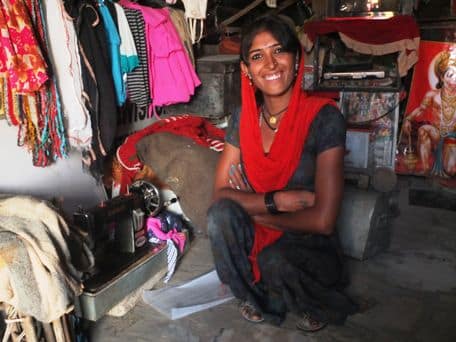
Twenty-year-old Jaipur girl Santosh has serious physical impairment as a result of contracting polio as a child. Losing both her parents at a young age, she grew up under the care of her grandmother as part of a nomadic community of banjaras (gypsies) in a remote slum area of Jaipur. Growing up with absolutely no self-respect, she felt like she was a burden on her grandmother.
Determined to change her destiny, Santosh developed her skills as a jewellery and handicraft student and gained back her confidence. Today, she works as a trainer at the Franklyn Scholar Training Centre at Jhag Children’s Village just outside of Jaipur and earns a regular income. She is able to fully support her 90-year-old grandmother and does not let her physical disabilities hinder her.
Santosh owes her new life to Abha Goswami, founding director of the NGO I-India, who encouraged her to participate in the Ladli Vocational Training Centre in Jaipur in the year 2000.
Franklyn Scholar, an Australian workforce education provider, along with I-India Project, inaugurated the Franklyn Scholar Vocational Training Centre earlier this year at the Jhag Children’s Village, located 45km south of Jaipur on the Jaipur-Ajmer national highway.
Opening this vocational centre has been a long standing endeavour for I-India Australia, the local chapter of I-India, a registered not-for-profit organisation established in 2007. The centre is built on a 5-acre block of land in Jhag, which was sold to I-India by the Government of Rajasthan at a nominal cost. It aims at empowering women and children from troubled backgrounds who are living below the poverty line with only the bare minimum required to stay alive.
“Their homes are generally one room mud-brick dwellings with an outdoor kitchen and few meagre possessions,” recalls I-India Australia committee member Renate Barnett, who recently visited the village herself.
“I always feel so concerned about them when the weather conditions are extreme. The mid-40 degree heat that is commonplace through the summer is unbearable for a day, let alone a whole season,” she adds.
Last August, many villagers lost everything they had in the world when their homes were washed away in the monsoon floods.
“With the construction of the Franklyn Scholar Vocational Training Centre, I-India Australia hopes to not only improving the living conditions of the people, but also at developing a feeling of self respect amongst them,” says Renate.
A leading provider of workforce education across a range of industry sectors and qualifications, Franklyn Scholar took on the role of the sponsor and financed the entire construction and fit out cost.
In a difficult financial climate, Franklyn Scholar is a company that has not shied away from its social responsibility of giving back to the community. Instead, the organisation has embraced this task with an open heart and has been helping I-India Australia since 2010. It began when Franklyn Scholar had started raising money for I-India Australia through ‘Franklyn Footprints’, a project that was developed with the desire to give back to the community and raise awareness.
“A footprint leaves an enduring mark and this is exactly what the Franklyn Footprint has been set up to do – allowing each and every person working for Franklyn Scholar to leave their lasting impression by engaging and participating in their State’s fundraising activities and creating awareness of this incredibly important project,” says Victoria Woodfall, Tasmanian based training consultant and coordinator of Franklyn Footprints.
Since 2010, Franklyn Scholar has donated more than $100,000 to help build the vocational centre. 20% of this amount has been raised by the staff of Franklyn Scholar through various fundraising activities such as raffles, morning teas, golf days, Bollywood dinners and movie and trivia nights. “The Jhag Children’s Village is in a rather remote corner of Rajasthan, off the tourist track and out of public view, so it is fantastic that the company is prepared to invest such a huge amount of its time and capital where it will not receive maximum exposure and recognition,” says Renate.
Besides the Franklyn Scholar Vocational Training Centre, the Jhag Children’s Village is planning two shelter homes for orphaned and homeless children, a health centre, sports field, produce garden, transport vehicle, as well as staff accommodation.
With the construction of this village, I-India aims at improving the quality of life for people in nine surrounding villages through provision of medical services, educating children and providing vocational training services. The goal is to make the community self-sufficient and in turn, put an end to the high numbers of people migrating to the big cities in search of higher income but who unfortunately, due to their lack of education, join thousands of similarly disadvantaged people struggling to survive in atrocious conditions. Another focus point is educating women of the community in skills that can help them become self-sufficient and may even eventually help them to set up their own micro-businesses or cooperatives. With the resources and connections that I-India has to offer, women will be able to sell items they make without having to give a large cut of their profit to the unwanted middleman. Not only will this benefit their local economy, it will also help build a feeling of self respect amongst the women and along with it, a feeling of self reliance and independence.
“Improving the status of women in these very traditional regions is a long and slow process, but through empowerment initiatives such as those offered at the Franklyn Scholar Vocational Training Centre, it is assured,” says Renate.
During the first phase of operations, the centre will offer students a number of vocational courses including tailoring, jewellery design, CAD, block printing and manufacturing of different kinds of handicrafts, paper products etc. Since its inauguration, the centre has been organising regular personal contact programmes, home studies of locals, and orientation camps to spread the word amongst neighbouring villages and inform them about how they can use the skills and training programme to improve their quality of life. As a result of this effort, the centre has already started teaching the Tailoring Training course, as well as Computer Studies. Additionally, the local community is offered employment opportunities for construction and maintenance of the school and shelter homes. The prospect of improving their quality of life has created an eagerness to learn skills and work together harmoniously.
In the future, Franklyn Scholar plans to continue its support for the Jhag Children’s Village by financing their recurring costs for the next two years, at which point the centre will be able to support itself. They have already started fundraising to raise money for a van that will provide transport to teachers to and from the vocational training centre.
“I-India Project Australia is immensely proud of the Franklyn Scholar Vocational Training Centre, as it is a shining example of how corporate Australia has a heart and conscience,” says Renate.
For more details of the work done by I-India Project Australia, visit their website www.i-indiaproject.org.au
Empowering women in rural India
Keeping the wheel turning

Exponents of the art of spinning share their experiences in keeping alive this dwindling craft with FARZANA SHAKIR

The spinning wheel or the ‘charkha’ carries a special reverence for Indians. It was the symbol of the Indian Independence movement and originally held pride of place on the national flag, before being replaced by the Ashoka wheel. But with the advancement in technology, the faithful spinning wheel is facing extinction. All is not lost though, as Indian Link discovered diehard aficionados striving to keep the art of spinning and weaving on the wheel, alive in Australia.
I caught up with two such devotees, Jennifer Hopper and Valerie Walker, both accomplished spinners and weavers doing their bit to keep the wheel turning.
Jennifer Marjorie Hopper lives in Diamond Beach on the east coast of NSW, and teaches spinning and weaving at the Hand Weavers and Spinners Guild of NSW (HWSG-NSW).
Jennifer develop an interest in spinning at school. “My father was involved in wool production in the country,” she reveals. “At Hornsby Girls High School, I chose Textiles as one of my subjects for the Intermediate School Certificate. I enjoyed it and chose it for the Leaving Certificate. At the end of high school, I chose to train as a high school Textiles & Design teacher”.
She continues, “Both sides of my family included teachers for many years, so I was familiar with the role of teaching. I trained for two years at the Sydney Teachers College and was first employed by the NSW Department of Schools as a full time qualified high school Textiles teacher at Burwood Girls High School in Sydney, and later at Sydney Girls High School. While living in Sydney I attended evening TAFE courses at Brookvale with Eve Rashley, the ‘guru’ of spinning. Over time, I ran workshops teaching spinning and weaving, using wool. This expanded into the use of wool for felting, mainly because of the standard quality of Australian wool. I have taught many workshops in various parts of Australia, given demonstrations in high schools and been invited to other countries as well”.
Jennifer was granted life membership at the HWSG-NSW a considerable time ago.
Formed in 1947, the Guild is a not-for-profit organisation aiming to bring together people from various backgrounds who practise hand-weaving, spinning and other associated crafts. Efforts are also put into fostering and encouraging these crafts by providing opportunities for instruction, discussion and exhibition of work. The Guild boasts a membership of hundreds of enthusiasts from all over the state who meet once a month at their current premises in Burwood.
Even though spinning on the wheel does not have any meditative effect on Jennifer, she says, “I am inspired by the simplicity of the treadling and the rhythm achieved. It is possible when on the wheel to talk to others, listen to music, have a conversation, ask questions and sort out current problems in one’s life”.
Jennifer believes there is enough interest amongst younger Australians to keep the art of spinning and weaving alive, but she admits it needs conviction. “While it is not a hard craft to master, it depends on the access to people interested in teaching, the quality of the teacher and the student’s own interest,” she states candidly.
Valerie Walker, treasurer at the Canberra Spinners and Weavers Inc (CSW) has been teaching the art of spinning and weaving for over 30 years. She is also proficient in dyeing, knitting, sewing, wool tapestries, patchwork and embroidery.
For Valerie, the interest in weaving runs in the family.
“Two of my great great grandfathers were weavers; they came to Australia from England in the early 1800s as convicts. Also, my mother was always knitting and I wanted to learn where the yarn came from,” she says.
She learnt the craft in Canberra in 1974. Shedding light on the CSW Valerie reveals, “The CSW was formed in 1966 by a group of ladies doing this craft. Today there are 140 members and we meet every week. Member’s interests include felting, weaving, knitting, spinning, rag rugging, dyeing and tapestry weaving. Apart from workshops and group activities, CSW also organises an exhibition and sale of members work every year”.
Valerie adds, “The organisation created an International Scarf Exchange in 1994. A different Australian guild conducts this activity each year, and we have entrants from the USA and NZ this year. Membership of CSW grew to 180 about 4 years ago, but is now going down due to rising fees and members ageing”.
The actual part of sitting, spinning and seeing the fleece being turned into yarn is what inspires Valerie about spinning on the wheel.
“It is very calming, I enjoy seeing my finished bobbin of yarn,” she states.
Describing the basic steps and techniques of spinning Valerie explains, “It involves deciding what the fleece is good for, preparing the fleece: combing, washing etc. Then spinning, once bobbins are spun they are plied and then maybe dyed, and finally used in knitting or weaving. One bobbin of spinning 100gms takes about 3 hours – you need two bobbins to make one skein of yarn. There are different techniques like the long draw, short draw, the woollen method, worsted method, fine and thick. My personal favourite is the fine lace spinning”.
Asked what she sees as the future of spinning and weaving in Australia, Valarie was honest in voicing her opinion, “It will still be as now, a small amount of professional spinning, but mostly a hobby craft”. She also does not believe there is enough interest in spinning on the wheel amongst youngsters.
“We are always trying to recruit younger people – knitting has upsurged in the last four years, though. The CSW is always out demonstrating to schools, fairs and markets, promoting these skills. We hope other guilds around Australia are doing the same,” she says.
Both Valerie and Jennifer think more can be done to promote and preserve this craft. In the meantime, experts like them all over the country are trying to keep the wheel spinning by passing their skills on to the next generation of weavers.
Cherishing the charkha
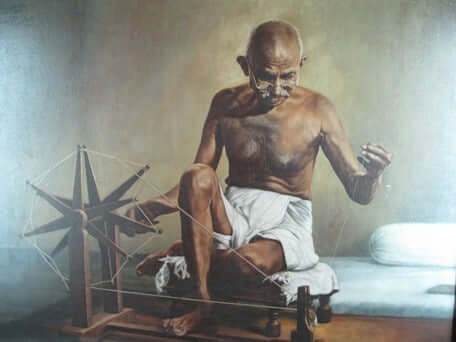
The charkha, a symbol of the power of self-reliance, industry and determination, still retains its followers and admirers, find RAJNI ANAND LUTHRA and SHERYL DIXIT

After trying his hand at Mahatma Gandhi’s cherished spinning wheel at the Sabarmati Ashram, Amitabh Bachchan, one of India’s best loved film personalities, wrote that ‘peace and serenity’ descended upon him. There was never a stronger modern advocate of the cause of using this simple, yet highly symbolic piece of equipment.
Gandhi himself had said of the spinning wheel, “Take to spinning to find peace of mind. The music of the wheel will be as balm to your soul. I believe that the yarn we spin is capable of mending the broken warp and woof of our life”.
Many symbols epitomise India’s independence from British rule, but the ‘charkha’ or spinning wheel is perhaps one of the most powerful signs of the values and aspirations of India’s Independence movement.
The wheel of history
The legacy of the spinning wheel is an ancient one, hailing back to the traditional role of women in Indian society. Women would spin as part of their daily routine, which would often become a social activity as they spun in groups and took the opportunity to socialise as well. Cotton and silk fibres were generally spun on the charkha, into cloth or rugs. The charkha was generally included as part of a bride’s dowry, when she left her father’s home for that of her husband’s.
British imperialism at its worst
During the colonisation of India, the British realised that growing cotton was a cash crop that could enrich their coffers. Cotton was grown in India, then harvested and shipped to Britain by the colonialists, where it was woven and spun into cloth. This was then shipped back to India and sold at unaffordable prices.
Naturally, Mahatma Gandhi opposed this blatantly unfair practice and propagated the concept of weaving homespun cloth on charkha in India, and wearing this in defiance of the price of English-made cloth. He made spinning on the charkha a symbol of the passive resistance movement in India, through this seemingly mild, yet powerful activity.
The homespun cloth was called ‘khaddar’ or ‘khadi’, meaning ‘rough’. Always one to lead by example, Gandhiji began spinning his own khadi on a charkha, and through his influence, thousands of Indians took to the spinning wheel, dealing a severe economic blow to the British.
Swadeshi self-sufficiency
The entire network of cotton growers and pickers, weavers, carders, distributors and charkha makers benefitted from this movement that represented self-sufficiency and interdependence on themselves as a community. Khadi embodied the dignity of labour, equality, unity and independence, as India took control of her indigenous industries. It employed millions from sowing of cotton seeds to spinning the final cloth to creating an outfit; it provided the basic need of clothing for the population, also creating a feeling of patriotic pride in the product. Indeed, Nehru called khadi ‘the livery of our freedom’.
Besides helping local business, this gesture heralded the start of a nascent ‘be Indian, buy Indian’ movement, as Indians began boycotting foreign goods and choosing locally produced ones instead. This was a significant boost to India’s fledgling economy. The ‘swadeshi’ (home-grown) movement had taken root, and was here to stay.
More than a message
Although it’s likely Gandhiji began the charkha movement to make a statement to the colonialists, he soon discovered the merit in spinning, as it aided him in silent meditation. It is recorded that he found the action of the spinning wheel soothing and pleasing to the psyche. Gandhiji spent many an hour placidly spinning on his charkha, engulfed in the silence of his own thoughts. To take this concept to the masses, Gandhiji also spun in public. It is said that since the traditional charkha was bulky and difficult to move, Gandhiji held a contest to design a charkha that would be compact, portable and easy to afford. The winner was the box design of the charkha, and history recounts that the accelerator wheel was his idea. Also, the role of spinning that was traditionally associated with women, morphed into an activity that could be performed with ease and relatively pleasing results by men too.
Embedded in Independence
So powerful was the influence of the charkha, that the first designs of the Indian flag created included the traditional spinning wheel, a symbol of self-reliance. However, a few days before India became independent, a specially constituted Constituent Assembly decided that the flag of India must be acceptable to all parties and communities, and the colour scheme, saffron, white and green were chosen for the three bands, representing courage and sacrifice, peace and truth, and faith and chivalry respectively. The charkha was replaced by the Ashoka chakra, representing the eternal wheel of law.
The flag of India is only allowed to be made from khadi, although in practice many flag manufacturers, especially those outside of India, ignore this rule. Some Indian currency has a charkha on it and even political parties use the charkha as their symbol to denote their patriotism.
Iconic image
The black-and-white image of Gandhi with his spinning wheel that has become an iconic image of the Mahatma, was taken by American photographer Margaret Bourke-White in 1946, and published in Life magazine in 1948. Margaret Bourke-White said later, “It would be impossible to exaggerate the reverence in which (Gandhi’s) ‘own personal spinning wheel’ is held in the ashram”.
In notes accompanying the image, Bourke-White observed, “(Gandhi) spins every day for 1 hour, beginning usually at 4. All members of his ashram must spin. He and his followers encourage everyone to spin. Even M. B-W was encouraged to lay (aside) her camera to spin … When I remarked that both photography and spinning were handicrafts, they told me seriously, ‘The greater of the two is spinning.’ Spinning is raised to the heights almost of a religion with Gandhi and his followers. The spinning wheel is sort of an ikon (sic) to them. Spinning is a cure all, and is spoken of in terms of the highest poetry”.
Even though some of Gandhi’s contemporaries did not understand his obsession with the spinning wheel (Rabindranath Tagore thought the charkha and khadi movement were akin to a cult), it cannot be denied that it became an agent of change, by heralding the swadeshi ethos, recognising the dignity of labour, bringing in social and economic upliftment, and importantly, unifying the Indian masses against a common threat.
Modern mission
The charkha remains an icon of the swadeshi movement, and despite economic, industrial, political and social change, has never lost its popularity. Homespun khadi is still in demand despite mechanisation of the production process, and the charkha is still used to create wonderful, rare and unique pieces of clothing, rugs or other décor. Charkha spinners are sought after for their trade which, while not as aggressively promoted since the past 66 years, still retains its followers and admirers. Indeed, some are found here in Australia, keeping alive the legacy of the spinning wheel.
Gandhiji’s charkha and all that it embodies still lives on as a symbol of resilience, self-reliance and strength in a changing world.
The charkha in Australia’s Indian community
We may have the impression that the charkha is indigenous to India and its colonial history, but it certainly made its presence felt through exponents of the art.
For Dr Nana Badve, a much-loved member of Sydney’s Marathi community and the RAIN seniors group, the charkha was a lifelong passion until he passed away in 2010. He worked in the textiles industry for most of his life, and there is little doubt that it was his early introduction to the charkha at just 12, that influenced his career choice.
His daughter Swati Lele remembers fondly, “The founder member of the Spinners and Weavers Guild in Australia, the late Mrs Pat McMahon asked my dad if he would demonstrate the use of the charkha. This was the beginning of a rewarding journey for him as he conducted many workshops over 25 years around Melbourne, Brisbane, Newcastle, the Blue Mountains, Gosford and Sydney. In January 1989, he was a special invitee to the Melbourne Craft convention where he held a large workshop on spinning”.
Nana’s wife Sarojini Badve was always by his side, and a helper at the workshops. Nana not only owned many spinning wheels, but also sourced some 100 charkhas from India for spinners here.
Born in 1929 to a family much influenced by the Mahatma, young Nana was encouraged to spend some time spinning daily, like others in the family. He first learnt to spin cotton on a spindle, called takali. It was hard not to feel drawn towards the political struggle of the times.
“He stayed at Gandhiji-led ashrams and got involved in the movement for Independence,” Sarojini reveals. “In his early childhood, he enrolled himself as a volunteer at youth organisations and was a member till almost 1950. He attended many meetings addressed by Gandhiji and his contemporaries”.
In fact, with his charkha, Nana reminded many here of the great man himself. Sudha Natarajan, a close friend from the RAIN group, recalls, “Nana would often quote Gandhi: ‘Live simply, so that others may simply live’. These words ring so true today in these times of wasteful extravagance. Nana would insist that we need to simplify our lives. Following in Gandhiji’s footsteps, Nana even visited several Indian villages, where he encouraged the use of the charkha”.
Towards the end of his life, Nana would often ply the charkha for his RAIN friends.
“When he passed away, we made sure to display his favourite charkha during his memorial service,” Sarojini says. “His woven portrait of Mahatma Gandhi, which he made as part of his Bachelor’s degree in 1952, has now been donated to the Cavalry Hospital in Sydney. It hangs in the foyer there”.
And a charkha contest!
The charkha makes a regular appearance at one specific annual event here in Australia. The Teeyan festival held in the Punjabi communities of Sydney and Melbourne is doing its bit to keep the age-old tradition alive. Organised by the Indian Women’s Cultural Association of Australia, this festival, celebrated primarily by women, strives to provide a ‘cultural renaissance’ for women of Punjabi heritage now settled here. It was launched in 2005 by Harpal Kaur, Virinder Grewal and Amandeep Grewal.
“Arts, crafts, music, poetry and dance are all packaged into a day-long affair, with presentations and competitions in a variety of categories,” the Melbourne-based Harpal Kaur says.
One contest involves the art of working the charkha. The organisation owns four specially created Punjabi style charkha flown in from India, which are brought out for each year’s event.
“We provide the participants with cotton punis (rolls of carded cotton) which they have to spin into thread,” explains Harpal.
Judges note the time taken to spin the yarn, as well as the quality of the final product; the finer the thread, the better the quality.
Harpal Kaur says, “Our attempt is really to reconnect to our roots by having the older members of our community demonstrate our traditional arts and craft, and to encourage the younger members to try their hand at the traditional charkha”.
A number of young women have given the charkha a go at the annual Teeyan festival. While it may not bear much significance to their daily lives, their grandmothers in their day, would probably have been judged by their prowess at their charkha abilities. For them, it was an important skill of ‘cultured living’, and girls of ‘good upbringing’ were expected to be adept at it.
Over the ages, the charkha pervaded many aspects of the cultural life of Punjabis. Philosophers and poets from Bulle Shah to Guru Nanak used it as a metaphor for life’s exigencies.
This year’s Teeyan festival in Sydney is coming up shortly, and once again, Virinder Grewal’s cherished charkha will get a good workout.
The Powerhouse Museum
Another charkha sits in state at the Powerhouse Museum in Sydney. A prized boxed charkha dating from the 1060s, it was donated by a fabric spinner of many years. Accompanying documentation claims a friend bought the item in Bombay for $4.00 and presented it to the donor as a gift. The donor approached the museum to see if it would acquire the artifact, and the gift was gladly received.
The Mahatma advocated the use of the charkha as a spiritual act, with the hope that its inherent attribute of fostering self-sufficiency characteristic would alleviate poverty and bring about much-needed social upliftment. And indeed, history proves that it did! This intended message of the charkha, to become self-reliant and to live more local and communal lives as a means of resisting the globalising power of corporations, is perhaps even more relevant today than it was in Gandhi’s time. It is hoped that the charkha will continue to inspire generations to come through its message of hope, humility and perseverance.
The e-charkha
In 2007, Indian inventor RS Hiremath produced a modified version of the Indian spinning wheel which harnesses the energy used to spin it and transforms it into electricity. Called the e-charkha, the device is now commercially produced by Bangalore-based firm Flexitron.
It is used in rural India where people are used to the idea of hand-spinning.
The e-charkha comes fitted with a dynamo which converts the kinetic energy generated by the spinning wheel into electric energy. The electricity thus generated charges a battery connected to the device. Two hours of continuous spinning can power an LED light for six to seven hours. This might not seem much, but in sections of rural India with no electricity, it is substantial.
The e-charkha costs between Rs 3000 to Rs 12,000, comes with a warranty of 35 years and is made of light material to make it more user-friendly.
The idea came to Hiremath as a child when he as he studied his grandfather’s charkha.
The fine art of complaining

SARAH MALIK pays tribute to the good ol’ evaluation form

Complaining works as a kind of soothing balm to frazzled nerves. It absorbs our worries, our woes, our anxieties and the thousand natural shocks that flesh is heir to.
And what better way to complain than the feedback forms that organisations use to assess customer satisfaction.
These assessment sheets bombard the hapless consumer at every turn. From shopping centres to video stores, lecture halls and used car shows, we are finally being asked what we think. Questionnaires have suddenly become a necessity for corporations who have suddenly clued on to the fact that listening to and addressing customer concerns can actually improve profits.
I for one am a big fan of these assessment sheets and fill them out with a meticulous zeal and solemn gravity, weighing each response carefully like a guru issuing prophetic wisdoms.
These forms pander to the self-importance that exists in all of us. It is a natural law of the universe that as soon as any regular Joe is asked for their opinion, they become a self-proclaimed expert swaggering forth with all sorts of gems.
For example recently my local supermarket revamped its layout with flashy colours and rearranged aisles.
No doubt some ingenious marketing hack in accounting had bloodlessly deduced (after careful study of the psychological make-up of us ‘consumers’) that somehow swapping cat food in Aisle 3 and bread in Aisle 2 and drowning the store in a horrid blood red colour would somehow cough up more pennies for the corporate coffers.
This method of seducing us to buy more only succeeded however in tormenting this customer, forcing me to navigate frightening new terrain after having just figured out where the stationary and hosiery were after the last revamp.
Needless to say I was incensed, and vented my frustration on the assessment form with gusto that no doubt some poor sod in a customer service centre somewhere is still deciphering. It went something along the lines of ‘Bright colours are infantile and abrasive’, ‘Aisle 3 packaged goods inconvenient and clumsy’, ‘Fruit aisles too big and overwhelming causing customer to ponder on the boundless and amorphous nature of existence, provoking existential angst and general despair causing said customer to lash out at shiny tomatoes’.
I must say though, venting has a brilliantly cleansing feeling, like purgatory or confession.
And thus to the heart of my diatribe.
My personal homage to this brilliant shock absorber – the assessment form.
I say, thank you my friend, for being there to chart the discontent of our lives. From faulty plumbing, shopping centre revamps, annoying commercials, uninspiring fads, banal celebrities and the hazards and perils of public transport. You were there through it all.
Sure you came from humble beginnings. A grumble there, a note here. But gradually you rose. Steadily gaining speed on the backs of whingers and complainers everywhere. You spoke to that deep visceral need in everyone – to have our complaints acknowledged, appreciated, accepted.
You took the place of the sympathetic friend, the half-listening partner. You did not judge or condemn, you merely listened.
Yes, you bring out the little old granny in all of us. That dark, complaining, annoying side which sees disturbance and righteous indignation at every possible human error and irritation.
But thankfully you allowed us to purge these dark and abysmal thoughts. To give a forum from which our collective consciousness could rid itself of the hundred shocks and injustices of modern life. You made complaining fun, necessary, compulsory almost.
Rising from the ashes of irrelevance, a certain cachet began to be attached to you. Suddenly customer satisfaction became all the rage. Hotlines and focus groups popped up everywhere.
You gave complaining a competitive edge, made it an art to be striven for. A certain glamour infected the age-old tradition. Now not only was content important – a certain style was required. There was a race to be the most terribly injured, outraged and insulted. To be the most grieved, in the most flagrantly woe-is-me, helpless romantic-heroine style manner.
You created hierarchies in the complainants’ code of conduct. The bitter edge that was the raison d’etre of every true blue complainant started to disappear. Instead posers started coming in, imposters with the flair and style, but lacking in that essential venom count.
Instead of baleful treatises on the futility of life and the human condition in general, theirs was only semi-wistful nostalgic tracts artfully requesting or gently seeking a re-evaluation of things as they were – more politeness please, more civility in public life, let’s all be good citizens and live harmoniously together so all our problems miraculously disappear.
The power of the complaint began to be diluted. Political correctness began to infiltrate the complainer’s words watering down the pointed whinge to a pitiful whimper.
The true complainant never pleads, never compromises, never asks ohh so gently for things to change. We are not revolutionaries, in fact we are counter-revolutionaries. Our purpose is to remain in constant opposition. We truly know that life is a never-ending struggle against the ‘blows and arrows of outrageous fortune’. We shall continue to fight, to complain, to whinge. If we lived in a veritable utopia, we should find a flaw, a tragic error in the perfection of things.
We work against silence, our style is bombastic, lacking in subtlety and full of contradictions. Nothing or no one is sacred and immune from our scrutinising glare – full of evaluation and judgment.
We are the complainers.
Renouncing the rock

Confronting the Mahatma reveals the greater truth of his principles of non-violence

My father was a farmer and we grew cotton. While we were not rich, we had a comfortable living just on the outskirts of Ahmedabad. I had enjoyed a carefree childhood playing with the village children and under the care of loving parents. It was a happy home and while we knew that the British ruled our homeland, it was not of any real significance. Generations of our ancestors had served one master or the other. The Maharajas, the Moghuls and even our village head, all expected some kind of obedience, so it was easy to transfer that dependence and loyalty to the British.
During those first five years of my live, I had not even seen a ‘British sahib’ though my mum often spoke of our ‘Queen Victoria’, and my teacher showed us a painting of her at school.
It was when I was five and a half, that an incident happened that would change the course of my life and would set it on a path where I would see great struggle, offer immense sacrifice and live to see eventual success. As a nation we would find freedom and eventually become ‘independent’.
I remember one afternoon, when the villagers came running to our home. They brought my father in their bullock cart. His white kurta was stained with his blood and his left eye had been swollen shut. My mother began wailing even before she came out of her room. The villager explained what had happened, for my father who was still in shock, was unable to speak for himself.
The two villagers who had accompanied my father to the city to sell out cotton had witnessed it all. They were boarding the train at Ahmedabad station when my father was stopped from entering, even though he and his men had bookings. When he asked that they permit him to enter, he was pushed to the ground. When he tried to reboard his compartment, he was beaten up by the guards who were accompanying the niece of the local ‘sahib’. They told him that no Indian could travel in the same compartment as the Sahib’s niece. My father should have let it be, but remembering a similar incident that occurred with Gandhiji, he was determined to make a stand. A stand that ultimately cost him his left eye.
My father never regretted that move. Instead he called it the day ‘he truly began to see’, because for the first time he saw India for what she was, a mere mistress to an alien monarch.
Two days after that incident, there was much anger among the villagers and I too carried a rock to throw at the next ‘sahib’ that crossed my path. Many spoke of burning their homes and of abductions. My father remained calm, but did not object to what was being suggested.
On the fourth day after the incident, I heard great commotion coming from the road leading into our village. There were more than twenty people coming on foot. At the front was a strange man, skinny, bald, wearing glasses and a plain white dhoti. I heard someone call out, ‘Gandhiji is coming!’ I ran and hid behind my father, and watched as the villagers began to gather around my father too.
As the man reached my father, I saw my father rise. It was the first time that he had stood up since he was brought home after the attack. He tried to touch the man’s feet but was instead pulled into his embrace. And the man said, “You silly man, did my experience not teach you anything?” Then after a smile he added, “But I am glad, you stood up for your right!”
Gandhiji spent that evening at our home along with his twenty followers. We had a simple communal meal and everyone helped in cleaning up. Then we sat outside as someone sang Raghupati Raghav Raja Ram, one of Gandhiji’s favourite bhajans. Our courtyard was already full, but more and more people kept coming from the neighbouring villages. Finally there were too many to fit inside our walls, so we gathered around the local well instead.
There, Gandhiji talked of his dream of a free India, of an independent India and of his wish to see the British leave Indian soil. Seated near my father, I shouted, “Then let us all throw stones at them and make them go away!”
Gandhiji froze and looking directly at me said, “And that will make you no better than those that hit your father”.
He then added, “To kill for freedom will legitimise killing after freedom”.
When I continued to maintain my silence he added in a softer tone, “Do you not see child, that ‘an eye for an eye’ will make the whole world blind?”
He continued, “I need volunteers who will fight for a free India, but they must come with the commitment to non-violence and a promise to honesty. If there is anyone here who cannot commit to these principles, do not join my cause. Do not pollute it with hatred and anger. I wish to free my homeland, not enslave it to a greater evil”.
My five-year-old mind could not decipher its true meaning, but I know that the rock fell from my hand and I have never lifted one up again.
The entire gathering chanted with one voice, “We give you that promise, Bapu. Lead us to independence and we will follow as your non-violent army!”
And so, I too gave my pledge. I walked in the Dandi Salt March alongside my parents. I visited my father in jail on so many occasions, that I almost felt incarcerated too. I even learned to weave cotton on a charkha or spinning wheel as Bapu did. I wrote patriotic songs and I only wore a white garment.
At every step of this movement, I knew that history was being made and that I was a part of it. I was part of an India that had served its queen with love and devotion, but which now wanted to respectfully severe those ties and stand on its own. An India that wanted to decide its own future with ‘Self-Rule’!
I am now 83. Like Bapu, I walk with a stick and I wear glasses. Like him, I sit in my little home, spinning the wheel and watching independent India revolve around me.
I still have great hopes for the country that was so loved by ‘the father of the nation’. I have dreams of it being restored to its former glory. But I have great fears too. That just as Bapu was gunned down when the country most needed him, I fear my free India will be enslaved by greed and corruption. The only way to stop this is to keep that struggle for non-violent alive.
This is a work of fiction. Most conversations are part of the author’s imagination.


From Kovalam to Kumarakom
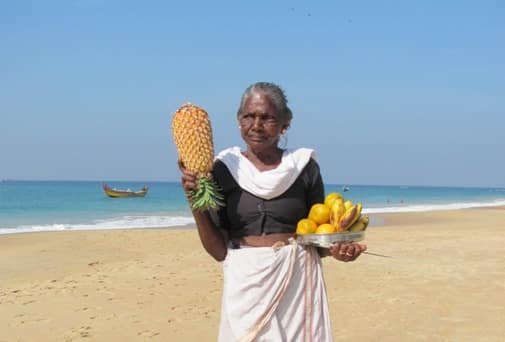

A glass of champagne left standing too long loses its bubbles. For a time I too was feeling flat. I set to task on my computer and searched for better health. It generated a multitude of resorts in Kerala with the header Ayurveda. And so while in India, I made a detour to end my stay at resorts that offered restorative treatments.
Kovalam was first brought to prominence during the 1930’s by the Maharaja of Travancore who recognised its tourist potential. By inviting guests to stay at his palace, Haylcon Castle, word spread and Kovalam became a popular holiday destination. Kovalam also attracted overseas travellers in search of a laid back beach culture and more recently seeking better health.
Kovalam is made up of several of India’s most beautiful beaches that stretch along a 17 kilometre coastline. I spent my first night there and woke to a splendid panoramic view of the Arabian Sea with fishermen pulling in their nets, all the while chanting. The beach was quite lovely but as I walked closer towards Lighthouse beach, it became more developed. Kovalam means grove of coconut trees after all, but instead there were bars, shops and hotels. I caught an auto rickshaw to Chowara beach, 8 kilometres south past villages and coconut groves. Down a narrow winding lane I arrived at a small Hindu Temple and Nikki’s Nest.
Ayurveda, the 5,000 year old traditional Indian health regimen that takes a holistic approach to health and healing by drawing on the benefits derived from herbs and plants for medicinal purposes has become increasingly popular at resorts in Kerala. But “Guten Tag” was not the welcome I was expecting on my arrival at Nikki’s Nest Ayurvedic Centre and my puzzled look did nothing to deter the eager young staff member from handing me a guide of the resort – in German. Of the 69 guests, two were Russian, the rest German.
The organic vegetarian buffet selection, with 12 south Indian dishes to choose from, was delicious. My consultation with the resort’s Doctor, Dr Priveen was less successful. He sensed my lack of knowledge about the Ayurvedic treatments on offer and was suitably unimpressed by my brief 3 night stay. I was then escorted to the massage centre. Unlike any massage I’ve had before, I was seated upright on a stool. Oil was liberally poured onto my head and rubbed in with long stokes rather vigorously from back to front then swirls and more oil.
That night I sat with Dagmar from Berlin who spends one month here each year without venturing beyond the resort’s front gates to recuperate spending her days wearing a robe with her hair wrapped in a towel to allow the Ayurvedic oil to penetrate. All guests wore robes except me and the two Russians who wore golden hotpants and lots of jewellery and did not appear to know what to make of it all.
I had so many sights to explore. Thiruvananthapuram, formerly known as Trivandrum, the capital of Kerala is a lovely city spread across a group of wooded hills. Its bustling markets and handicraft stores make it a good place to shop. There are interesting brass pieces for sale – bowls, urns and water jugs, lungis (sarongs) of light weight cotton, often trimmed in gold, dance masks, baskets and rugs.
Padmanabhapuram Palace 63 kms from Thiruvananthapuram is one of India’s most exquisite but least visited treasures, a wooden palace that once belonged to the maharajahs of Travencore, the rulers of what is now Kerala, with magnificent rosewood carvings built in the sixteenth century. The palace is now in Tamil Nadu after a redrawing of political boundaries along linguistic lines.
There were also beaches to see. Many are crescent shaped separated by rocky outcrops. I walked north past the village of Mulloor towards the seaport of Vizhinjam scrambling over rocks as I went. There were villages, Churches and Hindu temples, spice shops and tailors and a vendor delivering fresh milk on his bicycle.
Next day I walked south along the beach early enough to see the fishing boats go out. In Chowara village women were loading up fruit and vegetables to take to market. I could hear music that progressively got louder, but through the dense coconut groves, I was unable to locate its source. This was the Kerala I had hoped to find. As I went back onto the main road, the tourist shops and eager vendors appeared once more, and I was relieved when I returned to Nikki’s Nest to enjoy the panoramic views of the beach below and sip a bright pink herbal tea infusion.
I knew what was best suited for me the moment I entered the Ayurvedic Spa and Fitness Centre at the Vivanta by Taj – Kumarakom, four hours north of Kovalam. There is much to recommend Ayurvedic treatments for maintaining good health and wellbeing combined with yoga, meditation, regular exercise and a diet rich in fibre, fresh fruit and vegetables. At Nikki’s Nest, the approach requires commitment and self discipline and will appeal to those prepared to stay for long enough to realise the benefits.
For me, a soothing head and shoulder massage, combined with time spent exploring canals and villages on my bicycle, reading a good book while lying in a hammock and enjoying a sunset cruise, such as I experienced while in Kumarakom was absolute bliss. Ayurveda does renew your mind and body and perhaps that offered in such a beautiful setting is the best holiday we can ever hope to have.
Travel Notebook
GETTING THERE
Singapore Airlines flies to Cochin International Airport and Thiruvananthapuram International Airport via Singapore. TIA is close to Kovalam. Kumarakom is 175 kms or four hours north of Thiruvananthapuram, and CIA is a further 85 kms or roughly 2 hours north of Kumarakom.
GETTING AROUND
While there is a good bus service from Kovalam to Thiruvananthapuram, you will need taxis or auto rickshaws to get between beaches and resorts. There are many noteworthy palaces, temples and museums to visit and for this you will need a touring vehicle and reliable driver. Charges are reasonable. I’d recommend Welcome Tours and Travel, Email:agnesh@vsnl.com Website: www.allindiatours.com.
ACCOMMODATION
There are many budget and midrange options. Coral Reef, at Mulloor is basic and charming, with only 4 rooms. At the top end, the Vivanta by Taj – Kovalam a resort set on 15 acres of beautifully manicured gardens, with fountains, sculptures and waterfalls leading to a lagoon and semi private beach. Email:vivanta.kovalam@tajhotels.com Website: www.vivantabytaj.com
For Aruyvedic treatments, the all inclusive full board package at Nikki’s Nest is recommended, that includes yoga, meditation and massage treatments. While Europeans come during the high season especially Jan, at other times the resort
offers activities such as cooking classes and there is a balanced mix of nationalities. Email: nest@sancharnet.in Website: www.nikkisnest.com
At Kumarakom you would be hard pressed to find a more beautiful setting, more dedicated staff or more luxurious surroundings than at the Vivanta by Taj – Kumarakom. Email: vivanta.kumarakom@tajhotels.com Website: www.vivantabytaj.com Avoid the high season Oct-April when prices escalate. April can be hot and July is wet.
SHOPPING
Beachside boutiques are geared to tourists. There are many tailors. Try Sree Murukan, Royal Stitching Shop at Mulloor.
MORE INFORMATION
India Tourism, Glasshouse Shopping Complex, Level 5, 135 King Street, Sydney
Tel: (02) 9221 9555 Email: info@indiatourism.com.au Website: www.tourism.gov.in
Moving from a disadvantaged position

It is essential to maximise jobs for long term socio-economic stability

There has been an emphasis in Australia in recent years, on the remediation for wrongs which were done to certain groups in the past. These include Aboriginals, children who were forcibly and secretly brought from the United Kingdom, and those who are physically handicapped.
As a country with a strong economy, it might be safely assumed that Australia can look after its disadvantaged. But the term ‘disadvantaged’ has suddenly begun to assume a newer and broader meaning in Australia. As the Global Financial Crisis (GFC) began to unfold, a lifeline had to be thrown to those who depended on their superannuation earnings for mere sustenance, because share portfolios had begun to dramatically fall in value.
The same GFC made Australia, particularly with its high interest rates, a safe haven for foreign investors and this ensured the strength of the Australian dollar. However, a strong Australian dollar added to the cost of producing goods in Australia, made them uncompetitive on the world stage. This affected both manufacturing and agriculture. Thus numerous manufacturing units either closed down or were downsized, and some moved to a much cheaper New Zealand.
Closing down or downsizing a manufacturing plant is a very traumatic affair for its workers. The whole community gets affected. The price of houses might fall, spouses jobs might have to abandoned and children’s education could get disrupted. There have been large government handouts to keep manufacturing plants from being shut down, but the results till now have been dubious.
An example of a diversified economy is in Geelong in Victoria. It has been the home of the Ford Motor Company since 1925, including other manufacturers like Backwell IXL and MHG Glass. Not surprisingly, the Australian Automotive Research Centre is located there. Complementing the automotive industry is one the largest petroleum refineries in Australia. There are food processing units, including seafood, and these add to Geelong’s economic diversification.
A similar example to Geelong is found in Detroit in the USA. Once a thriving city with the automobile industry as its crown jewel, Detroit has now become a ghost of its former self. With its population reduced, manufacturing units in tatters and dilapidated housing, the city’s income has fallen to the extent that on July 19 this year, it declared itself bankrupt. Pension funds and other financial institutions which lent Detroit money, may well see their assets greatly reduced in value (‘from dollars to cents’).
Detroit as a whole has become disadvantaged. One needs to prevent Geelong going down the same path.
The Government in India has reserved numerous industries to the rural sector such as soap and beedies (the Indian hand rolled cigarettes). The idea is to maximize employment. The Western idea, a heritage from the days of the industrial revolution, is to reduce employment and thus to increase profits. Potential Western investors in India, particularly from the USA and Britain need to absorb the Indian viewpoint because of its prevailing socio-economic conditions. The underlying philosophy is that what is good for the greater number should prevail.
The Government in Australia has foreseen that it needs a well trained workforce. Large amounts of money have therefore been spent in bringing Australian education up to the best levels. And this includes those who are disadvantaged. Kim Carr, the Minister for Innovation, Industry, Science, Research and Higher Education claims that Australia now has twenty per cent of disadvantaged students in higher education.
These are important facts which will determine the reshaping of the Australian economy. As Prime Minister Kevin Rudd has said in a recent policy speech entitled The Australian Economy in Transition: Building A New Competitiveness Agenda: “Because the China resources boom is coming off, Australia’s core economic strategy for the future must be one which diversifies our economy by creating more jobs in manufacturing, food production, infrastructure, construction, and our many other services industries, rather than having all our eggs in just one basket – the resources and energy sector”.
Indians in Australia are found in all socio-economic groups which range from the very advantaged or rich industrialists and entrepreneurs (who are found in small numbers) to the very disadvantaged (best examples include recent migrants or asylum seekers who lack such skills such as proficiency in the English language). The latter groups (migrants and asylum seekers) have become the subject of submissions by The Federation of Ethnic Communities’ Councils of Australia (FECCA) to the Australian Government. FECCA, currently under the leadership of Pino Migliorino, receives funding from the Department of Immigration and Citizenship.
An example of the healthcare sector will illustrate the large expanse in which Indians are found. Indian doctors fill patient needs in both cities and rural areas. There are besides, Indian scientists and doctors who do research in such fields as cancer and diabetes. There are, at the other end, Indians who are patients and some who are handicapped.
Viney's emergency app

Viney Kumar is the only Australian whose app has made it to the finals at the international Google Science Fair

Google announced this year’s 15 finalists for its third annual Science Fair in June, with 14-year-old Viney Kumar making the ‘A’ list as the only Australian, for his innovative PART project.
The Google Science Fair provides a platform for budding inventors all around the world to showcase their innovative solutions, gain recognition on an international scale and realise their dreams of making a difference. The competition is divided into three age groups 13-14, 15-16 and 17-18. This year Viney will be amonge the 15 whiz kids who will head to Google’s headquarters in California on September 20, to present their projects and compete for the prize of a 10-day trip to the Galapagos Islands with National Geographic Expeditions, and $50,000 in scholarship funding.
Viney’s PART program (Police and Ambulance Regulating Traffic) is an android app designed to give an early warning to vehicles, of an approaching emergency rescue vehicle (ERV). The aim is to give traffic enough time to get out of the way of the ERV, which in turn, will enable the rescue personnel to arrive more quickly at the scene of an emergency. “My app has the potential to save lives as it is up to eight times more efficient than the current method of sirens which allows vehicles a reaction time of only 7 seconds to clear the way,” explains Viney.
Inspiration to develop the PART programme came to Viney during his recent trip to India where he was stuck in traffic and could hear an ambulance trying to get through. The helplessness of the ERV drove Viney to explore ideas of improving the system and making it more efficient. He started working on his app in January, delving into extensive research and eventually devising the early warning system employing a web server. “I conducted numerous trials using two cell phones, one sending the warning and the other receiving it,” says Viney. After recording the response times and comparing the existing statistics, I was confident of the success of my program”.

Viney saw the ad for the Google Science Fair online and decided to enter. He says the concept of such a fair was very attractive. “It appealed to me as it presented a creative approach to science, plus the range of participants was from all over the world. Globally 8,000 teens from 120 countries took part and the process was all online,” he explains.
The PART program was entered into the Google Science Fair on April 30 as a prototype, after the process of outlining the concept and writing the report to explain the hypothesis. After rigorous screening, 90 regional finalists were announced on June 12. This was followed by a face-to-face interview on the Google hangout. A second round of judging later, Viney was declared as one of the 15 finalists, and the only one from Australia to make it to this level.
Viney hopes his PART program will be available in Australia in the next couple of years on car dashboards. “Using a web server, the cars will be able to receive early auditory warning of approaching ERVs within 800m via GPS technology,” he adds. “Also, the confusion associated with determining the direction of the ERV will be eliminated as the image and direction of the rescue vehicle will be displayed on Google maps”.
Viney has no plans of putting his app on the apps market as he realises people won’t be able to use their phones while driving. He believes the on car dashboards will be the ideal home for his invention.
But with so many amazing entries from the finalists, like green technology for degrading detergents, a flashlight powered by the human hand, and the method of using banana peel to produce bio plastic, does Viney consider any of them close competition? His response to this question displayed maturity beyond his years as Vinay replies, “I find it hard to name any entry that I perceive to be tough competition because each one of the final 15 projects is on a unique topic in different fields of science. They vary greatly from each other, but each and every one of them has the potential to change the world”.
Viney is a Year 9 student at Knox Grammar School in Sydney where he has received a great deal of support in developing his program. He wishes to thank his mentor for the help with GPS coding, his science teacher Ms De Ridder, Dean of Studies Ms Karen Yager, his parents and grandparents for their tireless support in helping him reach his goals.
Currently Viney is working on a wilderness survival app and hopes to compete in the Google Science Fair next year as well. In the meantime he has set his sights on taking out the grand prize in September. He is also hoping to win the Inspired Idea Award which will be judged by public voting.
Viney is looking forward to all the support he can get from Australians in general, and the Indian community in particular, as his PART program is the first-ever from Australia to reach this stage at the Google Science Fair.
Voting for the Voters Choice Award starts on 1 August. You can help Viney succeed by casting your vote in his favour at: www.googlesciencefair.com/
Better research facilities see Indian scientists return

Finally, the brain drain appears to be reversing. Better research opportunities in India, passion to do something for their native country and family obligations have started to lure back Indian scientists working abroad.
“Nearly 500 scientists have come back from abroad and are working in various institutions across the country. Of these only six have gone back for various reasons,” T. Ramasami, Secretary, Department of Science and Technology, told IANS.
Going by the figures maintained by the union science and technology ministry, the reverse brain drain has happened largely from the US, Germany and Britain. Recently, scientists have also started coming from South Korea and Japan.
Credit must also be given to the several schemes run by the Indian government to encourage scientists and engineers of Indian origin from all over the world to take up scientific research positions in India, especially those that who want to return to India.
The Ramanujan Fellowship, Innovation in Science Pursuit for Inspired Research (INSPIRE) Programme and the Ramalingaswamy Fellowship provide good platforms to scientists willing to return.
An internal analysis by the ministry of the reasons for the reverse brain drain revealed that tough competition abroad, better research opportunities in India, love of work for the motherland and aiming to contribute to science were some of the major factors that drew Indian scientists to their homeland.
Family obligations was another reason that attracted them back home.
Sheeba Vasu, who was doing her post-doctoral research at the University of Massachusetts Medical School, said she came back as she always wanted to work in India.
“I wanted to work in India after getting trained in the US. Moreover, it is not easy to get a job as a faculty in any of the universities in the US as there is tough competition,” said Vasu, a Ramanujan Fellow since 2008. She was in the US for six years.
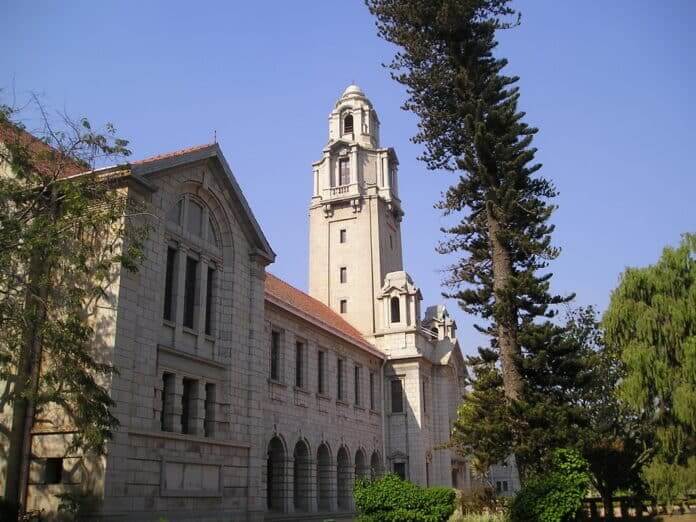
Vasu, who is now doing her research in the Evolutionary and Organismal Biology Unit of Bangalore’s Jawaharlal Nehru Centre for Advanced Scientific Research, says there are more research opportunities in Indian universities and elite institutions like the Indian Institutes of Technology, Indian Institute of Science (IISc), Bangalore, and Indian Institutes of Science Education and Research (IISERs), among others.
Echoing similar views, another Ramanujan fellow, Vidya T.N.C., said competition is much higher abroad as compared to India, where there is a shortage of experts and qualified faculties.
“There are issues though. Here, we do not have many advanced research laboratories. We also face a funds crunch. But overall it’s a good platform that gives you a kind of startup when you return to India,” said Vidya, who worked at Columbia University.
Some scientists feel conducting research in India is more relaxed while there is a rat race in the advanced countries.
“I think academic work outside India is stressful and it is a bit more relaxed in India and I am saying that in a positive way,” Ashwin Srinivasan, a professor at Delhi’s Indraprastha Institute of Information Technology, noted.
Srinivasan, who had worked at Oxford University, said there is an economic crunch in the academic setup abroad and it is tough to get research grants.
“The research setup is better in India and the opportunity to work in science in India is not as bad as it being said. Yes, there are things like most of the big science ideas are explored in institutes abroad and lack of options to do inter-disciplinary research that hurts,” said Srinivasan, who has been abroad for 15 years and took a four-fold cut in salary when he returned to India.
The figures show that the researchers prefer to work in Karnataka, Maharashtra, Andhra Pradesh and West Bengal. The reason is that these states have the largest number of good research institutions.
“Through various schemes, we provide a platform under which scientists in the age-group of 30-45 years can work in any of the scientific institutions and universities in India and would be eligible for receiving regular research grants and a monthly remuneration,” he said.
Srinivasan, who is a US citizen, suggests some changes – for instance, schemes should be flexible to ensure people of Indian origin who are not Indian citizens can also take up jobs at central government universities and institutions.
“Some more initiatives are needed to make India a very attractive destination for scientists wanting to work for their motherland,” he said.
IANS