Home Blog Page 1008

Colonial and contemporary

0
Reading Time: 4 minutes

Hong Kong is a growing commercial capital, but traditional heritage and cuisine are existing links to its past, writes SANDIP HOR

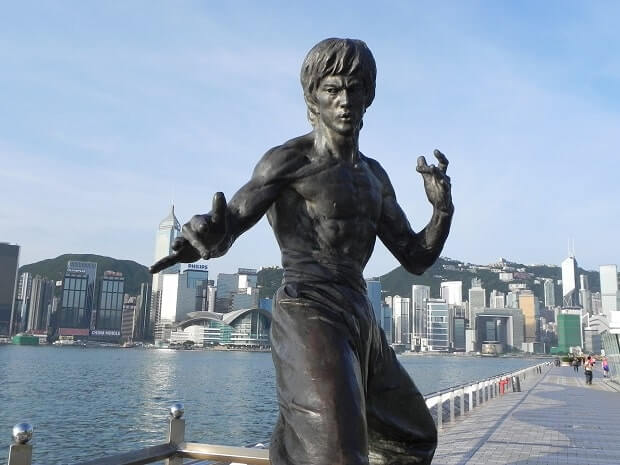
 Bruce Lee at the Avenue of Stars

After a gap of 25 years, I stepped into Hong Kong expecting lots of changes particularly with the island nation becoming part of China in 1997, ending its century old British colonial rule.

“The political shuffle hasn’t changed much of region’s character and you will see it yourself,” said Sam, a Hong Kong businessman sitting next to me in the plane. “Hong Kong still brings the best of East with West, and after the changeover it still presents a westernized face, but of an ancient civilisation.”

As I began the rediscovery of Hong Kong and its sister Kowloon, it didn’t take much time to realise what Sam’s message had been. Yes, the Union Jack has been replaced with China’s Red Flag, but its British heritage hasn’t been totally lost. That’s why the eminent statue of Queen Victoria still graces Victoria Park, the former British Governor’s House has become home of the current head of state, and the names of many roads and sites like Robinson Road and Admiralty have remained unchanged, a reminder of the colonial legacy. Similarly on another front, ducks bursting their neck (NOT SURE WHAT THIS MEANS, HANGING BY THEIR NECKS? MAY BE LESS GRAPHIC TO SIMPLY SAY ‘hanging..’) in restaurant windows, fortune tellers touting within temple premises, laundry hanging from apartment balconies and old fashioned wooden boats floating in the harbour haven’t disappeared from the scene at all.

So as Sam claimed, the city’s character hasn’t been tainted much, but this doesn’t mean that there haven’t been any changes. According to a taxi driver, the transformation has been very aggressive in the last two decades, but more towards scaling up the city’s contemporary lifestyle elements and infrastructure. More towering skyscrapers, more hotels, cafes and bars, more ultramodern fashion outlets, an expanded underground rail system and abundance of 21st century attributes in every direction, testify to his statement. “But the city’s inner soul is still the same,” he stated while dropping me at my hotel, the Kowloon Shangrila Hotel, which continues to be a long-time sanctuary of luxury alongside its big brother, Island Shangri- La Hotel on the Hong Kong side.

Hong Kong welcomes over 40 million visitors annually. Some of them are business travellers, but a majority are leisure-oriented who are drawn to this vibrant city for its endless shopping, adventurous eating and finally, to immerse themselves in a lively atmosphere. That routine hasn’t changed at all; rather it has become more energised with an increase in people and technological upswings.

Glittering malls and local street bazaars dominate the shopping arena, both heavily crowded with locals and visitors carrying bags with merchandise ranging from voguish apparel, trendy leather goods, fashionable jewelleries and the latest electronic goods, to cheap and counterfeit, but still dazzling products from China. The old and famous Harbour City mall at the waterfront in Kowloon with its 450 shops still remains a haven for buyers, while the old Sogo Departmental Store and a new setup at Time Square at Causeway on the Hong Kong side, has blossomed into the ultimate shopping landmark.

I always prefer the open-air markets for hands-on encounters with locals. Hong Kong and Kowloon have several, some themed such as the Flower Market, Jade Market, Gold Fish Market and the Birds Market, while the Ladies Market open to all is great for buying good quality clothing, and the Temple Street Night Market is open till midnight to pick up last minute bargains. They all exist and assaulted my senses the same way as they did 25 years ago.

The city’s food panorama hasn’t changed either; rather, it has become a bit more stylish. The city boasts of over 10,000 restaurants, flagging the fact that nobody eats at home. Right from the early hours of the morning till late at night, street stalls are packed with people eating congee, rice noodles or rice served with generous helpings of meat, seafood or vegetables. The style of the cooking is mainly Cantonese, and the quality of the food is extraordinarily good.

This time I commenced my culinary experience at the high-end with meals at the Michelin two-star Shang Palace at Kowloon Shangri- La Hotel and Lobster Bar and Grill at the Island Shangri- La Hotel, both of which evoke in me the grandness of gastronomy. I took this mouth-watering feeling to some of the city’s other food outlets along Nathan Road in Kowloon and in the Central District, Causeway Bay and Wan Chi on the Hong Kong side and once again affirmed why this ‘neon-city’ is often called the culinary capital of the world.

Though retail therapy and food sampling are ranked high in order, don’t totally ignore savouring some the city’s other appeals that can be equally fascinating; hiking up to the top of Victoria Peak for a spectacular island view, rediscovering Hong Kong through the windows of a double-deck tramcar and cruising the grand Victoria Harbour are the few considered as ‘must do’.

On my last visit I enjoyed trundling along the Tsim Sha Tsui waterfront promenade, where the historic Clock Tower has been keeping an eye on everyone since 1915. I went back there again and saw the new addition – the Avenue of Stars, modelled on the Hollywood Walk of Fame. With commemorative plaques, celebrity handprints, descriptive milestones, movie memorabilia, a life-size statue of kung fu action hero Bruce Lee and a bronze rendering of popular cartoon character McDull, the Avenue of Stars fittingly sets the glamour of Hong Kong’s film industry against the captivating dazzle of Victoria Harbour.

While watching the afternoon buzz at the Star Ferry terminal at the end of the promenade that operates the Hong Kong-Kowloon services, I confirmed that despite changes, this gem of a destination still retains its irresistible charms.

Travel Notebook

Getting there –One option is to fly Cathay Pacific (www.cathaypacific.com/au) to Hong Kong

Accommodation – Stay at the Shangri-La Hotels (www.shangri-la.com). They have two properties –Kowloon Shangri-La in Kowloon and Island Shangri- La in Hong Kong Island. Reasonably priced, both are the epitome of luxury, conveniently located close to iconic attractions, shopping and public transportation. The services offered are par excellence and dining options are a landmark feature.

Getting around – Metered taxis are cheap and easily available, however using the efficient underground rail system (MRT) is the best option for fast and comfortable journey between destinations. The stations are well sign posted for visitor convenience.

More informationwww.discoverhongkong.com

India in the air at Liverpool

0
Reading Time: 2 minutes

The inaugeral festival Starry Sari Night turns out to be a hit! And Indian Link’s Anup Kumar is the MC

MC Anup Kumar chats with T-20 Big Bash League Sydney Thunder player Gurinder Sandhu

Liverpool’s busy thoroughfare of George Street was transformed into a sea of vibrant colour on August 31 as the local council launched its inaugural Indian festival, Starry Sari Night.
More than 3,000 people enjoyed the free event which included Bollywood dancing workshops, music, food stalls, fashion stalls, a fashion showcase, and a screening of Shahrukh Khan’s Om Shanti Om.
Liverpool local Anup Kumar was thrilled to be MC at the event.
“I was proud to be part of this event bringing my culture to the mainstream in such a major way,” Anup told Indian Link newspaper. “And to be hosting it in my local area, was surely the icing on the cake”.
Anup is a well-known voice on Indian Link Radio, where he hosts two weekend shows, namely Girmit Link (Sat 1-4pm) and Lazy Sunday Shaam ka Safar (Sun 5-8pm). His gentle style of presentation and his well-researched stories and music from the diaspora have won him many fans over the last nine years. He has also endeared himself to his local community via his popular Ramayan mandali.
But it was mainstream Indian culture that Anup was talking about at Liverpool on August 31.
“Seeing the crowd enjoying the flavour of India with various food stalls, dance workshops, information stalls, and a catwalk with beautiful models, together with Miss India Australia 2013, made this event a huge success,” he said.
Liverpool City Mayor Ned Mannoun said the event was part of Council’s strategy to make the Liverpool City Centre more active and vibrant, particularly during evenings and on weekends.
Starry Sari Night certainly helped achieve that goal and we are considering holding similar events as this one proved to be popular,” he said.


Playing games with the game

0
Reading Time: 4 minutes

Cricket has morphed from a prolonged gentleman’s game to a fast-paced, finance-friendly and techno-savvy sport
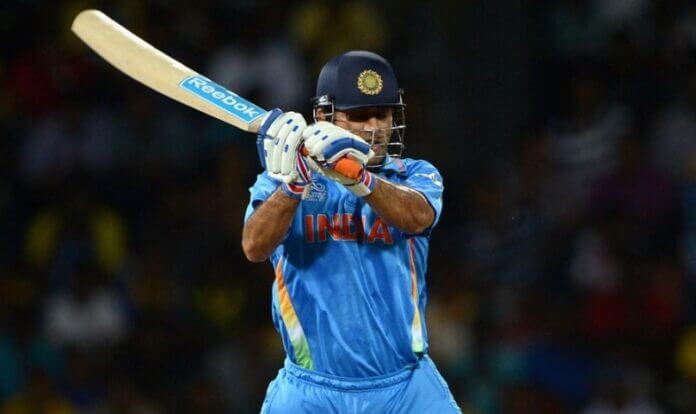
MS-Dhonihelicopter-shot
Cricket as a game is more than 200 years old and was originally played by British aristocrats who christened it the ‘gentleman’s game’.  It presumably never intended to acquire a global following or participation. But the best-laid plans go awry and it comes as no surprise that there were detractors who disliked the narrow limits drawn by the founding fathers of cricket.
 
Too testing!
In the early 20th century, even George Bernard Shaw could no longer associate himself with this exclusive preserve of the rich and the famous, and decided to call it a sport played by “22 flannelled fools and watched by 22,000 fools with nothing better to do”.  Until then, a great number of cricket games ended in a stalemate called a draw, with no winners or losers. Most critics of the game asked what the purpose of the sport was, if a test match ended in a draw after five arduous days of competing. Thanks to the well-known vagaries of the English weather, the game would be frequently suspended because of rain or poor light. None of this endeared the game to the spectators, who took refuge in saloon bars attached to cricket ovals.
In Europe and North America, cricket as a sport did not grow in popularity with Americans developing baseball, their home-grown substitute with similar characteristics. Most people in Europe saw cricket as a tired, dull and lazy pastime which was played over five days of action in slow motion.  The British therefore looked to popularise the sport within the Commonwealth, an extension of the Empire, and the game took root in South Africa, Australia and the Asian sub-continent.
 
Trite terminology
Consider the weird terminology associated with the game: fielding positions like silly mid-off or silly point, long leg, fine leg, square leg, gully, slips and cow corner, have a whiff of their colonial connection. There is little in the above that suggests a competitive angle or an attacking posture. That is, until Douglas Jardine, captain of England invented bodyline in the 1930s, instructing his bowlers to attack the Australian batsmen and aim at their bodies, rather than at the stumps as an intimidating tactic. Bodyline created much more than a storm in a teacup, leaving the Australians aghast. Cricket administrators hastily created laws to prevent intimidating bowling.
 
ODI emerges
In the 1970s, Australian business tycoon Kerry Packer created a fast and furious rival to test cricket that was short, sharp and guaranteed to produce a winner and a loser.  Inevitably the cricket establishment in England was scandalised, and refused to admit the renegade rival any official status. They dubbed Packer’s one-day carnival of cricket as a pyjama game since most of the players and officials were attired in coloured clothing which endorsed commercial sponsors. Packer however, by enlisting leading cricketers, made the game a professional sport overnight. More importantly, with just 50 overs for each side, the game was over within a day or night. One-day cricket is now played in the wee hours of the evening in a floodlit stadium. It has also become very watchable and ensured good gate money for the benefit of players, officials and cricket administrators. The top levels in cricket hierarchy eventually joined the bandwagon. Money power was well and truly made available to the game, but also commercialised within a short span.
 
Fast and furious
In the new millennium, further innovations have created a hybrid that lasts only 20 overs for the competing sides, requires supreme fitness of players and is supported by latest technology with several different camera angles and a spider cam to boot, that hovers above cricket ovals like a low level satellite. Technology has given new armoury to cricket umpires in the form of snicko, hot spot and the stump cam among others, that enables them to hear even sighs and whispers of those in the field of play. Action can be endlessly replayed instantly for lovers of the game, resulting in public scrutiny of every shot. The game has been revolutionised to the point of bringing a lot of positives and negatives to the repertoire, with the objective of bringing in a full house of spectators and advertising revenues. In global terms, Twenty20 has the hype of a Superbowl in American football.
 
Innovation to tradition
There are new developments in the way the game is played too. Batsmen have added an array of new shots, namely the reverse sweep, slog sweep, back cut, late cut and upper cut, helicopter shot (attributed to the Indian captain MS Dhoni) and Dilscoop (credited to T Dilshan of Sri Lanka). Australian David Warner invented the switch hit, which can be played by anyone who is ambidextrous. Bowlers, on the other hand, have also shown their ability to adapt, they now have the carrom ball, arm ball, slow bouncer, low full toss, the reverse swingers, yorker and doosra, all of which make it hard to decipher for the batsmen. Cricket legends like Don Bradman and Ranjit Singhji would surely turn in their graves and wondering how much more mutilation the game will invite. It is fair to say that cricket is now a richer game, despite innovations that are a far cry from its established traditions.
 
Beyond the bat
Protective equipment such as helmets, shin guards, abdomen guards, chest and elbow guards are already widely in use and make the players look robot-like, but help prevent injuries. Umpires who adjudicate the proceedings on the field have a tough time holding their own against technology that obviates human error and questions every judgement made by them.
With money power comes the corruption potential. The game is at odds with match fixing, spot fixing, online betting and scandals involving players and officials who are accused of aiding and abetting bookmakers.
Cricket is not a sport dogged by drug cheats so far, although some banned substances have been used by players to enhance their performance. Sledging and playing mind games with players is a strategy used by some cricketing nations, and racial vilification raises its ugly head from time to time.
The new superpowers calling the shots about the future of cricket come from the South Asian subcontinent where the game has a huge following. Playing games with the game of cricket has added colour, pomp and circumstance to this sport.  The popularity of the game is growing by leaps and bounds, and entertainment is the key. Some of the old bastions of the game will fall, but it will be compensated by greater patronage the world over.

Pesh-e-khidmat hai….

0
Reading Time: 3 minutes

Community poets get a chance to strut their stuff, writes ASTHA SINGH
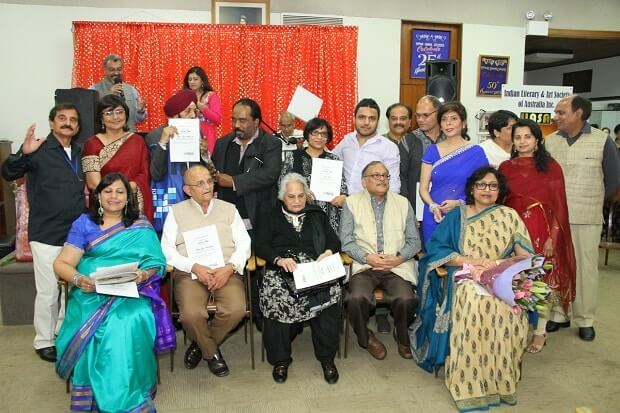
IMG_5321
September 14 marks the date when we celebrate India’s national language Hindi, as Hindi Divas or Hindi Day. It was on this day in 1949 that the Constituent Assembly of India adopted Hindi as the official language of the country.
Lovers of Hindi in Sydney’s Indian community mark the event in their own way every year, but one event has been gaining in popularity in recent times. The Indian Literary & Art Society of Australia Inc. (ILASA) organises a kavi sammelan (poets conference) that attracts many established, as well as budding poets in the community. Launched by Rekha Rajvanshi, herself a well-known writer, poet, playwright and teacher of Hindi, the event has gone on to become the hallmark of Hindi Divas celebrations here.
This year, ILASA put together a joint poetry and music evening, Kavi Ke Udgar, Sangeet Ki Jhankar, with a romance theme.
Held at the Epping Leisure and Learning Centre, it gave many the opportunity to express their opinions on various issues by way of poetry, while being regaled by some of the Hindi language’s best known songs from Bollywood. The 200-odd audience, set with cups of chai (the kavi’s favourite drink?), sat around, some in mehfil style, as each presenter took centrestage.
Gaurav Kapoor hit the ground running with his sensitive piece on women’s empowerment, safety and liberation, issues that have plagued the nation in recent months and left us aghast.
Dr Nihar Agar then presented his poem Tum janmey meri dharti par, padh likh kar yogya baney ho tum about Mother India and her words of hope for us all Indians.
Lotey mein kuch neer bhara hai… such were the words of Garima Trivedi who won hearts at the kavi sammelan with her immaculate command over shuddh Hindi.
Mera romance, a poem about India from before Independence to current times, was presented by Jasbir Ahluwalia, followed by Chahat mein basa lo to inayat ho poetry by Gurpreet Bahl. Ritu Bhamra, Sukhpreet and Sonu Sarda’s (Pyar dekha hai) romantic poems were a great contribution to the event and were appreciated by the audience.
Senior poet Vimla Luthra with her lovely poetry about Hindi language added grace to the occasion and other peers were blessed by her words.
Pradeep Upadhyay’s comedic piece about a poet sending his verses to an editor that get rejected, and resending the same verses on the name of a 16-year-old female was remarkable and made the audience burst with laughter. Although we’ve heard this one before at a previous ILASA kavi sammelan, it was fun to hear it again, even as it helped lighten the mood after some heavy pieces. Swati Tiwari’s humorous poems entertained just as much and were very welcome. Vijay Kumar Singh’s geet Jheena jheena uska anchal was beautiful.
Mention was made of festivals close to the time, such as Ganesh Chaturthi and the birth anniversary of Ramdhari Singh Dinkar, and quotes and poetry of great poets Prasad, Pant, Gulzar were read in between the events. Community elder Sant Ram Bajaj’s Book Gustakhi Maaf was also acknowledged and showcased at this occasion.
Rekha Rajvanshi as MC introduced each poet with a few lines and in the words of one of the poets present in the audience, in a wonderful gesture of peer-appreciation. Other MCs Iqtedar Abdi and Raj Rajpal Sandhu were innovative and carried off the evening with a good sense of humour and welcoming gestures to the poets.
The music came courtesy of Vinod Rajput and his team, Richa Srivastava, Lalit Mehra, Sunny Sharma, Arun Nanda, Reena Mehta, Lata Baraskar who entertained with classic and old Bollywood numbers with their fresh voices and live instrumental band.
Phool tumhe bheja hai khat mein, Jhooley pawan ke layi bahar, Masti bhara hai sama and Billo rani were amongst a few numbers presented that set for the audience just the right mood for the evening. Although the inclusion of Billo rani in the song-list was criticised by some as not being an appropriate number for this evening, the MCs clarified its literary origins coming from none other than the famous lyricist Javed Akhtar. Every piece of poetry deserves respect, it was pointed out, and can serve as entertainment.
Yet, it was the wonderful variety of poetry that won the day that day.
Here’s hoping that the kavi sammelan tradition continues to grow unabated.
 
Photo: Sid Photography

People power leads to split result

0
Reading Time: 3 minutes

While the result of the ruling party in power is clear, the Senate remains a hotbed of clashing objectives, writes NOEL G DESOUZA
240313-110629-australian-parliament-coat-of-arms
The 2013 elections in Australia have resulted in a ‘people power’ change, given the widespread support that those standing for a new government received. It was done through the ballot box and an individual’s right to vote. That meant that aspiring politicians had to play by the rules of the established system. This has been best demonstrated by the motley collection of minor parties in the Senate. The Labor Party lost the election by 3.5%; in contrast, when Howard got elected in 1996 it had lost by 5.8%.
‘People Power’ can manifest in different ways. In 1986, President Marcos of the Philippines was overthrown by sustained demonstrations (said to be by up to two million people) with the support of the army and the Catholic Church. These latter organisations had once supported him during his long reign which was marked by corruption and disregard for the rule of law. The demonstrations ended with the installation of President Corazon Aquino, whose husband Benigno Aquino was gunned down at the Manila airport when his plane touched down after a well-publicised return to challenge Marcos. That was the last straw in the patience of the people.
In the last few years, there was an attempt to emulate a similar strategy in New Delhi. There were demonstrations centred around the figure of Anna Hazare, a supposedly devout and honest man. The claim that Hazare was a personage above politics and highly moral has been disputed and put to rest.
Changing a government through mob agitation can be interpreted as undemocratic, if democracy and the rule of law still prevails in a country. India is democratic with a well-functioning judicial system. Loud shouting and unruliness cannot be allowed to engineer regime change. Subsequent events have vindicated the democratic nature of India.
In Australia there was a hint of the ‘large demonstrations’ strategy when party leaders (mostly Liberal) were photographed with placards behind them. That was a simple but effective way of getting one’s message across. Strangely, the Labor Party did not use a similar strategy.
In Australia, for a government to wield close to absolute power, it has to control both the House of Representatives and the Senate. The last few governments did not control the Senate.  The Senate is a good place to have allies for a party in opposition, but it becomes troublesome for a party in power. When a party wins power, one often hears talk about reforming the senate. That is a virtual fantasy because that would need a referendum, and Australia is notorious for rejecting referenda.
The Greens have held the balance of power in the Senate till now, but their vote has reduced (by 3.3% to 8.4%) and they will lose that control after mid-2014, because their numbers might be reduced by two senators. Green Senator Sarah Hanson Young’s vigorous defence of refugees raises the question: Which Australian group was she supporting? Refugees do not have a vote until they become citizens, as until then, they are foreigners. Nevertheless, the Greens keep control of the Senate till the middle of 2014. So till then all controversial legislation such as changing or abolishing the carbon tax, could get blocked.
After mid-2014 a new set of alliances will come into play in the Senate. There are going to be several small parties that need to be wooed to enact promised legislation.  The motley collection of parties and individuals includes Palmer’s United, Katter, Pauline Hanson, Motor Car Party and Sex Party.
Palmer has effectively played the Australia card. He joyfully sang to his followers that ‘We are all Meat Pies’, meaning thereby that we are Australians independent of foreign influence and having our own symbolism. Palmer’s Party extended its reach even into Tasmania by unexpectedly getting 20,000 votes.
In the UK, there are limits to the power of the Upper House (or the House of Lords) in rejecting bills. Financial bills are approved even though the Upper House may not be happy with the proposed measures. In Australia, like in the USA, full approval by both houses is required.
The Australian people have changed the government, but burdened it with a non-compliant Senate. The change has taken place peacefully and is in stark contrast to the mayhem that characterised Middle Eastern politics at the same time.

Quick and quirky quinoa

0
Reading Time: 3 minutes

Heralded as a superfood, the seed can be easily adapted to a range of dishes, writes MYTHILI IYER
dsc_0148
Quinoa, pronounced as ‘keen-wah,’ is actually a seed but can be prepared like rice or barley, and can be incorporated in different ways in our daily meals. It takes less time to cook compared to the other grains like rice, barley or lentils. There is a red variety of quinoa as well, which takes a slightly longer time to cook.
Totally organic, quinoa provides the highest protein and it is totally gluten free and cholesterol free. It is also generally low in calories and fat, but is considered as the best supplementary grain because of its high protein content. Quinoa was a staple food in South America as one of the few crops they cultivated at high altitudes. It is great for those suffering from migraines as it contains magnesium, which relaxes the blood vessels. The seed is usually available in grocery stores, health food shops or can be ordered online.
Because of its versatility, many meals can be prepared using quinoa. Try out some of these healthy recipes using this natural, healthy seed.
 
Quinoa and veg upma
A nutritious and quick fix snack
 
1 small packet sago
1 cup quinoa flakes
1 packet salted groundnuts/peanuts, powdered
4-5 medium potatoes, boiled, peeled, sliced
1 large onion, sliced
1-2 green chillies, sliced (optional)
1 tsp tamarind paste or south Indian vathalkuzhambu mix
1 tsp chilli powder
1 tsp asafoetida
1½ cup mixed veggies
2-3 tbsp oil
2-3 tsp salt, as per taste
2-3 tsp chopped fresh coriander
Soak sago for about 2 hours, then rinse and filter, leaving to drain for 10 minutes, to prevent it from becoming mushy. Fry half the sliced onions in a thick bottomed frying pan, add the sliced boiled potatoes and shallow fry. Keep aside. Add some more oil to the pan, add the rest of the onions and sliced green chillies, and fry them till the onion turn golden brown. Add the mixed veggies and cook till soft, taking care not to overcook. Add the quinoa flakes and roast along with the other ingredients for about 5 minutes, then add the sago, salt and chilli powder. Add the tamarind paste or south Indian vathalkuzhambu mix and stir through gently, mixing well. Cook on low fire for about 5 minutes, covering the pan. Finally, add the powdered salted peanuts and finely chopped coriander as the topping. Mix again and serve hot with green chutney or coconut chutney.
 
Quinoa frittata
A low GI healthy snack, made more filling with quinoa
 
2 cups quinoa flakes (red variety is more healthy)
3 medium zucchini
3 garlic cloves, minced
2 eggs
½ cup Mozzarella cheese
¼ cup sundried tomatoes, soaked in warm water
¼ cup basil, finely chopped
½ cup wholemeal flour
2 tsp salt
 
Cook quinoa according to the instructions on the package. In a bowl, beat the eggs till fluffy and frothy. In an oven proof pan, grate the zucchini and cook it till it browned. Add garlic, sundried tomatoes sliced into small pieces and cook the mix for about 3 minutes. Add the precooked quinoa, wholemeal flour, salt and finally pour in the beaten egg, cheese and chopped basil. Mix well and semi-cook on fire. Shape into rectangular shaped patties and finally bake in the oven at 120 degree Celsius for about 8 to 10 minutes till it gets brown coating from top of the patties. Serve when crispy and hot as a wholesome breakfast along with a bowl of mixed fruit for a balanced meal to start the day.
 
Quinoa patties
Makes 25, delicious crispy patties
 
2 cups quinoa flakes
2 large potatoes, boiled
5 finely chopped green chillies
1 tsp garlic paste
2 red onions, finely chopped
1 cup besan (chana flour)
2 tsp red chilli powder
1 tsp asafoetida powder
1 small bunch fresh coriander leaves, finely chopped
2 tsp salt
Breadcrumbs to roll the patties
Oil for frying
In a large bowl, mash the boiled potatoes and add all the other ingredients, except the breadcrumbs. Knead until well mixed and make small balls, approx. the size of a medium lemon. Roll them into the breadcrumbs, and press gently to make a flat shape. In a non-stick frying pan, shallow fry the patties, and drain them on a paper towel to remove excess oil. Serve hot and crisp with spicy and tangy green chutney or chilli sauce.
If you prefer to add more veggies, chop them finely and semi-cook in the microwave. Add to the mix when making the patties. They will also add a touch of colour to the dish.
 

Importance of the Indian vote at the 2013 Federal Elections

0
Reading Time: 3 minutes

 Indian Link has got it right yet again, writes PAWAN LUTHRA in his editorial
 
AUSTRALIA-POLITICS
Indian Link has got it right yet again. In a poll we conducted prior to the 2007 elections, the trend was clearly towards the Australian Labor Party and after 13 years in government, the Liberal party led by John Howard was defeated. And so Kevin Rudd made true the ‘Kevin 07’ prediction.
In 2010, the community-based poll called the election a draw, and right enough, Australia experienced a hung parliament.
And in the 2013 elections, our online poll indicated a margin of 7% in favour of the Coalition Liberal National Party. As the final results have come through, we see them finally polling 53 to 47 against the ALP on a two-party preferred basis. The local Indian community has now got it right three times in a row!
While there can be many answers, it is worth acknowledging that the contemporary Indian is a highly political animal (passionate political debates are a common occurrence at the friendly neighbourhood chaiwallah’s), and this could certainly be true of the Indian populations here in Australia. With democratic principles as part of their DNA, they are adept at cutting through the political talk and understanding the underlying issues. As a number of them are new migrants, they are not glued to a particular party or a sentiment; rather they fall in the category of swinging voters and are able to take informed decisions.
To date, there haven’t been any discernable attempts by any party to woo these voters, so they are politically agnostic. They also do not have any local heroes in the form of strong Indian Australian candidates in a winning position, so they lack an affiliation to any party. It will be interesting to note if the dynamics actually change as the community grows from its current numbers of just over 400,000, to further north.
The two heroes of this Federal Election have doubtlessly been Labor members for Parramatta and Greenway, Julie Owens and Michelle Rowland respectively, who were set to lose their seats, according to all mainstream polls. Ms Rowland won her seat via a slim margin of just 779 votes in the 2010 elections, and Owens was written off by the punters. But these very same pundits did not take into account the work done by these two candidates within the Indian Australian community in their local areas. There was seldom an Indian function at which they were not seen. In fact, one suspects that Julie Owens’ wardrobe has a substantial range of saris and salwar kameez sets. At the recent India Australia fair, Owens attended for most of the day, working the crowds. In fact, she made a brief appearance at the formal function, but as soon as it was clear that she would not be sitting on stage, she slipped away from the speeches and went back to work, harnessing local votes for herself.
Michelle Rowland’s appearances at the local Parklea Gurudwara endeared her to the local Sikh community in an area strong with Singhs, which would have made a large impact on her final vote. Congratulations to both of them and their local Indian advisers for working hard to win the hearts and minds of Western Sydney’s Indian community.
One suspects that it is simply a matter of time before there is a greater presence by the powers that be at Indian community gatherings.

Bhakti through dance and song

0
Reading Time: 2 minutes

Simple, yet powerful artistic classical performances evoke the glory of the divine, writes DINESH RAMANAN
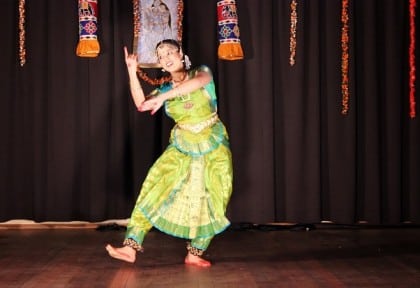
IMG_7263
The Global Organisation for Divinity (GOD) Australia, staged an evening of dance and music recently at the Dundas community centre, in connection with the Krishna Janmashtami celebrations. The Master of Ceremony mentioned in her introduction, the many facets of Lord Krishna’s personality and thanked the artists for coming forward to perform at the event. She observed that to learn the art with devotion and to offer it back to the Lord is a great form of prayer in itself.
The initial part of the evening was an hour-long Bharathanatyam performance by Shruti Sharma. With great elegance and poise, Shruti brought out her phenomenal talent in this classical dance. Her swift and dexterous movements and fantastic facial expressions demonstrated perfectly that Bharathanatyam is indeed music in visual form. Shruti expressed the meaning of the songs through hand gestures and eye movements, and the rhythm with her feet. One could clearly get a whiff of the essence of natya shastra,Yato hastha, thatho dhrushti, mana, bhava and rasa” in that sequence. What better way to transport the audience to a state of mental devotion for an entire hour! The songs chosen by Shruti for the dance were very meaningful, simple to follow and perfect examples of simplicity that is Bhakthi. Starting with Sri Muralidhara Swamiji’s composition Bhagyamae Bhagyam, it included Sri Ramachandra kripalu, Odi odi olivadhu, Ananda thandavam, Chaliye kunjanamo and the thillana. All these songs brought out in an artistic way, the efficacy of singing the divine names of the Lord. Shruti’s teacher Hamsa Venkat choreographed her dances and the rhythmic articulations bore the stamp of excellence for which Venkat is renowned.
The second part of the evening belonged entirely to Mrs Laksmi Abhishek and her group. Kranthi Kiran Mudigonda was on the violin, Sivakumar Sethupathy on mridangam and Hari Shankar on kanjira. For about 90 minutes, the artistes held the audience of 150-plus completely spellbound. With ‘Swagatham Krishna’, Lakshmi made a glorious start invoking a sense of surrendering our ego to the Lord, with her melodious voice. This was followed by Sri Muralidhara Swamiji’s kirtan, Manobalam yenakku arulvai which was sung with a great depth of emotion. As the concert progressed, it quickly became a great feast to the ears and minds rendered by such an excellent blend of sruti, swara, raga and tala. The melody of the violin and the rhythm of the mridangam and kanjira were of the highest order. The songs Varadharajan upasmahae, Kanna, kaatharul, Pachai ma meni, Baro Krishnaiah and the finale Vittala were not only great musical treats sung with such melody, but they conveyed very deep thoughts and glorified bhakti in a very emotional way.
The secretary of GOD Australia felicitated the artistes for their enthusiastic participation, and expressed his heartfelt appreciation for their excellent performances. In organising the event, GOD Australia desired it to be not merely a cultural event, but aimed to convey the point that bhakti, especially through singing the divine names is very relevant and important in modern times. The artists of the night brought out this point in such a simple, elegant and powerful way that the audience would never forget, ever!

Flat characters, stilted performances in forgettable flick

0
Reading Time: 3 minutes

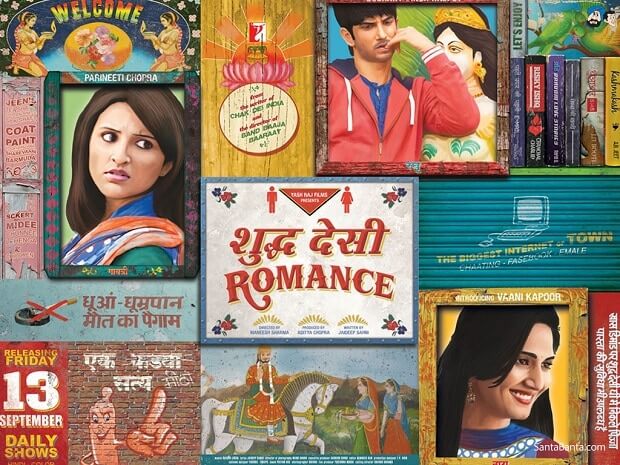
Film: Shuddh Desi Romance
Cast: Rishi Kapoor, Parineeti Chopra, Sushant Singh Rajput, Vaani Kapoor
Director: Maneesh Sharma
*1/2
 
CINETALK shuddh desi romance
While watching light-hearted love stories also known as ‘rom-coms’, two reactions come to mind: ‘What next?’ and ‘Who cares?’ This annoying film, masquerading as a modern-day parable on ‘What Young People Want’, definitely falls into the ‘Who cares?’ category.
The three main characters are so confused about life, sex, love and commitment (in that order) that you wonder why a film was scripted about them and their annoying lives in the first place. The ‘hero’, if he can be called that, is not only commitment-phobic but impervious to any kind of gravity in life.
Don’t misunderstand. He takes himself very seriously. But it’s hard to take him seriously as he vacillates between two women, both equally absurd in their libertines’ apparel borrowed straight out of some stale Julia Roberts-Susan Sarandon film which probably got shelved because the hero ran away with the cameraman.
Shuddh Desi Romance is so contaminated with candour, it doesn’t realise the difference between being sincerely searching and artificially scandalous.
Jaideep Sahni has written some remarkable films in the past, but sadly this ranks as his worst-written endeavour to date. The film has only three main characters, one of who is employed solely in slipping in and out of the two women’s lives.
Shuddh Desi Romance is not the kind of film that obtains or even seeks a decent resolution. The plot is happy to let the protagonist Raghu stew in his own orgasmic juices.
And he is plainly horny all the time. The over-zealous Sushant Singh Rajput as the hero doesn’t even try to hide his hard-on, wearing his libido like a badge of honour and flaunting his carnality in front of the two ladies. They, for reasons best known to them, seem to enjoy his company after an initial bout of demurral.
It is baffling how a protagonist as low-life and sleazy as Raghu can attract two attractive, feisty, free-willed women. Or why they would encourage his advances when they know he thinks only with his …well, to use a term Rishi Kapoor uses with such endearing picturesqueness…pappu in the pants.
Pappu in the pants has rollicking time. Curiously the hero and his horniness are like two different entities in the film which simply celebrates, for want of a better term, low-life libidinousness.
Raghu, as played by Sushant, comes across as a wimpy womanizer and nothing more than an irksome skirt-chaser.
The two women are more interesting, as always. Especially Parineeti Chopra whose dumbly defiant, smoking, swearing, character Gayatri acquires some stability through her fearless embrace of the camera space. No matter how frustratingly ill-conceived Gayatri’s rebellious attitude may be, Parineeti owns up to the character’s weaknesses like a man.
Debutant Vaani Kapoor plays her very awkwardly-written character with a mysterious smile that suggests it knows something that we don’t. Not that we care.
Most of the principal actors barring Rishi Kapoor give over-rehearsed performances, projected as laboured casualness. Rishi Kapoor as the wedding caterer is the exception, sinking his teeth into his role. The self-defeating numbing verbosity of the three main characters in this lust-triangle do nothing but speak about their pathetic self-limiting world. Soon we feel like reluctant eavesdroppers in an ill-managed ménage a trois.
Flat and phoney, the self-conscious realism of small-time gender-equations in Shuddh Desi Romance leaves us untouched, unamused and cold.
Live-in relationships never felt less inviting.
Subhash K. Jha

Taut, tense, tactile and terrific

0
Reading Time: 3 minutes

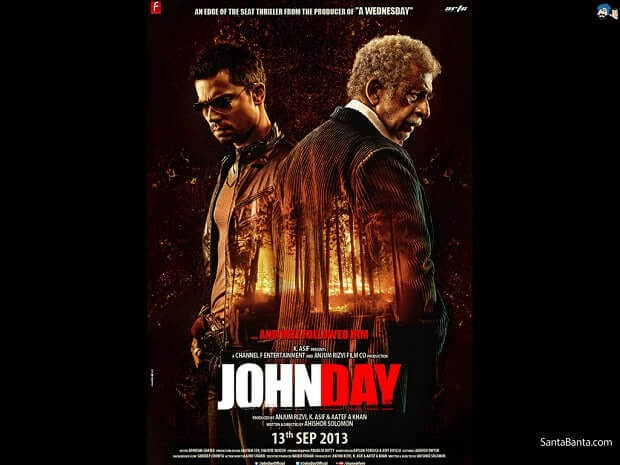
Film: John Day
Cast: Naseeruddin Shah, Randeep Hooda, Shernaz Patel, Elena Kazan
Director: Ahishor Solomon
***
CINETALK john day
Viewing John Day has the thrill of discovering an unexpected little gem. It doesn’t matter where writer-director Ahishor Solomon got the raw material for this gripping cat-and-mouse tale. What counts is the quotient of curiosity and suspense simulated by the script. And there, John Day ranks very high.
Not for a while have we seen a film so steeped in despair, so swathed in anxiety, so audaciously draped in despair, and yet it engages our senses without miring the plot in morbidity.
The story is not for the squeamish. The two main characters are constantly haunted by their irrevocably tragic parts. Naseeruddin Shah and Randeep Hooda, real-life guru and pupil, play people who know no happiness. Incidents from their past continue to shadow and chase their present. There is scarcely a moment in the plot when John (Shah) and Gautam (Hooda) are happy except when they are with their beloved ‘other’.
But Shernaz Patel, who plays Naseer’s wife and the very beautiful foreigner Elena Kazan who plays Randeep girl, are troubled by their own ghosts.
John Day is a restless edgy drama of the doomed and the damned. Randeep has played a fugitive shadowed by his own past before. But this is certainly his most layered character, which he performs with the kind of gravelly gusto that allows us to get only as close to the sullen character as he wants us. Towards the end-game when the momentum gets frenzied beyond recuperation, Randeep’s character’s softer side emerges.
He has a brilliantly written monologue with a comatose character where we get to know how much this brutal man loves his woman. Yet he can die for money and for love. It’s a dichotomous character torn between self-abnegation and vendetta.
In a way Randeep character plays a mirror-image of Naseer’s banker gone amok. India’s most vaunted actor now plays a wizened common man pushed to a corner by the monstrous corruption in out socio-political system.
In John Day the terror that Naseer’s character battles is far more personal, moving and compelling.
It is very difficult to speak out openly about the characters and their motivations without giving away the plot. With John Day you become one with the character’s battles, without getting judgemental over their actions.
Some of the things that the characters do are unmistakably brutal in a cold world with no comic relief, at least none where you laugh out loud at the ironies of life.
John Day brings the indomitable Naseeruddin and the intriguing Randeep together in a taut cat-and-mouse chase that stays a step ahead of the audience until the shattering end-game.
But other actors are equally at home in this inky kingdom of greed and gluttony. Vipin Sharma and Makrand Despande are very engaging in their supporting parts. But the film’s third hero is Sandeep Chowta’s background score, creating a world of emotions beyond spoken words for Naseer and Randeep.
This is a world where there is no escape from sorrow and grief. Enemies are clobbered and butchered mercilessly, simply because life is as randomly brutal as we make it for ourselves. And cinema such as this reminds us that moral values of good, evil, justice and comeuppance mean nothing to those who have nothing to lose.
For a film about losers, John Day is a paradoxically profitable movie-viewing experience.
Subhash K. Jha