

Certain unusual foods that can spruce up your daily diet while adding nutrients to a meal

Most of the time we try and stick to our usual regular meals and foods. And especially when we think healthy, only very few foods come to mind. But there are lots of different types of food available that are healthy and also add variety and spice to our meals. Here are some of these uncommon, but healthy kinds of food.
1. Edamame
These are young versions of green soybeans that are picked while still attached to their branches. In Japanese they literally mean ‘beans on branches’. These young soybeans are an excellent source of plant protein, antioxidants, iron and fibre. They have a slightly sweet and nutty taste, and can be steamed or cooked in a microwave. They can then be squeezed out of the pod and used as a crunchy snack, or added to soups, stews, casseroles and stir-frys. The beans can be pureed into hummus and enjoyed as a creamy dip if you add garlic, lemon and tahini (sesame paste).
2. Quinoa
Quinoa is becoming quite popular as a health food these days, and is excellent for people on a gluten free diet. Being a high protein grain it is a very good source of protein for vegans and vegetarians, and a good substitute to white flour. It is also a good source of fibre and low GI, and therefore allows long-term satiety. It also contains iron, calcium and magnesium for a healthy nervous system. Quinoa tends to have a slightly nutty flavour and firm texture. It is versatile and can be used instead of rice or added to desserts, stir-frys, puddings and patties. You can even prepare quinoa gluten free pancakes, muffin, breads and cookies. It can be used as a breakfast meal with honey, fruit and nuts, and in salads.
3. Bulgur
Bulgur wheat is a wholewheat grain that has been cracked and partially pre-cooked. It is traditionally used in Middle Eastern cuisine, and is added to tabbouli and pilafs. Bulgur is richer in nutrients and vitamins than refined, processed wheat, which has been stripped of many beneficial ingredients. Low in fat, high in fibre and rich in minerals, bulgur wheat is a healthy dietary choice.
4. Natto
Natto is a traditional Japanese dish made from soybeans fermented with the bacteria Bacillus Natto, which makes them easier to digest and absorb. It has a strong smell and you need to acquire the taste of eating natto. In Japan, it is a considered a strong health food and is often eaten at breakfast with rice and sometimes with mustard, soy sauce, broth, vegetables or a raw egg. Natto has the amount of protein equal to a lot of animal foods, but with fewer calories. Natto also contains vitamin K, which is needed for normal blood clotting and regulation of calcium in the body, keeping it in the bones and out of the arteries. In addition, natto provides vitamin E and vitamin B2, and contains an enzyme called nattokinase, produced during the fermentation process, which is said to help prevent blood clots.
5. Wheat germ
Wheat germ is the most vitamin and mineral-rich part of the wheat kernel. In fact, the germ is actually the embryo of the wheat plant. But this kernel, which includes the wheat germ, is removed during the refining of wholewheat grains to white flour. Because its healthy oils can go rancid quickly, removing wheat germ helps in longer storage of wheat. It is packed with important B vitamins – such as folate, thiamin and vitamin B6, and the minerals zinc, magnesium and manganese. It is also a good source of Vitamin E. You can incorporate wheat germ into casseroles, muffins and pancakes, or sprinkle it over cereal or yogurt. The texture of wheat germ can add a great crunchiness and taste to these foods.
6. Beets
Beets are a good source of both folate and phytonutrient betalains. Betanin and vulgaxanthin are the two best-studied betalains from beets, and both have been shown to provide antioxidant, and anti-inflammatory, properties. It is important to have beets raw or just sautéed with a little lemon juice and olive oil, as they lose nutrients when cooked.
7. Seaweed
Since the last few years, seaweed has become a popular health food, from being included in sushi rolls to snacks made from seaweed. Some of the most popular edible seaweeds include deep green kombu, dried black hijiki, chewy red dulse, emerald wakame, bright, leafy sea lettuce, and dark, toasted nori.
Nori, which is a red seaweed that turns black and green when dried, is one of the most prevalent types for snacks. Nori is rich in proteins, fibre, Omega-3 fatty acids and Vitamin C. The wakame variety of seaweed is a good source of calcium and magnesium, and thus prevents osteoporosis. Raw seaweed is normally available at Asian supermarkets and can be cooked with a little olive oil and salt and pepper or added to salads.
Let’s break the habit of eating regular meals and snacks, and try to add these foods which might not be familiar, but are packed with health benefits and nutrition.
Uncommon, but healthy

5 festive fashion ideas

What to wear for Navratri, Puja and Diwali parties to make a statement

The year’s in its final quarter and that marks the arrival of the festive season. When festivities are in the air and Navratri, Puja and Diwali parties are lined up, the focus is naturally on what to wear, how to accessorise and how to add the perfect finishing touches?
So, is it time to reinvent your wardrobe, or simply acquire some new pieces? Why not a bit of both. And another good reason to shop? Diwali presents of course. If you have a trip to India planned then of naturally you’re in for a fantastic ethnic wardrobe shopping treat. But even if you’re not, fret not, and read on.
Indian outfits (online shopping)
With a myriad of possibilities for online shopping, there’s bound to be an outfit for every taste, budget and style. Online shopping is fun, yet tricky because you run the risk of sizes not working for you, or things looking quite different in reality. Also, you have to take into consideration the delivery time, if you are ordering something to wear for a special occasion. But, if you are a confident and informed online shopper you can get yourself that spanking new saree or anarkali suit at your convenience and flaunt it at your next big festive event.
If you crave Indian designer wear you probably already know about Pernia’s pop-up shop and the sensational range of Indian wear you can find at this online store. How could you resist that fabulous Manish Malhotra lehenga, quirky Masaba saree or magical Amrapali accessory?
Metallic footwear
How could you not associate all things bling and shiny with festive wear? Of course, you don’t have to think twice when you pair up those gold or silver sandals with your rich saree on Diwali night. If you don’t own any, I say go ahead and pick a pair this season, with all of the mid-season sales happening. Heels are a must because they are aesthetically oh so sensual. Pick a lower kitten heel if you prefer comfort, or peep toes over closed heels, as they are more flattering with a suit or saree. Even shiny wedge heel sandals, or studded flats can do the trick (making you look glamorous that is).
Boxed and jewel encrusted clutches
The variety of clutches available in the malls, markets and online are just so numerous that it has me more confused than when I started off looking. But I managed to work out the best choices for an Indian ensemble and also how to pick a classy one over the cheap and tacky looking ones!
Boxed clutches
Although impractical looking, they actually work well with festive Indian attire. You couldn’t go wrong in satin finished ones in deep red, dull gold or fuchsia, as these colours work perfectly with most Indian bright outfits. Pick a smallish one with a pretty clasp. I’d suggest a modestly priced piece as it doesn’t have the same cost per wear as other pieces, unless you’re a party animal!
You don’t really have to be an adept online shopper for ordering accessories online, because one size really does fit all! India also has some brilliant brocade fabric boxed clutches that speak timeless elegance, so indulge in one of these.

Jewel encrusted clutches
Pretty, yet tricky to shop for, as they can end up looking cheap or over the top if you don’t find a stylish, tasteful piece. My theory in this case is ‘less is more’ and pick subtle over loud. So my pick would be a black clutch with bigger diamantes on it, or a brighter colour with smaller uniform stones ensuring to keep in style.
Indian inspired statement jewellery
I’m sure you’ll all agree that there is absolutely no dearth of India inspired jewellery, whether you shop at Diva, Prouds, Myer or Kmart. There are numerous ways to mix and match silver, dull gold, faux diamonds or even pearls. The good thing about some jewellery is that it is far more versatile than we imagine. Like large flashy earrings working with your chiffon saree, as well as a LBD (little black dress). Or a polki ring paired with your silk salwar kameez, as well as a cute sheer blouse. As long as you allow the outfit to take centre stage and work its magic, using the jewellery to play the perfect accompaniment.
Closet remix ideas
If you are tired of repeating your Indian outfits time and again and don’t want to shop for new ones this season either, then here’s a clever way to dress up. I like to call it a ‘closet remix’.
Combine a plain satin evening dress with your gorgeous sheer dupatta and a churidar to make a completely new outfit. Just stick to the same tone while putting items together.
I sometimes even pair linen tunics with a bandhani dupatta and salwar for a more casual day time festive event.
Be inspired to reinvent your wardrobe, or shop for something exclusive to flaunt this festive season!
All hail Hindi-rock!
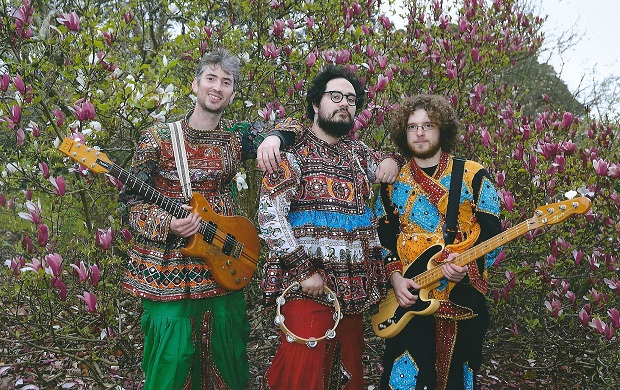
Aussie band Electric Korma has created a new and enticing genre of Indian music, writes SHRADDHA ARJUN

People often complain that Hindi film music is inspired and influenced by the West. Musicians like RD Burman were so largely influenced by popular genres of music, that many of his compositions had traces of Mariachi, Bossa Nova, rock ‘n’ roll and jazz. We’ve also heard disco and funk being adapted, some would argue even copied in the 80s by many well-known Indian film music composers, such as Bappida. However, it’s very rare that the opposite ever happens.
Post Bombay Dreams and Slumdog Millionaire, perceptions about Hindi music in films has definitely changed. The West has started taking a keen interest in Indian film music, particularly in Bollywood songs. Bollywood dancing is also getting quite popular, with several Bollywood dance troupes and teachers operating in Sydney. It is heartening to see an aspect of Indian culture being accepted and appreciated outside of India.
When I was first introduced to Electric Korma and their music, I was overjoyed. This team of three talented musicians makes unique Bollywood-rock fusion music (or Hindi-rock music as they call it). The band is comprised of singer and guitarist George Stanton, Michael Manzini on bass and Nik Russo on drums.
Here are excerpts from the recent Indian Link Radio interview with George Stanton, which was a fun experience for the team and our listeners.
Shraddha Arjun (SA): Your band seems to understand and perform Bollywood songs so beautifully, how did Electric Korma originate and what drew you to Indian film music?
George Stanton (GS): Well, I married an Indian girl Smriti, and she introduced me to her favourite Bollywood songs. I thought that Electric Korma could have a go at playing one. We were already playing original songs that I had written and composed. One day I was learning to count ‘1, 2,3’ in Hindi, and was struggling somewhat. Smriti showed me a video of Ek do teen to help me learn… it was so catchy and so much fun.
Someone from the Indian community in Wollongong had seen us play and invited us to perform at an Indian function. So I thought as a gesture to the Indian community, I would learn a few Hindi songs. So we learned Ek Do Teen and Mehbooba (Sholay). We’re into the sound and era from the 60s and 70s, it’s what we like.
SA: Was it difficult to adapt and translate the ethos, words and context of Bollywood songs into your style of music?
GS: With some of the songs yes, it can be extremely challenging. But Ek Do Teen is a very Western kind of song. If it weren’t sung in Hindi, it wouldn’t sound uniquely Indian. Mehbooba has little instrumental sections between the verses, which is fairly exotic to western ears; that took a little bit to get our heads around. What really challenges us is when we try and play something by AR Rahman. We tried playing In lamhon ke daaman mein from the film Jodha Akbar. It was extremely difficult. Just the first line took me an entire day. Working on how he fits all those syllables in too me an awfully long time to learn (hums a bit for our listeners).
SA: Wow, if I shut my eyes and listen to you sing, I can’t tell if you’re an Indian or not!
GS: Someone told me that at a gig once! And at the very next gig someone else came up to me after my performance and said, “Congratulations, you’ve got at least 30% of the song right!” I thanked him for being honest!
SA: I tweeted the link of your Ek Do Teen rendition on YouTube to Madhuri Dixit, who will perform in Sydney with Shah Rukh Khan. Will you attend her show? After all, she taught you how to count in Hindi…
GS: I’m quite excited that she’s visiting Sydney and performing here alongside SRK, but unfortunately I can’t be there. She’s an exquisite dancer; her dancing in Ek Do Teen is equally stunning! I’ve never seen anything so precise.
SA: As a band, how do you find the time to learn Bollywood songs despite a busy schedule?
GS: The band’s contribution is massive, they are very diligent and hardworking boys. The editing for Ek Do teen was entirely done by Nik, and Michael recorded the song. It usually takes only about two rehearsals for each song, but this one was recorded on the very first rehearsal. They are very professional and hardworking musicians.
SA: Do they understand and follow Indian music as well?
GS: As you could hear in the chorus of Ek Do Teen, they know how to count from 1 to 10 in Hindi! The first Bollywood film I saw was Sholay, I completed it in about three days. When I passed it on to Michael, he watched it three times in one day. He’s an absolute Bollywood nut! His mum is even worse, she’s now a part of a Bollywood dance troupe, I think! So they’re very keen.
SA: Have you ever been to India, and where did you go?
GS: I’ve been there twice; the first time to get married. I met my wife here at the University of Wollongong and halfway through my honors we decided that we had better pop over and get married. We went to Nagpur, Delhi, Varanasi and Mcleod Gunj in the Himalayas. About around a year later we visited India again with our three-month-old son Krishna.
SA: Have you been exposed to other Indian languages?
GS: We’ve had a go at singing Gujarati, actually. We went to a dandiya night at Rosehill racecourse once. I had no idea what it was about, and it was lovely, just amazing! Everyone was doing this swirling kind of dance and the music was like an extended instrumental psychedelic Pink Floyd jam. I couldn’t believe that it was actually happening! It really did sound like very early Pink Floyd. I thought to myself, wow! How can we be a part of it? And then, playing at the Indus Australia fair, Chintan Trivedi the organiser, asked Electric Korma to perform with Devang Patel at a Dandiya night. So we had our chance!
SA: What’s the Indian scene like for a musician here in Australia. How would you measure success?
GS: I don’t know, I’m trying to find that out myself! So far the Indian community is extremely warm and welcoming, they’re eager to have us each time we play. We’re measuring our success by just how many people we can get up and dancing!
Electric Korma performed with Devang Patel at the Dandiya event a week later, dressed in traditional Gujarati costumes. The band performed with panache and an unsuspecting crowd danced along. Electric Korma have just begun their journey, and will continue to rock on! So let’s look forward to more Hindi-rock through their high energy and heartwarming music.
Empowering through education
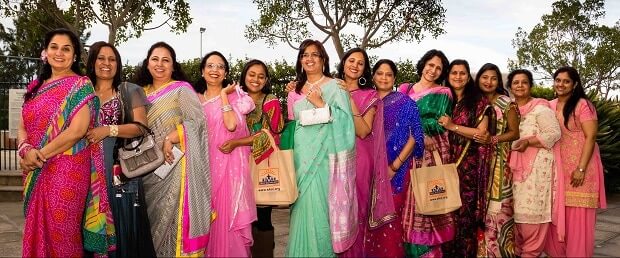
Newly launched Ekal Women is committed to raising fund towards taking education to rural India

“If the poor children cannot come to the education, then the education must go to them” Swami Vivekananda
September saw the beginning of a new chapter in the history of Ekal Australia. Ekal Woman was launched with great fervour and enthusiasm by a small team of volunteers whose sole aim was to rally the women in Australia behind a very noble cause. The High Tea organised at the Mercure, Parramatta saw women all dressed in different hues of pink, ready to pitch in to make this humble effort a roaring success.
Sumathi Advani, Chairperson of UIA’s Women’s Steering Committee and Aishveryaa Nidhi, a prominent theatre personality who has carved a niche for herself in the field of Australian theatre, addressed the audience and shared their experiences.
The entertainment included songs by Shobha Ingleshwar, Bollywood dance potpourri by Neha Jain and a fun-filled Trivia. The afternoon showcased the Ekal cause with a short video and slideshow, highlighting the work done by Ekal Vidhalayas in remote tribal villages of India. The statics, though not overtly surprising, were staggering.
Most of the 300 million illiterate folk in India live in tribal villages that lack the basic amenities of life, like safe drinking water and basic healthcare. The literacy rate of the female population is as low as 39%, and only 10% of these villages have government schools. For families who survive on an annual income of $30, education for their children fades into oblivion. More hands on deck to increase their daily livelihood is the top priority. The existing schools are under-staffed with poorly paid teachers who are not motivated enough. Such villages are on Ekal’s road map.
The Ekal movement was started in India in 1986 by Rakesh Popli and his wife Rama Popli, with the intention of improving literacy at the grassroots level. The idea of the Ekal Vidyalaya, a single teacher school, caught the attention of the people and it soon became a global phenomenon, with Indian diasporas from across the globe sponsoring schools in remote regions of India. The best gift you can give any child is education, and that is what the Ekal movement endeavours to do.
Ekal Vidyalayas are different from traditional schools because the delivery of education is not regimented, but flexible. The schools are run free of cost when it is most convenient to their clientele, which would mean evening classes. This way, the parents have nothing to complain about. In fact, adults also participate in the educational experience. This education is not restricted to classroom learning, as the students are actively involved in the upliftment of the whole community. They learn about recycling and vermicompost; by selling the compost they prepare to local farmers, they generate income for the schools. The system the Ekal Vidyalayas put in place is a cyclic one, where every person in the village/community is benefitted and is a part of it, thereby taking ownership of it. They see purpose in the education meted out by the Vidyalayas.
Ekal Australia has been active since 2004 and has successfully earned sponsorships for 650 schools. Ekal Youth, which launched last year has so far raised $10,000 for school sponsorships. Ekal Woman Australia intends to raise funds by showcasing the talent of women in Australia, and also through individual or group sponsorships of schools. The September launch was just the first step in a long and meaningful journey ahead. They hope to welcome more women into the fold to help it expand. They want the women of Australia to join hands to make a difference in the lives of those in India, and add to the fabric of an educated and prosperous country. “Education is one of the most important means of empowering women with the knowledge, skills and self-confidence necessary to participate fully in the development process,” ICPD Programme of Action.
It's our nineteenth birthday!


In October 2013, Indian Link newspaper turns 20. We started as a 24-page black-and-white monthly publication with a print run of just under 1,500 copies. Today we are a fortnightly paper in Sydney (with combined monthly pages in excess of 140), a monthly publication in Melbourne, Adelaide, Brisbane and Perth with a combined print run of over 40,000. It has been a terrific journey! And this is in addition to our 11-year-old 24/7 radio station with live talk-back of over 8 hours a day, and a listenership of over 50,000. Our social media footprint across newspaper and radio enjoys over 6,000 likes, and our website with its regular news updates has over 17,000 impressions per month.
Of course, none of this would have been possible without our supporters who have maintained their faith in Indian Link, its philosophy and ethics. These supporters have at times been wholesome in their praise, caustic in their comments when they did not agree with our views, and mature in their acceptance of why, at times, we needed to differ.
Our supporters range from a group of 70-odd writers who take time out from their busy schedules to report on an event, be it an arangetram or a conference on Gandhi; to radio anchors who fight traffic to get to their listeners at 7am, including the brave ones who juggle motherhood and domestic life while entertaining listeners on air. Our supporters also include our advertisers who have valued their link with a quality product that is consistent, reliable and ethical.
Indian Link has also been fortunate to have a strong team in editorial, content, creative, design, and sales and marketing, who have not only sustained us, but also understood our philosophy. Together they have worked long and hard to ensure innovative content and programming, which we have proudly taken to our own community and others in Australia. And the Indian Link mindset is very clear: to be able to provide excellent quality articles which inform and educate those who have made this country their new home. Our job has been to find all things Indian in Australia, to help us Indian Australians find a sense of achievement for each other, rather than absorb ourselves in petty politics and envy which can so easily consume a small vibrant community.
We have reported regularly on issues relating not only to the India-Australia equation, but also like every section of the Indian Australian community, including students, professionals, seniors, children, home-makers and those of GBLTQ persuasion.
We have shared success stories of some terrific work being done by Indian Australians, so that those coping with similar challenges can be inspired and know that all is possible in Australia. We have reported on community events with truthfulness, so that constructive feedback can be shared with the organisers. Our job has been to be truthful to our readers who are the ones we ultimately serve.
It is a privilege to serve the Indian Australian community and with their help we have built up a truly diverse media company, from humble beginnings to one which now has a national newspaper footprint, a radio station, online editions and a progressive social media platform. We look forward our journey together over the coming years.
Krishav Events creates history
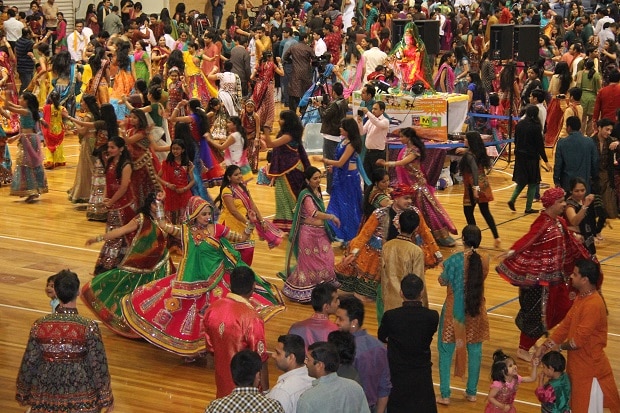
An Aussie singer and band, unprecedented crowds and loads of prizes made the dandiya show an exciting one

The evening of September 21 at the Whitlam Centre in Liverpool was a festive one, as people dressed in brightly coloured traditional outfits thronged the floor to dance the dandiya and garba to the music of world-renowned music maestro Devang Patel. Organised by Krishav Events, the company’s debut event titled, the Devang Patel Dandiya 2013 created history with a record of 2,500 of people attending from all corners of New South Wales.
“The dandiya was a historic event for many reasons. Apart from the attendance, which was the highest to such an event so far, for the first time ever here, an Australian singer performed in the Gujarati language. It was an instant hit, people absolutely loved the band Electric Korma!” said an ecstatic Chintan Trivedi of Krishav Events, the main organiser of the event.
Electric Korma, a self-proclaimed Hindi-rock band with their own unique genre of music created a sensation at the event, particularly with their rendition of Pankhida o Pankhida. Mr Trivedi sourced the band and was largely responsible for their participation at the event.
Devang Patel and his team performed aptly as expected, with the crowd enjoying traditional and filmi tunes, swirling and whirling to the various rhythms and crescendos of the music.
What was unique and innovative about the event was that it was broadcast live via the Keshav Events’ website, for those unable to attend to view and enjoy.
In addition to the festivities was the offer of chances to win vouchers worth $800 on each ticket that cost just $15, for solar or migration services, clothing, beauty and dinner, and even pizza and panipuri! The catering by Darbar and Annapurna restaurants was enjoyed by attendees, who took time out from the activity to refuel with some mouth-watering Indian delicacies. There was even a professional photography studio at the venue, operated by Evergreen Photography, which could capture special moments for the attendees.
All in all, the event was a grand success, not just for Krishav Events organisers Chintan Trivedi and Pathik Vora, but for all the 45 sponsors who had supported the event. But the main measure of success was through the reaction of the attendees who were happy, satisfied and tired at the end of the show. Mr Trivedi thanked sponsors and volunteers who had contributed to the success of the event. Kudos the Krishav Events for putting up a well-managed traditional event that highlighted one of India’s great festivals and contributed to multiculturalism in Australia.
Guru, shishya, parampara
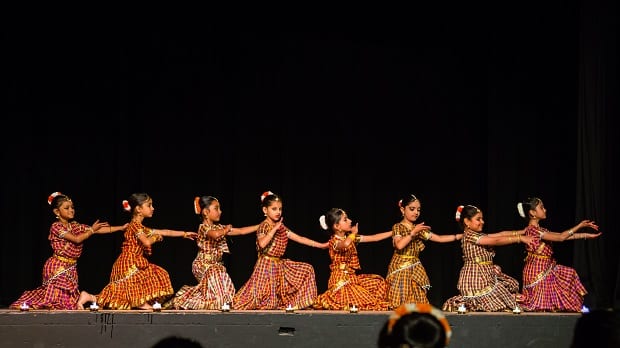
Through the guidance of Hamsa Venkat, students express their creativity in classical Indian art forms, writes DEEPA GOPINATH

In this hectic modern-day world, a creative outlet is not only helpful, but necessary as a stress reliever. Whether it is the visual arts, music, dancing or any other artistic endeavour, when we lose ourselves in an art form, everything else fades away.
Hamsa Venkat, through the Samskrithi School of Dance, gives dancers the gift of a creative outlet. A talented dancer in her own right, Hamsa trains and nurtures her students in the South Indian dance form of Bhrathanatyam, while juggling a job as an English teacher and caring for her own family. Despite her other commitments, passing on the knowledge of the art form is something very dear to her heart. Learning such a structured art form brings with it the joy of creativity, but also other life skills such as confidence, discipline and social skills.
In addition to regular classes, students perform in at least one of the school’s bi-annual concerts. The first of these for the year is geared towards providing junior students with the on-stage confidence and exposure they need to blossom into performing artists. Participation in these shows is an important part of a dancer’s development. “Performance is a commitment and it drives students to improvement,” according to Vidhya, who has been learning with Samskrithi for the past eighteen months.
The joy that comes with learning this elegant art form shines from the faces of Vidhya and her classmates, Bhavani and Manju. All three are mothers of young children who moved to Sydney from India, as newlyweds. The three have in common the fact that they learnt Bharathanatyam in their home country more than fifteen years ago. They have sustained their love of the art form through the years, but never did they imagine that they would have the opportunity to not only learn again, but to perform in Australia. Dance has given them the gift of a sense of self, and an opportunity for personal achievement outside of their careers and family commitments.
For the younger students, the enjoyment of dance has a simpler, but equally significant basis. Sahana (10) learns Carnatic music and another dance form, Kuchipudi, as well as Bharathanatyam. She values the exercise and athleticism that comes with learning dance. Having learnt dance since she was 6, the opportunity to learn and perform a diverse repertoire is something that Sahana appreciates in Hamsa’s style of teaching.
Varsha (13) attends class with her sister Jyothi and they hope to perform their arangetram (solo debut performance) together one day. In a very mature way, she explains that there are limited opportunities for exposure to Indian culture in Australia (compared to India), and dance is one way in which they can connect with their culture. Through dance, the girls have learnt much about Hindu mythology. After all, natya, or the act of storytelling, is one of the main aspects of Bharathanatyam. Hamsa makes great efforts to explain each story they are enacting to her students, making it easier for them to be expressive through dance.
Varsha and Jyothi’s mother Madhu agrees that the discipline provides her girls with focus and promotes pride in their culture. They not only enjoy a creative outlet outside of school, but have the chance to make long-lasting friendships within the community. Madhu adds that Hamsa has a way of drawing the best out of her students, one of the qualities that makes her a wonderful teacher.
And like many teenage girls, when asked what is her favourite part of performing, Varsha’s reply is “the costumes!”
What makes this annual production unique is the involvement of young musicians, many of them senior students of Samskrithi School of Dance. Devika, a talented dancer and vocalist, was part of the musical line-up. Being a dancer allows her to more effectively lend her silken voice as an accompaniment to the dancers, and she considers herself blessed to have the opportunity to be involved in so many aspects of this beautiful art form. One of the challenges of singing for dance is the need to follow a specific structure that accompanies the choreography. Through her own dedication, her mother’s tutelage as well as the methodical approach of Hamsa, Devika is emerging as one of Sydney’s most talented young classical dance vocalists.
Each year, many other senior students of Samskrithi also pitch in to help keep the order backstage, ensuring the show runs as smoothly as possible. This collaboration between the Guru, dancers, senior students, other artists and parents of the dancers is what makes Parampara such a success! The role that such opportunities play in building a young artist’s confidence is invaluable, and the satisfaction it brings to all involved is beyond measure. Dance is a without doubt a creative outlet but it is so much more. As Hamsa Venkat says, it is not only a representation of life, but it is life itself.
Take the warning… stay away!
WARNING
Starring: Santosh Barmola, Suzana Rodrigues, Varun Sharma, Manjari Phadnis, Jitin Gulati, Sumit Suri and Madhurima Tulii
Director: Gurmmeet Singh
**

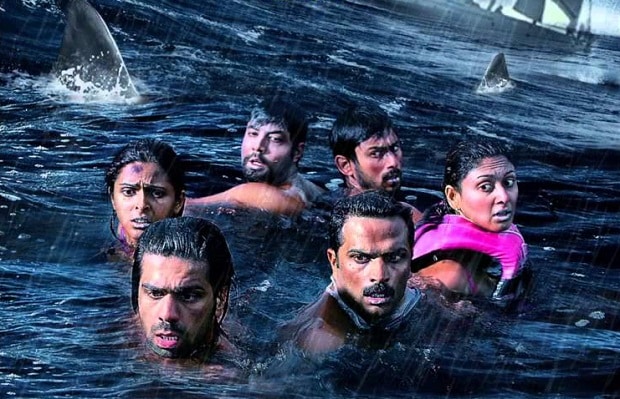
Water waste of time! Slasher movies work best on terra-firma where girls in a state of disrobed desperation make a dash for safety. Alas, here the characters have nowhere to run to. Neither do we.
In Warning, the entire slasher genre is shifted to the aqua splendour of the Fijian water where true to its genre, characters start getting killed/wounded/slashed/maimed.
The ladies of this uproariously funny slasher movie get to wear swimwear most of the time. No censor objection since they are in the water. And surely you can’t swim in a burqa!
But yes, you can get killed in the azure acres of silence. Water runs deep when it is marred by killer fish.
Koi shark?!
The 3D format is used here in a strangely eccentric and miserly way. When you expect the water to surge towards you, there is just a flat silence on the screen. You are left wondering why those silly glasses were required in the first place.
Sigh, Life of Pi in the high seas, was so much more eloquent. Here, the water just seems to invite violence and not of a very convincing kind. The young actors seem to be in it for the all-expenses paid Fijian holiday with a bit of amateur shooting thrown in to legitimise the vacationing costs.
Everyone connected with the film does a lazy, if not altogether a lousy job. I do like to encourage new talent. And I’d like to give these newcomers the benefit of the doubt. There is very little plot only a whole lot of deep water to sink one’s teeth and other body parts in. The intended tension gets suffocating after 20 minutes.
And 3D be damned!
How much and how many times can you watch the actors jump into the deep end without losing their bearings? Some of the intended terror is plainly bland. And worse when you are supposed to be trembling in fear, you actually find yourself shaking with laughter.
Very honestly there are seeds of a killer thriller somewhere in this watery mess. But while leaving for their Fijian holiday, the crew forgot to take along the script.
Be warned. Undersea thrillers don’t work. Anthony D’Souza’s mega-disastrous Blue should’ve been warning enough. The last and only really successful water scare-fest was Steven Spielberg’s Jaws.
This one comes too late and with too little, in fact, almost nothing to offer.
If you like horror films please watch ground level slasher films. If you dig girls in bikinis please watch Baywatch.
But if you like to torture yourself with mid-ocean inertia, you know where to go!
SUBHASH K. JHA
Dark, sinister, devastating

PRAGUE
Starring: Chandan Roy Sanyal, Elena Kazan, Kumar Mayank, Arfi Lamba
Director: Ashish R Shukla
***

There are the dark unexplored regions of the psyche that experimental cinema reifies, even for an audience that doesn’t want to think while watching a film.
Prague engages in the unexplored, taking us into a world of despair and anxiety. Shot with splendid serenity, the movie has plenty of visual beauty to savour of the Czech Republic.
But secreted in the splendour are the murky secrets of human foibles which come rushing to the surface in unguarded moments of desperate anxiety.
Standing at the vortex of this psychologically disconcerting treatise on a mind that doesn’t follow what the heart says, is the enormously gifted Chandan Roy Sanyal playing an architect whose romance with structural precision mocks the crookedness of his inner world.
The more Chandan seeks symmetry in his life the more it eludes him, until there comes a time when the real and the illusory worlds come together in a stifling embrace.
Prague opens in India where the dynamics of Chandan’s inner world are manifested in his relationship with an undependable Indian girl named Shubangi and his two closest friends Gulshan (Kumar Mayank) and Arfi (Arfi Lamba) one of whom, we soon realise, is dead.
This is when we begin to realise that Chandan is losing his mind. As he and his two best friends move to Prague, the stage is sturdily set for Chandan’s descent into hell.
Each step of the character’s decline into a world of hefty hallucination is chronicled with compelling crispness. The editor uses components from the real world and the ‘reality’ according to Chandan in a play of hide and seek.
Then there are the songs, so well used. RD Burman’s Meri bheegi bheegi si in the Hindi and Bengali versions, and some achingly haunting Czech songs that recur in lovelorn loops of longing.
There are passages in the storytelling where the world of the imagination blends into the real world. The collision point where the two worlds meet is well controlled by the director, although at times you fear the narrative lapses into self-indulgence.
There is plenty in Prague where the motivation is questionable. Why does Chandan act the way he does? He clearly embraces all the confusion, complexities, insecurities and insanity of his character.
The casting of Chandan’s two friends is also of the utmost importance. The cocky self-centred Gulshan played by Kumar Mayank, is the most fatally charismatic character in this intricate jigsaw of light and death. And the wimpy, whiny, over-possessive Arfi.
Elena Kazan, last seen in John Day, is forced to join her lover in his journey into hell, bringing a whole lot of tragic charm to the proceedings.
Not all of the events in the film make sense when judged against conventional populist elements. The very powerful Chandan plays an artiste on the brink. As he topples over, we get a vivid view into the abyss that separates man from madness.
Though not an easy breezy journey, Prague takes us into the heart of darkness.
What we see is a world manned by betrayal. As Chandan’s world falls apart, the film gathers its strength from the rubble that he collects around himself. Sometimes seeing dead people is about attempting to remain sane in a world that is defined by eccentricity and death.
Prague is a tough film to digest. But who said life in the movies is only about the unbearable lightness of being stupid?
Desolation , Loneliness…Perfection!
The Lunchbox
STARRING: Irrfan Khan, Nimrat Kaur, Nawazuddin Siddiqui
WRITER/DIRECTOR: Ritesh Batra
**** 1/2

In Mrinal Sen’s Khandhar, desolation was defined and epitomized as much by Shabana Azmi’s face and physicality as it was by the architectural ruins where Sen shot his dirge-like tale. In The Lunchbox, debutant director Ritest Batra – is this really his first feature film?! – does not seek easy escape routes for his characters’ destiny of drudgery.
The film is set in the heart of Mumbai where everyone is busy making a living…or just trying to live. Right away, this extraordinary film catches your attention with the way the sounds and the relentless rhythm of that City That Never Sleeps are captured and put on screen.
While remaining purely cinematic, there is something completely ‘non-cinematic’ about The Lunchbox.
It is stripped-down of all affectations. The secrets of lonely hearts are not laid bare through conventional cinematic devices – the use of background is so sparing that you often end up listening to the music inherent in everyday routine: the way the trains move in the sweltering afternoons, the sound of auto-rickshaws bustling through by-lanes, the sizzle of onions frying in a suburban kitchen, the sound of the television playing as a nuclear family of three lonely people dine in deathly silence.
Not just Ila (Nimrat Kaur), the cooking, cleaning suffering housewife, even her preoccupied husband (Nakul Vaid) seems so lost in the act of existence. Even their little daughter looks so forlorn with her rag-doll, as though she needs a good cry but is not sure if Mama will be there to console her.
And to scare you there are whispers of a woman jumping to her death with her daughter. Ila won’t ….never! Right?
Holding back the rituals of grief is a well-worn suburban ritual that Batra’s screenplay understands only too well. Every individual in Batra’s universe is disconnected from an inner tranquillity and distanced from the people around him or her.
It is no coincidence that Ila, our forlorn heroine who thinks of suicide but holds herself back, connects the best with an unseen aunty living with her comatose husband in the floor above. Aunty (Bharati Achrekar giving a vigorously expressive performance through her voice alone) never turns off the ceiling fan that whirrs above her inert husband, fearing if stops, so would his breath.
These little life-asserting pretences we indulge ourselves into believing that we lead meaningful lives, is the crux of The Lunchbox. Hence Ila strikes up an illusory bond of empathy with the almost-retired office-goer Fernandes (Irrfan Khan).
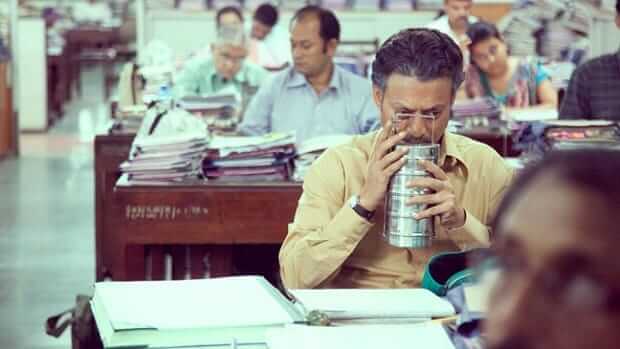
It starts off with a wrongly-delivered dabba to a lonely widower in a typical non-government office.
The initial delight of two strangers communicating facelessly soon turns into an intriguing relationship of empathy. The tragedy of two lonely people, one married in a loveless partnership and the other still wedded to his dead wife’s memory and bonding over burp-inducing tiffins filmed with gourmet dishes, is punctuated by the omni-presence of an annoying intruder, played by the very wonderful Nawazuddin, who keeps barging into Fernandes’ meditative melancholic interactions with his faceless culinary benefactor.
Among the three protagonists, Nawazuddin as the deceptively shallow Sheikh has the toughest role. He must seem frivolously jovial and insensitive to Fernandes’ lonely existence, though he is anything but these things. Further, he has a happy life. And that should and does fill him with a guilt he cannot express.
In many ways the bond that grows between Fernandes and Sheikh is far more tenable and real than the one Fernandes discovers in the aroma of the freshly-packed tiffin that lands up every day on his table.
Fernandes’ loneliness is not of the same breed as Violent Stonheim in 36 Chowringhee Lane. He is alone, trapped in memories of happiness but also surrounded by noises and smells of a normal life. That little contact he makes with a family in the building opposite his own, through his window, is emblematic of his empathetic solitude.
Yes, this man has hope.
Food, which contours the tragic love story of Batra’s film, is used almost as a reminder of life in the face of death. When Ila’s mother (Lilette Dubey nailing her character’s abject desolation in just two deftly-written sequences) finally loses her husband, she talks of hunger rather than loss.
Bereavement and loss affect individuals in very strange ways. What The Lunchbox says in a language that exudes the scent and comfort of the familiar is that we can strive to fill the emptiness inside us by cooking, feeding, remaining busy with motivating acts of daily gratification. But we are finally left with nothing to hold on to. This frightening thesis of existence is laid bare in The Lunchbox with compassion and warmth.
This is a sad film. But it isn’t depressing.
As the two protagonists whose souls collide and then come apart, Irrfan and Nimrat give exceptionally sorted-out performances even as their characters grapple with the chaos and complexities of feelings that alas, do not fit into compartments as comfortably as the food in a tiffin carrier.
Irrfan’s bearing suggests age that won’t accept defeat. He is a portrait of stoicism in the face of solitude. Does this actor ever disappoint?
Michael Simmonds’ camera doesn’t miss a thing. It seems to capture every moment of the characters’ inner and outer lives merging the two levels of existence and yet keeping them apart.
I came away from this profoundly moving tale with two of the most unforgettable lines of wisdom I’ve heard in a film.
One of them comes from Nawazuddin who says: “Sometimes the wrong train can take you to the right destination.” And then there is Nimrat, so noble and restrained in her suffering within a pitiable marriage, who opines: “Very often we forget our memories because we have no one to share them with.”
The memory of food, friendship and forlornness associated with The Lunchbox would stay with me for a very long time.
Some films scream for attention. This one gets it without trying. What a gentle, tender, soft and sincere love story! Is this really Batra’s first film? He demonstrates an astonishing mastery over the craft. And yet The Lunchbox is all heart.
Nawazuddin, Irrfan and Nimrat are so much in character that you wonder if these people were born before the script. The film celebrates the extraordinary ordinariness of their lives with a stark sincerity that takes away every morsel of artifice inherent in the act of filming made-up lives.
If this is not the best directorial debut since Satyajit Ray in Pather Panchali, then I am probably missing something vital.
And that’s what this film is about.
SUBHASH K. JHA