


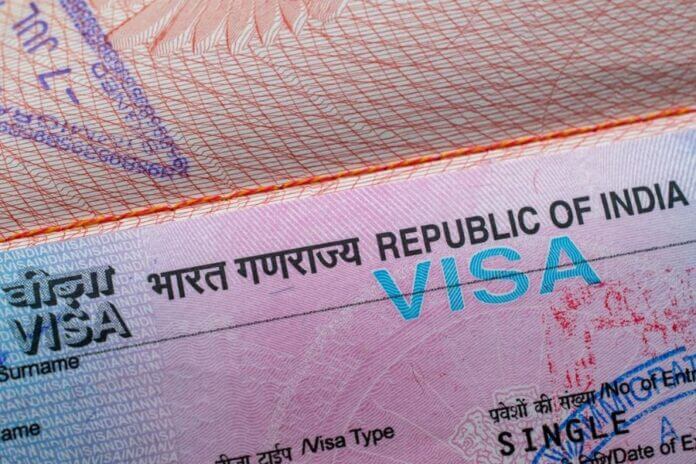
Anyone who has sat in front of the Indian visa portal at midnight, toggling between tabs to work out whether a cousin’s wedding plus two days of meetings in Bengaluru counts as tourism or business, will understand why this news matters.
India’s Ministry of Home Affairs (MHA) has announced a sweeping simplification of the country’s visa regime. The number of main visa categories has been cut from 13 to nine, sub-categories have been halved from 49 to 23, and the number of fields applicants must fill in has been reduced by between 65 and 70 per cent.
The MHA says it is updating its IT systems to carry the changes, and that visas will be issued under the new framework by the end of this year.
In a statement released on 11 November, the ministry described the aim as making the system “more compact, coherent and responsive” to the needs of foreign nationals visiting India. Officials said the government had studied the visa systems of developed countries and global standards before redrawing its own.
The nine categories
Under the revised framework, every visa to India will now fall into one of nine main categories:
- Visitor Visa (formerly the Tourist Visa)
- Business Visa
- Work Visa
- Student Visa
- Medical Visa
- Journalist Visa
- Diplomatic Visa
- Official Visa
- Miscellaneous Visa
This is the second round of pruning in just over a year. In October 2025, the MHA had already brought the main categories down from 22 to 13, and sub-categories from 63 to 49. The latest consolidation was first flagged by the ministry in August.
Goodbye ‘Tourist Visa’, hello ‘Visitor Visa’
The most visible change for the average traveller is a rename. The old Tourist Visa is now the Visitor Visa, a quiet acknowledgement that few trips to India are purely about the Taj Mahal.
It comes in two versions:
- V-1 is a 30-day, multiple-entry visa. Alongside tourism, it covers business meetings, medical consultations, wellness retreats, short medical treatment, and short courses in Indian languages, music, art and craft.
- V-2 is for longer and repeat visitors, with validity of one, five or ten years. It covers everything V-1 does, plus mountaineering, for which a six-month multiple-entry visa will be granted.
For the diaspora traveller who combines a family visit with a check-up, a yoga course and a meeting or two, this removes much of the old guesswork about which box to tick.
Students, patients and business travellers
Student Visa: Now split into two. S-1 covers school, undergraduate and postgraduate study. S-2 covers PhD candidates and research scholars, visiting faculty, internships, exchange students and research expeditions. Foreign students enrolled through the Study in India portal can receive an e-S1 visa valid for up to five years or the length of their course, whichever is shorter, with multiple entries.
Medical Visa: Treatment under conventional medicine (M-1) and under AYUSH systems such as Ayurveda (M-3) remain separate routes, with matching attendant visas (M-2 and M-4) for those accompanying patients. Both M-1 and M-3, including their e-visa versions, will now default to one year with multiple entries. That is a meaningful change for anyone travelling home for staged treatment or follow-up appointments, and the government has tied it to its ‘Heal in India’ push for medical value tourism.

Business Visa: Consolidated into B-1 for long-term, licence-based activity such as setting up a venture in India, and B-2 for short-term, contract-based work, including conferences, sports, performing arts and film shoots. Engineers, technical specialists and other experts engaged by Indian companies for installation, maintenance, training or technology transfer can apply for a Production Investment Business Visa under B-2 through the e-visa platform. This was previously the e-B4 visa.
Where Persons of Indian Origin fit in
For Indian Link readers, one detail is worth noting. The Miscellaneous Visa is the category that covers Persons of Indian Origin and their spouses and children, along with dependants of foreigners on long-duration visas and a handful of other specific groups. Australians of Indian heritage who do not hold an OCI card, and their families, will want to check this category when they next apply.
Shorter forms
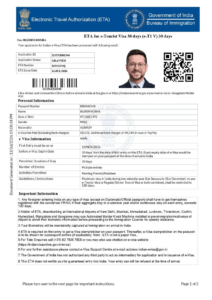
The second half of the reform is less glamorous but may be more welcome. Across all 23 categories and sub-categories, the MHA has stripped out repetitive and overlapping fields, cutting the forms by 65 to 70 per cent while keeping the details needed for processing. The ministry says this will save applicants time and allow officials to scrutinise applications more closely.
What hasn’t changed (yet)
The e-visa, which is currently available to nationals of 172 countries, continues to operate through electronic travel authorisation under 13 sub-categories.
Until the new system goes live, travellers should apply under the categories currently shown on the official Indian visa portal, and fill in forms carefully to avoid delays. Anyone planning travel over the summer break should keep an eye on the portal and on advice from the High Commission of India in Canberra and the consulates in Sydney, Melbourne and Perth as the changeover approaches.
For a community that moves constantly between two homes, the overhaul’s real test will be simple: whether the next application takes ten minutes instead of an evening.
Read Also: They’re bidding for our votes with our visas