

Just a dollar a day can change the lives of disadvantaged children living with their prison inmate parents, reports AMIT DUTT

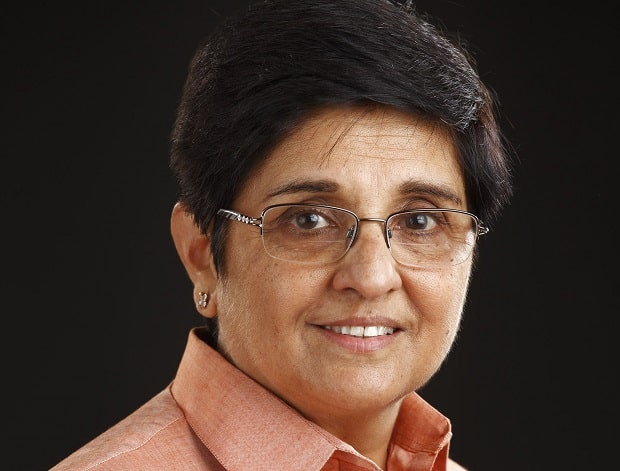
‘Change for change’, is how Dr Kiran Bedi described her concept on bringing about an improvement in the life of a child through one of her charities, India Vision Foundation (IVF).
“Small change put aside every week can accumulate into a few hundred dollars by the end of the year. This is enough to rebuild the life of a child of an inmate in jail and provide them with education to bring them into the mainstream of everyday life,” said Dr Bedi, while addressing a gathering of keen sponsors for IVF in Melbourne.
India Vision Foundation is the brainchild of Dr Bedi, and was born when she received the Ramon Magsaysay Award in 1994. It began its work inside Tihar prison by setting up a bread-making unit for the welfare of the inmates. Soon it identified the most vulnerable of the lot in the prison system, children belonging to families where a history of criminality and imprisonment exist. “These children are at the highest risk of being negatively influenced, growing up in the prison amongst hardened criminals and becoming one of them,” stated Dr Bedi, describing her experience with children in the prison.
In India when a mother goes to jail, her children are allowed to live with her in prison until the age of six. However, nothing changes after that age, with children continuing to live amongst convicted killers and arsonists in the jail system. “Someone needed to break the cycle,” said Dr Bedi. “At 6 and after, a child’s mind is very tender, absorbing every bit of information and the happenings around them. So much so, that by the time these children reached the age of 8 to 10, they were well versed with the Indian Penal Code (IPC) and the convictions attached with each section of the IPC”. A very disturbing thought indeed, on the kind of citizens we are bringing up in the country.
Starting from humble beginnings, the first step was to initiate a welfare program for such women and children in Tihar Jail. The crèche-cum-training program began in collaboration with IVF’s sister concern Navjyoti India Foundation (NIF). Working closely with donors with the sole aim to rehabilitate the children of prison inmates (above the age of 5 years) through residential schooling, the foundation has been working hard to nurture the talents and interests of these children through constructive training programmes, to inculcate in them social, moral and ethical values and responsibility.
“Contributing a dollar a day will go a long way not only in supporting these children, but making a future for them and turning them into responsible citizens. In fact, we have children coming out of this programme who are now qualified engineers and chefs, putting their share back into the programme,” claimed Dr Bedi. So what does she see in the future, for this programme? “Well, it will depend on people who want to do the right thing and invest in the future of these kids and pull them out of this vicious cycle of crime and imprisonment. With administration cost of less than 15% of your donation, we make sure that bulk of the contribution lands up for the kid,” reiterated Dr Bedi.
With these words, Dr Bedi shot off to one of her many speaking assignments. An inspiring day indeed, in the company of the Iron Lady who showed a side little known to rest of world. IVF was launched in Australia in 2012, for more information contact Ranjana on 0401 000 600.
Dr Kiran Bedi: Change to bring about change
Devang Patel: Patelscope from Mumbai to Melbourne
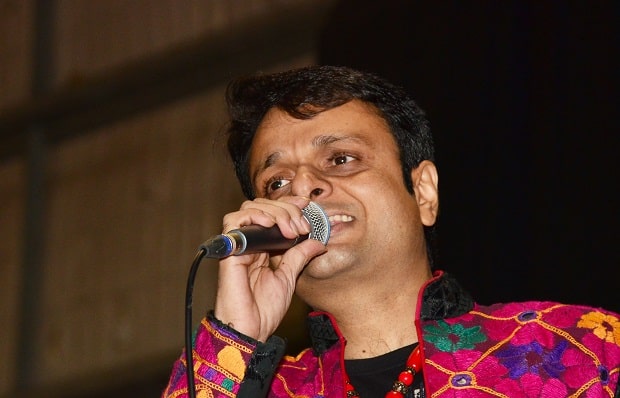
Comedy and parody, besides music and singing added to Devang Patel’s impressive repertoire

The multitalented singer, actor, dancer and comedian Devang Patel was in Melbourne recently, to perform at a traditional garba (dandiya) event during the festival of Navaratri. Satya Times and Gujjus Café & Chaat House organized the popular event at Oakleigh Recreation Centre. This was Devang Patel’s first performance in Melbourne and judging by the response he evoked, there could be more in future.
Known as the ‘King of Dandiya,’ Devang has created his own distinct style through a combination of comedy, rap and music. Among his popular songs are super hits like Patelscope, Ande Ka Funda, Stop That, Meri Marzi, Madhuri milli rastein mein etc. Besides comedy and singing, Devang has acted in several films and has also produced and directed films. His shows are enormously popular in Gujarat, and his fame is now spreading to other parts of the world. Prior to the auspicious Navaratri festival, this year, Devang’s Australia tour saw him perform in Melbourne, Sydney, Perth and Adelaide.
According to Bharat Shah from Satya Times, the 1100 strong audience at Oakleigh Recreation Centre thoroughly enjoyed Devang’s interactive performance, especially his parodies. Combining traditional and modern dandiya songs, Devang had the audience hooked on the dance floor. “He has truly brought the essence of Mumbai to Melbourne,” gushed one of the dancers in the audience, as she twirled around the floor in her splendidly colorful traditional outfit.
Rakesh Kawra bids Melbourne adieu
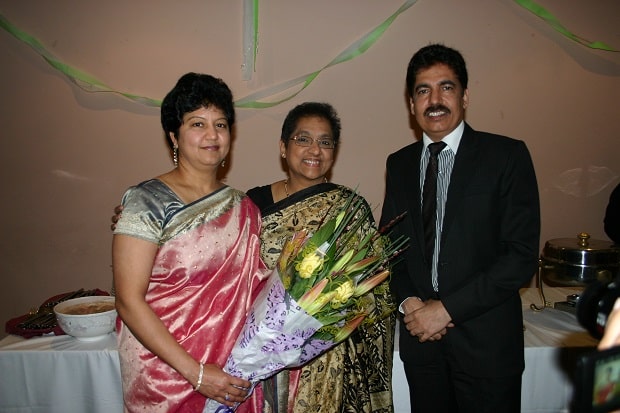
The Consul leaves behind good friends, reports SIMMI BAKSHI

The Indian Australian community in Melbourne bid farewell to Consul (SCWO) of India Mr Rakesh Kawra, at an event organized by the Federation of Indian Associations in Victoria (FIAV). Mr Kawra is expected to take up his new assignment in Cairo (Egypt) shortly.
The farewell dinner was held at Tandoori Junction Indian restaurant in Glen Waverley, recently.
It is never easy to say goodbye, more so if the person leaving is as community-minded and supportive as Mr Kawra has been. His popularity was evident from the heartfelt farewell wishes that he received from the guests.
Leaders and representatives from various organisations deeply appreciated Mr Kawra’s contribution towards strengthening relationships within the Indian community in Melbourne. He was also commended for his efforts in improving bilateral relations between India and Australia. Amongst the speakers were FIAV President Mr Vasan Srinivasan, CEO of Yarra City Council Vijaya Vaidyanath, President of FIWAA Mrs Madhu Dudeja, and Leigh Tran from Victorian Police Multicultural Unit. Tonee Sethi from G’Day India, Neeraj Nanda from South Asia Times and Preeti Jabbal from Indian Link represented the media.
President of Hindi Niketan Dr Shard Gupta, President of Telugu Association Mr Pavan Matampally, President of Gujarati Association Bharat Shah and President of Melbourne Malayalee Federation Dr Shaji Varghese were unanimous in their acknowledgement of Mr Kawra’s exceptional service during his tenure in Melbourne. Special mention was made of his willingness to assist the community in matters related to travel visas and emergencies.
Mr Kawra thanked the speakers for their wishes and said that he was overwhelmed with the respect and warmth that he had received from the community in Melbourne. “I have been posted to many different parts of the world, however, I will always cherish my experience in Melbourne as one of the best I have had so far,” he said.
Mr Kawra went on to commend the FIAV and its leadership under President Mr Vasan Srinivasan, for their commitment towards bringing the Victorian Indian community together. “Ever since my arrival in Melbourne, my interaction and experience with the FIAV has been parallel to none other,” he said. According to Mr Kawra, he hoped to see more organisations and individuals in Victoria, like the FIAV, that are dedicated towards uniting and strengthening the Indian community in Australia.
Mr Kawra’s wife Mrs Mona Kawra and his daughter Richa accompanied him to the farewell dinner. Beyond his official duties as the Consul, Mr Kawra has made many friends who will fondly remember him and would like to see him return to Melbourne at some stage. As one of the guests Mrs Shobha Gupta said, “We hope you return either on another official assignment or to retire peacefully in the most liveable city in the world. Till then it is not goodbye, it’s just fare thee well and hope our paths cross again”.
Pagoda Tree: Eighteenth century intrigue
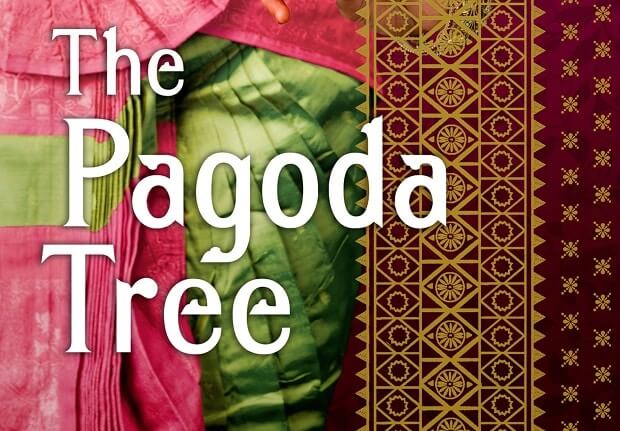
The life of a devadasi in British India is chronicled in this interesting historical novel

Increasingly, many talented young writers are writing books that throw a different light on a past that seems so far removed from the present, that it is hard to imagine it existed at all. Perhaps readers of vernacular novels will be more familiar with them: there are of course, wonderful historical novels in Kannada, Tamil, Marathi, Hindi et al, about the lives in the Court of the Vijayanagar Kings, the Marathas, the Cholas and so on. It is a slightly unusual setting for an Anglo-Indian novel, especially for an English-born novelist, but The Pagoda Tree by Claire Scobie, belongs to this genre. It is a novel set in eighteenth-century Tanjore and Madras at a time when the British East India Company was gradually increasing its sway over the length and breadth of India, waging wars, manipulating and plotting the overthrow of local rulers, even engendering famines at whim.
This novel evokes fairly successfully, the zeitgeist of that era, through the telling of the story of Maya, a young girl destined from birth to be a devadasi. She comes from a long line of devadasis who perform for the temple and the King, and afford company to men who can afford them. Scobie’s protagonist is a talented and beautiful girl, and it is expected that she will have an extraordinary career as a courtesan in the Court of the prince of Tanjore himself. However, Tanjore itself is in the throes of change, Hyder Ali and the Nawob of Arcot have their eyes set on conquering this prized possession, and there are other bad omens looming on the horizon. It is in the midst of this upheaval that Maya is forced to flee her home and head to the port city of Madras where the worlds of the British East India Company and local middle men and traders collide.
Maya’s Indian patron, Mudaliar, is a violent tyrant, and when still under his thumb, she meets Thomas Pearce, an ambitious young Englishman and East India Company functionary, who has travelled to India to make his fortune. Maya turns to him for love, but it is forbidden and comes at enormous cost. Thomas, who is torn between his lust for Maya, his affection for India, and family loyalties back home, treats Maya no better.
Thomas abducts their little daughter and ships her alone back to relatives in England. He is not altogether a very attractive personality, so the news at the end of the novel that he has drowned leaves one emotionless. Will Maya retrieve her daughter in England and pass on her training as a dancer to her? It is for the reader to find out.
Scobie became fascinated by the devadasi institution after a visit to Tanjore (now called Thanjavur), where she saw carved on the walls of the eleventh century ‘Big Temple,’ the Brihadeeshwara Temple, the names and addresses of 400 devadasis. She was fascinated by these women and the lives they had led, women who were in all likelihood celebrated artistes of their day. She also visited the present Prince of Thanjavur, Babaji Raja Bhonsle (who runs an e-publishing company and is rather desperate for more tourists to visit his decaying palace, as he can’t afford the upkeep); she has researched the places, both old areas of Madras such as Mylapore, and the newer foreign enclaves in the Port areas of the city in depth, and has woven them into her narrative.
It is all there in the novel: imperial merchants manipulating rulers for profit, well-meaning Christian evangelists trying to ‘save’ heathen souls, and young East India Company men falling for beautiful and talented local girls, with disastrous consequences.
Claire Scobie is an award-winning journalist who has lived and worked in the UK, India, and has been living in Sydney since 2001. She writes for the Telegraph, the Observer, and the Sydney Morning Herald, among others. In 1997 she won the Catherine Pakenham Award for Best Woman Journalist of the year. Her first book, Last Seen in Lhasa, is a memoir based on her friendship with a Tibetan nun, and won the Dolman Best Travel Book Award in 2007. The Pagoda Tree is her second book, and first novel.
Ladies in the limelight, SRK, late again! And more


Ladies in the limelight
India’s nightingale Lata Mangeshkar was recently conferred the first Yash Chopra Memorial Award, in a tribute to the legendary filmmaker Yash Chopra on the eve of his first death anniversary. It is a fitting tribute to the melody queen who has been in the film industry since decades and has made an immeasurable contribution to its music industry. Lata, who started her singing career in 1942, has continued singing for over seven decades, recording songs for over a thousand Hindi movies besides singing in 36 Indian and foreign languages. She has been conferred several national and international honours, including Bharat Ratna, India’s highest civilian award, three national film awards and the One Time Award for Lifetime Achievement in 2008 to commemorate the 60th anniversary of India’s Independence.
And now Bollywood is buzzing as a few of its veteran actresses are also honoured for their ‘active roles’ in the film industry. Padmini Kolhapure, Zarina Wahab and Rati Agnihotri were honoured in Lucknow recently, in recognition for their role in highlighting the strengths of women. Other than the trio, among other actors felicitated were Nimmi, Anita Raj and Rameshwari. They were presented with an award at an event organised by Friends India, a social organisation. Looks like the ladies are getting a well-deserved spot in the limelight!
SRK, late again!
After annoying the crowd in Sydney by making a typically Bollywood late appearance, Shah Rukh Khan has taken his tardy behaviour back home, keeping his fans waiting for two and a half hours recently. When the superstar finally turned up at the celebration of LUX Chennai Express Contest event in Mumbai, he was profuse in his apologies saying, “I am extremely sorry for coming late. My apologies to the media people. I am not well… I have flu… I was bedridden. I have been travelling a lot… but thanks for all your patience”. He then went on to enact the train scene from his Chennai Express with Lux Chennai Express contest winner Zarina. The actor also did few dance moves with the contestants on stage.
SRK also talked about upcoming projects and a bit about his personal life. The actor, who is also shooting for the film Happy New Year, says the film is not a solo hero film. “Happy New Year is not a SRK starrer film. We have an ensemble cast and that is the speciality of the film. Its not a solo hero film,” he said.
Asked if he is playing a Gujarati don in Farhan Aktar’s next release, he said, “No I am not…I have read the script but nothing is finalised”.
However, the one thing that King Khan seemed sure and cheerful about was the newest addition to the family, his young son AbRam. “Everyday is special after AbRam has come home. His health is good now and I am really happy for him. Everyday is festivity at home because of AbRam,” SRK said enthusiastically. Bet he made it home on time!
Priyanka’s into modern mujra
Actress Priyanka Chopra is tremendously chuffed these days, having done an item song in Sanjay Leela Bhansali’s Ram Leela, which she describes as a modern mujra which has Indian vibes with a western touch. But complicated, but there you are! “The song is very different and special because I am a huge fan of Mr Bhansali. It’s a modern mujra which you all have not seen for a long time. It’s a mujra, but modern. It’s got Indian music and vibes, but still western and contemporary,” said Priyanka, trying somewhat unsuccessfully to explain. “It has got a different look, different form of dancing and I didn’t have time to rehearse. I used to rehearse at night,” the actress added.
Priyanka’s now taking her singing skills to the next level, hinting that she would love to playback for other heroines. She feels it would be a fun experience. “I want to playback for some other heroine. I think it will be very interesting. If I like the song, I am okay with (doing) it, but I should like the song. I am ready to playback for any actress,” Priyanka said recently.
The actress, who will next be seen in Krrish 3, has been experimenting with different genres of films because she likes to take risks. “I want to do different things. I am a risk-taker I want to be a game changer in my personal career. I don’t want to follow anybody’s footsteps. I did music… I want to change the game. Maybe I will fail, but at least I want to try,” she said. So far, Priyanka has launched two international singles, In my city and Exotic. Well, let’s see how fans react to her modern mujra. Perhaps there’s more music in Priyanka…
Slain Shahid immortalised on screen
Khalid Azmi became emotional after watching a latest screening of Hindi film Shahid recently, based on the life of his brother, slain lawyer and human rights activist Shahid Azmi. “Our family has gone through a lot. It’s a very emotional moment for us. I have watched this film before, and on watching it again with my family, I got very emotional,” Khalid said. “The film (tells) a part of my life, so it is very realistic and everything comes alive before my eyes,” he added.
Shahid which stars Rajkumar Yadav in the lead, tells the story of Shahid Azmi, who was the defending lawyer of 26/11 Mumbai terror attacks co-accused Faheem Ansari. Shahid was shot dead in his office in 2010. Khalid says almost 95 percent of the film is accurate. “I provided them with all the information. I also spent a lot of time with Rajkumar and told him how Shahid used to be. They shot a few portions in his office and his colony,” he said. Directed by Hansal Mehta, Shahid released recently. Sounds like a must-see movie.
For Sami, India is like home
Pakistani singer Adnan Sami, who was in news for allegedly ‘overstaying’ in the country, says India is like a home to him. Britain-born Sami was issued a notice by the Mumbai police recently, demanding an explanation for overstaying. But it was later revealed that the singer-composer had been granted a three-month visa extension the day his earlier document had expired. Sami can’t quite figure out what the fuss is all about. “I have been living here (in India) for the last 14 years. It has been my work place since then. I have not spent (as much) time anywhere else as much as I have spent here in India,” Adnan said in an interview. “So I am attached with this country. It is like a home to me,” he added. He seemed overjoyed by the visa extension, so it looks like Sami is here to stay!
Shilpa and Raj Kundra snippets
Businessman Raj Kundra says he is in talks with Hollywood companies to turn his debut book How Not To Make Money into a film. “I just love films. I write as if I am watching a film. Hence, in the head it feels like a film. It has the makings of a film and we are in talks with various Hollywood companies, but it’s too early to say anything,” Raj said at the launch of his book recently. “There has been a lot of interest (regarding the film based on the book) and the day it happens, we will let you know,” added Raj, who is married to Bollywood actress Shilpa Shetty. Now why on earth didn’t he approach Bollywood to make such a movie?
Supporting her husband, Shilpa said, “I definitely see it becoming a film… a Hollywood film for sure. Raj likes to think big”. Certainly, if he couldn’t even consider the film industry at home instead of going overseas. “Let me tell you a secret. Raj is even more filmy than me. Raj is as filmy as you can get. He is the ideal Raj, like Raj from Dilwale Dulhania Le Jayenge. For me, it is not surprising that it (book) is a little cinematic because that is how Raj thinks,” Shilpa said. Tongue in cheek, don’t you think? The power couple will be producing Dishkiyaaoon soon, but Shilpa has no immediate plans of coming back to face the camera. She says she will start acting only once her son Viaan begins to understand her work. She said, “(I will take) At least another year-and-a-half… till Viaan is able to communicate with me and understands (my) work. Then may be I will think of doing a film”.
Until then, the 38-year-old said she happy working on the small screen and with endorsements. Shilpa says she has taken a sabbatical from the movie world as films are too time consuming. “Honestly, it is a self-imposed sabbatical. My priority definitely is Viaan at the moment. I haven’t thought about films really, it’s just too time consuming,” Shilpa said. The film stars Harman Baweja and Sunny Deol, and will introduce newcomer Ayesha Khanna. That’s all the news on the Kundra front, folks!
Nandita Das takes on Spanish project
Actress Nandita Das, who will be seen with husband Subodh Maskara in upcoming Spanish film Traces of Sandalwood, will start shooting in a month’s time. The film will be shot in India and in Barcelona.
Speaking at the inaugural ceremony of Mumbai Film Mart (MFF), which endeavours to find completed and under-production Indian films potential international buyers, Nandita said, “I will be going to Barcelona in a month from now to start shooting for my film”.
“This film is called Traces of Sandalwood. It’s an all women crew and that’s going to have an interesting dynamics because it’s wonderful to see a women cinematographer and women art director behind the camera. It will be shot in Barcelona and Mumbai,” added Nandita, who has more than 30 films to her credit.
Nandita, who has directed critically-acclaimed Firaaq, believes film festivals create more space for independent films.
“I have done over 30 films and most of them have been in the independent space. I don’t have DVDs of most of the films because many of them couldn’t be released. Many of the independent films suffered the most because of not having the skills or platform to release their films,” added Nandita. “While I don’t understand the market world still because even I had to face similar challenges for my film Firaaq. It’s wonderful that film festivals are presenting an opportunity for several independent films. More the number of festivals, merrier it is for young filmmakers as well audiences,” she said. Nandita was invited as a special guest to support MFF, which concluded recently. Six Indian films namely Hunterrrrr, Haraamkhor, The Unseen Sequence, Placebo, Illai and Albert Pinto Ko Gussa Kyu Aata Hai are being exhibited through an initiative called India Project Room, a subsidiary of MFF. That’s certainly a positive heads up for Indian cinema. Good on you, Nandita!
Pragya has plans
Filmmaker Nandita Das‘s girlfriend Pragya, who is debuting in Bollywood with Hawaa Hawaai, says she liked the script and agreed to do it for emotional reasons. Directed by Amol Gupte, Hawaa Hawaai also features Nandita Das, Makrand Deshpande, Partho Gupte among others. “I just fell in love with the script and it was completely emotional decision to be part of the film,” said Pragya, who was brought up in Sweden and came to India to find her roots. “I am paired opposite Saqib in the film. It’s a small part but an interesting one. We have shot few portions, but the climax scene is left to shoot,” added the newcomer who is taking lessons from Mukesh Chhabra and Makrand. Originally a model, Pragya was lured to acting after Kai Po Che. She admits that the industry is a complete eye opener to her, but having Abhishek Kapoor as a fiancé is certainly helpful. And accordingly to Pragya, they are planning to tie the knot soon.
“Hopefully we will get married very soon. I can’t say when, but yes very soon,” Pragya stated. She has been dating Kapoor since he began work on Kai Po Che. Pragya is inspired by Kapoor but prefers to keep her professional and personal life separate. She said, “I don’t think he has any contribution in my career but yes, he supports me a lot. He is always there to guide me. He is very passionate about his work and he gives me a lot of inspiration. I am absolutely inspired by him, but we prefer to keep our personal and professional life separate”. When asked to describe her beau, she said:, “He is a great partner, he is superb. It is very difficult to describe him”. High praise indeed from pretty Pragya. Lucky Abhishek!
Diwali: Fruit and fireworks!

Memories of Diwali are incomplete without episodes that contain these two essential symbols of celebrations, writes SHERYL DIXIT

With Diwali just around the corner, my thoughts invariably go back to my childhood and our myriad festival celebrations back in Mumbai. Of these, a couple of episodes stand out clearly from the others, simply because they enlivened even more, what was a normally an interesting festival.
My dad worked for a bank, and the week preceding Diwali was always a highly anticipated one as he would come home bearing various gift boxes from generous clients, usually containing an assortment of dried fruit and nuts, or mouth-watering mithai. These boxes would be attacked by the family; we were all relatively healthy eaters, and the first to go would be the cashew and pistachio nuts.
Soon, all that would be left behind were a few dried dates and sultanas, which no-one particularly enjoyed, not even the maids. Because our household was one that saw an influx of visitors over weekends ranging from family to hanger-ons looking for a free meal that my kind parents wouldn’t refuse, one year my dad insisted that a few of these gift boxes should be kept aside to re-gift, as we were clearly being spoiled for choice. My older sister was the only one who vociferously objected to this generosity, perhaps because she had a penchant for nuts, being one herself. She developed a technique by which she would gently lift the cellophane paper that covered the compartments in the box, and would replace the nuts with the unpopular, leftover sultanas. She would then glue back the cellophane paper, replace the lid of the box, and to ensure that she hadn’t been detected, she would seal the box with sticky tape at each end. I wonder how many recipients of those boxes were grateful to the dubious generosity of my family.
Despite living in a predominantly Catholic area (indeed, the locality I lived in was called ‘Catholic colony’), when it came to Diwali, we put aside our Christian snobbery and rivalled the neighbouring ‘Hindu’ gangs with a collection of fireworks that was on par with theirs in cacophony and splendour.
Each Diwali my dad would religiously travel to a special fireworks shop in Muhammed Ali Road, owned for generations by a Muslim family, and would spend a good bit of his hard-earned festival bonus on buying an array of rockets, sparklers, fountains, Catherine wheels and, my favourite, since I was (and am) an irredeemable funk, little black pellets called ‘snakes’ which when lit, flared up into a tube of black carbon with an odious vapour. They were stinky, but safe.
I have always been a reluctant admirer of fireworks and as a child the nearest I could get to firecrackers was reluctantly holding a lit sparkler balanced at the end of a stick, thanks to the ingenuity of my mother, whose coaxing had also got me out of bed with pillows over my head. I loved the colours and lights that accompanied Diwali, but not the sound. And Bombay being an enthusiastic city, always began its noisy celebrations at least two weeks before the festival. Loud ‘bombs’ went off at 3am, literally shaking the neighbourhood on its foundations, and all most people did was rollover in their sleep.
One of my most memorable Diwali celebrations however, was right at home. Our ground floor flat had a balcony overlooking a garden that ran around the premises, the abode of many childhood adventures and home to a few cats. As is typical with homes in the city, we had one part cordoned off with old furniture, a bookshelf with moulding books, and various bric-a-brac that no-one ever seemed to find the need to throw away.
My sister as usual, the tomboy of the family, often took her enthusiasm for life several notches higher when it came to fireworks on Diwali, and was the one to light the rockets, Catherine wheels, fountains, etc., while the rest of the family watched admiringly from a distance. Now this Diwali, finding herself overwhelmed by the abundance of fireworks, decided to sneak in a few early ones before we went out to add our stash to the communal street one.
The problem being was that lighting any of them in the garden would alert the neighbourhood to a private party, besides scaring the cats. And so she decided to light them on the balcony. All went well as sparklers were lit and the maids joined in to watch the fountains shoot up in wonderful hues of gold, blue and orange, leaving behind only faint scorch marks on the ceiling. The fun really began when she started lighting the Catherine wheels. Now these annoying things don’t just spin in a small circle, sometimes they take on a life of their own and traipse all over the floor.
One particularly enthusiastic specimen did just this and with its dying whirl, went straight under the pile of junk at the far end of the balcony. “Don’t worry,” said my sister with admirable nonchalance, “It will go out by itself”. A few minutes later, a particularly acrid smell began to fill the balcony, and flames began emerging from the junk.
Fortunately our stalwart maids hotfooted to the bathroom and soon buckets of water were poured over the flames, while the rest of us gaped in astonishment. Luckily no one was hurt, and the subsequent stories of heroic rescue would have, in today’s day, made the media frenetic.
We however, had to be content with sheepishly answering curious neighbours’ questions. Long after the fire was put out, my mother still poked at the mess of ash, water and debris to convince herself that there were no stray flames that may unexpectedly come to life again. Our stash of fireworks was confiscated for a day, my sister got a mild telling off (it was, after all, Diwali), and the maids earned their Diwali baksheesh.
Local government reps join Dasara festivities
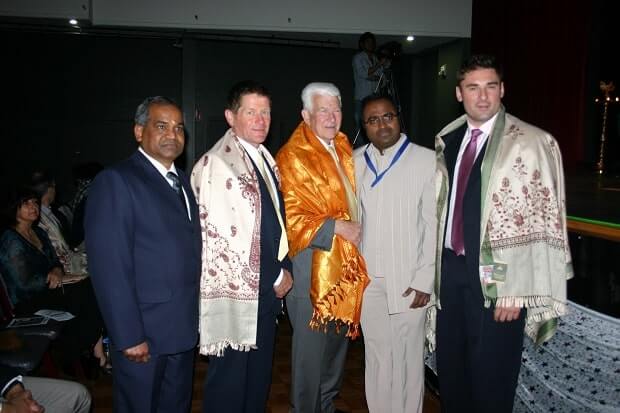
A good turnout of dignitaries, devotees and community members ensured a successful AUMSAI’s celebration

AUMSAI Sansthan Australia celebrated Dasara 2013 and Shirdi Sai Punyathithi celebrations at the Kingston City Hall in Moorabbin recently. Devotees, community members and a large number of local dignitaries attended the popular event. The festivities were marked with myriad cultural items, traditional food, community award presentations and a plethora of speeches.
Joining in the celebrations was an impressive list of guests including Ms Elizabeth Miller, MP Bentleigh; Ms Inga Peulich MLC Member for South Metro Region, Parliamentary Secretary for Education; Mr Nirmal Chowder Acting Indian Consul General; Mr Chin Tan, Chairperson VMC; Ms Lorraine Wreford, MP Mordialloc; Mayor Cr Ron Brownless OAM, City of Kingston; Mayor Cr Amanda Stapledon, City of Casey; Mayor Cr Jamie Hyams, Glen Eira City Council; Mr Srini Chidambaram, Commissioner VMC; Cr Karina Okotel, Glen Eira City Council; Cr Geoff Gledhill and Cr Paul Peulich of City of Kingston. Offering a warm welcome and keeping in tradition with AUMSAI hospitality, all the guests were presented with handcrafted shawls and mementos.
Entertainment items set the tone for the rest of the evening. The event officially commenced with a short prayer and mantra recitation by the priest that was accompanied by music from the Nadaswaram (musical instrument). The dignitaries were encouraged to participate in the traditional ceremony, and auspicious vermillion was applied to their foreheads. MC Aviti Sharma then introduced and welcomed each guest to the stage. The speeches that followed were mercifully kept brief, wherein a majority of the guests commended AUMSAI for their active involvement in the community and extended their greetings for the festival season.
After the formal part was over, the festivities continued and the audience was entertained with items presented by local artists and amateurs. Popular amongst the entertainment section were patriotic songs sung by Nawal Moudgil and his student, some wonderful renditions by Saffron Grove singers Shriram Iyer and Bobby Beebob. A graceful Moon Dance was performed by the Chinese group Ya Hui, and a vibrant bhangra item was presented by Melbourne Bhangra Regiment.
Also well received were the Ganesha Dance by Chandana Galeti, group dance by Akshara Yannam and team, followed by a children’s fashion show, and foot tapping performances on various medleys. The Indian classical section saw some talented performances in Kuchipudi and Bharatnatyam by Rachana Natyalaya and Nadanalaya Dance Academy. The audience also enjoyed some live music from Ajax Band.
The AUMSAI Sansthan held the event in association with Planet Insurance and Financial Planning, and with the support of the Victorian Multicultural Commission. Mr Rampal Reddy Muthyala, AUMSAI Treasurer and Life Time Trustee, owner of Aarya Supermarket (Member of South Metropolitan Regional Advisory Council, Victoria) was instrumental in getting local representatives to attend the festivities. During the event, community service awards were presented to Mr Charles Harris and Dr Jagvinder Singh Virk for their invaluable and continuous support to community. Towards the end of the event, AUMSAI Founder and Trustee Anil Kolanukonda offered the vote of thanks on behalf of the trustees and committee members of AUMSAI Sansthan.
Sikh organisation given £450,000 to fund research
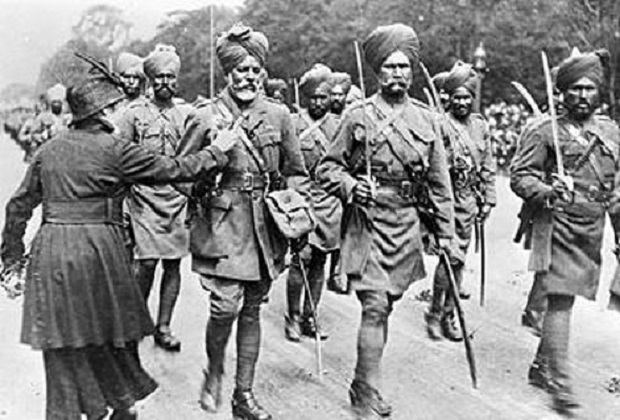

A lottery fund in Britain has provided £450,000 to a Sikh organisation to fund research into regimental histories of Sikh soldiers in the British Indian Army during World War I.
The United Kingdom Punjab Heritage Association (UKPHA) has been given 450,000 pounds by the Heritage Lottery Fund, a body which distributes a share of its income from the national lottery to projects aimed at preserving and making accessible the nation’s heritage — to fund research into regimental histories, dispatches, correspondence and interviews with descendants of soldiers.
Though Sikhs made up only two per cent of the population of British India, they formed 20 percent of the British Indian Army.
“Yet the role of Sikhs in World War I (WWI) is a largely unknown aspect of the Allied war effort and, indeed, of the British story,” a press release issued by the United Kingdom Punjab Heritage Association (UKPHA) said.
The UKPHA has embarked on an ambitious and wide-ranging project on World War I to reveal these men’s untold stories.
It will shed much needed light on both Sikh solders’ sacrifices and the contribution of all the non-white Allied forces of the British Empire.
Accor shines a light on Diwali

Accor hotels to welcome Indian visitors with special Hindu New Year offerings

Indian travellers celebrating the Diwali Hindu New Year in Australia are set to receive a warm welcome at Accor hotels celebrating the festival of lights.
The five day celebration will light up from Sunday 3rd November at 12 of Accor’s accredited hotels in Optimum Service Standards for Indian visitation. Hotel lobbies will dazzle with stylish arrangements of candles and Rangoli motifs, and offerings will include traditional sweets and savoury treats, special breakfast and dinner menus, Indian costume and entertainment.
Guests at Mercure Sydney will enjoy traditional festive dishes with restaurant staff dressed in festive Hindi attire. High Tea at The Menzies will incorporate Indian sweets; Novotel Sydney on Darling Harbour is offering an Indian-style vegetarian menu for the Sunday night, while Novotel Melbourne on Collins will entertain guests with Bollywood movies playing in the bar. Special food offerings continue in Queensland with Sofitel Gold Coast, Sofitel Brisbane Central, Novotel Cairns Oasis Resort and Mercure Cairns Harbourside all modifying their breakfast or dinner menus to suit the festive theme to tie in with the Diwali festival celebrations. To date, 12 of Accor’s Australian hotels have been accredited to provide Optimum Service Standards for Indian guests, paving the way for Accor to better cater to the specific cultural needs and growing number of Indian travellers.
“Accor is the first hotel group in Australia to introduce these service standards, which enable accredited hotels to meet the high service expectations of Indian guests year-round,” said Accor Chief Operating Officer Pacific Simon McGrath. “Our hotels have experienced an uplift of 42% growth in overall room nights from our key Indian operators in the past 12 months. We expect this growth to continue on the back of the new Delhi-Sydney-Melbourne route Air India launched in August, in addition to regular one-stop flights through key Asian ports.”
“We have been very fortunate to build up some great relationships with our Indian partners and have already seen the impact that our Indian Optimum Service Standards have made in terms of bookings,” concluded Mr McGrath. According to Tourism Australia statistics, Indian visitor arrivals to Australia had increased by 8.7 per cent for the year ended July 2013 compared to the same period previous year and a high proportion of those 165,000 travellers, 96,380 are travelling to Australia on leisure. This makes India the 10th largest inbound market for arrivals as at July this year.
Accor hotels have adopted services to meet the needs of this fast emerging market including the translation of hotel welcome kits, menus and business cards, Indian meals in the restaurant, Indian adaptor plugs, TV channels and newspapers to make guests from India feel at home. In addition, regular training and education programs are held for Accor staff to learn basic Indian greetings and cultural practices so they can better understand and respectfully serve these guests.
With the Indian inbound market representing one of the greatest growth opportunities, the Accor group is looking to boost the number of accredited hotels from 12 to over 20 by 2014. Accor hotels that offer the Optimum Service Standards for Indian visitation include: Sofitel Gold Coast Broadbeach, Sofitel Brisbane Central, The Fairmont Resort MGallery, The Menzies, Novotel Melbourne on Collins, Novotel Sydney Darling Harbour, Novotel Brighton Beach, Novotel Cairns Oasis Resort, Mercure Sydney, Mercure Cairns Harbourside, Ibis World Square, Ibis Sydney Darling Harbour and Novotel Queenstown Lakeside in New Zealand.
Treasure trio of docos
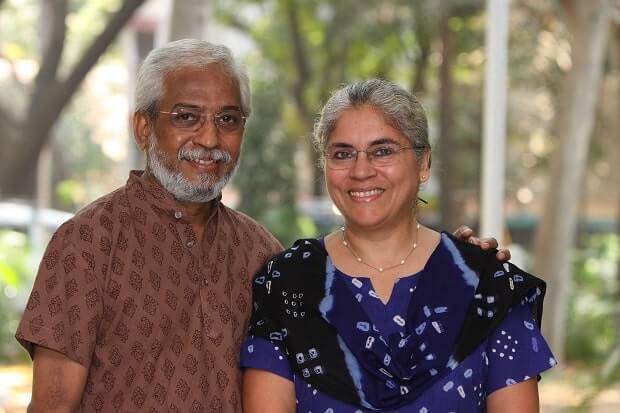
Three well-made documentaries tell diverse stories of the transgender community, poets and activists

When it comes to Indian cinema, hardly anyone mentions or knows about documentaries, the poor cousin of feature films. So it was a rewarding experience to watch three award winning Indian documentaries made by KP Jayasankar and Anjali Monteiro at Parramasala 2013 from October 5-7 at the Riverside Theatre in Parramatta. The program was presented by Dr Anne Rutherford with the support of University of Western Sydney (UWS), University of Technology, Sydney (UTS), Indian Council of Cultural Relations and Information and Cultural Exchange Inc. (ICE).
The three documentaries screened were Our Family, So Heddan So Hoddan (Like Here, Like There) and Naata (The Bond).
Our Family explored the lives of some members of the transgender community. What does it mean to cross that line which sharply divides us on the basis of gender? Is there life beyond a hetero-normative family? This documentary was set in Tamil Nadu, India and brings together excerpts from Nirvanam (Liberation), a one-woman performance, by Pritham K Chakravarthy, and a family of three generations of transgendered female subjects, Aasha, Dhana and Seetha. The film explores the normality of their existence with the dark and powerful narrative by Pritham. Nirvanam refers to the act of liberating oneself from the male body and transforming oneself to a female, also alluding to the surgical ceremony opted for by some transgenders. The journey of the three protagonists towards a reinvented selfhood is a tumultuous one that is often fraught with violence, exploitation, affection and courage. Weaving together performance, life histories and everyday life, the documentary slowly makes one realise that perceived divide between ‘us’ and ‘them’ does not really exist.
So Heddan So Hoddan (Like Here, Like There) languidly explores the many-layered beautiful poetry of Shah Abdul Latif Bhitai, a medieval Sufi poet, and the world of three men from the Fakirani Jatt community, on the Indian side of the border of India and Pakistan, who struggle to keep alive the syncretic legacy of Bhitai. Bhitai, an iconic figure whose poems are sung in Kuchchh, Gujarat, and across the border in Sindh, Pakistan, celebrates diversity and non-difference. Before the partition, the Fakirani Jatt community had no borders and moved around freely. With the tightening of the Indo-Pak border many of them have ‘lost’ members of their families in Pakistan. The growing industrialisation of Gujarat has meant a fight for survival as they continue to be marginalised in their own land.
During the lively Q&A session that followed the movie, a member of the audience of Pakistan origin commented that Shah Abdul Latif Bhitai was very much in ‘alive’ in Sindh. His poems are still taught in schools.
Naata (The Bond), screened on the last day of the Parramasala weekend to even greater audiences than the first two documentaries. This was a testimony to the power of the film-makers’ story-telling, obviously spread by word-of-mouth. Naata is about Bhau Korde and Waqar Khan, two activists from different communities who become friends when they get involved in conflict resolution and working with neighbourhood peace committees in Dharavi in Mumbai, reputedly the largest slum in Asia. This film explores their work and includes documenting the process of collective production of a film by Waqar Khan and use of visual media for ethnic amity. The story is inter-woven with the personal story of Monteiro and Jayashankar who also come from different communities and religions, but are now married. It also explores their daughter’s quest for identity.
A recurring question at the Q&A session that followed was regarding safety at Dharavi. Many members of the audience had a different perspective of the location, as depicted in Slumdog Millionaire, which the film-makers set out to dispel. The film-makers said that since the 1992 riots in Mumbai, there have been no major communal riots as the protagonists and other members of the committees actively sought ways to maintain peace in the area.
Anjali Monteiro and KP Jayasankar, the film-makers of these three very different documentaries, are professors at the School of Media and Cultural Studies, Tata Institute of Social Sciences, Mumbai. Monteiro has a Masters in Economics and a PhD in Sociology. Jayasankar has an MA in German Studies and a PhD in Humanities and Social Sciences. Both of them are involved in media production, teaching and research. Jointly they have won thirty national and international awards for their films. Their most recent award is the Basil Wright Prize for So Heddan So Hoddan at the 13th RAI International Festival of Ethnographic Film 2013. They have several papers in the area of media and cultural studies, and serve as visiting faculty to several institutions in India and abroad. They are currently visiting professors at the University of Technology, Sydney.
It is fascinating that the film-makers were able to tell their stories effectively with minimal resources in terms of money and manpower. In all three documentaries the roll of the credits for the crew lasted less than a minute. Making documentaries for over three decades now, these film-makers are driven by their belief in social justice. When Indian Link asked them about their motivation to make these documentaries, they said that they were intrigued by the wisdom and dignity of the marginalised communities and have learnt much from them.
“Our methodology of work involves collaborative documentation with the subjects, discussion with them on what they would like documented, sharing and discussion of the footage on location, exploration of what kind of representations they are comfortable with and finally, sharing of the film before it is finalised,” they revealed. “On most occasions, we maintain contact with our subjects”.
What made it interesting was that all of the documentaries were unique, touching on different issues, challenges and victories of humanity. Documentaries are generally much varied in the subjects they portray and closer to the truth than fictional feature films. Give it a try, be brave, go ahead and watch some documentaries, and you are sure to be drawn to them!