

The very concept and definition of memory function is changing with a smarter, tech-savvy generation, reports RADHA RAVI

I recently came across this quote from Albert Einstein, “Never memorize something that you can look up.” It seems like a great quote from this great scientist. Now why would he have made such a statement? I did some research related to memorising, with results that were not too surprising. The web is awash with articles around how to increase memorising capability, obviously a well-researched topic. Yet, the statement from Einstein is in complete contradiction to that. This made me think of the need for memory and how we use this great faculty of ours.
When my father was growing up, his father gave him 25 paise to memorise the complete list of countries and their capitals. “United States of America, Washington DC; United Kingdom, London…” A generation later my dad made the same deal with me, upping the reward to Rs5.
I remember having competitions at school where general knowledge was tested in the form of matching languages or currencies to their countries. Or, the names of the Presidents and Prime Ministers. But no such trick works with my kids. There is little need for children to know it all when everything is just a touch away.
Nowadays, everybody has a smart device – smart phone, iPad, iPod, etc. By some reports, 2013 is the first year where smart phones are meant to outsell plain ones. In other words, having a computer in your pocket is the current norm. Search engines are just a tap away, so why bother memorising anything.
Parents of my generation, as parents in the previous generation and before, have had the same predictable reaction: “These kids today! They don’t want to learn anything! All they ever want to do is play on smart devices!” The proponents of the memory debate often cite school exams, quiz shows, and travelogues as examples of a person’s fine memory. Our own scriptures were transferred through memory.
Now that’s an understandable argument. But on the other hand, there is a powerful counter argument. A society must move forward, leaving any obsolete skills behind; just as we have left calligraphy, analogue cameras, audio and video tapes, and many others. Memory is slightly different since it’s not a device, and to say that it should not be used will be trivialising its role. We cannot say we don’t need it anymore, but how we invest in skills in this modern age, definitely needs to be looked at and changed in many ways.
This is not the first time we have had to do that. In fact, we have confronted the memorising argument before – when pocket calculators were introduced. Memorising skills were questioned even then, the generation before being a master of timetables and therefore, calculations. When pocket calculators came along, parents were aghast about their children losing the ability to calculate in their heads. We have come along a fair bit since then. Calculators are used almost universally; you are even allowed to take a calculator to the classroom, even at examinations like SAT.
In this time and age, critical thinking skills and problem solving have overtaken memorising skills. Calculators and smart phones are seen as machines that do the grunt work while students focus on more global issues. Memorising the names of the countries and their capitals is no longer seen as important as understanding the political landscape and macro economics of those countries. Of course, there will always be some memorising required for the information that is too clumsy to look up every time such as simple spellings, calculations, names of neighbouring countries etc.
So does that mean the teachers should do away with asking students to memorise times-tables? Or, historical timelines? Hmm, that would be interesting. More research suggests an important distinction. Memorising is not ‘rote’. What we have been doing is trying to memorise to build a database of information. This database is no longer required, as that’s what the internet is for. But memorising can be used as a way of learning. Memorising facts can build the foundations for higher thinking and problem solving. Constant recitation of times-tables might not help children understand mathematical concepts, but it may allow them to draw on what they have memorised in order succeed in more complex mental arithmetic. Memorisation therefore, produces a more efficient memory, taking it beyond its limitations of capacity and duration.
There are some further benefits too. Students who ‘just know’ equations, functions, definitions and other memorised facts can save brain power that can be used for other things. If concepts and information are grasped well, students can move onto more complex things rather than spending a whole lot of time looking up things. And it helps show off too. Students who know everything are well liked amongst peers and teachers.
Memorising or not. This debate is not going to go away anytime soon. Meanwhile, the list of countries seem to be growing. So, better get started at it.
Mastery at memorising

Bollywood Buzz! Award for veteran Waheeda and more
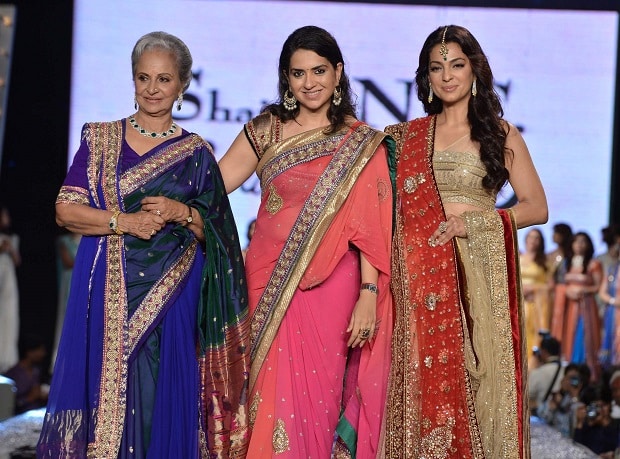

Award for veteran Waheeda
Veteran actress Waheeda Rehman will soon receive the inaugural Centenary Award for the Indian Film Personality of the Year, a special honour to commemorate 100 years of Indian cinema. The 77-year-old actress will receive the honour at the 44th International Film Festival of India (IFFI) in Goa. Information and Broadcasting Minister Manish Tewari whose ministry set up the award congratulated the veteran actress on the accolade.
“Congratulations to Waheeda Rehmanji for being conferred the inaugural Centenary Award for the Indian Film Personality of the Year-2013,” he tweeted.
The award consists of a cash component of Rs.10 lakh and a citation.
Waheeda Rehman has graced the screens of Indian cinema since 1955, when she starred in the Telugu film Jayasimha. A year later she made her debut in the Hindi film industry with C.I.D., and has never looked back.
In a career spaning over five decades, she has appeared in over 70 films with hits like Guide, Pyaasa, Man Mandir, Kaagaz Ke Phool, Teesri Kasam, Ram Aur Shyam, Reshma Aur Shera and Neel Kamal to her credit. Waheeda also featured in the 2006 superhit movie Rang De Basanti. Winner of several awards, she was also conferred with Padma Shri in 1972 and Padma Bhushan in 2011.
Well done and well deserved, Waheeda Rehman!
Amna set for India?
Tall, dusky, confident and all of 23, Amna Ilyas is in the spotlight on ramps of the nascent yet booming scene of Pakistan’s fashion industry. And having tasted filmdom with Zinda Bhaag, she is now hopeful of clinching more movie offers. Naturally from India. And why not?
“I am thinking of quitting modelling and focussing on acting,” Amna stated recently when attending the Abu Dhabi Film Festival.
“A lot of films are being made in Pakistan right now and we are very happy about that. They are not big budget films, but small ones, which are nice. I currently have two scripts,” said the actress, who plays the female lead in Zinda Bhaag, the first movie that her nation has sent for Oscar consideration in the last 50 years.
Zinda Bhaag, which is turning out to be a commercially profitable venture for producer Mazhar Zaidi and co-directors Meenu Gaur and Farjad Nabi, is currently doing the rounds at film festivals. The film is turning out to be a beacon of hope for Pakistan’s film industry, which had collapsed around the 1990s.
Amna says she doesn’t intend to be fussy, Hollywood or Bollywood will do to promote her acting talent. “See… hopes are there from Hollywood as well, it will be great, but yes, India is close by and we look at it as a big industry,” said Amna who intends visiting India soon to scout for work.
A fan of designer Manish Malhotra, she will also be flaunting creations by him.
Karachi-based Amna walks and talks with the panache and boldness of a seasoned talent, having been at the pinnacle of Pakistan’s fashion scene after she started her stint in modelling five years ago. She has worked with top-rated designers, and has been, surprisingly, supported by her family and a ‘chilled out’ community which is generally conservative – and Amna can’t be more thankful about that. Things are changing now for many, says the beauty, whose elder sisters are former models.
“Being a model in Pakistan is great. Fashion is on a boom right now. We had our first fashion week in 2007 and since then, a series of fashion events are happening,” claimed Amna. “Because of the fact that we have a bit of a conservative environment, a lot of girls were not able to do what they wanted. But now things are changing in Pakistan and people are becoming more modern and upfront. They want to change – and by that I mean, they want to move with the world. So, there are now a lot of people like me who are getting a chance to work abroad and travel”.
Well, it won’t be long before Amna is signed up by some interested Indian filmmaker anxious to improve Indo-Pak relations. Let’s hope it’s sooner than later!
Deepika’s hat-trick
No, it’s not about her elegant or otherwise headgear, it’s just that Deepika Padukone is going from victory to victory. Goliyon Ki Raasleela Ram-leela has just hit the jackpot, making it her third blockbuster winner in the year, following Yeh Jawaani Hai Deewani and Chennai Express. Naturally, the actress is receiving plaudits from all quarters.
From playing nerdy Naina to South Indian Meenamma and now a Gujarati girl in Ram-leela, the 27-year-old has proved her versatility with the three movies.
In Ram-leela, Deepika not just looks stunning, but she has also delivered an outstanding performance, qualities which have added to the film’s resounding success. Director Sanjay Leela Bhansali presented the fresh pair of Ranveer Singh and Deepika to narrate William Shakespeare’s Romeo and Juliet in desi style with Gujarat as its backdrop. It is believed the film garnered over Rs.16 crore on its opening day.
“I haven’t received so many congratulations in a while. Everybody is saying this is the kind of cinema they like to see me make. It’s a great feeling when your hard work pays off,” stated an elated Bhansali. The movie has Bhansali’s trademark touch of capturing culture and traditions vividly.
Deepika, daughter of veteran badminton player Prakash Padukone, made her Bollywood debut with Farah Khan-directed 2007 hit Om Shanti Om, where she played Shah Rukh Khan’s love interest.
She then appeared in films like Bachna Ae Haseeno, Chandni Chowk To China, Love Aaj Kal, Housefull, Break Ke Baad, Aarakshan and Desi Boyz, but it was only after her bold character portrayal of Veronica in Cocktail that Bollywood realised her hidden potential.
Deepika will next be seen in Finding Fanny and Happy New Year. And at the rate she’s going, it’s likely that 2014 will be a ripper of a year for Deepika once again!
Bachchan buzz
News about Bollywood’s first family is always exciting, and it has been particularly so on November 16. The 71-year-old megastar enjoyed his granddaughter Aaradhya’s second birthday, just as master blaster Sachin Tendulkar was chosen for the prestigious Bharat Ratna award, and Ram-leela was released. “An icon retires, a Ratna to his name, the nextgen celebrates her 2nd year… and Bhansali’s Ram-leela mesmerises. Too much in a day,” Big B tweeted on his Twitter handle SrBachchan. He also praised the movie on the microblogging website, tweeting, “Ram-leela! The genius of Sanjay Leela (Bhansali), the passion of Deepika (Padukone) and Ranveer (Singh), the guile of Supriya (Pathak) and the rawness of Richa (Chaddha)!”
Meanwhile, Abhishek and Aishwarya Bachchan have been praised for their generosity by none other than renowned Hollywood actress Sharon Stone, who is in India for an amfAR (The Foundation for AIDS Research) fundraising event. Aishwarya and Abhishek hosted the event, which was a grand success. Stone was impressed by their involvement, commenting on Aishwarya’s graciousness in participating and the couple’s generosity in hosting the event.
“I love this country, India is beautiful. I am looking forward to seeing the Taj Mahal, Jaipur, Rajasthan…” said Stone enthusiastically.
So that’s it from the Bachchans, but keep watching this space…
Sunny determined to break jinx
Actor Sunny Deol, who was eagerly looking forward to work in Ghayal Returns, says the project has been jinxed, but he is determined to make it happen. Ghayal Returns is a sequel to the 1990 revenge action drama Ghayal, which was a big box office hit and considerably boosted the actor’s career at the time. But Sunny feels the film is jinxed. “Ghayal Return‘ is something which I don’t want to talk about because usko nazar lag gayi hai kisi ki (someone has cast an evil spell on the project). But it is happening for sure,” said Sunny, who had teamed up with Meenakshi Seshadri and Raj Babbar in the original. The 57-year-old said he has been trying to make the sequel ever since the original released, which is a long, long time indeed!
“The first time, I was sure that we would make the film in the same year, but I don’t know why it didn’t happen. We tried the second time, with no success. This is my third attempt and I am certain that it will happen,” said the actor whose recent hits are Apne and Yamla Pagla Deewana. According to the actor, Ghayal Returns will begin from where Ghayal left off and we can only hope that Sunny doesn’t get ghayal in the process!
Urvashi cool about romancing Sunny
Model-actress Urvashi Rautela is just 19, but she has shot romantic scenes with 57-year-old Sunny Deol for Singh Saab The Great. And the discrepancy in age doesn’t bother the young debutante. Age is merely a number, she says.
“Age doesn’t matter to me. What’s there in the age? It’s just a number! If Rajnikanth can romance Aishwarya Rai… I know it’s a big age gap, but we are all very professional and as long as we look great together, nothing matters,” said Urvashi with admirable practicality for one so young. The actress claims that she was “not at all” sceptical before signing the film, because her “chemistry” with Sunny looks “great on screen”.
Urvashi shot to fame after bagging the Miss Universe India title in 2012, but she was later dethroned because she didn’t meet the age requirement. A dancer trained in five different forms, she says she would love to do a film where she is able to harness her talent to the hilt. “I have learned five different dance forms including Bharatnatyam, kathak, hip-hop, jazz, belly dancing. That’s the reason I would like to do a film on dance,” she said. Singh Saab The Great releases soon, so it won’t be long before we see if the Urvashi-Sunny chemistry works on screen!
Rakesh ready for a rest
Rakesh Roshan is ready to take a well-deserved rest after the success of Krrish 3, his latest superhero directorial venture starring son Hrithik the hunk. He wants the leisure to bask in the glow of unending appreciation coming his way for making a movie that is high on emotions and packed with international-level special effects. But the veteran actor was nervous when he started making the film. “I wasn’t confident about pulling off the same level of excellence as the Hollywood superhero films. But somewhere, God gave me strength and I worked exactly as I had planned,” Rakesh admitted.
Apparently Hrithik wanted to play the super-villian, but dad was having none of it! “When he told me that, I flatly refused. If Hrithik had played the super-villain, we’d have to sit at home and watch the film,” said Rakesh firmly.
So would he ever think of making a film without his pyaara beta?
“Make a film without Hrithik? Why would I do that? I’ve the best star-actor in my house. Why would I go to anyone else?” asked Rakesh indignantly.
“Hrithik was my right-hand man throughout the making of Krrish 3. The two of us are completely professional on the sets. We speak to one another as director and actor on the sets. We don’t whisper to one another. If he asks for one more take, I don’t give it to him because he’s my son, but because I know the shot will get better if he is asking for a retake,” he explained.
So will there be a Krrish 4?
“Right now I am exhausted. My mind is blank. I may make a love story or an action film before Krrish 4. Let’s see how the success of Krrish 3 pans out. Right now my happiness comes from seeing my wife and daughter’s smiles. They’ve seen Hrithik and me work so hard,” he stated.
Well, we think it’s only a matter of time before Krrish 4 is announced, and this time, perhaps poor Hrithik will be allowed to play the super-villain!
Ask Auntiji: Beauty and the beholder and more


Beauty and the beholder
Dear Auntyji
I have an eight year old daughter who is the spitting image of her aunt, on her father’s side. Now this aunt, was and still is, the great family beauty. She is so beautiful with her russet hair, pale grey eyes, high cheekbones and wheatish complexion that multiple producers in Bollywood wanted her to act in their films in the 80s. Of course, being a Rajput, she would have none of that. None the less, Sheena is so lovely to look at that I have even seen children stop and stare at her and babies often just look at her as she walks by. The kids and babies don’t communicate with Sheena, but they just stare at her face. My husband, me and a number of other family members call it the ‘Sheena Effect’. Sheena is a nice enough lady Auntyji, but recently her behaviour concerns me. My little daughter is looking more and more like Sheena each day. Whenever Sheena comes to visit she is friendly with me, but when Ataansha comes into the room to greet her lovely aunty, Sheena just clams up and simply stares at the poor child, and does not say much. I don’t know what Sheena thinks when she looks at Ataansha – but I know exactly what Ataansha thinks. Once her aunt has left, Ataansha asks me why her aunt does not speak to her, and only stares at her. Ataansha thinks that Sheena does not like her and I wish I knew how to address this issue, Auntyji. Is there any way you could guide me?
Auntyji says
Oh, the mysteries of human behaviour! How to tell what is going in inside someone’s head? Well, the only way to deal with this problem is by addressing it head-on. Tell Sheena what Ataansha told you, and say that Ataansha thinks that Aunty Sheena does not like her. Of course, this is the quickest, most efficient way to deal with this problem, but it may not have the desired effect. Sheena could be offended or upset – who knows? People that beautiful who have had a lifetime of being objectified because of their looks, might have a distorted version of reality. Your alternative is quite simple. Tell Ataansha that when Aunty Sheena was little like her, she looked just like her. So when Aunty Sheena sees little Ataansha, she remembers her childhood and starts thinking about the times when when she was a girl. Ataansha should be happy that Aunty Sheena thinks of her childhood when she looks at your little girl. You know, it could be quite possible that the Sheena Effect is happening in reverse here – Sheena has finally seen in her niece what everyone else sees in her. So naturally, Sheena is only doing what babies and kids have been doing to her. Sheena deserves to gaze upon something so beautiful too. So I say you should be delighted by all this, and only look at the positive side of things. No point pondering whether Sheena is now contemplating her diminishing youth and is being confronted by it in the form of Ataansha, and there is certainly no reason to think that Sheena could be pitying the little mite – who now has a lifetime of people judging her because of her good looks and probably giving her unwanted attention as a result of it. Your problem in life is to now raise a child who is astonishingly beautiful without making this the most important thing about her. You need to teach Ataansha that being a good human being, being smart, helping others, being kind, polite and loving is so much more important than being beautiful. But don’t downplay her looks – tell her she is indeed lovely, but that’s one part of her. And as for Sheena, be grateful for her – she is giving you a living example of what your daughter is going to be like as she grows older. By the way, send me a picture of Ataansha nah, mei bhi dekhna chahaati hoon tumhhari choti si apsara ko.
Matrimonial machinations
Dear Auntyji
I am a 34 year old professional woman with two post-graduate degrees and a very well paying job in a bank in Sydney. But regardless of my achievements at work, each time there is a gathering, the only question everyone has for me is when I intend to get married, especially seeing that I am not getting any younger. Because I dislike the hypocrisies of my large Indian family who prize familyhood above all else, over the last 12 months, I have resorted to making up all sorts of lies to amuse myself. I spread a rumour that I had married an Australian in secret and my parents didn’t know, then I said I got divorced, then I said I married a Muslim and had converted, then I said I was getting married the following month and no, it was a small wedding only, so no one was invited. So these lies have amused me for 12 months, but the questions are relentless and I am compared to my twin cousins Disha and Nisha who got married at 23, produced bouncing bubs and are living a life of mediocrity somewhere in Brisbane. Can you please tell me what my recourse is here? Note that I have nothing against marriage, but I have not found the right man yet. Can you please provide a suggestion for a practical person like myself?
Auntyji says
Oh, nothing is more irritating than smug relatives eager to get you married, so that you too could experience the perpetual unhappiness that they live through each day of their ordinary lives. My solution to you is simple, and seeing that you are a bit of a prankster, I am sure you will anticipate the delicious reward of it all. So the next time you have a big gathering, and everyone is sitting around discussing the price of onions, the corruption in Bihar (as though it’s something new), Kareena’s latest film, what so-and-so got up to, invariably, someone will make the mistake of mentioning your marriage. At this stage, you must summon all your theatrical muster and look at this person with the saddest look upon your poor unmarried visage, and slowly but surely, have one or two mote mote ansoo trickle from your cow eyes and then start sobbing, softly at first but then in deep, racking and hacking sobs. Of course, you will have the attention of the entire room, and the ignoramus who had the temerity to ask you the question will be forced to explain what they just did. So then you run into the bathroom and come out after an hour, preferably with red eyes and a pitiful countenance. Of course, another relative who was not present at this tamasha and did not have the good fortune to have this latest gossip imparted to them, will no doubt ask the same question at another gathering a few weeks later, and again, you must do an encore performance. I guarantee you that after three repeat performances, you will not ever be asked this question again! Everyone will know that someone most zaleel must have broken your poor heart, and any talk of shaadi brings you to tears. There’s your solution, right there! No one will bother you after this. Unless of course, you meet the right man, at which stage you can shout from the rooftops and balconies that you are in love. Remember this final tip, you might want to practise in front of the mirror before you undertake the crying game. You don’t want ancient Pushpa nani, who has been around so long that she has seen everything and probably even the birth of the universe she is that ancient, to see through your natak. Good luck!
Riveting drama of the doomed and dangerous: SATYA 2
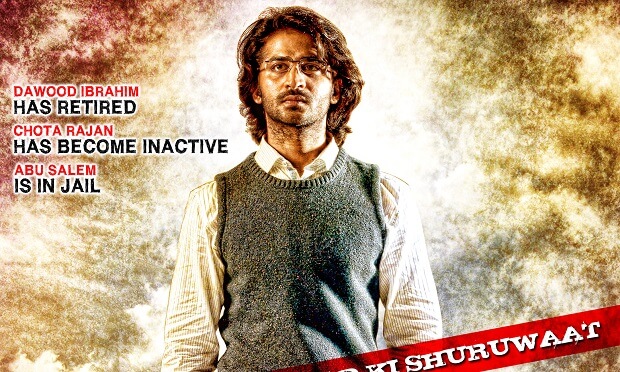
SATYA 2
STARRING: Puneet Singh Ratn, Anaika Soti, Aradhana Gupta, Amriyaan
Director: Ram Gopal Varma
RATING: ****

Spot the difference. It’s the same in all-apparent details. Mumbai’s underworld caught in a compromising position by Ram Gopal Varma (RGV)’s camera, prying into the mutilated lives of characters looking so scruffy and aggressive, you wish they would leave aside the bloodbath and just take a ‘bloody’ bath.
Yup, this is ostensibly, very familiar RGV territory. But hang on, something very different is going on here. Strikingly rich and articulate in production design, Satya 2 is a startling original take on the evolution, collapse and restoration of Mumbai’s underworld in ways that question the economical paradigm of a nation on the brink of damnation.
Yes, we are talking about our country where crime and corruption grow in direct proportion to the apathy of the powers that be. Given the incredible leap in atrocities against the ‘un-empowered’ (to coin an anti-capitalistic phrase) where does the poorest of the poor go when his daughter gets gang-raped, his wife dies of adulterated medicine and his father cannot get his Rs.500 pension without paying a bribe?
RGV’s film shows a devilish daring. It takes the underworld into confidence to build an anti-corruption empire that would feed the fed up by paralysing the super privileged.
It’s a startling premise, and one that RGV is not able to work out into any tenable blueprint of socio-political reform. But the very fact that he is able to suggest a solution, no matter how implausible, to the current climate of desperate de-escalation of morality, is reason enough to applaud this flawed, but riveting drama of the doomed and the dangerous.
Beware of the hopeless. They have nothing to lose except their despair. This is the propelling premise of RGV’s neo-Satya’s plot. The narration is most of the time taut and tactile as we follow the new millennium Satya’s journey from a village in Rajasthan to the vortex of gangsterism in Mumbai. Ironically, the police, sturdily represented in the film, don’t seem any different in its activities from the underworld.
RGV gives the saga of gangsterism a new spin, creating for the underworld genre of cinema an entirely new formula and folklore of survival.
Vikas Sharaf’s cinematography captures Mumbai in stunning sepia tones suggesting decadence and rebirth in the same range of vision.
Visually Satya 2 is RGV’s smartest and most eye-catching film in years. The shootouts on the streets of Mumbai, which have been done to bludgeoning death in the past, acquire a new life here. The sequence where Satya is shot at in an open cafeteria is specially brilliant in the way the editor cuts to the chase without getting out of breath.
The under-construction buildings, a favourite haunt of filmy gangsters, are shot here with vigorous virility.
So many years after Satya spoke a new cinematic language, RGV is back in form displaying the sparks of brilliance that made the first Satya a trendsetting experience. No relation to the earlier film except the one of bhai-giri, Satya 2 sneaks slyly into Mumbai’s dark dangerous sinister and ominous underbelly.
RGV’s eye for the migrant’s dismantled soul is unerring and powerful.
The performances range from the reined-in to the embarrassingly over the top. In the title role, Puneet Singh Ratn’s restrained intensity aids the work’s aura of karmic catastrophe.
SUBHASH K. JHA
Fallen woman saga falls flat: Rajjo

Rajjo
STARRING: Kangana Ranaut, Paras Arora, Prakash Raj and Mahesh Manjrekar
WRITER-DIRECTOR: Vishwas Patil
RATING: 1 and 1/2

Films about prostitutes, with or without a heart of gold, have fascinated filmmakers and viewers from the time Nargis and Meena Kumari did Adalat and Pakeezah, respectively.
Then there was Sharmila Tagore carrying the concept of the pristine prostitute to the peaks of sublimity in Shakti Samanta’s Amar Prem.
With time, the concept of the prostitute with a halo has lost its sheen. Virginity and sexual sacrifices are no longer the sacrosanct commodities they once used to be.
Rajjo tries hard to create empathy – or is it sympathy – for the prostitute on the path of rehabilitation. Years ago, we had Anil Dhawan trying to give a home and a sense of security to call girl Rehana Sultan in Chetna. In Rajjo, we have a newcomer Paras Arora trying very hard to look like the guy that the distressed prostitute can depend on. The older woman’s sexual seduction was far more sincerely done recently in B.A. Pass.
Rajjo is a losing battle all the way. Not only does the callow youngster (said to be 21 in the script but looks 16) seem ill-equipped to give it new life, the script itself seems in desperate search of a life. It meanders from an intended plot of self-righteous nobility to a domain of absolute absurdity and crudity.
Writer-director Vishwas Patil means well. Maybe just as well as B.R. Chopra when he cast Vyjayanthimala as the rehabilitated nautch girl in Sadhna. But Vyjayanthimala could dance. Kangana can’t.
Lamentably, good intentions don’t translate into good cinema. Dialogues comparing women to commodities that are meant to be scathing attacks on the position accorded to women in our society, come out sounding cheesy. The editing and choreography don’t support Kangana’s character in any way.
Instead, they drive the narrative around the bend creating a kind of chaotic universe where actors drop in, say their allotted lines quickly and leave without getting involved in the mess.
The actors, even tried-and-tested ones like Mahesh Manjrekar and Prakash Raj seem to be screaming to get attention.
The only technician who seems to take his job seriously is cinematographer Binod Pradhan, who shoots the messy material with sincerity. But what can a world class cinematographer shoot in a film that’s hell bent on shooting itself in its leg?
The fallen woman has never before fallen with such a thundering thud.
SUBHASH K. JHA
Goliyon Ki Raasleela Ram-leela: Absolutely reckless
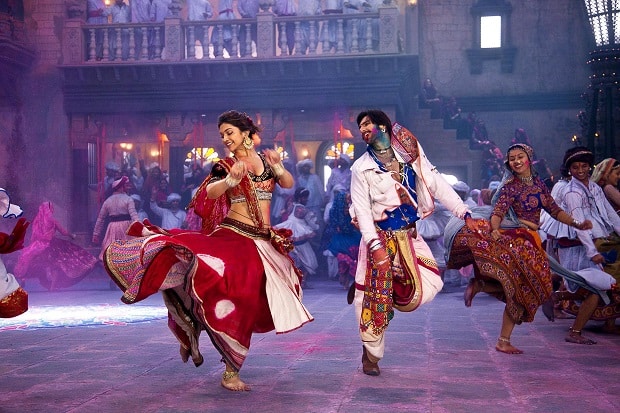
Film: Goliyon Ki Raasleela Ram-leela
STARRING: Deepika Padukone, Ranveer Singh, Supriya Pathak, Gulshan Devaiah and Richa Chadda
DIRECTOR: Sanjay Leela Bhansali
Rating: ***

Just when you think you have seen it all, there comes a film that reminds you of how far the cinematic medium has come… And how far it can go in the right hands.
Let’s face it – Bhansali is Bhansali. The visual imagery in all his earlier films – from Khamoshi: The Musical to Guzaarish is comparable with the best art from any field of aesthetics.
In terms of its free-flowing, unmeasured and operatic opulence, Ram-leela (with or without the censorial prefix), comes closest to the giddy high-pitched and yet miraculously controlled tempo and tenor of Bhansali’s Devdas. That too was a steeply sensuous cinematic adaptation from a literary source.
Ram-leela goes to William Shakespeare’s Romeo and Juliet and comes away with a marvel of a tale of love-at-first-sight. Bhansali tilts his hat to mythology, folklore and the culture of community clashes with a blend of spontaneity and brilliance.
The rigorous reworking of the Shakespearean classic required a certain sense of recklessness. Earlier this year, we saw some of the same creative recklessness in two other Bollywood adaptations, namely Aanand L. Rai’s Raanjhanaa and Manish Tiwary’s Issaq.
But in Ram-leela, every image and frame tells a story.
Bhansali’s Romeo and Juliet are unabashedly sexual in their body and verbal language. None of that traditional coyness and hesitation that characterises traditional courtship when Ram and Leela discuss one another’s vital statistics. He runs a porn video parlour. She comes from a family of gun-wielding criminals helmed by a steely matriarch (Supriya Pathak, brilliant). He comments on her ‘136 inch’ chest, she talks about his, er, trigger. They are in love and they know lust is an integral component of their relationship.
No two lovers derived from a classic romance have celebrated their mutual sexual desires so frankly and fearlessly.
Gosh, these two are Romeo and Juliet on steroids! And this is as good a place as any to tell you that no other two actors could have done to Bhansali’s Romeo/Ram and Juliet/Leela what Ranveer and Deepika have done. They don’t play the two characters. The couple owns their characters.
In his quest for the most visually invigorating shots, Bhansali is here assisted amply by his cinematographer Ravi Varman. Varman uses the camera like Ustad Amjad Ali Khan uses the Sarod. It’s an instrument to converse with divinity. Wasiq Khan’s art work too unfurls a spiralling tapestry of kaleidoscopic colours that find a place in the hectic frames without jostling or crowding the canvas.
Of the innumerable imperishable images that emerge from the film’s tumultuous tale of overnight passion, elopement, estrangement and reunion, I’d single out two. The first shows Barkha Bisht as Ranveer’s widowed sister-in-law running away from a gang of attackers. As she runs through the rugged hinterland, her brass vessel tumbles down-slope with her.
The sequence, caught in a desperately dying light, is probably the most vivid image of impending doom I’ve seen in any recent film.
The other unforgettable image features Deepika, her hand bloodied after an injury, lying on the wet ground in a streak of blood. It reminded me of Aishwarya Rai’s slashed wrist creating a pond of blood in Bhansali’s Hum Dil De Chuke Sanam.
Fire and blood are never far from Bhansali’s vision. Though there is plenty of bloodied images in Ram-leela, the fire this time rages in the eyes of the characters.
Bhansali’s self-composed songs assisted by Monty Sharma’s evocative background score, perfectly capture the film’s impetuous mood.
The actors do the rest. Every performer surrenders to the tempestuous saga. While Supriya Pathak leads the supporting cast with a stellar performance, Richa Chadda, Abhimanyu Singh, Gulshan Devaiah and Sharad Kelkar are the portrait of pitch-perfect emoting.
As for the Ranveer-Deepika pair, there’s some great on-screen chemistry there!
SUBHASH K. JHA
Money and happiness

Showing more empathy and charity towards the poor can help reduce poverty and destitution in the world, reflects SHAFEEN MUSTAQ

If the rich are getting richer and the poor are getting poorer, does this mean the rich have to curb their dreams and aspirations to lift up the status of the poor? When David Beckham earns $100,000 a day, should he be giving that away to live in Ingleburn, so that the poor can rise up to a proper standard of living? The reality of modern society is that the rich are rich at the expense of the poor. We live off the poor, we take their money, their oil, minerals, gemstones and their labour at such horrifying low costs that we create a socio-economic divide responsible for the brain drain and resource drain of other countries. In doing so we make ourselves wholly responsible for the growing economic divide and the misfortunes of those less well off.
Does this mean the rich are not allowed to aspire? No. Everyone is entitled to aspire. The garment worker who is only paid 50c for a dress you bought at $110 is also entitled to aspire. But she lives in a society in which you have contributed to the death of her dreams. We have built a socio-economic arena in which third world countries are pitted against first world countries like gladiators, with little to no hope for success. Shouldn’t we work towards a society where this worker’s labour is duly paid and her right to dream is duly respected and given a fighting chance? Islam’s way of wealth distribution gives people that chance. The concept of ‘zakaat’ which is to donate a small portion of one’s wealth to the less fortunate means that if we all gave a little of what we have, there would be no poverty in this world. But we don’t. We would rather spend it on a new house or another car, than give even a cent more than what is expected of us.
It is here that I believe it is our collective responsibility to judge each other, and remind ourselves of our boundaries and of the risk of hedonism. A reminder between friends that extravagance leads to the loss of values and sense of self, should not be considered offense. Rather, it should be gratefully accepted so that we do not lose ourselves in the consumerist mad dash for materialistic satisfaction. So, no! I don’t think David Beckham should live in Ingleburn. He has worked very hard to get where he is, by virtue of his looks, talent and his efforts at harnessing his fame. But he should remember that the privileges he takes for granted which position him in the crème de la crème of society, are but a dream for 90% of his fellow humans. And he remembers that.
His efforts with Unicef and those of Meryl Streep and Angelina Jolie with other NGOs, show that there are celebrities who take on the responsibility of helping those less fortunate, and take it very seriously.
So the next time you look at that amazing red sports car, or the brand new housing complex in which you can build a mansion, remind yourself that having food, shelter, clothes and access to education puts you in the top 10% of society. Remind yourself that we live in a world of 6 billion people in which the majority go hungry every day, have little to no shelter, or are facing religious and cultural persecution. Recognise that the current socioeconomic status, division of wealth and labour, and political hegemony only perpetuate this divide and drive mankind to total despair and apathy. Remind yourself that you can make a difference by doing your bit for your fellow humans. Buy fair trade, look behind the façade of materialism, refrain from extravagance, put aside some portion of your wealth for charity.
The most important thing you can do to stop the perpetuation of our consumerist culture is to educate your children, families and friends. Teach them the value of money. Show them through your own actions that simply because you have the means to deck yourself in Louis Vuitton, doesn’t mean that you do. For somewhere in some dark decrepit factory, there is a little girl who makes those lush things you crave with no hope of ever wearing them herself. Remember that while you have aspirations, you are not the only one that does. And there is nothing more rewarding than giving back someone’s right to aspire, in whatever way you can.
40 dance performances rock the house
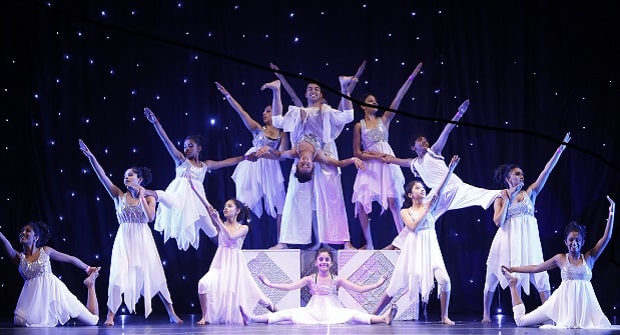
Shiamak’s Summer Funk once again delivers a scintillating show thanks to new students and fresh talent, writes PREETI JABBAL

It was 100 Years of Indian Cinema and the party was at Shiamak’s Summer Funk with some foot-tapping music, animated performances and a massive birthday cake to share. Held at the Box Hill Town Hall recently, this sold out annual event managed to retain its popularity as new students from various suburbs of Melbourne, latest hit songs and fresh talent saved it from repetitiveness.
The nearly 40 dance performances unfolded on stage rapidly without preliminaries, and managed to sustain the audience’s interest throughout. It was heartening to witness the palpable excitement of the performers, the endless energy of the instructors and the variations added to Shiamak’s repertoire. From classic Rock ‘n’ Roll, melodious quawwalis to more contemporary numbers, the performances were selected to represent different eras and incorporated various genres of Indian cinema.
Shiamak’s funky mix of western and Indian dance steps, despite the recycling, never fail to entertain. The Shiamak show kids performances, Shiamak Special Potential Batch dances and the grand finale performed by Shiamak’s instructors is always a winner. Also notable this year were performances on Laaga chunari mein daag, Taaren zameen pe, Farhan Akhtar medley, Mar jaavan and Ucchi addi.
The ‘awwww’ factor was highest amongst Shiamak’s students in the age group of 4-6 who tried to copy their instructors. While some little ones assiduously shook their booty to Chennai Express’s Lungi dance a little girl decided it was far more important to shake off something from her shirtsleeve, than dance. It was the cutest thing ever to see her indignantly clean her sleeve for most of her song and then scramble to join the rest. Shiamak has always maintained that this is his favourite dance group and judging by the applause the little ones evoked, the audience obviously agreed.
As another year bites the dust, interest in Shiamak’s classes does not seem to wane; in fact there always appear to be more people wanting to shimmy and shake to Shiamak’ ‘s trendy beats. After several successful years in Melbourne, the renowned choreographer is now gaining popularity in Sydney as well. Vihang Nikalji who manages the Sydney operations says he is very pleased with the response he has received from Sydney-siders. Meanwhile in Melbourne this year the weather has been anything but summery, however the Shiamak Summer Funk certainly raised the heat quotient with sizzling performances that rocked the house.
Indian News: 26-11: Five years on

Coastal security better post 26/11, but chinks remain, writes PRASHANT SOOD

India has made significant progress to improve coastal security after the 26/11 terror attack in which 10 Pakistani terrorists came undetected by sea to unleash mayhem in Mumbai, leaving 166 dead. But more efforts are needed to reduce the country’s vulnerability to a sea-borne terror strike, say the experts.
The 2008 terror attack, which exposed chinks in coastal security, impelled the government to expedite measures to improve both physical and electronic surveillance along the country’s 7,516-km-long coastline. There are nine states and four union territories along the coastline.
The government moved on several fronts and set up joint operation centres. Vulnerable spots and gaps along the coast were identified and proposals finalised to improve surveillance.
Moves were also expedited for comprehensive registration of fishing boats, providing multipurpose national identity cards (MNICs) to the population in coastal villages and biometric cards to fishermen.
The government also decided to set up National Command, Control, Communication and Intelligence Network (NC3I) for real-time maritime domain awareness, linking operations rooms of the Navy and Coast Guard.
Security analyst and maritime observer Commodore (retd.) Ranjit Rai said in New Delhi recently that the level of coastal security has risen to “a very high level” post 26/11.
“The chances of another 26/11 like attack on a major port are remote, but the quality of our actionable intelligence for Navy and Coast Guard is essential. The Navy has systems to react, and will have to rise to the occasion too,” Rai said.
Rai said 46 radar stations along the coast on lighthouses and promontories were planned under the first phase of the coastal surveillance network and at least 30 have been made operational.
“These are equipped with state-of-the-art Danish Terma radars, Swedish automatic identification system (AIS), Canadian cameras and Israeli thermal imaging technology to track ships near the Indian coast day and night,” he said.
He said the Navy has set up a Sagar Prahari force of 1,000 sailors to patrol territorial waters up to 12 nautical miles.
“Additional marine police stations have been propped up with four Joint Operational Centres (JOCs) at command headquarters of the Navy and over 100 Interceptor boats have joined the Navy and Coast Guard for patrols,” he said.
Rai said proposals to beef up coastline security were expedited after the 26/11 attack.
The 10 heavily armed Pakistani terrorists had landed in Mumbai’s Badhwar Park in Colaba from the sea Nov 26, 2008, and laid siege to several key locations, including Chhatrapati Shivaji Terminus, Taj Mahal Hotel, Chabad House and Leopold Cafe.
The terror assault ended three days later when security forces killed nine of the gunmen. One of the attackers, Ajmal Kasab, was captured alive. He was hanged a year ago after a trial.
Indian Navy spokesperson Captain P.V.S Satish said the country’s coastal and maritime security has seen a lot of consolidation over the last five years.
“We have achieved a high level of coordination between the multiple agencies involved. The electronic means of surveillance that are critical to achieving coastal security are largely in place,” Satish stated.
“Maritime and coastal security is given the highest priority and closely monitored by the apex body, NCSMCS (National Committee on Strengthening Maritime and Coastal Security). We have come a long way from 26/11,” he said.
The home ministry is also implementing a coastal security scheme in phases but its officials said states have to do much more to upgrade coastal police infrastructure.
Former home secretary G.K. Pillai said there was reluctance among personnel from state police to take up marine police tasks.
He said fishermen were like the “eyes and ears” of the security apparatus and young personnel from their community could be encouraged to join the marine police.
Ajai Sahni, executive director of the Institute for Conflict Management, said there was “much rhetorical focus” on strengthening coastal security after 2/11,
“Fitful efforts notwithstanding, we remain as vulnerable to terrorist attacks along our coastline as we were in 2008,” he said.
He said the core of any effective system of coastal defence capacity was to detect illegal movement of ships and boats.
“Unless there is a GPS tagging system to identify those whose presence is legitimate, it is impossible to identify the interloper,” he said.
Vice Admiral (retd.) Sanjeev Bhasin said the government had identified shortcomings and deficiencies post-26/11.
“A great deal of effort has been made to prevent ingress in future,” said Bhasin, who was flag officer commanding-in-chief Western Naval Command.
Comparing coastal security to that along the line of control, he said it was nearly impossible to make it fool-proof.
“Alongside other measures there is need of good intelligence,” he said.
Rear Admiral (retd.) K. Raja Menon said a huge amount of money had been spent to improve coastal security, but there is also a need to augment offensive capacities.
“It (improvements in coastal security) is as effective as human effort can be,” he said.
Indian News: All the President's 'Desi' men and women

All the President’s ‘Desi’ men and women

As Nisha Desai Biswal officially became Washington’s first Indian-American pointperson for South and Central Asia last week, her boss mentioned that she is known as “somebody who speaks softly and carries a big stick”.
But whether it was with her soft speech or her big stick, Biswal’s efforts to bring peace between the feuding begums of Bangladesh even before she was formally sworn in won praise from US Secretary of State John Kerry.
“Recently in Bangladesh, Nisha showed how she never misses a chance to speak up or stand up for America’s values,” Kerry said, recalling her meetings with both Prime Minister Sheikh Hasina and opposition leader Khaleda Zia.
“She spoke forcefully about the need for leaders to rise above partisan differences and find a peaceful way towards the ballot box,” said Kerry, who first met Biswal in 2004 when she was volunteering on his presidential campaign.
Kerry called Biswal’s story a “great American” story “of a woman who left a small town in India at age 6 to come to America and now becomes one of the most important leaders in the Department of State as Assistant Secretary of State for South and Central Asia”.
But it’s now becoming an increasingly common story as President Barack Obama has turned to more and more accomplished Indian-Americans to take up key jobs from arts to science to commerce to diplomacy.
Biswal herself for the last three years, has served as assistant administrator for Asia at the US Agency for International Development (USAID), which is headed by Rajiv Shah, the highest-ranking Indian American in the Obama administration.
Days in her new job, Biswal in her own words “stole” another Indian-American Atul Keshap, who had done a stint at the US embassy in New Delhi 2005-2008, from the Asia Pacific Economic Cooperation Bureau, to be her new deputy.
Just six months after his inauguration, Obama named Vinai Thummalapally as the US ambassador to Belize. Son of a retired scientist who worked for Andhra Pradesh Forensic Sciences Laboratory, he is the first Indian American ambassador in US history.
In September, Obama nominated Puneet Talwar, a noted Indian-American Middle East policy specialist to a key diplomatic post as the assistant secretary of state for political military affairs.
In the Pentagon, the highest ranking Indian American is Vikram J. Singh, deputy assistant secretary of defence for South and Southeast Asia. He serves as the principal advisor on development and implementation of defence strategies and plans for the region, including India.
Obama, who at two over two dozen, has more Indian-Americans serving in his administration than any of his predecessors, has appointed at least ten from the community since his re-election last November.
In September, Chandigarh-born legal luminary Sri Srinivasan made history as he became the first Indian American judge of the US Court of Appeals for the District of Columbia Circuit, which is often called the second most powerful court in the US.
Earlier in November, Obama nominated Dr. Vivek Hallegere Murthy, the Indian-American head of a doctors group that promotes his signature healthcare law, to be the next US surgeon general, also known as “America’s doctor”.
In October, Obama tapped Kerala University physics graduate Arun M. Kumar to lead the trade promotion arm of the Commerce Department, charged with helping American companies succeed in markets around the world.
Other recent nominees include Gargee Ghosh, director of policy analysis and financing (PAF) at the Bill & Melinda Gates Foundation, as a member of his Global Development Council, and actor Kal Penn of “The Namesake” fame to his Committee on the Arts and Humanities.
Then there is Manhattan’s US Attorney Preet Bharara, dubbed “Sheriff of Wall Street” by Time magazine, who in a four-year insider trading crackdown has won a record 76 convictions, including that India-born former Goldman Sachs director Rajat Gupta.
IANS