
Home Blog Page 986

There’s more to uni…

0
Reading Time: 3 minutes

… than just assignments, says ADI RAI

the inaugural universities premier league

University can be a lonely time if you don’t go through it with the right mindset. Don’t treat university like a high school with a little more free time or simply think of it as the place you go just to attend classes and lectures. Your time in university is when you transition from an angsty teen to a young adult, and it’s a time where you have to find what your strengths are, what you enjoy and the kind of people with whom you may make lifelong relationships. To do this, one needs to find and grab every opportunity that university has to offer.

These days a degree is simply the ticket that gets you into the interview room. Employers look for extra curricular activities, a good personality, leadership skills and real world experience. So to make sure you aren’t lacking in any of these areas, my first piece of advice is to look into joining a club (or several). Put your name down for anything that looks even vaguely interesting. Clubs are a great way to meet people and participate in fun activities. If you are really interested to get involved, you could try to get onto the club’s committee during the next general meeting and take on extra responsibilities. Similarly if you are someone interested in student politics or getting involved with faculty decision-making, you could run to be on the University SRC or the Union Board or as a student representative on a faculty committee. This not only looks good on the resume, but also is a great way to see how decision-making and event planning occurs at university, and meet with people you may not normally have the chance to meet.

Most universities also organise events, workshops and other programs to help students with more than just study. See if your university is offering free first aid or other skills training, meditation classes, public speaking courses and much more. Perhaps write for the student magazine or present on student radio.

Make sure you do something to stay in good shape. It could be joining a casual sports team, taking a jog in the afternoons or visiting the gym regularly. Being social is essential. Go to the Unibar: even if you do not drink there are still ways to have a good time. Some nights there’ll be local bands playing, or in my case, I like to try out the video game contests. Joining in social events like the pubcrawls, parties and balls will keep you connected with your peers. I encourage you to make use of some of your newfound freedom to catch up with friends (old or new) during a break at a coffee shop.

All this being said, when it comes to your studies, you need to take them very seriously. It is easy to fall behind and once you do, it is very hard to catch up again. The first thing to do is to plan your timetable properly, especially around other commitments. Play to your strengths: if you aren’t a morning person or prefer breaks between classes, try to make your timetable reflect this. Look for your textbooks second-hand or in the library; even if the lecturer says you need the latest edition, usually it just means the old edition will be fine, but some of the questions may have different values or be in a different spot. Talk to your peers and older students for their notes/past exams and advice. Lastly, do the work. Or at least try to! But stay on track. It is easy to fall behind and there really isn’t enough time in SWOTVAC to catch up on half a semester’s worth of work. Do not be afraid to ask for help.

So try doing all these things – maybe tackle them slowly, one at a time so you don’t feel like you’re drowning – but doing so will make your university years an exciting time of personal growth, friendship, learning and most importantly, fun.

Adi Rai is a 3rd year Law & Commer

Auntiji: Wisdom at work

0
Reading Time: 4 minutes

OLYMPUS DIGITAL CAMERA

Dear Auntyji,

I am 26 years old and after my Accounts degree and CPA qualification, I have found a very good job at a prestigious bank. I am ambitious and would like to make an impression and get ahead, so can you please provide me with some ideas and suggestions? Any help or advice would be useful.


Auntyji says

Oh, I remember those days when I too used to work at a prestigious bank. Those long hours, those never-ending late nights and weekends, those corporate perks and bonuses. Ah, those good old days before the GFC. Not to worry my dear, I have some solid management and personal branding advice for you. Back in the day, I used to use the PIE methodology to brand myself in the workplace and it worked so well for me, that year after year, I got my bonus! So, the PIE framework is simply this. The ‘P’ stands for performance. This means that your performance must always be superlative and top notch. Never ever give anyone an opportunity to cast doubt on the quality of your work – and if it means you need to work harder and longer than anyone else, then so be it. Performance is key. The ‘I’ in the PIE framework stands for image. Your image must be polished at all times, perfect shoes, well-cut suits and no missing buttons or stained clothes. Your image must be quality. Now, your image is also what you say and do, in other words, your reputation. So always deliver when you say you will, and become known for a person of your words. So, ensure that trust and integrity is your middle name. Finally, the ‘E’ in PIE stands for Exposure. By this, you need to ensure that you have appropriate exposure at work. Always look for opportunities to highlight your work your work to others, not through boasting, but by offering to help and providing guidance and support as much as you can. And when you write emails, ensure that each email is an opportunity to raise your profile and to enhance your brand. This also means making your manager look good. So every single day, in every interaction, you need to be mindful of how your brand is impacted. You want to have a brand that is polished, reliable, solid, top notch and total quality. If you focus on these things and work hard, there is no doubt you will be successful at work. Now, write back to me after you have implemented this, and I will give you even more advice. By the way, you owe me 10% of your annual bonus, accha?


Pool problem

Dear Auntyji,

I have a particular sawaal on which I need your guidance, my pyaari auntyji, and mujhe madat karo nah! I am a conservative middle-aged man with solid values. I live in a terrace where there is a swimming pool for everyone in the complex to use. On the weekends, after my golf, I like to come home and use the pool to cool down. A shower just doesn’t have the same fluid luxury on a hot day.

The problem is aunty, that by the time I get home, the pool is usually filled with lots of women, all young and like apsaras from temple carvings, in their tiny bikinis. I am usually so intimidated by this that I often just don’t go to the pool. My wife laughs at me and says I am being silly. But aunty, when there are 20 or so apsaras in the pool, I think it is haram for me to venture there. But the cool pani seems so inviting in such garmi. Please, aunty, kuch bolo na, mai kya karoo?


Auntyji says

Oh mere pyare! Tum to bahut hi nazook sa admi lagthe ho – yet I like your innocent nature. I can bilkul understand why you would be intimidated by this scenario – not every man’s dream is to be surrounded by a bevy of half naked sundaries on a garmi ke din.

Well, if you want to float in a cool briny sea of pleasure on a hot day, you will need to conquer your fears and go into the pool for a swim only. I’m sure all the other middle-aged men in the complex will admire your courage and will secretly want to be you. You will need to cast your eye downwards and only enjoy the water, and not the view. When you have cooled down, then promptly leave the pool area – although I doubt that there would be any cooling effect based on the scenery available to you. Once the girls realise that all you want is to swim, they will ignore you. Of course, if you start talking to them, they will probably find it unusual, but if the pool is a communal one, then the only thing stopping you from using it is your own fears. Conquer those my dost, and you can conquer the world. Those apsaras are probably more intimidated by you then you are of them, but these gore log usually have a live and let live policy. So you should follow suit. Remember, ankhen downwards and enjoy the water only. No perving or I will come there and cause such a tamasha, you will never go to the pool again!

Oriental overtones

0
Reading Time: 3 minutes


As a child I recall driving with my family through country towns where there would always be a Chinese restaurant offering standard fare such as Fried Rice and Chop Suey. I often wondered how it was that they came to be there.

The origins of Chinese settlement in Australia can be traced back as long ago as 1818, when Mak Sai Ying, a free settler, arrived from Guangzhou and settled in Parramatta, opening a public house called ‘The Lion’. Small numbers of Chinese followed during the 1820s and 1830s, working as labourers, carpenters and shepherds. When the transportation of convicts ceased in 1840, there was a shortage of labour and after Hong Kong was ceded to England in 1842, Chinese indentured labourers were shipped out to work on farms in rural New South Wales, with more arriving after gold was discovered in 1851.

Sydney’s original Chinatown was located in The Rocks before moving to Haymarket and into Surry Hills. Chinese churches, temples, shops and boarding houses were built; but it was the gambling houses, opium dens and overcrowded squalid conditions that gave the area a notorious reputation. Much of it was demolished after an outbreak of the bubonic plague hit Sydney in the early 1900s, the catalyst for a program of urban renewal that saw hundreds of terraces demolished. Chinatown was moved once more to its current location at Dixon Street, after the opening of Paddy’s Market.

The skills of the Chinese in agriculture led to the establishment of market gardens at Rushcutters Bay, Alexandria and Waterloo and when the gold rush ended, many became merchants. Chinatown offered medicinal herbs, bountiful produce from the market gardens, imported silks, tea, spices, and restaurants that were always busy and aromatic.

Today’s Chinatown is characterised by oriental architecture, flashing neon across shopfronts, incense, street lanterns, dragons, bilingual signage and ceremonial archways or Paifang at each end of Dixon Street. But most of all, it is an area renowned for a multitude of restaurants with bamboo steamers full of plump dumplings, and woks with chefs stirring up a feast – a melting pot of exotic flavours and cuisines from the Orient – offering Cantonese, Northern Chinese, Sichuan, Vietnamese, Korean, Japanese and Malaysian cuisines, with speciality offshoots such as Thai Town in Campbell Street. Chinatown today is one of Sydney’s most vibrant precincts.

I went in search of one of Sydney’s most prominent Chinese Australians who owned a network of tea rooms, Mei Quong Tart (1850-1903). This leading Sydney merchant who imported silk and tea from China and owned tea rooms in the Sydney Arcade, Royal Arcade and King Street, and made a significant impact on the city’s social and political scene. While tea houses have all but disappeared from Chinatown, but as a commemoration to Mei Quong Tart, a statue was erected in his home suburb of Ashfield in 1998.

It was here in Ashfield that I found a vibrant culinary crossroads, and marvelled at how the area had changed with the recent influx of people from China, Nepal, the Philippines and India joining the more established Greek and Italian communities who had settled in Australia after World War II. At a Greek cake shop, elderly men spoke Greek and sipped strong coffee as I selected shortbread biscuits laced with icing sugar, while nearby restaurants competed for custom, namely for Beijing and Shanghai Noodles.

Back near Chinatown I visited the White Rabbit Gallery that showcases cutting edge contemporary Chinese art; the collection is one of the world’s largest and most significant, founded by a South African family who now call Sydney home. Here, herbal tea is served with crackers, a modern take on the tea rooms that once featured so prominently in the area. Cross-cultural influences enrich us all and Chinatown and Ashfield are among the most pronounced precincts of Sydney’s transition into an international city, offering a world of dining possibilities.


Travel Notebook

Where to eat

Chinatown: There are so many dining options from which to choose. My favourites – Mamak, 15 Goulburn Street, where the highlight is the flaky roti served with curry sauce. The queues of Thai patrons suggests that the cuisine is authentic at Chat Thai, 20 Campbell Street. Further along, you’ll find Lucky Thai Sweets for flavoursome desserts.

Yum Cha, choosing steamed or fried dim sum dishes brought on trolleys is immensely popular. Recommended restaurants include Marigold offering over 100 varieties of dim sum at 683 George Street, The Eight with 70 dishes to choose from at Market City Food court. Emperor’s Garden, 100 Hay Street, specialises in Cantonese cuisine, while Golden Century, 393 Sussex and East Ocean, 421 Sussex Street, both feature seafood cuisine. Vegetarian dishes are limited. Check to ensure that they contain no fish paste or lard. When in need of tranquil surroundings, head for the Chinese Garden of Friendship (entry fees apply) or the White Rabbit Gallery whiterabbitcollection.org


Getting there

Ashfield and Chinatown are easily accessed by train. Trip planner: 131500 / www.131500.com.au


On alcohol-fuelled violence

0
Reading Time: 2 minutes


daniel christie

Premier Barry O’Farrell needs to be applauded for his bold proposal in trying to curb alcohol-fuelled violence which has spread across Sydney over the past few months. Police and paramedic services have been kept busy on Friday and Saturday nights, as an increasing number of incidents on Sydney’s streets relating to this violence became what some have described as epidemic in nature. The recent deaths of teenagers Daniel Christie and Thomas Kelly to coward punches fuelled public anger, and pushed the Premier to finally succumb to public pressure and act decisively on this situation.

In a recently announced proposal, the Premier has stated that amongst other measures, there will be an eight-year mandatory minimum sentence for those convicted under new one-punch laws where the offender is intoxicated by drugs and/or alcohol; introduction of 1.30am lockouts and 3am last drinks across an expanded CBD precinct; new state-wide 10pm closing time for all bottle shops and liquor stores; community awareness and a media campaign to address the culture of binge drinking and the associated drug and alcohol related violence; and free buses running every ten minutes from Kings Cross to the CBD on Friday and Saturday nights.

While this is a step in the right direction, more needs to be done to curb this mindless violence, which should not directly relate to having access to alcohol.

In the last decade or so, there have been confronting campaigns to educate people on issues such as HIV infections and sharing of needles. Perhaps it is time to present a strong campaign to tackle binge drinking. Educating generations that it is not cool to be drunk will take time, but steps have to be taken in this direction. There has to be stricter enforcement of the law relating to underage drinking, and perhaps it is time to revive the issue of increasing the drinking age to 21, as in the United States. While the alcohol industry will not be enamoured with this suggestion, just like the National Rifle Association is not happy with any form of gun control in the US, it is time to put all options on the table.

Other issues include control over ready-to-drink spirits which have exploded in sales over the past few years. The price of wine and other alcoholic drinks, especially those sold by affiliate companies of shopping giants such as Woolworths or Coles, should also be reviewed. It is not uncommon to receive discounted wine offers when shopping at these supermarkets as part of your checkout docket, and the nexus between alcohol and our milk-and-bread shopping needs to be broken.

More policing, rather than relying on CCTV cameras, will also bring greater control to the system.

Meanwhile, reduced trading hours and lock-outs are the key ingredients of the recently announced Premier’s plan, and reflect steps taken in Newcastle in 2008 which has led to a decrease of 37% in street assaults.

Responsible Sydneysiders will welcome these announcements.


Kunal’s speciality: Overcoming hurdles

0
Reading Time: 4 minutes

Kunal Sharma

Faridabad is in the news again! After the success of the children from Tender Heart School at the Special Olympics in Newcastle last month (December (2) issue of Indian Link), comes Kunal Sharma’s success story.

“Not many lessons to be taken from my story,” says Kunal, with endearing humility.

Readers, I am sure, will beg to differ once they have read this report.

Meet 25-year old Kunal Sharma, graduate lawyer at Herbert Smith Freehills, and winner of the 2014 Rhodes scholarship to Oxford University for post-graduate studies in law. Rhodes is the oldest and most prestigious international graduate scholarship program in the world. Established in 1903, 83 outstanding all-round scholars are selected each year to study at Oxford, nine from Australia. Kunal is among these few but he discounts his efforts, and attributes his success to his teachers at UNSW who encouraged him to apply, encouragement from his parents, and his good luck.

The scholarship process is tough and thorough. Starting with the application and a personal statement of why you want the scholarship, the Rhodes Committee shortlisted 12 candidates in NSW for the first round of interviews at Government House, chaired by the Governor. The shortlisted six went for the second round of interviews based a lot more on critical thinking, including views on current account issues, and the key challenges facing Australia and the world.

The Sydney Morning Herald’s news item that featured Kunal’s success in securing the Rhodes scholarship quoted UNSW’s Dean of Law, Professor David Dixon saying, “His teachers said to me he was the best legal mind they’d come across for years. He’s one of the very best students we’ve ever had at the university . . . an extraordinarily impressive young man”.

Kunal came to Australia with his parents in 2001 as a 12-year old. Croydon, Sydney was far away from Faridabad, India, where he grew up with his extended family of cousins, uncles and grandparents.

“Transitioning from such a different country like India was a shock, but very quickly Australia seemed like home to me,” says Kunal.

Moving countries is a massive change for a young boy, but what was to follow could be called an upheaval.

At the age of 13, Kunal was diagnosed with Ewing’s sarcoma, a malignant bone tumour, for the first time. His family moved to Westmead where he started treatment.

He brushes off these challenges saying, “I am lucky as the systems here are supportive. Glad there are good doctors out there – we place our lives in their hands!”

Kunal came out of this dark phase as Dux of the selective Girraween High School in 2006, completing his HSC with a UAI of 99.95, and started studying law at UNSW. But the cancer hit again with renewed vengeance when he was 19, and Kunal lost his right leg.

Again, with characteristic ease, he says, “I am still getting used to not having a limb. It is just one of those challenges to which you can adapt. It is just about doing things in a different way”.

When questioned about what gave him inner strength in these trying times, Kunal says, “There was no contemplating other options. What would be option – to give up? There was too much around to give up and no reason to think that life was not good. I was given opportunities at every step of the way. I have great parents and good teachers, and I wanted to learn more about the world”.

Overcoming hurdles seems natural to Kunal now. “I was looking for positivity and found it, maybe. I have a sense of groundedness in the greatness of the world and things beyond what I know,” he claims.

What excites Kunal is law. “I was interested in law – more because of my idea of law, not what I knew about law. The idea of using law to defend human rights, the various ways in which law permeates the social fabric, and how you can change society by getting a closer understanding of the law – this is what interests me,” he explains.

When he started law he wasn’t sure what he would learn or do with law, but the study of the subject held a lot of promise for young Kunal.

“Law is the way we govern ourselves, it is way we come together and decide to lead our lives in a certain way,” he avers.

He found that there were various ways of influencing society through private law – the law between people, as against between people and state, explains Kunal. This includes laws of contract and taxation. In September this year, Kunal will head to Oxford University to undertake a Bachelor of Civil Law and a Master of Public Policy. He hopes to undertake research in areas of taxation and access to welfare, particularly through access to housing and education.

Engagement with social and political issues has always been something with which Kunal has been involved. He is currently an advisory member to the Board of the Multicultural Disability Advocacy Association and an active member of the NSW Young Lawyers International Law Committee. Previously, Kunal has volunteered with the Oaktree Foundation and St Vincent de Paul Society, and completed internships with the Aboriginal Legal Service and the NSW Attorney General’s Department. Kunal had to give up karate, but he is still a keen swimmer and writes short stories.

Attitude, Winston Churchill said, is a little thing that makes a big difference.


The alternative, viable path: TAFE

0
Reading Time: 2 minutes

tafe purple

I have seen many Indian parents lower their voices and sound slightly apologetic when they say, “My son (or daughter) is doing a TAFE course”.  And, tragically, the listener too looks like they should be offering condolences!

Why, oh why, is this so? TAFE has qualifications that include diplomas, advanced diplomas, associate degrees and bachelor degrees that are held in high regard by employers. I have often heard of employers preferring a TAFE graduate over a Uni graduate because they say, “I am very sure that the TAFE graduate will have sound practical skills to start working straight away”. This is the main difference between study at TAFE and at Uni. TAFE students first get an understanding of an occupation through practical, applied learning that then makes the theory more relevant and easier to understand. University study works the other way around, with a focus on heavy theoretical knowledge.

For many students, this is just not the way they learn. It is easier to learn from concrete to abstract, rather than the reverse. It is not that TAFE is ‘easier’ or for the academically challenged, it is just a different way of learning. There are also students who do really well academically in high school and flounder when they enrol in a TAFE diploma or degree. They have to learn to learn differently! It is hands-on learning and often in authentic work environments.

So is it any wonder that employers would rather have these graduates who have learnt hands-on skills in work-like environments, who can start working with minimal training? In fact, employers have been raising concerns about the employability of university graduates for some time. Also, there are more than 50,000 university graduates in NSW alone who enrol in TAFE courses to complement their Uni qualifications.

TAFE courses are developed in consultation with industry, and hence the outcomes are industry-ready graduates who are immensely employable. The class sizes are smaller than Uni with practical, dynamic learning environments that try as much as possible to simulate the real world.

There are also seamless pathways from TAFE diplomas and advanced diplomas to Universities either through credit transfer or through integrated pathways in which part of the Uni degree (usually the first two years) are completed at TAFE. This gives students the practical edge as well as the economic edge! I once heard an employer say that if he had to choose between a Uni graduate who had gone straight to Uni and a Uni graduate who had completed the same degree through the TAFE pathway, he would give the job to the latter any day.

So if your child has not been able to get into the degree of their choice, or is thinking of dropping out of Uni because it is “just not for me”, why don’t you encourage them to go the TAFE pathway without making them feel like second class citizens? Maybe that is their learning style and they could thrive in that environment. And then, when they have got the skills and understood the relevance of learning the theory, they may go ahead and complete the engineering or commerce degree you dreamt for them!

Ref: The best of Both worlds: A Significant Tertiary Pathway for Students.


There’s more to uni…

0
Reading Time: 3 minutes


the inaugural universities premier leagueUniversity can be a lonely time if you don’t go through it with the right mindset. Don’t treat university like a high school with a little more free time or simply think of it as the place you go just to attend classes and lectures. Your time in university is when you transition from an angsty teen to a young adult, and it’s a time where you have to find what your strengths are, what you enjoy and the kind of people with whom you may make lifelong relationships. To do this, one needs to find and grab every opportunity that university has to offer.

These days a degree is simply the ticket that gets you into the interview room. Employers look for extra curricular activities, a good personality, leadership skills and real world experience. So to make sure you aren’t lacking in any of these areas, my first piece of advice is to look into joining a club (or several). Put your name down for anything that looks even vaguely interesting. Clubs are a great way to meet people and participate in fun activities. If you are really interested to get involved, you could try to get onto the club’s committee during the next general meeting and take on extra responsibilities. Similarly if you are someone interested in student politics or getting involved with faculty decision-making, you could run to be on the University SRC or the Union Board or as a student representative on a faculty committee. This not only looks good on the resume, but also is a great way to see how decision-making and event planning occurs at university, and meet with people you may not normally have the chance to meet.

Most universities also organise events, workshops and other programs to help students with more than just study. See if your university is offering free first aid or other skills training, meditation classes, public speaking courses and much more. Perhaps write for the student magazine or present on student radio.

Make sure you do something to stay in good shape. It could be joining a casual sports team, taking a jog in the afternoons or visiting the gym regularly. Being social is essential. Go to the Unibar: even if you do not drink there are still ways to have a good time. Some nights there’ll be local bands playing, or in my case, I like to try out the video game contests. Joining in social events like the pubcrawls, parties and balls will keep you connected with your peers. I encourage you to make use of some of your newfound freedom to catch up with friends (old or new) during a break at a coffee shop.

All this being said, when it comes to your studies, you need to take them very seriously. It is easy to fall behind and once you do, it is very hard to catch up again. The first thing to do is to plan your timetable properly, especially around other commitments. Play to your strengths: if you aren’t a morning person or prefer breaks between classes, try to make your timetable reflect this. Look for your textbooks second-hand or in the library; even if the lecturer says you need the latest edition, usually it just means the old edition will be fine, but some of the questions may have different values or be in a different spot. Talk to your peers and older students for their notes/past exams and advice. Lastly, do the work. Or at least try to! But stay on track. It is easy to fall behind and there really isn’t enough time in SWOTVAC to catch up on half a semester’s worth of work. Do not be afraid to ask for help.

So try doing all these things – maybe tackle them slowly, one at a time so you don’t feel like you’re drowning – but doing so will make your university years an exciting time of personal growth, friendship, learning and most importantly, fun.

Adi Rai is a 3rd year Law & Commerce student and on the Adelaide University SRC. 


Read more on starting out at university

Starting out at University

Outside the classroom


Starting out at Uni

0
Reading Time: 5 minutes

What new students – and parents – can expect from the next few years

Web photo mel

The burden of Year 12 is over, and it’s time to begin the phase of specialised education. All of that is exciting enough – but there’s a lot more to university lifestyle than burying your head in more textbooks.


Clubs and societies

The first thing any university will tell you to do is to “participate in university life”.  The best way to do this is to join some of your university’s clubs and societies. The particular societies you can join might vary across different institutions – for instance, some have Quidditch or Chocolate societies – but, mostly, they’re a great way to meet new people outside of a classroom environment.

It’s easy to worry about taking too much on in your first semester at uni, but don’t think of societies as commitments. You will rarely have any obligations, and most are free to join. If you’re interested in something, whether it’s food, snooker or even motorbikes – there could be a society for it and it’s well worth joining its Facebook group or signing up to receive emails. After all, there’s always an unsubscribe option!

The most important societies, however, are the faculty societies – such as those in business, engineering, or law. These societies are designed to make your education easier, and they’re a must-join for new students. They’ll keep you posted on job opportunities, study tips, note-sharing and networking functions. Through these societies, you’ll get to know your cohort, and you can never have too many friends to help you get through the long hours you have to spend in class.

There’s also often an opportunity to take up leadership positions within these societies, which will give you first-hand experience in setting up events, marketing the society and managing finances. While certainly impressive on your university transcript, you’ll be able to carry these skills onwards in other endeavours.


Sport

Sport in university is structured differently to high school. There’s a much greater majority of social sporting competitions, which are all about having a go and enjoying yourself. The biggest event on the university sports calendar is Uni Games – including an Australia-wide competition, or more localised tournaments such as Eastern Uni Games. Sydney students are in luck this year: in 2014, Newcastle will host Eastern Uni Games, while Sydney will play host to Australian Uni Games, after an absence of 13 years.

For those who just want to stay active and have a bit of fun along the way, social sports such as indoor soccer, ultimate frisbee, basketball and volleyball are great options at uni, and they tend to get both guys and girls involved, so all your mates can join in. And don’t fret – most of these sports are still played at Uni Games. Of course, if you’re more serious about your sport, there are avenues for you to take it further – and the top divisions of Uni Games boast some serious talent in every sport.


Competitions and scholarships

Taking part in competitions is a critical way to build up your CV and develop all-round skills in various areas. Whether it’s an essay, mooting, a video competition or design contest, you’ll be able to apply skills you learn in competitions towards your studies and future career. Employers tend to take special note of your participation in competitions, and in fact, many companies sponsor them.

Universities also offer a range of scholarships. Whether it’s monetary in nature or offers you other benefits, such as gym membership – they’re always worth a shot.


Parties and networking events

Parents, be warned – there’s a lot of partying to be done at uni. As everyone starts hitting the legal drinking age, students finally get a chance to explore the city’s best nightspots and purchase drinks that are not chocolate milks from the school canteen. Add to this the fact that all universities have their own bar and a busy party schedule, you can expect some late arrivals home from your children.

However, it’s not all about the loud music, big crowds and alcohol. There are a huge number of other social events throughout the university year, and they’re generally great networking opportunities. Whether it’s a competition final, a guest lecture or a networking drinks event, it’s a good idea to make a few connections there and meet new people – after all, you never know who might become a handy connection in future.


Finding a job

Getting a part-time job alongside your university commitments is more important than you might think. It will not only give you that extra bit of pocket money for nights out and to help out with textbooks – but it’s important to start thinking about building up your CV as soon as possible. Prospective employers – whether hiring for big or small companies – will always be more impressed by a student who manages several commitments at once than by one who focuses purely on study.

It’s also a good reason to be savvy with your university timetable, if you’re enrolled at a university that lets you create your own. Leave yourself a spare day or two if you can, even if it means you have longer hours at uni on the other days – you’ll thank yourself for it later on if you manage to score a part-time job.

There are a number of places to look for jobs in uni – and your online university jobs board is probably the best place to start. Websites such as seek.com.au and government jobs site jobs.nsw.gov.au are handy – but they aren’t tailored towards university students. University jobs boards are generally full of part-time, casual and volunteering opportunities that are perfect for the school-leaver. They’ll typically be flexible with a short-term outlook, giving you a bit of breathing space when it comes to exams.

Working at a school is also an option for athletic or creative types – for instance, coaching sport, debating, or tutoring music can all help sustain the bad spending habits all university students fall into. The chances are that a school near you could do with a bit of help – if not, try the school from which you just graduated. The good news is, even these fun, somewhat relaxed roles can help you secure employment in some more serious positions in the near future.

Finally, private tutoring is always a great option if you’re looking for some extra cash. Not only will you get to control your own schedule and work outside business hours, but you could also easily find yourself with more students than you started off with. Even if you start off with just one student – just make sure you do a good job, and word of mouth will do the rest.


Above all, remember that being in university doesn’t mean you need to stop doing all the things you love. The pressure you face in university is a bit more constant than that faced throughout high school, but you’ll also have a lot more spare time to deal with it. Unlike high school, your university will not force you to take part in anything – the onus is completely on you to make the most of the next few years, so don’t expect anyone to look out for you. After all, like many of us – there’s every chance you’ll look back on this period as the time of your life.


Ritam Mitra is in his final year of Commerce/Law at UNSW


Read more on starting out at university

Outside the classroom

There’s more to uni…

Outside the classroom

0
Reading Time: 4 minutes

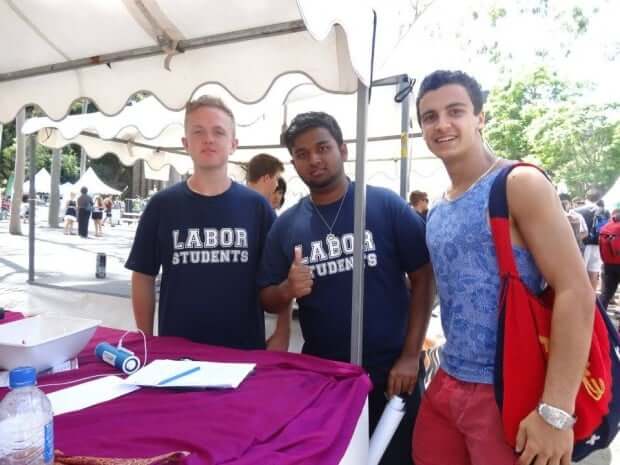
labor students Almost four years ago I entered the main campus of Sydney University as a doe-eyed, diligent student, fresh out of high school. As I walked around the sandstone walls of academia with my 98.5 ATAR in hand and the pride of getting into my course reflecting clearly on my face, I was entirely convinced that I was ready to face the intricacies of university life. But, whilst falling into the administrative routine of attending lectures and tutorials wasn’t too daunting, what caught me completely unaware was figuring out what I was meant to do once I stepped outside the classroom. It seems that nobody warned me about the fact that at university, you aren’t a kid anymore. No one holds your hand and introduces you to the person sitting next to you, or forces you to get involved in extracurricular activities, or develops a routine for your free time. You’re given the freedom of a consenting adult, and you’re expected to make your own choices. For some, this is the porthole they were searching for all along when nobody at high school understood them because they just weren’t ‘mainstream’ enough. Finally they can connect with similar, artsy-fartsy personalities who share the same love for music that nobody has heard of. For others, however, this means total social anxiety and dread at the thought of walking around campus like a lonely boy with no friends. Regardless of which group you might fall into, the most important thing to know is that your social and extracurricular life falls entirely in your own hands. Don’t waste this precious opportunity to discover who you are and who you can be, because the years spent at university are the most formative years of your life. After a somewhat lost and lonely first year at uni, in my second year I decided to take a leap of faith and get involved in my university’s Student Union, the core provider of clubs and societies, events, and food and beverage outlets on campus. The first step was the hardest: it was to shed my inhibitions, go to events, and actually talk to people. In a bizarre turn of events, I ended up running as a candidate for the election of the student Board of Directors. Honestly, I didn’t know what was worse – running under the slogan ‘Astha la Vista’, or obnoxiously bothering people to ask them to vote for me. All I could think of at the time was, “This is so embarrassing. If I lose, I’ll have no friends!” But luckily, I didn’t. Four years on, I’ve been the President of the Union, represented my university internationally, and become an editor for Sydney University’s student newspaper, Honi Soit. What’s more important than my CV stack though, is that everyone who went through the same gruelling process as me of running in an election, have come out of it well and alive, win or lose. Instead of being socially exiled, they have flourished. They have a renewed sense of confidence in their abilities, a clear idea of their values, and a bigger group of friends and support networks from the election process. At university, student politics is a complex web of communication, calculation and charm offensive, but if you do have a keen interest in Australian political affairs, you’re guaranteed to meet the younger versions of future prominent political personalities. Most universities have at least one student representative body – either in the form of a Student Union or a Student Representative Council (SRC). If you know where you stand politically, whether it’s Labor, Liberal or Greens, you can also join the specific political group on campus to get involved in national campaigns for state and federal elections. Politics aside, if you’re interested in representing your cohort because you were once school captain, you’ll probably have to sign up for a student leadership position, or run in an election. These can be really fun and incredibly rewarding as you get to explore your creative vision: you could direct O-Week, attend a national student conference, or become a peer mentor. The best way to find out which position is best suited to your interests is to attend O-Week, contact your faculty or student organisations, or volunteer for events and activities. Most universities will also have a Clubs and Societies program. At my university there is no shortage of special interest clubs, and I’ve signed up for everything under the sun from the Quidditch Society, to the Chocolate Society, to the Captain Planet Appreciation Society. This is a really easy and fun way to explore interests and meet new people, with an added advantage of attending social events that you don’t have to organise on Facebook. Who knows, you might even end up starting your own club! If sport is your beast, then don’t hesitate to join a sporting team. Not only are you guaranteed your weekly dose of exercise, you’re also bound to meet some of your best mates whilst playing a match. Every September, universities also send their sporting teams and athletes to compete at the Australian University Games, the flagship multi-sport competition attracting over 6,000 student athletes.  These games are notorious for making new friends across states and universities, and most people having a great social experience outside of competing. Lastly, at the risk of sounding like an Auntyji, don’t forget about where you’ve come from and join a cultural group or an Indian Student Association. This is beneficial because it can be hard to meet people with similar cultural backgrounds or communities who can relate to you when the campus is so large. It’s also a good way to attend those Bollywood events you want to go to, but can’t without a group of friends. Finding a healthy balance between academic commitments and social activities isn’t easy, especially in first year, but it definitely makes your experience on campus worth your while. University life is vibrant and has a lot to offer, whether it’s academics, social activities, entertainment, leadership opportunities or politics. The best thing that you can do for yourself is investing this time wisely, both inside and outside the classroom. Astha Rajvanshi is an Honours student in Media and Communications at the University of Sydney, former president of the University of Sydney Union and Chair of the NSW Youth Advisory Council   Read more on starting out at university Starting out at University There’s more to uni…

Political power play

0
Reading Time: 3 minutes

Democracies suffering from polarisation and the power of the third force

470_power_play_470264

Many of the world’s democracies are suffering from polarisation. This means that electoral support for the two main contenders is about equal and just a shift of one or two per cent can could result in a change of government. However, there is often a third force and it is this third force that can hold the key to who forms the next government. If one of the main contenders for power lends support to the third force, then the third force by itself could form the government.

This sort of political power play is vividly seen in the drama being enacted in the Union Territory of Delhi. Soon after the inconclusive recent elections, Lt-Governor Najeeb Jung had to inform the President of India that currently there was a political impasse but efforts to resolve the issue were in progress.

There are three major parties in the make-up of the new Delhi legislature, the BJP, the Congress and Arvind Kejriwal’s  Aam Admi Party (this can be translated as “We, The People’s Party” or “The Common Man’s Party”). The BJP won 28 seats and therefore fell short of an absolute majority, the Congress Party won just eight seats with even its leader, the former Chief Minister Sheela Dixit, losing her seat and the AAP winning a surprise 28 seats.

To add to the complicated political picture, the Indian Lokpal (people’s Ombudsman) bill came up before the Indian Parliament. Its chief protagonist was the avowed Gandhian  Anna Hazare who led a big campaign for its passing. Kejriwal, a Hazare supporter, was not as keen on the content of the bill and actually criticised it.

At the same time Kejriwal considers himself to be a follower of the Gandhian-Guru like figure of Hazare. Kejriwal and Hazare worked together in their anti-corruption campaign which culminated in the passing of the Lokpal Bill by the Indian Parliament. While continuing to say that Hazare is his Guru, who “lives in his heart,” Kejriwal made the dubious assertion that millions of rupees have been spent to drive a wedge between him and Hazare.

Kejriwal supposedly wanted the BJP to form the Delhi Government but, in turn, the BJP said that it was Kejriwal’s party which should form the Government. There were rumblings in the BJP camp that Kejriwal was secretly negotiating with the Congress party. Now Kejriwal’s party, with the outside support of the Congress Party, has formed the government and many within the AAP are in favour.

Delhi is officially called the National Capital Territory of India. With a population of 22 million, it includes several cities within its 1,484 square kilometres area, AlwarBaghpatGurgaonSonepatFaridabadGhaziabad,

Noida and Greater Noida. It is well industrialised and has the highest per capita income of any state in India.

Delhi’s election results exemplifies the two and three party result that is to become the norm in various countries, such as the split vote between the House of Representatives and the Senate in Australia, a similar break-up in the USA and also in Britain.

Kejriwal’s Government in Delhi will have to be cautious as it is dependent on Congress support. In 1996, neither the BJP nor the Congress parties had sufficient numbers to form a government for the whole of India. It was then a third party, the Janata Dal Party, which formed the government with the support of the Congress. The man chosen for this task was the almost unknown Deve Gowda. He was famous for sleeping during parliamentary sessions. There was no mention of any medical reason for this habit. He lasted less than a year in the Prime Ministerial position. He was succeeded by another member of the same Party Inder Kumar Gujral.

There are instances of parties having come to power with wafer-thin majorities which later became popular. In New South Wales, the Bob Carr Government came to power in 1995 with just one seat majority. He was returned at the next two elections with substantial majorities. He had run a cautious and centrist government. That could be the key to Kejriwal continuing in office.

In the Ukraine (“Little Russia”), we are shown in news bulletins very large gatherings from the air. But on the ground the story is different where there are two opposing parties at logger heads, one wishing to join the European Union and the other wishing to realign themselves with Russia. The current president has decided to throw his lot with his former Soviet partner Russia. Russia is going to lend the Ukraine the equivalent of nineteen billion euros and besides give a concession (reportedly of thirty percent) for gas supplies.

It is too early to judge the AAP party and the new government in Delhi because it will depend on how Kejriwal runs that government. He has begun by giving free water to every household up to a certain limit. However, Kejriwal’s trials have just begun.