Photos from the first one day International to kick start the ODI series 2013-2014 played at MCG in Melbourne. England 269/7 (50/50 ov); Australia 270/4 (45.4/50 ov).
Photos: Ravinder Singh Jabbal
[imagebrowser id=26]
Photos from the first one day International to kick start the ODI series 2013-2014 played at MCG in Melbourne. England 269/7 (50/50 ov); Australia 270/4 (45.4/50 ov).
Photos: Ravinder Singh Jabbal
[imagebrowser id=26]
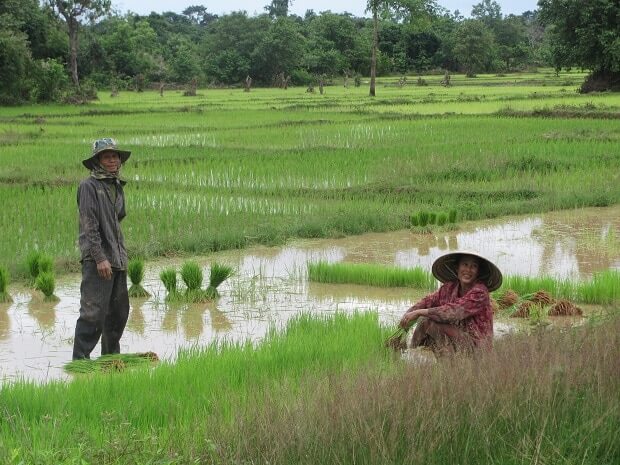

Bordered by golden temples, thatch-roofed villages, fertile fields of rice and dense jungle, we cruised slowly downstream on the Mekong river in Laos, passing fishermen casting their nets and children waving from the shoreline, with no bridges, just the occasional barge crossing slowly from one bank to the other. Here the river splits into several channels that wind their way around 4,000 islands, some large enough to be inhabited, others little more than clumps of trees. During the monsoon season, the Mekong is known for expanding to 14 kilometres wide.
I was in southern Laos, the least developed nation in South East Asia, travelling on the most charming of wooden river boats. The Vat Phou, spanning 34 metres long and 7.5 metres wide, originally carried teakwood before being converted into a comfortable riverboat with 12 cabins and an expansive upper deck with rattan chairs and day beds for viewing the passing scenery.
Over a heady espresso at the Sisouk Cafe in Pakse, I met our guide Khan and the other guests, a couple from Finland and family of 4 from Switzerland. The laidback small city of Pakse, capital of Champasak Province, sits at the confluence of the Mekong and Don rivers. We departed by long tailboat for an exhilarating ride until we reached the Vat Phou boat.
After a delicious lunch of Laotian dishes followed by coconut pudding, we clambered on board a tuk tuk and were transported along a muddy road to the Vat Phou temple ruins constructed between the 7th and 12th centuries, now a UNESCO World Heritage Site. Shaped to express the relationship between nature and humanity using an axis from the mountain to the banks of the Mekong, a geometric pattern of temples and shrines once extended over 10 kilometres. Climbing up steep stairs lined with flowering frangipani trees, a spectacular landscape unfolded beneath us, of two large artificial lakes and the vast plain beyond where once stood the ancient city, founded by King Mahendravarman who became ruler of the Khmer empire.
The Khmer empire once extended from Champasak to eastern Thailand, and south to the temples of Angkor in Cambodia. The historical significance of Vat Phou lies in its role as an imperial centre and its Indian influence is evident by signs of Hindu religious belief. The temples were built around a sacred spring piped into the temple’s sanctum that bathed its lingam, the emblem of the Hindu god Shiva. Other buildings were dedicated to Hindu deities, including Brahma and Vishnu. The complex later became a sanctuary for Theravada Buddhists. At the Angkor temples, throngs of tour groups surround you, but here there is almost no one to disturb quiet contemplation.
Next morning we moored near a small village known as Tomotha where life centres around rice cultivation and fishing, before venturing into the jungle to see the ruins of the mysterious Oum Moung temple built from the 13th to 14th century, now consisting of piles of stones and fallen lintels. The curious children who followed us were more interested in the large brightly coloured butterflies that hovered overhead.
Passing Don Daeng, one of islands in the middle of the Mekong where the river starts to widen, we saw several restaurants and upscale guesthouses, one of the few signs of change. Further on at Don Khon, we visited the old French railway opened in 1893 and the bridge linking the two islands. When the French sought to transport arms and supplies on the Mekong to strengthen their control over Laos they came across an obstacle, a huge mass of water at the Pha Pheng waterfalls. Undeterred, they constructed a railway across the island to allow specially crafted boats to be disassembled, transported, then reassembled. The disused tracks can still be seen, together with the rusty remains of one of the steam locomotives and several crumbling French colonial buildings. These days it is a relaxing destination for backpackers travelling onwards to Cambodia, with rustic bungalows fitted with hammocks that dot the shoreline.
Our final excursion was to the Pha Pheng waterfalls, a semi-circular line of rocks over which the water tumbles down 30 metres with a deafening roar.
On our final night as we rounded a wide sweeping river bend, the moon began to rise above the jungle and the faraway tinkling of temple bells coming from a nearby village could be heard. I asked Khan what he loved most about life in Laos. He paused for a moment and then replied that it was his farm, his family and his water buffaloes.
Just ten kilometres further south was the border with Cambodia. Next morning after watching a spectacular sunrise, I headed north to Pakse and Khan returned to his farm. The main reason I’d come to southern Laos was to cruise on the Mekong, a river that I find captivating and return to year after year. Over the course of three days I saw it in all its colours – dark brown, grey and silvery blue, and I was able to observe life spent on the land. Laos has long been the small sleepy neighbour of Thailand and Vietnam that is waiting to be discovered.
Travel notebook
Getting there: There are several options for arriving in Pakse. Thai Airways International and Air Asia fly from Australia to Bangkok with onward connections to Ubon Ratchathani, a 3 hour bus ride from Pakse. Several airlines fly to Vientiane, from where you can take an overnight VIP bus. Lao Airlines flies to Pakse from Ho Chi Minh City, Bangkok and Siem Riep.
Getting around: While the 4,000 islands can be accessed by road, a much more pleasant way is by boat. Highly recommended is the Vat Phou with 12 comfortable cabins with ensuite bathrooms. W: www.vatphou.com
Where to stay: In Pakse, the centrally located Residence Sisouk is a charming, boutique hotel overlooking the Mekong. The breakfast with jams, freshly baked bread and strong locally grown coffee was a delight. W: www.residence-sisouk.com E: hotel@residence-sisouk.com
Insider’s tip: The money-changer near the monument bookshop in Pakse has the best rate of exchange. Thai Baht or US dollars give the best rate. Treat yourself to a pressure point massage at Dok Champa Massage opposite the Pakse Hotel. A visa is required for entry into Laos. W: www.laoembassy.net E: laoemb@bigpond.net.au. Carry a fleece top as it gets cool on the river. November to April is the best time for a Mekong cruise.
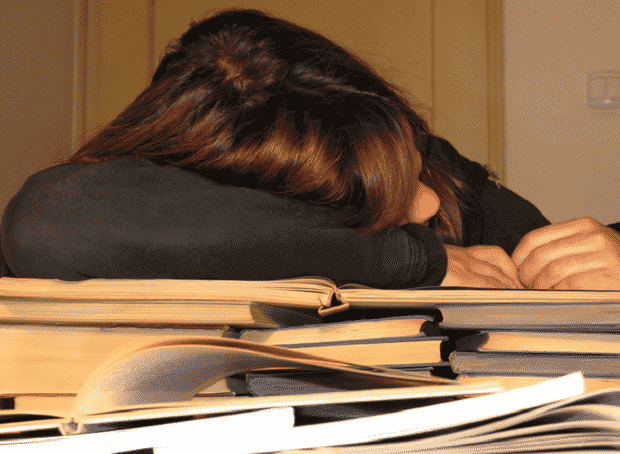
SITARA RAMAKRISHNAN reminds us that life is about more than just ATARs

It is that time of the year as anxious NSW Year 12 students receive their 2013 HSC results and Australian Tertiary Admission Rankings (ATARs) administered by the Board of Studies and the University Admissions Centre. For many students, it marks an intense year’s worth of dedication, perseverance and sacrifice moulded into a number.
As frustrating and demanding as the HSC year can be, the only thing students can do is to try their absolute best. Of course, reaching academic goals would be an incredible feeling knowing the work paid off and career paths are now set. However, despite hard work and commitment, sometimes results don’t always go to plan. Missing the cutoff for my dream course by 0.4 was definitely a good hard slap in the face. But at the end of the day, the ATAR is merely the shortest pathway for students to reach their career goals.
The ATAR will not stop students from pursuing and achieving their dream career paths if they are driven and committed to getting there through other pathways. Sure, it could simply mean a different university for study, or it could even take a year or two longer, but hey, how significant is that in terms of a lifetime?
The HSC year for me was steered by a personal drive and a degree of pressure which felt healthy, it kept me pushing myself to work towards my personal goal even after a few occasions of disappointment. Everyone has a different ATAR aim whether it’s 99.95, 95, 85 or 75 and any of these marks are a great achievement if you tried your hardest. In just about all my subjects: English Advanced, English Extension 1 & 2, Chemistry, Biology and Ancient History, I would never consider myself a ‘fast learner’. You know what type of learner you are and just how quickly you can absorb information. So students, set ample time, consult with your teachers, practice and develop studying techniques that suit your own learning style whether it is writing, lots of colour, diagrams, dot-points or preparing essay scaffolds!
All the above was a personal choice. I wanted to see what I could achieve when I tried my absolute best and put in the hours I did. I was extremely lucky to have such supportive parents who showed no hostility towards my decision to drop mathematics altogether and put absolutely no pressure on me so I felt like I had no external expectations but to fulfil my own. The ATAR is personal and that is how it should be. The subjects you choose, the career path you wish to pursue and the marks you receive should all come down to a personal choice. Any external pressures can be emotionally draining and simultaneously impact on the quality of one’s study and mindset during an exam. So a humble note to parents, if you want your child to succeed, all you need to do is let them make the big decisions and just be there for them. Sure, Extension 2 Mathematics, Physics, Chemistry and a career path of medicine may seem like a fantastic choice for your child, but at the end of day, your child is the one that must immerse themselves in substantial periods of these subjects and fields. So students, put aside all this ‘low scaling/high-scaling’ business and do what you find most interesting and the marks and results will undoubtedly follow in the best way.
What I have learnt is that success is not about pleasing or comparing yourself with others, it is not necessarily about receiving the highest ATAR or making the most money either. Success is the result of passion. We can achieve the greatest of things when we find our place of passion in the long spectrum of life’s possibilities and can wake up in the morning, just feeling happy. That’s all it really is and these days just about any passion can result in a career. Whether that is through university, TAFE, medicine, art, business, photography or music, go find it, work for it, grab onto it and never let anyone stop you from achieving true happiness.
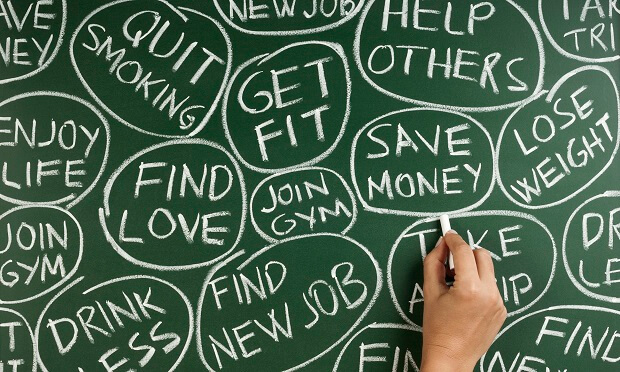
The Queen, Julia Gillard and Miley Cyrus reminisce on the year that was and pen their hopes for the new year
January 1, 2014. I got up a little later than usual and started cleaning up the debris of the previous night’s party on the rear deck of empty bottles, paper plates, left-over nibbles and other bits and pieces. I found an innocuous brown envelope near a pot plant. From ES. I have no Earth Shaker as a friend or foe. Maybe some guest had forgotten it? Instead of ringing 50 odd people I decided to open it to find its owner. I felt a lightning strike from above and the earth below me opening up at the same time. Signed Edward Snowden. Why me of all the people, I wondered?
Since the ABC was snowed down by scathing criticism for releasing his last leak on Australia spying Indonesian leaders, Snowden wanted some other ‘reliable’ source to do the job. Knowing that I often write the Backchat page, he might have chosen me to tell the world, a wad of New Year’s resolutions of some of the powerful persons on this planet, the real Queen and some reality queens. Having a cult following for my Backchat, I am duty bound to tell the Link readers first.
The top sheet was a parchment paper with an embossed crest in gold. The Queen in her own handwriting had penned, “Like the Ashes, my recent Christmas message was a lost cause. My audience once stretched from Sydney to Saskatchewan, but has now shrunk to the English shores. Even Lady Gaga, who is no lady, has more Facebook followers than I have. Even my tweets are not as well received as the budgies in Fergie’s (Andy’s ex) books. Otherwise 2013 has been good to me. By George, my Royal brood has expanded, but my WWW (World’s Wealthiest Women) ranking has gone one notch below that woman, the uncrowned queen of my former colony considered a jewel in the crown. Hope 2014 turns out better, only if my horses can win Ascot”.
The second was from the queen behind the Delhi ‘durbar,’ “It has been a rewarding 2013. I am now the 12th richest woman eclipsing Elizabeth thanks to the fair- minded Indian masses. They prefer to be ruled by anyone with a fair skin. Even my mother-in-law preferred me over her native bahu. I wish the Huffington Post didn’t publish that I’m worth two billion. Of course it is all huffing and puffing since they withdrew it. I am content with my lot. But only one small wish for 2014. Just that old chair once my husband, mother-in-law and her father occupied in the South Block. If Rahul, with his popularity plummeting can’t get it I wish Priyanka picks up that piece”.
Julia Gillard’s was next, “Lost the throne but made a fortune. Got way over (nearly a million) for my Altona cottage; taxpayers will fork out 200k a year to support me for the rest of my life and pocketed half a million advance to write a book. Now living in my seaside mansion I am reminiscing how 2013 turned out ‘annus horribilis’ with misogynists calling me names, colleagues colluding to ditch me and worst of all Bill short-changed me hours after swearing loyalty and the front-line feminist Penny w(r)ong-footed me. There was no one around to trust. The only bloke who stood behind me was my hair stylist – not for doing the hair though. Of course, my dog too. I am spilling the beans in my book for the 2014 Xmas release and want it to be a blockbuster. I need to hurry up before that crafty Kevin does his book.
Next one from another woman who reigned from behind the scene. Theresa’s diary read ” If only those millions of ‘selfies’ had turned out to be votes, Kev would still be king. Poor chap is busy writing his story with ‘programmatic specificity.’ UNdeterred he is flying around the globe lobbying for some UN job UNmindful of airlines’ cold sandwiches. Hope 2014 UNfolds a future that will make the UNgrateful Aussies squirm for UNceremoniously dumping him. For me, of course, 2014 holds a bright future with Holden workers lining up at my recruitment firms looking for jobs. With my assets now touching 200 millions, this Rein is well on the way to catch up with that Rinehart.
Miley Cyrus’ list popped up next. What else is left for this pop queen to reveal? My curiosity revved up to see her stuff.
“What have you been doing in the deck so long?” my wife yelled out. Hurriedly stuffing the papers into the envelope, I sheepishly said, “Wondering what New Year resolution should I take?”
“Don’t spend too much time writing silly articles. That should be resolution,” was her first piece of advice for the New Year. Happy New Year everyone!
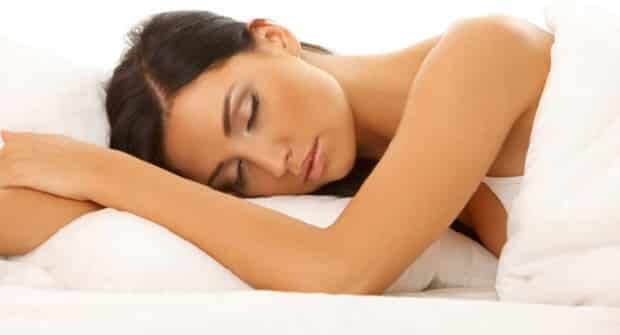
After the parties, pamper your skin and hair to flush out toxins and get you looking your best again

Now that the party season is over and summer is here, its time to rejuvenate your skin and detox from all that alcohol consumed during parties. Whether it is the kind of food you eat or simple tips to revive your skin and hair, there are solutions to every problem.
‘You are what you eat’ may be a clichéd statement now, but it still holds true. And while most of us take in a lot of excess sugar and fat especially during the party season, it makes sense to go back to healthy eating to get one’s body back on track. Here are a few basic remedies found in your kitchen, to get you back into a good groove.
Cut out the sugar
Eating excessive amounts of sugar can make the skin dull and it ages faster. We don’t even realise how much sugar we consume through breakfast cereals and fruit juices. It is better to eat foods which have natural sugar in them and use sweeteners like honey. Choose citrus fruit or melons which are low in calories, and those rich with antioxidants like grapes.
Choose the right fat
When it comes to fats, there are several theories. A personality like Nigella Lawson eats cream and butter, and has glowing skin. But one cannot do that indiscriminately. So, eat the good fats – the monounsaturated fats that are found in olive oil and avocados. If you have any doubts, just switch to a Mediterranean diet for a short time – their food is supposed to be the healthiest.
Speaking of oils, rest tired feet in a tub of warm water with bath salts and any oil you have at home – peppermint, lavender or even olive oil. Sit back, relax and your feet will be refreshed in no time.
Veggies ahoy
Eat more of the vegetables that people use in salads, and try not boiling them to death! For fibre-rich foods, pick carrots, green leafy vegetables, beans and tomatoes. Avoid starchy ones as they can increase the sugar in your system. And while not all vegetables are good to be eaten raw, some need proper cooking to taste good – the gourd family of vegetables, for example. Yes, bring on the bitter gourd and bottle gourd for a good healthy system from within.
If you have dark circles under the eyes, grate cucumber and apply the juice on to the darkened area or just lie back with slices of cucumber on your lids. Eating this vegetable regularly has lots of benefits.
Flour down
Most people know this but few practice it – go easy on the starch. Avoid pastas and white rice if you can, as well as processed flours and breads. Opt for multigrain breads and flours, and if you can avoid them entirely and make a meal of vegetables, meats, yoghurt and salads, you will feel great from within.
Various flours too, have cosmetic benefits. If your skin is looking dull from all those late nights, take 1 teaspoon of wholewheat flour, add equal quantities of rock salt, sandalwood powder, milk and crushed almonds. Use this as a scrub on your skin and it will get softer instantly.
Spice up
Our Indian herbs and spices have medicinal values and must be included in our daily intake. Curcumin from turmeric is a natural antioxidant and garlic, cloves, cinnamon and pepper all have healing properties. They increase the flavour of our food and no Indian dish is complete without them.
In fact, turmeric is also antiseptic in nature and if you make a scrub of gramflour, turmeric and cream and use it to wash your face every day, you won’t need to go to a salon for treatment.
Eat your beans
Proteins are important for our wellbeing and to delay the ageing process so include dals and beans of all kinds to your diet to get your share of protein. Add eggs, fish and chicken to your diet if you are non-vegetarian.
In fact, if you have dull hair, apply mayonnaise to your scalp and hair, and wash it off after a while. It will give you great-looking soft hair.
Protein treatments for the hair are important and if you have nothing else, just mix an egg with some olive oil and apply it to your hair, leaving it on for an hour before shampooing. You will love the end result.
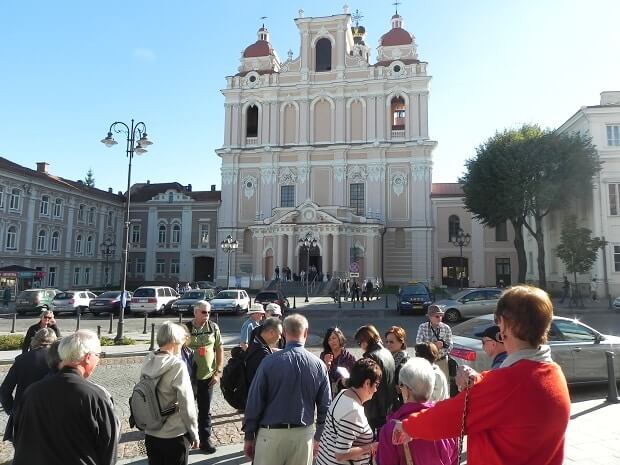
The iron curtain has dropped to reveal three East European cities with a fascinating blend of history and modernity

The moment the word ‘Baltic’ is pronounced, the blue waters of Baltic Sea, big built ‘Balt’ people and seaboard countries of Lithuania, Latvia and Estonia come to mind. After enduring many dramatic incarnations in the last one hundred years, these three tiny nations shrugged off their dead weight and have now emerged as rising stars on the European tourist circuit.
The charms of these states unfolded for me as a part of an ‘Insight Vacations’ tour; I travelled by road from Warsaw in Poland to St Petersburg in Russia through their lands, spending generous time at their capital cities, Vilnius, Riga and Tallinn.
Baltic background
The history of the Baltic goes back almost 800 years with neighbours like Germany, Russia, Sweden and Poland casting interested eyes over the territory until WWI when Lithuania, Latvia and Estonia were born as autonomous sovereigns. However their independence was short lived. During WWII after a period of Nazi occupation, they fell under Stalin’s influence and remained a part of the Soviet Union till its dissolution in 1991, which returned them sovereignty and heydays.
After initial hiccups, the progress of these three nations in the last two decades is inspiring. They are now members of the European Union, economically robust, technically savvy and welcoming to the outside world. Some traditional Baltic food and culture like oral folklores and song festivals perhaps, are the only common platform among them, if we ignore the decaying legacies of the communist Soviet regime. In fact, as we swiftly pass through rural settings and small villages and towns, some impoverished remnants of the Soviet-era are still noticeable like small huts, dilapidated buildings, empty racks in stores and poverty-stricken people. However it’s a different story in the capitals where signs of prosperity and all elements of contemporary lifestyle are explicit.
The three capitals are architecturally very rich: Vilnius in Baroque, Riga in Art Nouveau and Tallinn in Medieval styles respectively. Their impressive ensemble of historical edifices inspired UNESCO in 1997, to mark their Old Towns as World Heritage sites and tourists spent most of their time admiring the quintessential attractions there.
Creative Vilnius
Festooned with open courtyards and dusty cobbled streets, Vilnius at first sight strikes one as an artist’s enclave. We enjoy its panoramic fabric from a redbrick castle tower built on the top of a hill, named after Gediminas, a Lithuanian Grand Duke who founded the city in the 14th century. The silhouette of the cityscape below, presided by decorated spires and jewelled domes of numerous churches standing on both sides of River Neris, is a visual feast.
At the base of the hill is the Cathedral Square where the city’s heart beats, and most of the touristy action occurs. The precinct buzzes with singers, folk dancers, street performers and friendly locals, all giving visitors a taste of local life.
At the centre of the square is an equestrian statue of Gediminas overlooking the Royal Palace and Vilnius Cathedral, the latter recognised as the nation’s most venerated cultural and religious sanctuary. During his visit to Lithuania in 1993, Pope John Paul II said a mass here to pay homage the city’s patron saint Casimir. Several statues decorate the exterior of this architectural masterpiece, while the interior boasts of some awe-inspiring paintings and frescos. A must-see in Vilnius is the Trakai Castle. Located outside the city limits on the shores of an idyllic lake, the fairytale-like 14th century bastion has a museum, the medieval collections of which provide an interesting insight into the history of the period.
Lively Riga
The beauty of Riga is so accomplished and its ambience is so vibrant that fancy titles like ‘Paris of the North’ and the ‘Second City that Never Sleeps’ are tacked to the Latvian capital.
Sitting quietly along the Daugava River, the cityscape impressively showcase eye-catching Art Nouveau architecture; lurid gargoyles and praying goddesses gallantly adorn over myriad of edifices lining stately boulevards and curved alleyways.
Like Vilnius, Riga Old Town is equally charismatic and the entire city spread is dotted with churches and cathedrals, most significant being the enormous Dome Cathedral, still the largest Christian shrine in the Baltic.
A good way of picking up a different perspective of Riga is by taking a leisurely cruise along the city-canals that stream through the manicured parkland before joining the river.
Alluring Tallinn
Our next stop Tallinn, is the smallest of the three Baltic capitals in size, but perhaps largest in terms of its appeal. A spectacular vista of medieval architecture greets us as we enter the metropolis where the Old Town again stands as the nucleus of most of its wonders. Bestowed with a clutter of turrets, spires and winding streets, the cobblestoned labyrinth of Old Town hosts magnificent churches, towers and historical monuments that keep most visitors locked within its perimeter during their stay in the city.
Town Hall Square, dominated by the 800-year-old Gothic Town Hall structure, is the focus point of Tallinn, and its most photogenic spot. During summer, locals and visitors crowd its numerous outdoor cafes, drink aromatic coffee or sip wine while watching the bustle around. At one side of the square stands a Tallinn institution, a pharmacy originally established in the 15th century. Two ‘must do’ items in Tallinn are to hike up to the top of Toompea Hill for a visual feast, and to visit the Alexander Nevsky Orthodox Cathedral, a striking example of Russian influence in the Baltic.
The three Baltic countries are rich in history, culturally astute and architecturally bejewelled. Unfortunately they were all hidden under the Red Flag from the rest of the world for almost the entire 20th century. Now with doors open, the nations are generously adding 21st century elements to their old and traditional remains. The cityscapes are clustered with luxury hotels, trendy restaurants, bar, cafes and even nightclubs matching up in lifestyle to any modern European venue. Shopping opportunities are reasonable, but the item to fill in your bags is products made of amber, a tree resin highly appreciated for its colour and natural beauty since Neolithic times. Public transportation is available; however the capitals are small enough to be covered on foot.
The Baltic nations can be independently travelled, but to experience the best in a short time, it’s better to opt for an organised tour which makes the entire journey convenient and hassle free.
TRAVEL NOTEBOOK
Baltic capitals
Getting There Fly Emirates (www.emirates.com) to Warsaw via Dubai and fly out from St Petersburg or Moscow if you are touring Russia as well. International bus operators like Eurolines (www.eurolines.com) regularly run from Warsaw to the Baltic capital cities
Accommodation Stay at conveniently located Radisson Blu Hotels (www.raddisonblu.com) in the three capital cities.
Tour Operator Insight Vacations (www.insightvacations.com/au) offer a 14-day tour of Warsaw, Baltic States and Russia. It’s a well-organised, easy-going and value-for-money itinerary that allows plenty of sightseeing.
Visa Australian passport holders will require visa only to enter Russia. Check http://www.australia.mid.ru for details. No visa is required for Poland and Baltic countries.
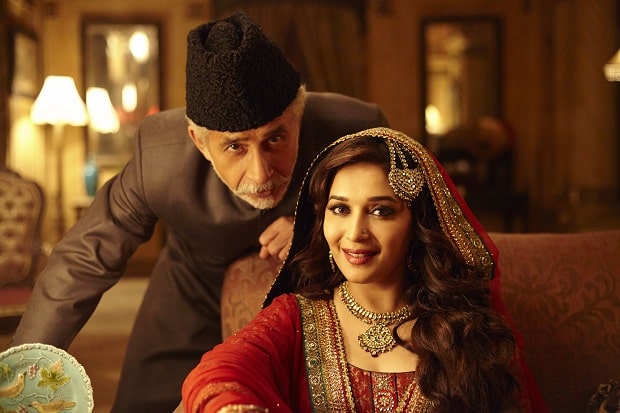

Film: Dedh Ishqiya
Cast: Naseeruddin Shah, Madhuri Dixit, Arshad Warsi, and Huma Qureshi
Director: Abhishek Choubey
Rating: ****
Just to hear these roguish, duplicitous characters walk the talk is a pleasure beyond the ordinary. Make no mistake. Dedh Ishqiya walks many extra miles beyond your highest expectations. It negotiates a nawabi era long gone, or perhaps never in existence. And it does so with a bracing bewildering beguiling blend of aristocratic arrogance and ironic humility.
Welcome to the world of quaint contradictions. This is Mehmoodabad, a place close to yet far from Lucknow where time stops still, where mushairas and mujras jostle with very contemporary preoccupations, like making fast bucks.
The one thing that can be said with supreme certainty about Dedh Ishqiya is that you’ve never seen such a marriage of old-world charm and new-world subterfuge before.
Who in his right mind except the utterly wacked-out Babban (Arshad Warsi) would say, Tumhari saari nawaabi, tumhare pichwade mein ghused dunga and get away with it? Yup, nawaabi gets its twinkle-eyed comeuppance in this tale of the fading Begum (Madhuri Dixit) and her besotted suitors.
There is a delightful sequence in Madhuri’s mysteriously-lit inner chamber where Naseeruddin Shah and Madhuri exchange courtly confidence while their respective sidekicks discuss the pluses and minuses of latest iPhones.
A sequence such as this draws out the dynamics of the old and the new world, and the ideological clashes that define life in certain cultures which are defined not so much by contemporary existences as by nostalgia.
This is a world that exists only as an idea. Director Abhishek Choubey gives a tantalising tangibility to the non-existent world in this boudoir-based burlesque where autumnal characters filch Urdu poetry from their peers and pass it off as their own to gain brownie points with the grand patroness of the fine arts, who incidentally is not quite what she seems. But hush!
Without giving away the plot I’d like to say nothing is as it seems.
The roguish deceptions of two of the four principal characters, Khalujaan (Naseer) and Babban are known to us from the first film Ishqiya, in which the Naseer-Arshad duo more than met their match in the spunky Vidya Balan.
The location has now changed. And so have the female protagonists. The rustic cow dung compulsions of Balan’s burlesque in Ishqiya are now replaced by the decorous but decadent tragic aristocracy of Madhuri’s Begum Para.
When we first meet Begum, she strikes us as a beautiful anachronism. Honestly, this is a ‘Para’-normal situation! Madhuri’s lahja, tehzeeb, adaas, aahen gile-shikwe remind us of Meena Kumari in Pakeezah. But the lady has a past, and a future. She is no walkover, although she pretends to be one.
Her lady-in-waiting (a very Shakespearean touch, that) is played by the exorbitantly sexy Huma Qureshi, who is growing into one of our more engaging contemporary actresses.
I really can’t imagine anyone but Huma bringing the same libidinous chutzpah to the character. She is in many ways superior to the film’s main attraction, Madhuri who I felt struck some wrong notes in her character’s faltering firmament.
But when Madhuri dances to Birju Maharaj’s choreography we tend to forget and forgive all the false notes in the characterisations.
Naseer with his wizened face and twinkle eyes conveys the full weight of delayed ecstasy felt by a man belatedly in love. If recently you’ve forgotten this actor’s calibre, here’s your chance to re-discover it.
The inimitable Gulzar has a load of fun writing the songs. This is a world of poetry and music where there is room for both Begum Akhtar and Yo Yo Honey Singh.
Giving Naseer tit for tat in every scene is that bundle of implosive talent Arshad. Kohl-lined eyes, and a sweeping vista of mischievous expression qualify Arshad’s performance. Indeed there is more ice and fire, courtship and lust, in Warsi’s scenes with Huma than there is in the temperate toned-down mock-tragic togetherness of Naseer and Madhuri.
Indeed, the film is more about same-gender bonding than about heterosexual love. I saw more chemistry between Madhuri and Huma than I did between Madhuri and Naseer.
Dedh Ishqiya is at least The writing in Dedh Ishqiya and the Urdu dialogues are among the best we’ve heard in Hindi films of recent times. The language is a ravishing blend of the sublime and the smutty. Here’s a world of poetry and parody that never co-existed anywhere else. This is a work suffused with a sighing splendour, giggly groans and yes, a zingy zubaan that yokes shayari and colloquialisms. At least dedh times more audacious and amorous than Ishqiya!
What an enticing start to the year.
Subhash K. Jha
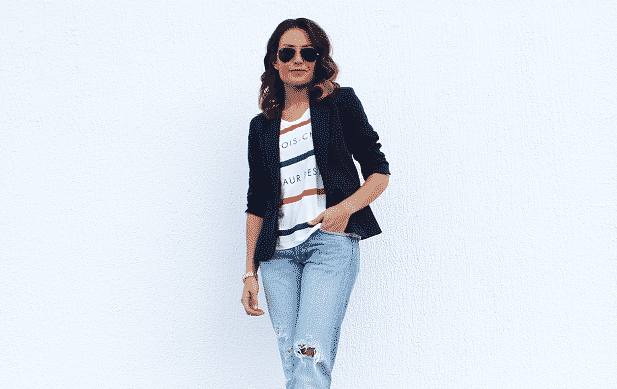
Pick a trendy theme to match your personality and style this summer

Aren’t you loving summer and long days with entertaining, activities and endless fun? Even if it is back to school and work, it’s still too early to say goodbye to barbeques in the backyard, picnics in the park and light ‘n’ airy summer outfits to dress up for these occasions.
I did something exciting this summer holiday, and that is where inspiration struck me to write about outdoor fashion ideas. I went camping! I had reservations about this adventure, but spending the night at Cockatoo Island with a fancy 360 degree illuminated city view was a bit too hard to refuse. And the result was some fabulous outdoor fashion ideas with a hint of chic and sophistication.
Some fashion themes work really well with outdoor fun, so pick any that blends with your activity, personality or simply be adventurous…
Bohemian
Whether you are a gypsy at heart or not, this trend is about embracing ethnic prints and flowing forms. Printed pants are kind of a part of this theme. These are the soft flowing cotton ones or the harem pants style with Aztec prints or even Indian block prints and ikat. Pair them with a solid-coloured top and a long neck-piece with a tassel pendant for a fun look. If you are a lover of dresses, team up a maxi dress in cool colours with flat bling sandals and a messenger bag. While prints are principally the heart of this look, you can even wear plain bright coloured dresses with a bandhani print or banjara mirror-work bag and lots of layered bracelets too!
Androgyny
Now whatever is this? Is it really a trend? Believe me it is, not necessarily one I advocate, but I like to step out of my comfort zone from time to time and challenge a completely feminine style! Yes, the androgyny trend is kind of a ‘dressing like a male’ one. It’s not quite as revolting as one would tend to picture it, because my idea is to balance a sharp look delicately with one or two soft accessories. For example, pair a tee and boyfriend jeans with ultra-feminine heels or pointy toe flats. The shape of the pieces can be masculine, but the colour can be genuinely feminine like a petal pink shirt over military green pants with an oversized tote bag and brogues. Would you dare to try that?
Chic safari
This is perfectly synonymous with crisp white linen and khaki, isn’t it? Wear a linen dress with a forest green vest and leopard print belt, or a white tank top with khaki pants and animal print ballet flats. Try and choose cool, breezy fabrics and shapes that skim your body, rather than a body-hugging fit, for a relaxed look. Adding that fun animal print accessory will always make this look quite appropriate. So let your imagination run wild (pun intended)!
Timeless chic
For me, nothing is more timeless than stripes. Contrary to some beliefs that horizontal stripes make you look bigger, I find them really chic. It all depends on the colour and pattern of the stripes. I can assure you that there is no limit to styling stripes into a sophisticated outfit. Stripes with red accessories makes me think of a European holiday, for some reason! I have made the most of my boxy shaped striped tee and black and white striped dress this season. Pair stripes with black and white, brights and even neons, and you will never be disappointed with these hard-working pieces from your wardrobe!
Cheery brights
What is summer without some brilliant bright pieces to flaunt? I personally love to combine cheery bright tops with my crisp white jeans and they just work perfectly, especially when a contrasting accessory is thrown into the mix. Like a lemon yellow top, white jeans and a fuchsia bead necklace, or a tangerine shift dress with a mint bauble necklace. The key lies in balancing the dose of colour. I would neither have too much ‘matchy’ nor ‘clashy’. An injection of neon can be good too, go for an accessory if you are too worried about picking clothing in these colours.
I hope you enjoy these summer nights and days to the fullest by being inspired to try out one or more of these themes, adding more fun to your outdoor attire!
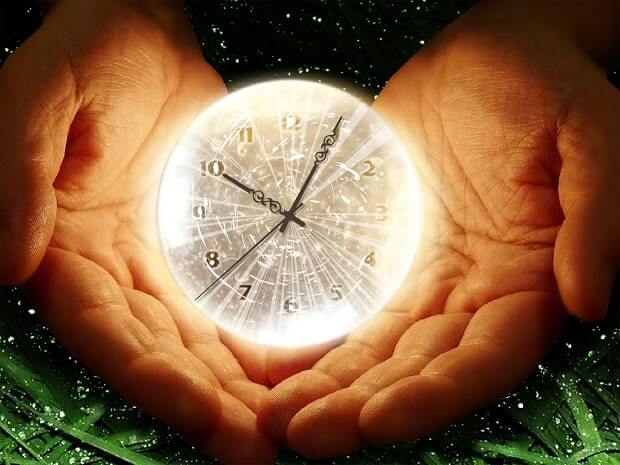
Will Assam’s decision to introduce a separate time zone be the beginning of a nexus of change?

There are two current events taking place with regards to time zones: one in India and the other in Indonesia. The two ideas are contradictory to each other: whilst the state of Assam in India is moving towards creating a separate time zone (currently all the country has a single zone), Indonesia wants to fuse its three time zones into one.
Every place on earth has its time naturally created by the longitude and latitude of a place. There are twenty-four natural time zones of the world. The 360 degrees equatorial circle divided by twenty-four (hours) gives fifteen degree segments. The Sun moves every fifteen degrees in one hour. Half-an-hour time zones are used in some places. In Australia, Central Australian time is half-an-hour behind Eastern Australian Time, but one-and-half hour ahead of West Australian Time.
The Equator (an imaginary line) divides the earth’s globe into the northern and southern hemispheres. Its estimated length is 40,075 kms (about 24,900 miles) long. The earth is not a perfect globe. It is greater in size at the equator (latitude 0 degrees) than at the poles by about 43 kms. The polar areas are flatter.
Along the Equator, days and nights are almost equal throughout the year. The Sun passes perpendicularly over the Equator twice a year. At those times, the Sun’s rays become perpendicular to the surface of the earth. These twice-a-year events are called the Equinoxes (meaning equal days and nights).
That is why one does not see any great difference between summer and winter along the Equator, except where there are high mountains such as the Himalayas. There are mountain peaks in Africa and South America close to the Equator as well. Equatorial or tropical lowlands have a rainforest climate whilst high mountains have snowfall such as in Bhutan, Nepal and the neighbouring parts of India like Assam.
The Chief Minister of Assam, Tarun Gogoi, recently dropped a bombshell by stating that Assam will unilaterally have its own time zone and thus break away from Indian Standard Time, which is actually a relic from the days of the Raj.
The state of Assam in North-East India is distant from New Delhi in more respects than one. Assam along with several other states in the North-East sector, lies linked to the rest of the country by a narrow corridor known as the Naxalbari sector. This gives the map of India a disjointed appearance. It is as if the North-East sector is separate from the rest of the country. The Naxalbari corridor became famous because of the Naxalite insurgency group which troubled the area for several decades.
In the days of the Raj, when the British decided that the entire country should have only one time zone, they produced an unnatural situation which the people of different areas had to live with.
The inhabitants in the eastern part of the country (including Kolkata in West Bengal) had to awaken very early in the morning and as well they had to go to sleep early at night when their energies were still quite active. The state of West Bengal by itself has over 91 million inhabitants. It is not subjected to the proposed unilateral time zone change proposed by Assam, although it suffers the same natural disadvantages, as does Assam.
The subcontinent has several time zones: Bangladesh is half an hour less than Indian Standard Time whilst Nepal’s time is one quarter of an hour less than that; Bhutan’s time is the same as that of Bangladesh. There is no Daylight Saving Time currently in use anywhere in the subcontinent.
Numerous countries have time zones across their widths, reflecting the fact that the Sun rises at different times in their east and west. The United States is a very good example: the Sun rises and sets at different times in the states of New York and California. Australia has several time zones: the Eastern, Central and Western zones with additions for daylight saving. There are besides, time zones for island territories such as Christmas Island, Norfolk Island and Lord Howe Island.
India is historically and geographically linked to the countries of Southeast Asia. However, using the Indian Standard Time means that Assam and the Northeast sector has been using a time which is out of kilter with adjoining Burma. In 1991 India awakened to its links with the countries to its east and southeast. A Look East Policy was enunciated by Prime Minister PV Narasimha Rao and pursued by successive Prime Ministers, but no one seemed to have awoken to the importance of the time zone factor.
Indonesia stretches between 95 and 141 degrees longitude. It makes an excellent case for time zones which it has currently in place. Abolishing those zones would severely inconvenience people living in those islands. Fusing those zones into one and adapting Singapore’s time zone for all of Indonesia might be palatable to commerce and particularly the Singapore stock exchange, than it is going to be for the inhabitants of those places.

Indian Link empowers and elevates the South Asian community in Australia, by telling their stories and unpacking their experiences in a nuanced and unbiased manner.
© Indian Link Media Group. All rights reserved. Level 25/259 George St, Sydney