Home Blog Page 981

Top 10 Weirdest Phobias

0
Reading Time: 4 minutes

One in seven people in the world suffer from some kind of phobia, so rest easy – you are not alone

bikini_cha_cha_stripe_bandeau_xlarge

Take a look around you, do you know seven people? Psst…. guess what? One of them is a phobic!

A phobia is an irrational fear and anxiety disorder in which a person experiences persistent dread of a situation, creature, place or thing. Sufferers go to extreme measures to steer clear of triggers and if confronted with it, they can break out in cold sweat, experience shortness of breath, chest constriction, nausea and shivers. To date there are 530 types of documented phobias and about 1 in 7 of us suffer from one.

Some phobias are fairly common, like claustrophobia (fear of confined spaces); arachnophobia (fear of spiders); and acrophobia (fear of heights). And then there are some that elicit a dropped-jaw, wide-eyed, stop-in-your-tracks reaction. We’ve waded through pools of research to pick what we believe are the strangest of paranoias. Tighten your seatbelt and whizz through our list of top ten weirdest phobias.


10. Cathisophobia: Fear of sitting down

Sit tight for this one, cathisophobia is a rare psychological disorder that sends the sufferer in panic mode at the thought of sitting down. Haemorrhoids, physical abuse and punishment by being forced to sit on sharp objects are considered possible reasons for developing this irrational fear. Some cathisophobics only experience symptoms of anxiety at the thought of sitting down in the presence of celebrities and elites.


9. Zemmiphobia: Fear of the great mole rat

The three blind mice very likely chased the farmer’s wife to this. Zemmiphobia is a little known anxiety disorder, defined by a morbid fear of the mole rat. As suggested by the name, the mole rat is a kind of rat behaving like a mole. It is devoid of hair, has small beady eyes, sharp teeth and is blind. An unfortunate experience with rats or moles could lead to zemmiphobia, or it could be bought on by the somewhat off-putting naked appearance of the creature.


8. Geumophobia: Fear of taste

We thought this one must be hard to live with, literally! How would you survive if you started hyperventilating at the sight of food? To our relief geumophobia or geumatophobia is an exaggerated and unreal fear of taste which can bring a panic attack on the sufferer at the idea of tasting something new or something with a specific flavour like sour, bitter, salty or even sweet. Traumatic experience of being forced to taste something horrible as a form of torture, could be a possible cause of this phobia.


7. Dextrophobia: Fear of objects on the right side of the body

No kidding, this is an obsessive-compulsive personality phobia, with its very own twin levophobia, or fear of objects on the left side of the body. A person suffering from dextrophobia is obsessed with maintaining order on the right side of the body. Like needing things to be just so on their workstation or bedside table. Chaos or lack of organisation of things on the right can bring on a full-blown panic attack with chest constriction, gulping for breath and crying.


6. Phobophobia: Fear of phobias

This has to be the mother of all phobias. Phobophobia is generally thought to take root in people already suffering from some phobia. Having experienced a panic or anxiety attack as a result of that, leads them to start fearing the symptoms brought about by a phobia hence resulting in phobophobia, the fear of developing or experiencing a phobia.


5. Omphalophobia: Fear of belly buttons

Pick your jaw up if it just dropped and believe it, omphalophobia is a recognised condition in which a person suffers great distress at the sight of belly buttons. Beaches and pools are no-go zones for them. They cannot bear the sight of someone else’s belly button being touched, let alone their own. Some go to great lengths to protect their navel by covering it with plaster and never wandering near it during showers.


4. Epistemophobia: Fear of knowledge

An epistemophobe just doesn’t wanna know! That’s a pretty accurate description for this unusual fear of knowledge. People with this phobia will do anything to remain in the dark. They shun books, newspapers and even television. The phobia could have been bought on by learning about things that caused problems for the sufferer, and the overwhelming feeling that not knowing would have been better.


3. Clinophobia: Fear of going to bed

This abnormal and persistent fear of going to bed and sleeping could stem from worrying about having nightmares or a problem controlling bedwetting. Clinophobia can develop into insomnia which can be greatly detrimental to a person’s health.


2.   Geniophobia: Fear of chins

By the hair of your chinny chin chin, if your jaw is not absolutely perfect a geniophobe will not let you in. People with this phobia are obsessed with other peoples’ chins especially imperfect ones. They avoid interacting with people who they consider have hideous chins and in extreme cases become introvert because of it.


1. Euphobia: Fear of hearing good news

This, we felt, had to top the list of the weird and unusual phobias out there. After all who doesn’t like hearing good news? Well, people with euphobia don’t. Instead of feeling elated at hearing good news, they feel anxious and start panicking. They thrive in the negative and enjoy chaos around them. Possible reasons for developing euphobia could be persistent disappointment after hearing good news that didn’t turn out to be true.

Healthy summer lunchbox for your child

0
children lunch box
Reading Time: 3 minutes


The kids are back to school after a long summer break. But with temperatures still soaring, something cool is what’s needed in their lunchbox. In many families, both parents work and due to a shortage of time in the morning, it becomes difficult to prepare an elaborate lunch for the children. Handing over canteen money, packing ready-to-eat meals, or at the most, making a jam-butter sandwich is very convenient and easy.

Unfortunately these options make the lunchbox load up with salt, fats and sugars, and the child misses out on fruit, vegetables and wholegrain foods. It is not always time-consuming to make a nutritious lunch box. Just use your imagination and plan a little ahead.

Here are some tips for a healthy lunchbox:

  • Even though there are bubblers in all schools, make sure your kids carry plenty of plain water instead of fruit juices and cordials.  It is very important to drink lots of water to keep hydrated in the hot summer months. Replacement of fluid loss, especially during exercise sessions or running and playing, is important in summer, or else they might feel tired and lethargic.
  • For recess, try and add fruit. Summer fruit like watermelon, rock melon, litchi, nectarines, plums, apricots, berries are all juicy and have a high water content. These fruits are good sources of folate, Vitamin A, and antioxidants. If including whole fruit, select the type that is a suitable size for a child to easily hold in their hand and eat, especially for younger children.
packed lunchbox with cut vegetables
Source: Pixy.org

READ ALSO: Healthy food swaps

  • Add vegetable sticks such as cucumbers, celery, carrots, sliced avocado, and cherry tomatoes. The antioxidants and vitamins present in these vegetables help to build up the immune system and minimize skin damage in the summer months. While packed with healthful dietary fibre, vitamins, minerals and phytonutrients, fresh vegetables also are low in calories and have no added fats or sugars.
  • Cool drinks such as nimbu pani, lassi – sweet or salty, and coconut water are excellent thirst quenchers. Adding mint and roasted ground cumin seeds to lassi makes it an irresistible drink. Nimbu pani is an excellent source of Vitamin C and a very good appetizer.
  • Avoid fried food such as puris, samosas, pakoras, hot chips, hot dogs, burgers, and spring rolls as these involve a lot of cooking at high temperatures, utilising a lot of time in a hot kitchen that could also have a thermal effect of increasing the body temperature.
  • For lunch, try preparing cold pasta salads with lots of your child’s favourite veggies, and maybe add a can of tuna or cottage cheese for protein. Use different coloured or shaped pasta to make lunch more fun.
  • Tortilla wraps stuffed with leftover food such as cooked vegetables, roast chicken or meat also makes a nutritious lunch box. Add some crispy lettuce, avocadoes or tomatoes for variety and change in taste.
packed lunch
Source: Pixabay
  • Use whole wheat or multigrain bread for sandwiches, depending on your child’s preference. Use paneer, chicken, egg, lettuce, tomatoes, potatoes or peas as stuffing instead of only jam or processed cheese, which are high in sugar or fat. If you’re adding tomato to sandwiches, place the tomato between fillings and not directly onto the bread.  This prevents the bread becoming soggy. Make a sandwich more appealing by cutting it with a cookie cutter into different shapes like a star, circle or diamond.
  • Use burritos or tortilla wraps with baked beans or egg and ham or chicken. Add some lettuce and thin cucumber slices to give that extra crunch.
  • Crackers with cheese and tuna are also cool and crunchy in summer. Add a can of tuna or sliced chicken separately, to stop the crackers from getting soggy.
  • Pack natural or fruit yoghurt, scones, muffins, or fruit bread instead of candies or cakes for kids with a sweet tooth. Yoghurt is excellent for summer. Purchase small tubs of fruit yoghurt or the smaller packs.

But no matter how healthy your child’s lunchbox may be, it won’t provide any nutritional value if it doesn’t get eaten! So make packed lunches as interesting and nutritious as possible. Encourage your child to be involved in filling their own lunchbox from a range of healthy options.

READ ALSO: Healthier & Eco-friendly: Home-made Cookies recipe

Student attack shakes local Melbourne community

0
Reading Time: 4 minutes

In what is alleged to be an opportunistic attack, an Indian student from Melbourne was severely beaten and hospitalised, reports NEHAL CHHATRAPATI

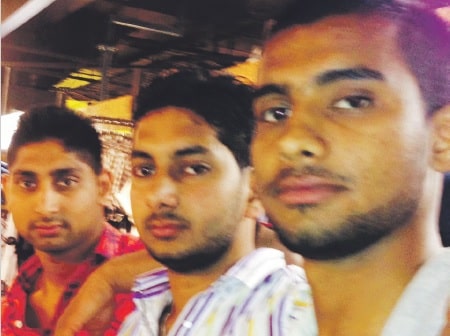
Attack victim Manrjwinder Singh (centre) with brother Yadwinder Singh (left) and cousin Michael Singh Kang in happier times

Memories of student violence surfaced again in Melbourne as an Indian student Manrajwinder Singh was attacked in early hours of December 29, 2013 close to Federation Square. Local community leaders have moved quickly to allay any fears of this being a racial attack, and local police has moved swiftly to apprehend the perpetrators of this attack.

From information gathered relating to the incident, Manrajwinder was attacked about 4.15am near Princes Bridge, as he and two friends waited for a train. Reports claim that they were approached by a gang of eight youths and Manrajwinder and his friend were attacked, while the other friend escaped to raise the alarm. Manrajwinder was kicked in the head from an elevated position and then kneed, and was beaten while he lay unconscious on the ground. His friend was punched in the face and also struck as he lay on the ground.

One of the accused attackers, a youth of 17 who cannot be named for legal reasons, was arrested on New Year’s Eve in relation to the attack, and has appeared in court but has been refused bail. The court heard that the boy, his twin brother and their younger brother were named by another of those arrested.

Detectives told the court the boy was part of a gang known as ‘KYR’, which targeted vulnerable people, particularly those of Indian appearance. The detective testifying said she did not know what the initials meant, but reports of other gang offences last year stated that  ‘KYR’ stood for ‘Kill Your Rivals’.

The detective also confirmed that CCTV footage captured the eight youths approaching the men, although it was yet to be determined which of the gang had attacked Singh and his friends.

Manrajwinder Singh is still not completely out of danger and remains in intensive care at the Alfred Hospital in Melbourne. He has gone through brain surgery as a result of which he remained in a coma for seven days, but each time he regained consciousness even for few minutes, he would express aggression and anger.

Speaking to Indian Link, Singh’s brother Yadwinder Singh said, “Maybe he was remembering bits and pieces of the attack and was expressing anger about it.” He also added that Manrajwinder’s memory has been affected seriously, and he remembers very little of anything else. Though out of coma now, he is still not able to converse fully and has had another surgery for his jaws and face.

“The police have been very co-operative with us all this while. I was informed last week by the police that several of the members of the gang had been caught, two were released on bail, one was denied bail and the police are still on the lookout for the other two remaining members of the KYR gang,” said Michael Singh Kang, cousin of Manrajwinder Singh.

The attack on Manrajwinder has ignited past fears of attacks on Indian students which dominated the headlines in 2008-09. Community leaders have stepped in to offer their perspective on this attack.

Speaking to media at the 12th Pravasi Bharatiya Divas (PBD) in Delhi, Vinod Daniel, chairman of AusHeritage, an Australia government organisation said, “I have worked and continue to work internationally on projects and have been to over 40 countries. I have found Australia to be one of the most tolerant and safe countries, which is very welcoming to any migrant.”

“This kind of incident can happen anywhere in the world … even in India, there are so many such incidents,” said Kushagra Bhatnagar, a financial analyst based at Greenslopes, Queensland who was also in Delhi for the PBD.

Yadwinder himself, who has been living in Australia for seven years and is an Australian citizen, also agreed that this was an opportunistic crime. “Australia or Melbourne for that matter isn’t a vulnerable place; this was an opportunistic crime that could have happened in any other state or country,” he said. “If an attack like this can happen in CBD right outside the ever-crowded Federation Square without any fear of CCTV, then this can happen anywhere,” added Yadwinder.

However this attack has left him shaken. The incident haunts Yadwinder every time he goes out, and even at home when he is by himself. “Even I was attacked a few times in the past, but those attacks were not serious and all they wanted from me was money. In my brother’s case their motive was not just money, as they straight away attacked him without demanding anything,” said Yadwinder.

Yadwinder is very positive about Australia and would still encourage students to come here and study if that’s what they aspire to do. But he would like to pass on a message to police and the Victorian government. “I believe that they should strengthen the laws and take extra safety measures for all international students,” he stated emphatically.

Both the Australian government and Indians in Australia have worked hard in the years after the attacks against in Indian students in bringing forth the opportunistic natures of these crimes. The state governments are battling ongoing problems of increased violence in our cities. Examples of renaming terms such as ‘king hit’ to ‘cowardly punch’ is a step in the right direction. But more needs to be done in making our streets safer. Those most vulnerable, such as international students and young people, need to have assurance of better policing and a stricter legal system to punish the offenders. Our political leaders and policy makers owe it to everyone to make the streets safer for all.

Strong Indian influence at CWAE event

0
Reading Time: 3 minutes

Indian artistes, in collaboration with local talent, make the CWAE event a memorable one, reports SAI NARAYAN

 IMG_4013

It was a memorable evening for visitors to the Canning World Arts Exchange (CWAE) free event at the Shelley foreshore in Perth on February 1. The second year of this unique international arts event featured performances by master musicians from India, the Fremantle Symphony Orchestra, UWA Choral Society, the Temple of Fine Arts, WA Dance Sport Champions, and the Middar Aboriginal Dance Company.

The performances began after a traditional welcome to the country speech by an Aboriginal elder. The Shelley foreshore is a beautiful landscape set on the Canning River with plenty of grassy areas to set up a picnic. Hundreds of people turned up to enjoy the event and soak up the atmosphere of an international arts exchange.

The musicians from India were aptly described as ‘maestros’ by the compere. Artistes Sameer Rao on the bansuri (Indian Bamboo flute), Manish Pingle on the mohan veena (Indian slide guitar), Vicky on the tabla and Tao Issaro, percussionist, enthralled the audience with their mesmerising music.

As the musicians wound up their routine, the University of Western Australia Choral Society (UWACS) artistes, all dressed in white, came on to perform a collaborative routine with the Temple of Fine Arts (TFA) dancers. The chorus provided a backdrop of Sanskrit chants from the rig veda as the TFA dancers rendered a dramatic performance entitled ‘Ahuti’.

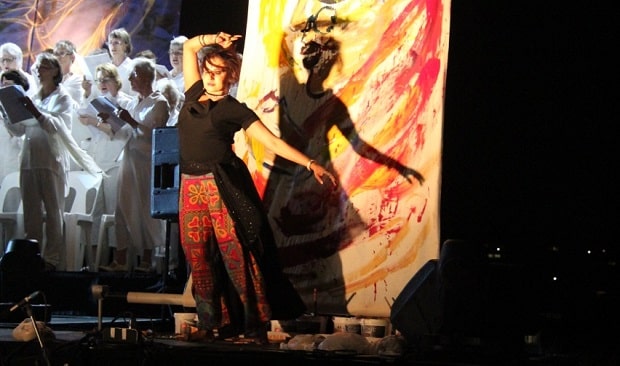
Painting is usually not considered as a performance which live audiences can enjoy, unlike dance or music. However, visual artist Sarasa Krishnan wowed the audience, combining music and dance movements while painting a canvas on stage in front of a live audience. Sarasa and an associate  produced fantastic paintings of an Indian woman in a sari and Krishna playing a flute, leaving the audience spellbound. And they painted despite a strong breeze which made their canvas move around all the time.

“Painting on a moving canvas was a challenging but invigorating experience. The wind factor was a force to reckon with”! Sarasa told Indian Link.

So how did she get the idea of combining these art forms?

Said Sarasa, “I am basically a dancer and choreographer, and this invariably influences my work as a visual artist. A dancer is inherently a musician, a painter, a designer, and much more. When you allow yourself the freedom to ‘play’, a wondrous world is revealed. Only one requirement is necessary: an artiste has to be fearless”.

“Philip Glass’ opera ‘Satyagraha‘, played by the Fremantle Philharmonic Orchestra and sung by the WA Choral society provided an exhilarating musical backdrop that infused the movement painting! The audience being in close contact was certainly a catalyst on this incredible evening”, she added.

Among her many accomplishments, Sarasa is artistic director of the TFA and deputy director of SMV.

About the event, Sarasa acknowledged organiser John Mclaughlin, Arts and Cultural Events Officer of the Canning council’s accomplishment. “(He) is an artiste himself, and is not afraid to take chances. Such multicultural exchanges within the community will foster a greater harmony within our society. Many more councils should follow his lead in creating such sizzling events that truly bring various cultures together”, she said.

The evening’s performance had many other artistes of high calibre including those of the Fremantle Philharmonic Orchestra who showed commitment in learning and executing compositions from the rig veda and Philip Glass’ Satyagraha musical piece. The audience was treated to a delightful mix of local and international talent, which is the whole purpose of the art exchange program. In 2014, the TFA and Indian artistes in collaboration with local talent, presented a remarkable performance.

Amazing Antarctica

0
Reading Time: 5 minutes

An aerial tour of Antarctica is a great way of beating the heat in sunny Adelaide

 Breaks into icebergs 

Three weeks into the New Year and Adelaide suffered a scorcher with the mercury tipping to over 40o every day. While most preferred to cocoon themselves in air-conditioned comfort or dash out the beach to cool their heels, one Adelaide woman decided to beat the heat by flying over the Antarctica.

“I am not a thrill seeker, far from it! Next to my profession, my love includes animal welfare, environment and travel”, revealed Jayalakshmi, a GP of 42 years standing, flying on her own during most of those years. “My TV fare is limited to such programmes and Attenborough is a permanent guest in our living room. After seeing his Frozen Planet I dreamed of the day when I would see the Antarctic. Knowing my passion, my children gave me a surprise birthday gift when the once-a-year summer flight was advertised”.

Chartering Qantas planes, Antarctic Flights organises only one or two flights from all capital cities to the polar region during the summer.  These flights are unique: no checking in, no baggage to board, and the destination is marked as a ‘Mystery Flight’. Two boarding passes are issued, each with a different seat number since passengers are asked to swap seats while the aircraft is flying midway ‘over the ice’, to allow most, if not all, of them a window-seat view of the wonderland below.

This year’s summer flight commemorated the centenary of Dr Douglas Mawson’s return to Adelaide in 1914, after his three-year exploration of Antarctica, Australia’s first. The 747 flight on January 19 with 320 seats was fully booked.

A Business class seat burns a $7000 hole in one’s pocket, while the Economy ranges from $1200 to 2800 for the 12-hour non-stop flight from Adelaide. Those who have booked window seats and the adjoining three seats can swap seats, but those in the middle seats don’t swap and are free to roam around and peer over those sitting by the windows.

The pilot chooses the best possible route from among the 19 flight paths prepared by Qantas, depending on the day’s weather conditions. After flying at around 30,000 feet for some three hours, the aircraft descends and flies some 2000ft above the highest point on the ice cap at a slower speed, to provide maximum viewing opportunities of the snow-capped continent. Two experts who know the polar region like the back of their palm due to years of research or work there, provide a ‘flying’ commentary on all aspects of the region and the sights below visible from both sides of the plane.

Antarctica with its 13.5 million sq kms is nearly twice the size of Australia, with 99.5% of its area covered in ice ranging in thickness from one to four miles. It contains nearly 70% of world’s fresh water. The lowest temperature recorded is 90o, making me wish some of that coolness blows our way in this scorching summer. Antarctica was once part of the super-continent called Gondwana, from which South America, South Africa, India and Australia split and moved northwards some 50-plus million years ago. So India can be justified to have some claim to this ‘motherland.’

There are 40 research stations manned by various countries with some 4000 personnel during summer, reducing to 1500 in winter.  India’s Antarctic programme, promoted by Indira Gandhi, began in 1981. Its research station Dakshin Gangothri was replaced in 1990 by Maithri and now with Bharathi added, it has joined nine other countries to have multi-stations. So far, over 30 Indian expeditions have visited Antartica.

By the way, there are two ATMs down there, I am told. To dispense ‘cold cash’?

viewing the wonder below

The rest of the story is best told in Jaya’s words:


I was at the airport at 5am for the 6.30am take-off.

After flying south-easterly for about three hours past Tasmania and then Macquarie Island, we began to see icebergs of various sizes floating in the sea, indicating that we were nearing the iced continent.

During winter, the sea freezes completely, and heavy snowfall near the coast compacts to form glaciers.  In summer, the sea ice thaws and the glaciers melt, with chunks of ice crashing and floating as icebergs.

We saw cracks on the ice sheet as the plane flew over Commonwealth Bay, from where Mawson started his exploration. The South Magnetic Pole (not to be confused with the South Pole) is a moving pointer and was currently close to the coastline near the Commonwealth Bay, the windiest place on Earth.

As we flew further into the continent it was one mass of ice, not just a flat sheet but with peaks and troughs, some peaks rising up by several hundred metres. As the plane passed over the French research station Dumont Durville, we sighted supplies being unloaded from a ship. However, we missed the Russian ship that had been wedged in the ice for weeks, as it had been released just two days earlier. Flying over the Australian research station Casey, the captain asked the staff of 55 down below, including 17 women, via radio, about their life and plans for Australia Day.

The call for the seat swap-over, I felt, came somewhat late. Some of us in the aisle seats had less time to enjoy the view from the window. Sausages served as lunch for this vegetarian, although my requirement was notified a week ahead, was a sore point. After a half an hour wait and with a cold stare, some vegetarian dish appeared with the hostess remarking twice that some crew had to sacrifice her food to meet my request.

The crew showed more interest in selling souvenirs, but they had no markings to show that they were from an Antarctica flight. When I suggested there could have been some relevant inscriptions, the crew replied that there was no time to organise such things. Chinese suppliers could have easily obliged. Aren’t these flights run every year and booked ahead?

Before the flight, I felt, some time could have been spent to offer an insight of the significant sights on our tour on the in-flight screens, since they go blank when the expert starts commenting during the flight. Some synchronization would have helped. Listening intently is also hampered by people scurrying to nearby windows. But that is part of the game!

Notwithstanding such human imperfections, Nature put on a good show. The massive ice cap is an awesome spectacle, although what we saw on this flight is but a small slice of a huge continent. It was a dream come true for me, thanks to my children!


China dream comes true

0
Reading Time: 4 minutes

An Indian-Australian teacher spends a year volunteering at a Chinese university. By LP Ayer

 With students in traditional dress

A cursory look at an indiscreet ad in the daily newspaper one lazy afternoon, took an Adelaide woman away from her home to China where she did voluntary work for a year.

“At an age when many are probably thinking about retirement, I was looking for a dream job that would give me personal and professional satisfaction,” Rajni Madan, an Adelaide-based teacher, says. “With my China sojourn organised by the Australian Volunteers International (AVI), I was able to do just that”.

Placed as an ESL teacher for Life-Science students at North-West University for Nationalities in Lanzhou, capital of Gansu province adjoining Tibet, Rajni claims she has had an amazing year.

“I’ve always had an inherent pull towards China and wanted to visit,” Rajni reveals. “So to go there, and that too for a year, doing what I love best, was a dream come true”.

A keen traveller and one who is always looking for new challenges, she was on the lookout for projects that would suit her qualifications and skills, when she chanced upon two returned AVI volunteers from Fiji and Indonesia speaking about their experiences. Her mind was made up.

Not long after, she found herself in a classroom in China, surrounded by students eager to learn.

“It was a pleasure teaching in Lanzhou,” Rajni tells Indian Link. “The students are hard-working and polite and very respectful of their teachers. All the other volunteers thought so too: many felt that they had never experienced such respect in their careers! The students had only one objective – to learn. Since there were no behaviour problems to deal with, all my focus was on my goal, that is, to teach. I felt I had made an impact on a number of students who initially thought English was too difficult a language to learn but became enthusiastic learners during the course. At times my class had 168 students, the largest I have ever handled. Some students are still in touch”.

Rajni Madan is a multi-faceted personality in the true sense of the word. Arriving in Australia in 1993, armed with a Bachelor of Education and Masters in Life Sciences degrees, she went on to obtain a PhD in Biology. Finding opportunities limited in that field, she used her B.Ed to take up relief teaching at schools and, at the same time, run a small business besides managing a family of three school children and a husband whose job often took him to the bush.

Today she is all for organsations like the AVI that help people realise their dream of working to make a difference in the lives of people. But it was no cakewalk, she soon found out. Interview after interview assessed not only her skills but also her capacity to survive in a foreign land and level of family support, besides medical and psychological evaluations. It took more than six months to get that final nod.

“When I landed in China, I was received by an AVI support officer and a university staff member. I felt I was with friends”.

Her accommodation, however, was a bit daunting, but she claims all the concerns disappeared when she opened her fourth floor windows out to a beautiful hillside view.

“The university paid me local wages, and though this was not comparable to my Aussie wages, it was enough to live comfortably.  Volunteer colleagues stayed in the same building as me and before I knew it, I was on my way to becoming a ‘Foreign Expert’, a terminology used to describe us all”.

Outside the classroom, the students became friends and local guides.

“They informed us regularly on issues such as when the power or water supply would be cut, since such instructions were always in Chinese. The entire city had an efficient heating system with oil heaters for the biting cold weather. Some students accompanied us to the market helping us translating to the stall holders and even bargaining. Invitations to dinner at their homes were numerous, in line with Oriental hospitality”.

China itself was a revelation.

“Although the population is larger than that of India, I never saw crowded streets or rail stations because of its large land mass. Generally the streets are clean and safe to walk at any time of the day. I tried to learn Chinese too, in weekly lessons. I tried my Chinese on some students with limited success. Writing the Chinese script however, proved to be a kind of meditation. And when my family visited, we saw the sights, such as the Great Wall”.

How did she cope with food?

“Food was a major fear, yes. Being a vegetarian how would I cope in a land where they say, anything that creeps or crawls is eaten. But that fear was soon overcome: the markets were full of fresh produce, vegetables, fruits and varieties of bread. It was a delight for a home cook like me. However there were problems when I went out with colleagues or to students’ homes. They had no concept of how anyone could live without eating meat… has Buddhism failed in this regard, one is tempted to think”.

And finally, any regrets? “Probably that I ended up teaching ESL rather than life sciences!” Rajni laughs. “But overall, it was an amazing experience. I will AVIdly support anyone thinking of taking this plunge!”.

Sidharth set to shine again and more

0
Reading Time: 7 minutes

Sidharth Malhotra

Sidharth set to shine again

Relative newcomer Sidharth Malhotra made his Bollywood debut with Student of the Year, and did a commendable job. Now, gearing up for his second release Hasee Toh Phasee, the 29-year-old feels that he has improved as an actor.

But he did feel a lot of pressure when doing the new film, following the success of his first movie.

“There is definitely pressure from the business point of view. After Student of the Year I have become more responsible, more aware about what is happening around. I guess I have improved as an actor, both in terms of quality and quantity, in terms of performance”, said Sidharth recently.

The actor revealed a bit more about his latest movie saying, “Hasee Toh Phasee is completely different from a typical Karan Johar film. We had a restricted budget, there was nothing like luxurious cars or anything. We used to pack up early, there were restrictions. I realised how spoilt I was in Student of the Year, but it was quite exciting!”

Talking about his character in the movie, Sidharth said, “He is lost, not successful and sentimental. He is not a typical hero kind of character. He is under pressure and is the most stressed out character of the movie”.

Filmmaker Anurag Kahsyap is impressed with Sidharth’s acting skills.

“Sidharth is fabulous in the film and the kind of restraint and focus he has shown is impressive,” Kashyap said in a statement.

According to a source, the Gangs of Wasseypur director is actually writing a film keeping Sidharth in mind.

It looks like Hasee toh Phasee will be the platform that will establish Sidharth as an actor. And with Vinil Mathew directing the film and Parineeti Chopra in the lead role, the actor is sure to enjoy success. Good luck,  Sid!


Ekta’s into passionate love

Perhaps in keeping with the mood leading to Valentine’s Day, producer Ekta Kapoor plans to hit the small screen with a new TV show called Kumkum Bhagya.

Ekta, whose TV soaps like Kyunki Saas Bhi Kabhi Bahu Thi and Kahaani Ghar Ghar Kii, were highly popular, revealed that the new show, a “passionate story of love”, will replace the current one, Pavitra Rishta.
Kumkum Bhagya is loosely based on the novel Sense and Sensibility by Jane Austen. The show will be an Indian interpretation of the novel, following the life of a mother who runs a marriage hall and lives with the hope of seeing her two daughters wed.

“All I can say is that it’s a very passionate story of love…” Ekta said in a statement about the new show. Talking about Pavitra Rishta that is going off air soon, the 38-year-old says that after Kyunki… it was the most special show for her.

Pavitra Rishta has been on air for over four years now and the journey has been most gratifying for me as a maker. After Kyunki Saas Bhi Kabhi Bahu Thi, if there is any other show which is close to my heart then it is Pavitra Rishta“, she said. “The characters of Manav, Archana, Arjun, Purvi and now Ankita-Naren have endeared themselves to the audience, so much so that they are an inseparable part of their lives. But the new show Kumkum Bhagya will draw maximum eyeballs”. The new serial will star actor-turned-producer Shabbir Ahluwalia paired up with Sriti Jha. Seems like success is in Ekta’s bhagya!


Chitchat on the Chopras

These days, Bollywood’s buzzing about Priyanka and Parineeti, the Chopra cousins. While Priyanka gets ready for the release of Gunday, Parineeti’s perked up about forthcoming flick Hasee Toh Phasee.

Parineeti, who is seen grooving to the beats of Drama queen in the movie, says that she takes the word very positively.

“The word ‘drama queen’ is very positive for me, because I am like that. I am very outspoken, I talk loudly, I am always happy and smiling…I do a lot of dramas and I don’t think it’s a bad thing”, Parineeti said recently.

She didn’t seem to mind that the film was a medium budget one either.

“For me, to play the character was a challenge, but coming to the sets of Hasee Toh Phasee was not new because I have always done medium budget films. You know, I have always done movies with restricted budget, so shooting was fine with me but the character was a challenge,” she said.

Parineeti, who made her Bollywood debut with Ladies vs Ricky Bahl, says she had a lot of personal pressure while filming.

“I wanted to do something different. The role is not like Ishaqzaade or Shuddh Desi Romance because in those two I played very Indian characters. This was completely different, I am off (mentally) in the movie and because of that I really had to do a lot of work”, she said, admitting that she would be essaying the role of a mad scientist. “The character that I am playing is very quirky. It is different from the ones I have played before. Usually in movies, either an actress plays a normal girl or a mentally challenged one, but my character in the movie is between the two. It was physically very exhausting for me to play it”, she said.

The young actress also admitted that she was waiting to watch Priyanka’s Gunday, but also insisted, as we’ve heard before, that “there is no competition with Priyanka”. Both films release within the gap of a week.
Priyanka, on the other hand, is her usual assured self when it comes to Gunday. And everything else! She had to slip into several outfits like corsets, fishnet stockings, and train with French cabaret dancers for the song Asalaam e Ishqum from the film, and admits that it was difficult to do the track.

“It was a really tough song for me to do and I’m glad it’s being appreciated”, Priyanka said in a statement.

The video is inspired by the chic burlesque acts of the famous Moulin Rouge cabaret of Paris. Priyanka also had a tough time shooting for the song as her father (Ashok Chopra) passed away a few days before the shoot, in the summer of 2013.

The costumes too, had to be created overnight.

“I really admire Priyanka for the courage and determination that she displayed during the shooting of the song. She put in all her pain and converted it into an intense energy, which has reflected in Asalaam e Ishqum”, said director Ali Abbas Zafar.

The talented actresses will give us a treat of a performance, but which film succeeds is anyone’s guess right now. At least there’s ‘no competition’!


Selling via Sunny

In what purists will view as a radical marketing ploy, the theatrical trailer of Indo-Canadian adult film star-turned-actress Sunny Leone’s latest offering Ragini MMS 2 can also be accessed worldwide across adult websites.

“Sunny enjoys a huge viewership on adult websites, so yes, we are launching the trailer on these websites,” said Tanuj Garg, CEO of Balaji films, in a statement.

The film, directed by Bhushan Patel, is a mix of horror and sex.

“Nothing spells super sexy and super scary as well as the RMMS 2 promo does,” said Sunny. “This is something my fans and lovers haven’t seen before! It’s a treat that I don’t want them to miss”.

Does anyone really care about the scare when they can see sexy Sunny? What do you think?


Ahana Deol weds businessman

Veteran actors Hema Malini and Dharmendra’s younger daughter Ahana Deol married Delhi-based businessman Vaibhav Vora in Mumbai recently, with big names from the fraternity like Shah Rukh Khan and Salman Khan and politicians like Narendra Modi and Raj Thackeray on the privileged guest list.

The wedding, a mix of Punjabi and traditional south Indian customs, were similar to that of elder sister Eisha’s wedding in 2012. Ahana’s wedding clothes were created by Jodha Akbar fame fashion designer Neeta Lulla.

The pheras and reception were hosted at the ITC Maratha, with another reception at the groom’s farmhouse in New Delhi at a later date.

Ahana met Vaibhav at her sister Esha Deol’s wedding to Mumbai-based businessman Bharat Takhtani in 2012. They were engaged in June 2013.

Ahana’s half-brothers, Sunny and Bobby, reportedly did not attend the wedding, but a source said that they would bless the couple at the reception in the capital.

“Neither Dharamji nor Hemaji would want to hurt Prakashji (Sunny and Bobby’s mother). The family has decided it’s better if Sunny and Bobby stay away”, a source said.

“Sorry to disappoint the gossipmongers, but there is no ill-will or bitterness about the Deol brothers’ absence from Ahana’s wedding”, added the source unnecessarily. “Sunny and Bobby love both Esha and Ahana like they love their own sisters”.

Well, as long as they add their best wishes to ours for the newly married couple!

Mixed genre films coming soon

With both Jai Ho and One By Two having received a mixed response at the box-office, the upcoming potpourri of films in different genres may fare better or worse, say industry watchdogs. Films soon to release include romantic comedy Hasee Toh Phasee, medical thriller Heartless, youthful love story Babloo Happy Hai and Ya Rab, a film on terrorism.

Hasee Toh Phasee promises to be much more than a regular rom-com, with Siddharth Malhotra and Parineeti Chopra in the lead roles. The film revolves around a stressed out guy who meets a completely different girl, so it may take up the fancy of the audience. It’s a medium budget film, made with approximately Rs.25-28 crore.

Actor Shekhar Suman’s directorial debut Heartless is another interesting option. The medical thriller features Shekhar’s son Adhyayan Suman along with Deepti Naval and Om Puri in lead roles. Shekhar has gone all out to make the film a success, spending Rs.1 crore for the movie’s title track that has been sung by Sonu Nigam. Made at an approximate budget of Rs.12-13 crore, the film is about an emotional journey of a young man from falling ill to healing. It will be shown in approximately 600-800 screens pan India.

Babloo Happy Hai has been directed by Nila Madhab Panda, who won a national award for his film I Am Kalam. The film features Sahil Anand, Erica Fernandes, Sumit Suri, Amol Parashar and Preet Kamal.

Ya Rab is a film revolving around the concept of terrorism. Directed by Hasnain Hyderabadwala, it features Ajaz Khan, who was last seen in Bigg Boss Saath-7, along with Arjumman Mughal, Raju Kher, Vikram Singh and Imran Hasnee.
Both Babloo Happy Hai as well as Ya Rab have been made on budgets of Rs.10 crore each and will be shown in about 200-300 screens across India.

So there you go, pay your money and take your pick!


None by two

In what must be a disappointment, actor Abhay Deol’s debut production One By Two failed to excite the Indian audience due to the unusual content, less buzz and lack of exciting promos, say trade analysts. Directed by Devika Bhagat, the film was made on a budget of about Rs.15 crore and hit 1,000-1,200 screens all over India.

“The film has not done well. The opening weekend has made between Rs.1.25 crore and Rs.1.5 crore. The concept was very different and didn’t get accepted. The hero and heroine meet only at the end of the film, which is something that the traditional audience will not accept”, stated a trade analyst.

Starring Abhay and his real-life lady love Preeti Desai, the movie didn’t create the necessary hype that tend to influence the audience these days.

“There was less buzz, promos were not exciting and music was not well promoted. It’s done pretty bad”, said another analyst. “The content was not catchy”.

It’s a blow to the talented Abhay, but let’s hope he continues to follow his star and chase his dream.


 

Birthday cheer as a brave little girl turns 3

0
Reading Time: 3 minutes

A special party celebrates the Makwana girls’ courage, determination and will to survive. By NEHAL CHHATRAPATI

DSC07702

‘Little drops make the mighty ocean!’ This is the only mantra ruling the life of Sydney-based single mum Sweety Makwana. Tirelessly reinforcing the adage every single day, she recently moved a step further towards her only goal in life, Mission Twisha Charity.

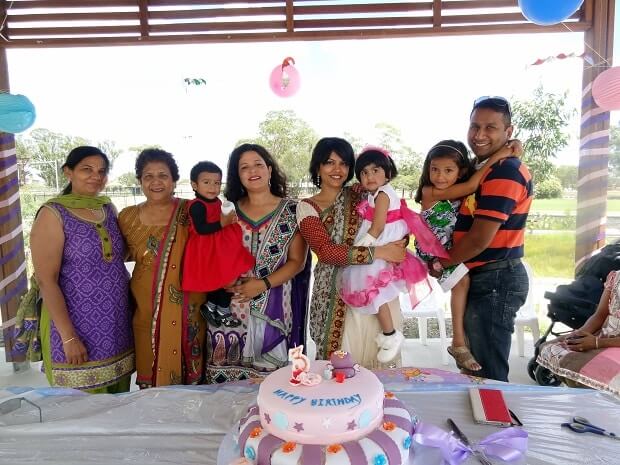
It was nothing short of a milestone for Sweety and Twisha, as this brave little girl celebrated her third birthday thanks to the generosity of the Indian community.

Twisha Makwana was born with a rare birth defect called Long Gap Oesophageal Atresia (LGOA), a condition in which the oesophagus or food pipe that connects the throat with the stomach, is incomplete. Twisha is unable to eat normally, through her mouth. She is fed baby formula and milk directly into her stomach via a tube. It is Sweety’s bravery and caring, and little Twisha’s fighting spirit and hope for life that has enabled her to reach her third birthday.

For Sweety, life has been tough. She was abandoned by her husband after being abused and victimised, and cruelly blamed for her daughter’s condition. Sweety is fighting this battle of survival on her own, shouldering a myriad of responsibilities, selflessly devoting her days and nights, comforts, health and other basics of life to ensure that her baby Twisha is kept healthy and happy. She has no time to look back and regret or question her situation; instead, Sweety courageously plods on. Her goal is to raise sufficient funds for Twisha to undertake a very expensive operation to cure her condition and one day, eat normally. The life-saving surgery, pioneered at Boston, USA, is Twisha’s only hope. The trip there and medical expenses will cost Sweety $1 million.

As she tirelessly fund-raises her way through, Sweety reveals she has reached the $180,000 mark (including pledges).

For her sheer tenacity and strength in the face of these extraordinary circumstances, Sweety Makwana won Indian Link’s inaugural Mother of the Year Award in 2013.

The Indian community has always empathised with Sweety and Twisha since the condition become known, and since Sweety began fundraising for her little girl. Once again last month, they rallied in a strong spirit of togetherness and enthusiasm to celebrate Twisha’s third birthday at Francis Park in Blacktown, where she was blessed with good wishes, donations and gifts from well-wishers.
Twisha’s birthday was a beautifully planned event, organised by volunteers from the Indian community who sponsored lunch, cake and decorations for the party. Yamini Thaker, a caterer along with a respected senior from the community, sponsored and arranged lunch for about a hundred invitees. Sweety’s housemate generously donated the cake, and well-wishers like Vaibhav and Rupali Rastogi showed support through liberal pledge donations of $5,000.

The party was enjoyed by all the attendees, and the laughter of children having fun echoed across the park.

“I am so touched at the generosity of my friends who organised the party,” Sweety told Indian Link. “To see Twisha so happy is all the encouragement I need, and I am thankful for them for making her happy! With their support, I hope to be in Boston with Twisha some day”.
The brave young mum and her daughter need every bit of assistance they can get. Let’s join hands and fight this battle together for a little toddler who has every right to eat, drink and crave for lollies like any other child. Every effort at fundraising brings hope and each penny counts; so the support, contributions and good wishes are truly appreciated. The community is urged to continue their efforts in helping Sweety and Twisha reach their goal.

DSC07711

Donors who would like to make or pledge a donation, please note the following:

Mission Twisha charity

Fundraising licence no: CFN/22987.

Bank: Commonwealth Bank of Australia
Name: Mission Twisha
BSB: 062-309
A/C: 10259090
Cheque/Money orders can be sent to PO Box 187, Westmead, NSW 2145.

Check out Sweety and Twisha on www.twishamakwana.com

Editorial: Heading for a much needed change

0
Reading Time: 2 minutes

1390471552_Congress

Even to their most ardent supporters, it must be clear that the Congress party in India is headed for defeat in the forthcoming elections. The elections are about four months away, and while a week can be a long time in politics as things can change overnight, the question which looms for the Congress party is not if they can win, but how many seats can they actually hold on to. The experts feel that anything over a 100 in the 545+ Lok Sabha will be a good result.

The Congress faces the burden of incumbency. After 10 years in power, they are looking old and jaded. They are failing to capture the attention of the constituents, whereas the Bharatiya Janata Party has a strong and a highly controversial leader in Narendra Modi, who is successfully positioning himself as a viable alternative.

What also hurts the Congress party is the lack of public information about who actually leads the party. While Manmohan Singh has kept the Prime Minister’s seat warm, he is not seen as particularly charismatic. Rahul Gandhi is touted as the heir apparent to the leadership, but his recent performance on a popular TV show was universally lampooned, and he came across as a man who did not have a clue on important local issues. His inability to articulate under questioning was painful to watch. Whether the Congress party considers someone outside the Gandhi dynasty is highly improbable, but perhaps there will be some deep soul-searching if the elections create the catastrophic effect which pundits are predicting for the Congress.

Meanwhile, after forming government in Delhi, the fledgling Aam Aadmi Party has its share of support, though largely from the northern states. Its early days of governance in Delhi have been marked by a show of incompetence, but just the fact that the party is willing to stand against the endemic corruption in India is enough to stimulate the hearts and minds of voting Indians. Of the 800 million people in India who will be voting in the next elections, 150 million will be first-time voters. This generation that has grown up in the 2000s, having come across constant blockages to their dreams and aspirations from dishonest practices, will use their voting power to challenge the accepted norm of corruption.

Surprisingly, it is only lately that the Supreme Court of India has stood up against politicians with criminal records who may want to contest in the next elections. Currently, there are 162 Lok Sabha members who have criminal charges filed against them, and of these 72 are serious charges such as rape, robbery and murder. The Aam Aadmi Party on its platform of anti-corruption, has a very fertile field on which to plant its future plans.

The beauty of India’s democracy is that after the elections, the baton could change solely on the wishes of the constituents. 800 million people will express their wishes, and the politicians will follow their orders. How wonderful is that!

A forest of opportunity: Dr Sadanandan E K Nambiar, AO

0
Reading Time: 4 minutes

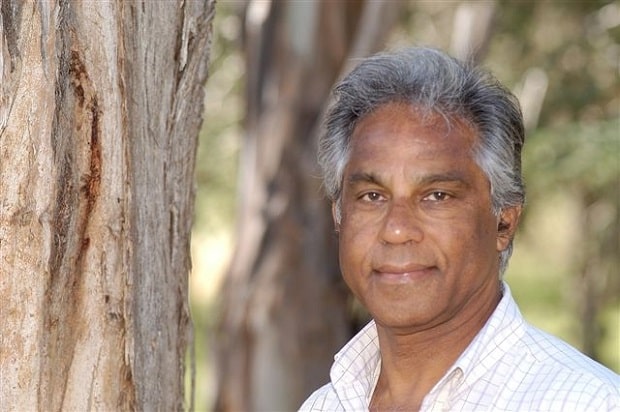
Dr Sadanandan E K Nambiar, AO

For distinguished service to science, particularly in the field of sustainable productivity and management of forests, as a researcher and author, and as a role model for young scientists

Dr Sadanandan Nambiar


Canberra’s Dr Sadanandan Nambiar is fascinated by forests. There’s no other way to describe it, especially as he has spent over 45 years studying them.

More specifically, his career has been devoted to looking at ways in which to use forests sustainably to achieve economic growth. For his considerable contributions in the area, Dr Nambiar was honoured with the Officer of the Order of Australia award on Australia Day this year.

“This honour is really a recognition that my field of work, sustainability, is a long-term issue that is central to human welfare,” Dr Nambiar tells Indian Link.

Having retired from the CSIRO, the internationally recognised scientist continues to work daily. He remains “personally and emotionally involved” in the study of how forests can be used for poverty alleviation.

“Some 400 million people live in or at the borders of forests, in abject poverty,” Dr Nambiar states. “Everybody agrees that forests support life, yet the custodians of forests are left out of development programs”.

He cites the case of his native state in India, Kerala: it may be one of the country’s most prosperous states, yet its forest-based communities continue to be severely economically disadvantaged.

Dr Nambiar’s knowledge of forest systems has been applied in programs in India, Indonesia, Laos and Vietnam.

So what drew him to study forests?

“I trained as an agricultural scientist initially, and then moved to forestry,” he replies. “The thrill of working with complex ‘big’ things caused me to make this move. You see, in agriculture, you’re working at a micro scale: wheat for instance, has a short life cycle of say, four months. With forests, you’re at the macro, multidisciplinary level. They drive every ecological system that sustains us”.

The CSIRO in Australia offered him this opportunity. He ended up building a giant team that run forest programs across the country, in research centres from Atherton to Tasmania, as well as in government-funded aid programs in developing countries. And it is to this team, that he credits all his success. “I’ve myself made no great discovery,” he says with humility. “It’s been my division more than me”.

“Perhaps our most significant contribution has been in providing the most comprehensive understanding of how Australian forests work, especially in the high-stress circumstances created by drought, fire and pestilence,” he reveals.

Another achievement Dr Nambiar can look back on with satisfaction, is his work with building man-made forests. Australia’s multimillion dollar wood-based industry is now reliant on the massive plantations (eucalyptus, pine) that are providing high quality wood in an efficient, as well as sustainable manner.

“It’s a 40 to 50 year cycle, and we’re constantly monitoring the effect on ecology, such as soil and water health and biodiversity, as well as on rural economy,” Dr Nambiar explains. “It’s a great success story and I’ve been arguing in recent years that India could be doing this too. Wood is the greenest, recyclable, reusable, carbon-neutral product of all building materials. Wood-based products are responsible for only a fraction of carbon emission as compared to concrete. The more wood we use in building, the more carbon we will be locking up over a longer time”.

The demand for wood is only set to increase, Dr Nambiar notes. “Estimates are, that by 2020, consumption will be four times that of production. There is a direct linear relationship between economic growth and use of wood-based products. The more prosperous people get, the more wood they want in their homes – better furniture, wood panels, even glossy magazines!”


Dr Nambiar’s work has also seen him become a legitimate source of independent advice for interested parties, particularly the Australian government. His team has been helping the government design science-based policy on issues such as biodiversity.

The India-born scientist has a long list of awards to his name. His career is peppered with honours by the Institute of Foresters of Australia (IFA), the Commonwealth Forestry Association (CFA) and from the International Union of Forest Research Organisations (IUFRO), as well as those bestowed by other countries such as America and Vietnam.

“Must be my Bollywood good looks”, he laughs. “But seriously, the recognition has not been for me alone. In work of this nature, there is an army of thinking people behind you. I see myself as the conductor of an orchestra rather than an expert pianist”.

What’s in the future for the multi-award winning scientist?

“There’s so much more work to be done! Sustainability is a journey, it’s not a destination. With continuous climate change, we have to constantly design and model and apply. I’ve been mentoring younger scientists on the issue. You know, sustainability is like a relay race. You run your lap and then pass the baton on”.

Dr Nambiar has definitely done well on his leg of the race. Yet he’ll tell you it was because he grabbed the opportunities this country offered him, and worked hard to prove himself.

“I say to new migrants, Australia is the fairest place in the world. It accepts you for the content of your work, not for the way you look”.


Other Australia Day honours