Home Blog Page 967

An eventful election

0
Reading Time: 4 minutes

Steady and systematic voting continues in India, despite the staggering size of its electorate

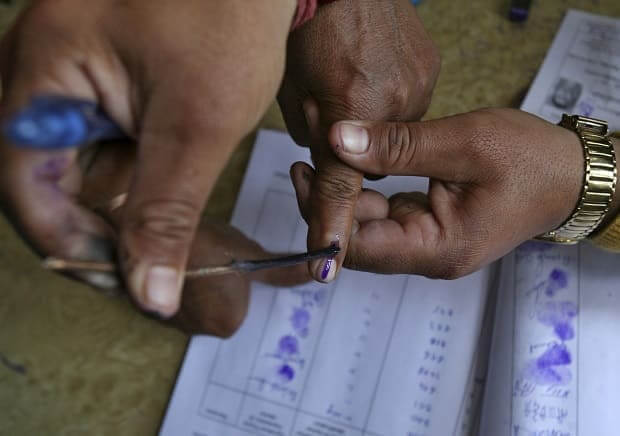
A polling officer applies ink on the finger of a voter at a polling station on the outskirts of Jammu

The world’s greatest democracy is in the midst of making history as citizens of the Republic of India go to the polls to elect a government in the General Elections 2014. The country’s over 25 million diaspora globally, are among those watching and waiting to see how the elections pan out and what the ultimate result may be. So what makes this election unique and historic?


Facts and figures

India is the second populous country of the world, with its 1.2 billion people, and counting! It is the seventh largest country in the world by area, and the most populous democracy in the world, which is why news about the ongoing elections is trending across the globe. Voting will take place in all 543 parliamentary constituencies of India to elect members of parliament in the Lok Sabha.


The voters

Yes, all 814 million of them! It’s a mind-boggling fact to even imagine that such a vast number are eligible to vote in the elections, and that, at the time of going to press, over 170 million, have already cast their vote in 111 constituencies, choosing from more than 1,500 candidates in the elections. The total number of voters at the 2014 elections is 100 million more than those eligible in the general elections of 2009. The voting is conducted in nine phases, and will conclude on May 12. Votes will be counted on May 16.

In a first, India’s transgender community is being recognised for the first time and can vote under ‘third sex’ or ‘others’, a category that didn’t exist in the last elections. 28,314 voters have registered as transgender.


The voice of youth

Of the total population, 168 million or about 20%, will vote for the first time. This means that the youth of India will be in the unique position to make a difference and have their votes cast for the party that best reflects their interests. The age of being entitled to vote is 18 years in India means that more than 23 million voters comprise of younger generation aged between 18 and 19.

The country has the largest population of youth in the entire world — 66 per cent of the total population in the country is below the age of 35.

Nearly 40 per cent of the Indian population is aged 13 to 35 years. It is clear that targeting the youth would be a sound strategy for the political parties, as their influence could tip the scales of power.


Showing their “Fingies”

Selfies showing voters inked fingers have been making the rounds on social media sites, including one of cricketer Suresh Raina who tweeted “I have done my vote, have you?” Accompanying other photos have been messages including, “my vote, my pride”.

There were many who posted only their inked finger, a “Fingie” or an “ungli”! Now that’s patriotism!


The NOTA option

For those disgruntled voters who didn’t find any of the political parties and their manifestos convincing, they had an option to exercise their vote for None Of The Above (NOTA). This button was sought after by a significant number of people and should make an interesting statistic when the election results are posted.


Technological marvel

Incredibly, 919,000 polling stations have been set up across the country, with approximately 3.6 million Electronic Voting Machines (EVM). The Election Commission of India (ECI) has endeavoured to ensure that no voter travels more than 2 kilometres to reach a polling station. Each polling station has to manage no more than 1,500 voters.

It is reported that more than 62,000 electors in the national capital checked their names on the voters lists through a mobile phone message facility. The ECI also had a message helpline number for voters who could check their names on the list before going to the polling station to cast their ballot.

The ECI also launched awareness campaigns and

the Systematic Voters Systematic Voters’ Education and Electoral Participation (SVEEP) – an initiative to motivate people to come out and vote. There is also a newly-introduced paper trail in EVMs, which was being used in selected polling stations of the national capital.

ECI rules!

The election is estimated to cost about $US5 billion (or 300 billion rupees), according to Centre for Media Studies via Bloomberg. And considering that the US general elections in 2012 cost a mere USD7 billion, would give you an idea of the scale of this exercise.

The ECI announced that it expects the voting percentage to touch 70 per cent or more; a 12% increase from the 2009 elections.

Over 10 million people have been employed to ensure that the election process is as smooth, effective and fair. Among these are elected officials, army soldiers and temporary workers.

Special “flying squads” have been set up to monitor campaigns and ensure that there isn’t any bribing of voters with cash, alcohol, and even prescription medication, reports the Times of India. These flying squads will be made up of administration officials from various districts and will also keep tabs on campaign vehicles.

Candidates standing for elections are being monitored and those inciting racial or inflammatory feelings are being banned from campaigning.


The players

India has a staggering 1,617 unrecognised political parties, while there are six national and 47 state recognised parties. The big guns are the Congress and the Bharatiya Janata Party (BJP), but the Aam Aadmi (Common Man’s) Party with its focus on anti-corruption, could disrupt the agendas of the main parties and bring forth a surprising result. Anything’s possible in the world of Indian politics!


So what can we expect from the 2014 elections? All will be revealed post May 16!


Spicy family drama

0
Reading Time: 2 minutes

A talented young group of actors bring alive family dilemmas in an intercultural community

 Malli pic 7

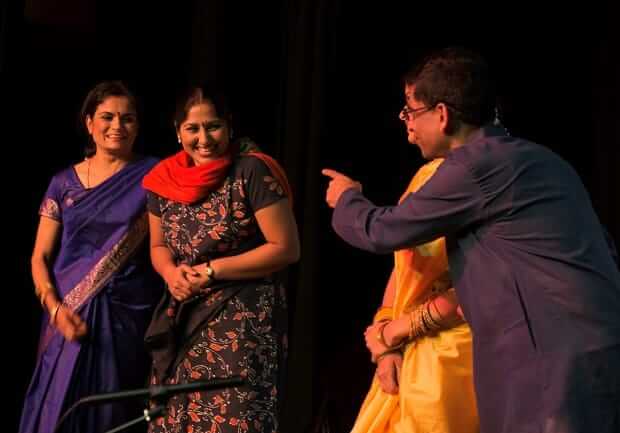
Sondha Bandham in Tamil literally translates as family bonds. Paradoxically however, these bonds are associated with family struggles of a diverse kind before harmony is attained.

Sydney Nadagapriya is a young bunch of drama enthusiasts who have come together to entertain as well as create social awareness within the audience. They have scripted a play that focuses on parental dilemmas involving youth in a multi-dimensional world.  Seeking partnerships in marriage are fraught with compatibility issues, more so in intercontinental relationships that have become commonplace in today’s world of internet and dating websites.

The chief architect of Sondha Bandham is NK Srinivasan who has given his audience a ‘reality check’ by portraying the conflict between the traditional approach and the attitudes of Gen Y.  Add a marriage broker and a couple of old world mums and dads to this plot and it becomes as spicy a tale as any other. The dialogues are crisp and laced with humour that enables the audience to relate well to the situations. The cast of actors have done credit to their director and have worked sincerely to spin a yarn that is interesting and keeps everyone glued to their seats.

Rashee Inc., who are co-sponsors for Sondha Bandham is a non-profit organization. Its objective is to develop fundraising activities for deserving charities and other entities that seek to serve underprivileged sections of society.  The proceeds of the evening, funds and donations would go towards supporting Unnati, a Bangalore based organisation that provides vocational training and guidance to underprivileged youth, and have been successful with 100 % job placements for their graduates. Unnati has already transformed many lives with their endeavours.  They make a significant contribution to the fabric of emerging India. Bharatiya Vidya Bhavan which has undertaken several multicultural projects has also supported this event to help meet the increasing demand of the community.


See all photos on Facebook here.

The Pan connection

0
Reading Time: 5 minutes

Religion, spirituality and reality combine to form a mesmerising documentary by a talented filmmaker

Faith Connections

A teeming mass of humanity. The confluence of India’s most sacred rivers. Religion, spirituality and reality. Faith Connections, Pan Nalin’s latest offering about the Kumbh Mela, weaves a stark landscape with rich stories, ancient tradition and grinding reality to produce a visually stunning documentary. It leaves one with a strangely soothing mix of awe and child-like wonder, and taps into the transcendental.

Pan Nalin, a culturally agnostic and chic version of the name Nalin Kumar Pandya, is an internationally renowned filmmaker. His first commercial success was TV series Wagle Ki Duniya, a comedy series he wrote with the legendary RK Laxman in the late eighties. His documentary Ayurveda: Art of Being won international acclaim, while the spiritual love story Samsara was a massive success and won thirty plus international awards. Valley of Flowers, a romantic epic, was pre-sold to 35 countries and has achieved critical and commercial success.

Pan’s dizzying success belies an impossibly humble beginning. “I was born in a remote village in Gujarat, on the edge of the Sasangir forest. My father had a tea stall at the railway station”, he reveals. About his education, he jokes, “My primary schooling was done illegally, by bribing teachers!” An artistic child, Pan saw his first movie when he was eight or nine, and was captivated. “I told my arts teacher, I’m not interested in all this (schooling). I want to make movies”, he states. His teacher gave him sound advice. Pan needed to graduate in order to study filmmaking. They did a few calculations, and taking all the education needed into account, it would be 15 years before Pan could make a movie! “The drive started that day”, reflects Pan, “and since then it has never changed”.

Pan Nalin
Pan Nalin

The decision made, there was two things he needed to do. “I was told to learn English and to leave the village”, he laughs. “And I started working on this immediately”. His parents were a huge support. “They couldn’t read or write, but they believed in me, and would go out of their way to help me, which was very encouraging”, he recalls. Pan’s talent for painting got him scholarships, and he went to Baroda to study. He attended the film club run by the Faculty of Fine Arts at the university. “I discovered world cinema”, he exclaims, “and I would watch everything!” Plans to join a filmmaking course in Ahmedabad went awry, but this did not discourage Pan. “I bought a 16mm camera from a local flea market and decided to become a self-taught filmmaker. Every now and then, I would make enough money to shoot two minutes of reel!” smiles Pan. He started filming weddings, and that gave him enough money to travel and pursue his dreams. And for a filmmaker in India, all roads lead to Mumbai.

Mumbai broke his heart. “All my dreams about filmmaking and story telling were shattered”, he says. “The atmosphere was inhumane. And everything was controlled by dynasty. When you are not a Khan or a Kapoor in Mumbai, it is really tough to get an opportunity. People with no talent would get the chance to make two or three movies, and this was heartbreaking for me”, he adds. Pan started as a production runner, and soon a producer of advertisements noticed his talent. She gave him the opportunity to make corporate films which kick-started his filmmaking career. Then she introduced him to RK Laxman, and Wagle ki Duniya happened. You would think that this was it for Pan, but he had other plans. “I decided I wanted to travel, unlearn, and make the films I really wanted to. The French had New Wave cinema, the Germans had Expressionism and the Italians had Realism. There had to be an Indian way of storytelling”, he avers.

And in search of the new way, Pan travelled across the world. His next film, documentary Ayurveda: Art of Being had a theatrical release and ran for a year in Spain, and for a record three years in France. After that Pan wanted to move to fiction and make Samsara, a love story set in Ladakh. He looked for funding in India and encountered huge bias and prejudice. “No one wanted to finance a spiritual love story set in Ladakh, in the Ladakhi language. They said it looks like Tibet, not India, even though it is an integral part of India. Or they (producers) would insist on casting film stars who were north Indian looking, which is very wrong, because none of the Ladakhis look like Shahrukh Khan or Hrithik Roshan!” he laughs. He realised that he would not get funding in India, and moved his search overseas. He found a producer in Germany who loved the script but asked, “How will you make a film at 15,000 feet above sea level, in the Himalayas, where there are no hotels?” Pan had done his groundwork and had everything worked out. As for the hotel, he convinced the producer to build one using local material and people! “The local people were an integral part of this enormous process”, says Pan. “They were very keen on cinema, but Mumbai did not give them an opportunity. These Ladakhi girls and boys who wanted to make movies….they were humiliated and called ‘chinky’ or ‘Chinese’”, he says with a twinge of sadness. “But the hotel is still there, in Leh. This is where they now hold the Ladakhi International Film Festival”. Samsara went on to become the highest grossing Indian independent film.

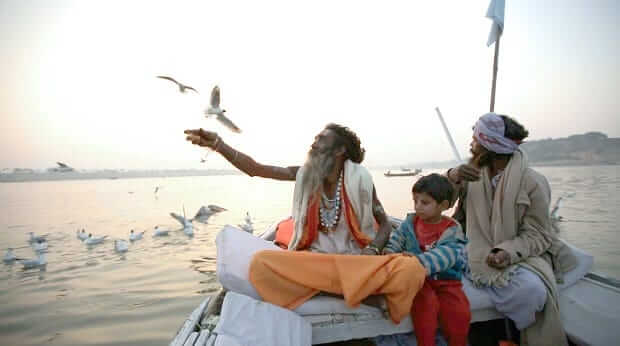
With Faith Connections, Pan shifts back to documentaries. Interestingly, he was not very keen on making the film because so many had already been made. “I didn’t want to make a film with a lot of voiceover, statistic after statistic, and exotic naked baba shows. It had to be a film made from the heart. If I didn’t find characters that would woo me, I wouldn’t make the film”, he says. And woo him, they did! Faith Connections features diverse characters: a ten year old impudent runaway with underworld ambitions, a mother searching for her lost child, an enlightened, renounced yogi re-connecting with the world in order to care for an abandoned young boy. It conveys grief, tenderness, spirituality, faith and reality in a mesmerising package. “There had to be another way to tell universally appealing stories”, says Pan of his filmmaking ambitions. He’s found that way. Like he wanted, the documentary has very little voiceover. There’s only one statistic. There are a few naked babas though, but I imagine that’s very hard to escape at the Kumbh Mela.

Faith Connections will screen at ACMI Melbourne till  April 24.

FP-LP-FaithConnections-03

Varied idioms, varied styles

0
Reading Time: 9 minutes

Each of the three main players representing their party have a unique method of addressing their audience, reports PRASHANT SOOD

india-elections

They are the lead campaigners of parties contesting over 400 Lok Sabha seats and are slugging it out in the heat and dust of elections. Narendra Modi, Rahul Gandhi and Arvind Kejriwal have campaign styles driven by their different persona and vision for the country and seek to connect in their own way with the masses.

Modi (63) and Gandhi (43) also represent a generational change in their parties. Kejriwal, 45, is the new and spirited challenger, keen to change the established political order.

Modi is the prime ministerial candidate of the Bharatiya Janata Party (BJP). Gandhi is leading the campaign of the Congress and Kejriwal is the main campaigner of the Aam Aadmi Party (AAP).

Modi has embarked on a planned and well-publicised campaign and is expected to some 185 “Bharat Vijay” rallies before campaigning for the Lok Sabha polls ends in May. Modi has garnered so much media attention, that BJP’s national campaign effectively centres around him.

Congress sources said Rahul Gandhi is expected to address about 80 more rallies over May and Congress president Sonia Gandhi is also slated to address rallies across states.

Kejriwal, who is pitted against Modi in Varanasi, has been reaching out to people through road shows and rallies in different states.

AAP sources said that Kejriwal will focus on Varnasi in the coming days.

Modi likes to engage with the audience during his speeches and laces his remarks with sarcasm. He poses questions and then seeks replies from the gathering. Modi raises local issues to build enthusiasm among people, some of whom resort to sloganeering in his favour.

Unsparing in his attacks, Modi almost ritualistically takes digs at the Nehru-Gandhi family. A natural speaker who appears at ease, Modi delivers his punches hard. He speaks at an easy pace and tries to use expressions that can create headlines.

In his rallies in Haryana and Rajasthan, Modi made jibes at Congress over the alleged land deals of Sonia Gandhi’s son-in-law Robert Vadra. He refers to Rahul Gandhi as ‘shehzada’ (prince) and to the Congress as the ‘sultanate’ (Mughal kingdom).

Modi uses Hindi adages to sharpen his attack and speaks on an array of issues including price rise, defence, women’s security and education. Modi has sought to identify himself with the expectations of aspiring classes and presents himself as a strong alternative to the perceived discontent among people with the Congress-led United Progressive Alliance government on issues of price rise, corruption and “policy paralysis”.

Rahul Gandhi’s speeches have been increasingly targeted towards Modi, portraying him as a know-all, dictatorial leader with a communal mindset.

Gandhi looks less grim than his BJP rival and delivers his speeches in a less serious and sarcastic tone. He talks about entitlements brought about by the Congress in the last 10 years and seeks to identify the party with the poor, the youth and the middle classes.

Gandhi presents himself as a leader who likes to work by consultation and consensus, who values the opinion of others and wants to sort out problems through the process of accommodation. Gandhi appears keen to look informal, accessible and approachable. In some of his rallies he has dressed in jeans and a kurta – a sartorial combination popular across college and university campuses.

Gandhi’s speeches can appear repetitive to those who follow him closely.

In his rallies, Gandhi has targeted Modi over the Gujarat model of development and snoopgate and the BJP over “divisive politics”. He has also sought to present Congress as a unifying force whose heart is with the poor and which is keen to expand opportunities for every Indian.

Kejriwal speaks and dresses in the manner of the common man. Normally clad in a shirt and trouser, Kejriwal’s delivery style is simple, direct and forthright. He seeks to avoid rhetorical flourishes and speaks like a man who does not want to indulge in the politics of compromise.

Kejriwal does not move with heavy security and associated paraphernalia. Kejriwal speaks with confidence and seeks to link success and failure of his party with that of common man. He gives the impression of a leader detached from the privileges and perks of high office with a keen desire to end the problems of the people.

Battling allegations of being a “quitter” after his AAP government resigned in less than two months of assuming power after the Delhi assembly elections, Kejriwal presents himself as a leader prepared to make any sacrifice for his principles.

His attacks on the Congress and BJP for their alleged cosiness with the corporates and his strong anti-corruption plank appears to have struck a chord with people.

AAP is perhaps the only party in the country which has put up candidates on over 400 Lok Sabha seats in less than two years of its formation and looks poised to achieve status of a national party.

Political analysts said that Modi, Gandhi and Kejriwal were trying to be strident in their own ways.

Senior journalist BG Verghese said that people coming for rallies do not necessarily vote for the same party.

“Each of them has his own style. Modi is asking votes for himself and is very strident in his stance and so is Rahul and Kejriwal. They also repeat themselves,” Verghese said.

He said the BJP has launched a concerted advertisement campaign and questions would be raised about the money involved.

Subrata Mukherjee, a political analyst who taught at Delhi University, said Modi was the most impressive of the three leaders as “he has the punch”. “He also answers charges levelled against him. He has developed the Gujarat model and has something to show which others do not. He carefully picks on the weak points of his opponents,” stated Mukherjee.
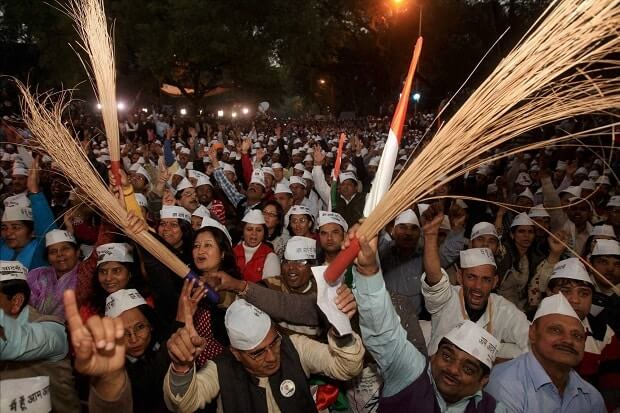
AAP's poll victory rally

Hundreds of thousands vote in India’s fifth phase of polls

At the time of going to press, hundreds of thousands cast their vote in four states in the fifth phase of elections, marking the halfway mark in India’s 10-phase staggered polling. Till now, over 170 million people have cast their vote across the country in 111 constituencies to choose from more than 1,500 candidates in the elections that began April 7 and will end May 12. Counting takes place May 16.

Balloting recently took place in three constituencies of Assam, two seats of Goa, Tripura’s second Lok Sabha constituency and Sikkim’s lone parliamentary constituency. The voter turnout was high in all the four states recording a 70-80 percent turnout, and polling was largely peaceful.
In Tripura, long queues of men and women voters, including tribals, were seen in most of the 1,490 polling stations. Six of them are all-women polling stations manned by women polling personnel only.

In picturesque, yet sparsely populated Sikkim, a good number of the 362,326-member electorate turned up to vote at most of 538 polling stations.
In Assam, brisk balloting was recorded in Silchar, Karimganj and Diphu (Autonomous District). Of the 2,926,762 eligible voters in the three constituencies, 1,400,594 are women.

April 10 was a critical day as millions voted across 14 states and union territories in the third round of parliamentary elections to pick 91 of the country’s 543 MPs. An estimated quarter of the 191 million electorate had voted by noon in five hours of balloting, with long queues of men and women seen right from the time the polling centres opened at 7am in the morning. Voter enthusiasm was high in both working class and middle class areas, and was mostly peaceful.
Chief Election Commissioner VS Sampath hoped that voting percentage would keep improving with every round of the Lok Sabha election.
There was a record voter turnout of 73.4 percent in Kerala, where balloting took place for all its 20 parliamentary constituencies.

A worker pulls out a roll of cloth to be made into flags for the TMC party, while it is kept out to dry at a flag manufacturing factory in Ahmedabad

A cross-section of voters

The ECI made arrangements to have wheelchairs at every polling station in Delhi, a blessing for senior citizens who turned up enthusiastically to vote. There are around 324 voters in Delhi aged above 100 years. Besides the century-plus voters, Delhi also has 10,104 senior voters between the age of 90 and 100.

Delhi’s disabled too, cast a smooth, hurdle-free vote with polling stations equipped with wheelchairs, Braille sheets and designated volunteers for assistance. The efforts made Delhi’s differently-abled community hail the provisions made by the Election Commission as pleasant ones. Calling the overall experience “wonderful,” Disability Rights Group convener Javed Abidi said that it was not only the facilities, the staff deployed at the booths were courteous too. Delhi has over 80,000 disabled voters, including visually challenged and hearing impaired.

Even sex workers living in Delhi’s infamous GB Road red-light area came out in good numbers to cast their vote and were extremely happy to have equal power and representation in the formation of the new government. Coming in groups of friends and families, these women headed towards a polling booth in Chandni Chowk’s Ajmeri Gate area. “I am very excited to exercise my vote for the first time in the Lok Sabha polls, and I can proudly say that I am an Indian citizen,” said Poornima, 23, a sex worker. “This is one day when people don’t discriminate us. We are in the same queue as others, waiting for our turn to push the button,” she added. According to Iqbal Ahmad, general secretary of NGO Bhartiya Patita Uddhar Sabha (BPUS) that works for the sex workers, over 1,800 sex workers had enrolled as voters.
In total, Delhi recorded its highest voter turnout in the last three decades with 64.77 percent polling.
In conclusion, it was largely a cleaner, more orderly and more efficient election. The Election Commission of India, learning from experiences of past elections, keeps improving and innovating so that each election becomes better than the previous one.
There were fewer complaints of missing voters or lack of facilities or unhelpfulness of poll staff and police. And with the city catering to an electorate of over 12 million, this was no ordinary feat.
However, not everyone voted for political parties. The None Of The Above (NOTA) button was sought after by a significant number of people. It should make an interesting statistic when the election results are posted.
Selfies with their inked finger have been making the rounds of social media sites, as people show proof of exercising their democratic right while asked others to vote too. Among these are cricketer Suresh Raina who posted his selfie with the inked finger in focus, and the message: “I have done my vote, have you?”, on Twitter. Pictures of inked finger, with accompanying messages like “my vote, my pride,” “best thing I have done as an Indian citizen” have been posted on social networking sites like Twitter and Facebook. Emoticons (animated expressions) were a substitute to reflect their various moods of happiness after casting the ballot. There were many who posted only their inked finger, and not the selfie!

india-election-1

Delegation from 19 countries witness Delhi polls

A 30-member delegation from 19 countries, including many from Africa visited some polling stations in the nation capital to observe the Indian democracy at work, said a senior poll panel official in New Delhi. The delegation included representatives from Bhutan, Sri Lanka, Congo, Ethiopia, Ghana and Lebanon.

“The representatives were also briefed about the elaborate arrangements made by the Election Commission to make the elections successful. They saw the voting process and the security arrangements made to ensure fair and safe elections,” the official said.

The official added that the delegation was also informed about the special arrangements that were undertaken this time for the disabled to ensure that they don’t face any problems when they vote.

The Election Commission of India (ECI) and UNDP have a memorandum to jointly promote exchange of visits and sharing of experiences and skills in the field of electoral management with developing countries.

And members of the delegation were highly impressed by the smooth conduct of polls and say India has become a learning centre for other developing countries. The sheer scale of the Indian general election has left them marvelling.

“We visited a model polling station in Delhi and witnessing the magnificent arrangements for voters. It also shows that polls of such magnitude can be conducted in such a smooth manner. This would help the other developing countries too,” said Abednego Akok, Chief Election Commissioner of South Sudan.

Said Akok, “India has become a learning center for developing countries of the world. Despite being the world’s largest democracy and being prone to hassles like population, problems due to a multi-party system and frequent violation of the model code of conduct by political parties, the Election Commission of India is able to conduct polls in a very smooth manner”.

Akok is part of the 30-member delegation from 19 countries that visited polling stations in other states as well as the national capital. Besides Akok, the delegation includes senior election officials from Ghana, Kyrgyzstan, Lebanon, Malaysia, Maldives, the Philippines, Sierra Leone, Sri Lanka and a few other developing countries.
Rigzen Lhundrup, a senior election official from Bhutan, said, “The best thing about the poll process in India is the systematic way it is conducted despite India being the second most populated country in the world”.
“India can be a role model for the developing nations and we can learn a lot about how to conduct the polls in a smooth and fair manner. India’s role has been magnificent in conducting the polls in Bhutan in a fair and smooth manner,” Lhundrup stated.

Complied from news reports on IANS

Election tamasha rolls into town

0
Reading Time: 8 minutes

Australia’s Indian community believes that India will opt for change in this year’s General Elections

Full-HD-Indian-Flags-HD-Wallpapers-Hand

The saffron wave sweeping across India has now well and truly spread to its communities in the diaspora. And with, perhaps, the same intensity.

In Australia’s Indian community, an online survey conducted by Indian Link has revealed overwhelming support for the Bharatiya Janata Party (BJP) as opposed to the Congress Party that has been in power for nearly ten years.

Indian Link’s online Indian election survey was held between Thursday 9 April and Monday 12 April. 672 responses were received in this time period.

A whopping 73% of the respondents said they backed the BJP. The fledgling Aam Aadmi Party (AAP) snared a surprising 16% of the Australian-Indian vote, while the Congress Party managed only a poor 6%.

5% of the respondents felt that there will be a hung parliament with a BJP-led Coalition forming the next government.

The mood here, just like it is in India, is clear, it’s time for a change.

Sifting through the comments made by the respondents, some of them quite verbose, the growing dissatisfaction with the current government is all too clear. There is, for starters, a lack of faith in the leadership, with the Congress not being able to put up an able or willing leader (The young Gandhi scion is probably the least impressive of his illustrious family; and as for the current ‘accidental’ prime minister, the recent release of a controversial book by a former media adviser, has not exactly helped the cause). There is frustration also that India has not been able to rise up to the mark economically on the world stage, despite much promise only five or so years ago. As well, there is a fair bit of displeasure and disappointment on affairs closer to the aam aadmi’s heart, such as women’s safety and basic services.

But it is the lament about widespread corruption in contemporary Indian society that comes up repeatedly, almost as if people are sick and tired of a system that does not work unless bribes are paid; where there are too many politicians with a criminal past, and, where talented, younger and perhaps more idealistic politicians are not getting a chance to get ahead.

And yet, what is interesting is that though the alternative is clearly preferable, there is some ambiguity about the leadership role.

Regarding the issue of whether BJP leader Narendra Modi will be a good prime minister for India, nearly a third of the survey respondents responded negatively, basically disagreeing with his tilt towards communal politics. (The recent emergence of a heretofore unmentioned wife, has probably done a bit of damage too).

Looking at the other side of politics, responding to the issue of whether the Congress Party’s dependence on the Gandhis has limited its growth potential, it is clear from the responses that it is time for the 129-year-old party to finally rid itself of its Gandhi hang-up. A whopping 80% felt that the Gandhis are indeed an encumbrance. One respondent noted, “How could Sonia Gandhi be given so much power that the Prime Minister of India cannot lead the country? Rahul Gandhi has shown no reason why he should be Prime Minister of India… the slavery of the Congress Party to Sonia and Rahul is shameful to watch”.

And although to some extent, Modi has been able to reach out to people like Congress leaders haven’t, the analysis regarding leaders is much the same as it is in Australia or the US or indeed any other country; there is a vacuum of sorts in terms of inspiring leadership.

There also seems to be a feeling that the Congress Party has run out of ideas, with over 62% stating that BJP will be better for India’s economic development. In fact, the AAP won the confidence of 24% of those surveyed, with the trust in Congress trailing a lowly 14%. “I do not think the Congress party is good for anything. It is a shame as this was the party which brought economic liberalisation to India under Manmohan Singh in the 1990s,” said one comment.

Similar figures were reflected in the issue of which party will be better for Non Resident Indians (NRIs), with 55% supporting the BJP and 14% in favour of Congress. The AAP again overtook the Congress here, by securing 22% of the votes, while 9% were undecided.

Based on the NRIs’ robust stance on corruption and their strong desire for a clean-up, the AAP seems to have emerged as a beacon in this state of darkness. Responding to the question of whether Arvind Kejriwal’s AAP is a serious player in national politics or a mere sideshow, 58% expressed their solidarity with the party. Rejecting both the Congress and BJP parties, one respondent wrote in, “There are (some) fully corrupt politicians…, we need someone like Kejriwal, an aam aadmi like us. We should at least give him a chance to see what he will do for India”. In a similar vein, there was this, “The current political system in India is much polluted. I believe the person with the broom, that is Mr Kejriwal, will be able to clean up the rubbish but the janata need to wake up”.

pie chart 1

Politics as a passion

A sizable number of respondents of the Indian Link survey (55%), were long-term residents of Australia. This shows that wherever they may go, Indians continue to be passionately involved in the political affairs of their home country. They do genuinely want to be able to have a say; an overwhelming 82% of the respondents claimed they would like a chance to be able to vote in the current elections.

What was also remarkable to note was that there is a growing desire to change the 5-year election cycle. Nearly 50% of those surveyed wanted the election cycle to be shortened from 5 years to 4 or 3, whereas 46% were ok with retaining the current system. 4% were in agreement to give the politicians more than 5 years.

A good number of comments also suggested that the system needs to change; perhaps move to an American-style presidential system, or take ideas from the Australian system. “The Australian constitution for instance states that it adheres to the Judeo-Christian system but it is still a secular country”. Or again, “Alliances between the parties should be declared before the elections, not after the results are announced” were some of these comments. NRIs continue to be political beings wherever they go, learning from the system of their adopted country, and trying to find ways to suggest adaptations to their own system. This tendency should be further encouraged: both counties that enjoy our allegiance can be the benefactors of such avid political behaviour.

Yet, a surprising section of respondents said the system is fine, just not implemented properly. It seems as though they do have faith in our founding fathers’ ideals, even though things may have gone off-track somewhat. Is this the trickle effect of Kejriwal – that if someone genuinely wants to make a real difference, it is indeed possible? Kudos to AAP for rekindling that sentiment, even if they faltered at the implementation stage.

The passion for politics, amongst Australia’s Indian community is clear from the comments and the keen observations. Corruption and poor leadership, in their opinion, are leading the country astray and their desire to see a change in government is clear from their strong endorsement of the Narendra Modi-led BJP. Whether this turns into reality, will become clear after 16 May. But whether they are voting in the BJP, or they are voting for change, will only become clear a little while later.

pie charts 2

What you said

“Corruption and increasing population are two major issues, and the general public needs to look at ways of controlling them. Peoples mindsets regarding women need to be changed. We need to give back more to society and make it sustainable and a healthier place to live”.


“Perhaps we should try the American style where people vote for a president rather than so many political parties. This would bring in much more stability and [a better chance of attaining] absolute majority”.


“Political leaders with a criminal record should be banned from politics and those who are alleged to be involved in scams should be suspended till the case is resolved. The central government should be formed by a strong national party with a clear mindset for economic, cultural, social and educational development and growth… a clear guiding plan for better governance and growth. Corruption and social crimes against women are huge social evils and the new government must enact strong laws to overcome these challenges. Problems of poverty and unemployment can be taken care of by promoting skill-based education and in turn promoting small businesses with proper support and funding. Once a party forms a government it should focus on the development of the country rather than focusing on the sustenance of the government itself. The ruling party must not submit to the pressure of its unfaithful allies when the future for the nation is at stake. I hope India finally gets a government which is truly ‘By the People, Of the People and For the People,’” Jai Hind.


“No [current] political party is worthy of being in power. Things will not change till the greed for money is not the focal point for the politicians themselves. They need to think of what India could be if governed well”.


“There is a need to bring in more youth, or leaders without a criminal history – even Australia was not spared by the Obeids”.


“With [the] introduction of AAP at the national level, they would be [a] catalyst for change. They have principles as well as courage”.


“Narendra Modi should win this election. I have lived in Ahmedabad and the growth and development there has been outstanding. India needs a strong PM now and no corrupt politicians”.


“It’s a very fluid situation. Regional parties are not reliable and national parties are not in a position to get even a simple majority. The UPA/NDA experience is not good for India’s stability. India needs a strong man like Sardar Patel and in this election, the electorate see such an ironman in Narendra Modi”.


“I think the entry of AAP in the Indian political scenario will have a very positive effect on the overall politics of India and will definitely force other political parties to change their traditional methods of operation”.


“Indians visiting abroad on tourist visas should also be allowed to vote through local consulates”.


“Reservations and communal classification for political gains is killing the country. There should be one country and one common rule for all”.


“I think for the first time in India we have a true, strong and assertive nationalist leader representing a major national party (BJP). I think the time has come for Indians to back the leader who can win back our pride in the world as one of the oldest and still relevant civilisations. Hopefully this will drive all parties to become nationalist in their approach and put the country first rather than their own party and dynasty. It is tragic to see an incompetent unworthy person become leader of the Congress Party. I sincerely hope this election will decimate Congress to the extent that they will reinvent themselves by letting go of the dynastic shackles and embrace an inclusive culture. It is sad to see good leaders like Sachin Pilot, but other youth leaders cannot even come close to becoming the leaders of their party. The best performance by the Congress in recent times was when they had P V Narasimha Rao as their leader and Prime Minister. This says a lot about what this party can achieve when they are freed from dynastic pressures”.


“Congress Party is very corrupt and this needs to change. Narendra Modi has led a non-corrupt government for last 6-7 years. He is a strong and passionate leader and will definitely work very hard for India and Indians”.


“India needs a strong leader who can take the country forward and also enthuse its citizens to live for the country. Under Congress rule, there has been a fracture of the society with every group thriving to create its own identity under the premise of language, religion, caste. I hope Narendra Modi’s leadership with the policies of BJP will take the country forward”.


“The system is dysfunctional – it needs an overhaul and a strong courageous honest leader. Not sure if that will happen in the near future but Indians in India seem to be awakening. Satyamev Jayate”.


“India should openly have Hindu Political Parties as that’s the heritage of India and that’s a fact. If a party is Hindu it doesn’t mean it’s communal. The Australian citizenship test also states that Australia has a Judaeo-Christian heritage, and many Australians describe themselves as Christians. Australia has public holidays on Christian days such as Good Friday, Easter Sunday and Christmas Day. However, the government in Australia is secular. This means that there is no official national religion. (Source). Australia talks about its heritage being Judaeo-Christian even when that was not the heritage of the natives, whereas India is the mother of Hinduism”.


Read more: Indian election facts

Read more: Indian election latest news

Remembering school

0
Reading Time: 4 minutes

Experiences of school can have lasting outcomes on the psyche of students, whether positive or negative

Hand-on-Education-KEYBOARD-Banner-image

What do we learn at school? Our first response belies what adults say when they really think through this question. To answer it effectively we have to give up preconceptions about schools as institutions, their purpose and what we all know or believe they do – educate! We need to be still for a while and recall the totality of our school experience.

If adults ask themselves what they most remember about school, they may have a sweep of memories. If you ask them to recall the things that most affected them, positively and negatively, the memories become more focused and pointed. For example, a young man recently told me about the time he got in trouble in Year 3. He recalled that he and some friends had been using sticks against the school rules to reach plums on a tree, when his teacher grabbed his arm to stop him. He recalled how painful her nails were as they dug into his forearm. She then held onto him, walking him back to her classroom to talk to him about the situation. He could not remember the rest of his punishment, but he recalled feeling unsafe in the class for the rest of the year. As he spoke, his voice faltered…

Another woman, a trainee teacher said, “I worked hard at school. Well… actually, I didn’t work at all at school. I worked hard at home and went to school and had fun. For me, school was about stress release from the tension of study and home. Going to school taught me that home life made me anxious…” Upon reflecting on her school days, this woman realised why she was so keen to study at a university in another city.

Mark, in the same university group said, “When I was 17, I was a passenger in the back of a car driven by a mate of mine, after school. Our car hit another car side on. My two mates in the front were killed and two people died in the other vehicle. Since then I have been afraid of getting close to anyone; my first wife, my children, I kept everyone distant and lived behind a wall. They didn’t teach us how to grieve. They said men should be strong, but my ‘strength’ is my weakness, my life has been compromised and I have felt frozen ever since that accident thirty-five years ago!”

Another young man told me that he had always been considered a ‘nerd’. That he didn’t realise he was good at sport until a PE teacher asked the students to do the ‘Beep Test’, in which he scored the second highest score – the only boy who beat him was a national basketball representative. However, the PE teacher overlooked the effort. It is hard for people who cannot be defined by simple labels. So this lad trained in the evening by himself, and entered outside-of-school competitions through a club he approached on his own. When he represented his athletics club at the State level, the school suddenly took an interest in his sporting prowess.

The common themes arising here are safety and recognition. Safety is a precursor to learning and if a child does not feel safe at school, then their learning will be shaped accordingly. School experiences may teach many things; many lessons are non-academic, but also long-lasting. Often teachers who use humour, but not put-downs, find their students are more open to learning on account of the class environment being safe and friendly.

Recognition is the aspect of being known. This of course, extends beyond a teacher knowing a student’s name. It includes an understanding of what motivates the student, how the student best learns, what they student hopes to achieve, their strengths and weaknesses and also an understanding of how to best help them to learn and grow.

When a child goes to school they will have a range of experiences – some predictable and many unpredictable. The responsibility of educators (and parents) is to be able to respond to things as they arise, appropriately. Thus responsibility becomes ‘response-ability’.

A harsh word without the insight of an apology later, a misunderstanding without resolution, a failure to ‘see’ who the student is – to properly recognise them – can have lasting effects on the self-esteem, and in some cases life outcomes, of students. However the reverse is also true. If a teacher provides a word of encouragement, works with the family to assist a struggling child or finds a way to recognize and value the individual strengths of a student, this can be the thing that the child draws strength from, for life.

In this way, none of us can fully know the impacts we have on students. We can build up or break down. Care and kindness, blended with a capacity to apologise and grow are required. This is the type of role modelling that is likely to make schooling memories positive.

Cures or placebos?

0
Reading Time: 4 minutes

The sun shines on alternative therapies, but few are approved for their remedial effects, reports MALLI IYER

alternative-medicine

Every time you step into a pharmacy these days, you cannot escape noticing that the shelves all around are stacked with colourful bottles and packets from pharmaceutical companies that claim to treat a plethora of ailments. The prescription medicine that you really want to buy is available at the back end of the shop, and involves some waiting time.  In the meantime, you are encouraged to browse through the shelves because there is staff in every aisle waiting to help. If you are in the 60+ age group, you are the main target audience for businesses selling and marketing these products.

Welcome to the world of complementary and alternative therapies that have invaded prime space in all pharmacies.  42% of the Australian population (just under 10 million) spend $4 billion a year on self-medication. The scope of complementary therapies cover a wide range – chiropractic, naturopathy, vitamin, nutritional and mineral supplements, aromatherapy, even barrier creams and sunscreens for skin protection. What is amazing is that they are available over the counter, but are not prescribed or endorsed by any of the 26,000 doctors/general practitioners who are members of the Australian Medical Association. They are not covered by the Pharmaceutical Benefits Scheme or by any of the private health insurance companies. A majority of these pharmaceutical companies are registered with the Therapeutic Goods Regulatory Authority (TGRA), are regularly monitored and regulated for safety, quality and good manufacturing practice; but are not approved for their remedial effects. The Therapeutic Goods Authority (TGA) rarely prosecute anyone for breach of their regulations and an audit by their inspectors in 2010 showed 9 out of 400 products were in breach. They are classified as ‘low risk’ by TGA. The organisation also does not regulate medical products bought over the internet and via online shopping, as complementary medicine is increasing in volume each day.

Cyber quackery is not unknown and products bought online can be fake on account of poor regulation in some countries. If any clinical trials are carried out by the manufacturers, it is not widely publicised.

There are legal aspects involved in the use of alternative medicines, their use is not medically supervised. No information is given about side effects, it is known to the medical world that Gingko and Chamomile when used along side anti-coagulants and aspirin, can increase bleeding for people who are asthmatics and have hypertension. There is a risk of miscarriage amongst pregnant women using some herbal supplements. Therapists who propagate the use of alternatives do not have to be qualified, trained or experienced.

Thus, conventional medical practitioners have misgivings about the safety of these products and they also harbour fears of malpractice lawsuits from their patients. None of these are inhibiting factors for users of complementary medicines.

It is worth investigating the reasons that bring customers by the droves to try complementary medicines, and they are called ‘evidence based healthcare products’ for a reason.  They claim that they are scientifically manufactured and their proven efficacy is widely debated. An aging population is arguably a factor, but hospital waiting times for elective surgery in ‘less than perfect’ healthcare regimes across the western world, increased migration and influence of oriental medicine systems have contributed to changing value systems.  Ayurveda, reflexology, acupuncture and other Chinese herbal medicine systems have gained a foothold in the Australian psyche and have compelled the public to make their own ‘informed’ decisions about pain and illness management. There is no way of knowing if the ‘placebo effect’ of some remedies and ‘word of mouth’ recommendations have given alternate therapy sales a shot in the arm (excuse the pun).  There is evidence that poorer sections of population have taken recourse to alternative therapies due to escalating medical costs of GP visits and prescription medicines.

Complementary medicines are loosely defined as those that use amino acids, charcoal and minerals, choline salts, essential oils, plant or herbal materials, plant fibres, enzymes, algae, fungi, cellulose, chlorophyll, mucopolysaccharides, non-human animal material such as dried bone cartilage, fats, oils and other extracts, lipids, fatty acids, beeswax and jelly, micro-organisms, homeopathic formulations, sugars and carbohydrates.  The evolution of complementary medicines has definitely helped bring to the forefront medicinal and remedial therapies that offer better health for the suffering and in many cases, preventive care.

Stereotypical remedies offered by these products are preventive or curative, and claim to benefit

sufferers from cold and respiratory ailments (asthma, allergies, sinus problems); joint and back pain (mainly arthritis and osteoporosis); muscular, nerve and internal injuries (sprains, sports injuries, spondylosis); sleep related (sleep apnoea); and age related (diabetes); or slowing of metabolism. These products are a definite challenge to conventional medicine and have surely become a part of our lives in the long term. There is increasing evidence of teaching programs in school curriculums that include alternative therapies, and medical practitioners are arming themselves with detailed knowledge of these systems.

With regular advances in conventional medicine and diagnostics, complementary and alternative medicines offer prospects of more complete healthcare in the foreseeable future.

Top Ten: Poisons you eat everyday

0
Reading Time: 4 minutes

It’s an unpleasant fact, but some of your favourite foods can be potentially toxic to your system

1280148

What does the picture of a skull and crossbones on an item say to you? It kind of screams ‘POISON! Do NOT consume’, doesn’t it? You won’t ingest cyanide, oxalic acid and amatoxin, knowing they are some of the most lethal poisons out there, right? Well, let me break it to you gently; if you are sitting down to a meal, at least some of these poisons are on your plate right now.

To freak you out, here is a list of top ten deadly poisons that are consumed on a regular basis. They can make you very sick and potentially kill you. But before you slam down your fork and bolt to the bathroom, relax! Most of them are in harmless doses, dangerous only when taken in excess. So breathe in, breathe out and read on…


10.  Phytohaemagglutinin

A potentially lethal toxin, phytohaemagglutinin is lurking inside kidney beans, the little red jewels loved by many. The poison is neutralized when beans are boiled rapidly for ten minutes, but slow cooking at below 100oC can jack up the toxicity level to five times more than in raw beans. To avoid a catastrophe at the dinner table, its best to use the canned variety. As for raw beans don’t even think of trying them, a few will kick you into hospital and a handful can send you to your grave!


9. Solanine

Solanine is a poison found in potatoes. It is a natural fungicide and pesticide which develops when potatoes are exposed to light. Expect indigestion, nausea and diarrhoea if you consume potatoes that have begun to sprout or are starting to show green patches. Even cooking will not get rid of solanine at this stage and in severe cases it will cause hallucinations, paralysis, fever and hypothermia.


8. Oxalic acid

Rhubarb contains oxalic acid in its dark green leaves. While the red stalks are safe to toss in pies and desserts, beware the wrath of the leafy greens. Oxalic acid present in the rhubarb plant will probably not kill you, but it will pack a lethal punch if you decide to go on a grazing frenzy. The poison can cause dizziness, kidney failure, coma and seizures.


7. Tomatine

Tomato was nicknamed ‘poison apple’ by the Europeans and was not considered edible for centuries. Here’s why: found in the stem, leaves and unripe fruit of the tomato plant is the toxic glycoalkaloid tomatine which when taken in excess causes gastrointestinal pain, diarrhoea and vomiting. Tomatine in green tomatoes has also been blamed for triggering migraines.


6. Myristicin

Myristicin is a psychoactive neurotoxic compound found in nutmeg (jayfal). Myristica oil is a clear liquid extracted from nutmeg seeds. When swallowed, it can cause headaches, nausea, dizziness, bloodshot eyes, confusion and hallucinations. No need to panic though, a little jayfal in your garam masala is not enough to bring about any side effects, it only gets nasty when abused. Recreational use of nutmeg brings on an intoxication that can last for several days and can result in nutmeg poisoning.


5. Linamarin

The unassuming tin of butter beans maybe one of your few friends in need in the pantry, but the little buggers are not as innocent as they look. In their raw state butter beans contain the compound linamarin which turns into hydrogen cyanide when mixed with intestinal enzymes. Boiling for ten minutes prevents poisoning, but using the tinned variety makes much more sense.


4. Prussic Acid

What if we tell you, your bowl of cherries, plums, peaches and apricots is full of poison? Surprised? Ok, not really; the fruit themselves are safe, but their seeds and leaves contain prussic acid which is highly toxic to humans. The poison is released when the seeds or leaves are crushed, chewed or bruised.


3. Amatoxins

Mushrooms come in many varieties…shiitaki, oyster and portabello are deliciously edible, but then there are ‘destroying angels’ and ‘death caps’ which are a whole different story. Amatoxins found in some mushrooms can cause mycetism, resulting in gastrointestinal discomfort and death. Mushroom poisoning usually occurs from ingesting wild mushrooms mistaken for edible ones as it is extremely hard to tell the difference between the two. Here’s a piece of advice, if you love life, lay off those toadstools in the back yard!


2. Tetrodotoxin

The liver, skin and ovaries of puffer fish contain high levels of tetrodotoxin. This powerful poison paralyzes the muscles and kills by asphyxiation. Puffer fish or fugu is a delicacy consumed by many and in turn, it consumes many every year as there is no known cure for tetrodotoxin. Due to safety reasons, it is officially illegal for the Emperor of Japan to eat fugu. Chefs have to be specially qualified to cut and prepare it. The training is rigorous and the final test requires the chef to eat the fugu he has prepared himself. Yikes! Talk about occupational hazards!

1. Cyanide

Cassava or yuca is the third most consumed food in the world but beep! It contains the C-word: ‘cyanide’! The level of cyanogenic glycosides is higher in the bitter variety than in the sweet. It acts as a natural pesticide, making cassava an ideal crop. To make it safe for consumption though, and to avoid cyanide poisoning, the cassava root is soaked in water, boiled, sun dried or fermented. It is believed that half a kilogram of bitter cassava can kill a cow, so you don’t wanna know what it can do to humans!

Not for ourselves alone

0
Reading Time: 4 minutes

Burwood Girls High School students take their school motto to a personal level on an enlightening trip to India

‘I complained I had no shoes until I met a man with no feet’. So goes an Indian proverb. For the 15 girls from Burwood Girls High School (BGHS) who were on their first trip to India, this was a lesson that went deep into their minds and they were humbled by the experience. These young ladies, all but one from Year 11 and one from Year 9, were curious to know how the monies they raised for charity over 10,000 kilometres away in Australia, was transforming lives in Rajasthan. The trip turned out to be more than a practical lesson for their chosen subjects – Studies of Religion, Society and Culture, and Visual Arts.

Burwood Girls High School has long been a supporter of I-India Project Australia, which supports the work of the Indian NGO, I-India. Since 2008, they have been raising money each year through various activities organised to celebrate International Day. The school community, which is very representative of the multicultural society in Australia, has always celebrated its cultural diversity. The Student Representative Council (SRC) has been active in organising fundraising activities to promote the school’s Hands Across the Ocean program which supports children’s homes in Ghana and Bali, a vocational training project for girls in India, Oxfam programs in Asia and Africa, and a school for children with special needs in Samoa.

I-India Project Australia’s mission is to address the needs of destitute children who may have been trafficked, orphaned or sold into prostitution, and to provide them with the opportunity to break out of the poverty cycle through education. The girls were touched to see that what they took for granted in Australia – the right to education – was something so treasured by these children. The visit to the vocational training school at the Jhag Children’s Village, at 45-minute drive from Jaipur, was one of the highlights of their 19-day trip to India.

Everything was new to the young students who were visiting India for the first time. The bustling streets of Delhi where even crossing the road was an adventure, the aarti ceremonies on the ghats of the Ganges at Varanasi, a lesson in yoga in the country of its birth, and Agra, where they saw the re-enactment of the story of Emperor Shah Jehan and the Taj Mahal in all its splendour. But ask the girls about the highlights of the trip and they would unanimously agree that it was the time spent in visiting the I-India projects.

A special experience of the trip was the arts project that the travellers jointly engaged in with local students. This project, coordinated by an arts teacher of BGHS, saw the children paint 64 pieces of canvas which together made an amazing work of abstract art – an Australiana mural. This symbol of cooperation between the schools is now mounted on the school wall at the Jhag Children’s Village.

Patrice Simpson, Head Teacher of Social Sciences of BGHS spoke to Indian Link about the school’s experiences in India, and was responsible for developing the curriculum base of the trip. “I wanted to relate it to their school work, to be educationally beneficial for them. There were two aspects to it – one was to learn about Indian religion and culture, and the second aspect was the relating to social justice. The time spent in Jaipur visiting I-India projects was an eye-opener for the girls,” says Patrice. The schoolgirls were also amazed to see the I-India’s ‘Shower Bus’ in action. This bus regularly visits street points and offers on-the-spot showers and hygiene products to impoverished families. Showers and toothbrushes, all little things that they always took for granted, were now seen in a different light.

Seeing the poverty was confronting for the girls, but they were inspired and awed to see the effort that I-India was putting in to make education possible for poor children. “And they were amazed to see how passionate the children were about learning!” says Patrice. They met one of the boys who was educated at the street school, who went on to dux the Rajasthan State exams and was awarded a laptop by the Governor. “Our girls were humbled by it all. I think the selfless people who work with the children there were good role models for the students. These were people who saw a need and went about fixing it, rather than just being sad about it,” she states.Bill Hilliard

The analogy of the oft-repeated story Patrice told the girls about the man who when walking along a beach, keeps picking starfishes washed ashore and throwing them back into the water, was not lost on the girls. They realised how far the dollar they donated went here. Since their return, the girls have not tired of sharing their experiences with their fellow students, inspiring them to think about the way the rest of the world lives, and trying to making whatever difference they can. Patrice says that the trip made them realise what an incredible society of waste we live in and if they were mindful, they too could contribute in a small way to make the world a more just place to live in.

The school hopes to make such trips a part of their curriculum on a regular basis in future. Said one of the students to Patrice, “Miss, you have to go again. The other girls can’t miss out on the experience that we had!” The Burwood Girls High School’s motto is ‘Not For Ourselves Alone’. This experience has certainly given this motto a richer meaning to these young ladies.


Gulzar to receive Dadasaheb Phalke Award and more

0
Reading Time: 8 minutes

INDIA-BOLLYWOOD-BOOK LAUNCH


Gulzar to receive Dadasaheb Phalke Award

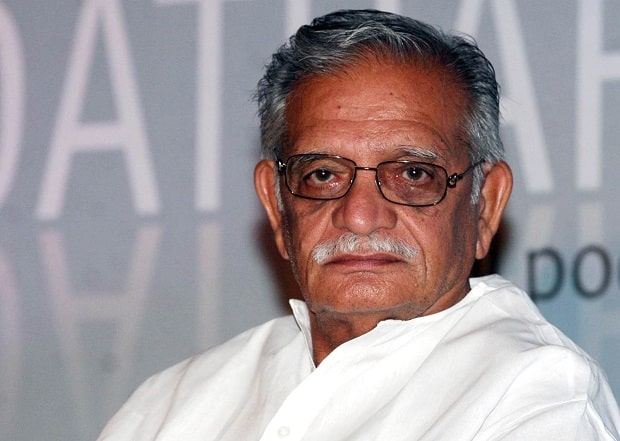
Veteran poet and film lyricist Gulzar has been chosen to receive the coveted Dadasaheb Phalke Award for 2013. The multi-faceted Gulzar, whose real name is Sampooran Singh Kalra, is a lyricist, director, screenwriter, producer and poet. He is the 45th winner of the award that is conferred by the government for outstanding contribution to the growth and development of Indian cinema.
The 79-year-old veteran was naturally thrilled with the felicitation saying, “I am happy to receive this award and I am thankful to everyone, people and the jury members. An award is a respect which says your work is loved and you are on the right path”.

Gulzar’s daughter Meghna took to Twitter immediately after the news was announced, to share her joy. “Dadasaheb Phalke award for my father. So proud,” she posted.

Born in 1934 in Punjab in pre-independence India, Gulzar started his career in 1956 as a lyricist with Bimal Roy’s Bandini. He has worked with leading composers throughout a long and accomplished career. As a script, story and dialogue writer, he has contributed to several films, he has directed ten films, and has created acclaimed series for television. And of course, he is a published poet and short story writer.
Awards are not a rarity for this talented man. Gulzar was conferred the Sahitya Akademi Award in 2002 and the Padma Bhushan in 2004. He has won a number of National Film Awards and 20 Filmfare Awards. At the 81st Oscars in 2009, he won the Academy Award for best original song for Jai ho with AR Rahman. Congratulations to Gulzar on this latest and well-deserved acknowledgment of his talent.


Punctual pair

We are all familiar with the concept of Indian Standard Time which generally means that we tend to turn up to an event whenever we feel like it. And Bollywood-wallahs are notorious for their extraordinary levels of unpunctuality. With a few exceptions like Sonakshi Sinha and Akshay Kapoor, who seem to be the industry’s most punctual on-screen couple. The due are working together in Holiday, their fourth jodi and its obvious that they share a good working rapport. But the fact that they are both punctual also keeps the producers happy, revealed Sonakshi. She claims that none of her co-stars, from Salman Khan to Shahid Kapoor, have any problems with her. “Luckily, I’ve had a very good working rapport will all of my co-stars. Nobody has complained about me and they never said they don’t want to work with me. So that comfort level is there even with Akshay sir, and I think we work very well together,” she stated.
And while Sonakshi is looking forward to Holiday, her other projects like Tevar and Prabhudheva’s Action Jackson are keeping her busy. “Right now I am juggling between two things at one time and I am loving it and enjoying the process altogether. It makes me happy and also I learn a lot,” she said. Well, as one of Bollywood’s most punctual stars, Sonakshi is certainly a rarity – in real and reel life!


Abhishek’s all for sports

He may be a well-established actor in Bollywood and the scion of an iconic family, but Abhishek Bachchan certainly knows where his loyalties lie. The sport of kabaddi may have had a diminishing fan following, but its now received a reviving shot in the arm as Abhishek recently announced his association with the Jaipur franchise of Pro-Kabaddi, a professional kabaddi league. “I am very happy and excited to be part of what I consider to be the kabaddi revolution in India. Having been a sportsman and being a sports enthusiast, it’s very exciting to be able to be part of this endeavour,” said Abhishek. “We are all cricket lovers… even I love cricket but it’s a British sport. This is an opportunity, a platform to promote our own sport, kabaddi,” he added.

So is he associated with the league simply to promote it through his star value? “It’s just a coincidence that celebrities are team holders as well, but I don’t think it adds any value to the sports. We are associated with it because we are passionate about that sport,” said Abhishek emphatically.

The actor and his megastar dad Amitabh admit to loving football and cricket. Abhishek has now expressed interest in producing a movie around sports. “It’s my dream to produce sports-based film. In India, we have not done justice to the sports genre (of films). The US is doing a great job by promoting sports through their films. I would love to produce a film based on sports,” said Abhishek. He doesn’t have a project in mind yet, but its something that the actor will work towards.

Abhishek also feels that Indian sportswomen are not given their due credit. “I personally feel that Indian women in sports are not given due credit. This is a small step and I am sure our agenda (via the league) is also to promote women players in India,” he stated.

Kudos to the actor for supporting the ancient sport of kabaddi.


A heroic start!

Recently released Main Tera Hero has made Rs 38.48 crore in its first week, much to the delight of the cast and crew. The film directed by David Dhawan, features actors Varun Dhawan, Ileana D’cruz, Anupam Kher and Nargis Fakhri.

The film’s story revolves around Sreenath Prasad (Varun), a notorious boy in Ooty. He drops out from college to pursue his education in Bangalore where he falls in love with Sunaina, played by Ileana. But Sunaina is forced to marry Angad, played by Arunoday Singh, a local police officer who is more of a terrorising gangster. The film and its songs were promoted heavily prior to release, and the results of marketing it successfully are now on for all to see! So will it hit the Rs100 crore mark? Let’s wait and see!


Deepika’s list of best dressed

Deepika Padukone is a style icon herself, but according to her, actor Akshay Kumar is the best dressed man in the Hindi film industry while veteran actress Rekha is her favourite from among the women.

“The best dressed man (in the industry) is Akshay Kumar. It’s purely his effortlessness that makes him look the way he does. I think the fact that he has always been so athletic that really adds to the way he carries off clothes,” the actress said recently of her co-star in Chandni Chowk To China, Housefull and Desi Boyz.

And veteran actress Rekha is her top choice among Bollywood’s many belles. “She is someone who has always dressed the way she wants to. Trends have come and gone, but she stands by something she believes in and she has stood by that and I appreciate that,” said Deepika.

So what about herself? Who influences Deepika’s style? The answer is somewhat surprising, as the actress responded, “In my growing up years, my mother was my style icon and she still is. She is someone who has influenced my style a lot”. Deepika claims that her style statement is ‘simple’ and ‘elegant’ like her mother Ujjala. “Today when I talk about my personal style being classic, simple, elegant… it all comes from the way she (Ujjala) used to dress. I have never been someone who has accessorised a lot, and that comes from her,” said Deepika. “She always wore just a simple watch or simple jewellery. She never accessorised too much. I think as a little girl when you are growing up, your mother’s style is what rubs off on you the most,” added the 28-year-old who will next be seen in Happy New Year.

Nice to know that Deepika’s still listening to mum and following in her fashion footsteps.


B-Town joins hands for rural empowerment

Bollywood stars like Amitabh Bachchan and Vidya Balan have supported Ronnie and Zarina Screwvala’s Swades Foundation, which held a fundraising gala recently, for rural empowerment.
At the fundraiser, chief guest Amitabh recounted his visit to villages in Raigad, Maharashtra, to view the impact of the foundation’s interventions. “To say that it was a transformational journey would be an understatement. We met and interacted with so many people from the community, and heard so many wonderful stories of empowerment,” said the Big B. He even recited verses from his late father Harivansh Rai Bachchan’s works. Filmmaker Karan Johar hosted the fundraiser and promised to support the cause. “I feel great pride when I see Ronnie and Zarina, who through their Swades Foundation, have taken upon themselves the mammoth task of uplifting one million people out of poverty every five years. I have promised them my entire support and will help out in every way I can,” said Karan.

Vidya Balan joined founder and managing trustee Zarina, in making a pledge for 2,000 toilets for rural households. The Swades Foundation aims of bridging the gap between urban and rural India. The evening event also included a celebration of rural India on the ramp by designer Vikram Phadnis. In the spirit of true empowerment, Swades Heroes – villagers who lead by example in their rural communities – walked the ramp with film stars like Sonakshi Sinha, Bipasha Basu, Neha Dhupia, Malaika Arora and Dia Mirza.

Isn’t it great to see Bollywood coming together for a good cause? Keep up the good work!


Alia-Revathi’s real-life bonding

Alia Bhatt who has worked with actress-director Revathi in their forthcoming film 2 States, says they share a strong bond akin to that of a mother and daughter. “Towards the end of the film, I developed mother-daughter relationship with her (Revathi). The way she touched my face, I kind of felt that warmth with her. What also I realised is that while working with her I became a good actor,” explained Alia. “What she brings to the table is not just the dialogues. She would bring much more… I felt like she was my mother. I could bring the emotions only because of her. She is a fantastic actor,” she added.

Revathi plays Alia’s mother in 2 States, adapted from Chetan Bagat’s novel by the same name. The star who shot to fame with the acclaimed film Highway, is also fond of actress Kareena Kapoor and says that she feels great when she is compared to the Jab We Met star. “I can be flattered. I have done two films and people are comparing me with her. I don’t think I am like her. I feel like there is only one Kareena Kapoor and that’s her. I am her biggest fan. I am not trying to be like her, but she is my biggest inspiration,” said Alia.

Well young Alia, it’s great to see that you’ve found friends and mentors in the film industry. Good luck to you!


Non-narcissistic Nawazuddin

He’s shared screen space with Bollywood’s big guns like Aamir Khan and Irrfan Khan, but actor Nawazuddin Siddiqui isn’t fazed by fame. Although the actor believes he looks ‘dull’, he has still managed to carve a significant niche in the Hindi film industry. Nawazuddin says good looks may guarantee a hero’s spot, but not acting skills. “People say ‘Oh, he is so good looking, go to Mumbai and you will become a hero’. Of course, he can become a hero! But it is very tough to become an actor,” said the 39-year-old recently. Many may believe that good looks and an inborn talent to act make an impressive actor, but Nawazuddin, who has received critical acclaim for his work, says good training and practice can make actors out of the ordinary.

“Many people say that you are born an actor, but according to me, actors can be made. If a dull man like me can become an actor, then definitely the training and practice I underwent is responsible for it. Dancers and musicians need to practice, similarly actors also need to practice,” he added.

Nawazuddin also claims that he is not intimidated by star power, even when acting with big names. “If you feel the pressure of any star, that means you are not doing justice to your character, or you are not involved in your character. If you are getting conscious of the stardom of a star, then he is right in his place, but you are not,” he stated.

“If you are in your character, then you will see the other person also as a particular character. Like in Talaash, if I was in my role of Temur, then it was not Aamir Khan standing in front of me, but a police officer,” he further explained. After The Lunchbox and Miss Lovely, Nawazuddin will soon be seen in Mountain Man, Ghoomketu and Kick. We agree, the movie industry needs more actors than pretty faces!