
Home Blog Page 964

Dread of domestic violence

0
Reading Time: 4 minutes

Compatibility between individuals rather than an arrangement between families is now trending in matrimony


As a junior doctor, I have a clear memory of one of the first patients I assessed, that related to domestic violence. I was working a night shift in a hospital in Sydney’s western suburbs. The patient was a thin, young Indian woman who was presented to the hospital with bruises to her face, back and shoulder. There was a question of whether she had a broken nose, for it was swollen and tender.

After ruling out a fracture, a more complete history revealed that she had been married for just over a year. The marriage was arranged and the man was a clerical worker from South India. Strikingly, it was the first act of violence and it occurred two days after the man had received permanent residency. He was no longer dependent on his wife in order to remain in Australia. This example illustrates how domestic violence has great overlap with power relations among the sexes, and can encompass different features in different cultures and socio-economic groups. Alcohol is often a factor, and a growing trend is the emasculation some men are feeling from more equal sexual roles and a decline in traditional male jobs, such as factory work.

But the power spouses and families might wield over visa and migration privileges is unique to migrant groups, and more common in South Asian families where arranged marriage remains relatively common.

Australia has a little known and interesting regulation whereby a recent arrival who comes here on a spousal visa but then loses that visa due to an abusive marriage, has the right to continue with their path to permanent residency. It is referred to as a family violence regulation and was brought in by the previous government in 2012.

When enacted, the Federal Minister for Women, Julie Collins said: “Domestic and family violence is unacceptable. It’s important that women do not face obstacles in leaving violent relationships and receive appropriate support and assistance.

It seems just, for such people are often victims, arriving to Australia with the hope of a happy marriage and new life in Australia, only to find that their spouses and their extended families see them as leverage to wield power and extract compensation for allowing them a path to migration”.

In fact, seeing such cases offers a great illustration of changes in age old notions of class and status. For example, it is only through arranged marriage that a taxi driver or security guard, with little or no tertiary education, could hope to marry a high caste, university educated woman from India. Yet, this is commonplace when there is the leverage of migration to one of the world’s wealthiest countries. There is also the promise that more relatives might migrate in the future.

The modern world overturns many of these age old hierarchies, best illustrated by the American journalist Katherine Boo’s account of Mumbai slums in Behind the Beautiful Forevers. The book outlines how centuries of tradition, caste and status are overturned in barely a generation through the ravages of the market economy and globalisation.

But back to arranged marriage. A key aspect of this is how little responsibility local communities take for such outcomes. In many of the examples of family violence I have seen arising from newly arrived spouses, there had been little attempt to assess the likely compatibility of the two individuals getting married. A not uncommon scenario was that the male or female based in Australia already had a lover, and agreed to the marriage merely to appease the parents. The Indian based spouse arrives only to find that their partner wishes to continue their prior relationship.

At the heart of this folly is the age old belief that marriage remains the union of two families. I have heard this repeated throughout my entire life as emblematic of the cultural differences between Indians and Westerners. This may have held true in the days we all lived in villages and closely maintained clans and traditions, but this is not even the case in the more traditional parts of India anymore. The upheaval caused by mass industrialisation and migration means marriage is very much a union between two people, usually beginning in a small flat in an outer metropolitan area. This can cause an enormous strain in relationships where the individuals are highly compatible, let alone when they are a complete mismatch, and further complicated by overbearing, entitled relatives.

There is a real risk that as more and more cases associated with the family violence regulation become apparent, that the broader community will view the problem as another example of importing backward cultural practices into Australia. This would be excessive, but perhaps not a surprise.

Community solicitor and President of the Pakistani-Australian Association, Ejaz Khan said that domestic violence remained a major problem within South Asian communities, but felt interventions were not always culturally sensitive. “The intrusion of police and apprehended violence orders straight away often worsen the situation, rather than help appease the basis for conflict”, says Khan. He advocated more culturally sensitive measures such as a one stop shop for domestic violence sufferers of ethnic backgrounds, and worries that the Community Services Minister Pru Goward was not taking ethnic communities into account in her recent taskforce into domestic violence.

You only have to see the debates surrounding gay marriage to see that the institution of marriage is in flux. There are sections of the local Indian community that remain wedded to age old beliefs surrounding marriage and view it only as a transaction to progress the status of their family. They risk tarring the reputations of the entire community.

Planning for financial freedom

0
Reading Time: 3 minutes

The forthcoming budget will have a number of changes which will affect the financial lives of Australians, according to statements from senior government figures. One change which has received plenty of airplay is the prospect of restricting age pension benefits to older Australians.

Currently, those born before 1 January 1947 can access age pension at age six. However, Treasurer Joe Hockey has triggered early speculations that this may be lifted to age 70. The previous Labor government had announced an increase in the retirement age from 65 to 67 by 2023-24. This was intended to bring Australia more in line with other nations that are raising the retirement age as people’s life expectancy rises. These countries include Canada which will finish lifting its pension age to 67 by 2029, Germany which will have the age increase in place by 2029, and the US where the pension age of 67 will be in place by 2036.

It is however becoming clear that with an aging population, governments will find it increasingly hard to find the money to fund pensions. Currently of an estimated 22 million Australians, there are 2.07 million on age pension with 1.427 million on full age pension and 943,000 on a partial pension. Full pension for a couple is approximately $31,700 per annum.

In the 2013-14 financial year it is estimated that up to 35% of all government revenue is being spent on social security as compared to 7% on education and 16% on health. With an aging population and increased life expectancies (according to the Australian Life Tables, the average life expectancy for Australian males is 84 and 87 for females), this will only increase. To meet its obligations, the government either needs to find more revenue (read as additional taxes) or cut certain services. With the biggest part of the expenditure pie being social security, it seems to be the obvious place to take the axe. So expect tough announcements in the May budget to superannuation, though they may not come in play for a while.

For Indian Australians, the advice is, start preparing for your own retirement well in advance. Back in India, pension is available to government and other employees, and so, most Indians migrants have a limited sense of entitlement and no such expectations from the government. However, over a period of time these expectations change. But with the expected changes to policy, it may be advisable for the Indian migrant community to start planning for their own long-term financial freedom at retirement, rather than depend on government handouts.

Typically well educated, Indians settle well in their country of migration. In Australia for example, Indian migrants are one of the top wage-earning migrant groups. A number of them migrate in their 30s and after the settling-in period, both husband and wife find suitable employment. Anecdotally, the family income is circa $120,000 on average. Using this as a starting point and with about 25 years of working time in Australia, an average couple would be expected to earn over $3,000,000 in their working life time.

Planning to save at least 15% of their income and investing it wisely; using the benefits of compounding returns, will go a long way to take care of their long-term retirement needs. While a number do take up the option of investing through property, perhaps they need to look for a wider spread of investment assets in order to better lock in their retirement aspirations.

Time to start planning for self-funded retirement starts now. While the politics of changing rules on pension and superannuation will always be hotly debated, the chance of a 30-year-old Indian migrant to Australia of receiving any pension in 35-40 years time are similar to India winning  the football world cup in 2014.


A magical north-south love story

0
Reading Time: 3 minutes

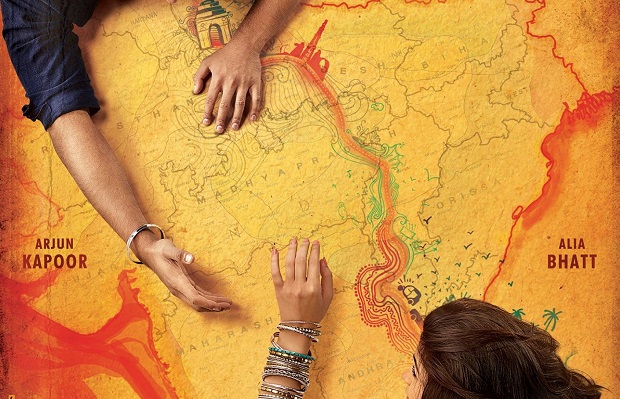
2 STATES

Starring: Arjun Kapoor, Alia Bhatt, Ronit Roy, Amrita Singh, Revathi, Shiv Subramaniam

Director: Abhishek Varman

Rating: ****

Magically, 2 States ends with a beautifully staged wedding where the film’s culture-crossed couple finally get their wish.

Sigh of relief? Not quite. You don’t want this film to end. It’s a story, but doesn’t seem like one. You know exactly where our twosome, the gorgeous Ananya and the diffident Krish are going, but you get so sucked into their journey, their courtship, conflicts, tiffs and buts, that you feel after a point, that you aren’t watching them in a film. They are people we know. And love.

These are people to carry home and keep in some corner of your heart. Not just Ananya played by the very gorgeous Alia Bhatt and her other-half Krish, but also their parents, specially Krish’s father a man so misunderstood all his life, he fears being recognized for some deeply-concealed goodness in his heart.

Indian marriages, they say, are the marriage of two families. So when the shy, repressed Punjabi Krish meets the spunky spirited beer-guzzling, chicken-chewing Ananya, there is hell to pay from both sides.

The thing about cultural stereotyping is that it very often does exist in exactly the forms that we see them exist in films and books. Chetan Bhagat’s lively novel from which this film is adapted, harps on stereotypes to the extent where the characters are not seen as ‘types’, but as individuals who conform to a type. This is best illustrated by Krish’s loud-brassy Punjabi mom, played by Amrita Singh in a compelling performance. Revathi as Ananya’s graceful Tamil mother is also outstanding.

Ronit Roy is no stranger to playing the abusive father, and his dignified damned Dad’s act makes 2 States as much a father-son story, as a girl-boy thing.
Not every sequence works, though. Revathi’s singing performance (arranged by Krish) was a little too syrupy and Alia’s anti-dowry speech at a brassy Punjabi wedding a little too contrived, but these were minor slip-ups.
Most of the time, cultural differences are articulately pinned down in the film. Debutant director Abhishek Varman knows how to tell a story embedding individual scenes with a distinctive personality, without straining for effect.

This film never forgets to surprise, even when going about the task of telling a story that can only end one way. Arjun Kapoor and Alia Bhatt ensure that their mutual participation in the rites of courtship, copulation, conflict and reconciliation yields a harvest of hefty scenes. Their performances display a natural flair for understatement underlined by a deep understanding of the language of commercial cinema. And yes, they look so made for each other, their compatibility is almost karmic.

Two world, two cultures, two families, one love story, 2 States re-defines and rejuvenates the love-marriage space. Simple and yet striking, gorgeous and graceful, one hankers to know what happens to the couple after the film is over.

The stress is on lightness of tone. From the clothes that Ananya and Krish wear to the spaces they inhabit… they aren’t fuelling a filmy flamboyance into the narrative.

Alia dressed as a bride looks like a doll, and the expression of honesty in her face never ceases, symbolizing what this film strives to do. 2 States creates a world where characters don’t shout to be heard. They belong to a world where being proper, politically or otherwise, is not always a pre-condition.


SUBHASH K JHA

Epic tale of women’s empowerment

0
Reading Time: 5 minutes

KAANCHI

Starring: Mishti, Kartik Aaryan, Chandan Roy Sanyal, Mithun Chakraborty, Rishi Kapoor

Director: Subhash Ghai

Rating: ****

Subhash Ghai’s Kaanchi delivers a walloping punch in this tale of a girl from the hills contesting the city marauders’ rights to usurp her of land and love. In a frenzied saga of revenge in the big bad city where the innocent girl assumes the role of a desi Lara Croft, Ghai tackles the craft and the emotions with a devilish deftness.

The script is intricately woven, and Ghai threads together a jam-packed jigsaw. Something or other is always happening in some corner of the script.

Kaanchi is a puzzle of a film. It bustles and brims over with reformatory ideas, anti-corruption zeal, and lunges into an overweeningly ambitious format of storytelling, employing every cliché in the book of formulistic storytelling. But Ghai succeeds in telling a spectacular story filled with muted sound and flamboyant fury.

Kaanchi is the story of a girl’s journey from the innocent unspoilt mountains of Uttarakhand to the corrupt and corrupting sinful city of Mumbai. But the approach road from the back of beyond to the mainland mayhem is far more upfront and aggressive. The music conveys the split personality of a society that is caught in a migratory transition.

The film packs in the punches with undiminished enthusiasm from the first frame to last. The scenes are conceived with cohesive care, while the dialogues are quick-witted. Ghai turns on the tempestuous tap full blast. Though the pace does tend to flag at times, there is an element of underlined expectancy in nearly every episode.

The episodes write themselves out with a pungent precision. This is not a film that tries to impress with subtlety. The charm of the protagonist Kaanchi’s journey is not in its quotient of adventurousness, but in delivering an exuberance of the expected.

Mishti, Ghai’s latest discovery lives up to the high standards of the filmmaker’s past heroines. Despite her inability to touch some of the peaks required in the dramatic scenes, Mishti with her very Bengali personality and serene simplicity, creates a very favourable impact. She breezes through most of the film with charm and confidence.

Mishti gets very strong support from her two leading men. Kartik Aaryan’s very athletic ramp-friendly personality plays off the heroine’s rustic artlessness. And the ever-dependable Chandan Roy Sanyal who takes over as the man in Kaanchi’s life, is a roguish cop whose morals are as questionable as the lyrics of the item song to which he dances.
Interestingly Mishti’s character is shown to be a user-friendly go-getter with pluck and gumption.

Ironically in this film about youth power, it’s the veteran actors who let the script down. Mithun Chakraborty and Rishi Kapoor as a pair of trouble-makers are deliberately lampoonish. Newcomer Rishab Sinha as Mithun’s son has a very important role which he squanders away in serious apathy and a ludicrous wig.

In spite of its jagged edges and its tendency to take itself a tad too serious, Kaanchi manages to simulate a supple empathy for its disarmingly uni-dimensional characters. This is Ghai’s dream of a nation where one girl with the help of some rock-singing youngsters, can free us of corruption.

The film is a warm-hearted free-spirited ode to new-age womanhood. The female protagonist’s dharm-yuddh with evil forces may lack in subtlety. But then the time to tackle terror with tact is over.

It’s time to take on corruption headlong. Kaanchi does just that. With feeling and drama.

SUBHASH K JHA


A magical north-south love story

2 STATES

Starring: Arjun Kapoor, Alia Bhatt, Ronit Roy, Amrita Singh, Revathi, Shiv Subramaniam

Director: Abhishek Varman

Rating: ****

Magically, 2 States ends with a beautifully staged wedding where the film’s culture-crossed couple finally get their wish.

Sigh of relief? Not quite. You don’t want this film to end. It’s a story, but doesn’t seem like one. You know exactly where our twosome, the gorgeous Ananya and the diffident Krish are going, but you get so sucked into their journey, their courtship, conflicts, tiffs and buts, that you feel after a point, that you aren’t watching them in a film. They are people we know. And love.

These are people to carry home and keep in some corner of your heart. Not just Ananya played by the very gorgeous Alia Bhatt and her other-half Krish, but also their parents, specially Krish’s father a man so misunderstood all his life, he fears being recognized for some deeply-concealed goodness in his heart.

Indian marriages, they say, are the marriage of two families. So when the shy, repressed Punjabi Krish meets the spunky spirited beer-guzzling, chicken-chewing Ananya, there is hell to pay from both sides.

The thing about cultural stereotyping is that it very often does exist in exactly the forms that we see them exist in films and books. Chetan Bhagat’s lively novel from which this film is adapted, harps on stereotypes to the extent where the characters are not seen as ‘types’, but as individuals who conform to a type. This is best illustrated by Krish’s loud-brassy Punjabi mom, played by Amrita Singh in a compelling performance. Revathi as Ananya’s graceful Tamil mother is also outstanding.

Ronit Roy is no stranger to playing the abusive father, and his dignified damned Dad’s act makes 2 States as much a father-son story, as a girl-boy thing.
Not every sequence works, though. Revathi’s singing performance (arranged by Krish) was a little too syrupy and Alia’s anti-dowry speech at a brassy Punjabi wedding a little too contrived, but these were minor slip-ups.
Most of the time, cultural differences are articulately pinned down in the film. Debutant director Abhishek Varman knows how to tell a story embedding individual scenes with a distinctive personality, without straining for effect.

This film never forgets to surprise, even when going about the task of telling a story that can only end one way. Arjun Kapoor and Alia Bhatt ensure that their mutual participation in the rites of courtship, copulation, conflict and reconciliation yields a harvest of hefty scenes. Their performances display a natural flair for understatement underlined by a deep understanding of the language of commercial cinema. And yes, they look so made for each other, their compatibility is almost karmic.

Two world, two cultures, two families, one love story, 2 States re-defines and rejuvenates the love-marriage space. Simple and yet striking, gorgeous and graceful, one hankers to know what happens to the couple after the film is over.

The stress is on lightness of tone. From the clothes that Ananya and Krish wear to the spaces they inhabit… they aren’t fuelling a filmy flamboyance into the narrative.

Alia dressed as a bride looks like a doll, and the expression of honesty in her face never ceases, symbolizing what this film strives to do. 2 States creates a world where characters don’t shout to be heard. They belong to a world where being proper, politically or otherwise, is not always a pre-condition.


SUBHASH K JHA

Epic tale of women's empowerment

0
Reading Time: 5 minutes

KAANCHI
Starring: Mishti, Kartik Aaryan, Chandan Roy Sanyal, Mithun Chakraborty, Rishi Kapoor
Director: Subhash Ghai
Rating: ****

Subhash Ghai’s Kaanchi delivers a walloping punch in this tale of a girl from the hills contesting the city marauders’ rights to usurp her of land and love. In a frenzied saga of revenge in the big bad city where the innocent girl assumes the role of a desi Lara Croft, Ghai tackles the craft and the emotions with a devilish deftness.
The script is intricately woven, and Ghai threads together a jam-packed jigsaw. Something or other is always happening in some corner of the script.
Kaanchi is a puzzle of a film. It bustles and brims over with reformatory ideas, anti-corruption zeal, and lunges into an overweeningly ambitious format of storytelling, employing every cliché in the book of formulistic storytelling. But Ghai succeeds in telling a spectacular story filled with muted sound and flamboyant fury.
Kaanchi is the story of a girl’s journey from the innocent unspoilt mountains of Uttarakhand to the corrupt and corrupting sinful city of Mumbai. But the approach road from the back of beyond to the mainland mayhem is far more upfront and aggressive. The music conveys the split personality of a society that is caught in a migratory transition.
The film packs in the punches with undiminished enthusiasm from the first frame to last. The scenes are conceived with cohesive care, while the dialogues are quick-witted. Ghai turns on the tempestuous tap full blast. Though the pace does tend to flag at times, there is an element of underlined expectancy in nearly every episode.
The episodes write themselves out with a pungent precision. This is not a film that tries to impress with subtlety. The charm of the protagonist Kaanchi’s journey is not in its quotient of adventurousness, but in delivering an exuberance of the expected.
Mishti, Ghai’s latest discovery lives up to the high standards of the filmmaker’s past heroines. Despite her inability to touch some of the peaks required in the dramatic scenes, Mishti with her very Bengali personality and serene simplicity, creates a very favourable impact. She breezes through most of the film with charm and confidence.
Mishti gets very strong support from her two leading men. Kartik Aaryan’s very athletic ramp-friendly personality plays off the heroine’s rustic artlessness. And the ever-dependable Chandan Roy Sanyal who takes over as the man in Kaanchi’s life, is a roguish cop whose morals are as questionable as the lyrics of the item song to which he dances.
Interestingly Mishti’s character is shown to be a user-friendly go-getter with pluck and gumption.
Ironically in this film about youth power, it’s the veteran actors who let the script down. Mithun Chakraborty and Rishi Kapoor as a pair of trouble-makers are deliberately lampoonish. Newcomer Rishab Sinha as Mithun’s son has a very important role which he squanders away in serious apathy and a ludicrous wig.
In spite of its jagged edges and its tendency to take itself a tad too serious, Kaanchi manages to simulate a supple empathy for its disarmingly uni-dimensional characters. This is Ghai’s dream of a nation where one girl with the help of some rock-singing youngsters, can free us of corruption.
The film is a warm-hearted free-spirited ode to new-age womanhood. The female protagonist’s dharm-yuddh with evil forces may lack in subtlety. But then the time to tackle terror with tact is over.
It’s time to take on corruption headlong. Kaanchi does just that. With feeling and drama.
SUBHASH K JHA
 
 
A magical north-south love story
2 STATES
Starring: Arjun Kapoor, Alia Bhatt, Ronit Roy, Amrita Singh, Revathi, Shiv Subramaniam
Director: Abhishek Varman
Rating: ****

Magically, 2 States ends with a beautifully staged wedding where the film’s culture-crossed couple finally get their wish.
Sigh of relief? Not quite. You don’t want this film to end. It’s a story, but doesn’t seem like one. You know exactly where our twosome, the gorgeous Ananya and the diffident Krish are going, but you get so sucked into their journey, their courtship, conflicts, tiffs and buts, that you feel after a point, that you aren’t watching them in a film. They are people we know. And love.
These are people to carry home and keep in some corner of your heart. Not just Ananya played by the very gorgeous Alia Bhatt and her other-half Krish, but also their parents, specially Krish’s father a man so misunderstood all his life, he fears being recognized for some deeply-concealed goodness in his heart.
Indian marriages, they say, are the marriage of two families. So when the shy, repressed Punjabi Krish meets the spunky spirited beer-guzzling, chicken-chewing Ananya, there is hell to pay from both sides.
The thing about cultural stereotyping is that it very often does exist in exactly the forms that we see them exist in films and books. Chetan Bhagat’s lively novel from which this film is adapted, harps on stereotypes to the extent where the characters are not seen as ‘types’, but as individuals who conform to a type. This is best illustrated by Krish’s loud-brassy Punjabi mom, played by Amrita Singh in a compelling performance. Revathi as Ananya’s graceful Tamil mother is also outstanding.
Ronit Roy is no stranger to playing the abusive father, and his dignified damned Dad’s act makes 2 States as much a father-son story, as a girl-boy thing.
Not every sequence works, though. Revathi’s singing performance (arranged by Krish) was a little too syrupy and Alia’s anti-dowry speech at a brassy Punjabi wedding a little too contrived, but these were minor slip-ups.
Most of the time, cultural differences are articulately pinned down in the film. Debutant director Abhishek Varman knows how to tell a story embedding individual scenes with a distinctive personality, without straining for effect.
This film never forgets to surprise, even when going about the task of telling a story that can only end one way. Arjun Kapoor and Alia Bhatt ensure that their mutual participation in the rites of courtship, copulation, conflict and reconciliation yields a harvest of hefty scenes. Their performances display a natural flair for understatement underlined by a deep understanding of the language of commercial cinema. And yes, they look so made for each other, their compatibility is almost karmic.
Two world, two cultures, two families, one love story, 2 States re-defines and rejuvenates the love-marriage space. Simple and yet striking, gorgeous and graceful, one hankers to know what happens to the couple after the film is over.
The stress is on lightness of tone. From the clothes that Ananya and Krish wear to the spaces they inhabit… they aren’t fuelling a filmy flamboyance into the narrative.
Alia dressed as a bride looks like a doll, and the expression of honesty in her face never ceases, symbolizing what this film strives to do. 2 States creates a world where characters don’t shout to be heard. They belong to a world where being proper, politically or otherwise, is not always a pre-condition.
 
SUBHASH K JHA

May 1 is White Shirt Day

0
Genelia Dsouza
Reading Time: 2 minutes
Genelia Dsouza

Don a white shirt on May 1 to raise money for ovarian cancer research


To help you out with your white shirt options, we’ve complied a few different ways to rock the look. You could try a cheeky take like Ganelia Gsouza with a crisp white long sleeved version, or try the school girl look like Deepal Shaw.

Deepal Shaw


Sherlyn Chopra
Sherlyn Chopra

Or you could try a daring, oh-so-vey saucy look like Sherlyn Chopra. (Although we think that look might be best saved for just at home…)

Or try a fierce take on the white shirt like Kulraj Randhawa!

How will you be wearing your iconic shirt this White Shirt Day?

Kangna in powerhouse performance

0
Reading Time: 3 minutes

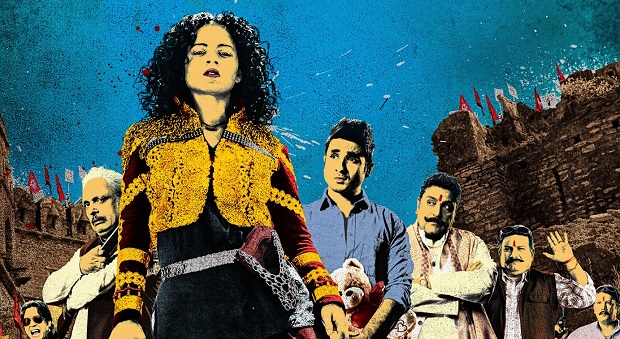
REVOLVER RANI

Starring: Kagna Ranaut, Vir Das, Piyush Mishra

Director: Sai Kabir

Rating: 3 and a half stars

Hail the female! Kangna Ranaut plays the quirky queen of all she surveys. She lords over her doomed anarchic and wretched kingdom like a doped and excitable Pan Singh Tomar.

It is a dangerous world out there in the Indian heartland. Specially for women who have to fight prejudices and betrayals on so many levels.

In a scene straight out of a street play, Kangna, playing what seems like a cross between Uma Thurman in Kill Bill and Seema Biswas in Bandit Queen, Kangna tells the mother of a young girl, “Teach her how to shoot a gun. It’s the only way she can survive”.

Revolver Rani is a deeply satisfying tribute to many things at the same time. Director Sai Kabir (who has previously made an unreleased film) pays a hefty homage to many filmmakers like Anurag Kashyap, Quentin Tarantino, Mehboob Khan and Shekhar Kapoor. And yet for its derivative aspirations, Revolver Rani is a fiercely original piece of cinema, crafted with compelling concentration and impassioned intuition. The mayhem is meticulously executed. It serves as the evocative backdrop for the life of an outlawed bandit-politician.

Kangna plays a woman of substance who, going by her high-octane energy level, seems to be guilty of substance abuse. And that’s the least of her crimes. Alka Singh, as played by Kangna in her second powerhouse performance this year, is the female goon who speaks most eloquently with the nozzle of her gun. There is an awkwardness to her ‘Chambal ki boli‘ that dissolves when she has to converse with a ‘bandook ki goli‘.

Kangna’s askew personality and her lisping halting dialogue delivery give her character a cutting edge which distinguishes a remarkable and powerful performance, taking it into the realm of the truly inspired.

I wonder what Alka Singh would have been if Kangna had not played this feisty women! Alka’s epic saga is partly cartoonish, partly a documentary on bandit-politics spliced together to make the woman an outrageously endearing outlaw.

At heart, Revolver Rani is a heartbreaking love story of a crass, powerful female politician who falls for a sleazy selfish Bollywood aspirant. We can see what a jerk he is. She can’t. As she goes through a sham marriage and a very real pregnancy with the certifiable asshole, Kangna’s character’s blind love turns into frustration and fury in front of our eyes.

Vir Das plays the wannabe star who ends up as a trapped fluttering toy boy to the lusty politician, with an intimacy and incredulity that make the character appear both cheesy and pathetic, and yet comic.

In the lust-relationship, Sai Kabir reverses the traditional gender equation making the female hero the sex-hungry predator and the male companion an object of her lust. In the second-half when Alka Singh wants to turn her infernal kingdom into a nursery school of paradisical normalcy, the director indulges and pampers her womanly instincts without mocking the trigger-happy woman’s sudden swerve into softness and femininity.

It is a dangerously balanced-out world field with outrageous deceit. Sai Kabir pulls out all stops to let his protagonist swim in the tides of blood and anarchy. Wading through the muck, Alka endeavours to find herself an utopian balance in her unbalanced world. The end is a shocker, as it knocks off the bottom from Alka’s world and lets her slide into the abyss without prejudice.

Revolver Rani is a film of baffling contradictions and anomalies. It starts with 10 minutes of dreadfully self-conscious political humour and then steers adroitly into Alka’s love life with a cocky contempt for conventional signposts of female empowerment. The feminist hoardings are bypassed in favour of creating untried rules of unorthodox womanhood.

More than the political intrigue, I was enthralled by Kangna’s growing love for the thoroughly undeserving ‘Cham-cham’ (yup, that’s the cheesy nickname for her toy boy). The desperate passion she feels for this cad is so palpable as to make love appear as the greatest crime in Alka Singh’s world of pervasive outlawry.

Director Sai Kabir’s film is wacky goofy and ultimately acutely tragic. The proceedings in the plot are as unpredictable as its kinky capricious female hero’s untameable curls. All steel guns and iron bras, Revolver Rani is raunchy, sexy, quirky and fey. Giving a feverish vigour and velocity to Kangna’s Phoolan-on-steroids act are Aarti Bajaj’s unsparing editing and Suhas Gujarathi’s state-of-art cinematography.

Like Kangna’s Alka Singh, there is no artifice in the technique applied to the proceedings. Revolver Rani is as real as comic book heroines can get.

And if that seems like an irreconcilable merger of two separate worlds, then so be it. Commercial Hindi cinema has come of age.

SUBHASH K JHA


$16 million for Friends of The Children

0
Reading Time: 2 minutes

Foundation’s Good Friday walk raises a staggering figure due to the generosity of the Victorian public

The heavens opened up in Melbourne this Good Friday, however the showers did nothing to dampen the spirits of the eclectic group of walkers who joined this year’s Good Friday appeal. The Friends of the Children Society have been participating in this annual event for 16 years and the number of volunteers has grown from 50 to 250 over the years. Participants of this annual event come from all walks of life and this year the volunteers ranged from the age of six to 70, including a large number of youngsters.

As planned earlier, the walkers left Clayton Railway Station at 9am with 34 registered participants in the group, and headed for Melbourne Exhibition and Entertainment Centre, South Wharf.

The rain started when they stopped for their first break at Monash University in Caulfield. After a delay of 10-15 extra minutes, a decision was made to continue with the walk. Fortunately the rain eased off and then stopped completely around 1.30pm. After a long, albeit enjoyable stretch the walkers reached their destination around 3pm.

Collections were made at various intersections on that day adding to the ongoing fundraising efforts made by The Friends Of The Children Foundation.

A cheque of $19,980 was presented to the Good Friday Appeal and the presentation was telecast live on channel 7 around 4.30pm.

According to Shashi Kocchar from The Friends Of The Children Foundation all the participants were unanimous in their opinion that this was a great initiative where the community walks together in solidarity towards a common goal.

“We would love to hear from more volunteers and sponsors in the future and we encourage participation without any discrimination,” said Kocchar. “This is a wonderful experience and I urge the community to actively participate in such events. It’s for a good cause and it is a great feeling”.

The organisers from Friends of The Children Foundation are hoping that their final donation figure will reach close to $25,000. Overall, the 2014 Royal Children Hospital Friday Appeal raised well above $16 million dollars on the day due to the generosity of Victorian public.

Top Ten: World celebrities born in India

0
George Orwell
Reading Time: 4 minutes

Some of the most renowned global literary, musical and dramatic talent have Indian links

George Orwell


‘Made in India’ is a label that makes all Indians swell up with pride. Whether it is Tata, Mahindra, Godrej, Bajaj, Vivien Leigh, Rudyard Kipling… whoa! Have we lost it? Well, no. It is a fact that some of the world’s greatest celebrities really are Indian-born. If you don’t believe it, you’ll be pleasantly surprised to meet these people.


10. Milton Reid

Perhaps best known for playing the bad guy in James Bond movies Dr No and The Spy Who Loved Me, Milton Rutherford Reid was also an accomplished wrestler who went by the name of ‘The Mighty Chang’. Milton was born in Mumbai on April 29, 1917. His Scottish father Edgar William Reid worked as a customs and excise inspector at the time, and his mother was of Indian origin. He starred in 53 movies and television shows. Milton returned to India to be with his mother and sister, where he passed away in 1987.


9. Vivien Leigh

She stamped her place in history with Oscar winning performances as Scarlett O’Hara in Gone with the Wind and as Blanche DuBois in A Streetcar named Desire. Vivien Leigh, the actress who went on to become the darling of tinsel town, was born in Darjeeling in West Bengal on November 5, 1913 at the campus of St. Paul’s School. Vivian Mary Hartley was the only child of Ernest Hartley, an English officer in the Indian Cavalry, and Gertrude Mary Frances who was probably of Irish and Parsi Indian ancestry.


8. Julie Christie

Staying Far From the Madding Crowd these days, Julie Christie has enjoyed decades in the limelight as a movie legend from the 60s, with the Academy, Golden Globe, BAFTA and Screen Guild Awards under her belt. Born in Chabua, Assam on April 14, 1941, she is the daughter of Rosemary and Francis St. John Christie. Her father managed the Singlijan Tea Estate where Julie was raised along with her brother and an older half-sister.


7. Engelbert Humperdinck

To sum up Engelbert Humperdinck’s artistic achievements, it is suffice to say that he boasts a star on the Hollywood Walk of Fame and received a Golden Globe Award as ‘Entertainer of the Year’ in 1989. The highlights of his career have been his number one hits ‘Release Me’ and ‘The Last Waltz’. He was born Arnold George Dorsey in Madras, India on May 2, 1936, one of ten children to British Army NCO Mervyn Dorsey and Olive Dorsey.


6. William Makepeace Thackeray

William Makepeace Thackeray was a noted novelist of the 19th century, famous for satirical works like Vanity Fair and Pendennis. During the Victorian era he was ranked second only to Charles Dickens. Thackeray was born on July 18, 1811 in Calcutta, which was the capital of British India at that time. The old Freeschool Street where he was born is now called Mirza Ghalib Street. He was the only child of Richmond Thackeray, secretary to the board of revenue in the British East India Company, and Anne Becher.


5. Erick Avari

A well-known face on the silver screen with performances in hit movies like Home Alone 4, Mr Deeds and Planet of the Apes,Erick Avari’s love for cinema is inherited. His father ran two movie theatres and his grandfather was one of the pioneers of Indian cinema. He was born Nariman Eruch Avari in a Parsi household on April 13, 1952 in Darjeeling, West Bengal, and hails from the Avari-Madan family.


4. Rudyard Kipling

Almost eighty years after his death, children are still growing up reading his novels Rikki-Tikki-Tavi, The Jungle Book and Just So Stories. Rudyard Kipling was a short-story writer, poet and novelist remembered for his writings about British soldiers in India. He was born in Mumbai (then Bombay) on December 30, 1865. His father, John Lockwood Kipling was the Principal and Professor of Architectural Sculpture at Sir Jamsetjee Jeejebhoy School of Art in Bombay. The house where Kipling was born still exists in the school’s campus.


3. Joanna Lumley

Remember Sapphire of the late 70’s hit Sapphire and Steel, that’s our girl Joanna Lumley. Actress, model, author and human rights activist are some of the hats worn by this 70s pin up girl who recently appeared in The Wolf of Wall Street with Leonardo DiCaprio. Joanna Lamond Lumley was born in India on May 1, 1946 in Srinagar, Kashmir. Her father James Rutherford-Lumley served as a Major in the 6th Gurkha Rifles. Because of her support for the Gurkha Justice Campaign, Joanna is now considered a ‘national treasure’ of Nepal. The family moved to England in 1947.


2. Cliff Richard

One of the greatest musicians of our times, Cliff Richard is Britain’s Elvis Presley, the Peter Pan of Pop, an OBE (Officer of the British Empire), knighted for his charity work and holder of numerous titles and records. He was born Harry Rodger Webb in India on October 14, 1940 at King George’s Hospital on Victoria Street in Lucknow. His father Rodger Oscar Webb was a manager for a catering contractor for the Indian Railways. The Webb family lived in Maqbara, near the main shopping centre of Hazratganj.


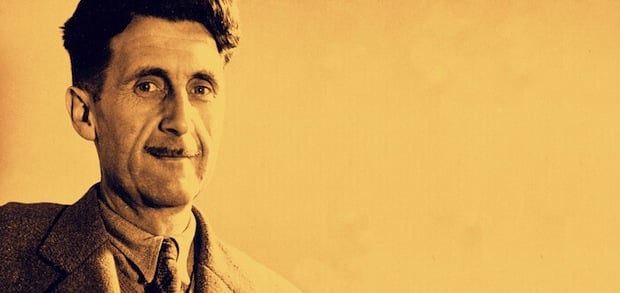
1. George Orwell

We owe the terms ‘cold war’, ‘Big Brother’, ‘thought police’ and others to this literary genius. George Orwell was one of the most influential English writers of the 20th century and best known for his novel Nineteen Eighty-Four. Born Eric Arthur Blair on June 25, 1903 in Mothihari, Bihar in British India, he adopted the pen-name George Orwell in 1935. His father Richard Walmesley Blair was an Opium Agent for the Indian Civil Service in Bengal, while his mother Ida Mabel Blair was raised in Burma.