Home Blog Page 962

Indian Link's top 5 Sydney Film Fest picks

0
Reading Time: 2 minutes


 We know that we’re pretty excited about the upcoming Sydney Film Festival 2014 and you should be too! Our top 5 picks will show you why

Faith Connections


This is Pan Nalin’s (of Samsara fame) latest offering. It looks at India’s Kumbh Mela; the ultimate pilgrimage for 100 million Hindus.
Read our exclusive interview with the director here
 

Friday On My Mind: Pan Nalin


Hear Pan Nalin chat about Faith Connections and his craft.

Charulata


If you haven’t heard of the 1964 classic yet, it’s  Satyajit Ray’s adaptation of Rabindranath Tagore’s novel. Why go see it? It’s a love triangle centered around a lonely housewife in Victorian Calcutta, and was the start of Ray’s success as a master of world cinema.

Siddharth


This is a film about an Indian father desperately searching for his 12-year-old son who goes missing after being sent to work at a factory. And it was also a hit in Venice and Toronto.
 

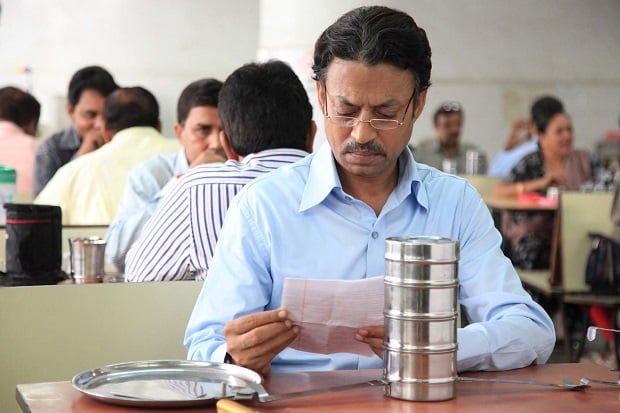
Gourmet Cinema: The Lunchbox


This one has us drooling all over our keyboards at the very thought of top Australian celebrity chef Luke Mangan whipping up an Indian feast to go with this flick. Irrfan Khan stars in this hit indie food and romance filled movie, which perfectly suits a multi-course spread of  glass brasserie, with bubbles, Little Creatures beer and Eden Road wine.
Read more about the film here

Dabba dreams

0
Reading Time: < 1 minute

Written and directed by the talented Ritesh Batra, Dabba (The Lunchbox) is set in Mumbai and revolves around a mistaken delivery in the dabbawala (lunchbox service) popular in Mumbai. This leads to a relationship between Saajan, a lonely widower who is about to retire, and Ila, an unhappy housewife. They start exchanging notes thorough the daily lunchbox that inspire them to create a fantasy world together. The film was screened on May 19 as a part of the International Critics’ Week at the 2013 Cannes Film Festival, where it received a standing ovation of over 15 minutes and very positive reviews. Dabba also won the Critics Week Viewers Choice Award, also known as Grand Rail d’Or.

Batra is a graduate from New York University’s Tisch School of the Arts film programme, and his talent has been lauded at Sundance, the Indian Film Festival of Los Angeles (IFFLA) and by French-German TV channel ARTE. The Dabba screenplay has also been applauded and awarded an honourable Jury Mention at the Rotterdam International Film Festival and was promoted at the Goa NFDC Film Bazaar, the Berlinale Talent Project Market and at the Torino festival screenwriter’s lab.

Creating a resilient rice

0
Professor Mundree (centre) with two colleagues
Reading Time: 2 minutes

Researchers from Australia and India are combining efforts to create a sustainable crop, despite draught and salinity conditions

Professor Mundree (centre) with two colleagues


Path-breaking research might just be the answer to a futuristic rice crop benefitting both farmers and consumers. Scientists at Queensland University of Technology (QUT) partnered with the International Centre for Genetic Engineering and Biotechnology (ICGEB) in New Delhi and Tamil Nadu Agriculture University (TNAU) in Coimbatore, to work toward a rice crop that will withstand drought and salinity conditions.

In its first year of research, Professor Sagadevan Mundree, Deputy Director of QUT’s Centre for Tropical Crops and Biocommodities spoke to Indian Link about the $600,000 project, funded jointly by the Australian government and the Department of Biotechnology, India under the Australia-India Strategic Research Fund.

“Our focus is to obtain molecular insights from a native Australian resurrection grass and use these insights to develop rice that is more resilient to drought and salinity stresses using biotechnology and molecular breeding approaches,” states Prof Mundree.

He goes on to say that the basis of this research comes from a native Australian resurrection grass collected near Charleville in Queensland. “This Australian grass can tolerate extreme environmental conditions, when dried for weeks can ‘resurrect’ (revived) within a time frame of 24-72 hours upon exposure to sunlight and water. We have used a number of strategies to isolate genes that confer drought and salinity tolerance from this grass, and one of our objectives is to transfer such genes into rice. Rice is a grass and is closely related to the resurrection grass,” explains Prof Mundree.

A fourth generation South African, Prof Mundree has worked on resurrection plants for over fifteen years in South Africa, and is currently leading a team of ten at QUT, ranging from post-doctoral scientists and research assistants to students from diverse multicultural backgrounds of Australian, Indian, Vietnamese, Iranian, Kenyan, Singaporean and Chinese origin. “Rice is an important crop to our region and particularly to the Indian sub-continent,” adds Prof Mundree.

So what is the current status of the research? “Here at QUT we have already isolated genes from the Australian resurrection grass that would be used to enhance stress tolerance in rice,” he explains. “From here on we get a better understanding on the workings of the drought and salinity tolerance genes, and are preparing for these to be transferred to rice by our Indian partners”.

What are the different strategies that will be utilised in this collaborative project? “This project will utilise both biotech and molecular breeding approaches to enhance drought and salinity tolerance in rice,” states Prof Mundree. “The gold nugget of this project is the opportunity to bring together scientists from QUT, ICGEB and TNAU with their collective expertise to achieve a satisfactory result”.

To the question of whether this research has garnered enough interest among rice growers, Professor Mundree quips, “This three year project has already attracted interest from farmers and companies who are keen to see a demonstration of stress-tolerant rice”.


A Silk Road spine-tingler

0
In Search of Shipki La
Reading Time: 3 minutes

John Pollard’s In Search of Shipki La is a thrilling mystery that looks into the disappearance of a man on the hippie trail of the 60s

In Search of Shipki La

In Search of Shipki La, 2013, is a novel by John Pollard, a Sydney academic. Shipki La is a pass which was once an offshoot of the Silk Road that served as a trade route between Tibet and India in days gone by, used by travellers and merchants for millennia. However, since the 1960s, or even earlier, only residents of the pass have been allowed access. Shipki La itself makes only a cameo appearance in this novel, but is a catchy title nevertheless.

Author John Pollard has actually set this mystery novel in a series of interesting places along what one may call the “Hippie trail” of the 1960s, which he and his wife, like many young people of that generation, took from Europe to the subcontinent and on to South East Asia. To him and his cohorts, these were quite strange and ‘mysterious’ places in the 1960s, and into these he throws an imagined mystery; the disappearance of a young man, and the attempt to find clues 40 years later, and to write a novel that would tell readers about these places then and now.

Pollard writes in his blog that one of the reasons he wrote this thriller was that he often wondered what it would be like for a Western traveller to ‘disappear’ in one of these places in the 1960s, and what an attempt to unravel it 40 years on would be like.

The novel begins with the disappearance of a young American draft dodger Dan, around 1968. His parents in Buffalo, New York, engage the services of investigators to try and find out what happened to their son. The last coded postcard they had received from him suggested that he was in Afghanistan. However, the investigator is unable to unearth any leads.

Almost 40 years later, Dan’s widowed mother re-engages the investigation company to find out what fate befell her son when she chances upon the names of an Australian couple that was camped in Kabul at the same time as her son was. Hoping they might be able to provide information regarding her son’s disappearance. The search is renewed, and a young private detective and his Australian friends find themselves travelling to Peshawar, Delhi, Simla, Rampur, Shipki La, Bangkok and Laos to find the clues to Dan’s mysterious disappearance.

The book works well more as a mystery novel than a travelogue, as the focus of the novel is the Australian couple and the private investigator and what they do, rather than the sights, sounds and people of the places they visit in the course of their search for clues to Dan’s disappearance. There are some really cliff-hanging moments in the novel, and the attempt by the private investigator to piece together some clues surrounding Dan’s disappearance from a few titbits are full of suspense. There is also the trios brush with the Thai police, their kidnapping by a bar owner in Bangkok, which ends in a nail-biting finish.

There is an old-world quality about the novel which may appeal to a certain age cohort, however, some may say that it is perhaps too quaint and dated in the way many characters in the novel are portrayed. Most of the people in India and Thailand (where the bulk of the action takes place) are only marginal players and serve more as props to the protagonists; the Scotchman Andy and his two Australians friends. They do the thrilling stuff and are subjects who have agency; the locals do not. From that point of view, it is not in the same league as Colin Cotterell’s books on the fearless Laotian Doctor Siri Paiboun or Alexander McCall-Smith’s Precious Ramotswe of the No 1 Detective Agency series, where the local sleuths are very much in charge of their investigations, despite all the hardships they face. It is nevertheless a fast-paced, racy read for a lazy afternoon.

John Pollard is a Sydney-born academic who is now a Professor and Dean of the Faculty of Economics and Financial Studies at Macquarie University.

ANZAC Sikhs

0
Reading Time: 7 minutes

Sikh ex-Servicemen pay an ANZAC tribute to their forebears


They shall grow not old, as we that are left grow old
Age shall not weary them, nor the years condemn
At the going down of the sun and in the morning
Lest We Forget

Ode of Remembrance, Laurence Binyon

2014 marks the centenary of what Ernst Haeckel appropriately dubbed the “First World War” – a war where nations collaborated to battle against one another. In the aftermath, millions became canon fodder, countless more were left physically scarred or mentally broken, economies collapsed and political boundaries redrawn.

Amidst the unimaginable horrors of the great war, like a phoenix rising from the ashes, emerged the unquestioning spirit of self-sacrifice, loyalty, mateship, courage, honour and above all else, duty – all noble qualities, much diluted and often forgotten in today’s self-serving society.

It is this indomitable spirit that we pause to commemorate, and if possible emulate, a century on, as we honour the sacrifice of not just the fallen but also those who lived on to tell the tale to the future generations.

Although geographically isolated, Australia and New Zealand nevertheless made significant contributions to the allied cause, forging a proud nation in the process. Ninety-nine years ago on March 25, precisely at the crack of dawn, the Australia and New Zealand Armed Corps landed at what has since become known as ANZAC Cove in Turkey, to take part in the ill-fated Gallipoli campaign against the Ottoman Empire. Outmanoeuvred, the ANZACs nevertheless bravely held fort till their evacuation much later.

What is still relatively unknown is the contribution of the Indian and Nepali battalions, specifically the Sikhs who formed majority of the sub-continental troops fighting in the region on behalf of Allied Forces. Of the 47,000 Indians killed in the four-year battle, 1,400 were lost at Gallipoli alone. Particularly noteworthy is the contribution of the 14th Sikh regiment. 371 Sikhs fought valiantly to death on June 3 and 4 1915. Their bravery is exemplified by the fact that Sikhs won 14 of the 22 Victoria Crosses awarded to Indian soldiers.

At the ANZAC Day dawn service and subsequent march this year, thousands gathered in Sydney to salute this spirit of self-sacrifice. The heavens too opened up in acknowledgement as veterans marched proudly through Sydney CBD in what has become an iconic Aussie tradition.

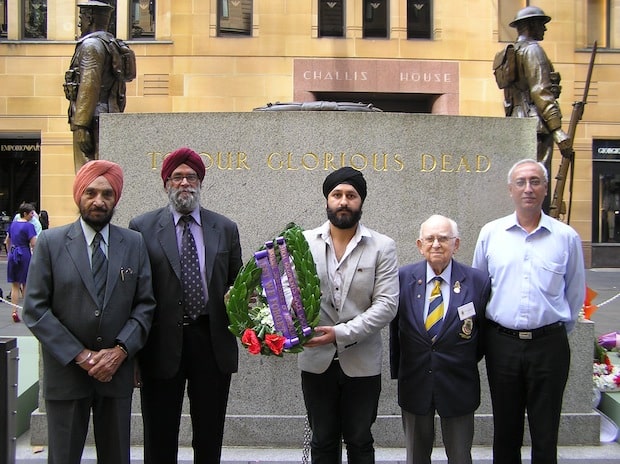
Rubbing shoulders yet again with mainstream veterans were their Sikh counterparts, better known these days as ANZAC Sikhs. Dressed in dark blue turbans, impeccable suits, with medals flashing proudly on their chest, the Sikh regiment led by Colonel Mahinder Singh celebrated Aussie spirit of mateship and larrikinism. This year twenty-five Sikh ex-servicemen and women under the banner of Sikh Regiments WWI and WWII took part in the march. They also took part in the wreath laying ceremony at the Martin Place Cenotaph.

Among the marchers this year were retired ex servicemen Col Charanjit Singh Cheema, Sgt Major Kuldip Singh, Havildar Harbant Singh Bathal, Captain Sarjinder Singh Sandhu, Corporal Jagjit Singh Toor, Sgt Sarabjit Singh, Subedar Dalbir Singh, Corporal Nirmal Singh Sandher, Havildar Mehar Singh, Subedar Malkar Singh, Subedar Balbir Singh Banwait. Honouring their ancestors were Ajmer Singh Gill, Bawa Singh Jagdev, Vikramjit Singh Grewal, Manjinder Singh, Suhinder Singh Kalsi, Jasbir Singh Randhawa, Jarnail Singh Gill, Amarinder Singh Bajwa, Ashvinder Singh Randhav and Kuldip Singh. Carrying the Sikh banner were Sandip Singh and Manpreet Singh.

Organised each year by the National Sikh Council of Australia (NSCA), planning for this much-awaited event starts well ahead. The core organising team comprises NSCA President Ajmer Singh Gill, Media Liaison Officer Vickram Singh Grewal, Lt Col Mahinder Singh, Fauji Kuldip Singh and Secretary Bawa Singh Jagdev OAM. Amarinder Bajwa, MP Singh, Angad Singh, Amarjit Khela and Narinderpal prepared promotional materials.

The Sikh contingent first marched in ANZAC Day parade back in 2007. To educate the wider community on the contributions of Sikhs during the various military campaigns, the NSCA actively lobbied with peak defence bodies in the country as well as RSL. Their efforts were rewarded in 2007, when Sikhs veterans were officially granted permission to take part in the ANZAC Day march.

Spurred by the enthusiastic reception at their debut, the contingent also organised an all-Sikh bagpipe group, the Dasmesh Band to be flown in from Malaysia at a whopping cost, to accompany them the next year.

Since then the ANZAC Sikhs have only gone from strength to strength, prompting the Nepali and Indian contingents to also follow suit.

“A solemn ceremony of remembrance and commemoration, ANZAC Day is integral part of Australian history and a fitting tribute to the sacrifices made by those soldiers for the freedom we now enjoy in Australia,” Ajmer Singh Gill told Indian Link.

“Anzac Day is a reminder of the debt of gratitude that we owe as a nation, to those who are currently serving and to those who have served in the past. As we marched past the Cenotaph with our heads down in reverence”, he poignantly remembered, “we could imagine, the pain and suffering of  those who laid their lives  so that we could live free, and the sounds of the bullets from the guns in their hands and the noise of the battle in the distance”.

“While marching we could only imagine their resolve and force that drove them up to the battlefield into assault and their tenacity that held them all those days and nights for many months on the battle field. A long vigil gazing into death defending their post, ceding nothing but sacrifice everything they had, to defend their post. We Sikhs salute them”, he continued.

“Sikh veterans are very honoured to march on the same day proudly displaying their campaign medals and look forward to it all year, be it rain or shine. They feel even prouder when so many Australians clap as they march on”, he added.

Seven years on, the sight of the resplendent pagdi (turban) clad veterans marching, still gets looks of curiosity and wonderment at their presence in a traditional “white” march.

“Over the past seven years, we’ve been able to make the wider Australian community more aware of Sikh participation in the World Wars (and other related battles). Year after year, we see more and more people cheering for the Sikh regiments – as they march in the CBD. Their applause is a huge thank you for us.

There is a sense of comradeship with other participants as well, who reminisce their old experiences (some come up to us and talk about their experiences or stories they were told about Sikhs and their courage in the World Wars,” Vickram Singh Grewal of Australian Defence Forces and media liaison officer for ANZAC Sikhs told Indian Link.

“There is a special relationship with the British and Gurkha Regiments (who also participate in the march regularly under Commonwealth and Allied Forces).  We’ve also evolved ourselves to be a more mature group of participants,” he added.

“While we’ve had some success in educating the wider community, we would like to do more within the Australian Indian/Sikh community because many are completely unaware of ANZAC tradition/significance, let alone being aware of Sikh participation”, he pointed out.

As the centenary kicks off soon, Grewal is determined to carry the message of ANZAC Sikhs to younger Australians.

Ajmer Singh Gill has also repeatedly addressed this issue of social inclusion.

“As peacekeepers, we Sikhs are proud to march on this solemn occasion. After all, we are not foreigners or strangers but very much Australians, only of a different heritage and background. Since migrating to this beautiful country, we have gladly embraced the values of our adopted homeland, while retaining our inherent identity. We have focussed on positives and are contributing to the bigger Australian picture and are very much part of the community,” he reiterated.

Herein lies his frustration that some people still do not comprehend the true meaning of the ANZAC legacy.

“Numerous Sikhs were killed in action and many more injured during the two World Wars and thousands of Sikhs fought alongside the ANZAC troops and became good friends,” he explained.“Sikhs served all over the world and were awarded 14 Victoria Crosses – the highest award for bravery. Identified by their trademark blue turbans, Sikhs have since served as United Nations peacekeepers in many countries such as Congo, Lebanon, Ethiopia, Eritrea”.

Gill has also been in talks with the Indian consulate to provide a marching band to accompany the regiment.

While the Sikh regiments are now represented in marches at Adelaide, Perth and Woolgoolga as well, NSCA, through its national membership hopes to see the participation in all Australian capital cities.

“Such events are essential to revive the memory of every man, woman and child who in those crucial years died, so that the light of freedom and humanity continue to shine,” Retd Lt Col Mahinder Singh, the leader of ANZAC Sikh contingent this year pointed out.

“The ceremony is a unique way of showing our gratitude for the peace we enjoy today and the responsibility of ensuring that the freedom and liberty won at such grave cost does not fade away. Personally, as an ex-serviceman, the ANZAC service also brings back memories from my time in active years in Singapore”.

For Amarinder Bajwa, the participation is a fitting tribute to all the Sikh soldiers who have been part of armed forces since the days of British Raj.

“Sikhs have a strong history of defending India from the external invasions and occupations in India. Therefore, it was also special for me to commemorate and support the local communities as well as remember my father who served in the Indian Army in the 2nd Sikh Regiment that also fought at Gallipoli along with other British regiments”, he recounted.

Capt (Retd) Sarjinder Singh Sandhu has been involved in organising the Sydney ANZAC Day March and Wreath Laying Ceremony since its inception in 2007.

“I must thank the great team of veterans and descendants of veterans who work together to make each march a success.”

The sight of their resplendent uniforms and burnished medals always brings a tear to his eyes.

“Their comradeship astounds me and I feel honoured to march alongside them,” he noted. “If my father, my uncle and my elder brother could see me at the march I am sure as ex-servicemen they would be proud of me. I am confident next year, being the Centenary of Gallipoli, our contingent will be much larger”.

Meanwhile Sandhu has already begun preparations for the centenary edition and hopes the Indian community will participate in large numbers to show their solidarity towards ANZAC spirit.

The first meeting is scheduled for June and will be followed up with many more to organise logistics and muster support. The committee meets at Parklea Gurudwara as well as Blacktown RSL. Additionally, the Sydney team will also help with the centenary preparations at Canberra, Adelaide, Brisbane and Perth.

NSCA’s efforts have also gained new impetus recently with renowned historian Peter Stanley of Australian Defence Force and researcher Burcu Cervik Compiegne of University Technology Sydney conducting extensive studies into the role of Sikhs at Gallipoli. Both researchers have also met up with the Sikhs to further their research effort.

This year, Prof Stanley also created a PowerPoint presentation showing some of the images he has unearthed of Sikh troops on Gallipoli. With over 25 publications to his credit, Professor Stanley will release his book on role of Indian soldiers at Gallipoli in September this year.

Meanwhile, UTS is also planning an event entitled “Gallipoli Alternatives”, to focus on alternative stories on the White-Australian version.


Magical Myanmar moments

0
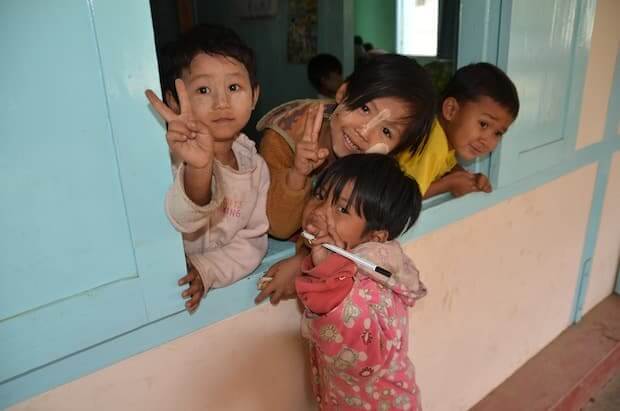
Children at a village school in Burma
Reading Time: 5 minutes

A leisurely trip through unspoiled country along the Irrawaddy is an enchanting experience

Children at a village school in Burma

“If you want to hear the sounds of real Burma, understand its history, culture and lifestyle, then experience the Irrawaddy River, its lifeline”, said a Burmese guy I met in India sometime ago. Burma has been called Myanmar since 1989.

I found the essence of his comment absolutely true while cruising down the nation’s largest waterway from up north beginning at the historical town of Prome, to the former capital city of Mandalay.

This 8-day expedition was on offer by Pandaw River Cruises that, in the 90s, introduced waterfaring in this river-dominated land, following the vestiges of the former Irrawaddy Flotilla Company. During the British colonial period, this Scottish company operated hundreds of boats, as there were no other means of transportation from one destination to the other.

Pandaw’s fleet comprises of several luxury boats, each hand-finished in brass and teak by traditional craftsmen, preserving their bygone colonial character. Compared to others, our vessel the RV Kalay was small with five air conditioned staterooms not overly spacious, but adequate with comfortable twin beds, en suite bathrooms, and hot and cold water round the clock.

As the voyage began, a mystic landscape of rolling hills, lush green fields and sandy riverbeds unfolded before us. Breathing fresh air, we sailed past small villages and towns where men worked in the paddy fields with oxen-driven ploughs, perhaps not be seen anywhere else in the world, cattle grazing, women washing and bathing in the river, children playing around their shabby huts and elders sitting in the shade of a large riverside banyan tree, smoking cheroots and leisurely waving at us. The moving panorama kept reflecting visuals of a simple and laidback life where time seemed to have stopped. Absorbed by the peaceful scenery, the passengers seemed lost in thought.

On each day there were shore excursions which introduced us to the history and culture of the land. We visited the ancient archaeological site of the Pyu civilization, forts at Minhla built by the Italians to save the Burmese Royals from the invading British, locations of historic Anglo-Burmese Wars and dilapidated buildings holding legacies of the British Raj. However the most interesting part of these excursions was encounters with the friendly locals. We met them at markets, shops, wayside eateries and monasteries. The language barrier didn’t stop us from sensing their welcoming nature.

At a village where clay pot making was their specialty, we watched in amazement as the villagers maintained their traditional trade with no modern facilities. We also visited a primary school built from donations from Pandaw passengers. On seeing us arrive, hoards of giggling children stopped their study and sprinted out of their classrooms to greet us and pose for our cameras. Once the picture was clicked, they would urge us to show them the result, and would see their image on the screen as if it was a wondrous happening.

A highlight of the cruise was the stop at Bagan, the nation’s greatest architectural site where visitors are often bewildered by the array and diversity of countless red brick pagodas, temples and stupas all freely scattered across the arid and dusty plain spreading out from the banks of the Irrawaddy. “The whole, as seen from the river might pass for a scene in another planet, so fantastic and unearthly”, commented Scottish writer Henry Yule in 1855. I couldn’t agree more when this silhouette first appeared before me.

Bagan was established in the 10th century as the capital of the Burmans who came into this land from North East China. Its fame and power peaked in the 13th century when Buddhism became the state religion with over 6000 Buddhist monuments built across the landscape. Famous explorer Marco Polo described them as ‘towers of stone’, many destroyed by later earthquakes and wars. Fortunately around 2000 still remain and have been aptly placed on the World Heritage listing.

It is impossible to see all of them; we only sampled the famed ones, the 11th century built Ananda Temple that ranks at the top of the list. With its shimmering gold tower at the top of the sphere, this active shrine with its four statues of the Buddha is highly revered among the religious-minded Myanmar population. Frescos and murals on its walls depict stories from the life of Buddha and appealed to me as poetry on stone.

Myanmar is often referred as the ‘Land of Golden Pagodas’ and it is said that if you are standing somewhere and don’t see a golden pagoda, you are not in Myanmar. This cliché is right. We kept spotting pagodas of different size, scale and design everywhere and regularly shored in to see a few, gorgeous enough to drop our jaw at first sight.

However nothing compares to the breathtaking experience of glimpsing the mighty gold-draped Shwedagon Pagoda in Yangon, where I spent a few days prior to the cruise.

The thriving metropolis of Yangon can be pictured as a counterpart of Kolkata if chaos, crowds, cosmopolitanism and colonial vestiges can be compared. Formerly known as Rangoon, this nation’s largest city was built by the British in the 19th century after they annexing the land on behalf of the British Indian Empire. Today, European styled buildings, traditional shop houses, crumbling jazz-age mansions and lots of pagodas dot the clumsy city-fabric, intermittently weaved with tree-lined avenues, green parklands and lakes.

The towering Shwedagon Pagoda, referred by ancient mythmakers as the ‘Mountain of Gold’, undoubtedly rules the city’s skyline. During the day, its golden facades glitter brightly. Then as the sun sinks into the west, the gleam gradually reflects magical shades from orange gold to crimson red. With evening lights, another appealing manifestation occurs.

The size and scope of the entire temple arena is huge and is always packed with mesmerized visitors taking photos, ardent devotees praying with flowers and incense sticks, monks chanting and children ringing bells with wooden sticks. The entire atmosphere is so magical and engaging that one can’t afford to leave Yangon without experiencing its golden vista.

Currently the tourism world touts Myanmar as a gem of a destination; it is one of those few remaining green-field places, untouched by the commercial approach to tourism. I was please to notice helpful people, honest taxi drivers, hardly any flaunting by locals, not too many souvenirs shops, and products not priced artificially high to be bargained down.

Most unfortunately, this nation remained cut off from the rest of the world for more than half a century under a strict military regime. However things are now rapidly changing with the government trying to restore democracy. Restriction on press has been relaxed, as a result of which several newspapers are on display at newsstands. Most significantly, photographs of opposition leader Aung San Suu Kyi can be seen in every nook and corner of the land, possibly proclaimed as an emblem of liberty. These are inspiring a sensational rise in visitor numbers, making tourism a major catalyst for private investment, more jobs and a better economy.

I will keep myself alerted to what ultimately happens to this pristine land which the celebrated novelist Rudyard Kipling once referred as ‘Quite unlike any land you know about’.

TRAVEL NOTEBOOK

Getting there: Bangkok Airways (www.bangkokair.com) have flights from Bangkok to Yangon and Mandalay. This boutique airline offers lounge facilities even to economy class passengers in Bangkok which can be easily reached from Australia flying Thai Airways (www.thaiairways.com).

Where to stay: InYangon, centrally located Traders Hotel (www.shangri-la.com/Traders/Yangon) is popular among business and leisure travellers.

Irrawaddy River Cruise – Check Pandaw River Cruises (www.pandaw.com) for details

Visa –Check with Myanmar Embassy (www.mecanberra.org ) in Canberra for details.

Shopping trails of Sydney

0
Reading Time: 4 minutes

Discover the best bargains for clothing and accessories to be found in and around the city

Are you a keen shopper and wondered about having a handy shopping guide that would reveal secrets about ‘shopping like an expert’?

When it comes to advising people on advising people about how to get more bang for their buck at selective shopping locations, I believe I can do a decent job. So were are some of Sydney’s best shopping precincts and how can you make the most of your shopping experience.

I tend to look at shopping categorically and would broadly split it into: luxury, high street, outlets, markets and online.

However, I must confess that I’m not much of an online shopping expert. I love the total experience of getting out there; walking in and out of stores, trying on outfits and refreshing myself with a coffee and snack stopover after a perfectly satisfying conclusion.

Luxury shopping

These words are enough for any girl to feel weak in her knees! After all, it’s not often that most of us get to purchase a coveted investment piece!

Whether it is the Louis Vuitton, Burberry or Paspaley stores on George Street or the Prada, Gucci and Miu Miu in Sydney’s City Westfield, these shop windows are sure to take your breath away. The grandiose interiors will leave you spellbound and desiring to be rich and beautiful like a movie star!

Besides these, you can head to Pitt, Castlereagh and King’s streets in the city centre for plenty of luxury stores and almost all of the world’s top brands for clothing, shoes, bags, scarves and watches. Also, selected David Jones and Myers stock up on many international brands from Diane Von Furstenberg to Marc by Marc Jacobs and more.

High street shopping

Now we’re talking more real stuff! For those of you unfamiliar with this term, ‘high street’ brands actually mean brands that are inspired by runway fashion, yet are casual enough to wear on the street and affordable for most people. Some of the top ‘high street’ brands as quoted in this month’s Instyle magazine are – Zara, Topshop, Country Road, Witchery and Cue. While Zara has its origin in Spain and Topshop is a UK based brand, Cue, Country Road and Witchery are very much Australian, much loved and extremely wearable, with superior quality and design!

Most Westfield shopping centres house these stores and you can find the latest season’s collections. I also like to sift through the ‘sale’ or reduced items rack and am often pleasantly surprised to find serious bargains without compromising on quality.

In particular, a well-cut dress, stylish knit or trendy print is what you can expect to find at Cue, Witchery and Country Road, respectively.

Factory Outlets

Now this category probably interests all types of people, from the shopaholic to the frugal shopper; from the spender to the budget conscious buyer. No wonder people throng to these outlets like ants to a sugar cube!

Haven’t we all been to DFO Homebush and Birkenhead Point at some point, in search of great pieces for a great price?

Visit outlets at off peak times if possible, to have a much more relaxed experience and avoid long queues to get into the store! Next, what should you look for? Wardrobe staples, of course. Your best bet for these would be brands like Veronika Maine, Marcs, Cue or Jag. A black dress, pencil skirt, striped tee or grey knitted pullover could easily be picked from a last season collection and still be on trend.

Must visit stores also on my list are Coach, Oroton, Burberry and Michael Kors for some much loved luxury accessories that will not necessarily burn a hole in your pocket!

Cosmetic Direct stores can be a winner too, you can expect to find your favourite Burberry, Versace or Chloe for a fraction of the cost. Don’t forget to look in the little boxes placed all around for an assortment of Essie nail colours, Maybelline eye pencils and tiny treasures you can literally buy with gold coins!

Markets

Markets may not be everyone’s cup of tea, but you need to go there only a few times to learn what to look for and how. Paddy’s markets are inarguably one of the largest and best places to visit, and I’m not just talking souvenir shopping. It is one of the best places to find reasonably priced yet authentic pearls, quirky accessories and trendy clothes at crazy prices. If you are looking for more classy options, the Glebe, Rozelle or North Sydney markets will meet your needs. I love to look for pre-loved luxury pieces here as you are assured of authenticity and sometimes they are in pristine condition too. You can come across a vintage treasure or a unique collection from a local designer that will have you rapt!

Wherever you opt to shop and no matter what you are looking for, I hope this little shopping guide will give you some good insights and tips to make your next trip a success! Happy shopping…

From the sidelines at IFFM…

0
Kangana Ranaut Photo: Ravinder Singh Jabbal
Reading Time: 5 minutes
Kangana Ranaut
Photo: Ravinder Singh Jabbal

Chees(e) badi has mast mast…

It was a night to remember for eight-year-old Ishi Trehan. The Mitcham youngster had her own very special moment with Amitabh, up on stage. Opening night of the IFFM, she sat in the audience with her parents and her sister, hoping she would be called out to ask her question to India’s most iconic star.

Of course, she knew him best as Bhootnath, having only just seen his latest film Bhootnath Returns.

When Festival Director called out her name, she jumped up and asked her question: Which is your most favourite cheese?

Um, said Amitabh, I stopped eating cheese a long time ago, and don’t even know what kind are available! Would Ishi like to ask another question?

Ishi’s mum Nisha jumped in to save the day, and asked if she could have a hug instead.

Of course, said Amitabh graciously, come on down.

“When we got home, Ishi declared she would never wash the dress she was wearing, because Amitabh had hugged her in it!” Nisha told Indian Link later. “After the entire episode on stage, Ishi and her sister both wanted to stay back for the screening of Sholay 3D, even though it was late and it was a school day the next day. I was surprised they sat through the entire film!”

The magic of Amitabh… seems to touch fans of all ages, doesn’t it?


‘Run out’ of favour: Kangana

An Indian-origin journalist from a local media outlet asked Kangana a question at the press conference held prior to the Awards Night. He used her name thrice in his question pronouncing it incorrectly every time.

Kangana replied to his question but in her soft spoken way ticked him off for pronouncing her name incorrectly. “Pehle aap mera naam theek kar lijiye”, she declared.

It is Kangana ‘Run-ot’ apparently, not ‘Run-out’ or ‘Ran-a-wat’.

Ok, we get it now.

At the Awards Night Kangana, who has the reputation of being a fashion icon and is known for her quirky style, chose to wear a flared skirt (on the lines of what Sonam Kapoor wore famously at Cannes). Unfortunately it did not work for her and she ended up looking like a straw in a silver drum instead.

To add to it she had not much to say to her fans after accepting her Award for Best Actress. She accepted the award from Ted Bailieu, former Premier, and somewhat awkwardly, there was no hand shake or peck on the cheek. After mumbling something on the lines of “It’s good to see people appreciate our films here in Australia,” she just walked off the stage.

She was then asked to return by Mitu ‘on popular demand’ to announce the next award. She returned, but with no preliminaries whatsoever, merely announced the name Rakeysh Omprakash Mehra.

Were you not interested in connecting with your fans here, Kangie?


Dhoom series: No doom or gloom

Director Vijay Krishna (Vicky) Acharya is riding high on the success of his Dhoom 3, and unlike Kangna, seemed very happy to be meeting his Melbourne fans. When someone asked him if there are plans for a Dhoom 4, he looked sceptical at first, but then piped up with this: “I’ll make Dhoom 4 if you all promise to see it 14 times each, so it can make more money than Dhoom 3”.

Good plug for a film that isn’t even made yet!


Melbourne trip, in the words of the man himself

If you are one of the million-odd followers of Amitabh on his various social network forums, you’ve probably read what the man himself had to say about his Melbourne trip.

He loved visiting the “hallowed grounds of the fantastic and historic” MCG, and took a photo of the portrait of Sachin Tendulakr and Don Bradman that hangs inside.

About IFFM itself, he wrote about his own International Screen Icon Award, the formal lunch with the Governor of Victoria (which made him “feel almost regal”), the La Trobe Uni scholarship, and his gentlemanly behaviour towards the women he met that prompted a rather embarrassing question:

The Minister for Tourism and Arts and many other portfolios, the Hon Lady Asher, who graciously attended all the functions… sat next to me, and for whom I stood each time she did, and tended to her chair whenever she sat or moved away, became a question to me by print media later in a one-on-one with this… “How did you learn to be such a gentleman?”

How does one answer this … !!!!

Q: What does it feel like to be Amitabh Bachchan?

Is that a question???

How does it feel? Well, it feels like a name … a name of a human, I guess.

Wow, shabaash, Indian media in Australia.

Malaika on Khan

At the Dance Comp event, an audience member asked Malaika Arora Khan what was the best thing she liked about hubby Arbaaz. She went all coy and smiling mischievously, said, “I can’t tell you what I like best about him”. Then, thinking about it for a few seconds, she claimed she likes the fact that he is rock solid – er, that he is the grounding factor in her life, and someone she can always rely on.

She didn’t exactly look like she was missing him much though, as she happily posed for selfies with the dancers, dancing with them and really enjoying herself despite the freezing weather. Probably because she hails from Canada, she didn’t look like she was feeling the cold either, given the short dress she wore with stockings and a faux fur coat and shoes that added several inches to her already tall and sexy legs. She looked fantastic!


Security overkill

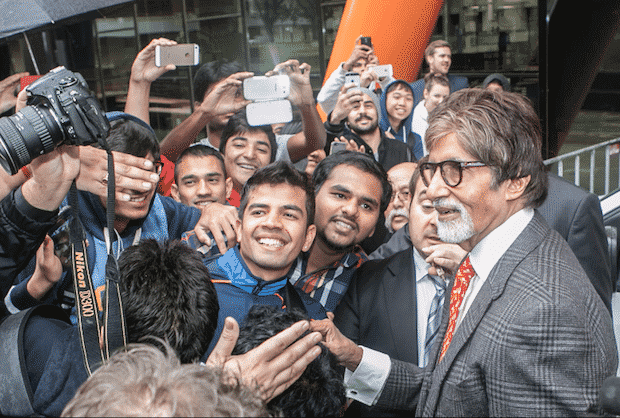
Festival organisers had every aspect of the event well-looked after, although it must be said the security was a bit over-enthusiastic. We do understand that the crowds are likely to go berserk if allowed too close to Amitabh, or even the others from tinsel-town, but come on, was there such a need for super-tight security? It was almost as if the President of the USA was visiting! At the La Trobe event, the poor wife of the scholarship winner barely made it in to see her dear husband receive the honour, thanks to the over-zealous security guards. Thankfully though, Amitabh himself was gracious as ever, signing autographs and posing for photographs, even taking time to get up close and personal with the students who came out to see him despite the inclement weather.

And a bit of poetry, with a bit of wait…

Nowhere was Amitabh’s patience and gracious behaviour more evident than when a fan insisted on coming on stage to read something alongside his favourite star. At the opening night event, Big B agreed to a request by a young man to read out aloud a few lines from his father Harivanshrai Bachchan’s poetry. The ardent fan, perhaps a bit overwhelmed at being so close to the man himself, lost the spot on his smartphone where he held the particular piece of poetry. He apologised and kept everyone waiting as he scrolled furiously on his phone, but the audience made their impatience known. However Big B was polite and amiable, and waited patiently till the desired literary piece was found. The man does have impeccable manners….


And the award goes to….

2
Minister Heidi Victoria with Big B Photo: Ravinder Singh Jabbal
Reading Time: 3 minutes

It’s glitz and glamour at the inaugural IFFM Awards

Minister Heidi Victoria with Big B
Photo: Ravinder Singh Jabbal

“There are actors, there are stars, and then there is Amitabh Bachchan,” declared Indian actress Simi Garewal, to thunderous applause, at Melbourne’s iconic Princess Theatre recently. Simi was addressing the audience at the Indian Film Festival of Melbourne’s (IFFM) 2014 inaugural awards Night event.

The awards were held to celebrate the best of Indian cinema and megastar Amitabh Bachchan was honoured with the International Screen Icon award on behalf of the Victorian Government and IFFM. Minister Heidi Victoria Minister for the Arts, Minister for Women’s Affairs, Minister for Consumer Affairs, presented the award to the actor who is loved by millions.

The inaugural awards function was attended by hundreds of people from the Australian Indian community, dignitaries and IFFM festival guests. A red carpet welcome awaited the Festival guests that included actress Kangana Ranaut and Simi Garewal; director Rakeysh Omprakash Mehra and his wife P. S Bharathi; writer-directors Vijay Krishna Acharya and Ritesh Batra.

Ritesh Batra bagged the best Indie Film award for Lunchbox. Kangana Ranaut took away the best actress award for her role in Vikas Bahl’s Queen. She received the award from Ted Baillieu MLA andformer Victorian Premier, under whose tenure the Indian Film Festival of Melbourne was launched in 2012.

Rakeysh Omprakash Mehra’s biopic Bhaag Milkha Singh Bhaag based on Indian athlete Milkha Singh,swept three awards in the category of best film, best director and best actor. Actor Farhan Akhtar, who played the lead role in the biopic, shared the best actor award with Irfan Khan who won the award for his role in Ritesh Batra’s Lunchbox. They were both not present to collect the award; instead, a pre-recorded message from Farhan Akhtar was displayed thanking his fans and the festival jury for selecting him for this honour.

Aamir Khan’s latest hit Dhoom 3 took away the People’s Choice Award for being the highest grossing Indian film in 2013 at the Australian box office, collecting revenue of $1.7 million dollars. Writer-director Vijay Krishna Acharya, collected the award along with Avtar Panesar, Vice President of Yash Raj Films.

As the Official MC, Youtube sensation Jehan Ratnatunga garnered some laughs for his Sri Lankan mother style bantering on video. Raina and Govind Pillai from Karma Dance opened the entertainment segment with a classical Bharatnatyam fusion performance.

The Bombay Royale Australian band fronted by singers Parvyn Kaur Singh and Shourov Bhattacharya and led by Andy Williamson performed music inspired by soundtracks of Bollywood movies. Over 50 dancers from the Shiamak Dawar Dance group performed an Amitabh Bachchan medley much to the delight of the audience and the icon himself who praised the group for their high-energy performance.

Filmmakers Donald Percy and Abhishekh Verma won the Western Union Short Film Competition 2014 for their short films Makeover and Chasni respectively. The theme this year was ‘Hope’ and Verma won a trip to Melbourne while Percy won a trip to Mumbai from IFFM.

Mitu Bhowmick Lange, IFFM Festival Director said, “We are thrilled to have honoured Indian cinema’s best and brightest at these inaugural awards. It was not an easy task to whittle down favourites, but we had the help of an amazing jury and a passionate audience. We hope that in future these awards will become a regular stop for India’s most talented filmmakers”.

More from IFFM here:

Dancin’ in the rain

A Tete-A-Tete with Amitabh Bachchan

Couldn’t get enough of Big B

And now, an Amitabh scholarship!

Check out the photos of Big B at IFFM on our Facebook page here

And now, an Amitabh Scholarship!

3
Photo: Ravinder Singh Jabbal
Reading Time: 2 minutes

Indian cinema icon Amitabh Bachchan presented an Indian student with a scholarship of up to $200,000 at La Trobe University in Melbourne on May 2.

Photo: Ravinder Singh Jabbal

The recipient of the Amitabh Bachchan Scholarship that runs for four years, is La Trobe graduate Roshan Kumar, who is from Ranchi in Jharkhand. He will work towards a doctorate in the potential of using social media to better communicate health messages to India’s estimated 80 million social media users.

“I have grown up watching Amitabh Bachchan in movies. To imagine that I would meet him in person still seems like a dream,” Roshan Kumar said of his meeting with the ‘Angry Young Man’ here.

“I am honoured to receive this scholarship which will help fund my research into improving the health of thousands of people living in India,” added Roshan Kumar, who graduated from La Trobe with a Masters in International Business in 2010.

The scholarship will be presented every four years by Amitabh, to an Indian citizen to develop a thesis related to media, digital technology and communication.

Earlier, the 72-year-old actor had taken to his blog to thank the state of Victoria for naming a scholarship after him.

He views it as a way of “fructifying the bonds that exist between our two nations and lending unstinted support to our film industry in conducting such events to acquaint the locals with our cinema”.

The University’s vice chancellor John Dewar said it was an exciting and important day for the institution.

“La Trobe University is very proud that Mr. Bachchan has agreed to work with us and help support the education of the next generation of Indian leaders who will help make a difference to the complex problems facing our world today. This is the beginning of a very exciting educational partnership between La Trobe University and a legend of the Indian film industry,” he added.

Some La Trobe staff members of Indian origin and local students were able to meet with and talk to Bachchan. Melbourne-based fans also caught a glimpse of him during his visit.

In May 2013, the University officially renamed its Agora Cinema the Yash Chopra Cinema for one year, launching a series of Indian film screenings that made the campus a focus for Melbourne’s Indian community.

More from IFFM here:

Dancin’ in the rain

A Tete-A-Tete with Amitabh Bachchan

Couldn’t get enough of Big B

And the award goes to

Check out the photos of Big B at IFFM on our Facebook page here