Home Blog Page 919

Partnerships in education

0
Reading Time: 3 minutes

IIT alumni help forge links between their alma mater and universities here

Did you know that 24 per cent of the scientists at NASA regard the Indian Institutes of Technology (IITs) as their alma mater?

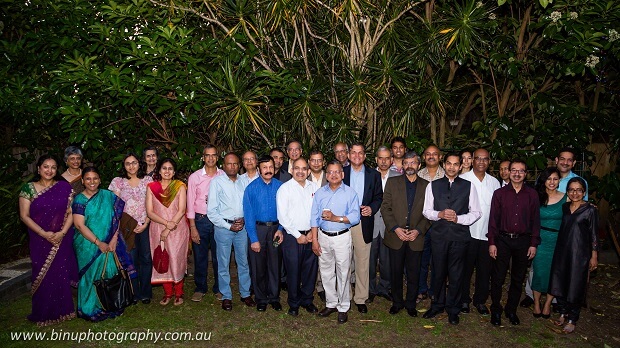
Members of the IIT Alumni Association of Australia host visiting IIT executives

This statistic was mentioned at a recent conference organised by the IIT Alumni Association of Australia (IITAA) by the Consul General of India (Sydney) Sunjay Sudhir, a former IITian himself.

The conference, held in association with the education chapter of the Australia India Business Council, was aimed at forging pathways for IITs to connect with universities here. It saw a number of visiting IIT top brass interact with their counterparts at Australian universities in a bid to explore increased research partnerships.

The IIT visitors included one director (Prof. U.B. Desai of IIT Hyderabad) and four deans (Prof. Amar Samanta of IIT Kharagpur, Prof. Sandeep Singh of IIT Roorkee, Prof. Dheeraj Sanghi of IIT Kanpur and Prof. Aloke Ghosal of IIT Guwahati). Over the course of the conference at the MLC Centre, they made presentations about their own institutes, their particular research strengths and their visions for the future.

They also heard from representatives of Australian universities such as Prof. Judy Raper (Deputy Vice Chancellor of the University of Wollongong), Prof. Barney Glover (Vice Chancellor of UWS), Prof. Jim Lee (Deputy Vice Chancellor of Macquarie University), Prof. Veena Sehjwala (Scientia professor at UNSW and an IITian herself), Prof. Joseph Davis (from the University of Sydney’s School of Information Technologies), James Keenan (Head of Partnerships at Macquarie University) and Prof. Mary O’Kane (Chief Scientist of NSW).

Two panel discussions held at the event also threshed out the role of IITs in cutting edge research and how Australian universities could harness them in partnership; Australian case studies and best practices on research partnerships, and the possibility of exchange of faculty and students between IITs and universities here. The discussions were organised by Muralidharan, chairman of the AIBC Education chapter.

Over the next three days, the visitors from India travelled to universities here in NSW as well as in Victoria and in Canberra.

The research relationship between India and Australia has grown by leaps and bounds in recent years. Prime Minister Tony Abbott pledged on his recent trip to India, $20 million for the Australia India Strategic Research Fund. In October, the Australia India Council announced funding for 13 specific collaborative research projects that will mutually benefit the two countries.

Indian Prime Minister Narendra Modi’s ‘Make in India’ campaign will have potential as well to see this relationship develop further.

Prof. U.B. Desai, Director of IIT Hyderabad was pleased with the outcomes of the visit. He said, “We exchanged key opportunities (with our Australian counterparts) and had one on one meetings to pursue specific action items.”

Prof. Mark Hoffman, Pro Vice Chancellor of UNSW said, “The initiative helped to make UNSW more familiar with a number of the IITs and hopefully will lead to more reciprocal and collaborative agreements.”

Alumni can play a significant role in creating such links, says Samit Chandra, the Vice President of the IITAA.

“Creating such opportunities is particularly satisfying for us,” he told Indian Link. “We are indebted both to our alma mater and to our new home here, and our efforts can bring about fruitful outcomes for both.”

“The education initiative is our first large-scale endeavour and we hope to continue with it in the next few years,” Chandra, an IIT Roorkee alumnus, revealed. “We also have plans for an industry-related conference in the near future.”

As well, there are plans afoot for programs with PAN-IIT USA, a more global alumni organisation.

The IITAA was founded in 2003, but only became active in a professional sense five years ago, Chandra revealed, with momentum picking up two years ago as the numbers increased in Australia. The organisation recently part sponsored an IIT Roorkee race car project, in which a student team not only designed and fabricated a race car but also competed in an international competition, the FSAE Australasia held in Melbourne. The Indian team was adjudged the best in the fuel efficiency category.

The IITs are India’s most prestigious science institutions. “It may be the most important university you have never heard of,” a recent 60 Minutes segment on India’s premier technological university began famously.

It was in 1946 that the idea of the IITs first came up, as plans began to be drawn for the governance of a soon-to-be independent India. The founding fathers of the nation, realising the importance of tertiary technical institutions in the job of nation-building, suggested the setting up of the institutes across the country. The first IIT was established in Kharagpur in 1950. Within the next decade, the institutes at Delhi, Bombay, Madras and Kanpur came into being, and became highly regarded as educational institutions that trained young India’s scientists. Today there are 16 IITs in India, and many more institutes are awaiting recognition to become full-fledged IITs.
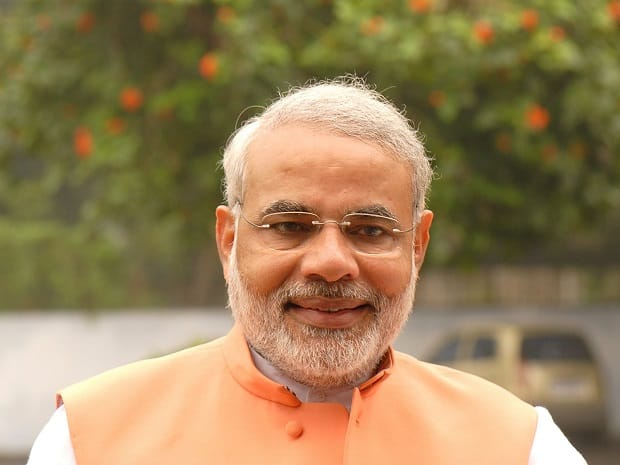
A beacon of hope for India

0
Reading Time: 3 minutes

PM Narendra Modi relies on progressive mantras to build a transformed India, writes MOHAN THITE

One of the potentially most significant developments in India in recent times has been the election of Narendra Modi’s government with a thumping majority, clearing the way from the crippling limitations of coalition politics that had plagued the Indian government in recent times. Modi comes to power with arguably well-established credentials, on the back of his success as the premier of the state of Gujarat.

With his election, the political discourse in India has shifted from routine blame-games between parties to focus on the ‘development agenda’. There is now a renewed emphasis on governance standards, including quality and speed of decision making enabled by e-government initiatives.

His mantra of ‘maximum governance and minimum government’ has already attracted attention in global business and political circles.

In his meetings with business leaders during his recent visit to the United States, PM Modi highlighted how 65 per cent of the Indian population is below the age of 35 (with 50 per cent below the age of 25), yielding rich ‘demographic dividends’ and with the potential to become the world’s leading supplier of manpower. With declining and ageing populations and growing skill gaps in Science, Engineering and Technology (SET) sectors in western countries, this may indeed become a reality.

It goes without saying that this dividend can quickly turn into a huge liability if enough job opportunities are not created. That is why Modi has launched a campaign of ‘Make in India’ with the aim to make India the manufacturing hub of the world.

In his Independence Day speech, he invited the world to “come make in India, be it plastics or cars, satellites or agricultural products” with “zero defect and zero effect (on the environment)”.

Modi has already attracted several billions of dollars in promised investment from countries such as Japan, China and the USA, as well as businesses such as Boeing, IBM, General Electric, Pepsico, Amazon and Facebook. The creation of a new federal ministry for entrepreneurship and skill development augurs well to fulfil the ambitious target of skilling/upskilling 500 million people in India by 2022.

Modi also surprised everybody by inviting the political heads of India’s neighbouring countries to his inauguration. He followed this by visiting Bhutan and Nepal in the first few months of assuming power, clearly underscoring the importance his government has placed on developing relations in the region. He also announced a slew of economic assistance packages to these countries in an apparent effort to dispel concerns regarding India’s hegemonic tendencies in its neighbourhood, and also as a counter-weight to China’s increasing involvement in South Asia.

With the successful accomplishment of India’s Mars Orbiter Mission (MOM), Modi urged the Indian Space Research Organisation (ISRO) to develop a SAARC satellite as a gift to the neighbours. He aims to enlarge India’s satellite-based navigation system footprint to cover all of South Asia, and to share the fruits of its technological advancements with the developing and the neighbouring nations which don’t enjoy the same.

The vision and visibility of the Prime Minister of a country is key to how the world perceives that country. In that respect, there is no doubt that Modi has the charisma and transformational leadership capabilities, backed by the overwhelming public mandate in the recent parliamentary and state elections.

While it is still very early to judge the success or otherwise of PM Modi and his government, the signs are encouraging.

India gets its ‘spook’ on to celebrate Halloween

0
Reading Time: 3 minutes

The concept of Halloween is fast becoming a catchy routine in India, with people bringing out their scariest costumes and attending parties with friends, writes KARISHMA SAURABH KALITA 

“Double, double toil and trouble, fire burn and cauldron bubble,” said the three witches in William Shakespeare’s Macbeth. The day of the dead, better known as Halloween, will be celebrated all across the world on 31 October, and Indian restaurants, cafes and nightclubs are in full swing to get their “spook” on.

The concept of Halloween is fast becoming a catchy routine in India. People bring out their scariest costumes and attend parties and get togethers much to the amusement of bystanders, much of whom have a bewildered look on their faces.

Restaurants usually cook up a theme menu where they name their dishes and drinks accordingly, to entice revellers to their joints.

Priyank Sukhija, owner of one of Delhi’s most popular restaurants, Cafe Out of the Box, in Hauz Khas Village has been organising Halloween theme parties since the past four years.

“We usually play around with our interiors, try to make it look spooky. The turnout has always been huge with a mix crowd including expats. This year we are doing four to five signature cocktails including the ‘Dracula’s Blood’, which is a Bloody Mary with a twist,” Sukhija told IANS.

“People usually prefer dressing up as vampires, nurses and witches,” he said.

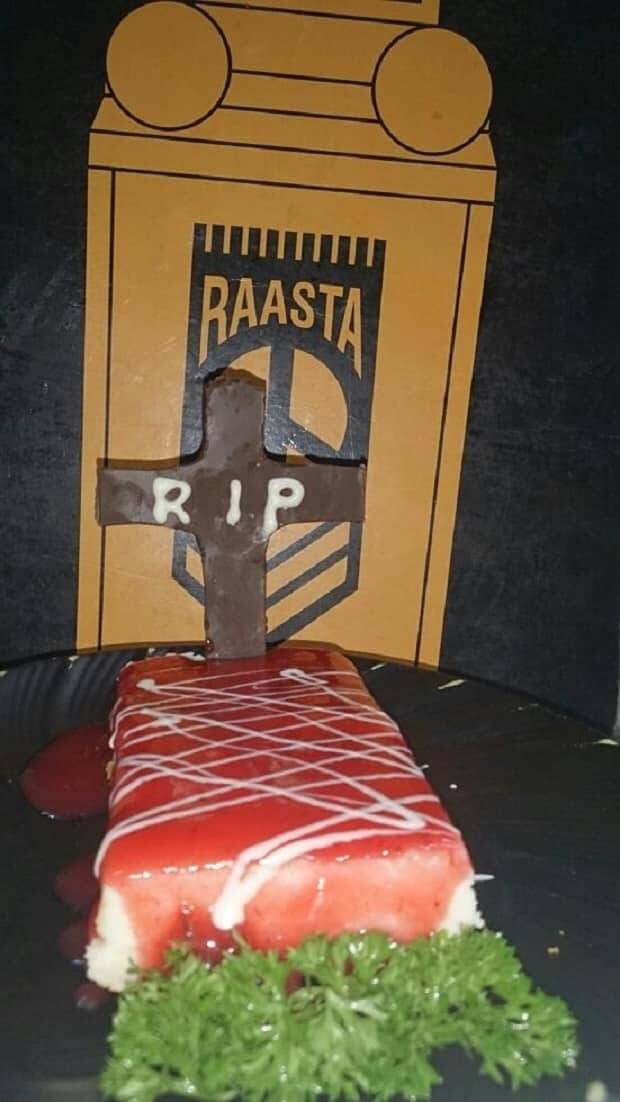
The other restaurants organising theme parties are Raast, Hauz Khas Village, The Monkey Bar, Vasant Kunj, The Flying Saucer, Nehru Palace, Pluto’s Platinum Lounge, Vasant Kunj, Rodeo, Connaught Place, Zu Tisch, Greater Kailash 1, and Smokey’s, Greater Kailash 2.

Exclusive Halloween dinner buffets are available in 1911 – The Imperial, Janpath, Royal China – Nehru Place and Baywatch, ITC Sheraton, Saket.

Nightclubs like Tease in Vivanta by Taj, Gurgaon are organising a party for the first time offering special deals.

I-Kandy, Gurgaon has DJ Aqeel playing throughout the night. Kitty Su — The Lalit, Barakhamba Road, is celebrating the occasion with a graveyard theme.

Halloween parties are not only limited to Delhi, cities like Mumbai, Pune and Bangalore are also organising events to celebrate the occasion.

“It is an opportunity for people to dress up and enjoy. For them it is just another party,” General Manger and Chef of Stone Water Grill, Pune, Shailendra Kakade told IANS.

Stone Water Grill has been organising this event since 2008.

“People are quite aware of what Halloween actually is. Since the last two years, the crowd has been huge. We usually give away prizes to the couple who are at their spookiest best,” Nischint Pathania, general manager, Skyy Lounge, Ramada Powai, Hotel and Convention Centre, Mumbai, said.

“Bangalore’s cosmopolitan young crowd is adventurous and always looking for something new and different,” Pravesh Pandey, Director (Operations), HIGH Ultra Lounge, Bangalore, said.

According to Pandey, Halloween parties were discouraged by city authorities a few years back, but they are back in trend now.

“With the rising number of expats in Bangalore, international festivities are gaining popularity,” Pandey added.

Halloween is celebrated to remember the dead including saints and martyrs. It had its beginnings in an ancient, pre-Christian Celtic festival of the dead in Europe. According to the Celtic calendar, this day marked the beginning of winter. The festival observed by them at the time was called ‘Samhain’.

The Celts believed that on this day, ghosts could mingle with the living as this was the time the spirits would travel to the underworld.

Present day Halloween festivities are enjoyed by people of all ages. Activities include trick-or-treating, attending costume parties, lighting bonfires, telling scary stories, watching horror films and carving pumpkins into ‘Jack-o’-lanterns’.

The Jack-o’-lantern, which has become the symbol of Halloween, has many stories as to how it originated. According to an Irish folktale, the Jack-o’-lantern represents a spirit who was denied entry to both heaven and hell.

India gets its 'spook' on to celebrate Halloween

0
Reading Time: 3 minutes

The concept of Halloween is fast becoming a catchy routine in India, with people bringing out their scariest costumes and attending parties with friends, writes KARISHMA SAURABH KALITA 
“Double, double toil and trouble, fire burn and cauldron bubble,” said the three witches in William Shakespeare’s Macbeth. The day of the dead, better known as Halloween, will be celebrated all across the world on 31 October, and Indian restaurants, cafes and nightclubs are in full swing to get their “spook” on.
The concept of Halloween is fast becoming a catchy routine in India. People bring out their scariest costumes and attend parties and get togethers much to the amusement of bystanders, much of whom have a bewildered look on their faces.
Restaurants usually cook up a theme menu where they name their dishes and drinks accordingly, to entice revellers to their joints.
Priyank Sukhija, owner of one of Delhi’s most popular restaurants, Cafe Out of the Box, in Hauz Khas Village has been organising Halloween theme parties since the past four years.
“We usually play around with our interiors, try to make it look spooky. The turnout has always been huge with a mix crowd including expats. This year we are doing four to five signature cocktails including the ‘Dracula’s Blood’, which is a Bloody Mary with a twist,” Sukhija told IANS.

“People usually prefer dressing up as vampires, nurses and witches,” he said.
The other restaurants organising theme parties are Raast, Hauz Khas Village, The Monkey Bar, Vasant Kunj, The Flying Saucer, Nehru Palace, Pluto’s Platinum Lounge, Vasant Kunj, Rodeo, Connaught Place, Zu Tisch, Greater Kailash 1, and Smokey’s, Greater Kailash 2.
Exclusive Halloween dinner buffets are available in 1911 – The Imperial, Janpath, Royal China – Nehru Place and Baywatch, ITC Sheraton, Saket.
Nightclubs like Tease in Vivanta by Taj, Gurgaon are organising a party for the first time offering special deals.
I-Kandy, Gurgaon has DJ Aqeel playing throughout the night. Kitty Su — The Lalit, Barakhamba Road, is celebrating the occasion with a graveyard theme.
Halloween parties are not only limited to Delhi, cities like Mumbai, Pune and Bangalore are also organising events to celebrate the occasion.
“It is an opportunity for people to dress up and enjoy. For them it is just another party,” General Manger and Chef of Stone Water Grill, Pune, Shailendra Kakade told IANS.
Stone Water Grill has been organising this event since 2008.
“People are quite aware of what Halloween actually is. Since the last two years, the crowd has been huge. We usually give away prizes to the couple who are at their spookiest best,” Nischint Pathania, general manager, Skyy Lounge, Ramada Powai, Hotel and Convention Centre, Mumbai, said.
“Bangalore’s cosmopolitan young crowd is adventurous and always looking for something new and different,” Pravesh Pandey, Director (Operations), HIGH Ultra Lounge, Bangalore, said.
According to Pandey, Halloween parties were discouraged by city authorities a few years back, but they are back in trend now.
“With the rising number of expats in Bangalore, international festivities are gaining popularity,” Pandey added.
Halloween is celebrated to remember the dead including saints and martyrs. It had its beginnings in an ancient, pre-Christian Celtic festival of the dead in Europe. According to the Celtic calendar, this day marked the beginning of winter. The festival observed by them at the time was called ‘Samhain’.
The Celts believed that on this day, ghosts could mingle with the living as this was the time the spirits would travel to the underworld.
Present day Halloween festivities are enjoyed by people of all ages. Activities include trick-or-treating, attending costume parties, lighting bonfires, telling scary stories, watching horror films and carving pumpkins into ‘Jack-o’-lanterns’.
The Jack-o’-lantern, which has become the symbol of Halloween, has many stories as to how it originated. According to an Irish folktale, the Jack-o’-lantern represents a spirit who was denied entry to both heaven and hell.

Tum hi ho…

0
Reading Time: 2 minutes

Arijit Singh may be a singer to the stars, but in Sydney he is happy to have his audience sing along

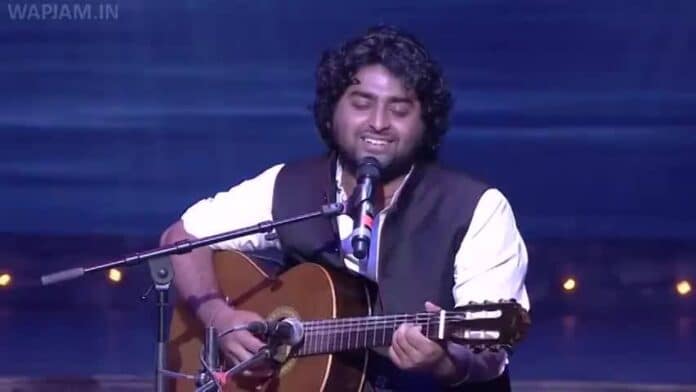
The Sydney Town Hall was exploding with energy and excitement when Bollywood playback singer, Arijit Singh performed there recently.

A strikingly beautiful sandstone property built alongside St. Andrew’s Cathedral, the Sydney Town Hall is quite an atypical venue for a Bollywood music concert. But intuitive musician that he is, Arijit carefully chose soulful, romantic numbers for the performance, apt for the relaxed venue. Of course it helped that this particular genre is somewhat his forte!

An obvious way to begin was with the mega-celebrated love anthem Tum hi ho from Ashiqui 2 which brought Arijit his first Filmfare, IIFA, Zee Cine, Screen and several other awards in 2013-14.

Hailing from West Bengal, India, Arijit came to the limelight as a remarkable singer in the music reality series Fame Gurukul in 2005. He also assisted music director Pritam for a while and has sung for many Bengali movies as well.

On the beautiful Sydney evening, Arijit entertained with most of his popular numbers including Muskurane ki wajah, Laal ishq, Kabhi jo badal barse, Samjhawan and his debut Bollywood song Phir mohabbat karne chala, and many more. A commendable guitarist, what was impressive about Arijit’s act, was the candid and pure extempore – no paper with lyrics or music notes for reference – a rare attribute in the new or veteran Indian playback singers performing live.

Soon the concert turned into a sing-along.

“I have never performed this song before so I am not sure of the lyrics, to aap log sambhaal lena.

And surprisingly we all knew the lyrics and sang along with almost every number!

Throughout the concert, Arijit kept amazing his fans by weaving in sensational numbers like Pehla nasha by Udit Narayan, Laagi tumse mann ki lagan by Rahat Fateh Ali Khan, Be intehaan, Pehli nazar mein, Tu jaane na by Atif Aslam to old hits like Jo wada kiya by Mohd. Rafi, creating a marvellous medley of evergreen love songs. Breaking into the Bengali version of the Bheegi bheegi si hai chorus, he tossed in some more delight to his lucid spontaneity.

Accompanying him for duets like Kabira and Chahu main ya na was Supriya Pathak, a young and rising playback singer, and a power-packed live band which impeccably re-created each track as if they were recorded ones.

Earlier in the evening, pop singer Sunny V had warmed up the audience an entertaining Bollywood gig before Arijit’s appearance on stage.

The concert was presented by Education Centre of Australia and Raaga Studio, a venture by Bollywood music director Aadesh Shrivastava and Rupesh Singh.

With a packed house in attendance, Arijit’s stellar performance has certainly upped the game for anyone from India’s entertainment industry touring here.

Singing a different tune

0
Reading Time: 3 minutes

New-age musicians from Australia’s Indian community straddle different genres with consummate ease

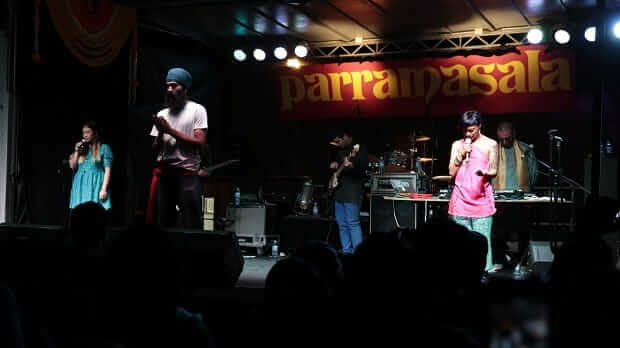
A mind blowing number of people attend the Parramasala festival every year and this year was no exception. The Prince Alfred Park in Parramatta was reverberating with diverse sights, sounds and aromas from various parts of Asia. The eclectic mix of traditional, folk and contemporary notes and sounds managed to enthral the new age spectators from all parts of the globe on this festive weekend.

The line-up this year was mostly made up of musicians originally from various parts of the Indian subcontinent, who have spent much of their lives in Australia, so creating a seamless blend of Indo-Western music is instinctive and almost natural to them.

“It’s like coming back home” said Sukhdeep Singh aka ‘L FRESH – The Lion’, about performing for the third consecutive year at Parramasala. “It’s a celebration of the Asian cultural multiplicity in all of its form, its impact, showcased to the diverse community based in Australia. As we take everyone on a journey from Western Sydney to Punjab and back, my act today has sheer components from Punjab.”

Hailing from Punjab, India, and growing up in the south west of Sydney, L-FRESH’s music manifests diverse cultural influences, and as such, was a perfect choice for the opening day of the festival. The tracks like Survive (featuring MK-1), Faithful, One, all from his newly launched album ‘One’, absolutely rocked the crowd. L-FRESH was accompanied by vocalist Mirrah’s power packed rap and hip hop dance, and they were both supported by Kimberly, Duane on the guitar, DJ MK-1, Chris Zammit and Clinton. The surprise act by the Bhangra All Stars Sydney Dance group added that explosivePunjabi tadka to the show, leaving the audience wanting for more.

On day two, the Parramasala live stage was moved toHarris Park in the evening. The set was resonating with Priyanka Pri Pri’s soulful voice as she sang AR Rehman’s version of Vande Mataram, Awari from Ek Villain and some more of her own compositions. Performing at Parramasala for the first time, Priyanka is a Mumbai chi mulgi raised in music in Australia and trained in music here. Growing up listening to the likes of Sunidhi Chauhan and Rajeshwari Sachdev, Priyanka’s show was totally about starry-eyed Hindi songs rendered with her mild Aussie twang. (The night before, she sang live to an ABC Radio audience as a guest on Dom Knight’s Evenings show, who along with Sunil Badami, presented live from Parramasala).

Next up on the DJ stage was fusion music by Sitar Funk, produced and mixed by DJ Coco Varma. Indian-Australian tabla player, Bobby Singh, a regular at Parramasala every year collaborated with Sitar Funk and the Australian ‘gyp hop’ percussionist, Ben Walsh, this year. Not unusual for a creative drummer like Ben, he played the dholak incorporating heart-pumping Indian beats to the Bhangra and pop tracks, creating an electrifying EDM outfit.

A spunk of fresh notes was infused by Bridge and Its People, a new group formed by musicians Kiran Porey and Anisha Thomas, who presented a striking synthesis of Western musical instruments with Indian classical music.

“Parramasala is a unique experience where people from varied cultures connect with their traditions in a foreign land,” said Kiran, talking about their first year at this mixed cultural festival.

Kiran’s Hindustani classical melodies were frequently spiked by Anisha’s piano notes, Cleo’s violin and the powerful voice of Jessica, a Western soprano vocalist.

“The piece was originally composed for the flute, but Bridge wanted to me to play the clarinet instead,” explained Julia, about the inventive fusion music created by the duo. The tracks rendered at Parramasala were a special pre-view of their soon-to-be released album, Beneath and Beyond.

Overall, the music at Parramasala was a good attempt to bring together an ensemble of diverse and creative talent in Australia, showcasing a montage of fusion music.

Films that touch your heart

0
Reading Time: 4 minutes

It’s ‘thinking’ films from India, from within our own community here, and from the diaspora at Parramasala, writes SHRADDHA ARJUN

It was a bunch of interesting offerings, features as well as documentaries, at this year’s Parramasala Film Festival. Keeping safely away from your typical Bollywood fare, the carefully picked films looked at issues that touch us as Indians, as Indian Australians and as Indians of the diaspora. And yet there’s no denying that the themes engage us as humans in the modern world, as we try to negotiate our daily lives within the vast plotlines of our own histories and allegiances.

Films from India

The Indian films stood out with their stories as well as technical expertise. We had the endearing Ankhon Dekhi by Rajat Kapoor, arguably one of the best Hindi films of 2013. The protagonist here is an advocate of the concept of ‘seeing is believing’ to such an extent that it borders on insanity. Sanjay Mishra essays the role to perfection. The film is beautifully abstract and has deep philosophical undertones, touching upon family ties and relationships.

In sharp contrast, Ashish Avikunthak’s mystical Rati Chakravyuh, a critically acclaimed experimental film is shot in one long single take. Characters speak about mythology, politics, riots, violence, sex, desire, and the circle of life, in no particular order or context. The film literally has no conventional beginning and end, with the discussion carried in an unemotional, almost stoic fashion. Although there are several characters, perhaps they really represent the many voices of one individual, more like an internal dialogue within one’s own head. The film manages to incite anger, sadness and even titillates.

It was interesting to watch I am Megha on its own for the first time, as the film originally is interwoven with the other films in Onir Ban’s I Am anthology. Based on the conflict and unrest in the ‘90s in Kashmir, Juhi Chawla and Manisha Koirala are the protagonists. The film touches upon relationships, especially friendships that change in hostile conditions. However, the film is not long enough to discuss the situation in its entirety. To that extent it is oversimplified. The performances are powerful and moving, but one is left wanting for more, and somewhat unsatisfied.

And this brings us to Bollywood. In Dancing To The Tunes of Bollywood, film-maker Vikrant Kishore looks at the etymology of the word Bollywood, and the phenomenon of ‘Bollywood dancing’that many are suddenly interested in learning and performing professionally.Who coined the term? What does it mean to people in the western world and the professionals in the Indian film industry? In this well researched documentary which includes interviews of many industry bigwigs, the evolution of ‘Bollywood dancing’ is explored. From the first musicals to the latest trends of ‘item numbers’ and ‘item’ girls, the out-of-context song and dance sequences are seen through different perspectives.


Films from Australia’s Indian community

In The Ashok Roy Story, Oonagh Sherrard offers a fitting homage to a musician of great stature and repertoire. The film captures the sarod artist Pt Ashok Roy’s life and achievements in Australia, his passion for music and musicians he has inspired. It is a fitting homage to the legend, probably the last one in his league to have lived amongst us in Australia.

The feature My Cornerstone by Stanley Joseph was a great opportunity for local actors of Indian origin to come together and showcase their talent. The film is a sincere attempt at exploring the dichotomy of the immigrant Indian values. Yet, the characters that are relatable initially, turn into mere caricatures as the film unfurls.


The senior sector of the Indian community in Australia is one that is crying out for attention. In Her Inner Song, Indu Balachandran tells the story of “grandma musicians”, a bunch of seniors who speak of their lifelong passion for Carnatic music. In its retrospection, the movie explores the nature of this orthodox industry, perception of women in India since 1930, their survival through these times and their pure love for music.

Straddling our two worlds of India and Australia was Sydney-based film-maker Sudarshan Narayana, whose award-winning Kannada film Thallana got yet another screening in Sydney. Sudarshan uses the backdrop of theprotagonist – a fearless domestic maid who fights against all odds to find her missing daughter – to make a comment on contemporary India. The hypocritical educated class, corrupt cops, the spineless media, unscrupulous God men, the helpless working class, all play an important part here. The characters are genuine, with no exaggerated “filmi” mannerisms, bringing in a rare realism.


Films from the diaspora

And from the world beyond India and Australia, we had the short films that made up Gary Paramanathana’s Diaspora Stories. This one is an absolute delight to watch! In the age of Twitter, where a thought needs to be expressed succinctly in 140 characters, they seem to fit right in. Bisanvil (l’Autobus) from Mauritius is set in a bus ride. Doubles with Slight Pepper from Trinidad and Tobago explores the lifestyle of an Indian-origin family. Three Lions juxtaposes the plight of impoverished Bangladeshi labourers in Dubai. Masala Mama set in Singapore is a wonderful film that’ll have in splits: definitely one that will go viral on social media.

Films based on relationship amidst war are many, however very few measure the length and the depth of how love stories exist and evolve between a couple who belong to the opposing sides. Marrying the enemy can be cathartic but extremely difficult especially if the wounds of the past are afresh in the minds. This happens to the protagonists in Prassana Vithanage’s film With You, Without You.The breath-taking film, the story of a Sinhalese man and Tamil woman, is inspired by Fyodor Dostoyevsky’s short story The Meek One.This controversial film was banned in India; one must be lucky to be able to see such a masterpiece here in Sydney.

Diwali Mubuarak!

0
Reading Time: 4 minutes

It’s a dazzling affair yet again at the Hindu Council of Australia’s Deepavali Fair


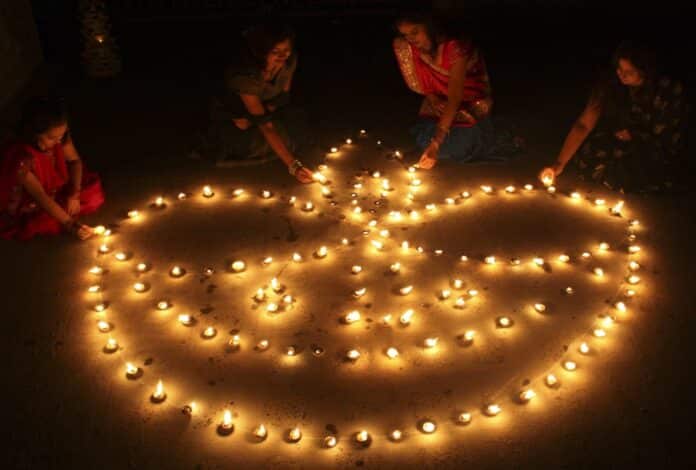
Tony Abbott, Prime Minister of Australia noted recently, “Deepavali, the Festival of Lights,  is marked by millions of people around the world including many of the 450,000 Australians of Indian origin.”

He sent across his special Deepavali wishes to the community on the occasion of the Deepavali Fair of the Hindu Council of Australia (HCA), reminding us that it is also an opportunity to reflect on the meaning of Deepavali as the triumph of light over darkness.

He added, “It is a time to enjoy good food and entertainment and to celebrate the bonds we share with family and friends.”

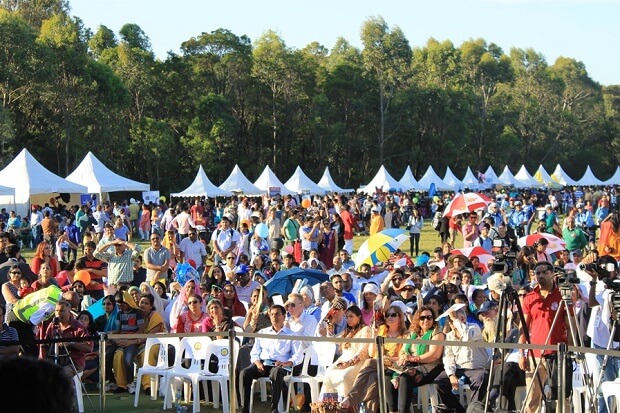
The Fair was organised at Parramatta Park which, as Member for Parramatta Geoff Lee put it, is the epicentre of Indian culture right throughout NSW, if not Australia.

The stage was set for the eventful day as the sun god decided to shower his kindness and make the atmosphere perfect. Consul General of India Sanjay Sudhir could not resist noting, “It is great to be here on a day like this, bright and sunny. Look at the riot of colour and the festivity here, it is amazing.”

It was indeed amazing for all those present as merriments began. Dr Nihal Agar, President, HCA addressed the early party goers by extending a very warm welcome and officially opening the event.

With the riot of colour also began the mass movement of entertainment as surprises rolled out one after the other in a well-planned and busy program. As many as 470 performers participated in this marvel of effort. The bhajan Kabhi Ram Banke by the kids from Little Musicians Academy touched the hearts of the audience. Dances groups Hip Hoppers, Bollywood Divas, Meenaxi’s, Nartan Institute of Performing Arts, Bollywood Australia, West Ryde Public School and Shiamak Daver all showed off their Bollywood jhatkas. Also, the Western Union Dance competition has gained momentum and is becoming increasingly popular.

This year, the HCA has made an evident shift to their entertainment theme, the objective being to promote and encourage our traditional art, music, sport and dances. In light of this, folk dances like Kathak, Bharatnatyam, Rajasthani, Odissi, Sambalpuri, Punjabi Bhangra and Gidha were highlighted. These varied cultural performances combined with the Chenda Melam drum show, the rangoli/mehendi art and the game of kabbadi reminded one of the commonality between India and Australia in the form of multiculturalism.

The message of the Deputy Leader of the Opposition in the Federal Parliament, Tanya Plibersek, as read by Senator Lisa Singh, clearly highlighted this commonality and the importance of such festivals and fairs to keep up the multicultural spirit. “I particularly love the meaning and symbolism of Diwali – the light conquering the dark, knowledge conquering ignorance, and love conquering hate. I think in a multicultural country like Australia, there can be no more messages to spread. We need to stand together as a society against racism, hatred and intolerance. We must realise that what makes us different ultimately makes us stronger.”

Inspiring speeches by parliamentary guests and their occasional Namaskar and Namasteys are always worthy of awe and applaud. The Deepavali Fair stirred some incredible memories of the guests as they shared their experience about their recent trips to India and wished everyone heartily on the festive occasion.

It almost seemed like Narendra Modi, Prime Minister of India was present at the fair, due to the frequent mentions made in the speeches about his forthcoming visit to Sydney. Chants of Modi Zindabaad burst out from the crowds every time his name was mentioned. The Indian Prime Minister’s wheels of change are indeed moving fast, as his efforts strengthen with each move to increase India’s stature on the world stage. Reiterating this, Madhav Ram, Vice President General BJP was particularly thrilled to welcome Sydney’s Indian community to engage in this delegation and make the best of the opportunity. What more can be said, Mr Modiji is a prodigy!

While the crowds jumped at the thought of meeting this prodigy, the kids hopped and skipped their way to the jumping castle, with not a care about politics. The dozy dwarfs chose to try the merry-go-round, face painting and camel ride. The games arena and the food stalls were oozing doses of lures as everyone instantly felt the magnetism and urge to queue up.

At the Money Gram stall, cricket fans were super thrilled to take a photo with their iconic dream trophy, the ICC Cricket World Cup, which was brought to the Fair specially to promote the much awaited World Cup series happening in Australia and New Zealand in 2015.

While the big baddie of the season Raavan groggily saw them stand tall and take photos, little did he know that he and his team of ten heads were going to come to a fiery end in a short while. Yes, it was time for Raavan dehan and to let go of all negativity and embrace light and life. The pyrotechnics lit up the sky to mark the new beginning, the new start, the new year and of course to say Happy Deepavali! So has the Deepavali affair ended, or just begun?!


Photos: Astha Singh

Sweepstakes

0
Reading Time: 3 minutes

A clean sweep of PM Modi’s Swachh Bharat Abhiyan

NRIs like myself are often very critical of India. This is not out of malice, but out of concern for the land of our birth.

If, like me, you want to write humour columns for your local community newspaper, no place on earth offers as much scope as India. Indeed it is a veritable mine… perhaps a minefield too.

When I landed in India in early October after nearly 10 years away, the story that was sweeping every media outlet was, yes, ‘sweeping’.

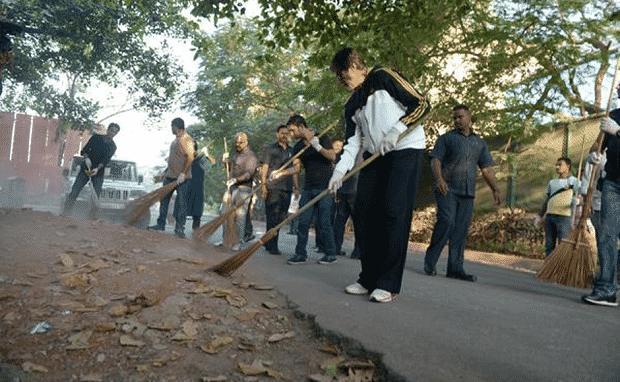
Not by ordinary municipal menials, but by ministers and mandarins. The media was awash with pictures of the top brass wearing suits and crisp saris wielding the desi jhadu. That, for those of you who don’t know, is a reed broom attached to a long pole. So long in some instances, that the tool was hard to handle! But never mind, it was only for photo opportunities following the launch of ‘Swachh Bharat Abhiyan’ (Clean India Campaign) by our newly appointed Prime Minister, Narendra Modi. I wish these department diwans would show similar enthusiasm in cleaning the cobwebs on files with triplicate copies collecting dust on their desks.

Being a man of action like our own Tony Abbott, Modi – after launching the movement at Gandhi’s spotless Rajghat samadhi – did a spot of cleaning himself at a basti of sanitation workers near Rajpath. And whatever he starts, Modi does in mega style, so he named a panel to propagate his program, nine prominent personalities that included the likes of Anil Ambani, Sachin Tendulkar, Priyanka Chopra, Salman Khan, Kamal Hassan, Shashi Tharoor and others.

Now Anil knows how to build a huge pile of cash but not trash; and Priyanka can sway her hips and sing at the same time while sweeping to dodge the drudgery. Sachin can sweep anything to fine leg that is spun in front of him, but what Salman and Kamal can do is not clear to me. Even to perform their stunt acts, they ask for dupes. They leave a trail of trash in their fight scenes. Ah, Salman once waned to clean some Rajasthan forest of some animal ‘deer’ to his heart.

Even before the Swachh movement started, the Kerala unit of the Congress Party moved to sweep its star member, Sashi Tharoor, out for agreeing to be part of a clean campaign, an undiplomatic act by the once high profile UN diplomat.

Modi has stated that his goal is to get the entire nation clean by 2 October, 2019. But my humble opinion is that Modi, being an astute politician, may be thinking of a clean sweep of the Congress and a few other regional parties by the time the next general election comes around, coincidentally in 2019.

Ever since Modi announced his well-intentioned move, I have been paying extra attention to the amount of rubbish lying at every street corner, and notice that every pile is growing by a few inches with each passing day.

If only a time machine were to be set, like the one they had before the dawn of the millennium or the reaching of the seven billion global population mark, it may show how many more tonnes of trash have been added since the campaign started. If all the rubbish from the entire nation of India could somehow be piled up in one place, I suspect it may challenge the height of Everest.

Not wishing to discredit Modi’s noble vision, I dare to say that it may take more than five years, or more than even 50 years, before we will see a modified ‘Clean India’. I hardly notice any change in people’s attitude in nonchalantly dumping rubbish out in the open. Surely this needs a bottom-up and not top-down approach.

Now with pictures of their broom-handling bash archived in albums, Salman and Kamal have gone back to their fight scenes to leave the next trail of trash.

Such is Bharat (to paraphrase a well-known Australian)!

Creepy, kooky…Indian Link does Halloween!

0
Reading Time: 2 minutes

It’s a Halloween spook-tacular with costumes, parties and much more

Best Halloween jokes

Why does Dracula have no friends ?
Because he’s a pain in the neck !


What’s a vampire’s favourite sport ?
Batminton !


Why do ghosts have so much trouble dating?
Women can see right through them.


Why do mummies have trouble keeping friends?
They’re so wrapped up in themselves…


Food and drink ideas

For Indian-inspired Halloween food ideas click here


Need some costume inspiration? Check out what Bollywood’s hottest stars wear when they’re asked to fancy dress.