Home Blog Page 918

Passion, purpose, pride

1
Reading Time: 3 minutes

In over 20 years of observing the trends in Australia’s Indian community, seldom has one seen the kind of passion that is on display at the moment

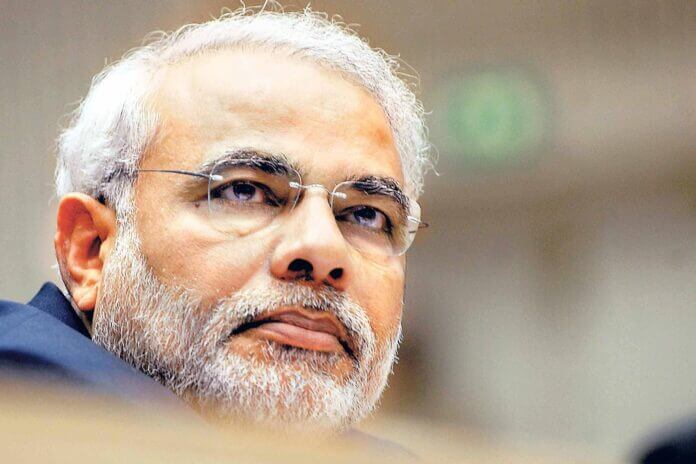
This note is not just about the ‘Modi mania’ that’s sweeping the community, but more specifically about the core group behind the upcoming Allphones Arena event that will probably go down as a landmark event in the annals of the Indian diaspora down under.

The (IACF) was set up to harness the resources of the various Indian community groups in organising the reception for the Indian Prime Minister.

It was founded by a core of people who are behind the Hindu Council of Australia’s annual Diwali Mela, which has grown strongly since it started over a decade ago, while other comparable functions waxed and waned.

It is clear that a number of factors are at play in the steady success of its activities, which have made this organisation one to emulate. These are, in no particular order, a clear vision of what they want accomplished; a working team that operates cohesively and efficiently, and a strong belief in, and dedication to, their cause.

It is the very same passion that this team of people brings to the Modi venture. In spite of initial challenges in getting access to the PM’s time, they are now on the verge of pulling off what will no doubt be the event of the year in the Indian community.

In a community mired in a plethora of organisations demarcated by linguistic or regional differences, the egos of the leaders have often caused divisions and factions. Splinter groups morph into sub organisations and all too often the agenda is driven by petty politics rather than the common good. In contrast, the IACF has reached out to every organisation with its inclusive nature. It has been impressive to watch some 300 organisations register with them, in a matter of days, offering support.

The passion was fuelled by a purpose, and that was to create a platform for the still new PM Modi to connect with the Indians in this country. While the bar was set by the public forum at Madison Square Garden in New York not so long ago, the Sydney team knew that their access to the PM was on a Monday working day in the early evening, as compared to a weekend event in the United States. Indo Americans are estimated to be over 3,000,000 in numbers, Indian Australians battle to reach a sixth of that number at 500,000.

Another international event in the community, the regional Pravasi Bhartiya Diwas held at around the same time last year, could only manage muster the interest of 300 people, even with months of preparation. The challenge for the organisers this time around was to ignite the imagination of those thinking about attending. They have been able to do this by keeping the message simple: it’s a community reception for the Indian PM, all are welcome, and it is free.

Indians in Australia feel a sense of pride in the country of their birth and ancestry. There is a desire to connect with their heritage and continue to nurture the bonds between their adopted and original homelands. Sadly, previous governments had failed to reach out to them and there was a growing disenchantment with the politicians of India.

The recent change in government seems to have ignited the passion of the community, and a desire has emerged to participate in the various moods sweeping across the country. This passion has been indeed been harnessed well by the IACF, as they create a platform at which the chief architect of the new India, PM Modi, can share his vision directly.
 

Young creativity takes courage

0
Reading Time: 4 minutes

Increasingly migrant Indian parents are supporting their Indian Australian children’s pursuits in the arts, writes KIRA SPUCYS-TAHAR

When you think of migrant Indian parents, you often imagine their desire for their children’s success falls into a limited number of categories; science, maths, engineering, medicine. Often, having left behind life in India with a view to giving their children and themselves greater opportunities, Indian parents view academic achievement within traditional fields as paramount. But increasingly, migrant Indian parents are urging their Indian Australian children to follow whichever path they choose. Careers in the arts, including theatre, fine arts, poetry and performing are not only accepted but often encouraged.

One such family is the Goels. Young Yash Goel, just six years old, recently won the Dorothea Mackellar Community Relations Commission Poetry Award. The Castle Hill Public School student was one of 8,500 Australian students from 600 schools who submitted entries for the competition, the largest and oldest of its kind for primary school students. Highlighting the cultural diversity of multicultural Australia, Yash shared the award with Naomi So, a 10-year-old student with a Vietnamese background, whose poem detailed experiences as a refugee.

Both of Yash’s parents, Meeta and Sachin, are Australian migrants. Dad Sachin Goel says Yash has always been an active and artistic child, who loved drawing from a young age. “My wife is an architect, so he gets his artistic bent from her. She is very thoughtful in bringing out knowledge of his heritage to him,” Sachin says. Meeta said they were trying to nurture their son’s talent for poetry.

At the awards ceremony, Yash was congratulated by Minister for Citizenship and Communities Victor Dominello. Very well mannered, Yash then recited his poem about his nani. His work epitomised the sense of cultural identity and belonging the judges were looking for.

In awarding the prize, the competition judges said, “Told from the heart this young poet shares with us a precious aspect of his cultural heritage and the line ‘although I am Australia, I am Indian too’, says it all.”

Expressing their feelings about life in Australia, children with a dual Indian-Australian identity are often in a unique position to eloquently articulate themselves through creative arts.

In a very proud moment for her family, Anna Sharma’s artwork ‘Poppies For Anzac’ is currently being showcased at the concourse of Sydney’s Central Railway Station as part of the World’s Biggest Classroom exhibition, making the work of NSW public school students and their teachers accessible to the wider community.

Dad Sanjeev Sharma says, “We’re immigrants so we focused on studies, to get her into the selective OC class, but now, in the past few years, she’s been winning art competitions at school and we’ve been surprised with her creativity.”

Though mum Anju Sharma is shy, Sanjeev was involved in theatre and press in India. “I want Anna to develop personal confidence, that’s a good thing in Australia.”

Anna, almost 12, told Indian Link the idea for her painting came through learning about Anzac history. The Westmead Public School student was motivated by stories of soldiers sent far away from their families, often sacrificing their lives for others.

The World’s Biggest Classroom concept is not a competition, but about students learning to find their passion and an avenue to express concepts they study in class. Entries came from 3000 students at 175 different schools across the state, and only 250 were chosen for public exhibition at 13 venues including Olympic Park, Circular Quay, Central and Parramatta train stations.

As Sanjeev Sharma says, “In India, with such a large population, competition is very high among children. Parents push academics as the only thing. But Australia is a county of opportunity, with multiculturalism comes multiple opportunities. It’s so valuable to let kids follow their own path and support their futures.”

Another set of parents who know about supporting their artistic child is Sachin and Kalyani Wakhare. Their daughter, nine-year-old Ananya, showed a keen interest in drawing, painting and creative pursuits from an early age.

“Since kindergarten she’s been in art and sculpture classes. Recently she’s started experimenting with other mediums including photography,” says mum Kalyani.
Ananya is part of a creative family with mum Kalyani involved in fashion and dad Sachin a keen hobby photographer.

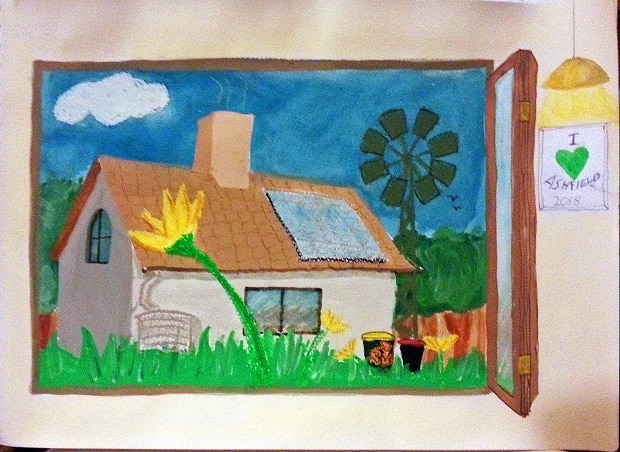
Last year Ananya’s art work was chosen as a finalist for the Ashfield Community Citizen’s Award. Her theme was ‘Sustainable Ashfield’ and she was one of four finalists from Haberfield Public School.

In May Ananya entered the Marrickville Urban Photography Competition which was opened for the first time for school children. One of her photos was Highly Commended and she was awarded a Marrickville Medal by the Mayor of Marrickville in an official ceremony.

More recently, Ananya’s entry for the Colgate ‘Healthy Smiles’ International Competition was chosen as one of 12 finalists, from more than 700 entries, to represent Australia/New Zealand. Her work will now go on to New York to compete on the world stage!

Ananya told Indian Link she enjoys being creative. “I like being able to make anything you want,” she says. “You’re creating your own picture, using different colours.”

These children and their parents are examples of a new generation of Indian migrant parents who have come to see beyond the world of traditional academics as the be all and end all. As long as their children are happy, these parents will continue to be proud and supportive of their kids’ creative endeavours.


Before Modi in Oz…

0
Reading Time: 2 minutes

 Previous Indian prime ministerial visits

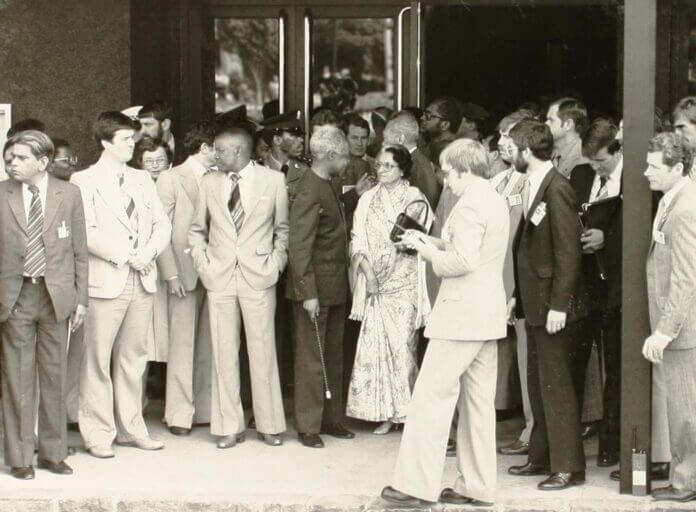
Sydney’s Rekha Bhattacharjee remembers clearly the last visit of an Indian Prime Minister, way back in 1986. The community reception organised for Rajiv Gandhi then was consulate-led. M. Hamid Ansari, the current Vice-President of India, who was High Commissioner in Canberra then, organised an afternoon tea event at which Rajiv Gandhi met a small group of community members at Sydney’s Intercontinental Hotel.

“Rajiv was charming and articulate,” Rekha recalls. “I particularly remember his comment about NRIs. They may be called ‘brain drain’, he said, but I like to call them our ‘brain bank’”.

At dinner later that night, hosted by NSW Premier Barrie Unsworth at the Wentworth Hotel, Rajiv had surprised everyone with his knowledge of some very early India-Australia links: from 1788 to 1836, the Roman Catholic Church in the colony of New South Wales was part of the Diocese of Calcutta.

Rekha also recalls the great rapport that the young Indian leader shared with Australian Prime Minister Bob Hawke; the Sikh protesters that had demonstrated outside the Wentworth, and Rajiv’s interview with Laurie Oakes on Channel Nine where he had claimed famously that politics was his dharma.

Neville Roach, another community stalwart, can recall an even earlier Indian PM, Indira Gandhi, who visited in 1968. “I remember reports of her being received at the airport,” Roach told Indian Link. “There was no event or community function; it was all low-key.”

Mrs Gandhi visited again in 1981, as part of the Commonwealth Heads of Government Meet at Melbourne in 1981.

The 2002 edition of CHOGM at Coolum Queensland would have seen another prime ministerial visit, this time for Atal Behari Vajpayee. However, a certain incident at Godhra (which would go on to haunt the current incumbent in some measure) had kept the Indian PM away then.

___

Modi in Oz: Itinerary

15 Nov: Arrive in Brisbane

15-16: G-20 summit

16 Nov: Unveil Gandhi statue at Roma St, Parklands, Brisbane, followed by civic reception cum high tea at Town Hall

17 Nov: Address Australia’s Indian community at Allphones Arena, Sydney event at 5.00pm, and then depart for Canberra

18 Nov: Hold bilateral talks with Tony Abbott; address joint session of Parliament, and depart for Melbourne

18 Nov: Attend state banquet with Tony Abbott at MCG after tour of stadium

19 Nov: Depart for Fiji

Chai and spice and all things nice

0
Reading Time: 4 minutes

Cultural festivals like Parramasala are an impetus for communities to forge collaboration, writes  ROYSTON REBELLO 

They express solidarity, demonstrate a well-knit social fabric, and offer us an opportunity to reinvent ourselves as we come face-to-face with cultures other than our own.

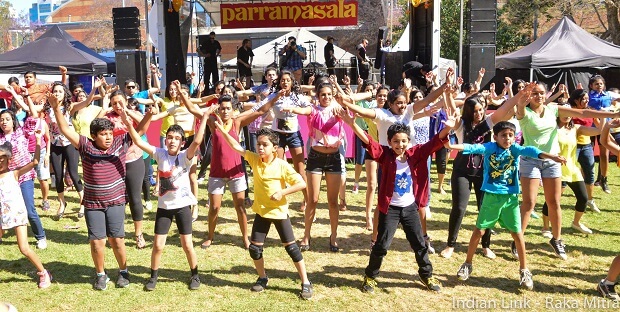
In the spirit of celebrating the multicultural camaraderie of Western Sydney, the city of Parramatta played host to ‘Parramasala 2014’ – the festival for international contemporary arts – on the weekend of 17-19 October. This year saw the fifth annual instalment of the festival, organised under the aegis of the NSW Government and supported by others.

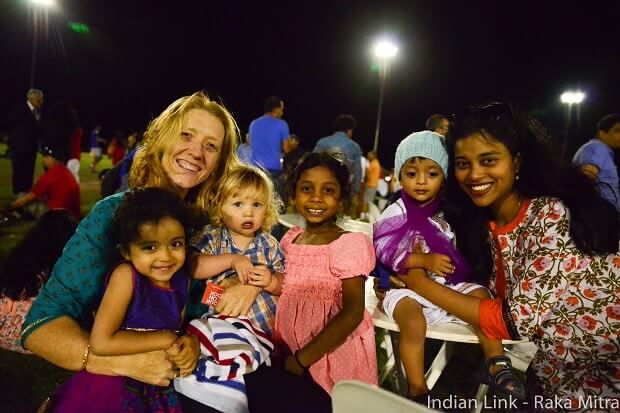
The festival kicked off with the spectacular Parramasala Parade combing Church Street all the way through Centenary Square and ending up at Prince Alfred Park. Carnival-esque in appeal, it was reminiscent of a Mardi Gras. The ladies looked gorgeous, decked out in mythological and contemporary-styled attire. The menfolk dressed up in cheeky costumes ranging from the colourful to the bizarre! People lined the streets to wave the floats on with a cheer, or a shriek, like the toddler who clung to his mum as the dragon float came by! And for those who were not street-side, ABC Radio 702’s Evenings show with Dom Knight broadcasted live from the event from 7pm to 10pm.

The opening ceremony at Prince Alfred Park culminated in a brilliant dazzle of fireworks that bathed the twilight skies. As the program ensued, tasty treats from around the world, both culinary and cultural, followed.

Karifi and the African Union Dancers enthralled the audience with their drumming and dancing; and the NSW Police Band marched the streets with their stomping tunes. More entertainment followed with The Parade drum and dance circle jam with everybody pitching in. L- FRESH the LION and his Punjabi hip-hop band pumped up the crowd.

Other notable dances included the Swastik Dance School and the exhilarating ‘Moving Celebrations’ performed by the Thrayee Dance School. Nathaswaram and Thavil music, Victor Valdes and the Real Mexico Mariachi Band were superb as well.

Elsewhere at the festival, kids enjoyed camel rides, and others danced away, ostensibly to nothing, at the Silent Disco with music on their earphones.

Coinciding with the gig, we had the South Asian film festival, visual arts exhibitions, back-to-back classical dance shows, fusion music performances, poetry, qawaali and a Hindustani play, at venues around the area. (Check out Indian Link’s reports of these in this issue).

For those with a penchant for food, it was ‘Bon appetite’ time. The spicy aromas from the Masala Markets presented an enticing range of authentic culinary delights. The Chai Temple sported an oriental ambience and folks swarmed in to chill out with flavoured and masala teas.

The ‘Eat Street’ as it is well known in these parts was revisited with swarms of food enthusiasts who combed the length and breadth of Harris Park for Indian delicacies. Special cuisines from the South Asian communities were also seen on the menu that left many folks craving for more.

The exotic bazaar felt like a page out of the history books. The place bustled with activities of the orient and it felt like being transported… perhaps back to Pataliputra or Asia Minor!

The crowds got carried away with excitement as speakers cranked up the music at the Bollywood Block Party that thundered all the way down to Harris Park. Local singer Priyanka Pri Pri swayed the crowds as she performed on the stage in the roundabout of Wigram and Marion Streets.

This year the festival was inclined towards exhibiting home-grown talent and acts. Some 30 nationalities and cultures participated in the celebrations which attracted crowds in great multitudes. A steady dose of the party atmosphere ensured that party goers and food connoisseurs lingered on and basked in the festivities.

Parramasala 2014 turned out to be a wonderful opportunity to experience the many diverse cultures of Sydney and to explore facets of life in Western Sydney.

For more photos by Raka Mitra visit: http://ow.ly/DXip6

The Opera House’s first Diwali

0
Reading Time: 2 minutes

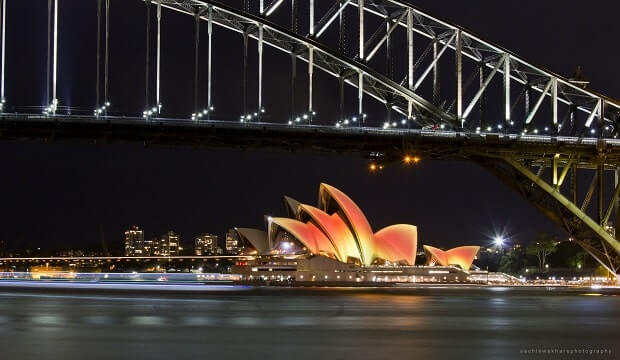
In a historic move sure to strengthen bonds between India and New South Wales, the sails of the Sydney Opera House were illuminated recently to celebrate the Hindu festival of light, Deepavali.

From 8pm until midnight on Tuesday 21 October, the Australian icon was awash in colour, featuring a series of images and projections related to the popular Hindi festival.

In spite of the rains, some 300 people gathered to see the historic event, and many found vantage points along the harbour to get the best photographs.

An image snapped by Indian Link’s Sachin Wakhare even made the front page of one of India’s leading English language dailies, Hindustan Times, alongside comments from Indian Link CEO Pawan Luthra.

NSW Premier Mike Baird and Minister for Citizenship and Communities Victor Dominello hosted the event alongside Multicultural NSW Chair and prominent member of the Indian community, Dr Hari Harinath. The trio lit a diya, a ceremonial lamp in Hindu culture that signifies the lifting of spiritual darkness and the renewal of life.

The NSW Parliament House in Sydney also lit up simultaneously and remained lit each night until Wednesday 5 November in support of the Deepavali festival, in a tradition that began ten years ago.

The Opera House's first Diwali

0
Reading Time: 2 minutes

In a historic move sure to strengthen bonds between India and New South Wales, the sails of the Sydney Opera House were illuminated recently to celebrate the Hindu festival of light, Deepavali.

From 8pm until midnight on Tuesday 21 October, the Australian icon was awash in colour, featuring a series of images and projections related to the popular Hindi festival.

In spite of the rains, some 300 people gathered to see the historic event, and many found vantage points along the harbour to get the best photographs.

An image snapped by Indian Link’s Sachin Wakhare even made the front page of one of India’s leading English language dailies, Hindustan Times, alongside comments from Indian Link CEO Pawan Luthra.

NSW Premier Mike Baird and Minister for Citizenship and Communities Victor Dominello hosted the event alongside Multicultural NSW Chair and prominent member of the Indian community, Dr Hari Harinath. The trio lit a diya, a ceremonial lamp in Hindu culture that signifies the lifting of spiritual darkness and the renewal of life.

The NSW Parliament House in Sydney also lit up simultaneously and remained lit each night until Wednesday 5 November in support of the Deepavali festival, in a tradition that began ten years ago.

Her inner song

1
Reading Time: 4 minutes

“Nobody has ever asked me about my music before”

‘Her Inner Song’ is a short film, a digital time capsule that captures the personal musical journeys of five women over 80 years.  It is not the story of sisters, mothers or aunts but of  women who bore the restrictions of orthodoxy and cultivated their music.  They now gracefully give us a glimpse of classical music and dance over 85 years.

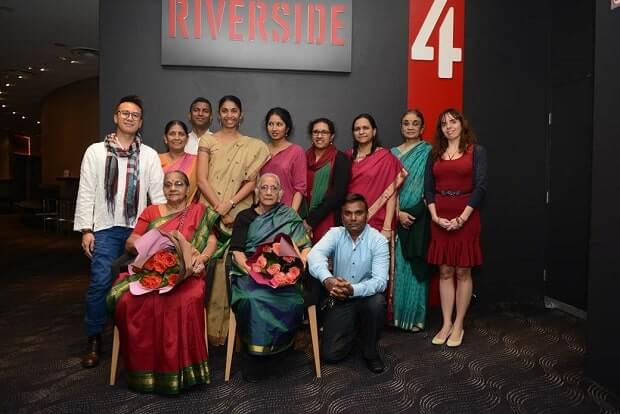
‘Her Inner Song’ premiered on 31August at the Riverside Theatres in Parramatta. Fully booked weeks prior, it showcased intergenerational musical tradition with live performances by the women and their families, followed by the screening of the documentary.

One could feel the emotions within the audience whilst viewing the film. The women’s stories evoked joy, laughter, and sadness, as the audience walked with them through their life stories.  These quiet achievers made us proud for they kept our culture alive even while others tried to hide it.  They found inner satisfaction in their music.

“Phenomenal effort and a joy to watch. Finally, an authentic voice (or voices) to share real stories.”

The film offers a glimpse into a world of grand sabhas, curtained radio recordings and the historical bindings of orthodox traditions, which revered their music, even as they prohibited its public performance by women. Each of these women’s stories is different, and together they begin to illuminate something about music, history, and society through women’s eyes.

“In addition to the emotion packed content, what I loved about the short film was the spontaneity with which the ladies expressed themselves, no artifice there at all, straight from the heart, just like their music. Still chuckling over the ” vellaiya kozhu kozhu mama” coming to teach. Absolutely delightful.”

The five women who participated are all over 80 years of age, and live in Sydney: Smt. Swarnam Naganathan, Smt Bhagirathi Narasimhan, Smt. Rajalakshmi Venkatachari, Smt Bhuvana Venkataraman and Smt Ganga Ranganath. Each of them was driven to fight their own battles with their families, and yet continued to achieve deep personal satisfaction in their pursuit of Carnatic Music.  They said that motivation was their inner voice that egged them on.  It never occurred to them to seek recognition or approval from their kin.

The producer, Indu Balachandran, has a long history in community development, including cultural development. A practicing musician in the Carnatic tradition, working in cultural development was enlightening for her. For a person from a community for which culture is a rich and mixed bag of tradition, ritual, art, temple, kinship, language, clothing, food and all that comes with it, she is deeply interested in how culture can be made and expressed by all people in a place like Australia – a place that draws its people from all over the world.

In a brief interview after the event, Indu revealed that her own grandmother (Smt. Narasimhan) was the inspiration behind this project. As Indu tried to connect with her past, she feared that something private and personal was being sensationalized. Indu thus, chose to involve other members with a similar vintage among the community elders who had different experiences to relate, but who felt safer in the knowledge that they were not alone in their personal struggles.  Indu is overwhelmed with the response and encouragement from the community and although she has no immediate plans or projects for the future, she wishes to continue where she left off.

“I am thrilled to see both the distinct, singular quality of the tradition AND the possibilities of offering the tradition to the rest of the Australian community.”

Videographer Mike Chin, editor Michelle Cotterill and community volunteers Subha Harinath, Anjali Viswanathan and Sindhu Harinath have all been central to the project. The project has received funding from Parramatta City Council’s Capacity Building Program, under SEVA International’s auspice.

Her Inner Song crosses over a number of platforms, to engage older members of the community in digital media.

The documentary film captures the narrative of the women’s stories, in their own voices and words. Primarily in Tamil, with English subtitles, the film offers a rich, visual journey through the lives of these 5 women. The documentary will be shown through live screenings so that the community can come together to honour the stories of those before us, and create new conversations about what next.

“This revealed to me how women have struggled in life to progress with their music and how our generation takes what we have for granted. I can see that music for these women meant a lot more than just performing – it is a part of them.”

Research has been undertaken to enrich Australian understanding of Carnatic music in this country. This will form part of Parramatta’s Heritage Stories collection.

The website (www.herinnersong.com) hosts short clips on each participant, digitised music and deeper information about the project, participants and the crew.

Social media, via Facebook (https://www.facebook.com/groups/herinnersong), facilitates ongoing conversations about the project, possibilities and related topics.

Following the screening, the overwhelming response from the community was a desire to see more cultural content like this, that is relevant across generations and facilitates reflection on tradition and cultural heritage in the diaspora.


Joy in dance

0
Reading Time: 3 minutes

Traditions are continued and new forms explored at this year’s Parramasala, writes DEEPA GOPINATH

A slightly different approach was taken to the dance component of Sydney’s Parramasala this year. The festival, with Indian performing arts at its core, takes place annually in the western Sydney suburb of Parramatta. This year’s event saw the same high calibre of artists, but with many of the dance events arranged in quick succession on Saturday 18 October at the Riverside Theatre complex’s Lennox Theatre.

The afternoon’s performances began with a dynamic rendition of the classical Indian dance form of Odissi by Raminder Khurana of Mumbai, India. Beginning with a powerful dance on the regal Lord Shiva and the ominous demon Ravana, she then went on to perform another expressive piece and finished the repertoire with a Diwali dance appropriate for the time of year. Vocalist Jatin Shah lent his silken voice as an accompaniment. Khurana captured the audience’s admiration with her vibrant, expressive style and her representation of this ancient art form set a high standard for the dancers who followed.

Cielo Vivo provided an exciting Spanish flavour to the afternoon. Award-wining Flamenco dancer Annalouise Paul, songstress Dahlia Dior, guitarist and composer Robin Morgan and percussionist Peter Kennard delivered a passion-filled collection of pieces that had hearts singing and toes tapping. Their performance was inspired by the poetry of popular Spanish writer Garcia Loca and although the language was foreign, the music and electrifying movements spoke volumes.

Sydney’s Lingalayam Dance Company, headed by well-known dancer, teacher and choreographer Anandavalli, was next in the line-up. A series of compositions on Lord Krishna, romantically titled Lilt of the Blue Hued Wanderer, was presented in the company’s elegant, precise style.

An innovative performance by Heather Lee titled Diva Divine that combined opera with classical Indian music followed.

For many, a major draw card was a performance by Bharatnatyam dancer Prof C.V.Chandrasekhar in The Splendour of Creation. One of the greats of the art form, the almost 80-year-old dancer is truly an inspiration to dancers of all genres. That he maintains his wonder, his athleticism, his grace, his ability to adapt to the times and most importantly his joy in dance is evident. In his piece presented at Parramasala, Professor Chandrasekhar described, in amazement, the world we live in and its natural beauty.

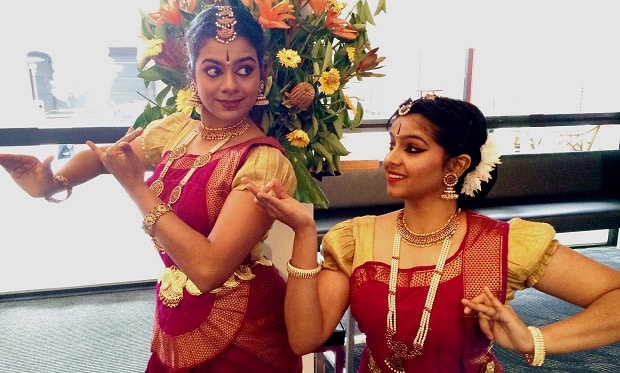
The young dancers of Thrayee School of Dance, featuring the renowned Shobanaa Balachandra from Chennai, kept the sparkle on the stage. They performed a delightful and well executed repertoire, including classical devotional pieces as well as a vibrant piece in which two young girls play ball in Mohini Aatam style. Gayatri Krishnamurthy is the founder and director of Thrayee School, based in Sydney.

The string of performances was nicely rounded off by the soulful Chants of Love, by Sydney Qawwali Party and Sufi poets. Elsewhere, the outdoor Park Stage was illuminated by performances such as Sri Lankan dancing, contemporary dance, Arabic sword dancing, Bollywood dancing and an incredibly fun African dance and music extravaganza that had the audience on its feet.

Once again, Parramasala managed to bring people together in Sydney’s west for three days of fun, food and enthralling performances by high quality artists. The fact that many of this year’s performances, including all of the dance recitals were free, was a wonderful and welcome surprise.


Lovers and losers

0
Reading Time: 4 minutes

The newly launched Adakar Theatre Group kickstarts its innings with Moliere

Do parents always want what’s best for their children? Or do they push their children towards goals that really satisfy some of their own wants?

Surely this is a question members of our community, known for their helicoptering and hot-housing, are all too familiar with.

This was but one of many issues addressed in Kanjoos, the maiden production of the community theatre group Adakar. 

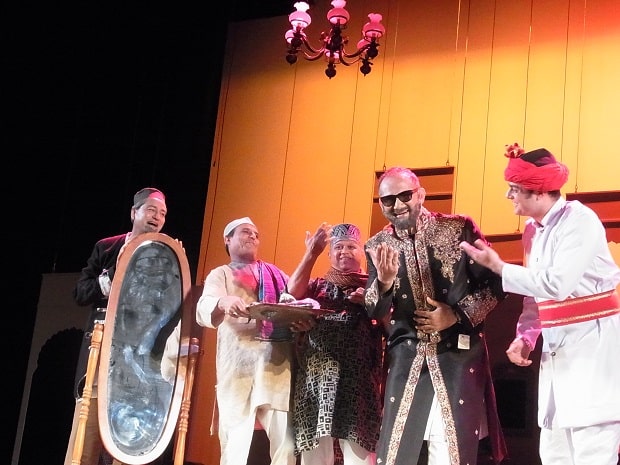
Presented as part of Parramasala, the social comedy was adapted from Moliere’s L’avare (The Miser), and directed by well-known theatre buff Saba Zaidi Abdi.

The play, performed first in 1668, is based on an avaricious character whose obsession with money render him incapable of having any meaningful relationship in life. His children have to resort to a staged robbery in order to regain some control over their own lives. A double love intrigue and a hilariously exorbitant loan arrangement create the laughs just as much as they allow for the social messages to get through.

The main character’s flaws, so obviously exaggerated, clearly expose the larger immoral qualities evident in society. Beneath the wit lies a deeper social commentary on the hierarchies not only in class structures but also in relationships.

The particular project suits Abdi in many ways, given much of her works are underlined with a social consciousness. And of course, she is adept at creating that Hindustani mood with authenticity.

It was good to see Saba back in action after a hiatus, rekindling that passion that saw her go a long way in her Doordarshan days back in India and indeed, where she first produced the play Kanjoos.

The most remarkable aspect of the recent Sydney production, was its adaptation from the original. Hazrat Awara’s efforts were as true to Moliere as possible, reflecting the skills of the 16th century playwright that continue to resonate. Even the Hindustani setting didn’t seem such a wildly different time and place from the France of the original. As a comedic genius, Moliere has stood the test of time, and has much importance in theatre history. (An Australianised version of his other masterpiece Tartuffe, in a script replete with “crikeys” and “buggers”, concluded a successful season at the Sydney Opera House only weeks ago).

Amongst the players on stage, Amitav Goswami as Mirza, Saba Zaidi Abdi as Farzina and Shashi Dandekar as Dalal Aslam, stood out.

Amitav managed rather well to carry the burden of the play on his diminutive shoulders, imbuing his character with much dramatic energy. One of the best executed scenes was where he primped himself up to meet the girl of his affections, bedecked in that jazzy outfit, scrutinising himself in the mirror. Again, in the famous soliloquy when he learned of the theft his gold pieces, Amitav did not falter once; filled with despair and regret and anger, even anger at his own self, he worked up a sweat as he accused everybody, the audience included, of having robbed him.

But it was Abdi who made the most indelible impression. As the scheming Farzina, she completely owned the role. The dazzling eyes, the facial expressions, the grand hand gestures, the fake laugh, all brightened up the stage whenever she appeared. Just as Moliere intended, you learned to love her, even though you knew she was a mistress of manipulation, playing the system craftily to accomplish her own ends.

Shashi Dandekar was suitably statesman-like, impressing in his role as the straightest of them all and ultimately bringing closure for all. Very much a statesman of the small theatre fraternity in our community, it was a pleasure to see him back on stage after a while as well.

Asif Ghafoor Khan could have brought more life to his role as Farrukh the dandy son of Mirza, but his sheer good looks pulled him through. Ambika Asthana as his love interest Mariyam did not have much to do at all. Sadly, the chemistry between the two was all but non-existent.

In contrast, Aparna Vats as Mirza’s daughter Azra and Vikas Sehgal, her own love interest, were more convincing. Vikas’s Nasir was confident – the male servant and the only person who won, briefly, the confidence of his penny-pinching master. Pankaj Yadav as the incompetent havildar was good too, not at all in awe of the characters with the larger roles.

Nasir Sirguroh and Syed Khurram Qaisar as Mirza’s staff did their bit admirably as well.

The qawwals on stage were a terrific mood-inducer, and for this, one can forgive them their lip-synching skills that were sometimes off the mark.

Much effort, it was evident, had gone into costumes and in the teaching of the correct intonations of the language and the mannerisms of the time and place, and that is wonderful to note. The sets did manage to re-create the old haveli ambience, even though Rajeev Maini’s lattice fences and Indo-Saracenic window frames were all too identifiable from their many previous appearances.

With lighting and sound as well, not much to write home about, but that has perhaps more to do with the nature of the play itself; there’s no real need for special effects as the concentration is squarely on the characters themselves.

The message of it all, hit home loud and clear: one, a morbid obsession with money will leave you with nothing in the end – friendship, love and family harmony are immensely more valuable and desirable; and two, conflicts are resolved when people come together.

Perhaps it is the latter that is particularly significant in current times. The Adakar Theatre Group itself is evidence of this truism, as it brings together diverse communities from the sub-continent and lays bare for all to see, the common ground between us.


Spreading the light

0
Reading Time: 3 minutes

The Diwali lights shone this year in many different parts of Sydney with multiple celebrations in the Hindu festive season

Gone are the days when the mega annual Deepavali Fair provided the sole opportunity to celebrate the Festival of Lights. Diwali fairs cropped up this year in smaller affairs at other pockets of the community, enabling revellers to share the festive spirit closer to where they live.

Primary among these smaller events, and by far the most successful, was the event in the Hills District. Organised by the Australian Indian Cultural Council Inc. (AICCI) in its maiden venture, the Diwali Fair at Cherrybrook’s Greenway Park took everyone by surprise with its excellent coordination. Its carefully planned program for both children and adults, food stalls, business stalls and some brilliant pyrotechnics at dusk, ensured that it all went off with flying colours. With a footfall of some 5000 people, the organisers must be deservedly delighted.

The cultural program saw some 300 performers participating. The regular raffle draws with a large selection of prizes, kept up the interest of the crowd. Lakshmi Gold Bar, Safe Deposit Box, memberships to a swimming centre, driving school lessons, Indian restaurants membership card, mobile phones, tickets to upcoming concerts and airfare to India – an attractive assortment indeed!

Prime Minister Tony Abbott sent through a video message, while other politicians such as Philip Ruddock, Matt Kean, John Robertson, Geoff Lee, Mayor Steve Russell, Deputy Mayor Gurdeep Singh and Cr. Ryan Tracey showed up in person, with Kean and Robertson even choosing appropriate Indian attire! Hope they all had their fill of Diwali mithai

In contrast, the Diwali Fair organised by the Council of Indian Australians (Inc) at Lakes Edge Park in The Ponds, was a much smaller affair. Another debut venture, it appeared that somewhat less thought had gone into planning and execution. Footfall was visibly restricted, about 1000 perhaps, and the food and business stalls seemed relaxed. The cultural acts were also few in number, but all the better for the artists, who each got an extended time to strut their stuff. In fact, the smaller crowds actually worked for those who wanted to network with the politicians and other invited dignitaries, and personally offer greetings of the season.

At the corporate level as well, Diwali has for the past few years become an opportunity to felicitate Indian members of staff as well as those in the client base, and the Indian community in general. Westpac this year chose again to host their do at Harris Park, the ‘epicentre’ of Indian settlement in our city. With the gathering being a good mix of clients, employees and management, Westpac took the opportunity to show their involvement with the Indian community in Australia.

Damien MacRae (General Manager, Westpac Premium) surprised everyone with his address starting in Hindi as he introduced himself, very similar to how he welcomed guests last year. He spoke about the desire for Westpac to engage more with the Indian community and about their bilingual staff in many of their branches. Ross Watts (Regional General Manager, Western Sydney), took up the theme of building a strong presence in the Indian community in his jurisdiction. He spoke about the aspirational desires of the migrant Indian community and how Westpac can help them across various banking needs. While both Damien and Ross complimented the various Indian staff members, they singled out Suraj Kapila, Bank Manager, Blacktown, who won the Alfred Davidson Award for the financial year 2014. This is Westpac’s Top Honour for the best 1% of its employees; Suraj was the highest rated Bank Manager in NSW.