Home Blog Page 917

Turban Tadka at AIII Diwali

0
Reading Time: 3 minutes

It’s a kaleidoscope of activities at the Australian Indian Innovations Inc. Diwali

The piece de resistance at the recently held AIII Diwali Fair in Sandown was without doubt the turban sporting chef Harpal Singh Sokhi. The popular Indian TV chef was in Melbourne to launch Sabrini, a new brand of Indian food products, in association with Sabi Foods.

A major draw card to the event, Harpal Singh did not disappoint his innumerable fans as he whipped up delicacies on stage, putting on a show with lots of namak, shamak and oodles of funHarpal-style.

This was the 13th year of celebrations organised under the banner of AIII. Over the years there have been many changes in the agenda, presentations and sponsors for the event, however the underlying objective for observing Diwali remains a constant. AIII aims to replicate the authentic experience of the most anticipated of all Indian festivals in Melbourne and open it to the public so they can enjoy and participate.

Putting an event of this scale together involves months of planning, effort and innovation, said Hari Yellina, Vice President of AIII. “It’s like bringing Little India to Sandown,” Hari said.

“With over 80 stalls offering Indian fashion, food and fun there is an enormous amount of coordination required and the AIII team does a commendable job learning from previous experience and improving with every year.”

Besides the formal function that was held in the evening, a crowd pleaser was the Western Union Talent Show, that saw participation from various individuals and groups – and boy, does Melbourne have talent! One vibrant item succeeded another and it would have been a tough task to pick any winners.

Premier Denis Napthine graced the event with his presence along with many dignitaries and AIII committee members. A sizeable crowd from diverse multicultural backgrounds milled around the vast grounds relishing the street-style food and beverages including freshly squeezed sugarcane juice (ganne ka ras), an all-time favourite amongst Indians.

There was never a dull moment from the time attendees entered the gates. People were invited to meet local politicians representing both Labor and the Liberals. All major Indian media were present in strong numbers including an outdoor broadcast from SBS. Multiple businesses promoted their products and there were showbags galore on offer. Amidst a riot of colours and promotional material, plenty of efforts were made to attract attention.

It was a mela in the true sense of the word, a gathering like no other, with a kaleidoscope of activities to keep the senses engaged. The daylong event culminated in spectacular firework – the carefully orchestrated pyrotechnics transporting many ‘back home’ where Diwali is traditionally celebrated with fireworks in almost every Indian household.

“It may not be as much fun as being able to light them ourselves but it is definitely safer in the hands of professionals,” remarked someone in the crowd.

For more photos visit our Facebook page – http://ow.ly/Ecglw

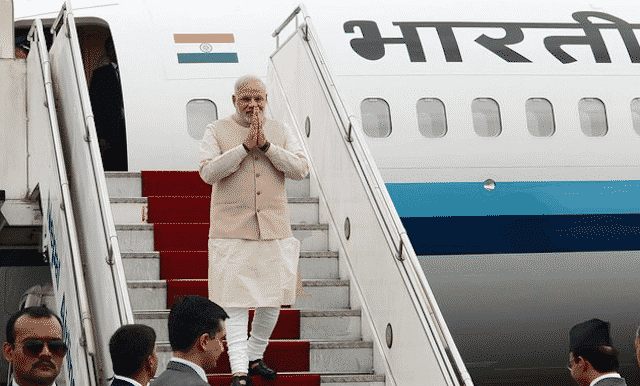
Modi to ink historic deals in Oz

0
Reading Time: 2 minutes

India and Australia will sign several important bilateral agreements during PM Modi’s visit

Fixing up timelines for concluding negotiations on a bilateral trade agreement, exchange of sentenced prisoners, cooperation on narcotics control and Memoranda of Understanding on tourism and cultural cooperation, are on the agenda during Indian Prime Minister Narendra Modi’s bilateral meeting with his Australian counterpart Tony Abbott in Canberra.

India and Australia will seek to speed up negotiations and fix timelines on concluding negotiations on the bilateral Comprehensive Economic Cooperation Agreement (CECA), also known as the free trade agreement (FTA) to boost bilateral trade, an official said on 10 November.

Talks were first started for the CECA in 2011 and so far five rounds of negotiations have been held.

The CECA aims to further liberalise and broaden the base of merchandise trade, remove non-tariff barriers and encourage investments.

Modi will be in Australia from Nov 14-18. During Abbott’s visit to India in September, both sides inked four agreements, including on civil nuclear cooperation, sports, skills and water.

Modi will have delegation level talks with Abbott and address the parliament in Canberra, have political, business and community meetings in Brisbane, Sydney and Melbourne where Abbott will host dinner.

A number of agreements will be signed and announcements made on initiatives.

A strong delegation of CEOs will accompany the prime minister to highlight the economic interests, said Secretary (East) Anil Wadhwa at a briefing in India.

He said the negotiations on the Administrative Arrangements for Civil Nuclear Energy are proceeding smoothly and this will open the way for trade in uranium with Australia. There is interest in Australia to engage in India’s mining sector, he added.

“On the economic front, trade in goods declined from US$17.5 billion in 2011-12, to $12.5 billion in 2013-14. To address this, we seek to conclude a mutually beneficial CECA at an early date, hold a Make in India Show 2015 in Australia and reconstitute CEO Forum to step up economic engagement,” he said.

“We are also looking at greater flow of services, including IT, investments, tourism,” he added.

On security issues, Wadhwa said both countries had a good working relations in counter-terrorism and transnational crimes. “We have finalised text of Agreement on Transfer of Sentenced Persons and MOU on Combating Narcotics which will help our common efforts,” he said.


Rock stars!

0
Reading Time: 5 minutes

Experience the history and natural wonder of the red centre and Uluru

By virtue of having lived in Australia for more than three decades, I have seen the mammoth Uluru on television, in movies, on wallpapers and calendars. But only recently, when I actually saw it in front of me, I found myself completely mesmerised by the magnificence of the sandstone marvel. Struck by its enormity, I couldn’t have agreed more with American author Patricia Schultz when she identified Uluru as one of the thousand places to see before you die.

One of Australia’s most recognisable natural landmarks, Uluru is of unimaginable scale, taller than the iconic Eiffel Tower, rising 348m high from its barren surrounds. It has a circumference of 9.4km covering a total area of 3.3 square kilometres. Most interestingly, this monolith rock extends even further below ground level to an unknown depth.

With the waning sun, the colours reflected on the rock keep changing making it extraordinarily spectacular – especially at dawn and dusk.

It’s not the only jewel in the crown of the Northern Territory’s ‘Red Centre’, (which gets its name and reputation from the vast plains of red soil characterising the landscape.) Around 50 kilometres west of Uluru, the gathering of 36 conglomerate rock domes called Kata Tjuta, one of them rising to a height of 546m above plain, is equally impressive.

Both of these icons and the surrounding land are part of the World Heritage-listed Uluru-Kata Tjuta National Park which belongs to the traditional owners, the indigenous Anangu people. Their ancestors are believed to have lived here for thousands of years. Today’s generation considers it to be their responsibility to pass on the rich cultural values of the place to their descendants. Deeply sacred to them, these outcrops, which were earlier called by their European given names, Ayers Rock and the Olgas, are now referred by their native titles only.

Today the desert domain, dominated by miles of red-earth, stands as the ultimate destination for adventure travellers keen to see unusual geographical marvels and experience indigenous culture and a lifestyle that has been well-preserved since its inception.

Though there are many intriguing things to do when exploring the Red Centre, here are the top five experiences you should not miss.

Meandering around the rocks

When looked at closely, Uluru is weather-bitten; pitted with holes and gashes. Valleys, crevices and caves mystically unfold and by self or ranger-guided walks, it’s rewarding to explore them. Leisurely meandering through the acacia woodlands and grassed clay pans, you discover diverse species of plants, animals and geological features of the Park. See indigenous art in some of the caves, encounter blood woods, native grasses and many waterways. Hear stories about the Anangupeople, learn about their lifestyle and the practices of humans who lived here millenniums ago.

The Kuniya Walk, which was recently taken by the Duke and Duchess of Cambridge, Prince William and Kate, is also one of the most popular short walks to try. It’s a relatively short stretch along a red-soil path that leads to the Mutitjulu waterhole, home to a wanampi, an ancestral water snake. There are similar trails around Kata Tjuta as well, the most commonly stepped being the Walpa Gorge Walk that leads to a groove of spearhead.

Circle the entire rock on the back of a Harley Davidson motorcycle for an incredibly thrilling experience.

Watching a riot of colours

The major tourist draw card of Uluru and Kata Tjuta that pleases visitors most is the change of colours at different hours of the day, most spectacular being at the crack of dawn and then when the sun finally dips into the horizon. At these moments, Uluru and Kata Tjuta glow like a giant prism with the colours of the light spectrum, displaying beautiful reflections from the red-oxide stained exterior of the rocks. Undoubtedly, it’s a divine experience to watch this natural light show, so sunrise and sunset tours are big ticket items in the Red Centre. The ‘Desert Awakening’, a tour that starts early in the morning when it’s still dark, has you sitting around a campfire, sipping hot tea and watching the surrounding desert slowly awaken into life.


Dining under the stars

‘Sounds of Silence’ or ‘Tali Wiru’ are not just world-class gastronomic adventures, they’re nights to remember for the rest of your life. This is dining in style at an open-air venue where the ceiling is the South Desert sky, and there’s nothing but stunning views of the Uluru, Kata Tjuta and the red desert.

Like us, you may arrive on site on a camel, like the 19th century cameleers trundled through the desert, and then relax with champagne and canapés while the sun vanishes below the horizon, Finally comes the elaborate meal, complemented by cultural enactments from Indigenous performers.


Getting a feel for Indigenous culture

Uluru and Kata Tjuta may be just geological wonders to many, but they have significant meaning for Australia’s Indigenous people; they both form an important focus of their spiritual life. A Red Centre odyssey provides many opportunities to learn about the legend and myths, and most importantly about Australia’s indigenous culture, tradition and lifestyle. The Cultural Centre at the base of Uluru Rock is the best starting point. Here the assembly of interactive displays, video presentations and artwork provides an interesting introduction into how the original native people lived and survived in this harsh environment. This initial knowledge is furthered through various activities at the Ayers Rock Resort, one of their accommodation facilities. Indigenous storytellers narrate their history and practices, perform traditional dances, provide the enchanting sounds of the didgeridoo and explain the use of local plants in daily life.


Visiting the Kings Canyon

Explore the Kings Canyon, a three hour drive from Uluru, a majestic destination featuring a 100m high sandstone chasm, palm-filled crevices around tranquil waterholes called ‘Lost City’ and the ‘Garden of Eden’, and spectacular views that stretch miles across the barren desert plain. The six kilometre Rim Walk is challenging, but absolutely worth it.


TRAVEL NOTEBOOK

Getting There

Virgin Australia (www.virginaustralia.com/au) and Jetstar (www.jetstar.com/au) have daily flights from Sydney to Uluru.


Accommodation

Operated by Voyages Indigenous Tourism Australia, Ayers Rock Resort (www.ayersrockresort.com.au) offers a variety of accommodation options to suit every possible taste and budget – from the award winning 5-star Sails in the Desert, and modern Desert Gardens Hotel, to the self-contained Emu Walk Apartments, the authentic Outback Pioneer Hotel and Lodge, and the Ayers Rock Campground, offering powered campsites and air-conditioned cabins.


Dining

There are several eating options available within the resort complex which includes Arnguli Grill for fine dining, Ilkari Restaurant for a tantalising menu of international flavours, and Geckos Café offering delicious steaks, pizzas, burgers and salads in a relaxed family atmosphere.


Adventure

Camel treks (www.ulurucameltours.com.au) and motorcycle rides (www.ulurucycles.com)

Feeling blue

0
Reading Time: 9 minutes

With alarmingly high rates of depression among men, it’s important for society to provide avenues and support to express their emotions, writes MOHAN DHALL

I am sitting with a group of men and women. We are talking about various things, including relationships, when I ask a question that leads to silence: “Does anybody here know a man who is depressed or has been depressed?”

A young man eventually speaks up. He says, “Darren* tried to commit suicide”. I knew Darren. He was my son’s friend. They went to university together, but Darren wanted to escape his father.

For over a year he stayed in his room on campus, playing online games and drinking himself to a stupor most nights. His father was not quite the role model he sought, and in finding himself, he lost himself.

I am driving with my girlfriend who lives in a country town. She says as we drive, “…and very sadly here is where a young man died. His car hit that tree.” We are silent for a moment. Small towns have a habit of bringing sad news to too many people who internalise their pain.

“I do not think he lost control. He may have driven into the tree on purpose,” I reply. We drive on.

A week later I send her flowers but they do not arrive on time. In the evening, I get a call saying that the delay was on account of the flower deliverer supporting her son. His best friend was the young man who died. It was, she told my girlfriend, a suicide.

This is the ‘lucky country’. The land of plenty. The second highest on the Human Development Index as measured by the United Nations.

But this is also where more young men per head of population commit suicide than anywhere else.

I wonder why we have a culture of self-destruction as evidenced in part by binge drinking and I reflect on what men talk about when they are together.

It comes again, inadvertent and unexpected. Like a fog whispering cold, you feel a sense of distance from yourself. Further you fall, behind your eyes, knowing here your only friend is vulnerability. Your voice becomes quieter, the world recedes, everything at this time can hurt you. You feel like you are drowning.

You become engulfed in a wave of darkness and you notice your limbs are heavy and it is hard to walk. When you do walk it takes effort. You walk closer to the buildings, eyes downcast, seeing everything and everyone from the knees down. In this state you seem unreachable. Unknowable. It is sometimes funny to you that in this space people become kinder, more gentle. You know they do not know you and cannot sense the depth of the water pressing down on you. You know they do not know how to reach you, yet somehow they come physically slightly closer.

You wait in this space for when you have been here before you know it will pass – it may be half a day, a few days or longer. You do not know what makes it lift, but like the sun on a foggy morning, the thickness of the darkness lightens. You suddenly realise you can walk more smoothly. It is like you were trying to run in the surf, but only now the water is below your waist do you feel freer. You do not avoid talking and your eyes can see faces. The relief is palpable. The shore is near. You celebrate your rise from darkness with too much enthusiasm – not quite a manic high, but far more energy and humour than you had only a few hours ago.

You look back on the lost days. Wonder where you went. Wonder when the darkness will press down on you again, slowing your breathing and dulling your senses. Wonder why, and also wondering where it is you go, and whether you can be in a place where your inner self is not…

I am talking with a father. He is crying. His marriage has failed and he is confused and lost. Unable to acknowledge either, he is angry. Despite the myths, men feel intensely – but they are not parented to have the words to express their feelings.

Indeed, men are, in the words of many women, meant to ‘man up’.

Vulnerability, anxiety, feeling overwhelmed or afraid – where do these things fit in? This father tells me that he does not know what to expect. For a tall, strong man he looks very wounded, lost and weak. The antithesis of the Olympic medal he won.

I hate not being manly. I know that mostly I can cope, but sometimes I just want to be held and to bawl my eyes out because I feel so alone. I have been so responsible for so long, and all I want to do is let go…

 —

Arthur* has his arm over his head as he leans on the table. He looks like he is in a lot of pain. He told me that he has clinical depression – an unusual admission. I notice that when he finally straightens up he is trying to catch his breath and he has placed his right arm protectively across his chest. I know that he feels open and vulnerable and wishes he could manage. I am unsure of my role, but also know that it has to be a safe enough environment for him not to feel judged.

Arthur has been through a lot recently – unable to get work despite his talent, a relationship breakup, a sick mother. He tells me some things that turn out not to be true. It does not matter. He is my friend and I will not judge him. His lies, however, are unbuckling his friendships. His vulnerability, it seems, often stems from jealousy. He gets angry when anyone says anything favourable about another male – he feels like he is not good enough.

If a female friend of his says another man is ‘nice’ he panics and either suggests she intends to sleep with him, or finds a weakness in the man he feels threatened by. His friends say it is hard to support him because they do not want to agree with him, but at the same time, the threats feel real to him.

In this way, his behaviour and his depression coalesce and even his friends say he brings it on himself. I am not so sure…

My brother calls me, still delusional. He tells me he is Bodhisatva come to save the world. He tells me he does not wear leather because the animals feel pain too. I ask him how he is. He says he hates to sleep because they are coming to get him and he must be vigilant. He says his ankles hurt since he jumped from the bridge. If only he’d died they would have felt sorry for not knowing him.

He says the drugs help to ease the pain and why is everyone out to get him? He asks me when I will see him next because the hospital will let him out and we can get a coffee then. We can have more than one coffee in two hours.

I am with the lads – our annual meal to celebrate the year. I know that we will discuss the football, the season gone. I also know that Albert* will talk about his recent trip away and the ‘beautiful bird’ he met. Later he will talk about his wife and children and how much he loves her.

Another in the group will not talk about his wife because they are estranged and he feels isolated in his own home. Of course, men do not articulate the language of isolation or estrangement. So he will simply say, “Yep – it’s all good.” And then go on to discuss everything except his personal life.

After my marriage broke up I called the helpline. I was desperate and alone. I sought comfort. It was a very hard decision to make to call the number. A man answered the phone. I said I felt isolated and alone. The counsellor asked why. I told him about the distance between me and my children. How my former wife had moved further away and how I missed being fully involved in the lives of my sons. The counsellor started to give advice. All I had wanted was empathy. In total exasperation I realised that I was better able to counsel myself than the ‘trained’ counsellor. ‘What hope is there for men with depression who cannot identify their feelings,’ I thought as I hung up.

He’s back, this mate. Down from the country. It will be a huge weekend. He and two others will start the day with beer and progress through two packets of cigarettes as we laugh our way through the past six months discussing work, relationships, investment, and observations of the world.
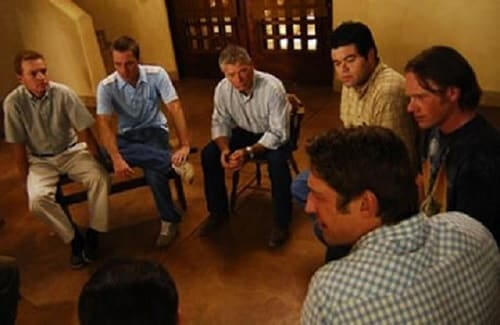
It will be fun and the number empties will suggest a wild time with many people. I will join from time to time, unable to keep up with the drinking or to get involved in the smoking, but able to contribute to the conversation.

After a couple of days, he will go back to the rural area where he lives. Left behind are impressions of a man still running away from himself. A man at risk and who, when questioned, talks about feeling like nothing fits. He sounds empty and lost. A man who will drink to the point of sickness every weekend, but who will not seek professional help.

Mateship does not make a difference here. Indeed, if anything it exacerbates the issues because his mates drink with him and do not talk about feelings that they cannot name. His mates laugh about where he passed out or how sick he was.

I don’t know how I felt. I wanted to provide everything for my family, so I focused on my work. When I feel they have what they need then I know my sense of duty is well placed. But my long hours have my wife struggling with the children. She is distant and distrustful. When I go home I focus on the kids. Our lives are centred on them, but looking ahead I do not know what will happen when they leave us. Who will we be together? We are already being alone together.

I wonder what hope there is for our sons when men are raised to distance themselves from feelings.

Society’s messages are confused.

I ask some women what the word ‘sook’ means.

One smiles and says it is used as a term of endearment to denote a man who is open with his feelings. Another gets angry and says that men should not be open with how they feel because strength is evidenced by silence and stoicism. A third says she wishes her husband was a ‘sook’ – a capacity to read feelings for her is ‘the ideal man’. A fourth says that her partner will cry watching movies but is never so expressive with her or their sons. And she notices that the boys will wrestle or hit each other – but never hug.

Jarryd Hayne cried when the NSW Blues beat Queensland for the first time in eight years. It is common for men to justify or talk away their feelings at such times, and to later apologise, as if the expression of emotions is wrong. Men have been heard to say ‘it was an emotional time’. The term ‘emotional’ does not actually unpack their true feelings. Depression begins when men become estranged from themselves and when there are mixed messages about who they should be.

Big boys don’t cry, man up, toughen up, be strong, don’t be a girl, don’t be a wuss.

The term ‘bromance’ has been coined to describe a loving close brotherly relationship between men. It is heartening that some men are starting to become more open with their feelings.

The group Mens Shed has been created to provide men with an avenue to connect with one another so that they do not feel isolated.

During major transitions, such as marital break up, grief or loss of a job, men can feel like their idea of self has become disrupted and, not having the skills to cope, may find life overwhelming and feel isolated and alone.

For men with few close friends or whose identity is vested in family, the sense of isolation, loneliness and depression that accompany life changes can be extremely confronting and can lead to despair and a feeling of sinking far beneath the surface.

I dreaded early January. My mates were away, work was closed down, my boys were with their mum. The streets were quiet, the days hot and long. All I did for hours was seek old friends on the internet and try and cope with the isolation

It is very important that men and women learn to identify feelings and support the expression of feelings such as anxiety, isolation, depression, lost, unknown, unreachable, drowning, and the like. Whilst these types of feelings are challenging, the loss of six men each day through suicide is far more confronting.

*All names have been changed to protect the identity of the people

Important contacts for men who need support

MensLine Australia is a professional telephone and online support and information service for Australian men, phone 1300 78 99 78

Call Lifeline’s 24hr crisis telephone line on 13 11 14

Black Dog Institute – http://www.blackdoginstitute.org.au/

Dads in Distress Support Services – http://www.dadsindistress.asn.au/

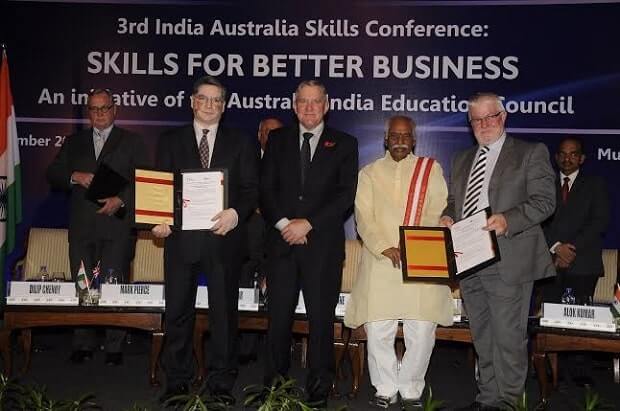
A united skill development vision

0
Reading Time: < 1 minute

During his recent visit to India, Australian Industry Minister Ian Macfarlane, who was accompanied by a 100-member delegation, reiterated Indian Prime Minister Narendra Modi’s skill development vision

He also lauded the Indian government for the focus on skill development with the formation of its new Skill Development & Entrepreneurship Ministry, and the announcement of Rajeev Pratap Rudy as the Minister.

Macfarlane has been in India for the 6th Global Summit on Skills Development organised by the Confederation of Indian Industry (CII), in which Australia is a partner country.

Macfarlane said the visit of his delegation is a great opportunity for both the countries to collaborate and create a sustainable partnership on skill development.

With the new Modi government’s focus on skill development leading to employment generation, Adi Godrej, past president of CII and chairman of the Godrej group, said it is an opportune time for discussing requirements and reform.

He said the world is looking to India to capture the business opportunities being presented and it is the demographic dividend that will work in India’s favour.

Godrej, however, said there is no dearth of jobs but a dearth of skills that the industry needs to focus.

There were 400 delegates that attended the summit, which had speakers from Germany, Sri Lanka, Bangladesh, Canada, Japan, South Korea and Australia who spoke on key aspects of skills development, covering the role industry in skill development, technology as an enabler for ‘Make in India’, and the potential of trainers as value creators.


5 minutes with Ajay Jadeja

0
Reading Time: 2 minutes

FRANKEY GERARD FERNANDES asked the former ace cricketer and commentator his views about the upcoming ICC World Cup 2015

On India’s chances of retaining the cup

India’s chances of retaining the world cup are quite bright, but it’s too early to make a definite comment. All teams still have to get their act together. It’s the players that represent you in that particular tournament.


On MS Dhoni as captain

India is talking about a change in captaincy because current skipper M S Dhoni has not excelled overseas in the past. But rather than picking up a newbie, M S Dhoni should lead India, if it has to retain its trophy at the upcoming ICC Cricket World Cup 2015 in Australia and New Zealand.


On India’s team composition

There is a need for a surprise element. I saw this young left-arm bowler (Kuldeep Yadav), a rare breed in the world of cricket and I hope he is in that tour. You need a surprise element, because you should have something the other teams have not worked out. In modern day cricket, you analyse each other’s strengths and weaknesses. Unless you have something up your sleeves, teams have not able to win World Cups.

I’m not one of those who believes that the team needs three spinners in India and four seamers abroad. I feel India needs five wicket-taking bowlers.


On the tour of Australia before the World Cup

It’s the best thing to have happened and the Indian team has the opportunity to try out players or come up with a new strategy. Send a lot of young guys for the shorter format.


On current coach Duncan Fletcher

At this level, you need players who think for themselves. Coaches are meant for kids at the junior level. A coach should be a person who makes players comfortable. And the team seems to be comfortable with Duncan Fletcher.


On different captains for ODIs/tests

It would have been a good idea if you didn’t have a person good enough to play in all formats of the game. But I think having one skipper is the best because if you have different captains for different formats, you start playing differently and you don’t want to do that as a team. Players, captains and coaches might change, but the team should always be a cohesive unit.


On Sachin Tendulkar

The Board of Control for Cricket in India (BCCI) should use Sachin Tendulkar in every possible manner to motivate the players. Tendulkar is the greatest asset in the world of Cricket and it would be disappointing if his services are not utilised for the benefit of Indian cricket.


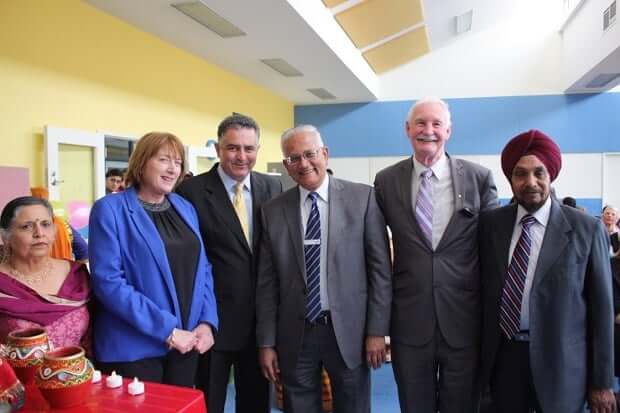
A grand old Diwali

0
Reading Time: 5 minutes

Melbourne’s buzurgs celebrate the season

Multicultural Seniors Association

In keeping with the Positive Aging (50 years plus) Community Leadership Program, and to promote Indian culture, cuisine, and arts, the City of Wyndham received a grant from the Victorian government to entertain the fast growing Indian community by celebrating Diwali, the Festival of Lights.

A rangoli greeted those of various faiths as they arrived and the four-hour long program began with a prayer-song: ‘ay maalik tere bande hum’. The dignitaries present then joined hands in lighting the festival lamp.

The day began with Saraswati vandana which Aninya Gaur presented through the medium of a Kathak dance. She also offered vandana to Lord Ganesha.

Madhavi Vasa gave us an Indian classical song while Ananya Bose presented Bharatnatyam. Kamaljeet Singh, of Sur Sangh Australia sang Heer, a poignant Punjabi folklore, which caused members to rise on their feet. The program continued with other spirited dance and musical performances throughout the day.

The program organisers were Dr Gurdev Singh Rattan, (President of MSA) and Mrs Samer Pal Kaur. Mrs Prem Arya was the MC and the program was conducted in traditionally captivating style at the Community Centre in Point Cook, south-west Melbourne.

Joanne Ryan MP, opened proceedings, and the event was attended by Lord Mayor Bob Fairclough, Telmo Languiller MP, and C.S.Srinivasan, Multicultural Commissioner.

Featuring an abundance of talent from young and old, the day was a cultural feast.
For more information, please contact Samer Kaur on samerkaur3@gmail.com


Sewa International

To celebrate Diwali, the Stonnington City group was overjoyed to join members of Sewa International for a picnic in the holiday city of Sorrento further down south-east. A 57-seater bus collected members at the Community Hall in East Malvern, then at Clayton and finally from Dandenong, and was on its way. Unfortunate as it was, we left many disheartened aspiring picnickers behind.

Animated members wished one another good tidings of the festival, and took a break at Aromas Restaurant in Rye for a lunch.

Hospitable Harry, the owner, was delighted to meet our group and wished to talk all things India. But we needed to hurry as we a Sorrento-to-Queenscliff and back ferry awaited us, the sun-god clement on the day.

On our journey back home, we cracked jokes, told stories, sang Bollywood songs, danced around, and demanded that such fun outings were more frequent. To reminisce this wonderful outing, check http://youtu.be/75ORvMAFRkQ or for more information, please contact Anand Shome on ashome@gmail.com

Indian Seniors’ Forum

In the monthly program Indian Seniors’ Forum organises in Camberwell, young and old wished one another the blessings of the festival and took to the floor to dance. Vegetarian lunch arranged by Temple Management was both sumptuous and delicious, and pre-packed festival sweets though formed the attraction of the day.

For more information, please contact Mr S. K. Auplish, Chief Coordinator, Indian Seniors Forum, on auplishsk@yahoo.com.au and also Organiser Ms Jaya Manchikanti on Jmanchik@stonnington.vic.gov.au


KISCA

Kingston Indian Senior Citizens Assn. (KISCA) hosted a Diwali festival lunch at The Fiji Restaurant in Little India, which they rather imaginatively decorated with live banana plants and Indian décor.

We began with homemade vegetable samosas with very Fijian green chutney. The difference in the Fijian-Indian lamb curry, although minimal, was distinct. My initial impression, that they tenderised the meat with raw papaya paste, (common practice in Indian cuisine), was erroneous.

Centuries ago, as Fijian members elaborated, they did not find Indian spices in abundance in Fiji, so they resorted to improvising. This involved using less onions and a concentration of coriander powder.

Another typical sabzi a Fijian Indian home/restaurant must serve is pumpkin mash, traditionally treated with a chaunka of methi-dana. We noticed the fried rice served was treated with butter rather than desi ghee. They spice the daal a bit more than Indians normally would and they are also not tandoor-crazy, but insist upon larger tawa rotis than the phulkas of north India. Festival mithai in abundance was most welcome. A gratifying afternoon.

As President Nagaya is changing house, please call Secretary Mona Raju on 9782 8973.


ISAW
A steadily growing membership of Indian Seniors Association West (ISAW) also celebrated Diwali in St. Albans, and wished the other tidings of the festival. Many took to the floor to dance on the mesmerising Bollywood songs. After that, we related our experiences of the festival in our respective towns back in India. We then shared in breaking bread together. An abundance of festival mithai was there to share.
For more information, contact President Arjan Tuli  on 9390 2818.

ISCA

The Indian Senior Citizens Association attracted nearly 200 people who wished to celebrate Diwali together. Secretary Dinesh Sood truly needed to yell to restrain animated members so they would give him an ear. Commencing the day, Vice President Jasbir Bedi invited 13-year-old Akansha to the stage, who delighted us with a fast Marathi dance. Self-taught, the moves and gestures talented Akansha presented enthralled us all. Later, she also presented a Bollywood dance.

Young Kajal and Krishna gave us a Bhangra performance while regulars at ISCA, Lisa and Eddie absorbed our attention with a captivating jive. Later, Lisa danced with Sandy to a Bollywood tune yaad kiya dil ne kahan ho tum. Tavreen and Navreen,7 and 11 years old, gave us a well-rehearsed Bhangra.

President Prem Phakey wished members the blessings of the festival and thanked Victorian Multicultural Commission Chairman Chin Tan for the grant he sanctioned for the festival. This, incidentally, being his tenth Diwali function of the season, Chairman Tan praised the community for maintaining our culture, which secular Australia encourages.

While we expats maintain the culture of India, with equal gusto we celebrate the festivities of our adopted land as well.

Jennifer Yang extended Diwali greetings from Anna Burke MP, who could not attend. Prem Phakey introduced ex-Monash Councillor Robert Davies, who hopes to enter Parliament after the election, who asked members to vote him in. Michael Gidley, our local MP, wished Happy Diwali to all present and pledged his government’s continuing support to ISCA.

For more information, please contact President Phakey on 9803 3989

Have you got your Modi kurta sorted for the 17 Nov event?

0
Reading Time: 2 minutes

The half-sleeved kurta may have been an unusual sartorial choice in India only months ago, but today it is a highly sought-after fashion item, thanks to You-Know-Who

In an Indian sense, it is equivalent to having your sleeves rolled up – it shows you are a man of action; a man in the midst of getting things done.

The Modi Kurta has today become a style statement.

The Indian PM Narendra Modi revealed once that he modified the traditional khadi kurta because he found it easier to wash (he has been doing his own laundry for over 40 years). As well, he thought it was easier to pack as he travelled a lot.

The Modi kurta is yielding rich dividends for Indian designers.

Kapil and Mmonika Arora have come up with an exclusive Modi-inspired line in cotton fabric with the tag line “Old classic but new vision, New India”. Their line offers Nehru jackets, and kurtas-churidaars in colours like orange, rust, white, off white and coffee brown.
Mmonika says, “The style is in for almost all age groups – for instance college students like it a lot.”

E-commerce site Modimania.com is not far behind.

The influence has not been restricted to men’s fashion either. Mumbai’s popular sari store Paaneri has launched a collection of georgette saris with digital prints of Modi’s face, which was a hit.


Mona Lamba and Pali Sachdev, the famous designer duo from Kolkata, have a lotus motif for Modi’s supporters.

So, have you got your Modi kurta yet? Or your Modi sari?

Top Ten: Oldest Living Things In The World

0
Reading Time: 4 minutes

If you thought the average lifespan of a living creature is a few decades, think again 

In our quest to find the oldest living life forms on this planet we made some fascinating discoveries. At the risk of taking out the spoiler award, let’s just say there are some ultra-centenarians, some immortal species and some millions of years old, pre-human living entities still sharing oxygen with us!

10. Oldest planted tree

The oldest surviving fruit tree planted by man with an identified planting date is a fig tree in Anuradhapura, Sri Lanka. The Jaya Sri Maha Bodhi is the sacred tree grown from a sapling of the Bodhi Tree under which Lord Buddha received enlightenment. Planted in 288 BC, this ancient tree is well protected by authorities and is revered by Buddhists all over the world.


9. Oldest living woman

Born on 5 March 1898, Japanese super centenarian, Misao Okawa, is the world’s oldest living woman. At 116 years old, Misao is verified as the oldest ever Japanese person, the oldest person born in Asia and the sixth oldest person ever. Although Misao now resides in a nursing home, she was able to do leg squats until the age of 102 and walk unaided until 110. She currently uses a wheelchair but is still able to propel herself.


8. Oldest shrimp

The horseshoe shrimp holds the title of the oldest living species on earth that has existed unchanged for 200 million years. Pre-historic fossils of an animal exactly like it confirm that the little creature has been unmarred by evolution. During dry spells, when the water in pools where they live dries up, the adult shrimps die, but their eggs have the ability to survive in the sand for up to twenty years. This survival technique could be the key to the unevolved longevity of this species.

7. Oldest tortoise

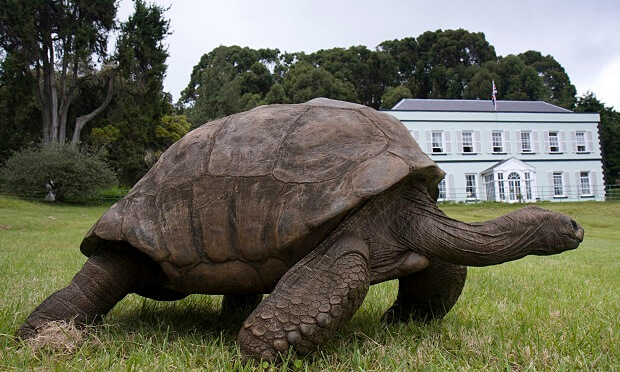
Born in 1832, Jonathan, the Seychelles giant tortoise is the oldest living reptile in the world. Jonathan belongs to the government of Saint Helena and resides in the grounds of the Governor’s House. He was brought to the island in 1882 along with three other tortoises at the age of 50. At 182, Jonathan is still going strong and could possibly break the record set by Adwaita, the giant tortoise from Kolkata, India who, at 255 years, was among the longest living animals on the planet until his death in 2006.

6. Oldest bacteria

Over 250 million years old and still alive! That’s Bacillus 2-9-3, a bacteria that was found trapped in suspended animation inside pre-historic salt crystals buried almost 2000 feet below ground in a cavern in New Mexico. The American scientists who managed to revive them claim they are the world’s oldest living things. Bacteria are equipped with the ability to combat harsh conditions and exist in suspended animation for long periods of time by forming resistant structures called spores.


5. Oldest bird

Wisdom, a Laysan albatross turned 63 this year, making her the oldest known wild bird in the world. Studies show that Laysan albatrosses don’t usually live beyond their 30th birthday which is why Wisdom, who gave birth to a chick recently on Midway Islands, has been perplexing scientists with her unusual age and the ability to give birth so late in life. She was tagged in 1956 and has since flown more than three million miles.

4. Oldest living man

Super centenarian, Sakari Momoi of Japan has been verified by Guinness World Records as the oldest man living. Born in 1903, Momoi turned 111 this year. He was born a day after Alexander Imich who, also 111, held the title of the oldest living man until his death earlier this year. Momoi told reporters last year that he wished to live for two more years.


3. Living fossils
Living things continually evolve through the ages and how most of them look like today is very different from what they started out. This makes the horseshoe-crab a unique creature as it has remained virtually unchanged for over 445 million years. They are considered ‘living fossils’ and one of the oldest living animals on the planet. Thought to be from the Ordovician period, the crabs live near shallow ocean waters where their population is now being threatened by human activity.

 
2. Immortal jellyfish

Turritopsis dohrnii, a tiny jellyfish discovered in the Mediterranean Sea in 1883, can age backward from a mature stage to a baby, qualifying as being immortal. Normally the dohrnii reproduces and dies like other mortals, but if faced with life threatening conditions like starvation, instead of dying it can transform into a baby, time and time again! Itturns into a cyst which develops into a polyp, the first stage in jellyfish life. Then, through asexual reproduction, it can produce hundreds of clones of its adult self. This unique ability is helping the Turritopsis dohrnii spread in oceans all over the world in swarms.


1. Oldest Tree

A Great Basin bristlecone pine named Methuselah, growing in the White Mountains of Invo County, California is said to be 4846 years old. It was reputed to be the world’s oldest known living non-clonal organism until 2013 when the title was clinched by another 5056 years old bristlecone pine discovered in the same area. Methuselah, however, continues to fascinate scientists and the public, and in order to protect it the Forest Services keep its exact location a well-guarded secret.


What aspiring politicians can learn from Modi

0
Reading Time: 2 minutes

Once in a while someone comes along and does something that takes the world by storm

Inventors, scientists, doctors, engineers, crusaders, sportspersons and others in almost every walk of life frequently produce ‘freak accident’, ‘divine intervention’, ‘lucky break’, ‘odd chance’ or ‘globe shattering’ type developments.

Research labs, incubators and management schools have focussed on how such non-linear but desirable changes can be methodically precipitated by some kind of formula. This has led to much intellect, energy and effort being directed at making it happen faster and seamlessly.

One predominant school of thought advocates creating the right climate and seeding it with the right resources, with reduced oversight but with more mentoring. This involves a higher yielding approach by building self-actualisation opportunities within the environment where collaborators can team up as and how they want.

Enter Narendra Modi. Here I want to alert all business schools, management doctrine developers, aspiring political leaders and wannabe promoters of any change anywhere, that the time to study this is now – how an unheard of political incubator that began in the tea-stall-yard of one small boy called Narendra Modi, is about to transform the concept of creating a widely supported political leadership that shows growth and popularity chart busts that any Silicon Valley start-up would kill for!

In a world that generally mistrusts politicians, to exceed and surpass all measures of success and popularity ever statistically recorded, is indeed a feat.

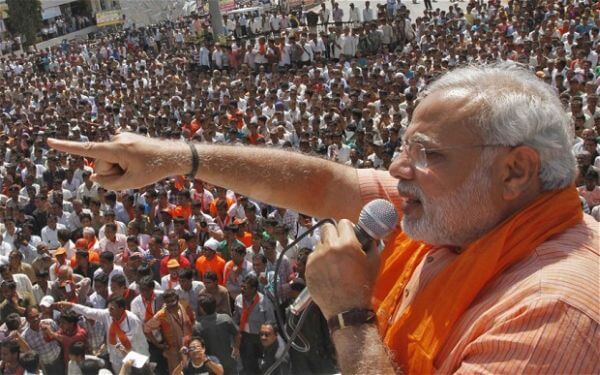
Modi’s public meetings in India are quite a spectacle.

Before the Ivy League universities get interested in studying his nation revamp formula, I want to highlight ten reasons behind Modi’s success:

1. He visibly separated his family from himself – crucial in a hugely corrupt developing economy where family and cronies get in the way of public welfare.

2. He works 18 hours a day, and there are results to show for it.

3. He constantly reminds all of his mission, ie, delivering on hopes and aspirations of the Janata (public), a perfect mission statement driven home by his team and the bureaucracy repeatedly.

4. Not put off by protocols, he calls unto anyone who can deliver, other political leaders, business tycoons, film stars, social do-gooders, media barons, soldiers, even the regular guy on the street.

5. He accepts anyone with a soft cajole except the enemies of the nation.

6. He has a positive schedule of work flow that hits the desks of everyone in his team.

7. He runs an open government forum where everyone can provide input/advice directly.

8. He has increased governance by direct public input to his government’s policies and priority formation with auditability and transparency.

9. With his ‘Make in India’ mantra, he has become a favourite of businesses that love open dialogue and focussed help under one window sans bureaucracy.

10. He is the behemoth who supports people’s agenda even before people know what it is.

Modi is also steered adversely by his opponents who think that people don’t care, or are dumb and busy except on voting day and can be fooled and ignored till the next elections.