Home Blog Page 913

Travel safe, travel well

0
Reading Time: 3 minutes

A curtainraiser for your upcoming trip to India

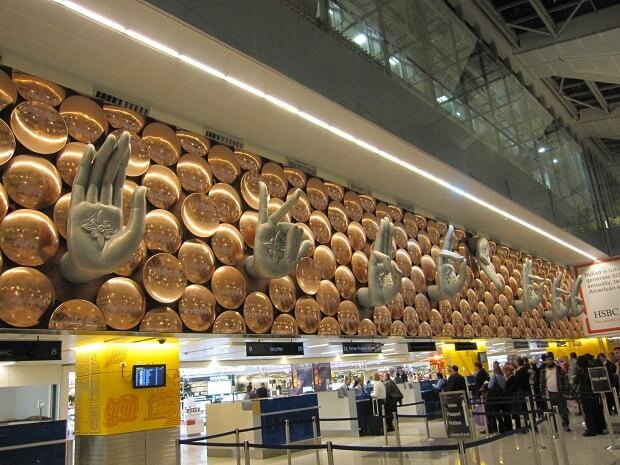
About this time the supply and demand equation for flights to India changes: demand far exceeds supply as most Indian Australians start their annual pilgrimage to India. While it will no doubt be an invaluable opportunity to catch up with friends and family, here are a few observations of what to expect as you ‘go back to where you came from’.

On a people-to-people basis, those who have elderly parents will experience a surge of guilt for abandoning them in India while they themselves live so far away. They will look at options to have them join them in Australia, and so, there will be much Googling to look at government rules and regulation. But perhaps it will be worth looking at the reality of it all, and understanding whether the mums and dads are happy in their current network of friends and relatives and with their independence, something which they may have to give up if they are encouraged to migrate to a new country and set up brand new social structures.

There will be much socialising with friends who, since India opened up its economy in 1991, have now established themselves well in the financial fabric of the economy. While these friends may be fairly well set, their children may well be getting educated in the UK or in the US, as the demand for good education far exceeds supply of quality institutions.

Then, there will be the health issues which one will invariably come across. For middle class India, there is ready availability of alcohol and, with money at hand and limited entertainment opportunities, booze does tend to figure large in the lives of contemporary urban Indians.

The traffic, of course, will not only be different to what you experience in Australia, but also changed from the last time you visited. The infrastructure in India still needs to catch up with the explosion in various type of vehicles – be it the cars or the two wheel scooters or the buses.

There will be robust debate about the new Modi government. On the one hand there will be those who are worried about the emergence of a single religion-dominated party and what it can do for other minorities of the country; there will be others who feel that it’s time to have a different government in power who can take firm reins of the country. The passion of politics, fuelled by a couple of drinks, will definitely feature in the discussions. And yes, there will be the inevitable discussion about the booming property prices and the scourge of black money and corruption.

Australia will feature strongly during your sojourn in India. Cricket will be in season, despite the loss of young cricketer Phillip Hughes, and as Dhoni, Kohli and the boys battle it out with Clarke, Warner and Johnson, chances are you will see a fair bit of Australia in living rooms around India. And for sure, you will be asked why they like Modi so much in Oz….

Well, that’s your curtain-raiser to your upcoming trip to India! Regardless, the beauty of a holiday to India is that it will always keep the connection alive with the home country.

For those travelling, travel safe and may this holiday be a memorable one for you and yours.
The death that stopped a nation

2
Reading Time: 4 minutes

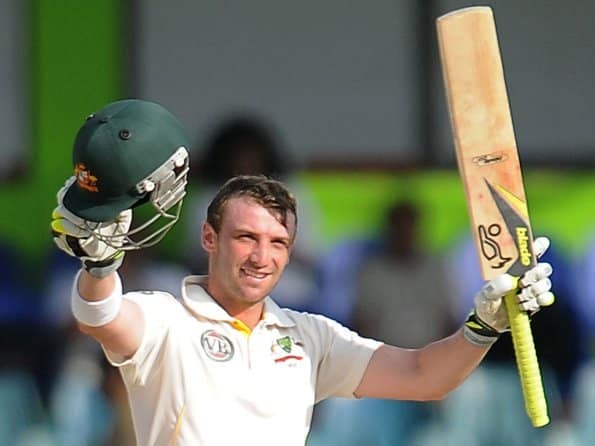
Despite his success in the big smoke, Phillip Hughes never lost his country kid charm

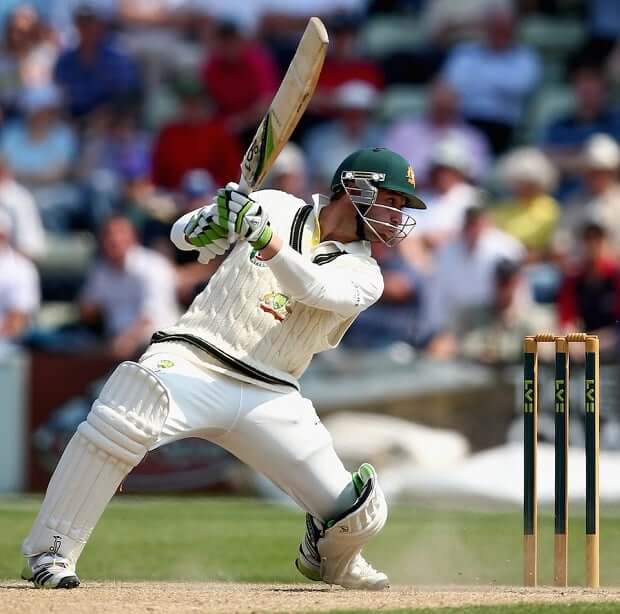
I have been trying to delve deep to find some reasons why the highly tragic and ridiculously premature death of Phillip Hughes has touched us all so much.

Frankly, I struggle to articulate the reasons. All I have is some theories and the anecdotal evidence of conversations with friends in cricket and outside.

So, what sort of bloke was he?

I met him when he was almost 18 and had come to the big smoke (Sydney), a few months prior, to work on his cricket. His mentor and coach, Neil D’Costa wanted me to meet him and we spent a most pleasant three hours over dinner at Abhi’s in Strathfield, shooting the breeze.

Neil D’Costa had been talking him up as the Next Big Thing, and given that Neil had delivered Michael Clarke to this country, who could doubt him?

Phillip was respectful, a keen listener and politely took in all the unsolicited advice and “insights” I thought I was obliged to give him, given what Neil must have told him! I was impressed as he was a warm, cheerful country kid who, as per his coach, had a formidable work ethic combined with an appetite for batting for long periods of time.

When we get paid for something we would do for free, it is never more than a hobby and I sensed that cricket was merely a game for Phillip and he was surprised that he could make a motza out of his magnificent obsession – batting.

Subsequently, I saw him around at the cricket and he always came up to have a yarn or chin-wag (a quality few cricketers have!) He did not have to do this. After all, he was in the middle of some serious cricket for his country, and occasionally even his place in the team was in jeopardy, but it always seemed to be just a game to him and he was still very much the warm, joyous, unspoilt country kid.

On Australia Day in 2009, Phil generously came to the Reg Bartley Oval, Rushcutters Bay, at my request for an LBW Trust charity fundraiser – a cricket match. He stayed for a couple of hours, spoke to hundreds of supporters and refused to even let me get him a taxi back home. Our Directors were all frankly astonished to see a cricketer behave in such an unassuming, modest and heart-warming manner.

Everyone knows about his rather unique and highly unorthodox batting technique. However, despite this (or is it because of it?) he was able to score a prodigious amount of runs in all forms of the game.

I think he had worked it out that though the critics, old timers, coaches, journalists and the public had an opinion on his technique, he would be most successful if he ignored their advice and continued to have faith in what had worked for him, rather than tinker with it and tempt fate.

Nevertheless, he put in the hard slog and made minor adjustments, working unsparingly with Neil D’Costa.

He even sought out Sachin Tendulkar, by specially visiting India in the off-season, to seek his counsel on improving his game. Sachin was absolutely touched.

In September 2010, when he was wanting to travel to India directly from London, he contacted me in a desperate rush to seek my help in obtaining his visa. Generally, every country requires visa applicants to lodge their applications in their country of residence. To the credit of India’s Foreign Service, they went out of their way and obliged Phil in a trice. To his great delight he was able to make it for the start of the Australian cricket team’s tour of India, at very short notice.

My last memory of Phillip is bumping into him in February 2013, at the team hotel, the Taj Coromandel in Madras. I was going out to dinner and he was going back up to his room after having already eaten. We had a nice chat near the elevator. The Australians had a rough day on the field, but that was not at all obvious when we were talking. Typical of the bloke, I thought.

And now, here we are, mourning a gentle soul, so cruelly snatched from our midst, in the very prime of his life. The only consolation is that he went whilst indulging in his passion.

Phillip Hughes was a laconic, humble, generous, uncomplaining, unspoilt character who did not have tickets on himself. He was a pleasure to be in the company of. He had a joie de vivre about him. He had a commitment to excellence, and worked tirelessly to iron out the flaws in his game. These were all extremely endearing qualities that everyone could recognise and admired in him.

Australia, and I dare say, the world, is a much poorer place for his absence.

He will certainly be starring in the Elysian Fields.

RIP, Hughesy. You truly, madly, deeply touched us.


Darshak Mehta is Chairman of The LBW Trust. The Learning for a Better World Trust (www.lbwtrust.com.au) is a cricket-focused charity which provides tertiary education to over 1000 students in seven developing, cricket playing countries , including over 500 students in India alone.

The coal gamble: on Adani’s Carmichael Coal Project

0
Reading Time: 3 minutes


Indian giant Adani Group’s plans for the $16 billion Carmichael Coal Project, the largest in Australia, has stirred up environmental groups in India and Australia.

Founder of India’s Conservation Action Trust, Debi Goenka recently travelled to Queensland to file legal objections to the approval of this coal mine on behalf of the Indian community. This is the first time that a case has been filed by an overseas party objecting to a coal mine in Australia.

The Adani Group’s foray into Australia began in 2010 with the purchase of the Carmichael Coal Mine in the Galilee Basin of Central Queensland and the port of Abbot Point in North Queensland. Their aim was to operate on a vertically integrated model – the coal from the Carmichael Mine would be transported by rail to Abbot Point, and then exported to India and other offshore markets.

Australian federal and state governments have both approved the Galilee Basin project. At capacity, this mine will produce 60 million tonnes of steaming coal every year, with a predicted lifespan of 60 to 90 years. Most of this coal is destined for India. Instead of supporting India in building its renewable energy capacity, Australia is trying to be its friend by palming off dirty fuel.

“The livelihoods and health of fishermen, salt panners and small farmers in the port of Mundra, Gujarat, where the Adani coal is headed for, will be ruined,” says Goenka with regard to why he had to take the legal route to stem the influx of coal into India.

Adani claims the high quality imported coal will help to light the lives of 100 million Indians. Studies, however, show the contrary.

According to the Institute for Energy Economics and Financial Analysis in Australia, India will not be able to afford the price of imported coal and it would in fact double the price of electricity.

Other consequences would be inflation, current account deficits and implications for India’s energy security. It is ironic that while coal may meet the energy needs of the rich, it will be the poor, residing around the port, who will suffer.

In 2011, Karnataka state’s Lokayukta, the anti-corruption ombudsman, investigated complaints of profiteering through illegal exports of iron ore. It found that “officials of Port Department, Customs, Police, KSPCB, CRZ, Mines, Local politicians and others are involved in receiving the bribe money from M/s. Adani Enterprises”, and Adani and other mining companies were “found to be actively involved in large scale illegal exports”.

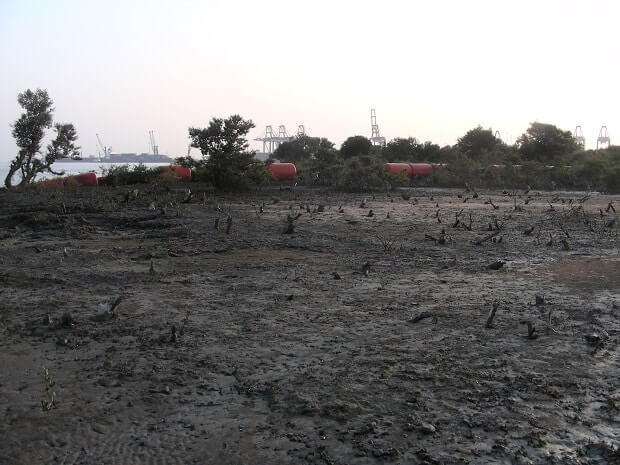
Adani began construction of the port at Mundra in the late 1990s, with commercial operations commencing in 2001. The Indian government asked the Centre of Science and Environment (CSE) to investigate complaints of environmental degradation in Mundra, and a 2013 report found destruction of mangroves, blocking of creeks and disregard for local pollution, among other environmental concerns.

Debi Goenka is standing up to Adani

Organisations such as Greenpeace and GetUp have been campaigning hard to bring such reports from India to the knowledge of the public and financial institutions in Australia. They have proved successful to some extent. Quite a few financial institutions have shied away from the project.

Debi Goenka has been working with GetUp in raising awareness of these issues. He is sceptical about the financial viability of the project and says that it may well be a non-starter. The Queensland government has approved the project, albeit with 190 myriad environmental conditions, as it is relying on it to help turn around its economy.

Goenka rues that destruction of the environment has not been factored into this economic decision making. “Do they realise that many of the jobs will actually go to imported labour from India? That ground water and rivers in the area will be destroyed? Have they considered what will happen to the wild life dependent on water? Or what will happen to the Great Barrier Reef? Or how their approval will affect the poor in Gujarat?”

The legal case lodged pro bono by Environmental Justice Australia on behalf of Goenka, is expected to be heard early next year. The Carmichael project is also slated to begin next year.

While on the one hand India is clamouring for coal to meet its increasing energy needs, Goenka is convinced that India’s energy needs could best be served through renewable energy sources. “Anybody thinking of investing in coal power is living in the past,” he concludes.

Timber!

0
Reading Time: < 1 minute

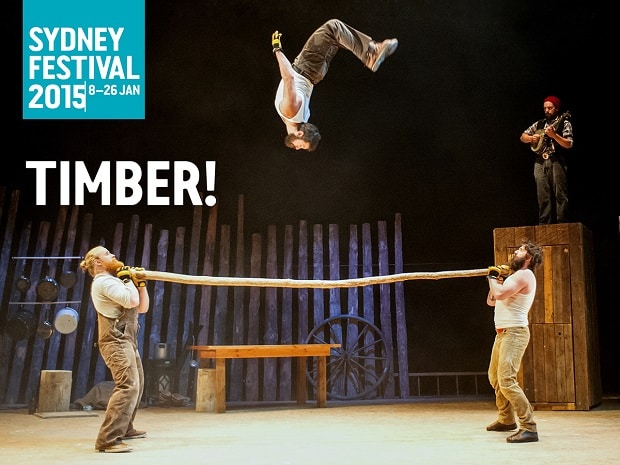
This summer Indian Link is proud to partner with Sydney Festival to bring you Timber!

Fun for the whole family, Timber! combines circus with theatre, physical comedy, live traditional music, folklore and the tools of the lumberjack trade. The Cirque Alfonse performance features three generations of circus family including the 67-year-old grandpa!

Changes

0
Reading Time: 5 minutes

MOHAN DHALL’s final reflection as part of Movember – raising awareness of men’s health


I am living in two simultaneous realities – the one that is continuous and the one that is discontinuous. The morning light opens my eyes to both predictability and uncertainty.

I didn’t hear Barry whistling last night. I didn’t smell his spring barbeque or see the filtered light through the trees from his yard. Gary told me a few weeks ago that he’d died when I was away.

Barry? It isn’t just his whistling I miss or the way we would chat outside on the footpath between his house and mine. He loved a conspiracy, hated greed, had innovative ideas as a trained engineer, loved the left – but not the commies. He drove me to the hospital a few years ago when I needed injections for blood clots in my calf. He saw me waiting for a taxi that never arrived.

Spontaneously, he helped. Spontaneous – like his smile, his whistle, his understated humour.

His passing knocked my breath out, faltered my steps…

Change can be scary, especially when it seems discontinuous. At such times there can seem to be no tangible or comprehensible order. It leaves us gasping for breath, initially stuck in denial, repeating things in our head, re-reading the messages, watching the replay – hoping for a different outcome.

Against a back drop of the expected comes the unexpected. I know the sun will rise tomorrow, but what will the day bring? A near miss? An opportunity? A loss?

A smile early and a tight chest later?

Sometimes change can be an escape for the restless.

When I was married, my wife needed us to move every two years. After a while I realised we had to be still. Apart from it being unaffordable, we’d hardly have unpacked when we were packing up again.

It took a few years for me to realise her need for change was really a need for distraction.

I would come home from work and find the rooms had been changed around.

She always had a new plan, another vision, a better way to rearrange everything in our lives.

It just left me vulnerable and wondering what would happen next.

The more still we became the more she agitated: for new work, for new friends, for new fights with the neighbours; or she’d simply find another form of injustice to write to the press about.

Of course, sometimes change is necessary. We need to renew ourselves, have a break, take on a new challenge or simply make a change because whatever we are doing is not working. An area of life has become circular and there is no progress. At such times agitating for change is appropriate. Or just a new lick of paint.

Every time it is the same. I say this and he says that. The script is so familiar that I cantell from the first word where it’s going. Nothing gets resolved. Nothing changes.

During those times I hear myself saying in my head,“I’ve been here before and I know where this is going.”

But I don’t stop and nor does he.

It just leaves us both angry and distant….

It is coming to the end of the year. I hear it is a time of reflection, as if reflection is constrained to a time or season. Perhaps reflection is a part of being awake?

A man can change his face and lose himself behind his eyes.

A friend of mine told me that his brother grew a beard after his 18-year-old son died in an accident. Decades later he still has a beard – having never shaven since that day.

I wonder what it would mean to him to shave his beard.

Would he think his son would think he had been let go?Forgotten? That his loving father had somehow impossibly moved on?

Shocking news has a habit of making the limbs heavy. Of stunning the mind into denial. Of slowing everything down. Lethargy becomes nature, and nurture is required to renew and reintegrate.

Shocking news brings a bowed head, eyes hidden – for tears are not meant to be public are they? Are they?

Men are meant to shield their eyes from the pain of openness and vulnerability. The sunglasses tint the starkness of light and help to mask the contrast between dark and light, certainty and uncertainty, continuity and the discontinuous.

I went for a run and saw the flowers at the intersection.

I heard the wail of an ambulance and the world blurred. 

Sunglasses help to reduce the glare when everything is too bright. But using sunglasses as a shield to openness polarises the thinking, allowing only mediated light. Reflection is then pushed outwards and only gets as close as the lens. Openness, however, lets the hurt in and the tears out.

I start for my run. The GPS reads the distance and speed. I have a location and a time.

The body moves but there is an observer within, a thinker, a responder.

The kilometres pass with a buzz on my wrist but sometimes

I am lost

in reflection

or

watching

the breath come and go

so

do not notice

the time or the distance

I am from home.

There comes a time in every long run when everything feels totally so.

The body and mind are not fighting,

the issues of the day, the week, my life have greater clarity.

New insights emerge inadvertently,

like dreams in sleep the mind is ever seeking solution and resolution.

The purpose of running is not motion – it is stillness.

I am still running, still running when someone calls from the road. I cannot recognise who it is but can recognise the sentiment. Later, on this same road, there will be a traffic jam and people, anxious to get home to loved ones, to a place of solace, will be halted for a while. Listening to their radios, music, or on the phone, few will drive in silence. Is silence more valuable in an age of activity, distraction, noise and continual updates?

I made a resolution. Changed my number, my address. Cut this away from that.

Made a vow to myself that was almost immediately tested.

Watchfulness and attention are needed to sustain lasting change.

Habits have a habit of, well, inhabiting.

And in every resolution a need for affirmation.

I didn’t hear Barry whistling last night, but he is with me now as I write.

Changes overlay all that we have been, with who we are and will be. Uncertainty contains certainty.

Change is still change.


Interested in contributing a small donation to assist in men’s mental health?

http://au.movember.com/mospace/329562

Australians reflect

0
Reading Time: 5 minutes

Australian community leaders on their experience of Modi in Australia

Amitabh Mattoo
CEO of Australia India Institute at the University of Melbourne

No one had imagined that Australia’s relations with India would almost transform after just one visit. Prime Minister Modi took the Australian East Coast by storm, from Brisbane to Melbourne through Sydney and Canberra, and he struck a chord wherever he went. Prime Minister Modi wowed his audiences with his formal English speeches as well as his masterly Hindi oratory. But it was not symbolism alone, this was one of the most substantial visits ever undertaken by an Indian leader.

Clearly, there is today a clear convergence of values and interests between India and Australia in almost every sphere: economic and trade; security and geo-strategy; and people-to-people. But it required the statesmanship of Modi and the bonding of Tony Abbott and Modi to translate a potential partnership into a genuine friendship. This has happened.

I was given the honour of  moderating  the CEOs roundtable with Mr Modi at Government House in Melbourne on 18November. Australian businesses have, in the past, been bearish and cautious about India and found it difficult to work with India. Not so on this occasion. The crème de la crème of Australian businesses were there including Andrew Mackenzie, CEO of the world’s largest resource company, BHP Billiton; Mike Smith, CEO of ANZ Banking Group; Sam Walsh, CEO of Rio Tinto; Anthony Pratt, CEO of Visy; and Gina Rinehart, CEO of Hancock Prospecting Limited. They were tremendously excited by Mr Modi and his vision for the Indian economy.

Mr Pratt announced the setting up of a high level Leadership Dialogue between Australian and Indian business, political, and civil society leaders. The Australia India Institute will run this dialogue. Anthony Pratt will be the founder patron and Ross Fitzgerald of Visy and I will co-chair the dialogue. The Prime Minister blessed the dialogue which will take place annually beginning with Delhi next October.

All in all, we could not have expected more from a visit which has, without exaggeration, changed the course of Australia India relations, in every sense of the word.

Alex Hawke
Federal Member for Mitchell, Chair of the India-Australia Parliamentary Network

I was extremely impressed with the enthusiasm and admiration of the crowd at Allphones Arena who came to see Prime Minister Modi speak. To have so many people attend an event for a world leader is truly exceptional. You wouldn’t get 30,000 Brits celebrating David Cameron if he visited Sydney, so this demonstrates the Indian community’s respect for Mr Modi as a man of great stature.

I was privileged to get to spend a few moments in conversation with Prime Minister Modi. He is a really good person – ordinary, down to earth and without hubris. It was lovely to meet with him.

The most important facet of this visit for both the Indian and Australian governments is the demonstrated commitment to accelerating the pace of our relationship. There has always been a fundamentally good relationship, with our shared language, history and strategic interests, but there’s potential to go further. With two new governments, and two new Prime Ministers who seem to like each other and get on well both personally and politically, it is time for an accelerated relationship. Both governments are keen to sign a Free Trade Agreement as soon as possible.

There is such a good Indian diaspora community here, especially where my electorate is in Western Sydney. The community is thriving. People are running great businesses, settling their families here, and the Indian migrant story is overwhelmingly successful. It’s a great story – Indians are peaceful, commercially successful and have great family life here in Australia.

Steve Waugh
Former Australian cricket captain, 2004 Australian of the Year, Officer of the Order of Australia

Prime Minister Modi is very positive, basically saying ‘India is open for business’. It’s the fastest growing economy in the world and I think Australia would be mad not to do business with India. We have a lot of similarities which are mentioned, a lot of similar interests, and I don’t think we’ve done enough in the past to build those bridges. Cricket, is one commonality, obviously, but there’s a lot of business connections we should foster and Prime Minister Modi certainly encouraged that today.

I’m launching a business today called Waugh Global Realty and I’ll be looking to sell real estate to NRIs and also Indians in India. I’m partnering up with some top developers, so I’m starting a new business. But Prime Minister Modi also spoke about education, science, agriculture, infrastructure – there’s a lot of skills in Australia we can export to India.

I think it’s a genuine warmth between Prime Minister Modi and Prime Minister Abbott. We should strengthen ties, perhaps more than we have,. I think Tony Abbott realises we have a lot in common, we can benefit a lot from the relationship with India, India can benefit from a relationship with us, and it’s just smart business that we’re aligning ourselves more closely.

Gina Rinehart
Chairwoman of Hancock Prospecting Group

It is such an honour to have your Prime Minister visiting us here in Australia. I am very taken with his quote, with his whole attitude, ‘from red tape to red carpet’. We have a lot to learn from your Prime Minister and I hope our red carpet is out to him.

Already some of the steps that Prime Minister Modi has taken make a lot of sense. He’s gone out there and said he will be doing more for the mining industry to see it develop more in India. I suspect that means it will happen.

I think our Treasurer today in the earlier meetings expressed very well that he’d like to see a lot more happening between small business and medium business as well. We know about the big things, we know about LNP, we know about some of the commodities, but I think our Treasurer expressed very well that we should also see more happen between small to medium business in Australia and small to medium business in India because there could be an enormous growth between the two.

Prime Minister Abbott and Prime Minister Modi seem very close. There is a lot of understanding, also, of course, sharing a democratic background. There is an increasing Indian presence in Australia, there is increasing trade between our two countries. I hope, although it is already a warm relationship, that it will get deeper at every level.

Glowing and growing

0
Reading Time: 3 minutes

HSSF marked the International Day of People with Disabilities with a special Fun Day for people with special needs and their carers

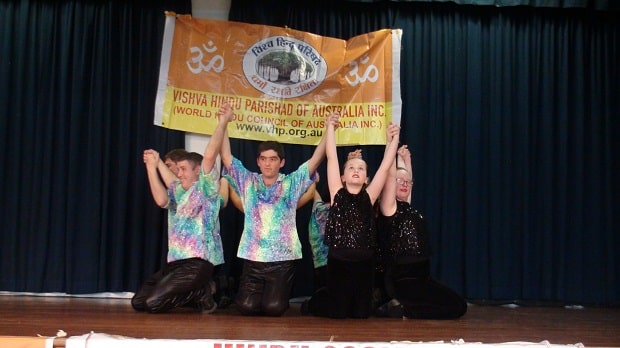
In celebration of the International Day of People with Disabilities, the Hindu Social Services Foundation (HSSF) a division of Vishwa Hindu Parishad Australia recently organised a Fun Day at Don Moore Community Centre in North Rocks.

Attended by over 100 people, the event, in its sixth year, once again brought together people with special needs and their carers. The participants included people from many nationalities and ethnic backgrounds, drawn together by their aim to work for a common cause.

Aptly titled ‘Glow and Grow’, the free event was coordinated by VHP general secretary Akila Ramarathinam and Uma Ramasubramanian, coordinator of the HSSF-VHP women’s team.

Hosted by Maya Raman, the evening featured shloka chanting, yoga lessons, Bollywood performances, cultural showcases, mainstream gigs and inspirational talks. A sumptuous vegetarian feast followed. Most of the performers were special needs children and adults.

CEO of Many Minds Link and President of the Differently Abled People Association (DAPA), Vincent Yu was special guest at the evening.

Yu, a carer and pioneer in the field of disability and special needs, spoke to parents about how to empower their special needs children and help them integrate into mainstream society through positive nurturing and meaningful employment.

It is estimated that four million people in Australia have a disability, half of whom fall within working age (15-64). One in three people either have a disability or are closely related to person with disability.

Almost 90 per cent of disabilities are not directly visible. HSSF has in recent years worked closely with the community to increase awareness and lobby government and aid agencies, particularly in the area of disability and special needs, offering carers much respite and better services.

“We are particularly grateful to Hill Shire Council for supporting us year after year and making such events possible”, Uma Ramasubramanian told Indian Link.

Inaugurating the event, VHP President Subramaniam Ramamoorthi welcomed the special guests. Arun Kumar, a student of Sydney Veda Pathashala and Bala Samskar Kendra and Vaibhav Caushik chanted shlokas while the DAPA band, led by Dr Cecilia Park, entertained the audience.

Gokul Shankar, a logistics and business studies student and member of DAPA, performed a number from Bombay Vikings.

This was followed by a keyboard performance from Akhil Narayanan, an autistic 10-year-old with a passion for aviation and electronics.

Among the other performers were Rishikesh Kale, Prashanth Ram, Arjun and his fusion band Element 5. The highlight of the evening was a dance by the Special Olympic Performance Group, which has raised over a million dollars over the past decade.

Among the distinguished guest present on the occasion were Hills Shire Council Mayor Andrew Jeffries, Hornsby Shire Council Deputy Mayor Gurdeep Singh, Strathfield councillor Raj Datta, Dave Passi of UIA, Bhupinder Chibber of GOPIO, Narayan Dhimal of Bhutanese Association and Lisa Rutkin from North West Disability Services.

The event was also attended by former Hornsby councillor Dilip Chopra and Mr and Mrs Saroj Arora. Dr Shoba Kumar of the Hindu Social Services Foundation offered the valedictory address.

Art transcends time

0
Reading Time: 4 minutes

With its immaculate balance between dance and storytelling, Hamsa Venkat’s ‘Noopur’ made for a great show

While Shiva performed the aananda taandavam, a bell from his foot fell to the earth. Lest it shatter the universe with its intense force, Nataraj (another name for Lord Shiva) playfully balanced it on his head, shoulders, knees and toes, as it descended gently down to earth, thus creating the four primal sounds – thaa, dhi, thom, nam.

This divine bequest went on to adorn the feet of mortals, inspiring a revered art form. Bharatnatyam (an acronym for bhaavam, raagam and thaalam), a classical Indian dance form as we know it today, was born.

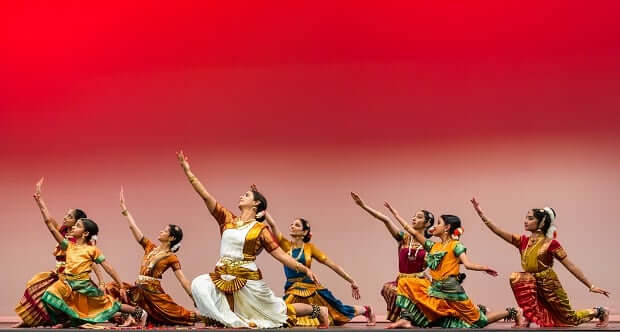
The salangai or dancing bells of Sydney’s Samskriti School of Dance collectively tinkled at UNSW’s Science Theatre recently to tell this ancient tale – the divine story of dance. It was a tale replete with action, drama and pathos.

Initially known as sadir or daasi aattam, its long and eventful history, as it evolved through the ages, was sumptuously narrated in Noopur -The story of a dancing bell, from the sanctum to the stage.

Conceived and choreographed by Hamsa Venkat, the production raised funds for Unnati, a Bangalore-based vocational training and social reformation initiative. Unnati has been adopted by Rashee, a not-for-profit organisation dedicated to helping under-privileged people, particularly in thecore areas of health and education.

Effective storytelling, with a strong emphasis on aesthetics, has always been the highlight of Samskriti’s repertoire, reaching out to the audience with meaningful tales that are deeply entrenched in traditional values.

From the props, costumes and make up to acoustics and lighting, a lot of thought and planning goes into every production.

An innovative addition this year was the use of detailed 3D sketches by Vikram Kumaran as a dominant backdrop.

Set in six acts, from the divine beginnings to contemporary era, Noopur cleverly integrated powerful narrative threads within the core framework of dance.

The opening scene was a feast for the eyes as Govind Pillai re-enacted the Aananda Thaandavam, from whence the story begins.

Little Vishaka, as the innocent Devadasi being initiated into this divine art form, certainly proved her mettle. From the inner sanctum of temples to the courts of powerful kings, dance took on new form and meaning, incorporating for the first time elements of entertainment, paving the way for nritta.

Noopur paid homage to the lasting contribution of Tanjore Quartet (jathiswaram). The tale of raaj narthakis (courtesans) was elaborately told through the story of Madhavi from the famed opus, Silappadhikaaram, traversing through the Chera, Chola and Pandya kingdoms. Each frame was beautifully constructed, finally reaching the court of Swati Thirunal (padam).

Muthiah Bhagavathar’s Mathe Malayadhwaja formed the centerpiece of the production (varnam). Portraying the many incarnations, facets and moods of Devi as Sati or Dakshayani (self sacrifice), Parvati (creative) and Meenakshi (warrior), varnam offered Hamsa’s experienced students the perfect platform to showcase their mastery and prowess.

Rhythmic footwork, sculpture-like postures, synchronised movements and contrasting tempo added energy to the piece. Mathematical precision combined effortlessly with aesthetic beauty to leave a lasting impression.

The story of Dakshayaniwas most creatively told; likewise the birth of Parvati’s adorable child, Aarumugan, from the lotus petalsslowing down for the tale of Shankara, eventually culminating in the energetic finale amidst chanting of primal sounds as the kundalini rises leading to self-awareness and spiritual enlightenment.

The vocal support, comprising Krishna Ramarathinam, Sangeetha Ayyar and Namrata Pulapakka with nattuvangam provided by Hamsa, was particularly outstanding. Balaji Jagannadhan on violin, Mohan Ayyar on keyboard, Pallavarajan Nagendran on mrudangam, Ranjith Kumar and Anbu Ezhilan on percussion accompanied the vocalists.

The second half of the evening carried the narrative forward to the modern era. The onset of the colonial era marked the decline in patronage for performing arts, forcing dancers to seek support of the zamindars. The playful padam was dedicated to truant Krishna.

After decades of neglect, negativism and taboo, forward thinking visionaries like Rukmini Devi Arundale (who went on to found the iconic Kalakshetra) resurrected Bharatnatyam.

Firmly rooted in tradition, yet breaking barriers through experimentation, it became an aesthetic art form once more, finally ascending the stage. The two pieces that followed – Nattanam Aadinar (keerthanam) and the popular folk dance Suppada were Hamsa’s tribute to her alma mater.

The golden era of moving pictures helped the genre attain a wider audience. Noopur immortalised the work of three very talented stalwarts – Padmini, Kamala Lakshman and Vijayanthimala, who were responsible for making dance a much-loved mass medium.

Paarkadal Allaimele is a wondrous tribute to its divine origins. The good-natured, but often bitter undercutting, rivalry among the actresses provided room for light-hearted entertainment.

What followed was a fusion piece choreographed by the talented Govind Pillai, intertwining the old values as laid down in Natya Shastra with the joyous strains of poet laureate Tagore, heralding an era of change and innovation.

Many millennia were traversed through the course of an evening; many tales left etched in our memory, striking fresh ideas in fertile imaginations everywhere. Noopur was a lesson in history, tradition and culture, beautifully delivered.

Where there is a beginning, there is an end, with the firm knowledge that more will follow.


Photos:  Binu Photography

Cricket will never be the same again

0
Reading Time: 5 minutes

Farewell to a young Australian cricketer

It is manifestly unfair that two young lives should be forever intertwined in such tragic circumstances. Phillip Joel Hughes was the 25-year-old country boy who scaled the heights of the cricketing world, broke several records along the way, and responded to the crushing lows of multiple demotions in the only way he knew how – by piling on the runs. Sean Anthony Abbott, the 22-year-old from Western Sydney who only recently made his rise to the top and remains a significant figure in Australia’s limitless pool of talented fast bowlers. It is heartbreaking that only one of them can continue his journey; and further heartbreaking still, that significant obstacles now lie in his path.

When Hughes was struck with what would eventually be a fatal delivery, his mother and sister were watching on in the stands at the Sydney Cricket Ground, the scene of several of his most treasured moments. As he paused and leaned on his knees for a few seconds, appearing winded and dazed at worst, it would not have been in their – or anyone’s – wildest contemplation that events would then take such a devastating turn.

As he fell forward unrestrained, his head colliding with his beloved and former home turf, the shockwaves would have been especially chilling for his devoted family as they helplessly watched on. It was at this point, as his former NSW teammates started frantically calling for an ambulance, as hardened Baggy Green veterans David Warner and Brad Haddin grew increasingly disturbed and distraught, and as the desperately unlucky Abbott cradled the head of the batsman whom he felled, that the gravity of the impact became clear.

Even as it stood then, cricket would never be the same. But the passing of Hughes just two days later has ramifications that will be more far-reaching than previously imaginable, even though Hughes is not the first cricketer to die from injuries sustained on a cricket field. That list is significant, the most recognisable name being former Indian test cricketer Raman Lamba, who died after being struck by the ball while fielding at short leg.

Hughes’s passing resonates at an unprecedented level for several reasons. He is the first Test batsman to die from a blow sustained while batting – with or without a helmet.

In over 135 years of test cricket, there is no record of such an event. His passing also casts significant doubt over the trust placed by today’s batsmen in their protective equipment; in the modern era, batsmen fearlessly attempt shots in full reliance on the fact that if they get it wrong, they face bruising or, at worst, a fracture. In addition, given Abbott’s youth and the fact that the incident occurred in a domestic game, bowlers and batsmen across the country at all levels will now have second thoughts about bowling and playing bouncers respectively.

There have been the inevitable calls for bouncers to be outlawed. But as described by the head of trauma surgery at Sydney’s St Vincent’s Hospital where Hughes was treated, Hughes’s injury, while “catastrophic”, was “very rare and very freakish”. So much so, that the injury Hughes sustained – a vertebral artery dissection leading to subarachnoid haemorrhage – had never before been seen at the hospital, with only 100 cases ever reported worldwide.

It was an incredibly unlikely combination of so many factors: the pace of the pitch, the level of wear and tear on the ball, the relative fatigue levels of both batsman and bowler, Hughes’s search for quick runs and even the rain-free week leading up to the match. Unequivocally, it was no-one’s fault.

The bouncer has perennially been a part of the game, a vital weapon at the bowler’s disposal. It is not devised to hurt the batsman: it pushes the batsman back, induces uncertain footwork and false strokes. Until the recent resurgence of fast bowling, there was even an unspoken code between fast bowlers not to bowl bouncers at lesser batsmen.

If any positive can come out of such a tragic situation – as is often the case – it is dialogue and humanity.

There are many areas to address. An inquiry into the adequacy of helmets that fail to address the most glaring deficiencies in the human skull is paramount. The incident reignites the debate regarding cricket’s long-time disregard for a concussion rule. Importantly, a review must be conducted into absurdly dangerous television segments on programs such as the Cricket Show and the promotion of dangerous conduct on the cricket field.

In a now infamous television stunt, Brett Lee furiously hurled 150 km/h bouncers at English TV host Piers Morgan in January, clearly aiming to injure him, under the guise of (in Lee’s own words) “educating” the public. Although Lee has expressed understandable grief at Hughes’s passing, Lee’s, and Channel 9’s, willingness to risk a man’s life in a sadistic pursuit of viewership must be closely scrutinised.

However, it is the quintessentially human elements of the accident, rather than public debate and policy reform, that will shape how those closely affected by it will emerge. The significant counselling offered to Sean Abbott and other cricketers has been widely reported. Cricket Australia’s determination to focus entirely on Hughes’s family and teammates is commendable, despite the insensitiveness of the Indian journalist who asked, during the first St Vincent’s Hospital press conference, whether the first Test against India would be going ahead.

And there is renewed recognition that “tragedies” in sport – Michael Clarke’s torn hamstring, Bradman falling for a duck in his final innings, Tendulkar failing to reach a century in his 200th Test match – are so far removed from the concept of true tragedy, that they are inconceivably irrelevant.

The incident may haunt Abbott forever, but it is widely acknowledged that Hughes would be the first to forgive him. An imminent return is perhaps unlikely, but the public and Abbott’s teammates will open him with welcome and caring arms when he resumes his career.

Phillip Hughes was taken from us too soon. He will be missed.

A 21st century politician

0
Reading Time: 3 minutes

Social media savvy seems to come naturally to PM Modi

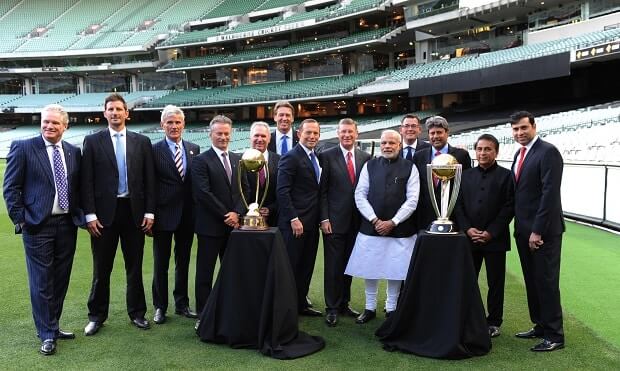
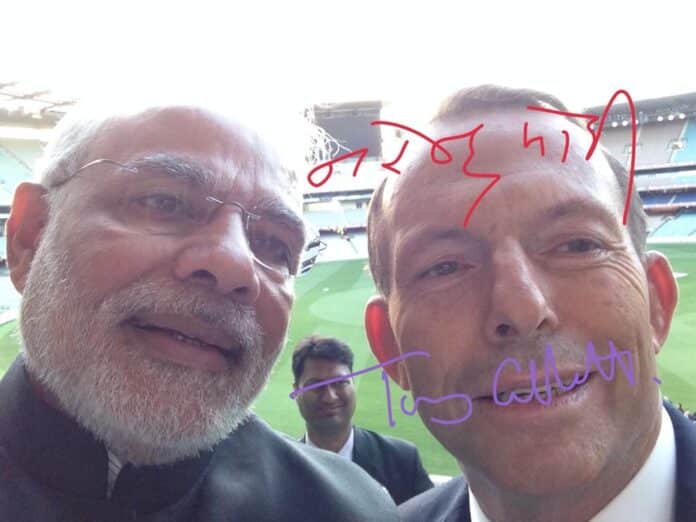
While certain mentions had been made of Indian Prime Minister Narendra Modi and Australian Prime Minister Tony Abbott’s burgeoning ‘bromance’, it was an autographed selfie the pair took at the MCG that indicated the true closeness of their friendship.

PM Modi has shown a particular understanding of how to work social media from the beginning. Throughout his election campaign, Modi and his team at the Bharatiya Janata Party worked his profile on his blogs, Google Hangouts, Facebook and Twitter accounts. His victory message in May was the most retweeted post in Indian history.

After a tour of the Melbourne Cricket Ground, PM Modi tweeted the selfie along with the words, “With my friend @TonyAbbottMHR at the MCG.”

The PM also tweeted, “People asked me isn’t it too soon to visit Australia after @TonyAbbottMHR just visited. I said I can’t say no to my friend Tony.”

The Modi mania experience was not restricted to crowds of adoring fans lining the streets of the state capitals. His Australian visit dominated Twitter, with the hashtag  topping the trends for several days.

Since embarking on his landmark tours of the US and Australia, Narendra Modi’s global popularity has exploded. To give some perspective, in April Modi had over 12 million fans. This swelled to over 18 million by July and 21.8 million in September. In just two months, these numbers have ballooned to 25.1 million Facebook followers. A recent picture of Modi meeting Obama and Australian Prime Minister Tony Abbott at the G20 summit garnered more than 450,000 likes.

Meanwhile, on Twitter, in September Prime Minister Modi’s official @narendramodi account had 6.62 million followers, but as of his Fiji visit this surpassed 8.06 million Twitter followers. So far the Prime Minister’s Office account of @PMOIndia has 3.43 million followers.

The tech-savvy prime minister has also been active on other social media sites including Pinterest, Tumblr and LinkedIn. He and officials from the Ministry of External Affairs have also been busy sharing photos on Flickr.

During the 25th ASEAN Summit recently, Prime Minister Modi made his Instagram debut. After sharing his first post, he received a staggering 30,000 likes and currently has more than 136,000 followers. All this despite not following a single other account!

Since coming to power in May, Modi has continued to use direct channels of communication with the public, enhancing his image as a common ‘man of the people’.

Prime Minister Modi launched the ‘Talk to Me’ initiative and the Digital India program as other tools for listening to the wants and needs of his constituents. He has been making use of social media to showcase his government’s initiatives including Swachh Bharat.
Connections to the internet have spread across India, and according to estimates from the Internet and Mobile Association of India, there are more than 80 million current users. Though this is only a small percentage of the country’s population, a large portion of these users are the youth PM Modi is targeting with a number of his policies.

This was evident in yet another selfie the Prime Minister took with high school students during his tour of the University of Queensland.

Prime Minister Modi has the second largest number of Facebook followers in the world after US President Barack Obama, and is the third-most followed world leader on Twitter after President Obama and Pope Francis.

As cyber expert Pawan Duggal told DNA India, “This single fact tells you how significant India has become, but more significantly it’s also a salute and salutation to the eccentric understanding of this distinguished statesman who understands, lives and breathes social media and the internet.”