

Making a decision to moving on is a great way to heal the traumas of the past

We all go through rough patches in life. There are things that have hurt us in the past that rear their ugly heads from time to time, making us feel sad, resentful and regretful. We start feeling blue and give off negative vibes that also have an adverse effect on people around us. So what can we do to feel happy and cheerful again? Well, to start with, we must take charge. Feelings of sadness hound us only as long as we let them. The moment we decide that we don’t want to feel this way anymore, the mind goes into remedial mode. It starts putting forward ideas that help make us feel better. Pessimism begins to evaporate, allowing the light of positive thinking to shine through.
Accept the past
Remembering past mistakes, traumatic incidents and people that have caused us anguish contribute to our collection of sad memories, as does the loss of someone dear through death or the break-up of a relationship. In trying to heal, the first step is to accept the past for what it is – history! We can’t undo the past; we can’t go back in time and fix anything. Start by telling yourself that there is nothing you can do now about the mistakes that were made or the hurt that was caused. Some things are just meant to be, and the storms you’ve weathered were predestined; they could not have been avoided no matter what.
Our lives are shaped by incidents, both good and bad. Sometimes what seems to be a horrible experience turns out to be a blessing in disguise. In the end if you reflect honestly, it was all for the best. So stop feeling bad, it won’t change anything. Stop feeling sorry for yourself because when you’re done moping, crying and blaming others for your unhappiness, you will find that nothing has changed, you have not helped yourself feel better. Instead you’ve wasted precious time when you could have been constructive, productive and happy.
Bag it and bin it
Make a conscious effort to let go. Get rid of the things that remind you of the painful times in your life. Gifts from an ex, belongings of someone who is not with you anymore, photos, letters and emails are a constant reminder, and hence a cause of unnecessary distress. Just let go, bag and bin the hurtful memorabilia. There is no need to cling to it. Today is a new day and you’ve decided to move on. Once you get rid of all traces of the stressful period, you’ll never be able to look at things and be reminded of the pain associated with them. This will help you heal much faster.
Count your blessings
Look around you, is life really that bad? If you take a moment to reflect, you will find so many things to be grateful for in your life right now. Make a list of things you count as blessings, your family, friends, your job, health, that potted plant on the window, your zany old neighbour….with so many things eager to put a smile on your dial, is it worth moping away precious moments in sadness?
Join a social group
Having a support network of friends around you is great for keeping the blues at bay. So go out there and socialise. Join a group, a book club, a knitting society or whatever interests you. This way when gloom comes knocking, all you have to do is pick up the phone or drop in on a mate. Talking to friends or family members can cheer you up immensely. It takes your mind off yourself and immerses you into a different mood. Soon enough the focus is something or someone else and you feel better.
Exercise
A brisk trek around the block or in the park is highly recommended for overcoming feelings of sadness. Fresh air clears the mind and promotes feelings of wellbeing. Joining a gym is a very effective way of beating the blues, as exercise releases endorphins in the brain which are mood-lifting chemicals.
Meditate
Meditation is a proven practise for self-healing. Achieving a meditative state calms the mind and helps the body to relax. Get into the habit of meditating regularly and/or explore religion. It really helps as you feel reassured of forgiveness, and are more open to forgiving yourself. You learn to let go of hurt. It puts hope back in the heart that has lost it. Try it, it works!
Take it in your stride
Alexander Dumas wrote in The Count of Monte Cristo, ‘There is neither happiness nor misery in this world. There is only a comparison of one state with the other. He who has experienced the greatest misery can feel the greatest happiness.’ And we emerge stronger from each trial we go through. So when you remember the past and all the hurt it caused you, be thankful that it’s over and you are better now, ready and able to experience happiness. Consider life to be a rollercoaster ride. There will be ups and downs, but know that neither state is permanent. If you’re experiencing lows now, know that the highs are not far, most of the time they are just around the bend. Lift your chin up and soldier on.
Be your own best friend
Even when the whole world seems against you, be your own best friend. Listen to your thoughts and find the good in you. Convince yourself of your worth, take care of your appearance and walk tall. You deserve to be happy, so give yourself the best chance.
Take charge of your moods. Don’t dwell in the past and use it as an excuse to sink into sadness and anger, as it affects the people around you. Your kids, husband, partner, siblings – whoever shares your living space feels the full impact of your mood. Take responsibility and don’t be a cause of unease to them. Lift yourself out of darkness if only for the sake of other people in your life, and you’ll find that your consideration and thoughtfulness will pay off in making you the biggest recipient of your own act of charity.
Practical steps to letting go

Sydney's raga saga!
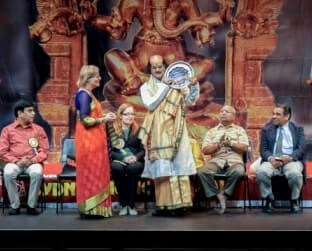
Lovers of Carnatic music were treated to a bevy of unique performances at the annual Sydney Music Festival

The Swara Laya Fine Arts Society’s 7th Annual Sydney Music Festival kept lovers of Carnatic music enthralled for the better part of the Queen’s birthday weekend at the Riverside Theatre in Parramatta. The 3-day festival was notable not just for the high quality and calibre of the artistes, but for the opportunity it offered to the performers to express themselves creatively.
Ms Julie Owens, Federal Member of Parliament from Parramatta was Chief Guest, and Ms Julia Finn, Councillor from the Parramatta City Council was a special guest. The honour of playing the saxophone for the inaugural concert went to Dr Kadri Gopalnath, the only world-renowned saxophonist who plays Carnatic music. Credit was duly given to him for mastering a complex western instrument, modifying and perfecting it for 20 years, adapting it to playing nuances of Carnatic music. Dr Gopalnath was commended for his achievements, his versatility to play music for well-known AR Rahman compositions, and playing in Jazz festivals in Prague, Berlin, France and Mexico.
Swara Laya organisers deserve kudos for mobilising a team of Sydney’s music teachers and students to kick off the festival with an innovation titled Kshetra Magimai and singing compositions and krithis in the praise of deities associated with the following dharma kshetras in South India, namely Thirukkadaiyur Abhirami, Kanchi Kamakshi, Madurai Meenakshi, Thirunelveli Kanthimathi, Chidambaram Sivakamasundari, Thanjavur Brihadambika, Thiruvaiyaru Dharmasamvardhini, Thiruvanmiyur Thripurasundari and Thirumayilai Karpagambikai.
Musical treats enjoyed by rasikas at the festival varied from orthodox styles at one end of the spectrum, to the unconventional at the other. There were 10 major concerts where performing artistes sang 87 unduplicated ragas. The other notable feature was the rendering of 16 rarely heard ragas such as Vairavam, Devamruthavarshini, Manoranjani and Nari Ritigowla. There were several examples of individual brilliance, as with Nithyashree Mahadevan and Sanjay Subrahmanyan, among the vocalists. P Ganesh on the chitravina (aka gottuvadyam) and playing solo; Srimushanam Raja Rao on the mridangam, and TG Muthukumaraswamy on the thavil excelled as accompaniments. Among the team concerts, Mysore Brothers Nagaraj and Manjunath raised violin solo concerts to another level with their faultless and synchronised rendering of Manasa Sancharerey in raga Shyama and Rama Katha Sudha in raga Madhyamavati.
The vocal team of KN Shashikiran and P Ganesh sang a pallavi written and composed by Shashikiran and dedicated to the Sydney Murugan Temple in Westmead. The original creation was set to pancha raga and pancha tala. It was a classic example of artistes expressing their bond with the city of Sydney.
Two other teams of vocalists distinguished themselves, receiving standing ovations from the audience. Hyderabad Brothers Raghavachary and Seshachary demonstrated their maturity by following orthodox traditions, but giving their listeners a peek into their prowess by rendering rare ragas like Kalkada, Jaymanohari, Vagadeeswari and performing a thillana in raga pahadi, composed by the late Lalgudi Jayaraman. Their detailed ‘sancharam’ in raga Shankarabharanam contributed significantly to the smooth flow. It concluded the first day’s proceedings as the audience left for home completely satiated.
The crowning glory among the vocal teams must go to Ranjani and Gayatri who combined beautifully and complemented each other as they went on to analyse the nuances of Saint Thyagaraja’s Koluvai Unnade in raga Bhairavi. Their ragam, thanam and pallavi in raga Amir Kalyani in praise of Lord Krishna with lyrics, Brindavana gana lola murali dhara was a case of oodles of melody, particularly as their ragamalika with four ragas embellished the concert.
The genius of Sanjay Subrahmanyam was amply evident as he tested his accompanists, Mysore Nagaraj and Srimushanam Raja Rao by venturing into uncharted depths in raga Gauri Manohari, where the pitch was challenging to his voice. His ragam thanam pallavi in raga Shyama demonstrated his ability to go off the beaten track and it could easily be construed as the artistic licence to deviate from the norm. His accompanists rose to great heights to match him, blow for blow. Sanjay has all the makings of a musical great!
One youngster who rates a mention is Suchitra Balasubramaniam who entertained the audience by blending melodic singing and with folklore. Her Harikatha Kalakshepam gave everyone a peep into the lives of Andaal, Mirabai, the Rajput Princess, and the famous composers Sri Purandaradasa and Jaideva and their poems in the praise of Lord Krishna and the other Vishnu avatars. Her discourse gave every indication of her confidence and a full knowledge of her subject.
TNS Krishna and Sri Unnikrishnan performed the other concerts and were duly applauded, but their style did not seem to gel with everyone. This could easily have been due to stark differences in their approach. Whilst Unnikrishnan is a seasoned performer, he appeared to be labouring to introduce interesting variations. His delivery was archetypal and his technique regurgitated. In case of Krishna, he is a young and talented performer with impressive lineage (he is the son of Sangita Kalanidhi Sri TS Seshagopalan), but he appeared to be in a great hurry to show his skills without any thought for the expectations of the audience. He will undoubtedly learn in due course, that public concerts are not instruments of self-gratification.
Among the quiet achievers of this festival were Poongulam Subramaniam and TK Murugabhupathi on the mridangam, HN Bhaskar, Mysore Manjunath and Nagai Sriram on the violin, and Chidambaram Suresh on the morsing. Their performances as accompanists added lustre to each of the concerts. Vandana Dixit and Ankita Manoharan did a splendid job of compering and introducing the concert artistes to the audience.
All credit for the success of the Sydney Music Festival goes to Mr and Mrs Kanagasabhai Jayendran and their family who have worked tirelessly to bring top artistes from India to perform here, initiating necessary actions to run a highly successful program. Sydney’s Carnatic music lovers owe them a debt of gratitude.
East meets West in Macau
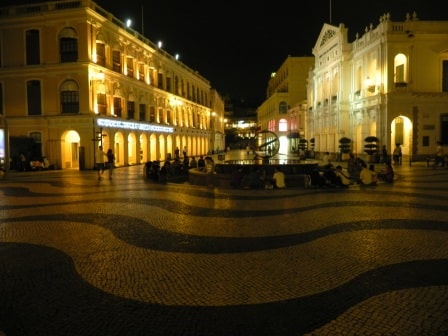
The former Portuguese colony is a compact delight of cobblestoned streets, Macanese cuisine, churches and modern casinos, writes SANDIP HOR

Exotic flavours of a colonial Portuguese milieu which I sensed earlier in Goa, comes back to me the moment I walk into the centuries old centre of Macau, a former Portuguese colony neighbouring Hong Kong and geographically hanging like a fruit bat to the Chinese mainland. The character of the entire historic settlement, clustered with piazzas and cobblestoned streets, baroque churches, stone fortresses neo classical edifices, bustling cafes and inviting shops doesn’t take much time to proclaim its European heritage.
After establishing themselves in Goa, the Portuguese landed here in the early 16th century and soon turned the impoverish area into an important trading port, linking Europe with China, Japan and India. During their stay of almost 400 years, they bejewelled the village-like land with architectural marvels and developed it like a mini Lisbon.
In 1999 the colonial regime ended and Macau became the Special Administrative Region of the People’s Republic of China. However, the Chinese administration so far has been quite protective of the tiny peninsula’s European heritage, despite the Portuguese population being only a small fraction of the regions total number of 580,000. Portuguese is still the official language, alongside Chinese, while street names and sign posts are in two languages. “You can freely communicate here at all levels in any of the two lingos, plus English,” says my omniscient guide Aloniro Noruega, an Indian of Goa-Portuguese origin who moved to Macau three decades ago.
The landmark site from the glorious past is the World Heritage listed Senado Square, which is said to be the civic hub of the Portuguese colonial empire. Its striking features are the wave- patterned, stone mosaic streets created specially by experts from Portugal, and the gorgeous pastel coloured buildings.
I feel like trundling along the paths of the European settlement and immediately get absorbed by its buzz, which tells me this is where Macau’s heart has been pounding for centuries. Beautified with trees, fountains and benches for people to sit and relax on, the spacious piazza, now packed with nice cafes and boutique shops, nested in lovely old buildings, strikes me as a perfect venue for socialising and holding public events.
At one end of the square is the former Loyal Senate, and opposite it is the 16th century built Holy House of Mercy, the oldest charity institution in China region. It’s well known that the Portuguese introduced Christianity into the region, which is why the domain is powdered with so many beautiful churches.
Founded in 1587 by three Spanish Dominica priests, St Dominic Church attracts attention because of its magnificent yellow Baroque exterior, while the serene atmosphere inside gives instant peace. This church is famous for its alter, decorated wooden ceiling, and the treasury of statues, and other sacred art displayed inside a museum occupying the old belfry. A local tells me that it was from here the first Portuguese newspaper in Chinese soil was published.
This church also houses a statue of Our Lady of Fatima, a title for the Virgin Mary, due to her reputed apparitions to three shepherd children at Fatima in Portugal.
“Every year on the thirteenth day of May a procession streams out of this church marking the traditional Catholic feast of Our Lady of Fatima,” informs Aloniro. “Senado Square then turns into a sea of people and candle lights, celebrating a Portuguese heritage”.
Macau’s most familiar landmark is the ruins of St Pauls. Nested at the top of an imposing staircase, not far from St Dominic Church, the facade of what was originally the Church of Mater Dei, built by Jesuits in early 17th century and later destroyed by fire in 1835, is the only part that remains. However, the intricate carvings on the facade are daunting enough to remind modern day onlookers of the architectural ingenuity of the Portuguese builders.
At just under 30 square kilometres in size, Macau is a pretty compact destination.
With history as my companion, I wander with Alonoro through alleyways lined with inviting cafes and shops selling antiques, silk and souvenirs, past even more churches and grand edifices of the colonial masters, and visit bastions built to protect the land from foreign invasions. By the end of this I feel pretty familiar with the character of this old-styled European colony.
Goa once again hits back when I drop in at St Francis Xavier’s Church, reminding me of Basílica do Bom Jesus in Goa, which holds the mortal remains of the 16th century Catholic saint Xavier.
There is, however, much more to Macau than reminiscing European legacies. In the last few years charismatic-but-sleepy little Macau has experienced the sort of boom usually associated with cities like Guangzhou and Shanghai. But rather than skyscrapers, flyovers, and shopping malls, the infrastructure investment here has been all about building mega-casinos and hotels; the trigger for this being gambling legal in Macau and not in neighboring Hong Kong and China. So another luring face of Macau is its identity as the Las Vegas of the East. This draws a constant stream of visitors who dream to become instant millionaires. They try their luck at the Grand Lisboa, Venetian Resort or Galaxy, Macau’s three extraordinarily plush joints to thin or thicken their wallet.
During their stay, the Portuguese lived and worked harmoniously with the Chinese, and as a result, Macau appears to be a meeting point of East and West. Many of the colonial architecture includes oriental designs, with Chinese style buildings standing next to Art- Deco architecture, and temples sharing space with churches. Portuguese coffee shops and dim-sim eateries run full house and festivals like Senhor dos Passos and Chinese New Year are both celebrated with pomp and glory.
Macao is a haven for foodies and one of its specialities is Macanese Cuisine, which is a unique combination of Portuguese and Chinese delicacies mixed with ingredients from Europe, South America and South East Asia. While sampling some of the items like Galinha à Africana at Restaurante Litoral and pastéis de nata from Lord Stows Bakery, I keep enjoying the beguiling past of Macau where Western culture and Eastern Civilisation have combined to gift visitors a memorable time.
Travel Notebook
Getting There
One option is to fly Cathay Pacific www.cathaypacific.com.au to Hong Kong and then take the fast ferry from the airport. However, if you are staying in Hong Kong, ferry services depart from Shun Tak Centre Terminal in Hong Kong Island, or from China Ferry Terminal in Kowloon. Turbo Jet www.turbojet.com.hk offer services almost 24 hours a day.
Accommodation
Experience the glamour of Macau in style at Sofitel Macau www.sofitel.com located, amidst the charms of the Macau’s historical quarter.
Eat
Restaurante Litoral www.ristaurante-litoral.com for Macanese dishes, Restaurante Espaco Lisboa for Portuguese delicacies and Indian Spice www.indianspicemacau.com for curry specials.
Cultural Show
Ranked as Asia’s most extravagant live production, House of Dancing Water is a breathtaking water based spectacular show, based on seven emotions from Confucian beliefs.
Visa
Australian passport holders will receive a visa on arrival.
Currency
Macau Pataca (MOP$): 1AUD = 8 MOP (at time of print)
More Info
www.macautourism.gov.mo
[geo_mashup_map]
Tired echoes, heard before
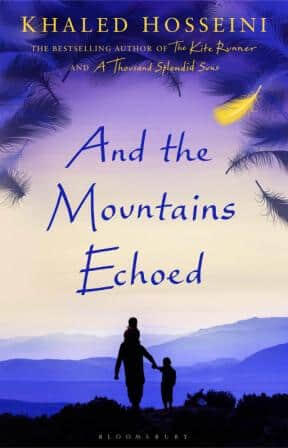
Khaled Hosseini’s latest offering has a few gems but less of the power and subtlety of his past novels, writes BHAVIN RAVAL

Have you ever sat in a desert, on a moonless night, listening to the tunes of the sarod emanating from a dimly lit home in distance? In the company of solitude, stars and symphony? Or can you imagine yourself being in such a milieu? The pace of time assumes elasticity when this happens. A sculptor monographs your heart. And senses. And sentiments. Not with a chisel, but with a feather. And without losing the perpetuity of that lingering feeling. This is what one feels when reading the recently released And the Mountains Echoed by renowned author Khaled Hosseini, published by Bloomsbury.
This is Hosseini’s third novel and there are some jewels interspersed in the pages. The rhythmic and phonetic translations have helped to make the imagery vivid. The fragrance and moods of the soil have been well captured. In between, Hosseini twirls and un-twirls strings of the reader’s heart. Arguably, quite akin to Beethoven’s rendering of Ode to Joy in the ninth symphony. And, at times, akin to rendering of Pathetique. The pendulum sways with varying speeds, varying stops and varying moods.
However, the journey to serenity is rather laboured at times, and the reader has to take solace in the brilliant beginning, soulful ending and some form of oasis in between. Any book that starts with a Rumi couplet is bound to raise the reader’s expectations.
The earlier books by the same author – The Kite Runner and A Thousand Splendid Suns arrived like comets, but ruled like planets. They seemed beyond the reproaches of laws of diminishing returns. There was a hiatus of almost six years till the smells and splendours of Afghanistan reached us again in And the Mountains Echoed. Crescendo was the benchmark of the earlier books and probably the expectation of this again has the impact of spraying the reader with the dampness. And sustained dampness, at that!
In terms of the plot, the DNA of this book and the previous two are from the same fabric, have the same texture, so And the Mountains Echoed breeds familiarity. Rather, predictability. In a nutshell, it is a story of a brother and a sister whose separation is ‘compelled’ by economic circumstances and, of course, the stepmother. The story sprawls over decades, cultures and continents. In the end, do the siblings meet? If yes, how and what is the emotional quotient? If not, why? In between there are sub-plots as Hosseini takes a detour and forays into an European by-tale. Perhaps the objective was to avoid being typecast as an Afghanistan specialist. Or he might be preparing to step into a literary backdrop sans Afghanistan in his next project. The subplots, often told in a first-person narrative, sound disjointed. Some of them start in a kneejerk manner. Ambiguity seeps in and lingers on. But at the cost of lyricism and lucidity, which have been the hallmarks of the first two books by the author.
The book is better than average if considered without the legacy of earlier two books. But in their wake, And the Mountains Echoed assumes a tired look. It is apt to end this piece with a Rumi couplet.
‘We are as pieces of chess engaged in victory and defeat:
our victory and defeat is from thee, O thou whose qualities are comely!’
Mr MBA and Kishoreda vs Rafi Saab

 Mr MBA
Dear Auntyji
I have a little conundrum for which I need your advice. I have been studying for my MBA for the last 3.5 years and now it is coming to a close. My wife, who has a full time job, was tremendously supportive while I was studying. I did not have to do anything around the house. Not one thing. She held down her very busy job, and always cooked a beautiful dinner each night, cleaned the house, washed all my clothes and did not put any demands on me whatsoever. Most importantly, because she is so bright, she was able to assist with some of my assignments, reading them, providing insights and reviews. When I was demotivated, she helped me stay on the right path. She was an angel during the entire time Auntyji, and even when I became stressed, she was always the voice of reason and did not give in to her demons and argue with me. Now, I have grown used to all this, and I am concerned that when my MBA is over, I will have to do all these things. I really liked that I did not have to do anything, but now I will have to. Can you please advise what will be the best solution for me? How do I make myself like helping around the house again?
Auntyji says
You know, you are an impossibly besharam aadmi. You give all men a bad name. You know how to take, but have trouble giving back. If there were more selfish men like you on the planet, no woman would want to get married. The only good thing about you that I see is that at least you are prepared to speak the truth and acknowledge that you are a lazy bekaroo. Ok, now let me take a moment to remind you about your wife. She seems to be the ultimate in womankind, the one who holds down a job, the same as you, yet is able to run a household and take care of you so that you don’t have to worry about any of this. And you say that she did this with grace and dignity. You are truly a lucky man to have such a great wife. Now, you know, I am sure your wife does not absolutely love washing dishes and clothes and vacuuming and cooking. But she does it because it’s the right thing to do, and she wants to look after her family. She puts her feelings aside and gets on with the job. This is what you need to learn from her. You need to stop being such a lazy haraami and get on with the job of helping out. No one likes to wash dishes, but it needs to get done so one may as well just get it over and done with. Studying for your MBA is tough, but the support structure required to ensure you achieve this without the needless stress is an art, and your wife has managed to accomplish this with ease.
So, grow up, be a real mard and help around the ghar. Your wife will love you for it. Of course, if you want a divorce in a few years, then by all means continue to be a lazy so-and-so and wait for some other man to come and steal your wife from you. You need to know this – women love it when men consider what women want. They want a man to understand that any man who helps his wife with household chores will have a loving family life. So over to you, Mr MBA. Let me know how you go.
*
Kishore da vs Rafi Saab
Dear Auntyji
In my opinion Kishore Kumar is the Hindi film world’s best singer. My friend who is from Pakistan says it’s Mohd Rafi. I think he only says it because he’s Muslim and Rafi is Muslim too. Sometimes we start arguing about this. I like my friend, but I don’t think Mohd Rafi is the greatest singer. What do you think?
Auntyji says
What the? What kind of na akl, zaleel insaan are you and your friend? Why must the two of you bring religion into everything? Tell me, when you look up at the sky and you see the stars, can you tell if they are Hindu or Muslim? Of course you can’t. Do you know why talented people are called stars? Because when a person has true talent, even when they are gone, their talent continues to shine on us. Similarly, the light from the stars in the sky continues to reach us even after the stars have exploded and died. So Mohd Rafi and Kishore Kumar are stars, and they are long gone, but their light continues to reach us. So for you to try to work out which was a better singer is insulting their talent. For you to try to bring religion into it, is like spitting on their faces. Religion is a human construct. We are all insaan. So I suggest that the next time your friend insists that Mohd Rafi was a better singer, you should agree and say, yes, he was a true star and we humans were lucky to have him walk on this same earth as us. Say that Mohd Rafi brought so much joy into so many people’s life that he was indeed the greatest singer. And if your friend laughs at you, then laugh with him, because neither of you could even compete with Kishore Kumar or Mohd Rafi, so what is the point of debating this useless point? Both were talented artists who brought happiness to the lives of millions of people. Let’s leave it at that. One final thing. Only backward people constantly talk about religion. Religion is not what you do on the outside or what you say you do. Religion should be something private – between you and your god. Think of it this way. If there was one god, even if there were many incarnations of him, why would he choose between his children? Wouldn’t a god love all his children equally? So trying to create divisions between the different religions, and seeing others through the framework of different religions is possibly the most insulting thing one could do in the name of religion. We are all human. Let’s leave it at that.
Queen’s Birthday Honours
Gambhir Watts and Arcot Sampath Kumar were awarded Australian honours this month, report RAJNI ANAND LUTHRA and SHERYL DIXIT

Multicultural missionary
Executive President of Bharatiya Vidya Bhavan and Founder and CEO of International Centre of Nonviolence Australia, Gambhir Watts is renowned and respected within the Indian community, and for very good reasons. Since his arrival here in 1992, Mr Watts has made a significant contribution to Australian society, working tirelessly towards the promotion, education and acceptance of India’s rich heritage and culture.
For Mr Watts, the award is certainly an honour and an acknowledgment of the work he has been doing for a while now, but he is modest about being presented with such an accolade.
“The important thing is to continue the good work for Bharatiya Vidya Bhavan Australia (BVB), and to continue striving to make a difference,” Mr Watts tells Indian Link.
As one of the largest NGOs in the world, the BVB literally means the House of Indian Knowledge/Wisdom, and has over 367 constituent institutions, with the Sydney Centre being its first in Australia. Mr Watts was instrumental in setting up and launching the Bhavan in Australia in 2003, and has carried the reins of responsibility since then; his current role is that of President.
“My motto is that of the Bhavan: Vasudhaiva Kutumbakam or ‘The world is one family’, and I strive to achieve this through various events designed to bring people together,” he says.
The Bhavan organises various activities to enhance India’s culture and heritage in Australia, as well as promoting Sanskrit and Hindi languages and multiculturalism through mainstream events.
One of the biggest events organised by the Bhavan, the Holi Mahotsav is held annually at Darling Harbour, and is attended with equal enthusiasm by local Australians and Indian origin patrons. Mr Watts works tirelessly to showcase the event every year, which keeps gaining in strength and popularity. “The Holi Mahotsav celebrations have increased to three days now, but my eventual aim is to organise a week-long celebration,” he says.
Another significant event organised under the auspices of the Bhavan was the highly successful World Culture Concert and Arts Festival that ran from 2004-07, displaying performances of original cultural music and dance from different nations, which he intends reviving in the future.
One of the Bhavan’s newest achievements is the recent setting up of the International Centre of Nonviolence Australia, with the blessings of Ela Gandhi (granddaughter of Mahatma Gandhi) and in association with International Centre of Nonviolence South Africa and Gandhi Development Trust South Africa, of which Mr Watts is Founder and CEO.
As can be imagined, Mr Watts leads an extremely busy life, balancing his business with his philanthropic work and working tirelessly towards achieving his goals. He works seven days a week, sometimes well over ten hours a day, but it’s all for a good cause – to achieve greater recognition for all that’s good about his motherland. On behalf of the community, we congratulate him on this important felicitation and wish him all the best in his endeavours.
Dr Arcot Sampath Kumar

Photo credit: Federation Fotos
A country practice
Dr Sampath Kumar was honoured for his service to the community of Canowindra in NSW, particularly as a general practitioner.
“I am very grateful to receive an OAM for my work as a general practitioner for over 40 years in Canowindra and the surrounding area (including Eugowra and Woodstock),” Dr Kumar tells Indian Link.
His work involves visiting the 32-bed Canowindra Hospital as well as at the 60-bed Moyne Nursing Home.
“Working as a doctor in a small and supportive country town has been rewarding to say the least,” Dr Kumar says. “I am now campaigning for young doctors to come and serve in the country. It is a great opportunity. Every little bit you do is greatly appreciated”.
Dr Kumar moved to Australia in 1971 as a young doctor keen to take on post-graduate studies.
“I was all ready to go to the UK, but a senior colleague who was already here convinced me that Australia is a great place to live and work. I am glad I took his advice!”
Dr Kumar started work at Manly Hospital but soon found an opening in the country at Canowindra.
He has never left.
He took his bride Uma there soon after they were wed, and they raised their family of three kids there, quite happily.
“The community welcomed us with open arms,” Dr Kumar says.
The Kumars became quite prominent members of the local community. Dr Kumar joined local organisations such as Apex Club and Lions Club (of which he served as Secretary as well as President), and wrote for the local Canowindra News.
The family also got involved with the local farming community, having bought a farm themselves in the area.
“We took steps to involve ourselves whole-heartedly with the whole gamut of the social and community life here – from work to school to farming,” Dr Kumar reveals. “Being involved in farming has also given us greater insight into this rural community”.
Yet he lets slip that Uma was a bit taken aback at having to start life in a small community after having lived in the bustling city of Bangalore back home.
“But she assimilated very well. In no time, she had made many friends, and when the children came along, we put them in the local schools here, which also helped”.
The Kumars are all for a country up-bringing for their children. “We soon discovered Canowindra is a great place to raise a family. Our kids have got a good education starting here and then boarding in Orange and Canberra. Today, our sons are specialist doctors in Sydney working as a neurologist and an oncologist, and our daughter is a lawyer”.
The Kumars travel to Sydney every fortnight to visit their kids – and to stack their fridges with home-made food!
But for them, it will always be the country life.
“I’d like to send the message out to young doctors out there, to come and try a country practice. The work is varied and rewarding, and you’ll enjoy the peace and quiet and the country hospitality of the wonderful people here”.
The distracted parent
Parents should consider the needs and demands of their child with attention and understanding

There is much talk about how children these days are the ‘distracted’ generation. How they cannot live without checking their smart phone every few minutes, to look up Facebook, or other social media, or replying to a steady stream of messages. However, there is very little discussion about the distracted, and even impulsive parent. In general, parents would characterise themselves as more hands on and engaged than parents of previous generations. While it is true that many parents are more involved in the lives of their children, this does not necessarily translate to being fully present and available.
The distracted parent may be defined as one who does not have, or make, the time to tend to their children. This may arise on account on demands from work, the competition arising from the immediacy of modern technology, and/or an inability to display the skills required to help their children discover themselves.
Like their children, a distracted parent may be continuously following up or checking emails, accessing and updating social media, and doing numerous things simultaneously. While parents may argue that complicated lifestyles and work pressures combine to distract, children experience a situation where they have parents who are both more involved, but also less available, than ever.
There are situations where examples of the distracted parent can be identified, which are:
Constant checking of multiple phones
An obvious sign of parental distraction arises when a parent has multiple phones and continually checks each, as they run work and private conversations side by side. A parent can have one device, and still be distracted because of the continual need to check social media and their emails. Problems arising from such multitasking are disruption of conversations, and not noticing their children. The children’s needs, (in this context, emotional) can be an issue and attending to tasks can be compromised by a lack of attention to detail.
The distracted parent in this scenario may get angry when disrupted, rather than stop the source of distraction (the use of electronic media), and attend to matters that affect the immediate people around them.
Seeing a problem through to its resolution
Children are growing up more distracted and less known or understood than at any time in the past. This is a strange paradox because there is far greater awareness about children and their needs.
Parents these days give their children everything. They say, “I will give my child anything they want”. This stems from a noble aspect of love and caring. However, it can be fraught with problems.
Unfortunately, it is often what a child wants, they do not get. For example, a child who cannot study because of distraction by electronic media needs parents who can effectively manage and role model the issue of distraction. Similarly, a parent who says, “I always tell my children what I expect of them,” may be missing a central point, what is the child telling you about themselves and how do you (the parent) meet their expectations?
Consider the following: A child says, “Mum, Dad – I need a new phone/MP3,” may be met with the reply, “Why? You already have one”. The child may then say, “But everyone is getting the latest smart phone”.
At this point a distracted parent will say something like, “You are not everyone!” or something else to stop, or limit the conversation, to avoid conflict and to continue with what the parent is doing.
However, it might be better to start with a better sense of time and openness. For example, the parent could say, “Hmmm… so you would really like a new phone/MP3…. Do you feel that what you have now is leaving you behind?”
It may surprise parents to know that this type of response is NOT an admission or agreement to buy the phone or MP3. It is simply starting with the child. The child’s response may then be clarified by the child as follows, “Well, I know that all my friends are able to play (a particular game) and I can’t”.
The parent can now hear the real issue – the child feels left out. In this way, while the original issue sounded like a technology issue, the underlying message, which will not be heard by a distracted parent, is that the child feels left out.
A response like, “You feel like you can’t keep up or be included because the technology you have is different,” provides a strong sense of understanding and connection. It is also NOT an undertaking to buy anything. In this way a child can feel listened to and supported. Once this has occurred, problems can be effectively resolved. For example a parent could then say, “I wonder how we can solve this issue. What is the game called?”
Of course, all of this takes effort and attention. Through such a conversation, a parent will be clarifying how best to support their child without being distracted by the words, when the underlying feelings matter most.
Bustling Beijing
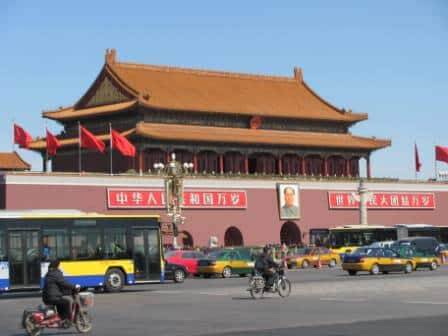

When I first visited Beijing 30 years ago, China had just opened its doors to travellers and even though I carried a sign in Chinese saying vegetarian, I found it almost impossible to eat. I was relating this story to Chef David Pooley, of contemporary European restaurant at the China World Hotel: Aria, who, being under thirty, found this difficult to comprehend. He had come over to my table to ask how I was enjoying my meal. It was the most exquisite meal that I have ever had. Each dish resembled a miniature work of art that I had to forgive myself for eating. Beijing is now the epicentre of cuisine in China, a magnet for chefs such as David Pooley, who previously worked at Sydney’s Quay and Claude’s.
I didn’t find this city of over 20 million inhabitants daunting. While there are ultramodern innovative buildings that defy gravity, Beijing is more horizontal than vertical, with a large urban sprawl that extends outwards in rings. There are many sights to see: temples, palaces, museums and monuments, as well as neighbourhoods to explore, the 19th century Legation or European quarter, and even corners of traditional China, where alleyways crisscross, called hutongs.
Tiananmen Square, built to venerate the Communist Party, is the world’s largest public square, where tragically in 1989, hundreds of mainly student demonstrators were killed. The square is busy with Chinese sightseers, many from the outer provinces who make the pilgrimage to the mausoleum of Mao Zedong. The mammoth National Museum of China, which covers 5,000 years of Chinese history is also here.
This is Beijing’s ancient central axis. Along the main arterial boulevards leading here are signs of new China, with gleaming skyscraper headquarters of major companies and shopping malls that sell the world’s leading designer brands: Gucci, Prada and Chanel. Directly north is the Forbidden City, the largest palace complex in the world, which has monumental proportions, with imposing halls, courtyards and museums.
Beijing’s most visited religious site, the Lama Temple, is a Tibetan Buddhist masterpiece with halls and galleries set in vast courtyards, each hung with religious scroll paintings and decorated with Buddha images.
A short walk away is the Confucian Temple, built in 1302, which is a serene place to absorb Beijing’s historic significance, with grand halls and shrines dedicated to Confucius. This neighbourhood, known as Dongcheng, is where a network of alleyways branch out. Quaint dwellings built of grey slate dating back 800 years have courtyards occupied by families who have lived there for generations, who have escaped the bulldozer unscathed, while most other hutong areas have disappeared.
Some hutongs, such as Guozijian and Nan Luogu Xiang, have undergone a dramatic shift, having morphed into a hub of youth culture with quirky boutiques, teahouses, including the delightful Songfeng, small bars, restaurants and cutting edge Chinese clad in skinny jeans and stilettos.
The ancient Drum and Bell Towers are impressive, but climbing the steep stairs to the top of each one left me weary. Between here and Hou Hai Lake are more hutongs busy with Chinese tourists following in pursuit of their tour guide holding a raised flag. The hutongs offer the chance to experience the character of Beijing street life with reminders of old China, like elderly men cycling by on rickety bicycles and pots of yoghurt sold in clay pots that I remember from my first visit over 30 years ago.
With snowflakes beginning to fall, I continued on to the massive Mansion of Prince Gong, which has a series of lavish ornate halls and grand courtyards. With crowds of Chinese tourists and over eager rickshaw drivers, it can be a bit overwhelming, so I instead walked around Hou Hai Lake. I walked past elderly men preparing for an icy swim, onto the more austere Former Residence of Song Qinglin, the wife of Sun Yat-sen. Qinglin, a feminist who campaigned for the emancipation of women, as well as a spokesperson for modern China’s, rose to become Vice President of the People’s Republic of China. I was the only visitor.
The next day I visited the other must sees: the Temple of Heaven, a series of stunning shrines where the sons of heaven, China’s emperors; came to pray. And just beyond was my favourite neighbourhood of Beijing, the Old Legation Quarter of tree lined streets, including Dong Jiao Min Xiangto, the longest alley of old Beijing, with European architecture including banks, government offices, churches, embassies, a delightful Sichuan restaurant in the former French Post Office, and Hongdu Tailors (once the tailor to top communist officials). A hotel here quaintly describes the area as filled with “daydreams and nostalgia”.
On my final day, I had plans to visit the Great Wall, but decided instead to dine at a restaurant that I’d read about, Made in China, which features specialities from northern China including Peking Duck and Beggar’s Chicken. The bean curd and vegetable hotpot served with rice was the high note I was hoping to find before leaving this amazing city.
Travel Notebook
Getting there Qantas and Cathay Pacific have regular flights to Beijing.
Getting Around Beijing is flat, easy to navigate, and ideal for walking. Unfortunately at the time of my visit, smog levels were high. The subway is convenient, cheap, easy to use and crowded at peak times. While taxis are plentiful and inexpensive, ask your hotel concierge to give an indicative price and write down the destination for you and ensure the meter is on, or opt for hiring a car and an English speaking driver for sightseeing.
Where to stay
Travellers are spoilt for choice in Beijing and the standard is very high. A good moderately priced hotel is the Novotel Beijing Peace. T: 8610-6512 8833 W: www.novotel.com.
A chinese style hotel is the Dongjiaominxiang Hotel
T: 8610-6524 3311 W: www.bjdjmx.net
There are many small boutique hotels. At the deluxe end, the hotel of choice for visiting world leaders and dignitaries, including Hillary Clinton, is the Shangri-La China World Hotel. Named one of the world’s best hotels, the attention to detail and service are quite extraordinary.
T: 8610-6505 2266 W: www.shangri-la.com
Dining Beijing has a vibrant restaurant scene and night life with hundreds of bars and indie nightclubs. Again, standards are very high in the better restaurants, given that Beijing is regarded as China’s showcase city to the world, with regional cuisine well represented. Award winning Made in China at the Grand Hyatt Beijing is excellent.
T: 8610-8518 1234 W: www.beijing.grand.hyatt.com
And for contemporary European cuisine, Aria shines.
T: 8610-6505 2266 W: www.shangri-la.com
Shopping High end malls including the Oriental Plaza are found just east of the Forbidden City and at the China World Trade Centre. Boutiques in Dongcheng, including The One and Lost and Found sell quirky gifts, accessories and clothing. Avoid the Disneyland style hutongs near Qianmen geared at tourists and unless you know your silk, cashmere, jade and pearls, avoid buying them from markets, as they may not be the real deal.
Insider’s tip
English is not widely spoken. Credit cards are not widely used. ATM’s are plentiful, or exchange money at the Bank of China. Visit the most popular sites early, before the crowds arrive, and because most attractions charge entry fees, the cost soon adds up. A word of warning; resist any invitations to accompany anyone who approaches you on the street to go to a teahouse. You may be presented with an exorbitant bill. Visas are free for those transiting in Beijing for up to 72 hours. Visas for longer stays are for single, double or multiple entry.
[geo_mashup_map]
Indian Link Radio: If music be the food of love…
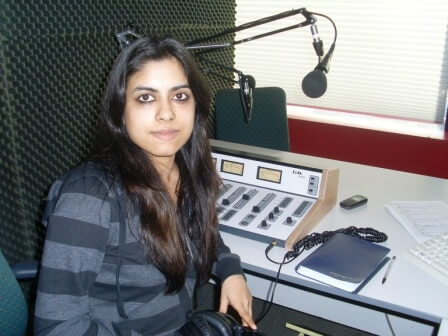
Indian Link Radio broadcaster SHRADDHA ARJUN on how she preps for her show, her wide taste in music, and how to connect with listeners

Ask me what my current favourite song is, and I’ll say Tere Ishq Nachaya by Sona Mohapatra. Or Mo Funk by Advaita. Or No man will ever love you like I do by Raghu Dixit.
For someone whose love for music is not limited to any genre – I enjoy Lady Ga Ga just as much as MS Subbulakshmi – my work at Indian Link Radio is something I absolutely enjoy.
To keep our Bollywood-savvy clientele happy, I am uptodate with the very latest in Bollywood. And while I do enjoy much of what’s on offer, my special passion has to be with the more non-filmy stuff like Indian pop/rock/metal bands that dare to experiment. My regular listeners will vouch for that!
Saturday Night Unplugged
My current show on Saturday nights Saturday Night Unplugged, 5.00pm – 8.00pm is entirely based on music. Good music!
In half hour segments, I present Bollywood songs based on a particular genre (jazz, electro, rap, folk etc); rag/taal based film songs and general discussion about the chosen rag/taal; an artist in focus (a new/upcoming musician/band, not mainstream Bollywood if possible); local talent (live interview/performances), as well as new numbers, popular hits, retro and yesteryears musician/composer/lyricist.
The story of a song interests me the most: how it came about and what it signifies. Like Satrangi re from the movie Dil Se: it establishes the foundation of the love story between Amar and Meghna (the protagonists) in the film, which then goes through 7 stages of love as described in ancient Arabic literature. These shades are defined as attraction, infatuation, love, reverence, worship, obsession and death.
I try to look beneath the surface to understand and appreciate the nuances and finer details of a composition. For example, Minds Without Fear, a number by Grammy Award winning artist Imogen Heap and Vishal Dadlani, came about when Imogen read Tagore’s famous poem Where The Mind Is Without Fear.
Indian film music tends to take us away from other kinds of music that is made in India. There are several musicians well-versed in classical/folk and other genres of music based in India who are sometimes better than the most popular playback singers. Sometimes we find that artists crossover and create beautiful fusion of musical styles that is not necessarily mainstream. I try to research and include their creations in my show.
I’ve had some artists from my playlist such as Raghu Dixit, Advaita, Rekha Bhardwaj retweet me or tweet back in reply when I tweeted that I was dedicating a half hour to their music on Indian Link. This is very encouraging and is definitely as good as a compliment in my opinion!
My show involves a minimum of two hours of research. I don’t always feature the artists I love or admire the most. I sometimes play music that I don’t necessarily listen to. I try exploring something new every weekend, stepping out of the comfort zone and expanding my knowledge about music and that of the listener.
Baby steps
For my very first show over two years ago, I wrote a thorough script. I read from it word for word. It was very informative, however it lacked in spontaneity and sounded very rehearsed. I then realised how important it is to connect with the listeners, and simply reading from a website/piece of paper would never help me do that.
At the moment, I do my research well ahead of my show, have a few pointers and speak spontaneously, often including references to current events around me at the radio station or in the news.
Of course much work has gone in to develop my current style. At one stage I was presenting the morning show 7.00am – 9.00am, five days of the week. This included an hour-long segment on spirituality and positive thinking accompanied with bhajans, and another hour on news stories of the day from India and Australia plus stories about the box-office, film releases, horoscopes and books.
The spirituality segment was the most challenging, for a young 20-something party babe like me! Although I have a certain amount of familiarity and understanding of the vedas and spiritual texts, I am no expert at it. However this segment actually got me a lot of praise and appreciation, especially from older listeners. I’ve had listeners invite me for lunch to their homes (Mrs Kler, Neelam) and sometimes even visit me at the radio station (Ashaji). It was an interesting experience – the reaction from the listeners was completely unexpected. There was a lot of participation from the listeners and many called to tell me that the show helped them prepare for the day and cope with stress.
A desi girl at heart!
Initially when I had started off as an RJ at Indian Link, I tended to speak mostly in English. This actually did not go down too well with my morning show audience. I was able, however, to turn that around by up-skilling. I ended up getting compliments about how shudh my Hindi was on my morning shows, which in my opinion was the best compliment that I’ve ever received (specially because Hindi is not my native tongue, I’m a Tamil speaker!
I once had a listener who called in from Perth to correct my pronunciation of the name of a hill station called “Chail”. While it was true that he was a bit unhappy about it, I was actually quite thrilled to know that someone was listening to my show in Perth! (This was before the Indian Link app was introduced and much before it was on Facebook).
Link up with me on Indian Link
I have enjoyed both the phases of my time at the Indian Link Radio and grown not only as a presenter but also as a human being in more ways than one. Now that I am working elsewhere full-time, I look forward ardently to Saturday nights to present my show and play some great music.
Look out for my updates on Facebook, and come join me on a radio date Saturday nights!
Cyberspace brain strain

The information highway might be a great resource, but what is it really doing to us? Writes HASNAIN ZAHEER

For several years, I have produced Everyday Infotech for Indian Link in which I talked about the best ways to use the Internet as a resource to advance your business, career, education and even entertainment. I’ve talked about search engines, social media, smart phones, digital devices and more.
It’s been a very popular topic. After all, life has become fairly Internet and mobile centric for most of us. And why not? It’s done wonders to our productivity. We are connected 24/7, we multi-task, and we get instant access to anything that can be delivered in bits.
Today, however, I’ll take a different position. I’ll tell you about how the Internet is changing the way we think, and why should we be aware of what we are losing, in order to get the many benefits we are so used to from the virtual world. It doesn’t mean that we need to halt our digital progress, we just need to be aware of the changes that are happening in our brains to make this progress.
Is everything hunky dory in the digital world? Not really, says Nicholas Carr, one of the leading thinkers on new media. He came up with a profound article on how the Internet is re-shaping the way we think.
“Over the past few years, I had an uncomfortable sense that someone has been tinkering with my brain, remapping the neural circuits, reprogramming the memory,” writes Carr. My mind is changing. I am no longer thinking the way I used to. “I can feel it most strongly when reading. Earlier I could spend hours strolling through long stretches of prose. I could follow the turns of arguments, get caught up in the narrative, dive deep into the text”.
That’s rarely the case now. The concentration drifts after two or three pages, or sometimes even less. “I start fidgeting, lose the thread,” Carr continues. “I start looking for something else to do. I feel as if I am dragging my wayward brain back to the text”. Now, let’s go deeper into this. If we can.
Marshall McLuhan, the well-known media theorist pointed out way back in the 1960s that, “Media are not just passive channels of information. They supply the stuff of thought but they also shape the process of thought”.
Print media: books, magazine and newspapers, give us the opportunity to concentrate and contemplate. But, our thinking has now begun to resemble the media we consume. “My mind now expects to take in the information the way Internet distributes it: in a fast moving stream of particles,” McLuhan adds. “Once I was a scuba diver in the sea of words. Now I zip along the surface on a jet ski”.
We are not only what we read, we are also how we read. Maryanne Wolfe, a developmental psychologist says, the “Internet has promoted a style of reading that puts efficiency and immediacy over everything else. It makes us mere decoders of information. We no longer make rich mental connections”.
The human brain is almost infinitely malleable. The connections between 100 billion neurons in our brain are not fixed. Our brain is capable of reprogramming itself all the time. Let me illustrate this with a few examples:
Way back in 1882, while talking about how his writing style changed as he switched from writing with hand to a typewriter, an author had observed: “Our writing equipment takes part in the forming of our thoughts”.
Another example of how our brain has changed to suit a specific piece of technology is the mechanical clock. In deciding when to eat, to work, to sleep, to rise, we stopped listening to our senses, and started obeying the clock.
At one time, people used to think of their brains as operating like clockwork. Today, in the age of software, they think of operating like a computer. But the Internet promises to go much further than a timepiece or a typewriter in its effects on cognition. The new media is not just eating old media, it’s making old media play by the new rules. Think of all the tickers, scrolls and pop-ups we see on TV and the short, snappy articles and capsule summaries in magazines and newspapers.
Nicholas Carr does not know if this mass re-programming of our brains is good or bad for our collective future. However, he does make a point about how our brains are being modeled to an industrial philosophy. The philosophy of the industrial revolution was about doing a task in the ‘one best method,’ and was about the ‘system over the person’. It was almost like an algorithm of doing tasks in the most efficient manner.
Carr and other thinkers are worried that many of us are trying to find the ‘one best method,’ and the ‘perfect algorithm’ to carry out mental work. In the process, we are losing the fuzziness of undistracted reading and contemplation, to algorithms and big data. So, are we wise in industrialising knowledge (mental) work at the cost of changing the way our cognition, our reading skills and our brain works? Only time will tell.
For the full article by Nicholas Carr: www.theatlantic.com/magazine/archive/2008/07/is-google-making-us-stupid