

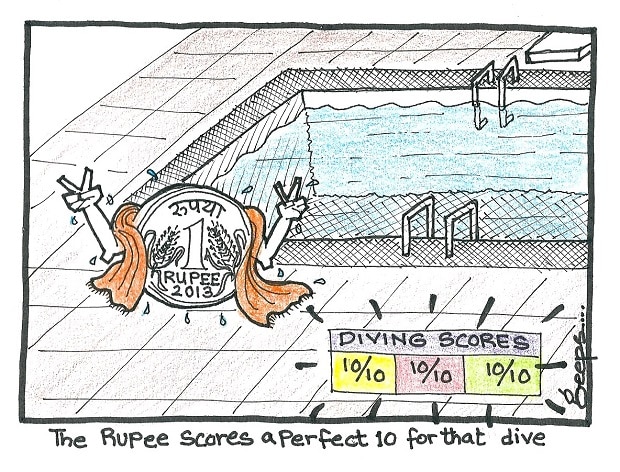
The Rupee scores a perfect 10 for that dive!

Ask and you may receive

Reading Time: 4 minutes
Within the school environment, a teacher should be accountable for the progress and improvement of a child, writes MOHAN DHALL

A parent phoned the other day in search of advice about her son. She said, “My son is very clever, but you wouldn’t know it from his school reports”. When questioned she reported that at a recent parent-teacher night she was given her son’s report showing that he had been awarded ‘B’ and ‘C’ for everything – far below his capacity or ability. The teacher said to the parents, “You son is underachieving”. The teacher then stopped, offering nothing more than this statement.
As is the case with most parents, this mother wondered what more she could do. She wondered whether she should have more structure and greater discipline at home. She wondered whether to raise her voice and clarify her expectations to her son, or whether to shrug and give up. The most obvious thing to do escaped her.
She could have asked the teacher, what was being done to remediate and address the underachievement. When I told the parent that she could have inquired of the teacher about her intentions for helping her son, there was a long pause. She then said, “Am I allowed to ask that?”
Um… yes!
Many teachers are dedicated and hard working professionals who continually improve their strategies and find new ways to address specific learning needs of the range of students. However, as with any profession, many teachers also simply treat teaching as a ‘job’ and therefore get into the habit of forgetting to look at a situation with new eyes.
The effect of this is the parent-teacher interview just described. The teacher hands the responsibility for learning to the child and the parent, but does not actively demonstrate accountability, determination or insight. Good teachers do not ‘hit and run’. They do not blame students for underperforming. They take responsibility and ask themselves, “Is there more I can do? Am I contributing to this underachievement? How can I teach this student how to perform to the best of their ability?”
Of course it is possible that a teacher, with the best of intentions, may still not be able to help an underachieving child work to the best of their ability. However, in trying different modes of presentation, in encouraging and supporting, self-esteem is built. Therefore, if nothing else, the student will feel valued and respected – two basic, or fundamental attributes of classrooms where students learn.
The parent was stunned when I told her she had a right to ask the teacher what was proposed to do to help her son to achieve. The parent said she did not know that teachers could be held to account. We then talked through whether she felt confident enough to ask the question of the teacher, “So, what are you doing about it?”
This was clearly a very difficult proposition for the parent. She felt very uncomfortable about the prospect of asking the teacher about what might be done to help her son achieve.
At issue here is our understanding of what a ‘teacher’ may be. The title ‘teacher’ implies an active professional, not a passive one. A teacher is there to teach, not to blame or justify, or avoid responsibility. If a child is underachieving, then it is incumbent on a reasonably well-paid professional to try different strategies to engage the child and support their learning. This includes addressing skills and knowledge gaps, addressing confidence issues based on fear of failure and also finding means by which to shape learning experiences so that they are engaging and foster inclusion.
Parents need to know that their responsibility for assisting their children to learn occurs outside of school hours. During school hours, the responsibility shifts to the teaching profession. Thereby, the only way that parents can shape what is done is through asking appropriate questions and expecting appropriate accountability. Such accountability takes several forms including:
- A teacher honestly reporting the academic strengths and weakness they perceive of each child.
- A teacher taking responsibility to address any academic issues and to state clearly what they propose to do and how and when.
- Teachers initiating follow up at regular intervals so that the student feels guided and the family feels included in the process of addressing any issues. This can easily be arranged through email if direct talking is hard to organise.
In this way schools and families work in partnership. Moreover, if there is this type of alliance then it is highly likely that a student will be in the very best framework for success. This is because there are consistent expectations between school and home, and clear communication.
So the next time you are in a parent-teacher situation and a teacher says, “Your child talks too much,” “Your child works too slowly,” “You child has not done homework,” “Your child could do better if only they were focused,” among other comments, ask the teacher what strategies they will implement to address these matters. Then ask if there can be a follow up in four weeks to see how things are progressing.
Be brave – ask and you may receive.
Diapers, drums and driving

Reading Time: 4 minutes
The concept of fatherhood has evolved, and it’s only gotten better, writes SHERYL DIXIT

My TV remote randomly stopped on Channel 7, where Australia’s Got Talent was airing in all its pseudo-effervescent glory. After a pretty good display of pyrotechnics, an all-male performing group were asked what they do for a living. “I’m a house husband,” said one of them quite proudly, raising a spontaneous laugh from the judges and audience alike.
Which triggered the thought that there are in fact, a good number of house husbands who take on what has been traditionally perceived as the role of women – that of caretaker of the children and home. The trend is catching on, mainly in metros in India too, where couples with no support from extended family have to fend for themselves. Some husbands opt to stay at home, or work from home, with the wife’s earnings providing a regular income. The phenomenon is not at all uncommon within Australia, but less so within Asian communities. But for the few dads who do stay at home to change nappies and organise exciting afternoon teas and playdates, they enjoy the experience and even more importantly, they do a good job at handling their domestic responsibilities, from cleaning to caring, to cooking mushy baby food and rainbow cake. It’s amazing how the concept of fatherhood has evolved in the last couple of decades.
As a child, my dad was pretty much hands on and he devoted a lot of his time to us kids. But things like the remit of schoolwork and ‘taking up’ lessons fell to my mum, who was adept at using a few imaginative threats to awaken our sluggish brain cells. Parent-teacher meetings were his forte at my insistence, as he was a charming man and my teachers’ complaints were always mild in his presence. Among his numerous good qualities, was his sense of adventure which took us off the beaten track on holidays each year, exploring the best of India. His occasional forays into the kitchen were always met with enthusiasm by us kids, but not by the cook, who would have to explain why the stores of oil and ghee had mysteriously depleted.
Most fathers of friends when I was growing up were relatively the same – the main breadwinner, devout, kind, polite, somewhat distant, but always protective, instilling in us a sense of security. Some were strict, others were lenient, but all showed the same sense of pride in their children. And although kids like myself were respectful and proud of our dads, the father who sported Elvis Presley sideburns, white flair pants and sang Hound Dog when mistakenly offered the microphone at the church social, was the ‘cool’ one.
Modern dads aren’t Elvis, but they are certainly cool. You can see them confidently casual in trainers and board shorts, equally adept at handling a child on a bike, another in the stroller, juggling drink bottles and mobile phones with casual nonchalance that leaves even seasoned mums gobsmacked. They deal with falls and bruises, dobbing and whingeing with practicality and a minimum of fuss. Hell, they even take doctor’s visits for needles and sniffles in their stride!
It’s amazing how much in sync dads nowadays are with their kids, in all aspects of their lives. When growing up, dads used to suddenly notice their kids when it came to year 10, when a good percentage ensured admission into an Engineering college, which could then be boasted about within the community. Respectability was the watchword, and dads used to impress on kids the necessity of matching up to the neighbourhood children in achievements.
But now, dads seem to have a more casual approach to their interaction with their kids. They don’t mind getting down and dirty, having a kick around with a soccer ball, or spending quality time together at the pool. They effectively disguise their trepidation when sitting in the passenger seat, when their enthusiastic teenagers are learning to drive the family car. They are more lenient and understanding about sleepovers, movie nights out and school formals, but they would probably be a tad suspicious about the Hummer stretch limo that their daughter’s date has hired to take her to that prom.
The trend of guiding their children’s decisions too, has taken a well-deserved hit. They would probably grit their teeth when the son of the family announces that he wants to become a hairdresser, but they wouldn’t react with a backhander and a feisty, “Pagal ho gaya kya? (Are you mad?) You’ll become a doctor, or else!!”
In fact, dads are fairly proud of their kids’ choices, even if they could be somewhat radical. One dad, a lover of soothing Indian classical music and a firm believer that Jagjit Singh should be made a saint, bravely accepted his son’s choice to take on the role of drummer in the school’s rock band. “At least it’s still music,” he explains, trying hard to convince himself, as much as me. It is an incongruous sight to see that young man sporting tatts of skulls, wearing torn jeans with studs in his ears, nose and upper lip, enjoying an evening walk with his father, impeccably attired in crisp cream kurta-pyjamas and spotless trainers, hair neatly combed! But they have the best relationship, one based on trust and understanding, and that’s what really matters!
Dads are great, and it’s fantastic that kids nowadays have such a close bonding with their fathers, based not just on mutual and reciprocated affection, but that they also aspire to be like them – or not! My boys quarrel about who will ride Dad’s motorbike when they get older, and it’s still an unresolved argument. My cousin still steals her dad’s shirts when she runs out of options of what to wear (despite having a 2x2m walk-in wardrobe!) A friend’s son has a go at his dad’s fondness for Bollywood movies, but he invariably settles down to watch them, “Just to let Dad know how bad they are,” he avers.
A friend of mine once said, “Dads nowadays are alpha male and beta female!” and that does seem true.
So this Father’s Day, let’s celebrate dads in all their Shiva-like avatars, for being what they are – great!
Paradise in Phuket
Reading Time: 5 minutes
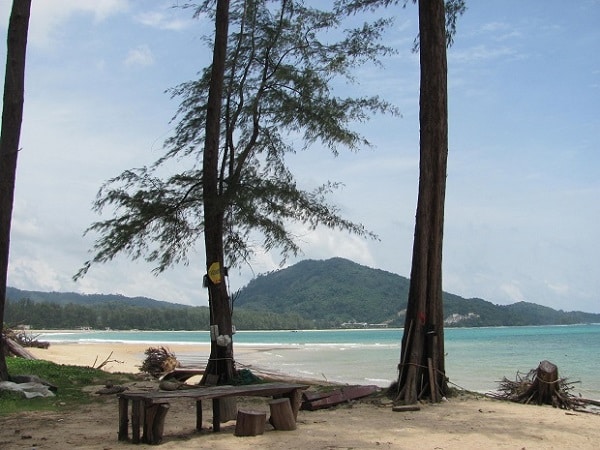
The teardrop-shaped island of Phuket has long been known for its golden-sand beaches and nightlife, and more recently the catastrophic tsunami of 2004. It is the size of Singapore, and is regarded as southern Thailand’s premier beach destination. It’s the wealthiest province in Thailand, offering a multitude of stunning hotels, top-notch restaurants, offshore islands to explore, and the historic Phuket Town.
“Where are you going again? Phuket, wow, I’m going there too, let’s catch up!” exclaimed my daughter Nicky. The morning after my arrival, I woke to a glorious tropical sunny day with views of Naithon Beach and the Andaman Sea beyond. I inquired how far it was to the next beach, where I hoped to find Nicky. “Three kilometres, very close,” was the reply. I set off up and down hills, since Phuket is renowned as picturesque, largely due to its lush hilly terrain, to Naiyang beach lined with rustic restaurants and boutique hotels. Further along, I walked along the blissfully deserted Mai Khao Beach, part of Sirinat National Park. Between water stretching out to the horizon and a backdrop of casuarinas and palms, a wide swath of powdery sand lies undisturbed, except for once a year when turtles lay their eggs here. I began the long 9km trek back to my hotel, with no sign of Nicky, or a taxi charging less than an extortionist’s fare.
On seeing me return exhausted and suffering from prickly heat rash, one of the manager’s promptly packed me off to the spa for a curative aloe vera treatment, while apologising for the kilometric miscalculation.
Phuket Town was my next destination, with public buses called songthaews conveniently radiating out to all beaches stretching down along the west coast. Between the beaches though, tuk tuks and taxis are the only form of transport.
Komala and Kata are quiet and pretty, while Karon is livelier. The boisterous party crowd included rowdy Australians on my flight heading for Patong, with its bars, tattoo parlours, fast food restaurants and tacky souvenir shops. While the walk between Kata and Karon was pleasant, Patong was five kilometres further north.
I must have affected a weary nonchalance, as I eventually found a tuk tuk driver willing to take me there for 100 Baht, which in any other part of Thailand would be considered a lot. Dropped off at a vast shopping centre called Jung Ceylon, I then walked along beer-soaked Bangla Road where Phuket is at its brashest and seediest with a heaving crush of bars, ‘ladyboy’ cabaret shows and microphones blaring out details of the kick boxing event to be staged that night, starring an international line up of rather scary looking young men. The sport is brutal with fighters pummelling each other with fists, feet, elbows and knees. Patong beach however, is perhaps Phuket’s finest and to its northern end are high-ranked resorts and quality restaurants.
My excursions included elephant trekking through shallow streams and groves of rubber trees; visiting the Gibbon Rehabilitation Project, a non-profit organisation that returns captured gibbons to their natural habitat; visiting the laid-back village of Rawai, near the island’s southern tip, known for its sea gypsies; and viewing artist’s enclave of talented local artists.
You can also go to nearby islands by long-tail boat or ferry. It was as I was disembarking from the Phi Phi Island ferry, that I unexpectedly saw Nicky and her girlfriends. Negotiating my way past Chinese tour groups, I caught up with her as she was about to depart in the hotel’s taxi. “Let’s catch up at the airport,” she said, and with that they were gone.
Phuket was one of the major trading routes between India and China, and an important trade centre for Indian, Malay, Arab and European traders seeking tin and rubber. The boom in tin mining at the beginning of the 19th century led to the construction of mansions and shop-houses with architectural features known as Sino-Portuguese, built by prosperous Chinese merchants from Singapore, Melaka and Penang.
Phuket Town is slowly undergoing a transformation; the shop-houses and mansions are being carefully restored with quirky boutiques, cafes and arty boutique hotels, offering an eclectic mix of funky and chic.
Along Yaowarat, Krabi, Thalang and Dibuk Roads, and Soi Romanee you’ll find Chinese temples and shop houses with old wooden doors and shutters and Chinese fretwork carvings. At night, the food market becomes a lively food court with portable stalls and carts pulled up to the curb, and a sea of plastic tables and chairs that spill out onto the street. Tasty Thai and Chinese dishes include my favourite pad see ew, made of noodles, thick soy sauce and stir fried vegetables, green papaya salad, barbecued pork buns, coconut curry, seafood and for dessert, sticky rice with mango. At Kopitiam Phuket, I enjoyed soaking up the atmosphere in a restaurant filled with memorabilia, old photos and antiques.
I spent several days exploring Phuket Town before departing for the airport. With a call to board my flight and no sign of Nicky, I handed a postcard of a Koala to airline staff, asking if they could pass it on to her. As I walked along the glass corridor, I caught a glimpse of her. On my return home, a message awaited me: A postcard, thanks! Next time, we really must catch up!
Travel Notebook
Getting there: Jetstar (direct), Thai Airways International, Singapore Airlines, Malaysia Airlines and Air Asia all fly to Phuket. Watch for specials.
Getting around: While there is an airport bus to Phuket Town, departures are infrequent. I’d recommend booking a transfer with your hotel and avoid an airport taxi. Public buses radiate to the beaches from Phuket Town but for getting between the beaches, tuk tuks and taxis are your only option. Agree on the fare beforehand.
Where to stay
Travellers are spoilt for choice with a multitude of resort hotels to suit all budgets and preferences for location. My daughter loved her stay at the vast Le Meridien near Karon, set on a private beach with a resident baby elephant, expansive landscaped grounds and huge pool. I stayed at the newly opened Pullman Phuket Arcadia, overlooking low key Naithon beach and convenient to the airport. Villas are spacious, elegant and beautifully appointed in muted tones, and dining options are first rate. With a well-equipped gym, kid’s club and spa, your stay will be restorative. E: H7488-RE@Accor.com /www.pullmanphuketarcadia.com. In Phuket Town, there are many small boutique hotels. I liked The Memory at On On Hotel, dating back to 1929 and Phuket’s first hotel, now fully restored E: askme@thememoryhotel.com/www.thememoryhotel.com Even if you don’t stay here, at least spend a few hours strolling by the picturesque streets.
Dining
Kopitiam Phuket, 18 Thalang Road for great food in a restored shop house.
Insider’s tip
The Phuket Tourist Map and Phuket Town Treasure Map are useful. The Tourism Authority of Thailand at Level 20, 56 Pitt Street, Sydney.
T: (02) 9247-7549 has a plentiful supply of brochures and maps.
Time for change

Reading Time: 3 minutes
PAWAN LUTHRA believes it’s time for Tony Abbott to be Australia’s next Prime Minister

We have heard arguments from both political camps, over the last nine months ever since elections were announced.
For a man who held all the cards and could actually nominate the date of the election, Kevin Rudd has seemed singularly unprepared for the rigours of the election campaign. At the pointy end of the ALP’s six years in power, it seems as though his campaign is more on a day-to-day basis, rather than a well-coordinated programme to present Labor’s vision to the public. To date, the Labor Party’s campaign appears to be more about arithmetic, rather than policies.
Penny Wong, the current Finance Minister who got most of the budget costing wrong in her six years on the job, is keen to show that the Coalition’s costings do not add up, and PM Rudd is more than keen to rant about these numbers. And while the public wants to know more about the Coalition costings, there has been a dearth of vision by the ALP and Kevin Rudd about where they want Australia to go in the future. The challenge for the ALP campaign has been that the two biggest achievements under their tenure – the National Disability Insurance Scheme and the Better Schools program (Gonski review) – were initiated by ‘she who must not be named’. But the Rudd team has not been able to build on these credentials. Instead, Rudd’s achievements are locked into the global financial crisis management of 2008-2009, but even this record sounds scratchy if played long enough. The vision, if any, by PM Rudd and the Australian Labor Party has not been shared with the people of Australia. Most of the policy announcements have had a shelf life of less than 24 hours, rather than being built upon to stimulate the imagination of the public and to show true vision.
On the other hand, the Tony Abbott led Coalition has been pretty much on message. Their mantra of ‘you cannot afford another three years like the previous six under this government’ or ‘the circus has to end’ has resonated well with the public. They have had the unflinching support of various media outlets from the Murdoch stable.
While the question remains about whether newspapers are reflecting, or leading public opinion, it is also true that there has been limited scrutiny of the Coalition’s policies. However, there has been plenty of scrutiny of Tony Abbott the man, be it his speedos or the analogy of ‘baddies vs. baddies,’ in relation to the civil war in Syria. From an Indian Australian point of view, and following the exclusive interview with Opposition Leader Tony Abbott in this issue, there seems to be a more positive message towards India and a promise to undertake discussions for assistance towards an India centre in Western Sydney. There is also a promise to ease restrictions on 457 visa applications. This is more than what has been promised to the Indian community by the Australian Labor Party. As a community, local Indian Australians have had more positive messages from the Abbott-led Coalition government in Canberra.
It is time to ring in change, with the Coalition in government, and its leader Tony Abbott as the new Prime Minister of Australia.
Freida Pinto or Lea Michelle?

Reading Time: < 1 minute
Who wore it better: Freida Pinto or Lea Michelle?

SRK Competition!

Reading Time: < 1 minute
Enter for a chance to win a double pass to Shahrukh Khan’s Sydney concert!!
Just like our Facebook page!

And… enter your email to double your chance of winning: http://eepurl.com/l3oy5
Election excitement
Reading Time: 4 minutes
SUNIL GAUTAM looks at election symbols, a plethora of parties, plenty of noise and a whole lot of excuses

For the last couple of months, Australians have been in the grip of election fever. Policies on the run, promises of financial aid to community organisations, claims to roll back controversial taxes, live debates, aggressive advertising – we are seeing it all.
While the scenario is quite busy and frenzied by local standards, I can’t help comparing it to election time back home. There are a few differences that are too big to ignore. Let me share them with you.
I miss the symbols
Australian politicians have parties with names – Labor, Liberals, Greens, etc. While it is quite understandable, to me it lacks creativity.
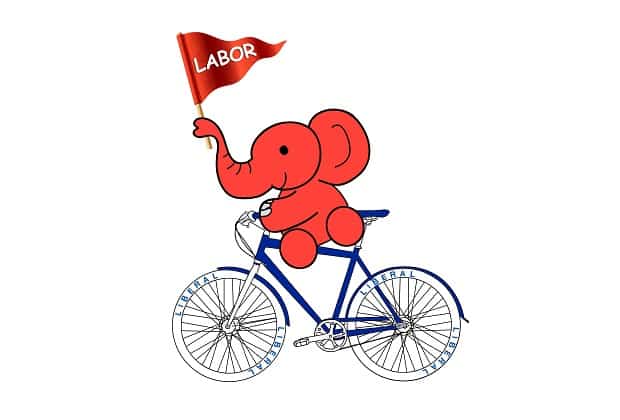
Indian politicians are a creative and considerate lot. Taking into account their illiterate voters, they try to make it easy for them to remember which party to vote for. So they go for visual communication. From hand to flower, bicycle to torch, farmer to soldier, elephant to clock – almost every usable symbol has been employed by parties to ensure their ‘mind share’ among the electorate. Such imagery adds colour to campaigns, offers employment to artists and also makes it easy for parties to explain why they fail to deliver on their promises – e.g. the flower was not in season, the bicycle had a flat tyre, the elephant ran away, etc.
Just two parties?
In Australia, it is a simple case of one or other. While it does make choosing easier, to me it deprives us of the mental chaos that results from paying attention to 13 different mobs, each promising everything in general and nothing in particular. Processing all that information leads to many a drinking session during which we pretend to decide the future of the country. It gives employment to TV show presenters, generates revenue for media houses and improves voters’ memory. A yet to be done research may reveal that any Indian who has been through five elections has little risk of Alzheimer’s disease. Like all others, this generous gesture by Indian politicians has been largely overlooked.
Where is the noise?
In Australia, we see a few billboards, or the local politician standing alone at train stations handing out flyers or at the most, the task force who politely ambush you as you walk to the polling stations. All this may be nicely understated, but doesn’t quite cut it for me.
Where is the noise? I mean both visual and audio. The blaring loudspeakers that make you wish you could bomb each of them, the giant cut-outs that tower over people at all key landmarks and the rallies that comprise largely of extremely politically aware people who will shout any slogan as long as the rally is followed by a free lunch. Where are these attractions? Noise pollution, waste of tax payers money and traffic disruptions – when all this happens at the same time, you know the country is in the process of choosing a better government.
Party versus PM
In Australia, people make a choice between two leaders to take their country forward. They may vote for the local candidate, but they are aware of the final outcome.
I think it is a bit like the ‘spoiler’ in a movie review. In India, we have no real idea of who will be the leader of the country, should your party win. The most important post is kept under wraps until the end. And in the end, the possibilities can range from a foreign born daughter-in-law of the ruling family to her own daughter, or to a retired non-political economist with his best years behind him. In a crisis, we can also have a regional leader who is not known beyond his hometown or someone who ‘should be PM’ because he has been deputy PM for 21 years.
Australians will never know the joy of this suspense.
Where are the excuses?
The differences are not only about the politicians, the voters are poles apart as well. In Australia, people look forward to casting their vote. They want it to count. A 101 year old woman called a radio station to check how she can cast her vote from home. A man from a small town of 16 people called to enquire about the nearest polling station.
I find this enthusiasm very unsettling.
Back home we listen to all the propaganda, have debates on the pros and cons of various parties and then leave it to truckloads of villagers to decide the future of the country. We blame the calibre of politicians, weather, traffic, time, lack of appropriate sunscreen lotion – everything is fair game as long as we can wriggle out of going out to cast our vote. We convince ourselves that one vote will make no difference and spread this silent vibe to all educated people. The result, easy victories for some and heavy defeats for others. We look at the results and wonder why that ‘good one’ lost the election. Must be someone else’s fault.
I hope there is enough for both countries to borrow from each other. Either the Australians can adopt our over-the-top-yet-shallow approach to campaigning or we clean up our system to make elections a more sober affair.
Or as a wishful aside, we may actually start voting.
Tony Abbott's India plan

Reading Time: 9 minutes
Opposition Leader Tony Abbott speaks exclusively to Indian Link on uranium, Indian students, 457 visas and… chicken tikka!

With just a few days to go before the 2013 Federal Election, Indian Link wrote to the Australian Labor Party and the Coalition Party to request interviews with their leaders. On behalf of the community, we wanted a better understanding of their overall polices, with particular reference to the ones relating to India, as well as their plans for the Indian Australian community.
The Coalition responded within minutes of receiving our request, and Opposition Leader Tony Abbott agreed to an interview that aired on Indian Link Radio recently.
However, we were not as fortunate with Prime Minister Kevin Rudd. Despite of a number of emails and text messages to the Prime Minister’s senior media adviser, at the time of going to press, Mr Rudd’s office is still to take up this offer.
With the Coalition stretching its lead in the polls and pundits anointing him as the next Prime Minister of Australia, Mr Abbott was friendly and relaxed as he spoke about Indo-Australia issues. Here are excerpts from the interview.
Pawan Luthra (PL): Welcome to Indian Link, Mr Abbott. We are just a few days out from the election; how do you feel?
Tony Abbott (TA): I feel that this election can still go either way. While it’s been a good campaign for the Coalition, and a pretty scrappy campaign from the government, Mr Rudd is a clever politician. The Labor party has unleashed a ferocious negative campaign. They think that negative advertising works, so we can’t take the outcome for granted. Nevertheless, the Coalition has a strong united party ready to serve, and we’ve had the same clear policy position as previously, and I think we’ve had a good chance over the last few weeks to reinforce those with the Australian people.
PL: Did you expect this kind of a negative campaign?
TA: I always thought that a desperate Labor Party would resort to scare tactics. Mr Rudd made a big, big, big play, when he returned to the Prime Ministership of being positive when he said, ‘with all my heart I want to end the negativity’ and I’m just a bit disappointed that he seems to have broken his own promise in that aspect.
PL: Mr Abbott, I’d like to turn your attention to the India-Australia relationship. The white elephant in the room to progress this relationship, is the sale of uranium to India. While this was agreed on by the Labor Party, sadly the process remains stalled with little action forthcoming. If elected, how will the Coalition government handle this situation?
TA: We want it to happen. India is a democracy that enjoys the rule of law, and is a country with which we have good relations. Plainly, if Australia sells uranium to Russia or elsewhere, we ought to be prepared to sell uranium, under appropriate safeguards, to India. It seems like the current government has singled India out for punishment even though India’s role in the international community is a very stable one. I’m very keen to try to ensure that uranium sales to India are resumed as soon as possible. Pawan, I will want to know exactly what the obstacles to these sales would be, exactly why there seems to have been a bit of dragging of the chain by perhaps the officials, rather than others. And if it’s some obstacle of law on the path of Australian officialdom that’s the problem I’d want to resolve.
PL: That’s good to hear, because this is one of the major issues holding back a more conducive relationship between the two countries.
TA: And we shouldn’t make it out to look like we are singling out India for some kind of criticism. India is a democracy under the rule of law, it’s been a very constructive contributor to the international community. It’s one of the coming superpowers of this century and it’s important that we acknowledge that and work as well as we can with India and the Indian government.
PL: Leading on from there, the NSW Premier Barry O’Farrell made it very clear at the start of his term that he would be visiting India and China every year; would you be looking at a similar agenda?
TA: Yes I would, Pawan. I think that it’s very important that Australia maintains the best possible relations with all its friends. Over the years we’ve obviously had outstanding relations with Washington and London, but we should never allow our strong friendship with our traditional friends and allies to divert us from an even stronger friendship with the emerging powers of our region, and India is very much in the forefront there. So I think it’s important that Australia acknowledges the fact that as time goes by, India is going to count for more and more in the world. Particularly given India’s profound commitment to democracy in the rule of law, it’s very important to build an even stronger relationship with India. India is the emerging democratic super power of Asia and I want to stress that. That’s why it’s very important that Australian leaders spend more time in India, or on India in the future, than we have in the past.
PL: Former Prime Minister John Howard made his first overseas visit to Indonesia, reflecting his particular change in foreign policy. If elected, would India be high on your list of countries to visit?
TA: It would be. I expect Indonesia to be my first significant overseas visit… I’m certainly not getting ahead of myself there, Pawan, but I would be surprised and disappointed if within a matter of months there hadn’t been a trip to India.
PL: On another issue, the changes to the 457 visa program have not only made a deep impact on a number Indian professionals here, they have not played out well in India either. Unfortunately it has added to the perception that Australia is ‘racist,’ triggered by the student attacks in the past. If elected, what would you do to counter this perception?
TA: I acknowledge that the violence against Indian students, particularly in Victoria a few years ago, was a real blot on our national copy book and the then Victorian government was far too slow to response to what was, at the time, racially motivated violence. At the time I deplored these attacks, I think it’s profoundly out of character for Australians to do that. I think Indians in Australia appreciate that Australians are very welcoming people, that we are a very welcoming, free and fair country. Yes, but it happened, it shouldn’t have happened, governments at all levels were slow to respond but eventually we did get on top of it and now it’s not happening. Equally, I deplore the fact that the current national government has demonised people coming to Australia on 457 visas. I’ve been saying repeatedly since this campaign began, the people who come to Australia to work and pay taxes from day one, are not stealing Aussie jobs, they are building our country. We should be very welcoming to people who are prepared to come here for a short time, or for a long time, to work and pay taxes and join the Australian team, which is what people on 457 visas abundantly do.
PL: So will you look at making some changes?
TA: Oh absolutely! We want 457 visas not just to be a component of our immigration program, we want them to be a very possibly, the mainstay of our immigration program. Because the tradition in this country is that we extend the hand of welcome to everyone who wants to come here and join the team, and come to work and pay taxes from day one.
PL: Your recently released education policy promised to improve the take-up of Hindi in Australian schools. While this is a terrific start, are there any plans to extend this to higher education at University levels?
TA: Thank you. I think we had better take one step at a time, Pawan. Hindi is one of the most widely spoken languages in the world and it’s appropriate that our study of Hindi be expanded, rather than contracted. This is one of the problems of modern Australia; because so many people speak English we become a bit linguistically lazy and we shouldn’t expect that the world will speak to us in our language. We should be ready to speak to the world in its language. That’s why the study of Hindi, the study of Japanese, Bahasa or Korean, is important. Back in the 1960s about 40% of Australia’s school leavers had studied a foreign language. Now it’s less than 10% and this is an indictment of our system, and it has got to be fixed.
PL: We know you travelled to India as a youth and worked at a Jesuit mission in Bihar, but what are your recent links?
TA: I regret to say I haven’t been to India since this time.
PL: But you’re promising to visit post September 7, if elected as Prime Minister?
TA: Absolutely! I had hopes to go this year as Opposition Leader, but unfortunately the pressure of the elections intervened. There was a clash between the proposed dates for a visit by me and a visit by an Australian government minister, so in the end the ministerial visit went ahead, not the leader of the opposition’s visit. But this is a mission on which I want to break the ice very, very soon. I spent some fascinating months in India back in 1981, on my way from Australia to England to take up a Rhodes scholarship at Oxford. I spent three fascinating months in India, mostly in the Bihar province, in the company of the Jesuits. I have been fascinated by India ever since. I thought back then, that India was a country with enormous potential. It was in those days a bit of a sleeping giant, but the giant has well and truly awoken and it’s important that Australia makes the most of that potential. And it’s important that Australia acknowledges India’s prospects of future success.
PL: The Indian community in the Western suburbs has been asking the government to collaborate in setting up an India House. If elected, will you assist them in this endeavour?
TA: It’s a very worthy aspiration. I don’t want to give cast iron guarantees, because I’m not familiar with the details of the proposal, but I would be only too happy, either myself, my staff, or some of my colleagues, to sit down with members of the community to explore the proposal and do what we can to help.
Up close and personal with Tony Abbott
PL: An Indian personality, alive or dead, who has made an impression on you?
TA: Mohandas K Gandhi, because he managed to lead his people in a great struggle, and he did what he could to ensure that the struggle was peaceful.
PL: Your favourite Indian restaurant in Sydney?
TA: The Indian Times, at Bantry Bay road in Frenchs Forest is the restaurant I most frequently take advantage of, it is my local. Probably more often takeaway rather than a sit-down meal, but they do a very good job there and I can thoroughly recommend them.
PL: Your favourite order at an Indian restaurant?
TA: Lamb rogan josh, chicken tikka, beef Bombay and there’s a prawn masala there which is very good.
PL: Ever cooked something Indian?
TA: I use to cook a reasonable curry, but these days my wife tries to keep me out of the kitchen.
PL: An Indian book you have read that’s made an impression?
TA: I haven’t had enough time to read lately. There has been an extraordinary proliferation of Indian literature in English over the last couple of decades, and I’m probably not as up with it as I should be, so I’ll probably pass on this question, but I did have a go at Vikram Seth’s, A Suitable Boy, and I must confess I didn’t really like it much. That’s probably a comment on me, on my busy work, but I confess I didn’t get through it.
PL: Seen any Indian films?
TA: Again, when I was in India I watched some Bollywood films. They weren’t really my type, but like everyone else, I watched Slumdog Millionaire and I loved it.
PL: An Indian word you know?
TA: Well ‘khaki,’ as I understand it, is an English word derived from India.
PL: An outstanding memory from your time spent in India?
TA: I guess apart from the colours, the sounds, the extraordinary work of the Jesuits, probably my strongest memory is just the readiness of the ordinary Indian to engage with me. You couldn’t walk 10 yards without being basically hailed and talked to, and maybe it was because in those days, a white face in the street was a rare thing. Maybe it was because they just wanted to practise their English on me, but I certainly had an amazing time there.
PL: Or maybe they saw a fair dinkum fellow in you over there…
TA: (Laughing) Well, I’d like to think that I was a fair dinkum fellow but I guess at that point in time they may not have known that.
PL: India – Australia relationship future?
TA: Well look, I want to do everything I reasonably can to build a better relationship between Australia and India because this will be good for India, but it will be very, very good for Australia.
PL:Your message for the Indian Australian community?
TA: It’s a simple one, and it’s much the same message that I would give to every Australian at this time. We must change the government because we can’t afford another three years like the last six. I lead the coalition and this is what we’ll do; we’ll build a stronger economy so that everyone will get ahead. We’ll scrap the carbon tax and we’ll end the waste, we’ll stop the boats and we’ll build the roads of the 21st century. But in order to do all this, we need a stable majority government and that’s what I will bring with me if elected on 7th Sept.