

Forum discusses positive parenting solutions in a multicultural environment, reports SIMMI BAKSHI

There is no right or wrong when it comes to parenting, however parents in general, would love to have a ‘manual’ that tells them how to navigate through the often challenging path of parenthood. Parenting trends come with dilemmas right from the breast to when your kids are ready to fly the nest, and often beyond. Add to it the challenge of a different language, culture and beliefs for those who have immigrated from another country, and the role of the parent can get even harder.
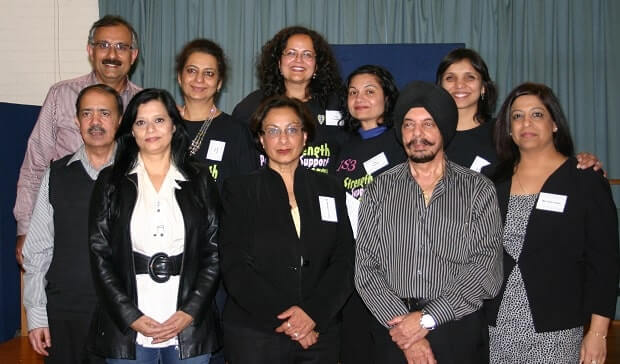
To explore what positive parenting means in the current environment and in a multicultural context, a panel of parents and experts were invited recently by PS3, to discuss the challenges and joys of parenting.
PS3 is a Melbourne based not-for-profit community group, which started four years ago, with an aim to provide empowerment through connections and knowledge, and to raise awareness about everyday issues that are faced by women.
PS3 stands for Positive Strength Support and Synergy and also doubles up as the initials of the first names of founder members Poonam Mehra, Sumita Vema, Shalini Valecha and Suman Chowdhary. The interactive session was held at Ashwood Support Services Hall in Ashwood, and was attended by a large number of parents, predominantly women.
The keynote speaker for the event was Jayashri Kulkarni a Professor of Psychiatry and the Director of Monash Alfred Psychiatry Research Centre (MAPrc). The panellists included Dr Gurdip Aurora, GP who is currently the President of Australia-India Society of Victoria (AISV); Muktesh Chibber, Therapist/ Counsellor and Family Dispute Resolution Practitioner; Shabbir Wahid a successful businessman, trade consultant, company director and a keen contributor to community development; and Preeti Jabbal, Melbourne Coordinator of Indian Link. The event was partially funded by Boorondra Council.
Rajiv Chowdhary, as the MC, welcomed the guests and invited members of the PS3 group to introduce the speakers. Jayashri Kulkarni then took over to present a few slides on ‘Raising Families in Australia, Issues for Indian Immigrants’. After defining culture, she focused on mental health and migrants. According to Jayashri there is sparse formal Australian data of second-generation Indian migrants and mental health; however, psychiatric services report prevalent depression, anxiety, self-harm (borderline PD), especially in adolescent girls from India. She also claimed that there is an increased incidence of schizophrenia and psychosis in adolescent boys from India. She outlined the causes, the schisms and the special issues by gender.
Jayashri also shared a case study of a young Indian girl who was referred to for help. The 21-year-old suffered depressive symptoms in response to her guilt and ongoing ambivalence about her cultural identity. Jayashri went on to explain how this girl and many children like her, are impacted by the complexities of the cultural mix of east meets west. She suggested that the solution lies in communication based on bilateral need for understanding and respect. According to her, cultural assimilation and also preservation can occur by working out the ‘rules’ for each family and discussing them in an ongoing manner, keeping in mind that the main underpinning of the family is mutual love.
Indian Link’s Preeti Jabbal led the panel session using humour to recount her experiences of raising her child. She shared stories of her media exposure to various common parenting concerns as well as those specific to the Indian community. Dr Gurdip Aurora shared his own experience of arriving as a migrant doctor to Australia and raising three children, while integrating into the mainstream community. Muktesh Chibber outlined the prevalent issues and possible solutions to effective parenting by drawing on her substantial experience as a family therapist and counsellor. Shabbir Wahid spoke of several interesting events that occurred within his family after migrating to Australia. All the speakers reiterated the need for two-way communication and respect to resolve conflicts and to empower and educate children to thrive in a multicultural society. At the end of each address, the audience was encouraged to ask questions and seek response from the panellists. It was a thought-provoking session with a good combination of light-hearted, amusing and insightful observations, and feedback suggests that the audience was left wanting more.
Resolve conflict through respect and understanding
India’s present perspectives
India’s role in Australia and the world is rapidly changing from a disinterested to a crucial one, writes CHITRA SUDARSHAN

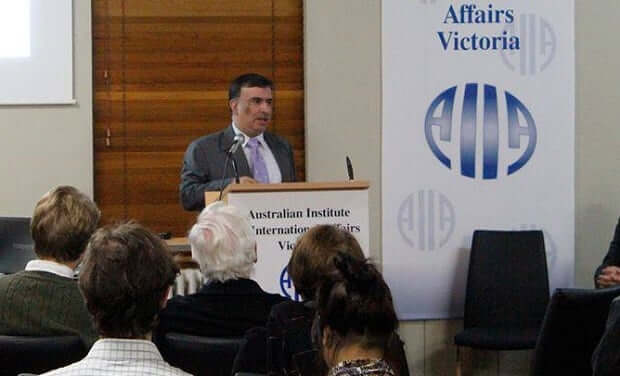
Professor Mattoo was asked to speak at the Australian Institute of International Affairs, Victoria (AIIAV), a 125 year old institution on August 14, on the world as viewed from the Indian perspective. Amitabh Mattoo is the director of the Australia-India Institute (AII) at Melbourne University and is one of India’s leading academics on Indian foreign policy, currently on leave from New Delhi’s Jawaharlal Nehru University, as professor of International Politics and Disarmament. He is the director of the India-Afghanistan Foundation and has previously held the position of Vice-Chancellor of the University of Jammu from 2002 to 2008.
Professor Mattoo began with some broad brushstrokes, drawing the audience’s attention to some significant facts about India and why it should be of immense interest to Australia and the world, in the coming years. First, India’s demographics are significant: it has a relatively young population with some 500 million Indians below the age of 30. The rest of the world is saddled with an ageing population – including China, which is feeling the effects of its one-child policy. “If India can train and educate its youthful population and help them take their place in a growing economy, the future augers well for the nation; if it doesn’t, a failure of massive proportions awaits the country,” he stated. Second, it is a democratic country; third, it is a diverse country; fourth, it is of increasing economic significance – it is now the third largest economy in the world after the US and China – having overtaken Japan recently. Fifth, even in terms of political and military power, it will wield influence in the future.
Having framed the context of India’s importance in the coming years, Prof Mattoo went on to trace the various phases of Indian foreign policy and how India’s view of the world has changed significantly over the years. He characterised the early years as the ‘years of idealism,’ when India tried to take a principled stand in world politics, as far as it was able. This phase was followed by what he termed the ‘fractured years,’ the 1960s, when its principles began to be challenged and put through enormous strains in the aftermath of the Sino-Indian war.
Critics of Indian foreign policy have argued that these were the years when India, without the wherewithal to flex its muscle, had only words and ideals to espouse on the world stage. Mattoo believes this is too cynical a view; India did care for certain principles and stood by them despite being put to the test. The post-1971 period, the ‘ascension of power,’ was a period under Indira Gandhi who understood that the currency of power was what mattered in an anarchical world, and went on to wield and consolidate India’s military power, beginning with the intervention in Bangladesh.
In recent years, especially in the post-1990 era, India has pursued a new power-oriented foreign policy. Indeed, when in 1998 India tested its nuclear devices, it did not even pretend it was for peaceful purposes, whereas in 1974, it went to great lengths to call it PNE (Peaceful Nuclear Explosion). The BJP government announced as a matter of fact, that India was a nuclear weapons power.
India’s relations with the US have undergone a complete makeover, and they have burgeoned into one of the durable partnerships in the region. India has launched a ‘look east’ policy to forge meaningful links with East and South East Asia. These have been tectonic shifts in the Indian foreign policy mindset.
As for contemporary India, Mattoo highlighted the recent Lowy Insitute-AII’s report, the India-Australia Poll which produced a report on the results of a nationally representative opinion survey of 1233 Indian adults conducted face-to-face between August 30 and October 15, 2012. (The full results of the poll can viewed at http://www.aii.unimelb.edu.au/sites/default/files/IndiaAust-Poll.pdf)
Some of the views that emerged from the survey were surprising and interesting. For instance, Indians saw Australia as a Deputy Sheriff of the US in this part of the world. Predictably, a large majority of Indians viewed Pakistan and China as the two most serious threats to India’s security. However, although Indians were apprehensive about a rising China, they were quite ambivalent towards it; China is seen as a threat but it is not clear about what can be done about it.
Indian attitudes towards the US have changed dramatically since the 1990s, it is now one of partnership with the US; India nevertheless feels it can and should be able to differ with the US on certain issues and be able to criticise it, for example on Iraq, Iran and Afghanistan.
Mattoo drew the audience’s attention to a report titled Non-Alignment 2.0 which was launched in 2012 by a group of eminent academics, foreign policy analysts and India specialists. Although the report surprisingly calls for India’s disengagement from the subcontinent, its authors still think India should seize the initiative in its relationship with Pakistan, as they believed that the majority of Pakistanis wanted friendly ties with India.
Concluding the talk, Mattoo stressed that ultimately India wished for stability in the region so that it could look after and provide for its citizens, and be at peace with itself. India would change its neighbourhood if it could – and locate itself in the middle of the Pacific Ocean – alas! Those are not real alternatives!
Speeches and song mark OMGA annual event
Investment opportunities dominate over medical matters at networking dinner, writes DORA DEKA

“If there was ever a good place to have a heart attack, this would probably be the one,” quipped Gino Balestra, Mr Saturday Night before strumming some amazing classic numbers on his guitar. The occasion was the general meeting of the Overseas Medical Graduates Association of Victoria (OMGA), and their networking dinner, sponsored by National Australia Bank (NAB) and Saimed Specialist Centre. Held on August 24 at the Red Cherry Bistro in Tullamarine, the evening spent with some of Australia’s best doctors of Indian and Indian subcontinent origin, was a truly memorable experience.
OMGA was formed over three decades ago by a team of dedicated doctors mainly from the subcontinent, and currently has more than 50 members. The association aims to promote awareness of health issues, and to assist and guide medical professionals from the subcontinent. A fantastic opening speech by Dr Geetha Venkatram, President of OMGA, emphasised the significance of Indian doctors in the Australian medical fraternity.
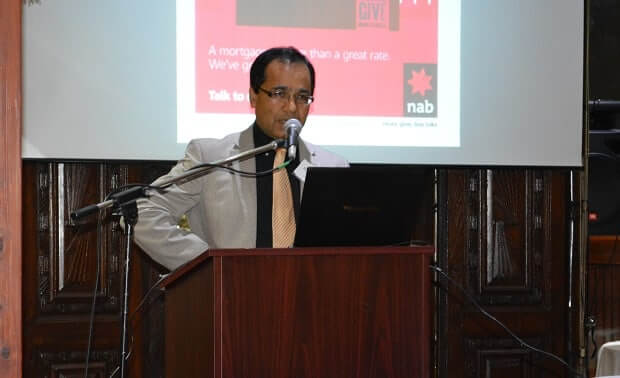
As the wine flowed, socializing continued through the room filled with a rich intellectual base. Mr Ravi Bhatia, President of Australia India Business Council then presented an inspirational and informative speech themed ‘Doctors are not good investors’, as goes the common aphorism. Mr Bhatia, an Indian Institute of Technology (IIT) graduate who immigrated to Australia in 1982, spoke about the lucrative investment potential in India and Australia, reassuring attendees that the doom and gloom scenario affecting the Indian economy as a result of the sliding rupee would be overcome. His presentation was followed by a speech by Mr Erol Dixon, senior banking advisor NAB, who gave us an insight on expert investment strategy for high income earning medical practitioners. The last speech of the evening was made by the business development manager of Saimed Specialist Centre. Dr Raj Khillon, General Secretary of OMGA concluded the evening by thanking all the sponsors, presenters, media and attendees at the event. And how can we forget the MC, a stand-up comedian (by passion of course!) Dr Raju Yerra, neurologist and committee member of OMGA, who twisted our nervous system through his hysterical commentaries.
The night was still young and guests were invited to groove to live music by Gino Balestra, promoted by Tangin Marketing. A buffet of rich and sumptuous Indian cuisine made the happy guests even happier. Gulab jamun and gajar ka halwa left a sweet taste in everyone’s mouth, as a remarkable evening slowly approached its end.
A feast of classical music
Accomplished percussionists and exhilarating jugalbandi liven up the Melbourne classical scene

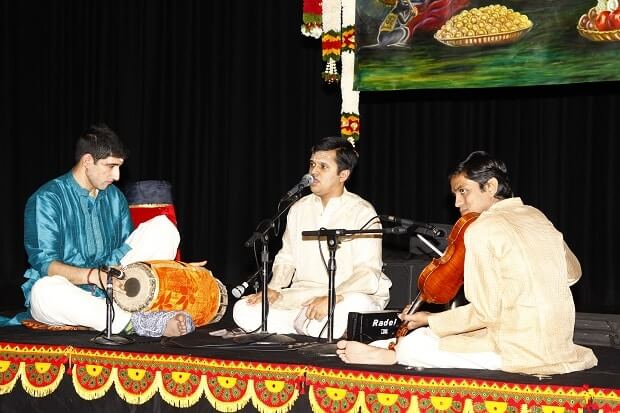
Vignesh Ravi’s mrudanga arangetram was held at the Rowville Secondary College recently. Vignesh is the student of Sridhar Chari, and has regularly been seen at various music school concerts, accompanying student vocalists and instrumentalists over the years. The young percussionist began preparing in earnest for his debut solo concert a year ago, which included an entire December music season spent listening to classical music in Chennai. He already guides and teaches a group of young students at his guru’s Laya Vidya Centre.
The vocalist and the violinist for his arangetram were well known musicians from India, viz Saketharaman and Nagai Sriram respectively. Saketharaman, a young musician, is the sishya of the late violin legend Lalgudi G Jayaraman, and if Vignesh was daunted by the challenge of accompanying such a well-known and virtuoso vocalist, he did not show it. He was calm and collected, and did not once feel overwhelmed by the pace or the complexity of the rhythms that he was asked to present.
Saketharaman began with a varnam in raga saveri and set the bar quite high from the outset; that he could take a well-worn varnam like this one and tweak it to give it that freshness and originality, is a mark of a great musician. This was followed by the well-known kriti Vallabha by Dikshitar in raga Begada, and a Tyagaraja kriti in Pantuvarali raga. They were both delivered with superb skill, and the kalpana swaras, a hallmark of the Lalgudi bani, were in a class of their own. Vignesh ably supported the musicians and his sense of tala was flawless. The centrepiece of the evening was a rendition of the raga karaharapriya, followed by the popular Tyagaraja kriti chakkani raja marga, and concluding with a cascade of kapana swaras. Vignesh gave able percussion support, and the tani (solo mrugangam) that brought up the end of this item showcased his skills splendidly. The concluding items were all well supported on the mrudangam, and Vignesh finished on a triumphant note to what was a wonderful and enjoyable arangetram.
InConcert Music presented a thrilling double bill on September 14 at the Wellington Secondary College, with Nagai Sriram treating the audience to more than an hour of soothing and lilting violin music. He was accompanied by Sridhar Chari on the mrudangam and Ramanan on the kanjira. This was followed by a superb jugalbandhi by two of the most renowned instrumentalists in the Carnatic and Hindustani traditions; Nirmala Rajshekar on the veena and Gaurav Majumdar on the sitar. They were accompanied by the star mrudangist Tanjavur Murugabhoopathy and Australia’s own young Kishan Jayendran on the tabla, who has spent some time learning from the maestro Alla Rakha.
They began with a lively and melodious bandish in ragamalika, and the hall reverberated to the double strings of the veena and the sitar, quite distinct in many ways. Nirmala Rajshekar’s full use of the bass strings in the veena was a pleasant counterpoint to the high pitched sounds of Majumdar’s sitar; her deliberate, unhurried rendering of alapana on the veena was a delight for music lovers, influenced, no doubt, by her Hindustani counterpart. When they played compositions together, it was fully synchronous and there was excellent understanding between them even in the more creative and free flowing segments like the kalpana swaras and gath. Their rendering of Dikshitar’s composition Siddhi Vinayakam in shanmukhapriya preceded by an exposition of the raga was superb. The bhupali-mohanam in mishra chapu that followed was a masterpiece, as they took the presentation of this raga to new heights! Kirvani/Keeravani was the concluding piece, and the percussion duet at the end was exhilarating: the mrudangist and the tabla layer treated the audience to a rhythmic feast, weaving rings round each other. This was one of the most delightful concerts we have had in Melbourne in years!
Culture and cakes combine
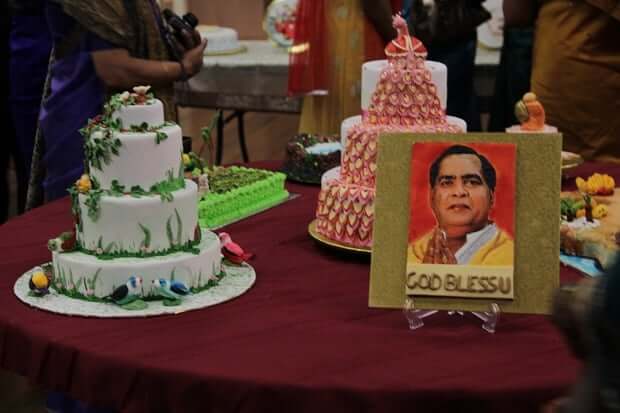
Attendees enjoyed a feast of a book launch, film trailer and array of cakes in a single evening

Over 50 renowned intellects from South India attended a special multi-event function on September 4 at Menzies Hall in North Dandenong, under the auspices of the VGP Ulaga Thamil Sangam. Also present was Dr VG Santhosam, Chairman of the VGP group of companies based in South India.
The event saw two books launched, written by Shaantha Jeyaraj. The first was a non-vegetarian international cookbook, and the second was a short storybook titled Tharunangal (Moments).
Next, followed a cultural cake show displaying a variety of different colourful and unique cakes designed with precision and in a variety of themes from village scenes to a portrait of Mother Theresa. There were also tiered cakes, but the highlight of the show was a portrait of Dr Santhosam made out of icing.
A seven minute trailer of the feature film Ilamei (Youth) was viewed by the audience. The film was released by Rajsha Productions, a Melbourne-based production company with a crew of 20 to 30 film and theatre professionals. The company also specialises in filming of arangetrams (dance graduation ceremonies), weddings, festivals and special occasions, as well as in creating documentaries and short films, stated Ghirija, its Managing Director.
Palkalaikkalanjiyem (the Academy of Fine Arts and Home Economics) that had been inaugurated by Shaantha Jeyaraj in 1995 in Perth, and has successfully functioned for nearly 15 years, was re-inaugurated at the event. The Academy aims to promote Indian culture and tradition among the younger generation living in Australia.
Palkalaikkalanjiyem had been organising an annual variety show called Kalaicharam (A garland of arts) annually in Perth.
Despite the event being held on a weeknight, it was well attended and enjoyed by all. Kudos to Shantha Cakes and Rajsha Productions for an interesting evening.
Road to an Oscar?
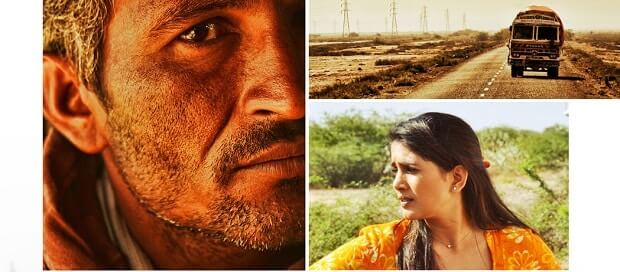

Road to an Oscar?
Debut feature filmmaker Gyan Correa’s Gujarati film The Good Road has been chosen to represent India in the best foreign film category at the next Academy Awards. It is said to be the first Gujarati film to have made it to this prestigious event to be held in March 2014.
“It was a unanimous decision to select The Good Road, which is a movie produced by the National Film Development Corporation (NFDC),” said renowned filmmaker Goutam Ghose, who headed the selection committee appointed by the Film Federation of India (FFI).
A haunting tragic travel drama, the movie is the story of three individuals on a highway, and was widely shot in the Kutch district in Gujarat. It had clinched the National Award for Best Feature Film (Gujarati) earlier this year. It features actors like Sonali Kulkarni and Ajay Gehi.
Ghose says it reflects an India that our movies usually don’t showcase.
“We chose this wonderful Gujarati film The Good Road. We were surprised by the film… The Lunchbox is very good too,” said Ghose. “I loved the performances of Irrfan and Nawazuddin Siddiqui. But The Good Road got our vote. It’s a lost-and-found story set in the Kutch area. It reflects on an India not seen in our films. The film explores an entirely new cinematic space,” he added, mentioning that a long five-hour discussion followed before The Good Road was chosen by the 16-member committee.
The movie left behind 21 other contenders, including strong films like The Lunchbox, Bhaag Milkha Bhaag, English Vinglish, Vishwaroopam, Malayalam film Celluloid and Bengali film Shabdo.
Ghose also revealed that the FFI has sent a request to the Academy Awards asking that India should be allowed to send several Oscar entries per year, instead of just one “as we are such a large cinema-making country”.
“So many diverse kind of films are being made in India. We make 1,500 films. The Tamil film industry is itself bigger than Korean cinema. Why should we send only one film to the Oscars? We cannot dance only to their tune,” he added.
So far in the history of Indian cinema, only three Bollywood films, including Mehboob Khan’s Mother India (1957), Mira Nair’s Salaam Bombay (1988) and Ashutosh Gowariker’s Lagaan (2001), have made it to the nomination stage of the Oscar.
Let’s hope the end of the road is an Oscar for this unique film.
John prefers sense over nonsense
Hunky actor John Abraham has been propagating off-beat and ‘sensible’ films in a space full of masala entertainment, because he believes that Bollywood currently lacks ‘sensible’ stories to tell.
“We lack stories. We have no stories to tell. We put five songs with five comedy scenes and say it’s done,” lamented John in an interview. And that’s why the 40-year-old actor enjoys the role of a film producer. He’s already tasted success with eclectic movies like the entertaining Vicky Donor and the engaging Madras Cafe.
“I love the role of a producer because I make the kind of films which I want to make,” he said. “I make sensible films. I think Vicky Donor and Madras Cafe are examples enough about the cinema which I want to propagate”.
But the ever-practical actor who has been in the film industry for a decade, is open to the idea of producing a masala film. “I’d love to produce a big masala film, and I will make sure that you are genuinely entertained by it,” he said. As an actor, he admits it has been “important to be a part of commercial films and to entertain people. At the end of the day, people want to laugh and enjoy. But if I am doing a Race 2, Housefull 2, Dostana 2 or a Welcome Back, it is important that I make sure that a Madras Cafe is also made,” said John. “John Abraham is known to do a mix of films. If I do a New York, I will do a Kabul Express as well. It is important to balance it out,” he added.
And of course, it’s fun to be a part of true blue Bollywood entertainers. “I don’t regret it. They are fun. I am not condescending towards them, but it is good to have a balance of both. I love slapstick comedy. The best case in point is Chennai Express. I am sure I will enjoy it. But I feel it is interesting to make a Madras Cafe,” he said.
Irrespective of the genre, the story line is prime. “I feel that only a good story line can get you respect. Commercial is a by-product, you will make money… but a good story line will get you respect,” said John, who is planning a film on motorcycling next and has already begun scripting one. Himself a bike enthusiast, John is also buying a spot in the Moto 2 format of motorcycle road racing championship, one of the classes of racing organised under the Road Racing World Championship Grand Prix.
After the success of Madras Cafe, John is now producing Hamara Bajaj, although he is quick to clarify that the name of the movie is only a working title. The poor guy is keen to avoid litigations, especially from motorbike companies. He did say however, that those who loved his debut production Vicky Donor, will also enjoy the new film which will go on the floors soon. The film will star Ayushmann Khurrana and will be directed by Shoojit Sircar once again.
Good luck John, with your latest venture of ‘sensible’ and non-litigious cinema.
Vivek admires Hrithik!
Actor Vivek Oberoi is an obvious fan of co-star Hrithik Roshan after watching the hunky actor perform in Krrish 3, a soon to be released sci-fi flick. “Krrish 3 is one of Hrithik Roshan’s career’s best performance,” Vivek said in an interview. “”To play three characters: Krishna, Krrish and Rohit and to play them so differently in one film… especially there are scenes where they (Hrithik’s characters in the film) are talking to each other and the performances are so beautifully done that they look like different people… It is an outstanding performance,” added Vivek.
Directed by Rakesh Roshan, Krrish 3 is the third film in the franchise that began with Koi Mil Gaya in 2003. It also features Priyanka Chopra and Kangana Ranaut.
Vivek even recalled an incident that moved him to tears after watching Hrithik’s performance in one of the scenes from the movie. “When I was dubbing for the film, there was a very emotional scene of Rohit, being played by Hrithik in the film and his performance and emotion in that scene was so deep, so beautiful that it touched my heart deeply. I was choked in that moment,” recalled the 37-year-old actor. “I couldn’t speak, there were tears in my eyes. I remember stopping the dubbing (in between), came out and called up Hrithik and said, ‘I love you man, what a performance,’” he added.
Hrithik himself admitted that he likes challenges of all kinds, be it in acting or dancing, as he believes overcoming difficulties help in his growth. The actor and his dad made the statement when attending an interactive session with students of a school in Singapore recently. “I like it when it gets difficult, whether in acting or dancing. Whenever something gets difficult, I know this is my axis point to growth. The modular I live by is that the finest steel must go through the hottest fire,” said Hrithik in answer to a question on whether he likes acting or dancing more.
Meanwhile, Vivek Oberoi is pleased with his villain avatar called Kaal in Krrish 3. “Bad characters have always attracted every actor and it is so enjoyable to play a negative shade or character,” said the actor, who earlier played negative in films like Shootout at Lokhandwala. “I am very excited because there is an aristocratic aura around this character. This character is the prince of darkness. He is a super villain who is the king of his own world,” he added. Recently, Vivek’s look in the film was unveiled and he was happy with the response he has received for it. His hard work of over three months has paid off.
So let’s wait for early November to see if Krrish conquers or crashes at the box office!
Real to reel Maa-Beti duos
India celebrated Daughter Day on September 22, inspiring us to look at the powerhouse mother-daughter relationships in Bollywood. Maa-beti duos like Kajol-Tanuja and Sharmila Tagore-Soha Ali Khan have not just struck the right chemistry and friendship off the arclights, their bonding has translated on screen too, bringing their real life magic alive on reel via films. While some of them have faced the camera together, there are exceptions like Hema Malini and Aparna Sen, who even directed their daughters in their movies.
Take Tanuja-Kajol.
They first teamed up for the 1992 film Bekhudi and were last seen on the screen in the 2010 movie Toonpur Ka Superhero. Kajol had once admitted that the idea of working with her mother scared her because of the latter’s perfectionist attitude. But when the movie released, she did admit to gaining the confidence to face her mother for the camera.
Soha Ali Khan had always maintained that she wanted to be a part of her mother’s glorious filmography. She finally got a chance with Sangeeta Datta’s 2009 film Life Goes On. Off the cameras, they share a mother-daughter bond like any other with Soha eyeing her mother’s jewellery pieces, but Sharmila always lends her expertise, be it in acting or in delivering Bengali dialogues in movies, to her girl.
Actress-turned-director Aparna Sen’s fine tuning with her talented daughter Konkona Sen Sharma was evident in Mr. And Mrs. Iyer that even won Konkana a best actress National Award.
Aparna went on to helm 15 Park Avenue which also featured Konkana, and garnered much critical acclaim. On screen, they teamed up for Bengali drama Iti Mrinalini, where Aparna essayed the older version of the character played by Konkana.
Hema Malini and Esha Deol got together for many films like Cash, Na Tum Jaano Na Hum, Kuchh Toh Hai, Chura Liya Hai Tumne, Darling and One Two Three, which failed miserably at the box office. Esha floundered in Bollywood, but devoted mum Hema Malini tried every attempt to jumpstart her daughter’s flagging career. She even directed Tell Me O Kkhuda, which unfortunately also bombed.
Some of Bollywood’s other popular mother-daughter duos include Dimple Kapadia and her daughters Twinkle Khanna and Rinke, Moon Moon Sen with her daughters Raima and Riyaa Sen, and Lilette Dubey with her daughter Ira Dubey.
In the ad world too, actress Neetu Singh has posed with her girl Riddhima Kapoor. Sonakshi Sinha too will reportedly team up with her elegant mother Poonam for an advertisement.
So it’s women power to Bollywood’s beauties and all the very best to them!
Vidya supports child education
She’s among an increasing breed of actors who are taking social issues to heart and making a hands-on attempt at being more than just the face of a cause. Vidya Balan visited Thanapur village in Uttar Pradesh as part of Nihar Naturals Shanti Amla’s Chotte Kadam Pragati Ki Aur, an initiative to empower women to support children’s education in India. The talented actress is the brand ambassador of the hair care brand.
Vidya launched a mobile phone-based learning system that seeks to make the learning process interesting for children, and will also help them learn English words. The brand, in association with Child Relief and You (CRY) India, is in its second phase of the campaign and brand ambassador Vidya showed how to use the IVR (interactive voice response) system. “I did a similar thing (play a teacher) last year in Lusa village of Mirzapur district. But this time, I had more information to share,” said an enthusiastic Vidya. She even used Bollywood songs to teach children of the village, also situated in the same district. The Paa star believes movies have the largest reach in this context. “When you use a song to tell them something… you are hoping it stays with them. It has strong impact on them,” said Vidya. The actress also interacted with self-help group women who are spearheading the campaign in their respective regions. They took a pledge to ensure the progress of children’s education.
Vidya also revealed that her next release will be Shaadi Ke Side Effects which will l come out on Valentine’s Day in 2014. The film is a romantic comedy also starring Farhan Akhtar and is being helmed by Saket Chaudhary.
Keep up the good work Vidya!
Caller checkmate!

Discovering a new technique of avoiding conversations from call centre operators has been a delightful experience

Phone calls from call centre operators have been the bane of my existence for some time now. They ring on my landline at the most inappropriate of times, like just before the school drop off or pick up, and invariably at mealtimes, interrupting my daily yell to get the TV turned off and hands washed.
A ringing phone is something that’s hard to resist and being techno-challenged, I can’t quite find the ‘ringer off’ button on my phone. If I do, it’s likely that I won’t remember how to turn it back on again. So to keep life simple, I just don’t try. This warped philosophy allows persistent call centre operators to try and talk to me about everything from solar panelling, new phone plans, cheap calls to India, sorting out my computer problems, and of course, invitations to free dinners and seminars.
I’ve tried everything from blocking my number to pretending I can’t hear them, to just not answering the phone after 5pm, but I sometimes have to bow to the inevitable and endure a frustrating conversation trying to convince them that what they’re offering is of no value, or interest to me whatsoever.
But recently, I inadvertently came across a new weapon. The phone rang as usual at 5:15pm on a Monday, while I was busy getting dinner organised downstairs. As the hands-free was upstairs, I asked my older son to answer it.
“Hello!” he bellowed into the phone, probably creating a sizeable crack in the caller’s eardrum. The phone was on its speaker, so I could hear the conversation.
“Is your mum home?” asked a male voice, somewhat testily.
“What?”
“Is – your – mum – home?”
“Vhott?” Even louder.
“Your MUM. Is your mum home?” asked the voice, practically yelling this time.
“Huh? Whaat?”
“YOUR MUM!”
“My mum? My mum?” As if he had any other!
“Yes, yes, your mum!”
“I can’t hear you, did you say my mum?”
“Never mind, I’ll call later,” was followed by the engaged tone.
I had to hold onto the kitchen counter to stop myself falling over laughing.
Now my sons know the intricacies of how to download apps and operate my mobile phone way better than myself, but when it comes to actually conducting a conversation over the landline telephone, they are sadly lacking in phone etiquette. I was so delighted by the unexpected outcome of that call, I had to experiment again.
Once more a few days later the phone rang, this time around 3:30pm in the midst of their afternoon tea.
“Hello!” bellowed my son, once again.
“Please can I speak to your mother, Mrs Dixit?”
“What? Oh sorry, I beg your pardon!” said my son. Now this polite repartee was a result of being told off by his dad, who had inadvertently called the landline one day and had been treated to a few vociferous ‘What’s’. He had taken pains to explain the fundamentals of politeness, especially when communicating with unknown people over the phone, some of whom mum works with. Apparently some of that had indeed, made sense.
“Please can I speak to your mother,” said the mild female voice with a distinct Filipino accent, a little louder this time.
“Okay! Mum, there’s someone on the phone speaking Indian,” he said, walking over to me, holding out the phone.
“Indian? What do you mean, Indian?” I asked indignantly. “I’ve told you a hundred times, there’s no such language as ‘Indian’. India has over 1,500 languages that have developed over thousands of years…”
“Yeah, yeah, but she sounds like she’s talking Indian, like Punjabi or Hindi, or something,” he said dismissively, handing me the phone.
The lady had hung up.
Getting my boy to answer the phone was turning out to being quite an adventure. The next time he answered it, the result was unexpected.
“Hello!” went the now-familiar bellow.
“How are you?” asked a suave voice.
“I’m okay, how are you?” asked my son, polite for once.
“What’s your name?”
“I’m Sid, what’s yours?”
Now this is still a hotly debated subject. Did they say ‘Matt’ or ‘Bert’? Whatever it was, my son burst out laughing hysterically, “Butt, butt, his name is butt!” he yelled joyously and his younger brother joined in the merriment.
They hung up.
My editor is probably the only person who is impressed with the boy’s phone technique. Possibly because she answers his yell by saying, “Hello, Sid!” That’s when the wax mysteriously melts from his ears and he can hear, hallelujah! When I got on the line after she’d had a conversation with him, she seemed just as impressed as I was surprised. I thought there might be something wrong with my hearing when she mentioned that he was ‘articulate and polite’.
But now, like most kids of this precocious generation, his nearly nine-year-old brain has figured out that he’s being asked to do a chore, i.e. answer the phone. Requests of money for doing the task being rejected, he has now started ignoring the rings, or he picks up the receiver when the person has hung up out of frustration.
I’m now thinking of enlisting the younger one to the task, particularly because he has his own charming brand of eccentricity that lies only within the comprehension of close family. He has ‘opposite’ days and ‘repeat’ days, among other strange and hilarious traits like wishing people ‘Happy Birthday’ when it’s the New Year, and vice versa. I can just imagine the conversations.
“Hello!”
“Goodbye,” he would say
“What?”
“Goodbye! See you later!”
“But… but… can I speak to your mum?”
“No!” and he would hand me the phone.
By which time, the poor confused caller would have hung up.
Another conversation would go like this:
“Hello, how are you?”
“Hello, how are you?”
“I’m fine thank you, how are you?” the confident voice would respond, happy to come across a polite child.
“I’m fine thank you, how are you?”
“Errm, can I speak to your mum?”
“Errm, can I speak to your mum?”
“No, no, YOUR mum!”
“Yes, yes, YOUR mum!” he would say, reverting to his ‘opposite’ avatar.
At this point I would take the phone from him, and if the caller is still on the line doubting their sanity, I would take at least a couple of minutes to actually listen to their selling spiel. They would need convincing that the world is, as they know it, a normal place. So that they could hang up and confidently move to the next caller… you, I hope!
Meetings… wins performance of the year
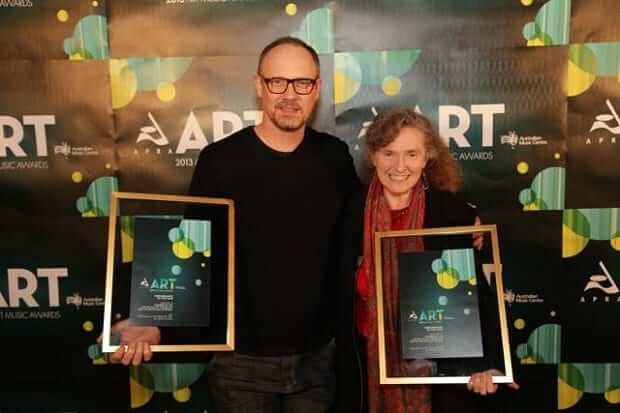

The winners of the prestigious 2013 ART Music Awards in Australia were announced recently, and the Performance of the Year award was won by Chennai-based mrudangam maestro, Guru Kaaraikkudi Mani’s Sruthi Laya Ensemble and members of the Australian Art Orchestra, for their thrilling performance of Sandy Evans’ music recording Meetings at the Table of Time, created in India. This unique work is a coming together of both Western jazz and Carnatic music, and creates a performance of depth and integrity.
The winners were announced across 11 national categories and seven state categories at the 2013 ART Music Awards, held recently at a gala function at the Parade Theatre, NIDA in Sydney.
Hosted by APRA AMCOS and the Australian Music Centre (AMC), the ART Music Awards are the only national events in Australia to acknowledge the extraordinary achievements and creative successes of Australian composers, performers and educators in the genres of contemporary art music, jazz and experimental music.
“This award is… most often won by western classical orchestras, so it was a great tribute to Guru Mani and Sruthi Laya that our performance was recognised in this way,” said Sandy Evans. “Of course people in India wouldn’t be surprised by this, but in the Australian context as you well know, it’s quite revolutionary!”
While APRA AMCOS and the AMC congratulate all the 2013 ART Music Awards winners on their outstanding achievements, Australian Carnatic musicians and art lovers of fine arts are extremely proud of this achievement. The far-reaching vision, mutual respect, relentless and innovative pursuits by Sandy Evans and Guru Kaaraikkudi Mani and his team have created this milestone.
This is another record-breaking news of pushing boundaries in music and building bridges between Australian contemporary music and Carnatic music.
RAVI M RAVICHANDHIRA
HSS celebrates 25 years
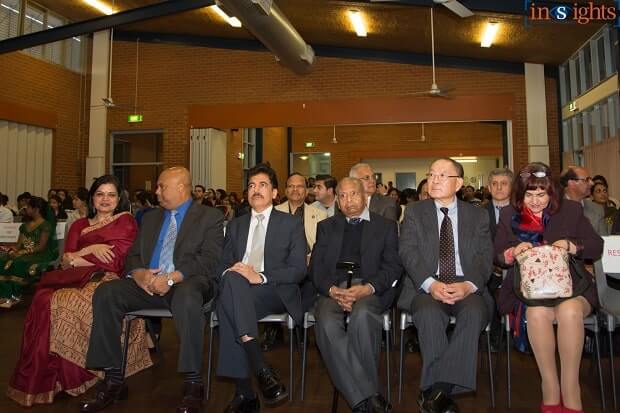
The need for more centres teaching Hindi was stressed at Hindi Shiksha Sangh (HSS)’s silver jubilee event

Hindi Shiksha Sangh (HSS) Australia recently celebrated its silver jubilee of incorporation in the form of a special event held at the Glen Waverley Community Hall. Over 350 people attended the event, including leading luminaries from the subcontinent community such as Mr Rakesh Kawra, Consul Indian High Commission; Mr Jude Perera, MP Cranbourne; Mr Srinivasan, Commissioner VMC, representing the VSL, among others. Also present were three area managers namely, Mr Tony Kyoong, Mrs Connie Bramble and Mr Alan Feher from Dandenong. Addressing the audience, Mr Kyoong explained the vital role of VSL in supporting all languages to foster multiculturalism in Australia.
The program began at 5:30pm with the lighting of a lamp by Mr Kawra, followed by Ganesh Vandana. This followed a debutant presentation by two Dandenong School primary students, of traditional south Indian dance, which was greatly applauded.
Dr Narendra Agrawal, President of HSS briefly introduced the inception and progress of Hindi Shiksha Sangh and its role in promoting Hindi and Hindi education in Australia. Dr Agrawal’s address also highlighted the government of Australia’s recognition of Hindi as one of four priority Asian languages in the process to be included in school curricula (VCE), while also thanking the VMC for its support.
Dr Dinesh Srivastava, the late Dr RS Pande (posthumously), Mrs Indumati Pandey and Mrs Sudha Joshi were among those honoured for their contribution to the Hindi language in Australia since the past 25 years.
Past students Nupur Gpel, premier award winner, Ananya, topper of the year, and Gagan Sidhu who studied Hindi in Victoria, were specially invited to speak about their achievements during the function. Many speakers stressed on the need of expansion of centres teaching Hindi.
The organizer in-charge Mrs Manju Agrawal with her team, managed the event very well, using audio visual effects for the first time at HSS. The event included dances, speeches and skits demonstrating the knowledge and skills of the language and Indian culture, that students had learnt in their Hindi classes.

Mrs Ritu Shorey, Anshu Sinha, Mrs Shelly Khanna, Mrs Vibha Joshi, Mr Sameer Sinha and Dr Sandeep Bhagat need a special mention for their commitment. Mr Devindar Thethi directed a skit reflecting the role of Hindi in the life of the students. The contribution of all the HSS committee members which included several Hindi teachers, was appreciated.
Ananya, Bhavesh, Mukul and Khyati worked well as MCs. A raffle with cash prizes of $100, $50 and $25 was well received. The function ended with audio visual projection of a spectacular recording of the Indian national anthem sung by nine famous Indian singers including Lata Mangeshkar, Asha Bhosle, Hariharan, AR Rehman, among others.
In conclusion, HSS secretary Dr Umesh Gupta thanked the audience, guests and committee members for their presence and encouragement to HSS.
Hindi Shiksha Sangh Australia, an incorporated non-profit organisation, gratefully acknowledges the sponsorship of Monash Council, Victorian Multicultural Commission, Victorian School of Language and anonymous donors who provided the souvenirs and cash donations.

The rise and rise of Nihal Gupta
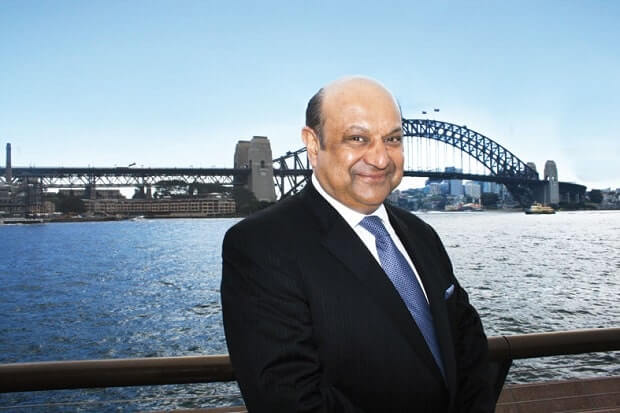
Indian Link interviews the Sydney-based entrepreneur turned ambassador for NSW’s Indian community

Carpe Diem (seize the day) seems to be the motto of Nihal Gupta’s life.
Over the past three years, Sydney-based entrepreneur Nihal Gupta has burst on to the local Indian community scene. His energetic presence at every major community event has not gone unnoticed, and not only because he is often up on a podium reading out a message from the premier, or making an address on his own behalf.
Regularly seen at all major multicultural functions, he is turning out to be quite the ambassador, not only for Sydney’s Indian community but also for New South Wales. He sits, currently, on over 11 government and other boards, working in a voluntary capacity, even as he expands his business interests on the international level.
“Nihal’s cultural ties to the Indian community have allowed the NSW Government to strengthen its own relationship with the Indian community, which plays an important role in fostering existing business relationships and improving job opportunities in our multicultural society,” says NSW Premier Barry O’Farrell.
“Nihal has done a terrific job in promoting trade and investment in NSW through his roles with the Multicultural Business Advisory Panel and NSW Export and Investment Advisory Board,” adds O’Farrell. “Nihal shares the NSW Government’s vision to grow the state economy and create jobs. He’s also played an important role in building ties with overseas investors through his tireless work”.
“I get on very well with Nihal,” says Minister for Citizenship and Communities Victor Dominello. “He is always thinking of new ideas about how we can leverage off our multicultural base to benefit the people of NSW” and it is his engaging personality, excellent communication and people skills and capacity for hard work, which make him well-suited to chair the NSW Government’s Multicultural Business Advisory Panel.
So who is this man, and what causes his star to continue to rise?
In an attempt to unravel the enigma known as Nihal Gupta, we request an interview for an Indian Link feature. The ‘brief chat’ extends to just over two hours, during which Nihal reveals his grasp on a wide range of topics, and a sharp probing mind; there is seldom an occasion when he is short of a word.
Pawan Luthra (PL): Let’s start off by trying to understand the extent of your various commitments, over and above your mainstream role as the managing director of Digital Electronics Corporation Australia Pty Ltd (DECA). You are the chairman of the NSW Multicultural Business Advisory Panel; a trustee of the Sydney Cricket and Sports Ground Trust; a director of Parramasala; Member of the Export and Investment Advisory Board of NSW; director, Asia Society of Australia; Member of the Consultative Committee to represent the Indian community in NSW; a member of the National Executive Organising committee for the Pravasi Bharatiya Divas (PBD) in Sydney later this year, and recently a high profile appointment on the Judicial Commission of NSW. Whew, that’s quite a list!
Nihal Gupta (NG): Being given the opportunity to serve and to give, is a wonderful thing. I enjoy life and I enjoy my interaction with people. I only take up things which I enjoy, so it makes it all a lot easier. Plus, I do schedule things and organise myself very well! But mostly, I love variety and diversity and am passionate about things, so that drives me, and so I have the energy to make things happen.
PL: What skills or experience do you bring to these diverse boards?
NG: All the boards are on appointment, so I am sure my skills have been recognised. As chair of the Multicultural Business Advisory Board, I have skills and experience to do business not only locally as someone born and bred here, but as a business professional who has experience of working with Asia. I have dealt with Japan, Korea, Taiwan, China and have a bit of awareness about etiquette and culture in these countries. For the Judicial Commission, it is a great honour to be on the board and I guess while I do not have a legal background, I represent the people of NSW and so I can be like the ‘pub test’ there; I am in a layman’s position there!
For Parramasala it is about the cultural engagement which NSW has with India, and I bring to the role my experience with the Trade Commission and the art and cultural work they do. The Sydney Cricket Ground appointment is something which I am honoured by and I am sure I can contribute to, drawing on my experience as the director of the inaugural Sydney Sixes, the team that won the inaugural T20 World Championships. My appointment also represents the diversity which happens on the cricket field in Australia today.
The PBD board is again something exciting as that allows a better relationship between India and NSW. It is a wonderful regional congress which recognises the importance of Indian diaspora in this part of the world. Also, it is great to have the regional PBD supported so strongly by the local government. With the new federal government in Canberra and their desire to strengthen the bond with India, the timing of the regional PBD is perfect and this will go a long way in taking the relationship to a new level.
PL: It is clear that NSW Premier Barry O’Farrell has a lot of respect for you: in fact there has not been a function within the Indian community which Barry has not attended with you. One remembers, just before the last state election, that you ensured that the then Opposition Leader Barry O’Farrell was present at the flag hoisting function at Consul General Amit Dasgupta’s residence to meet and mingle with the Indian community on their national day. Since then when the Premier’s engagements keep him otherwise busy, you represent the Premier in his capacity at a variety of community events. What would you say makes Barry O’Farrell such an effective Premier?
NG: Barry is very committed, very real, down-to-earth and very efficient. He has a vision for which he designs a plan, and then puts his head down, executes and delivers. I have known him for a few years, having met him through the Liberal Party, of which I have been a supporter for over thirty years now.
PL: Politics is clearly a bit of a hobby for you. What draws you to the Liberal Party?
NG: The Liberal Party gives you an opportunity to have an opinion and present an agenda and get things done, which I like. From my personal political involvement, I’ve seen that a lot of people want to do things or wish to get things done, but they do not or cannot do anything about it. Having some contact with politics gives you a chance to do things.
PL: The recent change of government at Canberra then must be cause for cheer, as you help work out the India-Australia equation. Based on your experience of working with the NSW government, what should the federal government do to strengthen the relationship with India and Australia?
NG: Yes, there is a bit of a road map over there. I have been a bit concerned that the relationship between India and Australia has not been as strong as it could be with economies of this stature. We have been underdone a lot with India. I know Asia and China have loomed large in Australia’s focus, but there are a lot of opportunities with India. So I suggested to the Federal Liberal Party that maybe it will be a great idea that we look at setting up a Liberals Friends of India as I did not think there was a lot of connectivity between the Liberal Party and the Indian community.
The Labor Party has done a lot here and part of their success is that they have been able to reach out to the Indian community and embraced other multicultural communities. So, as a background I have been encouraging the Liberal Party to connect with the Indian community. At a recent function for the Liberal Friends of India, the new Foreign Minister Julie Bishop committed to planning to go to India and to invite the Indian prime minister here. For over 26 years, an Indian PM has not visited Australia. On a foreign policy level, I am aware with my discussions with the new Tony Abbott government that they have India on the radar there is a strong willingness and desire to engage with India.
PL: So, what will you give as a four-point plan, based on your experience, to the Tony Abbott government to develop a relationship with India?
NG: (Laughing) I’m being put on the spot here, but I’ll soldier on. The most important thing about any connection with any country is to develop a meaningful relationship based on a partnership because if you treat people as partners, it is a win-win for both. Then secondly, we need to recognise and leverage all the mutual similarities there which come from our heritage the three Cs; cricket, commonwealth and curry. Third, we can leverage a lot of assets we have here such as the huge diaspora with an enormous amount of talent, and even initiate different opportunities such as a reverse Colombo plan.
Then we need to have regular meaningful visits, not fly-in-fly-out, but visits in which we can encourage academia, governments and businesses towards genuine, meaningful collaborations. The danger is that because we are very familiar with each other, we can get a bit complacent. So, we need to drive things a bit harder to overcome the inertia of familiarity.
PL: What about your links with India today?
NG: I recall fondly the times my parents took me to India on Christmas holidays as I grew up in Sydney. I even met and wed my wife Monica over there! Nowadays, there are one or two visits a year but largely work related.
PL: What would you say ails the country currently: economic reports are that it has not lived up to global economic expectations.
NG: (Emphatically) I think India is a very dynamic country and has an achieved a lot. There are very few economies which have consistently achieved more than 6% GDP in a free, democratic system where there is so much population pressure. There is huge diversity in India in terms of language, religion, race, colour etc. and India still does so well. In fact it is amazing how well India has done.
PL: Let’s transport you back to your childhood, and look at how Australia has changed: what advice would you give to new migrants here?
NG: Australia has changed, and the biggest issue is that it has happened in a relatively short time. When my father came here in the mid 1950s, we still had the White Australia policy, so back in those days I could not imagine how it felt to know that there were some places where you could or could not go. But when I was growing up I found that the wonderful Australian friendliness was there; Australia was open and welcoming. Australia was a great place to live.
Back when I went to school, there were more European based immigrants. By the time I left school, there were much more Asian immigrants. Regarding my ethnicity, I can proudly say I have never felt, at any time, any different. What I see today on the whole is a very harmonious and successful multicultural society. There is no doubt that Australia is deeply richer and has benefitted from the multicultural immigration. Food and fashion in Australia has been enriched by multiculturalism. We are very fortunate in Australia. But remember it is a two-way street, you need to respect the local culture.
PL: Growing up, who were your role models and who are your role models now?
NG: Ahh, that is a tough one… I think it would be quite natural for someone who has come from a family of hard working business people, for your father to be someone you admire and aspire to be like. I have always admired and had a fascination with politics. JFK was another great character. He was very prominent when I was growing up. Now, I think highly of Mahatma Gandhi. He was a true visionary and the older I get, the more I appreciate him. Like him, I admire people who have made a difference and stand to their principles, whether they are famous or not. I’ve had the opportunity to come across a lot of people through my life, who selflessly want to make a difference. I admire and respect them.
PL: But going back to changing societies, Sydney’s Indian community has changed a lot too. How would you describe the Sydney Indian community to a non-Indian?
NG: Well, the Indian community of Sydney today is as diverse and dynamic as India is. We have a lot of very highly regarded professionals. Worldwide India is respected for its doctors and engineers, leading IT corporations which are even very prevalent in Australia. A lot of the work of Australian companies is dependent on Indians. So the Indians are very well regarded, of which I am very proud. We are also very well represented by entrepreneurs. The explorer spirit, to get out of our comfort zone and to be entrepreneurial, has served us well. Also, we have a lot of up-and-coming people in the student sector. The Indian community is vibrant, energetic, enthusiastic, and sometimes very exuberant. They are passionate and excited about things.
PL: But does the Indian community in Australia make the same impact as say the Chinese or the Jewish communities?
NG: There is no doubt that the Indian community at times can be a bit dysfunctional, and not as united as it should be. It’s the exuberance or inexperience, or high charged egos. Regretfully people sometimes don’t look at the big picture and just look at the small circle around themselves. Some communities have gone beyond this, as say the Chinese. They do seem to combine and gel well. So I suppose one issue for our community to work on would be to be more cohesive amongst ourselves. This would do us a world of good. But I don’t see any great issues amongst our community and that excitement of spirit is a characteristic of India. We always have a new and exciting way of looking at things.
PL: What can the Indian community do to contribute better to their adopted home? Do you see them becoming actively involved in mainstream politics? A record number of Indians were in the fray this last general election – how could they have done better? What did they do wrong?
NG: Well, it has to be about giving and not only about taking. They can make things better by participating in all forms of politics, from local to federal. The willingness to give back to the community and the society they now call their home – engagement in the community beyond their own interests, gets you acceptance and understanding. This might be through community groups, or charitable things. As a community we need to be able to do something where you may not get recognition or fame, but lets you learn a little bit more and enhance the relationship. The community could also be a little bit more tolerant within itself and more accommodating within the community.
There should be more (representatives), and I’m sure that there will be more. To be a successful politician, or member of parliament, it’s all about doing something for your community. To be really successful you shouldn’t just expect the Indians to vote for you, nor should you expect to be voted in just because you are Indian. It’s about what you are prepared to do for your community. In Australia, so long as you can demonstrate that you are a hard working person, irrespective or where you come from, you will be successful.
PL: Do we see a senator in you? How does ‘Hon. Nihal Gupta’ sound to you?
NG: (With a bit of discomfort) I’m very happy with what I do and I think there are people who are much better qualified than me. I like contributing to the mainstream and want to make a difference.
PL: How about making a difference from the inside out?
NG: Very flattering, but I have been asked the question before, and I’m quite happy to do what I do. And I work very hard to make that difference. I prefer to be in the background, rather than on stage. I have a busy schedule which I enjoy. A lot of work has to be done. There are a lot better suited people for the role, but maybe that’s something I could tuck away into the future.
PL: And what if there is a call nominating you to the Upper House as a Senator?
NG: Let’s see if the call comes first.
PL: Finally, what drives you, Nihal Gupta?
NG: (After a pause) The love of life. I feel abundantly fortunate. We live in a wonderful country, I am blessed with a wonderful family, beautiful children who have done very well. My son Rahil and daughter Nimisha have made my wife Monica and me extremely proud, one is pursuing an MBA at Harvard, the other is working in a top advertising company in New York. I am healthy. I exercise regularly, do not drink and only eat healthy food as I believe that being healthy gives me the energy levels to do all the work I do.