Home Blog Page 1004

Non-violence from Tolstoy to Gandhi

0
Reading Time: 4 minutes

 The Mahatma’s concept of satyagraha was influenced by two powerful works that shaped his thought and reasoning

Mahatma-Gandhi

On October 2 we celebrated the anniversary of the birth of Gandhiji, our revered Mahatma who is renowned for his use of non-violence in the struggle for Indian independence. The question arises, how did he come by this idea of non-violence?

Mohandas Karamchand Gandhi went to England in 1888 at the relatively young age of 19, to study law. As one might expect, at first he was quite bewildered at the different world into which he had stepped. Apart from the problem of satisfying his vegetarian dietary needs, he soon took to the British lifestyle, buying smart clothes including a top hat. He joined the London Vegetarian Society and absorbed various influences of this great city, even to the extent of learning ballroom dancing and buying a Bible.

Gandhi read the Bible and Matthew 5.2, the ‘Sermon on the Mount’, went straight to his heart. Making a particular impact were the sections that read ‘Blessed are the poor in spirit: for theirs is the kingdom of heaven’ and ‘Blessed are they who are persecuted for righteousness’ sake: for theirs is the kingdom of heaven’.

We have all heard the saying, ‘An eye for an eye, and a tooth for a tooth’. But Jesus in the Sermon goes on to say, ‘…whosoever shall smite thee on thy right cheek, turn to him the other also’. With hindsight, one can begin to understand how these and other sayings of the Bible resonated with Gandhi, but they were still to be processed in his mind.

Leo Tolstoy, son of Count Nicolai Tolstoy was 60 when Gandhi arrived in London. Tolstoy had already written arguably two of the greatest novels ever, Anna Karenina and War and Peace, but also would go on to write an argument of his philosophies in a work entitled The Kingdom of God is Within You in 1894. He was a Christian, but could not reconcile what he saw as the perversion of Christ’s teachings by the Church. In his reading of the Bible, he too had been enormously affected by the Sermon on the Mount which he believed to be the true gospel of Jesus Christ. In addition, his thoughts and writing were influenced strongly by the teachings of the Quakers, and also by the struggle for the emancipation of slaves in the United States. Tolstoy acknowledges that as far back as 200 years before his time, the Quakers had been championing the notion of non-violence.

A feel for the book The Kingdom of God is Within You can be gleaned by the title of the very first chapter of the book: ‘The Doctrine of Non-Resistance to Evil by Force has been Professed by a Minority of Men from the Very Foundation of Christianity’. Gandhi read this book in 1896, and was profoundly affected by it. It’s not surprising because the book is a cry from the depths of the heart and soul of Tolstoy. He argues and pleads to explain how relevant and robust the teachings of the Bible are to mankind.

Gandhi’s philosophy on the use of non-violence was now formed. The teachings from these two works had already provided the basis for the selfless support for the poor and downtrodden, that was to be Gandhi’s hallmark throughout his life. It is these two pillars that would provide him with strength and guidance in all the battles that were to come.

In 1908, Tolstoy wrote A Letter to a Hindoo, which was published in the Free Hindustan in India. The letter outlines the notion that only by using love as a weapon through passive-resistance, could native Indian people overthrow the colonial British empire. Gandhi read the letter and wrote to Tolstoy, following which the two kept up a regular correspondence between them. This was to last another two years with Tolstoy’s last letter before his death in 1910 being written to his friend Gandhi.

In 1910 Gandhi started a co-operative village in South Africa, and called it Tolstoy Farm. There were also certain traits common to both Tolstoy and Gandhi. Even though Tolstoy hailed from the nobility he would dress as a peasant, and we have Gandhi rejecting all luxury, dressing as a peasant and living a spartan life. Tolstoy came to believe in the beneficial properties of vegetarianism, whereas Gandhi had always been a vegetarian. Interestingly, both Tolstoy and Gandhi came to value chastity and sexual abstinence, but possibly not for the same reason. Tolstoy had many children with his wife and it is well-known, some with workers on his estate. However, Gandhi believed abstinence helped retain energy and concentrate the mind. In his autobiography, Gandhi acknowledged Tolstoy as “the greatest apostle of non-violence that the present age has produced”.

From the snowfields of Russia, through to the veldt of South Africa, across the heat and dust of the plains of India, the tide of non-violence has drifted across continents. It is a notion that is simple in the extreme, yet as full of power as a live electric wire. Many have embraced the idea as Gandhi did. It has changed societies and altered the course of nations, none more so than ours, India.

Devang’s dandiya dhamaka

0
Reading Time: 3 minutes

Traditional and modern dandiya and garba come alive in Adelaide
photo (5)
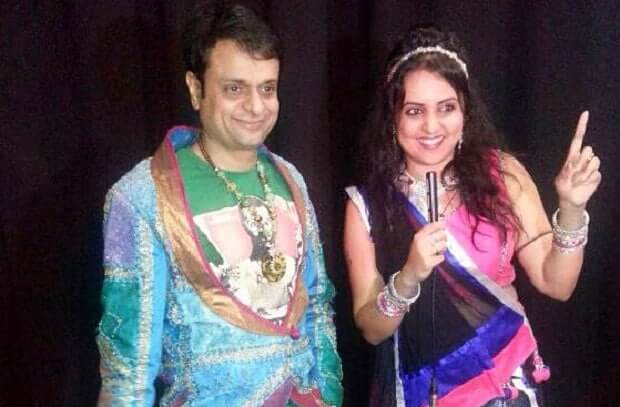
Have you ever wished to go back to your hometown for navartri? Well, for Gujaratis in Adelaide, their wishes were granted as the famous performer Devang Patel himself travelled all the way to Australia to bring us a nostalgic navaratri atmosphere and music. Many people had marked this date on their calendar, looking forward to the event as not many performers travelling to Australia make it to Adelaide, erroneously presuming that it has a tiny number of Indians. After completing his shows in Sydney and Melbourne, Patel was looking forward to performing in Adelaide saying, “Adelaide is a beautiful city with beautiful and young crowd!”
On September 28, the Dom Polski theatre began slowly filling up with people eager to enjoy an evening. I too got there on time, but there was no sing of Patel and his troupe. But gradually as families of all backgrounds started pouring in, the sight was aesthetically pleasing as everyone was beautifully dressed in traditional outfits, with big smiles on their faces. However, their excitement waned as the event began almost an hour late. Hungry attendees including children began to patronize stalls selling Indian food and were soon fuelling up for the night with chatpata snacks like pao bhaji, pakoras, samosas and biryani. No Gujarati event is complete without Gujarati beer that is thandai and masala chai, which was selling out quickly. With lots of chit-chat, yummy food and old friends catching up, it didn’t feel that long before the star of the night arrived.
Starting with the traditional aarti, Devang Patel kicked the night off with traditional navratri songs. He performed live on stage with garba songs and great music, quickly getting everyone into the navaratri mood. The dance floor quickly filled up with kids, teenagers and adults each with their own unique garba (dance) style, gracefully oscillating in circles. From sat tali (seven steps garba) to be tali (two steps garba) or just following someone else’s steps, no-one was willing to be an onlooker. An astonishing number of around 200 people filled the brightly lit hall. It was almost 10pm when Patel started to work his magic with evergreen Bollywood songs like Govinda ala re, Main tera tota tu meri maina, Mere angne mein and many more. Doing the garba on any song is something that only a true born Gujarati can do. From traditional garba, the atmosphere was changing quickly into disco garba. Forgetting the tradition, the dancing now transformed into a mix of Bollywood dance, human trains, bhangra and anything that people felt like doing! It felt as though I was in Mumbai. Yes, Devang Patel had succeeded in bringing navaratri in Mumbai, quenching the thirst of hungry Adelaideans for a disco garba night. The event would not have been possible without organizer Indian Events Adelaide, and many sponsors of the event.
Devang Patel’s professional singing career began with him using the name Mukesh, and he later became a great dandiya singer.
Every 90s child, especially if you’re Gujarati, remembers Patel’s superhit songs Patelscope and Meri marzi from the movie Gambler. His rap number Madhuri Mili Rastein Mein was a rage. A multi-talented all rounder, he can not just sing but dance, act, spoof and produce. He has also been a part of various Bollywood films like Chahat, starring Shahrukh Khan.
The evening ended on a high note with a very satisfied audience leaving tired, but happy to have experienced the traditional garba of Gujarat and the dandiya beats of Mumbai in Adelaide.

Indian links at classic car event

0
Reading Time: 3 minutes

Attending the Bay to Birdwood Classic run ended in nostalgia on viewing the Vespa and Royal Enfield, reports MITAL PAREKH
First Rolls Royce to be driven overland from England via Europe the Middle East and India to reach Australia in 1959
Boys never grow out of playing with toys. When they’re young they play with toy cars, but once they’re older, these toys only become more expensive. On September 29, men and women from all over Adelaide took part in the Bay to Birdwood Classic run, and some were just there to watch the beautiful classic cars on show. This run showcases rare, collectable and unusual vehicles from a past era which can only be seen in movies today.
Dearly loved by South Australians, the Bay to Birdwood Car run completed 33 years in 2013. The two events, The Bay to Birdwood Classic and Bay to Birdwood Run, are organised every alternative year. More than 60,000 spectators and car enthusiasts turned up to watch the classic beauties make their 70km journey at 9am from Baratt Reserve, West Beach to the National Motor Museum in Birdwood. South Australia has the nation’s highest ownership of historic vehicles, making this event the largest one of it’s kind in the world. This year entrants came from as far away as Hong Kong to participate in the event.
Among the crowd was Mr Kiran J Parekh, the only Indian participant who has been involved in the run since the past five years, the only Indian participant out of almost 1700 entrants! A long history and association with cars in his family from the days of his great-grandparents, Parekh always looks forward to this event. This year he entered with his very pristine and rare1958 Mercedes Benz 220S, which he informed me, has been through a lot of work and restoration to look it’s best for the run. Amongst his extended list of classics, former cars which he entered in past events have ranged from the 1930’s to the 1970’s such as Jaguar, MGB, Austin, Triumph, among others. His interest in classic and vintage cars has also led him to start up a specialised classic car business called Firma Trading.
On reaching the National Motor Museum, I got the opportunity to check out many historic cars and vehicles which many Indians are familiar with, once drove and have an affinity with.
Scooters hit the roads for the first time during World War II. One of them was the Vespa scooter which has been most widely used form of transport in India due to it’s tiny shape that is able to manoeuvre the populated roads of India. Almost every middle class family in India owns one of these scooters, making it a second home for Vespa. Manufactured in Italy by Piaggio, Vespa VX was recently launched in New Delhi as the most expensive scooter costing Rs.71,380 (ex-showroom).
The Royal Enfield, a legendary bike, has been known for generations to be the best. These motorcycles have been sold in India since 1949. Although made in England, the ‘Bullet’ did the perfect job for Indian police and army for patrolling purposes. In 1955, Redditch Company and Madras Motors (in India) partnered up to form ‘Enfield India’. The machine was assembled in Madras (now Chennai) under license with parts shipped from England. After being sold to India in 1957, Enfield components were manufactured in India. By 1962, the complete in-house manufacturing of the machine began and continues till today. The model ‘Bullet’ has kept up with the race, and is manufactured till date.
‘Swastika’ is the oldest known symbol that has been around for over 3000 years. This ancient symbol stands for good luck and purity for Indians. But little did we know that it was used in decoration in North America on everyday items such as linoleum, clothing and cars. The swastika was later adopted by the Nazis after their rise in the 1930s. This symbol could be seen on some of the vehicles.

Captivating colours of India

0
Reading Time: 3 minutes

A chance discovery leads to creative insights captured on canvas by a talented artist
Neha Awasthi
I was driving home one afternoon after a stint of babysitting my granddaughters. It was wet and windy, so I stopped at a cafe on King William Road, a well-known upmarket restaurant strip, for a cup of hot chocolate. As I was waiting for my liquid fix, I noticed a few paintings with Indian motifs on the wall.  My curiosity was aroused. I looked at the brief note attached to each one, which indicated that the paintings were by an Indian artist.  The waitress told me they were there for the South Australian Living Arts (SALA) festival.
September heralds the spring season and brings with it a splash of colour. But in Adelaide, August that has just rolled by has been literally the most colourful time, when visual artists of every shade displayed their wares and visitors have had a veritable feast for their eyes. The twin objectives of the month-long SALA festival are to promote and publicise local talents, and also to bring their creative works out of the galleries into the open, so the general public has easy access to appreciate and admire them.  In order to facilitate this, venues range from artists’ studios to empty warehouses, wineries, council foyers, community halls, cafes, pubs and even footpaths.
How far this festival has grown can be gauged from the fact that this year, 4917 participating artists displayed their creations in 502 exhibitions and events all over Adelaide and in country towns as well.  And it was certainly a matter of joy to see the sole Indian artist Neha Awasthi’s work adorning the walls of a popular cafe patronised by the locals of a posh suburb. It was her third SALA showing, the last being in a country winery. Even more worthy of note is Neha’s admission that she never had any formal education or training in art, either in India or Adelaide where she arrived some seven years ago. Having worked as head of marketing and advertising in a health industry organisation, she felt an innate passion for painting and took to the easel with ease. So is there any artistic gene in her family? “My father used to paint landscapes, but that was before I was born. He hasn’t touched a brush for over 25 years,” says Neha. But after he saw Neha painting during his recent visit, his artistic adrenalin has started flowing and he has resumed his creative craft. Neha’s father is also self-taught, like his daughter.
When I asked the owner of cafe Colin Co on the cobbled road in Hyde Park how he came to display Neha’s paintings, he said his cafe regularly displayed works from various artists to provide an ambient setting.  He requests a list of art students of some merit from the University of SA and at other times, artists approach him. With good wall space and regular flow of attendees, this small but cosy cafe became a perfect  fit..
Rating her exhibition ‘Colours of India’ as one of the best, Adelaide’s metropolitan daily’s chief arts writer wrote “… it mixes folk art with modern approaches. It is a serene journey through intricate, conceptual works that are rich with culture and colour”. Neha’s four acrylic on canvas items included ‘Bindi’, using gold, red and black colours prominent in Bengal;  ‘Asha’, reminiscing her mother’s blue sari; ‘Chidiya’, recalling her childhood dreams of green birds; and  ‘Anala’, in bright colours depicting burning desires of the spiritual self.
In October, Neha will visit New Delhi to do a residency course at a local art foundation to receive formal training in folk art that is dear to her.  In the meantime, a State government grant for wooden block painting on linoleum will vie for her attention with her nine-month old son.

Soul of Seoul

0
Reading Time: 5 minutes

China, South Korea, Japan, HK 1007
As is customary in South Korea, I deposited my shoes at the restaurant’s entrance, showed my sign of ‘Naneun chaesikjuuijaimnida’ or ‘vegetarian’ in Korean, and was ushered away from the raw beef piled high on tables ready to be stir fried, into a small room with sliding wooden doors. I settled onto pillows on the floor around a low table that was soon covered with small plates. There was soft tofu, glass noodles mixed with sesame oil, barley rice, sweet potato soup, kimchi and a large pot of green tea. Kimchi is a traditional dish made of cabbage, cucumber and radish that is popular throughout Korea for its delicious flavour and health benefits. The portions were replenished and enjoyed.
Hastily rebuilt after the Korean War, Seoul is a city of districts and neighbourhoods that house over 10 million people. The city is shedding its utilitarian image, and now has the potential to become one of Asia’s most glittering metropolises. A city of contrasts of old and new, the city centre is well planned, spotless and spiffed up with numerous recent examples of striking sleek contemporary architecture, including the City Hall with a cresting wave facade of dark glass. With attention given to public amenities, parklands have been created such as the Cheonggyecheon or ‘stream’, with office workers taking a stroll during their lunch break. And there are many vibrant neighbourhoods showcasing a booming art scene, the number of art galleries with quirky art on display is impressive, there are fashionable stores and a thriving youth culture.
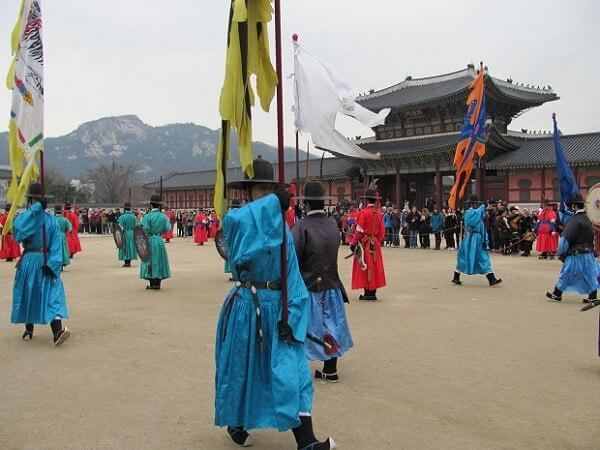
After arriving at the port city of Incheon, I travelled to the city centre, heading for one of many grand palaces dating back to Seoul’s feudal past. The city centre is bounded by five grand palaces that date back to the Joseon dynasty which ruled Korea from 1392-1910, founded by King Taejo. Gyeongbokgung Palace built in 1395, was the main royal palace for 500 years. Reconstructed in 1872 at enormous cost, it almost bankrupted the government of the time. Monumental halls and private quarters of the royal family are splendid, but the Changing of the Guards ceremony is spectacular.  Within the grounds, the National Folk Museum of Korea showcases examples of Korean life. Nearby is Cheongwadae known as the ‘Blue House’, home to the Korean President, and so called because of its blue roof tiles. Changdeokgung Palace nearby was built in 1405 with the last royal family member living here until her death in 1989.
At Namdaemun market, with over 10,000 shops selling clothing, textiles, household utensils and food radiating out along alleyways from the centre, not getting lost was a challenge. I left clutching an assortment of souvenirs. The largest market in Korea, it was established in 1414 near large city gates built of stone. Somehow you get by with barely anyone understanding English, but with a willingness to communicate. Signs around the market read ‘Good for browing’ (sic) and ‘Everything under the sun’.
My favourite place was the utterly charming Insa-dong, a street with a multitude of small quirky boutiques, cafés, art galleries showcasing contemporary art and photography, traditional teahouses and restaurants. Street vendors were selling dragon’s beard, fine strands of honey, pine nuts, chestnuts, peanuts and cornstarch. There were also some quirky museums including one dedicated to handbags, another to jewellery and one intriguingly, to chicken art. There were underground shopping malls and business precincts, with Samsung dominating. And many hairdressers and salons for manicured coloured nails.
For those who equate Seoul with a sprawling metropolis of skyscrapers and malls, the intimate scale of Samcheong-dong is a pleasant surprise. Much of this neighbourhood is a hilltop maze of hanoks or small traditional timber courtyard houses, some now operating as galleries, cafés and bars. 
As I travelled back to the port, the bus passed row upon row of identical rectangular high-rise apartment blocks devoid of any character. The economic revolution that has turned South Korea into the 11th largest economy in the world, also replaced many of the traditional hanoks that were once commonplace.
I next travelled to South Korea’s second largest city and the 5th largest container port in the world, Busan. Here, the lively Jagalchi Fish Market that began as a collection of fishing villages, has no nonsense women selling the freshest of fish. Views from Yongkusan Park of the city skyline were spectacular, though the highlight was Beomeosa Temple dating from AD678, set against a mountain setting requiring a steep uphill hike. Mountains cover 70% of the landmass, making Korea one of the most mountainous regions in the world. South Korea may be among the most wired and densely populated countries in the world, but its first religion many centuries ago before the arrival of Christianity and Buddhism, was based on the worship of mountain spirits. Here amongst temple buildings wedged into the rocky terrain, I was treated to expansive views of the surrounding forest of maple and birch, towards the sea beyond. A young monk in grey robes beat a drum larger than he was, the deep sound echoing far beyond. I ascended to a hall filled with golden statues of Buddha, and met a college student who was staying at the temple overnight to learn more about Korean culture.
On my return home, as I was having my hair cut at the Bondi Junction salon managed by Soon from Seoul, I mentioned my visit. She slowed down the snips of her scissors that always performs at top speed and paused. “But did you try kimchi?” she asked.
 
Travel notebook
Getting there
Asiana Airlines has direct flights from Australia, with several Asian airlines including Air Asia, Cathay and JAL having one stop en route.
Getting around
Extremely tourist friendly, the subway system is colour coded, efficient, inexpensive and easy to navigate. Hop on hop off tourist shuttle buses go to places of interest. Busan is just over 2 hours from Seoul by fast train.
Where to stay
The 185-room Park Hyatt Seoul T: 82-2-2016-1234 W: seoul.park.hyatt.com occupies a glass and steel building in the central Gangnam district. For a luxury stay in a traditional house, the Rakkojae Traditional Korean House (Hanok) is recommended W: www.rkj.co.kr  In Busan, Haeundae Grand Hotel, Haeundae Beach is 5 star www.haeundaegrandhotel.com, while Apple Guest House is a good budget choice. W: www.appleguest.com. There are also many affordable traditional guest houses, youth hostels, home stays and temple stays. For a comprehensive listing go to www.visitkorea.or.kr
Must tries
Kimchi is a traditional fermented side dish made of cabbage and vegetables, thought to have curative health properties.
Further information
Korea Tourism Organization, Level 18, Australia Square Building, 264 George Street, Sydney Ph: 02-9252-4147 Website: www.visitkorea.or.kr has maps, brochures and helpful staff. There are many Tourist Information Centres in Seoul and Busan with roving staff providing assistance in English at tourist venues. Walking tours are provided by volunteers. A 24/7 phone interpreting service operates and information can be downloaded onto your i-phone. Currency is the Won, with 1AUD = approx 1,000 Won.

Testing the tutors

0
Reading Time: 4 minutes

Accreditation for tutors in Australia will ensure better standards of educational accountability
 Perfect Grade and Sticker on Homework
One of the most common inquiries to the Australian Tutoring Association (ATA) is what the requirements are for becoming a tutor. It is heartening that many prospective tutors are keen to know what, if any, standards apply in regards to entry into the industry.
The nature of tutoring is such that it straddles two seemingly opposing areas of human endeavour. On the one hand, it is commercial in nature, and therefore commercial rules apply. In the alternative, tutoring is about education and educational accountability. These two; the commercial and the educational, overlap in tutoring in a way that causes a unique set of issues. Consider the issue of plagiarism, for example.
Plagiarism, in an educational sense, is defined as the passing off of another’s work as one’s own, without authorisation to do so. The educational definition focuses on the nature of the creator of the work and their relationship to that intellectual property. It seeks to ensure that the owner is rewarded for their endeavours, and that personal effort is valued. A commercial view of plagiarism, as it relates to tutoring, would look at the nature of dependency. If a tutor does the work of a student, the student becomes more dependent. In this context, plagiarism generates income and entrenches weakness in the student. The tutor is the ‘paid help’ actually weakening, rather than strengthening the recipient. Therefore, if the issue of dependence was included in the definition of plagiarism, any problem arising from how commerce affects tutoring could be addressed effectively.
In this example, it can be seen that tutoring creates a particular set of dynamics that present problems for commercial regulators and also educational administrators. However, experience around the world has shown that regulating the private tutoring market can be fraught with difficulties. For example, an outright ban on private tutoring in Egypt failed when the black market for private tutors flourished. Similarly, a proposed ban by the Turkish government has been modified in the light of huge opposition from families and educational advocates.
How then can the growing domestic and global market for private tutoring be best managed? The current arrangement in Australia is a model of self-regulation. Self-regulation requires an industry to demonstrate maturity in that the industry itself is prepared to benchmark best practise and to hold practitioners accountable to such standards.
 
There are five important features of successful self-regulation

  • The presence of a peak representative body
  • The creation of a code of ethics or code of conduct by the peak body and applicable to the membership particularly and the industry more broadly. The code should also have a regime for sanctions or penalties than can be imposed on providers who breach it
  • The creation of a vehicle for the settlement of disputes arising between practitioners and clients and practitioners themselves
  • A form of accreditation that acts as an entry mechanism and a means by which standards can be set and improved over time
  • Recognition by government of the peak body and its standards

To date, the missing piece in Australia, and one which is essential for responsible self-regulation, is that of a viable and rigorous accreditation for tutors. How embarrassing when prospective tutors are told that, “at present in Australia there is no entry criteria other than an operator abide by the relevant commercial and child protection laws”.
Self-regulation demands that each of the five features be present. In Australia four are met, but accreditation is not. So it is time to test the tutors. Disclosure is an essential element of the test. That is, a tutor should be honest and upfront about the exact and specific nature of their skills, experience and qualifications. The term qualified tutor is meaningless without such a disclosure requirement.
It is time for Australian tutors to embrace an industry-based accreditation. Globally, only two nations have a form of accreditation for tutors: the USA and Germany. The model in the USA is cumbersome and at present a very small proportion of tutors (estimated at less than 0.5%), have become accredited. In Germany the model is based on ISO9000 and is so rigorous and expensive that it has not been embraced by the industry. Only 30 businesses out of 4,000 comply (or 0.75%).
The characteristics of relevant accreditation for Australian tutors should be that content and skills reflect local experience and match the aspirations of a best practice code. Included in such an accreditation should be compulsory national police background checks. This would overcome the present ad hoc situation of a lack of uniform national laws in regards to child protection.
With regards to knowledge, skills and abilities, teachers who tutor should be recognised for their prior knowledge and experience.
Finally, an accreditation should have both core and optional units to ensure minimum levels of qualification, as well as a capacity to specialise. Such a model allows for continuing professional development (CPD).
Tutors need to be put to the test and national standards raised. In this way, children and their families are better respected, and outcomes for tutoring are raised. The industry needs to demonstrate this responsibility and maturity.

Maggie noodles to MasterChef

0
Reading Time: 6 minutes

Rishi Desai aims to morph Indian cooking in Australia from ‘curry in a bowl’ to an esoteric culinary experience with just a dash of Heston, writes DEEKSHA CHOPRA
 MC5 Rishi Desai_1
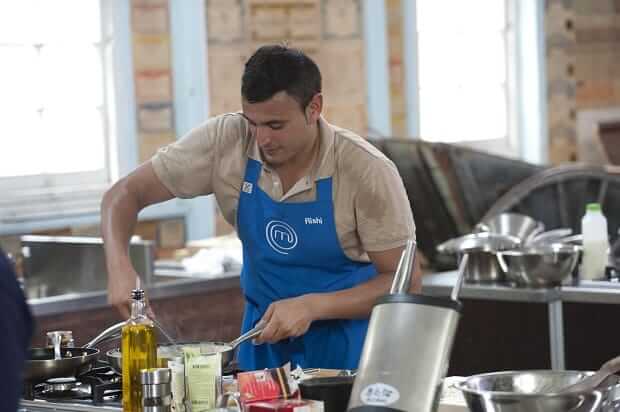
It was a heart-wrenching moment for his family and fans to watch Canberra’s favourite contestant Hrishikesh Desai, aka Rishi, come so close to making it to the grand finale of MasterChef Australia 2013. However, one fatal mistake in the elimination challenge sadly sent him home. But for this 35-year-old, who cooks from the heart, it’s not all about winning. Rishi has a bigger plan in mind. He wants to take Indian cooking to a whole new level in Australia. And he is grateful to MasterChef for giving him a platform to showcase his talent and bring him step closer to achieving his dream of opening a modern Indian restaurant someday.
“Everyone takes part in MasterChef to win, but what people need to realise is the enormous learning experience that is gained through the show,” said Rishi, speaking to Indian Link. “Every opportunity one gets to learn should be grabbed, and these skills will never go to waste. The show has improved my understanding about food at least tenfold and has given me the skills to work towards my dream”.
Rishi was always focused and on the right track from his first team challenge on the show. He surprised everyone by his accuracy and speed in the kitchen. People’s expectations started to rise with every perfect dish he presented, and unlike his fellow contestants, he never lost his composure at the MasterChef headquarters.
“I am the kind of person who thrives under pressure,” said Desai. “In a high pressure situation, the worst thing to do is to lose your composure. It is better to step back for a few minutes, assess the situation and come up with a solution, rather than panic, lose 30 minutes of valuable time and have no solution at hand. It is common-sense for me, and this is what kept me focused. What kept me going was my end goal, which is to have my own restaurant”.
Known for his precision and nicknamed the ‘machine’ by his fellow contestants, Rishi received a lot of praise from the judges as well. After clearing eleven eliminations, it was difficult to walk away from the show on his last day. Recalling where things went wrong on the day, he said, “I was disappointed in myself for not making it to the finals. I knew I could have done better than I did that fateful day. On the day of my elimination I had 30 minutes to cook the mussels dish. So I had a process and a checklist in my mind… this is what happens when you work as a machine and not as a human,” he said with a chuckle. “As I did not have a lot of time, I made a list of things I needed to get done – one, cook mussels; two, make sauce; and three, make flat bread. In my mind I ran this program and executed it with fantastic accuracy, except my order of steps was wrong. So I cooked the mussels first which ended up overcooking by the end of 30 minutes,” lamented Rishi.
One of the most cherished moments for this talented chef on the show was the opportunity to cook with his role model and someone from whom he draws his food inspiration. “My most memorable moment was working with my food hero, Heston Blumenthal,” he said. “I cooked in the kitchen with him for four days and was privileged to cook the Heston trifle and Heston’s edible garden. The immunity pin challenge cook off against Heston where I wanted to reproduce something that I had learned watching him, was hard to replicate. Unfortunately the ‘Snow Man’ did not work out,” said Desai.
Another challenge very close to his heart was the ‘Dreams’ week. “We had to cook for our families and in the elimination, we had to cook something that we would serve in our restaurant,” he said. “The challenge gave a boost to my ability to cook modern Indian food. My favourite masterclass was in Perth, with the backdrop of the Indian Ocean and I made impersonations of Gary, Matt and George,” he chuckled.
Experimenting with different cuisines is something Rishi loves to do in his spare time at home. Cooking is therapeutic to him. “I love to cook different cuisines at home,” he said. “We love to try Chinese, South East Asian, Indian, Italian, Mexican and North African flavours. I specially love Chinese food in general, but Sichuan province food is my favourite”.
Rishi also thoroughly relishes his traditional Kolhapuri food. His favourite place to eat in India goes back to his roots. “I always would go back to a sugarcane farm and have traditional Kolhapuri food of bhakri, mutton sukka, tambda rassa, pandhra rassa, and for dessert, hot fresh jaggery and bhakri. There is nothing like it in the world,” he said with relish. Rishi stays well connected to his family back home, visiting every couple of years.
Rishi was born and bred in the city of Kolhapur in India. He completed a Bachelor’s degree in engineering from Pune, and Masters at Rochester Institute of Technology, USA. He migrated to Australia in 2008, to work as a patents examiner at Intellectual Property (IP) Australia (Australian Patent Office) and is now assistant director of an examination division.
Rishi’s passion for cooking started quite young. “As far as I remember and relying on my mum’s accounts, I have always spent a lot of time in the kitchen. The first thing I ever cooked was 2 minute Maggie noodles when I was five, and since then I have never looked back. When I am in the kitchen I am at peace,” said Rishi.
He has always had a strong influence of women in his life especially after losing his father at just 15. His mother raised him and inspired him to cook. “The inspiration and knowledge of food came from my mother. She is a great cook who produces some amazing Indian foods, sometimes with rather unassuming and humble ingredients,” he stated.
Rishi’s wife Mitra and son Sharang are probably his biggest fans, who have been the driving force behind him throughout his MasterChef journey.
“My wife of 13 years is my best critic and she says if she hadn’t let me take charge of the kitchen at home, I would not have ended up on MasterChef. Jokes apart, without my family’s support, I would not have made it this far,” he said.
A doting father, it was tough on Rishi to be away from his six and half year old son while shooting for MasterChef. “It was extremely difficult staying away from my family for the five months. I could speak to them on and off, but my son missed me a lot and I missed five months of his childhood. After I got back home, my mother and sisters had arrived from India to greet me, as well as friends came home to celebrate my success. So it was the best homecoming for me,” said Rishi.
However, Rishi strongly feels Indian food has a lot more to offer than it currently does in Australia, and needs to break the stereotypical image of curry in a bowl. His aim is to showcase modern Indian cooking in a new avatar and create illusion with his food just like Heston, but with an Indian twist.
“As far as I am concerned Indian food needs to move on from curry in a bowl to something contemporary. Our food has tremendous potential in terms of modernising. I live by Heston’s philosophy: food should be consumed using all of your senses and not just taste. For example, I want to present a dish which tastes exactly like palak paneer but looks completely different,” explained Rishi.
There is good news for his fans as well, who can keep an eye out for his cookbook and pop-up restaurant in the near future. “I plan to write a cookbook on modern Indian food and eventually open a restaurant; but before that I want to test the waters first. I am working towards opening a pop-up restaurant in Canberra and will see how things go,” he revealed.
Rishi is a complete family man with a witty sense of humour.  Despite all the fame and recognition from Masterchef and thousands of fans on social media since the show, he remains very humble and grounded. “Well, I wouldn’t say life has changed, but I am certainly a changed person after the show. It’s made me realise how important my family is to me and I could not have done this without them. It has also given me wonderful friends along the way, for which I am grateful. Finally, I do like when people recognise me on the streets and stop to ask me about my experience on the show. It’s fun!” he said.

Swami Vivekananda’s message resonates again!

0
Reading Time: 4 minutes

The life and experiences of this renowned personality come alive in a  perfectly performed play. By UTTAM MUKHERJEE and JYOTI SHANKAR
oneness pic 4
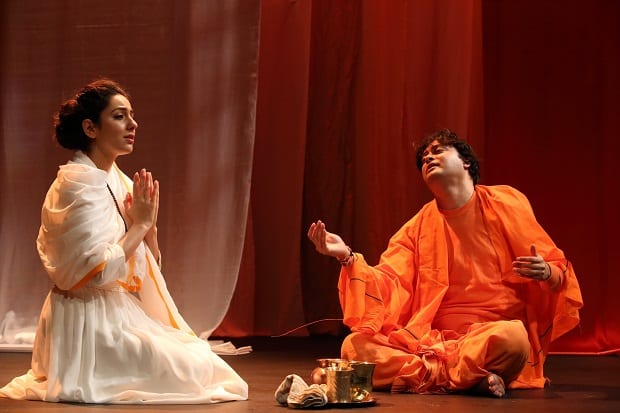
“Sisters and brothers of America…” A crowd of 7,000 odd greeted these opening lines by Swami Vivekananda with a standing ovation at the Art Institute of Chicago on September 11, 1893; and so did a crowd on September 17, 2013 at the Sydney Opera House. The first venue was the occasion for the World Parliament of Religion held in Chicago; the second was the play, Oneness – Voice Without Form staged at the Playhouse Auditorium at the Sydney Opera House in celebration of the 150th birth anniversary of Swami Vivekananda.
The play was part of a wider celebration sponsored by the Sarada Vedanta Society of Sydney. Adjectives fail to describe the Swami completely, and it is hard for a commoner to fathom his awe-inspiring life experiences. So it was a mammoth task for the creators of Oneness to do justice to the influential teachings and eventful life of Swami Vivekananda. But they succeeded!
The idea for the play germinated in 2011 when Madhuparna Sen made a solemn promise to devote herself to the staging of a play on Swami Vivekananda on a grand scale. Considering the play was staged at the Sydney Opera House, it could not have been grander. From the days of its initial conception, Swami Atmeshananda and Pravrajika Gayatriprana of the Sydney Vedanta Centre provided major support and guidance to the project.
As the crowd poured into the auditorium, the actors sat around an almost statue-like meditative Swami Vivekananda, chanting hymns. The lighting, neither bright nor dull, truly set the ambience for the spectacle that was to follow. The story was played out chronologically starting with a young restless Naren (Bali Padda) in search of God and Truth, followed by the wiser Swami Vivekananda (Saheb Chatterjee).
The play captured the essence of Swamiji’s character and highlighted some of the well-known key experiences and events in his life. Anecdotes of Naren’s early days were narrated in different scenes by an understanding and loving mother (Suparna Mallick) and an anxious father (Carlos Sivalingam). The major influence in Swamiji’s life was undoubtedly Shri Ramakrishna Paramahamsa (Robert Rhode). This profound influence was life-changing for Swami Vivekananda, who in turn touched many lives.
One such life was of Margaret E Noble aka Sister Nivedita (Dana Dajani), who came to Kolkata from London to set up a school for girls.
It was as if the lead actor, Calcutta-based Saheb Chatterjee, was born to play Swami Vivekananda. He personified the humility, mysticism and sheer goodness of Swamiji with his outstanding and effortless performance. All the other actors performed well and it would be hard to pick one without mentioning the other. Twelve actors were selected from over 200 who auditioned for the roles, and came from different cultures. Dana Dajani is a Palestinian actor based in Dubai, Bali and Suparna are Indian Australians based in Sydney, Robert has a South African background, and Carlos is Sri Lankan. Isaro Kayitesi, on the other hand, who plays Maa Sharada is of Rwandan-Anglo-Australian descent. “‘We all are one’ is the basic premise of the play, and this is visually represented for the audience as well, with the diverse cast,” Maa says.
Many of the actors had never heard of Swami Vivekananda before, but were attracted to the powerful story and the opportunity to be part of a professional production that was to be staged at the iconic Opera House.
An interesting piece of casting was Tade Adepoyibias as Maa Kaali, as she is of Nigerian descent. John Gomez Goodway, of Filipino Australian background played the Swami’s earliest disciple Sadananda, and said he felt uplifted and empowered to work in a play about Swami Vivekananda who had such a life-force to him.
Julia Kennedy-Scott, playing Kate Sanborn, who takes the Swami under her wing, helping him to get to the Parliament of Religions in Chicago, says that his message was not about converting people but uniting them, a message so timely in today’s world.
Bali, a Sydney-based actor, worked in London for many years, as the opportunities for non-Anglo Saxon actors here was limited. This has been slowly changing and he said he was delighted to be part of this production which has a diverse cast, something rarely seen in Australian theatre. And the synergy between all was a strong point of this play.
Music and movement brought a different flavour to this well-known story. The creativity of the crew behind the scenes was equally brilliant. The use of space and lights on the stage was imaginative and effective. The original music was composed and played live by Kim Cunio and Heather Lee. Design and co-direction was by recent NIDA graduates, Tobhiyah Feller and Felicity Nicol, and the movement consultant was Adelina Larsson. The writer was Alex Broun, who has extensive experience working with some of India’s top theatre artists while establishing Short + Sweet Theatre Festivals in Delhi, Bangalore, Chennai and Mumbai. The play was jointly directed by Felicity Nicol and Alex Broun.
The theatre was almost packed to capacity. Although the crowd was from various nationalities, they appreciated the performance wholeheartedly. A moment of pure joy for many in the performance was when Saheb Chatterjee brilliantly sang a popular Bengali devotional song, Shyama ma ki amar kalo (Is Kali, my mother, really black?). His mellifluous voice reverberated in the auditorium and for a moment it was as if Swami Vivekananda had returned again after a hundred and fifty years.

Good food spreads across Oz

0
Reading Time: 12 minutes

LENA PEACOCK and SHERYL DIXIT get ready to plate up, because it’s that time of the year again: Good Food Month

 
 COVER_OCT(1)_13
It’s October, which means it’s time to get ready for The Sydney Morning Herald Good Food Month presented by Citi, as it overtakes dining tables across Sydney, regional NSW, Canberra and Brisbane. Oh, and for the first time, there’s going to be a little sister food festival too, The Age Good Food Month, which will be held in Melbourne and regional Victoria in November.
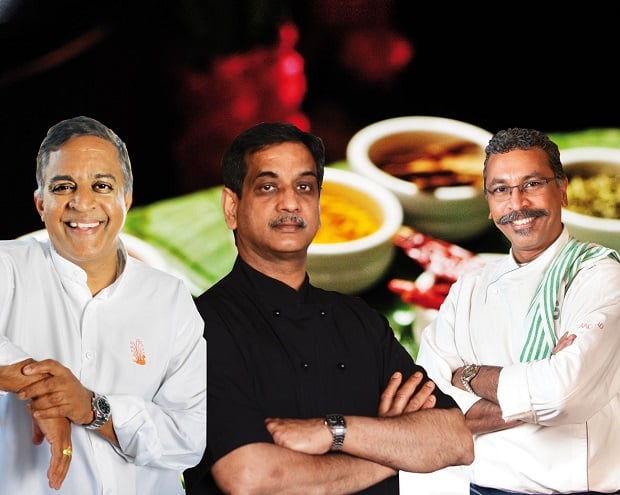
Indian Link chatted with Festival Director Joanna Savill, as well as some of the chefs involved with the Sydney festival, including Ajay Mathur, Ajoy Joshi, Kumar Mahadevan and Nasir Siddiqui.
“It’s a celebration of great food and restaurants,” Joanna Savill told Indian Link. “And is Australia’s largest food Festival”.
Stomachs across Australia will tremble with delight at the line-up of events which range from Pop-Ups and parties, night noodle markets, Let’s Do Lunch, Hats Off Dinners, Taste Food Tours progressive dinner for Parramasala and World Dinners.
“Kumar Mahedevan is a fantastic chef and the events he is doing are a reflection of his great creativity and also his flair as a restaurateur,” says Savill. “His book, released this year with his wife Suba as co-author is also wonderful, and is a reflection of the strong family bonds behind Kumar’s two restaurants, named after his sons Abhi and Aki”.
Savill also describes Ajoy Joshi as “another longtime Sydney star. His contribution to the Sydney dining has been enormous. He was one of the first to really show us the breadth and depth of Indian regional cuisine at a fine dining level. He has also been a long-term participant in Good Food Month, initially doing cooking classes with his son, other children and their families. And this year, a Diwali and Dussehra celebration, which will be a real treat, I’m sure,” she adds.
On another note, Savill says the festival is “thrilled to see the Spice Queen Christine Manfield doing a glorious one-off lunch at Cafe Sydney”.
“All in all, there’s a great masala happening across October!” says Savill.
 
Delicious delicacies at debut
Ajay Mathur is pretty ecstatic to be involved in such a quintessential event in Sydney’s hospitality scene. It’s even more exciting because this is the first time Ajay will participate in the Good Food Month festival. “The festival is a fantastic event which is an amalgamation of a variety of cuisines and restaurants coming together to celebrate a passion for food,” says Ajay enthusiastically.
“We were very eager to take part in this event and showcase our talent to the passionate foodies out there! We anticipate that our new, and existing customers will love our food and the experience that we have to offer. We look forward to being involved again in upcoming years too,” he adds.
So what specialities does Ajay have in mind for patrons of good cuisine? Based on our cultural heritage, and inspired by the name of our restaurant, we are planning a Rajasthani night at Bijolias,” he says. “The princely state of India boasts exotic flavours and spices, which we hope to represent in our food on the night. When in Rajasthan it is a must to savour the food, and what we serve here will pamper your tastebuds,” promises Ajay.
Bijolias is located in Seaforth, NSW and has been operating for 9 years. Ajay has 25 years of experience in the industry, having graduated with a degree in Hotel Management in India. He started his professional career managing kitchens in 5-star hotels in both India and Australia.
“I accumulated a wealth of knowledge across various cuisines and have gathered a breadth of experience over the years,” says Ajay. “The culmination of this experience inspired me to open up my own restaurant, one which followed the meticulous training which I learned in my earlier years, yet celebrated my own history and Indian background,” he explains.
Ajay admits that he has a different outlook when cooking Indian food in Australia. “We have incorporated the healthy, low calorie, Australian way of life into our cooking by making leaner meals with reduced fat quantities,” he says. “Modern Indian Australian cooking is a lighter, healthier version of the traditional way of cooking Indian food. There is an emphasis on minimising the calorie content, yet we have incorporated modern Australian cuisine through our sophisticated presentation style of innovative dishes”.
However, it is helpful that there is such a wealth of fresh produce available here, that enhances the culinary experience.  “Australia’s fresh local produce, and premium quality meat and seafood has allowed us to create more flavoursome dishes,” he says. “We use a number of fresh ingredients, such as blueberries, mung bean sprouts, snow pea sprouts, mesculan lettuce, fresh mangoes, raw papaya, beetroot, lime leaf, dill and chives. These ingredients would not generally be used in Indian cooking in India, yet we try and capitalise upon the abundance of wonderful produce available to us,” states Ajay.
There is one signature dish for which Ajay is renowned.
Barramundi Tawa Kebab is our signature dish. This is a combination of local seafood with traditional spices, ingredients and flavours, which summarises the innovation Bijolias strives to achieve,” reveals Ajay who is rather coy about sharing the recipe. Instead, Ajay invites readers to come and experience a night at Bijolias. “Our wide variety of Indian flavours fused with a modern twist along with our monthly specials offer an unusual gourmet journey to please the palates of a wide range of diners,” he claims. “Bijolias offers sophisticated Indian cuisine, out of the ordinary and sensationally modern, but the tools of the trade are age old in concept, it’s the style, ingredients, flavouring and delivery that sets it apart from any other,” he adds in conclusion.
Expect more than a ‘curry’
For chef Ajoy Joshi, the Good Food Month festival is yet another opportunity to showcase his considerable culinary expertise. Having been an active participant in the festival since 2001/2002, Ajoy has presented various themes and cuisines from India through the years, including Indian cooking classes and cooking with kids, among others. For this year’s festival, Ajoy intends to present four different types of distinct cuisine from India, from the metros of Hyderabad, Mumbai, Delhi and Chennai from the kitchens of Nilgiri’s, his restaurant in St Leonards.
“Each of these cities has a special style of cuisine and numerous dishes that are unique to it,” explains Ajoy. “Over four weekends during the festival, Nilgiri’s will present a dining experience from each of these cities, bringing out the flavours of their cuisine that has existed and been enhanced since centuries”.
Epicures will enjoy the best of Hyderabad through the Charminar Bazaar, which will present delicacies like the indomitable biryani, as well as local dishes like Pathar ka ghosht, nehari (slow cooked lamb) and bakarkhani (royal bread). The Bandra Festival that is dear to all Mumbaiites will have the inevitable Chowpatty chaat, Kolhapuri mutton and Kolivada fish. Purani Delhi will offer the best in kebabs and parathas; and Pondi Bazaar will present a selection of seafood dishes true to the region, as well as the Kanjeevaram idli.
“We have a balanced selection of vegetarian and non-vegetarian dishes, and our signature dosa for which we are renowned, will feature throughout the festival,” says Ajoy. To ensure a fitting conclusion to the dining experience, a selection of Indian sweets from each region will be on offer.
Nilgiri’s will certainly be on the route of gourmands looking for an exciting array of Indian cuisine. But then, the restaurant has been operating since 1997, and is extremely popular with a regular and loyal clientele comprising of local Australians, as well as those of Indian origin, among others.
“When I started out in the food industry in Australia, Indian food wasn’t even considered as a cuisine,” says Ajoy. “A ‘curry’ was what constituted Indian food”. My aim was to demystify the cuisine and to take it beyond this concept. I am happy to say that at Nilgiri’s we have succeeded in doing just that. My patrons now know that Indian cuisine is varied, comes from different regions and that each dish is prepared using specific ingredients that are put together for a reason,” he adds.
“In my cooking classes, I emphasise the use of certain spices such as the use of haldi (turmeric) or green chillies, to educated attendees on the reason why these spices are used in certain dishes. There is a reason behind the combination of spices that gives food from different regions in India their distinct flavour. Indian cooking has been evolving since 4,000 years, and it will keep evolving,” states Ajoy.
He is delighted that the perception of Indian cuisine has changed dramatically now, and that epicures of fine dining even recommend certain wines that compliment different Indian dishes, a situation that didn’t exist a few years ago. “I try and stay true to the original recipes,” says Ajoy. “While some Australians prefer less spicy options of dishes until they get used to the spice, the essence of each recipe remains unchanged. That’s what makes Nilgiri’s so attractive to people seeking authentic Indian cuisine,” he adds.
For Ajoy, introducing patrons to the various regional cuisines of India is also a challenge, but an interesting and rewarding one. “It is important for people to know that different regions enjoy diverse dishes, and I try and make them aware of this through themed cuisine each month. In November, we aim to present Kashmini cuisine, with a combination of the best of Hindu and Muslim dishes,” he says.
Years of experience working in the hospitality industry as a chef in renowned hotels, as well as owning restaurants individually, or in partnership in India and Australia, have put an edge of finesse to Ajoy’s cuisine. That he is passionate about his restaurant and its offerings is obvious, and the testimony to this exists in the success of Nilgiri’s. Ajoy is certain to enjoy wide patronage during the Good Food Month festival, and it is hoped that his array of regional cuisine on offer, apart from enhancing the tastebuds of his patrons, also entices them into experiencing the various regional dishes and flavours that make India a conglomeration of fascinating cuisines.
To share the Good Food Month culinary experience at home, try one of Ajoy’s signature dishes.
 
Dum ka Murg
1kg whole chicken, skinned and cut on the bone into small pieces
1½ tbsp salt
2 cups sliced onions
½ cup vegetable oil
1 tbsp garlic paste
1 tbsp ginger
1½ tbsp green chilli paste
1 tbsp ground sesame seeds (tahini)
1½tbsp ground cashews
1tsp turmeric
2 tbsp poultry garam masala
2½ cups full-fat yoghurt
1 tbsp lemon juice
½ cup chopped mint
 
In a mixing bowl, add 1 teaspoon of the salt to onions and mix. Heat oil in shallow frying pan. Add onions to caramelise and set aside.
 
For the marinade:
In a clean mixing bowl, add garlic, ginger and green chilli pastes. Then add, one at a time, sesame seeds, cashews, turmeric, garam masala, remaining salt and yoghurt. Fold together. Add the chicken to the marinade and rub marinade onto the meat. Set aside for about 15 mins. Place marinated chicken in a large saucepan, making sure that the meat only takes up one-third of the saucepan space (this allows the steam in the rest of the pan to cook the chicken).
Place frying pan on medium heat. Let pan heat, then place the saucepan with the chicken into frying pan. Cover saucepan with a heatproof mixing bowl.
Reduce heat and add half a ladle of water to mixing bowl. Cook chicken until all the water in bowl has evaporated (about 50 mins to just over 1 hour).
Remove lid and sprinkle with lemon and mint. Serve with a bread of your choice.
 
 
Authenticity is key
Chef Kumar Mahadevan’s theme for the Good Food Month festival is ‘Let’s do Lunches’. But it’s not just ordinary lunches that this talented chef, a veteran in the business, intends to prepar for patrons of his two renowned restaurants, Aki’s and Abhi’s.
Kumar will create a feast of Italian food, featuring cuisine from the Campania region in south Italy for patrons, a move away from the traditional Indian cuisine that is the hallmark of his award-winning restaurants.
To celebrate the 10th anniversary of Aki’s restaurant in Woolloomooloo in the same month, he will present a degustation menu.
Aki’s was awarded a Chef’s Hat in The Sydney Morning Herald Good Food Guide in 2011 and 2012. “My cuisine is authentic and traditional, it’s the real thing,” says Kumar emphatically. “I don’t create local versions, what you get is actual Indian food the way it is prepared back home. This is the testament of my culinary expertise, I never compromise on the taste and authenticity of the menu. So if you order sambar, you will get exactly the same dish that is prepared in, say, Chennai,” he adds.
This, says Kumar, is the main reason why both his restaurants are popular among Indians and non-Indians alike, and have been so since the past 25 years, with the advent of Abhi’s in North Strathfield.
Kumar is no stranger to the Australian cooking scene, having appeared on cooking show Masterchef, and having more recently published his first cookbook titled From India: food, family and tradition.
Kumar began his tryst with Indian cuisine from an early age, learning family recipes passed down from generation to generation in his mother’s kitchen as a child. He instinctively veered towards culinary education, studying and then honing his natural skills through experience at the Taj Intercontinental Hotel in Mumbai. He moved to Australia in 1985 to work, and was soon heading up the kitchen at the highly regarded Mayur restaurant, where he cooked for the likes of Prince Phillip and Mick Jagger.
Kumar has taken his natural flair for the combination of flavours and fresh aromatic spices to create signature dishes for which he is now renowned. He delights in creating dishes that combine the best of local seafood and fresh produce, rich with the flavours of his native Southern India, a contemporary approach to a traditional cuisine that has won him praise and respect. Kumar makes regular visits to continue his education on both the historic and contemporary aspects of Indian food.
Kumar is particularly proud of his recently released cookbook, From India: food, family and tradition. The book presents traditional and modern recipes alongside their personal story of arranged marriage, international adventures and their ultimate move to Australia. Recipes are arranged according to their taste, ‘sour’, ‘sweet’, ‘salt’, ‘bitter’ and ‘spice’, perhaps emphasising the Vedic concept of six tastes.
Among the many signature dishes that are presented from Kumar’s kitchen, the most special ones are Patrani machhi, which consists of an exquisite fillet of wild barramundi wrapped in banana leaves and steamed with fresh mint, coriander, ginger and lime; Palak patta chaat; Double ka meetha, a sweet dish; and Railway Goat Curry, which the chef shares here.
 
Railway goat curry
100mls sunflower oil
Whole garam masala
3 bay leaves
1 inch cinnamon stick
6 pods green cardamom
9 cloves
1tsp mace threads or powder
2 Spanish onions
11/2 tbsp ginger paste
½ tbsp garlic paste
3 tomatoes
½ tsp turmeric
1 tsp chilli powder
1 tbsp coriander powder
11/2 kg goat meat with bone
5 sprigs fresh coriander leaves
 
Heat the oil in a casserole dish over low to medium heat and add the whole garam masala, except the mace. The mace will be added right at the end. Once the whole garam masala has released its aroma, add the sliced onions and cook till the onions are golden brown. Add the garlic paste first and cook for a minute. Add the ginger paste and the powdered spices and cook for a couple of minutes sprinkling some water (1 tbsp) in order to stop the powdered spices from burning.
Add the tomatoes and let the tomatoes work with the powdered spices till you see some oil separation around the edges. Now add the diced goat, and season with salt. Coat the meat with mixture and stir for a further 5 mins till the meat releases its juices. Now add a litre of water and cook over low to medium heat for an hour and a half. Check for the consistency of the sauce (should not be too thin). Add the fresh coriander leaves (4 sprigs) and the mace powder and remove from burner.
Sprinkle with fresh coriander leaves for garnish before serving. (A slow cooking process will ensure tender cooked meat).
 
 
Flavours of home from Haandee
Good Food Month is also joining forces with Parramasala and Taste, to highlight Indian food in Parramatta. Nasir Siddiqui and his team from Haandee Restaurant are thrilled to be a part of the festival. “We are very excited about our involvement in the Parramasala feast because it is one of the premiere events for the Indian community,” says Nasir. At Parramasala, along with involvement from other restaurants in the area too, there will also be a Chai Temple, Indian food markets and a vibrant street parade to spice things up in the city of Parramatta.
“This year, we are planning a couple of specialities particularly for the festival,” says Nasir. “One of them will be our Parramasala meal deals, and the other will be our grill specials night at which we will serve our signature dishes such as chicken tikka, seekh kebab and seafood items all cooked on charcoal”.
The cuisine at Haandee Restaurant is traditional Pakistani-Indian cuisine, and has been running for a few years now on Church Street, in the heart of Parramatta. The team who all hail from Punjab, have collectively over 20 years of experience in Indian and Pakistani cuisine.
“We believe that Australia in particular has been very generous and accommodating to cuisine from all over the world, especially food from the Indian sub-continent area,” says Nasir. “People here have developed a strong bond and association with Indian food, which has allowed hundreds of Indian restaurants and outlets to flourish and prosper. We believe that Indian food has been positively influenced by Australia, with so many dishes using great Australian produce, like lamb and other key ingredients,” he avers.
When asked about the differences between Indian cuisine in India and what’s on offer here in Australia, Nasir says, “every cuisine including Indian, has a certain taste, which should be original and consistent across geographical boundaries. Most of our dishes are prepared and served in the same way as they would be in most parts of the Indian sub-continent”.
And of modern Indian-Australian cooking, Nasir explains, “it is a blend of Indian spices and ingredients used in a mild and gentle way. This genre of modern cuisine has been influenced by the easy availability of most of the ingredients and spices that were not found here a decade or two ago. These days, I can’t think of any ingredient that we use in any of our recipes, that is not used in Indian food”.
According to Nasir, Haandee has two special signature dishes, chicken karahi and mouth-watering haleem, which are both on the festival menu. These will certainly be worth tasting, as they reflect not just the essence of the restaurant, but also a taste from back home.

 

Gender versus gender

0
Reading Time: 4 minutes

While women’s rights are being lauded, are men being given a raw deal?
sign-male-and-female-relationship-133939
Often we think that we are doing the right thing only to find out that our efforts have aided the wrong purpose. Such is my wife’s dilemma. Was I partly to blame? I don’t know because I too believed she was fighting for the right cause.
I come from a conventional and traditional background, and from a family where the rights and the power of women were always secondary to the needs of the men. My father’s wishes were never thwarted and until she passed away, my mother ensured that even her thoughts were an echo of his.
I had three sisters who all had to fight for the right to study and work. My father conceded to their first request and their husbands to their second, but only because it was a financial necessity.  My wife’s family was similarly inclined. She never graduated and after marriage was unable to work, as the children came soon after.  But her resentment as her ‘unfair’ lot was not displayed until she met a couple of ladies who were vocal advocates of women’s rights and privileges.  And it gained momentum when she was finally able to start working after the last of our children began high school.
Having fought for my sisters, it was but natural that I would fight for my wife’s cause and support her in her endeavours.  We ensured that our daughter was given the same freedom as our sons, and that our sons learnt to respect women and their roles. We taught the boys to be extra courteous to the girls they met, and polite and respectful to the ladies. They offered to carry shopping bags for elderly women, especially as they crossed the streets. They stood up and vacated their seat in trains and buses for every lady.  We instilled in them old world etiquette, and educated them in the values of equality and decency.
Our kids grew and times changed. Feminism took greater hold and within the short period from when my eldest child entered high school to when my youngest son left it, women’s rights was not just a notion, it has become a reality. A full frontal war had been waged and it was being won in state after state, and country after country.
No one was happier at this progress than me. I had fought alongside my wife not only for my sisters’ and wife’s rights, but more so for my daughter’s. I wanted her to have what my sons would receive. Freedom to do what they wanted and to achieve their respective goals!
What neither of us realised was that in our fight for our daughter’s rights, we were sacrificing our sons. We had asked them to hold the door open for women, but today’s women where insulted by that show of courtesy. We had requested them to vacate their seat, only to be put down by the very lady to whom they offered their seat. We demanded that they never express violence against a woman even in jest, only to see their girlfriends hit and smack our sons, half the time for fun.
I remember one incident when my second son had a birthday party at a laser game venue. His party consisting of all boys aged ten was joined by a group of fourteen year old girls.  Once inside the game area, surprisingly it was the girls who were the aggressive players, pushing and shoving the boys against the walls. But what took the cake was when one boy returned the push, the girl turned around and said, “I am a girl, you can’t push me!” So instead of giving equal rights to females, we now were giving lesser rights to the boys.
Another incident was when my neighbour’s son was assaulted by his wife. Many laughed, some mocked him, but only a handful were shocked by the wife’s action. Why? When women are beaten up, society awakes to make it a cause at every opportunity; yet a man must suffer in silence or expose himself to ridicule.
I see in a working environment, that people are now conscious about the boundaries of what sexual harassment constitutes; yet while women are now working in a more socially aware environment, our sons are subjected to sexual innuendoes and overtures without a second thought.  Young male employees are ogled at by older women or even by their male colleagues. Yet do we encourage them to complain?
I see women taking on more and more executive roles. While most have fought hard for this equality and take on the role as true professionals, there are many that use this newly acquired power to dominate the male race. The tone of the voice is a clear giveaway of their attitude to the male race. Once they complained about ‘the jobs for the boys’ whenever a man got the job they wanted; yet I see women being placed into positions merely because they are women. How is that right?
Recently a law was passed that gives daughter-in-laws the right to claim from the expected inheritance of their partner. Is a son-in-law allowed to claim from his wife’s expected inheritance? And what of the son’s right as he surrenders his children and his parent’s property to his now ex-partner?
From a society that once dreaded the birth of a daughter because she represented expenditure, we have not ‘progressed’ to a society that wishes for a daughter because she will bring back assets from her husband’s family to her own. If a man is rich, as soon as he is divorced, women queue up to be his next bride. Of course, what the first wife got is well and truly taken into account.  Nowadays parents talk of their daughter’s marriages as ‘deals’, and their sons as ‘potential losses’.
While I will continue to support my wife’s endeavours, I have now begun one of my own. I have begun the ‘Save our sons’ venture. Maybe between my wife and myself, we will find a balance for the next generation. Equality is only good if things are truly equal. Shifting the rights and privileges of one gender to another is not equality.  Let us stop playing the gender versus gender game and make it the fight for rights, a fight for every citizen. Let equality be truly equal and not a disguised shift of privileges.