

AIBC at 40
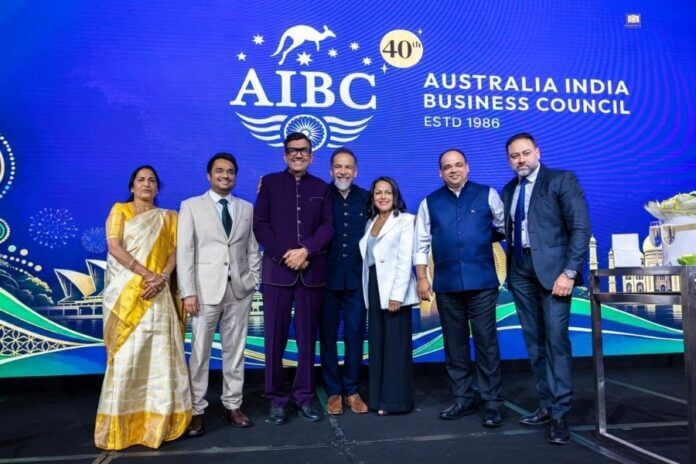
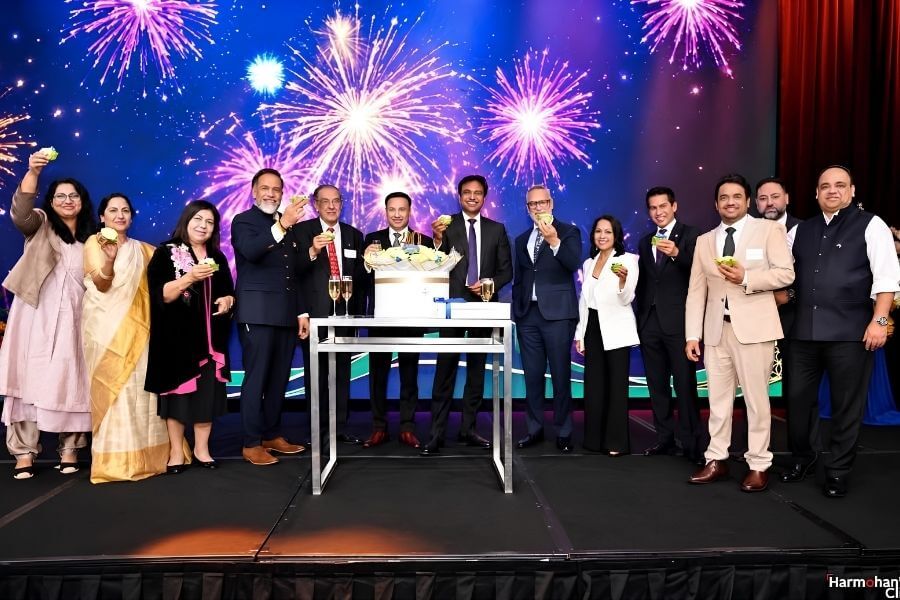
The Australian Indian Business Council’s NSW chapter marked its 40th anniversary with more than 250 guests, speeches, food and fellowship. The atmosphere was warm, but for an organisation dedicated to trade and investment, the evening left a bigger question: how effectively is the AIBC turning the promise of the India-Australia relationship into commercial reality?
The milestone was an opportunity not just to honour four decades of work, but to inspire businesses with fresh ideas, retell its prominent success stories, and set a compelling agenda for the future. There were glimpses of that potential, particularly during the panel discussion, but the event could have done more to put business outcomes centre stage.
A vision for the future
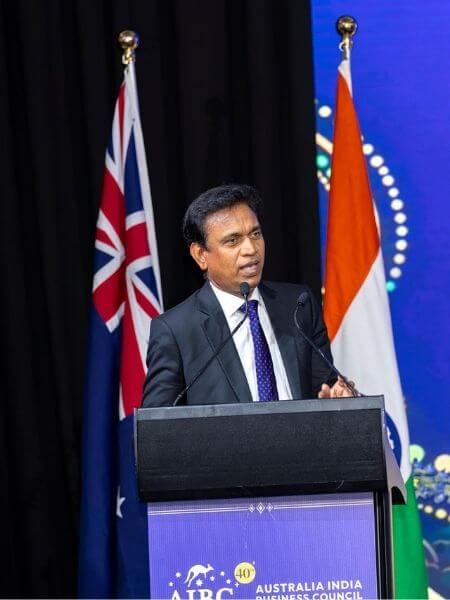
For his part, India’s Consul General in Sydney Dr Janakiraman reminded guests of the enormous opportunity in the bilateral relationship, pointing to India’s economic ambitions and opportunities across technology, clean energy, manufacturing and digital infrastructure.
His message to Australian businesses was practical. India is not one uniform market, but a diverse country of 28 states, different languages and distinct regulatory environments. Businesses need to choose their target market, understand its conditions and build relationships through regular engagement rather than chase opportunities everywhere.
“Design in Australia, make in India, and design in India, make in Australia,” he said, capturing the potential for a genuinely two-way commercial relationship.
AIBC National Chair Deepak Raj paid tribute to the organisation’s founders, former chairs, members and sponsors. Founded on October 16, 1986, the council has spent four decades nurturing connections between the two countries, with anniversary activities planned across Australian cities and in India, he detailed.
The legacy is worth celebrating, but perhaps the occasion called for more than a celebration of the past — it called for a compelling vision for the future.
From potential to business
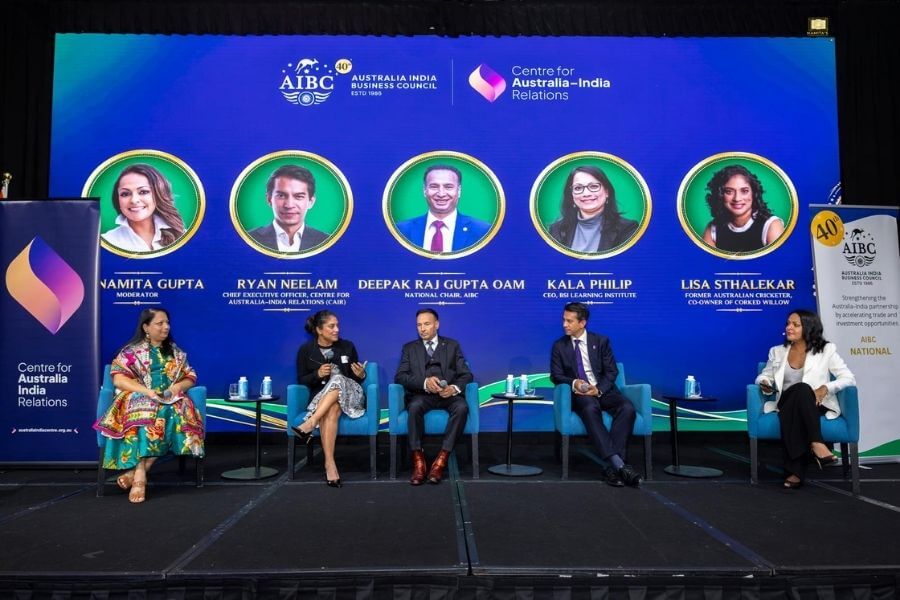
A panel discussion with Ryan Neelam (CEO Centre for Australia India Relations), Deepak Raj (National Chair AIBC), Kala Philip (CEO BSI Learning Institute) and Lisa Sthalekar, (former cricketer and co-founder Corked Willow), moderated by medtech entrepreneur Namita Gupta, was a conversation closer to commercial reality. Panellists explored opportunities in artificial intelligence, technology, tourism, wine and education, while identifying a persistent challenge: the India-Australia relationship has often been driven by governments and professionals, making it all the more valuable to hear from those directly engaged in B2B partnerships, commercial negotiations and deal-making.
Examples from food and agriculture illustrated how trade delegations and sustained relationship-building can open doors to commercial deals. The wine sector offered another opportunity, with India’s expanding urban consumer market attracting interest, although state-by-state taxes and regulations can complicate market entry.
Education was also discussed as a two-way opportunity. Rather than focusing solely on Indian students coming to Australia, panellists highlighted the potential to take Australian education, training and expertise into India.
These discussions offered valuable insights, but also highlighted where the AIBC could play a stronger role: connecting businesses with the right partners, helping them navigate market-entry challenges, and turning promising conversations into tangible contracts and investment.
A milestone and a learning experience
The relatively limited presence of senior political figures and prominent corporate leaders was noticeable. Their participation could have added weight to the anniversary and brought greater focus to the commercial priorities ahead.
NSW chapter president Ravi Mandalika acknowledged that stronger senior-level engagement would have added value. He explained that the event was organised in less than four weeks and that the chosen date, marking the AIBC’s founding anniversary, clashed with another engagement for most policy makers. Several ministers who had initially planned to attend sent their apologies.
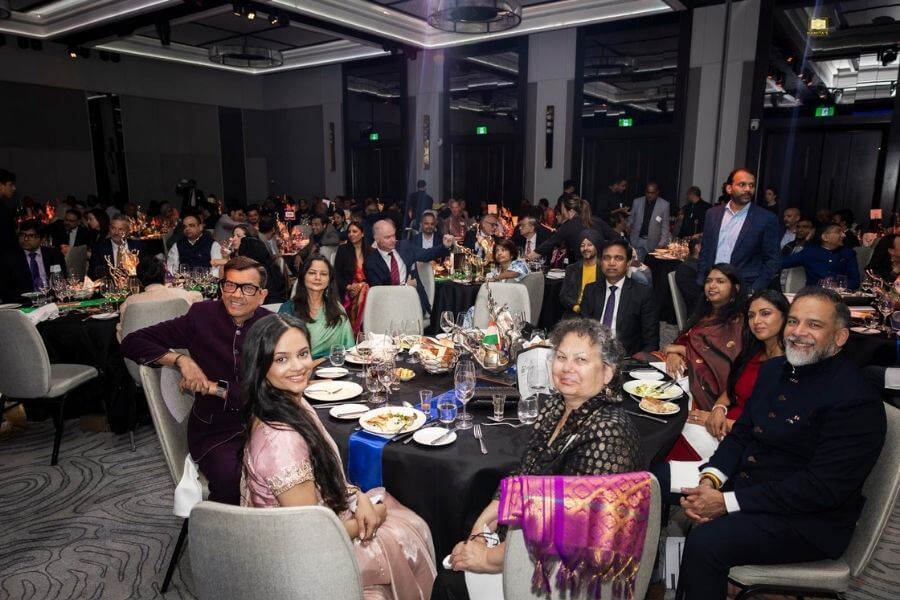
With a new committee still building relationships, Mandalika described the evening as ‘a learning experience’. He also recognised the value of including more business success stories and a stronger forward-looking vision.
Celebrity chef Sanjeev Kapoor was invited because he was in Australia at the time, providing a recognisable guest for the celebration. Yet his appearance also represented a missed opportunity – to explore the business brain behind the chef’s whites.
Rather than simply introducing the evening’s menu, he could have been offered an opportunity to share lessons from building a food and lifestyle business spanning Wonderchef, the FoodFood television network and restaurant ventures including The Yellow Chilli.
Wonderchef, the kitchenware and appliance brand he co-founded, reported revenue of approximately A$64 million in 2024–25. In April 2025, the company was also reported to be targeting an IPO at a valuation of about A$273 million, an ambition, not a confirmed market valuation. Kapoor’s entrepreneurial journey could have offered valuable insights into building a personal brand, scaling a business in India’s complex market, developing distribution networks and taking Indian products to new consumers.
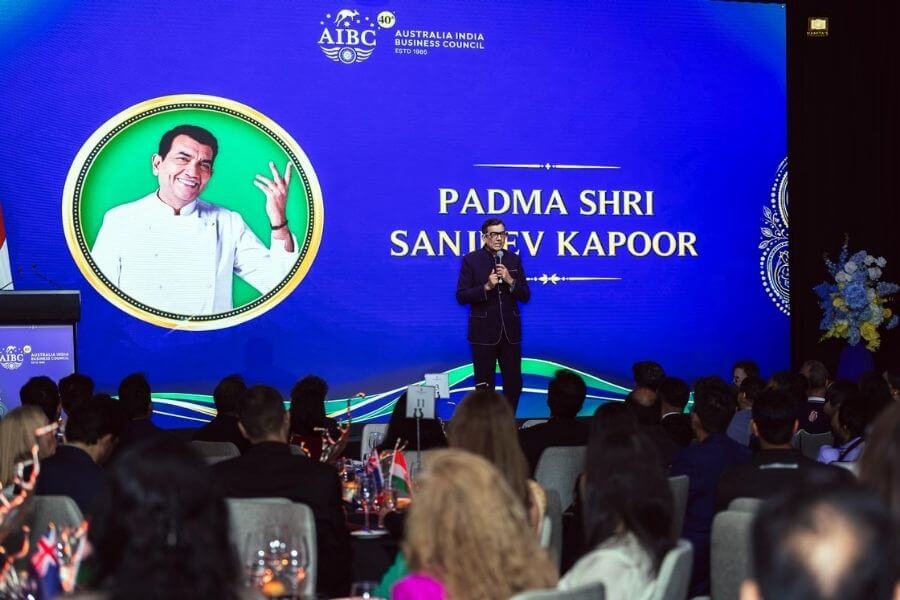
For an audience gathered to strengthen India–Australia commercial ties, those lessons could have made his appearance far more than a mere celebrity attraction.
Forty years is a significant achievement. But the AIBC’s next chapter should be measured not by anniversaries, speeches or the number of people in a room, but by the partnerships forged, the investments unlocked. and the businesses helped to succeed.
The India-Australia commercial opportunity is too significant to remain at the level of dialogue; it must translate into tangible partnerships, investment and business growth. The AIBC has built a bridge over four decades.
Its challenge now is to get more businesses crossing it and to ensure that, at 50, it can point not just to a proud history, but to a stronger record of commercial results.
Read Also: Building bridges, creating opportunity: Irfan Malik’s Legacy as NSW AIBC President