

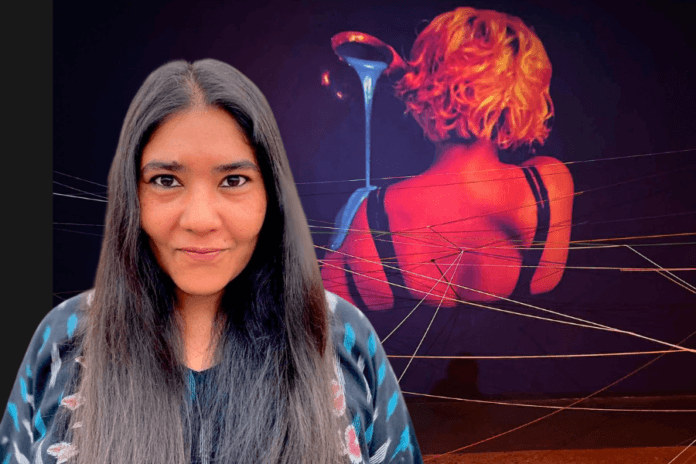
When Naina Sen moved to Darwin, she told herself what most newcomers to the Northern Territory say: she’d give it a year. Five years later, she finally went back to Melbourne to clear out her storage unit.
Staying put is how Sen works. She spent years collaborating with First Nations artists and elders across the Top End and Central Australia, work that culminated in The Songkeepers, her feature documentary on the Central Australian Aboriginal Women’s Choir. It took five or six years to make. “As a migrant,” she says, “I really needed to understand where I was.”
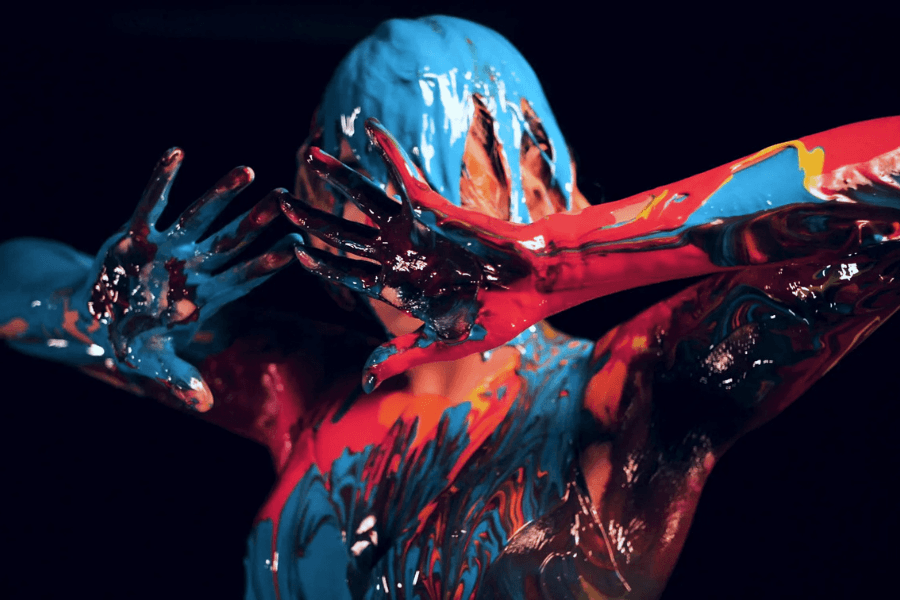
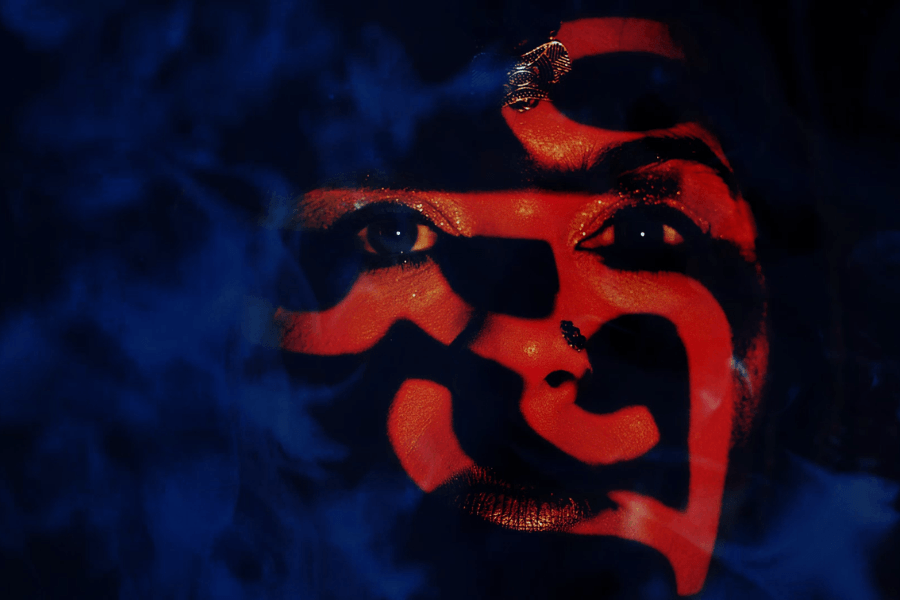
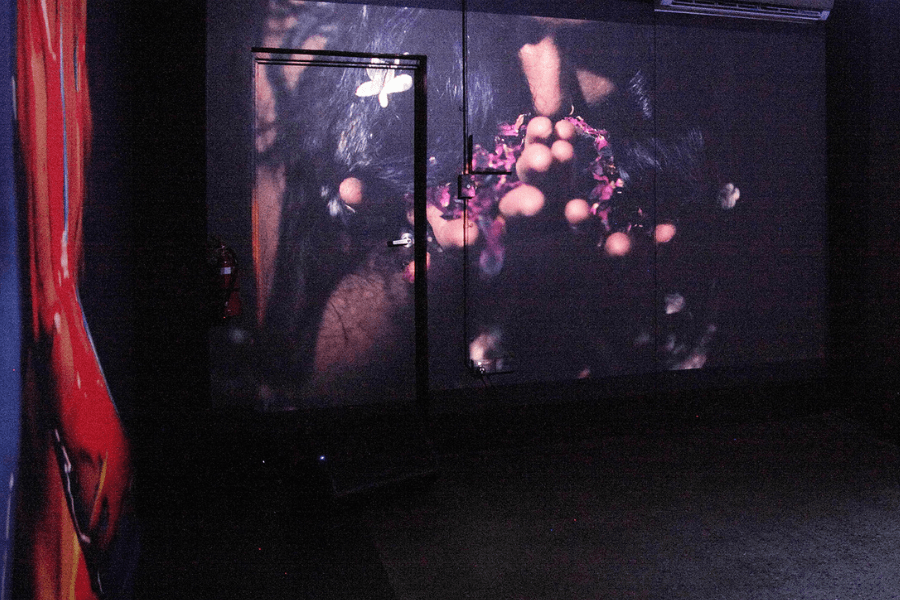
Her latest work, সুন্দরী (Shundori), turns that gaze homeward. A large-scale video installation projected on 12 large screens, so visitors step inside the world that Sen put together rather than watch it on a screen. It questions and reshapes ideas of what an Indian woman is meant to be. To do that, it draws on Indian feminist mythology, today’s cultural and ritual practices, and personal stories, recast as striking, stylised images of the future.
A room, not a screen
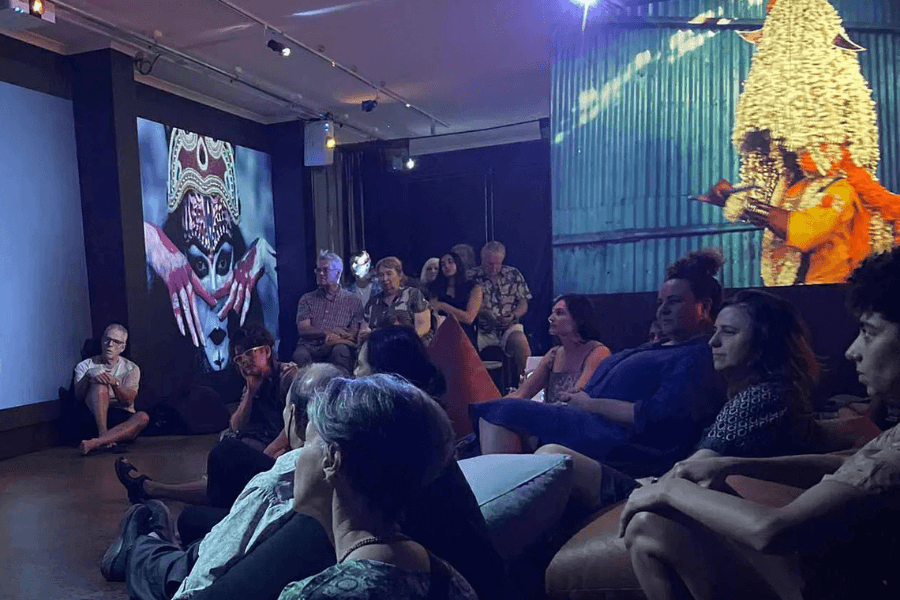
Shundori is not something you watch so much as something you sit inside. Visitors typically spend 40 to 45 minutes in the room. Seating is low, and Sen encourages people to sit on the floor or a beanbag and drift between works as they are drawn to them. The soundscape, built from field recordings of poetry and women’s songs and composed by Melbourne-based sound artist Aarti Jadu, carries its own story.
“There is no linearity,” Sen says. “You spend time with what you’re drawn to.”
Unmaking a word
At the heart of all those responses sits a single word. In Bengali, shundori means beautiful. But it is a gendered word, describing a particular kind of beauty that often comes bundled with being appropriate. Sen took it as a prompt to deconstruct and rebuild. “When I think of shundori, I think of feminine strength in all its facets,” she says. “Beauty and strength, to me, are synonymous.”
One early spark came from her lifelong obsession with Indian textiles and ceramics. She remembers small terracotta figures from Madhya Pradesh showing village women husking rice, cooking, nursing a baby. “The form is so voluptuous, so sensuous, the intricacy of the jewellery, the nose ring,” she says. “But still the face remained covered. I was like, what is this contradiction?”
She went on to work with women artists including Madhubani painter Pushpa Kumari, who learned the form from her father and grandfather but uses it to depict contemporary women’s issues and a freely drawn female body. Sen wanted to break open the boxes that hold the Indian feminine and the ones that separate art from “craft” or “cultural practice”. “When you have generations of masters and someone says, that’s just cultural practice,” she says, “that is lack of agency.”
The gaze, returned
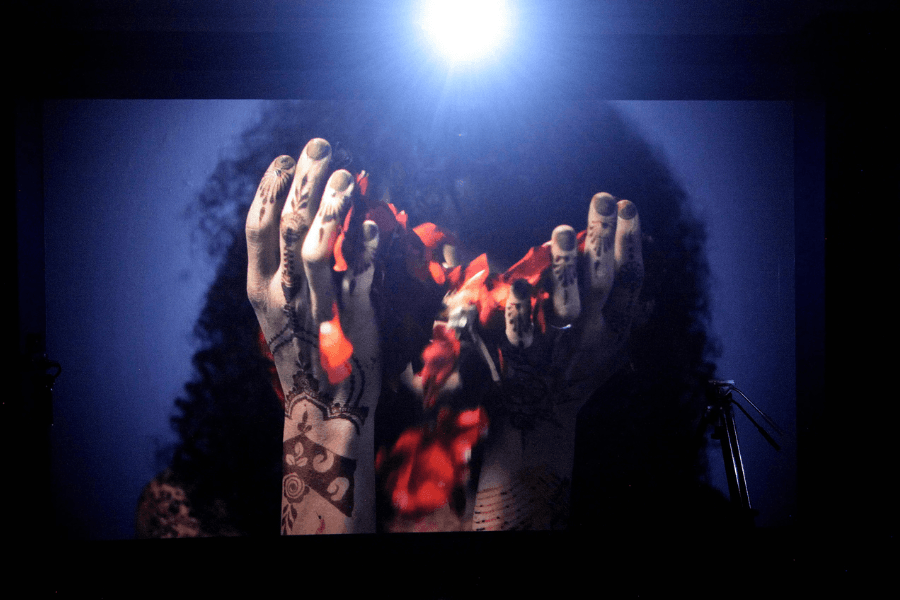
That question of agency runs through the whole installation. Shundori draws on folk traditions, ritual, movement and spoken word, reimagined as stylised, futuristic metaphor. Its collaborators span the gender spectrum, including non-binary and transgender artists, and the work moves through eight languages, among them Bangla, Tamil, Urdu and Konkani, the last with Adivasi women from rural Goa near the Karnataka border.
So how do you film ritual without exoticising it for an Australian audience? Sen’s answer is built into the frame: everyone looks straight at the camera. “When you talk about exoticising, you’re talking about a lens, a gaze,” she says. “Whoever is in them is looking at you. They have the agency. Whether you look back or look away, that’s the relationship you build on the spot.”
From day one, she adds, the work had to stand up in India, not just as a diaspora piece. “We are still people who live in two time zones every day.” If her practice rests on two pillars, she says, they are intimacy and agency.
Closest to home
That intimacy begins at home. Sen calls Shundori the most personal work she has made, and the first to draw on her own cultural inheritance. She and her sister were raised by their mother after their father died suddenly when Sen was young. “The world expected her to behave one way. She didn’t,” Sen says. “She set the tone: we were going to live with joy, with love, and without fear.”
Both her mother and sister appear in the installation. “Terrifying,” Sen says, “but my God, what a privilege.”
Two homes
That homecoming was a long time in the making. The seeds were sown in early 2019, during an Asialink residency at the Sanskriti Foundation in Delhi. Sen had just finished The Songkeepers and knew two things: she wanted to tell stories closer to home, and she wanted to make something entirely non-narrative.
Years of immersion in First Nations cultures had changed how she saw India too. “There was so much I didn’t know about my own home,” she says. “We are such a diverse land and such a diverse people.”
It also took time to give herself permission to belong to both places. “As migrants, you’re so engrossed in where you are. You have to be, to build a life from scratch,” she says. “It took me a long time to say: you have two homes. You are so lucky that you have two homes.”
Then COVID shut the borders, the Northern Territory’s included, for close to two years. Sen used the time to build relationships, virtually, with women across India and the Australian diaspora. More than 500 women would eventually collaborate on the work. “It’s why everything I do takes so long,” she says.
Each installation now reshapes the work to fit its room, and Sen hopes to bring it to Melbourne and Sydney once the right partners, and a space large enough for its projectors, come together.
For now, after Darwin and the Gold Coast, Shundori is showing at Adelaide’s OzAsia Festival.
Read more: The world’s oldest sacred songs