


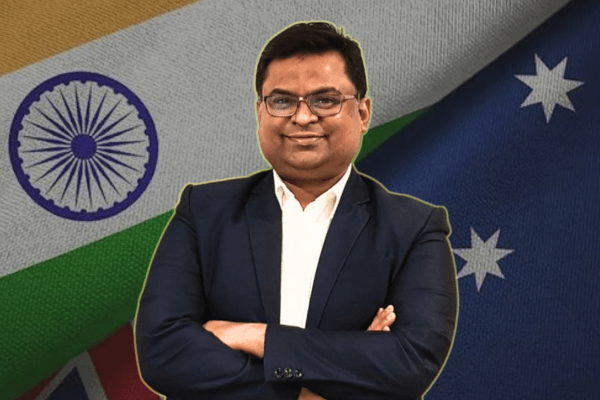

Irfan Malik AIBC President
When Irfan Malik joined the Australia India Business Council (AIBC) in 2017, he brought with him a vision of strengthening the Australia-India relationship through innovation, technology and meaningful business collaboration. Over the past nine years, that vision has helped shape one of the most dynamic periods in the bilateral partnership. Through this time, Irfan’s energy and zeal has won him a number of admirers from the Australian and Indian business community.
Initially serving as National Chair for Startup and Innovation before becoming National Associate Chair and later NSW chapter President, Irfan championed stronger connections between the technology ecosystems of the two nations. His focus extended well beyond networking: he worked to create genuine pathways for Australian and Indian businesses to collaborate, invest and grow together.
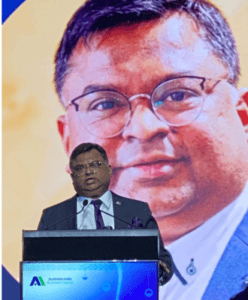
The timing could not have been better. As the Australia-India relationship accelerated following Prime Minister Narendra Modi’s landmark visit and the signing of the Australia-India Economic Cooperation and Trade Agreement (ECTA) in 2022, AIBC was well positioned to help businesses seize new opportunities.
Under Irfan’s leadership, the NSW chapter of the Council expanded its engagement across Indian states, moving beyond traditional sister-state relationships to develop industry-focused partnerships based on complementary strengths. This approach enabled Australian businesses to engage directly with India’s rapidly growing economic regions, while encouraging Indian enterprises to view Australia as a strategic partner for global expansion.
Speaking to Indian Link, Irfan said he had many special moments but the growth of collaboration in the clean energy sector has been very special for him. Working closely with industry partners, including the Smart Energy Council, AIBC led high-level business delegations to India, helping Australian and Indian companies establish partnerships in solar energy, battery storage and renewable technologies. These initiatives translated into substantial commercial outcomes, generating significant investment opportunities while strengthening both countries’ commitment to a cleaner and more sustainable future.
“I have also worked hard in ensuring regional Australia shared in the benefits of the Australia-India relationship,” Irfan told Indian Link. “Regions such as Newcastle, the Hunter and Northern NSW have developed stronger links with Indian states, creating opportunities across agriculture, healthcare, medtech, advanced manufacturing, and education. My philosophy was simple: successful international engagement should benefit businesses and communities well beyond the capital cities.”
Irfan also was known for building lasting relationships. His collaborative leadership style brought together government, industry leaders, entrepreneurs and investors, creating an environment where ideas became partnerships and partnerships became tangible outcomes. Colleagues consistently admired his ability to connect people with a shared purpose and to turn strategic conversations into meaningful action.
Irfan is excited about where AIBC is now. “Bilateral trade continues to grow, government-to-government engagement has never been stronger, and AIBC approaches its 40th anniversary with renewed energy and momentum,” he points out. The foundations established over the past decade provide a strong platform for the next generation of leaders to build upon.
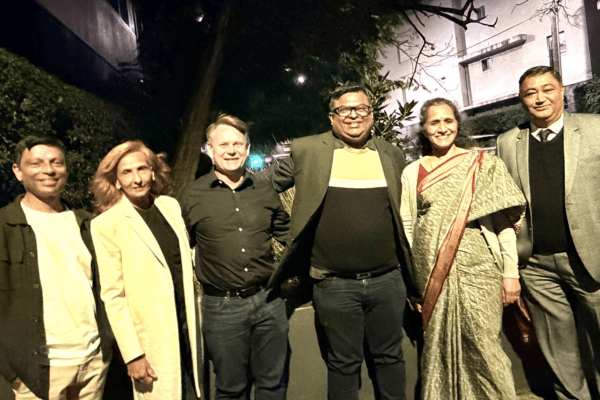
In recognition of his outstanding contribution, friends and colleagues gathered for a special farewell dinner at Delhi O Delhi, graciously hosted by fellow AIBC member and restaurateur Javed Khan. The evening brought together business leaders, long-time supporters and well-wishers, including Member of Parliament Warren Kirby, to celebrate Irfan’s remarkable service to AIBC and the broader Australia-India relationship. It was an evening filled with laughter, reflections and heartfelt appreciation for a leader whose influence has extended well beyond boardrooms and trade missions.
Read more: Ambika Vishwanath, Maitri fellow, on why climate change is now a security issue