Home Blog Page 931

A Gujarati community milestone

0
Reading Time: 2 minutes

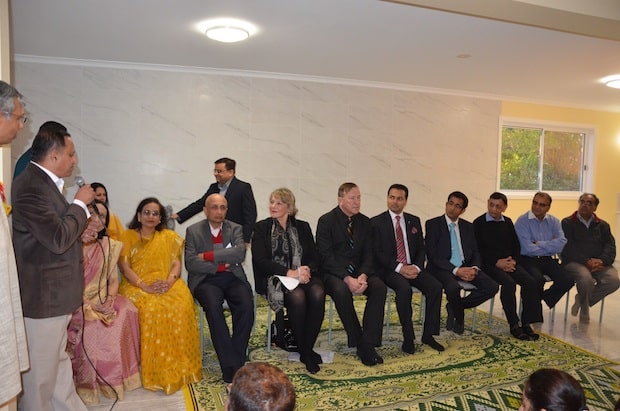
The Nathdwara Education and Cultural Centre at 3-5 Princes Domain Drive, Hallam has recently finished renovation, restoration and extension work. The Centre has a Community Hall / Shrinathji Haveli, over 100-year-old garden with heritage listed trees and a car park with 35 car spaces. The work was possible with the help of a grant provided by the Victorian Government.

The inauguration of the newly renovated premises was held recently and officiated by Inga Peulich (Member of Legislative Council and Cabinet Secretary, Victorian Parliament), M C Bhagat (Vice Consul, Consulate General of India) and Geoff Ablett (Mayor, City of Casey).

The Centre is expected to conduct activities like hosting Shrinathji Haveli, running Bal Pushti Education centre, opening a Gujarati Library and celebrating Indian festivals with tradition. All activities are organised by volunteers from Indian / Gujarati community in Melbourne.

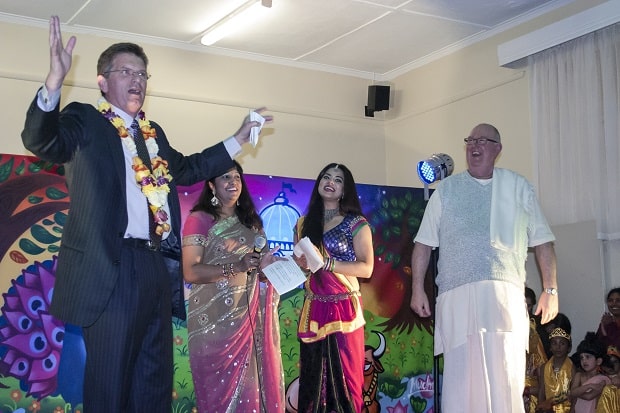
During the inaugural event, the Bal Pushti kids presented three dance performances and sang Manglacharan and a devotional song in English titled Krishna My Love to mark Janmashtami, the birth of Lord Krishna.

Also present at the opening were Damian Rosario (Chairman of Planning Committee and Councillor, City of Casey), Vasan Srinivasan (President, Federation of Indian Association of Victoria), Raghu Pendyala (President Hindu Society of Victoria, Carrum Downs), Bharat Shah (President of Gujarati Association of Victoria) and Moti Visa (Justice of Peace and community leader).

Speakers offered their congratulations to the volunteers and organisers for their ongoing efforts in ensuring that the project is completed successfully and wished them all the best for the future.


The scourge that is child trafficking

0
Reading Time: 3 minutes

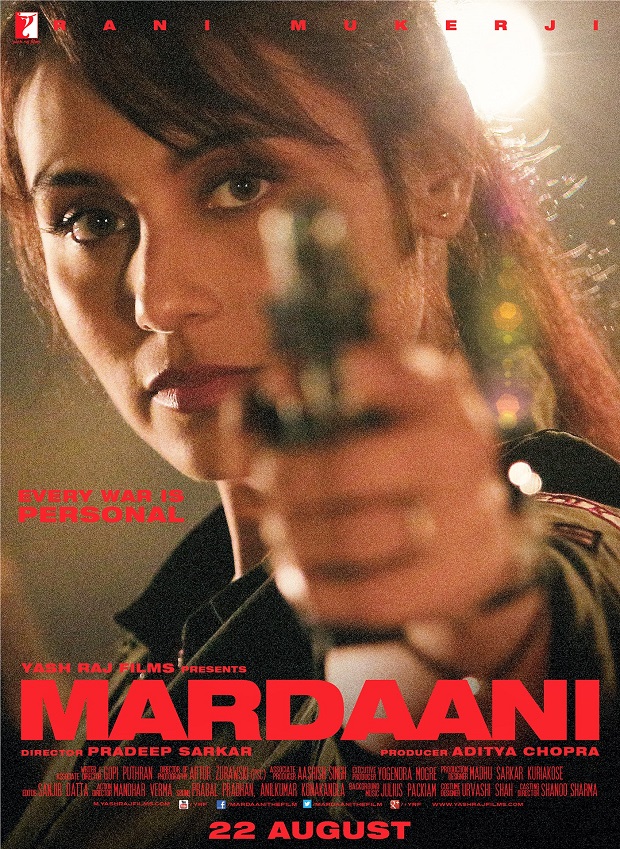
Film: Mardaani

Cast: Rani Mukerji, Tahir Bhasin, Jisshu Sengupta and Anil George

Director: Pradeep Sarkar

Rating: ****

A stellar cast only adds to this accomplished film’s sense of creative propriety.

Mardaani is a film that makes all the correct noises about child trafficking. And by “correct noises”, I do mean the soundtrack, which is among the most evocative, provocative and satisfying in recent times.

Normally in Bollywood, when films are done with live sound, the effect is scratchy and at times inaudible. Mardaani cleans out the noises and yet retains a high decibel of authenticity in the complementary relationship between sight and sound. This is a film that knows its job.

This, then, is the world of Pradeep Sarkar’s derelict people. Posh pimps and “cool” flesh traders gnawing at the fabric of our society by playing with the lives of the most innocent and vulnerable.

With the least fuss, director Pradeep Sarkar (so eloquent in his last film outing with Rani in Laaga Chunari Mein Daag) provides us vivid glimpses into the life of the cop-hero Shivani (Rani).

Rani’s Shivani is a mixture of the feminine and the mardaani. Displaying exemplary economy of expression, the narrative puts forward Shivani’s very articulate attitude to home and profession through brief but lucid encounters with various characters.

Towards the end, the film’s elegant pace slackens, sags and almost collapses. But somehow, Sarkar manages to keep the proceedings from getting dragged down by the drama, no matter how unruly they progressively gets.

The narrative is well-stocked with signs of conscientiousness. Human trafficking is evidently not a pretext to assemble a thriller here. Rather, it’s the other way around. Out of the vast expanses of the film’s sensitivities, there emerges a very engaging thriller, replete with sincere efforts to demonstrate the harsh reality of child prostitution into a cinematic currency.

Shockingly, the film’s world of flesh trade is controlled by a cool urbane corporate type of dude named Walt (excellently played by the almost-new actor Tahir Raj Bhasin).

Walt operates his prostitution racket with the blue-toothed precision of a corporate enterprise. He is on his playstation in his free time and lives in a Delhi flat with his evil mother (Mona Ambegaonkar, scarily coquettish). It’s all stunningly normal and urbane.

The film’s biggest triumph lies in showing the murk that resides under gleaming surfaces. Girl children are sold for sexual gratification to men old enough to be their grandparents while the piped music plays soothingly in the background. There is a kind of unassuming veracity in the narration that quickly sucks you in. We are inescapably drawn in to Shivani’s dark and desperate mission.

You can’t come away unaffected by the brutal world that Shivani cracks after a girl she loves goes missing. The cat-and-mouse game between the cop-heroine and Walt is defined by some excellent dialogues. The words which colonise Pradeep Sarkar’s world are constantly weightier than the casual tones suggest.

Mardaani lays open a world of crime and heartbreak. Scenes of unimaginable torture and humiliation meted out to young girls are placed against the screen heroics of a heroine who is neither Chulbul Pandey nor Singham and in many ways gutsier than both.

Rani Mukerji brings in a level of credibility to the character. Her action scenes are never larger than life. She is not a show-offy cop. And that’s a blessing. Mardaani is a film that is carpeted with competent actors. Almost every character, big or small, is played by actors who don’t believe their performances need to scream their skills.

This film believes in what it has to say about the killing of innocence.

“Ravaging the Opposition and young girls come easily to me,” leers a politician.

Right. And India is shining.

Subhash K. Jha 

Riding the wave

0
Reading Time: 3 minutes

It’s a classical treat at FIMDV’s annual concert

The Indian community in Victoria is fortunate to have several extraordinarily talented musicians and dancers in its midst, be they classical or contemporary. These artistes and their schools have, over the past several years, contributed enormously to the cultural life of the community individually.

Vasan Srinivasan, the President of FIAV (Federation of Indian Association Victoria) and Murali Kumar set up a new organisation called the Federation of Indian Music and Dance (FIMDV) in 2010, which began to bring together under one umbrella the various Indian music/dance schools and promote a healthy spirit of cooperation and intellectual exchange between them. Its current President is Dr Rama Rao.

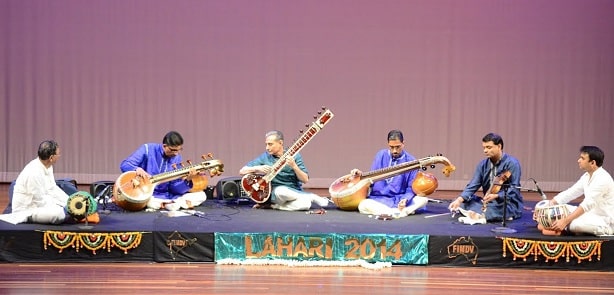
This year, FIMDV’s annual programme Lahari (‘waves’), an Indian classical music and dance extravaganza, was held at the Rowville Secondary College in mid-August. It was a superlative miscellany of Indian classical music and dance in Melbourne, and the items presented struck just the right note. They were classical without being too heavy; with just a little innovation thrown in, making it a little edgy, giving it just a little twist.

Monica Singh’s Odissi performance was of the highest order, and set the tone for the rest of the evening. She presented two brisk items, and it was good to see a solo dancer moving around the stage a lot and using the space.

Shobha Shekar began with a Vishnu vandana – the day being Janmashtami, which was followed by raag Charukesi. She aptly coined her own lyrics for the occasion: Vande Mataram…Soundarya Lahari, which encapsulated the spirit of the event. Nicholas Buff’s rendition of the raag on the saxophone livened up the presentation, and Murali Kumar’s violin set a good tone, with Sridhar Chari on the mrudangam and Pandurang Torvi on the tabla.

The musical vocal troika that followed next, Uthra Vijayaraghavan, Rama Rao and Sundari Saripalle, performed some of the most popular songs/bhajans from 10 different Indian languages, and was an aural feast. Again, Murali Kumar, Pandurang Torvi and Sridhar Chari accompanied the artistes.

The veena and the sitar featured together in a wonderful instrumental segment. The Iyer brothers and Radhey Shyam Gupta respectively made an excellent rendition.

Three other genres blended seamlessly yet again in an innovative and engaging dance segment presented by Tara Rajkumar’s (Mohiniattam) student, Govind Pillai (Bharatanatyam) and Tapashi Mukherjee (Kathak).

Tihai3, an instrumental music trio with Saby Battacharya on the sarod and Nicholas Buff on the saxophone and Girish Makwana on the tabla, performed some exciting items – something different from the normal fare.

Sindhu Keshavamurthy concluded the programme with an eye-catching Bharatanatyam recital.

Charles Walker deftly handed the demanding audio requirements of such a large group of performers and their varying audio constraints, and contributed to a successful event.

The Chief Guests included Manika Jain, the Indian Consul General in Melbourne; Councillor Geoff Ablett, the Mayor of Casey; Damien Rosario, Councillor for Casey, among others. The two councillors spoke highly of the contribution made by the Indian origin community in Casey. FIMDV felicitated Vasan Srinivasan and his wife Lata; Murali Kumar and his wife Vandana, for having nurtured the Association for its crucial first three years. That it is now a confident and strong organisation representing the Indian origin artistic community, is a testament to their hard work and perseverance.

Let’s build a safer Victoria

0
Reading Time: 3 minutes

Corrections Victoria launches a major recruitment campaign for prison officers from multicultural backgrounds

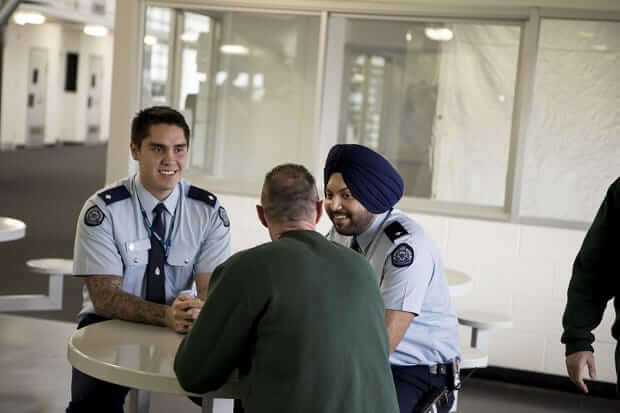
Find the Potential Within’ is a major recruitment initiative launched by Corrections Victoria to engage more than 750 prison officers and community corrections officers from multicultural and diverse backgrounds.

Victoria prides itself on having a good correctional system, but is on the threshold of a major expansion to build an exceptional system and thereby make the state the safest in the country. This new recruitment campaign, which was launched in late June, encourages people of culturally and linguistically diverse backgrounds to come and work together to build a safer Victoria.

Corrections Victoria Commissioner, Jan Shuard, said that this recruitment campaign will positively affect the organisation as it helps to bring together a diverse breadth of insight and life experience. It is hoped this will enable the prison workplace to become more perceptive and open in its understanding of the community.

This campaign offers excellent employment opportunities and positive working conditions in a compassionate and supportive environment. There are a lot of myths and preconceived notions among the public when it comes to prisons and correctional facilities. Ms Shuard hopes that this recruitment campaign will enable the common man to understand and appreciate the positive, engaging and rehabilitative nature of Corrections Victoria.

The prison officers and community corrections officers play a vital role in safeguarding the community. “These officers can contribute positively to the criminal justice system of Victoria thereby ensuring safety and security for all sections of the community alike,” Ms Shuard said.

Commissioner Jan Shuard stressed the fact that the rationale behind this recruitment drive is an expansion of Victoria’s prison systems, and is not related to any specific crimes or crime trends, racial or cultural. The need of the hour is a better and more positive prison environment along with providing more opportunities to the large Victorian community.

So, what do you need to become a prison officer? A good command over the English language, excellent communication and interpersonal skills and an inherent ability to relate and work with people belonging to diverse backgrounds.

Corrections Victoria is looking out for a broad range of candidates from multidisciplinary educational and work backgrounds. This is a way of transferring your existing skills and experiences to a more positive, challenging and enriching work environment.

No pre-requisite training is required for candidates to apply for these roles. All the necessary professional training and development, access to employee assistance programmes and recreation facilities will be provided after candidate selection. Corrections Victoria promotes gender equality and prides on having a workforce that provides equal opportunities and a safe working environment for both males and females.

To find out more about the benefits of becoming a prison officer or community corrections officer, visit correctionsjobs.vic.gov.au

Gathered for a multicultural meal

0
Reading Time: 4 minutes

Politicians, business leaders, community members and celebrities attend the FIAV Gala Dinner

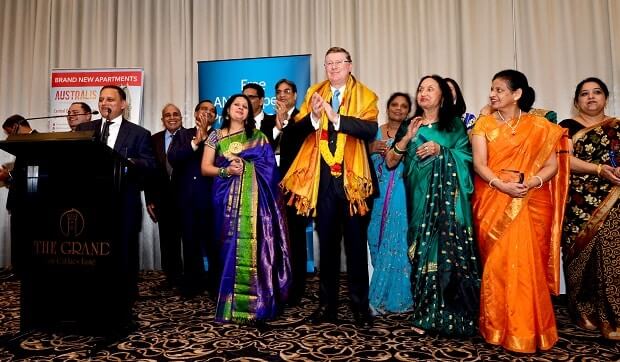
It’s getting closer to election time and the recent Indian Independence Day events in Melbourne attracted a sizable turnout of Federal and State politicians from both major parties. The most numbers, including a rare visit from the Premier Denis Napthine, were witnessed at the multicultural gala dinner held by the Federation of Indian Association of Victoria (FIAV) recently.

Held at the Grand On Princess, Mulgrave, the gala evening saw over 350 guests enjoying networking with candidates, members, community representatives, business people and local celebrities. Former Bollywood star, Rahul Roy of Aashiqui fame, was also present to promote his upcoming film that is to be shot in Australia starring, among others, popular Indian actor Boman Irani.

There was a lot on the agenda as one performance succeeded another, one speech followed the other, with introductions, community awards, the launch of a short film and felicitations, all happening in quick succession. At the helm of the heady mix was FIAV President Vasan Srinivasan as he calmly conducted the formalities and acknowledged everyone’s support, while the affable MC Ambrish Deshmukh, aka Adi, managed to keep the progress smooth if rapid.

The FIAV honoured Opposition Leader Daniel Andrews and Matthew Guy, Minister for Planning and Multicultural Affairs and Citizenship, for their support to the Indian Community. The recently nominated Liberal candidate for Clarinda, Gandhi Bevinakoppa presented a special silver statue of Mahatma Gandhi to Minister Matthew Guy on behalf of Koppa Engineering. Echoing similar sentiments, Opposition Leader Daniel Andrews and Minister Matthew Guy praised Indians for their contribution to various fields and for their active involvement in the vibrant multicultural society in Victoria and Australia.

Premier Napthine went further by announcing that the Indian community has the highest number of degrees and the highest number of PHDs than any other community in Victoria. He spoke of the similarities between Indians and Australians. According to the Premier the Indian community, through their culture, history, business, and through their love for sport, dance and films, have enriched and strengthened the Victorian and Australian community. He welcomed their contribution in making this multicultural community even better and stronger.

Claiming to be a cricket tragic himself the Premier said, “India and Australia share a love for cricket that will be tested next year at the World Cup in Melbourne”.

“I look forward to the final game at the end of March when Australia and India will both be playing in the finals,” he declared, receiving much applause and appreciation from the audience.

The Premier thanked the Consul General Ms Manika Jain for her work and contribution to the Indian Community in Melbourne and commended Vasan Srinivasan and FIAV committee for their “outstanding” efforts over the years. He went on to speak of the significance of celebrating and remembering India’s Independence and the tryst with destiny in 1947 and its relevance in modern India.

“We know that India is one of the strongest and fastest growing economies in the world and as a coalition Government we have sent over 10 trade missions to India to engage in business, creating better opportunities for Victorian Businesses. We are keen to invest in growth and in creating economic opportunities between the two countries,” the Premier said.

Once the formalities were dispensed with, the audience was introduced to the visiting AFL team from India, while a short teaser was presented for Anita Brar’s documentary film Crossing the Line. The film claims to be first of its kind in Australia on the Partition of India, reflected through the stories of seniors of India and Pakistan who crossed the border at that time. Guests were also entertained throughout the evening with vibrant dances presented by the popular Shiamak Group.

An eight-minute short film on FIAV’s achievements and involvement within the community was played during the event with a special mention of FIAV’s hardworking committee. Acknowledging the contribution of women to the Indian community FIAV also presented Community Service Women’s Awards to the following hardworking women: Mrs Dilpreet Jaswal, Mrs Chhandashi Bandopadhayay, Dr Krishna Parekh, Mrs Sudesh Singh, Mrs Lindsay Ganjoo, Mrs Narmatha Ravi , Mrs Coreen Da Gama, Dr Chitra Chandran, Dr Rama Rao and Ms Anindya Gaur.


Krishna event attracts high-profile visitors

0
Reading Time: 3 minutes

Former Premier attends Janmashtami celebrations at ISKCON temple


Hare Krishna devotees were delighted to watch former premier Ted Baillieu throw his hands up and chant Hare Rama Hare Krishna along with the congregation at the ISKCON Temple in Albert Park recently. The former Premier was attending the auspicious Krishna Janmashtami, the Hindu festival commemorating the birth of Lord Krishna, along with dignitaries including Craig Ondarchie (MLC and Parliamentary Secretary to the current Premier) and Manjula O’Connor (psychiatrist and founding director of Australasian Centre For Human Rights and Health, ACHRH).

Hundreds of devotees crowded the Melbourne Mahaprabhu Mandir, popularly known as the ISKCON temple, to relish in the ecstatic music and vast array of delicious vegetarian food on offer to celebrate the birth of Lord Krishna. Prayers were offered to Lord Krishna in various ways from chanting mantras, reading the religious scripture Bhagvad Gita and singing bhajans. Many devotees also observed fasting through the day to celebrate the auspicious occasion.

ISKCON, the International Society for Krishna Consciousness, was formed to spread the practice of bhakti yoga and is dedicated to the teachings of Lord Krishna with the aim to build a peaceful, enlightened and just society.

In Melbourne the ISKCON society also operates centres like the Crossways, Gopal’s Restaurant and the Hare Krishna Valley, a 250-acre rural community and retreat for the members of the Hare Krishna movement. Their activities include imparting education on Krishna consciousness, conducting regular Street Sankirtans (chanting on the streets), Food For Life and celebrating festivals based on the Vaishnava calendar with Krishna Janamashtmi forming one of the largest and most popular celebrations.

The ISKCON temple wore a festive look and reverberated with Vedic hymns as the deities were decked out in colourful arrangements and adorned with flowers. The temple in Melbourne is presided over by the deities of Sri Sri Radha Ballabha and Sri Sri Gaura-Nitai, along with Lord Jagannath, Lord Baladeva and Lady Subhadra. Security was stepped up for the occasion and volunteers and temple staff ensured that the ritualistic observations were conducted in an orderly manner.

During his visit to the temple, the former Premier continued to endear himself as he chanted the famous Hare Krishna Hare Krishna, Krishna Krishna Hare Hare; Hare Rama, Hare Rama Rama Rama Hare Hare to thunderous applause.

“I no longer have the ‘cheque signing hand’, however I hope that those who do are able to donate generously towards the temple,” he said.

Craig Ondarchie praised the efforts of the temple staff and disciples in holding the massive celebrations and wished everyone a Happy Janamashtami.

Several plays and dramas were held enacting the various phases and leelas of Lord Krishna’s life. Decked in colourful costumes, children enacted the Akshaypatra (inexhaustible vessel) excerpt from the Sanskrit epic Mahabharata. The main hall where the cultural programme was being held was packed to capacity.

Speaking on the occasion, Temple President Aniruddha Prabhu said, “Lord Krishna’s life is an inspiring lesson relevant even today. Whether it is Lord Krishna’s young days in Gokul, his romance with Radha or the assassination of Kans, every aspect of Lord Krishna’s life is captivating and it is wonderful to see our children enact these on stage. The children are the true disciples of the lord. Wishing everyone Happy Janmashtami, Jai Shri Krishna”.


Moments in time

0
Reading Time: 4 minutes

From the natural landscapes of Tasmania’s national parks, to the tantalising ruins of Rajasthan, a young photographer takes us on a trip around the world, writes NISHTHA CHADHA

In his first ever exhibition The World Through My Lens’, 23-year-old Anubhav Dhingra successfully captured the commonly overlooked beauty our world has to offer, telling a story like no other.

It’s not too often that we walk through the streets of Melbourne and recognise the reflection of the Yarra in the glass of the several skyscrapers towering over our heads. Rarely, do we take a second glance at the cities we live in and recognise the splendours we are amongst. But, perhaps a second look is all it takes.

Anubhav’s alluring exhibition, held recently at the Anxiety Recovery Centre (ARC) Victoria head office highlighted the charm that can be found when we look at our world from a different perspective. Travelling from the renowned cities of Europe to some of the most poverty-stricken villages of India, Anubhav’s round-trip tells a story about the importance of a second glance and the raw, untouched beauty that can be found when we do look twice.

“I can’t control the world,” explains Anubhav, “I can only control the camera”. But the camera seems to be all it takes. Anubhav’s artwork shows off people and places in their most simple form, presenting emotions of all sorts with each one of his compassionate stories.

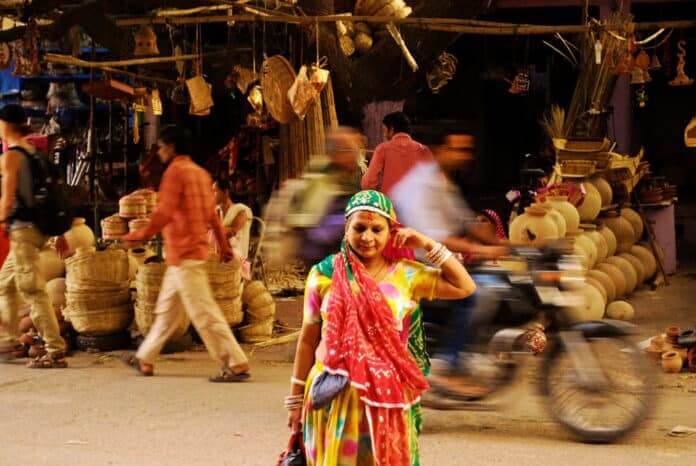
Particularly choosing Rajasthan to visit, solely for his photography, the artist found himself inspired by the ruins and castles as well as the several villages he described as “untouched for a thousand years”. Impressed by the difference in lifestyle and the contentment of village life, in comparison to commercialised Delhi where everything is “iPod and money orientated”, the young photographer further explained how easily such important cultural aspects are overlooked; even admitting to being a bit culture-shocked in his own country.

“People saw a window,” he recounted, “But I saw the window of an Indian King’s hideout palace, that can’t even be seen from the road, full of history”.

Inspired by his father, and a family line of photographers, the young artist says that photography has taught him to “expect the unexpected”.

“Look at that fruit seller over there,” he said, describing an encounter abroad. “We were in traffic when I noticed him, in moving traffic, I took a photo anyway thinking nothing of it, but then when I looked back at it on my computer at home it was perfect! The shot was clear and I noticed that the man had just struck a match as I took the photo! It’s little things like that, that keep you inspired”.

It’s not all fun and games for Anubhav. The ex-med student explains his journey has just begun. After finding his passion as a child by watching his dad take leisure photos, Anubhav pursued photography throughout his school days, developing his photos and taking up the art as a subject, before partaking in Nikon photography courses with world famous photographer, Kristian Dowling.

Photograper Anubhav Dhingra

The young man, who describes himself as “addicted to photography”, still earned a psychology degree and works a day job whilst volunteering at Beyond Blue, the ARC and previously the Cancer Council Australia. Anubhav pursues his photography in his spare time, hoping to expand his online business, and one day work as a portrait photographer.

The benevolent young man reinforced that his photography is not all about himself. “Mental health issues are now affecting one in three Australians,” he said, “And increasingly, as the Indian community within Australia expands, we see more and more Indian migrants suffering from mental health conditions as well. I want to inspire other young men and women within the broader Indian community that there is hope out there”.

“Whether it is by donating to organisations, raising awareness of Indian poverty through my photos or simply paying those who I take a photo of, like in India”, Anubhav wants to give back to the community through his photography.

As such, Anubhav decided that 15 per cent of the sales from the exhibition will be donated to the ARC.

Anubhav’s work can be found at http://www.anubhavphotography.com.au or http://www.facebook.com/anubhavphotographyaustralia


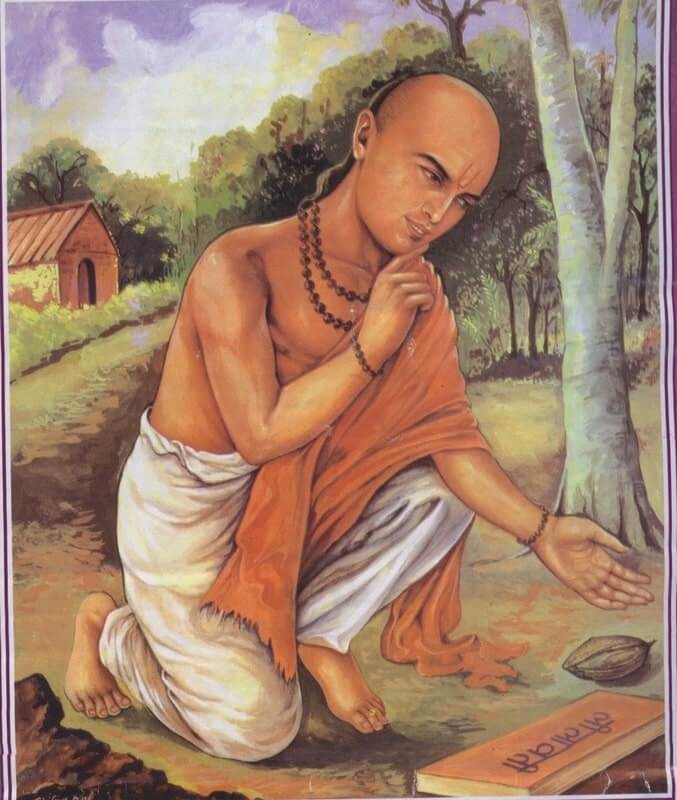
Bhaskaracharya and his Leelavati

0
Reading Time: 5 minutes

On the 900th birth anniversary of India’s foremost medieval mathematician, DR CHAKRAVARTI MADHUSUDANA reflects on the life and achievements of Bhaskaracharya

Among the ancient Indian mathematician/astronomers, probably the greatest were Aryabhata (5th Century CE), Varahamihira (505 – 587 CE), Brahmagupta (598 – 670 CE), Mahaviracharya (c 800 – 870 CE) and Bhaskaracharya, also known as Bhaskara II (1114 – 1185 CE).

There were, of course, several other outstanding mathematicians such as Aryabhata II, Bhaskara I, Sridharacharya, Prithudakswami who flourished during this period.

This year marks the 900th birth anniversary of Bhaskaracharya. The special event will be commemorated with several academic conferences across India. It is therefore a fitting time to reflect upon the life and remarkable achievements of this great Indian.

We know that Bhaskara was born in 1114 A D, because he says so himself in ‘Goladhyaya’ which is a part of his work Siddhanta Shiromani:

“I was born in 1036 of the Shaka era. I wrote the Siddhanta Shiromani when I was thirty-six years old”.

Since the Shaka era is believed to have started from 78 AD, we can calculate that he was born in 1114 AD. Bhaskara’s work Siddhanta Shiromani consists of four parts:

  1. Leelavati – a treatise on arithmetic, geometry and the solution of indeterminate equations
  2. Bijaganita – a treatise on algebra
  3. Grahaganita – mathematics of planets or astronomy
  4. Goladhyaya – mathematics of spheres

Bhaskara goes on to say that his father was the eminent scholar Maheswara, a Brahmin of Shandilya gotra. He also indicates that he was born in a place called Vijjalavida near the Sahyadri Mountains.

Bhaskara’s Leelavati, comprising most of the mathematical techniques needed for every day transactions and beyond, is one of the most popular mathematical textbooks ever written. It was in use over the length and breadth of India for 700 years until the British system of education was introduced.

Leelavati was written in 1150, before the days of printing, when the material and equipment required for making permanent written records were not abundant. Therefore, like almost all of the scientific and philosophical works written in Sanskrit, Leelavati is also composed in verse form so that pupils could memorise the rules without the need to refer to written texts. The verses were also necessarily concise and needed explanatory commentaries, such as the ‘Buddhivilasini’ by Ganesha or ‘Leelavti Vivaranam’ by Mahidhara to understand them

The first foreign language translation is thought to have been by Abul Faizi (brother of Akbar’s vizier, Abul Fazl) who rendered the Leelavati into Persian in 1587. The first two English translations of the Leelavati appeared in 1816. The authors were Henry Thomas Colebrooke, based in Calcutta, and John Taylor, based in Bombay. Both of them worked for the East India Company – Colebrooke was a high-ranking civil servant and Taylor was a medical doctor within the army.

Some of the problems in Leelavati are addressed to a young maiden of that same name. This fact has led to the following fanciful story.

Bhaskara had a daughter named Leelavati. According to her horoscope, she would remain unmarried and childless unless her wedding took place at a precise time on a particular, auspicious day. In order to ensure that this moment was not missed, Bhaskara constructed a device where a cup with a small hole was placed in a vessel of water. The water would slowly enter the cup and, at the precise moment in question, the cup would sink to the bottom of the vessel (see figure).

Leelavati, out of curiosity and unbeknownst to her father, peered into the device and, as she did so, a pearl from one of her ornaments fell into the cup, blocking the hole.

Consequently, the auspicious moment passed without the cup sinking and the wedding could not be performed.

The story is that Bhaskara wrote the Leelavati in order to console his distraught daughter. It may be noted that other problem questions in Leelavati are addressed to a mathematician, a merchant and others. It may also be noted that neither Bhaskara nor any of his commentators mention this episode. It only appears in the translation by Abul Faizi.

The Leelavati consists of 277 verses of rules and examples. The main contents are:

  • Basic operations of arithmetic including finding square roots and cube roots, fractions, and the effect of cipher
  • The rule of three, rule of five and so on
  • Bartering, buying and selling
  • Permutations and combinations
  • Progressions and series
  • Geometrical operations
  • Solutions to indeterminate equations

The questions in Leelavati are known for their variety, story-like problems and the challenge they offer to students.

In 1816, when Colebrooke published his translation of the works of Bhaskara and Brahmagupta, it was generally believed that progress in Indian mathematics came to a standstill after the time of Bhaskara. One reason given for this was that the 12th century witnessed the start of subjugation of Indians by foreign invaders and most of India was in a state of turmoil.

However,in 1835, C.M. Whish published a paper in the Transactions of the Royal Asiatic Society that proved that developments in Mathematics had continued unabated in Kerala, a region that was the least affected by the invaders. One of the later Kerala mathematicians was Madhava (1340 -1425 AD) of Sangamagrama (present day Irinjalakuda) who had developed power series expressions for ? and for the sine function some three hundred years before Leibnitz and Newton.

There were several other Kerala mathematicians of note in the post-medieval period. But that is an entirely different story.

Test Yourself! Some example problems from Leelavati

Example 1
A traveller, engaged in a pilgrimage, gave half (1/2) his money at Prayaaga; two-ninths (2/9) of the remainder at Kaashi (Benares); a quarter (1/4) of the residue in payment of taxes on the road; six-tenths (6/10) of what was left at Gaya; there remained sixty-three (63) Nishkas (gold coins) with which he returned home. Tell me the amount of his original stock of money, if you have learned the method of reduction of fractions of residues.

Here the rule is: Divide the product of the denominators minus the numerators by the product of the denominators; and by the quotient obtained, divide the product of the known quantity multiplied by the assumed. Thus:

Let 1 be the number assumed.

Subtract the numerators from the denominators; thus:

2-1 =1; 9-2 = 7; 4-1 =3; 10-6 =4

Product of denominators minus the numerators = 1 x 7 x 3 x 4 = 84, and

Product of the original denominators = 2 x 9 x 4 x 10 = 720.

Dividing the first product by the second, we get 84 / 720, = 7/60.

Product of the known quantity by the assumed = 63 x 1 = 63

Therefore, his original stock of money = 63 / (7/60) = 540.

The interested reader may verify the result by working out the problem from first principles.

Example 2

A snake’s hole is at the foot of a pillar of nine cubits height, and a peacock is perching on its summit. Seeing a snake, at a distance of thrice the pillar, gliding towards his hole, he pounces obliquely upon him. Say quickly at how many cubits from the snake’s hole do they meet, both proceeding an equal distance?

Rule: The square [of the height] of the pillar is divided by the distance of the snake from his hole; the quotient is to be subtracted from that distance. The meeting of the snake and the peacock is, from the snake’s hole, half the remainder, in cubits.

Referring to the figure,

a = [e – (c 2/e)]/2 = [27 – 9 2/27]/2 = 12


Museum India

0
Reading Time: 4 minutes

A new museum in Victoria is the embodiment of Indian heritage in Australia


On the eve of India’s 68th Independence Day, Museum India, the first of its kind outside India,was inaugurated in Victoria. The venture marks a new beginning and an allegiance to preserve the rich historical legacy of our ancient land, and share it with those in our adopted land.

Situated in the heart of Melbourne’s Little India Precinct in Dandenong, Museum India displays artworks, photographs, paintings, sculptures, engravings, lithographs, chromolithographs, coins and stamps dating as far back as 400 BC. Currently the museum houses only five per cent of the collection due to lack of space, but expansion works are in progress.

Accompanied by the melodious strains of the dhol, nadaswaram and mridangam playing in the background, Museum India was jointly inaugurated by Matthew Guy, Minister for Multicultural Affairs, Citizenship and Planning; Manika Jain, Consul General of India Melbourne; Mayor Jim Memeti from the City of Greater Dandenong and John Pandazopoulos MP (Member for Dandenong).

President of the Federation of Indian Associations of Victoria (FIAV), Mr Vasan Srinivasan, told the assembled guests that the concept of ‘Museum India’ first entered his mind a few years ago. He envisioned a standing testimony to the legacy and heritage of the vast Indian community in Australia. And after months of toil along with the conjoined and collaborative efforts of many, his vision has finally become a reality.

Mr Srinivasan says it was through the support, passion, dedication and generosity of Dr Dinesh Parekh and his family that we have been given an opportunity to comprehend, appreciate and preserve the historical legacy of Mother India here in Victoria, Australia.

Dr Dinesh Parekh is a collector par extraordinaire! A retired Melbourne-based psychologist with an extremely interesting and motivating career profile, an avid photographer and collector, his passion for photography started in his early teens and continued well after earning his medical degrees. Dr Parekh has been collecting now for more than 50 years and his collection has been displayed at several international exhibitions.

This massive collection, held currently under Dr Parekh’s family trust, has been generously loaned to Museum India to be preserved for the future generations. A strong pillar of the Indian community in Victoria, Dr Parekh said, “Museum India is a unique and distinctive venture, one of its kind in the world, built with dedication, support and generosity of many”.

Minister for Multicultural Affairs Matthew Guy, a long standing patron of FIAV, said that the inauguration of this Museum is a momentous occasion, and applauded the efforts of all those who worked so hard to make it a reality. Mayor Memeti said that the Museum was a befitting addition to the Little India precinct for promoting the multicultural camaraderie of the City of Greater Dandenong.

In her address, Ms Manika Jain applauded the efforts of Dr Parekh, whose private collection holds more than 11,000 artefacts pertaining to Indian history.

Chitra Sudarshan, an academic and Indian Link writer with a great knowledge of Indian arts, said after the launch, “Those who have been fortunate enough to have viewed bits of the Parekhs’ collection earlier at the Hindu Cultural Centre in the Shiva Vishnu temple in Carrum Downs, which houses a permanent exhibition of exquisite photographs, paintings and lithographs pertaining to Hindu mythology, will be delighted at this display at FIAV’s premises. The display has been wonderfully put together by the Parekhs themselves and is a testament to their great taste, aesthetic sense and connoisseurship”.

The event also witnessed the presence of many dignitaries and VIPs including Luke Donnellan (State Member for Narre Warren North and Shadow Minister for Roads, Road Safety and the TAC); Simon Wilson, General Manager, Precinct Urban Renewal at Places Victoria; Professor Amitabh Mattoo, CEO and Director, Australia India Institute; Chin Tan, Chairperson of Victorian Multicultural Commission and Chidambaram Srinivasan, Member of the Victorian Multicultural Commission. The Indian AFL team was also present at the event and so was Rahul Roy, yesteryear Bollywood actor of Aashiqui fame.

Museum India is a collaborative effort from Pravasi Bharatiya Divas, CIAA, FIAV, the Indian High Commission, Australia India Institute, State and local Governments, City of Greater Dandenong and the Imperial College of Australia.

This museum will be a treasure house of knowledge for students, researchers, tourists and anyone interested in the story of Indian civilisation and heritage. Currently only a small part of the collection is displayed due to lack of space and facilities, but efforts will continue, over the years, to identify and build a larger museum which can eventually display the collection in its entirety.

As Dr Parekh rightly said, “No museum can be built in a day!” It is a journey, over the ages, that will stand witness to the history, tradition and culture of a majestic and ancient civilisation called ‘India’.

Museum India
61-63 Foster Street and 2 Robinson Street, Dandenong
Timings: Tuesday – Saturday; 11.00am – 4.00pm
Sunday – by appointment only
For further details, contact
1800 FIAV 00 (1800 3428 00)

A rich history of serving the Indian-Australian community

0
Reading Time: 4 minutes

AISV hosts an Independence Day function celebrating life, opportunities and happiness

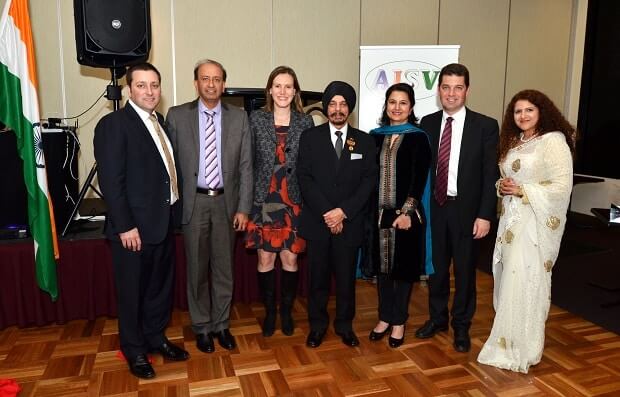
With freedom on their minds, faith in their words and pride in their souls, an eclectic group of people gathered, on 15 August at the Manningham Function Centre in Doncaster to mark the occasion of India’s 68th Independence Day. Thousands of miles away from India they came together with their family and friends in Australia, to celebrate the memories of yesteryear, the vows of today and the dreams of tomorrow. The credit for bringing all the various communities, dignitaries and ministers together went to the Australia India Society Of Victoria (AISV).

Since its inception in 1963, the AISV has been observing Indian Independence, however, for the last two years they have ensured that the celebration is held on 15 August irrespective of which day it falls in the week. Dr Gurdip Aurora, the long standing President of AISV, explained how he was inspired to make the decision as a result of a conversation with former Consul General of India in Melbourne, Dr Subhakanta Behera.

Before his untimely demise in 2012, Dr Behera used to lament that unlike in India, people in Australia tend to celebrate Indian festivals and events ‘when it suits them’. The general trend is to wait for weekends, which means they could well be lighting Diwali candles whilst getting ready for Christmas decorations or celebrating Holi weeks before the actual date.

“Dr Behera often spoke of his concern to me and a decision was made that AISV will always observe India’s Independence day on the 15th of August. I think it is befitting to celebrate it on the same day as it is observed in India,” Dr Aurora.

With a rich history of promoting and facilitating Indian-Australian relationships, the AISV has won several awards including the 2011 VMC Awards for Excellence in Community Services. In 2013 the AISV was the winner of the prestigious Pravasi Bhartiya Samman awarded by the President of India. The AISV is the only Australian Indian organisation to have received this award so far.

Last year AISV marked its 50th anniversary, making it one of the oldest Indian organisations in Australia, dedicated and committed to serving the Indian Australian community in Victoria.

This year the Independence Day event could be termed low key. Preeti Jabbal from Indian Link, who was the MC for the evening, kept the audience engaged and attentive as she introduced the dignitaries and performers. The formal part of the evening was interspersed with vibrant dance medleys from local Bollywood dance group the Bolly Dazzlers.

Dr Gurdip Aurora, who has been the President of AISV for 23 years, highlighted the role of AISV in the Indian Australian context. He discussed the changes that are expected in India post-election, and said he hoped that positive changes would come about as a result of the new Government and the selection of Narendra Modi as the Prime Minister of India.

Ms Kelly O’Dwyer, Federal Member for Higgins, who officially represented the Prime Minister of Australia Tony Abbott, and also officially represented the Kevin Andrews, Minister for Social Services, conveyed a message from the Prime Minister.

In his message the Prime Minister said, “No one should underestimate India now; nor its potential to be a global superpower in this century. Australia and India share close people-to-people links. There are more than 140,000 Victorians with Indian ancestry and I pay tribute to the significant contribution they make to our nation through their dedication, hard work and willingness to serve the community. India is the world’s largest democracy and I join with you in celebrating its success”.

The audience also heard briefly from Matthew Guy, Minister for Planning and Minister for Multicultural Affairs and Citizenship, and Telmo Languiler, Member for Derrimut and Shadow Parliamentary Secretary for Multicultural Affairs, who represented the Leader of the Opposition, Daniel Andrews. Also present were Chin Tan, Chairman of Victorian Multicultural Commission and Nick Wakeling, Minister for Higher Education.

Once the formalities concluded, Ministers Matthew Guy and Telmo Languiler managed some good moves as they joined the belly dancer, Andrea, on the dance floor. Several guests stayed back to shake a leg or two before leaving to brave the Melbourne weather again. It was a celebration of life, opportunities and happiness that come to those that are free and AISV, as usual, did it in style.