Home Blog Page 915

On the road with NaMo

0
Reading Time: 5 minutes

Trying to keep up with a man who barely sleeps is exhilarating as well as exhausting

Never did I imagine that I would be in three cities in two days tracking the Indian Prime Minister.

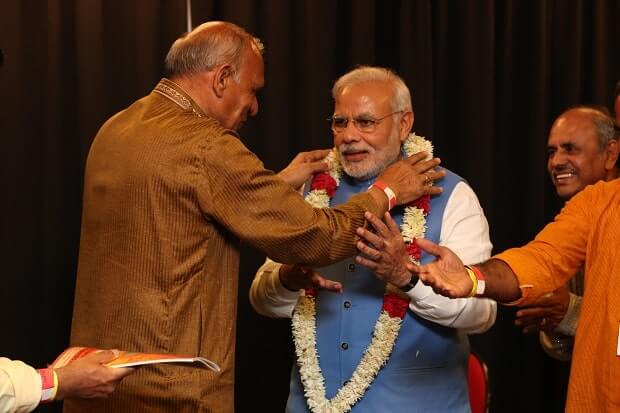
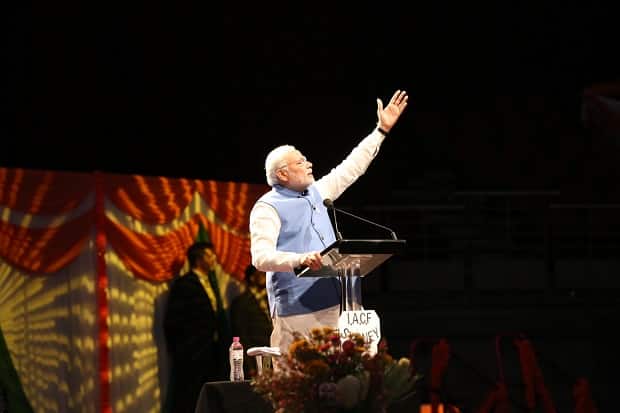
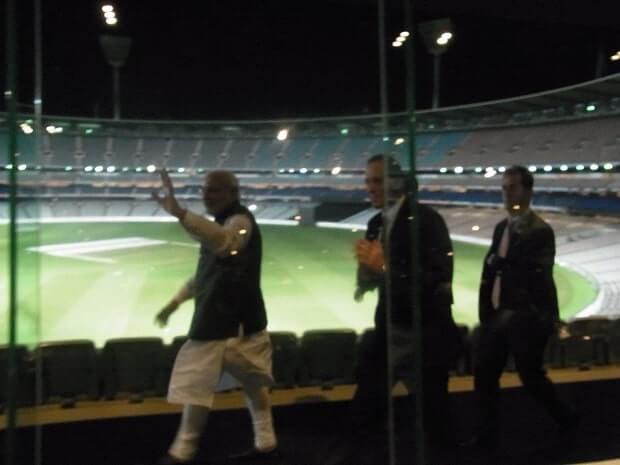
I was there as he entered through the metal doors at a private reception for the Indian community, prior to his historic address to over 16,000 delirious fans at the Allphones Arena in Sydney. I also believe that I was the only person who captured his final wave as he walked away through the glass door at the side after the state dinner hosted by PM Tony Abbott at the MCG.

My humble camera captures both these moments, albeit badly.

Between these two moments, I followed the frenzied build-up to his visit to Australia as hordes of Indian media descended on Sydney, for an event expected to surpass the Indian PM’s American address at the Madison Square Gardens. The morning of 17 November dawned bright and clear, and I am sure the organisers could have filled out the 50,000 plus seats at the Sydney Cricket Ground with people wanting a glimpse of this man known for his winning oratory.

After finishing late at night at the Allphones Arena in Sydney, I took an early morning flight to Canberra to witness Prime Minister Modi receive the guard of honour from the Australian Federation Guard made up of members of the Royal Australian Navy, Australian Army and Royal Australian Air Force. The canons boomed in the front court of the Parliament House as Australia’s finest honoured the Indian Prime Minister, while hordes of Australian Indians cheered on from the sides.

The public gallery at the Australian Parliament Chamber was overflowing with invited guests who sat quietly waiting for the official proceedings to begin at 10.05 am. As PM Modi entered, escorted by the Sergeant at Arms, the gallery could not restrain their applause.

Mr Modi spoke eloquently in his third language of English (after Gujarati and Hindi). While his address had light-hearted moments, which had the Parliamentarians laughing politely, he also hardened his tone as he made clear that all countries, including China, have to live peacefully in the East Asia region. It bodes well for the Australia-India relationship that he got mobbed by the Australian MPs on his way out.

Later, as I crisscrossed my way to Melbourne via Sydney (as all flights to Melbourne from Canberra had been booked out), I could see Air India One (also referred to as AI-1 or AIC001) on the tarmac at Canberra airport. Thought about asking for a lift (hey, fellow Indian to fellow Indian, why not?), but decided against it as I saw the heavy Special Protective Group (SPG) out in full force.

My third city in a day got me to Melbourne for a business leaders’ meet and then a community meet-and-greet at Government House. The Grand Hall was overflowing again, and it seemed the Modi Express had travelled in reverse, bringing Sydneysiders south to Melbourne.

While PM Modi was being feted by the corporate gurus in a private session, other stalwarts such as those from the field of sports got a chance to do so at the less formal community meet. The chants of “Modi! Modi!” were heard yet again from the crowds, even though this time round, Modi appeared more subdued.

Was it a deliberate attempt to show less bravado and more restraint, to fit the occasion? Or was it a touch of exhaustion, given the hectic schedules of the past few days?

Perhaps in Sydney the ability to talk in Hindi gave him a natural flow, and the sheer occasion of Canberra brought out the orator in him. But the tank seemed a bit empty in Melbourne.

Yet at the hallowed grounds of the MCG, PM Modi took some time to “examine” the pitch. I almost expected him to take the keys out of his pocket to test the softness and dampness on the pitch to give the Indian cricket team a heads-up as what to expect when they play there on Boxing Day. But in the spirit of fair play, or perhaps in fear of being shirt-fronted by Tony Abbott on this unsporting gesture, he resolved instead to simply enjoy the moment.

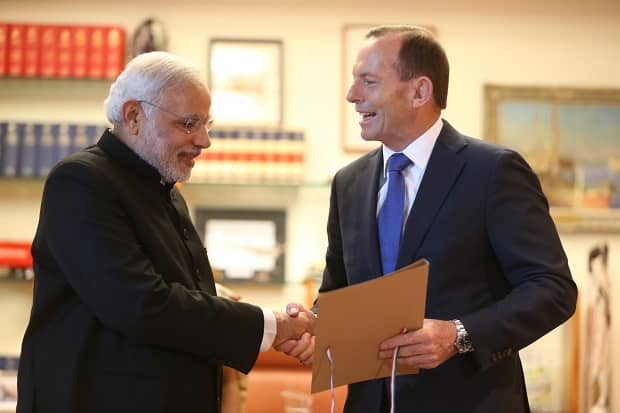
At the reception that followed, one could hear the quiver in the voice of Prime Minister Abbott. Wonder if the Indian TV stations played Dire Straits’ ‘Brothers in Arms’ as Tony Abbott and Narendra Modi gave each other a hug.

Modi’s demeanour also cracked as he felt the genuine affection in the room.

The Private Members Dining area was anything but private as the State Banquet hosted by PM Tony Abbott brought out the corporate elite, the Indian Australian community, academics and business leaders. The evening went into wind-down mode with entertainment from The String Divas and Circus Oz. To honour the Indian Prime Minister the trio from The String Diva belted out the unofficial national anthem of India, ‘Jai Ho’. And while he no doubt enjoyed this number, it was the ABBA song ‘Mamma Mia’ which had his host Tony Abbott do a jig on his seat. One almost expected him to ask Modi to join in a bit of a dance, but unfortunately there were no garba sticks available to create this ABBA-Falguni Pathak fusion.

Mr Modi had a quizzical look on his face as the medley of ABBA songs continued (yes, my camera did capture that) and he was thankful for the diversion by Estelle Parker from DFAT who got his attention. She had been in charge of taking care of Mr Modi when he visited in 2001 and wanted to say hello. Much to her delight, he remembered her and warmly took both her hands in his as he introduced her to Mr Abbott.

Even as Mr Modi expressed his gratitude to a friend from 13 years ago, Australia’s richest person and the world’s sixth richest woman, Gina Rinehart stood patiently by to talk to the two Prime Ministers.

While politics and business minds interacted, the two ‘Can Do’ Prime Ministers (perhaps Commonwealth Bank needs to trade mark their slogan) also posed for photos with not only Gina Rinehart but yours truly as well. Not far from them sat cricket legends from both sides such as Sunil Gavaskar, Kapil Dev, VVS Laxman, Steve Waugh, Glenn McGrath, Michael Kasprowich, and business figures such as Ashok Jacob, Maurice Newman, Vishal Sikka and Manoj Nagpaul. And seemingly the full front bench of the Abbott government.

And then it was time to go. Showing amazing dexterity for a 64-year-old man, and with a puffing PM Abbott struggling to keep up (note photo), Modi, with a wave of his hand, was gone.

And so it was veni, vidi, vici – Modi came, saw, conquered – the hearts and minds of people down under.


IACF, take a bow

0
Reading Time: 3 minutes

The IACF is to be congratulated for their work in bringing together the Community Reception for PM Modi

We ran in our last issue an editorial piece about the passion with which IACF (Indian Australian Community Forum) carried out the mammoth task of organising the Community Reception of the Indian Prime Minister Narendra Modi in Sydney.

Never have we repeated the same theme in successive editorials, but this time, we have to make an exception.

Our analysis of the event: absolutely brilliant.

Those who put together the Allphones Arena event, take a bow. You have been magnificent in what you delivered, not only to all those who attended the historic occasion, but also to those who interacted with you in the lead up to the show.

Nihal Agar as the chairman was a true leader – a brilliant delegator, he demonstrated a great ability to communicate and lead with ideas. The very quiet achiever Sanjeev Bhakri worked diligently behind the scenes, unflappable as he got things done with clarity in execution. Balesh Singh Dhankhar is the man who worked tirelessly with the media. We at Indian Link made sure he was worked hard – be it for media passes for our photographers and reporters or access to a live feed to broadcast Prime Minister Modi’s speech live on Indian Link Radio.

Never was a request too difficult; never did a text or message go unanswered. Sanjay Dulloo, Mohan Vijayraghavan and others on the organising committee were quick to respond and impressed with their efficiency.

To the 400-plus volunteers, the Indian community, and indeed Indian government officials, owes a debt of gratitude for the wonderful work they did in making 17 November truly a magical Monday. Their sheer hard work and unbelievable commitment saw this event live up to expectations. It showcased our small community to the rest of Australia, to our home country India, and to our cousins in the diaspora.

One wonders, now that this has been done, what other wonderful work can be done together as a community – an Indian Australian retirement village, adopting a village or two in India, funding a trust fund for Indigenous education in Australia… let’s keep the momentum going.

It was also pleasing to see the public galleries at the Australian Parliament overflowing with Indians during Prime Minister Modi’s address to the joint house. For the 450-plus people it was indeed a proud occasion to hear the first address by an Indian Prime Minister to law makers in our new home. Their respect for him was clearly on show.

What was also pleasing was noting the esteem with which the business organisation Australia India Business Council is held, as its National Chair Dipen Rughani and Vice Chair Sheba Nandkeolyar were actually in the Chamber itself in a special seating. That the organisation has established itself in the hearts and minds of the current government is indeed a credit to them.

This was further evident at Government House in Melbourne, where at a function hosted by AIBC, the top business leaders of both countries interacted with each other and with PM Modi and his team seamlessly.

All in all, the Allphones Arena event for Prime Minister Narendra Modi has shown that as a community, we can indeed unite and deliver.


Shaping India’s destiny

0
Reading Time: 5 minutes

Modi blew us all away. But then, we always knew he would, writes USHA R ARVIND

Having captured the imagination of millions back home with his radical ideas and visionary beliefs, India’s charismatic new Prime Minister Narendra Modi aka NaMo, finally touched base with expatriates as Sydney rolled out the red carpet for a rock star reception, uniting the heterogeneous diaspora in a show of strength.

It was a magical Monday that will be etched in our memories forever. Even the Australian dignitaries gathered on the occasion watched on in awe, lapping up the thunderous applause and freezing the moment with their mobile phones.

As I hopped off the train at Strathfield en route to Allphones Arena, an excited CityRail attendant let me through the electronic gates. “You must be going to meet your Prime Minister,” he quipped.

The humble chaiwallah’s rags-to-riches tale, scripted to perfection, like a Bollywood extravaganza, has clearly struck a chord with more than just the deshis and videshis. There had been media frenzy all week both on the domestic and international front. Expectations ran high, the mood was electric and Modi-mania gripped Sydney Olympic Park as 20,000 Indian Australians congregated to finally meet the man himself. The repercussions were felt far and wide. And the show didn’t disappoint.

The doomsday prophets were nowhere to be seen and nay-sayers were clearly in the minority, drowned out by the overwhelming exuberance.

Tapping into their extensive resources, the Indian Australian Community Foundation unveiled an impressive performance. The arrangements were impeccable – right from the free shuttle to ticket distribution, crowd management to cultural showcase. A Modi-fied vegetarian menu was up for grabs too in honour of the teetotaller. A large network of volunteers ensured the big night out unfolded without a glitch.

Every ethnic minority was well represented including the Tibetans and Dawoodi Bohras, conspicuous in their traditional attire and proud to be a part of celebrations. Religious differences were put aside, despite attempts by some sections of media to harp on about unsavoury incidents of the past. India was in the limelight and nothing else mattered.

The euphoria was palpable, rising to a crescendo when Modi finally took centre stage. And the global audience listened in rapt attention.

Much has been written about his firebrand rhetoric and consummate showmanship but what the Allphones Arena witnessed on the historic occasion was simplicity of his vision and genuine desire to uplift India, quite along the lines of our freedom fighters. Hoping to emulate Mahatma Gandhi and Swami Vivekananda, Modi’s grand plans are firmly centred on “small” men.

“Many people hold dreams of doing many great jobs. Good luck to them, what I have to do is small jobs for smaller people… and [make] the small people big. That is what I want to work for,” he reiterated.

His vision of India is founded on egalitarianism and meritocracy. “We weren’t fortunate enough to fight for the country’s freedom, we didn’t have the good luck to go to jail for India’s independence. We couldn’t die for the country, but at least we can live for the country. If we fight, if we struggle, it should be for our country,” he further stated passionately, whipping up the spirit of nationalism for the first time in post-colonial India.

While nuclear power, clean energy and regional security, figure prominently on Modi’s agenda, his immediate priority is a clean India – an India that we can all be proud of. Borrowing heavily from our traditional belief that cleanliness is next to godliness, Swach Bhaarath Abhiyaan is not only his pet project, but one that dominated his Sydney address.

“After so many years of independence, not getting clean drinking water or electricity is something we are not proud of,” the Prime Minister admitted with brutal honesty. “Basic sanitation and hygiene are pressing issues. If we can make the country clean, it will be the biggest service for poor people,” he continued. “If you have any feeling to save your country, then you can clean up the image that the world has of India.”

Earlier, acknowledging the traditional owners of Australia, Modi spoke of shared values and common inheritances. Outlining the extensive contributions of Indian Australians to their ‘karma bhoomi’, he complimented them on their culture of hard work and dedication.

The role of the Anglo-Indian legacy in shaping the history of Australia did not go unnoticed. “Australia is a beautiful country with bountiful resources, but your biggest asset is your people,” he added.

But what struck Modi most was the dignity of labour. “I have always admired this concept. Here, a research scientist also works as a cab driver. There is no shame in hard labour,” he noted, saluting the egalitarian spirit.

Paying tribute to the strength of democracy in the two countries, he firmly believes India would once again lead the world, as a young and energetic nation with “2,500 million arms”.

“Democracy is a wonderful concept. I am here because of Indian democracy. Even a common man can climb greater heights in a real democracy like India.”

Speaking personally to every member of the gathering, he stated “I know many of you took great interest in the Lok Sabha elections of 2014. I know that for you, it was not about who wins or loses, it was about wanting to know when India will become like the country that you are residing in.”

Working closely with the diaspora, Modi hopes to deliver on the herculean promises he has undertaken on common’s man’s behalf. To this end, he has already begun dismantling bureaucratic red tape and gargantuan hierarchies that have stifled economic progress.

“Please let us open the window and let some fresh air in. Let us breathe and live for the first time and savour the new found freedom,” he added poignantly.

An astute leader, Modi is also acutely aware of the strength of youth power and is engaging with them as never before.

“We want to achieve new heights of development, my dear young friends, and India has decided to concentrate on the young people,” he highlighted.

“On the confidence of their talent, on the confidence of their capacity, they would become competent to help the whole world. I wish that the whole world should come to India. The manufacturing sectors, they should come in… because I wish that the youth of India should get employment. I have decided that 100 per cent foreign investment will be allowed in the railways. I’m inviting everyone – please come, please come and invest ineclared, and Australia will no longer be at the periphery of its vision. Perhaps Indian Australians can play a greater role in shaping the destiny of their mathrubhoomi.

 For more images from the spectacular Allphones Arena event visit – https://www.facebook.com/IndianLinkAustralia

Shaping India's destiny

0
Reading Time: 5 minutes

Modi blew us all away. But then, we always knew he would, writes USHA R ARVIND

Having captured the imagination of millions back home with his radical ideas and visionary beliefs, India’s charismatic new Prime Minister Narendra Modi aka NaMo, finally touched base with expatriates as Sydney rolled out the red carpet for a rock star reception, uniting the heterogeneous diaspora in a show of strength.

It was a magical Monday that will be etched in our memories forever. Even the Australian dignitaries gathered on the occasion watched on in awe, lapping up the thunderous applause and freezing the moment with their mobile phones.

As I hopped off the train at Strathfield en route to Allphones Arena, an excited CityRail attendant let me through the electronic gates. “You must be going to meet your Prime Minister,” he quipped.

The humble chaiwallah’s rags-to-riches tale, scripted to perfection, like a Bollywood extravaganza, has clearly struck a chord with more than just the deshis and videshis. There had been media frenzy all week both on the domestic and international front. Expectations ran high, the mood was electric and Modi-mania gripped Sydney Olympic Park as 20,000 Indian Australians congregated to finally meet the man himself. The repercussions were felt far and wide. And the show didn’t disappoint.

The doomsday prophets were nowhere to be seen and nay-sayers were clearly in the minority, drowned out by the overwhelming exuberance.

Tapping into their extensive resources, the Indian Australian Community Foundation unveiled an impressive performance. The arrangements were impeccable – right from the free shuttle to ticket distribution, crowd management to cultural showcase. A Modi-fied vegetarian menu was up for grabs too in honour of the teetotaller. A large network of volunteers ensured the big night out unfolded without a glitch.

Every ethnic minority was well represented including the Tibetans and Dawoodi Bohras, conspicuous in their traditional attire and proud to be a part of celebrations. Religious differences were put aside, despite attempts by some sections of media to harp on about unsavoury incidents of the past. India was in the limelight and nothing else mattered.

The euphoria was palpable, rising to a crescendo when Modi finally took centre stage. And the global audience listened in rapt attention.

Much has been written about his firebrand rhetoric and consummate showmanship but what the Allphones Arena witnessed on the historic occasion was simplicity of his vision and genuine desire to uplift India, quite along the lines of our freedom fighters. Hoping to emulate Mahatma Gandhi and Swami Vivekananda, Modi’s grand plans are firmly centred on “small” men.

“Many people hold dreams of doing many great jobs. Good luck to them, what I have to do is small jobs for smaller people… and [make] the small people big. That is what I want to work for,” he reiterated.

His vision of India is founded on egalitarianism and meritocracy. “We weren’t fortunate enough to fight for the country’s freedom, we didn’t have the good luck to go to jail for India’s independence. We couldn’t die for the country, but at least we can live for the country. If we fight, if we struggle, it should be for our country,” he further stated passionately, whipping up the spirit of nationalism for the first time in post-colonial India.

While nuclear power, clean energy and regional security, figure prominently on Modi’s agenda, his immediate priority is a clean India – an India that we can all be proud of. Borrowing heavily from our traditional belief that cleanliness is next to godliness, Swach Bhaarath Abhiyaan is not only his pet project, but one that dominated his Sydney address.

“After so many years of independence, not getting clean drinking water or electricity is something we are not proud of,” the Prime Minister admitted with brutal honesty. “Basic sanitation and hygiene are pressing issues. If we can make the country clean, it will be the biggest service for poor people,” he continued. “If you have any feeling to save your country, then you can clean up the image that the world has of India.”

Earlier, acknowledging the traditional owners of Australia, Modi spoke of shared values and common inheritances. Outlining the extensive contributions of Indian Australians to their ‘karma bhoomi’, he complimented them on their culture of hard work and dedication.

The role of the Anglo-Indian legacy in shaping the history of Australia did not go unnoticed. “Australia is a beautiful country with bountiful resources, but your biggest asset is your people,” he added.

But what struck Modi most was the dignity of labour. “I have always admired this concept. Here, a research scientist also works as a cab driver. There is no shame in hard labour,” he noted, saluting the egalitarian spirit.

Paying tribute to the strength of democracy in the two countries, he firmly believes India would once again lead the world, as a young and energetic nation with “2,500 million arms”.

“Democracy is a wonderful concept. I am here because of Indian democracy. Even a common man can climb greater heights in a real democracy like India.”

Speaking personally to every member of the gathering, he stated “I know many of you took great interest in the Lok Sabha elections of 2014. I know that for you, it was not about who wins or loses, it was about wanting to know when India will become like the country that you are residing in.”

Working closely with the diaspora, Modi hopes to deliver on the herculean promises he has undertaken on common’s man’s behalf. To this end, he has already begun dismantling bureaucratic red tape and gargantuan hierarchies that have stifled economic progress.

“Please let us open the window and let some fresh air in. Let us breathe and live for the first time and savour the new found freedom,” he added poignantly.

An astute leader, Modi is also acutely aware of the strength of youth power and is engaging with them as never before.

“We want to achieve new heights of development, my dear young friends, and India has decided to concentrate on the young people,” he highlighted.

“On the confidence of their talent, on the confidence of their capacity, they would become competent to help the whole world. I wish that the whole world should come to India. The manufacturing sectors, they should come in… because I wish that the youth of India should get employment. I have decided that 100 per cent foreign investment will be allowed in the railways. I’m inviting everyone – please come, please come and invest ineclared, and Australia will no longer be at the periphery of its vision. Perhaps Indian Australians can play a greater role in shaping the destiny of their mathrubhoomi.

 For more images from the spectacular Allphones Arena event visit – https://www.facebook.com/IndianLinkAustralia

A dream come true

0
Reading Time: 3 minutes

Chance meetings with Prime Minister Modi left some members of the community stunned

Ramesh Chandra has long been a contributor to Indian Link. The 84-year-old cancer patient’s witty political cartoons have often featured on these very pages. So we were thrilled to learn his story had been picked up by the Indian media, here in Australia to cover the Modi visit. And in a single tweet from a television reporter to the Prime Minister’s official account, Ramesh Chandra’s vision, of perhaps having a moment to bless Prime Minister Modi’s visit, became a reality.

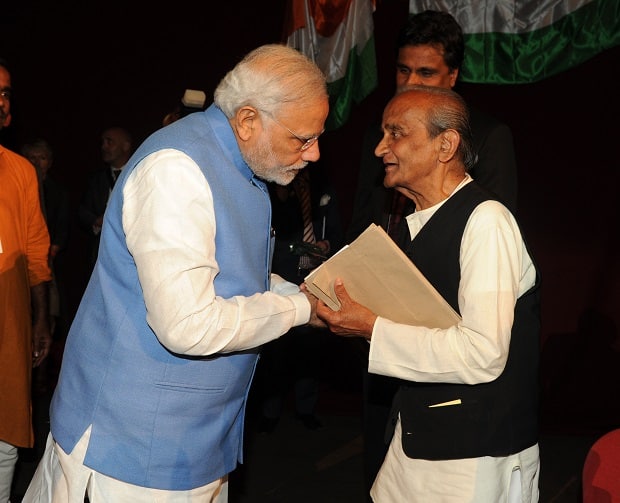
“When he walked into the arena, he came directly to me. I was very surprised,” Chandra says. “He told me ‘I have seen your work, and I am impressed. He was asking about my health and told me to take care of myself.”

A humble man, Chandra says he was shockedPrime Minister Modi selected him to meet first. “I’m an ordinary man. There were thirty or forty other dignitaries there waiting, high level people, but he took the time to see me. I am very grateful. It was the most precious moment in my life.”

Prime Minister Modi in fact told Ramesh Chandra his work is a “service to the nation”.

Originally from Hyderabad, Chandra says he gets pleasure from keeping active by creating his political and social cartoons. “I enjoy myself, drawing ideas and exploring different aspects of Modi’s personality and career.” Chandra even created a book of his cartoons and sent them to the BJP in India and has had his work published across India.

Also a heart patient and suffering from diabetes, Ramesh Chandra says with a laugh, he’s “enjoying fighting with these diseases”. He says he’s anxious to stay busy and keep abreast of social and political events both here and in India.

An active member of the community, Chandra is a registered volunteer with the NSW Art Gallery and is also helping mould the next generation of artists by teaching children how to draw. “Often,” he says, “I try to teach them, but they teach me.”

Chandra details how he had television crews camped at his modest home in Sydney’s Pennant Hills for an entire two days leading up to the Community Reception. “I never had such an experience before,” he says. “I had no time to even breathe!”

“My enjoyment in life is to draw and laugh at myself. It is an extension of my life, my way of finding happiness.”

One of the lucky few sitting right in front of PM Modi as he made his historic speech was 43-year-old Sydney woman Shobhna Singh. Originally from Kolkata, Singh had an up-close and personal encounter with Prime Minister Modi, thanks to her creativity.

The night before the Community Reception, “I thought, to make it a memorable day, I would paint a portrait of Prime Minister Modi to give him as a gift,” Singh says.

On the day of the event, Singh thought it would be difficult to bring the artwork inside the venue due to the tight security, but “the Australian security guard saw my portrait and told me even he was a Modi fan and that I could take it through!”

Singh says everyone who saw the painting liked it and “that added to my joy”.

Though initially conceived as a present for the Prime Minister, his security detail suggested it would be better kept by Shobhna as a souvenir of the event.

“After the speech, he was about to leave the dais and I shouted ‘Modiji!’” Singh recalls. “He is so grounded, he came over to sign my painting.”

After requesting a pen, Modi signed his autograph on the portrait. “I was in tears. This was a dream come true for me,” Singh says, “I couldn’t believe it!”

Singh says she highly enjoyed Modi’s speech. “The entire crowd was mesmorised. I came to this arena last time for Shah Rukh Khan, but I think hands down Modi rocked…better than SRK!”

Global results

0
Reading Time: 4 minutes

G20 endorses India’s concerns on black money

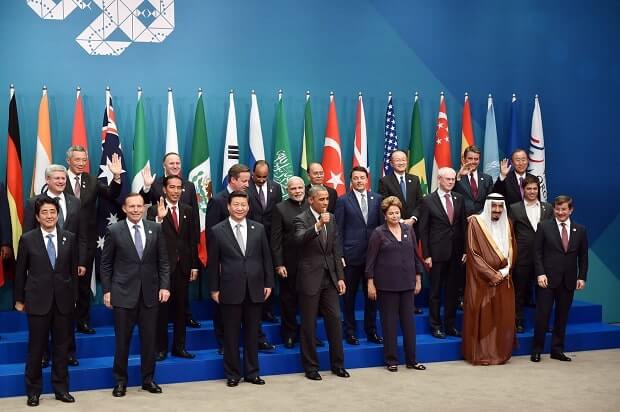
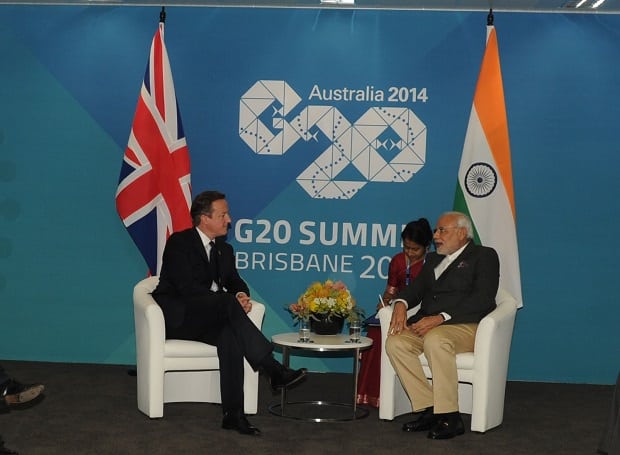
The G20 Summit concluded with its leaders endorsing India’s concerns over black money, while promising a new global transparency standard that will modernise international tax rules and allow automatic exchange of related information between governments to curb the illicit outflow of money estimated at over one trillion dollars annually.

India, being represented at the summit by Prime Minister Narendra Modi, immediately called this development an unprecedented success, and said the next step will be the delivery of an action plan, along with the Organisation of Economic Cooperation and Development (OECD). The two forums represent 44 countries and 90 per cent of the world economy.

“We are taking actions to ensure the fairness of the international tax system and to secure countries’ revenue bases. Profits should be taxed where economic activities deriving the profits are performed and where value is created,” the G20 leaders said in a joint communique at the end of the eighth summit, promising to finalise work by the end of 2015.

This was precisely what Prime Minister Narendra Modi had specifically said and sought during a session on “Delivering Global Economic Resilience” on the second day of the summit, while also wanting systems that will help countries in getting back the ill-gotten monies stashed away abroad.

“At this Summit, G20 Leaders have endorsed a new global transparency standard that will leave no place for tax cheats to hide. More than 90 jurisdictions will begin automatic exchange of tax information, using a common reporting standard by 2017 or 2018,” said Australian Prime Minister Tony Abbott.

India has no official estimates of illegal money stashed away overseas, but the unofficial ones range from $466 billion to $1.4 trillion.

In fact, according to Indian negotiators, such strong words on illicit money and imposition of curbs in the communique would not have been possible without India’s intervention, since the original draft did not contain a language that was satisfactory for India.
They said the Prime Minister and his official team, led by his Sherpa, Railway Minister Suresh Prabhu, got strong endorsements for New Delhi’s stand, notably from Brazil and South Africa, to make this happen.

“India scores at G20,” the external affairs ministry spokesperson Syed Akbaruddin tweeted. He and Minister Prabhu even termed the outcome “unprecedented success”.

“The G0 communique addressed concerns going beyond G20, developmental issues — employment, India’s prime concern, was a central issues of discussion,” Prabhu told reporters at a post-summit briefing.

The tax and related black money issue aside, several other issues which New Delhi pursued vigorously in Brisbane found support at the G20 Summit; reducing the cost of remittances from abroad, of which India is the largest beneficiary at $70 billion annually, collaborations on energy, infrastructure financing, inclusive growth, job creation and energy security.


The communique also specifically welcomed the breakthrough between India and the United States at the World Trade Organisation (WTO) and saw this as paving the way for a pact that will help ease the processes involved in global commerce, and move forward in addressing the concerns of developing countries on food security.

The G20 promised strong, practical measures to reduce the global average cost of transferring remittances to 5 percent, which goes up sometimes as high as 10 per cent.

The communique also promised to raise global growth to deliver better living standards and quality jobs for people across the world to ensure financial inclusion. It specifically set a target of raising the output of G20 members by around 2.1 percent by 2018 and the necessary steps towards achieving this.

Prime Minister Modi also made a strong pitch for energy security and finding alternative solutions. “Our Prime Minister mentioned that we should create a global centre for dealing with renewable energy to find solutions and everything. It was very widely welcomed including by those who are not part of the G20, like Jeffrey Sachs and others who have been saying that this is an excellent idea that we have done,” Prabhu said.

Indian interlocutors said another issue that has become a central theme for the G20, thanks to India, is employment. There was also some movement forward in raising the target of 25 percent jobs for women.

Similarly on infrastructure, the G20 decided to establish a Global Infrastructure Hub within four years to emerge as a platform for sharing of knowledge, also for networking between governments, the private sector and funding institutions.

Akbaruddin, summing up India’s gains at the G20, said: “If you go back to our initial briefing and see from there where we are today, we have achieved substantially or overwhelmingly all our goals.

A powerful partnership

0
Reading Time: 3 minutes

India and Australia agree on a new security cooperation framework

India and Australia marked a new synergy in bilateral relations as they agreed on a framework for security cooperation to boost defence, civil nuclear and economic ties even as PM Narendra Modi ended his hectic five-day, four-city visit of Australia.

The two countries signed five agreements, including one on exchange of sentenced prisoners, while Modi also addressed the Australian parliament, the first Indian prime minister to do so.

After talks with Prime Minister Abbott in Canberra, both countries agreed to seek early closure on their civil nuclear agreement and to speed up negotiations on a bilateral trade pact.

India and Australia also agreed on a framework for security cooperation to reaffirm the bilateral strategic partnership.

It calls for annual prime ministerial meetings, regular defence ministers’ meetings and annual defence policy talks, and regular bilateral maritime exercises.

Both sides will cooperate to counter-terrorism. Australia will support Indian membership of the export control regimes.

It also calls for “early operationalisation of civil nuclear energy cooperation and Australia’s support for strengthening India’s energy security by supply of uranium for India’s safeguarded nuclear reactors”.

Modi said the two countries had agreed to speed up negotiations on a Comprehensive Economic Partnership Agreement. He sought easier access for Indian business to the Australian market and quicker investment approvals.

Modi said both sides need to strengthen their security cooperation to combat terrorism and cooperate closely in international forays like the East Asia Summit, the G20 and the Indian Ocean association.

Abbott said after the bilateral talks that Australia “will export uranium to India under suitable safeguards, of course”.

In a take-off on their close sporting links, Abbott referred to the BJP government’s strong majority in parliament, “Modi has the runs on the board for getting the bureaucracy working (to get any job done).”

In Melbourne, Modi addressed business honchos, including mining magnate Gina Rinehart, saying that his government was undertaking reforms to enhance the ease of doing business in India.

A joint statement said that the existing Joint Working Group on Counter-Terrorism would be renamed to cover other transnational crimes, including ongoing cooperation on illegal migration.

Both prime ministers directed that an equitable, balanced, mutually beneficial and high quality Comprehensive Economic Cooperation Agreement be brought to an early conclusion.

It said the Framework for Security Cooperation showed “the unshakeable resolve of the two countries in combating and defeating terrorism, including threats posed by foreign fighters joining extremist groups”.

The Australian government will also relax visa restrictions for skilled migrants, in an effort to make the country more competitive.

A temporary work visa, the 457 visa allows skilled workers to come to Australia and work for an approved business for up to four years.

Prime Minister Tony Abbott, along with Trade Minister Andrew Robb, and Immigration and Border Protection Minister, Scott Morrison, announced several measures which will make it easier for Australian businesses to employ skilled migrants.

“The 457 program must be a means of filling genuine skills gaps in the local labour market while not placing unnecessary administrative burdens on business,” the statement said.

In a separate development, the government will introduce a new Premium Investor Visa (PIV), which offers a faster 12-month pathway to Permanent Australian residency than the existing Significant Investor Visa.

Epic Wembley Stadium speech planned for Modi UK visit

0
Reading Time: < 1 minute

OFBJP are getting ready to organise a Community Reception at the iconic Wembley Stadium in London 

After the success of PM Modi’s speeches in New York and Sydney, the Overseas Friends of the BJP are now getting ready to organise an Community Reception event for the Prime Minister at the iconic Wembley Stadium in London for 90,000 fans.

Given that there are 1.5 million people of Indian origin in the United Kingdom, organisers are confident that the event will attract similar attention to the events held abroad.

It seems Aussies started a trend, with special trains like the Modi Express that ran from Melbourne to Sydney being planned from key European cities such as Paris, and also special Modi flights.

The exact date for the event has not yet been finalised, although 31 January is a serious possibility.

The Prime Minister has also been invited to unveil a statue of Mahatma Gandhi outside the British parliament on his birth anniversary.

However, with elections due in the United Kingdom in May 2015, the Prime Minister Modi’s office is also considering the political consequences of going to Britain as it enters the election season.

There is also an alternate view being proposed that the Prime Minister should only travel to the UK after the election results. Meanwhile, the PM has agreed to travel to Germany in April 2014.

Big bang Diwali at Fed Square

0
Reading Time: 4 minutes

Celebrate India brings to life a cultural extravaganza, writes PREETI JABBAL

Over the years Diwali has emerged as the dominant Indian festival to be celebrated around the world. This year, over 35,000 people converged in the UK city of Leicester to celebrate the major Indian festival. In the US, the Obamas extended their warm wishes and lit diyas to celebrate Diwali in the White House, while closer to home the sails of Sydney’s iconic Opera House were illuminated to celebrate the festival of lights.

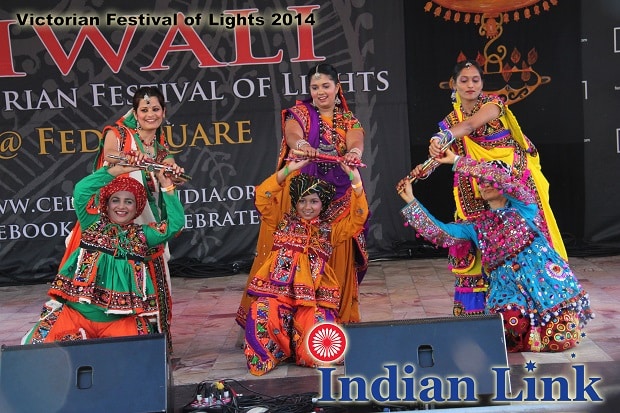
In Melbourne one of the largest events was held at Federation Square where Celebrate India brought to life the traditions, food and celebration rituals of Diwali. With a lavish assortment of music, dance and activities, the event upped the grand scale of entertainment for the audience to enjoy. The rush and jostle was all part of the experience as the event drew a large crowd. Thousands of revellers visited the Fed Square cultural precinct throughout the day to be part of the extravaganza.

With creativity and innovation,the Celebrate India team has taken this festival from strength to strength since its launch in 2006.

Each year the organisers add another interesting element to their list of activities.

During the main event the crowd surged through the Square as many savoured Indian delicacies from the array of food stalls, whilst others shopped for traditional Indian crafts, fashion and jewellery. Festival staples like henna applications and face painting vied for attention with free photo opportunities with the 2015 ICC World Cup.

The biggest crowd puller was the ongoing entertainment on the main stage as myriad dance forms from varied regions of India – and the ever-popular Bollywood – created a fine synthesis of movement, expression and rhythm. Weaving together the diverse threads of Indian culture, artistes depicted both classical and contemporary variations and combinations of art, dance and music.

Exotic flavours from across the globe were also to be found through representation from Fiji, Mauritius, Sri Lanka, Latin America and China. A laughter yoga session added joie de vivre that made you want to turn to their neighbor and smile. A broad range of activities kept the audience engaged and there was something for people of all ages.

Extensive contemplation and planning, extending over quite a few months, ensured that the event ran smoothly. A dedicated team of 35 volunteers coordinated countless details and dealt with all aspects of planning, promotion and execution under the able guidance of Arun and Jaya Sharma.

This year, Melbourne’s major public transport provider Metro promoted the festival in several languages. Through their regular announcements they informed commuters about the Festival and the significance of Diwali prior to the event.

People at Melbourne’s Tullamarine Airport also witnessed the magic of Diwali as the Celebrate India team decked out the terminal in festive décor, distributed traditional sweets to passengers and presented Bollywood dances for entertainment. Travel weary passengers were taken by surprise with this display of spectacular colours, fun and vivacity.

This year also saw the addition of the Celebrate India Essay Competition, a cross-cultural initiative that encouraged primary school students in Victoria to participate in an essay writing competition with an aim to increase awareness of India and its culture.

Leading up to the main Federation Square event popular Bollywood movies were screened in collaboration with Mind Blowing Films. The Diwali message was constantly encountered in the form of colourful banners at Finders Street station, as well as through the sound of Indian music being played in beautifully lit carriages as they travelled the streets of Melbourne.

An impressive list of dignitaries including Premier of Victoria Denis Napthine, Opposition leader Dan Andrews, Deputy Mayor of the City of Melbourne Susan Riley, and Consul-General of India in Melbourne Manika Jain were in attendance. Speaking at the occasion, Arun Sharma, Festival Director, expressed his dream that Diwali would be declared as a public holiday in Victoria someday soon.

Putting the big bang into the Diwali at Federation Square festival, the day’s events culminated in a spectacular fireworks display. The explosive pyrotechnics electrified the night sky with a riot of colours as people observed the display from whatever vantage point they could find.

With the backdrop of the ‘most livable city in the world’ the sparks shone on people’s upturned faces and it was a befitting end to a joyful day.

Thanks to Celebrate India’s creative choreography, Diwali was celebrated as authentically and enthusiastically as it is back home.


With thanks to AP Guruswamy for some photos

Diwali milan

0
Reading Time: 2 minutes

Warm Indian hospitality marks Hindi Niketan’s Diwali event, writes SWATHI BHARGAV

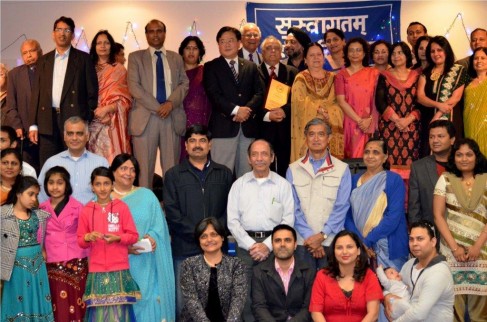
Approaching Clayton Hall to attend the Hindi Niketan Diwali event, strings of colourful lights, quite like the ladis that are commonly found adorning houses in India during festivals, greeted revellers. You could hear the distant hum of people’s conversations, and as soon as I walked in, I was transported back to India.

It was with a feeling of déjà vu that I saw the men huddled together in earnest conversation, women chatting in groups and children running around looking for their mates. The atmosphere was full of colour, joy and vibrancy as the community came together to celebrate.

Hindi Niketan is one of the oldest not-for-profit Indian organisations in Melbourne, formed with an aim to promote Hindi language and celebrate Indian culture.

Hindi Niketan initiated the addition of Hindi language at VCE (Victorian Certificate Of Education) level in Victoria. “We have raised the bar to such an extent, that there are Hindi classes held all over Victoria and many people are now aware of the language,” said Sharad Gupta, President of Hindi Niketan.

Attending the Hindi Niketan Diwali this year was a trip down memory lane. Everyone enjoyed the delightful cultural performances and the delicious food presented with warm Indian hospitality. Following Indian tradition, guests were greeted with laddoos at the entrance, and the evening began with a Lakshmi-Ganesha prayer followed by Kathak performance as a prayer to Goddess Saraswati.

Hindi Niketan is strong on promoting amateur talent, especially youth, as many young children and teenagers presented the entertainment for the night. Culture should not only be celebrated it should be shared and passed on to future generations.

A brief address from Consul General of India in Melbourne Manika Jain, Hong Lim (MP for Clayton), President of FIAV Vasan Srinivasan, and Victorian Multicultural Commissioner Chidambaram Srinivasan took up the formal proceedings, followed by community awards presented to Santosh Kumar from Northern Region Indian Seniors Association and Dr Ram Mahajan, one of the oldest members and supporters of Hindi Niketan.

Sharad Gupta also shed light on other activities that Hindi Niketan is involved with during the year. “Each year on Australia Day, which coincides with the Republic Day in India, we organise a family picnic. Apart from celebrating major Indian festivals, we also confer awards to students who have completed their VCE with Hindi as a subject. This is to reward and appreciate their efforts and to promote Hindi as a language.” Besides the cultural and community events Hindi Niketan is also involved in campaigning against social issues like domestic violence and drug abuse.

Inga Peulich, State Member for South Eastern Metropolitan Region and Victorian Cabinet Secretary, attended the Diwali event and had nothing but praise for the organisation.

“I’ve had a very long association with Hindi Niketan,” Peulich said. “I always look forward to their events. Apart from the promotion of Hindi as a language, I admire the optimistic, hard-working and aspirational nature they possess. The sky is a limit for them.”

Hindi Niketan should be commended for their exemplary job at bringing people together and celebrating the culture and traditions of India.