Home Blog Page 1014

Indian Link's Father of the Year!

0
Reading Time: < 1 minute

Thanks Dad

Indian Link Father of the Year Award entries are open!

father's day
Do you know a super special dad out there in the community who deserves the title?
Fathers are those special people who are like our rocks in life. They’re our foundation and always help us out in times of need. That’s why at Indian Link we would like to invite nominations for our inaugural Indian Link Father of the Year Award 2013 from the Australian Indian community. If your father, husband, brother, friend, or anyone you know is a very special dad, you may want to nominate him for this award.
How to enter?
Tell us in 300 words or less why your nominee should win. Include photographs of the nominee, and any supporting documents.
Email entry to: win@indianlink.com.au
Get your entry in by 5pm on August 25, 2013.
The award-winning father will receive special prizes including $500 from Indian Link.
The award winner will also feature in the September edition of Indian Link, as well as on Indian Link Radio.
Criteria for nominations
The nominee must be currently living in Australia as a permanent resident or an Australian citizen. The nominee must have certain special qualities that make him stand out from the crowd. Employees, as well as friends of family of employees of Indian Link cannot enter the competition.

INDAUS Fair 2013

0
Reading Time: < 1 minute

[imagebrowser id=21]

Das kapital!

0
Reading Time: 4 minutes

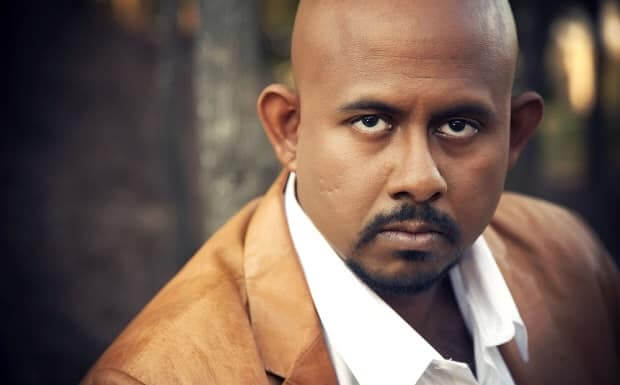
A versatile Indian-origin actor is making inroads into Australia’s film industry
kaushik-2
Described as ‘sensitive and dangerous’ for his portrayal of characters in his reel life, in reality, this Queensland actor of Indian origin bares little semblance to those roles. Warm, approachable and chatty, Kaushik Dasgupta, all of 33 years of age, starred as Dr Ron in Daddy’s Little Girl (2012) and as Ghazi Malouf in Agent Elite (2012). The versatile actor talks to Indian Link about his ongoing journey as an actor in Australia.
Kaushik aka ‘Das’, says, “I do take pride in my roots, but at the same time I like to be ethnically ambiguous; that’s why I’m called ‘Das’.  I try to keep some mystery about myself in this business”. He cites an example of American actor Kal Penn, born Kalpen Suresh Modi who bagged more roles when he took on the screen name of ‘Kal Penn’.
Das’s passion for acting developed over the years. As a child he would connect with the mirror, gyrating to Bollywood songs.
“Dancing to Disco Dancer was a family affair, I would gather all my family members and perform a dance for them,” he reveals with a smile.
Coming from a conservative Bengali family, Das’s father hoped his son would be a lawyer someday. Das went on to pursue Law at the University of Queensland, and while studying he worked at the criminal courts as an instructing clerk. It was during this time that he had a career-changing realisation.
“It had become a game for some lawyers, as to how many people they could get behind bars without considering the real human cost of what they were doing,” explains Das.  “The flippancy of it all, perhaps from being desensitized to crime, didn’t sit well with me.  That’s not to say there aren’t many great lawyers out there doing a passionate wonderful job – that was simply my limited experience”.
He then took a short stint at a job with a bank, but he soon realised he was unhappy with what he was doing there as well.
“In 2007, I began flirting with acting, more as a pastime, as I had never lost the spark for acting all along”.
He began daydreaming about how good it would be just to live a life pursuing his passion. Das started his career with casual acting, featuring as an extra: he took on roles such as a Turkish prisoner, parliamentary guard and a gym member in various TV series.
Das later graduated with an Advance Diploma in Screen and Stage Acting from the Actor’s Conservatory in 2010, and also trained at the Queensland branch of the Melbourne-based Film and Television Institute in 2012, for a year. His parents were supportive of his decision to become an actor, as they realised it was a “mind-body connection” for him. Acting was a labour of love.
It was during his training that Das came across his mentors, actors Mirko Grillini and Joss McWilliam.
“They instilled a belief in me that I could go on in this industry for a very long time,” says Das. “Mirko understood ethnicity as he was an Italian himself”.
His inception as an actor started off with graduate student productions, and he offers this as advice to future actors.
“Associate yourself with student groups, as this would be a good training ground and also provide a platform for networking opportunities with film makers,” he states.
Das took on the lead character of ‘Roger’ in Celluloid Heaven (2011) made by the Griffith School, and went on to act in more graduate productions. The break came when he was noticed and recommended by a casting director to work in the independent movie, Daddy’s Little Girl.
A horror thriller based on child abduction, the movie was directed by Chris Sun and shot at the Sunshine Coast in Queensland. Das played Dr Ron, a close friend and doctor of a family who have their lives turned around by the disappearance of their little girl. The movie has also won international acclaim and recognition in 2012, winning ‘best film’ at the Polygrind Las Vegas Premier Underground Film Festival, a special jury prize at the Melbourne Underground Film Festival and a screening of the movie in Cannes. It will soon be distributed Australia-wide in DVD/Blu-ray.
Soon after, Agent Elite directed by James Richards released in 2012, in which Das played the role of Ghazi Malouf, an intellectual who travels the world giving sermons to poison Western ideology. His private life involves many illegal activities that make him a high security threat and target. The film won ‘best foreign film’ at the Action on Film International Film Festival in Los Angeles. The movie was also showcased at the Gold Coast Film Festival in January 2013.
“All the sweat and toil had finally paid off,” says Das with a smile. “It felt good to walk the red carpet”.
Commenting on working with independent film productions, he says, “I enjoy the wide range of experience they offer, and really I value my time as an actor in these films”.
So has Das broken through the barrier into the mainstream industry?
“I have not broken into the mainstream industry as yet,” he says, with a shake of his head. “I have to knock on the door very hard. I am still evolving as an actor”.
With varied upcoming projects, Das has his hands full at the moment; the makers of Agent Elite will be casting him in their new venture titled Hostile. His character is that of a warlord mercenary, is all he can reveal at the moment. Das will also be seen in Next Step, a series directed by Bradley Murmane and Plan, an independent short film written by Amanda and Mirko Grillini. He recently played the role of an Indian shopkeeper in a student production movie titled Bubble Bandit, directed by Brent Dunner, which may screen at this year’s Tropfest.
When asked about tapping the Indian film industry, Das says, “I need to build my work profile before delving into the Indian market. I am very keen about taking my career forward and seek prospects in this industry, including Indian regional cinema”.

Heritage honour for Adelaide temple

0
Reading Time: 6 minutes

Whenever one sees a picture of the Opera House, Sydney pops up on our mental screen. And Taj Mahal transcends you to tantalising India. Every major city in the world has a structure that represents it or the country where it is located, like the Statue of Liberty, Eiffel Tower or Big Ben, to name a few. Travel brochures are living proof of their value as tourist magnets. Such buildings have attained iconic status due to their age, design and character unique to the era of their construction.  Their socio-cultural values have been etched into their community’s heritage canvas.

Being a young nation, Australia may lack such spectacular age-old structures. However, most states have buildings ranging from little cottages to magnificent mansions that give a narrative of the lifestyle, social and cultural values of the early years of settlement.  To ensure that such a narrative is not lost to future generations, state governments have used legislation to protect some of those buildings by listing them on a heritage register. Generally those buildings are of considerable antiquity.

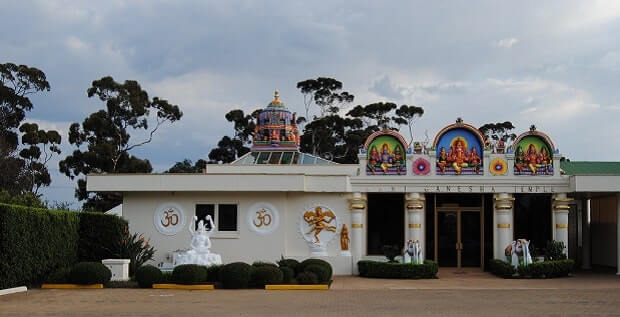
But one building that got the gong is only thirteen years old – South Australian Hindu Society’s Ganesha temple in Adelaide. Number thirteen has proved lucky, in its case. Adding the temple to the register, the SA Heritage Council states, “The place meets the criterion 16(1) of the Heritage Place Act of 1993. It has strong cultural and spiritual association for the community … The temple is significant as the State’s first traditional Hindu temple  …  since late 1990s it has provided the State’s Hindus, from different sects, with a place for both spiritual worship and cultural studies. The design of the temple resembles the human body lying on its back with the head to the east and feet to the west and houses 25 hand-crafted deities ….”

Understandably, the Hindu Society is elated at receiving this badge of honour, and also being the first Hindu temple in Australia to be felicitated. How it achieved this, can be explained by following its 30-year journey. Like most public organisations, it started from humble beginnings. Way back in the mid-‘70s, about a half dozen families would meet at weekends to chant ‘bhajans’ under the banner of the Hindu Seva Samaj.  It was the brainchild of Moti Somers, an arts teacher from South Africa. Around the same time Rajesh Chandrasekaram, a teacher from Malaysia, organised Vedanta Society meetings for similar spiritual purposes. Both these informal groups used to meet at individual residences. In 1985, Dr Ravindran, an orthopaedic surgeon of Sri Lankan and Indian origin, sowed the seed for the Hindu Society, inviting three members from each of the above two groups, including Dr Janan Easwaran (Sri Lanka), Baghwat Sharma, Mohan Odhavji (Fiji) and Ken Soman (India).

With the number of migrants of Hindu faith increasing, the need for a common place of worship was keenly felt.  Just four months after its inception, the Society purchased a vacant Lutheran church hall in Marion, 15km south of the CBD. It was a very basic single-storey cement brick building that would seat around 80, with a small office room. At one end the hall was a metre-high wooden platform with a Cross placed on it.  The gravel car park outside had space for 10 vehicles. The society opted for this austere building since it had no funds; any green field option was out of the question.  Announcing its decision on the purchase at a meeting in November 1985, the Society received pledges for a third of the purchase price and the balance at the time of settlement two months later, with no need for borrowing. It was a remarkable feat. The local Hindu population might have been small, but its enthusiasm high enough to make Adelaide the second city in Australia to have a temple.

The austere building’s transformation to what it is today is simply amazing!  However, it was not without a few bumps along the way, as could be expected with any public organisations of its kind. Initially a framed picture of Ganesha adorned the platform; it still hangs on one of the walls and is fondly revered. Within six months of buying the building, a metre-high granite statue of Lord Ganesha – as He is universally accepted by all sections of the Hindu community – was brought from India and installed on a concrete pedestal after a simple but authentic prathishta ceremony witnessed by a full house in July 1986.

Now being a house of God, there arose a need to open the location and offer puja every evening. In the absence of a traditional priest, some volunteers like Dr Ananth Rao, a mathematics professor and scholar; Dilip Chirmulley, a university lecturer; and a couple of others well-versed in scriptures undertook this job on a rotational basis for over a year. In 1988, Skandaraja Kurukkal from Malaysia was appointed the priest. A handful of generous members undertook to fund the priest’s accommodation and other expenses, as the temple had limited resources.

With all the religious features of a temple in place and more migrants arriving, devotees started attending in large numbers. On major festival days there was not enough space, and devotees had to stand outside to obtain darshan and partake of prasad.  As the building was surrounded by houses on all three sides, there was no room to expand. It was proposed to build a temple at the car park, shifting the idol there and converting the temple building to a hall. Moving the consecrated did not find favour with some sections. Lack of space and resources confronted even the Almighty.  No solution could be found until 1992 when an opportunity arose to buy the backyard of an adjoining house, and it was taken up even though it cost as much as the original church building! It was only made possible thanks to a generous donor.  Lord Vigneswara, described as a ‘Remover of obstacles’ knows how to spot kind-hearted devotees.

The next few years were mainly taken up in raising funds with the annual Diwali dinner being the main event. Mr Dilip Chirmuley and Dr Jagan Mazumdar, during their terms as president, tried to move the project along.  In the general community, opinion was divided as to which of two proposed plans could be adopted. Counselling was sought even from overseas experts including Subramaniya Swami from the Kauai (Hawaii) Hindu temple and Prof Kailasanathan from Jaffna University. One plan involved placing deities representing the aspirations of all regional groups in a single file, whereas the other plan was to keep Ganesha at his present place and build shrines for the other deities. The latter plan was approved at a general meeting. From then on things moved fast, with Dr Jagdish Saraf taking the reins in 1998 as president, with good support from Siva Selvakulalingam as vice-president and Dr Janan Easwaran as a large-hearted donor.  Sri Natarajan, a renowned stapathi (chief temple artisan) and six craftsmen arrived from India in early 2000. Working long hours seven days a week, they transformed an unassuming old building into an astonishing place of worship.  Their accommodation and living expenses were all borne by a generous donor. In November 2000, all the deities were installed according to vedic scriptures and consecrated at a four-day kumbabishekam ceremony witnessed by thousands of devotees. An icon was born and a dream of all those noble souls involved since mid-‘70s was fulfilled.

A captivating feature of the temple is its gopuram (dome) adorned with colourful statuettes from various Hindu mythology, all constructed by hand by the Indian craftsmen.  This dome is visible from quite a distance and has become a traffic-stopper. Even more astonishing is the glass roof surrounding the gopuram.  Besides letting in plenty of light, this unique feature acts like a divinely window to the upper world. On moonlit nights, soft rays filtering through the glass give it an unparalleled feeling of peace and tranquillity. These two features would not have escaped the attention of the Heritage Council officials during their inspection visits before granting the temple heritage status. Very many glowing comments about the temple in the Visitors Book would have also impressed them. During the second kumbabishekam earlier this year, they observed the rituals and noted their religious and socio-cultural significance to the community.

Selva, president since 2001, takes pride in pointing out other features such as the level of community support that helped to complete every stage of the temple, without borrowing a cent.

“By having idols specific to major sections of the Hindu community, the temple serves as a haven of harmony with each group taking ownership of major festivals of particular importance to them,” he says.

Marble idols placed on one side and granite idols on the other, in line with the custom in North and South India, provides a unifying edifice. More than a religious place, the temple serves as a cultural centre by holding classes in Hindi and Tamil, classical dance performances and spiritual satsangs. Volunteers explain Hinduism principles to visiting groups from schools and service clubs.  It functions as a social hub too, for new migrants to establish their network with people from their regions.

“All these aspects were made known to the Heritage officials during meetings with them in the course of six years since an application was made”, says Selva.

The Adelaide Hindu community and their temple may be small compared with their counterparts in the eastern states, but they have become the pace setters.


It's on: the election we had to have

0
Reading Time: 2 minutes

election2013_300_1
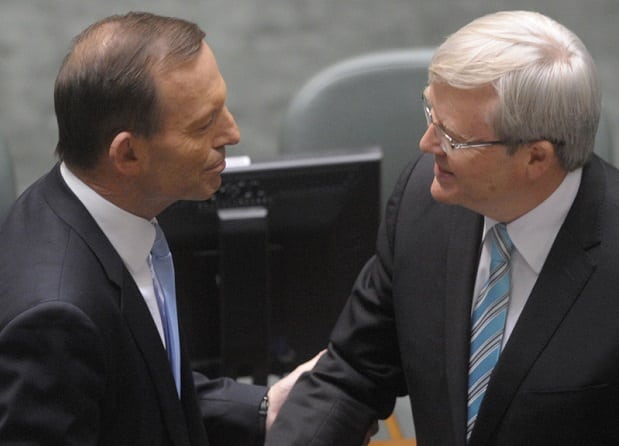
It was a prayer which Tony Abbott would have been saying every night since he narrowly lost the last election. With a parliament evenly split, it came down to two men: Rob Oakeshott and Tony Windsor, who decided to cast their lot in the favour of the Gillard camp. Tony Abbott has been spitting bricks ever since that fateful announcement and has continually touted the Gillard and Rudd governments to call an election.
God has listened and an election has been called, but perhaps not with all of the advantages which Tony Abbott had a few months ago. This time, the contest is between two formidable opponents, unlike the battle between Abbott and Gillard, which was heavily tilted in the favour of the leader of the Coalition.
The Labor Party change of leadership was a change which had to happen. Labor was slipping in the polls and all indications were that they will be totally annihilated. While the Gillard led government was putting groundbreaking reforms in place, the message was just not getting through. Too much noise about leadership spills, backgrounding of journalists by those in the anti Gillard, pro Rudd camp, a toxic atmosphere. To the Labor Party and all political observers, Rudd was white-anting his leader and the more he did so, the more popular he became with the electorate and the poll numbers in his favour shot up. The public loved him, but his own party, other than a select few, despised him.
However, self preservation took place and Gillard was deposed and Rudd became the new leader of the Labor Party, and the fourth Prime Minister of Australia in six years. Since then, poll numbers have shot up.
For the Indian Australian community, Kevin Rudd has never openly demonstrated his friendship with India, unlike his love for China. The Labor Party has been more dismissive of the student issues than the Liberals. The issue which will emerge is to which party aligns itself with the aspirational Indians who have now made their new home in Australia. Trends have been changing in the Indian Australian community. A large number which came down under in the last 10-15 years have changed from being migrants in employed positions to those who have dabbled in small businesses. These businesses might be franchises of subways, 7-11, or Australia Post, or even small businesses in exporting/importing, accounting services, food outlets, travel agents etc.
They now need a government which can support them in these activities by minimising red tape and restrictions which lead to a free flow of services.
The Liberals have form on this but Labor is trying to narrow this gap. PM Kevin Rudd has increasingly spoken about his plan to connect with business. In his first term, he could not do this. If he cannot assure the migrant community that he now has a new plan to help the migrant community hoping to make a better life here, it is going to be difficult to get their ticks in the ballot box for the Labor Party.

2013 Indian Link Federal Election survey

0
Reading Time: < 1 minute

If you’re eligible to vote, please take a minute to fill in our survey

The deadline is Tuesday 20th August, 2013 5pm
aap_7398_270613m_TonyAbbottKevinRudd_800x600

Independence Day Message

0
Reading Time: < 1 minute

Building stronger ties between India and Australia is the answer, says Mr. Biren Nanda, High Commissioner of India in Australia
Indian-Flag
“On August 15, 2013, I extend my greetings to Indian nationals and Personas of Indian Origin who have made Australia their home on the occasion of India’s 66th Independence Day,” says Nanda.
“India’s relations with Australia have grown from strength to strength since the establishment of a strategic partnership between the two countries in 2009,” Nanda added. Last year people “born in India were the largest segment of new immigrants in Australia. The 400,000 strong Indian community in Australia is acting as a bridge between the two countries. They have the potential and the capacity to qualitatively transform our bilateral relations in the future”.
“Recognising this immense reservoir of human capital, the Ministry of Overseas Indian affairs of the   Government of India and the High Commission of India are organising a Regional Pravasi Bharatiya Divas (Overseas Indian) Convention in Sydney from November 10-12,2013. The theme of the convention will be “Connecting for a shared Future: The Indian Diaspora, India and the Pacific’’. For more info. “The objective is to reach out to those members of the community who have  been unable to practice in the annual PBD in India and to provide a platform for  the Indian community in Australia and the Pacific to contribute to the relationship between countries of the region and India,” Nanda continued.

Sexual health survey

0
Reading Time: 4 minutes

A recently published study reveals a change in traditional attitudes towards specific sexual behaviours
PG Shoot July 08 195
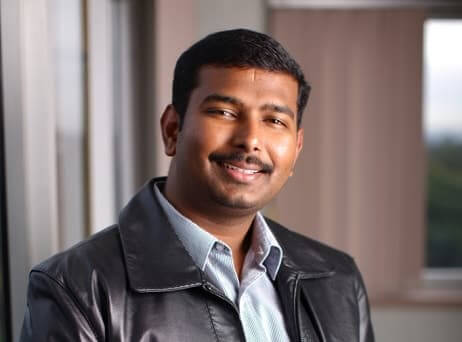
When Dr Vijaysarathi Ramanathan conducted a series of focus groups and an online research study on the sexual health of Indian migrant men in Australia, he was pleased to discover some interesting findings.
“There exists very little scientific research information around what Indians think about sex, how well they practice safe sex and where they go for help,” explained Dr Vijay, revealing the basis of his study. According to the Australian Study of Health and Relationships, studying the sexuality of people from different cultural backgrounds would add significantly to the understanding of sex in Australia. This is more true for Indian migrants in Australia as there are about 300,000 of them, constituting 1.37% of the entire population of Australia. “The study was based on the findings of five focus groups, and an anonymous online survey which resulted in 280 responses, more than I expected,” admitted Dr Vijay. “The Indian community media and organisations [including Indian Link] were instrumental in reaching out to respondents to participate, which was very helpful,” he added.
Dr Vijay stated that perceptions about sexuality in Indians is contrary. There is one thought that people from the land that originated the Kamasutra must be well versed in its fundamentals, another being that Indian society is generally conservative and traditional, and that anything of a sexual nature is taboo should not be discussed in public. However, very little data substantiates either of these theories. Dr Vijay’s findings shed light on migrant men’s sexual behaviour in a country with a more liberated approach to sex. “The most important aspect of the study is that some of the findings confirmed, while others challenged, popularly held beliefs about Indian men’s sexual attitudes and behaviours,” stated Dr Vijay.
His PhD thesis in Sexual Health of Indian Immigrant Men in Australia: an exploratory research on help-seeking attitudes aims to study the impacts of migration on attitudes toward human sexuality, sexual behaviours and sexual health of Indian men living in Australia.
Apart from generic information about the respondents, the anonymous online survey asked specific questions in relation to masturbation, help seeking behaviour for sexual health, and identifying how acculturated the respondents had become living in Australia.
Regarding men seeking help for problems of a sexual nature, the findings were clear. “Most of the older respondents in the online survey preferred to seek help from a medical practitioner, while the younger ones preferred to go directly to a specialist,” revealed Dr Vijay. “Indian immigrants are by and large, highly educated and are more liberal in their attitude towards sex”.
“More than 80 per cent of men reported that they used condoms with sexual intercourse. One in two men surveyed agreed that it is difficult for them to discuss safe sex issues with their sexual partners and also said that they use alcoholic beverages prior to or during sexual intercourse,” said Dr Vijay. He particularly stated that alcohol prior to sexual activity was a problem if the person had no specific sexual partner or spouse, since it reduced inhibitions and could result in unprotected sex, further leading to a possibility of contracting sexually transmitted diseases (STD).
In relation to masturbation, a particularly sensitive topic that is traditionally associated with guilt and wrongdoing within the Indian psyche, Dr Vijay was surprised to note that most respondents reacted to this activity as a healthy and necessary one. “While a few respondents admitted that they had mixed feelings towards masturbation, a majority stated that they felt healthy and satisfied. This indicates a significant change in attitude among migrant men, and could well be the result of education and knowing the facts,” said Dr Vijay. Some respondents admitted that they used erotic media such as pornographic DVDs, and rationalised that the activity served the purpose of educating them about sex. Overall, respondents masturbated to gain pleasure and to relax and relieve stress, according to the study.
On how acculturation has helped in changing the mindset of sexual behaviour, Dr Vijay said, “largely the findings have indicated that overall values and thinking among the respondents were mainly Indian in nature, based on their cultural and traditional beliefs. There is some level of western influence, but Indian values are upheld”.
Dr Vijay admitted that the study was exploratory in nature, and related specifically to the masturbatory habits of Indian men. “However, the study has provided vital baseline data for future research, and sexual health practitioners can use this community-based data as a reference when dealing with sexual problems among their male Indian patients,” he said.
“Sex is not such a bad or negative thing to feel ashamed or stigmatised. It is normal, and more importantly, a fundamental aspect of being human. If you have a problem or are not sure whether you have a problem or not, talk to someone you feel safe and whom you can trust. It could be your partner, a medical doctor or a sex therapist. While it is our fundamental right to enjoy the pleasure of sex, it is equally important to be responsible by practising safer sex, treating the other person with respect and not combining sex and alcohol,” concluded Dr Vijay.
Dr Vijay arrived in Sydney in 2005 to do his Masters in Medicine, specialising in sexually transmitted infections (STI) and HIV medicine. He became interested in sexual behaviours when he realised that to control STI’s and HIV, which are a product of sexual behaviour, he would first need to understand these behaviours. On completing his thesis, Dr Vijay moved back to India and now consults at a clinic for sexual health in Chennai. He has been providing online consultations for the past five years, for those patients who are too shy to seek help from a doctor. In Sydney, the RPA and Parramatta Sexual Health clinic, as well as private sexual health care specialists, provide excellent service for those with sex-related problems. He is also the Founding Director of SSS Centre for Sexual Health.

Road trip Indian style

0
Reading Time: 4 minutes

In an exciting new exhibition, a range of garments fuse the traditional and the modern to make a statement about life in India

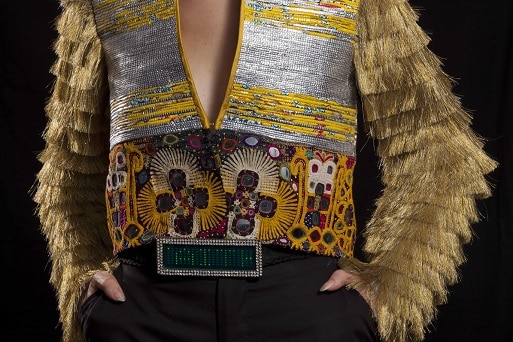
Jaipur Jacket, 2013. Ann-Maree Reaney and Jill Kinnear
Recycled foil and plastic from Khamir Craft Resource Centre, Gujurat, vintage Rabari mirror embroidery from Ekta Art, Bhuj, custom piping and gold/silver trim from Jaipur. Image courtesy of Simone Jones, Curator & Exhibitions Manager
artisan – Queensland’s Centre for Design and Craftsmanship

“Journeys are the midwives of thought… large thoughts at times requiring large views, new thoughts, new places”.
Alain de Botton, The Art of Travel
 
Road Trip is the visual narrative of a journey that artists Ann-Maree Reaney and Jill Kinnear took through India, Morocco and the USA. Reaney, a visual artist based in Brisbane, and Kinnear, a textile artist based in the USA, used photographic stills and video footage to produce garments that combine Indian history and mythology.
The artists’ most recent collection was partly inspired by a journey through Rajasthan and Gujurat in Northern India. It combines high tech, digital textiles with traditional handcrafts.
“Travelling through India, our main focus was finding and observing textiles,” says Kinnear. “We went to Bhuj in Gujurat and out to villages to observe different processes, says Kinnear. “Travelling in India there’s rubbish and roadside trash. At Khamir craft centre in Gujurat they encouraged people to bring in plastics and foils such as biscuit wrappers where the shredded plastics are woven into fabric. Jaipur Jacket incorporates recycled foil woven into the fabric, as tiny areas of recycled biscuit wrapper are revealed within the weave”.
“Antique and traditional fabric such as the Rabari mirror embroidery around base of jacket, matches with the contemporary yellow biscuit wrapper, Kinnear went on to say. “We loved how something so contemporary was combined with traditionally produced fabric and trim”.
Gold trimmings used on the sleeves of the jacket were found in Jaipur and paired with jodphurs made by a tailor who specialises in polo pants. The LED belt buckle was a reference to the trucks that dominate Indian roads.  It replays the message “an act of faith” questioning the Western idea of going to India for a spiritual journey. It references the idea in Jack Keroac’s ‘50s novel On the Road where the journey, not the destination, is the experience.
It also gently questions the Westerners’ frenetic search for meaning, which sometimes collides with the reality of India. Reaney describes the way Indian daily life operates, particularly the traffic, as an act of faith. “I see a beauty in the way people survive and respect the fact that India allows a cow to walk across the road and survive the chaos, while trucks weave onto the wrong side of the road,” she says.
Kachchh and Silk bandhani incorporates the exquisite resist dye work of Khatri Alimohamed Isha from Bhuj, a skill passed down through generations of his family. Plain white silk is pinched and bound with thread to produce intricate and traditional patterns. When the fabric is dyed, the thread “resists” the colour and the result is a pattern of white dots.
“It was a privilege to work with Indian artisans,” says Kinnear. “They make such beautiful work and there is a revival in the popularity of traditional handcrafts and a desire to preserve that legacy”. Silk bandhani was designed by the artists to take traditional fabric and garments and put a modern spin on them. The garment includes hotpants and a silk organza overskirt made by Lucy -Belle Rayner. Indian Trucks focuses on the road trucks that move supplies throughout the country. The dresses are made of images found on the beautifully decorated trucks, but also reflect the trucks’ disregard of the road rules. The artists say, “with long black tassels and cabins adorned as temple shrines with flowers, they are an icon that transgresses all highway lines and rules… with but an act of faith”.
Road Trip is not just about the sketches and research the artists undertook, it’s also an expression of the experience of traveling through India and their feelings about the country. It was Kinnear’s first trip to India.
“I loved it, Kinnear says. “It’s a complete bombardment – every sense is aware – it’s overwhelming. Patterning and colour are my focus and there’s so much there to record and see. I left with that sense of being bombarded in the most glorious way, a cacophony of colours, smells and sounds”.
“It changes your self-view,” says Reaney. “The country is so seductive and harsh and it makes you reflect on your own society. You can’t judge by Western standards, you must accept and look. It’s an incredible country; the technology is so advanced yet the most stunning traditional work comes out of places like Gujurat”.
There’s a collective cultural memory and textiles reflect the meaning of the culture. The artists were talking to a group of women who produced some of the embroidery and they asked their interpreter to tell the women how beautiful their work was.
“You have no need to tell us, we understand how they feel, we see it in their eyes,” was the reply.
Kinnear and Reaney feel that through art and their travel in India they found an understanding between people that transcends language barriers.  Creativity is a common language that produces joy and respect.

Community cricket series thrills

0
Reading Time: < 1 minute

ADE COMMUNITY CRICKET
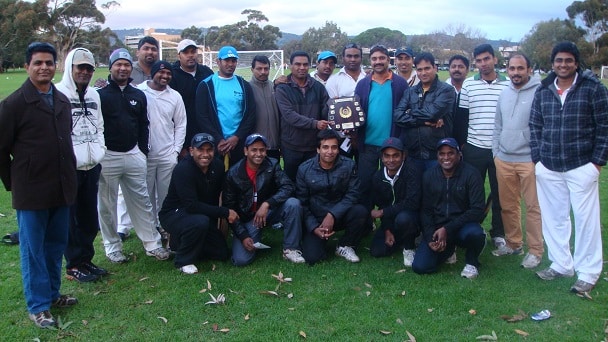
The Telugu Association of SA recently organised the Dr. Raj Thalluri Memorial Cricket Tournament for the third year in a row. The Malayalee team AMMA took the trophy yet again, just as they did in the first two series, making it a grand hat-trick for themselves.
TASA put up its own team, as did the Tamil association ATA.
The trophy was presented to the winning team by TASA president Adireddy Yara and past President Prasad Malladi.
TASA has been organising the contest since 2011 and numbers have been gradually increasing. It is hoped that in coming years the popularity of this community cricket series continues to grow.