

Ruchi Sanghi’s School of Indian Dance offers a new take on one of Indian literature’s most tragic love stories

There is perhaps no human that lives that hasn’t experienced the emotions of love and loss.
The story of Devdas has intrigued artists through time and it is indeed a challenge to present something that every single human can relate to but at the same time something where each human experience may be different. This is precisely what attracted Ruchi Sanghi to the story of Devdas. Ruchi, who helms the premier Kathak outfit in Sydney, says, “I thought it would be a fascinating challenge as director and choreographer to present the already known characters in my own special way”.
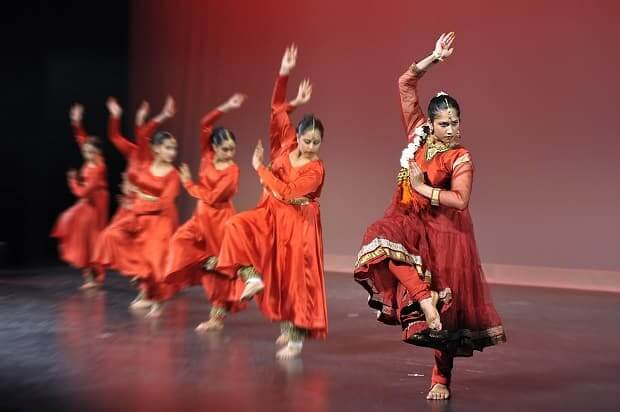
And in her characteristically inimitable style, Ruchi accomplished this admirably in her latest production Devdas The Musical. In poignant moments such as when Dev gently clasps the anklet on to Paro’s feet on his return from London, or in the silent suffering of Chandramukhi facing rejection, the feelings of both love and loss were recreated simply beautifully.
The dancers stole the show with their synchronised movement, varying formations and graceful execution of different styles of dancing. Be it the peppy folk number celebrating Holi in colourful pinks and greens, or the dance of seduction in golden hues, or the dance of anger and passion in tones of red, or the dance of death and separation in streams of black – the mood of the moment was effectively captured.
In the intense portrayal of emotions – the enchanting altercation between little Paro and Devdas as they play with their friends, the arrogance of little Chadramukhi as she preens herself at her debut, the loud argument Devdas has with his mother highlighted by the clicking dandiya sticks in the background – the dancers excelled and truly lived their roles.
The cast Ila Srivastava, Ankita Bhatia, Anika Misra, Hirali Dhawan, Nicki Kathuria, Nikhil Anand, Rahul Patel, Divya Saksena, Pavithra Hathi, Divyansha Kumar, Jhanvi Rao, Bhavya Nanchahal and Pratyush, under the able guidance of Viral Hathi and the theatrical adaptation by Anu Shivram, brought to life the story and the characters.
The musicians contributed just as effectively. With a sense of mystery and magic, Aparna Nagashayana sang not merely the story of Devdas but the song of every human soul, its love, longing and loss. Sanjay Ramaswamy was vibrant with his resonant voice and through serene aalaps, crisp swaras and lilting lyrics, the singers not merely accompanied but breathed life and soul into the performance. Maharshi Raval (rhythm arrangement), Peter Schaefer (sitarist), Shaun Premnath (keyboard and orchestration), Suraj Ravikumar (rhythm pad) and Dhatri Bellave, Soumya Ravikumar, Tharunaya Nevada and Pranita Prasad on chorus embellished every movement and nuance with their skilful artistry.
Devdas being a period epic, it is complex to create the mood of a time and place beyond the present. The team of artists did this with panache led by Sagar Agashe as they effortlessly transported the audience to another world, one of courtesans and class distinction. The rich backdrops of hanging silk and tapestry, the dazzling costumes, the intricate jewellery, subtle touches like the swing of creepers which metaphorically reflected the mood of the characters representing their joy and sorrow, all added to weave its own special magic.
In their brief interludes, some ‘guests’ on stage impressed with their cameos. The flamenco dancers representing a scene where Devdas meets with the gypsies in his travels, were so full of life and got the audience’s feet tapping. Another moment that stands imprinted in the minds of the audience is the qawwali by two young boys Lalit and Mayank, with their powerful and gifted voices, who enveloped the audience with the mysticism and divinity of the Sufi traditions, appropriately accompanying the transformation of Chandramukhi from selfish to selfless in the foreground.
As the lyrics echoed at the climax of the musical, Shashwath bas sannate… meaning, ‘the only thing eternal is silence’, the visual treat that was Devdas The Musical, left the audience speechless.
Of love and loss
The return of Air India
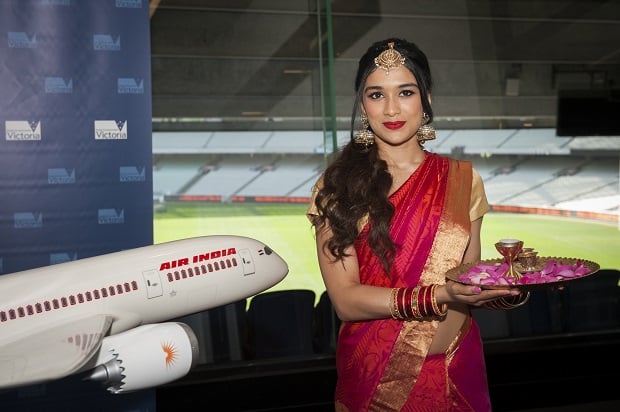
After 22 years, India’s national carrier lands in Sydney on its state-of-the-art Dreamline

On the morning of Friday, August 30, the city of Sydney welcomed India’s flag-carrier Air India to Australia following the landing of its inaugural Dreamliner flight at Kingsford Smith International Airport.
The touchdown of the Dreamliner passenger flight signified the return of direct services from Delhi to Sydney with Air India.
“Sydney airport is very pleased to welcome Air India back to Sydney after a 22-year absence,” said Sydney Airport CEO Kerrie Mather. “This is a very special day for Sydney airport and our city”.
Air India’s new service AI 311 will be operating daily on a triangular route connecting both Sydney and Melbourne. On four days the flight will operate on the Sydney-Melbourne-Delhi route, and on the remaining three days the Melbourne-Sydney-Delhi sector.
With a shortened flying time of twelve and a half hours, these flights will also provide a major boost to trade, investment and tourist traffic between India and Australia.
With the trade and tourism relationship between India and Australia expected to grow by 44 per cent in the next five years, the introduction of Air India’s direct flight services will benefit both economies.
According to Destination NSW estimations, Air India’s new daily Dreamliner service will add more than 46,000 seats per year into Sydney, which could contribute more than $30 million into the NSW economy per year.
Mr Rohit Nandan, Chairman and Managing Director of Air India arrived in Sydney on board the first Dreamliner flight from Delhi on Friday morning, along with 200 other passengers.
Mr Nandan said that the relationship between the two nations has grown tremendously in the last 16 years and that the flights will be a major factor in strengthening this relationship even more.
“The flight is being looked at by both the Australian and the Indian travel market with a lot of enthusiasm and hope as it will not only serve the Indian diaspora in Australia and other countries like New Zealand and the Fiji islands, but also the student community from India to Australia and holiday travellers between India and Australia,” he said.
Sydney itself is home to 217,000 people of Indian descent. It has Australia’s highest number of residents with Indian ancestry, adding to the strong demand for direct services between Sydney and India.
According to Mr Nandan, NSW Premier Barry O’Farrell was very active in pursuing Air India to first land in Sydney. He said he was impressed by the proactive approach of the NSW government.
Mr Nandan also thanked Sydney Airport for their patience and claimed the process of getting the Dreamliner to Sydney has been a ‘rollercoaster ride’.
“They (Sydney Airport) have been a constant partner and great help over the last three years,” he said.
Speaking at a welcome ceremony at the Sydney airport, Destination NSW CEO Sandra Chipchase observed, “Air India’s decision to schedule four direct flights per week to Sydney recognises NSW’s status as Australia’s first premier State for international tourism, visitation and visitor expenditure,” she said.
“To year-end March 2013, more than 71,000 visitors from India travelled to NSW, spending more than 3 million nights – with most visitors coming to see family and friends, followed by holiday makers and business travellers,” she added.
“India is Australia’s largest unserved market. Last year, around 140,000 passengers travelled between Delhi and Sydney via Asian hubs,” stated Ms Chipchase.
Delhi International Airport CEO, I Prabhakara Rao, said, “The Sydney service has been long awaited and with this, we have connected not just two great cities, but two great continents”.
“Sydney has continuously ranked amongst our top five potential destinations, based on passenger demand, that needed connectivity. With the advent of a non-stop service to Sydney aboard Air India’s Dreamliner, we are convinced that the market will only grow,” he added.
The Dreamliner
Creating just as much buzz as the return of Air India, was the new Dreamliner aircraft, seen for the first time in Australian skies. Air India is one of the first airlines to introduce the Boeing 787 aircraft, or ‘The Dreamliner’.
The Dreamliner is “the most modern, advanced and sophisticated plane in the world at the moment,” Air India’s Mr Nandan said.
It has a smaller noise footprint and features more comfortable cabins with larger windows and lie flat business class seats.
The airplane is also equipped with a system that senses turbulence and commands wing control to counter it, which means passengers can enjoy a smoother flight.
With 15% lower fuel consumption per passenger than any other aircraft off the same size, the Dreamliner is also very fuel-efficient.
The Dreamliner has the optimal size and range that allowed Air India to open up a new market in Sydney and gave them a ‘first mover’ advantage due to its lower fuel and operating costs.
Air India plans to expand its network even further in the coming months by connecting Delhi to Rome, Milan and Moscow with direct flights using the brand new Dreamliner aircraft.
Sydney’s Indian community cheers
The local Indian community has welcomed the return of their national carrier with much pride. At a welcome event managed by Multicall Connexions, a Sydney-based multicultural marketing agency, the mood was upbeat as community members expressed enthusiasm to try out the product.
The general feel was that, if the service is good, the uptake will be favourable. (First-time Australia traveller 63-year-old Manjeet Kaur raved about the service on the inaugural flight. She flew from Delhi to Melbourne to visit her son).
Air India is also looking to attract other travellers such as those flying from London into Australia. Boasting the shortest connection between London and Sydney, it is hoping to get a fair share of the nearly 450,000 passengers that frequent this sector.
Meanwhile, Sydney hotels are preparing for an influx of Indian travellers. Leading the way is Accor, who were the first hotel group to introduce “Optimum Service Standards” for Indian inbound travellers. Currently, 12 Accor hotels have been accredited for Indian Optimum Service Standards in Sydney, the Blue Mountains, Melbourne, Gold Coast, Brisbane and Cairns. “Australian operators have in the past found dealing with the Indian market quite a challenge and that’s why so few hotels have embraced the market,” says Greg Brady, the Mercure Sydney Central general manager, who first went to India five years ago as a “pioneer”.
“The key is building relationships with Indian tour operators and then ensuring the hotel suits the needs of Indian travellers. That means getting the food right, understanding the Indian culture and appreciating the specific needs of Indian travellers.
“The Indian market wants quality product and service. Translating materials into their local language isn’t as imperative as it is for the China market, but getting the food and culture side of hospitality correct is really important”.
“We’ve invested considerably in developing the market. We have our own Indian chef who cooks exclusively for Indian groups. We have the Curry Leaf Indian restaurant and we have a range of Indian items – such as poha, upma, marsala chai – on our breakfast buffet. Food is a really important ingredient in the Indian travel experience”.
Another hotel that is seeking to build the Indian inbound business is the Fairmont Resort MGallery in the Blue Mountains. This hotel used to be “honeymoon central” for the Indian market in the 1990s and early 2000s, and with Accor now operating the hotel, it will once again retarget the Indian honeymoon, incentive and leisure markets.
Facilities offered under the Indian Optimum Service Standards program include: Indian dishes on the breakfast, restaurant and room service menus; hotel welcome kits in Hindi; Indian adaptor plugs; Indian television channels and newspapers; and Indian snacks and drinks available in the minibar.
It will be interesting to see if the airline can indeed fill up seats, but country manager Ravi Bodade is quietly confident that the relaunch will be successful.
Air India is offering special attractive promotional fares on the Sydney to Delhi route in both directions, which will be available for a limited period. Details are on the Air India website.
With reports by Vivek Trivedi and Rajni Anand Luthra
Record number of candidates in the fray
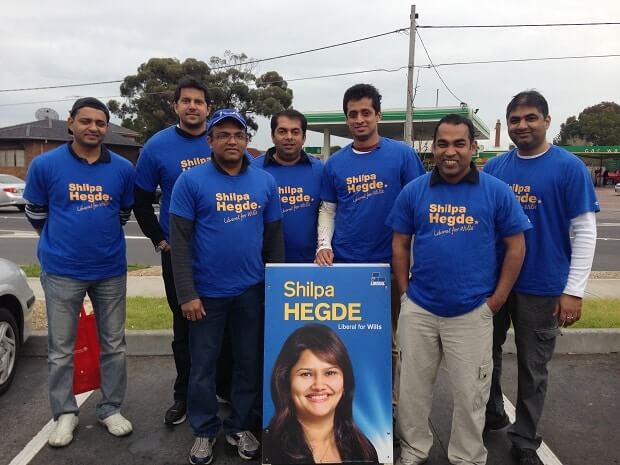
There are more South Asian candidates standing for the upcoming Federal elections than ever, find SHERYL DIXIT and RAJNI ANAND LUTHRA, and surprisingly most are not from the two major parties

For the first time in Australia’s election history, we are witnessing the largest number of South Asian candidates actively participating in the 2013 elections. A total of 26 candidates of Indian and subcontinent origin will represent political parties, or stand as Independents, for seats in both the Senate, as well as the House of Representatives. While this may seem like an unimpressively low number across a wide range of political platforms, it does indicate that the Indian diaspora is taking a greater interest in Australian politics and that they are lending their voice and efforts towards better understanding and acceptance of their communities within Australian society.
Conducting research for this report on the Australian elections has been an interesting and enlightening experience. For instance, how many of us were aware that some of the registered parties on the Australian Electoral website are the Fishing and Lifestyle Party, Australian Motoring Enthusiast Party, Australian Sports Party, Bullet Train for Australia, No Carbon Tax Climate Sceptics and Shooters and Fishers Party? Would we vote for the Australian Sex Party, Coke in the Bubblers Party, Help End Marijuana Prohibition (HEMP) Party, Smokers Rights Party or the Pirate Party Australia? We certainly aren’t spoiled for choice, are we?
We are all aware that the 2013 Elections is bound to be dominated by the Australian Labor Party (ALP) and the Liberals (Coalition), with Kevin Rudd and Tony Abbott respectively, jostling for the throne of Australia. The Greens, a growing and seemingly dedicated group have finally found themselves in the reckoning, as more and more Australians seem to support their policies for climate change and a cleaner, greener world. And of course, a plethora of parties such as the Palmer United Party and the WikiLeaks Party, not to mention Independents, are trying to have their say in the future of Australia.

Current trends indicate that multicultural communities in general are confused about the current political scenario. The ALP, with their leadership issues and their suspect policies in relation to asylum seekers and the economy, have lost them the vote of confidence with the public. The Liberals are faring no better. They come across as indecisive and conservative, to say the least. Their policies are unclear and they seem adept at circumventing topics of controversy like the budget deficit and gender parity issues. And while both parties have reasonably strong candidates in the background like Joe Hockey and Penny Wong, neither leader inspires confidence in voters.
For the Indian community, it’s a matter of waiting and watching. There are many issues in the balance, such as progressing Indo-Oz relations, visa issues, trade and bilateral relations – the list is endless! But the increased representation of south Asian candidates in the 2013 Election is an indicator that times are changing, and that the voice of multicultural communities are being heard. It is a significant development and one that we must embrace with enthusiasm, as a sign of better things to come.
Both the major political parties have made an attempt to inculcate Indian-origin people into their campaign strategy. The Australian Labor Party has the support of two candidates, Manoj Kumar, candidate for Menzies in Melbourne, Victoria, (House of Representatives), and Bhupinder Kumar, candidate for Chibber, New South Wales, (Senate). However, it does seem like Labor doesn’t seem to have made a strong enough pitch to recruit more candidates from one of the fastest growing migrant communities in Australia.
The Liberals have done better, recruiting four candidates to the party, three of these from Victoria. Dr Ali Khan, Jag Chugha and Shilpa Hegde will all contest from areas in Victoria. Following close behind are the Greens, with four South Asian candidates representing the party. Prominent among these is Alexandra Kaur Bhathal, who will contest from Batman in Melbourne’s northern suburbs.
But it is the newer and lesser known parties who have a strong Indian presence among their candidates. The Palmer United Party has a total of nine Indian-origin candidates. Headed by Professor Clive Palmer as their Federal leader, the party was formed on the ashes of the United Australia Party (UAP), an Australian political party founded in 1931 and dissolved in 1945. Now in 2013, the UAP has been re-launched by Professor Palmer, with the slogan of ‘Reunite the Nation’. It’s probable that as a newly formed party, they needed the numbers from a cross-section of candidates, but whatever the case, it is a fact that the Palmer United Party supports the largest number of Indian-origin candidates in these elections.
The WikiLeaks Party was incorporated as a political party in 2013. According to its website, the party ‘stands for unswerving commitment to the core principles of civic courage nourished by understanding and truthfulness and the free flow of information’. The Constitution of the WikiLeaks Party lists its objectives which include the protection of human rights and freedoms; transparency of governmental and corporate action, policy and information; recognition of the need for equality between generations; and support of Aboriginal and Torres Strait Islander self-determination. Naturally, Julian Assange is its leader and is supported by two Indian origin candidates, Binoy Kampmark, a respected academic and Suresh Rajan, a renowned economist.
Most of the South Asian candidates standing for election are from across Australia but unsurprisingly, none belong to the Northern Territory, Canberra and Tasmania. What is surprising though, is that none are from Queensland, with its relatively strong Indian migrant base. The candidates still do not seem to have a strong presence, but the fact that they have one at all is promising from a long term perspective.
So what kind of policies do these candidates support and what are they striving to achieve?
Jag Chugha is the first Punjabi Sikh to stand for a Federal Seat of Parliament in Australia. About his candidacy Jag says, “Scullin is a great place to live, but things should be better. Under Labor the cost of living has sky-rocketed, small businesses are doing it tough and people are worried about their job security. These are issues that people are talking to me about daily. I want to give my community a strong local voice and fight for our fair share”. As a long-time resident of Scullin, Jag feels he understands the local community’s needs and can represent local families to deliver real results.
For Alexander (Alex) Kaur Bhathal, Greens candidate for Batman in Melbourne’s Northern Suburbs, it is her fourth candidacy for this federal seat. “I am standing for a vision of a future in Batman where we can all thrive, she says in a statement on the Greens website. “I will work for a flourishing small business sector, combined with a renewed manufacturing base which could provide hundreds of local jobs in the renewable energy industries… building a strong focus on renewable technology research and design manufacturing in our suburbs which have great manufacturing infrastructure and plenty of people looking for local work. We are the most progressive electorate in Australia, with a combined Greens and Labor vote of 78.5%”.
50-year-old Sam Swaminathan is a relatively new migrant who came here in 2003, and is standing as an Independent. “I stand for economic growth, employment, the abolition of carbon tax, services for senior citizens and tax concessions for working parents,” says Sam enthusiastically.
“We’re standing for three key things at this election,” says Dr Binoy Kampmark of the WikiLeaks Party. “These are issues of transparency, accountability and justice. I call this the ‘holy trinity’ of our platform. In terms of accountability, Wikileaks is well known for its slogan of ‘We open governments, everywhere’. As a party we want no hidden deals, no backdoor deals. We want transparency in funding, in accounts. By accountability, we refer to surveillance. We believe the state has become too powerful in relation to citizens. Is it necessary to spy on us to keep us safe? We want to generate an interest amongst the public, as to what Intelligence does with our data. In terms of justice, we seek protection for whistle blowers, and want to stop abuses of state power”.
For Ganesh Loke, candidate for the Palmer United Party, a solution to the Carbon Tax and the problem with asylum seekers is paramount. “We want to have the Carbon Tax abolished; to have a humanitarian refugee policy whereby Australia is protected while at the same time refugees have opportunities to enhance their lives, and to do away with paid political lobbyists,” says Ganesh. “Both major parties are against refugees. That’s against international law, which states that genuine refugees must be resettled. Mr Palmer’s policy of onshore processing is the most humane policy in the debate,” he adds.
Shilpa Hegde is a candidate for the Liberal Party from Wills in Melbourne, and she says that Liberal has a plan to put Australia back on track. This plan includes generation of one million new jobs within five years by delivering lower taxes, more efficient government and more productive businesses. “I’ve noticed many families have become burdened by the rising cost of living and the lack of essential services in their community,” she adds. “As a part of the Liberal team, I have the real solutions to lower the cost of living and fight for improved services, like schools and hospitals, for our community. I want to represent my community in Parliament and make sure the residents of Wills get their fair share,” she adds.
What was the ‘X’ factor that convinced these candidates to join the party of their choice?
“The protection of human rights is paramount to me. WikiLeaks Party delivers this,” succinctly states Suresh Rajan from the WikiLeaks Party.
“I’ve been involved in the Liberal Party for a number of years now, and this combined with my interest in helping out my local community, influenced my decision to run for Parliament,” says Shilpa.
“I was first introduced to the Liberal Party several years ago by my father and at that time realised that I too shared the beliefs of the party,” says Jag. “Everyone should be free to pursue their goals and develop their talents”.
“I’ve never been in politics,” admits Binoy. “I’ve written extensively about politics though. And this is the first political party I’ve come across that extends my (passion) for being critical of power. “It’s a party of review, if you like, a watchdog part, so important in today’s world. That’s the first reason. The second reason is the party’s diversity is remarkable. Membership extends across the left-right divide. It’s a broad eclectic group of people with similar interests”.
A former Labor Party member, Ganesh claims he was completely disillusioned by the Party in recent times and so decided to seek a new platform.
“We are the most progressive electorate in Australia, with a combined Greens and Labor vote of 78.5%,” states Alex. “People in this seat value social justice, human rights and the environment. I would be proud to represent the people of this seat”.
The campaign trail is a rough and challenging one, which certainly needs the benefit of strategy to reach out to as many voters as possible. How did the candidates deal with this aspect of the elections?
Jag is out campaigning every day, listening to locals. “I’m meeting people at shopping centres, schools, markets and train stations,” he states. “I’ve been out door knocking and leafleting, trying to let people know that the Liberals have a plan to reduce the cost of living for families, help small businesses get ahead and strengthen the economy. I’ve also been attending community functions where I’ve had the opportunity to meet many people of different cultures and backgrounds”.
Sam, a chartered accountant by background, has been reaching out to the Indian community through various associations, and has been meeting people at cultural functions, and places of worship. He has also been emailing Indian associations in Newcastle and Central Coast.
Binoy has been campaigning across various forums, particularly in social media, “I’ve also participated actively in forums such as at the Fitzroy Town Hall recently which was received well. We’ve had a variety of debates and meetings in our effort to gather a support base. There has been interest from the community because of the Indian background (my mother is Bengali). And also Indian connections overseas have brought good and positive coverage for both Suresh Rajan, our candidate in WA, and me,” he claims.
Ganesh has been campaigning at community functions such as the IndAus Fair and the CIA Independence Day Dinner, as well as at shopping malls, local stations, and places of worship such as the Swaminarayan Temple. Ganesh also participated in the Daily Telegraph debate to put forth his views to a wider audience. “Being a techie, social media is one of my strengths,” he reveals. “My Facebook page has 3,200 likes, more than other candidates in my constituency”.
Shilpa and her team have been following a similar strategy of letterboxing, door knocking and meeting people in shopping centres, community hubs and train stations. “I’ve been listening to locals and many people have been telling me that the cost of living is having a real effect on their household,” she says. “I want people in Wills to know that the Coalition has real solutions to lower the cost of living, create job growth, strengthen our local economy and get the Budget back on track”.
All the candidates are involved in various charitable activities, including support for specific charities, volunteering their time and efforts for the betterment of the community.
Most of the Indian origin candidates contesting in the Federal elections have a strong background and would be more than proficient at their role, if elected.
Suresh Rajan from WikiLeaks Party has had a distinguished career in economics as well as having been a vigorous advocate for ethnic communities and people with disabilities. He served for several years as head of the Ethnic Communities Council of WA and is currently the President of the National Ethnic Disability Alliance, the peak body for the CaLD Disability organisations in Australia. Suresh holds a Bachelor of Commerce with a double major (Management and Accounting) and a Masters of Business Administration from the University of Western Australia, and is a regular commentator on television and radio in his role as a financial planner and economist.
Alexandra Kaur Bathal is a well-known and respected member of the community. She has 25 years of experience working in the social welfare sector, with families and local communities. Alex is a former Welfare Spokesperson for the Australian Greens Victoria and is active in the refugee rights movement, anti-nuclear and environmental campaigning. As a qualified social worker, Alex’s professional experience includes clinical practice with young people, community development, research, management, program and policy development.
Jag holds qualifications of Bachelor of Laws, Bachelor of Commerce and Master of Laws. He is a practicing lawyer with over 15 years of experience and is currently the senior counsel at a top 100 ASX Australian listed company.
Sam Swaminathan, the NSW Senate Independent has extensive work experience within the mainstream, through his dealings with charity organisations in the north shore, churches, aged care and retirement facilities.
Binoy arrived in Australia in the 1990s but has been living in the US and in the UK where he worked towards a Cambridge PhD. Dr. Binoy Kampmark now teaches core legal courses within the Legal and Dispute Studies program for the Bachelor of Social Science at RMIT University.
Ganesh arrived in Australia in 1999 as a student, and took degrees in IT and education from Charles Sturt University. He is currently an IT entrepreneur in Sydney. Shilpa is an Electronics Engineer who currently works for DWS as an IT consultant.
So finally, why politics, and will this be a career for these candidates, regardless of whether they win or lose?
“Politics is a platform by means of which you can bring real change to society,” says Ganesh Loke. “If you want to change the system, come forward, get involved”.
“Politics is a way of serving the people. There’s been nobody from the India community so far who has risen in this field. I feel it is time to take some responsibility and start to give back,” says Sam.
“I’ll answer that question by quoting from French writer Andre Malroux: Politics is justice; if you can’t have them together, it’s an empty mission,” emphasises Bijoy.
With the election fast approaching, these 26 South Asian candidates are worth keeping an eye on. To date there have been a very small number of Indian-origin parliamentarian, including the serving Senator Lisa Singh from Tasmania, and the recontesting Alex Bhathal. It will be interesting if the community can add to this on the night of September 7th.
Mastering mental health issues

Patients are often in denial of the condition of their mental health because of social stigmas, says TANVEER AHMED

Working in an area adjacent to Parramatta and Harris Park in western Sydney, a region commonly called Little India due to its large South Asian population, I am regularly referred patients from Indian and South Asian backgrounds. Being a psychiatrist, the patients do not come willingly. They are usually desperate and often come at the urging of relatives. Worse still, a portion are referred after falling foul with the law, usually a sign they waited too long for treatment.
Mental health is simply not an area that is particularly well understood or even accepted, in our cultural sphere. There is a great deal of stigma and ignorance. For example, even my specialty of psychiatry in the language of Bengali is known as ‘pagol doctor’, essentially translating as crazy doctor. The reference to ‘crazy’ intentionally overlaps with both the treating clinicians, as well as the patients.
Some of this stigma is reduced after spending time in Australia, where there is much information and attention upon the issue. Mental health has a significant cultural component, so it is not unreasonable that many of the older generation find it a little foreign. It is really a synonym for human emotional distress and becomes an illness when it hampers our functioning with regards to relationships and work.
Coming from traditional cultures, many of us are more likely to view any distress we feel in relational or cultural terms. Treatment must also encompass the broader family and cultural situation. So a lot of my job is trying to translate the very notion of mental health for patients who simply do not view their distress in those terms.
Because our culture has little discussion or even the language for mental health, patients are far more likely to present themselves with physical problems. For example, headache, high blood pressure or unusual tingling of the limbs is very commonly related to underlying anxiety or a depressed mood. Expressing our distress through physical symptoms is more acceptable in our cultures. It is also more common in the elderly among white Australians, so it is far from limited to South Asian cultures. Mandarin does not even have a clear translation for the notion of depression, highlighting the strong cultural flavour of mental health.
The stigma has great consequences. I often see patients when they are extremely unwell, and have been so for many years. There is a great deal of shame within families when relatives have the likelihood of diagnosable mental illness and there can be forces of pride, saving face and preventing embarrassment that lead to withholding the appropriate treatment. I have learnt of some relatives essentially hidden from view for many years. This is simply not acceptable in the modern world and overlaps with some of the worst practices in the poorer sections of India.
India has a huge burden of mental illness which is increasing. In 2005, the National Commission on Macroeconomics and Health (NCMH) reported 10-20 million persons (one to two per cent of the population) suffered from severe mental disorders such as schizophrenia and bipolar disorder, and nearly 50 million or five per cent of the population suffer from common mental disorders such as depression and anxiety. These estimates are now nearer to 3 and 10 per cent respectively.
The prevalence of mental disorders is higher among women, the homeless, poor and those living in urban areas. More than 75 percent of people with serious disorders living in middle and low income countries receive no care at all, according to global mental health surveys. There are now Australian efforts to help India with their mental illness issues. Associate Professor Chee Ng is Co-Director of Asia Australia Mental Health (AAMH) and he’s working closely to offer an Australian contribution to reducing the mental health burden in India.
While the services are much better resourced in a place like Australia, the stigma and shame is often unchanged. The reality is, in spite of our emphasis on family, clan and tradition, modern urban life with its frenetic pace and social isolation has a tendency to dilute and weaken age old bonds and practices. This can lead to a feeling of not belonging or not having any role amongst those most vulnerable, such as the elderly or newly arrived partners and wives.
There needs to be a greater, culturally appropriate discussion surrounding emotional distress in our communities, and better engagement with health and social services. A lot of potential is being lost amongst our loved ones and members of the community because of stigma and shame.
The battle for Bruce
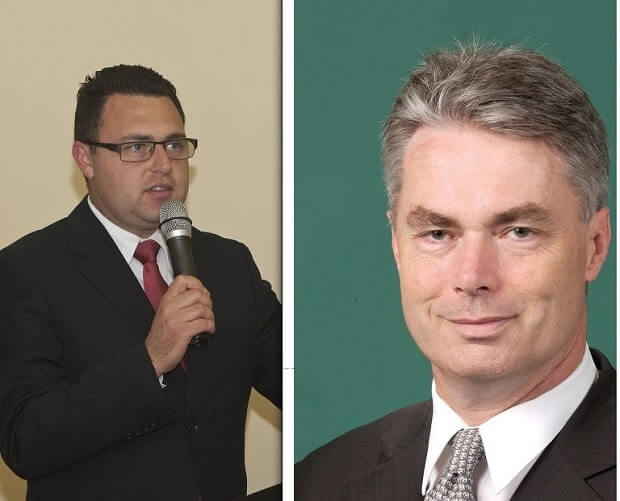
The seat of Bruce in Melbourne’s south east is home to a large number of Indian-origin voters. Indian Link speaks with Labor and Liberal candidates Alan Griffin and Emanuele Cicchiello respectively, on issues relating to the local area, the Indian community, and Australia’s relations with India

Preeti Jabbal: What are the two current issues that you will commit to advocate if you were to win?
Emanuele Cicchiello: As an active community member and parent, I know that the daily issues affecting people in Bruce stem from cost of living pressures. Local families and businesses are struggling to keep with up with their rising electricity, gas and other utility bills. As part of a united Coalition team, I will immediately scrap the carbon tax to help alleviate these cost of living pressures and work hard to restore confidence to the Australian economy to support businesses and improve job security.
Local residents are also concerned about public safety and I have been fighting on their behalf to secure funding for crime prevention initiatives, such as CCTV cameras and security lighting. I recently announced that a Coalition Government would provide $400,000 for CCTV cameras to be installed in crime hotspots across Dandenong, and I will continue to work closely with the community and local police to deliver further initiatives to make Bruce a safer place to live and work.
Alan Griffin: There are many issues that relate to both Bruce and the broader Australian community. Two that I believe are of great importance both locally and nationally are Labor’s Better Schools Plan and the National Broadband Network. Our Better Schools Plan will ensure we lift our school standards and give our children the chance to realize their full potential, which will help Australia remain a strong and prosperous economy. The NBN is an investment in Australia’s future. It will help our economy to remain strong by maximizing our potential in education, health care and business.
PJ: What are your thoughts on the East West Road link that is expected to boost the Greater Dandenong community?
EC: Building the missing link in Melbourne’s road network is a priority for Tony Abbott and his team. The Federal Coalition has pledged $1.5 billion to construction of the East-West Link to give commuters more time at home with their families and to boost productivity across the state. Families and businesses here in Bruce are tired of losing precious hours stuck in traffic. This landmark road project will clear traffic bottlenecks and get Melbourne moving again, but it will only become a reality under a Coalition Government.
AG: I believe that the best way to keep Melbourne moving involves investment in both its road AND rail infrastructure. Federal Labor has allocated $3 billion to build the Melbourne Metro rail project, which has been properly costed and recommended for funding by Infrastructure Australia. We will not be writing a blank cheque for the East West tunnel because we have yet to see a proper business case for it. There is a proper assessment process in place for such projects before any funding decisions are made. Greater Dandenong can’t afford a return to an unbalanced, ‘roads only’ approach that would result in more gridlock and congestion under Mr Abbott. He simply doesn’t believe in funding public transport infrastructure, and doesn’t understand Greater Dandenong’s importance as a public transport hub. The Rudd Labor Government understands that fixing traffic congestion is too big a task to simply say ‘it’s the State’s job’.
PJ: During your campaign have you come across any specific issues relating to the Indian community of Bruce and how do you intend to resolve them?
EC: I have enjoyed spending a great deal of my time over the past year with members of the Indian community in Bruce, attending functions as well as visiting the temple. People of Indian citizenship and nationality are our single largest intake of migrants to Australia and more importantly, they are the singles biggest contributors to skilled migration. I recently attended the Sikh Temple in Blackburn with the Shadow Minister for Immigration and Citizenship, Scott Morrison, where people raised the issue of Labor’s attack on 457 visas. The Indian community has been rightly outraged by Labor telling the Australian people that migrants are taking their jobs. I can assure the Indian community in Bruce that they will never hear this sort of rhetoric from a Coalition Government. We celebrate the contributions that the Indian community have made to Australia over generations and, if fortunate enough to be elected on September 7, I will continue to support the Indian community in Bruce.
AG: Indian migrants have similar concerns to most Australians, particularly those who have come to Australia from overseas to build a life for them and their families. Access to high quality education at all levels, the opportunity to find employment and the capacity to access good quality health care are all important priorities. Also the ability to sponsor family members to both visit and migrate to Australia. Labor’s Better Schools Plan, record investment in skills and training and increased support for Medicare all point to our commitment across these areas. That India is now our fourth largest migrant community and nearly 160,000 visited Australia in 2012 illustrates the significant growth in our links with India.
PJ: The Indian community’s middle income earners have contributed significantly to the Australian economy, but they feel ignored when it comes to policymaking and benefits. How does your party respond to that?
EC: People in the Indian community are genuinely concerned about the state of the economy and the future direction of our country under a Labor Government. Many people own small businesses and I have heard countless stories of declining profits, staff having to be laid off, and skyrocketing electricity and gas bills. Unlike Labor, the Coalition has strong economic credentials and a proven track record of managing budgets and, as part of a united Coalition team, I will work hard to restore a strong and secure economy to Australia so that businesses prosper and people feel secure in their employment. The Coalition will scrap the carbon tax, slash the red tape that has tied up small business in knots, and improve local health services and restore the Private Health Insurance rebate as soon as we responsibly can. We value the contributions that middle-income earners make to our country and will be working hard to restore hope, reward and opportunity to the Indian community.
AG: Members of the Indian community in Australia have been very active members of many professional, community and political organisations. Through these organisations they have played important roles in being part of the ongoing policy and political debate within Australia. They have also had access to the same benefits as other Australians, which is appropriate and fair.
PJ: How does your party plan to forge better relations with India?
EC: As the Hon Julie Bishop, Shadow Minister for Foreign Affairs, recently stated: “Australia and India are good friends and within Australia there is no greater friend of India than the Liberal Party of Australia.”
The Liberal Party appreciates the importance of our relationship with India and we share the values of freedom and choice, enterprise and hard work. Ms Bishop has made clear that broadening and deepening our relationship with India will be a priority for the Coalition in government. The Coalition will also seek to build Australia’s trade and investment relationship with India and continue to be an important partner with India in terms of its energy needs. We will recalibrate our foreign affairs strategy to ensure trade is an important part of dialogue between our two countries.
AG: In a visit to Delhi in November 2009, Prime Minister Rudd and Prime Minister Singh announced the establishment of a Strategic Partnership between Australia and India. Under the agreement, both countries have pursued deeper bilateral, regional and international cooperation across a wide range of fields, including on strategic and security matters. We have been making solid progress. This includes the launching of negotiations on a civil nuclear cooperation agreement, the opening of a consulate in Chennai, further progress in negotiating a free trade agreement and making Hindi a priority Asian language in our schools. There was also a major promotion of Australia in India known as Oz Fest with 100 events across 18 cities. When the Labor Government launched the Australia in the Asian Century White Paper we said India was one of our priority relationships – together with China, Indonesia, South Korea and Japan. Soon the Government will launch the India Country Strategy – a blue print for how we plan to build further our relationship by 2025 across community, business and government. India is Australia’s fifth largest export market. Total trade in 2012 was valued at $17.5 billion. India is our second largest source of international students. On the tourism front, India is one of the world’s fastest growing outbound travel markets, with the World Tourism Organisation predicting 50 million outbound travellers by 2020. In the year ending December 2012, Australia received almost 160 000 Indian visitors, spending in the order of $800 million. Of all of Australia’s significant relationships in Asia, our relationship with India has perhaps the greatest potential to expand. Australia can supply the resources that India needs to develop and we can provide education, finance and IT services, and tourism opportunities to India’s growing middle class.
PJ: What will be your plarty’s first step to offer better immigration policies to migrants?
EC: The Indian community has been well served by the Shadow Minister for Immigration and Citizenship, Scott Morrison who has developed a strong working relationship with the community, and he will continue to work closely with them as the Minister if the Coalition is fortunate enough to form government. The Coalition Government will reintroduce a suite or proven measures to stem the flow of illegal boat arrivals. We strongly believe that having a properly targeted and well-managed migration program is critical to our nation’s future.
Historically, skilled migration has been one of the most important contributors to our national success, delivering social and economic strength, prosperity and unity, and a strong and cohesive society. The Coalition has always value the involvement of migrants in our economy and society and we will hard to restore integrity to our immigration programme.
AG: Labor believes our current migration system provides a good balance between skilled migration, family reunion, refugee and other categories. The substantial growth in migration from India in recent years would point to the fact that it has certainly allowed significant opportunity for Indians to come to Australia.
PJ: From 1996 till date Alan Griffin has been the member for Bruce. Emanuele, what will it take to win the seat this year? Alan, what will it take to retain the seat?
EC: While there is no doubt I have a battle on my hands to win the seat, I am working hard to let people know that there is a clear choice in Bruce at this election and they don’t have to put up with another three years of neglect under Alan Griffin and Labor.
I am being supported by senior members of the Coalition team, as well as specific visits from frontbenchers Malcolm Turnbull and Christopher Pyne who recognize local residents deserve better. This election provides a once-in-a-generation opportunity for the people living in Bruce to throw out a bad government and elect a member of the Coalition who will work tirelessly as part of a stable government to deliver a stronger economy with more jobs, real help for families and small business, lower taxes and secure borders.
AG: I will continue to work hard as the local member and ensure electors understand the choice that they face on September 7. Despite the constant negativity that we’ve seen from Mr Abbott, I believe that residents have a very clear choice at this election. A Rudd Labor Government is offering genuine investment in vital future infrastructure such as our schools and the NBN, and a proven steady hand on our economy which by any measure is envied around the world. Mr Abbott will scrap the NBN, and then proceed to cut superannuation savings, the Schoolkids Bonus, and the Better Schools Plan just to name a few. He’s got billions of dollars’ worth of holes in his costings which need filling, and nothing will be off the table. He simply can’t be trusted.
PJ: We are now nearly at the last few days of the campaign. Where do you see it going?
EC: I am out every day talking to people in Bruce who are struggling with cost of living pressures and worried about job security. They feel that Labor has let down their families and they are looking to vote for real change on September 7 so that we can have strong and stable government once again. I have met many locals who tell me they will vote Liberal for the first time in their lives. They are sick of the chaos and dysfunction. If fortunate enough to be elected to represent the people of Bruce, I will work hard to restore hope, reward and opportunity for our community.
AG: I’ve been through enough election campaigns to know that it’s not a good idea to spend too much time speculating about the result. That’s a matter for the people. We’ll find out soon enough!
Chand Raat's dazzling Melbourne debut
The popular Eid festival draws over 10,000 to its inaugural event under a crescent moon, writes TIM BLIGHT

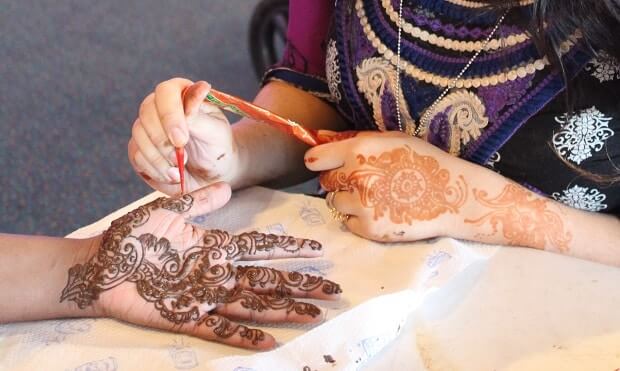
Melbourne’s inaugural Chand Raat Eid Festival was held on August 10, marking the first southern excursion for the traditionally Sydney-based event. Music and dance performances headlined the spectacle, which also featured food and fashion stalls, henna painting, tarot readings and rides.
Adults and children flocked to the event with attendance numbers of over 10,000. The stage program was opened with a collaborative Sufi-fusion performance by Indian Australian crossover groups Sugam Sangeet Band and Sargam Orchestra. Hundreds had already arrived at the Sandown Racecourse venue before gates opened at 2pm. With the musical program kicking off a little later, most visitors began by taking in the stalls. Several Sydney-based organisations were present displaying their wares including traditional Indian dress and those with a more Muslim flavour, such as hijab and shalwar kameez.
Further music performances continued through the afternoon, comprising the inauguration of the event. Music and dance was interspersed with talks, demonstrations and recitations, including 10-year-old Abdul-Rahman Mohammed of Springvale, who impressed the audience with his beautiful Quran recitation (qirat). Abdul-Rahman’s father, Fazlur-Rahman told Indian Link that his family moved to Melbourne seven years ago from Hyderabad in India. Abdul-Rahman learned his skill through a mixture of lessons from his father, and by teaching himself as he followed online videos of recitations from the subcontinent.
After 15 successful years in Sydney, the rapidly growing Chand Raat Eid festival has reached a major milestone in hosting its Melbourne event. As night fell and the festival’s namesake crescent moon ascended into the night sky, the festival’s director Syed Atiq ul Hassan thanked all involved for their participation and for contributing to the festive tour-de-force. Mr Hassan also thanked the event’s guest of honour, Australia’s Federal Minister for Multicultural Affairs Kate Lundy, and hinted at future expansion plans by hoping that Chand Raat would become a proud national event for all Australians.
With the official welcome concluded, there was not much left to do but party – musical acts returned to the stage beating out the latest Bollywood numbers, as well as more than a few classics and original compositions along the way. Meanwhile, a party was taking place at the other end of the fair where SBS Radio had set up shop with three of the station’s presenters for regional languages. Punjabi presenter Manpreet Singh whipped up the crowd assembled in front of the van, before handing over to Urdu-speaking host Rana Shahid Javed and Pashto-speaking host Abdullah Alikhil, who played hit tunes from Pakistan and Afghanistan. A group of young Pathan and Hazara men danced wildly, drawing a crowd to compete with the main stage.
It was a cold but clear Melbourne night, and as the tandoor sizzled and the chai boiled outside, the stalls inside the racecourse building remained busy. Not far from Indian Link’s stall, Bangladeshi migrants Sarah and Raihan worked their mehndi stall for an ever-growing line. Raihan, who had joined mehndi artist Sarah in Australia less than a month ago, smiled humbly as he explained the stall was an amateur business on which the duo were working. Across the room, the Tarneit-based Indian Exclusive Fashions stall did a roaring trade, while more still had their tarot cards read by Manya Manchandani who operates her business from home. In keeping with the spirit of Eid, Chand Raat is a cultural event which draws strength from the connections of a local community.
Chand Raat, which literally means ‘night of the moon,’ is a celebration of the sighting of the crescent moon. The Islamic calendar is a lunar calendar, and therefore relies on astronomical sightings and calculations to determine the start and end dates of months. The ninth month of Ramadan (or Ramzan, as it is known in many South Asian languages) finished on the evening of August 7, with the sighting of the new crescent moon in Australia. It brought to an end the auspicious period of fasting for Muslims, while the moon was sighted one day later in India and Pakistan.

Festive FIAV
Festive Federation of Indian Associations Victoria enjoys Silver Jubilee celebrations, writes GEORGE THAKUR

An uncharacteristically warm day greeted invited dignitaries and members alike at the Preston City Hall, to celebrate the silver anniversary of Federation of Indian Associations Victoria (FIAV). Dr Santosh Kumar, President, Northern Region Indian Seniors Association (NRISA) and co-ordinator for the day, greeted as many members as he could. Melbourne radio hostess Mrs Vijaylakshmi took to the stage to welcome members, and invited Barbara Nagaya as MC, to commence the program by singing praises to Gods of all faiths. Barbara sang a selection of Sanskrit shlokas in her rich voice and disciplined style, as only she can, following up with an apt Bollywood number, ‘Ajeeb dastaan hai yeh, kahan shuru – kahan khatam’, from Dil Apna Aur Preet Paraee.
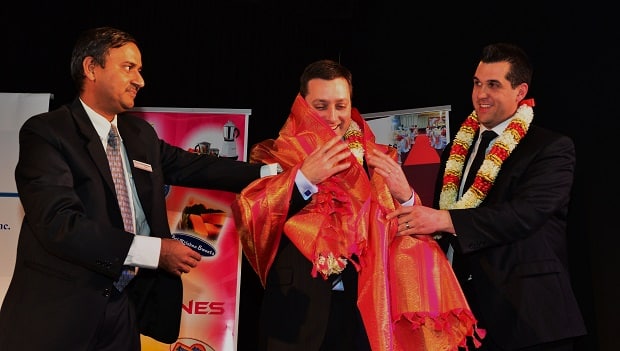
Next came a troupe of young dancers from the Shiamak School of Dance and Music, who performed an ultra-fast and well-rehearsed dance of the 21st century. They acted out a rather ominous battle show with traditional kirpans to pre-recorded music. Next, Dr Santosh Kumar, on behalf of FIAV welcomed Mr Rakesh Kawra from the Indian Consulate General, Mr Chitambaran Srinivasan, Victorian Multicultural Commission Commissioner, and Presidents and members from Malayali, Goan, Gujarati, Kashmiri, Marathi, Kingston Indian Senior Citizens Association (KISCA), and Indian Seniors Forum (ISF), among others. He regretted that many other associations invited did not even acknowledge the invitation. He reiterated that that partnerships survive on the principal of ‘give and take’, or they just wither away. He praised FIAV President Vasan Srinivasan’s perseverance in promoting the community’s cause with the government to receive grants and concessions. Mr Matta, an elegant senior, placed a shawl around Mr Vasan’s shoulders in the acknowledgement of his relentless services to the community. Santosh recommended that the community must recognise the need for an umbrella organisation such as FIAV, which caters to their ever-increasing needs.
Santosh praised the contributions of various members to the community and Australia. He cited that Mrs Krishna Arora and Mrs Usha Sharma were the only two of Indian origin whose names appear on the Schillings Wall of Fame. He praised Mr Surinder Verma, a journalist who has written many books that have been translated into other languages.

Charming Ms Sunita Sethi took the stage to perform two well-picked songs impeccably, followed by Mr Sushil Sharma of NRISA, who also sang two songs in his rich voice.
Commissioner Srini was all praise and encouragement for the efforts made by various associations to entertain and rejuvenate our seniors. “Melbourne is the most multicultural city in the world, which portrays a beautiful mosaic of cultural harmony in diversity. To promote cultural activities, an affiliation with FIAV is paramount, which acts as a bridge between the community and the government,” stated Srini. As per an ABS 2011 report, one-third of Australia’s population are over sixty. Most recent Indian immigrants are not English language literate, and the VMC spends $1.7 million among 700 associations to educate and entertain them. There are many Indian recipients of Order of Australia and the Medal of the Order of Australia whose services to society have been recognised, he stated, naming a few. Very thoughtfully, Monica Dowling from ‘Donate Life’ was invited to enlighten attendees on the benefits to society of donating organs. “One donor,” said Ms Dowling, “helps in saving pain to the lives of at least ten people.”
FIAV President Mr Vasan Srinivasan praised the government of Victoria for giving the community a hall and an office in centrally located Little India in Dandenong, for community related activities. Hindu Society has created a cultural section to accommodate 700, and also a museum of India. With pride Vasan stated that FIAV has been instrumental in bringing together 26 dance and music outlets under one umbrella called the Federation of Indian Music and Dance Cooperation (FIMDC), and also the Multi Faith Organisation (MFO). He stressed the need for coming together so we may strive to serve you even better. FIAV has finally created an Indo-Australia Trust Fund in association with Australian Unity and various banks, toward opening a 90-bed home for Indian seniors with a number of apartments, at Mt. Martha in beautiful Mornington Peninsula. Vasan also stated with pride that website information pages on the FIAV run into over twenty! Not taking anything away from previous FIAV Presidents, Vasan’s Presidency is already reaping rich dividends for the community.

The services of various members of the community were acknowledged through presentations. Dr Naunihal Singh was awarded a plaque by Mr Rakesh Kawra, and was presented with a pin – a replica of the Indian Ashok Chakra with Australian kangaroo and emu visuals, on his jacket. A Professor of Maths at Monash University for 30 years, Dr Singh was Vice President of Hindi Niketan and continues promoting India and the Hindi language. Mr Hitler David, of the Malayali Association was the first India-born engineer in the tools and dye industry. He is President of World Malayali Association and actively promotes the Malayali cause and culture in Australia. Mr KLS Bhagat was felicitated next, of an Indian army background, he has been teaching yoga for years. Mr Arjan Tuli, apart from his duties as first President of Indian Seniors Association – West (ISAW), is also involved in running an orphanage at Pondicherry. The last to receive his plaque, surprise-surprise, was yours truly, from Indian Link, for covering the Melbourne cultural scene. Mr Gandhi Berinakoppa, ex-Vice President, FIAV, and Mr Thiruvallam Bhasi, Editor, Malayalee News were also invited to the stage. The ‘youngest member of the community’ Sardar Bharpur Singh Mokal was invited to the stage by Vasan. This living legend will celebrate his 98th birthday on October 6. Sardar Harbhajan Singh Aulak, 81, created a stir as he recounted in Punjabi, his athletic achievements in India and Australia. The lunch from Tandoori Junction was delicious and brought an end to a well-presented and well-managed program. The 250 guests seemed more than satisfied with the event which took Dr Santosh Kumar and Mr Vasan months to organise. A great day to celebrate a great milestone.
Self-belief to succeed
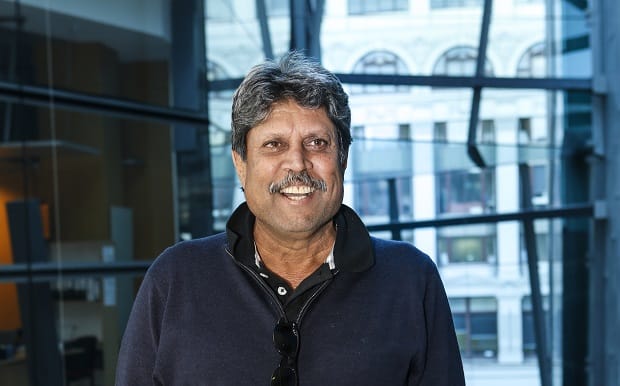
PRETTI JABBAL chats with Kapil Dev about current cricketing talents and trends, and his love for golf

A ceremony to launch the 11th Cricket World Cup was held in Melbourne recently, with international cricket legend Kapil Dev attending as a special guest of the ICC and Cricket Australia. The Cricket World Cup will be jointly hosted by Australia and New Zealand from February 14 to March 29, 2015. The Prime Ministers of Australia and New Zealand, ICC President Alan Isaac and former cricketers were present during the launch.
14 teams will be seen in action across 14 venues, and Melbourne will host the finals.
A living legend he may be, but that does not stop Kapil Dev from being one of the most amicable and interesting people to whom I have spoken. Add to this personable mix a good sense of humour, and talking to Kapil Dev is a real delight! When the phone call came to catch up with him over breakfast, I did not hesitate to drag myself off my sick bed and headed towards the Grand Hyatt where Kapil was staying during his visit to Melbourne. He was due to fly back to India that afternoon to continue with his numerous commitments and pursue his all-consuming passion for golf. A warm welcome later, we found ourselves ensconced with him in a trendy café on Federation Square tucking into a hearty soup and conversation.
Preeti Jabbal: What was the buzz at the World Cup 2015 launch that you recently attended?
Kapil Dev: The main buzz around the launch was because people were happy that the finals were to take place in Melbourne. It’s wonderful to see that the preparations have started almost 15 months in advance. In our part of the world this does not happen as we tend to leave things to the last minute. A good organisation starts planning much in advance, on top of that if the Prime Minister and the government of a country gets involved, then you do not come across many hurdles.
PJ: Hopefully! What will be your role at the World Cup 2015? Will you be involved, and in which capacity?
KD: It’s a bit too early to predict that, as I said to you before, we don’t plan this early (laughing), but I think I will be on television, most probably commenting on the World Cup either from here or from the studio in India, I am not sure yet.
PJ: India did not perform well at the World Cup in Australia in 1992; what are their chances of winning this time, under similar conditions?
KD: I think the current Indian team is looking much better with newcomers and youngsters in the team who are shaping up quite well. It is a different team without established players like Sachin Tendulkar, Yuvraj, Sehwag or Harbhajan, as none of them have played in the past six months. If the team has won the Champion’s trophy despite not having all these good players, then it is safe to say they are ready. My concern is mainly about injuries not performance.
PJ: Amongst the newcomers in the current Indian team, do you see someone as a potential Tendulkar or Sehwag?
KD: I would never like to compare anyone with such great cricketers who have done service to the country; however Shikhar Dhawan has shown tremendous potential and talent, Ravindra Jadeja is another good one while Mahendra Singh Dhoni is the backbone of the team. Even Ravichandran Ashwin has now gained more experience and is bowling better than he did when he played last time in Australia. I feel that the Indian team is well balanced, at this stage; I just hope they should not have any major injuries.
PJ: What is your opinion of DRS (Decision Review System)? Should it be mandatory to use in the World Cup, or restricted to just the umpires, or open to players?
KD: That is entirely up to ICC (International Cricket Council), if they feel that every player should feel comfortable with the decision, then why not? The technology is not always reliable and accurate, but if people are happy with the majority of the decisions, I do not see any problem with DRS. The Cricketing Committee is smart enough to decide whether DRS should be available to umpires or players or both, and whatever applies to the World Cup should be used throughout the year to ensure consistency. This system should not be limited to World Cups only; every tournament or Test series or One Day International and every cricket board who can afford it, should try to apply DRS. Consistency will ensure improvement.
PJ: You have been quoted saying that you have a strong belief that India will win the World Cup 2015? What prompted this comment?
KD: If the World Cup was to take place today I could confidently say that India would have a 70% chance of winning, but 15 months is a long time and things could change. Lots of new players can come up in that time and circumstances can change.
PJ: What has led to such confidence in the Indian team?
KD: The young boys who have come into the Indian team have lifted the game. I think once you start winning and believing in yourself, it builds your confidence. Jadeja, Virat Kohli, Dhoni are all are outstanding players. The only weak link in the Indian team is their bowling. If they can maintain good bowling standards and play well as a team, they have more chances to win than any other team.
PJ: What about the Australian team? What do you think of their new talents like Ashton Agar?
KD: I have never seen such an outstanding performance as Agar’s first test! For someone to play that well on his debut is exceptional, and it was unfortunate that he could not make a century. I have no doubt that these young boys will come out and make their mark, as there is a lot of talent in the Australian team; but the question is whether they can use it at the right time. At this stage they do not look like a strong team as they are lacking in certain areas. I think they need guidance and leadership to prepare them for that win.
PJ: The Australian team has not been at its best form recently. What do you think will help them improve their performance?
KD: Self-belief! You need a captain who takes ownership and starts playing from the front. The Australian captain is the most exciting cricketer in the world, however he seems to be going through a bad phase with health issues. If the captain is replaced, the team gets rattled. I hope the Australian captain overcomes his back problems and is able to develop the team well in advance. This is their territory and they know the conditions better than anyone else.
PJ: What is your opinion on the recent allegations that have affected the IPL (Indian Premier League)?
KD: The IPL has given a lot of fun, happiness and entertainment to the cricketing world, however the game has been marred with the greed of certain individuals. It is wrong and there is no need now or ever to do anything like that, and everyone cannot be tarred with the same brush. The ownership now lies on the teams, senior players and authorities to keep a strict eye on the players to ensure that no-one spoils the name of the game.
PJ: Speaking of games, how is your golf going?
KD: (Brightening up) Not too bad, I just don’t get enough time to play. I enjoy the game and I play every weekend, and that is why I am flying back so I do not miss my weekend game.
PJ: You could play here… Melbourne has some of the best golf courses in the world.
KD: It is winter here and not many people play golf in this weather. I have some other commitments as well and need to return; however I would love to be able to play here someday. Maybe next time!

Photo credit: Ravinder Singh Jabbal
Happy (Melb) Independence Day
Strong political presence at AISV and AIBC organised Independence Day celebrations

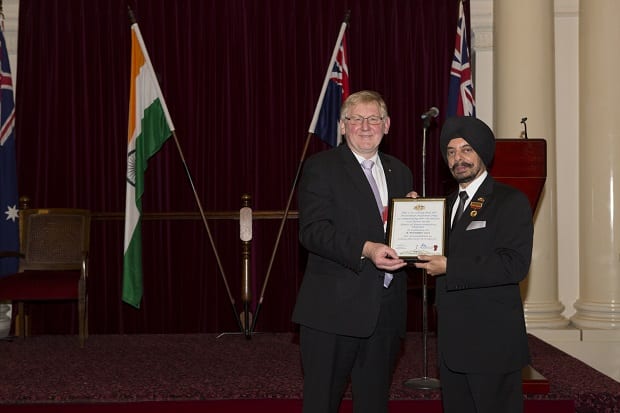
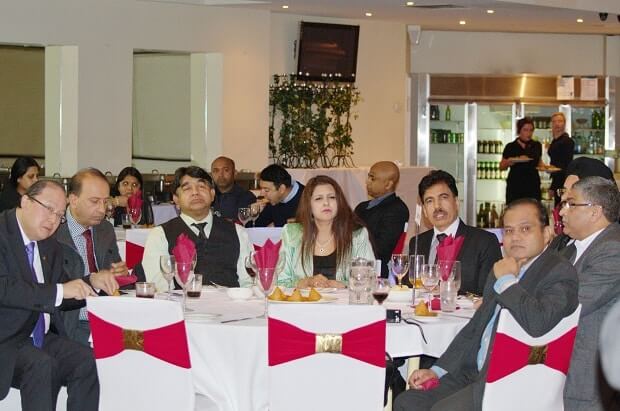
The history, heritage and people of India were celebrated in style on August 15 at the Victorian Parliament House in Melbourne. The Australia India Society Of Victoria (AISV) and the Australian Indian Business Council (AIBC) jointly organised this gala Indian Independence Day event. Several important local politicians attended the celebration to mark the bilateral relationship with India, and to pledge support for the Indian community. All of this was well timed, prior to the federal elections.
Among the dignitaries present was Shadow Immigration Minister Scott Morrison; Leader of Opposition Danielle Andrews; Former ALP leader Martin Ferguson; Parliamentary Secretary to Kevin Rudd, ALP’s Alan Griffin; Minister for Multicultural Affairs and Citizenship and Minister for Energy and Resources Nicholas Kotsiras; Member for Footscray, ALP’s Marsha Thompson; and Member for Bentleigh, Elizabeth Miller; and Tim Pallas, State MP for Tarneit, Shadow Treasurer and Shadow Minister for Employment. Also present were Dr Gurdip Aurora, President of AISV; Vasan Srinivasan, President of FIAV; Ravi Bhatia, President of AIBC (Victoria); Arjun Surapaneni CEO, VIT (Victorian Institute of Technology); Nitin Gupta, Ministerial Adviser; Rakesh Kawra, Indian Vice Consul; and Raj Kumar, Acting Consul General of India in Melbourne.
It was a remarkable feat to get people to participate with enthusiasm on a weekday; however AISV and AIBC seemed to pull it off with success. According to Dr Aurora, the decision to hold this event on the ‘actual day’ was made on the suggestion of late Consul General of India in Melbourne, Dr Subhakanta Behera. “Not long before he passed away, Dr Behera lamented the trend in Australia to celebrate Independence Day and other national events over weekends. According to him, a significant event on August 15, the day of Indian independence should be celebrated on the real day, not before or after,” said Dr Aurora, sharing the reason for holding the event on a Thursday. He thanked the managing committee of AISV and AIBC for supporting him in fulfilling Dr Behera’s wishes.
It was predominantly a networking event sprinkled with some entertainment in the form of a Bollywood medley and a fabulous Ukrainian traditional dance. The agility of the male dancers was matched equally by the elegance of their female partners, and it made a refreshing change for those present to witness the culture of another community. The bulk of the evening was made up of speeches from dignitaries, interspersed with interesting anecdotes from the MC Manpreet Kaur from SBS Punjabi radio.
Several speakers mentioned the shared history of Indians and Australians during World War II and claimed that the bonds between India and Australia go beyond cricket and economic alliance. Ravi Bhatia, President of AIBC spoke of the resilience of the people of India and took the opportunity to introduce and thank the Management Committee of AIBC, who according to him, have done a sterling job of growing Indian Australian business relationships. Scott Morrison spoke about the important role that the Indian community has played in Australian society. “The opportunities in IT, finance, tourism and education industries further cements the need for association of Australia with India, and there is no doubt that India is critical to the economic future of Australia,” said the Minister. He thanked the Indian community for a partnership that is growing and benefitting both nations.
Minister Kotsiras managed to stir up the audience with his tongue in cheek comment about India being the second best cricketing nation in the world. On a serious note, he reflected on the achievements of India as a nation in being a democratic multi-faith and multicultural nation. According to him, while there has been a lot of work done to support new migrants, the challenge lies in thinking of future needs of the rapidly growing Indian community. The challenge is to get the Indian community in Australia together as a force, to fulfil future needs like building a nursing home for Indians in Australia. He said he was wiling to support the efforts of the community, and they could continue to organise functions and cultural shows and events; however, a solution needs to be found to unite the community to address the needs of the future generation. Opposition Leader Daniel Andrews ended the speeches by offering a few brief comments. He praised the contribution of the Indian community, in particular their efforts in the medical, healthcare sector in Victoria and the broader nation. The event concluded with a vote of thanks from Monica Raizada, the dynamic Vice President of AISV.
Indian portal at your fingertips
Enjoy greater connectivity to all things Indian via a newly developed free app, writes CARL BUHARIWALA

Have you ever missed an Indian event because you misplaced the paper napkin on which its details were hastily written while conversing over scrumptious Indian cuisine? Do you remember the last time your friend gave you directions to a new Indian grocery store, and you forgot whether the turning was a right or a left? If you have encountered these situations before, a new application for smart-phones will prevent them from reoccurring. Tastes of India (ToI) is a portal that helps bring the Indian community together by providing a medium to experience all things Indian.
July 26 marked the launch of this spectacular application in the presence of important guests from the Indian community, including Mr Rakesh Kawra, Vice Consul from the Consulate General of India, Melbourne. This application will not only keep the Indian community updated with news and events, but will also provide an avenue for the greater Australian population to involve themselves with their Indian neighbours. ToI lists religious and entertainment events, along with business listings and important points of interest for Indians. The application is an essential tool for everyone; it is not only helpful, but free to install. What more could you want?
Dipen Patel and his team, the founders, designers and developers of ToI, stated that the application follows the theory of greater giving, leading to greater sharing.
“I believe that not-for-profit organisations and other social institutions will benefit from this platform as it acts as a launch pad to promote events that will reach a greater number of people,” stated Patel. “With smart phones and applications leading the path of the future, ToI takes advantage of existing software and helps bring all things Indian to the user with little effort,” he added.
During his speech at the launch, Patel quoted an incorrect prediction made by Ken Olson, president, chairman and founder of Digital Equipment Corporation in 1977. Olson stated that “there is no reason for any individual to have a computer in his home”. Patel explained that nowadays, people occupy their time with technology and enjoy expanding their range with the latest gadgets. “The future will be driven by socially targeted marketing, a concept powered by technology, and ToI is an example of this,” he stated.
Patel encourages not-for-profit organisations to register at ToI for a username and password and promote their events to inform the target community on the application’s calendar. The calendar stores all the information required, and can be modified to suit the user’s needs. It can also be synchronised with the user’s personal calendar, if desired. The ability to spread the message to the wider community is an important marketing tool that ToI is offering at no cost.
However, commercial organisations will need to register in a separate category at a fee. Currently, ToI is offering a three months subscription to the business listing for free. ToI has the ability to promote the organisation’s goods and services. It can also display coupons for consumers that will enable them to obtain discounts and stay up-to-date with sales and other promotion events.
In addition to these listings, ToI has the capability to connect users to Indian radio streams, provide live viewings of videos and keep the user up-to-date with Indian current affairs, sports and entertainment. The application uses the user’s mobile data and GPS system to provide updates as and when the user needs it.
ToI is essentially a one-stop-shop that provides everything for the user. Having the capacity to store this variety of information showcases the advent of technology and how bright minds, such as Patel and his team, can put together a clever application for everyone to use. ToI has adopted the concept of ‘push notifications’ which provide all users connected to ToI to have continuous updates. This is an essential tool that brings the information to the user, rather than having the user search for the information.
ToI is also a helpful assistant to Indian migrants who have settled in Australia with few family and friends. Where access to sources of information is limited, ToI acts as a reference that is user-friendly and accurate. This will limit the sense of isolation and ensure they are informed and updated on social and community based initiative from day one in their new home.
This application not only provides mere tastes of India, but has a comprehensive collection of information for all Australians. Patel and his team have developed an application that will pave the future for sharing communal information at a portal for all to see. This is an important step towards embracing a multicultural society, ensuring that everyone lives harmoniously, and a greater awareness of community leaders and initiatives.
ToI can be downloaded from the App Store and Play Store, and is also available online and on a majority of social networking sites. Stay connected for all things Indian.