

Indian Link has got it right yet again, writes PAWAN LUTHRA in his editorial

Indian Link has got it right yet again. In a poll we conducted prior to the 2007 elections, the trend was clearly towards the Australian Labor Party and after 13 years in government, the Liberal party led by John Howard was defeated. And so Kevin Rudd made true the ‘Kevin 07’ prediction.
In 2010, the community-based poll called the election a draw, and right enough, Australia experienced a hung parliament.
And in the 2013 elections, our online poll indicated a margin of 7% in favour of the Coalition Liberal National Party. As the final results have come through, we see them finally polling 53 to 47 against the ALP on a two-party preferred basis. The local Indian community has now got it right three times in a row!
While there can be many answers, it is worth acknowledging that the contemporary Indian is a highly political animal (passionate political debates are a common occurrence at the friendly neighbourhood chaiwallah’s), and this could certainly be true of the Indian populations here in Australia. With democratic principles as part of their DNA, they are adept at cutting through the political talk and understanding the underlying issues. As a number of them are new migrants, they are not glued to a particular party or a sentiment; rather they fall in the category of swinging voters and are able to take informed decisions.
To date, there haven’t been any discernable attempts by any party to woo these voters, so they are politically agnostic. They also do not have any local heroes in the form of strong Indian Australian candidates in a winning position, so they lack an affiliation to any party. It will be interesting to note if the dynamics actually change as the community grows from its current numbers of just over 400,000, to further north.
The two heroes of this Federal Election have doubtlessly been Labor members for Parramatta and Greenway, Julie Owens and Michelle Rowland respectively, who were set to lose their seats, according to all mainstream polls. Ms Rowland won her seat via a slim margin of just 779 votes in the 2010 elections, and Owens was written off by the punters. But these very same pundits did not take into account the work done by these two candidates within the Indian Australian community in their local areas. There was seldom an Indian function at which they were not seen. In fact, one suspects that Julie Owens’ wardrobe has a substantial range of saris and salwar kameez sets. At the recent India Australia fair, Owens attended for most of the day, working the crowds. In fact, she made a brief appearance at the formal function, but as soon as it was clear that she would not be sitting on stage, she slipped away from the speeches and went back to work, harnessing local votes for herself.
Michelle Rowland’s appearances at the local Parklea Gurudwara endeared her to the local Sikh community in an area strong with Singhs, which would have made a large impact on her final vote. Congratulations to both of them and their local Indian advisers for working hard to win the hearts and minds of Western Sydney’s Indian community.
One suspects that it is simply a matter of time before there is a greater presence by the powers that be at Indian community gatherings.
Importance of the Indian vote at the 2013 Federal Elections

Bhakti through dance and song
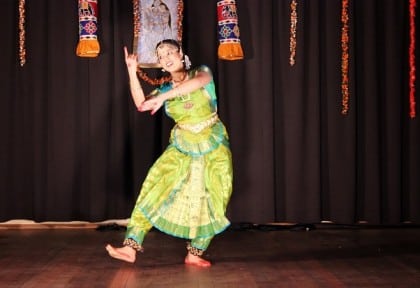
Simple, yet powerful artistic classical performances evoke the glory of the divine, writes DINESH RAMANAN

The Global Organisation for Divinity (GOD) Australia, staged an evening of dance and music recently at the Dundas community centre, in connection with the Krishna Janmashtami celebrations. The Master of Ceremony mentioned in her introduction, the many facets of Lord Krishna’s personality and thanked the artists for coming forward to perform at the event. She observed that to learn the art with devotion and to offer it back to the Lord is a great form of prayer in itself.
The initial part of the evening was an hour-long Bharathanatyam performance by Shruti Sharma. With great elegance and poise, Shruti brought out her phenomenal talent in this classical dance. Her swift and dexterous movements and fantastic facial expressions demonstrated perfectly that Bharathanatyam is indeed music in visual form. Shruti expressed the meaning of the songs through hand gestures and eye movements, and the rhythm with her feet. One could clearly get a whiff of the essence of natya shastra, “Yato hastha, thatho dhrushti, mana, bhava and rasa” in that sequence. What better way to transport the audience to a state of mental devotion for an entire hour! The songs chosen by Shruti for the dance were very meaningful, simple to follow and perfect examples of simplicity that is Bhakthi. Starting with Sri Muralidhara Swamiji’s composition Bhagyamae Bhagyam, it included Sri Ramachandra kripalu, Odi odi olivadhu, Ananda thandavam, Chaliye kunjanamo and the thillana. All these songs brought out in an artistic way, the efficacy of singing the divine names of the Lord. Shruti’s teacher Hamsa Venkat choreographed her dances and the rhythmic articulations bore the stamp of excellence for which Venkat is renowned.
The second part of the evening belonged entirely to Mrs Laksmi Abhishek and her group. Kranthi Kiran Mudigonda was on the violin, Sivakumar Sethupathy on mridangam and Hari Shankar on kanjira. For about 90 minutes, the artistes held the audience of 150-plus completely spellbound. With ‘Swagatham Krishna’, Lakshmi made a glorious start invoking a sense of surrendering our ego to the Lord, with her melodious voice. This was followed by Sri Muralidhara Swamiji’s kirtan, Manobalam yenakku arulvai which was sung with a great depth of emotion. As the concert progressed, it quickly became a great feast to the ears and minds rendered by such an excellent blend of sruti, swara, raga and tala. The melody of the violin and the rhythm of the mridangam and kanjira were of the highest order. The songs Varadharajan upasmahae, Kanna, kaatharul, Pachai ma meni, Baro Krishnaiah and the finale Vittala were not only great musical treats sung with such melody, but they conveyed very deep thoughts and glorified bhakti in a very emotional way.
The secretary of GOD Australia felicitated the artistes for their enthusiastic participation, and expressed his heartfelt appreciation for their excellent performances. In organising the event, GOD Australia desired it to be not merely a cultural event, but aimed to convey the point that bhakti, especially through singing the divine names is very relevant and important in modern times. The artists of the night brought out this point in such a simple, elegant and powerful way that the audience would never forget, ever!
Flat characters, stilted performances in forgettable flick
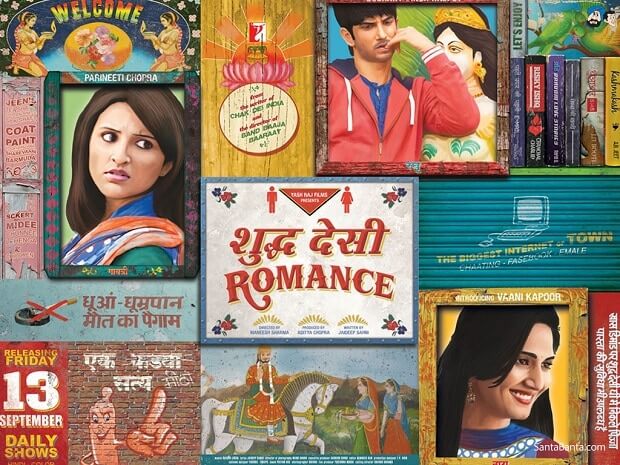
Film: Shuddh Desi Romance
Cast: Rishi Kapoor, Parineeti Chopra, Sushant Singh Rajput, Vaani Kapoor
Director: Maneesh Sharma
*1/2

While watching light-hearted love stories also known as ‘rom-coms’, two reactions come to mind: ‘What next?’ and ‘Who cares?’ This annoying film, masquerading as a modern-day parable on ‘What Young People Want’, definitely falls into the ‘Who cares?’ category.
The three main characters are so confused about life, sex, love and commitment (in that order) that you wonder why a film was scripted about them and their annoying lives in the first place. The ‘hero’, if he can be called that, is not only commitment-phobic but impervious to any kind of gravity in life.
Don’t misunderstand. He takes himself very seriously. But it’s hard to take him seriously as he vacillates between two women, both equally absurd in their libertines’ apparel borrowed straight out of some stale Julia Roberts-Susan Sarandon film which probably got shelved because the hero ran away with the cameraman.
Shuddh Desi Romance is so contaminated with candour, it doesn’t realise the difference between being sincerely searching and artificially scandalous.
Jaideep Sahni has written some remarkable films in the past, but sadly this ranks as his worst-written endeavour to date. The film has only three main characters, one of who is employed solely in slipping in and out of the two women’s lives.
Shuddh Desi Romance is not the kind of film that obtains or even seeks a decent resolution. The plot is happy to let the protagonist Raghu stew in his own orgasmic juices.
And he is plainly horny all the time. The over-zealous Sushant Singh Rajput as the hero doesn’t even try to hide his hard-on, wearing his libido like a badge of honour and flaunting his carnality in front of the two ladies. They, for reasons best known to them, seem to enjoy his company after an initial bout of demurral.
It is baffling how a protagonist as low-life and sleazy as Raghu can attract two attractive, feisty, free-willed women. Or why they would encourage his advances when they know he thinks only with his …well, to use a term Rishi Kapoor uses with such endearing picturesqueness…pappu in the pants.
Pappu in the pants has rollicking time. Curiously the hero and his horniness are like two different entities in the film which simply celebrates, for want of a better term, low-life libidinousness.
Raghu, as played by Sushant, comes across as a wimpy womanizer and nothing more than an irksome skirt-chaser.
The two women are more interesting, as always. Especially Parineeti Chopra whose dumbly defiant, smoking, swearing, character Gayatri acquires some stability through her fearless embrace of the camera space. No matter how frustratingly ill-conceived Gayatri’s rebellious attitude may be, Parineeti owns up to the character’s weaknesses like a man.
Debutant Vaani Kapoor plays her very awkwardly-written character with a mysterious smile that suggests it knows something that we don’t. Not that we care.
Most of the principal actors barring Rishi Kapoor give over-rehearsed performances, projected as laboured casualness. Rishi Kapoor as the wedding caterer is the exception, sinking his teeth into his role. The self-defeating numbing verbosity of the three main characters in this lust-triangle do nothing but speak about their pathetic self-limiting world. Soon we feel like reluctant eavesdroppers in an ill-managed ménage a trois.
Flat and phoney, the self-conscious realism of small-time gender-equations in Shuddh Desi Romance leaves us untouched, unamused and cold.
Live-in relationships never felt less inviting.
Subhash K. Jha
Taut, tense, tactile and terrific

Film: John Day
Cast: Naseeruddin Shah, Randeep Hooda, Shernaz Patel, Elena Kazan
Director: Ahishor Solomon
***

Viewing John Day has the thrill of discovering an unexpected little gem. It doesn’t matter where writer-director Ahishor Solomon got the raw material for this gripping cat-and-mouse tale. What counts is the quotient of curiosity and suspense simulated by the script. And there, John Day ranks very high.
Not for a while have we seen a film so steeped in despair, so swathed in anxiety, so audaciously draped in despair, and yet it engages our senses without miring the plot in morbidity.
The story is not for the squeamish. The two main characters are constantly haunted by their irrevocably tragic parts. Naseeruddin Shah and Randeep Hooda, real-life guru and pupil, play people who know no happiness. Incidents from their past continue to shadow and chase their present. There is scarcely a moment in the plot when John (Shah) and Gautam (Hooda) are happy except when they are with their beloved ‘other’.
But Shernaz Patel, who plays Naseer’s wife and the very beautiful foreigner Elena Kazan who plays Randeep girl, are troubled by their own ghosts.
John Day is a restless edgy drama of the doomed and the damned. Randeep has played a fugitive shadowed by his own past before. But this is certainly his most layered character, which he performs with the kind of gravelly gusto that allows us to get only as close to the sullen character as he wants us. Towards the end-game when the momentum gets frenzied beyond recuperation, Randeep’s character’s softer side emerges.
He has a brilliantly written monologue with a comatose character where we get to know how much this brutal man loves his woman. Yet he can die for money and for love. It’s a dichotomous character torn between self-abnegation and vendetta.
In a way Randeep character plays a mirror-image of Naseer’s banker gone amok. India’s most vaunted actor now plays a wizened common man pushed to a corner by the monstrous corruption in out socio-political system.
In John Day the terror that Naseer’s character battles is far more personal, moving and compelling.
It is very difficult to speak out openly about the characters and their motivations without giving away the plot. With John Day you become one with the character’s battles, without getting judgemental over their actions.
Some of the things that the characters do are unmistakably brutal in a cold world with no comic relief, at least none where you laugh out loud at the ironies of life.
John Day brings the indomitable Naseeruddin and the intriguing Randeep together in a taut cat-and-mouse chase that stays a step ahead of the audience until the shattering end-game.
But other actors are equally at home in this inky kingdom of greed and gluttony. Vipin Sharma and Makrand Despande are very engaging in their supporting parts. But the film’s third hero is Sandeep Chowta’s background score, creating a world of emotions beyond spoken words for Naseer and Randeep.
This is a world where there is no escape from sorrow and grief. Enemies are clobbered and butchered mercilessly, simply because life is as randomly brutal as we make it for ourselves. And cinema such as this reminds us that moral values of good, evil, justice and comeuppance mean nothing to those who have nothing to lose.
For a film about losers, John Day is a paradoxically profitable movie-viewing experience.
Subhash K. Jha
Karmic ceramic

An Australian ceramic artist’s new work is inspired by India, writes MINAL KHONA
“I love India,” says Sally Walk, an Australian ceramic artist who recently exhibited in Hyderabad, India.
“Of all the countries I have visited, I have never connected with a country or a culture in the way I did with India. I love the food, the people are captivating, the colours and patterns mesmerising and I even loved the heat and the traffic!”
She adds, “There was so much beauty and so much inspiration that I know I will return again and again. Of course all of these feelings found their way into my work. Usually my work is quite monotone and I favour the use of black and white, but for the first time in a long time, I was inspired to use more colour. So you could say there is a little bit of India in (my recent) works.”
Sally Walk, a senior ceramic artist based in Warragul, Victoria has participated in several international exhibitions and workshops including a recent one in India. Her works are unique, highly creative and draw inspiration from human nature.
Naturally, Sally has many ceramic artist friends globally and she works and collaborates with international artists frequently.
Her tryst with India began when, as a member of the International Ceramics Association (ICA) Forum, she attended its third Forum held at the Uttaryan Art Centre in Vadodara recently.
“What an amazing venue,” says Sally. “I would like to express my gratitude to Mr. Rakesh Agrawal for the amazing opportunity to work at the art centre and for his outstanding hospitality.”
The pieces she displayed were unique but the size of the work for this exhibition were on a smaller scale than her current work, due to the fact that she had to transport it to India.
“Some of the greatest friendships I have made are with artists from India. I met Indian ceramic artists Madhur Sen and Vineet Kacker in China, and Vinod Daroz recently in India and they have become wonderful friends,” she says.
In fact it was Daroz who invited her to take part in the ‘Fired Up’ exhibition in Hyderabad.
“I have a great respect for his work and I am in the process of trying to reciprocate the favour and have Daroz exhibit his work in Australia. I think it will be received well here,” she states. “That is the beauty of being able to work in partnership with other international artists, it is a chance to be presented with new opportunities, learn new skills and techniques and develop lifelong friendships.”
Sally’s interest in ceramic art began during frequent childhood visits to galleries and museums across Melbourne. At secondary school, she excelled in the arts thanks to a very enthusiastic ceramics teacher. She went on to complete her Bachelor of Arts in Ceramic Design from Monash University, and followed with a year’s residency at a ceramic art gallery. “During this time I focused on Raku and Saggar firing and became quite adept at being able to predict and create surface flashing and patterning in my work using oxides, seaweed and sawdust,” says Sally.
The talented artist admits that there has been a decline in the appreciation of ceramics over the last 20 years. However, there has been a revival of late.
“Ceramic work is being selected amongst finalists in major sculpture competitions and more ceramic artists seem to be exhibiting,” says Sally. “In the beginning I sold my work for under $100 per piece, even large pots of about 50 cms; now my work is smaller and many are sold as a group, so the prices vary. I have one artwork in the Cheongju Biennale in Korea at the moment valued at $4000.”
The source of inspiration behind Sally’s artwork is varied, but revolves around the spectacular colours and textures of Australia.
“I grew up beside the beach, and spent my childhood exploring rock pool, digging for fossils and observing the beauty in my surroundings,” she says. “Over time my work has evolved, but primarily the concept is the same. I am fascinated by human behaviour. Currently I am exploring the idea of disguised eccentricities. I am interested in how we as a society require a certain outward appearance to ensure belonging. I find this behaviour interesting. My various roles of wife, mother, daughter, sister, niece, friend, artist and teacher, seem to authenticate my own belonging in society”.
But there are, however, times when Sally desires to be a ‘recluse, selfish or eccentric’.
“The constraints of society’s rules enforce that I can’t have both, even on a temporary basis, without sacrifice. So really I am exploring the age-old notion of identity,” she reveals.
Sally’s current work is a combination of wheel-thrown forms and hand building. “I use stoneware and porcelain clays and slips. My style and taste in most things is minimalist, using block colours, but when I create art, I love extravagant texture and patterning. I think I find the repeated process of the adding of texture or appendages in a pattern formation quite mediative. It’s a very relaxing process. The time it takes to finish a single piece obviously depends on the size of the work. My work is quite detailed with fine appendages and these can take many hours to attach. In addition to the throwing and trimming of parts of the sculpture, there is the drying time between each addition to consider. One single piece may take 3 or 4 days just in the making stage, before drying, bisque firing and glazing. Ceramics is quite a long process,” says Sally who works from her purpose-built studio at her home in Warragul. She admits that she never makes two works exactly the same, ever.
“For me the (creative) process usually begins with an idea in my head; I may have seen a form or texture that day and need to investigate immediately,” explains Sally. “I like to create the ideas in my head by physically making, using a trial and error process. This may seem wasteful, but in reality most of the ideas work the first time, or evolve during the making process to be a success. I enjoy the development of an idea; the making of something without a predetermined outcome. For this very reason, my art will always evolve.”

Two more in the bag
Indian Link brings home more honours in this month’s Multicultural Media Awards

Indian Link has done it again! They added two new awards to their growing portfolio of media honours at the recently held 2nd Multicultural Media Awards (MMA). They took out Coverage of Community Affairs Abroad and Online Innovation in News Blog or News Website Design at the presentation dinner held on Monday September 2, at NSW Parliament House. These awards have been added to their portfolio of accolades, including ones from the 2011 NSW Premier’s Subcontinent Community Awards, 2012 Parliament of NSW Multicultural Media Awards and 2013 NSW Premier’s Multicultural Media Awards. It has certainly been a busy few years for the media group.
“It is indeed heartening to see Indian Link being appreciated not only within the community but now in the mainstream, and so consistently,” Pawan Luthra, CEO of Indian Link, said.
“Multicultural journalists bring communities together and break down social and cultural barriers,” said the Chair of MMA, Shaoquett Moselmane MLC, during his speech. “They inform, they inspire and they involve and they turn challenges into opportunities. Ethnic media is not just a mass communication medium; it is a personal, social, cultural and emotional tool as it combines the voices of many”. Moselmane personally congratulated Indian Link on winning a stack of awards two years in a row, as he posed for photographs with the Indian Link team.
“Of course these latest awards, like our previous awards, belong equally to all of our 70-odd contributors across the country,” said Rajni Luthra, Indian Link’s Editor-in-Chief. “Their work for us is driven by nothing more than a passion for telling the people’s stories, in a fair and objective manner, and is often undertaken over and above their own day job and family responsibilities. Pawan and I salute their efforts in helping us reach this level”.
Rajni also had a special word for the core team that works within the office at Indian Link. “The marketing staff, Vivek Trivedi, Nitika Sondhi Verma and Ashish Chawla; human resources manager Antoinette Mullins, assistant editor Lena Peacock, designer Danielle Cairis and contributing editors Sheryl Dixit and Preeti Jabbal, together oversee the work of the contributors on the paper as well as the radio arm of the company, and make sure a quality product goes out every fortnight in print and daily on air,” she said. “There is a strong commitment to excellence that I am very proud of, and I congratulate each one of our team members”.
Not including the ones that Indian Link won, the categories included; Multicultural Journalist of the Year, Coverage of Community Affairs in Australia, Cultural Photographer of the Year, Feature writing, News Reporting, Editorial Reporting, Contribution to Social Inclusion and Multiculturalism, Coverage of Indigenous Affairs, Investigative Reporting, Editorial Cartoon (a new category), and Online Coverage of Multicultural Community Affairs.
The Master of Ceremonies of the evening was Yalda Hakim (ex-SBS presenter, and current presenter for BBC London), and the special guests for the evening were Ministers Tony Burke and Kate Lundy, Indigenous Elder Brian Butler AM from the National Congress of Australia’s First people, Deputy opposition leader Linda Burney, Luke Foley, Amanda Fazio, Greg Donnelly, esteemed consular dignitaries, business and community leaders. It was an interesting time for an event at Parliament House, due to it being held just days before the 2013 Federal Election.
“You have turned challenges into opportunities, and at a time when mainstream print media is struggling, you are not only surviving, but thriving,” Moselmane said on the night, addressing the multicultural media. “Today, you have made multicultural Australia a success by enriching it with your talents, skill, hard work and dedication”.
Moselmane also revealed that until 1955 “the foreign language press, as it was called, was viewed with suspicion, and some thought it served as a hindrance to assimilation rather than help”. Restrictions were imposed by the government, and at least 25% of the text had to be published in the English language. Today, however, thankfully things have changed and the multicultural media are celebrated with their hard work by awards such as this.
Indian Link has certainly grown from the small 24-page black and white newspaper to having full colour monthly editions across Australia, as well as fortnightly Sydney editions, a 24-hour radio station, e-paper, e-newsletters, interactive website, and wide range of social media. Indian Link is not just a media group, it is a forum for the community, with a strong focus on quality and authenticity. It is most definitely seen as a celebration of assimilation and the media groups seems to be showing no signs of slowing down.
Indian Link: Online Innovation in News Blog or News Website Design
The Indian Link Media Group has embraced technology since starting in 1994 and has remained one step ahead in terms of cutting edge technology. They recently launched their newly designed website www.indianlink.com.au, and have increased their online and social media presence. With enhanced functionality and a stylish, contemporary design, the website uses innovative technology. With full social media integration, Indian Link is able to interact with their readers like never before. The website is now available across all platforms, including smart phones, tablets and other devices, for information on the go. It links the newspaper (through the e-paper), 24/7 radio (which can be listened to online or through an app) and online content (linking in to social media and e-newsletters).
Indian Link: Coverage of Community Affairs Abroad
Although the main thrust of reportage in Indian Link is on issues that connect India and Australia, substantial effort is also devoted to coverage of major issues in India. Every edition of Indian Link features news from India, as well as pieces on India’s literature and cinema. These regular columns keep the Indian community in Australia abreast of movements in India in all areas of endeavour.
With the Indian Link Sydney edition being the only English language paper for the Indian community being printed fortnightly in Australia, the regularity of these features are an important source of information for many Indians living in Australia.
Full list of awards:
Multicultural Journalist of the Year
Gerry Gerogatos, 1. The Stringer 2. The National Indigenous Times
Coverage of Community Affairs Abroad
Rajni Anand Luthra and Pawan Luthra, Indian Link
Coverage of Community Affairs in Australia
Linna Lee, TOP Media
Cultural Photographer of the Year
Oi Ling Jojo Lee, Sing Tao Daily
Feature writing
Helen Velissaris, Neos Kosmos
News Reporting
Wing Yam Lee, Sing Tao Daily
Editorial Reporting
Patrick Zhu, Oursteps
Contribution to Social Inclusion and Multiculturalism
Jan Smith, 3ZZZ Radio
Coverage of Indigenous Affairs
Gerry Georgatos, The National Indigenous Times
Investigative Reporting
Gerry Georgatos, The Stringer
Editorial Cartoon
Joel Magpayo, The Philippine Times
Online Innovation in News Blog or News Website Design
Rajni Anand Luthra and Pawan Luthra, Indian Link
Online Coverage of Multicultural Community Affairs
Steve Giannakouras, www.greekcity.com.au
Aaya re aaya, bookwallah aaya!
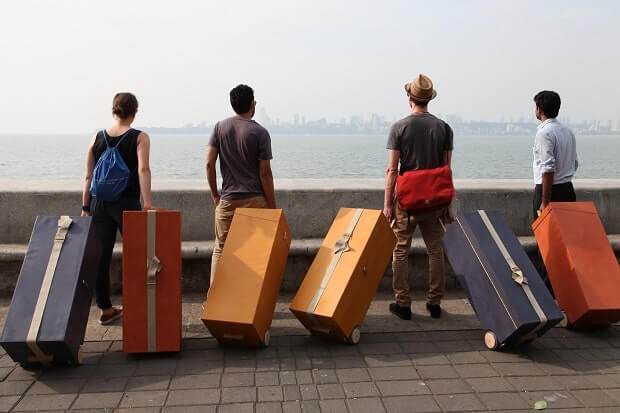
Four enterprising writers traverse Australia peddling treasures of Australian and Indian literature

We have all heard about the local sabziwallah, istriwallah, doodhwallah, macchhiwallah, dhobiwallah, kulfiwallah – but a bookwallah? What’s that? And here in Sydney? I have yet to see any kind of wallahs here. Or does the fortnightly home-ice cream-wallah in his van count? My curiosity was piqued and this led me to the State Library of NSW to find out more. And it was such a delight! Four of the bookwallahs out of the original team who toured India were passing through Sydney. They are en route to Brisbane for the Writers Festival, where they speak on September 8, after having presented their wares at the Melbourne Book Festival in August.
The Bookwallah is a project organised by the Asialink Writing Program of the University of Melbourne. This roving international writers festival ran its tour of India in October-November 2012, starting at Mumbai and ending their journey at Pondicherry, travelling via Goa, Bangalore and Chennai. Indian writers like poet Sudeep Sen, novelist and book critic Chandrahas Choudhury and journalist and fiction writer Annie Zaidi, were joined by Australian young-adult fiction author Kirsty Murray and non-fiction writer Benjamin Law, in the 2000+ km journey. The unique part of this journey was that they travelled by train, lugging over 300 kgs of books across southern India.
The writers are now in Australia doing the same thing – sharing stories and conversations as they traverse the states, in this case from Melbourne to Brisbane by train. Along the way they stop to discuss their books, and the books of their respective countries, meeting readers, sharing ideas with other writers, and whoever else they meet serendipitously on their journeys. Benjamin Law, a Brisbane-based writer is the author of The Family Law (2010) which was shortlisted for Book of the Year at the Australian Book Industry Awards. His first journey into India was when he was researching his second book, Gaysia: Adventures in the Queer East. Benjamin travelled to India in 2011, not long after homosexuality was decriminalised in India. Annie Zaidi is the author of Known Turf, a collection of essays, and co-author of The Bad Boy’s Guide to the Good Indian Girl. She also writes plays and is currently working on a collection of short stories and a new manuscript of poems. Annie said that before her involvement with The Bookwallah project, her only contact with Australian literature was through the work of Les Murray. Travelling with Kirsty and Benjamin opened her eyes to the world of Australian literature. All the writers rued that the global publishing world, dominated by US and UK companies, saw little of the literature of their countries available outside the local arena.
Kirsty Murray has nine novels and numerous works of non-fiction and junior fiction to her name. Her latest novel, The Lilliputians (released in Australia as India Dark), is based on the true story of a theatrical troupe of Australian children that toured India in 1910. The real children were members of Pollard’s Lilliputian Opera Company, a famous Australian theatre company. In the book they are recreated as Perceval’s Lilliputian Opera Company, and research for this book took Kirsty to India where she followed the train route the children took. So she was delighted when invited to be part of the Bookwallahs.
Chandrahas Choudhury is a novelist and literary critic based in Delhi and the author of the novel Arzee the Dwarf. He is also editor of an introduction to Indian fiction, India: A Traveller’s Literary Companion, and reviews books for The New York Times, The Washington Post and The Wall Street Journal. He spoke about the richness of the multilingual literature of India and which is in fact so rich, that no one has a sense of the whole. New discoveries are made from translations all the time. Being part of this travelling roadshow with The Bookwallahs gave him the opportunity to not only take his own work around, but also the traditions of hundreds of years of Indian literature. Chandrahas’ introduction to Australia was through cricket and he wrote regularly for the Wisden Bulletin on this subject.
Another important traveller, or rather travellers, on The Bookwallah journey in India were the six handcrafted suitcases filled with books which could be turned to a portable library, and vice versa, in a matter of fifteen minutes. These ingenious cases were created by Georgia Hutchison and Rob Sowter and made of Australian hardwood, plyboard and vegetable-dyed kangaroo leather. The writers spoke of their adventures and misadventures lugging these beautifully crafted colourful cases around trains and hotels in India. Due to their size, the cases travelled in the rail luggage compartments, at times in the company of coffins, and were once soaked in drippings of water from frozen fish in the journey from Mumbai to Goa. A good rubbing of eucalyptus oil later, they were ready for more travelling! At the various destinations, the travelling writers would empty these suitcases to set up the library filled with offerings from classic and contemporary Australian writers, using the cases as seats at times, and referring to the books to discuss aspects of Australian culture and literature.
The writers bonded well on their three-week journey through southern India, the proximity forced by travelling on Indian trains not withstanding! They did not know each other at all at the start of the Indian leg of The Bookwallah journey, but it was evident that they had become the best of friends in this Australian leg of the journey. Kirsty said that the trip had opened up a window to each other’s culture, and Benjamin said that it helped to eliminate the blind spots. Travelling through India they realised how few Australian books were available in Indian bookstores and libraries. They redeemed this by leaving collections for public use.
“Though electronic books are becoming very popular, it has not diminished the value of physical books in preserving the words and memories of people, especially in a country like India where millions have little access to books, let alone e-readers,” remarked Annie.
Benjamin rightly concluded saying, “A physical book has a tradition, a currency and a respect imbued in it that was hard to beat”.
And then, if there were no paper books, how would The Bookwallah leave memories, conversations, essays and stories for many others to access?
This project is the well-deserved winner of the Federal Government’s inaugural Australian Arts in Asia Award in the category of community engagement.
Auntiji says: Compromise or quit?
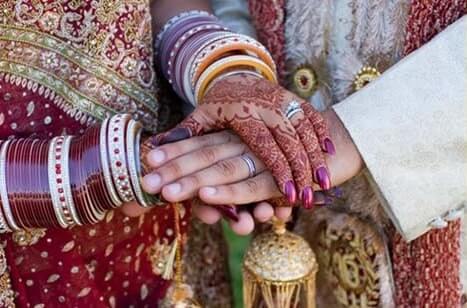

Recently, I received two letters from two sahelis, both with similar themes. I was most saddened by their plight, which highlighted the situation of so many women around the world. These brave and tenacious women have agreed to have their stories told, which is but the tip of the iceberg with their situations.
Let’s call the first lady Damini. She arrived in Australia, very young and newly married. Educated, ambitious, driven and optimistic, Damini had married an NRI with all the hopes and desires of a young Indian girl. Her future husband seemed to be a nice young man with a degree from a global university, and she liked the image he presented. Damini had asked him if she could work after marriage, and he assured her she could. Damini established a home with her husband in Sydney, with no family or friends. Some time later, when she tried to find work, he did not want her to get a job. Very quickly he became neglectful, and instead of spending time with his young bride, he would spend all his time watching films. He was not even interested in engaging in conversation. He became very controlling and would tell Damini what to wear and to whom to speak, whenever they went out. Her modest clothing, even a sleeveless salwaar or t-shirts, became fodder for his controlling behaviour, and he insisted that she was trying to attract glances from others. Although young and attractive, he failed to show Damini physical affection, and even went so far as telling her that she could find other partners. Lately her husband has slowly been becoming verbally and emotionally abusive toward Damini, saying that she could leave anytime. Damini’s mother wants her to stay in the relationship because her younger sister is unmarried. What could she do?
And there is Asha. She came to Australia in 2005 as a skilled migrant, with post graduate teaching qualifications. Asha married in 1991, and her children are now ready to step out into the world on their own. Asha’s marriage was an arranged one in which her husband was fairly controlling and was prone to aggression if his way was not accepted. When her parents recently died, it appeared that Asha’s husband’s intentions, thoughts and feelings towards her died also. He became verbally abusive and intimidating. He would behave atrociously, telling her in front of their children how he was forced to marry her, and he didn’t really like her or want her anyway. Naturally, she was concerned about how this affected their children, who hated to see their beloved mother being treated like this. Furthermore, she was financially independent and taking on all the household expenses, while her husband was stingy with his money, saving to spend on himself. What could she do?
Both Damini and Asha wrote to me to ask for my sage advice, and here is my response.
What do you want from your marriage?
I am most saddened to hear such stories. But here is a solution to both problems.
In the first instance, please work out what you want. Do you want to stay in the marriage and make it work? Do you want to try and salvage the relationship? If so, then you must have a plan about communicating this with your husband. Damini, perhaps your husband is stressed at work and has failed to understand how lonely you are. Try to see what you can do about focusing on his needs. Give yourself a timeframe of 3 to 6 months and make an attempt to make your marriage work. Plan some time with your husband and share your thoughts with him. You are a new bride, so spend some time focusing on him, learn to understand him and make him happy before you focus on what you want. It takes a while for two newly married people to settle into a pattern and if both parties are only focusing on themselves, it’s not going to help anyone. So Damini, I suggest that you spend time to learn what troubles your husband, and try to help him with his concerns. Make it your priority to make him happy, and put your own needs and wants to one side – but only for the moment. You need to give him a chance and as long as he is not abusive, you should try to make the relationship work. Now, once you have given it your best shot to try to make your husband happy and if after your deadline, you find that he is not responsive and nothing has changed, then you need to consider whether you want to be in this relationship at all. But first, focus on your husband, give it your best shot, and tell me how it goes, and we can reassess the situation.
Asha, I have the same advice for you. What do you want out of this marriage? Do you love your husband and want to make it work? If so, then you need to spend time with your husband and tell him how his behaviour is affecting you. You need to set clear boundaries and tell your husband that while you love him and want to make the marriage work, you are not interested in being verbally abused. Particularly in front of your children. Then tell him what you want changed. This is your life – and you shouldn’t have to be anyone’s doormat. But if you feel that your husband is not going to change, and that you are married to someone who is not interested in being married to you, then here is my advice to you. You have raised two great children. You worked hard and are educated, and financially, you do not depend on any man. You are still young – so why should you live your life with someone who does not want to be with you and is controlling, and aggressive? Tell me this, if your daughter was married to a man like that, what advice would you give her? Would you want her to remain unhappy and in a relationship which is not respectful? So why should you accept that for yourself? I suggest you make plans to develop a life for yourself and your kids, without your husband. You have the freedom do this. You are not bound by any rules that say you must remain unhappy. You have put enough into this marriage, and you’re not getting back the anything in return. It’s time to start the next chapter of your life, Asha.
A final word
Damini followed my advice, but unfortunately despite trying hard, one day her husband became particularly vicious to her so she packed her bags and friends gave her the money for a ticket back to India. I am glad she did this, because she should not be in a relationship that was not worthy of a bright, driven and lovely young woman as herself. Today, Damini is back in India trying to mend the pieces of heart, and being strong and smart, she will be back on her feet in no time.
My message to all young Indian women who want to marry NRI husband is this: there is a distinct difference between young men who were born and raised here, and those who arrived as late teenagers or young adults. The former will have been influenced by the culture they live in – which is predominantly Australian. Granted, they may still have Indian views, but not to the same extent as those who were raised in India. However, one cannot apply generalisations and stereotypes to individuals. All potential spouses must be considered on their own merits. You need to spend time corresponding with your future husband to determine if this is the person with whom you want to spend the rest of your life. If you want a modern husband with contemporary views who sees you as an equal, rather than an imported version of a preferred desi type, then you need to look harder. Just because he is an NRI means absolutely nothing. Of course, all this presupposes that what you want is the same thing as what your spouse will want.
Here comes the sun

Get your face, body and hair ready for the onslaught of warm weather as summer approaches, writes MINNAL KHONA

Summer is on its way, with heat seeping into the cooler days of spring. While the sun feels great after winter, it brings on its own set of problems, from sunburn to oily hair. Here are a few tips for preventing summertime blues from affecting your looks.
Australians love the sun and hitting the beaches and pools are high on the to-do list for most of us. But being in the sun, or being exposed to hot weather for a long time can cause a lot of problems. If you know what can happen, it is easy to prevent it. However, if you still end up with sunburn or a rash despite your best efforts, there are ways to minimise the damage.
Firstly, because the rays of the sun are harsher during summer and since Australia is close to the hole in the ozone layer, it can make skin and hair more sensitive. Increased bacteria in the atmosphere, sweat and heat are all factors that contribute towards these problems.
Knowing what to do is half the solution. Diligently maintaining a routine is the other half. But, if you still end up with one of the following problems, they can still be dealt with effectively.
Tan
If you are fair skinned, there are chances that your skin will go pink in the sun in minutes. Others, usually Indians and Asians tend to tan gradually, with their skin starting to go darker over days. Typical Indian brown skin comes from prolonged exposure to the sun.
While wearing sunscreen is a given and an essential part of one’s daily routine, regardless of the weather, there are ways to avoid and diminish a tan.
Wearing a hat and carrying an umbrella to shade you from the sun will minimise the chances of getting a tan. But if you are unable to do that, try face packs according to your skin type. Use milk or dairy whitener mixed with honey or yoghurt for dry skin, mash the pulp of a papaya for sensitive skin, make a mask with lemon and Fuller’s earth, or apply gram flour mixed with turmeric and water for oily skin. Even rubbing the flesh of a tomato on the skin will reduce the tan.
Sunburn
This is something to which we are all vulnerable, especially if you plan to spend the day at the beach. One doesn’t realise it, but harsh rays of the sun can scorch the epidermis of the skin over a few hours and, once completely dried and shrunken, the skin will start peeling off. It’s a very painful condition and even if it is just the skin of the nose, it can hurt like crazy!
The best way to prevent sunburn is to slather all exposed parts of your skin with sunscreen and some light moisturiser. If you are wearing long lasting sunscreen whose effect doesn’t wear off even if you are in the water, every time you step out, dab on a little moisturiser and keep drinking water through the day. Citrus fruit and vitamin C also help to prevent sunburn.
If you still end up getting sunburnt, the best remedy is cold milk. Just soak a handkerchief or a napkin in a bowl of cold milk and apply to the sunburnt skin. It will soothe the skin instantly. Once it dries, repeat the process and after doing this a few times, shower in lukewarm water. Apply a rich moisturiser after the shower for relief and continue the milk application till the sunburnt skin stops hurting.
Prickly heat rash and other rashes
While it is usually kids who end up with prickly heat rashes, sometimes adults can get them too, especially on our backs. Other rashes also occur due to heat and sweat.
The more severe ones will need medical treatment, but if it is an outbreak of a rash that feels prickly, a sprinkling of talcum powder works well. A calamine solution, or a liquid moisturiser can also help. Changing clothes often can help prevent the build-up of sweat, which can lead to bacterial infections. If the infection or rash you get is diagnosed as a fungal infection, seek medical help.
Sweating and bacterial infections
Half the skin infections during summer are caused due to excessive sweating. This applies to the scalp as well, and it can cause dandruff. Sweating also leads to oily and greasy skin and hair.
The best way to prevent skin infections is to shower at least twice a day and wash your hair every alternate day. That keeps the skin and hair reasonably clean and prevents bacteria from thriving.
To control or prevent dandruff that can occur from a sweaty scalp, use a mild anti-dandruff shampoo. If you oil your hair, make sure you leave it on for only about an hour before washing it off.
Dry hair and discolouration
Since the water in pools is chlorinated, it can cause havoc on coloured hair. These days, with just about everyone colouring their hair and not just to prevent greys, it is imperative to protect the hair while in the pool. Also, salt water and chlorine can make hair dry and brittle, as can harsh sunlight.
A handy tip to keep in mind before you go for a swim is to wet your hair. Make sure it is wet to the scalp before entering the pool. Alternatively, use a deep, nourishing, colour protecting conditioner every time you step out of the pool.
While summer can make hair dry and brittle, a good protection for the hair is to tie a scarf around your head. A leave-in conditioning serum can also help prevent loss of moisture from hair.
Overall, maintain a healthy diet with a lot of fibre content, juices, salads and drink lots of water to replenish moisture loss in summer. If you respect the weather and alter your lifestyle to suit it, heat or cold can do little to mar your good looks.
Avenging avatar for Kangna

Avenging avatar for Kangna
From a gangster’s girlfriend to schizophrenic, to spunky small town girl, actress Kangna Ranaut has portrayed a variety of characters on the screen in the past seven years, but she says her role in Revolver Rani is her toughest so far.
“My role in Revolver Rani is very difficult to portray,” said the actress.
“It’s a very unusual film, in which my looks are very different. I have to look unattractive in the film and for the first time I have to take care to not look beautiful,” added the actress who apparently took training to use the revolver to make her role believable.
Reportedly, Tabu was approached for the role before Kangna. Directed by Sai Kabir, the film is being co-produced by Tigmanshu Dhulia and Rahul Mittra.
The actress, who was seen in Shootout at Wadala, is happy with the kind of films she is doing.
“It’s going to be an exciting year for me. I am doing some different roles in each film,” she said, also revealing that her next film will be Krrish 3. “I am extremely happy with the kind of scripts I am getting these days”.
A gun-wielding queen is indeed an unusual role for Kangna. Can’t wait to see her in an avenging avatar!
Standing ovation, well-deserved!
The Frontier Gandhi: Badshah Khan, a Torch for Peace, a documentary about Khan Abdul Ghaffar Khan, the founder of a pacifist movement among Pashtuns, had its first screening at the recently concluded Ladakh International Film Festival (LIFF) in India, and got a standing ovation.
The movie is a result of 22 years of hard work and research from producer-director Teri C. McLuhan. The Frontier Gandhi screened to a packed house at the Sindhu Sanskriti Kendra in Leh and among the audience were Afghanistan Ambassador to India Shaida Muhammad Abdali, Jammu and Kashmir Urban Development Minister Rigzin Jora and film personalities like Madhur Bhandarkar, Rakeysh Omprakash Mehra and Aparna Sen.
In the 1920s, Ghaffar Khan emerged as a social reformer with the aim to work for the betterment of his fellow Pashtuns. Gaffar Khan is referred to as Frontier Gandhi for the similarity in his non-violent methods of opposing British rule. The viewers at the screening were so overwhelmed by the Pashtun leader’s non-violent movement for freedom saga that they gave it a standing ovation.“What a fabulous film!” said Bhandarkar praising it.
Teri McLuhan will now hold a special screening of the film for President Pranab Mukherjee in the capital. All parliamentarians, Congress members and close friends would be invited to attend. Let’s hope filmgoers around India also give it the accolades it deserves.
At the conclusion of the 3-day festival, Abhinav Shiv Tiwari’s OASS, a movie on human trafficking, was named the best film, also winning best screenplay, and Divya Chhetri was awarded the best actress for the same movie. Sewan Sing Yein won the best actor for KO:Yad, for which Manju Patra Borah clinched the best director award. A host of awards were given out for cinematography, short film and documentary film. Ladakh’s filmmakers were honoured under a special category of awards. The event also saw folk dance and song performances from local artists. A tribute was paid to late filmmakers Rituparno Ghosh and Yash Chopra, as well as actor Pran.
For lovers of good cinema, a viewing of these well-made, but commercially non-starting movies will be tribute enough!
Gulshan Grover’s double role debut
Gulshan Grover is a respected veteran in Bollywood and has acted in more than 350 films so far. But for the first time in his illustrious career, the actor will be seen in a double role in Baat Bann Gayi. And naturally, Gulshan is very excited about the project. The movie is co-produced by Sayed Asif Jah and Megha Agarwal, and is directed by Shuja Ali.
Gulshan portrays the roles of two diametrically different characters, the studious Professor Lakshmi Niwas and a choreographer Debu Daruwala, in the film that will be released in mid-October.
“It was very interesting because when you normally play a double role, one is a good guy and the other is bad,” said the 57-year-old. “Here, Prof Lakshmi Niwas is a very nice man, and Debu is nicer, and has an artistic way of life, a different kind of happiness. It was challenging not just because of the characters, but also because of the dates and budget constraints as I had to play both characters almost simultaneously and that was not easy,” he added.
The film also features Ali Fazal, Anisa, Amrita Raichand, Razzak Khan and Akshay Singh.
Wonder if Gulshan’s being paid twice the price for the double role!
Will Shahid become a hero again?
Well, producer Ramesh Taurani seems to think so. After launching his protégé Shahid Kapoor in Ishq Vishq in 2003, Taurani is confident that his film Phata Poster Nikla Hero will be the biggest film of the actor’s life.
Shahid’s last two releases Mausam and Teri Meri Kahaani turned out to be box-office duds, so it’s great that the actor has someone keeping the faith!
“If the actor has performed in a good film then he is definitely loved by the audience,” said Taurani recently. “I can say it will the biggest film of Shahid’s life”.
Directed by Rajkumar Santoshi, Phata Poster Nikla Hero will release soon, and also features Ileana D’Cruz and Padmini Kolhapure in pivotal roles. For Padmini, her comeback to films means that she’s ready to explore all kinds of genres now.
“I have done comedy films, but after marriage, I took a backseat which I don’t regret,” Padmini said, explaining her decision to return to Bollywood. “But I was bored while sitting at home and when I got this offer I liked the script. Also, it was a complete family entertainer. Now I want to explore all kind of genres”.
Padmini will play Shahid’s mother in the film who wants her son to be a police officer, but her son wants to be an actor. It’s a full-fledged comedy film. The 47-year-old was recently seen in the film Mai which also featured Asha Bhosle in a prominent role.
Ileana will play Shahid’s love interest in Phata Poster Nikla Hero, and she calls it a crazy film. “It’s a crazy, mad film,” she said. “I have never done such a film before. Besides, Rajkumar Santoshi’s comic timing is amazing. Nobody can match him”.
Well, after a drought, let’s hope Shahid emerges as a hero at the box office!
Masti-mazaa time for Vivek
Vivek Oberoi is in the mood for masti-mazaa, as his latest release Grand Masti, an adult comedy replete with double entendres, earned Rs.26 crore in two days. Made at Rs.35 crore, it has been written by Milap Zaveri and has earned brickbats from critics for innuendos and suggestive leery double-meaning dialogues.
Grand Masti is director Indra Kumar’s homage to hefty horniness, and has opened to a massive thundering ovation with youngsters thronging theatres in droves to watch the certifiable sex comedy. This celebration of sex, sleaze and bust seems to have caught the nation’s fancy.
Trade analysts are also surprised at the movie’s success. “Seeing the bumper opening of Grand Masti, it looks like a winner,” says Amod Mehra. “The repeated success of dumb brain-dead films proves we have a huge audience for such films. Sleazy sex comedies with double-meaning dialogues were and would continue to be in demand”.
But Vivek, whose movies like Prince and Mission Istaanbul bombed at the box office, is undeterred by the criticism and wants to enjoy the success that has come to him after a long while. And that’s exactly why Vivek was having a party, after a long while! Directed by Indra Kumar, Grand Masti also features Riteish Deshmukh, Aftab Shivdasani, Sonalee Kulkarni, Kainaat Arora, Maryam Zakaria, Manjari Phadnis, Karishma Tanna and Bruna Abdullah.
In fact, thanks to the success of the film, Vivek is now keen to have Hollywood action star Jean-Claude Van Damme in Grand Masti 3, because it would be great fun seeing him do a ‘helicopter kick’ in the movie. The actor has always been a big fan of the Hollywood action star, and wow, watching Van Damme in action would be worth it!
Irrfan happy for lunch treat!
Talented actor Irrfan is happy with his soon-to-be-released movie, The Lunchbox, because he feels that the story is so good, it will not only remind viewers of real love, but satiate their appetite too. “The film is a complete dish. It increases your hunger, both stomach’s and your heart’s. So it’s a complete meal,” said the 46-year-old recently in an interview.
“The director’s style of telling the story is fresh and new. It inspires you to fall in love, something that people are forgetting these days. Love is becoming mechanical and need-oriented. The film reminds you of the real love that exists,” he added.
Actress Nimrat Kaur, who made her debut in Bollywood with the film, said the film has the potential to make a place in the viewer’s system.
“There is a lovely sensation, which I felt when I saw the film for the second time because the first time I got completely lost in it. So it will appeal to anybody,” she added.
The film has already carved a niche for itself in the film festival circuit. It was recently screened at the Toronto film festival and won Critics’ Week Viewers Choice Award at Cannes this year. Directed by debutant Ritesh Batra, The Lunchbox also stars Nawazuddin Siddiqui. And now, Vivek Rangachari, producer of The Lunchbox, is planning to remake his Tamil hit Chennai 600028 about street cricket, into Hindi. He has tentatively titled the Hindi version Kirkit. “The film has gully cricket as the backdrop. It’s a very youth-centric film,” he said and added that the Hindi version will be made in a way that it would appeal to the audience.
After the success of The Lunchbox, Kirkit is likely to be as appealing and enjoyable. Let’s wait and see!
Ayushmann awed by Sonam
VJ-turned-actor Ayushmann Khurrana, who will be seen sharing screen space with Sonam Kapoor in Yash Raj Films next, says that the actress is a very simple girl in real life. Sonam is known for her ‘smart’ style sense at red carpet events and during movie promotions.
“It’s been a great experience working with her. People get disillusioned by the fashionista that they see at media events. But in reality she is a very simple girl,” the 29-year-old actor said recently in an interview. “She has seen the journey in her career right from being an AD (assistant director) to now as one of the biggest stars,” he added, obviously awed by his stunning co-star.
Ayushmann, who made a successful debut in Bollywood with John Abraham’s debut production venture Vicky Donor, was later seen in Rohan Sippy-directed Nautanki Saala!
Apart from showing his acting capabilities, he also crooned in both his films, although he never expected to do so. “I never aspired to be a singer. I always wanted to be an actor. I thought I am more of an actor than singer. Moreover, a singer actor lends more credibility to his work as he can lend his voice to his own character,” he said.
“Having said that, I cannot sing all my songs. My voice has a certain texture and I am not a versatile singer. I can sing songs of a particular genre,” he added.
Well, you certainly did a good job, Ayushmann, what’s next? A duet by Sonam and you?