


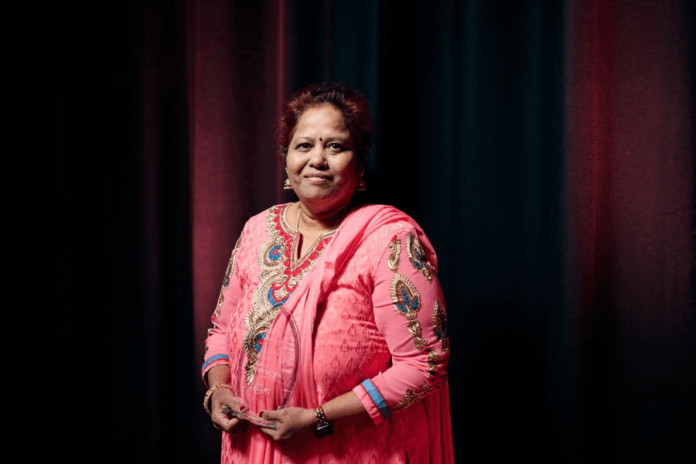

For over 35 years, Dr Sujatha Shanmugasundaram (Suja Shan) kept moving.
There was the next patient to care for, the next student to teach, the next family to support, the next research project, and the next person who needed an advocate.
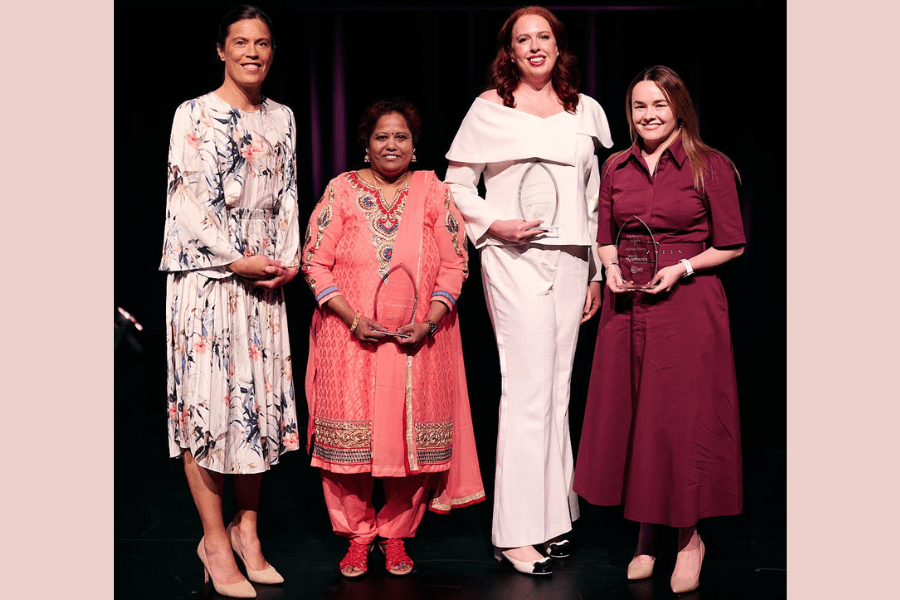
So when she received the 2026 ACT Women’s Lifetime Achievement Award, something unexpected happened.
“This award gave me permission to pause,” she says, smiling.
And when she did, she found herself thinking less about the titles and achievements that she had accumulated over three decades in nursing and more about the people who had shaped her.
“I think about the patients who allowed me into their lives at their most vulnerable moments,” Dr Suja Shan tells Indian Link.
“The older people who taught me about resilience and dignity. The families who trusted me during some of the most difficult moments of their lives. The students who arrived unsure of themselves and gradually found their voice.”
For Dr Suja, the award is therefore both an honour and a responsibility.
View this post on Instagram
When nursing became more than a job
Dr Suja, a nursing lecturer at the University of Canberra, is also Chair of the Australian College of Nursing ACT Region. She has built a career across clinical practice, nursing education, research, leadership and advocacy, with a particular focus on dementia, palliative, and aged care. She also advocates for Indian communities in Australia. Currently, she is researching family caregivers of Indian people with dementia living in Australia.
Her understanding of nursing began early.
At 20, as a young nurse, Dr Suja Shan was focused on mastering clinical skills. But caring for a seriously unwell patient taught her that nursing could not be reduced to observations, medications and treatments.
Sometimes, she realised, what a patient needed most was someone to sit beside them, listen to their fears, hold their hand or reassure their family.
“That experience stayed with me,” she shares. “It taught me that nursing is both science and humanity.”
That lesson became the thread running through her career.
Working in acute, aged and palliative care, she saw how easily a person could become reduced to a diagnosis — particularly when that diagnosis was dementia.
“Dementia is often treated primarily as a cognitive condition, when in reality it affects an entire person, their relationships and their families,” she explains.
“Too often, once someone has a diagnosis of dementia, assumptions are made about what they can understand, what they can contribute to decisions, and what quality of life means for them. I believe we need to challenge those assumptions.”
Dr Suja is particularly interested in ensuring people with dementia are not excluded from decisions about their own care.
Their behaviour, she says, can often be a form of communication. The responsibility of healthcare professionals is to ask what the person is trying to communicate rather than simply labelling the behaviour as a problem.
What makes a ‘good death’?
Dr Suja’s work has also shown her that there is no universal definition of a “good death”.
Culture, spirituality, family relationships, and personal values can profoundly influence how people understand ageing, dementia, caregiving, and end-of-life decisions.
That has particular relevance to Indian families, something Dr Suja understands both professionally and personally.
She grew up with the belief that caring for older family members is an expression of love, respect and responsibility. But she has also seen how those same strong family ties can sometimes make difficult healthcare conversations harder.
Dr Suja Shan believes Indian families need more culturally safe opportunities to discuss dementia, advance care planning, future care preferences and what a good death means to the individual.
“Culturally responsive care means not asking families to choose between their culture and the healthcare system. It means bringing the two together,” she notes.
Her work is far from finished
Dr Suja wants to see a healthcare system where a dementia diagnosis does not make someone invisible, older people are valued, families are supported, and culturally diverse communities feel genuinely understood.
Just as importantly, she wants the next generation of nurses to question, lead, and advocate.
Her message to a young Indian-origin woman considering nursing is simple: “Believe in yourself, even before everyone else does.”
Dr Suja urges young nurses not to wait until they feel completely ready or for someone to give them permission to lead.
“Your background is not a limitation. Your voice is not too small. Your dreams are not too ambitious,” she advises.
After 35 years, Dr Suja Shan does not see the Lifetime Achievement Award as the end of her professional story.
“I feel deeply grateful that I still have the opportunity to write the next chapter and to use everything I have learned to make a difference to someone else’s life,” she says.
And perhaps the most fitting way to describe that attitude comes from Florence Nightingale, whose words Dr Suja herself chooses to end with:
“Let us never consider ourselves finished nurses… we must be learning all of our lives.”