



Kazakhstan
“Uzbekistan or Kazakhstan – which did you like more?” A friend asked shortly after I returned from Kazakhstan, having visited Uzbekistan just the year before.
I found myself completely stuck for an answer. Both the popular and tourist-friendly Central Asian gems had captivated me, but for entirely different reasons.
Uzbekistan stole my heart with its breathtaking medieval Islamic architecture – stunning mosques, madrasas, and monuments that tell the story of destruction in the 13th century by Mongol invader Genghis Khan and subsequent rebirth a century later under Uzbek Emperor Timur Lane.
Central Asia’s hospitality had left such an impression on me that I vowed to return. Kazakhstan drew me next, not so much for its history or architecture, but for its rich nomadic traditions and breathtakingly diverse landscapes.
Uzbekistan and Kazakhstan are two of the five ‘Stan’ nations located in Central Asia, alongside Kyrgyzstan, Tajikistan, and Turkmenistan. These countries were all part of the former Soviet Union and were regarded as ‘pariah states’ until the end of the Soviet regime in 1991. Since then, the region has drawn growing tourist interest, as travellers seek to discover what lay hidden for decades and trace Silk Route traditions along the ancient pathways connecting East and West.
Stretching from the Caspian Sea to the Altai Mountains, Kazakhstan, the world’s largest landlocked country, offers vast steppes, rugged mountains, shimmering lakes and remote deserts – and a rare sense of space and discovery.
While Astana is the nation’s political capital, Almaty is their most visited city as it’s the gateway to some of Kazakhstan’s natural splendours.
Located at the foot of the snow-capped Tian Shan Mountains, Almaty is Kazakhstan’s commercial and cultural hub. Its story stretches back centuries as a key Silk Route oasis, but the city expanded significantly after becoming the capital of Soviet Kazakhstan in 1927, when it was known as Alma-Ata, meaning ‘father of apples’. Kazakhstan gained independence in 1991, and in 1997 the capital shifted to Astana. Yet Almaty remains the country’s beating heart – a city balancing its layered history with youthful energy.
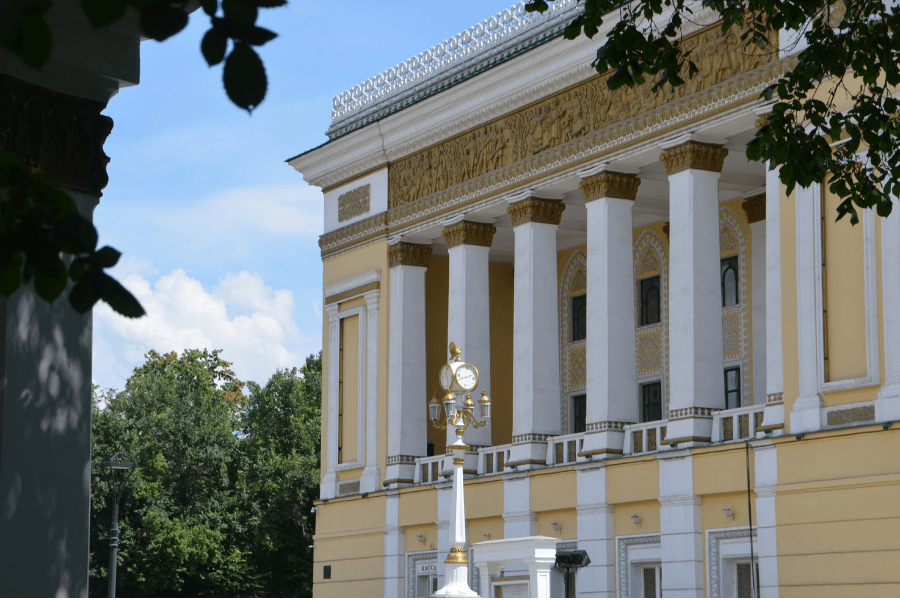
On arriving in Almaty, I was struck by its leafy boulevards and expansive parklands, where Soviet-era architecture sits alongside contemporary buildings, all against a dramatic mountain backdrop.
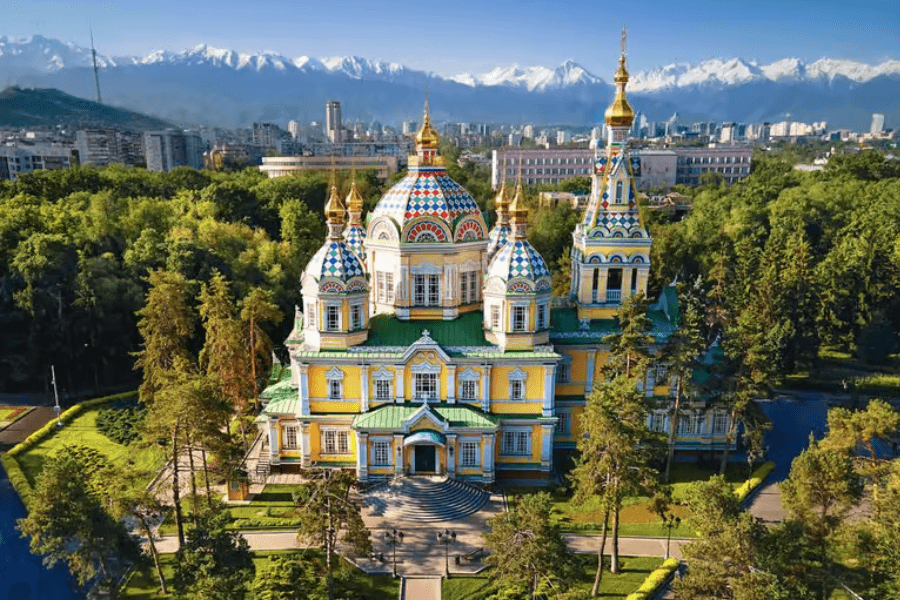
The city’s architectural highlight is the century-old Zenkov Cathedral in sprawling Panfilov Park. This colourful tsarist-era landmark, built almost entirely of wood – even the nails, apparently – is remarkable for its intricate construction. It is said to be designed after Moscow’s St. Basil’s Cathedral. At night, illuminated against the dark sky, it takes on a fairytale quality, as children whizz around the park in glowing toy cars.
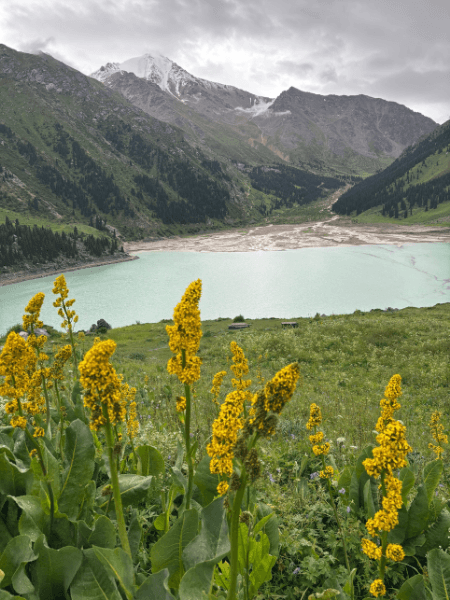
“You will notice a different Kazakhstan once outside the city limits of Almaty,” remarked my local tour guide Aziz. This became evident when we headed off to see some of the nation’s most prized natural splendours – shimmering alpine lakes, gorges and canyons. The urban silhouette was magically replaced by a breathtaking panorama of snowcapped mountains overlooking pine forests and green rolling valleys.
Our first stop was Big Almaty Lake, some 30 km west of the city. At an elevation of 2,500 metres, this glacial lake dazzles with alpine reflections and waters that shift from turquoise to aquamarine with the changing light.
Next came the alpine lakes of Kolsai and Kaindy, some 200 km east of Almaty, reminiscent of lakes I had admired years earlier in Canada and Switzerland. Glacier-fed Kolsai captivated me with its crystal-clear blue-green waters, mirroring dense pine forests and soaring mountain peaks.
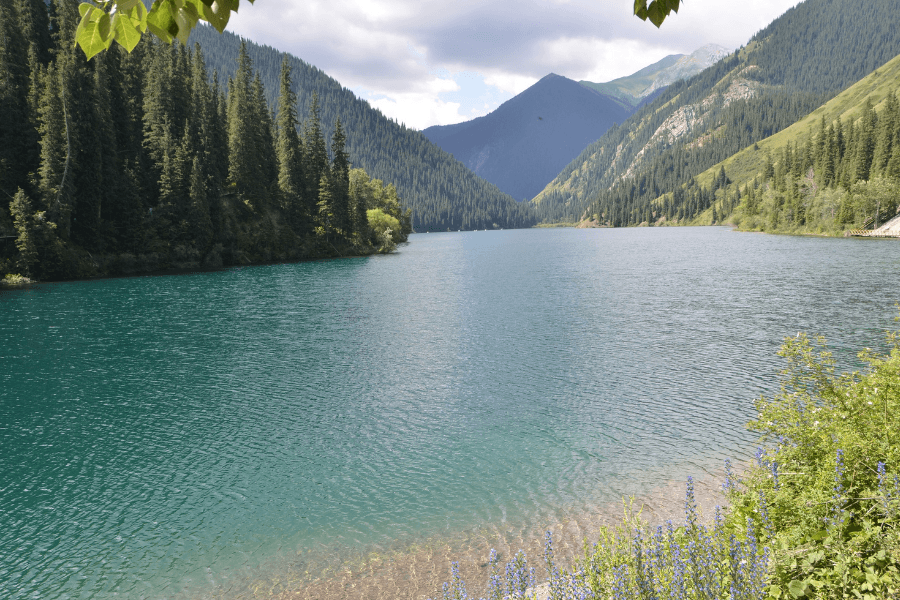
“Every season transforms this water mass into a different spectacle,” Ash my local guide said. “Summer offers emerald forests and comfortable hiking conditions, autumn paints the slopes in brilliant gold, while winter blankets the region beneath deep snow, creating a serene alpine wilderness.”
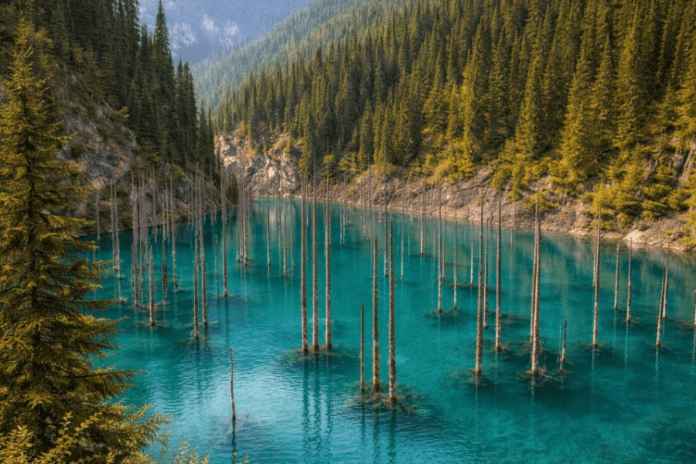
A short drive away lies Lake Kaindy, one of Kazakhstan’s most unusual natural wonders. Formed after a 1911 earthquake triggered a landslide that flooded the valley, the lake submerged a forest, preserved by its cold waters. Today, tree trunks rise eerily from the surface like the masts of ghost ships, their branches still intact beneath the crystal-clear water.
Perhaps Kazakhstan’s most dramatic natural attraction is Charyn Canyon, near the two lakes and often compared to America’s Grand Canyon. Carved over millions of years by the Charyn River, it stretches nearly 150 km, its red sandstone cliffs and pillars sculpted into extraordinary formations by wind and water.
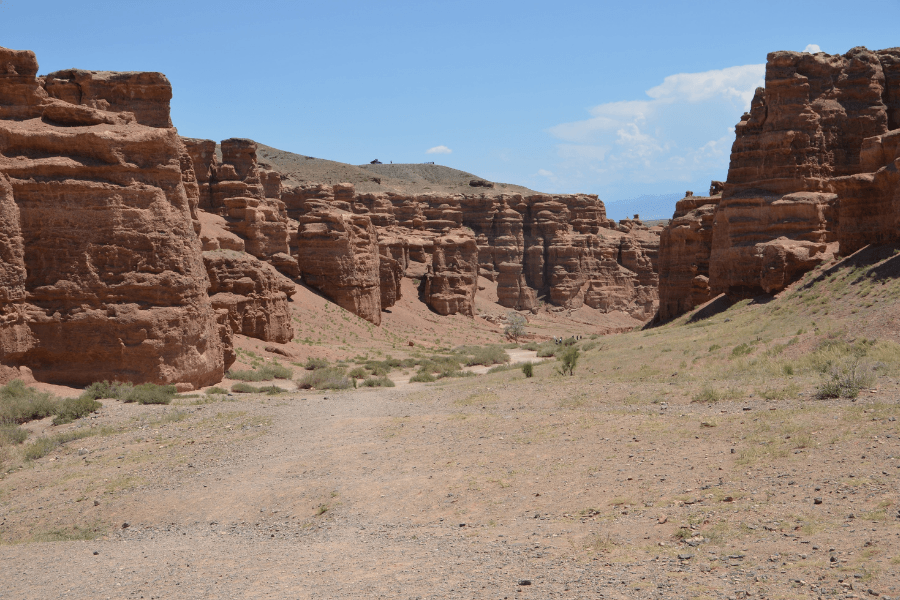
The most visited section is the 2.5 km Valley of Castles, where the ensemble of rocky stands, some nearly 300m deep, resemble a medieval fortress rising from the canyon floor.
While the canyon can be admired from the rim, I joined other visitors in descending some 250 steps to its floor, then followed the winding red-dirt trail to the rushing Charyn River. The three-hour return hike revealed an ever-changing palette of orange, crimson, amber and gold.
Kazakhstan’s official tourism slogan, ‘Very Nice’, is derived from a phrase often used by the character Borat in the 20th Century Fox film titled Borat. After visiting Almaty and the surrounding natural splendours, I find it’s the perfect expression to encapsulate the wonders of this Central Asian country.
TRAVEL NOTEBOOK
Getting There Fly Asiana Airlines (www.flyasiana.com) to Almaty via Seoul
Accommodation Hotel Kazakhstan (www.kazakhstanhotel.kz) offers elegance and value for money.
Tour Operator Orient Mice Tours (www.orientmice.com)
Visa and Currency Australian passport holders receive tourist visa on arrival and local currency is Tenge with 1AUD =327 Tenge.