
Home Blog Page 983

Be yourself

0
Reading Time: 4 minutes

By encouraging students to understand themselves, they can better define their goals and personality

 who-am-i-shirt

The academic year is commencing like a wave breaking along a beach, with some schools already having classes and others starting later, just settling. It is always wise at the start of a year for a student to be encouraged to spend some time getting to know themself. If a student knows who they are, they will be better able to define themselves in the context of their immediate friendship groups, peers, whole year group and school.

One thing that can be helpful for a student in furthering this self-understanding, is for them to spend some time writing a letter to themself. In the letter, which should be handwritten rather than typed, the student can write about specific things that are meaningful to them such as:

  • Their family and family relationships
  • Their friends and how they think they fit into the friendship group
  • Where they live and have lived, and what they like and also do not like, about where they live
  • Their school experience in the past, and what were three highlights and three low points that they remember
  • Their hobbies, interests and favourite music, movies, books and the people by whom they are most inspired
  • How they expect the year will go, and what they hope will happen
  • What they would like to achieve this year at school, in any activities they undertake outside of school and in their personal growth

A letter like this would take about one and half hours or more to write. This means the task would need to be broken down into three or four lots of 30 minutes. This type of approach will allow a student to reflect between writing sessions, and also to re-read what they have written and thus clarify their own thinking and expression.

If a child is encouraged to write this sort of letter to themself at the start of each year, it will provide a basis for reflection, for self-understanding and growth. It also marks important milestones as a year-to-year summary of musings and change. A once-a-year diary such as this counters the immediacy of the current age with distraction at all times within arm’s length, and begins a journey of self-reflection.


Goal-setting

Purpose is important to life. Young people do not ask questions about purpose. Impulse acts counter to deep thinking and the domain of young people is increasingly immediate, as stated earlier. One way to help engender the importance of purpose is through teaching the importance of goal setting as a way of life.

Goal setting is an important skill. It requires the articulation of something deemed important or worthwhile, that is worth striving for. In this regard it must be relevant to the goal setter and it must be ‘owned’ by the goal setter. Goals can come from outside, but those that come from a student are more likely to be valued by them, and their realisation is more likely to carry personal meaning. Intrinsic motivators are generally more powerful than extrinsic motivators.

Goals make a person future-directed and encourage forward thinking. This means that goals focus present actions, and align and direct how time and resources are allocated. In this way, goals provide meaning to day-to-day tasks.

In order to achieve goals, students will need to allocate time and expend effort. The achievement of goals may require practice, discipline, commitment and the setting of weekly targets, or fortnightly or monthly targets. The actual goal does not matter, as the skills learnt in goal setting, and in working towards the achievement of goals, are transferrable to other aspects of life.


Self-definition and naming

When I was in Year 7, I met a friendly and intelligent girl whose name was Nadia. Her nickname was ‘Tubby’ as she was overweight. At the start of Year 8 we started off by calling her ‘Tubby’, and every time we did she corrected us and said, “My name in Nadia”. At one point she raised her voice really loudly and shouted to the group that she was Nadia. Over the course of the next few months she slimmed down, and she stayed slim throughout the next four and a half years of school. And everyone called her Nadia.

I remember her today as if her raised voice happened a few minutes ago. It was the raised voice of exasperation and self-definition. Nadia was not prepared to let anyone define her for herself. In all my learning at school, this was the most powerful lesson I learned and it did not come from a teacher, a subject, books, exams or an adult.

It is crucial that students name themselves and define themselves rather than let others name them, label them, limit them, shame them or tell them who they are or who they can be or ought to be.

Asking a student to give themselves a nickname gives insight into what they value about their own character and can also tell you what they see is important to portray to others.


A new year brings new opportunities and a chance for students to learn to shape how it will go. Reflection, goal setting and taking ownership of who they are will give them agency and power, and will help students to get the best out of themselves. Learning to self-define will mean that schooling can have a more powerful learning effect.
A reward for a lifetime in education: Kumarasamy Sivakumar, OAM

0
Reading Time: 3 minutes

For service to education

DSC01781

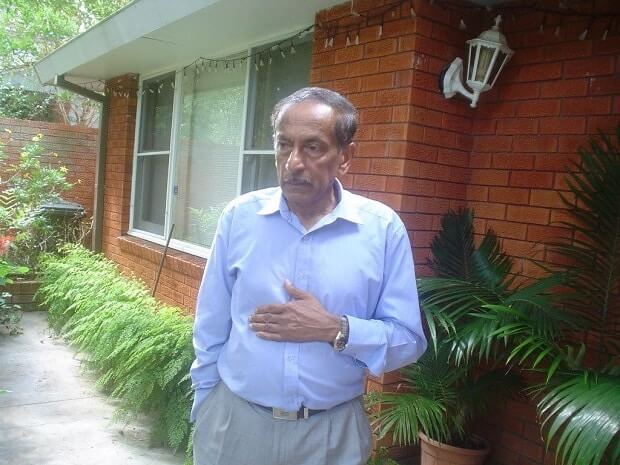
He is an unassuming man whose simple life and attitude hide years of experience in several professional fields.

Kumarasamy Sivakumar was honoured with the OAM (Order of Australia in the General Division) on Australia Day this year, for services in the field of education.

Mr Sivakumar is a significant achiever in the provision of mainstream technical education, and also in striving to better the educational and thereby social conditions of less fortunate communities and individuals.

But he is also a humble person, seeing his own award as recognition not just of himself, but of all those who make such outcomes possible and who strive unrecognised to better the conditions of others.

Mr Sivakumar retired as the Deputy Director of the Northern Sydney Institute of TAFE where he had worked from 1995 to 2000. His earlier position was that of Director of several of the Colleges of that Institute.

Amongst the other notable positions held by Mr Sivakumar in TAFE of NSW, are as the Principal of the Seaforth and Cessnock TAFE colleges (1980-1990) and the Deputy Principal at Granville TAFE college (1980-1986).

Mr Sivakumar has an impressive wealth of experience which led to these higher positions. He was the General Studies Teacher at the St George TAFE College (1968-1973); later the Head of General Studies at Wollongong TAFE (1978-1980); and Head Teacher, English/Humanities, and Senior Head Teacher, Sydney TAFE, 1975-1977.

Mr Sivakumar has always shown a desire to interact with people from diverse backgrounds and in different countries. Of Tamil descent and born on a rubber plantation in Malaysia, he speaks several languages and this facilitated interaction with people of different communities.

Mr Sivakumar’s activities have not been confined to Australia alone. He has been Independent Director, Sustainable Development Board, Papua New Guinea (2008-2009) and an Advisor of the India Benevolent Charitable Trust since 1985. In this capacity, he has fostered educational opportunities for members of isolated communities in India, with the aim of improving their future opportunities in life.

Mr Sivakumar is, above all, a practical person. He organised the introduction of a training centre in NSW TAFE to produce well-groomed and experienced graduates in cooking and catering to the internationally accredited standards of Le Cordon Bleu. This commercial training school is located at the Ryde TAFE College, and operates in harmony with the Tourism, Hospitality and Catering Institute of Australia, of which he was the Director. Mr Sivakumar has been an Honorary Judge, Restaurant Caterers Association (1994-2002), and an Honorary Director of the Hospitality Training Network since 2012.

Mr Sivakumar has not forgotten his roots. He was the President, Malaysian/Singapore Students Association, University of Sydney, for two years.

Also included in Mr Sivakumar’s biography is his Knighthood of the Order of the Knights of Rizal.

“This is a fraternal organisation created to honour and uphold the ideals of national hero Jose Rizal from the Philippines,” Mr Sivakumar says. “It is a fraternal organisation which is non-sectarian, non-partisan and non-racial, operating with over 10,000 members. I see its role as a charitable body which helps poor students or poor schools with the provision of textbooks, computers, among other requirements”.

In particular, he has observed that educational items such as textbooks that might be considered as out-of-date in one country, can be perfectly useful in another.

Mr Sivakumar sees his own work as exemplifying his philosophy that an individual can make a difference.
“We should stop looking at the past, but rather use lessons of the past in dealing with the present, so that we can make a difference for the future,” he says sagely.

For more Australia Day honours

Shivaji tableau steals the show at A-Day parade

0
Reading Time: 4 minutes

The Indian contingent was ably represented by the Maharashtrian, Punjabi and other communities

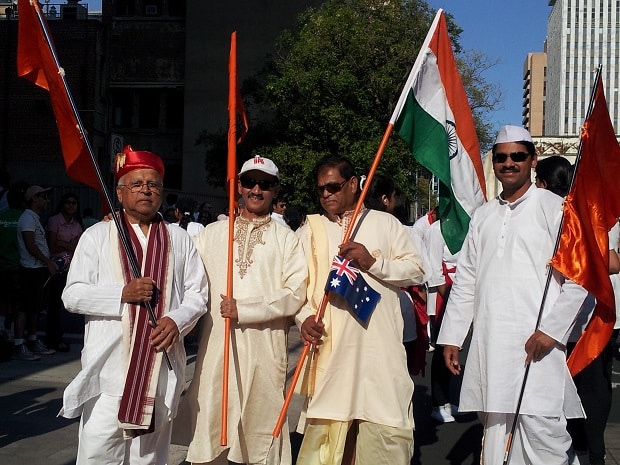
20140126_173912

In Adelaide, the place to be on Australia Day is in the centre of the City. This year was extra special with lots of sporting and other events happening throughout the day.

Of the two major sporting events, the first was the finish of the Tour Down Under which Australian Simon Garet won for the second year in a row, and it was amazing to watch the cyclists battling for the coveted prize in 40+ degrees heat!

The other was, of course, the fifth one-day match against England, which Australia won by 5 runs. Watson was bowling the last over and England needed 6 runs from 3 balls to win. Everyone had watched with bated breath and great sighs. Treadwell edged it and the ball was in the keeper’s hands… OUT!!! And the uproar from the stadium said it all – Australia had won by 5 runs! What a thriller!!

Amidst all this excitement was the Australia Day Parade down King William Street with about 50 different ethnic communities participating. And what a presence from the Indian contingent! The Maharashtrian community stole the show with their Shivgarjan dhol, a full band set with various kinds of drums straight from Pune, played by local Marathi youth roaring down the road, drumming the typical street rhythms of India that had the spectators clapping their hands, tapping their feet and often joining the parade to dance along!

The dhol players were followed by lezim dancers enacting this particularly Maharashtrian dance form in a very disciplined manner. It was a pleasure to see so many girls moving so rhythmically to the tunes of the band. It was obvious they had put in many hours of practice and were enjoying themselves. It is very rare to see lezims in Australia, so it was a rare treat indeed.

Next came the float on which the Maharashtrian community paid homage to that greatest of Marathas, Chatrapathi Shivaji. The float truck was decorated with Indian symbols like Om and the Swastik, among others, and was displayed like a room in a palace. Inside sat Shivaji Maharaj on one side with his soldiers in attendance, and on the other side sat Jijabai, his mother, with a few women and children, members of the household. The costumes, including swords and shields, were straight out of Indian historic movies or plays, and made me feel a tinge of nostalgic for the dramas with which I grew up.

The Marathi section was the main part of the Indian contingent under the banner of the Indian Association of South Australia, that was followed by many people wearing traditional Indian clothes, carrying orange flags, the tricolour and the Australian flag. All walked along to the sounds of that magnificent band.

Following them came the Punjabi contingent with their own drummers, enthusiastically dancing the bhangra, resplendent in traditional clothes. Members of the Tamil Association came next, followed by members of BAPS also with their drum, and young men and women dancing the garba.

It was a fantastic turnout with so many traditions of India displayed in costumes and dance forms to the people of Adelaide. From the minute the parade started, the Maharashtrian contingent’s loud cry of ‘Shivaji Maharaj ki jai’ accompanied by loud drumming set the tone, which continued until the conclusion of the parade, as the participants walked by the River Torrens along Elder Park and posed for photos. Everyone wanted to have a look at the colourful and attractive Indian group.

It was heart-warming to see how well appreciated and popular this group was, considering the amount of hard work that had gone into the preparation and presentation.

“Even last night we were up till about 2am finishing painting the banners and getting all the things ready”, said Mr Shashikanth Salunkhe of the Shivagarjan dhol group.

It was quite a challenge for the 12-piece dhol to practice, for the dancers to learn the steps of the dance with the lezims, and enact this in time with the tunes played by the band. Practice sessions started several weeks in advance over weekends, which were also dedicated to making the costumes and props for the Shivaji tableau. The fantastic results showed how much effort had bee put in by everybody.

All the members of the Maharashtrian community who joined in the parade stood out in their resplendent clothes – women in their traditionally draped nine-yard saris and jewellery, men in dhoti-kurta ensembles and peshwa turbans – it definitely impressed and surprised the people of Adelaide because the effect was so different from the generic Indian clothes they are used to seeing.

After the parade, which also had a Jagannath Rath by Hare Krishna devotees, everyone joined the huge crowd at Elder Park to relax and listen to an Aussie concert, and enjoy food from different parts of the world. The show ended with fireworks. It was certainly a very enjoyable day – a win in the cycling Tour Down Under, another win in the cricket ODI and the Indian contingent winning the hearts of all who came to watch the Australia Day Parade!

View full gallery of pics on Facebook here

Green guardian: Scientia Professor Deo Karan Prasad, AO

0
Reading Time: 3 minutes

For distinguished service to architecture, particularly in the field of sustainable urban design, as an academic and researcher, and to the solar renewable energy sector

RLA_0596

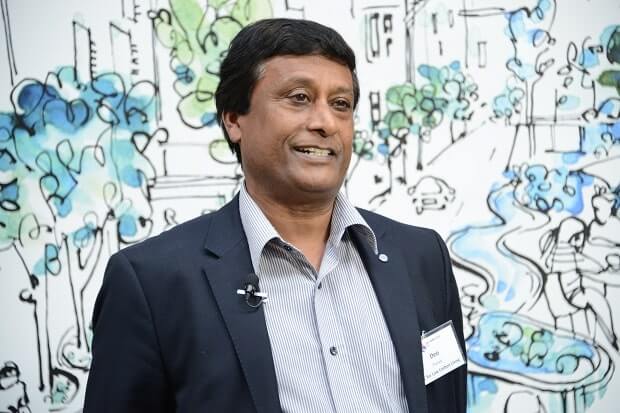
Professor Deo Prasad, CEO of the Cooperative Research Centre for Low Carbon Living (CRCLCL), was appointed as an Officer (AO) in the General Division of the Order of Australia on Australia Day 2014. Prasad’s contribution towards sustainability and the development of greener cities was recognised not just in his line of duty, but for his wider involvement nationally and internationally, in this area.

The 59-year-old academic from Fiji moved to New Zealand and later to Australia, where he has been living for the past 30 years.

Prasad has published over 250 journal articles and six books, and received millions of dollars in competitive research funding. As an ambassador for Business Events Sydney, he promotes Sydney as a destination for high-end scientific events. He is also a Green Globe Award winner, and winner of the Institute of Architect’s Architectural Education Prize. He serves as a member of numerous international boards and committees, including those in Canada and Seoul, and chairs the Asia Pacific Global Civil Society Forum for UNEP.

“I started my career as an architect, but a turning point in my life led me to study sustainability,” Prof. Prasad tells Indian Link. “I was overseeing an infrastructure project on a Fijian island where the displaced Banaban people were relocated from their island home to make way for mining by the British Phosphate Commission. These people who were fishermen and farmers, found it hard to assimilate into their new environment, leading to many socio-economic problems. Thinking about the impact created by this newly built environment led me to come to UNSW for further study”.

After a Masters in Science and then in Management, Prasad did a PhD in Engineering and continued to work at UNSW, where he has continued teaching sustainability courses since many years.

Prasad says, “The built environment is responsible for 40 per cent of energy use. This sector is very disparate, always at the mercy of the economy. They don’t get time to innovate, as they move from one project to another. So I put together a large proposal and convinced the industry and government to put in more than $100 million”.

His efforts came to a head in 2012, when CRCLCL was established.

Research sometimes can be far displaced from the needs of reality and consigned to papers that gather dust in university libraries. What is laudable about CRCLCL is that this centre brings together 50 industry partners to join forces to find real-world solutions.

Prof. Prasad notes, “Researchers and organisations tend to focus on one element of a larger problem; but the reality is that creating buildings and cities is a multidisciplinary process, and so we need to approach it holistically”.

39 varied and interesting research projects are currently running at CRCLCL which include looking at modular construction for multi-storey buildings, energy use of domestic appliances, reducing emissions in the school sector, integrating solar technology into buildings and creating living laboratories of products, buildings and communities, where low carbon can be tested and showcased.

For people who think that higher levels of consumption and waste mean that we are doing better in life, he has a message.

“Quality of life is not dependent on more consumption. Well-designed homes are not necessarily large homes, but are appropriate to the size of the family. We can have a high quality life by living in harmony with nature”, says Prasad.

Making green buildings a norm rather than an exception, is Prasad’s dream.

Imagine innovations such as roofing materials or building cladding that double as solar panels! The world of low carbon will not seem so far-fetched when this becomes a reality.

For more Australia Day honours

One By Two: Slice of urban life, done up in tasteful shades

0
Reading Time: 3 minutes

one_by_two_2014-1920x1080

Film: One By Two

Cast: Abhay Deol, Preeti Desai

Writer-Director: Devika Bhagat

Rating: ***

It takes a while to figure out why this deliciously yummy concoction about urban aspirations is called One By Two. And it would be a crime more criminal than character assassination to tell you why the two main characters in the film never meet till the closing moments.

This is a film that wears its heart on its sleeve. And it doesn’t roll up that sleeve when the narrative is endangered by uncomfortable twists of circumstances. Devika Bhagat loves her protagonists Samara and Amit, quirks, excesses, flatulence and all.

The urban fable constructs Samara and Amit’s dreams as a spiral of frustrations. We really don’t expect these two people to come out triumphant at the end. And really, they don’t. What they do is to connect themselves as very believable young people with dreams that seem to be picked out from the streets rather than manufactured on a cinematic stage.

He likes to pound the guitar. She loves to dance. She is on that crazy journey through the dance-reality show, the kind that Anushka Sharma embraced in Aditya Chopra’s Rab Ne Bana Di Jodi to fob off a housewife’s boredom.

The dysfunctional girl Samara (effectively played by Preeti Desai) has serious dreams that seem driven more by her alcoholic mother’s frustrations. Indeed some of the film’s most effective drama emerges in the mother-daughter scenes. Quite understandable, when the mother is played by the ever-dependable Lilette Dubey.

There are some very interesting incidental characters lining up to lend a sense of optimism to the central dilemma of two characters who never seem to get their fundas right. Among the peripheral characters, Abhay’s two clingy office colleagues make an interesting study in work-place behaviour.

I liked the spirited girl (played by Yashika Dhillon) who plays the brassy bahenji chosen as a bahu by Abhay’s over-zealous parents (Rati Agnihotri and Jayant Kripalani, making a cute if cliched ‘careless’ couple).

Besides the fact that the real-life Abhay-Preeti pair never meet till the end, the remarkable thing about One By Two is that it weaves interesting episodes into inherently routine lives, making their anonymous existence seem far more special than it actually is. That’s the magic created by the skilled writing, convincing characterisation and of course credible performances.

While Preeti as the day-dreamer tripping over her dance shoes to get to the finishing lines, gets a tailor-made role (including a scene justifying her poor command over the Hindi language), Abhay clocks up a very assured working-class hero’s character. He is bitter but not broken; bewildered by the vagaries of life, but never unamused by the irony of it all. He is everyman, and yet special in his ordinariness.

As for the film, the quirky mood is never too far off from the smooth surface. Pushing its way out of the film’s inner-world, the characters’ clamorous self-projections become more amusing than tragic when weighed against the sheer commonness of their dreams.

There is a warm lived-in feeling to Bhagat’s directorial debut. It may not win your heart as unconditionally as Farhan Akhtar’s debut Dil Chahta Hai. But there’s a winsome, bouncy and ebullient quality to this take on urban aspirations.

Irresistible in parts, One By Two never disappoints.

Subhash K. Jha

What’s in an achkan?

0
Reading Time: 3 minutes

Perceptions of power dressing in political arenas are veering towards the western world, says AVI CHANDIOK

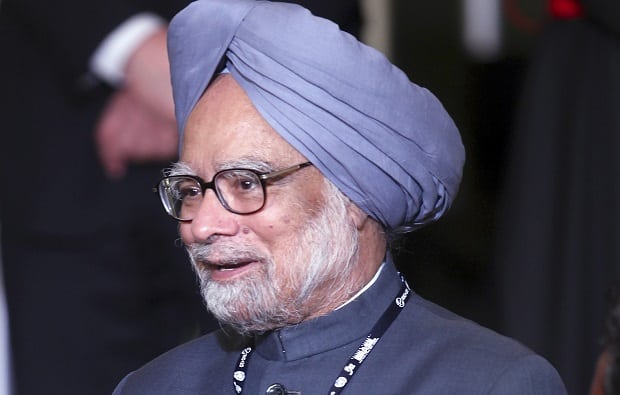
Prime Minister of India Manmohan Singh attends the leaders of the Rio+20 United Nations sustainable development summit group photo opportunity in Rio de Janeiro


About 400 years ago in Romeo and Juliet, Shakespeare wrote the well-known line ‘…a rose by any other name would smell as sweet’. A major reason for the immortality of Shakespeare’s works is the insights they portray on human values and his deep understanding of human behaviour. The words above are spoken in a famous passage by Juliet where she infers that no matter what Romeo’s name, he would still remain the same person.

Put another way, you can’t judge a book by its cover.

Yet in the political sphere anyway, it would seem that the cover is more important than the content! It’s the packaging that counts. How politicians dress in the public arena matters, as public judgement will be based on what the public sees.

When the Cultural Revolution came to China, many forms of traditional culture were thrown overboard. Chairman Mao made famous his blue jacket, that was worn by the masses. But come the end of the Cultural Revolution, the Mao jacket was abandoned and instead the universally accepted western style of dress was adopted by the political elite. So now we have the entire Chinese leadership dressing in dark suits, white shirts and plain, usually red, neckties.

Today we see most male world leaders dress in suits and ties. The white shirt, dark suit and tie has become something of a uniform. Most countries have their national dress in which they would have considerable pride, so it’s interesting that their leaders would be prepared to abandon the national dress and conform to the modern uniform of suits and ties.

The question is whether the adoption of this western style of dress has been as the result of a calculated decision. By dressing in a uniform manner an impression is given of having something in common, not being too different, of shared thinking and common goals. Being in harmony could lead to smoother discourse, better understanding and mutually beneficial outcomes. Weighing up the pros and cons, leaders must conclude that there is a net gain in sacrificing their traditional dress.

Yet there are a few notable exceptions to the rule, Indian Prime Minister Manmohan Singh being one of them. In his September 2013 visit to the White House he dressed, elegantly it has to be said, in an achkan, and not a suit. Contrast this to Pakistani Prime Minister Nawaz Sharif’s visit to the White House a month later, where he was dressed in a suit with a tie almost the same colour as that worn by US President Barack Obama. Perhaps there was nothing in it and the dress was a matter of personal choice. Or had Mr Sharif seen the light and come to the conclusion that conformity does bestow certain advantages, or at the very least, removes a point of difference?

On a national level in India, we have the paradoxical situation of politicians believing that they should be seen in national dress, preferably in khadi. Yet the public is used to seeing their superstar male cricketing and Bollywood heroes dressed in snappy western clothes. Blanket TV coverage and the widespread availability of the internet means that the public is always well informed about the latest fashions and style of dress. Kurtas and achkans are a throw-back to the post-independence days. The country is in the 21st century with more than 50% of the population under 25. Perhaps politicians will recognise this and move with the times. Or it might be the next generation of politicians who will have the courage to give up the achkan for a suit.

Perceptions in life are everything, and first impressions count. How will you dress for your job interview? Or for that first date with someone new? To meet prospective in-laws? And which car should you drive? Is it the content that matters or is it the cover?

US-PAKISTAN-DIPLOMACY

Tackling workplace vilification

0
Reading Time: 3 minutes

Many migrant workers are being bullied at their workplace because they are ignorant of their rights. By YESHA JOSHI

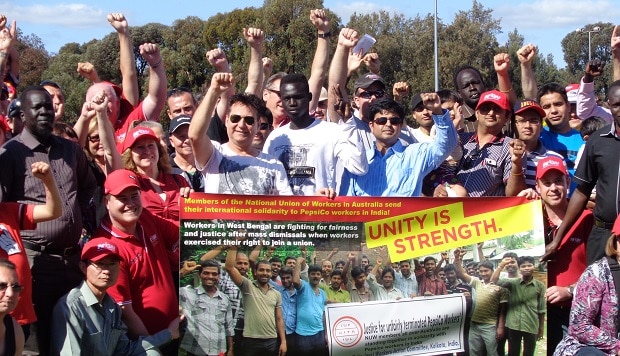
National Union of Workers supporting Indian Workers in West Bengal

Many migrant workers arriving in Australia are highly qualified and have experience in accounting, business and other skilled professions. Yet, they are resorting to working in low-skilled jobs where they face a number of workplace issues because they do not know their rights at work.

Lead Organiser of the National Union of Workers in South Australia, Tony Snelson, says migrant workers are over- represented in the poultry, fruit and vegetable sorting and packaging industries, and are some of Australia’s most vulnerable workers. “These workers are employed because they can be overworked and underpaid,” Snelson says.

The companies take advantage of migrant workers when under pressure to meet profit margins. This exploitation leads to insecure work, incorrect pay, workplace bullying and racial harassment. “Regardless of what visa status you are on, you should join your union and have your rights protected in Australian workplaces,” says Snelson.

Unfortunately, many Indian migrant workers are also undermined. Indian workers in much of the low-paid hospitality and retail cleaning sector receive pay under their award rate, are bullied and at times face racial discrimination.

United Voice (SA) Union Organiser, Paresh Shah, shares a similar story of the exploitation of migrant workers in both the aged care and cleaning sector.

“What has become increasingly evident is that the aged care sector is notorious for workplace bullying,” Shah says. For instance, a young Indian aged care worker in his twenties was bullied while working in a nursing home in South Australia,

because of his racial background and his English accent. “You should go back and learn some English,” he was told by his colleagues. The young worker says the perpetrators would make fun of him in front of clients and colleagues. “It was humiliating for me and I was frustrated,” the young worker says. “I decided to join the union after speaking to one of the union organisers. The union looked into my case and I received compensation for my suffering,” he added.

Shah explains, “Many workers do not know their rights at work and are scared about being unfairly dismissed if they raise any worker safety issues. We need to encourage people to understand that unions protect and defend workplace rights and are not similar to the unions back home.”

A similar case is apparent in the cleaning sector. “Working as a cleaner should not be a negative experience for them, but often the sub-contract conditions mean these employees have very few rights,” Shah says. “Cleaners and aged care workers are easily replaceable, this is what makes them vulnerable,” he adds.

The transport industry has had an increased intake of Indian migrant workers as bus drivers recently. South Australian Transport Workers Union Official Dannie Relan, says Indian bus drivers face racism, as well as language and cultural barriers. “Although discrimination has been reported, workplace bullying has become the daily routine,” claims Relan. “The bus companies treat us as second class citizens and at times humiliate the drivers because of their English accent. I am an Indian and I became a Union Organiser in my workplace because it’s a platform for me to stand up and represent the rights of Indian workers,” he adds.

Migrants and their families make an important contribution to Australia. Lobbying for better working conditions and not tolerating harassment is one way of improving working conditions of new immigrants.

However, many immigrants regardless of their workplace conditions, continue to proudly call Australia their home.

Call the Australian Council of Trade Unions Workers’ Hotline 1300 362 223.

Miss Lovely: A world of unmitigated debauchery

0
Reading Time: 3 minutes

miss_lovely

Film: Miss Lovely

Cast: Nawazuddin Siddiqui, Niharika Singh and Anil George

Director: Ashim Ahluwalia

Rating: ****

To aesthetically capture the scummy on screen in all its naked glory is not an easy task. Debutant director Ashim Ahluwalia has achieved a stirring and disturbing synthesis of a documentary-styled narrative on the not-defunct world of horror-porn from the 1980s, and a conventional Hindi film love triangle (two brothers, one girl, tension, tension!)

The storytelling is not just unique, it is also extremely disturbing. The characters do not follow the redemptive path from sleaze to atonement. They remain till the end damned, doomed and despicable in their greed to capture female flesh in lascivious close-ups.

The lure of the leer is laid out with brutal directness. The tale is a trap for the compromised. But it’s not a morality tale.

The camera space between the characters and the audience is next to non-existent in Ahluwalia’s narrative. And that’s the highest compliment one can pay the cinematographer K.U. Mohanan and co-editors Paresh Kamdar and Ahluwalia who have done their jobs so well they seem non-existent in the scheme of Ahluwalia’s scathing sting operation on human depravity and uncontrollable sexual appetites.

There is an unevenness about the narration which perfectly matches the smoky seedy mood of the story. Barring Niharika Singh’s character who epitomises beauty in the sleazy cesspool, all the actors are captured in grotesque flabby close-ups. Niharika looks aloof and detached from the sleaze. She seems to be playing the title role. But then, deception is the name of the grime.

There is nothing pretty or lovely about Miss Lovely. Scene after scene of cheesy titillation is piled on with little space for narrative niceties. Clearly Ahluwalia knows this dark desperate ugly world. He enters it fearlessly and shamelessly. Emotionally and visually the narrative remains married to the murky until the bitter shocking end.

The finale leaves us as sick in the pit of our stomach as the rest of the film. These are characters who belong to the armpit of humanity.

The four principal parts are played with disconcerting scrupulousness by Niharika Singh, Anil George, Zeena Bhatia and last but not the ‘leashed’ Nawazuddin Siddiqui who continues to create compelling characters culled from dark desperate corners of the human condition.

Nawazuddin’s Sonu Duggal is a curiously untarnished soul trapped in a world of unmitigated debauchery. His romance with the wannabe starlet Pinky (Niharika Singh) comes to an expectantly sticky tragic end. The bitter rage with which Nawazuddin confronts the betrayal of his innocent love for the girl is more Shakespearean than you’d expect a film of this nature to be.

Loath it or love it, you’ve never seen anything like Miss Lovely. It builds a world of vicious vices with its raw stock of stark visuals and elemental emotions. The sound design is deliberately hazy, going as it does from Asha Bhosle-R.D. Burman in the opening credits to incidental distant sounds of girls giggling in fake ecstasy and moaning in ersatz pleasure.

The dark, sinister, sexy, dangerous and devastatingly lurid, the sleazy world of Bollywood’s semi-porn scare-fests is recreated in a scarily new cinematic language.

The view in Miss Lovely may not be pretty but it is unfailingly provocative and exhilarating. This film is not for the squeamish.

Neither is life.

Subhash K. Jha 


Riding solo

0
Reading Time: 3 minutes

Jason Singh’s comeback has been a while in the making, but is a unique reinvention of himself

jason singh

“I am a simple Indian boy”, says Jason Singh, speaking to Indian Link after his Bendigo Market Place gig, a part of his Australian tour following the release of his first solo album Humannequin.

He did sound very much like a simple Indian boy, unlike what I expected: after all, he was the front man of Taxiride, the rock band sensation in Australia in the early 2000s. He had a great ride with Taxiride, clocking five top ARIA (Australian Recording Industry Association) platinum selling albums. And now with a new solo album, Jason is starting it all afresh.

With another gig to follow later that evening, Jason still took the time to chat, and happily took us on a trip down memory lane.

It has been quite a journey for Jason, beginning from the time a school friend suggested that he should do something with his voice after hearing his rendition of Michael Jackson’s Man in the mirror at a bus stop.

Born to a Fiji Indian father and a Maltese mother and brought up in Melbourne, he was an active part of the live music scene there before joining hands with a few fellow musicians to form a band. A taxi driver friend would play their songs in his taxi and give them feedback from his passengers! Soon enough, the boy band with Jason as the lead singer zoomed to fame as Sire Records signed them up. And the rest was history.

But things changed. The band met with a hiatus, Jason continued his foray of the live music scene, and for 6 years his solo album was in the making. As it is released, the major difference is, unlike Imaginate, Taxiride’s first album that which was recorded in the million dollar Ocean Way studios in Los Angeles, this one is recorded in Jason’s home studio. More importantly, unlike those songs which were the collective contribution of a few songwriters, this one is his own creation.

And as he reinvented himself and the songwriter inside, “now it’s all about different human emotions and feelings”.

Jason feels people reciprocate by connecting to him and his songs more, on a personal level.

“I was waiting on enough experiences in life, enough songs to make a record,” he says.

But why the name, I ask him. Doesn’t it sound a bit as though it refers to something like plastic?

Chuckling, he tells me a story.

“The idea was to paint myself as a blank canvas in white paint and engrave the lyrics on me”, Jason explains. “I wanted to be recognised for my new project rather than just stay prisoner to the glory of good old days”.

But the photographer clicked before Jason opened his eyes, and he ended up looking like a mannequin in the picture; the name was thus born!

An ardent admirer of Lata Mangeshkar and Hindi movies, Jason feels he is trying, with a few friends, to be an Indian and at the same time, an Australian musician. He has always tried to bring Indian elements to his songs as was obvious with the earlier Garage Mahal and its very recognisable Indian elements. And although Jason insists that he tried to recreate the feel of India within him, Humannequin doesn’t have much of an Indian flavour to it. The album sometimes comes up with rhythms that go very easy on the ears, but not always. At times, it shows the characters of sophisticated dance music, at times it is catchy, but will it hold on forever in the minds of listeners? Well, only time will tell! But getting someone like Charles Fischer to produce the album is a very smart move, as he also produced Savage Garden’s distinctive hits.

Hold on forever, the lead single in the album has a beginning that lingers on, which makes it the appropriate track to be featured on Seven Network’s promos for Million Dollar Minute.

The track Speakers is more peppy and interesting as it talks about a girl who ‘dances near the speakers’. “The song was written as I was inspired by a friend who likes to feel the vibrations of the speakers”, remarks Jason.

Easy is a catchy song that starts slow and then picks up tempo. The words though sometimes clichéd, give an honest insight into the rollercoaster called life.

For someone who likes to jump around with his kid and play the sitar, tabla and harmonium in his spare time, success is revisiting Jason; and this time it’s much more up close and personal. Perhaps that’s why people going about their routine shopping at the Bendigo Market Place are drawn towards his live performances there. And that is why I believe him when he says that he is a simple Indian boy, trying to make a difference in the Australian music industry, along with a few of his friends!


Hope is theme of short film competition

0
Reading Time: 2 minutes

Talented young filmmakers offered a chance to showcase their work and win

vidya-balan-and-malaika-arora-at-iffm-press-meet-photos-4

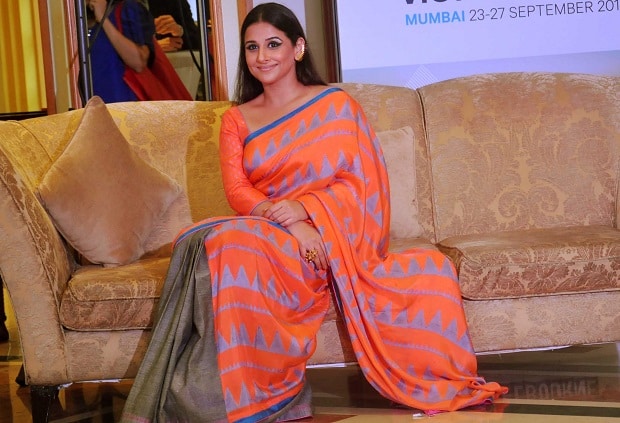
It’s an opportunity of a lifetime for talented young filmmakers looking to make their ideas a reality. The Indian Film Festival of Melbourne (IFFM) in cooperation with Western Union have developed the Western Union Short Film competition, whose theme in 2014 is ‘hope’. The competition is open to entries from Indian and Australian filmmakers who can submit a ten-minute film which references the theme of ‘hope’. The closing date for applications is February 28.

The annual competition supports and encourages the careers of young filmmakers from India and Australia, and fosters industry ties between the two countries. Two winners, one Australian and one Indian will be chosen from the submissions and the winning films will be screened at The Indian Film Festival of Melbourne in April-May 2014.  The winning Indian filmmaker will travel to Melbourne as a guest of IFFM, where they will meet Australian and Indian filmmakers, and the Australian winner will travel to Mumbai, the home of Bollywood.

Entrants will be judged by a panel of film industry leaders from India and Australia, including film directors Paul Cox and Nikhil Advani, who will choose one Indian and one Australian winner. IFFM Director Mitu Bhowmick Lange said, “Every year we are thrilled with the wonderful fresh ideas coming from aspiring film makers from Australia and India. This year, with the topic of ‘ hope’ we are excited to see what great films the competition will inspire.”

The 2014 Indian Film Festival of Melbourne (IFFM) has been growing in popularity since its inception, and in 2014 it will be held in April and May, presenting a broad, curated program of films ranging from Bollywood to art house and the sub continent, along with a series of masterclasses presented by some of India’s finest filmmakers and industry leaders.

Jehan Ratnatunga was the 2013 Australian winner, and is grateful for the opportunities the competition has given him. “Not only was my film watched by Indian film makers that are otherwise hard to reach – especially from Australia, but since winning the award I have secured development funding from Film Victoria and established a YouTube channel with 80,000 + subscribers and over 300,000 views a month,” he stated.

The competition offers filmmakers the opportunity to showcase their talent to a discerning panel of judges and a wide range of audience from both mainstream and within the Indian community. Interested parties should visit www.iffm.com.au for more information or to download an application form.

Go here to check out a youtube clip of what it’s all about.