Home Blog Page 980

Magnificent Moscow

0
Reading Time: 5 minutes

The mystery and oppressiveness of the Soviet rule has disintegrated to reveal a friendly and modern city

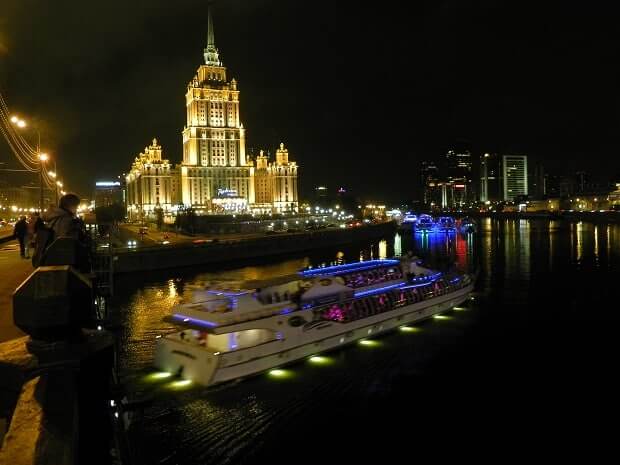
 Illuminated Moscow

As I was about to enter the historic Red Square in Moscow with hundreds of others, I saw Stalin – not exactly, but an impersonator who appears to me almost like the Soviet dictator as seen in photographs. Dressed in a military uniform embellished with red straps, the man with a perfect moustache, back-brushed hair and carrying a smoking pipe, waves at the crowd. While I captured him on camera, a few young Russians standing around giggle but an elderly lady came forward and asked me in poor English, why am I taking pictures of a killer?

This small incident immediately made me aware of two messages – that today’s generation doesn’t care about the past, but the older ones can’t forget Stalin’s atrocious rule from 1924 till his death in 1953, when over a million people were executed and 15 million more were sent to remote camps where death came from hard labour and starvation. However what struck me as most amazing is the people’s freedom of speech, which was very restricted in the past. Locals were happy and keen to talk about anything from the revolution and politics, to literature and food, though language is still a big barrier. However, in almost every conversation, a fondness for India came through as they referred to names such Nehru, Raj Kapoor and Mithun Chakravarti!

The Red Land has profoundly changed since the dissolution of the former Soviet Union in 1991, and its effects can be explicitly seen in the capital Moscow, which appears no different in character and lifestyle to any other Western-influenced metropolis. With the traditional red flag replaced by a blue, red and white one, the emerging wealthy elite called ‘New Russians’ have vastly improved the standard of Moscow living, making it one of the most expensive cities in the world. Our omniscient tour manager Anna from Insight Vacations informs us that after Perestroika, car ownership quadruplicated in the city and today the streets are clogged with vehicles, many of which are the top brands of the industry like Mercedes, BMW and Lexus. The city is now peppered with flashy restaurants, cafés, discos and nightclubs where vodka flows like water, and glittering shops that sell nothing but high fashion from famous designers.

The city was heavily dented by severe bombing during World War II; however in 1997, much of Moscow was renovated back to its original past grandeur, as a part of its 950th anniversary program. This included rebuilding of several churches which were destroyed during the Soviet era. Religion, which was practiced underground during the Soviet era, has regained its prominence with churches again being used for weddings, baptisms and other religious ceremonies.

From her 12th century origins as a murky defensive outpost, Moscow at it zenith governed almost one sixth of the planet’s surface and presents a story of rising and falling, laced with glory and setbacks. Having endured imperialism, wars, revolutions, communism and drastic social changes, the metropolis today is a unique blend of the past and present that captivates and charms. Visitors are often surprised by the wealth and variety of its architectural marvels – forts, palaces, cathedrals, monuments – spread throughout the city, and the  magnitude of art housed in its several museums.

I read in a guidebook that there are over 100 places of interest in Moscow. But while exploring the city, there are countless and it is impossible to savour, even the main ones, in a single visit. So I ventured to view the icons which are regarded as almost mandatory – Red Square and the Kremlin rank at the top.

Derived from the Russian word ‘Krasnvy’ meaning ‘red and beautiful’, the 500m long paved square started as a marketplace and became a familiar location since the Soviet era, when it was used as the venue for government addresses and military parades. Adding flavour to its name, red-coloured buildings like the Historical Museum and the Resurrection Gates flank the square. However, the highlights of this domain are the 16th century built St Basil Cathedral with its twisted onion domes, Lenin’s Mausoleum where the former leader’s body is preserved and the GUM departmental store that is celebrated as one of the world’s largest shopping arenas. Also unique is the Kremlin which has remained a symbol of power of the State since it was built in the 12th century as a wooden fortress (‘kreml’ in Russian meaning ‘fortress’), at the confluence of two rivers Moskva and Neglinnya.

The Kremlin is also the confluence of several periods of Russian history. It began its humble journey when built to keep the Mongul invaders away; next, it became the citadel of the Tsars; even later, it was the headquarters of powerful Soviet Union; and it now exists as the administrative seat of the Russian Federation and the residence of President Vladimir Putin. Relics from the past are visible at every corner. The expansive complex, with just half open to public viewing, houses several palaces and cathedrals, an ensemble that depicts stately grandness.

I visited the famous Cathedral of Annunciation and Cathedral of Assumption, two of the most important churches in Russia, wandered inside the Great Kremlin Palace, browsed through the royal artifacts in the State Armoury Museum, and watched an evening ballet performance at the State Kremlin Palace, a nice alternative venue to the prestigious Bolshevik Theatre where tickets are extraordinarily expensive and have to be booked months in advance. Following a path along the red brick walls that surround the Kremlin, I witnessed the Change of Guards ceremony at noon, and walked past graves of many Soviets including the ruthless Stalin and astronaut Yuri Gagarin, the first man to orbit space.

Taxis are highly priced in Moscow, but transportation by the metro railway is cheap and very rewarding for art lovers as the concourse and platforms of some underground stations resemble miniature museums, with mosaic artwork on walls and ceilings, sculptures ornamenting spaces, and grand chandeliers illuminating the works on display.

As the former Soviet Union was always circled by a sense of mystery, I entered Moscow with an eerie feeling which soon vanished as I was engulfed in a friendly environment, offering me the space and time to enjoy this historic city in safety and comfort. My trip to the Red Land ended on a happy note.


TRAVEL NOTEBOOK

Getting there – Singapore Airlines (www.singaporeair.com) flies daily from Australia to Moscow, with an aircraft change in Singapore.

Tour operator – Insight Vacations’ (www.insightvaccations.com/au) escorted tours to Russia including Moscow, offer convenience, value for money and extensive guided sightseeing. This includes accommodation at luxury hotels like riverfront Crown Plaza (www.crowneplaza.com) at the World Trade Centre.

Visa – Australian passport holders will require visa to enter Russia. Check http://www.australia.mid.ru/ for details.
BAPS Temple inaugurated

0
Reading Time: 3 minutes

3,000 devotees gather to pay homage to Lord Swaminarayan at a spiritually uplifting event. By KOMAL UTSAV JAGAD

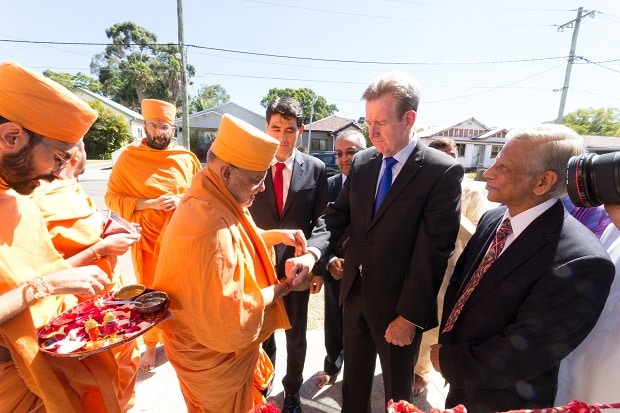
01 Pujya Ishwarcharan Swami tying a sacred thread to welcome the Premier of NSW, Barry O'Farrell

It was a historic week for the Hindu community in Sydney as 3,000 devotees gathered together for the inaugural celebrations of the newly renovated temple at BAPS Shri Swaminarayan Mandir at Eleanor Street in Rosehill.

The week-long festivities began on 6 February with a Swagat Sabha (welcome assembly) and continued till 12 February, packed full of holy celebrations including Vedic pujas performed by priests who travelled from India and the United States for this special event.

NSW Premier Barry O’Farrell with Param Pujya Ishwarcharan Swami officially inaugurated the temple at its Murti Prana Pratishtha ceremony, in the midst of a number of dignitaries and community leaders who attended the festivities. Amongst these were Dr Geoff Lee MP, Julie Owens MP and Councillors Julia Finn and James Shaw.

Param Pujya Ishwarcharan Swami consecrated the temple idols according to traditional rites. In this ceremony a deity’s statue is infused with its soul and power to awaken its holiness and bring it to life within the temple.

The holy event continued on the second day, with Kirtan Aradhna (prayer), and a cultural program presented by the children and youngsters of the temple. For devotees, it was a once in a lifetime opportunity to be a part of this landmark event. The Mahapuja (grand prayers) and the Murti Prana Pratishtha were of major reverence. Mahapuja is a Hindu worship ritual that allows many devotees to simultaneously participate in prayers. During the ritual, devotees offered their humble prayers to seek harmony and world peace as they bowed to their idol and offered flowers.

The BAPS Mandir (temple) has been a part of Sydney’s multicultural landscape since 1996, and moved to its current location in 2000. The original temple deities had humble beginnings, having been were installed and inaugurated back in 2002 by his Holiness Pramukh Swami Maharaj. His legacy continued as the temple grew, marking an exceptional journey over the past 14 years. As the influx of visitors grew each year, it was imperative for the BAPS community to embark on this project and rebuild the temple. The construction of the temple began in mid-2011 and it was recently completed in November 2013, resulting in the grand week-long celebrations.

Not only its effervescing spirituality, but the Rosehill temple’s special amenities are also simply extraordinary. Its aesthetic design is remarkably unique, with dramatically large front gates made of very intricate designs. A large dome designed in the centre of the main shrine seemed to bring in the ambience of a shiny moon in the sky. The temple also boasts a state of the art community centre with facilities like a dining area, activity rooms, prayer hall and ample car spaces.

The Premier heartily congratulated BAPS and the hundreds of volunteers on the completion of the Mandir.

“It is a wonderful achievement reflecting the hard work and commitment of the entire community. It is certain to continue to serve this community as a place to come together in support of your cultural and spiritual growth”, Mr O’Farrell said.

The Mandir in Rosehill is one of the three BAPS Mandirs in Australia, in addition to the ones in Melbourne and Perth. A new BAPS Mandir will open in Brisbane on 15 February, while construction is underway for a Mandir in Adelaide.

The inauguration of the temple was a surreal experience for all the attendees as they basked in the glory of the sacred celebrations.

Yogi Savania, Public Affairs Coordinator of the Mandir said, “It is a landmark event for Sydney and the entire credit goes to Lord Swaminarayan and his Holiness Pramukh Swami Maharaj”. He also acknowledged the support of the 270 volunteers.

For all devotees, this unbelievable spiritual journey through the corridors of the BAPS Mandir was indeed a true experience to be kept in their hearts for rest of their lives, as everyone hailed the glory of Lord Swaminarayan.

Indian Link scoops Premier’s Multicultural Media Awards 2013

0
Reading Time: 4 minutes

2014 Premier’s Multicultural Media Awards

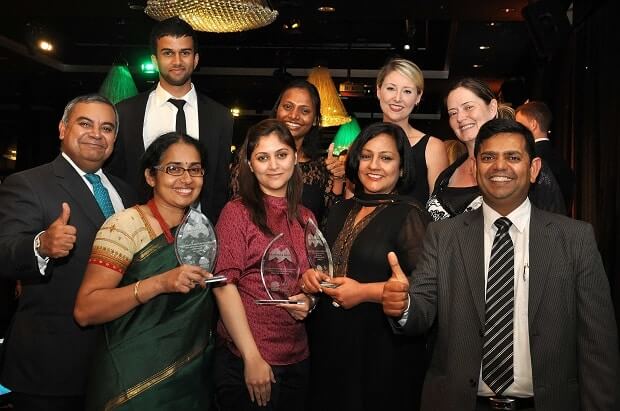
Premier's Multicultural Media Awards 2014 Indian Link team
Indian Link team at the Premier’s Multicultural Media Awards 2014
Photo: Warren Duncan/CRC of NSW

The Indian Link Media Group won 3 awards on Thursday 13 Februrary at the 2014 Premier’s Multicultural Media Awards: Best Print Report of the Year, Best Use of Online & Digital Media and Young Journalist of the Year: Ritam Mitra.

The Sydney-based Indian media group was nominated in 8 of the 12 categories. In one category, Best Print Report, all three finalists came from Indian Link.

Pawan Luthra, CEO of Indian Link said he was proud of the ongoing recognition that the media group has received, from within the community as well as from the mainstream. “To claim three awards yet again this year, reveals not only our dedication but also the high standards we set ourselves, I congratulate my team for their talent and their efforts,” said Luthra.


Best Print Report of the Year

2013 Federal Election: An Indian community poll

Pawan Luthra’s piece on the analysis of an Indian Link election survey, conducted in the lead up to the last federal elections, was a clear and concise report on the issues which matter to the Indian community, and their perceptions of which political party would best fulfil their needs. No doubt it helped the undecided voters in the community to make their final electoral decision.

Best Use of Online & Digital Media

Always a step ahead, Indian Link has been on the cutting edge of technology since its birth. With increased functionality and a stylish, contemporary design, their website uses innovative technology, including the latest in website design to increase the user’s experience. With full social media integration, Indian Link is able to interact with their readers like never before. The Indian Link website is now available across all platforms for information on the go. It links the media group’s newspaper (through the e-paper), radio (which can be listened to online or through an app) and online content (linking in to social media and e-newsletters).

Young Journalist of the Year: Ritam Mitra

The Young Journalist of the Year Ritam Mitra, is a perfect example of the mentoring that Indian Link does for youngsters who have an interest in the field. Ritam was 17 when he first began to contribute to Indian Link. Today, at 21, finishing a law degree at uni and working for a leading Sydney law firm, he is one of the most prolific writers on our team. Ritam’s earliest writings were on youth issues and his great passion sport, but his body of work now includes pieces on politics, science, technology, media, new media, government policy, assimilation, even on Indian traditions as he sees them through his Australia-raised eyes.


Indian Link has now become the most awarded multicultural media group in Australia.

“I was impressed to see more than 110 entries were received for the 13 categories covering print, radio, TV and online media in this year’s awards, which are in their second year,” said NSW Premier Barry O’Farrell at the awards night.

“Congratulations to Indian Link, with the fortnightly publication taking out Best Print Reporter, Pawan Luthra, Best Young Journalist, Ritam Mitra, and the category of Best Use of Online and Digital Media,” Minister for Citizenship and Communities Victor Dominello said. The awards proudly recognise the role multicultural media plays in promoting NSW to audiences around the world, he stated.

“We would like to congratulate the other media organisations that won or were nominated on the night,” Indian Link Editor Rajni Anand Luthra said. “We also acknowledge the Government of NSW in providing a platform such as the Multicultural Media Awards to showcase our talents and efforts”.

The Indian Link Media Group is no stranger to winning awards. Last year at the inaugural Premier’s Multicultural Media Award 2013, Indian Link also won 3 awards: Best News Report, Best Online Publication of the Year and Best Image of the Year.

In addition to this, Indian Link also took out two awards at the 2013 Parliament of NSW Multicultural Media Awards, three awards at the 2012 Parliament of NSW Multicultural Media and the 2011 NSW Premier’s Harmony Award.

Indian Link is a multi-media group which covers print, broadcast and web based publications. The only 24/7 Hindi radio station in Australia, Indian Link also broadcasts via its website and via its specially developed Radio App for android and smartphones. With fortnightly Sydney newspaper and monthly editions in all other capital cities of Australia, its strong web presence and innovatory e-paper, e-newsletter and high social media presence ensure their message is spread worldwide.


For media contact: Rajni Anand Luthra editor@indianlink.com.au  and Pawan Luthra info@indianlink.com.au on (02) 9279 2004


Download Indian Link 2014 Media Release


More photos on Facebook

2014 Premier's Multicultural Media Awards winners
2014 Premier’s Multicultural Media Awards winners with Minister for Citizenship and Communities Victor Dominello

An ‘A’ for A & A

0
Reading Time: 2 minutes

A&A Concert1

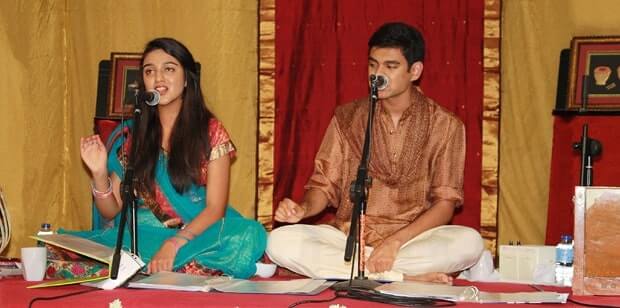
Brother-sister duo impress in debut performance

To hear about the nuances of classical Indian music in the words of young ones, is always a pleasure for connoisseurs of the art. As Amita Rao spoke about the purpose of ragas in Indian classical music, you couldn’t help thinking about what other girls of her age spend their time listening to. As Akshay Rao spoke about alaaps and how they prepare the listener to receive the emotions from the singer, you got a sense of the many Saturdays spent in practice.

Despite hectic school and university studies (Akshay is a commerce-law student at university and Amita, a Year 12 student), the brother and sister duo presented a commendable show in their debut performance in mid-January. With Sanskrit prayers, Tagore compositions, ghazals, raga-based film songs and Marathi and Kannada creations, the singers show-cased their repertoire in elegant style.

Both singers presented the traditional invocation to Lord Ganesha in the Sanskrit Ajam Neervi Kalpam. Amita impressed just as much with her Bengali Antara Mama, a composition with underpinning of mysticism and spirituality, as she did with the ghazal Aaj jaane ki zid in raga Yaman Kalyan. In Bolere pappi hara she managed to keep all the ornamentations intact, and she tackled the popular song Dil cheez kya hai with careful and smooth navigation, especially with the very high notes in the third antra.

Akshay strutted his stuff with Poocho na kaise main ne in raga Ahir Bhairav, inducing the right moods associated with this rag i.e. peace, sadness and love. He also showed off his nuanced raga Yaman Kalyan (Mana re) and raga Khamaj (Ayo kahan se Ghanshyam).

The Marathi duet Namagetha and Amita’s Kannada composition Bandaalo namma manege were also well received by the audience.

Madhuban mein radhika in raga Hamir was the concluding song for the evening and there was no sign of weariness as Akshay delivered the classic Mohammad Rafi song which was quite challenging in terms of taranas and the sargams involved.

As they sang one composition after another, there was no doubt that both had a firm control on the notes and rhythm. A great connection was built between the audience and the artistes as introduction was given about each song including raga and taal by the artistes themselves. The brilliant, lively tabla accompaniment by Abhijit Dan and the perfect harmonium support by Medha Pathak uplifted the atmosphere. The sound, managed by Abdul Sajwani ensured a well-balanced sound output.

Earlier in the evening, Akshay and Amita touched the feet of their teacher, the eminent Medha Pathak, as well as the musicians on stage, to seek their blessings. The proud teacher was seen nodding her head in appreciation as her students delivered some very challenging compositions, sharing the stage with her.

Parents Hema and Sudhakar welcomed the guests and Sudhakar spoke about his children’s desire to demonstrate through a performance, the knowledge that they had acquired during their pursuit in music. He also acknowledged music personalities Pushpa Jagadish, Aparna Nagashayana and Avijit Sarkar for their mentoring of Akshay and Amita during their journey in music.

Poornima Bhat


An ‘A’ for A & A

0
Reading Time: 2 minutes

A&A Concert1
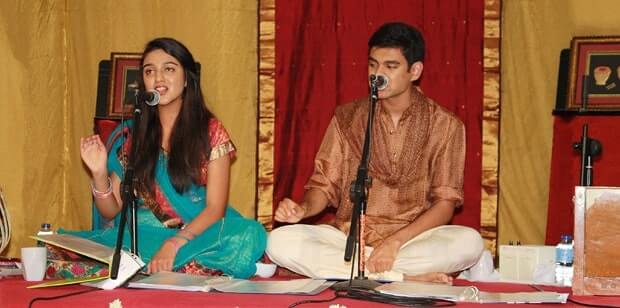
Brother-sister duo impress in debut performance
To hear about the nuances of classical Indian music in the words of young ones, is always a pleasure for connoisseurs of the art. As Amita Rao spoke about the purpose of ragas in Indian classical music, you couldn’t help thinking about what other girls of her age spend their time listening to. As Akshay Rao spoke about alaaps and how they prepare the listener to receive the emotions from the singer, you got a sense of the many Saturdays spent in practice.
Despite hectic school and university studies (Akshay is a commerce-law student at university and Amita, a Year 12 student), the brother and sister duo presented a commendable show in their debut performance in mid-January. With Sanskrit prayers, Tagore compositions, ghazals, raga-based film songs and Marathi and Kannada creations, the singers show-cased their repertoire in elegant style.
Both singers presented the traditional invocation to Lord Ganesha in the Sanskrit Ajam Neervi Kalpam. Amita impressed just as much with her Bengali Antara Mama, a composition with underpinning of mysticism and spirituality, as she did with the ghazal Aaj jaane ki zid in raga Yaman Kalyan. In Bolere pappi hara she managed to keep all the ornamentations intact, and she tackled the popular song Dil cheez kya hai with careful and smooth navigation, especially with the very high notes in the third antra.
Akshay strutted his stuff with Poocho na kaise main ne in raga Ahir Bhairav, inducing the right moods associated with this rag i.e. peace, sadness and love. He also showed off his nuanced raga Yaman Kalyan (Mana re) and raga Khamaj (Ayo kahan se Ghanshyam).
The Marathi duet Namagetha and Amita’s Kannada composition Bandaalo namma manege were also well received by the audience.
Madhuban mein radhika in raga Hamir was the concluding song for the evening and there was no sign of weariness as Akshay delivered the classic Mohammad Rafi song which was quite challenging in terms of taranas and the sargams involved.
As they sang one composition after another, there was no doubt that both had a firm control on the notes and rhythm. A great connection was built between the audience and the artistes as introduction was given about each song including raga and taal by the artistes themselves. The brilliant, lively tabla accompaniment by Abhijit Dan and the perfect harmonium support by Medha Pathak uplifted the atmosphere. The sound, managed by Abdul Sajwani ensured a well-balanced sound output.
Earlier in the evening, Akshay and Amita touched the feet of their teacher, the eminent Medha Pathak, as well as the musicians on stage, to seek their blessings. The proud teacher was seen nodding her head in appreciation as her students delivered some very challenging compositions, sharing the stage with her.
Parents Hema and Sudhakar welcomed the guests and Sudhakar spoke about his children’s desire to demonstrate through a performance, the knowledge that they had acquired during their pursuit in music. He also acknowledged music personalities Pushpa Jagadish, Aparna Nagashayana and Avijit Sarkar for their mentoring of Akshay and Amita during their journey in music.
Poornima Bhat
 

Hindi Niketan’s Republic Day

0
Reading Time: 2 minutes

IMG_3292

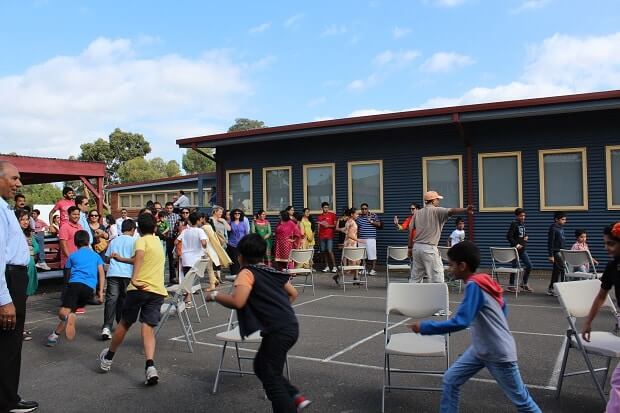
Hindi Niketan’s annual celebration of India’s Republic Day and Australia Day kicked off in style on 19th January, with a family day of culture and sports activities at the Scoresby Primary School. Held later in the afternoon than in previous years, the event was a success.


The opening address was given by General Secretary of Hindi Niketan Dr Atit Bhargava. Dr Bhargava noted that Hindi Niketan was the only organisation to have celebrated India’s Republic Day and Australia Day in Victoria for the past two decades, and fittingly, the function started with the Indian and Australian national anthems.


Proceedings continued with a quick quiz on the political and cultural heritage of Australia and India; one smart youngster was able to name India’s national flower as the lotus, but “umms” and “aahs” ensued when they were asked how many petals it has! Children and adults were encouraged to join in, although as Hindi Niketan president Dr Sharad Gupta jokingly pointed out that in keeping with Hindi Niketan’s focus on youth and their education, quiz prizes were reserved for the younger contestants! As the oldest Indian organisation in Victoria, Hindi Niketan aims to promote Indian culture through the learning and teaching of Hindi language.


Dr Gupta then followed with a warm welcome speech, and then introduced the cultural program. The audience were serenaded by the very talented Amitabh Singh, based in both Melbourne and Mumbai, who charmed with several patriotic songs. Following this was an impressive dance performance by local talent Anindya, and then a performance of O Palan Hare by an adorable 10-year-old Khushi Sharma.


Khushi’s father Neeraj then delighted with his musical skills, before a speech from Ms Nicole Seymour, local councilor for the city of Knox. Ms Seymour praised the virtues of Indian culture, and espoused the benefits of cross-cultural exchange between Indian Australians and wider Australian society. She urged the Indian community to keep sharing their culture, and spoke of the spirit of friendship in her local community and at the Scoresby Primary School.


The day’s program then moved outside, with a round of musical chairs for the children, followed by the adults. It was perhaps befitting of an India-Australia function that when some technical difficulties were experienced with the music CD, the cricket commentary was switched on and contestants promenaded around to the familiar sound of leather on willow.


Running races followed; Separate categories were organized for boys and girls, ages 6 to 12, and for ages 12 to 25, however the ultra competitive spirit seemed to emerge when the ‘veterans’ (aged over 45) had their turn at sprinting across the line! A game of dodgeball and a few more activities later, and it was time for a delicious dinner, courtesy of Singh’s Gourmet Takeaway and Hindi Niketan.


The event concluded as a celebration of the cultural commonality between our two nations; the generosity and epic history of India, and fun-loving and welcoming Australian spirit.

Send us your messages of love

0
Reading Time: < 1 minute

tumblr_ln7pxjly7v1qan19ko1_500

Want to let your special someone know how you feel in time for Valentine’s Day?

Email us your message of love with a (high res) photo of you and your loved one for us to publish.


Email to: media@indianlink.com.au


Go on. Spread the love! Or want to dedicate a love song on Indian Link Radio? Go to this page on V-day!

Dear MS Dhoni

0
Reading Time: 4 minutes

An open letter to cricket great Mahendra Dhoni Singh begs him and the team to try just a little harder


msd1

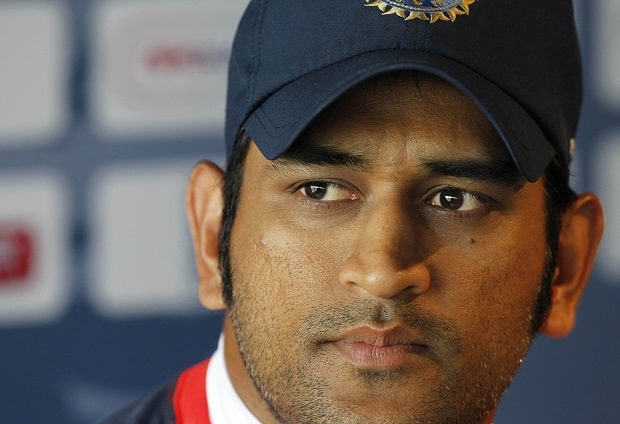
MS Dhoni, I had to write this letter to you, mate. For my own sanity. And perhaps also for the sanity of a few million others. We are all those who cheer for you and the team of men you lead. Cheer you relentlessly, at home and overseas alike.

We are the most optimistic race on the planet. Unflinching optimism, mostly, in the face of extreme sporting adversity usually inflicted by your men upon themselves. And in turn on us.

Do not get me wrong. We stand by you. Always have, always will. Your success, although sporadic and often inconsistent, makes us proud. We wake up at odd hours to watch you guys play. Time zones do not matter much to us. They just ensure we set the correct alarms on our clocks. If we can get a chance to get down to the ground, we do so in all our splendour, colour, and flamboyance.

A bad day at the office is expected and widely acceptable. However, don’t you think a bad tour, after a bad tour, after a bad tour (especially on foreign shores) is a tad bit frustrating? And annoying. And as it would seem watching from far away, the inability to learn from previous mistakes, may enhance the grievance that us Indian cricket fans harbor. You are not individually responsible for the misery the Indian fans undergo while watching your team dish out substandard performances (again, more frequently on overseas tours). However, you are the skipper and hence, the obvious “go to” man. Even for the fans.

Now, with my personal rant out of the way, here’s what I would like you to address, please. First and foremost, scout some feisty balling talent. I beg. And I mean, the Johnson, Steyn, Morkel, Harris, Siddle, Akram, Younis equivalents. In skill, fitness, and temperament. Fast, brutally fast, bullish, and in your face. Pronto. It’s not your role to select players, you may protest. If you know some in domestic Indian circles, or the IPL, push the BCCI to cut the red tape for such selections. Speed them through the ranks.
Go on a dharna (protest) for this cause, if you have to. The current Delhi CM may lend support too (not for the cause itself but in organizing a suitable venue, a mob, and utilities needed for the protest). I will, and I know that scores others too, will come out with you for this cause. And for once, it will not be an unconstitutional protest. Lets make fast bowling in the Indian cricket team ranks a 140 kms plus proposition. Consistently. And of course, with precision and accuracy.

Second, grab all those batsmen in your top order who look and behave like “Bollywood” folk most of the time. Sternly, instruct them that they will score more by flirting with Bollywood ladies (in their spare time), and not with balls outside the off stump (yourself included). I have never held a bat in a competitive cricket game of any credibility, and even I get that deliveries outside off in test matches have to be left alone, most of the times. This obsession has for a long time brought the downfall of Indian batters. So isn’t it high time the top order learnt their lesson. And applied it to their batting performances. Didn’t it work recently in a test match in South Africa when they dug in and held ground? Gave us a chance to win a rare overseas test match. Well, almost. Until our “fast” bowlers let it drift away, yet again.

You and your team have sufficient technical advice at your disposal. Perhaps more than you lot may require or seek at times, you may argue. Coaches, consultants, media commentators, and mentors of all sorts pour out unending technical wisdom and opinion towards enhancing (or sometimes critiquing) your performances. However, at the very core of it is a human element of grit, determination, and putting up a fight. The basic thread of any sporting encounter. And this is where the perspective of a fan must matter and must be conveyed to you.

We seek a fight. An earnest effort. Not an occasional one, but, every single time. We yearn for sustained aggression from the playing eleven. In all departments of the game. We want to stand up and scream out our lungs from the stands when such aggression brings victories. And then if a victory is denied, we will still stand and applaud because your men went down trying. To their very last breath.

Lastly, I am aware that this letter may never reach you. It is insignificant in the larger scheme of things that matter for the Indian cricket team, or indeed, its captain. Yet, in life, if you feel strongly about something and you have a message, then I firmly believe its worth taking a leap of faith, putting a message like this in a bottle and throwing it out into the ocean. Who knows one day it may catch a favorable wave on the social media and reach you.

If it does, do give it a thought. A good long thought.

Until then, we will all get back to what we do best. Support the Indian cricket team.


Sanam Sharma

Single visa for cricket fans visiting Oz

0
Reading Time: 2 minutes

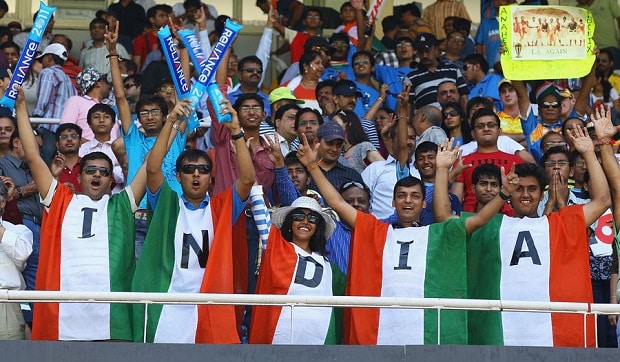
Cricket fans attending the ICC Cricket World Cup 2015 will be granted entry into Oz and NZ with a single visa

indian_fans_india_spell

“This announcement means cricket fans will only have to secure a single visa to be able to see games on both sides of the Tasman,” Tourism & Transport Forum Australia (TTF) Chief Executive Ken Morrison said. “It will make the process simpler and cheaper, encouraging more visitors to travel to both Australia and New Zealand, benefitting the tourism sectors in both countries. We congratulate Australian Prime Minister Tony Abbott and New Zealand Prime Minister John Key on this commonsense decision. The timing is perfect, too, with tickets to go on sale from next week”.

TTF and Tourism Industry Association New Zealand (TIA) are pleased that their campaign for the single visa was successful, as fans will save time and money.  “Visitors from countries like India and Pakistan will only have to apply and pay for one visa instead of two,” said TIA Policy and Research Manager, Simon Wallace.

Wallace also commends the “Australia and New Zealand governments on their foresight in appreciating the mutual benefits this decision will bring. We already have a close relationship with New Zealand and reducing the barriers to travel between our two countries would serve to further deepen those bonds. Next year is also the centenary of the ANZAC landings at Gallipoli and we believe an agreement to further streamline trans-Tasman travel would be an ideal way to commemorate that important anniversary”.

Thank you for the food we eat…

0
Reading Time: 2 minutes

The Adelaide Tamil Association marks the traditional Pongal festival with an outdoor event

Pic 5

India is a land where majority of the population lives in villages. Hence agriculture is the main occupation and source of income for many households. As a result many Indian festivals are directly or indirectly linked to agriculture. The harvest festival of southern India is called Pongal.

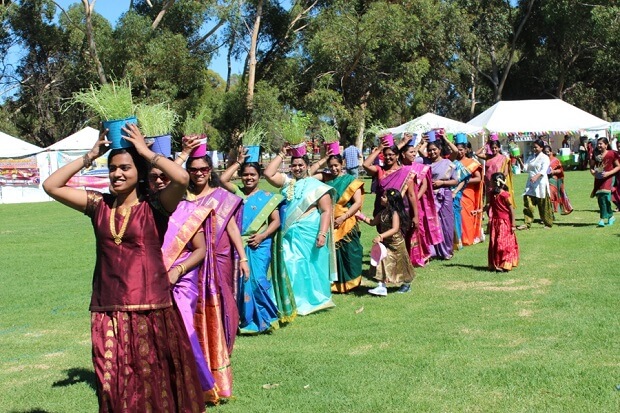
On a hot day in January, Bonython Park was transformed from the traditional BBQ and picnic spot into a scene from the south of India as the Adelaide Tamil Association celebrated Pongal Festival.

As part of the traditional ceremony, a milk concoction was boiled in pots that were specially prepared for the event. In their regular kitchens and in their daily lives, the people gathered here probably try to avoid anything from boiling over on to their stoves. But on this occasion, the milk was allowed to boil over and flow out of the pots, as chants of “Pongal! Pongal! Pongal!” rang out. The term is Tamil for “overflowing”. It is almost as if one is saying, thank you God, for this gift of plenty, and for our prosperity.

The Pongal, cooked with rice, milk, raw brown sugar and little pieces of sugar cane, was offered to the Sun God and Mother Earth as a form of thanksgiving.

Earlier, special invitees Rob Kerin and David Pisoni lit the traditional lamp to start off the ceremony.

With free entry, the turn out for the event was about 450 people. The scorching heat did not hold back any of the enthusiasts as the day was lined up with a long list of competitive games and activities for kids and adults alike. The games included running races, tug of war and the old favourite lemon and spoon race. With attractive prizes like LED/LCD 39 inch TV, chest freezer, BBQ, digital camera etc, participation was high, and the competition, tough!

Some, as expected, took refuge under the tents. Cultural performances kept them suitably entertained and out of trouble!

The playgrounds were clustered with kids letting out their high energy levels, while food stalls served the usual fare of dosa, samosa, chana bhatura etc. A unique feature was the ‘Information Centre’ where videos played about Pongal and some traditional Tamil games.

“Traditionally Pongal is celebrated on the 14th of Jan in India but here in Australia we try to pick the closest weekend,” Adrian from Adelaide Tamil Association told Indian Link. “Next year we are planning to have a bigger event in Elder Park”.