
Home Blog Page 940

Exclusive: Section 18c A protection we cannot afford to lose

0
Reading Time: 3 minutes

Australians value freedom of expression but laws against hate speech are still essential

Australia is a country of great diversity. You can see it in the faces of the people that you work with. You can see it in the restaurants that line the main streets of our towns. And you can see it in the variety of religious and cultural events celebrated around the country: Chinese New Year, Diwali, Hanukkah, Ramadan and Christmas to name a few.


However, the treatment of the Aboriginal peoples in this country stands as a chilling reminder that tolerance has not always been embraced. The Cronulla riots similarly reminds us how quickly what we have achieved can be put at risk.


The proposed amendments to the Racial Discrimination Act were put forward on the basis that the current wording of s.18C inappropriately constrains our freedom of speech. That section makes it unlawful to do an act in public which “is reasonably likely… to offend, insult, humiliate or intimidate another person or a group of people” if “the act is done because of the race, colour or national or ethnic origin of the other person ”.


There is no doubt that freedom of speech is important but it is importantbecause of the role it plays in our democracy. Freedom of speech ensures that when you or I go to the ballot box we can make an informed decision about who to vote for. Freedom of speech is necessary so that as a community, we can debate political ideas and so that individuals can have a say on decisions that affect them.


Section 18C ensures that everyone has a role to play in that debate.


A flourishing society also requires more than just freedom of speech; it requires security, stability, a just legal system and a vibrant economy.


That is why freedom of speech is not absolute. In this country, it is criminal to disclose secrets which risk the lives of Australian soldiers. It is likewise a crime for a corporate executive to disclose market sensitive information to his mates. The law protects us from slander and protects privileged comments made to our lawyers.


As a society, we recognise that these restrictions do not hurt our democracy or way of life. Indeed, we understand that they are necessary to maintain it. And laws against hate speech are no less necessary, because racism and bigotry tear at the heart of our social fabric.


Racism and bigotry leave people feeling exiled in their own home. They do not improve the quality of public debate nor do they assist the wise completion of a ballot paper. They are insidious because they attack a person because of their identity; their heritage. They imply that a person is inferior because of who they are. They are hurtful, divisive and can lead to individuals and entire communities feeling unwanted, unvalued and second-class.


Comments today can also revive memories of past wrongs. Unfortunately, few ethnic groups have been spared the pain of racially justified persecution. Examples such as slavery in the United States and the Holocaust are well known. In recent times, the world has seen genocides in Rwanda and Bosnia, while today in North Korea persecution is justified by racial supremacy.


Together, we have built a vibrant, rich and diverse society. A society not focused on the differences between us, but founded on the strengths our differences afford us. Section 18C stands, not as a threat to freedom of speech, but as a protector of the purposes which that freedom serves, and as a guard to an achievement exceptional in this time and rare in times before.

Matt Kean is the Member for Hornsby and Parliamentary Secretary for Communities.
The Battle of Imphal

0
Image from Australian High Commission
Reading Time: 3 minutes

This year marks an historic anniversary for the Allies in north-eastern India

Image from Australian High Commission

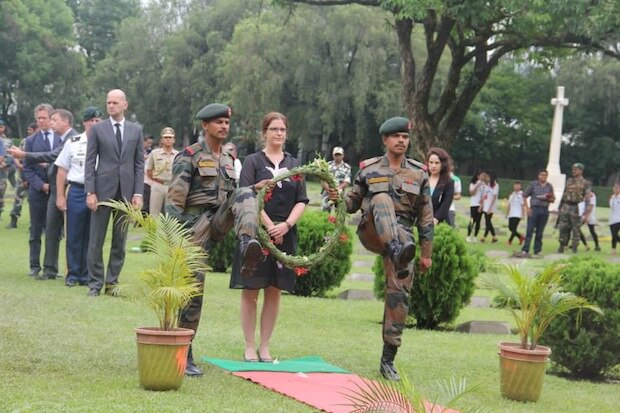
For five members of the Royal Australian Air Force, the city of Imphal in Manipur, India, is their final resting place.

They have been buried at the War Cemetery there for seventy years now, having fallen at the Battle of Imphal in World War II.

They were honoured at a memorial service late last month, for their role in supporting the Allied campaign during what is now known to have been a fierce and significant battle.

The First Secretary for Defence at the Australian High Commission in New Delhi, Jane Spicer, represented Australia at commemorations to mark the 70th anniversary of the Battle of Imphal.

Dozens of Australians from the Royal Australian Air Force took part in the Battle of Imphal, which raged for five months in north-east India from March until July, 1944. The Japanese army attempted to destroy the Allied forces at Imphal, an Allied logistic base, and invade India, but were driven back into Burma.

After the Japanese conquered Burma in 1942, Imphal took on major military importance due to its geographical location west of the Burmese border. The Allied forces worked to improve the lines of communication and construct roads and airfields to transport supplies around the north of India.

Japanese intelligence, concluding that Imphal would be used as a base for a major offensive against them in Burma, decided to counter this by attacking first. Japanese Lieutenant-General Mutaguchi was ordered to prepare for ‘Operation U-Go’ – the capture of Imphal and Kohima – with 100,000 men.

Allied positions in the area became threatened and the decision was made to airlift in reinforcements and supplies.

Image from Australian High Commission

The city of Imphal was held by the fourth corps of the British Fourteenth Army, along with four Indian Infantry Divisions, an Indian Parachute Brigade and an Indian Tank Brigade. The Indian divisions were composed of both British and Indian soldiers, including Gurkhas.

In late March, the Japanese cut off access to the road connecting Imphal and Kohima so the small number of Allied troops were forced to fight alone.

The siege of Imphal, as it is also known, continued for more than three months, and the only link the Allies had to the outside was by air.

A large part of the defence of Imphal was due to the work of the Air Force. During the siege, the Royal Air Force delivered more than 14,000,000 pounds of rations and 12,000 reinforcements.

Morale among the Allied defenders lifted substantially after the Japanese were defeated at Kohima in May 1944. In late June the troops from Kohima reached the men at Imphal, signalling the end of the siege.

Image from Australian High Commission

Vicious battles took place surrounding the city of Imphal, including in the south along the road to Tiddim. The fighting here was so intense that it continued even after the siege had been lifted. Four Victoria Crosses (awarded for bravery) were won during this encounter.

Alongside the Battle of Kohima, the Battle of Imphal is widely regarded as the turning point of the Burma Campaign, and was one of the biggest defeats in Japanese history.

The Japanese army suffered huge losses with over 50,000 dead and missing, while the Allies sustained over 16,000 casualties.

Noted British historian Robert Lyman has said, “Kohima/Imphal was one of the four great turning-point battles in the Second World War, when the tide of war changed irreversibly and dramatically against those who initially held the upper hand”.


Into that Heaven of freedom

0
Reading Time: 5 minutes

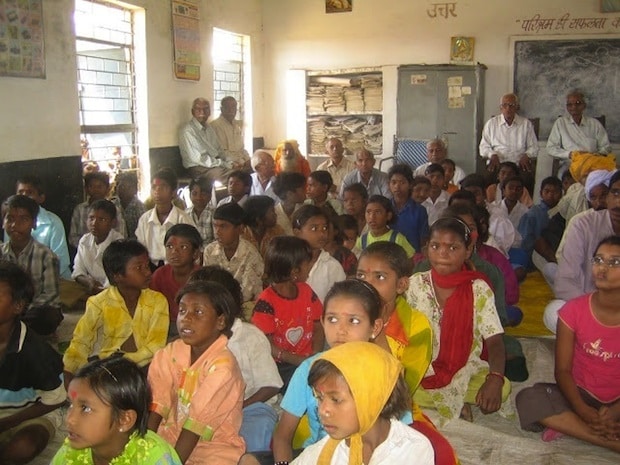
The Ekal movement is helping the children of rural India to overcome the barriers of inequality through the gift of education

The great Nelson Mandela once said, “Education is a great engine of personal development. It is through education that the daughter of a peasant can become a doctor, that a son of a mineworker can become the head of the mine, that a child of farm workers can become the president of a country”.

An educated populace can change the fabric of a nation. India as a global phenomenon is marching ahead, and shows great potential for growth and development, but even today the class divide between the rich and the poor is unassailable.

In the age of globalisation, with great advances in technology, education is a vital tool in developing access to better opportunities.

Growth has to start at the grass roots level and by making education accessible to the children in rural and tribal India, we make them instruments of change. It is with this ideology that the Ekal schools came into being.

This year, the Ekal Vidyalaya Foundation of Australia (EVF) is celebrating its 10th anniversary. Founded according to the principles of the Hindu saint Swami Vivekananda, Ekal Vidhyalayas across the length and breadth of India focus on taking education to the most remote parts of the country, and shining a beacon of awareness into the lives of people who even today live in ‘dark times’.

The Ekal movement originally began with a group of young educators working with the tribes of Jharkhand in the late 1980s.

According to Swami Vivekananda, education signifies a man’s making. He said that if the people could not get to where education is available, then education must get to them.

They refined their teaching model with the premise of “Ek Shikshak, Ek Vidyalaya” – meaning “one teacher for every school”.

Ekal does not propagate the traditional schooling system, of fixed timing and rigid learning which had been the case when exporting the urban model of schooling to Indian villages. Instead, the Ekal system is tailor-made to suit the target audience and the teacher employed has a strong connection to the community. The flexible timings especially suit female children who often miss out on schooling due to being involved in other ‘chores’.
By the mid-1990s, there were over 1200 one-teacher schools operating in Jharkhand. Literacy rates improved and health workers noted a significant decrease in diseases and anti-social practices.

Ekal is different from many other organisations because the aim is not to make a difference to one child but to an entire community.

After the success of the Ekal model in Jharkhand, the Ekal Vidyalaya Foundation of India was established in 2000 as an umbrella organisation for various NGOs that run one-teacher schools in their communities.
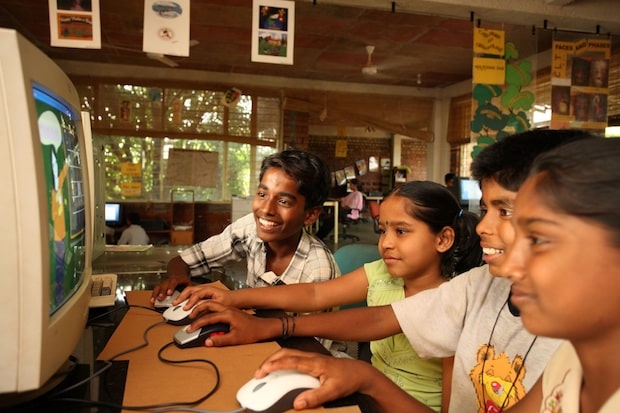
The organisation has since grown in strength and is currently operational in a number of countries across the globe including Australia, the USA, Hong Kong and the UK.

The Ekal movement in Australia started 10 years ago with the sponsorship of 30 schools. Today Ekal Australia sponsors more than 700 schools.

At the original launch of EVF Australia in 2004, the organisation’s president Dr Nihal Agar said, “This movement will liberate about 80 million fellow Indians, living in remote, rural and tribal areas, from the darkness of illiteracy”.

Organisations such as Ekal strive to take education to remote areas with the sole aim of creating an educated and vibrant India, where all the parts, however inconspicuous, are relevant in making up the whole. It is this ideology behind the movement that attracts people to donate their time and money to the cause.

Education should be seen as a right and not a privilege of the select few. A strong education system is the cornerstone of any country’s growth and prosperity; it is a great equaliser of conditions and is an outlet from the throes of poverty.

Education of tribal children in India is important, not only because it is a Constitutional obligation, but because of the crucial need for the holistic development of tribal communities, woven into the fabric of the Indian society.

Ekal Australia currently sponsors 500 village schools and has supported more than 20,000 children over the past ten years.

A typical Ekal class has between 30 to 40 children from five to 14 years of age. Along with teaching basic literacy and numeracy skills, emphasis is given to health and hygiene practices. The organisation spends less than 10 per cent of the sponsorship money raised on administrative costs – everything else is contributed to the local community.

When the children of a country get the gift of education they are delivered the tools of possibility; life changes and we allow them to overcome the barriers of social inequality. Education for underprivileged children is the key, whether we are addressing healthcare, poverty, population control, unemployment or human rights issues.

It is a clichéd statement that India lives in her villages, but it is true. Basic education instils self-confidence, self-worth and makes life more meaningful and purposeful. It lifts a person’s self-esteem and makes them a worthwhile and contributing member of society.

India is in a stage of metamorphosis and is moving into a new era – an era of change, innovation and self-discovery. An educated, young population will be able to drive this movement, make it sustainable and make a visible difference. This will enable India to move into that ‘heaven’ that Tagore envisioned for us many years ago…

“Where words come from the depth of truth… Where the clear stream of reason has not lost its way into the dreary desert sand of dead habit… Into that heaven of freedom, my Father, let my country awake”.

Let us all be a part of this change and vision.

Ekal Australia celebrates its 10th anniversary on 26 July at the Bahai Centre, Silverwater. You can be part of this worthwhile movement by joining in their celebrations. For more details contact Devendra Gupta on devendra_g@hotmail.com. Visit the Ekal website www.ekal.org to learn more about the Ekal movement.


Pear-fection

0
Reading Time: 3 minutes

Pears are a wonderfully versatile fruit with delicious varieties in season throughout the winter months

Pears are the perfect cook’s companion. A pair of pears can be transformed into dishes both savoury and sweet.

Fresh, ripe pears can be served poached or baked, and when extra soft they can be served in a soup, smoothie or cake for added depth of flavour.

“Pears are rich in fibre, which can help lower cholesterol and offer longer-lasting energy,” says pear grower Michael Crisera. Pears are also low GI, full of potassium, and Vitamins A, B and C. This makes them a nutritious, healthy ingredient to include in everyday meals.

With over 130,000 tonnes of pears grown annually in Australia and eight different varieties, pears are a perfect ingredient for the decadent dishes of the cooler, winter months.


AJAY MATHUR’S TANDOORI PRAWNS WITH SAFFRON AND CARDAMOM POACHED PEARS


Ingredients

12 raw peeled prawns

1 teaspoon ginger paste

1 teaspoon garlic paste

1/2 teaspoon cumin powder

1/2 teaspoon garam masala

1/4 teaspoon salt

1/4 teaspoon turmeric

1 tablespoon yoghurt

1 tablespoon lemon juice

1 tablespoon chickpea flour

1 tablespoon oil


Poached Pears

2 Packham Pears

2 cups water

3 tablespoons honey

½ teaspoon turmeric

¼ teaspoon salt

4 green cardamom

Few strands of saffron

2 tablespoons rose water


For the Poached Pears

Combine the water, honey, cardamom, turmeric, salt, saffron and rose water in a saucepan over low heat. Stir well and add peeled pears.

Place a disc of greaseproof paper on the surface of the pear mixture. Cook, covered, for 10-15 minutes.

Transfer pears to a bowl.

Increase heat and bring the syrup to boil.

Boil, uncovered until the syrup thickens slightly.

Cut pears and drizzle with the syrup and serve with tandoori prawns.


For the Tandoori Prawns

Place all ingredients in a bowl and mix well. Add prawns to the marination.

Heat oven to 180°C. Spread prawns in a single layer on a heated tray and cook for 5 minutes.

Serve with poached pears.


CINNAMON FRENCH TOAST WITH VINCOTTO CARAMELISED PEAR


Ingredients

3 eggs, lightly beaten

1?3 cup cream

1?3 cup milk

1?4 teaspoon ground cinnamon

1 tablespoon caster sugar

50g butter

8 x 2cm slices of a quality baguette


Vincotto Caramelised Pears

5 firm Beurre Bosc pears

30 g butter

1 tablespoon brown sugar

2 tablespoons Vincotto


Method

Beat the eggs, cream, milk, cinnamon and sugar together.

Melt a little butter in a large frypan.

Dip the bread slices into the egg mixture, draining excess liquid away.

Cook the bread slices until golden on both sides.

Serve with slices of vincotto caramelised pears, syrup and a dollop of yoghurt or cream.

Serves four.


To make the Vincotto Caramelised Pears

Cut the pears into half, remove core and then slice each half into 6 wedges.

In a large fry pan, melt the butter and add the pear wedges and sugar, cook stirring occasionally until the pears are coloured and caramelised.

Add the vincotto to the pan and continue to reduce for 2 minutes


All recipes and photos:

Australian Pears – www.rediscoverthepear.com.au

Networking the new buzzword among Hindu groups

0
Reading Time: 4 minutes

A new forum aims to facilitate effective networking, collaboration and empowerment for Hindu organisations in NSW

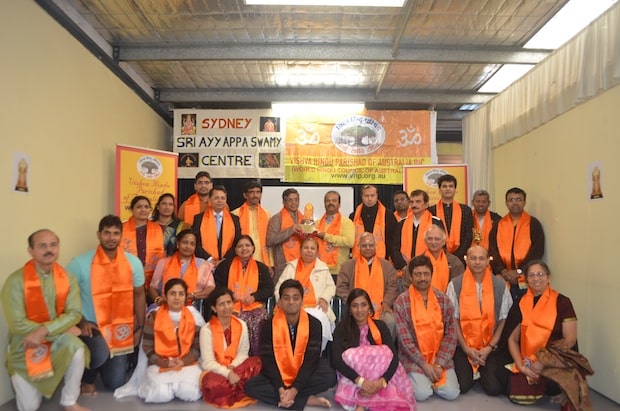
Using the Ekta Shankh (unity conch shell) as its symbol and relying on the motto Sanghe Sakthi Kaliyuge (organisation is strength), representatives from various Hindu cultural, spiritual and educational groups in Sydney came together recently for a first-of-its-kind HOTA (Hindu Organisations, Temples and Associations) forum.

Facilitated by Vishwa Hindu Parishad’s Australia chapter, the forum is the brainchild of Swami Vigyananda and was proposed at the third Australian National Hindu Conference held in April. The objective of the forum is to provide a common platform for institutions working in their individual capacities to together serve Hindu communities all across Australia. Currently New South Wales alone has at least 120,000 people of Hindu faith.

Sydney Shri Ayyappa Temple (SSAT) hosted the inaugural forum on the auspicious occasion of Guru Poornima. Welcoming the gathering, temple president Mohan Sundaram showcased the rich legacy of Swami Ayyappa tradition. In the coming years, the hosting of HOTA is to be rotated among all its members, with Minto Temple already volunteering to facilitate the 2015 edition.

“Through effective networking, collaboration and empowerment, our goal is to realise that there is a larger Hindu identity that transcends the sectional identities, and eventually bring all organisations together so that they can function in an improved manner,” Vishwa Hindu Parishad spokesman and forum chair, Rudra Kumar told Indian Link.

As part of HOTA, two flagship events have been planned each year – an annual networking platform in February and a combined celebration of Raksha Bandhan in August, venerating the role of women in Hindu society.

The HOTA model has already enjoyed considerable success in North America and New Zealand and the Australian chapter hopes to emulate these efforts.

“Hindus as a community are diverse in faith and philosophy, embracing the whole spectrum from atheism to polytheism harmoniously. We are each different but also have a lot in common,” Kumar said.

“In future, we will concentrate on common threads rather than differences to achieve greater good. If we are inward focused, we are bound to become stale and irrelevant and perhaps this is where HOTA could take us to next level of evolution”.

Effectively using the analogy of world wide web, Kumar aptly identified various Hindu organisations as isolated pockets of stand-alone capability. “What we lack is coordination skills and resource sharing. Through HOTA, hopefully, we can link up to effectively reach targets,” he said.

On the agenda were cross-servicing, sharing of institutional resources, centralised procurements and bonding between associations. Rather than being a mere talkfest, the day-long forum moderated by VCCA’s Divakar Harle saw various community representatives discuss challenges, learn to creatively solve problems, and identify growth opportunities.

The participants were divided into three groups – temples, associations and youth to brainstorm ideas. Some of the issues discussed included potential venues for large-scale gatherings, mentoring youth, the introduction of Sanskrit in schools, expansion of the SRE program, visa and language problems faced by temple priests, bulk procurement of pooja materials and collective lobbying.

Among the outcomes of the first HOTA forum was the development of a concrete action plan and a roadmap to realise the benefits of collective effort and collaboration to eventually enhance the capacity and capability of forum members.

Addressing the forum, Strathfield Councillor and chairman of the Deepavali Parliamentary Committee, Raj Datta declared, “Hindus are an inclusive, peace-loving community and should continue to embed this tolerance in the mainstream. Over the long course of our history, having withstood many invasions and changes, we have had the capacity to accommodate one another. Australian society is now at a critical juncture and we should strive to enrich its multicultural fabric by leaving a lasting legacy for its future to enjoy”.

Earlier in the day, VHP general secretary Akila Ramarathinam made an impassioned plea for all Hindu organisations to unite in their service to society. Clarifying that HOTA is neither a governing council or umbrella body but an information-sharing project, she extended VHP’s utmost commitment to the cause. “HOTA is a unique opportunity to exchange ideas, share knowledge and network. We need to know, trust and understand each other. After all, selfless service is our ultimate aim,” she concluded.

On the sidelines, informal resource sharing arrangements were already being worked out between temple representatives – particularly in venue, finance and priest management. “I already see HOTA as a big success and with wider participation, it will only improve the services we can offer,” she noted.

Among the organisations represented at the HOTA forum were Shiv Mandir, BAPS Swaminarayan Mandir, Karpaga Vinayagar Temple, Durga Temple, Indian Seniors Group, Vedic and Cultural Centre of Australia (VCCA), Brahma Kumaris, and Sydney Veda Pathashala. Special Religious Education group (SRE), the Deepavali committee, Global Organisation of People of Indian Origin, Hindu Youth Australia, Bala Samskar Kendra, Hindu Swayam Sevak Sangh, Jeeyar Education Trust, and Vedic Maths Foundation were also in attendance. Many other groups have also already pledged both their resources and support for the united cause.


Chess Champ

0
Reading Time: 3 minutes

Rishi Dutta is no pawn, but a king in the making

Every school holidays, a group of enthusiastic players compete against each other in chess tournaments organised by the Junior Chess League. Their numbers are increasing exponentially, making it one of the fastest growing mental sports in Australia and across the world. Chess not only stimulates the mind, it improves concentration and promotes high levels of forward planning and strategic thinking. While it is a stimulating pastime for most, those with grander aspirations often find that winning margins are slender and the decisions are ruthless.

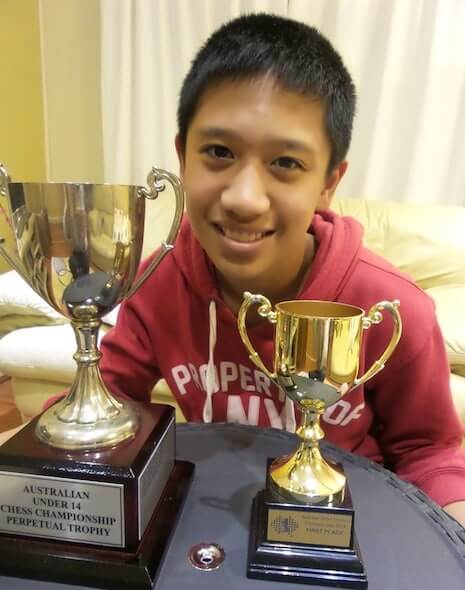
One of the rising stars of the competitive chess arena is thirteen-year-old Rishi Dutta, with a rating of 1870. The rating is determined by chess organisations as an estimate of the strength of the player, based on previous performances.

Earlier this year, the gifted Baulkham Hills High student took out the Under-14 Open title at the Australian Junior Championships held at Knox Grammar. In 2012, Rishi also won the Under-12 NSW Junior Championship, while he was outright second at the national level.

The talented youngster stumbled into chess as a six-year-old, when he accompanied his parents to Rouse Hill Town Centre.

His mum Jin Tan recalls, “We would often take our boys to the library and it is there that Rishi first learned how to play chess”.

“My husband, Debashis, would teach Rishi the basics and they would regularly play against each other in the library while I read to my younger son. Within a few months, he was consistently defeating his dad and they would spend hours analysing the game afterwards,” she added proudly.

But it wasn’t until he was nine that he showed keenness for the game, she was quick to point out.

What truly sparked Rishi’s interest was a tournament at Matthew Pearce Public School, where he was enrolled in the opportunity class. Despite being a rookie, he went on to win the competition. Since then his rise has been meteoric.

Progressing rapidly, Rishi also won the NSW Junior Chess League (JCL) inter-school competition at the district level. The talented player soon joined Rooty Hill Chess Club to expand his horizons and compete against older players.

The club manager, Peter Cassetari, was instrumental in Rishi’s improvement, often staying late after club games to teach Rishi, Tan acknowledged gratefully. Likewise Debashis has constantly mentored his budding talent, advising him on strategic openings and analysing the nuances of every move.

Rishi soon began competing in junior tournaments through NSWJCL eventually winning the state Under-12 Championship in 2012.

“This win gave Rishi a lot of confidence, and we view this tournament success as a breakthrough for him,” Tan told Indian Link.

At the national championship that followed,       Rishi came a close second winning 7.5 out of nine games, after a mentally exhausting, three-hour-long decider. In the end, it was a simple error that cost him the title.

Winning the national Under-14 Championship in 2014 has consolidated his fledgling career. Leveraging his home ground advantage, Rishi’s rock-solid performance helped him win all seven games initially, beating top seeds. Rishi went on to draw the last two games to eventually claim the closely contested national title.

“Until recently, Rishi has been a solid and somewhat defensive player, but recently he has been playing more aggressively to try and beat stronger players,” Tan noted.

Not one to rest on his laurels, Rishi is already gunning for bigger goals – to become a Federation Internationale des Echecs (FIDE) Master within the next few years and ultimately Grand Master of chess, a lifelong title.

In the interim, he has been quite busy competing in adult tournaments as well. He recently took part in the Doeberl Cup scoring an impressive five wins out of nine games, beating a player with a rating of 2192. He was also one of only five NSW juniors who took part in the Sydney International Open, managing to draw with highly rated players and eventually scoring another 5/9.

Another standout performance was his third position at the City of Sydney Championship (5.5/7).

Rishi narrowly missed out on the Under-18 title at the recently concluded NSW Junior Championships in North Ryde.

Also a proficient violinist and keen sportsman, Rishi is determined to win the national schools competition later this year.

Reach for the stars, Rishi!


Going, going, Goa!

0
Reading Time: 5 minutes

Many go to Goa for its beaches but are taken in by its history and culture.

Located on the shores of the Arabian Sea in the country’s west, the Indian state of Goa has something on the menu for everyone. From nature devotees to beach lovers, water sport fanatics to architectural enthusiasts, and foodies to party goers, there will be something for you. There is even something for those distinctive holidaymakers who enjoy doing nothing other than leisurely watching the sun rise and set.

This is where the nation’s elite and affluent come to party these days and where new rich Russians, Iranians and Israelis arrive by the planeload to taste “freedom”.

Goa’s varied geography creates a scenic setting. The land rises from the sea inwards to the verdant hills, crossing over lush green valleys richly spread with swaying coconut palms, cashew plantations and paddy fields. The two main rivers, Mandovi and Zuari, keep the land fertile. The beauty of this untouched nature causes romances to blossom, and passions to soar, and this combination makes Goa an ideal destination for honeymooners.

Many come to Goa for its beaches. With a sandy coastline just over 100 km long, they are obviously in abundance. The most popular ones are Calangute, Baga, Anjuman and Vagator in the north of the state, while Colva dominates the south.

These sea front locations are covered with countless resort-type accommodation as well as restaurants, bars and nightclubs, internet cafes and shops selling summer essentials.

Though surrounded by aspects of the 21st century, the beachside ambience is still very rural and carefree, which makes the Goa coast unique. In the sixties the hippies loved this atmosphere and made the idyllic seaside towns their home for years.

Life on the shoreline begins early in the morning when the sandy stretch is filled mostly with joggers and surfers. With hawkers still asleep, the domain is peaceful and serene.

As the golden rays of the rising sun start brightening the horizon, you see the return of fishing boats, pushed over the frothy waves to the shore, where locals and visitors anxiously wait to glimpse the catches of the day, expecting some to be on their plates during lunch or dinner.

As time passes, the air warms up to welcome hordes of swimmers, sun bathers and water sport fanatics. They are joined by souvenir sellers, coconut vendors and touts letting you know the best joints to have a meal or chill out after sun down.

The local fishing community also takes space on the sand to repair their boats and mend holes in their fishing nets before their next trip out to sea. Chatting with them is interesting as you hear about their simple lifestyle, so different to the way much of modern India lives.

Shabby shacks along the beaches are an institution of Goa. Made out of bamboo poles and palm leaves, these makeshift cafes, made popular by the hippies, have a reputation of serving delicious food to be washed down with beer or cashew feni – a local alcoholic beverage, where the first guzzle gives an instant thrill. “Unfortunately the mushrooming of modern cafes and restaurants around the beaches are forcing us out of business,” commented one shack owner regretfully.

As the coastline faces westwards, watching the sun plunging into the blue waters of the Arabian Sea is a divine experience. The colours from the setting sun reflect on the silken sand and soak the watchers in a magical ambience. This creates the right party mood after sun down when neon signs from the nightclubs dominate the skyline and loud music echoes from inside.

Having fun is synonymous with holidaying in Goa, where singing and dancing are part of life. This comes from the Portuguese who laid claim to the land in 1510. During their 451 years of stay they made the way of life here more European than typically Indian.

Floral skirts and blouses still dominate over saris and salwar kameez, black presides over white, piazzas or squares grace town centres and wine shops appear at every turn. Here in Goa, English is spoken more than Konkani or Marathi and the state capital is referred to by its former name, Panjim, rather than its Marathi version, Panaji. White baroque churches set against lush green foliage can be spotted everywhere, though the Christian population of the state is only around thirty per cent. Most of the houses, some still named in Portuguese like “Casa Del Cuna” or “Casa Del Soi”, are Iberian bungalow-style with sloped tiled roofs, ornate “balcaos”, or balconies, and creeping red, pink or orange bougainvillea blossoms adding extra colour to the scene.

The vestiges of the Portuguese masters have created an alluring appeal for outsiders to visit Goa, to flirt with culture, tradition and particularly buildings that are over four centuries old.

The best place to start this odyssey is in Old Goa just a few kilometres south from Panjim. It was the capital of the Portuguese colony until 1843. The warren of narrow streets, piazzas and grand villas have long gone; all that remains are a score of extraordinarily ostentatious churches, monasteries and convents. Declared as a World Heritage Site by UNESCO, today it is the state’s main cultural attraction.

Sights worth seeing include the Arch of the Viceroys, built in 1597 to commemorate Vasco da Gama’s arrival in India; the distinctive domed Church of St Catejan (1651), modelled on St Peter’s Basilica in Rome; and the Basilica of Bom Jesus, which houses 16th century missionary St Francis Xavier’s body. Every tenth year the body, which has miraculously remained incorrupt for centuries, is exposed for public veneration, drawing thousands of Christians from around the world to Goa.

Aside from Panjim, the capital city since 1843, the other cities for tourists are Maupsa, famous for its market, and Margao, well known for old churches and colonial mansions.

However the draw card for tourists, and the showpiece of Panjim, is the 1541 Church of Our Lady of Immaculate Conception. It sits on top of a hillock, and a gleaming white processional stairway, which reminds many of the Spanish Steps in Rome, leads up to the dazzling façade of this 463-year-old edifice. It’s said that all Portuguese viceroys, after arriving in Goa, would first stop at this location to get a top view of their empire before proceeding to their palaces. It’s a practice followed by visitors today in order to glimpse as much as possible of the inviting Goan terrain marked with old houses, churches, coconut trees, rivers and of course the sea.

TRAVEL NOTEBOOK

GETTING THERE

Enjoy the comfort of the world’s most advanced aircraft, the Boeing 787 Dreamliner, and superior in-flight services with mouthwatering Indian meals by flying with Air India (www.airindia.in) which operates non-stop between Sydney/Melbourne and Delhi with convenient connections to Goa. Business class passengers enjoy the comfort of a flat bed and top class Indian hospitality.

WHERE TO STAY

There is no shortage of hotels and resorts to suit any budget. One option is to stay at the plush Resort Rio (www.resortrio.com) in North Goa near Baga Beach

MORE INFO

Visit goa-tourism.com


Not just black or white

0
Reading Time: 3 minutes

Traditional teaching models need to adapt and empower young people to learn how to think for themselves

Parents will know that only a generation ago, information in schools was presented mainly through use of white chalk on blackboards. Few of the current generation of learners will experience blackboards though because most schools now have whiteboards, written on using whiteboard markers. The markers come in many colours but the most frequently used colour is black.

The experience of teaching when there were blackboards was literally ‘black and white’. Mostly, the experience these days is still, literally, black on white. That most teaching presents information, concepts and ideas with use of black and white is a useful analogy for changes happening in teaching.

The traditional model of teaching, and one that is still far too often evidenced, is that students are empty vessels that simply need filling with knowledge. Freire coined the term ‘banking concept’ of education in order to illustrate the approach within pedagogy circles of teachers who ‘deposit knowledge’ into students for later withdrawal (‘regurgitation’) on exams, testing knowledge, but not thinking. This approach to teaching demonstrated a ‘black and white’ philosophy.

Knowledge has been seen, and treated, as entirely objective; free from the idea of cultural or social construct. After all, the certainty behind teaching and learning was black and white. The experiences of children and adolescents were not seen as relevant, and minority perspectives were not generally explored.

Over time there have been changes in the way learning has been understood. Educational academics and psychologists have looked at notions such as cultural relativism, relevance, meaning, engagement, thinking, inquiry, quality and, more recently, teaching and professional standards.

Technology too has developed, with smart devices present within most Australian households. Technology has changed the way students have learned to learn, as well as the way information is accessed and understood. Teaching and schools now have to adapt to these changes.

Questions have arisen for schools such as how to invest in technology, how to use it effectively, and what level of use is appropriate within the classroom to minimise distractions and maximise learning.

On one level, technology is simply a glorified tool for data presentation. Teachers can overuse PowerPoint presentations, believing this is an effective use of information and communication technology, rather than aligning the use of media to relevant content and thinking skills.

The current range of schoolbooks integrate colour into printing which means they are visually more interesting. This also makes the information and concepts more presentable when burned onto CD or USB device for upload to a computer or tablet device. It is this use of colour, encouraging interactive and depth, which makes a mockery of teaching that treats the knowledge within texts as immutable.


Exemplary teaching does not turn colour into black and white – it turns black or white into colour and deepens the richness of colour when colour is present. Exemplary teaching includes an element of critique and critical thinking, that is, thinking that tests knowledge and questions truths and assumptions included in even the most current of texts.

Black and white teaching can be a weakness both in teaching and also in parenting that seeks to ‘assist’ students through applying a fixed-thinking approach to problem solving. Evidence of black and white thinking can be seen when a student tells a parent the method they have to apply to solve a mathematical problem is the way it has to be done because ‘the teacher said it must be done this way’. Similarly, teaching that aims to help students write essays through applying a formula about structure and linking sentences and the like, may serve to help a student achieve a particular mark but does not serve the cause of critical thinking.

Teachers need to understand that they teach for life, not just for an exam or a test. Very few students will remember the detail of how to structure a piece of writing to a particular teacher’s preferred style, but they will remember if they were taught to question the teacher about a formulaic approach to writing and whether that was met with openness. They will also remember whether an answer like ‘it’s in the exam’ or ‘I told you to’ actually serve to increase thinking and independence or to reproduce laziness and dependence.

Parents who co-opt black and white thinking should remember that true courage and innovation does not arise from obedience. It arises from quirkiness, individuality and a questioning of authority or the ‘state of play’.

The technological changes and issues, coupled with complexity arising from emerging understandings of brain development, learning styles, learning difficulties and the like mean that the black and white approach, or the dichotomous view of learning is no longer relevant.

Empowering young people to remember how to think, take academic risks and learn to learn is what should characterise the classroom.

Put simply, teaching and learning must now understand and integrate multiple hues.


Over-baked vendetta pulp

0
Reading Time: 2 minutes

Film: Hate Story 2

Starring: Surveen Chawla and Jay Bhanushali

Director: Vishal Pandya

Rating: *

In how many ways can a wronged woman get even with a man? In Hate Story, three years ago Paoli Dam made a suntanned socialite, “Main sabse badi r**di banna chahti hoon”.

Okay then.

Fortunately, Surveen Chawla who takes over the vendetta franchise, has no such lofty career ambitions. She seems miserably ensconced as a politician’s plaything (aka mistress) until she falls in love with a boy-toy who seems to believe love means never having to say you can’t smooch.

Koyla, anyone?

In a series of disembodied scenes meant to show their growing passion, television star Bhanushali chews on Ms Chawla’s lips as though they were life-saving drugs. The pantomime of passion doesn’t pay off. Bhanushali can’t survive lip-chewing for too long. That’s because Baba, the ruthless politician, has Ms Chawla’s lover-boy killed.

That isn’t a spoiler. It’s plot perversion.

Ms Chawla is left to die buried underground. But she escapes to take revenge. It’s Khoon Bhari Maang… minus the crocodiles!

Just how Ms Vendetta Queen gets even with her benefactor-tormentor (Sushant Singh, powerful and menacing), forms the corny crux of this horny tale, told in shades so pale and stale you know it’s a losing battle to the finale. Ms Chawla, conveying all the smouldering intensity of a goldfish circling her bowl on a bored Saturday afternoon, takes on Babu and even beats him at his game of viciousness.

It’s a sad and sorry premise, more daring in letting the vengeful vixen romp in skimpy clothes than in actually showing the lady’s volume of venom.

No matter how we look at it, this is a film waiting to get us hooked. The promised explosion never happens.

The vendetta looks awfully unconvincing. Where and how did our desi Uma Thurman find the courage and strength to…err, ‘Kill Bill’? And pray, hasn’t producer Vikram Bhatt done this story as Lanka in 2011? Maybe Bhatt wanted to film the same story more convincingly. If that’s the case, Hate Story 2 doesn’t quite up the ante… Though apparently, the thrust of the male gaze suggests that the film is supposed to raise other things (pun intended).

Hate Story 2 is a story in pursuit of a constant state of arousal. The female protagonist gets wet, gets into a bikini, gets just so aggressive – she is like a sex bomb ready to explode… but all in vain. There is nothing in her personality to suggest she has taken the stereotypical character of the Vengeful Vixen anywhere it hasn’t been before.

Hate Story? Not quite hateful. But nothing to wrap our hands around either.

Humpty falls flat

0
Reading Time: 3 minutes


Humpty Sharma Ki Dulhania

Starring: Varun Dhawan and Alia Bhatt

Director: Shashank Shekhar

Rating: **
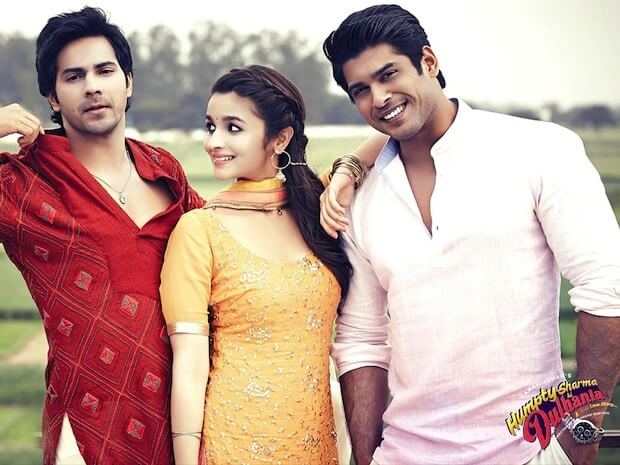
Thank god for Varun Dhawan and Alia Bhatt. The soul shivers in fear wondering which disaster zone this bland incarnation of Dilwale Dulhaniya Le Jayenge (DDLJ) would have headed to if these two actors hadn’t steered the rudderless revisionist saga to some semblance of sensitivity.

As you wait for the young lovers in Ambala to sort out the mess in the matters of the heart, you wonder how many rip-offs, homages, tributes and remakes of Aditya Chopra’s DDLJ we would have to bear before this… classic is put to rest.

It may be sacrilegious to say this, but DDLJ, in my humble opinion, is hardly the stuff classics are made of. It had its moments of glory…Oh yes! But a repeatedly recycled classic? Nah! That’s going too far.

Humpty Sharma Ki Dulhania (HSKD) takes the Raj and Simran characters, shakes and stirs them, and turns them on their heads. Varun Dhawan and Alia Bhatt, two of Bollywood’s most talented contemporary actors, don’t really try to fill Shah Rukh Khan and Kajol’s shoes. They have better things to do.

He, Humpty (yes, that’s what our hero is called) can’t keep it in his pants… his money, that is! He spends it buying a lehenga for the wedding of the girl of his dreams. She uses the money to buy him a car of his dreams.

You really wish the director had left these two annoying characters to their dreams and devices. These are the kind of 20-something over-reachers who need to be told that “to get a life” doesn’t mean to beg, borrow and steal material happiness.

When we first meet Humpty, he emerges from a loo behind a sheepish-looking girl. In her introduction scene, Kavya (Alia) is shown trying to bully her father into buying her a Manish Malhotra lehenga for her wedding to the ‘perfect’ NRI.

The ‘perfect’ NRI is played by television actor Siddharth Shukla, so exceptionally wooden that he seems to be carved out of a tree. And there he should have remained.

No one in HSKD seems to feel any real emotions. It is all a pantomime of being cool.

There are characters in Humpty’s saga equivalent to the ones in DLLJ, all subverted to the point of appearing farcically over-blown. Except Ashutosh Rana, who does a dignified take on Amrish Puri from the original, no one else gets it right.

Clearly, the debutant director is here doing a revisionist version of DDLJ, much in the same way that Sanjay Leela Bhansali did with Romeo and Juliet in Goliyon Ki Raasleela Ram-Leela. With one difference. Director Shashank Khaitan lacks the vision to take the earlier characters to another level from where they originally stood.

Standing credibly firm in this earthquake of dismantled storytelling are Varun Dhawan and Alia Bhatt. Endearing in their affection for DDLJ, they are like two well-armed soldiers waiting for the battle to begin. Alas, the ammunition provided to them is like water pistols masquerading as AK-47s.

More miniature and spoofy versions of Bonnie and Clyde than Raj and Simran from DDLJ, the couple in HSKD is eminently uninspiring and hopelessly self-seeking. At the mid-point, when the girl jumps in bed with the stranger who buys her the lehenga from her dreams, you know once and for all that this pair is beyond repair.

Simran would have never done that.

Subhash K. Jha