Home Blog Page 934

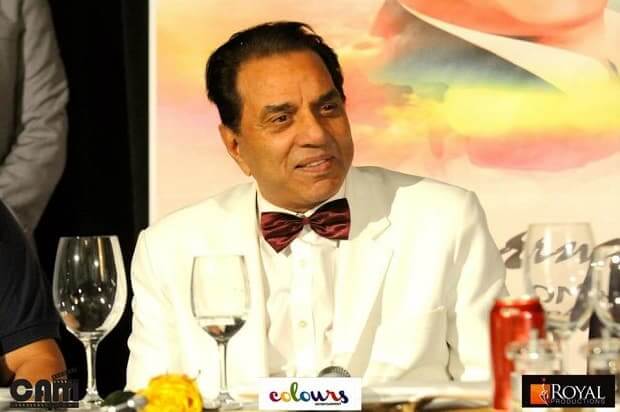
He’s still got it! Dharmendra comes to Melbourne

0
Reading Time: 3 minutes


Famous for action as much as romance, multiple award-winning actor Dharmendra was in Melbourne recently to promote his upcoming Punjabi film Double Di Trouble.

The promise of an evening with the yesteryear megastar was enough to send away the winter chill for the hundreds of fans who gathered at Thornbury Theatre to meet the silver screen hero.

Punjabi film Director Smeep Kang and actress Kulraj Randhawa also accompanied him to the gala meet and greet dinner, organised by Royal Productions and Colours Events Australia.

The actor, who is considered to be one of the few living legends of the Indian film industry, arrived amidst great fanfare with a red carpet welcome, flowers strewn on his path and nearly 350 guests waiting for him.

In a marked contrast to his starry presence, his wife Prakash Kaur, who also attended the dinner, maintained a low profile throughout the evening. Dharmendra married her when he was 19 and together they have two sons, Sunny Deol and Bobby Deol, and two daughters, Ajeeta and Vijeeta Deol. From his second marriage to renowned actress Hema Malini he has two daughters, Esha and Ahana Deol.

At 79, Dharmendra has lost none of his easy charm and dashing good looks. He had radiating presence on stage in a dapper white suit. He answered questions posed to him with effortless candour, and easily won the audience over with his admirable sense of humour.

Admitting to be a true “Punjabi by nature,” Dharmendra claimed that he would continue to work till he dies.

“Since my childhood days in the village of Sahnewal near Ludhiana to my journey to stardom in Mumbai, films have always been an integral part of my world and I shall go on working till I can,” he said with a smile that can still light up a room.

In a career spanning over 50 years, Dharmendra has acted in many films but it was his role in the cult classic Sholay that won him the most popularity and the heart of his dream girl Hema Malini. Other notable films include Phool aur Pathar, Bandini, Anupama, Chupke Chupke, Yadon Ki Baarat, and Resham Ki Dori.

His on-screen friendship with Amitabh Bachchan resulted in a successful pairing for nearly 19 more films together. Asked about his real life friendship with Amitabh Bachchan, he replied that while they are good friends and they hold each other in great esteem they are different mainly because Amitabh never drinks and never talks too much. “I have tried for years to make him open up but I guess that is not going to happen in my lifetime,” Dharmendra said with a degree of candour.

He admitted frankly that he did not think much of the sequel to his film Yamla Pagla Deewana and had no intentions of completing a trilogy at this stage. As for rejoining politics again he said tongue-in-cheek, “Let me become a good actor first then I will become a good politician”. (Dharmendra was elected as a member of the Lok Sabha in India from Bikaner Constituency in Rajasthan in 2004).

Dharmendra with actress Kulraj Randhawa in Melbourne

Dharmendra said he was not averse to his grandsons joining the industry that has given his family so much. “They are being groomed and still at a learning stage and they will make their debut when they are ready,” he said when asked if his grandsons will also be seen on screen in the near future.

While bulk of the questions were directed to Dharmendra, Smeep Kang and Kulraj Randhawa also spoke to the audience in Melbourne – mainly promoting their upcoming film Double Di Trouble slated for release on Friday, 29 August. The film also stars Gippy Grewal, Minissha Lamba, Poonam Dhillon and Gurpreet Ghuggi.

READ ALSO: From the archives: Big B in Brisbane
Unique Undrallu

0
Reading Time: 2 minutes

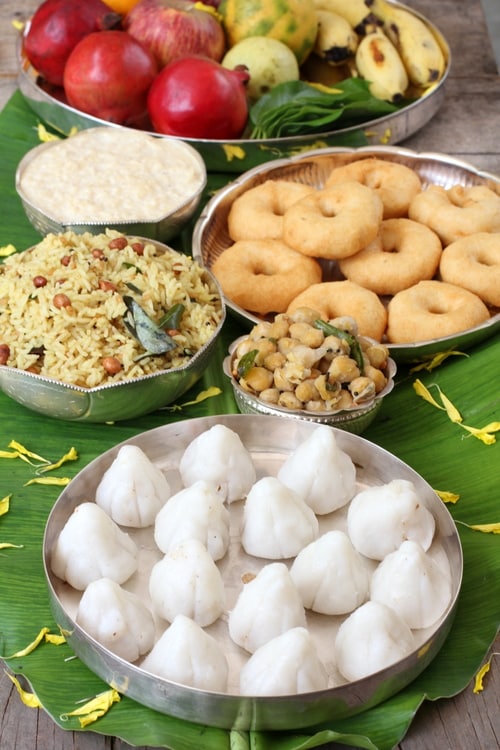
As we enter the festival of Ganesh Chaturthi, we provide an easy and delicious recipe for undrallu to eat at your celebrations

This is a major festival in south Indian states like Andhra, Karnataka, Tamilnadu and also in Maharashtra.

Undrallu recipe
(Serves 2-3)

Ingredients
1/2 cup Rice rava* – recipe given below
1 1/2 cups Water
1 tbsp Chana dal
1 tsp Ghee
1/4 tsp Salt

Method

  • Soak chana dal in water for 30mins. Drain and keep aside.
  • Heat ghee in a thick shallow vessel and add drained chana dal and fry for a minute
  • Add measured water(1 1/2 cups) and let it come to a boil
  • Add salt and rice rava and mix well until no lumps are formed.Cover it and cook on low flame for 4-5 mins until the rava is cooked and the mixture is dry with out any water. Switch off the flame.
  • Leave it aside to cool down a bit for 10 mins.
  • Dip your hands in water and make lemon sized balls out of it and place them in a greased steamer.
  • Arrange them in a steamer leaving some gap in between them as they will bulge after steaming.Steam them for 12-15 mins.
  • Serve them hot with Coconut chutney or any payasam like Chana dal payasam or Moong dal payasam.


*To prepare rice rava: Clean and Soak the rice for some time and drain it completely and spread over a cloth so that it will drain off excess water and leave it for an hour. Grind it to a coarse rava in whipper mode and then sieve it. Use the rava which is in sieve and the flour that it is sieved can be used for dosas or regular rice flour.

  • Rice rava can also be prepared directly by grinding it in the mixer in whipper mode and sieve it.

Recipe from http://www.chefandherkitchen.com/2012/09/undrallu-recipe-vinayaka-chavithi.html


Writing or typing?

0
Reading Time: 4 minutes


The use of computers, laptops and tablet devices is creating a remarkable new set of conundrums for teachers, students and parents. In the ‘digital revolution’ the question is, what do we let go of, and what do we retain, in order to ensure there is continuity in learning?

In education, change is important and can lead to adaptive behaviours, but sometimes change does not imply progress. The key issue is whether or not change improves how we teach, how we understand student learning and how robust students become in their capacity to engage, understand, critique, evaluate and solve problems.

Technology raises significant opportunities and also significant challenges. For example, technology helps in the presentation of ideas and improves access to information. Technology also allows people to feel connected when distant, to reach across natural borders and to find new ways of viewing issues.

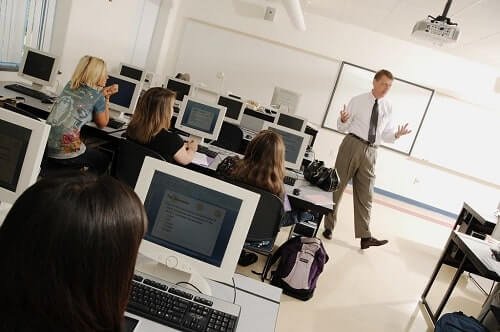
Technology in classroom

When using technology in the classroom, there has been a change in how teachers and students engage with content, ideas, challenges and curricula. Teachers are expected to use technology in classrooms to create and deliver unique teaching and learning experiences. It is an expectation that they will also encourage the appropriate use of technology such that students can navigate their way through distraction. This requires that students use technology regularly throughout lessons.

In schools, technology in classrooms are often used to create detailed presentations of syllabus content, with occasional links to YouTube videos or relevant websites. Students are either expected to type the notes they see projected – or to hand write the content in a notebook. Generally though, the skill of handwriting is on the decline. After all, the slides can be sent to all students by email, or the content can be downloaded and converted to word documents from the school intranet.

Teachers also encourage students to provide responses that are word processed and delivered in ‘soft copy’, or printed in hard copy, rather than asking for handwritten work. Word processing helps in presentation and also in marking, but the use of word processing can also mask spelling issues as autocorrect options can be applied.

And so arise interesting issues about handwriting. In a period of change, how can we manage the retention of traditional skills and the need for literacy whilst embracing new skills that can undermine students’ abilities?

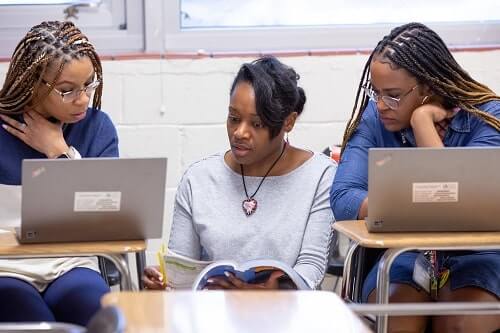
Teacher and student using technology

Assessments are the most overt issue connected to the skill of handwriting particularly, and writing more generally. Currently in schools, while the use of technology in classrooms is becoming more prominent, the overwhelming proportion of examination-based assessment involves writing by hand. Exams are always time limited and therefore require students to hand write answers in a fast and efficient manner. Exams themselves also tend to create anxiety or nervousness. For students, hand writing is often performed while they are tense and under time pressure.

Exams are intended to test a cohort of students. There are questions that require higher order thinking skills that can only be demonstrated by student responses that are cohesive, detailed and demonstrate a capacity to think critically. In order to present higher order responses, there needs to be structured, well-synthesised answers.

Students report that, under time pressure, it is hard to write exam responses without their hands cramping or feeling sore. Moreover, since most student experiences of technology allow for editing and ready change, students find that when they hand write they tend to cross out quite a bit of written text, use arrows to indicate the order in which text should be read and feel stuck if they find they have started an answer and would then like to re-sequence their response.

It is be clear that attention needs to be brought to the issue of handwriting with respect to examinations and written assessments

Student handwriting in exam

As a skill, handwriting should not be lost. There are numerous reasons for this. Handwriting provides the capacity for students to pause, reflect and consider their words prior to marking a page. Hand writing a response that needs to develop an argument, or present a case, requires a level of planning and structure as well as attention to order.

When drafting hand written responses, students tend to find that their thinking is in advance of their capacity to write. This is extremely important to note, as hand writing can be seen as laborious when thinking runs ahead of the capacity to record ideas.

It should therefore be clear that handwriting affords opportunities for learning that may be lost when using technology. Well ordered responses to problems require forethought, planning and ‘big picture’ thinking. In this regard, handwritten responses can be daunting and students may avoid them.

It may be time for educators to recast assessments such that there is an integration of both worlds that students occupy – the digital and the traditional. This would require assessment that allows for the use of technology as well as a capacity to provide written responses. In this way, different skills and abilities could be assessed.

A hybrid model of examination-based assessment does require schools and educational authorities to ask what the point of technology is and how it should be used in order to create thinking, engaged, adaptive students who live in a hybrid world.


READ MORE: Hybrid education


At home in a new land

0
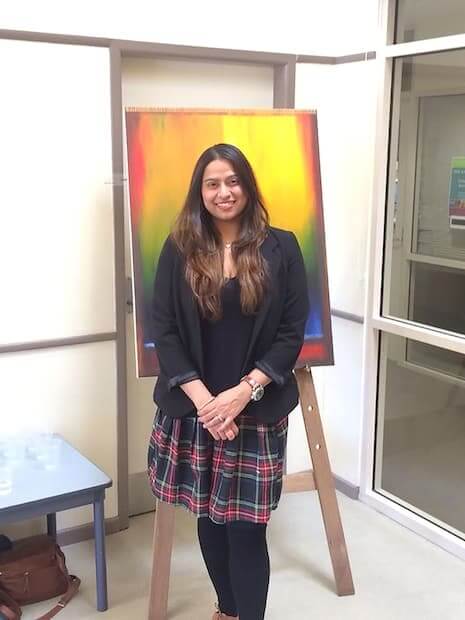
The artist with her works
Reading Time: 3 minutes

Gauri Torgalkar Nadkarni’s art imparts an Indian ethos onto the Australian landscape

The artist with her works

That the Australian landscape is diverse and hauntingly beautiful is well known. And that the inhabitants of the land are often defined by the landscape is an inescapable fact. But when a known landscape – with its unique but familiar shapes, colours and textures – is portrayed through the prism of a different human experience, the ordinary transcends the familiar to become strange and new.

Gauri Torgalkar Nadkarni, a Sydney artist of distinction, offers us her latest work, a cohesive collection of pieces with consistent themes, yet each individual in its impression.

Strange Familiar takes the Australian landscape of public parks and waterways and deifies them to create a spiritual reawakening in the mind of the observer. Much like the original inhabitants of the land, who saw the sacredness of the colours and the purity of places in the Australian landscape, the artist has successfully taken the every day, and through the perspective of rites and rituals of the Indian experience, given new meaning to the places we inhabit.

Presented at the North Sydney Centre recently, Torgalkar Nadkarni’s body of work for Strange Familiar, is confident, compelling and evocative. The colours – intimate and recognisable to Indian eyes – take on new hues and shades when seen within the context of this land.

Prayer Flowers

A familiar Australian landscape – a creek, a suburban park – is depicted through the burnt heat haze of summer, rendering the commonplace scene with an evanescent sheen. In layering these landscapes in patterned gold, she at once evokes the signs of her Indian homeland as well as acknowledges the dot painting techniques of the indigenous artists of her new home.

Whether it’s the striking use of saffron and vermillion to depict the Australian sunrise in Surya Namaskar, the purposeful use of shy rose to show the haze of an Australian summer, or the purity of white to demonstrate garlands of chameli, colours become more than just shades – they become testament to the Indian life, lived spiritually.

A gentle and silent eucalypt, with striking white threads tied around it, depicting the rite of wishing for a long life for a husband, or the diyas on the lily pond, are redolent Indian themes placed within an Australian context.

Jacaranda in Spring

Gold, tantalisingly tied in to the landscape in the shape of willow leaves, is used boldly yet creatively, in the same way that it is used for ornamentation in the lives of Indians. Consequently, through the viewing of the space with this lens in place, the land, once again becomes sacred and divine – yet in a completely an unexpected way.

Torgalkar Nadkarni’s latest work is beautiful and compelling. Each piece makes you want to linger and contemplate the impact of our individual existence on the land.

And when you feel the familiar tug of the comforting ritual in a foreign land, you quickly realise that we have always been home, and this is now our home.

And the strange has now become familiar.

Growing stronger hair

0
Reading Time: 4 minutes

Tips and tricks for how to make and keep your locks luscious

We all want healthy hair that doesn’t fall out, split at the ends or go grey before its time. But the stress of everyday life, poor diet and harsh chemicals in the shampoos we use, make our hair dull and lifeless. The same conditions can also lead to hair loss and dandruff. So how do you grow hair that is strong at the roots, lustrous, smooth to the touch and clean, regardless of its length?

After talking to people who have shiny, healthy hair, I have rounded up some tips that have worked for these ladies – not all of whom have access to expensive products and intense spa treatments.


To have long and strong hair, eat well

This is the first rule to having great hair for life. What goes inside you is what shows outside you. The foods you should be eating for healthy and strong hair include fish and eggs for the non-vegetarians, or yellow peppers, spinach and sweet potatoes if you prefer a vegetarian diet.

Fish like salmon, and eggs, are rich in omega 3 fatty acids and egg yolk contains biotin – ingredients that promote hair growth. A daily dose of almonds will also help as they also contain biotin which helps hair grow faster.

Yellow peppers are a rich source of Vitamin C which is an antioxidant with the capacity to protect the hair shaft. This can also prevent breakage, which leads to healthier hair.
The iron in spinach, needless to say, increases the iron in the blood, which in turn makes hair stronger. And sweet potatoes have beta carotene which again promotes hair growth.

On the whole, it pays to include almonds, walnuts, carrots, eggs and fish in your diet on a regular basis. Try not to cook the fish or vegetables too much or they will lose their essential nutrients.


Hair hygiene

There is a myth that if you wash your hair too often you can strip it of its natural oils, making it dry. That is true only of harsh shampoos that contain SLS – sodium laryl sulphates. A salon specialist once advised me that if a product has sodium laureth it means it is a milder shampoo and won’t cause as much harm. I have switched shampoos to one that meets this criterion and my hair doesn’t feel as dry.

Actress Dimple Kapadia has gone on record saying that changing shampoos helps maintain healthy hair and she rotates the products she uses thereby using multiple brands. Apparently this takes care of residue left in the hair. And she should know, she has gorgeous hair that she has been colouring since her youth.

Having said that, don’t go overboard with the number of hair care products you use. You don’t want your hair to get coated with so many products that it loses its bounce. Use a hair oil treatment followed by a shampoo and conditioner and if you have dry or frizzy hair, a leave-in serum should be enough. Go easy on the styling mousses and gels. Avoid too many blow drying treatments or those horrid curling and straightening irons. The heat does untold damage to hair unless you are using a heat protecting serum.


Keep it trimmed

I am trying to grow my hair so I avoid getting it trimmed too often. But the last time I went to the salon, the hairdresser told me that a trim every six weeks is a must. He explained that the longer I delayed it, the more he would need to trim at the ends to keep the shape. Instead, a shorter trim, snipping off a tiny bit regularly, helps hair grow faster.

If you already have long hair then you would have experienced split ends at some time or the other. Just having a centimetre chopped off regularly can keep the split ends away and retains your hair’s strength. Look for a hairdresser who is experienced in cutting long hair and doesn’t take large bits off every time he or she puts the scissors to your tresses.


Sometimes, colour helps

I don’t know if it is the case with everyone who has premature grey hair, but the longer I delay colouring my hair, the more it falls out. Though colour makes my hair look good, hair colour can also dry out your hair like it does mine. If you go swimming, you can be sure the chlorine will cause further damage.

It makes sense to use a moisturising shampoo alternated with a colour protecting one – this way your hair stays healthy and the colour doesn’t get stripped out with every wash. If you have access to it, a hydrating mask goes a long way to prevent damage. Ask your hairdresser to recommend one. If nothing else, a hair pack of one egg mixed with half a cup of olive oil and 2 tbsp yoghurt applied to the scalp and left on for an hour should give your hair the extra nourishment it needs.


I AM INDIAN – a video from comedian Rajiv Satyal

0
Reading Time: < 1 minute

A message from Bill Shorten, Leader Of The Opposition

0
Reading Time: < 1 minute

Sixty-seven years ago, the saffron, white and green of the Indian tricolour was hoisted above the gates of the Red Fort to mark the historic moment when India kept its ‘tryst with destiny’.

Today, on Indian Independence Day, millions of people will be joined in celebrating all that India has achieved.

There is so much for modern, independent India to be proud of.

In 1947, Prime Minister Nehru spoke of a nation waking to ‘light and freedom’ while the world slept.

In 2014 India is a beacon of democracy, a nation turning economic growth into social progress and freeing its citizens from poverty, while the world watches in admiration.

Today all Australians rejoice in India’s progress, and we give thanks for the contribution that the Indian people have made to our society, to our culture, to our cuisine and to our country.

I wish you all the very best for a joyous celebration.


NSW Opposition Leader John Robertson Sends Best Wishes To Indian Community On Independence Day

0
Reading Time: 2 minutes

NSW Labor Leader John Robertson and Shadow Minister for Citizenship and Communities Guy Zangari have today conveyed their best wishes to the Indian community of NSW on Indian Independence Day


“Today is a moment of pride for the people of India and the entire Indian community of NSW,” Mr Robertson said.

“I join with all those celebrating the anniversary of Indian independence – the moment when a proud and accomplished people achieved their aspirations for statehood.

The bond between Australia and India is incredibly strong.

We are both dynamic, growing economies in the Asian region – glued together by shared values, parliamentary democracy and a steady flow of migration, tourism and trade.

The Indian community continues to show outstanding leadership across so many aspects of our State’s life.

The Labor Party of NSW considers the Indian community a good friend.

We will always stand with you against bigotry and discrimination – and in support of a society where all people are valued, respected and given the opportunity to reach their potential.

Shadow Minister for Citizenship and Communities Guy Zangari added: “I wish the Indian community the very best for Independence Day. It is a significant day for Indians and will be celebrated not just in India but by the vibrant diaspora of Indians around the world.

The Indian community makes a significant contribution to this country. They deserve to have this day to recognise their link between Australia and home.”


A message from Michelle Rowland MP, Shadow Minister For Citizenship and Multiculturalism

0
Reading Time: < 1 minute

It is my great pleasure to extend my best wishes to those celebrating India’s 68th Independence Day.

August 15 commemorates India’s non-violent struggle for independence and reaffirms the strong bond between our two nations.

Australia and India are inexorably linked by language, democratic heritage, and a commitment to peace in our region.

We have been comrades in times of war and friends in peace. Our relationship has seen a large Indian community migrate and prosper within our shores. Australia proudly boasts a strong Indian community, now exceeding over 450,000 people.

Indian-Australians have enriched our political, economic and cultural life. Their commitment and application has been layered and woven into the Australian way of life. Indian Independence Day is an opportunity to recognise and appreciate the valuable contribution the Indian community has made to the mosaic that is Australia’s multicultural society.

My warmest greetings for a joyous celebration of Indian Independence Day.

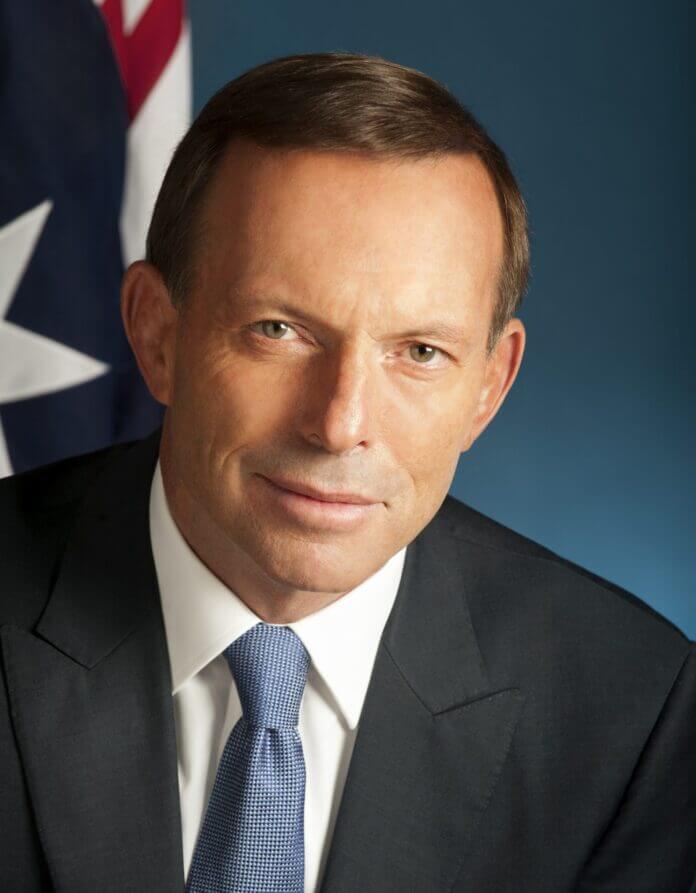
A message from the Australian Prime Minister Tony Abbott

0
Reading Time: < 1 minute

I send best wishes to everyone celebrating Indian Independence Day.

As the world’s largest democracy, this is an occasion to honour the contribution of India to the world.

On the eve of independence in 1947, Jawaharlal Nehru said that “India will awake to life and freedom” and would “step from the old to the new”. In the subsequent decades, these words have certainly come to pass.
India is growing from strength to strength.

No one should underestimate India now; nor its potential to be a global superpower in this century.

Australia and India share close people-to-people links.

There are around 450,000 Australians with Indian ancestry and I pay tribute to the significant contribution they make to our nation through their dedication, hard work and willingness to serve the community.

Trade continues to grow and two-way trade now exceeds $15 billion a year. Australia and India have had a long and strong partnership particularly in resources and education.

Later this year, I look forward to welcoming Prime Minister Modi to the G20 Leaders Summit in Brisbane in November. He will be the first Indian Prime Minister to visit Australia since 1986.

I wish the Indian community a happy Independence Day.