Home Blog Page 929

Trials and tribulations

0
Reading Time: 2 minutes

As many prepare for their final HSC exams, one student is sad to let go of some of the perks

For all the year twelve students reading this, now that trials are over, it’s time to revise for the HSC. That means countless past papers, revising notes and many late nights spent writing essays. Although I have a lot to do and stress about, and I can’t believe I’m saying this, I’m actually sad that my HSC year is coming to an end. Actually, I think we have to take a moment to be thankful for the HSC. It’s true, over the course of this year, the HSC has given us –

  • A free pass from all chores or housework of any kind
  • An unquestionable excuse to get out of any relative’s party
  • An excuse to prevent any annoying relatives coming to our house (Particularly those with young children who barge into my room and mess everything up)
  • An excuse to leave any irritating guests in the living room so I can go watch Youtube in peace in my bedroom

Ok, I admit it, I might have a problem with my family; I’ve had my room messed up one too many times.

But there’s more, the HSC has given me –

  • Countless trips to KFC and Maccas at a moment’s notice
  • A doting mom who is always understanding and willing to clean my room

Hey, regardless of who actually keeps my room clean, I like it neat ok, it’s the principle!

It has also given me –

  • An excuse to waste, I mean use, thousands of dollars of my parents hard earned money on tutoring and textbooks I will never look at again
  • An excuse to eat badly, sleep badly and not do any exercise at all (besides my desperate walks between the cupboard, fridge, cupboard, fridge)
  • An excuse to not learn how to drive, get a job or contribute in any meaningful way to society
  • A high speed internet connection, which I always use for, let’s face it, Youtube
  • An overseas trip to India at the end of the year
  • Most importantly, an excuse to not give my mum back massages once every two days

While there will be relief when the HSC is finally over for me at the end of October, it’s actually quite a bittersweet moment, I can no longer bludge off my parent’s money, and I have to actually go outside and talk to people. I don’t know about you, but I wouldn’t mind a couple extra months of school. I guess the only problem I have now is finding a discount wood chipper to rent. Hey, I’m never going to read those text books again, I might as well assist in the recycling process!

I wish you all the best for your HSC and I hope you enjoy the final weeks of school – they’ll be over before you know it.


The taste of Australia

0
Reading Time: 4 minutes

Exploring the unique flavours of Aussie cuisine


Traditionally, Australian food was established from either indigenous or colonial roots. Over the years migrants have all added their own flavours creating a fusion fare. As such, Australia has now developed some iconic foods embodying a distinctly Australian taste.

If you haven’t tried any of the foods below, in the true sense of the Aussie spirit, why not give them a go?


Lamingtons

Lamingtons are often called the National Cake of Australia. This square-shaped sponge cake is coated in a layer of chocolate icing and desiccated coconut, served with a layer of strawberry jam or cream in between two halves. National Lamington Day in Australia was last celebrated on 21 July 2006.


Pavlova

Both Australia and New Zealand claim to have created this dessert, produced in honour of Russian ballerina Anna Pavlova, who toured Australia in the 1920s. Pavlova is a popular meringue-based dessert with a crisp crust and a soft, light inside. It’s often decorated with whipped cream and fresh fruit such as strawberries and Kiwi fruit.


ANZAC biscuits

These are associated with the Australia and New Zealand Army Corps (ANZAC) that was established during World War I. Soldiers who were away from home received these biscuits from their wives and families. Made using flour, sugar, desiccated coconut, rolled oats, butter, golden syrup, boiling water, and baking soda, these biscuits did not get spoiled en route and were able to keep for a longer time.


Damper

Also called soda bread, this iconic Australian food was the staple of road workers and travellers who needed to cover long distances over long periods of time with only basic provisions like flour and sugar. This is a traditional bread from Australia made without using yeast. A perfect camping food item, the traditional way of baking damper is to use the coals of a campfire. The basic ingredients used for this soda bread are flour, water, and a pinch of salt, before baking.


Vegemite

Vegemite is a dark brown savory spread often used on toast or crackers. It was invented in 1922 by Dr Cyril Callisterin in Melbourne, Victoria. It is basically made from a byproduct of beer brewing, yeast extract.It has a smooth but sticky texture and is slightly bitter to taste and therefore might be too strong for some people, but it grows on you. Vegemite on toast is a popular Australian breakfast.

Hamburger with ‘the lot’

Mostly hamburgers are associated with Americans, but Aussies have their own way of preparing a hamburger too. It is not your traditional hamburger, but is actually ‘a lot’, as comes with all the trimmings including fried eggs, bacon,cheese, beetroot, pineapple, tomato, lettuce, onions and tomato sauce. It is quite popular in pubs and takeaway shops, especially after a day at the beach, and is quite a satisfying meal.


Meat Pie

Meat pies are generally enjoyed all over the world, but Australians especially love their meat pies. There is an annual Great Aussie Pie contest celebrated to attract various pie makers. The prize is given to those pie makers who meet the required standards of quality. An Australian meat pie contains minced meat with gravy. It can also be served with onions, mushroom, peas, or cheese. It is a great takeaway snack as well as a must on every sporting event menu.


Pie Floater

The pie floater is unique to areas of South Australia. A pie floater is actually a meat pie that is inverted and placed in a thick green pea soup. It is then covered with tomato sauce along with salt and pepper to taste. Generally, pie floaters are available late in the evening from caravans parked along the streets. This is mainly seen in the suburbs of Adelaide. The National Trust of Australia gave the pie floater the status of a South Australian Heritage icon in the year 2003.


SAO Biscuits

Founded as a charity biscuit, packages used to be handed out by Salvation Army Officers, hence the name SAO. They are light-textured square biscuits made by rolling dough into thin sheets, then cutting it into squares. SAOs are often eaten as a thin crispy sandwich with toppings such as butter, vegemite, or cheese.

Chiko Roll

This Australian food icon was inspired by Chinese spring rolls and invented by Frank McEnroe. The deep-fried snack contains beef, celery, cabbage, barley, carrot, onion, green beans and spices rolled up in a tube of flour, egg, and dough. Chiko rolls are generally eaten on the go and served at local fish and chip shops.


Cherry Ripe

Australian confectioner Mac Robertson’s introduced Cherry Ripe to the Australian market in 1924. In fact, Cherry Ripe is the oldest chocolate bar in Australia.The Cherry Ripe consists of coconut and cherries smothered in Cadbury’s Old Gold dark chocolate.


Fish & Chips

After a sunny afternoon by the beach, many Aussies love to eat fresh fish served with lemon, salt and pepper, wrapped, to takeaway, in newspaper. Battered and fried with chips, or pan fried with oil and served with mashed potato and salad, this is a favourite food for many Australians.


Single Shmingle

0
Reading Time: 11 minutes

It’s a tough world out there in the desi dating game

Recently, I searched on the Internet for ‘single happy’. The search engine returned over a million hits in 0.29 seconds. I am hesitant to add to the impressive array of material already out there, but this article is not only meant to be informative, but also reassuring, especially from a Bengali/Indian point of view. Everything I have read so far on this subject seems either very Bridget Jones or very Margaret Atwood, when I am living proof that you can be either, or both, or neither, on any given day.

So for the one or two people who haven’t heard my mother’s huge sigh of relief reverberating around the globe, I got married on the 22nd of March 2014. After 10 active years of dismissing proposals, arguing with my mother, looking for love, being despondent, being angry, being lost and finally being resigned to being single I gave up.

I gave up thinking that my single status is something that I could change.

I gave up thinking that I was in charge of my destiny and I truly left it to God.

This is easier said than done. I know because for the past two or three years I had been SAYING that I had ‘given up’ and that ‘God knew best’, but deep down I didn’t truly believe it. Deep down I was still scrambling to control my relationships and, whether or not anyone else saw, I was still desperately hoping that I could do something to change the course of my fate.

The start of the beginning

The moment you are born a Bengali/desi child, your parents begin to worry. They worry as you grow up, they worry as you start school, they worry when you get to university but none of that compares to the worry that begins when the first person casually mentions to them, ’She’s all grown up now! She’ll be getting married soon’. There goes a peaceful night’s sleep for the parents of a Bengali girl. From now until the day she says ‘I accept’, every waking moment is haunted by:

What will happen to my daughter? Who will marry her? Is she educated enough? Pretty enough? Good enough? Talented enough? Religious enough?

It isn’t long before this worry, and sometimes frustration, finds its way, displaced or directly, to the child in question. And that my dears is when a girl TRULY becomes a woman. It’s not when your body changes, it’s not when you begin to notice or like boys, but it’s when you start realising that you parents cannot sleep because they are so worried about you. And that brings with it… Guilt. LOTS of guilt.

The beginning

Two things happen at this point.

1.       The very select lucky few women on this planet find their Prince Charming (or their Prince Charming finds them) and they can happily dispel their parents’ anxiety and work towards their happily ever after. If that’s you, pat yourself on the back. Good job. Now go away. Because for the rest of us your life is just as dreamlike and just as elusive as Jasmine and Aladdin or Elizabeth and Mr Darcy. We don’t hate you. We ARE genuinely happy for you. But seriously… don’t tell us your life is hard ever again because what we go through, that you are spared, is much harder.

2.       The rest of us are primped, primed and positioned to within an inch of our lives as we are dragged to dawats. Any remotely nice picture of us is tacked to a biodata, which is a resume for marriage purposes, listing your life history, hobbies that show what a good girl you are (gardening and knitting anyone?), your family tree and their respective occupations to show you come from good lineage. And the worst part of all of this is that every single family friend is now eligible to ask you, ‘When are you getting married?’ People will delight in projecting your life for the next five years, including who you will marry and where you will live. More often than not these ruminations from an overactive imagination become firm fast rumours doing a marathon around your respective social circle, so the next time you are out you have to start every sentence with, ‘No I am not getting married. Where did you hear that?’

If this is you, in the latter situation, please sit down with some chocolate and give yourself a hug. You will need it. This is only the beginning of a process which will define your womanhood. It will thrust you into the reality of social circles, it will enlighten you, quite harshly at times, to who your real friends are, and it will teach you how to deal with unwanted attention, grief, guilt and depression. But know, through all your turbulent emotions, that your parents are doing this out of their love for you. A Desi parent has no other avenue of showing you how much they care. Trying to find you someone who will love you anywhere near as much as they do is their sole ambition in this elaborate and sometimes painful process. So strap yourself in, thicken your skin and buckle up for the ride. It gets harder before it gets easier.

The process

Typically by the time the first serious proposal that your parents consider comes around, you are around 18. Just beginning uni, just getting over that first high school crush, and there are too many firsts going on in life that you are still trying to figure out for you to deal with the idea of marriage and the notion of ‘forever’. But this first proposal will set the tone for the countless others you will deal with. Because it will be the precedent on which your parents and you interact on this subject.

Typically this conversation is mother-daughter domain, and it is a conversation so electrically charged it has very real potential to quickly disintegrate into a shouting match. Your mother will see this ‘boy’ to be a ‘great match’ and ‘exactly what we are looking for for you’. She will be astounded by the fact that you will say, ‘I am not ready’ and ‘I don’t even know him’ and you might get the ‘in my day’ story. My advice to you: Shut up.

Your mum or dad is not interested in what you have to say, so save your breath. They are here to advocate and advertise their IDEA of what they think is best for you. So just let them. This is important. Because it shows them that you respect them, understand them and value their opinion. In doing this you set the tone for future conversations so that when YOU want to be heard, respected and understood – they will do so (hopefully). With this first conversation out of the way, just keep quiet and wait. Because the first proposal will come and go and so will a fair few others before THAT ONE DUDE comes along and you need to be ready for this one.

That one dude

Every single person that has gone through the arranged marriage process has encountered what I call the ‘That one dude’ phenomena. He is that one person that makes you question every single argument you ever put to your parents. He is the one person that makes you want to give up because it’s just too hard to keep fighting. This may have nothing to do with the guy himself or the proposal, and everything to do with the time at which this phenomena occurs in your life.

Nevertheless ‘that one dude’ will come along. He is the ‘perfect’ potential on paper. He is tall (or so his bio-data says), fair and handsome (refer to the ‘best of 100’ picture that his mum sent with the bio data), and has a great job (doctor, lawyer, accountant, engineer). So you agree to meet him in person and the meeting might happen at a dawat, gathering or over coffee by yourselves or in a group.

It won’t take you long (30 seconds) before you realise you have ZERO chemistry with this guy and he is BORING you to death. I need to clarify here that this has NOTHING to do with the guy (if you are THAT guy reading this…you are REALLY nice. And sweet but just not the right fit). It’s just something is missing and you sense it right away. So you go home and when your mum asks you how it went you say ‘it was ok’ because it was. He wasn’t rude or smelly or stupid. He was a perfectly nice guy. And so the internal struggle begins. Because by now your about 23-25 and the pressure is really on. Your friends are getting married, you’re going to weddings every other weekend and there is always wedding talk going on in the house, and your parents have already gone through a cycle of potential hope, frustration and then despair. This is when you are at your most vulnerable.

It is when you open Facebook and the plethora of wedding pictures that affront you is assaulting. It is when you have conversations with your mum that sound like Simon Cowell judging a contestant: ‘You gained a fair bit of weight. You have crooked teeth. I really think this is the best you can do. I am saying this because I love you’.

It is when this whole process comes very close to breaking you. When you lie awake at night and think, is this really the best I can do? Maybe it is. Maybe those butterflies aren’t meant to flutter in my stomach after all, I mean he’s a nice guy, sure he bores me but he can provide for me. So what if we have nothing in common? He’s got a good job. So what if he has no interest in asking me about myself? He comes from a good family. So what if he never asks me for my opinion? Marrying him will make my parents happy. And all that guilt that’s been building up inside you throughout this process of tug of war with your parents will come to a head and you will be very, very tempted to give up. Don’t. I repeat. DO NOT GIVE IN.

You are so much more that you perceive yourself to be. You are worth SO much more than you think and you deserve so much more than you could possibly imagine. DO NOT SELL YOURSELF SHORT. If you want chocolate cake then hold out for chocolate cake dammit! No matter how good vanilla cake is… it will never be chocolate cake and you will never be satisfied. You might be able to fake it for a day, a week, a month, a year, but eventually your parents will see that you are not satisfied and they will not be happy. If you feel like giving in for your parents – it won’t work.

Listen to your parents when they talk to you about him. But be polite and firm in your refusal. Use that thick skin you built up earlier, and the guidelines of open conversation you established earlier, to maintain your position of thanks, but no thanks. I want chocolate cake and I will wait. For my Chocolate. Cake.

The emotions

This whole process can last from anywhere from a year to a decade. It can happen to a girl or a guy. It can happen to a Bengali or non-Bengali. It can happen whether you are rich or poor. And so there is no one way of handling your emotions except the one cardinal rule you must never forget: Love yourself. I know. As lame, corny and clichéd as it sounds this process, more than any other process in life (so far anyway), will make you feel like crap. So many times along the way family and friends intentionally or otherwise will make you feel unloved, unwanted, and undervalued. Passing comments from people you do not know will sting. Nights will be spent crying and sleep will evade you. Be strong. Be the one voice in your head that is consistently loving to deflect the barrage of negativity from others. Because you ARE amazing and you ARE gorgeous and you ARE worthy and very soon a person WILL come along that will see that and be worthy of you.

There is a reason that it doesn’t happen automatically. The process of choosing your life partner is hard BECAUSE it is so inextricably linked to the direction your forever will take. You need to get through a stage of angst and despair and pain and hurt to come out stronger and with more self-belief so you can choose with confidence your life partner and life path.

Find friends that love you and understand you for who you are and not who they want you to be. And laugh with them. Laugh the kind of laughter that will make you realise that it doesn’t matter if you are single and who knows it. What matters in life is having the right people around you to keep you on a path that takes you to your destination.

The Desi way

When I told a friend at work about the arranged marriage process through which I met my husband, I expected some sort of remark. What I didn’t expect was her tone of wistfulness. She actually wished that she had parents and an extended social network that could facilitate arranged meet-ups because ‘meeting a good man in town is impossible’. Through that conversation I realised that no matter how frustrating the network of ‘aunties’ can get, they actually provide an invaluable service of vetting men and women and forming connections that would be otherwise impossible. For her, the process to meet someone was at work, the gym, a party, a bar and go on at least three to five dates (think endless excruciating decisions on clothes, hair make up, venue, shoes, not to mention the expense!) before she knew even half of what was provided in a biodata.

So, as much as I made fun of the aunties in my spiel above, I am grateful for the vetting and ‘flow of information’ they provide. Just… can we stick to the facts please?

While the arranged marriage process definitely works, there are definitely a few improvements that can be made:

1.       Aunties, reduce the cattiness. You were all young once, you went through a similar phase. Have some compassion. Don’t kick a girl when she’s down. Don’t keep asking her when she’s going to get married. Trust me. When she does you will know. You are part of a network much stronger than Facebook.

2.       Parents, please be nicer. You are the people who love us the most in this world. Your every word is taken very seriously whether we show it or not. When you say things like we are not good enough even though you may not have meant it – it hurts. Be our support system instead of our critic.

3.       Everyone else, tone down the gossip. This process is hard enough as it is without having to contend with the endless ‘he said, she said’. If something is happening, let it happen. If someone wants to know what you think they will ask you. Otherwise. Just wait and watch.


What it all boils down to

Have faith not only in God, but in YOU who God created. Have faith in your ability. Yourself. Your belief. Your feelings. Have confidence to act on them.

Don’t compare yourself with the girl who married her high school sweetheart. Don’t see her as having more than you. Instead see what you can share with her. Develop the skill of sharing because marriage is about sharing parts of you to make a whole.

Don’t look for perfection. No one is perfect. Look for someone who is a good person. Someone who respects you. Someone who has ambitions and has a purpose in life.

This process doesn’t always end in marriage. Or even a happy marriage. Nothing is guaranteed. No one knows what is in store for us. But if you learn the lessons of patience, respect and love, it will put you in good stead to tackle any situation life throws at you – no matter what your marital status.

The eternal war within

0
Reading Time: 3 minutes

M.R. NARAYAN SWAMY reviews a new book that explores Sri Lanka’s continuing turmoil

Outright war may have ended in Sri Lanka but an unbroken arc of violence stretching from the conflict has enveloped the island nation.

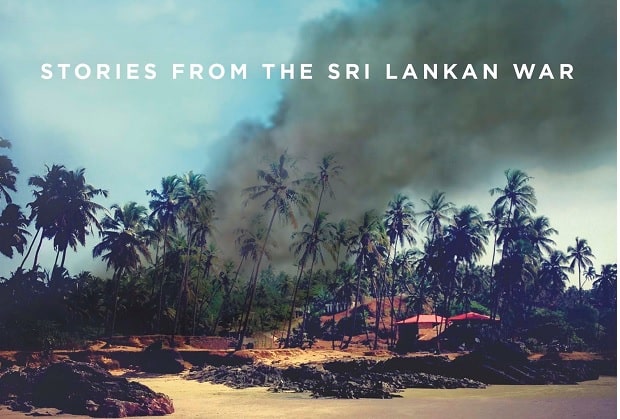
President Mahinda Rajapaksa and his brothers preside, “Over the peace in much the same way they had presided over the war, with arrogance and power,” says journalist and author of This Divided Island: Stories from the Sri Lankan War, Samanth Subramanian, in what is undoubtedly one of the finest books to come out in post-LTTE (Liberation Tigers of Tamil Eelam) Sri Lanka.

Samanth spent months in Sri Lanka after the Tamil Tigers were wiped out in 2009. He travelled extensively and met innumerable people affected one way or the other by the war, including Sinhalese, Tamils and Muslims. He encountered those who waged the war and those who were its victims.

“Anger still ripped through the island. The state still pummeled its society to submit before its powers… Sri Lanka had forgotten any other way to live”.

This is a powerful book. It is a strong indictment against those who preside over Sri Lanka today, seemingly willing to live in harmony with the Tamils but unable or unwilling to control the militarist Sinhalese nationalism that cares nothing for Tamils or even Muslims.

It doesn’t matter that these two communities were themselves the greatest victims of the LTTE’s multiple acts of terror. The fact that they are not Sinhalese is what matters. This does not mean that all Sinhalese are happy with the Rajapaksas; indeed, many Sinhalese journalists and rights activists have fled abroad or ‘disappeared’ after voicing dissent.

Samanth visited an army-built war museum in the former Tiger zone, the heart of Tamil country, that had signboards only in English and Sinhalese!

“Even as the government gloried in winning a war that brought Tamils back into its fold, it held them at arm’s length… How could any Tamil – even a Tamil who believed fully in the notion of a whole Sri Lanka – not chafe at being doubly excluded from this museum, first by physical barriers and then by the barriers of language?”

In the new Sri Lanka, says Samanth, demolition is a vital tool of nation building. Everything not to the liking of the victorious Sinhalese is done away with including constitutional reforms, LTTE cemeteries, its leader V. Prabhakaran’s family home in Jaffna, a Hindu mutt attached to a Murugan temple in Batticaloa, even graves of Sufi saints who preached peace.


At the same time, everything is being re-engineered to fit the new mindset.

“The image of the president; road signs and road shrines; the past itself. The very landscape of the country was being altered, as if Sri Lanka could be transformed into its intended future”.

Samanth speaks about new Buddhist stupas coming up in war-shattered towns: “Their splendid milky finish in sore contrast to the ruin around them”.

Some Buddha statues sit just outside the walls of sprawling army camps in Sri Lanka’s north and east, the former war theatre making “it difficult to tell who was watching over whom”.

Like most Sri Lanka watchers, Samanth has no sympathy for the now vanquished Tigers. As he weaves in and weaves out of the LTTE story along the gripping narrative, the author is clear that the same Tamils who once believed in the Tigers later developed fear and revulsion for the rebels.

“The history of the Tigers’ struggle for Eelam is less a succession of political manoeuvres than a parade of slaughter”.

He documents the cruelty Prabhakaran and his men heaped on their own community: the way they abducted young Tamil boys and girls without mercy to fight a war they waged, how Tiger leaders chose to surrender to security forces after making others bite the cyanide capsule, and how Tamils were killed simply because they did not agree wholly with the LTTE.

The book is a cold-blooded surgery of a Sri Lanka that was expected to reconcile with itself after a quarter century of ethnic strife, but has not.

“Sri Lanka was a country pretending that it had been suddenly scrubbed clean of violence. But it wasn’t, of course. By some fundamental law governing the conservation of violence, it was now erupting outside the battlefield, in strange and unpredictable ways”.

Anyone interested in Sri Lanka, its past, present and future, must read this book.


A museum of our own

0
Reading Time: 4 minutes

A Melbourne based Indian doctor and art collector donates his collection to a community-run museum

On the eve of India’s 68th Independence Day, Melbourne’s Museum India threw open its doors.

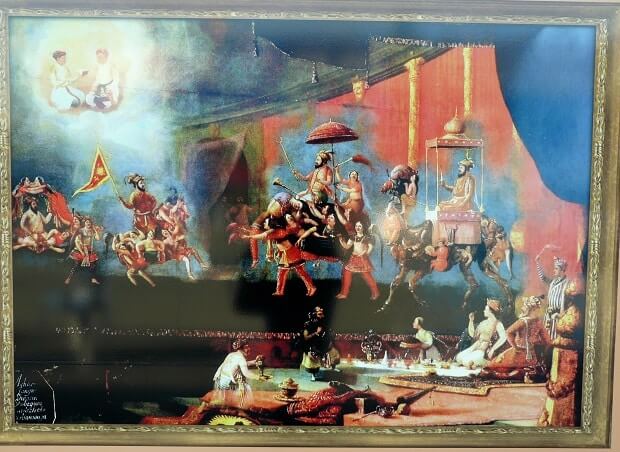
Proudly displayed inside are a collection of artworks from India including photographs, paintings, sculptures, engravings, lithographs, chromolithographs, coins and stamps dating as far back as 400 BC. This includes a stunning statue which is one of the best sculptures of Ganesha I have ever seen.

Situated in the heart of Melbourne’s Little India Precinct in Dandenong, Museum India is set to add to the multiculturalism in the Most Liveable City in the World.

For the Australian Indian community, this museum, the first of its kind outside of India, marks an allegiance to preserve the rich historical legacy of our ancient land, and share it with those in our adopted land.

The massive collection is in large part the work of Melbourne-based Dr Dinesh Parekh and his wife Dr Krishna Parekh. Art collectors for more than 50 years, the Parekhs are well-known in art circles in the city.

Dr Parekh is indeed a collector par extraordinaire. A retired psychiatrist with an extremely interesting and motivating career profile, an avid photographer and collector, his passion for photography started in his early teens and continued well after earning his medical degrees. The Parekh family collection has been displayed at several international exhibitions.

The massive museum collection, held currently under their family trust, has been generously loaned to Museum India to be preserved for the future generations.

On the occasion of the launch, Dr Parekh, a strong pillar of the Indian community in Victoria, was characteristically humble.

“Museum India is a unique and distinctive venture, one of its kind in the world, built with dedication, support and generosity of many,” he said.

Accompanied by the melodious strains of the dhol, nadaswaram and mridangam playing in the background, Museum India was jointly inaugurated by Matthew Guy (Minister for Multicultural Affairs, Citizenship and Planning), Manika Jain (Consul General of India Melbourne), Jim Memeti (Mayor of Greater Dandenong) and John Pandazopoulos (Member for Dandenong).

A Federation of Indian Associations of Victoria project, the museum has been an idea that came about many years ago.

President of FIAV, Mr Vasan Srinivasan said at the launch that the concept of Museum India first entered his mind a few years ago.He envisioned a standing testimony to the legacy and heritage of the vast Indian community in Australia. After months of toil, along with the conjoined and collaborative efforts of many, his vision has finally become a reality.

“It was the support, passion, dedication and generosity of Dr Dinesh Parekh and his family which has given us the opportunity to comprehend, appreciate and preserve the historical legacy of Mother India, here in Victoria, Australia,” Mr Srinivasan said.

In her address, Ms Manika Jain applauded the efforts of Dr Parekh, whose private collection holds more than 11,000 artefacts pertaining to Indian history.

Matthew Guy, a long standing patron of FIAV, said that the inauguration of this Museum is a momentous occasion, and applauded the efforts of all those who worked so hard to make it a reality. Mayor Memeti said that the Museum was a befitting addition to the Little India precinct for promoting the multicultural camaraderie of the City of Greater Dandenong.

Chitra Sudarshan, an academic and Indian Link writer with a great knowledge of Indian arts, said after the launch, “Those who have been fortunate enough to have viewed bits of the Parekhs’ collection earlier at the Hindu Cultural Centre in the Shiva Vishnu temple in Carrum Downs, which houses a permanent exhibition of exquisite photographs, paintings and lithographs pertaining to Hindu mythology, will be delighted at this display at FIAV’s premises. The display has been wonderfully put together by the Parekhs themselves and is a testament to their great taste, aesthetic sense and connoisseurship”.

The event also witnessed the presence of many dignitaries and VIPs including Luke Donnellan (State Member for Narre Warren North and Shadow Minister for Roads, Road Safety and the TAC); Simon Wilson, General Manager, Precinct Urban Renewal at Places Victoria; Professor Amitabh Mattoo, CEO and Director, Australia India Institute; Chin Tan, Chairperson of Victorian Multicultural Commission and Chidambaram Srinivasan, Member of the Victorian Multicultural Commission. The Indian AFL team was also present at the event and so was Rahul Roy, yesteryear Bollywood actor of Aashiqui fame.

Museum India is a collaborative effort from Pravasi Bharatiya Divas, CIAA, FIAV, the Indian High Commission, Australia India Institute, State and local governments, City of Greater Dandenong and the Imperial College of Australia.

This museum will be a treasure house of knowledge for students, researchers, tourists and anyone interested in the story of Indian civilisation and heritage. Currently, less than five per cent of the collection is displayed due to lack of space and facilities, but efforts will continue, over the years, to identify and build a larger museum which can eventually display the collection in its entirety.

As Dr Parekh rightly said, “No museum can be built in a day!” It is a journey, over the ages, that will stand witness to the history, tradition and culture of a majestic and ancient civilisation called India.

Museum India

61-63 Foster Street and 2 Robinson Street, Dandenong

Timings: Tuesday – Saturday; 11.00am – 4.00pm

Sunday – by appointment only

For further details, contact 1800 FIAV 00 (1800 3428 00)


Indian links at Gallipoli

0
Reading Time: 3 minutes

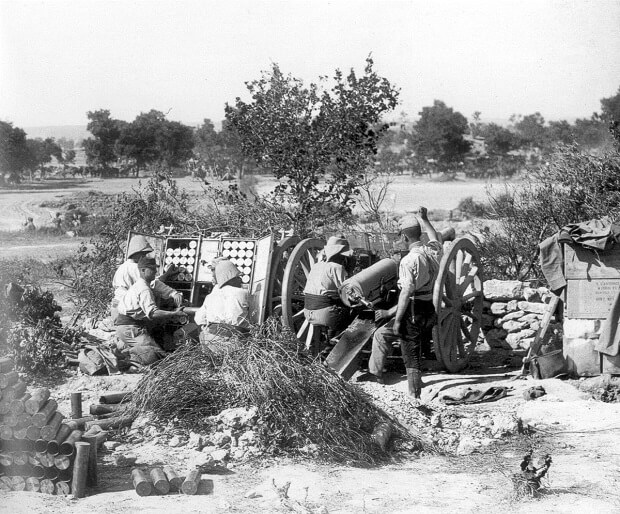
It is a little-known fact that undivided India was the largest contributor to the war effort among all British colonies a hundred years ago

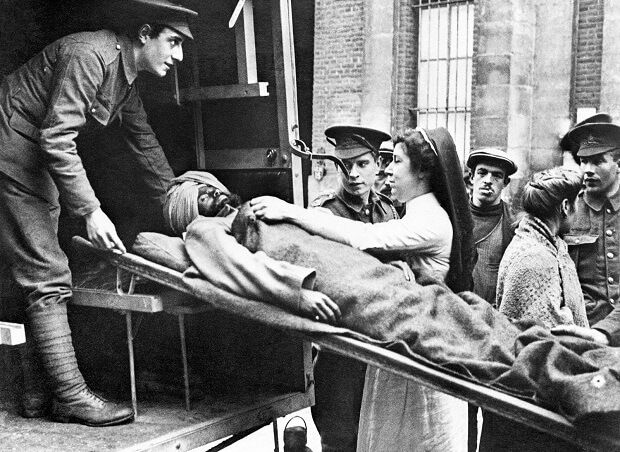
India sent over 620,000 combatants and 470,000 non-combatants overseas between August 1914 and December 1915.

Gurkha and Sikh soldiers formed the majority of the Indian units that fought with the British Armed Forces in World War I in Egypt (1914-15), France (1914-15), Mesopotamia (1918) and Gallipoli (1915); and in World War II in Burma (1942-45), Malaya (1942-45) and in Libya (1941). Thousands made the ultimate sacrifice (at Gallipoli alone, reports of the number of Indian dead vary from 1400 to 1600); and many took home the cherished Victoria Cross.

If Gallipoli was one of the most disastrous campaigns in British military history, it also had some unbelievable victories thanks to the Gurkhas, after whom a feature in Turkey is still named to this day. Shedding light on the campaign, Robert Rhodes James writes in Gallipoli (1965):

On the night of May 12th-13th, there had been a brilliant example of what could be done with effective co-ordiantion between the Navy and the Army when the Gurkhas captured a heavily entrenched promontory which dominated Y Beach and Gully Spur…. With cruiser Talbot and destroyer Wolverine in close support, the Indians stormed and captured the position, henceforth known as Gurkha Bluff – with relatively trivial casualties.

(The Indians were observed then by the young Captain W J Slim, who would go on to become the 13th Governor General of Australia. He wrote as Field Marshall many years later, “[At Gallipoli] I was so struck by [the Indians’] bearing in one of the most desperate battles in history that I resolved, should the opportunity come, to try to serve with them. Four years later it came, and I spent many of the happiest and, from a military point of view, the most valuable years of my life in the Regiment”. He served with the 6th and 7th Gurkha Rifles in India).

A poignant passage in the 1945 book Martial India by F. Yeats-Brown reveals the heroism of the 14th Sikh Battalion at Gallipoli:

In the highest sense of the word, extreme gallantry has been shown by this fine battalion… In spite of these tremendous losses, there was not a sign of wavering all day. Not an inch of ground gained was given up and not a single straggler came back. The ends of the enemy’s trenches leading into the ravine were found to be blocked with the bodies of Sikhs and of the enemy who dies fighting at close quarters, and the glacis slope was thickly dotted with the bodies of these fine soldiers all lying on their faces as they fell in their steady advance on the enemy. The history of the Sikhs affords many instances of their value as soldiers, but it may be safely asserted that nothing finer than the grim valour and steady discipline displayed by them on the 4th June has ever been done by the soldiers of the Khalsa. Their devotion to duty and their splendid loyalty to their orders and to their leaders make a record their nation should look back upon with pride for many generations.

The SA authorities, currently reviewing their decision, must surely be acquainting themselves of these and other aspects of the Indian involvement at Gallipoli.

Perhaps they will also listen to historian Peter Stanley, who has described their ruling as “outrageous”.

According to Prof. Stanley’s research, “India had its 29th Infantry Brigade there and they suffered casualties equally as bad as the Anzacs”.

He adds, “Indian troops not only landed with the Anzacs at Gallipoli but were a crucial part of the supply lines at Anzac Cove where they made sure food and water was kept up to the Australian troops”.

Prof. Stanley is set to release his book on the role of Indian soldiers at Gallipoli shortly.

Meanwhile, his research collaborator at the University of Technology Sydney, Burcu Cervik Compiegne, is also planning an event entitled “Gallipoli Alternatives”, to focus on alternative stories on the White-Australian version.

Shoulder to shoulder

0
Reading Time: 6 minutes

Indian army veterans in South Australia lobby to march with the Anzacs. L.P. AYER and RAJNI ANAND LUTHRA report

To The Point: An exclusive conversation with Australian PM Tony Abbott

___

Major General Vikram Madan is quick to counter any claims that he is in a “battle” or “fight” with Anzac authorities.

As a hardcore army man, he knows better than to use such terms.

So how would he describe his ongoing ‘engagement’ with the South Australian Anzac Day Committee?

“It’s a humble request, really,” he says with Gandhian simplicity. “A request to allow Indian veterans to participate in the annual Anzac Day parade, in the light of our huge contributions in both World Wars in general, and at Gallipoli in particular”.

To Australians, Anzac Day is a highly significant day in their calendar. The Anzac spirit is part of their psyche and they treasure it dearly, not easily sharing it with those who don’t have a valid or strong claim. This is understandable, and indeed, this is the way a proud community should uphold its traditional values. Perhaps it is in this light that the South Australian Anzac Day Committee decided to decline a request from the SA Indian Defence Club to join the Anzac Day march at this year’s parade, or at next year’s 100th anniversary of the Gallipoli campaign.

And yet, Madan’s cause is one that will bring due recognition to his fellow warriors and respect for the thousands of soldiers who fought beside Australian Diggers at Gallipoli, and even paid the ultimate sacrifice. Such recognition, Madan points out, will eventually flow on to strengthen the bonds between India and Australia at the national level, and at the local level, help the growing Indian community to be seen as part of Team Australia.

It seems that those who opposed the Club’s request have suggested that the Indian veterans should march in the ‘next of kin’ category, despite the fact that they are ex-servicemen with proud records of soldiering under their belt, and of being allies of Australian forces in both World Wars.

The ‘next of kin’ suggestion must surely rankle with Vikram Madan, who gave 41 years of his life to the Indian Army. In his career he saw action in the Bangladesh war, in Sri Lanka, and during the insurgency operations in India’s north-east. He served 11 years in high altitude postings including Kargil at the India-Pakistan border, and commanded a Division in Punjab/J&K, fighting militancy. He was decorated twice by the President of India (2000 and 2006), with the Vishisht Seva Medal, a decoration awarded to recognise “distinguished service of an exceptional order”.

“The Army life is the only life I have known, ever since my teens”.

All he wants in his retirement now is to be able to pay an Anzac tribute to his forebears, in the land that he now calls home.

Indian veterans in NSW, Victoria and WA have for a few years now marched in the annual Anzac Day parades as allied returned servicemen. In Sydney, Indian participation was welcomed by the RSL in 2007, and for the past two years, there have been not one, but two contingents marching (Sikh Regiments and Indian Defence Forces). At the Perth parade, three Indian contingents took part this year (WA Sikh Band, Sikh Ex-Servicemen and Indian Ex-Servicemen’s Association). The Melbourne parade has a small Indian participation too.

The SA Indian Defence Club, made up of 15 former Indian officers who have migrated and settled in the state, seeks the same privilege and honour.

“There are many Indian people living in SA and they too want to show their commitment to the Anzac Day tradition,” says Vikram Madan. “Of course we don’t want to take anything away from the Australian or New Zealand forces, even though our casualties were considerably more than New Zealand’s”.

There is a sentimental interest as well, Madan reveals. The Gurkha Regiments fought at Gallipoli, and Madan himself has served with the Gurkhas. As Commandant of the 58 Gurkha Training Centre at Shillong in India’s north-east – where a giant portrait of him still stands in the Officers’ Mess – Madan identifies himself very closely with the Gurkha cause.

Support from the public

Major General Madan himself will not refer to the Anzac refusal as a “snub”, but Adelaide’s only daily, The Advertiser, did the talking for him on Wednesday 27 August when it ran the large bold headline Anzac March Snub. The front page news report said, “SA Indian community has been snubbed by Anzac Day organisers who will not allow representatives to march in honour of 15,000 of their countrymen who served alongside Diggers at Gallipoli”.

Backing its front page story, The Advertiser wrote in its editorial: “There are many groups, nationalities and ethnic interests which all hope to be part of the Anzac tradition, none with more valid a claim than the Indian ex-servicemen who have made Adelaide home… It is important to recognise that Australian and New Zealand troops were not alone at Gallipoli and failure to do this would be incongruous with the Anzac spirit itself”.

It concluded “…there is nothing that would suggest the inclusion of such a brave and loyal ally would do anything but enhance our Anzac March”.

Letters from readers flooded in the days following, largely in support.

Reader Mathew Swan wrote, “The fighting component of Anzac comprised 23 infantry battalions, 15 from Australia, 5 India and 3 New Zealand…Of 5010 Indians who served 1926 died and 3863 wounded. NZ and Australia had a larger contingent and their killed were 2714 and 7594 respectively”. He concluded, “This anomaly should be corrected and the contribution of the Indian troops acknowledged”.

Estelle Morgan wrote, “It is about time the organisers woke up as to who was friend and who was foe”.

Peter Trapp said, “If you exclude the Indian component, then you also exclude the Americans, the Free French, the Greek and the Dutch… I am surprised the Indian forces have not been represented previously as several other Commonwealth nations”.

In his long letter reader Dennis Coleman wrote “If 15,000 servicemen from India’s 29th Infantry…either fought alongside Australian Diggers or were a crucial part of the supply line…this would imply a strong case for them. Allow them to proudly join the 100th anniversary…”

Among the dissenters, one writer said, “Should this occur I suggest, respectfully, the renaming of Anzac to Ainzac. All else considered it will at least sound reminiscent of the Australian Twang”.

In a similar vein, W.E. Denny wrote that no foreign servicemen who served only in foreign wars not involving Australia were allowed in the march and “why should this group be different.” These men were given the opportunity in the “next of kin” section (in 2011) but had refused. “Their refusal suggests to me that this is more about their egos than commemorating their forefathers…”

In contrast, the Vietnam Veterans Association has given its full backing to the Indian veterans’ claims. Its president Michael Benyk said, “I can’t understand if you are on the allied side in WW I and II why you can’t march… When we came from Vietnam, the RSL didn’t want to have anything to do with us and didn’t classify the Vietnam War as a war either”.

With so much public support from the press and the public, it is not surprising that the RSL is reported to be having a review. Maj-Gen. Vikram Madan says his group will apply again and is hopeful the ban will be lifted for the 100th anniversary next year. Fuelling his hope is the indication from RSL State President Brigadier Tim Hanna who said he had sympathy for the Indian cause and another application would be considered.

In his most interesting letter to the paper, Ken Madigan of Pt. Pirie narrated the well-known story of an Australian stretcher bearer John Simpson, who, having lost contact with his unit, attached himself to the Indian contingent. In the next 24 days he rescued hundreds of wounded Diggers on his donkey’s back until he was shot. Ken concluded, “The Indians called him ‘Bahadur’, bravest of the brave. I believe Simpson would expect that his Indian comrades should be among those honoured on the centenary of Anzac Landing”.

Vikram Grewal of Sydney, who was instrumental in getting an Indian contingent accepted in the Sydney parade and who has been participating since 2007, tells a similar story. An Australian veteran he met recounted to him the story of how he actually tracked down the descendants of a Sikh soldier he had fought with in World War 1, such was the impact the Indian had had on him.

Do we sense peace breaking out? Here’s to seeing our veterans in Adelaide marching alongside the Diggers next year, like they do at Sydney, at Melbourne and at Perth.

Indian Armed Forces veterans in Adelaide who wish to be part of Vikram Madan’s campaign may contact him on 0431 194 854 or on vikram.madan@hotmail.com


Parramasala 2014: Indian Link’s top picks

0
Kanjoos, an adaptation of Moliere’s The Miser directed by Saba Zaidi Abdi
Reading Time: 3 minutes

It’s a largely home-grown affair at this year’s festival, write KOMAL UTSAV JAGAD and RAJNI ANAND LUTHRA

Kanjoos, an adaptation of Moliere’s The Miser directed by Saba Zaidi Abdi

The South Asian arts festival in Parramatta, in its fifth year, was launched in late August by Premier of NSW Mike Baird.

“Parramasala celebrates the contributions made by NSW’s Indian and South Asian communities,” the Premier said at the event, adding, “It also reinforces Australia’s friendship with India and South Asia”.

To be held from 17 to 19 October, the list of acts to be featured this year was released on the occasion.

At first look the program appears rather subdued, with only a few acts direct from overseas, none of them A-list. Instead, it is crammed with home-grown talent, many of them new to the scene.

Nevertheless, this is a blessing in disguise. Let’s take this as an opportunity to allow our own arts practitioners to strut their stuff. Hurrah for Parramasala, for providing them this opportunity: too many of our performers struggle to even get a foot in at the mainstream arena.

And last year, even Shah Rukh Khan, a serendipitous Parramasala act, could not save the festival, so poorly were the overseas acts picked. The meagre showing then led to murmurings earlier this year that the festival might be scrapped entirely.

So this time round, it’s pretty much a community affair. Even Parramatta Mayor John Chedid described it as “a festival of the people and for the people”.

The launch itself was a community affair, held at a Harris Park restaurant and sponsored by a local spice shop. An interesting move, considering the more high-profile launches in previous years. But then again, this year the festival extends to neighbouring Harris Park, giving its ‘Eat Street’ some much-deserved prominence. And certainly it is Harris Park that is the hub of much Indian, if not South Asian, activity in this city.

Some events worth waiting for include the musical acts Eastern Empire, Bridge and Its People and DouDoumba; belly dancer Shiva and crooner Priyanka (Pri Pri).

The film festival also has some must-see listings, including the heart-warming Her Inner Song by Indu Balachandran, Oonagh Sherrard’s Ashok Roy Story, Ashish Avikunthak’s Rati Chakravyuh, Shefong Chung’s From Border to Border, and Indian Aussies: Terms and Conditions Apply by our very own Anupam Sharma, who is also Ambassador for Parramasala this year.

Speaking at the launch, Festival Chairman Hari Harinath sent a message out to the community: “An activity of this nature needs the support not only of the government, but also of the people who live in the area, and of businesses who operate in the area,” he said.

He could not have been more right. It’s now up to the South Asian community to show that they support the venture. We need to get out there and back our performers, so that, indeed, we may continue to have a Parramasala.

L to R: Parramatta Mayor John Chedid, Parramasala Chairman Hari Harinathand, Festival ambassador Anupam Sharma, and Premier Mike Baird light a lamp to officially launch the festival


Indian Link’s top ten picks, in no particular order:

1. The Yard Shaun Parker and Company’s National Dance Award winner and Helpmann nominee, this dance theatre is inspired by Lord of the Flies and features multicultural schoolboys from Western Sydney

2. L-FRESH The Lion If you haven’t heard him already, go check out our very own hip hop star who is creating waves through his music, positive attitude, and message for today’s youth

3. Kanjoos An Indian adaptation of Moliere’s The Miser, this play is directed by Saba Zaidi Abdi

4. ParramaSLAM Now this is a unique event where Poetry Slam meets Mushaira!

5. Diva Divine Opera singer Heather Lee presents the life of her own great aunt, an opera singer who toured India in the 1890s

6. ByOb Bring your own Bollywood Join this photographic endeavour to become part of a Bollywood fillum poster

7. Chindian Diaries An exhibition of stories of people with mixed Chinese and Indian heritage

8. Chants of love Marvel at the high-energy qawwals of Sufi devotional music from around South Asia

9. Masala Markets An upmarket Meena Bazaar with outdoor food, the markets at Prince Alfred Park are bigger this year (don’t miss the masala tea at Chai Temple)

10. Food carts Can’t wait for the street-hawker style food carts. Bring on the raidiwallahs!


For more details visit www.parramasala.com


A night in Calcutta

0
Reading Time: 2 minutes

A trip down memory lane

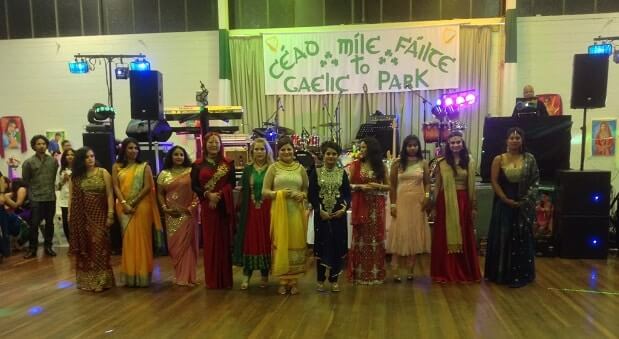
It was a Bollywood theme for the dinner and dance event held by Australian Anglo Indian Melbourne Rangers Club recently. Aptly named ‘A night in Calcutta‘ the evening took guests down memory lane whilst showcasing Bollywood and India in all its finery.

The colours and scheme had a touch of royalty as guests arrived in the finest Indian attire some having invested in designer outfits for the special evening. The Gaelic Park Hall in Keysborough looked splendid with all the colours and sparkle used to give the place a Bollywood touch.

Captain Henry Robbins praised the hardworking team of AAI Melbourne Rangers for organising the fun filled event. Captain Henry and his wife won the best-dressed prize for their Maharajah and Maharani getup. Mrs. Robbins looked splendid in her outfit that was designed by Mumbai based designers Suhmita Sen and Felix Bendish.

Captain Henry entertained everyone with his characteristic jovial nature. “I am not so good on the dance floor so I decided to dress up well instead “ he said when he was handed the coveted prize.

Palates were romanced with Calcutta style Kathi Rolls and Calcutta Chicken Biryani along with other Indian delicacies. “The food was finger licking good” commented one of the guests.

A Bollywood-themed evening is incomplete without some dancing and the guests boogied the night away to old and new Hindi songs played by a live band and DJ.The talented musicians from the Next Generation Band instantly connected with the audience with their vibrant energy on stage and a great selection of songs. With plenty of prizes to be won, competitions to keep the evening interactive and a fantastic mix of good music the event was a great success.

The AAI Rangers have been actively involved in enhancing the Melbourne Anglo Indian social scene since 1981. Their Social Club holds events and activities on a regular basis and they welcome members from within and outside the Anglo Indian community. The Anglo Indian community in Melbourne is well respected for their contribution towards the multicultural society of Australia.

Enough of the blame game

0
Reading Time: 4 minutes

It’s time for Team India to allow players to participate in county cricket alongside the IPL


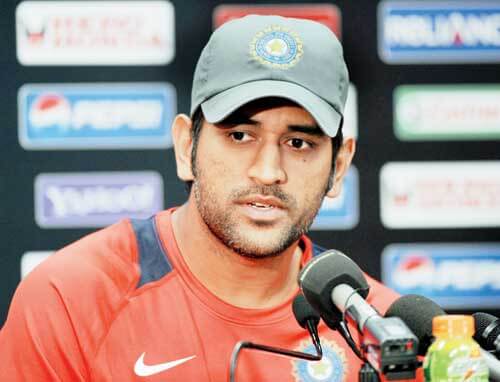
If there was one statement that summed up the Indian team’s attitude – both on and off the field – during the last three Test matches of its 2014 tour of England, it was Indian team captain MS Dhoni’s comments following the final Test match. Having watched on – literally – while his team were pummelled by an innings and 244 runs at the Oval, and at the receiving end of a 3-1 score line that flattered the visitors, the traditionally unflappable Dhoni was asked by an English journalist if there was any prospect of Indian players forgoing the IPL to play county cricket in England.

Dhoni snapped back, “You go ask the BCCI about that. Don’t get too jealous about IPL”.

India’s performance in the recently concluded Pataudi Trophy has by now been comprehensively deconstructed. Although at the time of writing, India has comprehensively beaten England in the two one-dayers that have been played, it is unlikely that India’s performances in coloured clothes will be able to gloss over the glaring deficiencies that were exposed in the test series.

Some critics point to Dhoni’s idle captaincy in test cricket, while others may respectively blame the poorly disciplined batsmen or the injury- and fatigue-prone fast bowlers. However, as is too often the case with Indian cricket, it is the coaching staff who eventually took the fall; in this case, bowling coach Joe Dawes and fielding coach Trevor Penney were asked to go on leave ahead of the ongoing ODI series, while Ravi Shastri was named “Team Director” – a broad job title that perhaps adequately reflects the vague circumstances surrounding his engagement.

At face value, the rationale behind asking Dawes and Penney to leave the tour seems well-founded. It is the fielding coach’s responsibility to ensure that the players are prepared to take catches, and India dropped 11 catches in 7 England innings. It is the bowling coach’s responsibility to prepare the bowlers to take 20 wickets in a Test match, and India’s bowlers took only 61 wickets in 5 Tests.

But it is about time the captain, players and selectors took some responsibility for their mistakes. The catch-dropping epidemic in the Indian slips cordon could be attributed to any amount of factors, such as the slips standing too close to each other, or the constant chopping and changing of personnel in the cordon and the subsequent unfamiliarity players in the cordon have with each other.

In addition, the players in the Indian slips cordon have played plenty of cricket; they (for the most part) know the technique behind catching a cricket ball. It is the patience, focus and mental strength required to field in the slips cordon that appears to be lacking, and it is hard to imagine what Trevor Penney can do to instil that in a professional athlete who takes home an exorbitant paycheque, apparently for having those very characteristics.

Meanwhile, it has been widely acknowledged that the Indian bowlers performed satisfactorily in this series. Although operating under significant limitations – both in terms of talent and pace – compared to their English counterparts, Bhuvneshwar Kumar, Varun Aaron and Ishant Sharma left the series with their reputations enhanced. Of the two remaining quicks, only Mohammad Shami’s performance was dubious; Pankaj Singh was nothing if not desperately unlucky. The spinners were ineffective, and outbowled by English part-timer Moeen Ali – but it is questionable how much of that was due to Ali’s guile as opposed to the batsmen’s incompetency.

The bowling and catching wasn’t good enough, but what hurt India most, and unexpectedly so, was indeed its batting. In particular, the collective failure of Virat Kohli and Cheteshwar Pujara was an unforseen complication that led to India posting less than 180 in 5 consecutive innings for only the second time in its history. Pujara’s average of 22 was the lowest for any Indian number 3 in England, while Kohli’s contribution to India’s run tally – 134 – was fewer than the number of runs India gained from extras in the series.

And it is on this note that we return to the issue of the priorities of Indian cricket, and whether it is appropriate for some Indian batsmen to gain experience in English conditions at the expense of playing in the IPL.

We must not be mistaken – money is an important consideration for all professional athletes, as their careers span a significantly short period of time. With the sacrifices they make to reach the top, many athletes have nowhere to go once their time in the game is up, and their earning capacity is greatly reduced. Consequently, it is inherently unfair to expect an Indian cricketer to forgo earning a large pay packet in the IPL – money that will one day help put food on the table for his family – to play county cricket in England for a far less attractive salary.

However, when it comes to money or overseas experience, it does not have to be one or the other. The IPL runs for 6 weeks. It is entirely practical to imagine a situation where players such as Cheteshwar Pujara or Murali Vijay – who are not marquee IPL players or sponsors’ dreams by any stretch of the imagination –play three or four games of county cricket in England each year and still be available for half the IPL season.

It is not just the games themselves that are helpful – batting in the nets against English bowlers, getting tips from batsmen and coaches experienced in dealing with a swinging, seaming ball and learning the nuances and idiosyncrasies of a variety of English pitches is invaluable.

It is not unreasonable to assume that the BCCI can afford to offer IPL clubs financial incentives to allow their Indian players to play county cricket in England for some portion of the season. In this way, the bid attracted by a member of the Indian test team should not be heavily affected by their partial unavailability.

At the end of the day, MS Dhoni may be right – it is the BCCI’s prerogative to ensure that it prioritises what it thinks is in the best interests of cricket. Captains, players and coaches all speak of overseas Test match success as the most rewarding and simultaneously challenging mountain to climb in cricket. After all, if you ask Sachin Tendulkar where his 2013 IPL title ranks among his most treasured career moments, it is doubtful that he would rate it higher than any of his precious overseas Test wins.

Dhoni would do well to adopt a similar attitude.