Home Blog Page 921

Trusting the turban

0
Reading Time: 5 minutes

It’s a welcome exercise in cultural sensitivity, tying the turban on to willing members of the public, writes FRANKEY GERARD FERNANDES

Daniel Connell, Jasdeep Singh and Harjit Singh

At a time when pressures on Australia’s multicultural fabric are threatening to tear it apart, a new initiative has been doing wonders to create a personal connection across difference.

With much discussion in recent days about the burqa and its ill-informed connection with ‘terrorism’, the turban, the preferred headwear of Sikhs, has been used in a new way, winning people over with its message of trust and peace.

In an inspiring new program, members of the mainstream community get an opportunity to have the turban tied around their heads to see what it feels like.

“I feel secure,” says a young Aussie woman who has worn the linen fabric pagri (turban) for the first time.

“There’s a sense of peace,” her male friend agrees.

Smiles abound on the faces of others who are sporting, for a few minutes, the most identifiable symbol of Sikhism the world over.

With one simple act, it is as if a vast cultural divide has been bridged. The turban, it is now known, can be trusted.

Turbans and Trust. That is the name of the new Australian program that has become a textbook case of a cultural sensitivity exercise.

Its video clip went viral with over a 1,200 views on YouTube and 14,000 on Facebook, in just three days.

“In these times when misunderstanding and fear dominate our social and political landscape, (the program) is about changing perceptions and creating trust where there may have been fear”. That is the Turbans and Trust message.

“The program evolved out of both a need and an opportunity: a need for non-Sikhs to understand more about the turbans that have been appearing increasingly in Australian streets, and an opportunity to use the simple but profound act of tying a turban to create a connection,” say the Turbans and Trust team.

A not-for-profit developed by Harjit Singh in Brisbane, Jasdeep Singh in Cairns and Daniel Connell in Adelaide, the Turbans and Trust program has been featured at the recent OzAsia Festival in Adelaide to much acclaim, and is now looking at opportunities across the country.

It all started as a germ of an idea with Harjit Singh, a Perth-based tax adviser and National Director of United Sikhs Australia, who has conducted cultural and Sikh awareness training sessions for some years now with the WA police. He wanted to bring his work to the wider public and demystify the turban he has worn all his life, and to reinstate it not only as an identifier of his faith but as an actual mechanism for bringing people together and echo its original spirit.

A core reason a Sikh wears a turban, is to be identified as one who has made a commitment to do good for others.

The name Turbans and Trust was coined accidentally as Harjit chatted casually with close friend Daniel Connell.

Daniel Connell, an Adelaide-based artist, is well-known for his large-scale portraits of Sikh men. He has exhibited widely in Australia, as well as in India, and has been featured several times in Indian Link.

Talking to Harjit about Sikhi (Sikhism) in Australia, Daniel made mention of his 2012 work for OzAsia called Turbans and Transport, which addressed the 150-year long history of turbans in the transport industry in Australia, from camels in the old days to taxis today.

Harjit misheard him, apparently.

“What did you say?’ he said to Daniel. “Turbans and Trust?”

It was no use correcting him, recalls Daniel; Harjit was on another tangent and the idea was born.

“Every day, turban-wearing Sikhs face a question, a look, a stare, a comment,” says Jasdeep Singh. “And yet, all turban wearing Sikhs would agree that the Tenth Guru gave us Sikhs the turban specifically for this reason, so we would always be noticed and identified. But our Gurus didn’t want us just to be known for the sake of our turbans; rather they wanted us to stand out as persons of integrity; as people who have made a choice to do something good for others.”

Many say this idea of public identification for Sikhs was born in response to the sacrifice of the Ninth Guru of the Sikhs, Guru Tegh Bahadur Ji, who gave his life for the liberation of another community. Sikhi champions the rights of people to flourish according to their own culture and faith. So it’s fitting that the turban is used today not only to identify Sikhs but also spread its stories of compassion, and more importantly to build trust between communities today, especially for the sake of those who are most marginalised and vilified.

And this is exactly what Turbans and Trust does, in a fun and friendly atmosphere.

“We invite non-Sikhs to experience a turban and we tie it on for them,” says Harjit. Even women are welcome to try on the turbans.

And in the tying process, the conversation inevitably ensues about Sikhism and all that it stands for.

Harjit explains, “Inherent in the idea of trust, is risk. To build trust we have to take a risk. The person who wants a turban tied, places their head in the hands of a stranger. The Sikh who is tying the turban, hands over something very precious to a stranger with the expectation that it will be respected, and it is”.

It may seem potentially chaotic to tie turbans on strangers, but the beautiful thing about Turbans and Trust is that it is quite solemn. People respond to the sacredness of the moment.

At the core of it all, Turbans and Trust is a disciplined and thoughtful act that holds to agreed rules and values. Volunteers are trained prior to participating and locations are chosen carefully.

“We take this program wherever there is an atmosphere of genuine openness and new ideas are welcome,” Jasdeep reveals. “We like to reach out to families, and where people can wear a turban but bring it back to us after a while. We steer clear of public places where respectful discussion is not happening”.


Turbans and Trust focuses on the personal relationship formed during the tying of the turban. A conversation is initiated using an agreed format; Sikh history in Australia, why Sikhs wear turbans and then the conversation will take a natural course.

Never do the Turbans and Trust engineers compare Sikhi to any other religion, faith or community. The religious elements of Sikhi are discussed but not promoted. All conversations are about building positive images of people irrespective of faith, culture and background, in accordance with a Sikh’s duty to uphold the dignity of the human person.

The program has invested in over 400 turbans in various colours which of course are used once only at each activity. Banners, stickers and bold original t-shirts are available on the website to purchase to support more Turbans and Trust events.

A sister organisation is Australian Sikh Heritage, a website resource that is spearheading a campaign to centralise the history of Sikhs in Australia and acknowledge their significant sites.

With a dedicated team that truly spans Australia, the project was launched in 2013. We hope to see Turbans and Trust events being held across the nation and beyond, so the turban, whether we choose to wear one or not, can once again be recognised as a beacon of hope for all.

For more information visit www.turbansandtrust.com and www.australiansikhheritage.com
Shiva continues to dance in Adelaide

0
Reading Time: 3 minutes

Dancer Khurshid Shroff and her wards keep the tradition of Bharatanatyam alive, writes LP AYER

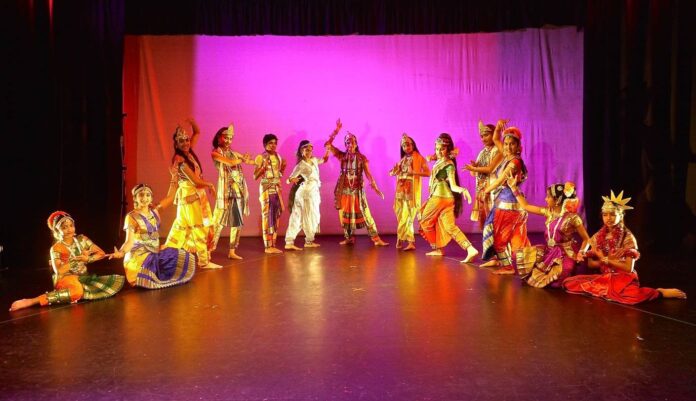
Twenty four hours after the Dancing Shiva was returned to his rightful place in India, I hardly expected to see the Great Lord, Destroyer of the Universe, dance for some two hours in Adelaide.

Just a day after Prime Minister Tony Abbott returned the stolen statue to the Indian government during his short visit to India, I attended Shiva Kautukam, a ballet presented by Adelaide’s well-known dancer Dr Khurshid Shroff to a near-full house of invited audience.

A Parsi by birth, Khurshid is well-versed in Sanskrit and Hindu mythologies that form the basis of her ballets, which provide her dancing school’s students a platform to present the skills acquired during their years of training. Khurshid’s productions are as authentic as they can get, with the script running true to the scriptures in the mythologies.

In Sanskrit ‘kautukam’ means a spectacle of dance, poetry and music. All three were present in abundance in this ballet that had ten scenes taken from two major cantos, Parvathi khanda and Kumara khanda of the Rudreshvara Samita of Shiva Purana.

It is the story of ’s years of penance and persistence to attain her goal of becoming the consort of Lord Shiva after His initial disinterest in her. This formed the first half of the programme. The latter half related to Lord Karthikeya, their second son, who wins over the demon Taraka in a death-defying dancing duel. The penultimate scene was an interesting but little-known incident when a group of heretic rishis tried to harm Lord Shiva by throwing at Him a tiger and a serpent that emerged from a havan they had just performed. The powerful Parameswara tore the tiger and draped himself with its skin and wound the snake around his neck, in what was to become his attire for eternity. The show ended with the all-conquering Shiva performing the Ananda thandava, the joyous cosmic dance of the universe. Both the dancers playing the central characters, Shiva and Karthikeya, gave very creditable performances involving long, vibrant and vigorous spells of dancing.

The two-hour ballet had some 30 students of the dancing school performing, since guru Khurshid wanted to provide an opportunity to each one of her disciples to showcase their talents. To deck out such a large supporting cast in appropriate colourful costumes and other accessories is no mean task in a foreign land. With the support of her husband and son, Khurshid did a marvellous job in this regard. Throughout the show not a single word was uttered, but the audience could follow the story with the help of a synopsis given before each scene. The entire performance was backed by musical score, only instrumental, with the clanging of cymbals and drum beats at appropriate moments to dramatise the effect. These were the highlights of the show.

However, the lowlight was the lighting itself, with the focus often missing the target. With a number of characters on stage at any one time and more than one dancing simultaneously, it was at times a case of hit and miss for the technician, for whom it may have been the first show of this kind. The ancient theatre’s age-old lighting system might have made his task a bit difficult too.

Another point I cannot avoid mentioning is the length of the last scene before the interval when all the gods and demi-gods, elated by Lord Shiva’s delayed decision to wed Parvathi, went on long spells of dancing. This being one occasion for most of Khurshid’s students to come on stage, some justification can be made for its length, yet it could have been shorter and sweeter. The selection of a slow musical score, and matching repetitive dancing routine, seemed more sombre than joyous. But this was made up for by the scene that came after the interval, which had a fast tempo befitting the happy mood of the gods on Parvathi’s penance being richly rewarded.

Barring such slips, it was a rewarding occasion for the participants and the audience comprising other students, their families and friends.


Kheer cheer for Diwali

0
Reading Time: 8 minutes

ABHILASHA SENGUPTA on an evergreen classic

As Diwali approaches, the desire is up for the sweet things in life. No doubt you could get yourself a variety of finger-licking mithai at the sweet shops and spice shops out there, but if, like me, you are pining for a bit of home-made mum-style mithai, then read on.

Remember mum’s kheer? Haven’t we all grown up thinking our mum made the best kheer in the world?!

The perfect comfort food for me when I’d had a fight with my brothers/friends, or got a bad mark in the class test, or generally struggled with teenage angst, kheer has continued to remain an all-time favourite in my adult life. You could cook it with a variety of ingredients, as the following recipes show, but nothing can beat that original chaaval ki kheer, rice pudding.

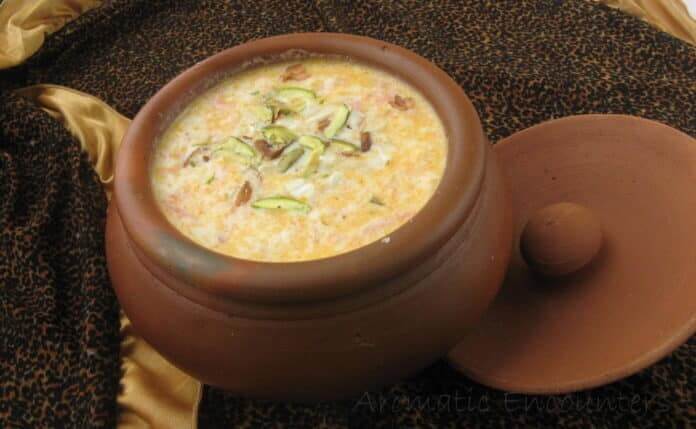
Essentially, rice is cooked in milk, sugar is added, and then it is all reduced. It turns light yellow in colour as it gets richer and creamier. Nuts such as almonds, cashewnuts and pistachios are added for flavour and texture, as are currants and raisins. A touch of powdered cardamom, and saffron, make it all – truly divine.

Kheer is good hot or chilled (just remember to make it sweeter if you are going to serve it chilled) and people have their preferences for consistency – some like it runny, some want it thick.

The kheer takes on different hues in the recipes below: some use the traditional northern Indian technique, some the southern payasam method, and some incorporate ingredients completely out of Indian cuisine.


Quickfix Kheer

Cook 100 gms rice in about a litre of milk till soft. Reduce heat and add in a tin of condensed milk. Cook for a further 5 to 7 minutes, or until desired consistency is reached. Put in nuts of choice, and cardamom powder.


Carrot Kheer

4 large carrots, chopped

1 – 2 cups sugar

½ tsp cardamom powder

2 cups milk

Pinch saffron

2 tbsp ghee

Powdered pistachios and almonds for garnish.


Boil carrots until they are soft. Blend the boiled carrots along with cardamom powder to a smooth paste.

Head ghee in a heavy-bottomed pan and add the carrot paste. Cook until the raw smell disappears. Then add sugar and cook for a further 2 to 3 minutes. Finally, add milk and saffron and allow to boil till desired consistency is reached.

Garnish with pistachios and almonds. Serve either hot or cold.

Beetroot Kheer

1 medium size beetroot

½ litre milk

1 cup sugar

1 tsp almond essence


Wash the beetroot well; peel and grate or cut to small pieces. Cook the beetroot immersed in just enough milk till tender (or use a pressure cooker). Cool and blend to a smooth puree. Bring the remaining milk to boil and add beetroot. Let it simmer for five minutes and then remove from heat. Add sugar and mix well. When cool, add almond essence. Best when served cold.


Sabudana Kheer

1 cup sabudana (sago)

1 ½ cups sugar

1 litre milk

4 cardamom pods

Pinch saffron


Soak sabudana in water for about fifteen minutes. Meanwhile, heat milk with sugar and cardamom mixed in. When it comes to a boil, add sabudana and stir till the seeds swell up and become translucent. Add about a cup of water now. Soak saffron in a tbsp of warm milk and then add in to the boiling milk.

Serve hot.


Mango Kheer

1 kg ripe mangoes

200 gms sugar

1 litre milk

2 tbsp chopped nuts


Peel mangoes and chop up flesh. Cook in a heavy-bottomed pan with an equal quantity of water until paste-like.

Mix sugar with equal quantity of water and bring to a boil to form a syrup. Now add the mango mixture in slowly, while continuously stirring. Introduce the milk, mix well and cook until desired consistency is reached. Decorate with nuts.


Badam Kheer

50 gms almonds

50 gms sugar

½ litre milk

Handful slivered almonds extra for garnish

Pinch saffron


Soak almonds in water overnight. Peel and put through a blender with a little water, to make a lumpy paste.

Heat milk in a heavy-bottomed pan. When it comes to a boil, add in the almond paste and sugar. Soak saffron in a tbsp of warm milk, add into kheer and continue to boil until desired consistency is reached. To serve, decorate with slivered almonds.


Carrot Vermicelli Kheer

200 gms vermicelli

1 ½ litre milk

3 carrots

100 gms sugar

Nuts of choice

2 tbsp fresh grated coconut

1 tsp ghee

½ tsp cardamom powder


Grate carrots and cook in the microwave, with a little water, until quite tender. (You could also chop up and boil, and then mash).

Heat ghee in a heavy-bottomed pan and roast vermicelli until lightly golden. Add in milk, carrots, sugar, cardamom powder, coconut and nuts. Bring to a boil and then simmer until vermicelli gets swollen.

Best served chilled.


Paneer Kheer

150 gms paneer, grated

1 litre milk

100 gms sugar

½ tsp cardamom powder

Nuts of choice, raisins and cherries for decoration


Heat milk in a heavy-bottomed pan and bring to a boil, then simmer until it reduces somewhat. Add in sugar and cardamom powder and stir until sugar melts. Then introduce paneer and cook till well blended and desired consistency is reached.

Chill. Just before serving, decorate with nuts, raisins and cherries.


Ghia (Louki) Kheer

400 gms ghia/lauki/bottle gourd

2 ½ cups milk

1 tbsp pistachios, chopped

1 tbsp almonds, slivered

1 tbsp walnuts, chopped

1 tbsp raisins

¼ cup whole milk powder

1 cup sugar

½ tsp cardamom powder

Pinch saffron, dissolved in a tbsp of warm milk


Peel ghia and discard seedy portions. Grate rest of the flesh.

Bring to a boil 2 cups milk in a heavy-bottomed pan. Reduce heat and let simmer for about ten minutes, till it thickens somewhat. Stir intermittently. Dissolve milk powder in remaining 1cup milk and pour this into the pan. Also add grated ghia, sugar, cardamom powder, saffron and nuts. Cook till well-blended and desired consistency is reached.

Serve either warm or cold.


Coconut Kheer

2 cups fresh grated coconut
1 cup milk

1 tsp (uncooked) rice

½ tsp cardamom powder

1 tsp ghee

2 tbsp cashewnuts, coarsely chopped

250 gms jaggery (or brown sugar if that’s easier)

2 cups water


Grind to a coarse paste the coconut and rice, adding just enough water. Pour into a heavy-bottomed pan, add 2 cups water and bring to a boil. Then introduce jaggery/brown sugar and mix well, and bring to a boil again. Add in cardamom powder and milk and cook briefly till well blended.

Dry Fruit Kheer

1 litre milk

¾ cup sugar

¼ tsp cardamom powder

Pinch saffron, soaked in a tbsp of hot milk

1 tbsp raisins

2 tbsp almonds, slivered

2 tbsp pistachios, slivered

5-6 dried peaches, chopped

5-6 dried apricots, chopped
Soak the raisins, peaches, apricots and in hot water for 10 minutes. Boil milk in a heavy-bottomed pan with cardamom, saffron and sugar, and cook till it all reduces somewhat. Drain the soaked dry fruit, add to the boiling milk, and stir gently. Simmer, stirring frequently, until desired consistency is reached. Add almonds and pistachios and remove from heat. Best served hot.


Moong Dal Kheer

1 cup yellow moong dal

3 tsp chana dal

1 tbsp ghee

2 tbsp cashewnuts, chopped coarsely

½ cup jaggery or brown sugar

1 ½ cups water

1 cup milk

1 tbsp raisins


Wash dals and soak in water for ten minutes. Drain, add fresh water and cook till soft.

Mix jaggery/brown sugar in a cup of water and bring to a boil to make a syrup. Mix this with moong dal mixture and bring to a boil. Add in milk, nuts and raisins and bring to a boil again, stirring.

Serve hot or cold.


Sweet Potato Kheer

3 medium sized sweet potatoes
1/3 cup grated jaggery (or brown sugar) or to taste
½ tsp cardamom powder
1 1/2 cups thin coconut milk

1 tbsp vermicelli roasted in 1 tsp ghee (optional)
Nuts (cashews/pistachios) for garnish
Peel sweet potatoes and slice them. Add just enough water to cover and boil until tender. Mash potatoes coarsely. Add jaggery and cardamom powder. Mix well. Next add coconut milk, stir and bring to a gentle boil on low heat. Add roasted vermicelli and simmer for a minute. Garnish with nuts.


Til ki Kheer

100 gm sesame seeds (white til)

100 gm fresh grated coconut

½ cup sugar, or to taste

1 tbsp raisins

1 tbsp cashew nuts, broken and soaked in warm water

¼ tsp cardamom powder

1 litre milk

1 tin condensed milk
Dry roast til and powder coarsely. Heat milk in a heavy-bottomed pan and bring to a boil. Reduce heat and simmer till it reduces somewhat. Then add condensed milk and stir and cook for another 8-10 minutes. Add in sugar and cardamom powder. Stir continuously. Now add in roasted til and coconut. Cook till well-blended and desired consistency is reached. Pour into a serving dish and garnish with raisins and cashew nuts.

Polenta Kheer

¼  cup medium grain polenta
1 tsp ghee
2 cups plus more milk
2 green cardamom
5 tbsp sugar

Pinch saffron
A tbsp each chopped nuts of choice


Heat ghee in a heavy-bottomed pan and add in polenta. Roast gently until it lets off an aroma (do not let it change colour too much). Add the milk and stir till it comes to a boil. Reduce heat and continue to cook, till polenta is cooked fully. Introduce the sugar and cook till well-blended and desired consistency is reached. Throw in nuts and saffron, turn off heat and leave covered.

Since polenta varies in coarseness, you may have to change amount of milk mentioned here.


Orange Kheer

2 medium oranges

1 litre milk

1 tin condensed milk

¼ cup sugar

1 tbsp slivered almonds for garnish


Peel oranges and separate segments. Remove skin and pith and chop up flesh.

Bring milk to boil in a heavy-bottomed pan. Reduce heat and let simmer, stirring intermittently, till it reduces somewhat. Pour in condensed milk and continue to cook, stirring, till it reduces further. Add in sugar and reduce to about a fourth of original volume. Pour into serving dish, cover and let cool. Refrigerate. Then arrange orange on top, sprinkle almonds over, and chill again.


Microwave Ricotta Kheer

1 cup ricotta cheese

2 cups milk

1/3 cup sugar

¼   tsp cardamom powder

Pinch saffron

Fresh fruit of choice (mango, strawberries, grapes) and nuts for garnish


Put ricotta cheese in a deep glass bowl, cover and cook in the microwave on high for 2 two minutes.Take out, stir to remove lumps as best as you can, cover and cook for a further 2 minutes. Repeat to about 3 times (more if needed), till the cheese appears cooked and smooth. Introduce milk, sugar, cardamom and saffron, mix, cover and cook on high for five minutes. Take out, stir to remove lumps and cook for a further five minutes.

Cool completely. Decorate with chopped fruit and nuts, cover and refrigerate. Serve chilled.


Chana Dal Kheer

2 cups chana dal

1 cup sugar

1 litre milk

½ cup mixedcashewnuts and almonds

1 tbsp raisins

1 tsp ghee

1 cup sugar

1 tsp cardamom powder

2 drops almond essence


Lightly fry the chana dal in ghee until it browns. Soak in 3 cups of hot water for 2 hours. Soak cashews and almonds in just enough milk to cover them. Grind the dal and soaked nuts into a smooth, fine paste.

Pour milk into a heavy-bottomed pan. Add the ground paste and heat over low flame. Stir the mixture continuously until desired consistency is reached.

Turn off heat and add sugar, cardamom powder and raisins. When slightly cool, add the almond essence and mix well. Serve hot chilled.


Makhane ki Kheer

2 cups makhane (lotus seeds)

1 tsp ghee

1 litre milk

1 cup sugar

1 tbsp almonds, slivered

1 tbsp pistachios, coarsely chopped

1 tsp cardamom powder


Cut makhane into halves and gently roast in hot ghee. Add in milk and sugar and cook till milk is reduced to about half. Stir frequently to prevent sticking to the base of the pan. Add in nuts and cardamom powder and simmer briefly.

Serve hot or cold.


Popeye gets a Bollywood makeover

0
Reading Time: 2 minutes

It’s all aboard the iconic Adelaide cruiser for an Indian escapade

Adelaide icon ‘The Popeye’ on the River Torrens emerged in a Bollywood avatar for OzAsia this year, thrilling the local Indian community as well as those in the wider community interested in India.

Floating Melodies, an opportunity to cruise gently along the river while being entertained with themed music and food, was an all Indian affair this time around, in a maiden event for OzAsia.

India was in the air from the moment of boarding at Elder Park, as guests were welcomed with, what else, mango lassi!

Taking their spots on the floor, baithak-style on colourful dhurries with colourful cushions, guests waited for the mehfil to start even as the boat smoothed along.

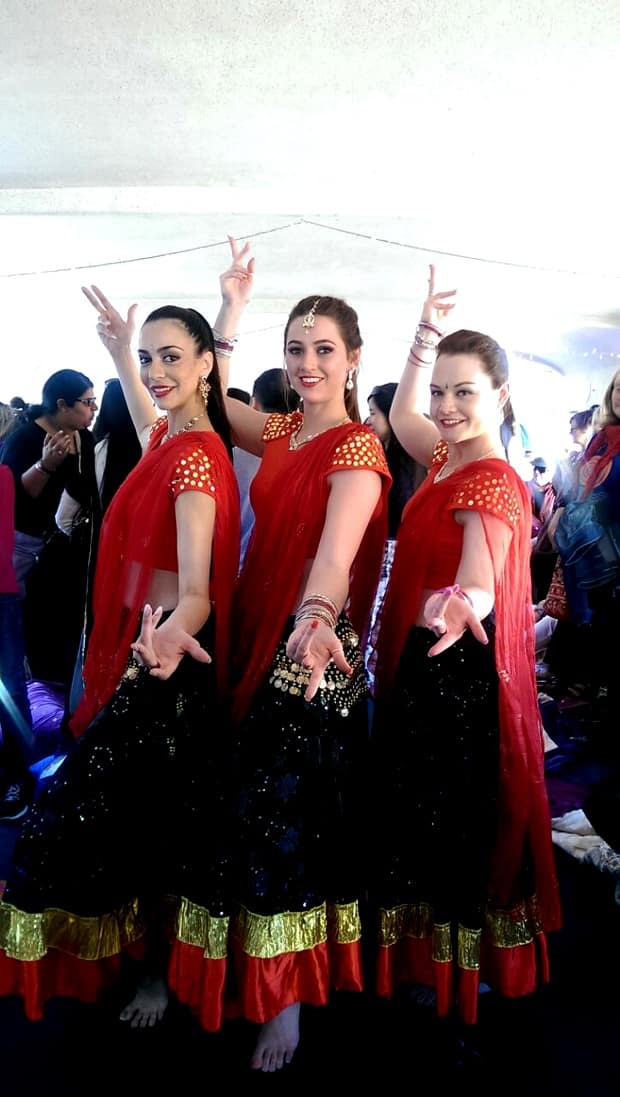
And then it was an onslaught of Radha teri chunris, Munni badnam huis and Masha allahs galore! The lovely lasses in red ghaghra cholis had the party swaying in their spots… who knew they could ‘sit-dance’ so well!

Local musician Farhad Farooq and his band also entertained with live music.

Sailing along the River Torrens through Elder Park, with the fresh spring breeze, the blooms and the playful swans, this could have made for a perfect Bollywood movie backdrop, as Farhad belted out numbers such as Mein tera naam loonga and Sooni padi hain man ki nagariya.

For those that understood the lyrics, the romance of it all was wonderful, while for others, the melody and the mood was enough!

When the Indian snacks came around, the Indian mehfil was complete!

By now the crowd was itching to get on their feet and move their bodies to the ‘can’t-sit-still’ music they had been exposed to. The girls in red came back on to teach a step or two – twist in that light bulb with one hand and pat the dog with the other! The crowd was in full-swing. It was Jai Ho as everyone, young and old, joined in swinging hips and shaking heads and stretching their cramped legs. The boat wobbled a few times, for sure, but the Jai Hos on board hardly noticed!

It was good to see a full crowd, especially as much was on that day: the final game between Adelaide Crows and Port Adelaide, the Royal Adelaide show, and OzAsia Festival, even Father’s Day, and let’s not forget the shrieking fans out and about to see Kim Kardashian!

People came out of their winter hibernation to enjoy the beautiful spring weather and what better way to do so than on a leisurely cruise… with a touch of Bollywood glamour!


Ten tips for 10/10 mental wellbeing

0
Reading Time: < 1 minute

A message from Victor Dominello for Deepavali

0
Reading Time: 2 minutes

A congratulatory message from Minister Victor Dominello to the Indian-Australian community for the occasion of Deepavali

On behalf of the NSW Government, I extend my very best wishes to everyone celebrating Deepavali.

Deepavali (Diwali), or the Festival of Lights, represents thousands of years of Hindu tradition and is celebrated by Indian communities across the world to coincide with autumn in the northern hemisphere.

The festival is a firm fixture on our State’s annual calendar of multicultural community events. It offers an opportunity for all Australians to learn more about the diverse cultures and customs of the Indian diaspora.

NSW is proudly home to 100,000 Indian-born residents and an additional 130,000 residents with Indian heritage. They form a vibrant segment of our community, which has made an enduring contribution to the development of our harmonious multicultural society.

Deepavali, which embodies all the passion, colour and light of the Indian sub-continent, symbolises a time of new beginnings. It promotes a simple message of peace, social harmony and unity in diversity.

Each year, family and community celebrations focus on the lighting of lamps, which represents the lifting of spiritual darkness and the renewal of life.

The NSW Parliament is proud to once again embrace this celebration, with its Macquarie Street building to be colourfully lit-up on 22 October to mark the occasion.

The ongoing success of celebrations like Deepavali reminds us all of the social and economic value of our cultural and linguistic diversity.

We should all be proud of the dynamic and harmonious multicultural society we enjoy in NSW and I thank everyone involved in this year’s Deepavali festival for their contribution to it

Student of the year

0
Reading Time: 4 minutes

International PhD student wins award for contributions to campus life and the Australian community

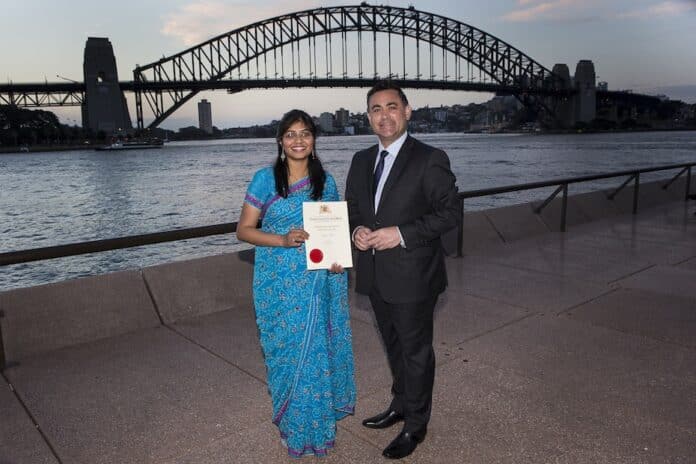
Saba Nabi was recently named International Student of the Year in the Higher Education category at the 2014 NSW International Student Awards. She was recognised for her contributions to the community and her role as a student leader at Charles Sturt University (CSU) in Wagga Wagga, where she is undertaking a PhD in Biomedical Science.

Saba said she was “on cloud nine” when she received the news about her nomination.

“My family, especially my parents, were all excited to learn about my nomination.”

Actually winning the award, however, was a new level of excitement.
“It was awesome,” said a beaming Saba. “I seriously didn’t realise at first instance that I had won. I must say all the other finalists were great in themselves and truly well deserving.”

Saba was presented with her award by NSW Parliamentary Secretary for Small Business and Regional Development John Barilaro MP at a special ceremony held in Sydney.

“I am happy that I live in a regional location which is full of opportunities, especially engaging a lot with the local community,” Saba said.

“It’s true that Wagga Wagga is my soul and Charles Sturt University is the heart of my body.”

So, what made CSU stand out to Saba over other Australian universities?

“Wagga Wagga is a regional city. Its landscape, flora, fauna and greenery appealed to us at the first instance. Moreover CSU has all the facilities and expertise, which we need to complete our research. When you have the potential and the eagerness to excel, you utilise your University to the fullest extent,” she explained.

Originally from Patna, India, Saba and her family decided to move to Australia to further her husband’s education in 2011.

“It was because of my husband’s ambition to pursue his dream of doing a PhD overseas, that my family and I left India and moved to Australia,” Saba said.

She added that she also had a childhood dream of completing a PhD, although she never really understood the meaning of it.

“All I knew was that it was the highest degree one could achieve, and I wanted to achieve it.”

In 2012, Saba became the first international student to be elected to the CSU Council. She was also the postgraduate representative for the University’s Faculty of Science Board, and is President of the International Student’s Club, Secretary of the Islamic Students’ Association and is heavily involved in many other campus endeavours.

Saba is also a keen contributor to the wider community, being part of local groups such as Cancer Council Wagga Wagga, Multicultural Council of Wagga Wagga, and Wagga Wagga City Council.

“Saba truly deserves this International Student Award for her many contributions to Charles Sturt University and the city of Wagga Wagga,” said Student Liaison Officer at CSU, Jacqui Blomfield.

“She has managed to draw together Charles Sturt University and the wider community with international students, and has worked collaboratively to raise the profile of international students at Charles Sturt University”.

“Saba is a wonderful advocate for Charles Sturt University and regional Australia,” said Saba’s PhD co-supervisor and pharmacy program leader, George John.

“Saba’s win is an outstanding achievement for a student who keeps on giving to Charles Sturt University and the local community through a variety of ways.”

Saba has a Bachelor in Pharmacy and an MBA in pharmaceutical administration from Jamia Hamdard University in New Delhi, and would love to work in the Australian pharmaceutical industry when she finishes her studies.

“I love engaging with the wider community and get a lot of inner satisfaction and enthusiasm to work more and more in a fruitful way,” she said. “I enjoy campus life because I had stayed for six years in a hostel at Jamia Hamdard in India.”

According to Saba, government organisations in Wagga Wagga are happy to work with international students and are always friendly and supportive.

“Getting involved with community groups gives you a family and a sense that you are also a part of the wider community,” she said.

Saba encourages international students to get more involved in campus and community life.

“Engage with your community, have a love for your passion but never keep aside your studies as you are here because of your academic performance. You should never neglect your studies,” she advised, adding that international students should not fear that English is not their first language.

“I am sure once you explore Australia, you will fall in love with its beautiful landscape and exotic species. It’s okay if you don’t understand their jokes or slang, but have faith in yourself and don’t ever change for the sake of others. Be yourself and Australia will embrace you as you are.”

The NSW International Student Awards are organised by StudyNSW and the NSW Government, recognising outstanding contributions by international students to the community.


Aboriginal-inspired designs at India Fashion Week

0
Reading Time: < 1 minute

Melbourne-based and Bengaluru-born designer Roopa Pemmaraju will showcase her collection at the upcoming Wills Lifestyle India Fashion Week Spring-Summer 2015 festival.

Pemmaraju’s luxury ready-to-wear collection will feature original artworks by indigenous Australian artists on garments using fabrics created by Indian artisans.
    
“It is a privilege to be working creatively with two ancient cultures and to be able to bring them together in a contemporary way for the modern woman,” said Pemmaraju.

Pemmaraju has collaborated with weavers from Varanasi, Karnataka, Maharashtra and Studio Calantha, a Bengaluru- based studio founded by her.
    
Indigenous Australian artists, including Warlukurlangu artists from Yuendumu, Rosie Napurrurla Tasman from Warlpiri culture and Reko Rennie, whose art incorporates his association to the Kamilaroi people, have worked on the collection.
    
Australian High Commissioner, Patrick Suckling, said fashion was at the forefront of the cultural connection between Australia and India, and had strong potential in the expanding trade and investment relationship.
    
“We are proud to present stylish and luxurious contemporary Australian fashion that exemplifies the quality artistry of two ancient artisan cultures, Indian weavers and Aboriginal artists,” Suckling said.

The Jagran Post

Fostering deeper links with India

0
Reading Time: 2 minutes

Julie Bishop has announced the commencement of thirteen innovative projects profiling Australian expertise and fostering deeper people-to-people and institutional links with India. They will be supported through this year’s Australia-India Council (AIC) grants program.


The AIC’s grants, totalling over $565,000, will support new partnerships between Australian and Indian universities, professional bodies, private sector organisations and arts communities in areas of strong mutual interest and where the bilateral relationship has the greatest capacity to grow.


This year’s program will fund cutting-edge collaborative research in the mapping of salt?affected land and water resources; the sharing of Australia’s experience in implementing food standards, managing major sporting events and planning for sustainable urban transport links; and a new teacher education exchange program.


Other program highlights include the AIC’s support for Opera Australia’s Indian tour of Eddie Perfect’s “Shane Warne The Musical” and the installation in India of “Song for Country” – a multimedia exhibition celebrating Aboriginal and Torres Strait Island culture.


In recognition of the shared value Australia and India place on our respective cultural heritage, the AIC will also be helping to revitalise the Dr Babasaheb Ambedkar (the father of India’s constitution) museum with Australian conservation expertise.


The AIC’s general grants program is conducted annually with applications open to Australian organisations and individuals.  Proposals are sought in the arts and culture, science and technology, education, social initiatives (sport, public health, gender) and public policy fields.


Further information about the AIC is available at www.dfat.gov.au.

A Bronze Medal That No-one Wanted

0
Reading Time: 3 minutes

Life is not always fair. We all know that. The same goes for sport. You have your days, both in sport and in life. And then there are some days that are not meant to be yours.

It is how you deal with your “bad” days that shapes and defines you as a person, as well as an athlete and a champion. The inherent tendency as humans, is to lash out. At someone, perhaps everyone. To voice the perceived unfairness we felt towards ourselves. To protest. And sometimes, to even seek revenge. Right there and then.

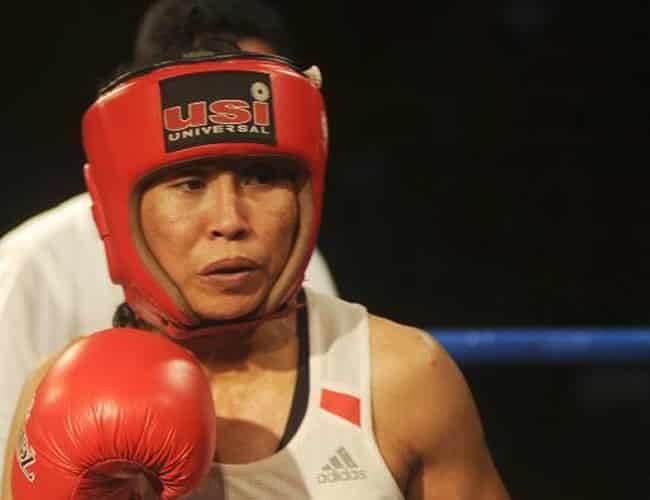
At the recent Asian games at Incheon, Indian boxer L Sarita Devi felt she was unfairly judged during her semi-final bout. Obviously, she thought that she was the better boxer during the bout. That the decision handed by the judges was unfair, and perhaps biased against her. She felt cheated and robbed off a chance to win a gold medal.

And she is entitled to feel like that. She is entitled to be concerned about a result handed down to her that she perceives unfair and harsh. It is not merely a sport she plays as a hobby. It is her chosen profession and has obviously trained hard for years on to reach that level. So the disappointment and emotion is totally understandable, and dare I say justified as well.

However, this is exactly where a debate has arisen in relation to this matter. The manner and the actions chosen by L Sarita Devi to demonstrate and voice her annoyance and disappointment with the decision of her losing semi-final bout has divided the entire sporting community. And ordinary citizens like myself.

In my view, L Sarita Devi’s decision to interrupt the medal ceremony, hang the medal around her opponent’s neck, and then refuse to accept her bronze medal was quite simply unprofessional, disappointing, and against the spirit of any sport.

If there was a feeling in her camp that the decision handed down was wrong, then there are protocols at all sporting events to challenge such decisions. This did not occur. The explanation being provided is that Indian management officials refused to afford monetary assistance to Devi to lodge an official complaint. Even if this allegation is true and there are issues within management ranks that hinder athletes, the reaction by Devi to interrupt the medal ceremony is still not justified.

Interrupting a medal ceremony. Showing little regard and reverence towards a national anthem being played for a winner. Being obstinate while being offered a medal. And all this to merely prove a point does not reflect well on a professional athlete.

Mary Kom, an icon of Indian boxing, has since then expressed her disagreement with Sarita Devi’s behaviour as well. While supporting Sarita Devi’s emotions about the matter, Mary Kom stated she would have shown her dissent differently.

While being trained at becoming the best in their sporting skills, elite athletes are also coached and trained to adhere to the spirit of the sport they play. To accept a decision and move on. To practice harder the next time and seek their revenge within the sporting arena.

Sarita Devi will have her supporters, in her camp and in the wider community who will stand by her actions. However, I believe the better debate to be had is how can we assist Indian athletes in having a fair management regime supporting them. Sarita Devi’s actions in that medal ceremony should be discouraged. They do not set a good example.

As they say, you are not bigger than the sport you play..