Home Blog Page 828

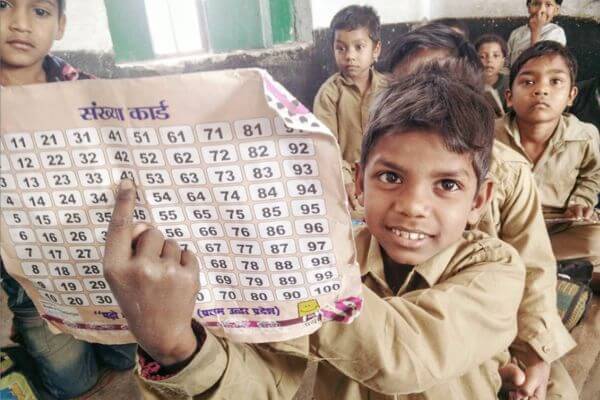
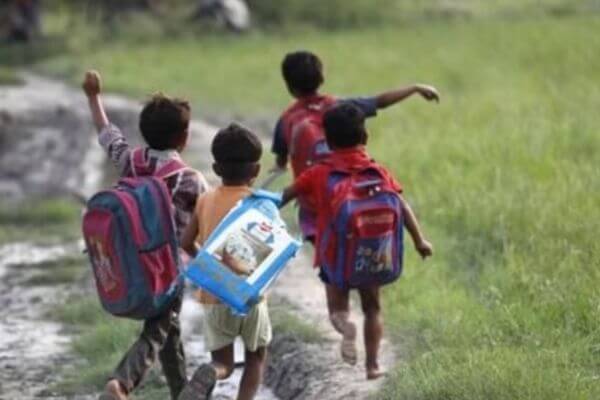
Helping kids get to school

0
Reading Time: 4 minutes

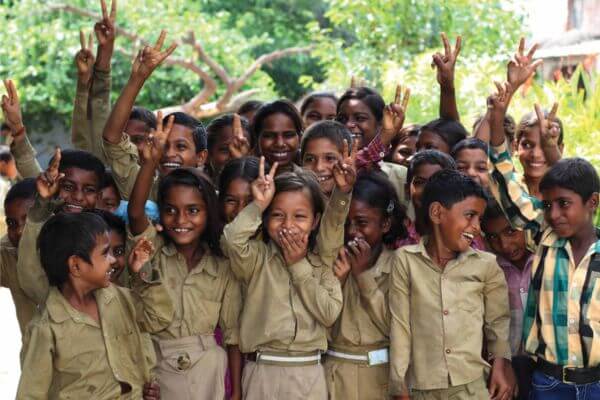
A new organisation Schoolgoers is creating high-quality learning opportunities for children in rural India. 

Education in India is free and compulsory for all children, and yet, according to the latest statewide Annual State of Education report, in rural areas only 41 per cent of students in Year 5 can read a Year-2 level textbook.
The implications of this have led Daksha Sridhar and Ash Nugent to conceive of an almost entirely new model of delivering education in disadvantaged areas of India. The result is Schoolgoers, a non-profit organisation that plans to establish learning centres in India that offer flexible yet high-quality education programs.
“You can’t simply build a school and hope for that educational access to happen,” says Melbourne-raised Sridhar, 27. She and Nugent discovered this first-hand whilst on a self-funded study tour of India in early 2014, when they and a group of likeminded friends spent around two weeks on an intensive tour of NGOs and schools across India.
Schoolgoers.Indian Link
Interested in investigating how they could help in the current educational space, they instead found that conventional school programs, no matter how supportive, weren’t able to address the specific obstacles faced by disadvantaged children and their parents.
“Many [parents] expressed a strong desire for their child to get an education…when we dug deeper however, some acknowledged that their children play a large role in supporting their households,” Sridhar says. In fact, according to the latest Indian government census, there are 4.4 million child labourers in India.

Schoolgoers.Indian Link
Daksha Sridhar

Another deep-seated issue is that of child marriage. The group found that, despite the efforts of school directors, there was a mixed response from parents of girls to letting them finish their education instead of getting them married.
“There was a high drop-out rate from age 14,” says Sridhar. “You hear about it statistically, but it was confronting to know just how many girls were dropping out who wanted to continue.”
Schoolgoers.Indian Link
The final issue that struck home with Sridhar and Nugent was the lack of access to quality education in rural areas. While observing classes in schools, they found that children who could read a page in English didn’t necessarily understand what it was they were reading.
“There’s a strong focus on rote learning and not necessarily quality education,” Sridhar explains. She also couldn’t help noticing that, when questioned about their ambitions, only a few children named things outside their own experiences. One child said he wanted to be Prime Minister.
“One mentioned Donald Trump! I have no idea how he heard about Donald Trump – that was just amazing,” Sridhar laughs.
For Sridhar and Nugent, the trip to India was an eye-opener. Eventually, it was the two of them that came together to start Schoolgoers.
“We have complementary skill sets,” says Sridhar, who has been volunteering for non-profit projects in Australia and overseas since she finished high school. Nugent brings experience working with asylum seekers and refugees in social enterprise projects.
Schoolgoers.Indian Link
Ash Nugent with locals

The first Schoolgoers Learning Centre will be in the village of Ghogharia in southern Bihar. To establish the Centre, Sridhar and Nugent are working closely with Naresh Kumar and Pankaj Kumar, who run Gautam Buddh Free Education Centre near Bodh Gaya, and whose pragmatic approach to running their own school inspired the model Sridhar and Nugent have embarked on.
The Schoolgoers Learning Centre in Ghogharia will offer a formal high-quality school program, but with flexible hours for children who are not able to attend school during normal hours. It will also offer a supplementary program for children who already attend school, but have gaps in their education. Sridhar and Nugent also hope that the Centre will engage with the broader village community and, in future, be able to provide adult education programs.
The journey to getting the organisation up and running hasn’t been smooth. Besides having to contend with doubt over the project from friends, family and stakeholders both in Australia and India, it took time (and around fifty emails) to find an Indian law firm willing to work pro bono with them to get them through the many regulations required for NGOs in India. What’s more, both Sridhar and Nugent work full-time while jointly working on Schoolgoers.
Schoolgoers.Indian Link
“Since it’s just the two of us, we both do everything,” says Sridhar. But she’s unreserved about how she feels about working on something so big while also working full-time.
“I love it. This is an opportunity to do something I’ve wanted to do my whole life.”
The Learning Centre will open in the second half of this year. Sridhar and Nugent hope that, if their new approach works, they can establish Learning Centres across Bihar, India, and, eventually, even in other countries.
“I’m not saying it will happen overnight,” says Sridhar. “But you have to have a big vision.”
To support Schoolgoers visit: schoolgoers.org/

Feel it in your bones!

0
Reading Time: 3 minutes

It’s an ISCA lesson on bones and muscle

It was a truly spellbinding session. The monthly meet of the Indian Senior Citizens Association (ISCA) picked a topic of discussion significant to us all – bones and muscles. Two experts were on hand to educate us and answer our questions, Dr Ram Nadathur of the Royal Melbourne Hospital, and Nathan Elijah, an Injury Prevention and Rehabilitation Consultant.
Bone Health.Indian Link
Via the power-point projection, various colour charts and bone structure models, the two competently highlighted the necessity of nourishing our bones and muscles, especially those of thigh and calf, plus associated joints, and particularly for seniors, via the path of a sensible diet and regular exercise schedule. Through various slides, they detailed how bones store minerals in the shape of marrow, muscles, blood cells and phosphorous, the lack of which may cause diseases such as osteoporosis, rickets, muscle cramps, etc.
The human body possesses the natural ability to repair the damage already done to bones and muscles, Dr Nadathur said. We seniors must recognise how to assist that natural ability, which may be attained by a sensible and consistent diet and exercise schedule. If the diet is poor, or we are lazy, and/or our intake of water is insufficient, disease attacks bones and muscles. Do not lose weight, we were advised, for at our age losing weight indicates that our muscles have given up. He used an old adage: use it, or lose it! Do not gain weight either, so as to keep diabetes and arthritis at bay. When one member asked how she can exercise when she is old and frail, Dr Nadathur quoted another adage: You do not exercise because you are old. You are old because you do not exercise!
Mr Elijah outlined how the bodies of all animals except human bodies have the natural ability to make their own Vitamin C. Hence, Vitamin C supplements, especially during old age, become necessary. However, we should consult a medical practitioner to monitor the dosage as excess Vitamin C can be just as harmful to human bodies as a deficiency. He advised us to ask our GP to conduct a complete blood count, kidney function, lipids, PTH, thyroid, and bone density studies, and prescribe necessary supplements.
Bone Health.Indian Link
Yet, both reiterated that a regular exercise and diet schedule is a must to maintain. Take up aerobics, if possible. Try alpine walking sticks, which maintain a balance of weight between the body and the muscles.
Get an activity tracker, Dr Nadathur suggested, showing us the one he uses at work.
Mr Elijah advised us to eat lots of green chillies, the effect of which engenders heavy breathing. “Walk bare foot,” he also reiterated, “So you may maintain constant contact with Mother Earth!”
Although Dr Nadathur had returned from work at 2:30am, and was to report back in a few hours, the question and answer session that followed simply refused to end.
President Dinesh Sood gave us the good news that for the following three months, these two experts have very kindly agreed to answer ISCA members’ questions in the Friday program.
Dr Nadathur and Mr Elijah may be contacted on 03 9408 0337, or iprc@optusnet.com.au.

Sugar-free strawberry treats

0
Reading Time: 3 minutes

How to make the packed-with-goodness fruit even more healthy! 

As a food blogger, writer and cook, one of the reasons I love strawberries is they are so versatile as an ingredient in the kitchen. You can put them in fruit pies, jams, sorbets, gelatos, ice creams and milkshakes. I’ve even made traditional Indian-style preparations with them like strawberry halwa and murabbas (Ode to strawberries, Indian Link, May 2015). Plus of course, they are popular with all age groups.
Strawberries.Indian Link
But over and above their versatility, strawberries are packed chockablock with nutrients. They are filled with anti-oxidants and flavonoids and are an excellent source of manganese and vitamin C. Additionally, with a low calorie count, these are a great source of instant energy. Hardly surprising then, that back in the day, the Romans used it extensively for medicinal purposes.
In my own health-aware style of cooking, I like to cook sugar-free. (Yes, the halwa and the murabba that appeared in this column were also sugar-free.) I am all in favour of banishing white sugar from the diet, preferring to use healthier alternatives such as natural sweeteners include coconut sugar/palm sugar, stevia, erythritol and xylitol. Honey and maple syrup also have a lower glycemic index than sugar and can be useful in making sorbets and beverages.
I’ve got some sugar-free strawberry preparations again for you this time. Here in Victoria, strawberries will be around for another couple of months, so make the most of them now!
 
Strawberry sorbet
Sorbet is a frozen dessert made from fruit pulp/juice with sweeteners. The addition of any syrup-based sweetener to a sorbet lowers the freezing point and hence gives it a smoother texture. One can use light maple syrup or honey to get this texture. Once prepared, it can be stored in the refrigerator for 10 days. Allow it to thaw for 5-7 minutes before serving.
Strawberries.Indian Link
Ingredients
2 cups strawberries (around 400 gm)
1/3 cup maple syrup/honey
1/3 cup coconut water
½ tsp stevia
Pinch of salt
Method
Puree the strawberries in a blender for 15-20 seconds, keep them aside.
Mix the coconut water with maple syrup, stevia and salt.
Add the pureed strawberries to the mix.
Pass the mix through the sieve to separate the seeds.
Pour the preparation into an ice-cream maker and churn until firm.
Transfer sorbet to a pre-chilled mould, cover with plastic wrap and a lid and store in the refrigerator
If you don’t have an ice-cream maker, place the fruit puree in a stainless steel bowl and place in the freezer.
Allow it to set a little (this may take about 1 hour), then whisk it for about 10 seconds. Return it to the freezer to set a little more, then whisk again to give it extra lightness and to stop large ice crystals forming.
 
Instant Strawberry Crush
This wonderfully fresh and rejuvenating preparation can be made in five minutes and served instantly. The addition of cranberries gives it a dash of added colour and a tangy flavour. You may replace cranberries with any juice (without added sugar).
Strawberries.Indian Link
Ingredients
1 cup strawberries
½ cup cranberries
3 cups water
2 tbsp maple syrup/honey
1 tsp stevia (optional)
Method
Mix all dry ingredients with 1 cup of water in a blender.
Puree them for 10 seconds.
Pass the mix through a sieve, separating the fruit pieces/seeds.
Add remaining water, serve chilled with ice and small pieces of strawberries.
 

Hindi classes for Wyndham

0
Reading Time: 3 minutes

Local lessons to encourage greater participation

People in Wyndham and surrounds can now take part in Hindi language classes in their local area thanks to the efforts of Western Suburban Indian Languages group (WSIL). The community group, led by Dr Ritesh Chugh, was formed in September 2015 to promote Indian languages in Melbourne’s western suburbs.
It is projected that over the next decade India will become a leading economy in Asia and the world. The corporate world is increasingly outsourcing and expanding businesses to India, and it is one of Australia’s largest trading partners and a major export market for mining and agricultural products.
Learning how to communicate with people in India in one of the national languages will benefit many. Hindi also features among the four ‘priority’ Asian languages in Australia.
“I strongly feel that learning Hindi will have many advantages; whether it is to connect our children to their roots, develop proficiency in their heritage language or further a deep bond with Multicultural Australia,’’ Dr Chugh said.
Hindi in Wyndham.Indian Link
The senior lecturer in ICT spent many months lobbying for the introduction of Hindi classes for children through the Victorian School of Languages (VSL). Established in 1935, the VSL currently offers over 40 languages, via distance learning and face to face classes, to students who are unable to access those language programs in their mainstream schools
At pre-approval stage, Dr Chugh was asked by VSL to collect data from parents of potential students to gauge their interest in enrolling their children. A survey was conducted and Dr Chugh received a considerable number of expressions of interest. As a result, VSL agreed to hold classes in Suzanne Cory School in Werribee. The classes currently operate on Saturday between 9am and 12.20pm.
According to Dr Chugh, Wyndham City has experienced the largest and fastest growth of all local government areas in Victoria, Australia. Data from the 2011 Census indicates around 3,309 Hindi speaking residents live in Wyndham.
“Over the past four years there has been a dramatic population increase in the Wyndham area, which would also indicate an upward trend for the Hindi speaking population,” Dr Chugh said. “These figures indicate a need for Hindi language classes to be made available in the Wyndham area.”
Hindi in Wyndham.Indian Link
“I got involved in this mainly because I wanted my children to learn Hindi language and the closest classes that were available in this area were held in Sunshine, which is a fair distance from Tarneit where I live,” Dr Chugh said when asked what prompted this initiative.
If this initiative is successful Dr Chugh and WSIL has indicated plans to approach schools to embed Hindi in their curriculum and to make it available to students as a Language other than English (LOTE).
Dr Chugh believes the interest in learning Hindi will only grow with the burgeoning population of people from Indian origin living in Melbourne. People from non-Hindi speaking backgrounds may also be motivated to learn the language out of interest in the culture, for better business communication, job prospects or if they are planning to travel to India.

Ask Auntyji: Running interference

1
Reading Time: 4 minutes

You ask, Auntyji answers!

Interfere.Indian Link
When not to interfere
Dear Auntyji,
I hope you are well and that 2016 will be a wonderful year for you. I have a particular query that I wouldn’t mind getting your perspective on. My family is from Fiji and my 20-year-old niece is studying nursing. Now my sister and her husband are already talking about getting her married! My niece is an innocent girl who has not seen much of the world. She is not allowed to go anywhere alone and has never even had a job. My concern is that she will be married and that all the opportunities in the world will be lost to her – because she will probably just stay at home and have babies. I have tried speaking to my niece about this, as well as her parents, but they all feel that marriage is the way to go. What do you think I should do, Auntyji? What is your view on the subject?
Interfere.Indian Link
Auntyji says
Hmm. This is a particular conundrum. So, here is what I see. Your niece is a young woman who is fully capable of making her own decisions. If she wants to get married and live a life of blissful domesticity, with a husband and babies, who are you to argue. Besides, who says that after marriage, all opportunities will be lost? How do you know that your niece won’t be one of those women who decide that after marriage, she will study and forge a career before babies? You never know – anything could happen. The most important thing here is that you don’t impose your views on your niece. She is old enough to make her own decisions. You can guide her, and perhaps tell her about the things she could do without being married – like travel and enjoy a career. But she could also do these things while married. So, bottom line, while I understand your perspective, I think this is one family drama you should avoid. Support your niece in every way that you can and guide her, but allow her to make her own decisions.
 
When not to interfere, Part 2
Dear Auntyji,
I have a lot of friends and recently, while I was out, I noticed that the boyfriend of one of my girlfriends was being a little too cosy with another girl. So I took a few photos of this, and the next time I saw this friend, I showed the photos to her. Now this friend of mine is someone I knew casually from a previous job, so I am not her best friend or anything, but Auntyji, you would have thought that I had showed her photos of her parents in flagrante delicto! She went nuclear on me and called me a busy body and said it was none of my business what her boyfriend was doing. Auntyji, I was gobsmacked. Here I was doing her a favour, and she shoots the messenger? What kind of girl does this? But when I told another friend of mine, she said I should have stayed out of this tamasha. She said it was all my fault that Tanisha was angry with me. Now Auntyji, I don’t know what alternate universe I have woken up in, but I am confused. Should I have kept this information to myself? Or did I do the right thing and these numbskulls are plain stupid? Tell me the honest truth, Auntyji.
Interfere.Indian Link
Auntyji says
Well, my kabootri, we live in strange times. All the rules we had don’t apply any more, and human beings seem to be regressing, instead of going forward and progressing to enlightened beings. Now, you thought you were doing the right thing, but that kulachini, that Tanisha, did not see your true intentions and instead of getting cranky at her lothario boyfriend, chose to get angry at you. In that case, Tanisha deserves a cad for a boyfriend. This is a crazy situation, you’re damned if you do and damned if you don’t. I suppose you could have taken a selfie with the bewafa in the background with his behaiya girl, and then you could have innocently put up the picture on Facebook and let your friends pick up the subtle cues. Many people have been sprung doing odd things in the background. In any case, the ghoda (horse) has already bolted so there is nothing more you can do. I suggest you remain your vigilant, chugal khoti self, and each time you see people doing bad stuff, I say you call them out on their bad behaviour. Your friends will learn soon enough not to behave badly around you. Or they could decide that they no longer want to be friends with someone like you. But who cares. Friends are over-rated anyway. They impose obligations on you, and then when you try to do the right thing, they turn on you. I say get yourself a cat and let go of your human friends. They only bring you misery.


Gravitational waves

0
Reading Time: 5 minutes

Questions remain but don’t detract from monumental discovery, writes ABHAS MITRA

The maiden direct detection of gravitational waves (GW160914), announced on 11 February, the culmination of intense worldwide scientific efforts spanning almost four decades, is one of the greatest scientific discoveries of all times. In particular, kudos to the Laser Interferometer Gravitational-Wave Observatory (LIGO) team for being successful in one of the greatest experimental physics feats which was originally conceived way back in 2002. Now we have a new window to unravel the most violent phenomenon of the cosmos.
It is very heartening for Indian scientists, who have played a very significant role carrying forward frontline research on various aspects of gravitational wave astronomy. In fact, two of the pioneers here are Prof. Bala Iyer at Raman Research Institute, Bengaluru, and Prof. (emeritus) Sanjeev Dhurandhar at the Inter-university Centre for Astronomy and Astrophysics (IUCAA) in Pune. The gravitational astronomy group at IUCAA and some other Indian centers have contributed to various relevant research as part of the global LIGO team.

Gravitational Waves.Indian Link
Gravitational waves

One may be tempted to fancy that this discovery has suddenly elevated Einstein’s General Theory of Relativity (GTR) from the status of being a mere “electrostatic” effect to that of dynamic “electromagnetism” where the effect propagates like a wave with a finite speed (of light). However, it should be borne in mind that unlike the electromagnetic case, one cannot obtain any realistic analytical derivation for such waves. The solution Einstein obtained 100 years ago is only a highly approximate solution involving only weak gravity.
This has to do with complex non-linear nature of GTR vis-à-vis simple linear nature of electromagnetism. And despite dramatic improvements in the prowess of numerical relativity, in order make prediction about the expected pattern of gravitational waves resulting from, say the merger of two compact objects orbiting one another. One needs to make various tacit assumptions or simplifications. Such computations, in a sense, become easiest when the merging compact objects are black holes. This is so because they are the simplest objects in the Universe: a black hole is just a single point mass with an imaginary spherical boundary called the event horizon. Thus, when one considers a black hole-black hole collision, one essentially considers gravitational interaction of two point masses dressed by their horizon. In contrast, a compact object such as a neutron star has a dense extended body with complex structure about which we have little idea. Hence, the study of the merger of two neutron stars is far more complicated than the corresponding black hole case.
Gravitational Waves.Indian Link
Black hole-Black hole collision

The present event – GW160914 – has been interpreted to have resulted from two compact objects having masses 36 (+5/-4) and 29 (+4/-4) solar masses respectively. These objects have been interpreted to be “black holes” because the original separation of them was only around 350 km. Once the two black holes merge, a dynamic single hole black hole is supposed to be born. This dynamic black hole is expected to go through a stage called “ring down”, where any distortion in the shape is dissipated as more gravitational waves. The mass of the final black hole has been estimated to be about 62±4 solar masses. And the missing 3.0±0.5 solar masses of energy was presumably radiated away in the form of gravitational waves, in accordance with mass-energy equivalence.
But one may ponder and introspect whether the 0.02 second duration burst of gravitational waves has confirmed that those massive compact objects involved here indeed possessed event horizons from which nothing, not even light, can escape. If an energy equivalent to three solar masses have been radiated out, a significant portion of it must have come from the mass-energies of the two progenitor black holes. The site of mass energy in a black hole is the central singularity. How can so much energy be extracted from a singularities and in a fraction of a second? Also during the “ring down” stage, can any energy come out of the trembling horizon of the dynamic black hole?
For a broader scientific perspective, one may note here that, in the past 15 years, many authors have pointed severe conceptual difficulties associated with the black hole paradigm, and have argued that so-called black holes are only quasi-black holes. Some of the black hole alternatives which have invoked some quantum gravity ideas are ‘gravastars’, ‘dark energy stars’, ‘black stars’ and ‘fuzzball’. On the other hand, the maiden suggestion for a quasi-black hole is called ‘eternally collapsing object’ that is an ultra-hot ball of plasma.
Gravitational Waves.Indian Link
Black stars

All such black hole alternatives are practically as compact as true black holes and can very well be accommodated in a 350 km orbit. But there is an important difference: Unlike true black holes, these are dense extended objects without any event horizon. Hence, the radiation of mass-energy of around three Suns may be better understood in scenarios where the compact objects involved for such mind boggling luminosities are quasi-black holes having no horizons. Of course, as of now, nobody has studied the expected pattern of gravitational waves resulting from the coalescence of quasi-black holes.
If these results are correct, they would imply that so-called massive black holes are only quasi-black holes. It would mean GW150914 resulted from the merger of two quasi- black holes and hence so much energy could be radiated out from the event.
Coalescence of two neutron stars are expected to generate not only bursts of gravitational waves but also bursts of gamma rays. Similarly, if the progenitors of powerful gravitational wave bursts are say balls of plasma, such events should be followed by bursts of gamma rays or x-rays. In contrast, the coalescence of true singular black holes need not give rise to strong electromagnetic counterparts. Thus, one wishes, in future one would plan for multi-spectral observations in the coincidence of gravitational burst observations. This may help unravel true physical nature of the progenitors of gravitational waves.
Gravitational Waves.Indian Link
Gamma Rays

Such questions apart, it’s a moment for celebration for astronomy and in particular for Einstein’s theory of general relativity which just completed its centennial. All of us are fortunate that this great development of natural sciences happened in our lifetime and many of us could witness the LIGO press conference on the night of February 11, 2016. If September 11, 2001, was one of the worst memories for modern history, February 11, 2016 turned out to be one of the best nights of human intellectual history.
Abhas Mitra is the former head of the Theoretical Astrophysics Section, Bhabha Atomic Research Centre, and currently adjunct professor at the Homi Bhabha National Institute, Mumbai. The views expressed are personal.
 

Homage to the grand master

1
Reading Time: 3 minutes

Sydney’s Carnatik music community pays tribute to one of the founding greats

It is no exaggeration to say that where there is Carnatik music there is Purandara Dasa (1484-1564); his compositions are sung even today. No Carnatik music performance is complete without a Purandara Dasa composition. Five hundred years after his passing, music aficionados continue to be inspired by this great master, worshipped as the ‘Pitamaha’ of Carnatik music.
Purandara Dasa composed as many as 470,000 Devaranamas (devotional pieces) in Kannada. In these, Krishna danced to his compositions; the essence of Vedas and Upanishads were offered in a easy-to-understand manner; he rebelled against meanness in individuals, and sermonised about righteous living.
Purandara Dasara Aradhane.Indian Link
As well, another great contribution of Purandara Dasa is that he taught us how to teach music, as an early musicologist. Before him, there was no scientific way to learn music. He introduced Sarale Varase, Janti varase, Alankara and Pillari Geethe as the first lessons in the instruction of music. The practice is followed to this today.
It is no wonder then that musicians continue to come together to pay homage to him.
In Sydney it is unique that the musical scene for the calendar year opens with Purandara Dasara Aradhane. This took place this year in late February, at the packed to capacity Ermington Community Hall.
The day started with the seniors and the beginners rendering Pillari Geethes – Lambodara and Kereya Neeranu. This annual tradition involves a group rendering of Sri Purandara Dasa’s Nava Rathna Malika, a garland of nine of his gems including Jaya Jaya, Adidano Ranga,  Sakala Griha Bala, Odi Barayya, Kallusakkare, Pogadirelo, Krishna Murthy Kanna Munde,  Bandanene and Indinavara,  set to impressive ragas – Nata, Arabhi, Atana, Bhairavi, Kalyani, Shankarabharana, Kambodhi, Sri and Suruti.
Purandara Dasara Aradhane.Indian Link
It was a delight to hear some 50 singers presenting these items in unison.
The dais was then handed over to beginners of music who performed in small groups. The confidence that they exhibited in their Harinarayana, Kandena and Tharammayya is to be admired.
In Sydney’s Carnatik music community, Purandara Aradhane has been typically themed to bring out some of the rare compositions of the master and avoid repetition. The theme prescribed for this year was ‘Nava Rasa’. Accordingly, elders in small groups presented compositions which portrayed the nine emotions of Hasya, Karuna, Raudra, Veera, Bhaya, Bibhatsa, Adbhuta and Shanta.
Lakshmi Abhishek gave a brief introduction to the nine rasas. Some of the great compositions of Purandara Dasa were delivered in abundant variety, including Carnatik, Hindustani and light music. Some brought out the melody while some others exhibited their superb craft. One heard both familiar and lesser known kritis Jagadodharana, Agnyaanigala Kooda Aadhika,  Tirupathi Venkata Ramana, Karuniso Ranga, Alli Nodalu Rama, Anjikinyatakayya Sajjanarige, Hanumantha Deva Namo, Veera Hanuman, Keleno Hari Thaalano and Bhagyadha Lakshmi Baaramma.
Purandara Dasara Aradhane.Indian Link
With these thoughtfully picked numbers, the message Dasarendare purandara dasarayya was effectively driven to the gathering.
It is admirable that there were as many as 106 participants and indeed that this activity has been practised continuously for 16 years in Sydney. The organisers deserve our congratulations.

Putting education first

0
Reading Time: 5 minutes

Pratham is working to ensure every child in India is educated and working to their fullest potential

Every child in school and learning well. The simplicity of the mission statement of non-government organisation Pratham belies the scope of their work in changing the face of education across India.

Initially established to target pre-schoolers and primary students in the slums of Mumbai, Pratham has grown to create a network of programs across 21 states and territories of India.

With Pratham’s flagship program ‘Read India’, as well as vocational training, early childhood educator training, English basics, ‘Pratham Books’, the Council for Vulnerable Children, and the InfoTech Foundation, it is not hard to see why Pratham’s low-cost, replicable models have spread far and wide.

Working in the field of social development since 1992, Renu Seth joined Pratham in 2005. “All other programs seemed so small compared to an organisation like Pratham,” Seth says. “The difference lies in the structure of the organisation, the simplicity. It showed me how a country like India needs work with a quality, large scale impact.”
She has worked across various verticals within the Pratham Education Foundation and is now the head of the Second Chance program.

“Every day, every program is a learning experience,” Seth says. “We began a pilot program in Mumbai looking into the needs of young women who had stopped schooling. We wanted to know how we could bring them back to the books. It was a learning experience for us too, and helped us to develop the Pratham Open School of Education.”

An important aspect of this is the Second Chance Program which offers an opportunity for women who were forced to abandon their education, due to various socio-economic issues or poor learning outcomes, to go back and finish high school.

pratham 2016 uploads

“We are going to 33 centres around the country, covering more than 3000 students who are taking part,” Seth says. “We’re hoping that because of what these girls will be able to do with their lives, it will show others they can do it too. We’re tracking them, trying to give them some additional support in terms of vocational guidance, financial literary, counselling. This will make their lives more meaningful.”

Estimates suggest 40 per cent of India’s 1.21 billion people are below the age of 18. To secure the country’s future, Pratham believes it is imperative to provide better education, going beyond rote learning to greater comprehension and understanding of skills.

“Whether it is the child of farmer or the child of businessman, whether it is in Australia or in India, every parent has a desire to see their child grow up and do well, be better than they are,” Seth says.

She details how although education has become a right for children in India, many do not have the necessary basic, pre-schooling skills needed to begin learning. For too long children were able to move on to the next grade without basic alphabet, reading, language development and numerical skills, she says.

With Pratham, thousands of volunteers work to implement learning ‘interventions’ at the grassroots level, integrating a holistic approach with the family and community.
“In the Pratham system, materials are reorganised. Children are grouped according to what they know and need to know, rather than by age bracket,” Seth explains. “We’re teaching a basic standard of operations in maths; an ability to read a text and talk about it.”

“There is a window where you can catch a child and engage with them in grades 3, 4 or 5. The child is still a learner. She goes to the market for milk and brings back exactly the amount of change required. She is living in a world and transacting, but she can’t write it down. It’s reorganising what the child does so it is more relevant to their world and their skills. Teaching them that next step.”

In 2005, the Annual Status of Education Report (ASER) was initiated by Pratham to measure learning outcomes and focus on issues of children’s schooling in India. Similar assessments are now implemented across at least eight other countries. ASER has become an important tool in the education field with governments at the State and Central level using the reports to formulate their education policies.

“Knowing there is a problem is often the first step to a solution,” says Seth. “Parents often think sending their child to school is enough, but this is about creating an awareness and responsibility for children’s learning at a community level.”

pratham 2016 uploads

Pratham’s results speak for themselves. According to the most recent ASER findings, out of the 10,562 schools that Pratham worked with over the past two years, in 67 per cent of the schools, over 75 per cent or more children could read at the end of their program up from 20 per cent in the initial stages.
“The basic criteria is that if a child needs help with their studies, Pratham will be there,” Seth says. “It is not about replacing government teaching, it supplements what is already being done. It’s about providing time for children to get up to their grade level. India is a diverse country with so many dialects so there is also sometimes a need to act as a bridge to help the child from the home language to the school language.”

Many children and students who went through the Pratham remedial classes are now teachers in the current Pratham centres. “They feel this is their own little school,” Seth says. “They come to give back to the program. They feel a sense of pride being associated with Pratham.”
Access to schools across India has improved immensely over the past twenty years, now the same collective action is needed for access to learning outcomes, argues Seth.
“Not everyone has to be an engineer or doctor, but they should have the ability that, if they work in a factory on a machine, they have the skills to read the instructions on that machine. If they’re serving in a café, they should know how to do sums and communicate well. It’s about learning the foundational skills to understand the world around you.”
Some have criticised Pratham saying it doesn’t move beyond a basic standard, but as Seth says, “If we just moved on to other realms of education, this lot would be left behind. It’s about finding different ways to give them the best foundations, developing a sense of independent learning.”

In late 2015, Dr Madhav Chavan, co-founder of Pratham, and Dr Rukmini Banerji, former Director of ASER and current CEO of Pratham, joined a public talk organised by the School of Education in the Faculty of Arts and Social Sciences at the University of Technology Sydney (UTS).
They spoke about Pratham and its processes including the idea of being creative while focusing on practical everyday solutions, for example using the floor as writing boards in rural classrooms. They also detailed the reorganisation of teaching and learning materials in the age of technology, educating women and children who can’t read but know how to work a mobile phone.

“There has been an organic expansion of Pratham,” Seth says. “We began with children, moving on to women, and now we also have vocational training programs. The hope is to make intergenerational progress.”

UTS is now looking at how to connect their expertise with the needs of Pratham. Several staff from the university will be taking the opportunity this year to visit Pratham’s offices in Mumbai and across India to best understand ways of developing future partnerships
“We’re always thinking about how to improve Pratham,” Renu Seth says. “Once someone has been a part of the Pratham journey it stays with them.”

To find out more visit Pratham.org

Wanting to learn

0
Reading Time: 4 minutes

A desire to study and achieve must come from within

It is very common to hear parents and teachers mourn the loss of achievement or potential achievement of a child at school. Typically, the scenario played out is that parents and/or teachers, observe that the student is underachieving. That is, there is a gap between the child’s perceived ability compared to their performance.
Wanting To Learn.Indian Link
There are different approaches taken to address this issue. Well-meaning adults, seeking to help a child achieve to their highest standard, often swing between encouragement and anger. The first option applied is normally to encourage. “You can do it”, “Give it a go” and “Just do your best”, are common phrases intended to encourage children. Failing that, encouragement can move to cajoling with phrases like “You should try harder”, “Why don’t you work harder?” or “Can’t you see how well you could do?”
Encouragement rarely works when a child has no interest or desire in achieving a particular thing. External encouragement, overtly reasoned to act as a motivator is in fact counterproductive. Encouragement can actually give the opposite message to that intended. A parent saying, “Try” may be heard as, “You are not good enough, you should be something other than what you are or how you feel. Be like I want you to be…” Good intentions by way of encouragement may serve the parent’s need to feel relevant or useful but can actually be very destructive. It should be clear that exasperation and anger would equally be counterproductive.
Feelings of exasperation can lead an adult to make intended or unintended comparisons with a sibling. This can be overt or subtle. For example, a parent or teacher can compare a person with an older sibling: “You are not like…”, or with a younger sibling, “Can’t you be like…”, or through encouragement that is overt or excessive when one child achieves academically. Audible and demonstrative praise of the high achieving child can make the other child feel invisible or simply not good enough.
Wanting To Learn.Indian Link
Other parents resort to a mixture of excessive structure and control. Timetables are drawn up, organised study plans made and rigorous structures adhered to. Here the idea is to imbibe or embed a culture of study, a work ethic committed to learning and achievement. However, such structures generally cause stress to both parents and the child and, though some learning takes place, it may be associated with tension, stress and anxiety. Performance will tend to become the focus rather than the pleasure of learning and discovery.
This can also occur when parents and teachers focus exclusively on outcomes rather than effort.
Wanting To Learn.Indian Link
A driver who called himself an ex-convict once gave me a lift in his taxi. He had been in and out of gaol on many occasions and now, in his late thirties, he had decided it was time to have a more productive life. He looked at how he had made poor choices and he saw that his choices were creating outcomes that were quite wasteful and painful. The significant thing was his realisation about the need for effort to create success.
No one else had been able to change him. Following this discussion, I interviewed a number of people who had turned failure into success. Whilst some mentioned a significant person, most said they changed when they had their own inner realisation that they needed to or wanted to. Whilst in one or two cases a person said something that resonated with them, or asked a question that prompted an inner line of inquiry, nothing could change them except themselves. That is, it was their inner reflection and response to that ‘chance factor’ that lead to a desire for personal growth or a resetting of the goals.
Wanting To Learn.Indian Link
If parents cannot expect encouragement or pressure to work – what will make a child want success? How can a person learn to obtain self-esteem and inspiration from doing well, if they actually do not want to do well? How do we ignite within them a desire to learn and to want to grow?
It seems that the answer lies within. In my experience, and in studies of those who have reformed a dysfunctional life, learning is likely to commence when a person (of any age) desires to learn. Motivation to learn can only arise from an inner desire to want to learn. So, the crucial thing here is to engage interest in learning so that it becomes its own reward. If that cannot be done, then imbibing a love of goal setting can lead to a life focused on personal bests and a sense of reward for having high personal standards in all things done.

A head for business

0
Reading Time: 4 minutes

American Indian entrepreneur Jagjeet Singh Bindra speaks at YSPN event on what it takes to succeed in business

With an aim to be the pre-eminent vehicle for successful Sikhs to connect and learn from one another, and to profile their successes to the wider Australian community, the Young Sikh Professionals Network was founded in 2012 during the annual leadership camp of Sikh Youth of Australia.
YSPN.Indian Link
A not-for-profit organisation, YSPN is dedicated to creating a unified community for young professional Sikhs by hosting networking events and guest speakers, and through a mentoring program.
At their recently held marquee event, an afternoon with Jagjeet Singh Bindra at the Hotel Pullman, Sydney, the turnout surpassed expectations. Keynote speaker Jagjeet Singh Bindra, former CEO of Caltex Australia and retired President of Chevron Global Manufacturing, held the room’s attention as he spoke on the role of energy corporations in the prevailing social climate, followed by a Q and A session.
YSPN.Indian Link
Bindra, known as ‘Jeet’, is recognised as an eminent figure in the energy and resources industry, serving on the board of directors of Edison International and its subsidiary, Southern California Edison Co., Larsen & Toubro, WorleyParsons and LyondellBasel Industries.
Bindra’s fluent thought process, coupled with his ability to deliver facts and figures, proved an eye opener to the current economic scenario, surrounding the race to stock up on crude oil barrels.
“I do believe that environmental concerns will drive increased investments in renewable energy, especially focussed on energy storage, efficiency improvements in photovoltaic space and clean coal technologies,” he said. “A discontinuation or even a technological breakthrough in any of these areas could have a revolutionary impact, just as the shale gas discoveries had on the North American energy equation. Nobody thought fifteen years ago that fracking technology would make shale gas abundantly available in the US.”
YSPN.Indian Link
 
Bindra has decades of experience including in senior executive roles in refinery operations, refinery and upstream engineering, strategic planning, capital projects and engineering technology. He is considered to be a competent authority on topics in the refinery, manufacturing and management disciplines.
“It is expected that over 50 per cent of the small independent shale gas companies will file for bankruptcy in the next 24 months. The number already stands at 15 per cent or so,” Bindra opined.
“When I started work in the US, I was told because I looked different, sounded different and had a different name, I’d be lucky to retire in middle management. I decided to take this as a personal challenge – and that motivated me,” Bindra said.
YSPN.Indian Link
The importance of humility was also discussed.
“Humility is a key factor for success. It teaches you to respect others no matter whatever their position it is,” Bindra said. “When a person accomplishes in their career and gains more wealth, they can still maintain a modest attitude and not over-rate themselves.”
Bindra’s experiences in the role of a leader, and the efforts he selflessly invested into empowering his employees was in itself a take away point. He spoke of many instances where he would spend time reaching out to employees, and the many hours he would walk around shop floors and offices meeting people and reinforcing their importance to the organisation. “As a leader it is very important to lead at all times,” Bindra said.
YSPN.Indian Link
YSPN Sydney Events Lead, Sohail Bhatia, spoke of the journey and the accolades YSPN has earned its short existence.
“We are the first generation of Australian born and educated Sikhs. Our organisation is significantly influenced by this notion. What we do in our careers and in our lifetime will form a legacy and a basis for all Sikhs that follow us in this great land,” Bhatia said.
It was a thought provoking session, listening to one of the corporate world’s most successful Sikhs.
The YSPN team is comprised of actuaries, bankers, consultants, entrepreneurs and lawyers. Each member of the team has their own personal stories of the power of networking and they are committed to fostering a new level of connectivity amongst the young Sikhs of Australia.