

Young Amardeep takes on the challenge as guest editor at Time Out and delivers an impressive issue

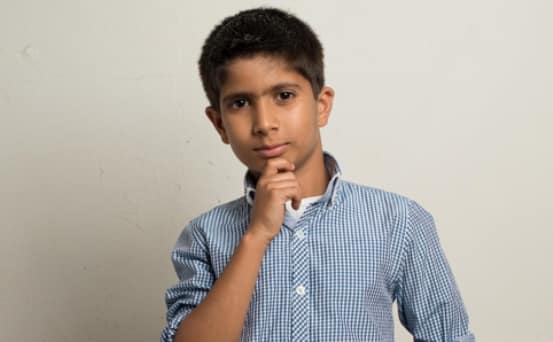
At just 9, Amardeep Gill has achieved a feat many can only dream of. He has become Australia’s youngest editor by bagging the spot of guest editor for Time Out Sydney magazine. To coincide with the July school holidays, Time Out was looking to create a kids’ edition, and ran a competition for a child guest editor.
Year 4 student Amardeep found out about the competition through his mum who heard about it on ABC radio.
He told Indian Link how he went about entering the contest.
“I completed an application form on the Time Out website. I had to tell them about myself, my favourite foods, what I liked doing in my spare time, about my local area, and who I would like to interview most – I wrote down Anh Do. Unfortunately he is out of the country and I was unable to interview him. Once shortlisted, I had to attend an interview with Time Out editor Joel Meares and kids’ editor Emma Joyce at their office in Glebe”.
Amardeep competed against dozens of aspirants for the coveted position. Finally, out of the seven shortlisted candidates he was declared the winner, claiming the prize of a Merlin Family Annual Pass: 12 months unlimited entry to 11 top Australian and New Zealand attractions including Sea Life, Sydney Aquarium, Wild Life, Sydney Zoo, Madame Tussaud’s and Sydney Tower Eye. He also won a family pass to see the musical The Addams Family with a backstage tour and an opportunity to meet the cast. And this was in addition to the privilege of editing Time Out Sydney.
So what impressed the judges most about him?
“I think my idea of kids’ food in restaurants was original as they (the judges) hadn’t thought of that before. I had a very strong view on the kids menu, and eating out, which they liked. They were also impressed with what I was wearing (mustard slacks and checked button down shirt). They thought that Anh Do was an interesting choice for an interview. They also liked the idea that I enjoyed doing quite a few things around my local area and the city, for example, bush walking, nature trails, and visiting the Maritime Museum and Art Gallery of New South Wales. I also enjoy going to the theatre and watching live sports like soccer and cricket,” Amardeep answered articulately.
When he received the phone call informing him of his success, Amardeep could not believe his ears. “I was jumping up and down in joy. I couldn’t believe that I had been chosen for this fantastic opportunity. I had to phone dad and my grandparents immediately,” he recalled.
A couple of weeks after winning the guest editor’s position, Amardeep was invited to the Time Out office to look at the magazine, meet the staff and chair a meeting to discuss the front cover of the magazine.
“Over the next couple of weeks, Joel asked me to write my own article titled ‘Amardeep’s Top Picks’- about kids menus in a selection of different restaurants, an Editor’s letter introducing myself to go in the first page of the magazine, rank the ‘Top 13 things to do before you are 13’ list, add my own ideas and check the whole magazine before it went to print,” explained Amardeep, outlining his role as the guest editor.
His stint at Time Out Sydney started on June 4 and by June 8 he was editing emails, continuing to work tirelessly until the magazine was published. Amardeep’s time on the editing team ended on a high note with an interview on Channel 7’s morning show on June 26, to announce the publication of the special children’s issue.
Asked to sum up his experience as a guest editor of Time Out Sydney, Amardeep reflected, “I found the job to be a lot of fun, even though I had to do quite a bit of work. It was an interesting and exciting experience. The team was very welcoming, organised and friendly. They were also quite funny and when it ended I was really, really sorry to go because working with them was just so great!”
Now that the children’s issue is out, Amardeep feels it has been “a huge success”.
“Everyone wants to know what a kid has to say about Sydney; the restaurant article especially attracting a lot of interest. Everybody who has seen it is very proud. Lots of my friends and teachers have bought copies, and found it good to use during the school holidays”.
Speaking of the reaction of family and friends on his success, Amardeep said, “they were as happy as me, and were very proud of me. My teacher announced it in the school newsletter, and showed my class. My classmates watched me on TV and gave me a standing ovation when I got back”.
He enjoyed the experience so much that Amardeep wishes for a similar opportunity again. His passion for writing makes Amardeep want to consider becoming an author or a journalist when he grows up, or maybe even an editor!
Crediting the editor
Visa deportation scam


Migrants and visa holders have been warned by the Australian Competition and Consumer Commission (ACCC) about a recent scam, whereby victims are threatened with deportation if they do not pay $900 to the scammers.
The scammers claim that the person they are calling does not have a “citizenship and immigration services alien” (CISA) number, which is fictitious.
Delia Rickard, ACCC deputy chair, says there has been 60 reports of the scam so far this year.
A Department of Immigration and Citizenship spokesman said “The Australian Government will never call you to demand a payment in relation to your visa so if you receive this call, hang up”.
Call the Immigration Dob-In Line on 1800 009 623 if you receive a similar phone call.
From Coogee to Tilak Nagar
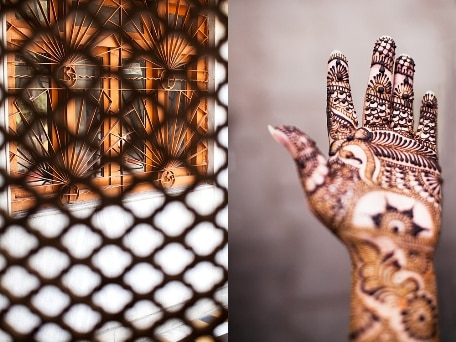
Louise Hawson’s vivid photographic exhibition 52 Suburbs Around the World goes beyond cultural clichés to explore the “real” side of suburbs including India and Australia



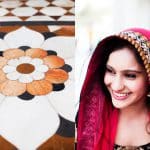



Photographs copyright of Louise Hawson
In a quest to explore the uncelebrated neighbourhoods of the world, Sydney-based photographer Louise Hawson explored 10 countries, 14 cities and 52 suburbs with her daughter Coco, all in just one year. Her photographs, almost entirely diptychs, are currently being displayed as the exhibition 52 Suburbs Around the World at the Museum of Sydney, and present images of the ordinary suburbs of Australia up against those of India.
“I’m motivated to explore the ‘unfamous’ side of a city by a child-like desire to be surprised and to make discoveries, rather than follow a well-worn trail where things have already been discovered a zillion times,” says Hawson. “I want to observe real life, so venturing into neighbourhoods where there’s normal life going on is much more satisfying to me”.
Hawson’s quest to “capture the beauty that exists in an apparently ordinary world” was ignited after her project 52 Suburbs of Sydney, where she explored the lesser known suburbs of her home town. This trip in turn was propelled by a bite from a white-tailed spider, which lead Hawson to change her career path to photojournalist.
Her trip around the world in 2012 included Hong Kong, New Dehli, Istanbul, Paris, Rome, Berlin, New York, Los Angeles, Tokyo, Kyoto, Auckland, Wellington, Melbourne and finished up Sydney.
“Yes, they’re all famous ‘over-photographed’ cities; [but] my mission is to paint a more imaginative, intimate picture of them than you normally see,” she said at the start of her trip on her blog www.52suburbs.com. Hawson’s aim was to “ignore the postcard clichés and focus instead on finding ‘ordinary’ beauty in the places where ‘ordinary’ people live”. This can be seen in the exhibition, which presents 100 (of the 30,000 photographs taken on her trip), simply displayed photographs on fine art raag paper. Eight vibrant photographic prints of New Dehli, and seven of Melbourne and Sydney are included as part of the exhibition, which explore the differences between countries and cultures, as well as the remarkable similarities.
This effective presentation of 52 Suburbs Around the World, presented by Sydney Living Museums, allows the photographs to speak for themselves and are split up into cities. More images can be seen in the slide show that is part of the exhibition, as well as on her blog.
Hawson enjoys using diptychs, which are two images presented side by side (presented with a caption) because they are “a playful way of presenting images that allows me to make connections between seemingly unrelated things and to tell ‘mini stories,’” she says. “I often juxtapose people with the built environment, making a connection through a shared texture, colour or shape – anything that unites the images and creates a new meaning”.
Interesting points can be made from the photographs of Indian Australians living in Melbourne and those in the New Dehli images. “What I also keep being surprised by is that as abysmal as the built and natural environments can be, there is so much beauty in the people, the saris, the temples and the street food,” says Hawson. “And in the case of Lajpat Nagar, the art that may fade quickly but will leave an indelible mark on me forevermore”.
As director of Syney Living Museums, Kate Clark said in her exhibition opening speech, the exhibition displays an “extraordinary mixture of cultures”. It also shows Hawson’s interest in the cultures found in Australia compared to the original cultures that they derive from overseas. Her celebration of the beauty of the ordinary suburbs goes beyond the usual cultural clichés found on postcards and forces the viewer to suspend any preconceived notions.
Although the “world is an imperfect place, when you spend a year walking the streets… you find beauty in unexpected places… find hope, and joy that exists, despite the many problems” Hawson says. 52 Suburbs Around the World allows the viewer to explore these lesser known neighbourhoods of the world’s famous cities, and join in with their inhabitant’s daily rituals. “Explore + photograph + share = my idea of a good time,” says Hawson, which sums up her exhibition.
20 July – 24 November
Museum of Sydney is open daily 10am – 5pm
52suburbs.com
Party on my mind

Yummy mummies gather again at the annual Sydney Sakhi Sangam

Maine pehne party shoes
Gonna let my body loose
Karli hai thodi (sn)ooze
There’s party on my mind
So goes the latest party anthem courtesy Saif, John, Deepika and Amisha, and as always, it suited community sakhis perfectly.
The annual Sydney Sakhi Sangam was on again mid-July, and yes, the party shoes – and those stringy cholis with plenty of oomph – were out once more in all their sparkling glory.
The day-long girls-only party, Sakhi Sangam (literally “girlfriends gather”) turned fifteen this year. It began as a lunch affair for a small set of friends, and today, the annual congregation of yummy mummies has become a community institution.
If you’re a woman in Sydney’s Indian community, it is a “have-to-do-at-least-once” kind of event.
Nearly 800 women attended this year, all out to have a good time, have some lunch, get some mehndi, buy some jewellery, perhaps a sari, and generally kick up their (beautiful) heels.
And yet there was one striking difference this time round. The force behind Sakhi Sangam, Nandini Thadani, was conspicuous by her absence, having suffered a heart attack the day before. Yet she had decreed from her hospital bed, trust her, that the show must go on. Her partner-in-crime Sushma Ahluwalia and dependable lieutenant Preeti Thadani ensured the event went on as planned and just as smoothly.
Pinks and greens dominated in the couture this time, and there was a fair bit of black as well. Plus, of course, some impossibly high heels, plenty of bare backs, a whole lot of bling, and sometimes, bare backs adorned with bling!
Lead sakhis Sushma and Preeti, assisted by Kanwal Gujral of Manjit’s, cut a cake to mark the 15th anniversary. As a special token of appreciation, surprise presents were given to ladies who have been attending for the past 5, 10 and 15 years.
As always, guests were treated to Bollywood style entertainment followed by a sumptuous Manjit lunch (that rabdi kheer, sakhis will agree, was to die for). Afternoon tambola was brisk and business-like, with some fantastic prizes including discount vouchers for Nautanki Theatre’s upcoming Indo-Oz play An Indian Embrace; dinner at Manjit’s Balmain; Dipal Hair and Beauty, and an oil painting titled Shivling created and donated by Kanwal Gujral. The take-home gift this year was a lovely photo frame, in which the girls can frame their pics from the day, no doubt.
Topping it all off was some heavy-duty dancing, as the girls tucked in those glistening pallus and kicked off the shiny shoes. DJ Desi’s sound, probably way too high for the middle-aged crowd, nonetheless turned them into Chamak Challos, Desi girls, Radhas on the dance floor, Tumhi ho bandhus, Dilli wali girlfriends and Anarkali disco chalis. Ghaghras twirled, chunnis unfurled, and in one case, a drink sat perfectly balanced atop the head, as the girls danced in gay abandon.
The good wishes of the sakhis no doubt pulled Nandini through her little health incident. Days later, and still in rehab, she beamed with satisfaction as she said, “I am so happy it went off well and everyone had a great time”.
Three cheers for Nandini: hip hip hurray!
And next year’s theme? What else, Sweet Sixteen!
Photo gallery
And make sure you check out Sydney July (2) 2013 issue which comes out on Thursday July 25th to see if your photo is in it!
Let’s get our facts straight
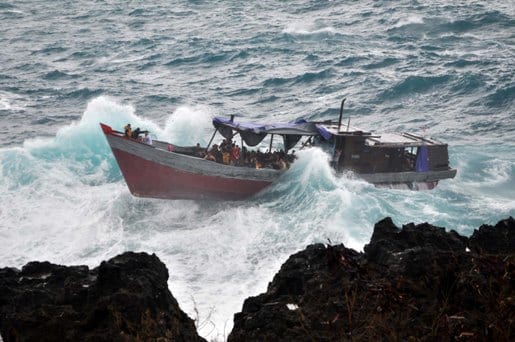
Kevin Rudd’s solution to ‘stop the boats’ seems like a political ploy on the eve of the federal elections

Before we say anything about asylum seekers, let’s first get rid of the stigma associated with the term. No, the term ‘asylum seeker’ does not mean illegal immigrant. No, it does not mean impoverished opportunist. And no, it most certainly does not mean terrorist threat. An asylum seeker is one who seeks refuge in a foreign country for fear of unwarranted persecution, or due to the threat of war or violence. It is not illegal to seek asylum.
Kevin Rudd recently announced his grand plans for keeping asylum seekers away from Australia – by sending them to Papua New Guinea for ‘processing’. Under the agreement, Australia will spend hundreds of millions of dollars sending asylum seekers to Manus Island or elsewhere in PNG, and in return, will spend heavily on PNG’s schools, universities, hospitals and law enforcement. It is the first big decision Rudd has made since his reinstatement, and will help quell Tony Abbott, the Federal Opposition Leader, who has over the last few months constantly crooned, ‘Stop the boats’.
Our anthem might insist that ‘for those who’ve come across the seas, we’ve boundless plains to share’, but Rudd’s new policy appears to be more geared towards negating his opponent’s favourite one-liner than upholding the fabric of the nation. It is embarrassing that at the forefront of our nation’s politics lies a battle to keep those who have been exposed to horrific violence, away from our shores.
Rudd gave three reasons for his decision, focusing on controlling the people smugglers that traffic asylum seekers over to Australia, rather than the asylum seekers themselves.
Firstly, Rudd argued, Australian intelligence agencies advised him that the numbers of asylum seekers will continue to arise (as they will around the world) in the years ahead. Secondly, each vessel that arrives presents a continued risk of drowning. Finally, claims Rudd, people smugglers take advantage of human tragedy, as they are currently doing with Syrian asylum seekers, and that must be stopped.
Let’s deal with the first point, rising asylum seeker numbers in Australia.
An asylum seeker becomes a refugee when they are accepted as having sought asylum for an appropriate reason. In 2012, Australia had the 49th highest number of refugees in the world. “Okay,” might an everyday Mr Abbott or Mr Carr respond indignantly, “but we have a small population.” Except that if you rank us by number of refugees per capita, we come in 62nd. “But we’re not rich enough,” would a fiscally-stretched Rudd lament. Unfortunately for Mr Rudd, compared to our national wealth, we rank 87th in the total number of refugees we house. The Asylum Seeker Resource Centre also quietly adds that 23,000 persons leave their homes each day to seek protection elsewhere, almost as many as Australia receives in an entire year.
So even if numbers are on the increase, surely as a relatively wealthy nation with such a low population density, we can afford to offer a little bit of help to war-stricken single parents, families with young children, and other individuals who have left everything behind in the hope of an improved quality of life.
Rudd’s last two points are not entirely uninformed. The risk of drowning is definitely a prevalent one, with thousands having perished while attempting to reach our shores, due to overcrowded, poorly manufactured ships or perhaps an inability to swim. Similarly, people smugglers definitely do exploit the plight of unfortunate families. But there is an Australia-sized flaw in Rudd’s master plan here.
Let’s take a step back and put ourselves in the shoes of the asylum seekers. You live in a war-ravaged country. You have been de-sensitised to seeing mangled bodies in the streets, you’ve dealt with family members being killed in front of your eyes and you have been exposed to women and children being raped and beaten. You live every day in fear, hoping that you or your children are not one of the thousands of others who have perished during the atrocities in your country. There is no end in sight to the violence, to the bloodshed and to the corruption. You are then offered the chance of a new life, of a new beginning for you and your family in Australia. It will cost you your life savings, and you know there is a chance none of you will make it there alive. You are even aware of the fact that asylum seekers are being sent to Papua New Guinea after landing on Australian shores. Would you make the tough call for your family?
Chances are, like those 23,000 other people around the world, you still would choose to flee. And there’s the problem: Rudd’s plan will not stop people smugglers nor drownings. It is a sad thought indeed that there are people who will exploit tragedy for personal gain, often with no regard for the safety of their ‘cargo’. But it will not stop because one, two, or ten governments decide to send asylum seekers elsewhere. Seeking a safe, happy life has always been an ‘at all costs’ adventure.
Before we turn a blind eye to asylum seekers, we should remember that we could have just as easily been one of them. We were not entitled to a privileged life. We were born, by pure luck, into various states of wealth, happiness and good fortune. If you are reading this paper, you’re almost certainly one of the luckiest people in the world, if you’d just acknowledge it. We’ve never had to worry about a court that only rules in favour of the government. We’ve never had to fret over whether our sons or daughters will be safe at school. We don’t even have to worry about mouthing off the Prime Minster in public.
Aside from everything else, most of us would not be able to fathom the sheer terror of leaving our beloved countries behind in exchange for weeks on an overcrowded boat to an unknown land, watching fellow passengers drown, assuring our children that everything will be alright and then being treated like a prisoner and thrown into a detention centre on arrival.
Rudd can hardly be held completely accountable for this decision. Future generations will judge us, the public; because most leading politicians only ever act on what they think might get them that extra vote. For too long, protectionist politicians and one-eyed media stations have clouded our view of asylum seekers with inadvertent and misleading claims of illegality, of security threats and of overpopulation. Of course, the border should be protected: national security is extremely important and we’d be silly to ignore it. But, as the Australian public we owe it to ourselves to work out whether we deserve a better life than other people around the world.
It might be too idyllic a hope that one day, we’ll show just a touch of empathy towards asylum seekers and that one day, the winning election slogan will not be something as insensitive as ‘stop the boats’. But it would be a good start if we began hoping.
History made in Nagasaki

Set against a hillside overlooking a splendid natural harbour, Nagasaki, a city of under 500,000, lies on the southern Japanese island of Kyushu. There can be no better way of arriving here than by cruise ship as I did, on a gloriously sunny day with boats and ferries chugging by. A delightfully pretty and compact city ideal for exploring on foot, Nagasaki was especially impressive in March since the famed cherry blossoms were in full bloom. This was my first visit to Japan and my initial impressions were that the locals were calm, exceedingly polite and fastidiously neat and clean. As I crossed the street using the pedestrian walkway, a woman followed with a broom, sweeping the pavement behind me. In washrooms, hand-basins talked, providing instructions in Japanese, and there were hand sanitiser dispensers throughout department stores. Money for purchases was pushed backwards and forwards with great ceremony on a tray, with even the smallest purchase, in this case a postcard, neatly wrapped. Stand contemplating your map and someone will come to your aid. There was an odd juxtaposition of old and new, of young girls with iPods wearing kimonos, of clacketty old streetcars and bullet trains. And there is no other Japanese city where beauty and tragedy are so intertwined. Missing its military target by several kilometres due to fog, the northern part of the city was obliterated by the atomic bomb of August 9, 1945, three days after American forces destroyed Hiroshima in World War II. The bomb obliterated the Urakami neighbourhood, a slum inhabited by Christians and burakumin, described as the ‘untouchables’ of Japan, killing 74,000 people and injuring 75,000 more. There are poignant reminders in the city, including Peace Park and the confronting Nagasaki Atomic Bomb Museum.
Nagasaki was Japan’s most cosmopolitan city from the 16th through to the 19th centuries, though foreigners were kept isolated. In 1549, Francis Xavier and two fellow Jesuits who had sailed from India waded ashore from their ship, the first missionaries in Japan. Receiving a friendly welcome from a powerful lord, they were allowed to preach and convert. Jesuits and later Franciscans introduced Christianity with over 300,000 converts by 1597. But the tide turned on the missionaries. Alarmed at the growing surge in numbers, the government banned Christianity, burnt down 130 churches and crucified six European missionaries and 20 Japanese followers, the youngest a 12-year-old alter server boy. The deaths were a result of the danger of professing the Christian faith in a Buddhist country that had become torn by internal war and a fear of foreign conquest. All 26 were declared saints by the Catholic Church in 1862, and a small chapel and monument were built in 1962, in their memory.
An artificial island was built in 1634 named Dejima, to house Portuguese traders. After 1639, the Portuguese were ordered to leave, replaced at Dejima by traders from the Dutch East India Company. While Japan remained sealed off from the outside world, Nagasaki was the only city that allowed foreign traders, including a few Chinese who built temples on the hillsides, a Confucian shrine in 1893 and a small vibrant Chinatown.
With the cruise ship terminal located right in the city centre, I followed the narrow river that meanders through the city to Spectacles Bridge, Japan’s oldest arch-shaped stone bridge. I then turned off to view the temples, walking along hilly cobbled streets of rows of houses and apartments stacked neatly on top of each other like playing blocks.
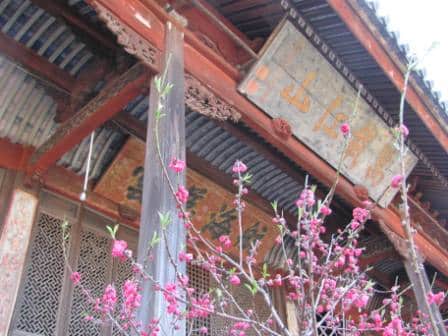
Built by Chinese traders, the temples are scattered on the hillside. The oldest temple is Kofukuji, built in 1620, which presides over the city below. Its peaked roofs and scattered halls surround a series of pleasant lawns and gardens, while forests begin just behind the temple. Built as a place where they could pray for a safe voyage, and considering Japan’s persecution of Christians at the time, the Chinese traders also thought it prudent to prove they were Buddhists.
Sofukiji Temple was another temple founded by Chinese traders in 1629, and is Nagasaki’s most famous temple. Its Buddha Hall is painted brilliant red and decorated with Chinese lanterns. The temple’s giant cauldron was built by a priest during a terrible famine in 1680, to make enough porridge to feed 3,000 people a day.
After visiting the post office, downtown department stores and train station to view the bullet trains, I headed for Hamano-Machi and Kanko-Dori, funky shopping arcades featuring boutiques, cafes and restaurants. South of the city, Hollander Slope is Nagasaki’s prettiest street, cobbled and lined with timber houses built by Europeans, so-called because at the time, all Europeans were referred to as Hollanders.
A short walk away is the Oura Catholic Church, the oldest remaining church in Japan built in 1864 by French missionaries. Nearby is Glover Garden, a beautiful garden to meander through, redolent of history and containing the homes of prominent European traders. The centrepiece is the home of Thomas Glover, built in 1863, the oldest western style building in Japan. Glover was a Scottish merchant who came to Japan in 1859 at the age of 21, and contributed greatly to the modernisation of Japan through shipbuilding, and coal mining. Interestingly, he is also referred to as the father of Japanese beer!
Far from the impression I’d formed that I would suffer sensory overload in Japan, Nagasaki is relaxed, accessible and welcoming. In just one day I’d encountered many Japanese who inquired or tried to help with their snippets of English, and I enjoyed discovering obscure winding streets and neighbourhoods. As I sat on the hill in Glover Garden, I unwrapped the delicate slice of Castella cake, introduced by Portuguese traders and progressively modified to Japanese tastes that has eventually resulted from the meeting of east and west in Nagasaki. Enjoying my cake and looking out towards the sea, I wished that I could have stayed much longer.
Travel Notebook
Getting there
Fly to Nagasaki with Japan Airlines and Korean Air. Qantas, Cathay, China Airlines and Jetstar will also get you to major transport hubs in Japan, from where a bullet train will deliver you to Nagasaki at top speed. Alternatively, many cruise ships offer relaxing itineraries that include China, South Korea and Japan, a great way to visit if you have not been here before. I travelled with Azamara Club Cruises on a 14-night voyage. T: 1800 754 500 W: www.azamaraclubcruises.com
Getting around
Nagasaki is one of Japan’s most navigable cities with directional signs to sites in English and streetcars that are fun and affordable.
Where to stay
There are many hotel choices, with many affordable options including YHA’s, business hotels and traditional Japanese inns. The Japan National Tourism Organisation has a helpful website and will mail brochures on request. T: 02 9279 2177 W: www.jnto.org.au
Must tries
The most famous and delicious is Castella, based on a Portuguese cake. It can be eaten in coffee shops all over town, but the most famous bakery is Fukusaya, 3-1 Funadaiku Machi in business since 1624.
Insider Tip
Changing money at banks can be slow and the rate of exchange quite low. Use ATM’s or 7 Eleven stores instead. English is not widely spoken.
Sakhi Sangam 2013
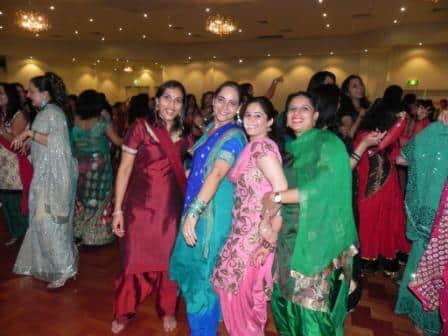
Yummy Mummies gather again at Sydney’s Sakhi Sangam!
[imagebrowser id=17]
An actor of calibre
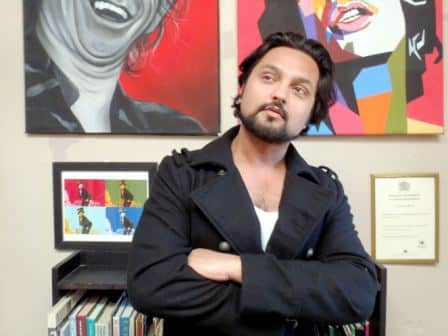
Aspiring Indian-origin actor Neil Khare’s talent comes alive on stage, writes DEEKSHA CHOPRA

“All the world’s a stage and all the men and women merely players“– these words from William Shakespeare can best describe the passion for theatre that comes across when you meet 35-year-old Neil Khare. Neil has recently received great acclamation for his portrayal of Giles Corey in the classic American tragedy play by Arthur Miller called The Crucible, that was directed by Dan Graham, and is a production from the Lane Cove Theatre Company in Sydney.
Neil truly loves being on stage. It’s the rehearsals and auditions that make him nervous, not the actual acting. “Acting is my passion. It’s an escape from reality wherein I can create this alternate world around me,” he says. “When I’m on stage, I feel a total rush of adrenaline. It’s interesting how actors are required to interpret text, understand feelings behind the text and understand the subtext. Each word needs to be enacted. Just being a part of a creative process gives a new meaning to my life. It is challenging, and at the same time exhilarating and fulfilling,” he adds.
Neil caught the theatre bug early in life. “I remember sitting in my classroom in school and churning up ideas and creating all sorts of scenarios in my mind. On being introduced to Shakespeare, I would tend to submerge myself in the text, and imagine myself to be one of the characters in the story. I could create explicit visuals in my mind while reading through Midsummer’s Night Dream, or of becoming Macbeth or Othello,” Neil reminisced.
Born in Kolkata, Neil hails from a middle class Maharshtrian family. But it wasn’t theatre that brought him to Sydney. After finishing his schooling from La Martiniere for Boys in Kolkata, he came to Australia to finish his Bachelors in Hospitality and Management.
“I came to study Hospitality in Sydney in 1996-1997. But actually I was escaping India to follow my dream and my love for the arts. I completed my degree here but somewhere down the line my passion pushed me to doing theatre as well. I joined National Institute of Dramatic Art (NIDA) and did few short courses to understand theatre better,” he reveals.
After facing several rejections, Neil almost gave up on his dream to be an actor. But with encouragement from his sister Tanya, he was pushed to give an open audition for the role of Giles Corey in The Crucible.
Director Dan Graham had no qualms about selecting him for the part. “Neil auditioned and immediately impressed me not only with his acting ability, but with his sensitivity and kindness which I thought more important to the character of Giles Corey, than considering ethnicity when casting,” says Graham. “It was mainly a young cast and Giles Corey is an elderly man, but as an actor, Neil adapted his posture and voice accordingly and brought Giles to life on stage. I feel he is a valuable actor in our ensemble,” adds Graham.
Interestingly, the 35-year-old plays a 7-year-old man who is knotted with muscle, is canny, inquisitive and still powerful. It wasn’t an easy portrayal. And he had to prepare intensively for the part.
“Giles, even at 71, is physically a well-built man, so making him seem physically weak wouldn’t do justice to his character. So I would get a bit hunched, greyed my hair, and on stage I’d rub my knees and speak like an old man. I also did intensive voice training and worked on my accent,” he claims.
Being the only non-Caucasian in a cast of 18 people was a unique experience for Neil. “In the beginning I put up a barrier, but within the first few weeks that barrier had disappeared. I got an opportunity to work with some extremely talented fellow actors who helped me perform better. We had two months of rehearsals and by the end of the show, the cast became a family,” he states.
Neil’s dream is to finally work in mainstream Australian theatre. “It’s hard, because there is not much diversity in Australian theatre; the issue is colour blind cast or colour blind auditioning. To explain, directors and producers prefer staying true to the original pieces, so if I wanted to play Macbeth, local productions would not be as open to casting a person from an ethnic background. I personally feel that theatre here is fairly close-minded compared to other countries. I have done a number of South Asian plays, but I have a great interest in Shakespearean works. Can you imagine an Indian ‘Antonio’ with a Caucasian ‘Portia’ in a Merchant of Venice rendition at the Opera House?” he asks, tongue in cheek. However, I am very thankful to the Lane Cove Theatre Company for giving me the opportunity to be part of The Crucible which was a challenging and demanding piece,” he adds.
Among his other hidden talents are painting, photography and singing. “I love art, I tend to walk into galleries explore what painters try to depict through their craft. I also hope to be a part of a Broadway musical one day,” he says. During his leisure, Neil loves spending quality time with his family and his pets. His sister Tanya is probably his biggest fan. “I feel very proud watching Neil perform on stage, and I plan to follow his footsteps and venture into the world of theatre,” she reveals.
This is Neil’s comeback year (NOT SURE WHAT THIS MEANS) into theatre, and he also wants to get into production, “I want to produce theatre that pulls at every emotion, creating work that is controversial, work that deals with the psyche. Theatre needs to be diverse and reflect our society in Australia, but most importantly it should create work so that folks out there who have dreams, vision and great passion for the craft are able to perform not just for the money or fame, but for the love of theatre,” he says with emphasis.
India win U19 Int'l Series against Oz

India U19 2/76 (15.3 overs) defeated Australia U19 75 (24.4 overs)

It’s been an exciting few days in cricket as news just in that India has taken out the U19 International Series. India defeated Australia by eight wickets in the Series final at Marrara Oval in Darwin today.
The Aussie players may have spent last night watching one of last year’s Australian U19 representatives, Ashton Agar, bat his way into history over in England. But they were unable to use that inspiration to produce any Agar-like heroics with the bat today.
India never looked troubled in their run chase today and reached Australia’s total of 75 in only the 16th over to finish the Series unbeaten.
Indian captain Vijay Zol won Player of the Series after a dominant tournament with the bat.
Australian fast bowler Matt Fotia was the only player to snare a five-for during the tournament and finished top of the bowling table with 10 scalps at an average of 17.20. Fellow teammate Cam Valente was also impressive over the Series and finished second on the bowling table with nine wickets at 15.89.
Sixteen-year-old Jake Doran was the best of the Aussie bats throughout the tournament with a spectacular average of 195 and an aggregate of 195 runs (second behind Zol’s 284 runs).
The U19 International Series is part of Cricket Australia’s (CA) Under 19 high-performance program and has a decorated history of producing the next generation of Australian players including Michael Clarke, James Pattinson and Agar.
CA’s National Talent Manager Greg Chappell has worked in the last three U19 programs, including identifying and nurturing the talent of Agar and Pat Cummins, and has watched the U19 Series in Darwin closely.
Chappell said Australian cricket fans had a lot to look forward to in the coming years.
“Doran is the quintessential all-round cricketer for the modern era for he is an accomplished wicket-keeper who also bowls some handy left-arm seamers.
“[He] shows enormous potential as a left-hand middle order player in the mould of Michael Hussey,” Chappell said.
Chappell also identified opener Matthew Short as another batsman to watch, and said he had been impressed by young bowlers Fotia and Valente.
“[Short] has shown enormous potential as a stroke player and is also a promising off-spin bowler who fields well. He has already been recognised by Cricket Victoria with a rookie contract for next season.
“[Fotia] is a strongly built young man who likes to bowl fast and who loves a chat.
“[Valente] is a clever medium fast bowler and lower middle order batsman from South Australia. Cam is a competitive young man who has a good understanding of the tactical requirements of the game and is a proven wicket-taker,” Chappell said.
Australia underperformed with the bat this Series but Chappell said it was up to the players to use these experiences as a good learning opportunity.
“Early signs suggest that talent is not the problem. It will come down to how much is learnt from the experiences; then it is down to commitment, desire and execution,” Chappell said.
Australia is currently preparing for the ICC U19 Cricket World Cup, to be held in Dubai in February 2014. The next test for the Aussie U19s ahead of next year’s World Cup will be an U19 quad series against India, South Africa and Zimbabwe in India during September.
More of Greg Chappell’s thoughts on Australia’s best emerging talent can be found here. U19 International Series match reports and final points table can be found here.
AGAR tum na hote!!!


Two runs shy of a century on his first test cricket match representing Australia, Ashton Agar’s efforts of 98 from 101 balls have been etched into history. Only last week this kid was an unknown who’d caught the selector’s eye and caught a huge break to be included in the Ashes line up. After his first ever appearance for the national side, he is something of a national hero. Agar walked onto the pitch as the last man for a team struggling at 9-117 and England had clear control of the match and looked to wrap up the aussies nicely.
Agar came onto the pitch with a calm confidence and steady smile and took a game-changing stand that made Aussies and cricket lovers the world over hail him a hero. Agar, who twice hit Graeme Swann down the ground for six and pulled anything short from the quicks with confidence said, “It’s a dream come true, that’s what it is to me. Forever I’ve dreamed of playing Test cricket for Australia and for my debut to start the way it has I’m over the moon.’’
Ashton Charles Agar is originally from Melbourne and represented Victoria at the underage level, as well as playing a number of matches for the Australian under-19 cricket team. His teammates called him Bambi because “he hadn’t quite grown into those legs of his” and laughed as he fumbled his way around the field. Those same teammates look on with pride as he grew into his form and his talent let to his transfer to play for Western Australia prior to the 2012–13 season, making his Sheffield Shield debut in early January 2013. A left-arm orthodox spinner and capable lower-order batsman, Agar impressed selectors and was called up for Australia’s 2012–13 tour of India, and went on to tour England and Ireland with Australia A. His towering frame, deftness with the ball and batting skills ensured he made his Test debut for Australia in the first Test of the 2013 Ashes series.
His first foray in test cricket has seen him break a few records including:
– the twelfth-youngest Australian Test player
– the youngest Australian since Archie Jackson (during the 1928–29 series) to make his Test debut in the Ashes.
– the first debutant number 11 in Test history to score a half-century
– the world record for a number 11 when he scored 98 before being dismissed two runs away from scoring the first century by a Test number 11.
– His partnership with Australian batsman Phillip Hughes broke the previous world record for a 10th-wicket partnership in Test matches.
“I’m super happy,” Agar said after his stunning performance. “Darren Lehmann just told the whole team to bat in their natural style and that’s the way I like to bat, so that’s what I did. I like to keep myself fairly relaxed and I didn’t get too nervous. I was hitting the ball fairly well and I just tried to keep doing that.” If he continues to play with such calm and confidence and having turned the first test on its head, the Ashes will be exciting to watch and most certainly in the Aussie’s grasp.